


Community hub
Recent from talks
Contribute something
Nothing was collected or created yet.
The Guide for the Perplexed
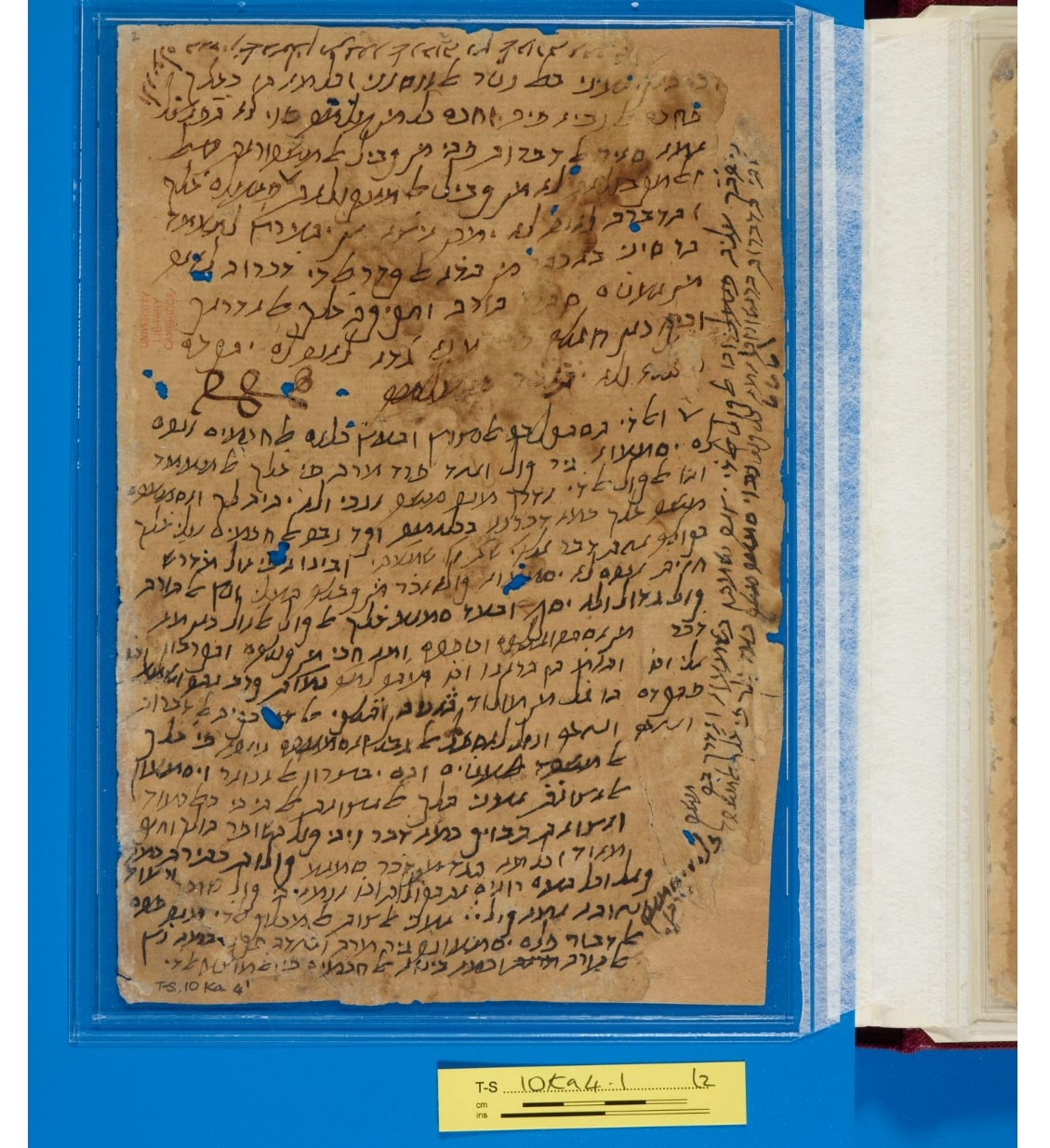
View on WikipediaThe Guide for the Perplexed (Judeo-Arabic: דלאלת אלחאירין, romanized: Dalālat al-ḥā'irīn; Arabic: دلالة الحائرين, romanized: Dalālat al-ḥā'irīn; Hebrew: מורה הנבוכים, romanized: Moreh HaNevukhim) is a work of Jewish theology by Maimonides. It seeks to reconcile Aristotelianism with Rabbinical Jewish theology by finding rational explanations for many events in the text.
Key Information


It was written in Judeo-Arabic, a dialect of Classical Arabic using the Hebrew alphabet. It was sent originally, part after part, to his student, Rabbi Joseph ben Judah of Ceuta, the son of Rabbi Judah, and is the main source of Maimonides' philosophical views, as opposed to his opinions on Jewish law.
Since many of the philosophical concepts, such as his view of theodicy and the relationship between philosophy and religion, are relevant beyond Judaism, it has been the work most commonly associated with Maimonides in the non-Jewish world and it is known to have influenced several major non-Jewish philosophers.[2] Following its publication, "almost every philosophic work for the remainder of the Middle Ages cited, commented on, or criticized Maimonides' views."[3] Within Judaism, the Guide became widely popular, with many Jewish communities requesting copies of the manuscript, but also quite controversial, with some communities limiting its study or banning it altogether.
Contents
[edit]
The Guide for the Perplexed was originally written sometime between 1185 and 1190 by Maimonides in Judeo-Arabic (Classical Arabic using the Hebrew alphabet). It was first translated in 1204 into Hebrew by a contemporary of Maimonides, Samuel ibn Tibbon.[4] The work is divided into three parts. According to Maimonides, he wrote the Guide "to enlighten a religious man who has been trained to believe in the truth of our holy Law, who conscientiously fulfills his moral and religious duties, and at the same time has been successful in his philosophical studies."
This work has also a second object in view: It seeks to explain certain obscure figures which occur in the Prophets, and are not distinctly characterized as being figures. Ignorant and superficial readers take them in a literal, not in a figurative sense. Even well-informed persons are bewildered if they understand these passages in their literal signification, but they are entirely relieved of their perplexity when we explain the figure, or merely suggest that the terms are figurative. For this reason I have called this book Guide for the Perplexed.[5]
Also, he made a systematic exposition on Maaseh Bereishit and Merkabah mysticism, works of Jewish mysticism regarding the theology of creation from the Book of Genesis and the chariot passage from the Book of Ezekiel—these being the two main mystical texts in the Tanakh. This analysis occurs in the third part, and from this perspective, the issues raised in the first two parts are there to provide background and a progression in the mystical and philosophical knowledge required to ponder the climax.
The opening letter
[edit]The book begins with a letter from Maimonides to his dear student, Rabbi Joseph ben Judah of Ceuta. Maimonides praises his student's sharp comprehension and eagerness to acquire knowledge.
Then when God decreed our separation and you betook yourself elsewhere, these meetings aroused in me a resolution that had slackened. Your absence moved me to compose this Treatise, which I have composed for you and for those like you, however few they are. I have set it down in dispersed chapters. All of them that are written down will reach you where you are, one after the other.
The first part
[edit]
The part begins with Maimonides' thesis of the unity, omnipresence, and incorporeality of God, explaining biblical anthropomorphism of divine attributes as homonymous or figurative. The first chapter explains the Genesis 1 description of Adam the first as in the "image of God", as referring to the intellectual perception of humankind rather than physical form. In the Bible, one can find many expressions that refer to God in human terms, for instance the "hand of God". Maimonides strongly opposed what he believed to be a heresy present in unlearned Jews who then assume God to be corporeal (or even possessing positive characteristics).
To explain his belief that this is not the case, Maimonides devoted more than 20 chapters in the beginning (and middle) of the first part to analyzing Hebrew terms. Each chapter was about a term used to refer to God (such as "mighty") and, in each case, Maimonides presented a case that the word is a homonym, whereby its usage when referring to a physical entity is completely different from when referring to God. This was done by close textual analysis of the word in the Tanakh in order to present what Maimonides saw as the proof that according to the Tanakh, God is completely incorporeal:
[The Rambam] set up the incorporeality of God as a dogma, and placed any person who denied this doctrine upon a level with an idolater; he devoted much of the first part of the Moreh Nevukhim to the interpretation of the Biblical anthropomorphisms, endeavoring to define the meaning of each and to identify it with some transcendental metaphysical expression. Some of them are explained by him as perfect homonyms, denoting two or more absolutely distinct things; others, as imperfect homonyms, employed in some instances figuratively and in others homonymously.”[6]
This leads to Maimonides' notion that God cannot be described in any positive terms, but rather only in negative conceptions. The Jewish Encyclopedia notes his view that "As to His essence, the only way to describe it is negatively. For instance, He is not physical, nor bound by time, nor subject to change, etc. These assertions do not involve any incorrect notions or assume any deficiency, while if positive essential attributes are admitted it may be assumed that other things coexisted with Him from eternity."[6]
Unrestrained anthropomorphism and perception of positive attributes is seen as a transgression as serious as idolatry, because both are fundamental errors in the metaphysics of God's role in the universe, and that is the most important aspect of the world.
The first part also contains an analysis of the reasons why philosophy and mysticism are taught late in the Jewish tradition, and only to a few. Maimonides cites many examples of what he sees as the incapability of the masses of understanding these concepts. Thus, approaching them with a mind that is not yet learned in Torah and other Jewish texts can lead to heresy and the transgressions considered the most serious by Maimonides.
The part ends (Chapters 73–76) with Maimonides' protracted exposition and criticism of a number of principles and methods identified with the schools of Jewish Kalam and Islamic Kalam, including the argument for creation ex nihilo and the unity and incorporeality of God. While he accepts the conclusions of the Kalam school (because of their consistency with Judaism), he disagrees with their methods and points out many perceived flaws in their arguments: "Maimonides exposes the weakness of these propositions, which he regards as founded not on a basis of positive facts, but on mere fiction ... Maimonides criticizes especially the tenth proposition of the Mutakallimīn, according to which everything that is conceivable by imagination is admissible: e.g., that the terrestrial globe should become the all-encompassing sphere, or that this sphere should become the terrestrial globe."[6]
The second part
[edit]The second part begins with 26 propositions from Aristotle's metaphysics, of which Maimonides accepts 25 as having been conclusively demonstrated, rejecting only the proposition that holds the universe to be eternal. The exposition describes Maimonides' conception of the physical structure of the universe. The world-view asserted in the work is essentially Aristotelian, with a spherical Earth in the centre, surrounded by concentric Heavenly Spheres. While Aristotle's view with respect to the eternity of the universe is rejected, Maimonides extensively borrows his proofs of the existence of God and his concepts such as the Prime Mover: "But as Maimonides recognizes the authority of Aristotle in all matters concerning the sublunary world, he proceeds to show that the Biblical account of the creation of the nether world is in perfect accord with Aristotelian views. Explaining its language as allegorical and the terms employed as homonyms, he summarizes the first chapter of Genesis thus: God created the universe by producing on the first day the reshit (Intelligence) from which the spheres derived their existence and motion and thus became the source of the existence of the entire universe."[6]
A novel point is that Maimonides connects natural forces[7] and heavenly spheres with the concept of an angel: these are seen as the same thing. The Spheres are essentially pure Intelligences who receive power from the Prime Mover. This energy overflows from each one to the next and finally reaches earth and the physical domain. This concept of intelligent spheres of existence also appears in Gnostic Christianity as Aeons, having been conceived at least eight hundred years before Maimonides. Maimonides' immediate source was probably Avicenna, who may in turn have been influenced by the very similar scheme in Isma'ili Islam. This leads into a brief exposition of Creation as outlined in Genesis and theories about the possible end of the world.
The second major part of the second part is the discussion of the concept of prophecy. Maimonides departs from the orthodox view in that he emphasizes the intellectual aspect of prophecy: According to this view, prophesy occurs when a vision is ascertained in the imagination, and then interpreted through the intellect of the prophet. In Maimonides view, many aspects of descriptions of prophesy are metaphor. All stories of God speaking with a prophet, with the exception of Moses, are metaphors for the interpretation of a vision. While a perfected "imaginative faculty" is required, and indicated through the behavior of the prophet, the intellect is also required. Maimonides insists that all prophesy, excepting that of Moses, occurs through natural law. Maimonides also states that the descriptions of nation-wide prophesy at Mount Sinai in Exodus are metaphors for the apprehension of logical proofs. For example, he gives the following interpretation:
[I]n the speech of Isaiah, ... it very frequently occurs ... that when he speaks of the fall of a dynasty or the destruction of a great religious community, he uses such expressions as: the stars have fallen, the heavens were rolled up, the sun was blackened, the earth was devastated and quaked, and many similar figurative expressions (II.29).[8]
Maimonides outlines 11 levels of prophecy, with that of Moses being beyond the highest, and thus most unimpeded. Subsequent lower levels reduce the immediacy between God and prophet, allowing prophecies through increasingly external and indirect factors such as angels and dreams. Finally, the language and nature of the prophetic books of the Bible are described.
The third part
[edit]
The beginning of the third part is described as the climax of the whole work. This is the exposition of the mystical passage of the Chariot found in Ezekiel. Traditionally, Jewish law viewed this passage as extremely sensitive, and in theory, did not allow it to be taught explicitly at all. The only way to learn it properly was if a student had enough knowledge and wisdom to be able to interpret their teacher's hints by themselves, in which case the teacher was allowed to teach them indirectly. In practice, however, the mass of detailed rabbinic writings on this subject often crosses the line from hint to detailed teachings.
After justifying this "crossing of the line" from hints to direct instruction, Maimonides explains the basic mystical concepts via the Biblical terms referring to Spheres, elements and Intelligences. In these chapters, however, there is still very little in terms of direct explanation.
This is followed by an analysis of the moral aspects of the universe. Maimonides deals with the problem of evil (for which people are considered to be responsible because of free will), trials and tests (especially those of Job and the story of the Binding of Isaac) as well as other aspects traditionally attached to God in theology, such as providence and omniscience: "Maimonides endeavors to show that evil has no positive existence, but is a privation of a certain capacity and does not proceed from God; when, therefore, evils are mentioned in Scripture as sent by God, the Scriptural expressions must be explained allegorically. Indeed, says Maimonides, all existing evils, with the exception of some which have their origin in the laws of production and destruction and which are rather an expression of God's mercy, since by them the species are perpetuated, are created by men themselves."[6]
Maimonides then explains his views on the reasons for the 613 mitzvot, the 613 laws contained within the five books of Moses. Maimonides divides these laws into 14 sections—the same as in his Mishneh Torah. However, he departs from traditional Rabbinic explanations in favour of a more physical/pragmatic approach by explaining the purpose of the commandments (especially of sacrifices) as intending to help wean the Israelites away from idolatry.[9]
Having culminated with the commandments, Maimonides concludes the work with the notion of the perfect and harmonious life, founded on the correct worship of God. The possession of a correct philosophy underlying Judaism (as outlined in the Guide) is seen as being an essential aspect in true wisdom.
Reception
[edit]While many Jewish communities revered Maimonides' work and viewed it as a triumph, others deemed some of its ideas heretical. The Guide was often banned and, in some occasions, even burned in Paris in 1233.[10][11]
In particular, the adversaries of Maimonides' Mishneh Torah declared war against the "Guide". His views concerning angels, prophecy, and miracles—and especially his assertion that he would have had no difficulty in reconciling the biblical account of the creation with the doctrine of the eternity of the universe, had the Aristotelian proofs for it been conclusive[12]—provoked the indignation of his coreligionists.[13]
Likewise, some (most famously Rabbi Abraham ben David, known as the RaBad) objected to Maimonides' raising the notion of the incorporeality of God as a dogma, claiming that great and wise men of previous generations held a different view.[14]
In modern-day Jewish circles, controversies regarding Aristotelian thought are significantly less heated, and, over time, many of Maimonides' ideas have become authoritative. As such, the book is seen as a legitimate and canonical, if somewhat abstruse, religious masterpiece.
The Guide had great influence in Christian thought, both Thomas Aquinas and Duns Scotus making extensive use of it: the negative theology contained in it also influenced mystics such as Meister Eckhart. Due to The Guide's influence on Western Christian thought, it has been regarded as a "Jewish-scholastic Summa." [15] It was massively used in—and disseminated through—Ramon Martí's Pugio Fidei.[16] It was also read and commented on in Islamic circles, and remains in print in Arab countries.[17]
Several decades after Maimonides' death, a Muslim philosopher by the name of Muhammad ibn Abi-Bakr Al-Tabrizi wrote a commentary in Arabic on the first 25 propositions (out of 26) of Book Two, leaving out the last one, which states that the universe is eternal. The extant manuscript of the commentary was written in 677AH (1278 CE), and states that it was copied from a copy in Maimonides' own hand writing. The commentary was printed in Cairo in 1949.[18]
Analysis
[edit]
By Maimonides' own design, most readers of the Guide have come to the conclusion that his beliefs were orthodox, i.e. in line with the thinking of most rabbis of his day.[citation needed] He wrote that his Guide was addressed to only a select and educated readership, and that he is proposing ideas that are deliberately concealed from the masses. He writes in the introduction:
No intelligent man will require and expect that on introducing any subject I shall completely exhaust it; or that on commencing the exposition of a figure I shall fully explain all its parts.[5]
and:
My object in adopting this arrangement is that the truths should be at one time apparent and at another time concealed. Thus we shall not be in opposition to the Divine Will (from which it is wrong to deviate) which has withheld from the multitude the truths required for the knowledge of God, according to the words, 'The secret of the Lord is with them that fear Him (Psalm 25:14)'[19]
Marvin Fox comments on this:
It is one of the mysteries of our intellectual history that these explicit statements of Maimonides, together with his other extensive instructions on how to read his book, have been so widely ignored. No author could have been more open in informing his readers that they were confronting no ordinary book.[20]: 7
Marvin Fox writes further:
In his introduction to the Guide Maimonides speaks repeatedly of the "secret" doctrine that must be set forth in a way appropriate to its secret character. Rabbinic law, to which Maimonides as a loyal Jew is committed, prohibits any direct, public teaching of the secrets of the Torah. One is permitted to teach these only in private to selected students of proven competence ... It would seem that there is no way to write such a book without violating rabbinic law ... Yet at times it is urgent to teach a body of sound doctrine to those who require it ... The problem is to find a method for writing such book in a way that does not violate Jewish law while conveying its message successfully to those who are properly qualified.[20]: 5
According to Fox, Maimonides carefully assembled the Guide "so as to protect people without a sound scientific and philosophical education from doctrines that they cannot understand and that would only harm them, while making the truths available to students with the proper personal and intellectual preparation."[20]: 6
Aviezer Ravitzky writes:
Those who upheld a radical interpretation of the secrets of the Guide, from Joseph Caspi and Moses Narboni in the 14th century to Leo Strauss and Shlomo Pines in the 20th, proposed and developed tools and methods for the decoding of the concealed intentions of the Guide. Can we already find the roots of this approach in the writings of Samuel ben Judah ibn Tibbon, a few years after the writing of the Guide? ... Ibn Tibbon's comments reveal his general approach toward the nature of the contradictions in the Guide: The interpreter need not be troubled by contradiction when one assertion is consistent with the "philosophic view" whereas the other is completely satisfactory to "men of religion". Such contradictions are to be expected, and the worthy reader will know the reason for them and the direction they tend to ... The correct reading of the Guide's chapters should be carried out in two complementary directions: on the one hand, one should distinguish each chapter from the rest, and on the other one should combine different chapters and construct out of them a single topic. Again, on the one hand, one should get to the bottom of the specific subject matter of each chapter, its specific "innovation", an innovation not necessarily limited to the explicit subject matter of the chapter. On the other hand, one should combine scattered chapters which allude to one single topic so as to reconstruct the full scope of the topic.[21]
Translations
[edit]The original version of the Guide was written in Judaeo-Arabic. The first Hebrew translation (titled Moreh HaNevukhim) was written in 1204 by a contemporary of Maimonides, Samuel ben Judah ibn Tibbon in southern France. This Hebrew edition has been used for many centuries. A new, modern edition of this translation was published in 2019 by Feldheim Publishers. Another translation, which most scholars see as inferior, though more user-friendly, was that of Judah al-Harizi.
A first complete translation in Latin (Rabbi Mossei Aegyptii Dux seu Director dubitantium aut perplexorum)[22] was printed in Paris by Agostino Giustiniani/Augustinus Justinianus in 1520, and probably made by Jacob Mantino (Mantinus). A more well regarded translation was made and published by Johannes Buxtorf II in 1629 in Basle (Liber Doctor perplexorum).[23][24]
A French translation accompanied the first critical edition, published by Salomon Munk in three volumes from 1856 (Le Guide des égarés: Traité de Théologie et de Philosophie par Moïse ben Maimoun dit Maïmonide. Publié Pour la première fois dans l'arabe original et accompagné d'une traduction française et notes des critiques littéraires et explicatives par S. Munk).
The first complete English translation was The Guide for the Perplexed, by Michael Friedländer, with Mr. Joseph Abrahams and Reverend H. Gollancz, from 1881. It was originally published in a three volume edition with footnotes. In 1904 it was republished in a less expensive one volume edition, without footnotes, with revisions. The second edition is still in use today, sold through Dover Publications. Despite the age of this publication it still has a good reputation, as Friedländer had solid command of Judaeo-Arabic and remained particularly faithful to the literal text of Maimonides' work.[25]
Another translation to English was made by Chaim Rabin in 1952, also published in an abridged edition.[26]
The most popular English translation is the two-volume set The Guide of the Perplexed, translated by Shlomo Pines, with an extensive introductory essay by Leo Strauss, published in 1963.[27]
A new English translation by Lenn E. Goodman and Phillip I. Lieberman of Vanderbilt University was published in 2024. This edition attempts to highlight the conversational, emotionally resonant tone of the original text.
A modern translation to Hebrew was written by Yosef Qafih and published by Mossad Harav Kook, Jerusalem, 1977. A new modern Hebrew translation has been written by Prof. Michael Schwartz, professor emeritus of Tel Aviv University's departments of Jewish philosophy and Arabic language and literature.[28] Mishneh Torah Project published another Hebrew edition between 2018 and 2021, translated by Hillel Gershuni.[29][30]
Mór Klein (1842–1915), the rabbi of Nagybecskerek, translated it to Hungarian and published it in multiple volumes between 1878 and 1890.[31]
The Arabic original was published from Arabic manuscripts in a critical edition by the Turkish Dr. Hussein Atai and published in Turkey, then in Cairo, Egypt.[32]
Translations exist also in Yiddish, French, Polish, Spanish, Portuguese, German, Italian, Russian, and Chinese.
Manuscripts
[edit]The earliest complete Judeo-Arabic copy of Maimonides' Guide for the Perplexed, copied in Yemen in 1380, was found in the India Office Library and added to the collection of the British Library in 1992.[33] Another manuscript, copied in 1396 on vellum and written in Spanish cursive script, but discovered in Yemen by bibliophile, David Solomon Sassoon, was formerly housed at the Sassoon Library in Letchworth, England, but has since been acquired by the University of Toronto. The manuscript has an introduction written by Samuel ibn Tibbon, and is nearly complete, with the exception of a lacuna between two of its pages. Containing a total of 496 pages, written in two columns of 23 lines to a column, with 229 illuminations, the manuscript has been described by David Solomon Sassoon in his Descriptive Catalogue of the Hebrew and Samaritan Manuscripts in the Sassoon Library.[34] In the Bodleian Library at Oxford University, England, there are at least fifteen incomplete copies and fragments of the original Arabic text, all described by Adolf Neubauer in his Catalogue of Hebrew Manuscripts. Two Leyden manuscripts (cod. 18 and 211) have also the original Arabic texts, as do various manuscripts of the Bibliothèque Nationale in Paris (No. 760, very old; 761 and 758, copied by Rabbi Saadia ibn Danan). A copy of the original Arabic text was also stored at the Berlin Royal Library (now Berlin State Library), under the category Ms. Or. Qu., 579 (105 in Catalogue of Moritz Steinschneider); it is defective in the beginning and at the end.[35] Hebrew translations of the Arabic texts, made by Samuel ibn Tibbon and Yehuda Alharizi, albeit independently of each other, abound in university and state libraries.
See also
[edit]
References
[edit] This article incorporates text from a publication now in the public domain: Singer, Isidore; et al., eds. (1901–1906). "MOSES BEN MAIMON (RaMBaM; usually called MAIMONIDES)". The Jewish Encyclopedia. New York: Funk & Wagnalls.

- ^ "Cairo Genizah : Philosophy".
- ^ For example, Joseph Telushkin noted that "Thomas Aquinas refers in his writings to "Rabbi Moses", and shows considerable familiarity with the Guide. "Maimonides". Retrieved 2007-10-10. at the Jewish Virtual Library; also Leibniz wrote a commentary on the Guide.
- ^ Encyclopaedia Judaica, "Moses Maimonides". Archived from the original on 2008-12-24. Retrieved 2007-10-11. Second Edition, Volume 13, p. 388.
- ^ "The Guide to the Perplexed". World Digital Library. Retrieved 22 January 2013.
- ^ a b Maimonides (1910). Guide for the Perplexed. Translated by M. Friedländer (2nd ed.). London: George Routledge and Sons. p. 2.
- ^ a b c d e Jacobs, Joseph; Broydé, Isaac. "Moses ben Maimon". Jewish Encyclopedia. Retrieved 2007-10-11.. See also, Maimonides, Guide for the Perplexed, Introduction, page 2 of M. Friedländer's translation, 1919 ed.
- ^ Guide for the Perplexed. pp. Part 2, Chapter 6.
- ^ Buck, Christopher (1990). The Anatomy of Figuration: Maimonides’ Exegesis of Natural Convulsions in Apocalyptic Texts (Guide II.29). University of Calgary.
- ^ Reuven Chaim Klein, "Weaning Away from Idolatry: Maimonides on the Purpose of Ritual Sacrifices", Religions 12(5), 363.
- ^ See the entry "Maimonidean Controversy, under Maimonides, in volume 11 of the Encyclopaedia Judaica, Keter Publishing, and Dogma in Medieval Jewish Thought by Menachem Kellner.
- ^ when-they-burned-maimonides-books-the-controversy-behind-the-guide-for-the-perplexed
- ^ Part 2, chapter 25
- ^ One or more of the preceding sentences incorporates text from a publication now in the public domain: Singer, Isidore; et al., eds. (1901–1906). "Moses ben Maimon (RaMBaM; usually called Maimonides)". The Jewish Encyclopedia. New York: Funk & Wagnalls.
- ^ "Abraham ben David of Posquieres". Jewish Encyclopedia. Retrieved 2007-10-11.
- ^ Josef, Pieper (1960). Scholasticism: Personalities and Problems of Medieval Philosophy. McGraw-Hill. p. 105.
- ^ Philippe Bobichon, "Citations et traductions du Guide des égarés dans le Pugio fidei de Ramon Martí (Barcelone, xiiie siècle)", Yod, 22 | 2019, pp. 183–242 online
- ^ e.g. Dalalat al-Ha'reen, ISBN 1617190497
- ^ Al-Tabrizi, Maimonides (1949). المقدمات الخمس و العشرون في اثبات وجود الله و وحدانيته و تنزيهه من ان يكون جسما أو قوة في جسم. Cairo, Egypt: Al-Khanji.
- ^ Maimonides 1910, p. 3
- ^ a b c Marvin Fox, Interpreting Maimonides: Studies in Methodology, Metaphysics, and Moral Philosophy
- ^ Ravitzky, Aviezer (1981). "Samuel Ibn Tibbon and the Esoteric Character of the Guide of the Perplexed". AJS Review. 6: 93, 95, 107. doi:10.1017/S0364009400000568. S2CID 162749062.
- ^ "'rabi mossei aegyptij dux seu director dubita[n]tium aut perplexorum : in treis libros diuisus' - Viewer | MDZ". www.digitale-sammlungen.de. Retrieved 2025-08-05.
- ^ Karp, Abraham J.; Library of Congress (1991). From the ends of the earth: Judaic treasures of the Library of Congress: [essays]. Washington: Library of Congress. pp. 91-92. ISBN 978-0-8444-0681-7.
- ^ Maimonides, Moses; Buxtorf, Johann; Ibn Tibbon, Shmuel (1629). Rabbi Mosis Majemonidis liber [Hebrew phrase] Doctor perplexorum: : ad dubia & obscuriora Scripturæ loca rectiùs intelligenda veluti clavem continens, prout in praefatione, in quâ de authoris vitâ, & operis totius ratione agitur, pleniùs explicatur. Boston Public Library. Basileæ, : sumptibus & impensis Ludovici König, excudebat Jacob Genath.
- ^ "Teach It To Me – The Guide for the Perplexed" (PDF).
- ^ Frank, Daniel H.; Maimonides, Moses; Williams, Thomas; Guttmann, Julius; Rabin, Chaim (1996). Monologion; and, Proslogion: with the replies of Gaunilo and Anselm. Indianapolis: Hackett Pub. Co. ISBN 0872203247.
- ^ Shlomo Pines (1963). The Guide of the Perplexed, Vol. 1. Chicago: University of Chicago Press. ISBN 0226502309.
{{cite book}}: ISBN / Date incompatibility (help) - ^ "Hebrew translation – מורה נבוכים" (in Hebrew). Retrieved 2021-05-10.
- ^ "תרגום חדש למורה נבוכים: לפרש את הרמב"ם לפי דרכו, לא להוציא אותו מדעתו" (in Hebrew). 7 October 2018. Retrieved 2021-05-10.
- ^ Maimonides (2018). Makbili, Yohai (ed.). Moreh haNevukhim מורה הנבוכים (in Hebrew). Vol. 1. Translated by Gershuni, Hillel. Kedumim: Mishneh Torah Project. ISBN 978-965-7743-05-8.
- ^ Maimonides (1878–1890). A tévelygők útmutatója (in Hungarian). Translated by Klein, Mór. Nagybecskerek: press of Ferenc Pál Pleitz and Zsigmond Jokly.
- ^ Maimonides. دلالة الحائرين.
- ^ Tahan, Ilana (2008). "The Hebrew Collection of the British Library: Past and Present". European Judaism: A Journal for the New Europe. 41 (2): 49. JSTOR 41443966.
- ^ David Solomon Sassoon, Ohel Dawid – Descriptive Catalogue of the Hebrew and Samaritan Manuscripts in the Sassoon Library, London, vol. 2, Oxford University Press:London 1932, pp. 996–998, Ms. No. 1047; ibid. vol. 1, Preface, p. XI. The same manuscript had been in the possession of an Italian Jew in the fifteenth century.
- ^ The Guide for the Perplexed, by Moses Maimonides, M. Friedländer (ed.), 2nd edition, New York 1956, (Preface) p. xxviii ISBN 0486203514
Further reading
[edit]- Buijs, Joseph A. (ed.). Maimonides: A Collection of Critical Essays. University of Notre Dame Press. ISBN 0268013675.
- Fox, Marvin (1990). Interpreting Maimonides. University of Chicago Press. ISBN 0226259420.
- Goodman, Lenn E. (1985). Rambam: Readings in the Philosophy of Moses Maimonides. Gee Bee Tee. ISBN 0670589640.
- Ivry, Alfred (1985). "Providence, Divine Omniscience and Possibility: The Case of Maimonides". In Rudavsky, T. (ed.). Divine Omniscience and Omnipotence in Medieval Philosophy. D. Reidel. ISBN 978-9027717504.
- Kasher, Hannah (1998). "Biblical Miracles and the Universality of Natural Laws: Maimonides' Three Methods of Harmonization". Journal of Jewish Thought and Philosophy. 8: 25–52. doi:10.1163/105369999790231971. ISSN 1053-699X.
- Kellner, Menachem (1986). Dogma in Medieval Jewish Thought. Oxford University Press. ISBN 978-0197100448.
- Kellner, Menachem (1997). "Maimonides' Allegiances to Science and Judaism". The Torah U-Madda Journal. 7. Yeshiva University: 88–104. ISSN 1050-4745.
- Kellner, Menachem (1991). "Reading Rambam: Approaches to the Interpretation of Maimonides". Jewish History. 5 (2): 73–93. doi:10.1007/BF01668933.
- Langermann, Y. Tzvi (2019). "Rabbi Yosef Qafih's Modern Medieval Translation of the Guide". Maimonides' Guide of the Perplexed in Translation. University of Chicago Press. pp. 257–278. ISBN 978-0-226-45763-5.
- Manekin, Charles (2005). On Maimonides. Thomson Wadsworth. ISBN 978-0534583835.
- Strauss, Leo (31 May 2024). The Literary Character of the Guide for the Perplexed. University of Chicago Press. ISBN 978-0226227887. This essay has been printed in a number of volumes, including Buijs's volume (above) and as a chapter in Strauss's own "Persecution in the Art of Writing".
External links
[edit]
- Original Judeo-Arabic full text
- Seforim Online (#217) Joel edition with Arabic text per Munk (public domain, free download in PDF).
- Writings of Maimonides; manuscripts and early print editions. Jewish National and University Library
- Original text transliterated to Arabic
- Hebrew full text
- Ibn Tibbon Translation (PDF) Part 1 – Part 2 – Part 3
- trans. Joseph Kafih
- trans. Michael Schwarz
- Writings of Maimonides; manuscripts and early print editions. Jewish National and University Library
- Moreh Nevuchim recorded lectures in Hebrew, (Podcast)
- Collection of Various Works by Maimonides in Hebrew from the 14th-century
- Latin full text
- English full text
- Steinberg - The Revised New English Guide for the Perplexed on Amazon
- Friedländer translation at Project Gutenberg
- Friedlander translation at Wikisource
- Friedlander translation PDF
- Friedlander translation HTML
 The Guide for the Perplexed public domain audiobook at LibriVox
- Shiurim from Rav Aaron Lopiansky
- Russian full text of Part One
- Discussion
- Summary of the Guide for the Perplexed
- Moreh Nevukhim Archives, Rabbi Gidon Rothstein
- Approaching the Guide: Penetrating Rambam's Moreh Nevuchim, Rabbi Jonathan Blass
- Three series of video/audio shiurim on select sections of the Moreh Nevukhim, Rabbi Meir Triebitz- On Book I (Negative Theology), On Book II (Creation), On Book III (Divine Commandments)
- Yahoo Maimonides Discussion Group
- The Guide: An Explanatory Commentary on Each Chapter of Maimonides' Guide of The Perplexed by Scott Michael Alexander (covers all of Book I, currently)

| International | |
|---|---|
| National | |
| Other | |

The Guide for the Perplexed
View on GrokipediaAuthorship and Historical Context
Maimonides' Background and Motivations
Moses ben Maimon, commonly known as Maimonides or Rambam, was born in 1138 in Córdoba, Spain, to a distinguished Jewish family under Muslim rule. His father, also named Maimon, was a rabbinic scholar who provided his son's early education in Jewish texts, mathematics, astronomy, and Greek philosophy.[1][3] In 1148, the family's life was disrupted by the Almohad dynasty's conquest, which imposed forced conversion to Islam or death on Jews and Christians, prompting their flight from Córdoba. The family wandered through southern Spain and North Africa, facing ongoing persecution, before settling in Fez, Morocco, around 1160; they relocated to Egypt in 1166, establishing themselves in Fustat (Old Cairo), where Maimonides remained until his death in 1204. There, after his brother David's death in a shipwreck—which had previously supported the family financially—Maimonides sustained his household and widowed sister through his profession as a physician, rising to become court physician to the vizier al-Qadi al-Fadil in the 1170s and later to Sultan Saladin around 1180, while also serving as nagid, or communal leader, for Egyptian Jewry.[1][3] Maimonides' primary works prior to the Guide included the Mishneh Torah, a systematic codification of Jewish law completed by 1180, which addressed practical observance without philosophical digressions. His motivations for authoring the Guide for the Perplexed around 1190 stemmed from the need to aid advanced Jewish students, such as his former pupil Rabbi Joseph ben Judah of Ceuta, who, after studying Aristotelian science and metaphysics, became perplexed by apparent conflicts between rational inquiry and literal biblical interpretations—particularly anthropomorphic depictions of God that risked idolatrous conceptions. The work sought to reconcile Torah with philosophy by advocating allegorical exegesis where necessary, emphasizing intellectual apprehension of divine unity as essential to fulfilling the commandment to love God (Deuteronomy 6:5), while cautioning against unguided philosophical study that could undermine faith.[1][3]Influences from Aristotelian and Islamic Philosophy
Maimonides' Guide for the Perplexed, composed in Judeo-Arabic between approximately 1186 and 1190, integrates Aristotelian philosophy as a framework for rational inquiry into biblical theology, primarily accessed through Arabic translations and commentaries developed in the Islamic intellectual tradition.[1] He employs key Aristotelian doctrines, such as the cosmological argument positing God as the unmoved mover and first cause, the eternity of motion in heavenly bodies (though critiqued for compatibility with creation ex nihilo), and negative theology emphasizing God's incorporeality and unknowable essence beyond human predicates.[1] These concepts serve to reinterpret scriptural anthropomorphisms—such as divine "hands" or "eyes"—as metaphorical expressions of immaterial attributes, thereby harmonizing reason with revelation and rejecting literalist interpretations that imply corporeality.[1] Aristotelian ethics, including the doctrine of the mean between vices, informs Maimonides' view of moral perfection as aligned with intellectual virtue, adapted to Torah observance.[3] This Aristotelian synthesis was mediated and enriched by Islamic philosophers, who blended Greek thought with monotheistic theology, providing Maimonides with models for reconciling philosophy and prophecy. Al-Farabi (c. 870–950), the most frequently cited Islamic thinker in the Guide, profoundly shaped Maimonides' doctrines of emanation, the active intellect as conduit for human knowledge and prophecy, and the prophet as an intellectual lawgiver who employs imaginative symbols to guide the masses while conveying esoteric truths to the elite.[4] Drawing from Al-Farabi's Neoplatonized Aristotelianism, Maimonides adopts the notion of cosmic overflow (fayd) from ten separate intellects, with the active intellect governing the sublunar world and enabling prophetic vision as an overflow of divine intellect rather than sensory experience.[4] Al-Farabi's esoteric interpretive method, akin to a "gentle physician" veiling profound ideas in accessible forms, parallels Maimonides' purposeful ambiguities in the Guide to protect metaphysical truths from misappropriation.[4] Avicenna (Ibn Sina, 980–1037) exerted influence on metaphysical concepts like God's status as the necessary existent whose essence coincides with existence, and the use of equivocal terms (e.g., "light" denoting both essential and metaphorical realities) in scriptural exegesis.[4] However, Maimonides rated Avicenna's philosophy as inferior to Al-Farabi's in subtlety and fidelity to Aristotle, critiquing aspects of Avicenna's emanationism while selectively incorporating its emanationist cosmology and symbolic prophetic discourse.[4] Averroes (Ibn Rushd, 1126–1198), a near-contemporary whose major works postdated the Guide's completion, had limited direct impact but shared with Maimonides the Aristotelian commitment to allegorical interpretation (ta'wil) of scripture's outer (zahir) and inner (batin) meanings, particularly in affirming providence and divine incorporeality against literalism.[4][3] Through these Islamic intermediaries, Maimonides positioned the Guide as the culminating work in the Arabic Aristotelian tradition, prioritizing empirical reason and causal analysis to elevate Jewish thought beyond kalam-style dialectical theology.[1]Composition Timeline and Intended Readership
Maimonides composed The Guide for the Perplexed (Dalālat al-ḥāʾirīn) in Judeo-Arabic in Fustat, Egypt, completing it in 1190 after settling there following his arrival from Morocco in 1165 and assuming leadership roles in the Jewish community, including as head of the Jews in Egypt under Saladin's rule.[5] The work emerged amid Maimonides' prolific output in his later years, alongside his Mishneh Torah (completed around 1180), reflecting a deliberate effort to address philosophical inquiries after establishing his halakhic authority.[6] While the exact start date remains uncertain, scholarly estimates place initial drafting in the mid-to-late 1180s, allowing Maimonides to refine its arguments in response to evolving intellectual exchanges.[7] The Guide opens with an epistle addressed to Maimonides' disciple, Rabbi Joseph ben Judah (also known as Joseph ibn Aknin), a young scholar from Ceuta whom Maimonides praises for his piety, Torah mastery, and perplexity over prophetic parables that appear to conflict with rational philosophy.[8] Maimonides specifies that the treatise targets an elite readership: individuals "perfect in the religious and moral sense," proficient in Scripture, rabbinic literature, and Aristotelian sciences, yet troubled by tensions between literal biblical anthropomorphisms and philosophical demonstrations of divine incorporeality.[9] These "perplexed" readers, he argues, require guidance to interpret equivocal terms (e.g., biblical descriptions of God "standing" or "sitting") as figurative, thereby harmonizing faith with reason without undermining communal observance.[10] Maimonides explicitly cautions against disseminating the Guide to the unlearned masses, whom he deems unprepared for its esoteric method of stepwise revelation and potential to incite heresy if misinterpreted literally.[8] This selective intent underscores the work's purpose not as public apologetics but as private instruction for advanced students capable of navigating philosophy's demands while upholding Torah's supremacy, a stance rooted in Maimonides' broader caution against premature exposure to metaphysics in his Mishneh Torah introduction.[11] The epistle thus frames the readership as a narrow cadre of intellectually mature Jews, akin to Joseph, for whom the Guide serves as a tool to achieve intellectual perfection without forsaking religious praxis.Structure and Interpretive Method
Division into Parts and Chapters
The Guide for the Perplexed is divided into three parts, with chapters numbered sequentially and independently within each part, reflecting Maimonides' methodical pairing of biblical verses with philosophical clarifications using twenty-five interpretive principles outlined in the introductory epistle.[12] This organization avoids a strictly linear progression, instead grouping topics thematically to resolve apparent contradictions between scripture and reason for advanced readers.[13] Part One encompasses 102 chapters, systematically addressing anthropomorphic language in scripture and foundational concepts of divine attributes, incorporeality, and human cognition.[7] Part Two comprises 30 chapters, preceded by an introduction enumerating twenty-five physical premises derived from Aristotelian science to establish the framework for cosmology and prophecy.[14] Part Three consists of 54 chapters, extending to metaphysical inquiries, the nature of prophecy, and rationales for Jewish law, culminating in discussions of ultimate human felicity.[15] This tripartite division mirrors a progression from epistemological preliminaries to natural philosophy and finally to theological and ethical culmination, enabling layered access: surface-level readers encounter biblical exegesis, while initiates discern esoteric doctrines. Maimonides notes the intentional obscurity in chapter sequencing to deter superficial study, as chapters interlink across parts for comprehensive understanding.[12]Esoteric Style and Purposeful Ambiguities
Maimonides composed the Guide for the Perplexed in an esoteric style, deliberately embedding profound philosophical insights within layers of ambiguity to limit comprehension to intellectually prepared readers. This approach involved scattering key doctrines across chapters, employing apparent contradictions that resolve only through synthesis, and using terms with multiple meanings—known as mushtarak or equivocal expressions—to hint at deeper truths without explicit revelation. In the work's introduction, Maimonides identifies equivocal, metaphorical, and hybrid terms in prophetic texts (e.g., "hand" denoting divine power rather than corporeality) as central causes of perplexity for those versed in philosophy yet committed to Judaism, directing the Guide to elucidate them rationally while preserving scriptural authority.[16][17] Translator Samuel ibn Tibbon, in his preface to the Hebrew version completed around 1213, underscores this esotericism by cataloging Maimonides' techniques: purposeful disorder in chapter sequencing to obscure connections, parabolic narratives requiring cross-referencing with biblical sources, and veiled allusions that demand repeated scrutiny. Ibn Tibbon cites examples like discussions of human intellect in Guide I:6 and prophecy in III:51, where surface readings yield conventional piety, but diligent analysis uncovers naturalistic interpretations aligned with Aristotelian causality. He attributes this to Maimonides' intent to emulate prophetic obscurity, ensuring the text's secrets emerge gradually for the adept.[18] The purposeful ambiguities serve dual functions: protecting metaphysical doctrines—such as God's absolute incorporeality or the eternity of motion—from distortion by the uninitiated, whose faith relies on anthropomorphic imagery essential for moral order, and compelling philosophical rigor among the perplexed elite. Maimonides warns in the introduction that hasty study misattributes obscurities to the author, urging readers to master preliminary sciences (logic, mathematics, physics) before metaphysics and to parse similes component-wise, as in Ezekiel's chariot vision symbolizing cosmic order rather than literal entities. This method filters audiences, transmitting "secrets of the Torah" akin to ancient oral traditions restricted to prophets and sages, thereby harmonizing reason with revelation without eroding communal adherence to law.[16][18]Role of the Introductory Epistle
The introductory epistle in The Guide for the Perplexed functions as a dedicatory letter from Maimonides to his pupil, Joseph ben Judah of Ceuta, a young scholar whom Maimonides praises for his piety, intellectual diligence, and prior mastery of Talmudic sciences, mathematics, and Aristotelian logic. In the letter, dated implicitly to the composition period around 1190 CE, Maimonides recounts receiving multiple inquiries from Joseph seeking clarification on obscure biblical and rabbinic passages, particularly the esoteric Ma'aseh Bereshit (Account of Creation) from Genesis and Ma'aseh Merkabah (Account of the Chariot) from Ezekiel, which had caused him perplexity amid his philosophical studies.[8] This personal framing underscores the epistle's role in motivating the treatise's creation, positioning it as a targeted response to Joseph's demonstrated readiness rather than a public manifesto.[12] Beyond dedication, the epistle delineates the work's core purpose: to resolve intellectual conflicts arising when literal scriptural interpretations clash with demonstrable truths from physics and metaphysics, guiding the "perplexed" toward a harmonious understanding of Torah as conveying profound philosophical truths through equivocal language and parables. Maimonides stresses that such guidance requires prior competence in natural sciences—enumerating 25 propositions from Aristotelian physics as foundational—to prevent misapprehension of divine incorporeality and providence; without this preparation, even sincere seekers risk anthropomorphic errors or deterministic heresies.[19] The letter thus establishes a pedagogical hierarchy, insisting on sequential study (mathematics, then physics, then metaphysics) to mirror the rational order of creation itself. The epistle also signals the treatise's esoteric methodology, warning that its truths—divided into articulable secrets prone to misuse and ineffable ones beyond full expression—will be hinted at obliquely to protect them from unqualified readers, in line with rabbinic prohibitions on public dissemination of Ma'aseh Merkabah.[8] This approach, Maimonides explains, employs deliberate ambiguities and non-chronological structure to demand active reader discernment, reserving clarity for prepared minds like Joseph's.[12] By invoking Joseph's independence and moral virtue as prerequisites for such instruction, the epistle reinforces the Guide's elitist intent, distinguishing it from Maimonides' more accessible Mishneh Torah and framing philosophy as an elite supplement to halakhic observance rather than a replacement.[20]Detailed Content Analysis
Part One: Biblical Anthropology and Divine Knowledge
Part One systematically addresses scriptural passages that depict God in human-like terms, interpreting them as non-literal to affirm divine incorporeality and unity. Maimonides contends that biblical language employs equivocal terms—words sharing form with human attributes but differing in essence—to describe divine actions or relations, such as "God's hand" signifying power rather than a physical limb. This method counters literalist readings prevalent in popular piety, which he equates with idolatrous anthropomorphism, by drawing on logical distinctions between homonyms and synonyms to preserve monotheism.[9][21] The exposition begins with an analysis of prophetic visions, particularly Ezekiel's chariot (Merkabah), where apparent corporeal forms represent abstract intellects or natural forces, not entities with bodies. Maimonides catalogs dozens of anthropomorphic expressions across chapters 1–25, classifying them as figurative to avoid ascribing composition, change, or locality to God, whose essence transcends all predication. He advocates negative theology: knowledge of God derives from denying corporeal and emotional traits, as positive attributes would imply deficiency or multiplicity in the divine.[10][22] Central to this part is the treatment of divine knowledge in chapters 54–60, where Maimonides reconciles omniscience with immutability. God's awareness encompasses universals and all temporal particulars eternally, without discursive process or alteration, as it coincides with divine essence rather than resembling human apprehension, which depends on causation and change. This view rejects kalam mutakallimun claims of God knowing future contingents through discrete acts, arguing instead that such knowledge neither causes events nor negates human free will, grounded in the unity of intellect and object in the divine.[23][24] These doctrines extend to angels and intermediary causes, portrayed biblically as messengers but philosophically as emanations from the Active Intellect, facilitating providence without compromising transcendence. By reframing "Biblical anthropology"—the human-form ascriptions—as pedagogical devices for the masses, Maimonides guides the philosopher toward a rational theology, warning against superficial exegesis that confuses equivocal divine speech with corporeal reality.[1][25]Part Two: Physics, Cosmology, and Natural Order
Part Two systematically expounds the principles of natural philosophy, drawing on Aristotelian categories to interpret biblical accounts of the created order and demonstrate divine governance through physical necessity. Maimonides argues that understanding the sublunary and supralunary realms reveals God's unity and incorporeality, as the perpetual motion of the heavens necessitates an unmoved mover existing in pure actuality, devoid of matter or potentiality.[26] This foundation counters anthropomorphic misreadings of scripture, equating terms like "hand of God" with natural forces or causal chains rather than literal corporeality.[27] Maimonides outlines twenty-six foundational propositions derived from physics, including the eternity of motion, the distinction between substance and accident, and the hierarchy of causes from prime matter to celestial intelligences.[28] Chapters 3 through 12 detail these, positing that the four elements—earth, water, air, and fire—underlie sublunary generation and corruption via natural teleology, while the heavens consist of an incorruptible fifth element (quintessence) forming concentric spheres.[12] He affirms the Ptolemaic astronomical model, with its epicycles and eccentrics explaining planetary retrogrades, but emphasizes its provisional status: mathematical constructs save phenomena without demonstrating physical reality, avoiding conflict with Aristotelian principles like uniform circular motion.[29] In chapter 24, Maimonides critiques the discord between Ptolemy's mechanisms and pure physics, noting that no single model—whether Aristotelian, Ptolemaic, or spherical—attains demonstrative certainty, rendering cosmology opinion-based rather than apodictic.[30] Central to Part Two is the reconciliation of Torah's creation narrative with philosophical cosmology. Maimonides favors creation ex nihilo as scripturally mandated and rationally preferable, employing kalam-style arguments against the eternity of the world: an infinite temporal regress is impossible, as actual infinites cannot exist in nature.[31] Chapters 13–25 dissect alternatives—Plato's temporal eternity with formless matter, Aristotle's eternal cosmos with necessary emanation—but deem them inadequate, as they imply composition in God or undermine providence.[32] He posits separate intelligences as movers of the ten spheres (one outermost encompassing all, seven planetary, one stellar, and the active intellect influencing the sublunary), each sphere a simple, eternal body reflecting divine order without multiplicity in the Creator.[33] The section extends to teleology in nature, where every phenomenon serves a purpose aligned with divine wisdom: minerals nourish plants, plants animals, and so forth, culminating in human intellect's conjunction with the active intellect.[34] Biblical phrases like "the waters above the firmament" denote upper spheres or aqueous vapors, not literal divisions, preserving scriptural integrity while privileging empirical observation and deductive reasoning over mythical cosmogonies.[35] This framework underscores causal realism, wherein natural laws manifest God's unity, preparing readers for ethical and prophetic perfection by affirming the world's rational structure.[36]Part Three: Metaphysics, Prophecy, and Ethical Perfection
Part Three of The Guide for the Perplexed shifts from the physical and cosmological inquiries of the preceding sections to theological and anthropological culminations, emphasizing the intellectual apprehension of immaterial realities, the mechanics of divine-human communication through prophecy, and the telos of human existence in ethical and metaphysical terms. Comprising 54 chapters completed around 1190 CE, this portion targets an elite readership capable of esoteric interpretation, as Maimonides warns against vulgar dissemination of its contents, particularly the exegesis of Ezekiel's prophetic visions.[1] It integrates Aristotelian metaphysics—positing God as pure intellect and form—with Jewish scriptural imperatives, arguing that true comprehension resolves apparent contradictions between reason and revelation. Central is the rejection of corporeal attributions to the divine, extending negative theology to assert that God's essence remains unknowable, though knowable via effects and negations.[1] Metaphysical discussions anchor in the "account of the chariot" from Ezekiel 1, which Maimonides interprets in chapters 1–7 as a symbolic representation of the separate intellects mediating divine overflow into the sublunary realm, rather than literal angelic forms. These intellects, ten in number per Aristotelian-Ptolemaic astronomy, emanate causal chains from the First Cause, ensuring cosmic order without implying divine multiplicity or change. God's knowledge of particulars, addressed in chapters 16–21, operates through eternal causal necessity rather than temporal observation, preserving immutability: divine awareness encompasses universals and generals, with individual events known as instances of unchanging laws, countering Ash'arite occasionalism and Aristotelian denial of providence over contingents.[1] Chapter 17 delineates four historical theories of providence—Epicurean denial, Stoic per species, Platonic per merit, and a superior oversight limited to prophets and the wise—favoring a hybrid where providence extends via intellectual conjunction, shielding the perfected from chance while permitting natural causality for the deficient.[37] Prophecy emerges as the pinnacle of natural human capacity, requiring preparatory excellence in speculative intellect, moral rectitude, and imaginative faculty, as detailed in chapters 32–48. Maimonides naturalizes it as an overflow (shefa) from the Active Intellect, activated in predisposed individuals through isolation and study, yielding intellectual truths directly (as in Moses) or via parables and visions when imagination intervenes, as in Ezekiel or Isaiah. Moses attains the apex—unveiled prophecy without riddles or intermediaries—due to his unparalleled rational purification, while lesser prophets rely on corporeal simulations to convey truths to the masses. This framework demythologizes miracles as natural events timed prophetically, aligning revelation with physics: prophetic dreams and auditory phenomena stem from refined sensory data processed imaginatively, not supernatural suspension.[1] Chapters 8–31 interweave this with rationales for the 613 commandments (mitzvot), classifying them as true opinions (e.g., monotheism), societal utilities (e.g., justice laws fostering stability), or political expedients (e.g., rituals curbing passions and idolatry), rejecting anthropomorphic motives while affirming Torah's divine origin for inculcating obedience and intellectual ascent.[28] Ethical perfection, expounded in the concluding chapters 49–54, subordinates moral virtues to intellectual ones, viewing the former as instrumental for bodily governance and social harmony, preparatory for the soul's liberation toward divine similitude. True piety consists not in ritual or affective devotion but in perpetual contemplation of metaphysical verities, achieving "cleaving" (devekut) to the divine via overflow, wherein the acquired intellect merges with the Active Intellect in immortality. Maimonides prioritizes theoretical knowledge over practical ethics, critiquing excessive piety as idolatrous if it fixates on actions sans understanding; charity (hesed) and justice (tzedakah) exemplify moral means to perfection, but ultimate felicity resides in the philosopher-prophet's unceasing apprehension of God's unity and order, rendering prayer and study as meditative conduits rather than petitionary rites. This culminates causal realism: human actions trace to intellect's governance over appetites, mirroring divine causality, with ethical lapses arising from deficient reason rather than inherent sin.[38][1]Key Doctrines and Arguments
Negative Theology and God's Incorporeality
Maimonides posits that true knowledge of God is attained through negation rather than affirmation, as positive attributes ascribed to the divine would imply composition, multiplicity, or resemblance to created beings, thereby compromising God's absolute simplicity and unity.[1] In Guide for the Perplexed I:51, he argues that any affirmative predication introduces plurality into the divine essence, which is demonstrably impossible given God's status as the necessary existent without parts or properties.[1] Negations, by contrast, remove human conceptions of deficiency—such as corporeality, locality, or change—without delimiting God's essence, serving as the sole valid theological language.[3] This apophatic method draws on earlier traditions but is rigorously systematized to align with Aristotelian metaphysics, emphasizing that human intellect can only approximate divine transcendence.[39] Central to this framework is the doctrine of God's incorporeality, which Maimonides establishes as a foundational truth through cosmological proofs demonstrating that the First Cause cannot be a body or force dwelling in a body (Guide II:1).[1] Biblical anthropomorphic depictions, such as God's "hand" or "face" (e.g., Exodus 33:18–23), must be interpreted metaphorically as intellectual or causal actions, not literal forms, to avert idolatry and corporealist errors prevalent among the unlearned (Guide I:4, I:65).[1] He contends that literal acceptance of such imagery equates to paganism, as it attributes spatial extension or sensory faculties to the immaterial divine, contradicting demonstrable philosophical truths (Guide I:18).[1] Incorporeality ensures God's eternity and immutability, distinguishing the Creator from the contingent created order. Maimonides permits "attributes of action" derived from Scripture, such as the Thirteen Attributes of Mercy revealed to Moses (Exodus 34:6–7), but only as descriptions of divine governance's effects on the world, not intrinsic qualities (Guide I:54, I:58).[1] These differ from essential attributes by referring to observable outcomes—like providential order—without implying resemblance or addition to God's essence.[3] Ultimately, the pinnacle of apprehension is silence, as articulated in Guide I:59, where prophetic praise yields to ineffability, echoing Psalm 65:2 and underscoring the limits of linguistic reference to the wholly other.[1] This approach reconciles scriptural rhetoric with rational theology, allowing disciplined anthropomorphic language for moral instruction while safeguarding God's radical transcendence and incorporeality.[40]Debate on Creation and the Eternity of the World
In The Guide for the Perplexed, Maimonides dedicates Part II, chapters 13–31, to examining the origins of the universe, framing the debate between creation ex nihilo—as taught by the Torah—and the Aristotelian doctrine of the world's eternity a parte ante. He identifies three primary views: the eternity of the world as an ungenerated substance emanating necessarily from God (Aristotle's position), emanation without true creation but with a timeless divine cause, and absolute creation from nothing by a willful divine act. Maimonides contends that pure reason alone cannot conclusively prove or disprove either eternity or creation, as demonstrations for eternity rely on premises that beg the question or conflate metaphysical necessity with physical causation.[1][41] Aristotle's arguments for eternity, particularly in Physics VIII and Metaphysics Lambda, posit that motion and time are eternal, implying an everlasting prime mover and celestial spheres without beginning; Maimonides critiques these as circular, since they assume perpetual motion to prove eternal matter, without addressing whether such motion could have a temporal origin. He further argues that eternity undermines God's freedom, reducing divine causation to necessity rather than voluntary will, which conflicts with scriptural depictions of God as an agent capable of abstaining from creation. In Guide II:17–24, Maimonides dissects specific proofs, such as the eternity of species and celestial cycles, noting anomalies like planetary retrogrades that Aristotle himself could not fully explain without ad hoc adjustments, thus weakening claims of demonstrative certainty.[31][42] Maimonides evaluates kalām arguments from Islamic theologians (Mutakallemim), who defend creation through atomistic proofs positing that composite bodies require temporal assembly from indivisible atoms, negating infinite regress in causation. While praising their metaphysical utility in affirming God's unity and incorporeality, he rejects their application to physics as overly speculative, preferring Aristotelian natural philosophy for describing motion and elements but subordinating it to the Torah's authority on origins. In Guide II:25, he concludes that, absent a binding philosophical demonstration of eternity—which he deems unattainable—the Torah's explicit account of creation in Genesis 1:1 prevails, establishing God as a purposeful creator whose will preceded the world's existence around 5786 years prior (per the Jewish calendar as of Maimonides' era). This position preserves divine omnipotence, as eternity would imply a co-eternal matter limiting God's sovereignty.[43][44] The debate underscores Maimonides' method of harmonizing faith and reason: where philosophy falters in ultimate causation, revelation provides certainty without contradicting demonstrable science. He warns that accepting eternity as proven would necessitate rejecting the Torah's foundations, yet since Aristotle's view rests on opinion rather than apodictic proof, the creationist interpretation aligns both domains, affirming the universe's temporal beginning while accommodating observed eternal-like processes in nature. Scholars note this as a strategic ambiguity, allowing rationalists to engage Aristotelian physics without compromising monotheistic voluntarism.[45][31]Human Intellect, Prophecy, and the Purpose of Law
In Maimonides' framework, human perfection is achieved through the intellectual apprehension of divine truths, where the rational faculty, conjoined with the Active Intellect, enables the soul to grasp immaterial forms and God's essence via negative theology.[46] This acquired intellect represents the highest human potential, surpassing moral virtues or imaginative faculties, as it aligns the individual with eternal truths independent of physicality.[46] Maimonides emphasizes that such intellectual union constitutes true worship, rendering sensory or ritual acts preparatory rather than ultimate ends.[47] Prophecy builds upon this intellectual foundation, requiring a perfected rational faculty as its prerequisite, supplemented by a disciplined imaginative power to convey divine overflow into communicable visions and laws.[48] Maimonides describes prophecy as a natural emanation from the Active Intellect, mediated to the prophet's intellect before engaging the imagination, which translates abstract truths into symbolic forms suited for societal guidance.[46] Unlike philosophical wisdom, prophecy demands moral rectitude and emotional mastery to prevent the intellect from being overwhelmed by passions, with Moses exemplifying the pinnacle: his prophecy bypasses imagination entirely, achieving direct, unmediated intellectual communion with God.[47] This hierarchy underscores prophecy's role not as supernatural caprice but as the apex of human cognitive capacity, verifiable through preparation via study and ethical discipline. The purpose of divine law, particularly the Torah's commandments, serves to cultivate this intellectual and moral order, directing humanity toward true opinions about God while establishing political stability essential for contemplative life.[49] Maimonides classifies mitzvot into categories: those inculcating correct metaphysical beliefs (e.g., monotheism), fostering virtues to subdue appetites, and regulating society to avert chaos, with all ultimately aiming at human flourishing through knowledge of the Creator.[50] Conventional rites, such as sacrifices, address idolatrous tendencies by redirecting pagan impulses toward sanctioned worship, functioning provisionally until intellectual maturity prevails.[50] Thus, law's telos is not arbitrary obedience but causal preparation for intellectual perfection, where rational adherence supplants literalism, aligning communal order with the prophet's legislative overflow.[49]Reception and Intellectual Impact
Immediate Responses in Jewish Communities
The Guide for the Perplexed, completed by Maimonides around 1190 in Judeo-Arabic, initially circulated in manuscript form among scholarly Jewish circles in Egypt and the Islamic East, prompting early theological scrutiny tied to its rationalist interpretations of doctrines like resurrection. In 1191 or 1192, the Baghdad Gaon Shmuel ben Eli publicly criticized Maimonides' philosophical stance on bodily resurrection—views elaborated in the Guide's emphasis on incorporeal divine knowledge and negative theology—as potentially undermining literal Torah beliefs, framing it as a deviation from traditional exegesis. Maimonides countered with his Treatise on Resurrection, affirming the doctrine's literal validity while upholding intellectual prioritization of spiritual immortality, which temporarily quelled but did not eliminate dissent.[51] Following Maimonides' death in 1204, the Guide gained broader traction in European Jewish communities through Samuel ibn Tibbon's Hebrew translation, completed by Tevet 4965 (January 1205), which Ibn Tibbon praised in his introduction as a vital tool for reconciling Aristotelian science with scriptural truth, addressing the "perplexed" who grappled with apparent contradictions in rabbinic texts. This translation facilitated adoption among rationalist scholars in Provence and Spain, where it became a cornerstone of philosophical study, evidenced by early Hebrew commentaries emerging shortly thereafter in regions like Italy, Occitania, and the Iberian Peninsula, interpreting its arguments on divine unity and prophecy.[52][53] Opposition persisted among traditionalist rabbis wary of the Guide's esoteric method and Aristotelian influences, which they perceived as risking heresy by subordinating literalism to reason. Meir ben Todros Abulafia, a Spanish talmudist, voiced early reservations during Maimonides' lifetime regarding the Guide's implications for resurrection and anthropomorphism, initiating debate over its compatibility with faith, though he later moderated his stance after reviewing the Treatise on Resurrection. Tensions escalated in the 1230s during the Montpellier controversy, when Rabbi Solomon ben Abraham of Montpellier, alarmed by youth studying the Guide without sufficient Torah grounding, appealed to authorities in Barcelona and northern France to restrict philosophical texts for those under 25, decrying them as sources of infidelity; this prompted interventions, including reported burnings of Guide copies in 1232 amid Dominican involvement, though Jewish defenders like Jonah Gerondi initially aimed to curb excess rather than ban outright.[54][55] Nahmanides (Moses ben Nahman) mediated in favor of moderated study, permitting the Guide for mature scholars while cautioning against premature exposure, reflecting a communal split between rationalists who valued its intellectual rigor and literalists who prioritized aggadic traditions over philosophical allegory. This early polarization underscored the Guide's role in fracturing Jewish thought along rationalist-traditionalist lines, with proponents arguing it fortified faith against external critiques and opponents fearing erosion of revealed authority.[56]Influence on Islamic and Christian Thinkers
The Latin translation of The Guide for the Perplexed from its original Arabic, completed in the early thirteenth century, introduced Maimonides' arguments to Christian scholastics in Europe.[57] Thomas Aquinas (c. 1225–1274) incorporated the work extensively in his Summa Theologica, referencing Maimonides over 30 times across its parts, including 8 citations in the Prima Pars on divine knowledge and attributes.[58] Aquinas endorsed Maimonides' negative theology, which posits that affirmative descriptions of God risk implying corporeality, favoring instead descriptions of what God is not to preserve divine transcendence.[59] This approach shaped Aquinas' resolutions to apparent conflicts between Aristotelian philosophy and Christian revelation, such as on creation ex nihilo and prophecy.[60] Later Christian thinkers, including John Duns Scotus (c. 1266–1308) and Meister Eckhart (c. 1260–1328), engaged the Guide's emphasis on God's incorporeality and intellectual apprehension of divinity, integrating it into debates on essence and existence.[58] The work's method of reconciling scripture with rational inquiry influenced scholasticism's systematic theology, with Maimonides often cited as "Rabbi Moses" for authority on Jewish scriptural exegesis relevant to Christian doctrine.[60] In Islamic intellectual circles, the Guide, composed in Judeo-Arabic, received limited engagement from philosophers after Maimonides' era (d. 1204), amid the post-Al-Ghazali (d. 1111) ascendancy of Ash'arite orthodoxy over Aristotelian falsafa. No major Muslim thinkers, such as those in the subsequent Illuminationist or Isma'ili traditions, are documented as systematically citing or developing its core arguments on negative theology or prophetic intellect.[4] This marginal reception likely stemmed from the Guide's Jewish scriptural framework and rationalist commitments, which diverged from prevailing theological emphases on divine will and occasionalism in Sunni thought.[4] Isolated references appear in later Arabic scholarship, but without the doctrinal adaptations seen in Christian contexts.[58]Legacy in Early Modern Philosophy and Beyond
The Guide for the Perplexed exerted a complex influence on early modern philosophy, often through critique and selective appropriation rather than wholesale adoption. Baruch Spinoza, in his Tractatus Theologico-Politicus (1670), engaged deeply with Maimonides' arguments on prophecy, miracles, and scriptural interpretation, rejecting the Guide's teleological view of nature and its harmonization of Aristotelian physics with biblical revelation as overly anthropocentric, yet drawing on its rationalist methodology to advocate for a pantheistic metaphysics that prioritized geometric necessity over providential design.[61] [62] Spinoza's opposition highlighted the Guide's role in shaping debates on divine accommodation to human understanding, influencing subsequent rationalist challenges to orthodox theology.[61] Gottfried Wilhelm Leibniz, in contrast, positively incorporated elements of the Guide into his theodicy and metaphysics, compiling an anthology of excerpts from Maimonides' text around 1690–1700 to support arguments against Spinoza's necessitarianism. Leibniz invoked the Guide's emphasis on divine wisdom and the principle of sufficient reason—particularly from Part I, Chapter 74—to defend creation ex nihilo and the world's contingency, arguing that God's choice of the actual world among infinite possibilities reflected optimal goodness rather than blind emanation.[63] This engagement reinforced Maimonides' anti-eternalist stance in early modern cosmology, bridging medieval kalām critiques with Leibnizian optimism.[63] Other figures, such as Nicolas Malebranche and Pierre Bayle, referenced the Guide in discussions of occasionalism and negative theology, using its incorporeal conception of God to critique mechanistic materialism while adapting its esoteric hermeneutics to Cartesian dualism.[61] In the Renaissance, the Guide's direct impact was muted among Christian humanists due to its Jewish provenance and the era's focus on Platonic revival, though indirect echoes appeared in Pico della Mirandola's syncretic Kabbalah (1486), which paralleled Maimonides' prophetic hierarchy without explicit citation.[64] Within Jewish circles, post-13th-century bans limited open study, but clandestine readership persisted, informing rationalist responses to emerging empiricism. By the Enlightenment, the Guide informed Haskalah thinkers like Moses Mendelssohn, who in Jerusalem (1783) echoed its separation of reason and revelation to advocate civic emancipation, positioning Maimonides as a model of enlightened orthodoxy against dogmatic literalism.[65] Extending into the 19th and 20th centuries, the Guide shaped German-Jewish philosophy, with Hermann Cohen's neo-Kantian ethics (e.g., Religion of Reason out of the Sources of Judaism, 1919) reinterpreting its negative theology as a foundation for ethical monotheism, influencing Reform Judaism's rationalist turn.[66] Leo Strauss, in his 1935 study Philosophy and Law, defended Maimonides' esoteric writing against historicist reductions, arguing it preserved philosophy's autonomy amid modern secularism.[67] Contemporary scholarship continues to highlight the Guide's causal realism in debates on divine action, with analytic philosophers citing its rejection of anthropomorphism to inform discussions of non-interventionist theism.[64]Criticisms, Controversies, and Debates
Charges of Heresy and Over-Rationalization
The Guide for the Perplexed, disseminated around 1190, provoked accusations of heresy from traditionalist rabbis who maintained that its Aristotelian framework over-rationalized Jewish doctrine, subordinating scriptural revelation to philosophical speculation and thereby imperiling orthodox belief.[56] Critics, including Rabbi Solomon ben Abraham of Montpellier, contended that Maimonides' method encouraged indiscriminate allegorical interpretation of the Torah, such as construing narratives like the patriarchs' lives or Balaam's speaking donkey as symbolic abstractions or prophetic visions rather than historical or miraculous events, which they viewed as eroding the text's literal historicity and divine authority.[68][56] Opponents further charged that the Guide's negative theology, which rejected anthropomorphic descriptions of God and limited positive attributes to preserve incorporeality, emptied religious language of concrete content and veered toward agnosticism, conflicting with traditional affirmations of divine involvement.[56] Maimonides' treatment of miracles as accommodative to human understanding rather than suspensions of natural law, alongside his equivocal stance on the eternity of the world and limited scope of providence incorporating randomness, was decried as naturalizing prophecy and eschatology—recasting bodily resurrection in intellectual terms and diminishing faith in supernatural intervention.[68][56] These critiques framed the work as a conduit to heresy, with detractors like Jonah ben Abraham Gerondi and Abba Mari Astruc of Lunel arguing that its rationalist synthesis of Greek philosophy with Judaism prioritized human intellect over Torah, fostering skepticism among the unlearned and lax observance of commandments.[56] In response, Rabbi Solomon ben Abraham issued a cherem (excommunicative ban) in southern France around 1232 against studying the Guide and sciences, appealing to Christian authorities for enforcement; this prompted Dominican friars to publicly burn copies of Maimonides' philosophical writings in Paris that same year.[68][56] The controversy intensified post-Maimonides' death in 1204, culminating in 1305 when Rabbi Solomon ben Abraham Adret (Rashba) of Barcelona prohibited philosophy studies for Jews under twenty-five, explicitly to curb Maimonidean over-rationalism seen as corrupting core doctrines like God's unity and prophetic veracity.[56] Proponents of these charges, rooted in a literalist commitment to unmediated revelation, perceived the Guide's esoteric structure—intended to guide the philosophically perplexed while shielding the masses—as inadvertently disseminating dangerous ideas that blurred the boundary between faith and pagan rationalism.[68][56]Maimonidean Controversies and Historical Conflicts
The publication and dissemination of The Guide for the Perplexed, particularly following its Hebrew translation by Samuel ibn Tibbon in 1204, precipitated intense divisions within medieval Jewish communities between rationalist adherents and those favoring literalist or traditional interpretations. Opponents, viewing the work's Aristotelian framework as subordinating Torah to philosophy, accused Maimonides of heresy for allegedly denying literal resurrection, promoting determinism, and allegorizing scriptural anthropomorphisms to the point of undermining core beliefs.[68][56] These charges intensified in southern France (Provence), where the Guide's emphasis on esoteric interpretation clashed with communal fears that philosophical study eroded piety among the youth.[56] In the early 1230s, Rabbi Solomon ben Abraham of Montpellier emerged as a principal anti-Maimonidean leader, rallying scholars in Provence and Languedoc against the "pernicious" influence of the Guide and related philosophical texts. Solomon petitioned rabbinic authorities in northern France and Spain to impose bans on studying science and philosophy before age 25 or 30, arguing that such pursuits led to skepticism and heresy; he reportedly sought excommunication of Maimonidean enthusiasts and even parts of Maimonides' halakhic code.[56][69] His disciple, Jonah Gerondi, escalated the conflict by traveling to Paris around 1232 with copies of the Guide to denounce it to Christian authorities, prompting Dominican friars—recently empowered by Pope Gregory IX's establishment of the Inquisition—to publicly burn Maimonides' philosophical works, including the Guide, in a Paris square on March 12, 1233.[68][70] This incineration, while externally imposed, stemmed from internal Jewish strife, as anti-Maimonideans like Jonah sought ecclesiastical intervention amid failed communal bans.[56] Pro-Maimonideans, including figures in Spain and Egypt, countered with defenses emphasizing the Guide's role in combating idolatrous misconceptions of divine corporeality, a heresy Maimonides explicitly targeted. Nahmanides (Moses ben Nahman), though critical of the Guide's rationalism—particularly its handling of miracles and commandments—intervened decisively in 1232 by issuing a letter to French rabbis upholding Maimonides' halakhic authority and averting full excommunication, while advocating moderated philosophical study only for the mature and qualified.[55][71] The Barcelona rabbinical court, influenced by Nahmanides, rejected Solomon's extreme measures but imposed partial restrictions on philosophical texts, highlighting a compromise amid fears of both intellectual erosion and external Christian censorship.[56] These conflicts subsided temporarily after the 1233 burnings and the 1240 Disputation of Paris, where Talmudic literature also faced destruction, but resurfaced in 1303–1305 in Spain under Rashba (Solomon ibn Adret), who banned physics and metaphysics study for those under 25, citing the Guide's ongoing threat to orthodoxy.[72] The disputes underscored causal tensions between rational inquiry's potential to purify theology and its risk of alienating traditional observance, with no decisive resolution; Maimonides' works persisted, influencing subsequent Jewish thought despite recurrent bans.[70]Tensions with Mysticism and Literalist Interpretations
Maimonides in the Guide for the Perplexed systematically rejected literal interpretations of biblical anthropomorphisms, such as descriptions of God as having a body or emotions, arguing that these equivocal terms must be understood metaphorically to avoid ascribing corporeality to the divine, which he deemed idolatrous and incompatible with philosophical reason.[19] He contended that uncritical literalism leads to theological contradictions and undermines the Torah's truth, as seen in his analysis of verses like Exodus 33:23, where "back" signifies divine attributes rather than physical form.[73] This approach aimed to reconcile scripture with Aristotelian logic, prioritizing intellectual comprehension over sensory or imaginative readings.[74] Such interpretive methods provoked sharp opposition from literalist scholars, who viewed Maimonides' allegorization as an erosion of the Torah's plain meaning (peshat) and a dangerous over-reliance on foreign philosophy.[75] For instance, Nahmanides (Ramban), in his commentary on Genesis 18:1, critiqued Maimonides' non-literal handling of divine appearances to Abraham, insisting on a more direct, traditional acceptance of the text's surface narrative while allowing for deeper layers.[75] Literalists like Abraham ben David (Rabad) had earlier challenged similar rationalist denials of anthropomorphism in Maimonides' Mishneh Torah, foreshadowing broader resistance that framed the Guide as heretical for potentially nullifying scriptural authority.[76] The Guide's tensions extended to Jewish mysticism, particularly the emerging Kabbalistic traditions, as Maimonides reframed esoteric topics like Ma'aseh Merkabah (the Work of the Chariot from Ezekiel) and Ma'aseh Bereshit (the Work of Creation) as rational inquiries into physics and metaphysics, dismissing ecstatic or visionary mysticism as illusory or preparatory at best.[77] He critiqued popular mystical practices involving angels and divine emanations as misinterpretations prone to superstition, advocating instead for intellectual perfection through study over experiential union.[16] This rationalist demystification clashed with Kabbalah's theosophical emphasis on hidden sefirot and dynamic divine structures, which some scholars trace as partly reactive to Maimonides' philosophical monopoly on esotericism.[78] While later Kabbalists like Moses Cordovero integrated elements of the Guide into mystical frameworks, the core opposition persisted: Maimonides' insistence on reason as the sole path to divine knowledge marginalized mystical intuition, fueling debates where anti-Maimonideans portrayed his work as arid intellectualism devoid of spiritual vitality.[79] In the 13th-century Maimonidean controversies, figures aligned with Provencal traditions blended literalist defenses with proto-Kabbalistic leanings, burning philosophical texts to preserve what they saw as authentic Jewish piety against rational overreach.[80] These conflicts highlighted a enduring divide, with Maimonides' legacy championing causal analysis and empirical alignment of faith with reason, even as mystics and literalists prioritized revelatory immediacy.[81]Transmission and Scholarly Study
Surviving Manuscripts and Early Editions
The Guide for the Perplexed (Dalālat al-ḥāʾirīn) was originally composed by Maimonides in Judeo-Arabic, that is, Arabic language written in Hebrew script, around 1190 CE. Surviving manuscripts of the original Arabic text are fragmentary, with the most significant being autograph drafts discovered in the Cairo Genizah. These include portions such as Book I, chapters 64-65, and Book II, chapters 32-33, preserved at the Cambridge University Library. Approximately 60 fragments attributable to Maimonides have been identified in the Genizah, predominantly in his characteristic Judeo-Arabic script, though none constitute a complete copy of the work.[82][83] Additional medieval manuscripts of the Arabic text exist in institutional collections, such as Halper 430 at the University of Pennsylvania, containing Book III, chapters 12-13, dated to the late 13th or early 14th century. These copies, often produced in Jewish scholarly centers like Egypt and Spain, reflect the work's transmission among medieval Jewish intellectuals before widespread translation into Hebrew. However, complete Arabic manuscripts are rare, as the text's esoteric nature limited its copying, and many were lost or deteriorated over time.[84][85] The first printed editions emerged from the Hebrew translation by Samuel ibn Tibbon, completed around 1204 CE with Maimonides' input. This version, titled Moreh Nevukhim, appeared in incunable form in Rome before 1480, marking one of the earliest Hebrew printed books and facilitating broader dissemination amid Renaissance Jewish scholarship. Subsequent early prints include the Sabbioneta edition of 1553, which incorporated commentaries by Shem Tov ibn Falaquera and others, printed without the original Arabic to align with vernacular Hebrew study. The original Arabic text was not printed until the 19th century, underscoring the Hebrew editions' role in preserving and popularizing the work.[86][87]Major Translations Across Languages
The Guide for the Perplexed, originally composed in Judeo-Arabic as Dalālat al-ḥāʾirīn around 1190, underwent its first major translation into Hebrew by Samuel ibn Tibbon, completed in December 1204 and titled Moreh Nevukhim. This version, produced at Maimonides' explicit urging to make the text accessible to Hebrew-speaking scholars, prioritized philosophical precision over literal fidelity to the Arabic, establishing it as the canonical Hebrew rendering that shaped subsequent Jewish philosophical discourse. Ibn Tibbon's work addressed the original's esoteric style, incorporating explanatory notes to clarify Aristotelian terminology adapted to biblical exegesis. Latin translations emerged in the 13th century to integrate the Guide into Christian scholasticism, with a complete version attributed to William of Luna (Guillelmus Lupinus) around 1240–1245, rendered from the Hebrew intermediary as Dux neutrorum. This facilitated its influence on thinkers like Albertus Magnus and Thomas Aquinas, who engaged Maimonides' harmonization of reason and revelation without direct Arabic access, though the Latin obscured some nuances of the original's dialectical subtlety. Earlier partial Latin excerpts, circulated from the 1230s, underscore the text's rapid transmission via Iberian Jewish-Christian scholarly networks.[88] Medieval vernacular efforts included a 14th-century Spanish translation, El mostrador e enseñador de los turbados by an anonymous Jewish author, likely from Hebrew, which adapted the Guide for broader Castilian readership amid Reconquista-era intellectual exchange. This version emphasized ethical and theological applications, diverging stylistically to suit non-specialist audiences.[89]| Language | Key Translator(s) | Date | Notes |
|---|---|---|---|
| English | M. Friedländer | 1904 (rev. ed.) | First full modern English from Arabic; focuses on accessibility but criticized for interpretive liberties in rendering technical terms.[12] |
| English | Shlomo Pines | 1963 | Scholarly standard from Arabic, preserving Arabic philosophical lexicon; published by University of Chicago Press, with minimal emendation for clarity.[7] |
| English | Lenn E. Goodman & Philip I. Lieberman | 2024 | Recent rendition with commentary, emphasizing contextual fidelity to Maimonides' 12th-century milieu; includes reader aids for contemporary analysis.[90] |
| French | S. Munk | 1856–1866 | Le Guide des Égarés, from Arabic; influential in 19th-century European philosophy but reliant on outdated Arabic editions.[89] |
| German | Multiple, e.g., Julius Guttmann (partial) | 19th–20th c. | Fragmentary early efforts; full versions post-1900 integrated into neo-Kantian studies of medieval rationalism.[88] |