


Community hub
Recent from talks
Contribute something
Nothing was collected or created yet.
Hanseaten (class)
View on Wikipedia


The Hanseaten (German: [hanzeˈaːtn̩], Hanseatics) is a collective term for the hierarchy group (so called First Families) consisting of elite individuals and families of prestigious rank who constituted the ruling class of the free imperial city of Hamburg, conjointly with the equal First Families of the free imperial cities of Bremen and Lübeck. The members of these First Families were the persons in possession of hereditary grand burghership (Großbürgerschaft) of these cities, including the mayors (Bürgermeister), the senators (Senatoren), joint diplomats (Diplomaten) and the senior pastors (Hauptpastoren). Hanseaten refers specifically to the ruling families of Hamburg, Lübeck and Bremen, but more broadly, this group is also referred to as patricians along with similar social groups elsewhere in continental Europe.
Since the Congress of Vienna in 1815, the three cities have been officially named the "Free and Hanseatic City of Hamburg" (Freie und Hansestadt Hamburg),[1][2] the "Free Hanseatic City of Bremen" (Freie Hansestadt Bremen) and the "Free and Hanseatic City of Lübeck" (Freie und Hansestadt Lübeck), the latter being simply known since 1937 as the "Hanseatic City of Lübeck" (Hansestadt Lübeck).[3]
Hamburg was one of the oldest stringent civic republics,[4] in which the Hanseatics preserved their constitutional privileges, which were granted in 1189 by Frederick I, Holy Roman Emperor, until the German Revolution of 1918–19 and the Weimar Constitution.[5] Hamburg was strictly republican, but it was not a democracy, but rather an oligarchy.
The Hanseaten were regarded as being of equal rank to the (landed) nobility elsewhere in Europe,[6] although the Hanseaten often regarded the (rural) nobility outside the city republics as inferior to the (urban and often more affluent, and in their own view, cultivated) Hanseaten. Thomas Mann, a member of a Lübeck Hanseatic family, portrayed this class in his novel Buddenbrooks (1901), principally for which he received the 1929 Nobel Prize for Literature.
Relationship to the nobility
[edit]| History of Hamburg |
|---|
 |
| by timeline |
| by other topic |
|


The relationship between the Hanseatic and noble families varied depending on the city. The most republican city was Hamburg, where the nobility was banned, from the 13th century to the 19th century, from owning property, participating in the political life of the city republic, and even from living within its walls. Hamburg, however, was not a true democracy, but rather an oligarchy, with the Hanseaten as its elite occupying the position held by noble and princely families elsewhere. According to Richard J. Evans, "the wealthy of nineteenth-century Hamburg were for the most part stern republicans, abhorring titles, refusing to accord any deference to the Prussian nobility, and determinedly loyal to their urban background and mercantile heritage."[7] Many grand burghers considered the nobility inferior to Hanseatic families.[8] A marriage between a daughter of a Hanseatic family and a noble was often undesired by the Hanseaten.[9] From the late 19th century, being integrated into a German nation state, a number of Hanseatic families were nevertheless ennobled (by other German states, e.g. Prussia), but this was often met with criticism among their fellow Hanseaten. As the Hanseatic banker Johann von Berenberg-Gossler was ennobled in Prussia in 1889, his sister Susanne, married Amsinck, exclaimed "Aber John, unser guter Name! [But John, our good name!]"[8] Upon hearing of the ennoblement of Rudolph Schröder (1852–1938) of the ancient Hanseatic Schröder family, Hamburg First Mayor Johann Heinrich Burchard remarked that the Prussian King could indeed "place" (versetzen) Schröder among the nobles, but he could not "elevate" (erheben) a Hanseatic merchant.[8]
Hanseatic rejection
[edit]The long standing tradition that Hanseaten do not accept medals and honors "of foreign powers" is called the "hanseatic rejection". It is reflecting the spirit of unconditional independence, modesty and equality of the citizens of hanseatic cities. In an early version of the Hamburg constitution from 1270 it is written that "the fact that the externally visible insignia of the order should distinguish the decorated one from his colleagues and fellow citizens as a superior one" as a circumstance that was in decisive contradiction to the spirit of the city constitution.[10] Politician Hans Koschnik (Bremen), former chancellor Helmut Schmidt (Hamburg) and several others people from Lübeck, Hamburg and Bremen refused the Order of the Federal Cross of Merit referring to the "hanseatic rejection".[11][12]
Bremen and Hamburg are also the only federal states that have not created their own orders of merit.
Hanseatic families
[edit]A few prominent families are listed here.
Abendroth
[edit]- Amandus Augustus Abendroth (1767–1842), mayor of Hamburg
- August Abendroth (1796–1876), lawyer
- Carl Eduard Abenroth (1804–1885), merchant, member of the Hamburg parliament
Albers
[edit]- Johann Christoph Albers (1741–1800), merchant representative of Bremen
- Johann Heinrich Albers (1775–1800), merchant of Bremen/London, art collector
- Anton Albers der Ältere (1765–1844), merchant of Bremen/Lausanne, painter
Amsinck
[edit]- Rudolf Amsinck (1577–1636), senator of Hamburg
- Wilhelm Amsinck (1752–1831), mayor of Hamburg
Berenberg, Goßler and Berenberg-Goßler
[edit]- Johann Hinrich Gossler (1738–1790), banker
- Johann Heinrich Gossler (1775–1842), senator and banker
- Anna Henriette Gossler (1771–1836), married to Ludwig Edwin Seyler
- Hermann Goßler (1802–1877), senator and First Mayor of Hamburg
- John von Berenberg-Gossler (1866–1943), Hamburg senator and banker
- Oskar Goßler (1875–1953), German sculler
- Gustav Goßler (1879–1940), German sculler
Burchard
[edit]- Johann Heinrich Burchard (1852–1912), mayor of Hamburg
- Johannes Leopold Burchard (1857–1925), Hamburg lawyer
- Wilhelm Amsinck Burchard-Motz (1878–1963), mayor of Hamburg
de Chapeaurouge
[edit]- Frédéric de Chapeaurouge (1813–1867), senator of Hamburg
- Charles Ami de Chapeaurouge (1830–1897), senator of Hamburg
- Paul de Chapeaurouge (1876–1952), senator of Hamburg
- Alfred de Chapeaurouge (1907–1993), German politician
Fehling
[edit]- Hermann von Fehling (1812–1885), German chemist
- Johann Fehling (1835–1893), Lübeck senator
- Emil Ferdinand Fehling (1847–1927), mayor of Lübeck, "Dr. Moritz Hagenström" in Buddenbrooks
Godeffroy
[edit]- Johann Cesar VI. Godeffroy (1813–1885), Hamburg merchant
Hudtwalcker
[edit]- Johann Michael Hudtwalcker (1747–1818), Hamburg merchant
- Martin Hieronymus Hudtwalcker (1787–1865) Hamburg senator
- Nicolaus Hudtwalcker (1794–1863), Hamburg insurance broker
Jauch
[edit]- Johann Christian Jauch senior (1765–1855), Hamburg merchant and Grand Burgher
- Auguste Jauch (1822–1902), Hamburg benefactor to the poor
- Carl Jauch (1828–1888), Grand Burgher, Lord of Wellingsbüttel and cavalry lieutenant in the Hamburg Citizen Militia
- August Jauch (1861–1930), delegate of the grand burghers (Notabelnabgeordneter) to the Hamburg parliament
- Hans Jauch (1883–1985), German colonel and Freikorps-leader
- Walter Jauch (1888–1976), founder of Aon Jauch & Hübener
- Günther Jauch (born 1956), German television host and producer
Jencquel
[edit]- Ascan-Bernd Jencquel (17 August 1913 – 4 November 2003), member of the Jencquel family, who married in 1952 Sigrid von Amsberg (26 June 1925 – 1 April 2018), elder sister of Prince Claus of the Netherlands.
Justus
[edit]- Bartholomäus Justus (1540–1607), Hamburg notary public at St Petri district of Hamburg
- Christoph Justus (1579–1652), merchant in the Gröninger Straße, St Katharinen district of Hamburg
- Friederich Justus (1683–1757), merchant in Neukalen and mayor of Neukalen in the state of Mecklenburg, founder of the tobacco business est. in 1723
- Friederich Justus (1722–1784), merchant and tobacco manufacturer in the Gröninger Straße, Grand Burgher, Oberalter St Katharinen, top 5 ranking member of the Hamburg parliament, President of the Hamburg Chamber of Commerce
- Joachim Christian Justus (1732–1802), merchant and tobacco manufacturer in Hamburg and in Riga
- Georg Heinrich Justus (1761–1803), merchant and tobacco manufacturer in the Gröninger Straße
- Friederich Justus (1797–1852), merchant and tobacco manufacturer in the Gröninger Straße, Consul General of the Grand Duchy of Tuscany in Hamburg
- Heinrich Wilhelm Justus (1800–1839), merchant and tobacco manufacturer in the Gröninger Straße
- Heinrich Eduard Justus (1828–1899), owner of the first united steam shipping fleet on the Alster and the dockyard at Leinpfad Hamburg, member of Hamburg parliament
- Johannes Wilheln Justus (1857–1943), partner of the Latin America trading company "Riensch & Held" est. 1845 in Hamburg and Mexico, co-founding member of the Hamburg Golf Club in 1905
- Heinz Heinrich Ernst Justus (1894–1982), Partner of the Latin America trading company "Riensch & Held", member of the plenum of Hamburg Chamber of Commerce, First Lieutenant WWI, EK I and EK II
Kellinghusen
[edit]- Heinrich Kellinghusen (1796–1879), Hamburg merchant and first mayor
Lorenz-Meyer
[edit]![[icon]](https://en.wikipedia.org/wiki/File:Wiki_letter_w_cropped.svg) | This section is empty. You can help by adding to it. (January 2011) |
Mann
[edit]- Thomas Johann Heinrich Mann (1840–1891), senator of Lübeck; fictionalized "Thomas Buddenbrook" in Buddenbrooks
- Heinrich Mann (1871–1950), German novelist
- Thomas Mann (1875–1955), German novelist
- Erika Mann (1905–1969), German actress and writer
- Klaus Mann (1906–1949), German novelist
- Golo Mann (1909–1994), German historian
Merck (Hamburg branch of the Merck family)
[edit]- Heinrich Johann Merck (1770–1853), Hamburg senator
- Carl Merck (1809–1880), Hamburg Syndicus (privy councillor)
- Baron Ernst Merck (1811–1863), Hamburg merchant and cavalry chief of the Hamburg Citizen Militia
Moller (vom Baum)
[edit]- Barthold (Bartholomeus) Moller (1605–1667), mayor of Hamburg
Mutzenbecher
[edit]- Matthias Mutzenbecher (1653–1735), senator of Hamburg
- Johann Baptista Mutzenbecher (1691–1759), privy councillor (Senatssyndicus) of Hamburg
Nölting
[edit] | This section is empty. You can help by adding to it. (January 2011) |

mayor of the Free Imperial and Hanseatic City of Lübeck, son of Eleonora Maria Jauch (drawing by Johann Friedrich Overbeck)
Overbeck
[edit]- Johann Daniel Overbeck (1715–1802), theologian and dean of the Katharineum
- Christian Adolph Overbeck (1755–1821), mayor of Lübeck, novelist
- Christian Gerhard Overbeck (1784–1846), judge at the High Court of Appeal of the four free cities
- Johann Friedrich Overbeck (1789–1869), German painter, head of the Nazarene movement
- Christian Theodor Overbeck (1818–1880), senator of Lübeck
- Johannes Overbeck (1826–1895), German archaeologist
Petersen
[edit]- Carl Friedrich Petersen (1809–1892), mayor of Hamburg
- Carl Wilhelm Petersen (1868–1933), mayor of Hamburg
- Rudolf Petersen (1878–1962), mayor of Hamburg
Schlüter
[edit] | This section is empty. You can help by adding to it. (January 2011) |
Schröder
[edit]- Christian Matthias Schröder (1742–1821), mayor of Hamburg
- Christian Mathias Schröder (1778–1860), Hamburg senator
- Johann Heinrich Schröder (Freiherr John Henry Schröder) (1784–1883), Baron, Hamburg banker
- Carl August Schröder (1821–1902), Hamburg judge and member of parliament
- Carl August Schröder (1855–1945), mayor of Hamburg
Schuback
[edit]- Nicolaus Schuback (1700–1783), mayor of Hamburg
Siemers
[edit]- Edmund Siemers (1840–1918), Hamburg ship-owner
- Kurt Siemers (1873–1944), Hamburg ship-owner and banker
- Kurt Hartwig Siemers (1907–1988), Hamburg banker
Sieveking
[edit]- Georg Heinrich Sieveking (1751–1791), Hamburg merchant
- Sir Edward Henry Sieveking (1816–1904), physician
- Kurt Sieveking (1897–1986), mayor of Hamburg
Sillem
[edit]- Garlieb Sillem (1717–1732), mayor of Hamburg
Sloman
[edit]- Robert Miles Sloman (1783–1867), Hamburg ship-owner
- Henry Brarens Sloman (1848–1931), Hamburg ship-owner
Stern
[edit]Tesdorpf
[edit]- Peter Hinrich Tesdorpf (1648–1723), mayor of Lübeck
- Peter Hinrich Tesdorpf (1751–1832), mayor of Lübeck
- Johann Matthaeus Tesdorpf (1749–1824), mayor of Lübeck
- Adolph Tesdorpf (1811–1887), Hamburg senator
- Ebba Tesdorpf (1851–1920), Hamburg illustrator and watercolourist
See also
[edit]- List of mayors of Hamburg – Hanseatics being those since approximately 1650, Hanseatic families are normally those of the mayors until 1918.
- Elbchaussee – Residential avenue in Hamburg, emblematic of a Hanseatic lifestyle.
- Patrician (post-Roman Europe)
- Aristocracy (class)
- Gentry
- Burgess (title)
- Bourgeoisie
- Bourgeois of Brussels
- Bildungsbürgertum
Literature
[edit]- Lu Seegers (2016): Hanseaten: Mythos und Realität des ehrbaren Kaufmanns seit dem 19. Jahrhundert. (Hanseatic class: myth and reality of the honorable merchant since the 19th century). in: Katalog des Europäischen Hansemuseums, Lübeck 2016, p. 106-110.
- Lu Seegers (2014): Hanseaten und das Hanseatische in Diktatur und Demokratie: Politisch-ideologische Zuschreibungen und Praxen (Hanseatic League and the Hanseatic in Dictatorship and Democracy: Political-Ideological Attributions and Practices). in: Zeitgeschichte in Hamburg 2014, hrsg. von der Forschungsstelle für Zeitgeschichte in Hamburg (FZH), Hamburg 2015, p. 71-83.
References
[edit]- ^ The Hanseatic League ended about mid 17th century. J. Werdenhagen, De Rebus Publicis Hanseaticis Tractatus, Frankfurt 1641, was the first to use the term "Hanseatic", characterizing the Union between Hamburg, Bremen and Lübeck, created between 1630 and 1650 in lieu of the perished Hanse. Gerhard Ahrens, Hanseatisch, in: Schmidt-Römhild, Lübeck-Lexikon, 2006, with reference to: Rainer Postel: Hanseaten, Zur politischen Kultur Hamburgs, Bremens und Lübecks, in: Der Bürger im Staat 34 (1984), 153–158; Herbert Schwarzwälder, Hanseaten, hanseatisch, in Das Große Bremen-Lexikon, Bremen 2003, ISBN 3-86108-693-X
- ^ Following the Greater Hamburg Act, it was named the Hanseatic City of Hamburg (Hansestadt Hamburg) from 1938 until 1952 (constitution of 6 June 1952 Archived 18 June 2007 at the Wayback Machine), at which point it again became known as the Free and Hanseatic City of Hamburg (Freie und Hansestadt Hamburg)
- ^ Greater Hamburg Act; Lübeck lost in the "Lübeck-decision" (Lübeck-Urteil) on 5 December 1956 before the Federal Constitutional Court of Germany in its attempt to reconstitute its statehood
- ^ Nobles were banned since 1276 from living inside the city wall – Renate Hauschild-Thiessen, Adel und Bürgertum in Hamburg, in: Hamburgisches Geschlechterbuch, volume 14, Limburg an der Lahn 1997, p. XXII
- ^ The historical science assumes a timocratic or oligarchic character of Hamburg's constitution, being the reason why Hamburg at the Congress of Vienna was accepted by the princes of the German states as a member of the German Confederation – Peter Borowsky, Vertritt die "Bürgerschaft“ die Bürgerschaft? Verfassungs-, Bürger- und Wahlrecht in Hamburg von 1814 bis 1914, in: Schlaglichter historischer Forschung. Studien zur deutschen Geschichte im 19. und 20. Jahrhundert, Hamburg, p. 93)
- ^ Rudolf Endres. "Adel in der frühen Neuzeit". Enzyklopaedie Deutscher Geschichte. Vol. 18. Oldenbourg. p. 72.
- ^ Richard J. Evans (1987). Death in Hamburg: Society and Politics in the Cholera Years 1830–1910. Oxford. p. 560.
{{cite book}}: CS1 maint: location missing publisher (link) - ^ a b c Renate Hauschild-Thiessen (1997). "Adel und Bürgertum in Hamburg". Hamburgisches Geschlechterbuch. Vol. 14. p. 30.
- ^ Percy Ernst Schramm (1969). Gewinn und Verlust. Hamburg: Christians. p. 108.
- ^ German Original: "die Tatsache, dass die äußerlich sichtbaren Ordensinsignien den Decorierten vor seinen Kollegen und Mitbürgern als einen vorzüglicheren auszeichnen sollen". Manager Magazin, 2002 https://www.manager-magazin.de/unternehmen/karriere/a-205859.html
- ^ "Warum Hanseaten keine Orden tragen". shmh.de (in German). Archived from the original on 19 April 2022. Retrieved 20 April 2022.
- ^ Döbler, Moritz (21 April 2016). "Ein großer Bremer, ein großer Staatsmann - WESER-KURIER". weser-kurier-de (in German). Retrieved 20 April 2022.
| |||||||||||||||||||||||||||
| |||||||||||||||||||||||||||

Hanseaten (class)
View on GrokipediaOrigins and Historical Context
Etymology and Definition
The term Hanseaten (singular Hanseat) originates from Hanse, the Old High German word for a merchants' guild or fellowship, which evolved into the name of the Hanseatic League, a medieval commercial confederation of North European trading cities active from the 12th to 17th centuries.[7] The suffix -at in German denotes membership or affiliation, as in Demokrat or Aristokrat, thus Hanseat initially signified an inhabitant or citizen of a Hanseatic city, particularly those engaged in long-distance trade.[8] Over time, especially from the early modern period onward, the term narrowed to describe the elite merchant patriciate in the principal Hanseatic republics—Hamburg, Lübeck, and Bremen—distinguishing this closed, hereditary group from broader citizenry or guildsmen.[9] The Hanseaten constituted a distinct social class of grand burghers, characterized by intergenerational wealth accumulation through commerce, shipping, and banking, rather than feudal landownership or noble inheritance.[10] In these city-states, which maintained semi-autonomous status as free imperial cities under the Holy Roman Empire and later the German Confederation, the Hanseaten monopolized senatorial positions, effectively forming an oligarchic republican elite that prioritized trade privileges, family alliances via marriage, and civic self-governance over monarchical or aristocratic rule.[2] This class rejected hereditary titles like "von" or "zu," viewing them as incompatible with merchant republicanism, and instead cultivated a culture of understated dignity, reliability, and aversion to ostentation, which persisted as a marker of status into the early 20th century.[10] Their dominance ended gradually with industrialization, democratization, and the 1918–1919 revolutions, though familial networks endure in modern business elites.[2]Formation within the Hanseatic League
The Hanseaten class emerged from the merchant guilds and trading networks of the Hanseatic League, which began coalescing in the 12th century as German traders sought mutual protection against piracy and arbitrary tolls in the fragmented Holy Roman Empire. Initial developments centered on Lübeck, chartered in 1158 and granted trade privileges in 1161 by Henry the Lion, duke of Saxony and Bavaria, enabling merchants to form cooperative associations with Gotland's Visby traders for Baltic routes. By the early 13th century, these networks expanded, with Hamburg formalizing its participation through a 1241 defensive and commercial alliance with Lübeck against Danish threats, marking the inception of structured Hanseatic collaboration in the Elbe region. Successful families accumulated capital via bulk cargoes of grain, fish, and timber, transitioning from itinerant traders to resident elites who invested in shipping and warehousing, laying the groundwork for hereditary wealth concentration.[11][2] As the League formalized with its first documented assembly in Lübeck in 1356, comprising around 70 towns, merchant oligarchies consolidated political authority in core cities like Hamburg, Lübeck, and Bremen. In these republics, affluent traders dominated city councils (Räte or Senats), enacting statutes to monopolize guild memberships and exclude newcomers, thus crystallizing the Hanseaten as a closed patriciate by the mid-14th century. This structure prioritized commercial privileges, such as staple rights compelling foreign merchants to offer goods locally first, over feudal hierarchies; families intermarried to preserve alliances and capital, rejecting noble titles in favor of burgher status to maintain autonomy from imperial or princely interference. Hamburg's council, for instance, evolved from ad hoc assemblies of leading traders into an exclusive body of 12-24 members drawn from 20-30 prominent lineages by 1400, enforcing family continuity through co-optation rather than election.[2][12] This patrician formation reflected causal dynamics of trade volume—peaking at over 200 member towns by 1400—and defensive necessities, where League fleets like the 1368-1370 crusade against Denmark secured routes, rewarding participant families with enhanced status. Unlike landed nobility, Hanseaten legitimacy derived from economic output, with wealth enabling bribes to emperors for free city charters, such as Hamburg's 1188 privileges expanded in 1241. Systemic exclusion of artisans and lesser burghers prevented dilution, fostering a class resilient to League decline post-1450, as internal family networks sustained influence amid shifting Atlantic trade.[11][2]Development in Hamburg's Free City Structure
Hamburg's designation as a free imperial city, initially privileged by Emperor Frederick I Barbarossa in 1189 and reinforced through subsequent imperial grants including full recognition in 1241, enabled the emergence of a merchant-dominated governance free from feudal overlordship.[13] [14] This status positioned the city as a sovereign entity within the Holy Roman Empire, where commercial interests supplanted aristocratic hierarchies, allowing prosperous traders to consolidate authority in republican institutions like the Senate and Bürgerschaft (citizen assembly).[15] By the 14th and 15th centuries, amid the Hanseatic League's peak influence, Hamburg's patrician merchant families—later termed Hanseaten—evolved into a hereditary elite, restricting Senate membership to approximately 20-30 interconnected clans engaged in Baltic and North Sea trade.[3] These families, such as the Amsincks and Gosslers, intermarried to preserve wealth and offices, transforming the nominally elective Senate into an oligarchic body that prioritized trade autonomy over broader enfranchisement.[16] Political decisions, including alliances and fortifications, reflected this class's focus on mercantile expansion, with the Senate enacting ordinances like the 1529 shipping regulations to safeguard family enterprises.[17] This oligarchic consolidation endured through the 17th and 18th centuries, as Hamburg navigated conflicts like the Thirty Years' War while expanding global commerce, but faced internal pressures from excluded burghers and external threats from Denmark.[18] Reforms culminating in the 1860 constitution gradually eroded exclusive Hanseaten control by expanding suffrage and separating church-state ties, though familial networks retained economic sway into the 20th century.[17] The structure exemplified causal linkages between imperial autonomy, trade-derived capital, and closed elite rule, yielding sustained prosperity but eventual democratic challenges.[19]Core Characteristics and Ideology
Merchant Patriciate as a Distinct Social Class
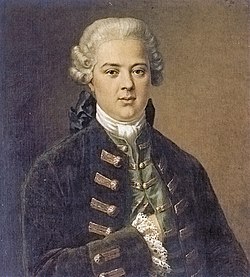
![Johann Hinrich Gossler.jpg][float-right] The Hanseaten, or merchant patriciate, formed a hereditary elite class in Hanseatic cities such as Hamburg, Lübeck, and Bremen, distinguished by their dominance in long-distance trade and urban governance rather than agrarian or feudal bases of power.[20] This class originated from successful merchant families who accumulated capital through participation in the Hanseatic League's networks, establishing multi-generational family firms focused on commodities like grain, timber, and fish from the Baltic region. Unlike the hereditary nobility tied to land and vassalage, the Hanseaten derived status from commercial acumen, civic privileges, and exclusionary practices that preserved wealth within a closed circle.[21] Membership in this patriciate was rigidly controlled, often limited to descendants of established lineages who held full burgher citizenship, enabling access to the city senate and exclusion of newcomers or artisans from political influence. In Hamburg, for instance, by the 17th century, the senate comprised representatives from approximately 20 to 30 such families, who intermarried to consolidate alliances and prevent dilution of fortunes.[22] This endogamy and hereditary transmission of business interests created a distinct social stratum, where prestige accrued from sustained economic success and civic service, not martial prowess or royal favor. The patriciate's rejection of noble titles underscored their commitment to burgher autonomy, viewing ennoblement as a threat to the commercial freedoms central to their identity.[23] Socially, the Hanseaten cultivated a culture of restraint and functionality, prioritizing family continuity and trade innovation over ostentatious display associated with continental aristocracies. Their households served as both residences and business hubs, integrating family members into operations from an early age, which reinforced class cohesion.[5] This structure contrasted sharply with the more fluid bourgeois classes elsewhere in Europe, as the patriciate's control over guilds, consulates, and legal monopolies entrenched their position against imperial or noble encroachments. While economically interdependent with broader urban society, the class maintained social distance, rarely intermarrying outside their ranks or with Jewish merchants despite occasional business ties.[21] By the 19th century, industrialization challenged this insularity, yet the Hanseaten's legacy persisted in Hamburg's senatorial traditions until democratic reforms in 1918.Emphasis on Commercial Autonomy and Family Continuity
The Hanseaten merchant patriciate prioritized commercial autonomy by leveraging the self-governing structures of Hanseatic free cities, which granted them independence from feudal overlords and imperial interference in trade matters. In Hamburg, this manifested through control of the city senate and guilds, enabling direct negotiation of commercial treaties and monopolies without intermediary nobility. For instance, the Hanseatic League's framework emphasized merchant privileges in foreign ports, fostering a network based on trust and reputation rather than hierarchical allegiance.[24] Family continuity was ensured through strict patrilineal succession and endogamous marriage practices, which concentrated wealth and expertise within a closed elite. Sons were groomed from youth via apprenticeships in family firms, perpetuating mercantile knowledge across generations; historical analyses show a strong tendency for offspring of Hanseatic business families to enter the same profession, contrasting with more fluid social mobility elsewhere. Endogamy reinforced these ties, as intermarriages among patrician lineages like the Berenbergs and Gosslers preserved capital and political influence, with rates of intra-class unions notably high in Hamburg's elite circles.[21][25] Exemplifying this, the Berenberg family established their merchant bank in 1590 through brothers Hans and Paul Berenberg, initially trading cloth and spices, and sustained it via family partnerships that evolved into modern banking while intermarrying with other Hanseatic houses. Similarly, the Gossler family, integrated into Berenberg-Gossler operations by the early 19th century, maintained senatorial roles and commercial dominance, underscoring how such practices enabled longevity amid economic shifts. These mechanisms not only secured intergenerational transfer of assets but also insulated businesses from external dilution, aligning with the patriciate's rejection of aristocratic titles in favor of burgher self-reliance.[26][27]Rejection of Feudal Nobility and Titles
The Hanseaten patriciate explicitly rejected feudal noble titles, viewing them as incompatible with the commercial autonomy and egalitarian ethos of their urban republican governance. Rooted in the Hanseatic League's emphasis on merchant guilds and free cities, this stance prioritized burgher privileges—such as self-rule through senatorial councils—over the land-tenure obligations and hierarchical vassalage of feudal aristocracy. Families in Hamburg, Lübeck, and Bremen maintained plain surnames without noble prefixes like "von," which denoted rural estates and imperial fealty, thereby avoiding subordination to emperors or princes that could undermine civic independence.[28] This rejection extended to a broader cultural aversion to aristocratic honors, exemplified by the "Hanseatic rejection" tradition, under which patricians declined medals, orders, and titles from foreign monarchs or powers to affirm loyalty to their city's sovereignty. Originating in the medieval period amid tensions with territorial lords, this practice persisted as a marker of the class's self-conception as a meritocratic elite unbound by feudal customs.[29] By the nineteenth century, Hamburg's merchant leaders embodied this ideology as stern republicans who abhorred titles and withheld deference from Prussian Junkers, regarding commercial prowess as a form of preeminence eclipsing landed nobility. A Hamburg mayor encapsulated this sentiment, stating that while one could confer a title on a merchant, it could not elevate him further, as the burgher status already represented the societal apex.[21]Political and Economic Functions
Role in Republican Governance and the Senate
The Hanseaten class exerted dominant influence over Hamburg's republican governance through their monopoly on membership in the Senate, the city's core executive, legislative, and judicial authority. Established under the Lübeck Law in the medieval period, the Senate typically comprised 12 to 18 lifelong appointees selected exclusively from the hereditary grand burghers, ensuring that political decision-making aligned with merchant patrician interests in trade protection, fiscal policy, and diplomatic autonomy. This oligarchic arrangement, where senators were nominated and elected by a restricted college of fellow grand burghers, excluded ordinary citizens and guilds from power, prioritizing family lineages' continuity over democratic representation.[13] The Senate under Hanseaten control managed Hamburg's internal affairs, including taxation, harbor regulations, and defense against external threats, while advancing economic priorities such as exclusive trading privileges within the Hanseatic League and resistance to imperial overreach. For instance, following the French occupation from 1806 to 1814, which temporarily dismantled the traditional structures, the restored Senate in 1815 swiftly reasserted patrician authority, monopolizing coercive institutions like the militia to suppress unrest and reaffirm commercial self-rule. This resilience highlighted the class's strategic use of governance to perpetuate wealth accumulation and burgher privileges against aristocratic or absolutist encroachments.[30] Throughout the 19th century, Hanseaten-led senatorial policies facilitated Hamburg's ascent as a global entrepôt, enacting reforms like the 1818 establishment of a discount bank and navigation acts that bolstered shipping dominance, yet the system's exclusivity fueled tensions with reformist elements seeking broader electoral access. The oligarchy endured until the 1918–1919 constitutional upheavals amid post-World War I democratization, which abolished hereditary privileges and opened Senate eligibility to all citizens, marking the effective end of Hanseaten political hegemony.[30]Dominance in Trade Networks and Wealth Accumulation
The Hanseaten secured dominance in trade networks through their monopolistic control of Hamburg's Senate, which from the 16th century onward enacted policies preserving the free port status and prioritizing patrician merchants in commercial privileges. This governance structure enabled exclusive access to key shipping contracts, factoring operations, and commodity exchanges, particularly in the North Sea, Baltic, and Atlantic routes connecting to England, Scandinavia, and emerging colonial markets. By the 17th century, Hamburg's ascent as a global entrepôt amplified this control, with Hanseaten directing flows of timber, grain, and fish northward while importing spices, silks, and later sugar and coffee from southern Europe and the Americas.[31][24] Wealth accumulation stemmed primarily from vertical integration across shipping, brokerage, and finance, where family firms owned vessels, warehouses, and banking operations to minimize risks and maximize margins. Hanseaten houses like Berenberg, established in 1590, pioneered bills of exchange and merchant banking, facilitating credit for long-distance voyages and amassing capital through interest and commissions. In the 18th century, import records reveal Hamburg's trade, led by these patricians, processed vast quantities of tropical goods—such as over 180,000 declarations spanning 1733–1798—yielding profits reinvested in fleet expansions and real estate.[32] This compounding of mercantile gains, sustained by interfamily alliances and apprenticeships, elevated select lineages to multimillion-thaler fortunes by the early 19th century, funding civic infrastructure while reinforcing class exclusivity.[33][34]Innovations in Banking, Shipping, and Global Commerce
The Hanseaten merchant families pioneered the widespread use of bills of exchange in northern European trade, enabling merchants to transfer funds across distances without transporting physical currency, thus reducing risks from theft or loss during voyages.[35] This instrument, refined in Hanseatic ports like Hamburg by the 13th century, involved a seller drawing a bill on a buyer's account in a distant city, payable upon presentation, which facilitated credit extension and mitigated currency fluctuations in multilateral trade networks spanning the Baltic and North Seas.[36] In Hamburg, this practice evolved into formalized banking by the Hanseaten elite; for instance, the Berenberg family, Flemish-origin Hanseatics who settled in the city in 1590, established one of Europe's oldest continuous merchant banks, specializing in trade finance, letters of credit, and commodity-backed loans that supported transcontinental shipments of timber, fish, and grain.[37] In shipping, the Hanseaten leveraged the cog, a vessel innovated around 1150–1200 in northern German yards, characterized by its flat-bottomed hull for navigating shallow rivers and estuaries, a single square-rigged mast for efficient cargo handling, and an early sternpost rudder for improved steerability over oar-dependent predecessors.[38] This design allowed Hanseatic fleets from Hamburg to carry up to 200 tons of bulk goods—such as salt herring from Scania or furs from Novgorod—at speeds of 4–6 knots, revolutionizing low-margin staple trades by enabling larger, more reliable convoys that bypassed feudal tolls through collective bargaining.[39] By the 14th century, Hamburg's patrician shipowners further adapted cogs into hybrid forms with enhanced clinker-built sides for durability against North Sea storms, contributing to the League's dominance in freight volumes equivalent to thousands of voyages annually across 200 member cities.[40] These advancements underpinned Hanseatic expansions into proto-global commerce, with Hamburg's Hanseaten establishing kontors—semi-autonomous trading enclaves—in key nodes like the Steelyard in London (by 1280) and Bruges, securing extraterritorial rights for duty-free exchanges of English wool for eastern spices and silks rerouted via Flemish intermediaries.[41] This network, peaking in the 1370s with monopolies on Prussian grain exports feeding urban growth from London to Constantinople, introduced standardized commercial laws and mutual defense pacts that prefigured joint-stock mechanisms, amassing Hamburg's trade turnover to rival Genoa's by 1400 through diversified routes linking Hungarian copper mines to Iberian saltworks.[42] Such innovations prioritized empirical risk management over speculative ventures, fostering sustained capital accumulation within family firms that endured beyond the League's 1669 dissolution.[43]Relationship to Nobility and External Powers
Tensions with Hereditary Nobility
The Hanseaten's defining republican ethos created inherent tensions with the hereditary nobility, emblematic of the feudal order the merchant class had transcended through trade and self-governance. In contrast to the aristocratic hierarchies dominating much of the Holy Roman Empire, Hamburg's patriciate cultivated a society predicated on burgher equality, where commercial success conferred status rather than inherited privilege. This ideological divide positioned the Hanseaten as antagonists to noble pretensions, prioritizing civic autonomy over deference to landed elites who often imposed tolls, piracy risks, and monopolistic barriers on commerce. A vivid articulation of this opposition appeared in early 19th-century Hamburg discourse: "We have no nobles, no patricians, no slaves, no not even subjects. All true Hamburgers recognize and belong to only one class, that of burgher, nothing more and nothing less."[44] Such declarations reflected not mere absence of internal nobility but active repudiation of aristocratic norms, with Hanseaten families discouraging intermarriages that might import feudal attitudes or dilute their emphasis on family firms and mercantile continuity. This stance preserved the class's cohesion amid external pressures from noble-dominated states, ensuring that governance remained in merchant hands and underscoring a causal view of nobility as economically parasitic relative to productive trade networks.Strategic Alliances, Intermarriages, and Conflicts
The Hanseaten merchant patriciate in cities like Hamburg maintained a deliberate separation from hereditary nobility, viewing intermarriages as threats to their burgher identity and economic independence. Such unions were generally discouraged, as they risked introducing feudal obligations and diluting the class's emphasis on commercial self-reliance over titled status. Old Hamburg families, including the Petersens, Slomans, Godeffroys, and Sievekings, repeatedly declined offers of noble titles from German rulers, prioritizing civic privileges and family continuity within their own networks. While endogamy prevailed among Hanseaten houses to pool capital and reinforce trade partnerships, rare exceptions occurred in the late 19th and early 20th centuries, such as the Jenisch family's elevation to nobility by Prussia in 1906 after service in Hamburg's senate.[45][33] Strategic alliances for the Hanseaten class were primarily channeled through the Hanseatic League's confederation of cities, which occasionally partnered with noble elements against mutual adversaries. A notable example was the League's 1360s coalition with Danish nobles rebelling against King Valdemar IV, enabling joint military efforts that expelled Danish forces from key territories and secured trade routes in the Baltic. These pacts were pragmatic, focused on defending commercial interests rather than ideological alignment, and contrasted with the patriciate's internal rejection of noble integration. In Hamburg, the most republican of Hanseatic centers, the senate structure explicitly barred nobility from governance, preserving patrician dominance.[43] Conflicts with nobility stemmed from attempts to erode burgher autonomy, including noble encroachments on trade monopolies and demands for feudal levies. Prior to the League's consolidation, merchants faced subjugation by nobles and clergy who controlled tolls and markets, prompting patrician resistance that culminated in the League's defensive federation. In Hamburg, tensions manifested in legal defenses against imperial or princely overreach, with Hanseaten leveraging their wealth and networks to uphold privileges like exemption from noble jurisdictions. Inter-elite frictions persisted into the 19th century, as Hanseatic patricians resisted sharing social spheres with titled newcomers, underscoring their preference for merit-based commerce over aristocratic hierarchy.[46][21]Preservation of Burgher Privileges Against Imperial Encroachment
The Hanseaten patriciate safeguarded burgher privileges by leveraging the free imperial city status, which subordinated cities like Hamburg solely to the emperor while exempting them from feudal overlords and enabling self-rule through senatorial governance. Emperor Frederick Barbarossa's 1189 grant to Hamburg established key autonomies, including tax-free navigation rights on Russian rivers and immunity from tolls in imperial territories, forming the legal bulwark against centralizing pressures.[17] These privileges encompassed independent courts, fiscal self-determination, and representation in imperial diets, allowing the merchant elite to administer trade policies without princely interference.[47] [48] Resistance to imperial overreach manifested in refusals of non-standard taxes and military levies that threatened commercial focus. Hanseatic cities, including Hamburg, routinely contested demands like the 1495 "common penny" tax imposed by Maximilian I, prioritizing league-wide consultations over unilateral compliance to preserve fiscal sovereignty.[49] In the 16th century, amid Charles V's campaigns for religious uniformity, Hamburg's Senate—controlled by Hanseaten families—adopted Lutheran reforms in 1529, evading enforcement through diplomatic maneuvering and alliances like the Schmalkaldic League, which shielded civic institutions from Habsburg absolutism.[50] This defiance extended to rejecting imperial commissioners probing local minting and orthodoxy, reinforcing patrician control over internal affairs. By the 17th century, pragmatic neutrality during conflicts like the Thirty Years' War enabled preservation amid existential threats. Hamburg's elite negotiated capped contributions to imperial armies, avoiding full subjugation while funding defenses; the city's 1627-1629 standoff against Danish incursions, backed by senatorial resolve, underscored Hanseaten commitment to unencumbered trade routes. Such strategies—combining legal appeals to the Reichskammergericht, collective Hanseatic bargaining, and selective fiscal concessions—sustained privileges until the empire's 1806 dissolution, outlasting many territorial peers through emphasis on economic utility over subservience.[51]Prominent Families and Lineages
Key Merchant Houses and Their Economic Foundations
The Berenberg merchant house, one of the foundational pillars of Hanseaten economic power in Hamburg, was established in 1590 by brothers Hans and Paul Berenberg, who initially focused on the cloth trade and import-export of goods from Antwerp. This early specialization leveraged Hamburg's position as a transshipment hub for Baltic commodities like grain, timber, and salted fish, re-exported westward via established Hanseatic networks. The firm's resilience stemmed from intergenerational continuity, with Cornelius Berenberg expanding operations around 1660 to include trade with the Netherlands, France, Spain, Portugal, Scandinavia, Russia, and northern Italy, incorporating shipping and insurance to mitigate risks in volatile maritime commerce.[26] By the early 18th century, the Berenbergs pivoted toward merchant banking, offering loans, bill discounting, and acceptance credits, which capitalized on Hamburg's emergence as a financial center after Amsterdam's decline in 1798; this shift provided liquidity for commodity trades and insulated the house from direct exposure to fluctuating freight markets. The integration of the Gossler family through marriage formed Berenberg-Gossler & Co., enhancing capital pools for large-scale ventures, including the co-founding of the Hamburg America Line (HAPAG) in 1847 alongside other houses like H.J. Merck & Co., which propelled steamship dominance in transatlantic passenger and cargo routes, drawing on foundations in bulk goods handling and credit facilitation. Johann Hinrich Gossler (1755–1829), a key figure in this era, exemplified the house's blend of trade acumen and financial innovation, managing expansions into international banking stakes such as Bergens Privatbank in 1855.[26] The Amsinck house, tracing roots to Dutch merchants who settled in Hamburg by the late 18th century, built its foundations on overseas trade with the Americas, importing raw cotton, sugar, and other colonial groceries amid the 19th-century boom in Hamburg's entrepôt economy; Gustav Amsinck's establishment of a New York branch in 1857 exemplifies this, scaling family operations from local brokerage to global arbitrage in staples that fueled textile industries. Complementary houses like those of Overbeck and Burchard sustained Hanseaten dominance through diversified portfolios in shipping, whaling, and senatorial oversight of port privileges, ensuring collective control over tariffs and monopolies that preserved wealth accumulation into the industrial age. These firms' economic bedrock—family-held capital, network exclusivity, and adaptation from medieval bulk trade to modern finance—underpinned the class's oligarchic stability, with verifiable continuity in records of interlinked ventures rather than speculative ventures.[52][32]Notable Figures, Achievements, and Interconnections
Johann Hinrich Gossler (1738–1790), a key Hanseatic merchant from Hamburg, married Elisabeth Berenberg in 1768, integrating his lineage into the Berenberg trading house founded in 1590.[26] As primary partner, he expanded Berenberg & Co. into one of Hamburg's preeminent merchant firms by the late 18th century, facilitating extensive transatlantic and European trade in commodities like sugar, coffee, and indigo.[37] His strategic partnerships, including admitting son-in-law L.E. Seyler in 1788, solidified the firm's transition toward modern banking operations.[26] Gossler's descendants perpetuated Hanseatic influence, with later generations holding senatorial posts and intermarrying with other patrician houses like Amsinck and von Schröder, thereby consolidating economic and political networks across generations. Such alliances preserved exclusive access to trade privileges and senatorial elections, enabling families to amass wealth equivalent to millions in contemporary terms through diversified shipping and finance. Johann Heinrich Burchard (1852–1912), descended from established Hanseatic merchants, served as First Mayor of Hamburg from 1901 to 1908, overseeing infrastructure expansions like harbor modernizations that enhanced the city's global trade position.[53] His tenure exemplified the class's adaptation to industrialization while upholding burgher autonomy against centralizing pressures. These figures' achievements, rooted in familial interconnections, underscore the Hanseaten's causal role in sustaining Hamburg's republican governance and commercial supremacy, with institutions like Berenberg Bank enduring as testaments to their innovative risk management in volatile markets.[54]Criticisms, Controversies, and Internal Dynamics
Oligarchic Control Versus Broader Civic Participation
In the Hanseatic cities, political authority was concentrated among a narrow elite of merchant families known as the Hanseaten, who monopolized key institutions such as the senates and councils through mechanisms of co-optation and hereditary privilege. In Hamburg, the Senate—comprising lifelong positions filled by selection from a closed circle of approximately 20 to 30 grand burgher families—effectively excluded outsiders, ensuring that executive and judicial powers remained within interconnected lineages like the Amsincks, Gosslers, and Burchards. Similarly, Lübeck's city council, dominated by a merchant oligarchy, dictated major decisions on trade, law, and diplomacy, with membership restricted to wealthy traders who prioritized commercial interests over broader representation. This structure privileged economic expertise and family networks, fostering stability in trade governance but limiting accountability to the wider populace.[55] Broader civic participation was nominally channeled through guilds and advisory bodies, yet these served primarily to mediate lower merchant and artisan interests without challenging patrician dominance. Hamburg's Bürgerschaft, an assembly of citizens, held consultative roles but lacked veto power over Senate decisions until mid-19th-century reforms, effectively rendering it a rubber-stamp for elite policies.[56] In Lübeck, guilds could petition the council but were barred from executive roles, leading to periodic tensions as artisans sought influence amid economic shifts. This exclusionary dynamic drew criticisms for stifling innovation and equity, as evidenced by the 1408 Lübeck uprising, where commoners briefly installed guild representatives on the council in defiance of tradition, highlighting merchant elite resistance to power-sharing. Oligarchic control persisted due to the Hanseaten's wealth-derived leverage, including control over public credit and foreign policy, but faced mounting pressure from industrialization and liberal movements. By the 1850s in Hamburg, demands for electoral reforms eroded patrician exclusivity, culminating in a 1859 constitution that expanded Bürgerschaft suffrage to propertied citizens, marking a shift toward inclusive governance. Critics, including contemporary liberals, argued that such systems prioritized familial monopolies over meritocratic participation, potentially hindering long-term adaptability, though empirical outcomes showed sustained economic growth under elite stewardship until external disruptions.[55] These tensions underscored a causal trade-off: oligarchic cohesion enabled decisive trade policies, yet bred internal resentments that fueled gradual democratization.[57]Family Rivalries and Exclusionary Practices
The Hanseaten class in cities like Hamburg, Lübeck, and Bremen maintained oligarchic control through hereditary privileges that restricted access to political and economic power, effectively excluding newcomers and lesser burghers from the senate and key guilds. In Hamburg, grand burghers—equivalent to Hanseaten—held exclusive eligibility for senate membership until constitutional reforms in 1919, with governance dominated by a narrow cadre of commercial families who initiated and enforced laws to preserve their dominance.[58] Guild regulations further entrenched this by imposing barriers to entry in trade and professions, limiting participation to established merchant lineages and stifling broader economic entry.[55] Exclusionary practices extended to social and marital norms, where endogamy within Hanseaten families reinforced class cohesion and prevented dilution of wealth or influence; new families rarely gained admission without substantial intermarriage or co-optation by incumbents, a process that favored continuity over expansion.[55] These mechanisms, rooted in guild monopolies established from the 12th-13th centuries, prioritized stability and property rights for insiders but contributed to long-term economic stagnation by blocking innovation from outsiders, as evidenced by reversed population growth trends in autonomous Hanseatic cities after initial booms.[55][59] Internal rivalries among Hanseaten families manifested in competition for senate positions and commercial advantages, such as control over trade routes or guild leadership, though these were often subdued to maintain oligarchic unity against external threats like craft guilds or imperial interference. Patrician lineages experienced generational turnover, with some families ascending or descending based on mercantile success, fostering subtle contests without fracturing the class structure.[60] Such dynamics ensured that power remained concentrated, as guilds and councils recruited primarily from core merchant families, sidelining broader civic participation.[55]Responses to Economic Shifts and External Pressures
The Hanseaten merchant elite in Hamburg responded to the decline of traditional Baltic and North Sea trade networks in the early 19th century by pivoting toward Atlantic commerce and emigrant shipping, particularly during the 1840s and 1850s amid European revolutions and famines driving mass emigration to the Americas. Between 1850 and 1852, Hanseatic firms in Hamburg and Bremen adjusted shipping capacity to capture a growing share of the emigrant traffic, which surged from approximately 20,000 departures in 1847 to over 100,000 annually by the mid-1850s, leveraging their established networks in Liverpool and New York for transatlantic routes.[61] This adaptation preserved family fortunes by integrating steamship technology while maintaining conservative mercantile practices resistant to full industrialization, as mid-century economists noted Hanseaten operations resembled pre-industrial models more than emerging factory economies.[24] Industrialization pressures from the 1870s onward prompted selective diversification rather than wholesale transformation, with prominent Hanseaten houses like Berenberg-Gossler investing in railways, banking, and colonial trade while avoiding heavy manufacturing dominance seen in Prussian regions. By the late 19th century, Hamburg's port expansion under Hanseaten Senate control—handling over 10 million tons of goods annually by 1900—reflected pragmatic embrace of free-trade policies and infrastructure like the Elbe dredging projects initiated in the 1880s, countering competition from Rotterdam and Antwerp.[29] This conservative modernization, involving roughly 776 active Hanseaten merchants in 1852, prioritized technological adoption for export-oriented growth over democratic reforms or proletarian integration, embodying a transnational elite strategy against broader socioeconomic upheaval.[29] External pressures from wars elicited defensive diplomacy and economic resilience; during the Napoleonic Continental System (1806–1814), French occupation severed Hamburg's trade links, prompting Hanseaten leaders to engage in covert smuggling and lobbying for exemptions, which mitigated losses estimated at 50–70% of pre-war volumes, followed by rapid postwar recovery via renewed Anglo-Hanseatic ties. In the Franco-Prussian War (1870–1871), Hanseaten-influenced Senate policies facilitated Hamburg's integration into the German Empire while preserving fiscal autonomy, averting direct military burdens through contributions exceeding 20 million marks in loans and supplies. World War I blockades similarly spurred intra-family adaptations, such as shifting to neutral-flag shipping, sustaining core houses amid 1914–1918 trade collapses that halved Hamburg's tonnage.[16] These responses underscored a pattern of elite continuity, prioritizing oligarchic control and international networks over ideological alignment with imperial or nationalistic demands.Decline, Adaptation, and Enduring Legacy
Effects of Industrialization, Wars, and Democratization
The industrialization of Germany in the late 19th century, accelerating after the establishment of the Zollverein customs union in 1834, expanded Hamburg's economic activities beyond traditional Baltic and North Sea trade into global shipping, finance, and emerging sectors like chemicals and shipbuilding, which collectively accounted for a growing share of the city's GDP by 1900. Hanseaten merchant houses, such as those involved in the Hamburg-Amerika Line founded in 1847, adapted by forming proto-industrial firms and joint-stock companies, leveraging their networks to finance infrastructure like the 1888 free port expansion that boosted trade volumes by over 50% in the following decade. However, this shift empowered a new class of industrial entrepreneurs and a swelling proletarian workforce, whose demands for representation eroded the patricians' unchallenged economic hegemony, as evidenced by rising labor unrest and guild conflicts in the 1890s.[62][63] World War I disrupted Hamburg's port operations through the British naval blockade from 1914 to 1918, which reduced imports by up to 80% and triggered food shortages that fueled domestic discontent among merchant-dependent elites. The war's end precipitated the November Revolution in Hamburg on November 6, 1918, when workers' and soldiers' councils seized control, dissolving the traditional Senate dominated by Hanseaten families and installing a provisional socialist government that subordinated old institutions to popular assemblies. This upheaval dismantled the patricians' senatorial privileges, previously hereditary among grand burghers, as the revolutionary councils decreed the end of estate-based governance. World War II further compounded losses, with the RAF's Operation Gomorrah bombings from July 24 to August 3, 1943, destroying 60% of Hamburg's housing stock and much of its commercial infrastructure, decimating family estates along the Elbe and forcing many Hanseaten lineages to liquidate assets amid hyperinflation and postwar reparations. Democratization processes, intensified by the 1919 Hamburg State Constitution under the Weimar Republic, replaced the oligarchic Senate election—limited to co-opted burgher families—with universal male suffrage and proportional representation, enabling socialist and liberal parties to gain majorities and exclude patricians from executive roles by 1920. Earlier 19th-century liberal pressures, including the 1848 revolutions that briefly suspended guild monopolies, had already prompted minor concessions like expanded citizenship, but Hanseaten conservatives resisted broader reforms, maintaining estate-tied voting until wartime collapse. These changes shifted power to mass politics, with Hanseaten influence persisting informally through economic lobbying rather than direct rule, as conservative merchant factions aligned with deference-based traditions against proletarian enfranchisement.[30][64]Persistence in Modern Business and Cultural Influence
Descendants of Hanseatic patrician families, known as Hanseaten, maintain influence in contemporary business primarily through enduring financial institutions rooted in their mercantile traditions. Berenberg Bank, founded in 1590 by brothers Hans and Paul Berenberg—Flemish Protestant refugees who integrated into Hamburg's elite merchant class—continues as a family-owned private bank under the Berenberg-Gossler lineage.[26] This institution, one of the world's oldest continuously operating merchant banks, reported 1,500 employees and 39 billion euros in assets under management in recent disclosures, demonstrating sustained economic relevance amid modern global finance.[54] Over its 434-year history, Berenberg has been led by only 40 managing partners with personal liability, underscoring the intergenerational commitment of these families to prudent, independent banking practices.[26] In Hamburg, the epicenter of Hanseatic commerce, such family enterprises contribute to the city's role as Germany's second-largest economic hub, with its port handling over 8 million containers annually and generating significant GDP through trade networks echoing medieval league routes. The Jauch family, another Hanseatic lineage tracing to the late Middle Ages, settled prominently in Hamburg by the 17th century and persists in civic and economic spheres, though specific contemporary holdings are less publicized.[33] Culturally, Hanseaten descendants perpetuate influence via philanthropy and institutional stewardship, funding preservations of architectural and archival legacies in former league cities. Foundations linked to these families support museums and historical societies in Hamburg, Bremen, and Lübeck, fostering a narrative of mercantile autonomy and internationalism that informs regional identity. For example, endowments from patrician-era fortunes aid restorations of Gothic merchant houses, reinforcing the cultural capital of trade-oriented burgher values in education and civic governance.[65] This subtle persistence contrasts with broader democratization, as family networks adapt to corporate structures while retaining discreet sway in elite associations and policy circles emphasizing free trade.[5]Causal Factors in Long-Term Success and Relevance Today
The longevity of the Hanseaten class stems primarily from dense kinship networks that enabled the accumulation and preservation of trading capital through familial trusts and reciprocal partnerships, a structure that outlasted the Hanseatic League's formal dissolution in 1669.[66] These networks emphasized endogamy and inheritance practices, limiting wealth dilution and fostering intergenerational transmission of commercial expertise, as seen in merchant houses that prioritized horizontal alliances over vertical hierarchies.[67] Conservative financial strategies, including diversification into shipping, insurance, and private banking, further buffered against market volatility; for instance, Hamburg's patrician families adapted to post-medieval trade shifts by investing in colonial ventures and early industrial finance, maintaining control over key assets amid broader European upheavals.[37] A cultural disposition toward frugality, rigorous education in commerce and languages, and Lutheran-influenced discipline reinforced these economic mechanisms, with Hanseaten emphasizing self-reliance over ostentatious nobility, which contrasted with the land-based aristocracy's vulnerabilities to agrarian disruptions.[2] The autonomy of Hanseatic city-states, such as Hamburg's imperial immediacy until 1871, provided regulatory advantages like low tariffs and guild monopolies, shielding patrician interests from princely interference and enabling sustained accumulation; Hamburg's per capita wealth, for example, exceeded many continental peers by the 19th century due to such privileges.[43] ![Johann Hinrich Gossler][float-right] Today, Hanseaten descendants retain relevance through enduring family-controlled enterprises, notably Berenberg Bank, founded in 1590 and continuously operated as a partnership with personal liability, now managing assets exceeding €20 billion as of 2023 while adapting to modern wealth management and investment banking.[68] [54] Similar persistence marks other lineages, such as the Warburgs in finance, contributing to Hamburg's status as Germany's second-largest economy with a 2023 GDP of €123 billion, where patrician-linked firms influence shipping (e.g., Hapag-Lloyd roots) and philanthropy.[33] This continuity reflects causal resilience in identity-driven trade persistence, where post-Hanse trader affiliations correlated with higher inter-city commerce volumes into the 19th century, underscoring the enduring value of inherited networks in globalized markets.[69]References
- https://en.wiktionary.org/wiki/Hanseat