Hubbry Logo
Pink-collar workerPink-collar workerMain
Open search
Pink-collar worker
Community hub
Pink-collar worker
logo
8 pages, 0 posts
0 subscribers
Be the first to start a discussion here.
Pink-collar worker
Pink-collar worker
from Wikipedia

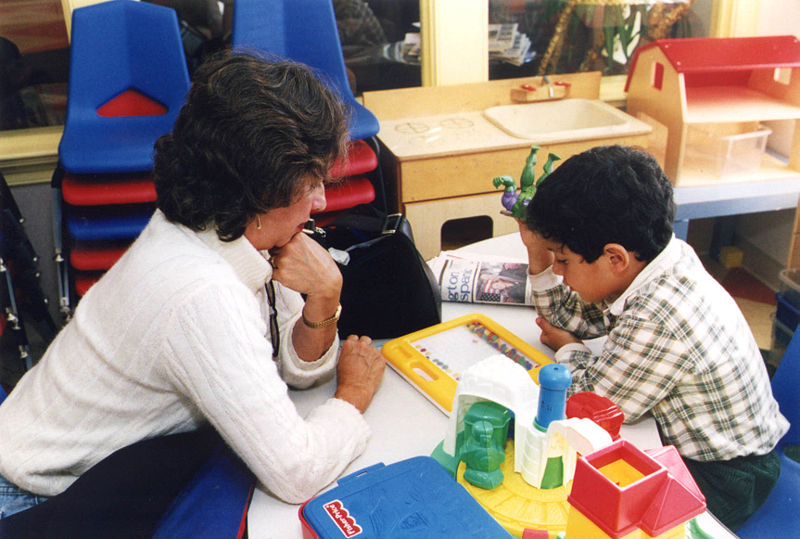
A special education teacher assists one of her students

A pink-collar worker is someone working in career fields historically considered to be women's work. This includes many clerical, administrative, and service jobs as well as care-oriented jobs in therapy, nursing, social work, teaching or child care.[1] While these jobs may also be filled by men, they have historically been female-dominated (a tendency that continues today, though to a somewhat lesser extent) and may pay significantly less than white-collar or blue-collar jobs.[2]

Women's work – notably with the delegation of women to particular fields within the workplace – began to rise in the 1940s, in concurrence with World War II.[3]

History

[edit]

William Jack Baumol first used the term pink collar in his 1967 article, "Macroeconomics of Unbalanced Growth: The Anatomy of Urban Crisis."[4] He introduced the term to describe a category of jobs predominantly held by women, often in clerical, administrative, or service-oriented roles. Baumol's focus was not only on the gendered nature of these jobs but also on their economic characteristics, particularly their relatively lower wages and limited opportunities for advancement compared to male-dominated professions. His analysis tied these roles to broader economic discussions about productivity and wage stagnation in labour markets. Baumol's use of the term provided an early economic framing of gendered divisions in the workforce, highlighting structural inequalities that persist in discussions of labour economics.

Louise Kapp Howe popularized the term pink collar in her 1977 book Pink Collar Workers: Inside the World of Women’s Work.[5] She used the term to describe jobs predominantly occupied by women, such as secretarial, clerical, teaching, nursing, and other caregiving or service roles. These positions were seen as extensions of traditional domestic responsibilities and were characterized by lower pay, limited career advancement opportunities, and a lack of prestige compared to "blue-collar" or "white-collar" jobs. Howe’s analysis went beyond simply identifying these roles; she explored how social expectations, gender norms, and structural inequalities confined women to these positions. She critiqued how these jobs were undervalued despite their essential contributions to the economy and society. Her work aimed to raise awareness about the economic and social disparities faced by women in the workforce and to advocate for the recognition and improvement of conditions in these roles. While Baumol's earlier usage of pink collar focused on economic categorizations, Howe expanded the term into a cultural and feminist critique, framing it as part of the broader struggle for gender equality in labour.

Occupations

[edit]

Pink-collar occupations tend to be personal-service-oriented workers working in retail, nursing, and teaching (depending on the level), are part of the service sector, and are among the most common occupations in the United States. The Bureau of Labor Statistics estimates that, as of May 2008, there were over 2.2 million persons employed as servers in the United States.[1] Furthermore, the World Health Organization's 2011 World Health Statistics Report states that there are 19.3 million nurses in the world today.[2] In the United States, women constitute 92.1% of the registered nurses that are currently employed.[6]

According to the 2016 United States Census analyzed in Barnes, et al.'s research paper, more than 95% of the construction workforce is male.[7] Due to the low population of women outside of the childcare or social workforce, state governments are miscalculating economic budgets by not accounting for most female pink-collar workers.[7] Generally, less government funding is allocated to professions and work environments that traditionally employ and retain a greater percentage of women, for example, education and social work. From the research conducted by Tiffany Barnes, Victoria Beall, and Mirya Holman, discrepancies for government representation of pink-collar jobs could primarily be due to legislatures and government employees having the perspective for only white-collar jobs and most people making budgetary decisions are men.[7] A white collar-job is typically administrative.

As explained in Buzzanell et al.'s research article, maternity leave is the time off from work a mother takes after having a child, either through childbirth or adoption.[8] In 2010, the International Labour Office explained that maternity leave is usually compensated by the employer's company, but several countries do not follow that mandate, including the United States.[8] Results from "Standpoints of Maternity Leave: Discourses of Temporality and Ability" state that many new mothers employed in pink-collar work have keyed disability or sick leave instead of time off for maternity leave.[8]

Pink-collar occupations may include:[9][10][11]

Architecture

[edit]

Education

[edit]

Healthcare

[edit]

Administration

[edit]
A World War II-era recruiting poster seeking women for clerical work

Entertainment

[edit]

Fashion

[edit]

Media

[edit]

Personal care and service

[edit]

Sport

[edit]

Background (United States)

[edit]

Historically, women were responsible for the running of a household.[12] Their financial security was often dependent upon a male patriarch. Widowed or divorced women struggled to support themselves and their children.[13]

Western women began to develop more opportunities when they moved into the paid workplace, formerly of the male domain. In the mid 19th and early 20th century women aimed to be treated as equals to their male counterparts, notably in the Seneca Falls Convention. In 1920 American women legally gained the right to vote, marking a turning point for the American women's suffrage movement; yet race and class remained as impediments to voting for some women.[14]

At the turn of the 19th century into the 20th, large numbers of single women in the United States traveled to large cities such as New York where they found work in factories and sweatshops, working for low pay operating sewing machines, sorting feathers, rolling tobacco, and other similar menial tasks.[15][16]

In these factories, workers frequently breathed dangerous fumes and worked with flammable materials.[17] In order for factories to save money, women were required to clean and adjust the machines while they were running, which resulted in accidents where women lost their fingers or hands.[17] Many women who worked in the factories earned meager wages for working long hours in unsafe conditions and as a result lived in poverty.[16]

Throughout the 20th century, women such as Emily Balch, Jane Addams, and Lillian Wald were advocates for evolving the roles of women in America.[18] These women created settlement houses and launched missions in overcrowded squalid immigrant neighborhoods to offer social services to women and children.[18]

In addition, women gradually became more involved with church activities and came to take on more leadership roles in various religious societies. The women who joined these societies worked with their members, some of whom were full-time teachers, nurses, missionaries, and social workers to accomplish their leadership tasks.[19] The Association for the Sociology of Religion was the first to elect a woman president in 1938.[19]

Invention of the typewriter

[edit]

Typically, clerk positions were filled by young men who used the position as an apprenticeship and opportunity to learn basic office functions before moving on to management positions. In the 1860s and 1870s, widespread use of the typewriter made women appear better suited for clerk positions.[20] With their smaller fingers, women were perceived to be better able to operate the new machines. By 1885, new methods of note-taking and the expanding scope of businesses led office-clerk positions to be in high demand.[21] Having a secretary became a status symbol, and these new types of positions were relatively well paid.

World War I and II

[edit]
A United States Navy recruiting poster from World War II, showing an officer of the Navy WAVES before a hospital ship
This poster made in 1942 titled "We Can Do It!" captures the WWII era cultural icon Rosie the Riveter depicted by J. Howard Miller who created this poster as an inspirational image to boost female worker morale.

World War I sparked a demand for "pink-collar jobs" as the military needed personnel to type letters, answer phones, and perform other secretarial tasks. One thousand women worked for the U.S. Navy as stenographers, clerks, and telephone operators.[22]

In addition, Military nurses, an already "feminized" and accepted profession for women, expanded during wartime. In 1917, Louisa Lee Schuyler opened the Bellevue Hospital School of Nursing, which was the first to train women as professional nurses.[23] After completing training, female nurses worked in hospitals or more predominantly in field tents.

World War II marked the emergence of large numbers of women working domestically in industrial jobs to assist in the war effort as directed under the War Manpower Commission which recruited women to fill war manufacturing jobs.[24]

Notably, American women in World War II joined the armed services and were stationed domestically and abroad through participation in non-combat military roles and as medical personnel. One thousand female pilots joined the Women Airforce Service Pilots, one hundred and forty thousand women joined the Women's Army Corps and one hundred thousand women joined the United States Navy as nurses through WAVES in addition to administrative staff.[25]

20th-century female working world (United States)

[edit]
This graph shows the increase in women graduating high school and attending college, while there is a decrease in high school dropouts.

A typical job sought by working women in the early 20th century was a telephone operator or Hello Girl. The Hello Girls began as women who operated on telephone switchboards during WWI by answering telephones and talking to impatient callers in a calming tone.[26] The workers would sit on stools facing a wall with hundreds of outlets and tiny blinking lights. They had to work quickly when a light flashed by plugging the cord into the proper outlet. Despite the difficult work, many women wanted this job because it paid five dollars a week and provided a rest lounge for the employees to take a break.[27]

Female secretaries were also popular. They were instructed to be efficient, tough, and hardworking while also appearing soft, accommodating, and subservient.[28] Women were expected to be the protector and partner to their boss behind closed doors and a helpmate in public. These women were encouraged to go to charm schools and express their personality through fashion instead of furthering their education.[28]

Social work became a female-dominated profession in the 1930s, emphasizing a group professional identity and the casework method.[29] Social workers gave crucial expertise for the expansion of federal, state and local government, as well as services to meet the needs of the Depression.[29]

Teachers in primary and secondary schools remained female, although as the war progressed, women began to move on to better employment and higher salaries.[30] In 1940, teaching positions paid less than $1,500 a year and fell to $800 in rural areas.[30]

Women scientists found it hard to gain appointments at universities. Women scientists were forced to take positions in high schools, state or women's colleges, governmental agencies and alternative institutions such as libraries or museums.[31] Women who took jobs at such places often did clerical duties and though some held professional positions, these boundaries were blurred.[31] Some found work as human computers.

Mostly women were hired as librarians, who had been professionalized and feminized from the late 19th century. In 1920, women accounted for 88% of librarians in the United States.[31]

Two-thirds of the American Geographical Society (AGS)'s employees were women, who served as librarians, editorial personnel in the publishing programs, secretaries, research editors, copy editors, proofreaders, research assistants and sales staff. These women came with credentials from well-known colleges and universities and many were overqualified for their positions, but later were promoted to more prestigious positions.

Although female employees did not receive equal pay, they did get sabbaticals to attend university and to travel for their professions at the cost of the AGS.[31] Those women working managerial and library or museums positions made an impact on women in the work force, but still encountered discrimination when they tried to advance.

In the 1940s, clerical work expanded to occupy the largest number of women employees, this field diversified as it moved into commercial service.[32] The average worker in the 1940s was over 35 years old, married, and needed to work to keep their families afloat.[33]

During the 1950s, women were taught that marriage and domesticity were more important than a career. Most women followed this path because of the uncertainty of the post-war years.[34] Suburban housewives were encouraged to have hobbies like bread making and sewing. The 1950s housewife was in conflict between being "just a housewife" because their upbringing taught them competition and achievement. Many women had furthered their education deriving a sense of self-worth.[35]

As mentioned in the research article by Patrice Buzzanell, Robyn Remke, Rebecca Meisenbach, Meina Liu, Venessa Bowers, and Cindy Conn, as of 2016, pink-collar jobs are quickly growing in demand by both men and women.[8] Professions within pink-collar jobs are more likely to be consistent with job security and the need for employment, but salary and advancements seem to be much more slow-growing factors.[8]

Pay

[edit]

A single woman working in a factory in the early 20th century earned less than $8 a week, which is equivalent to roughly less than $98 a week today.[36] If the woman was absent or was late, employers penalized them by docking their pay.[27] These women would live in boarding houses costing $1.50 a week, waking at 5:30 a.m. to start their ten-hour work day. When women entered the paid workforce in the 1920s they were paid less than men because employers thought the women's jobs were temporary. Employers also paid women less than men because they believed in the "Pin Money Theory", which said that women's earnings were secondary to that of their male counterparts. Married working women experienced lopsided stress and overload because they were still responsible for the majority of the housework and taking care of the children. This left women isolated and subjected them to their husband's control.[37]

In the early 1900s women's pay was one to three dollars a week and much of that went to living expenses.[38] In the 1900s female tobacco strippers earned five dollars a week, half of what their male coworkers made and seamstresses made six to seven dollars a week compared to a cutter's salary of $16.[39] This differed from women working in factories in the 1900s as they were paid by the piece, not receiving a fixed weekly wage.[40] Those that were pinching pennies pushed themselves to produce more product so that they earned more money.[40] Women who earned enough to live on found it impossible to keep their salary rate from being reduced because bosses often made "mistakes" in computing a worker's piece rate.[41] As well as this, women who received this kind of treatment did not disagree for fear of losing their jobs. Employers would frequently deduct pay for work they deemed imperfect and for simply trying to lighten the mood by laughing or talking while they worked.[41] In the 1937 a woman's average yearly salary was $525 compared to a man's salary of $1,027.[39] In the 1940s two-thirds of the women who were in the labor force suffered a decrease in earnings; the average weekly paychecks fell from $50 to $37.[42] This gap in wage stayed consistent, as women in 1991 only earned seventy percent of what men earned regardless of their education.[42]

Later on in the 1970s and 1980s as women began to fight for equality, they fought against discrimination in jobs where women worked and the educational institutions that would lead to those jobs.[42] In 1973 the average salaries for women were 57% compared to those of men, but this gender earnings gap was especially noticeable in pink-collar jobs where the largest number of women were employed.[43] Women were given routine, less responsible jobs available and often with a lower pay than men. These jobs were monotonous and mechanical often with assembly-line procedures.[44]

Education

[edit]

Women entering the workforce had difficulty finding a satisfactory job without references or an education.[45] However, opportunities for higher education expanded as women were admitted to all-male schools like the United States service academies and Ivy League strongholds.[46] Education became a way for society to shape women into its ideal housewife. In the 1950s, authorities and educators encouraged college because they found new value in vocational training for domesticity.[47] College prepared women for future roles because while men and women were taught together, they were groomed for different paths after they graduated.[48] Education started out as a way to teach women how to be a good wife, but education also allowed women to broaden their minds.

Being educated was an expectation for women entering the paying workforce, despite the fact that their male equivalents did not need a high school diploma.[49] While in college, a woman would experience extracurricular activities, such as a sorority, that offered a separate space for the woman to practice types of social service work that was expected from her.[50]

However, not all of a woman's education was done in the classroom. Women were also educated through their peers through "dating". Men and women no longer had to be supervised when alone together. Dating allowed men and women to practice the paired activities that would later become a way of life.[50]

New women's organizations sprouted up working to reform and protect women in the workplace. The largest and most prestigious of these organizations was the General Federation of Women's Clubs (GFWC), whose members were conservative middle-class housewives. The International Ladies Garment Workers Union (ILGWU) was formed after women shirtwaist makers went on strike in New York City in 1909. It started as a small walkout, with a handful of members from one shop and grew to a force of ten of thousands, changing the course of the labor movement forever. In 1910 women allied themselves with the Progressive Party who sought to reform social issues.

Another organization that grew out of women in the workforce, was the Women's Bureau of the Department of Labor. The Women's Bureau regulated conditions for women employees. As female labor became a crucial part of the economy, efforts by the Women's Bureau increased. The Bureau pushed for employers to take advantage of "women-power" and persuaded women to enter the employment market.

In 1913 the ILGWU signed the well-known "protocol in the Dress and Waist Industry" which was the first contract between labor and management settled by outside negotiators. The contract formalized the trade's division of labor by gender.

Another win for women came in 1921 when Congress passed the Sheppard–Towner Act, a welfare measure intended to reduce infant and maternal mortality; it was the first federally funded healthcare act. The act provided federal funds to establish health centers for prenatal and child care. Expectant mothers and children could receive health checkups and health advice.

In 1963 the Equal Pay Act was passed making it the first federal law against sex discrimination, equal pay for equal work (at least removed explicit base pay discrepancies based on sex), and had employers allow both men and women applicants to open positions if they qualified from the start.

Unions also became a major outlet for women to fight against the unfair treatment they experienced. Women who joined these types of unions stayed before and after work to talk about the benefits of the union, collect dues, obtain charters, and form bargaining committees.

The National Recovery Administration (NRA) was approved in May 1933. The NRA negotiated codes designed to rekindle production. It raised wages, shortened workers' hours, and increased employment for the first time maximizing hour and minimizing wage provisions benefiting female workers. The NRA had its flaws however, it only covered half of the women in the workforce particularly manufacturing and trade. The NRA regulated working conditions only for women with a job and did not offer any relief for the two million unemployed women who desperately needed it.

The 1930s proved successful for women in the workplace thanks to federal relief programs and the growth of unions. For the first time women were not completely dependent on themselves, in 1933 the federal government expanded in its responsibility to female workers. In 1938 the Fair Labor Standards Act grew out of several successful strikes. Two million women joined the workforce during the Great Depression despite negative public opinion.

21st-century female working world (United Kingdom)

[edit]

Today, the economy in the United Kingdom still shows a prominent divide in a workforce with many occupations still labeled as "pink-collar".[3] 28% of women worked jobs labeled under "pink-collar" in Rotherham, a town in northern England. This study was conducted in 2010.[3] In the United Kingdom, careers within nursing and teaching are not considered pink-collar jobs anymore, but instead are labeled as white-collar. This shift is also occurring in many other countries.[3] Studies show that white-collar workers are less likely to face health disparities.[3]

Pink ghetto

[edit]

"Pink ghetto" and "velvet ghetto" are terms used to describe low-paying occupations in which women historically constituted a majority of the workforce. In their 1983 book, Poverty in the American Dream: Women and Children First, authors Karin Stallard, Barbara Ehrenreich, and Holly Sklar used the term "pink collar ghetto" to discuss the increasing participation of women in the paid labour force and the persistent economic disadvantages they faced in jobs that were often dead-end, stressful and underpaid.[51]

"Pink ghetto" can also describe the placement of female managers into positions that will not lead them to the board room, thus perpetuating the "glass ceiling". This includes managerial roles in human resources, customer service, and other areas that do not contribute to the corporate "bottom line". While such roles allow women to rise in rank as managers, their careers may eventually stall and they may be excluded from the upper echelons.[52][53][54]

Pink ghetto in the field of public relations

[edit]

The terms "pink collar ghetto" and "velvet ghetto" can also describe a twentieth-century phenomenon wherein the status and pay grade of a profession dropped after an influx of women workers into that field. A 1986 study by the International Association of Business Communicators explored the gendered dynamics and implications of the increasing presence of women in public relations and business communication roles. The study found that the influx of women coincided with a devaluation of the professions in terms of social prestige and financial compensation.[55] Some scholars, such as Elizabeth Toth, claimed this was partially the result of women taking technician roles instead of managerial roles, being less likely to negotiate higher pay, and being assumed to be putting family life before work, even when that was not the case.[56] Other scholars, such as Kim Golombisky, cited biases against women (especially minority and working-class women) as another cause of this phenomenon.[57] As noted below in The Mythology of “Pink Collaring”, recent studies by data scientist Felix Busch and others have shown that the devaluation of occupations due to feminization has been declining since the mid-twentieth century, becoming statistically insignificant in 2015.[58][59]

Traditionally, Feminism in public relations focused on gender equality, but new scholarship makes claims that focusing on social justice would better aid feminist cause in the field. This brings the idea of intersectionalism to the pink collar ghetto. The issue is not caused by what women lack as professionals, but caused by larger societal injustices and interlocking systems of oppression that systematically burden women.[60]

The Mythology of "Pink Collaring" in Museums and the Arts

[edit]

As noted above, the authors who first described "pink collar" work, including William Jack Baumol, Louise Kapp Howe, Karin Stallard, Barbara Ehrenreich, and Holly Sklar, used the term to criticize the unfair systems trapping women in low-paying jobs. They sought to end the sexist practices and assumptions causing gender inequality in the workplace. By contrast, between 2016 and 2020, influential museum leaders in the United States reinterpreted the term "pink collar" to argue that women’s growing presence in museum professions and on art faculties would inevitably drive down pay in those fields. Proponents of this notion include Joan Baldwin and Anne Ackerson, founders of the Gender Equity in Museums Movement (GEMM), and art museum director Kaywin Feldman.[61][62][63][64][65] Feldman argued in 2020 that hiring more men in these fields was necessary to preserve their status.[66]

Proponents of this "pink collaring" theory have cited a 2016 New York Times article by columnist Claire Cain Miller.[67] In "As Women Take Over a Male-Dominated Field, the Pay Drops," Miller summarized a 2009 longitudinal study by sociologists Asaf Levanon, Paula England, and Paul Allison demonstrating a consistent twentieth-century trend wherein US occupations with a higher percentage of women offered lower median hourly wages than comparable fields that retained male majorities.[68] Miller overlooked both the historical nature of Levanon, England, and Allison’s findings and a problem that the authors themselves acknowledged, namely, that they did not investigate the mechanisms driving gender-based workplace devaluation or how resistant it might be to change.[69] Examining more current census data and using different analytical tools, the data scientist Felix Busch demonstrated in 2018 that occupational devaluation due to feminization has been steadily declining since the mid-twentieth century, that it does not affect all fields equally, and that some workers experience a wage benefit from the feminization of their field. He also showed that a field’s historical gender associations have more impact on wages than the field’s current gender composition.[70] This and other research disproves the notion that an occupation’s gender composition inevitably affects compensation.[71] Favoring men in hiring decisions because of their gender is illegal in the United States under Title VII of the 1964 Civil Rights Act.[72]

Male integration

[edit]

Judy Wajcman argues that technology has historically been monopolized by men, serving as a significant source of their power.[73] However, the advent of new technology has disrupted traditional blue-collar work, pushing more millennial men into pink-collar roles. Machines now perform many factory tasks once associated with masculinity, displacing unskilled or semi-skilled male workers. A 1990 study by Allan H. Hunt and Timothy L. Hunt concluded that uneducated, unskilled blue-collar workers are most vulnerable to job displacement caused by robotics.[74] Robotics and automation have not only eliminated many traditionally male-dominated roles but have also forced men into pink-collar jobs, which are often perceived as less prestigious due to associations with "women's work." Wajcman further notes that skills involving machines and physical strength are culturally tied to masculinity, while pink-collar jobs, which typically require less technical skill, are associated with women.[75] Ironically, the very technologies designed and monopolized by men are now displacing them, resulting in a shift to roles like teaching, nursing, and childcare—fields that come with significant stigma for men. Men in these professions often face discrimination and negative stereotypes, as traditional views associate men with professionalism, strength, and dominance.[76]

An analysis of 2016 United States Census data shows that approximately 78% of men were employed in cleaning and maintenance, engineering and science, production and transportation, protective services, and construction, while only 25% worked in healthcare support, personal care, education, office administration support, and social services.[7]

Men in pink-collar jobs

[edit]

Despite challenges, some men in pink-collar professions achieve advantages such as higher salaries, more opportunities, and faster promotions compared to their female counterparts. However, stereotyping and hostility remain barriers, often reducing workplace performance and retention rates for men in these roles. Men who remain in these professions longer tend to adapt and experience less discrimination, while newly hired men report higher turnover rates. For example, the Australian Bureau of Statistics found that less than 20% of elementary school teachers were men, highlighting the persistent gender imbalance in such fields.[76]

See also

[edit]

References

[edit]

Bibliography

[edit]
[edit]
Revisions and contributorsEdit on WikipediaRead on Wikipedia
from Grokipedia

A pink-collar worker is an individual employed in occupations traditionally dominated by women and involving service, caregiving, or administrative tasks, such as , elementary school , childcare provision, and secretarial duties. The term emerged in the to describe these roles, distinguishing them from blue-collar manual labor and white-collar professional positions, and was popularized by journalist Louise Kapp Howe's 1977 book Pink Collar Workers: Inside the World of . Pink-collar jobs often require interpersonal skills, , and sometimes postsecondary training, yet they typically offer lower wages than comparable male-dominated fields, contributing to observed pay disparities even after controlling for occupation. Empirical studies indicate that persists due to worker preferences, social norms, and barriers to male entry, with women comprising over 70% of workers in sectors like education and healthcare support. These roles expanded significantly post-World War II as women entered the workforce en masse, but face challenges including limited upward mobility and vulnerability to economic downturns.

Definition and Characteristics

Core Definition

A pink-collar worker refers to an individual employed in occupations historically dominated by women, typically involving service-oriented, caregiving, or administrative roles such as , , secretarial work, and retail sales. These positions emerged prominently in the as women entered the in greater numbers, often filling roles that emphasize interpersonal interaction, , and direct service to others rather than physical production or high-level executive decision-making. The term "pink-collar" was first introduced by economist William Jack Baumol in his 1967 article "Macroeconomics of Unbalanced Growth: The Anatomy of Urban Crisis," where he used it to describe labor sectors growing faster than due to rising demand for . It gained widespread usage in the late 1970s through the writings of social critic Louise Kapp Howe, who applied it to jobs like and secretarial positions to highlight their and associated economic dynamics. This draws from the "blue-collar" (manual labor) and "white-collar" (professional) distinctions, with "pink" evoking traditional associations of the color with , though the category reflects empirical patterns of rather than prescriptive gender norms. Key characteristics of pink-collar work include a predominance of participation—often exceeding 70-80% in fields like childcare and elementary education—and relatively lower wages compared to male-dominated sectors, attributed in part to the subjective valuation of emotional and relational skills over measurable outputs. These roles frequently demand high levels of , flexibility, and client-facing interaction, contributing to workforce stability in but also exposing workers to burnout and limited upward mobility due to structural barriers like part-time scheduling and requirements. Despite evolving demographics, with some diversification, the category persists as a descriptor of labor markets shaped by historical divisions of labor.

Distinctions from Other Collar Types

Pink-collar jobs are distinguished from blue-collar occupations by their emphasis on service-oriented and interpersonal tasks rather than manual or physical labor. Blue-collar roles, such as those in , , or skilled trades like , typically require hands-on mechanical skills, operation of machinery, and endurance of physical demands in industrial or outdoor environments, often compensated on an hourly basis with union protections in some sectors. In contrast, pink-collar positions, including aides, childcare providers, and retail clerks, prioritize , , and direct human interaction—elements collectively termed ""—while involving minimal heavy lifting or technical craftsmanship, though they may include light administrative duties. This shift from tangible production to relational support reflects broader economic transitions toward service economies, where pink-collar work sustains social infrastructure without the visible output of blue-collar trades. Compared to white-collar professions, pink-collar jobs occupy a middle ground in terms of requirements but diverge in prestige, , and . White-collar work, exemplified by accountants, lawyers, or executives, generally demands higher education (e.g., bachelor's degrees or beyond), analytical problem-solving, and strategic oversight in settings, leading to salaried positions with greater upward mobility and average annual earnings exceeding $70,000 in the U.S. as of data. Pink-collar roles, while sometimes requiring associate degrees or certifications (e.g., for licensed practical nurses), focus on routine caregiving or clerical support with limited latitude, resulting in median wages around $35,000–$50,000 annually for many such positions, compounded by irregular shifts and higher burnout rates from relational demands. Historically female-dominated—over 70% in fields like elementary or secretarial work as of recent labor statistics—this segregation contributes to persistent pay gaps, as pink-collar tasks are undervalued despite their essential societal function, unlike the credentialed expertise valorized in white-collar hierarchies. These distinctions extend to working conditions and societal valuation: pink-collar employment often entails flexible but precarious schedules in community-facing venues, blending elements of both collars yet lacking the of unionized blue-collar trades or the professional networks of white-collar careers. Empirical studies, such as those analyzing U.S. data from 2023, highlight how pink-collar sectors exhibit higher proportions of part-time and contingent labor (up to 25% in caregiving), underscoring their role in accommodating family responsibilities but at the cost of compared to the structured paths of other collars.

Key Traits and Societal Role

Pink-collar workers are characterized by their concentration in female-dominated occupations, such as , , and clerical roles, where women comprise 90% or more of the in fields like secretarial and domestic work. These positions demand high levels of interpersonal skills, , and , including managing client interactions and suppressing personal emotions to provide support, which elevates risks of burnout and strain, particularly among and service workers. Unlike blue-collar manual labor or white-collar professional roles, pink-collar jobs emphasize service provision over physical production or executive , often involving flexible but precarious schedules with limited advancement opportunities. In terms of compensation, these typically yield lower wages than male-dominated fields, with median earnings reflecting undervaluation of care-oriented tasks; for instance, as of , women in such roles faced persistent pay gaps exacerbated by . This stems from market dynamics where supply of female labor in caregiving exceeds demand-driven premiums seen in technical sectors. Societally, pink-collar workers underpin essential functions by delivering healthcare, , and that sustain units and participation, with women holding over 50% of non-farm payroll jobs by 2020 largely through these contributions. Their roles facilitate causal chains of development—nurturing children, aiding the elderly, and supporting administrative efficiency—yet systemic underpayment perpetuates economic inequalities, as emotional and relational demands receive minimal premium despite irreplaceability in non-automatable care economies. High representation, such as 93% in secretarial positions persisting from 1940 levels, underscores entrenched norms channeling women into these vital but lower-status supports.

Historical Development

Pre-20th Century Roots

In pre-20th century Western societies, women's paid labor primarily consisted of domestic service, which encompassed tasks such as cleaning, cooking, childcare, and laundry for households outside their own, serving as a direct precursor to modern service-oriented pink-collar roles. This occupation dominated female employment, particularly among unmarried women and immigrants, due to limited alternatives shaped by social norms confining women to extensions of household duties. In the before the Civil War, domestic service was the most common reported occupation for women, often involving live-in arrangements that blurred lines between employment and extended family care. By the mid-19th century in , domestic service accounted for nearly 25 percent of adult women's paid work, with nearly 9 percent of adult women engaged in it by 1851. These roles emphasized personal attentiveness and relational labor, mirroring the interpersonal focus of later pink-collar jobs. Caregiving professions like nursing and midwifery further exemplified early pink-collar foundations, rooted in women's traditional community and family-based support during illness and childbirth. Nursing originated as an informal female practice, with women acting as family healers and paid wet nurses from antiquity, evolving into more structured attendant roles by the 18th and 19th centuries before formal training emerged. Midwifery, a female-dominated field traceable to prehistoric eras and documented in records from 1600 BC, involved hands-on assistance in deliveries, herbal remedies, and postnatal care, often passed down through generations of women. Until the late 19th century rise of male physicians, these practices relied on empirical knowledge accumulated over centuries, prioritizing maternal and infant welfare in ways that anticipated professional caregiving sectors. Such occupations highlighted women's societal assignment to nurturing and service, driven by biological and cultural factors favoring female involvement in reproductive and health maintenance.

Early 20th Century Innovations

The proliferation of office technologies in the early 20th century, such as typewriters and , spurred the expansion of clerical roles predominantly filled by . By 1900, constituted about 19% of clerks in major U.S. cities like , but the introduction of these machines, which required dexterity and were marketed toward female typists and stenographers, accelerated feminization; switchboards, staffed almost exclusively by after the , saw massive growth with urban telephony expansion, employing over 200,000 "" by the . Adding machines and filing systems further segmented office work, creating low-entry-barrier jobs that aligned with societal views of women's suitability for repetitive, detail-oriented tasks, leading to comprising over 50% of clerical workers nationally by 1930. Nursing underwent professionalization through institutional reforms, with the establishment of state registration laws beginning in 1903 when enacted the first nurse practice act, requiring training and licensing to standardize care amid rising hospital demands from urbanization and medical advances. The , formalized in 1911 from earlier groups, advocated for education reforms, shifting from models to hospital-based programs that enrolled thousands of women annually by the 1920s, emphasizing and patient care in response to crises like the 1918 influenza pandemic. These changes elevated from informal domestic work to a regulated occupation, though it remained low-paid and female-dominated, with over 90% of nurses being women by 1920. Elementary teaching similarly formalized via normal schools and certification mandates, with women's share rising to 80-90% of public school teachers by 1910 due to expanded laws and graded systems that favored female educators for younger grades. Innovations like standardized curricula and urban school boards increased demand, employing women in roles seen as extensions of maternal duties, while high school rates for women doubled from 1900 to 1930, supplying educated labor for these positions. Between 1910 and 1930, clerical and professional service occupations (including and ) saw the largest numerical gains for women, reflecting these structural shifts over or .

World Wars and Workforce Expansion

During World War I, labor shortages in non-combat roles prompted significant female entry into service occupations such as nursing and clerical work. In the United States, over 10,000 nurses served near the Western Front in frontline medical stations, often without formal military rank or commission. The American Red Cross expanded from 17,000 members to over 20 million, deploying 20,000 registered nurses to support war efforts. In Britain, employers turned to women for clerical and commercial positions vacated by men, marking an early shift toward female dominance in administrative support. This wartime necessity increased female labor force participation in these fields, with effects persisting into the interwar period due to male casualties. World War II accelerated this trend on a larger scale, particularly in healthcare and administrative roles. The U.S. Army Nurse Corps and Navy Nurse Corps underwent dramatic growth to meet medical demands, with nurses serving in diverse theaters from to the Pacific. Approximately 350,000 American women joined the military, predominantly performing clerical duties and rather than roles. Overall, female employment in service-oriented jobs expanded as part of a broader influx, with about 5 million women entering the between 1940 and 1945 to fill gaps in occupations like secretarial, operation, and caregiving. These roles, already female-dominated pre-war—such as and , where over 90% of incumbents were women in 1940—saw reinforced segregation amid the labor crunch. The wars thus catalyzed workforce expansion in pink-collar sectors by leveraging existing gender patterns in service work, though post-conflict policies often redirected women toward domesticity, limiting long-term gains in participation rates. Government recruitment campaigns, including posters for nurse corps and opportunities, underscored the targeted mobilization of women into these supportive positions.

Post-1945 Evolution and Term Coinage

Following , the expansion of the drove significant growth in female employment within traditionally feminine occupations, such as clerical work, retail , and caregiving roles, which became hallmarks of pink-collar labor. Despite societal pressures exemplified by campaigns urging women to vacate industrial jobs for domestic roles—evident in the reduction of female workers from 36% of the workforce in 1944 to under 20% by 1947—many women persisted or transitioned into service-oriented positions. By 1950, women constituted approximately 29% of the total U.S. labor force, with over 40% of employed women in clerical or roles, reflecting the suburban boom and rising demand for administrative support in expanding bureaucracies and retail sectors. This trend accelerated through the and amid broader economic shifts toward services, which accounted for 60% of U.S. GDP by 1970, up from 50% in , pulling more married women into part-time or full-time pink-collar jobs to supplement household incomes amid stagnant for male breadwinners. labor force participation rose to 43% by 1970, with pink-collar sectors absorbing the influx: secretaries and typists numbered over 3 million by 1960, predominantly women, while employment grew from 500,000 in 1950 to 700,000 by 1970. These roles often featured low , flexible hours suiting family responsibilities, and cultural reinforcement of gender norms, yet they perpetuated , as women comprised 97% of telephone operators and 95% of private household workers in 1960. The term "pink-collar worker" emerged in the late 1970s to denote these female-dominated service jobs, distinct from blue-collar manual labor or white-collar professions, and was popularized by journalist Louise Kapp Howe's 1977 book Pink Collar Workers: Inside the World of Women's Work, which drew on three years of fieldwork to highlight the undervalued nature of such employment. Although some attribute an earlier sociological framing to economist William J. Baumol's 1960s analyses of service-sector productivity stagnation, the specific "pink-collar" phrasing gained traction during to critique gender-based job ghettos amid rising awareness of wage disparities—pink-collar workers earned about 60% of male counterparts' pay in comparable roles by the late 1970s.

Predominant Occupations

Healthcare and Caregiving Roles

Healthcare and caregiving roles represent a core segment of pink-collar occupations, characterized by hands-on patient support and interpersonal care. These positions include registered nurses (RNs), who assess patient conditions, administer treatments, and coordinate care; licensed practical nurses (LPNs), who provide basic nursing under supervision; nursing assistants, who assist with daily living activities; and home health and personal care aides, who support individuals in residential settings. Women dominate these fields, comprising 91% of RNs and 88% of the overall workforce as of 2022. In 2023, 87% of home health aides and 80% of personal care aides were women. Broader data indicate women held 77.6% of jobs in and social assistance in 2021, totaling over 16 million positions. These roles often require certifications or associate degrees rather than advanced professional training, aligning with pink-collar patterns of accessible entry for women. Caregiving extends to informal and formal support for the elderly and disabled, where females constitute about 66% of caregivers. Employment in these areas has grown rapidly, with projections for home health and personal care aides increasing 17% from 2024 to 2034, driven by aging populations. Despite essential contributions to health systems, these jobs frequently involve physical demands, , and .

Education and Childcare Positions

Education and childcare positions, including elementary school , preschool instruction, and daycare work, exemplify pink-collar occupations due to their emphasis on nurturing, interpersonal care, and routine service provision, with workforce compositions overwhelmingly female. In the United States, kindergarten and teachers are 96.7% female, according to 2023 data analyzed in reports on occupational gender segregation. Similarly, elementary and teachers are approximately 79% female, reflecting patterns observed in 2022 labor force data from the . These roles typically require bachelor's degrees for certified positions, though aides may enter with high school diplomas or associate degrees, facilitating accessibility for women balancing responsibilities. Childcare workers, encompassing daycare providers, nannies, and assistants, exhibit even higher female predominance, with 92.4% of the approximately 702,687 employed in 2023 identifying as women. The occupation involves daily tasks such as feeding, diapering, supervising play, and fostering basic developmental skills in children under age five, often in home-based or center settings regulated by state licensing. Employment in this sector totals around 497,450 workers, with median annual wages hovering near $32,000, underscoring the low-compensation nature of these service-oriented jobs. Globally, teaching staff reach 94% female representation, per UNESCO Institute for Statistics data, highlighting consistent gender patterns across contexts. These positions demand and flexibility, aligning with pink-collar traits of relational service over technical expertise, yet face high turnover due to physical demands and modest pay scales. In center-based early , 98% of staff are female, as documented in workforce indices from for the Study of Child Care Employment. Public school extends this to broader K-12 levels, where women comprise 77% of educators overall, concentrated in lower grades requiring greater caregiving elements. Such demographics persist despite efforts to diversify, rooted in occupational sorting by interpersonal skills traditionally associated with female socialization.

Administrative and Clerical Work

Administrative and clerical occupations, including secretaries, administrative assistants, receptionists, and office clerks, primarily involve supporting through tasks such as document preparation, scheduling appointments, managing correspondence, , and customer interactions. These roles demand organizational precision, communication skills, and routine administrative support, distinguishing them from higher-autonomy white-collar professions while aligning with pink-collar emphases on service-oriented labor. In the United States, these positions remain heavily female-dominated, with 93 percent of administrative assistants identified as women in 2020 data from the . Earlier figures from 2017 similarly reported 94.7 percent of secretaries and administrative assistants as , reflecting persistent gender segregation despite technological shifts like . This predominance traces to the late 19th and early 20th centuries, when mechanized office tools such as typewriters enabled women's entry into clerical work, as employers associated female dexterity and lower salary demands with suitability for repetitive, structured tasks. By 1920, a of clerical workers in urban centers like were young, U.S.-born white women under age 24, often hired for their emerging high school and perceived reliability in supportive roles. Economically, these jobs offer median annual wages below national averages—for instance, secretaries and administrative assistants earned around $41,000 in 2023—while comprising about 2 percent of the total workforce, predominantly women facing limited upward mobility due to occupational crowding. Despite projections of stable or minimal growth through 2034, driven by consolidation and software efficiencies, the roles sustain pink-collar patterns through reliance on like and multitasking, which empirical studies link to female labor preferences and rather than solely structural barriers.

Service and Personal Care Jobs

Service and personal care jobs form a core segment of pink-collar occupations, encompassing roles that provide grooming, wellness, and assistive services directly to clients, such as hairdressers, cosmetologists, manicurists, skincare specialists, therapists, and personal care aides. These positions emphasize interpersonal engagement, manual dexterity, and customer-facing responsibilities, often in settings like salons, spas, or homes. In recent data, these occupations exhibit strong female dominance. As of 2024, women constituted 91.3 percent of hairdressers, hairstylists, and cosmetologists, and 85.9 percent of manicurists and pedicurists in the United States. Personal care aides, who assist with non-medical daily living activities like bathing and dressing, were 80 percent female in 2023. Skincare specialists showed even higher disparity, with women comprising 98.2 percent in 2022 data. Overall, women represent 76.6 percent of first-line workers in personal care and service occupations. Historically, such roles trace roots to pre-20th-century domestic service, where over 90 percent of workers were women in , a pattern persisting in modern iterations despite some diversification. These jobs typically offer median wages below national averages—$37,000 annually for hairdressers in 2023—and face challenges like irregular hours and physical demands, yet they remain accessible with minimal formal , often requiring vocational .

Economic Dimensions

Compensation Structures and Gaps

Pink-collar occupations typically feature compensation structures that blend hourly wages, salaried positions with step increases, and performance-based incentives, often supplemented by benefits like and pensions, particularly in public-sector roles such as and . For instance, registered nurses frequently receive shift differentials and overtime pay due to irregular hours, while elementary school teachers operate under union-negotiated salary schedules tied to years of experience and education levels. Administrative assistants and childcare workers, however, more commonly earn hourly wages with limited advancement ladders, reflecting the service-oriented nature of these jobs. Median annual wages in these fields lag behind the national occupational of $49,500 as of May 2024. Registered nurses earned a of $93,600, exceeding the overall but requiring advanced certification and facing high burnout rates. Elementary school teachers averaged around $63,100 annually, with public-sector positions offering stability through tenure but constrained by fixed budgets. Secretaries and administrative assistants received a of $47,460, while childcare workers earned approximately $32,000 based on a $15.41 hourly , often part-time or seasonal. These figures reflect empirical patterns where female-dominated roles prioritize flexibility over premium pay, contributing to total compensation that includes non-wage elements like family leave but lower base earnings. Wage gaps persist between pink-collar jobs and comparably skilled male-dominated fields, with studies indicating as occupations feminize: a 10 increase in female share correlates with 1-2% drops for all workers, net of skill requirements. For example, care workers averaged $13.92 hourly in 2021, 20-30% below non-care occupations with similar . Explanations include supply gluts from gendered preferences for interpersonal work and compatibility, alongside societal undervaluation of "nurturing" tasks, though causal evidence mixes norms with market dynamics like lower in segregated fields. Within pink-collar roles, gaps narrow due to homogeneity, but overall, women in these jobs earn 82-84% of male counterparts across sectors, amplified by occupational sorting rather than within-job alone.

Educational Barriers and Requirements

Pink-collar occupations generally demand postsecondary credentials rather than advanced degrees, with requirements varying by role. Registered nursing typically necessitates an in nursing (ADN) or a (BSN), plus licensure via the NCLEX-RN examination. Elementary and teaching requires a and state certification, often involving and pedagogy . Childcare workers may enter with a and obtain the Associate (CDA) credential through assessed training, while administrative assistants often need only postsecondary certificates or associate degrees in . These entry points reflect a balance of formal and practical skills , enabling quicker integration compared to professions requiring graduate-level preparation. However, barriers persist in accessing such programs, particularly for women balancing familial obligations. Studies indicate familial responsibilities, including childcare, impede women's pursuit of specialized or degree completion in caregiving fields. Additionally, financial constraints affect low-income entrants, as certification costs and program tuition—averaging $10,000–$40,000 for diplomas—can deter enrollment without employer sponsorship. Despite women's overall higher educational attainment—comprising 50.7% of the U.S. college-educated labor force as of 2022—pink-collar workers frequently hold associate degrees or less, correlating with occupational segregation patterns. This suggests that while barriers like program waitlists and geographic access to vocational schools exist, self-selection driven by preferences for flexible, interpersonal roles influences educational paths over insurmountable obstacles. Empirical data from labor statistics show that non-college women in these sectors face fewer formal hurdles to entry than in male-dominated trades, though upward mobility to supervisory roles demands further credentials amid persistent gender gaps in promotion.

Occupational Segregation Data

In the United States, occupational segregation by gender persists despite declines over decades, as measured by the , which quantifies the proportion of workers who would need to change occupations for perfect gender integration. The index fell from approximately 0.68 in 1972 to 0.50 in 2011, with limited further progress by the 2020s, indicating that gender distributions remain uneven across fields. This segregation is evident in pink-collar occupations, where women constitute the vast majority of workers, reflecting concentrations in service, caregiving, and administrative roles rather than uniform distribution proportional to their 47% share of the overall labor force. U.S. (BLS) data from 2023 highlight stark gender imbalances in key pink-collar sectors. In healthcare, women comprise about 88% of registered nurses, with men at roughly 12%, a figure consistent across licensed practical nurses and related roles. In , women hold 77% of public school teaching positions as of 2020–21 data extended into recent trends, rising to 89% for elementary school teachers and 96.7% for and preschool teachers. Administrative roles show similar patterns, with women at 94% of secretaries and administrative assistants, including 96.4% of legal secretaries. The following table summarizes gender distributions in select pink-collar occupations based on recent federal :
OccupationPercent WomenYearSource
Registered Nurses88%2023BLS
Elementary School Teachers89%2023NCES/BLS
Kindergarten Teachers96.7%2023BLS
Secretaries/Administrative Assistants94%2022Census/BLS
Childcare Workers94%2023BLS (inferred from trends)
These concentrations contribute to broader segregation, as 65% of women in professional occupations work in and healthcare compared to 28% of men, per BLS 2023 analysis. Such data, drawn from large-scale surveys like the , underscore empirical patterns without implying causation, though they align with historical trends predating modern policy interventions.

Gender Dynamics

Explanations for Female Predominance

The predominance of women in pink-collar occupations, such as , , and administrative roles, is largely attributed to robust differences in vocational interests, where females exhibit stronger preferences for people-oriented careers involving social interaction and caregiving, while males favor thing-oriented or investigative pursuits. Meta-analyses of occupational interest inventories reveal a large (d = 0.93) for this "things versus people" dimension, with women consistently scoring higher on social interests that align with pink-collar work. These patterns emerge early in , with females showing elevated interests in social and artistic domains, and persist across vocational training choices, explaining much of the observed segregation without invoking barriers alone. Such differences appear universal and resilient to , as evidenced by surveys of adolescents in 80 countries, where girls universally aspired more to people-oriented occupations and boys to mechanical or STEM fields, irrespective of national levels. This stability suggests underlying biological and evolutionary factors over alone; for instance, prenatal exposure correlates with later interests, with higher levels predicting male-typical thing-oriented preferences. posits that women's greater inclination toward caregiving stems from ancestral adaptations for child-rearing and kin investment, fostering traits like and relational focus that map onto modern pink-collar roles. Empirical data from vocational apprenticeships confirm females disproportionately select people-focused trades, reinforcing that preferences drive sorting rather than external constraints in many cases. While cultural norms historically reinforced these inclinations—channeling women into service roles post-World War II, for example—their persistence amid expanded opportunities indicates intrinsic drivers. Studies controlling for and access still find interests accounting for up to half of gender segregation in fields like healthcare and , underscoring the causal role of differential preferences in female predominance. These findings challenge narratives emphasizing as the primary cause, as interest gaps remain pronounced even in egalitarian contexts.

Barriers Versus Preferences Debate

The barriers versus preferences debate concerns the primary drivers of women's overrepresentation in pink-collar occupations, such as , , and administrative roles. Advocates for the barriers explanation contend that systemic , including hiring biases and cultures hostile to needs, funnels women into lower-paid service jobs while blocking access to lucrative male-dominated fields like or . Audit studies, however, reveal that in hiring for male-typed jobs has declined since the , with meta-analyses showing reduced callbacks gaps for women in such roles. In female-dominated sectors, biases more often disadvantage men, suggesting barriers operate asymmetrically but do not fully explain women's choices. The preferences perspective attributes segregation to women's voluntary selection of pink-collar work, driven by greater interest in people-oriented tasks and flexibility for childcare. Large-scale meta-analyses of vocational interests document persistent sex differences, with women favoring occupations involving social interaction and (effect size d = 0.93 on the "people vs. things" dimension), patterns stable across decades and evident in adolescents' career aspirations. Empirical data confirm women submit 12% more applications to service jobs than men, indicating self-selection rather than exclusion. In fields like , surveys link women's entry to familial influences and perceptions of caregiving as inherently suitable, reinforcing alignment with relational preferences over structural coercion. Economist Claudia Goldin's on labor outcomes emphasizes that women's career trajectories—prioritizing part-time or flexible schedules post-childbirth—generate much of the pay gap, not residual , as flexible roles cluster in pink-collar domains. Similarly, experimental evidence highlights gender-specific task preferences, with women valuing interpersonal elements in job choices, contributing to segregation independent of penalties. While cultural norms and anticipated biases influence some decisions, cross-national data show preferences predict occupational sorting more robustly than barriers alone. Thomas Sowell critiques barrier-centric views for overlooking multifactor causes of disparities, including innate differences in interests and risk tolerance, evidenced by parallel patterns in non-discriminated groups. Academic emphasis on discrimination may reflect institutional biases favoring structural explanations, yet vocational data and application behaviors substantiate preferences as the preponderant force, with barriers playing a secondary role in sustaining pink-collar predominance. In , one of the archetypal pink-collar professions, the proportion of registered nurses has risen modestly from approximately 2.7% in 1970 to 12% as of 2022, reflecting a near tripling in absolute numbers from 140,000 in 2000 to around 400,000 by 2023. This growth, driven partly by expanded programs and recruitment efforts targeting men, has plateaued in recent years, with five-year trends from 2017 to 2022 showing no further percentage increase despite workforce expansion. Elementary and teaching presents a contrasting pattern of stagnation or decline in participation. The share of elementary teachers (pre-kindergarten through ) fell from 14% to 11% between the early and 2023, while fewer than 3% of and kindergarten teachers are men. Overall K-12 teaching has seen representation drop from 30% in 1987 to 23% by 2023, with men comprising just 20% of elementary educators nationally. Administrative and secretarial roles exhibit persistently low male integration, with men holding only 5.3% to 12.7% of positions as of recent data; for instance, 94.7% of secretaries and administrative assistants are women. These figures have remained stable over decades, underscoring limited crossover despite broader labor market shifts toward service-oriented economies. Broader analyses indicate that while economic transitions from physical to cognitive labor have theoretically opened pink-collar fields to men, actual integration remains constrained by factors including structures, cultural norms, and occupational preferences, with no widespread desegregation observed in female-dominated sectors through the . data from sources like the U.S. confirm ongoing horizontal segregation, where men continue to cluster in higher-compensated roles even within expanding .

Social Perceptions and Critiques

The Pink Ghetto Effect

The pink ghetto effect describes the concentration of women in low-status, low-wage occupations with restricted opportunities for promotion and advancement, creating a segregated labor market niche that limits . This phenomenon, often termed the "pink ghetto," manifests in pink-collar sectors such as clerical work, aides, and assistants, where female predominance correlates with undervaluation and dead-end trajectories. For instance, occupational data indicate that women comprise over 70% of workers in roles like instruction and clinical in U.S. schools, positions marked by non-tenured contracts, heavier workloads, and pay 20-30% below doctrinal faculty averages. Such clustering perpetuates a cycle where influx of women into these fields depresses wages and prestige, as supply outpaces demand for high-skill exits, evidenced by persistent gaps in promotion rates across . Empirical studies attribute the effect partly to historical gender norms channeling women into "caring" or administrative roles, but reveals that even after accounting for and , female-dominated occupations yield a 10-15% penalty compared to integrated fields, independent of individual measures. In broader labor markets, this segregation explains up to 30% of the , with women facing spatial and institutional barriers to male-dominated trades offering higher returns. Consequences include heightened job insecurity—non-tenured pink roles turnover at rates 1.5 times higher than male counterparts—and reduced lifetime earnings, as limited mobility traps workers in entry-level positions without pathways to . Critics of discrimination-centric narratives, drawing from , contend that voluntary sorting by preferences for flexibility contributes, yet the net result remains empirically verifiable entrapment for many, with 55% of U.S. working women in such roles as of early 2000s estimates. Policy responses targeting the effect, such as targeted training for non-college women, have shown mixed efficacy, with programs yielding 20% higher mobility out of pink-collar tracks but facing resistance from entrenched segregation. Overall, the pink ghetto underscores causal links between composition and occupational devaluation, where female majorities signal lower , independent of output quality.

Cultural Mythology and Stereotypes

Cultural mythology surrounding pink-collar workers frequently casts these roles as natural extensions of women's supposed innate nurturing and empathetic qualities, portraying occupations like nursing, teaching, and secretarial work as aligned with traditional feminine domestic responsibilities. This narrative posits that women are predisposed to caregiving due to biological or inherent traits, a view embedded in historical gender norms that frame such labor as emotionally driven rather than professionally skilled. Media depictions have reinforced of pink-collar professionals as subservient or ancillary figures, such as nurses depicted as "handmaidens" to doctors, "angels of mercy," or sexualized objects, which undermine recognition of their autonomous expertise and authority. Similarly, teachers are often idealized as maternal substitutes emphasizing emotional support over intellectual rigor, while secretaries embody efficient, unobtrusive support aligned with , perpetuating undervaluation when these fields became female-dominated. A common holds that pink-collar jobs demand minimal skill, education, or prestige, labeling them as low-status "" despite requirements for specialized , such as associate or bachelor's degrees in or certification in . This contributes to economic devaluation, with historical patterns showing wage stagnation or decline as female participation increased in clerical and service roles, contrasting with the empirical demands of , , and technical proficiency in these fields.

Achievements in Stability and Flexibility

Pink-collar occupations in healthcare and education have exhibited notable stability, with employment in these sectors proving resilient during economic downturns. The U.S. Bureau of Labor Statistics reports that healthcare jobs experienced minimal negative impact during the Great Recession (2007–2009), continuing to add positions while the overall economy contracted, due to inelastic demand for essential services like nursing and patient care. Similarly, education and health services as a supersector maintained steady employment levels, with healthcare alone accounting for sustained growth amid broader job losses. This resilience stems from the non-discretionary nature of services such as elder care and schooling, which persist regardless of cyclical fluctuations. Flexibility represents another key achievement, enabling workers—predominantly women—to balance professional demands with family responsibilities through adaptable scheduling. In , flexible staffing models, including self-scheduling and shifts, have boosted retention and fill rates; for example, one system reported a 20% increase in nurse staffing over two years via such options, achieving a 94% fill rate. Surveys indicate 38% of frontline nurses prefer scheduling 4–6 weeks in advance for predictability, with flexible arrangements linked to 62% higher and 20% lower stress. roles offer seasonal flexibility, such as extended summers and part-time adjunct positions, while administrative pink-collar jobs like secretarial work increasingly incorporate remote or options post-pandemic. These attributes contribute to lower in pink-collar fields compared to more volatile sectors, though turnover can vary; healthcare's projected 6% growth for registered nurses through 2031 underscores ongoing demand supporting long-term stability. from business cycles confirms healthcare's countercyclical stability, with local downturns correlating to even stronger relative gains in the sector.

Contemporary Developments

21st-Century Shifts in Developed Economies

In developed economies, pink-collar occupations have expanded significantly since 2000, driven by the structural shift from to services, which now account for over 70% of employment in countries. This transition has elevated the share of female-dominated roles in healthcare, , and personal care, with the reporting that healthcare and social assistance jobs—predominantly pink-collar—grew by 1.8 million positions from 2010 to 2020, outpacing overall employment growth. Similarly, in the , service sector jobs held by women increased by 15% between 2008 and 2019, per data, reflecting economies' reliance on human-centric services less susceptible to . Demographic pressures from aging populations have amplified demand for caregiving roles, with the proportion of people over 65 projected to rise from 16% in 2015 to 24% by 2050 across nations, necessitating millions more workers in nursing and elder care. In the U.S., home health and personal care aides—a quintessential pink-collar field—saw employment surge 34% from 2012 to 2022, according to BLS figures, while Japan's and Germany's care sectors face acute shortages, prompting policies to fill gaps. This growth contrasts with slower expansion in male-dominated sectors, underscoring pink-collar jobs' resilience amid fertility declines and longer lifespans that heighten needs. Technological advancements, including AI and , have had limited displacement effects on pink-collar work compared to routine clerical tasks, as analysis indicates that occupations requiring empathy and interpersonal skills—like and —exhibit lower automation risk, with only 9% of jobs across member countries deemed highly vulnerable overall. However, administrative pink-collar roles, such as support, have stagnated, with U.S. in these areas declining 5% from 2000 to 2020 per BLS data, offset by gains in non-automatable care services. Wages in these sectors have shown relative stagnation, averaging 20-30% below male-dominated equivalents when adjusted for , as evidenced by persistent gaps in social economy reports, amid rising burnout from high demands.

Impact of COVID-19 and Economic Disruptions

The disproportionately affected pink-collar occupations, which are heavily concentrated in frontline service roles such as , , childcare, and social care, leading to elevated exposure risks and health outcomes for workers. Essential pink-collar workers in healthcare and education faced high rates; for instance, nurses experienced significant morbidity, with older nurses (aged 65 and above) showing hospitalization rates of 3.2% among those testing positive, despite lower overall positive test rates compared to younger cohorts. Burnout surged in these sectors, with 63% of nurses reporting symptoms amid intensified workloads and emotional demands during peak waves in 2020-2021. Economic disruptions amplified job instability, particularly in non-essential pink-collar fields like retail, , and administrative support, where women comprise a majority and contact-intensive work precluded remote transitions. By May 2020, sectors such as and retail—pink-collar heavy—saw massive layoffs, contributing to a "pink-collar " with women facing higher rates than men due to overrepresentation in these industries. Overall, U.S. job losses from March 2020 onward totaled over 22 million initially, with female-dominated service occupations recovering slower; for example, additional 68,000 jobs were lost in retail and healthcare by January 2021, reflecting persistent cuts in pink-collar roles. Post-pandemic, labor shortages emerged in pink-collar jobs due to burnout-driven turnover and retirements, straining healthcare and systems. Nursing faced acute gaps, with surveys indicating heightened intent to leave the profession linked to stressors, exacerbating pre-existing shortages and leading to projected instability through 2022 and beyond. In and childcare, closures and hybrid demands contributed to exits, with pink-collar roles showing slower re-entry amid broader economic recovery lags in service sectors. These effects underscore vulnerabilities in low-wage, female-segregated occupations to supply-chain disruptions and policy-induced shutdowns, though fiscal interventions mitigated some losses in contact-intensive fields. In recent years, pink-collar occupations have shown signs of gender diversification, with increasing male participation in fields such as , , and . This trend is partly driven by rising male rates, which elevate the odds of men transitioning into female-dominated roles during job changes. Younger men, in particular, exhibit greater openness to these occupations compared to older cohorts, influenced by shifting societal norms and reduced stigma. For instance, social assistance sectors, which remain predominantly female, added 9,000 jobs in July 2024 amid broader economic pressures, prompting targeted recruitment of men to address workforce shortages. Technological advancements are fostering diversification by spawning hybrid and digital variants of traditional pink-collar roles, such as virtual assistance, online , and caregiving. Automation and AI tools are augmenting rather than fully displacing these jobs, particularly in healthcare and , where human remains irreplaceable, though upskilling in AI integration is essential for adaptation. A in AI adoption—71% of young men versus 59% of young women using generative AI weekly—could exacerbate disparities if unaddressed, potentially widening gaps in women-heavy sectors. Core pink-collar sectors like and services continue to expand, accounting for significant job growth in developed economies; for example, these industries added 1.7 million positions for women since 2020, with women comprising 76.7% of payroll as of mid-2025. This resilience stems from demographic pressures like aging populations, sustaining demand while encouraging diversification through leadership pathways and tech-enhanced roles. Overall, these shifts signal a gradual erosion of rigid classifications, though persistent and pay inequities continue to shape entry and retention dynamics.

Controversies and Policy Debates

Discrimination Narratives Versus Choice Models

Proponents of narratives argue that segregation into pink-collar occupations stems primarily from systemic barriers, including hiring biases and the of work associated with women, which confine s to lower-paid service roles while excluding them from lucrative -dominated fields. Field experiments, such as resume audits, have occasionally detected callbacks disadvantages for female applicants in traditionally male occupations, suggesting taste-based or statistical as a perpetuating factor. However, meta-analyses of such studies reveal that overt hiring against women in male-typed jobs has declined markedly since the 1990s and is often statistically insignificant in contemporary settings, undermining claims of pervasive exclusion as the dominant driver. These narratives, frequently advanced in and literature, tend to emphasize demand-side constraints while downplaying evidence of voluntary sorting, with source institutions exhibiting patterns of ideological uniformity that may inflate structural explanations over individual agency. Choice models, conversely, posit that women disproportionately enter pink-collar jobs due to rational preferences for occupational attributes like schedule flexibility, part-time options, and alignment with caregiving responsibilities, which outweigh higher wages in time-intensive alternatives. Labor economist , in her analysis of historical and modern labor data, attributes approximately 80% of the gender earnings gap to disparities in work experience and career trajectories chosen by women, particularly post-childbirth, where flexibility enables sustained participation amid family demands rather than full-time "greedy jobs" requiring unpredictable long hours. The advent of oral contraceptives in the and , by allowing delayed and fertility, boosted female labor force entry into flexible roles but did not eliminate preference-driven segregation, as women continued selecting people-oriented fields like and for their intrinsic compatibility with domestic roles. Empirical tracking of MBA cohorts, for example, shows women diverging from high-earning corporate paths not due to barriers but to prioritize scalable work hours, with pink-collar sectors offering such elasticity even if at reduced pay. Supporting data from economic surveys indicate that women in pink-collar occupations often report higher satisfaction with work-family balance compared to those in rigid male-dominated fields, suggesting utility maximization over coerced assignment. While anticipated may deter some entries into male fields, choice frameworks incorporate this as a rational expectation shaping decisions, not evidence of blanket exclusion; cross-national hiring audits even reveal in female-dominated roles like , implying symmetric preferences rather than unidirectional bias. Critiques of discrimination-heavy accounts highlight their reliance on correlational penalties for occupational feminization, which econometric decompositions partly attribute to differences and selection effects rather than pure undervaluation. Choice models thus better align with causal evidence from policy interventions, such as expanded childcare, which increase female participation but reinforce preferences for service-oriented, flexible pink-collar work over desegregation into or trades.

Undervaluation Claims and Empirical Evidence

Advocates of the undervaluation thesis assert that pink-collar occupations, characterized by high female representation, receive systematically lower compensation due to cultural devaluation of work associated with women, independent of skill requirements or market forces. This perspective, often termed the devaluation hypothesis, posits that as the proportion of women in an occupation increases, wages decline for all workers, reflecting societal bias rather than economic fundamentals. Empirical support for this claim draws from longitudinal analyses of U.S. Census data, which document a negative correlation between the percentage of female workers in an occupation and its average pay, even after controlling for average education and experience levels within the occupation; one study estimates a 10-15% wage reduction linked to rising female shares over time. However, rigorous controls reveal that much of the observed pay differential aligns with objective differences in job attributes, such as potential, , and non-pecuniary compensators, rather than arbitrary . For instance, female-dominated service roles often emphasize interpersonal skills and flexibility—attributes valued more highly by women for work-life balance—but these limit and output scaling compared to male-dominated fields like or , where measurable gains drive higher . Studies incorporating compensating differentials, which account for preferences for schedule control and lower physical , show the apparent penalty shrinking substantially; women in pink-collar jobs frequently trade pecuniary pay for such amenities, with elasticity estimates indicating that flexibility premiums explain up to 20-30% of wage variance across occupations. Critiques of devaluation-focused research highlight endogeneity issues, such as reverse causality where women select into stagnating or low-growth fields, and note that sources advancing strong penalty claims often originate from advocacy-oriented institutions with incentives to emphasize over choice-based models. Cross-occupation wage data from the U.S. further underscores that pink-collar pay reflects supply abundance and entry barriers: registered nurses (median $81,220 annually in 2023) command premiums due to licensing and shortages, while clerical roles ($41,000 median) face high supply from accessible training, yielding no unexplained discount relative to comparable-skill male fields after hours and tenure adjustments. Overall, while raw pay gaps persist—e.g., service workers earning 20-25% less than production counterparts—the evidence favors causal explanations rooted in labor supply preferences and job demands over systemic undervaluation, as market wages equilibrate to marginal absent intervention.

Implications for Labor Policies

Labor policies addressing pink-collar occupations must grapple with the empirical reality that these female-dominated sectors, such as caregiving and clerical work, often reflect worker preferences for flexibility amid responsibilities, alongside structural factors like lower and skill undervaluation. Evidence from European labor surveys indicates that generous and care (ECEC) provisions correlate with reduced segregation into female-dominated jobs, particularly for higher-educated women, by facilitating broader occupational access (2.2–2.4 decline per standard deviation increase in ECEC coverage across 21 countries from 1999–2016). Conversely, extended paid exceeding nine months has been linked to heightened segregation for non-tertiary-educated mothers (1.6 increase), potentially reinforcing reliance on part-time or service roles compatible with childrearing. These findings underscore the need for calibrated -support policies that promote integration without inadvertently channeling women into lower-wage pink-collar ghettos. Enhancing job quality in pink-collar fields through stronger labor standards, such as hikes and overtime protections, can elevate pay—currently averaging around $37,000 annually in U.S. healthcare support roles, below the national median—and spur participation, as tighter labor markets historically amplify worker . offers a proven mechanism, boosting wages by approximately 8% in these occupations, though penetration remains low due to fragmented service-sector . Policies encouraging male entry into pink-collar jobs via targeted could mitigate segregation's wage-depressing effects from occupational crowding, yet empirical patterns suggest persistent preferences for flexibility in these roles, complicating desegregation mandates. Debates over comparable worth doctrines, which seek to equalize pay across genders regardless of market dynamics, highlight tensions between equity goals and efficiency; while segregation contributes to a 20–30% gender wage gap, interventions must weigh evidence of voluntary sorting by family needs against risks of distorting incentives in service economies. Prioritizing skill certification and public-sector expansion in care roles—where larger has modestly increased female integration—could foster stability without presuming as the sole driver. Overall, effective policies hinge on empirical monitoring, as mixed outcomes from work-family expansions in caution against one-size-fits-all approaches.

References

Add your contribution
Related Hubs
User Avatar
No comments yet.