Hubbry Logo
Potassium sulfatePotassium sulfateMain
Open search
Potassium sulfate
Community hub
Potassium sulfate
logo
8 pages, 0 posts
0 subscribers
Be the first to start a discussion here.
Potassium sulfate
Potassium sulfate
from Wikipedia
Potassium sulfate
Arcanite
Arcanite
Arcanite
Potassium sulfate
Potassium sulfate
Names
Other names
Potassium sulphate
Identifiers
3D model (JSmol)
ChEBI
ChEMBL
ChemSpider
ECHA InfoCard 100.029.013 Edit this at Wikidata
EC Number
  • 231-915-5
E number E515(i) (acidity regulators, ...)
KEGG
RTECS number
  • TT5900000
UNII
  • InChI=1S/2K.H2O4S/c;;1-5(2,3)4/h;;(H2,1,2,3,4)/q2*+1;/p-2 checkY
    Key: OTYBMLCTZGSZBG-UHFFFAOYSA-L checkY
  • InChI=1/2K.H2O4S/c;;1-5(2,3)4/h;;(H2,1,2,3,4)/q2*+1;/p-2
    Key: OTYBMLCTZGSZBG-NUQVWONBAU
  • [K+].[K+].[O-]S([O-])(=O)=O
Properties
K2SO4
Molar mass 174.259 g/mol
Appearance White solid
Odor odorless
Density 2.66 g/cm3[1]
Melting point 1,069[2] °C (1,956 °F; 1,342 K)
Boiling point 1,689 °C (3,072 °F; 1,962 K)
111 g/L (20 °C)
120 g/L (25 °C)
240 g/L (100 °C)
1.32 (120 g/L)
Solubility slightly soluble in glycerol
insoluble in acetone, alcohol, CS2
−67.0·10−6 cm3/mol
1.495
Structure
orthorhombic
Hazards
Occupational safety and health (OHS/OSH):
Main hazards
Irritant
GHS labelling:
GHS07: Exclamation mark
Warning
H318
P280, P305+P351+P338, P310
Flash point Non-flammable
Lethal dose or concentration (LD, LC):
6600 mg/kg (oral, rat)[3]
Safety data sheet (SDS) External MSDS
Related compounds
Other anions
Potassium selenate
Potassium tellurate
Other cations
Lithium sulfate
Sodium sulfate
Rubidium sulfate
Caesium sulfate
Related compounds
Potassium hydrogen sulfate
Potassium sulfite
Potassium bisulfite
Potassium persulfate
Except where otherwise noted, data are given for materials in their standard state (at 25 °C [77 °F], 100 kPa).
☒N verify (what is checkY☒N ?)

Potassium sulfate (US) or potassium sulphate (UK), also called sulphate of potash (SOP), arcanite, or archaically potash of sulfur, is the inorganic compound with formula K2SO4, a white water-soluble solid. It is commonly used in fertilizers, providing both potassium and sulfur.

History

[edit]

Potassium sulfate (K2SO4) has been known since early in the 14th century. It was studied by Glauber, Boyle, and Tachenius. In the 17th century, it was named arcanuni or sal duplicatum, as it was a combination of an acid salt with an alkaline salt. It was also known as vitriolic tartar and Glaser's salt or sal polychrestum Glaseri after the pharmaceutical chemist Christopher Glaser who prepared it and used medicinally.[4][5]

Known as arcanum duplicatum ("double secret") or panacea duplicata in pre-modern medicine, it was prepared from the residue (caput mortuum) left over from the production of aqua fortis (nitric acid, HNO3) from nitre (potassium nitrate, KNO3) and oil of vitriol (sulphuric acid, H2SO4) via Glauber's process:

2 KNO3 + H2SO4 → 2 HNO3 + K2SO4

The residue was dissolved in hot water, filtered, and evaporated to a cuticle. It was then left to crystallise. It was used as a diuretic and sudorific.[6]

According to Chambers's Cyclopedia, the recipe was purchased for five hundred thalers by Charles Frederick, Duke of Holstein-Gottorp. Schroder, the duke's physician, wrote wonders of its great uses in hypochondriacal cases, continued and intermitting fevers, stone, scurvy, and more.[6]

Natural resources

[edit]

The mineral form of potassium sulfate, arcanite, is relatively rare. Natural resources of potassium sulfate are minerals abundant in the Stassfurt salt. These are cocrystallizations of potassium sulfate and sulfates of magnesium, calcium, and sodium.

Relevant minerals are:

The potassium sulfate can be separated from some of these minerals, like kainite, because the corresponding salt is less soluble in water.

Kieserite, MgSO4·H2O, can be combined with a solution of potassium chloride to produce potassium sulfate.

Production

[edit]

Approximately 1.5 million tons were produced in 1985, typically by the reaction of potassium chloride with sulfuric acid, analogous to the Mannheim process for producing sodium sulfate.[7] The process involves intermediate formation of potassium bisulfate, an exothermic reaction that occurs at room temperature:

KCl + H2SO4 → HCl + KHSO4

The second step of the process is endothermic, requiring energy input:

KCl + KHSO4 → HCl + K2SO4

Structure and properties

[edit]

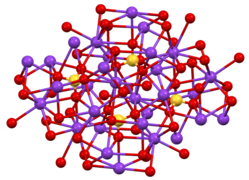
Two crystalline forms are known. Orthorhombic β-K2SO4 is the common form, but it converts to α-K2SO4 above 583 °C.[7] These structures are complex, although the sulfate adopts the typical tetrahedral geometry.[8]

It does not form a hydrate, unlike sodium sulfate. The salt crystallizes as double six-sided pyramids, classified as rhombic. They are transparent, very hard and have a bitter, salty taste. The salt is soluble in water, but insoluble in solutions of potassium hydroxide (sp. gr. 1.35), or in absolute ethanol.

Uses

[edit]

The dominant use of potassium sulfate is as a fertilizer. K2SO4 does not contain chloride, which can be harmful to some crops. Potassium sulfate is preferred for these crops, which include tobacco and some fruits and vegetables. Crops that are less sensitive may still require potassium sulfate for optimal growth if the soil accumulates chloride from irrigation water.[9]

The crude salt is also used occasionally in the manufacture of glass. Potassium sulfate is also used as a flash reducer in artillery propellant charges. It reduces muzzle flash, flareback and blast overpressure.

It is sometimes used as an alternative blast media similar to soda in soda blasting as it is harder and similarly water-soluble.[10]

Potassium sulfate can also be used in pyrotechnics in combination with potassium nitrate to generate a purple flame.

A 5% solution of potassium sulfate was used in the beginning of the 20th century as a topical mosquito repellent.[citation needed]

Reactions

[edit]

Acidification

[edit]

Potassium hydrogen sulfate (also known as potassium bisulfate), KHSO4, is readily produced by reacting K2SO4 with sulfuric acid. It forms rhombic pyramids, which melt at 197 °C (387 °F). It dissolves in three parts of water at 0 °C (32 °F). The solution behaves much as if its two congeners, K2SO4 and H2SO4, were present side by side of each other uncombined; an excess of ethanol the precipitates normal sulfate (with little bisulfate) with excess acid remaining.

The behavior of the fused dry salt is similar when heated to several hundred degrees; it acts on silicates, titanates, etc., the same way as sulfuric acid that is heated beyond its natural boiling point does. Hence it is frequently used in analytical chemistry as a disintegrating agent. For information about other salts that contain sulfate, see sulfate.

References

[edit]
[edit]
Revisions and contributorsEdit on WikipediaRead on Wikipedia
from Grokipedia
Potassium sulfate is an inorganic salt with the K₂SO₄ (also known as sulfate of potash or SOP), consisting of potassium cations and the anion, commonly appearing as colorless or white crystalline powder or granules. It has a molecular weight of 174.26 g/mol, a of 2.66 g/cm³, and is highly soluble in (approximately 12 g/100 mL at 25 °C), with a of 1069 °C and a of 1689 °C. As a vital agricultural input, potassium sulfate serves primarily as a , supplying essential (K₂O equivalent of about 50%) and (18% as ) to crops, particularly those sensitive to such as , potatoes, and fruits, where it replaces to avoid toxicity. Its neutral in solution (around 7) makes it suitable for a wide range of soils without significantly altering acidity. Beyond agriculture, it finds applications in industrial processes like and production, as a flux in metallurgy, and occasionally as a food additive or in pharmaceuticals for its mild properties. Potassium sulfate is produced industrially through a two-step process: first, mining and processing from ores through physical separation methods such as flotation, followed by reacting it with to yield the sulfate salt, often via the process or similar methods. It also occurs naturally in minerals like and can be derived from sulfate-rich brines or ores through and leaching techniques, contributing to global production, with world output reaching about 48 million tons (K₂O equivalent) in 2024 primarily for markets. Despite its stability in air and low reactivity, it acts as a mild irritant and requires handling precautions to prevent eye damage.

Overview

Chemical Identity

Potassium sulfate is an inorganic ionic compound with the K₂SO₄. It consists of two potassium cations (K⁺) and one anion (SO₄²⁻), forming a neutral salt essential in various chemical and agricultural applications. The systematic IUPAC name for potassium sulfate is dipotassium sulfate. Common synonyms include (often abbreviated as ) and salt of Lemery, the latter referring to a historical designation from early . The of potassium sulfate is 174.26 g/mol, determined by summing the atomic masses of its elements: two atoms (2 × 39.10 g/mol), one atom (32.06 g/mol), and four oxygen atoms (4 × 16.00 g/mol). This value is computed based on standard atomic weights established by the International Union of Pure and Applied Chemistry (IUPAC). Potassium sulfate is identified by the 7778-80-5 and the European Community (EC) number 231-915-5, which are unique identifiers used in chemical databases and regulatory frameworks. These numbers facilitate its tracking in commerce, research, and safety assessments worldwide.

Physical Description

Potassium sulfate is a colorless or white crystalline solid, commonly appearing in granular or powder form. It exists as a solid at standard conditions. The compound is odorless and has a saline, bitter taste. Potassium sulfate is non-hygroscopic under normal conditions, meaning it does not readily absorb moisture from the air. It exhibits high solubility in water, with approximately 111 g/L dissolving at 20 °C, while being sparingly soluble in ethanol.

History

Discovery and Early Recognition

Early experiments in the 17th century with plant ashes, which yielded potash (potassium carbonate), and acids laid the groundwork for the preparation of potassium sulfate. Johann Rudolf Glauber, a German chemist and alchemist active in the mid-1600s, is credited with preparing the compound known as arcanum duplicatum (double secret), promoted as a versatile medicinal agent for dissolving calculi and acting as a purgative. It was obtained as the residue (caput mortuum) from the production of nitric acid via distillation of potassium nitrate and sulfuric acid, historically referred to as potassium sulfate despite initially forming the bisulfate. Around 1670, French chemist Samuel Cottereau Du Clos, a founding member and chief chymist of the Académie Royale des Sciences, contributed to early studies on salts from mineral waters, emphasizing their solubility and reactivity in analytical contexts. In 1758, , director of the Berlin Academy of Sciences' chemical laboratory, formally named the substance "sulfate of potash" during his investigations into fixed s. Marggraf demonstrated its low solubility compared to , using this property to differentiate from soda ash through precipitation tests with , thereby advancing the recognition of distinct alkali sulfates. The compound's identity as a unique entity was firmly established in the via , following Humphry Davy's electrolytic isolation of potassium metal from in 1807. Chemists such as confirmed its empirical composition through quantitative decomposition studies, representing it in dualistic terms as a combination of and , which aligned with emerging stoichiometric principles.

Development of Production Methods

In the , production of potassium sulfate transitioned from small-scale reactions to industrial-scale methods, driven by growing agricultural needs. Early industrial efforts also involved direct extraction from natural sources like minerals and brines, providing supply before synthetic processes dominated. The process, developed around 1890 by the Verein Chemischer Fabriken in , , marked a significant advancement by enabling large-volume synthesis through the reaction of and in a rotary furnace at temperatures exceeding 500°C. This method replaced earlier inefficient techniques, allowing for more consistent output suitable for commercial use. The early 20th century saw further refinements, including the adaptation of the Hargreaves process, developed around 1870 by and Thomas Robinson for converting to using , oxygen from air, and . This integration improved efficiency by co-producing and reducing waste, particularly when linked to manufacturing streams, and became viable for potassium sulfate as demand escalated. Concurrently, double decomposition methods gained traction through key patents in the , such as those exploring reactions between and sodium or sulfates to yield potassium sulfate via in aqueous solutions, offering lower-temperature alternatives to furnace-based processes. Post-1900, economic pressures from the industry propelled global production growth, as potassium sulfate emerged as a chloride-free essential for crops like and potatoes amid depletion and expanding cultivation. A shortage in the early 1900s, exacerbated by disruptions, accelerated adoption of these methods in regions like the and , shifting reliance from imported natural to synthetic routes and fostering networks. Post-World War II, production expanded with discoveries of new deposits and improved technologies, solidifying its role in global agriculture as of the mid-20th century.

Natural Occurrence

Mineral Forms

Potassium sulfate occurs naturally in several mineral forms, predominantly as complex sulfates within sequences rather than in its pure state. These minerals form through the of ancient marine or hypersaline waters in sedimentary basins, leading to sequential precipitation of salts in arid environments. The primary minerals include glaserite, syngenite, langbeinite, and , each incorporating potassium sulfate alongside other cations such as sodium, calcium, and magnesium. Glaserite, also known as aphthitalite, has the K₃Na(SO₄)₂ and appears as an accessory in sulfate-rich settings. It typically crystallizes in orthorhombic forms and is associated with other potash-bearing salts. Syngenite, with the formula K₂Ca(SO₄)₂·H₂O, forms prismatic monoclinic crystals or encrustations in similar environments, often linked to calcium-rich brines. Langbeinite, formulated as K₂Mg₂(SO₄)₃, is a common cubic in stratabound and halokinetic deposits, frequently intergrown with and other magnesium . Polyhalite, the most widespread of these, has the formula K₂Ca₂Mg(SO₄)₄·2H₂O and occurs as fibrous or granular masses in sulfate horizons, contributing significantly to resources in sequences. The pure form of potassium sulfate, known as arcanite (K₂SO₄), is rare and primarily found in volcanic sublimates and fumarolic deposits rather than typical evaporites. It crystallizes in orthorhombic structures at high temperatures, often above 350°C, and associates with minerals like langbeinite and in volcanic exhalations. Arcanite has been documented in fumaroles of volcanoes such as Tolbachik in and Vesuvius in , as well as in and alteration zones. These minerals characteristically develop in evaporite deposits of arid regions, where repeated cycles of marine flooding and concentrate sulfate-rich brines, often associated with and layers. Notable occurrences include the Stassfurt region in , part of the Zechstein Basin, where langbeinite and are prevalent in Permian evaporites, and the Dead Sea region, featuring similar sulfate assemblages in the Sedom Formation.

Global Deposits and Reserves

Potassium sulfate is primarily sourced from natural evaporite deposits containing sulfate-rich potassium minerals, such as langbeinite (K₂Mg₂(SO₄)₃) and (K₂Ca₂Mg(SO₄)₄·2H₂O). Major deposits include langbeinite-rich formations in , , particularly in the Carlsbad region, and the hypersaline brines of the Dead Sea shared by and , which yield potassium sulfate via evaporation and extraction techniques. While extensive potash beds exist in , , in the Prairie Formation, these are primarily chloride-based (e.g., ), with minor associated sulfate minerals like ; commercial potassium sulfate production in largely involves conversion processes using rather than direct processing of sulfate minerals. Global recoverable reserves of (K₂O equivalent, suitable for potassium sulfate production via or conversion) exceed 3.6 billion metric tons as of 2024, with accounting for about 1.1 billion tons (~30%), largely concentrated in 's Prairie Formation. These reserves provide a long-term resource base, equivalent to over 200 years of current consumption at prevailing extraction rates. In the United States, potash reserves, including langbeinite in , are estimated at 220,000 tons of K₂O equivalent as of 2024. Annual global production of potassium sulfate is approximately 5.5 million metric tons as of 2024, driven primarily by demand in for chloride-sensitive crops. Output from natural sources, such as those in and the Dead Sea, constitutes about 20-30% of total supply, with the remainder from conversion processes using ores. The extraction economics of natural deposits versus synthetic production significantly influence market dynamics. Natural operations typically incur lower operational costs than synthetic methods due to established infrastructure, though transportation from remote sites can add expenses. In contrast, synthetic production via the energy-intensive Mannheim process is highly sensitive to energy prices, with and comprising up to 60% of expenses; recent volatility in global energy markets has widened this cost gap, favoring natural sources where feasible.

Production

Industrial Manufacturing

The primary industrial method for synthesizing potassium sulfate on a large scale is the process, which reacts (KCl) with (H₂SO₄) in a rotary furnace. This endothermic reaction occurs at temperatures between 500°C and 600°C, producing potassium sulfate and as a . The is: 2KCl+H2SO4K2SO4+2HCl2 \mathrm{KCl} + \mathrm{H_2SO_4} \rightarrow \mathrm{K_2SO_4} + 2 \mathrm{HCl} The process is energy-intensive, primarily due to the high furnace temperatures required to drive the reaction and the need for or other fuels to maintain conditions, accounting for a significant portion of production costs. The process contributes to approximately half of global potassium sulfate output as of , yielding a product with >98% purity after cooling, leaching, and steps. An alternative synthetic route employs double decomposition between (Na₂SO₄) and (KCl), often conducted in aqueous solutions under controlled conditions to favor of potassium sulfate while separating . This method is less energy-demanding than the Mannheim and leverages abundant raw materials, though it requires careful management of equilibria to achieve high yields. Another significant method involves processing sulfate-rich brines through solar evaporation. Brines from salt lakes or oceans are concentrated in large evaporation ponds using solar heat, leading to sequential of salts. Potassium-bearing minerals like leonite (K₂SO₄·MgSO₄·4H₂O) or schoenite crystallize and are harvested, then further processed via flotation, leaching, or to isolate potassium sulfate. This environmentally friendly approach accounts for about 20% of global production and is prominent in regions like the Dead Sea and the area. Potassium sulfate is also obtained as a byproduct during the industrial processing of langbeinite (K₂SO₄·2MgSO₄), a double sulfate . The undergoes flotation to concentrate the langbeinite fraction by separating it from minerals like and , followed by or to isolate potassium sulfate from components. This approach utilizes natural deposits efficiently, producing high-purity potassium sulfate suitable for applications.

Laboratory Preparation

Potassium sulfate can be prepared in the laboratory through simple neutralization reactions suitable for educational demonstrations or small-scale research, typically yielding a few grams of the product. The most straightforward method involves the neutralization of with , which proceeds as an acid-base reaction in . In the basic neutralization procedure, a solution of (KOH) is slowly added to dilute (H₂SO₄) while stirring to control the and ensure complete mixing. The balanced for this process is: H2SO4(aq)+2KOH(aq)K2SO4(aq)+2H2O(l)\mathrm{H_2SO_4 (aq) + 2KOH (aq) \rightarrow K_2SO_4 (aq) + 2H_2O (l)} For example, approximately 5 g of KOH dissolved in water can be titrated with a stoichiometric amount of 1 M H₂SO₄ until neutralization is achieved, as indicated by pH monitoring or a color change with an indicator like phenolphthalein. The resulting solution is then evaporated gently to concentrate and crystallize the potassium sulfate. This method produces a soluble salt directly in solution, avoiding gaseous byproducts. An alternative precipitation technique utilizes (K₂CO₃) instead of the hydroxide, which generates gas as a visible indicator of reaction progress. The reaction is: H2SO4(aq)+K2CO3(aq)K2SO4(aq)+H2O(l)+CO2(g)\mathrm{H_2SO_4 (aq) + K_2CO_3 (aq) \rightarrow K_2SO_4 (aq) + H_2O (l) + CO_2 (g)} Here, a saturated solution of potassium carbonate is added gradually to dilute in a flask equipped with stirring, continuing until ceases. The mixture is then filtered if necessary to remove any undissolved residues, and the filtrate is evaporated to obtain the product. This approach is particularly useful in settings where evolution aids in confirming reaction completion. Regardless of the synthesis route, the crude potassium sulfate is purified via recrystallization from hot to eliminate impurities such as excess or soluble contaminants. The solid is dissolved in the minimum volume of boiling to form a saturated solution, filtered while hot to remove insolubles, and then allowed to cool slowly to or in an to promote formation. The crystals are collected by , washed with cold , and dried at around 105°C. This process can achieve purities approaching 100% with yields of approximately 35-40% per cycle, depending on cooling conditions. Multiple recrystallizations may be performed using the mother liquor for efficiency. Laboratory preparation requires standard safety measures due to the corrosive nature of the involved. and can cause severe burns upon skin contact, so reactions should be conducted in a with proper ventilation to handle any fumes or gases produced. Protective equipment, including gloves, goggles, and lab coats, is essential, and any spills should be neutralized immediately with appropriate agents before cleanup.

Structure

Crystal Lattice

Potassium sulfate, K₂SO₄, adopts an in its stable β-phase at , belonging to the Pnma (No. 62). This arrangement features four formula units per and is characteristic of the β-K₂SO₄ type, commonly observed in certain A₂XO₄ compounds where A is a monovalent cation and XO₄ is a tetrahedral anion. The lattice is built from isolated tetrahedra linked by potassium cations, forming a three-dimensional framework without direct S–O–S bridges. The unit cell dimensions at 296 K are a = 7.476(3) , b = 10.071(4) , and c = 5.763(2) , with these parameters decreasing monotonically as temperature lowers, reflecting thermal contraction. Within this lattice, the SO₄²⁻ anions maintain nearly ideal tetrahedral , with S–O bond lengths averaging around 1.49 and O–S–O angles close to 109.5°. The K⁺ cations occupy two distinct sites: one in irregular 9-fold coordination (bonded to nine oxygen atoms from seven groups) and the other in irregular 11-fold coordination (bonded to eleven oxygen atoms from eight groups), resulting in distorted polyhedra that accommodate the ionic packing. Upon cooling below 56 K, β-K₂SO₄ undergoes a second-order phase transition to the γ-phase, which is believed to be monoclinic based on diffraction evidence of and lattice distortion, though the exact remains debated due to subtle changes. This low-temperature form preserves the overall topology but involves slight rotations of the sulfate tetrahedra and adjustments in K⁺ positions, without significant discontinuity.

Ionic Bonding

(\ceK2SO4\ce{K2SO4}) is an ionic compound consisting of two cations (\ceK+\ce{K+}) and one anion (\ceSO42\ce{SO4^2-}). The ionic bonds form through electrostatic attraction between the positively charged potassium ions and the negatively charged sulfate ions, stabilizing the crystal structure. The bonding model features predominantly ionic interactions between the \ceK+\ce{K+} cations and the oxygen atoms in the \ceSO42\ce{SO4^2-} anion, while the internal structure of the sulfate ion involves covalent . These covalent bonds arise from the sharing of electrons between and oxygen atoms, with bond orders typically around 1.5 due to in the tetrahedrally symmetric \ceSO42\ce{SO4^2-}. The of potassium sulfate, representing the energy released when gaseous ions form the solid lattice, is approximately 1700 kJ/mol and is determined through application of the Born-Haber cycle, which accounts for sublimation, ionization, and other enthalpic contributions. This value reflects the strength of the ionic attractions in the orthorhombic crystal lattice. Although the S-O bonds within the anion are polar covalent—due to oxygen's higher (3.44) compared to sulfur's (2.58), resulting in partial charges—the overall potassium sulfate compound is non-polar owing to the symmetric ionic arrangement and cancellation of dipoles in the lattice.

Properties

Physical Characteristics

Potassium sulfate appears as a white, odorless crystalline solid with a of 2.66 g/cm³ at . This compound exhibits high thermal stability, melting at 1069 °C under standard conditions. It boils at 1689 °C but decomposes at higher temperatures, releasing oxides. The of potassium sulfate in is temperature-dependent and increases significantly with rising , reflecting its endothermic dissolution process. Representative values include 7.33 g per 100 g of at 0 °C, 11.11 g per 100 g at 20 °C, and 24.1 g per 100 g at 100 °C. It is sparingly soluble in alcohols but insoluble in most organic solvents. The of the solid is 1.495. Potassium sulfate demonstrates low thermal conductivity, characteristic of many ionic salts due to limited phonon transport in their lattice structures.

Chemical Reactivity

Potassium sulfate (K₂SO₄) demonstrates considerable under standard conditions, remaining unreactive with the majority of acids and bases encountered in typical or industrial settings. This inertness arises from the strong between the potassium cations (K⁺) and anions (SO₄²⁻), which resists displacement or by dilute or moderate-strength acids and bases. However, it exhibits reactivity with concentrated (H₂SO₄), undergoing an acid-base reaction to form (KHSO₄) according to the equilibrium K₂SO₄ + H₂SO₄ ⇌ 2KHSO₄. Thermally, potassium sulfate is highly stable, with no observed up to its of 1,069 °C and of 1,689 °C, beyond which it decomposes into (K₂O) and (SO₃) at temperatures exceeding approximately 1400 °C. In aqueous solutions, potassium sulfate does not undergo , as both the K⁺ cation (from the strong base KOH) and the SO₄²⁻ anion (from the strong acid H₂SO₄) are derived from fully dissociated precursors, resulting in no net proton or hydroxide ion production. Consequently, solutions of potassium sulfate maintain a neutral close to 7, reflecting the absence of acidic or basic character. This lack of underscores its role as a neutral salt, suitable for applications requiring stability. Regarding redox behavior, the (SO₄²⁻) in potassium sulfate is notably stable, with in its highest (+6), rendering it a very weak incapable of facile reduction under ambient conditions. The K⁺ , as an cation, is inherently inert to processes in aqueous or solid states, further contributing to the compound's overall electrochemical passivity. As a , potassium sulfate undergoes complete dissociation in , ionizing fully into two K⁺ s and one SO₄²⁻ : K₂SO₄ → 2K⁺ + SO₄²⁻. This process is driven by the high of the compound (approximately 12 g/100 mL at 25 °C) and the strong hydration of the ions, without altering the solution's neutrality or introducing reactive species.

Applications

Fertilizer and Agriculture

Potassium sulfate (K₂SO₄) serves as a vital in , providing essential and nutrients without introducing ions. It typically contains approximately 50% (K₂O) equivalent and 18% sulfur (S), making it a preferred source for supplying these elements to crops. This composition is particularly beneficial for chloride-sensitive plants, such as and potatoes, where from alternatives like (KCl) can reduce yield and quality by causing toxicity or osmotic stress. Application rates of potassium sulfate vary based on potassium deficiency levels, requirements, and regional practices, generally ranging from 100 to 300 kg per to deliver 50 to 150 kg K₂O per . testing is recommended to determine precise needs, as excessive application can lead to imbalances, while insufficient amounts may limit productivity. For chloride-sensitive crops like potatoes, rates up to 280 kg K per (equivalent to about 560-700 kg K₂SO₄, depending on formulation) have been shown to enhance tuber yield without adverse effects. The benefits of potassium sulfate in agriculture include improved plant water uptake through enhanced root growth and turgor maintenance, which contributes to better drought resistance. It also bolsters disease resistance by strengthening cell walls and reducing susceptibility to pathogens, while the absence of nitrogen prevents excessive vegetative growth that could compromise fruit or tuber development. These attributes make it suitable for high-value crops requiring balanced nutrition for quality and yield optimization. The majority of global potassium sulfate production is used as in , underscoring its dominant role in soil .

Industrial and Other Uses

Potassium sulfate serves as a in the of specialty glasses and ceramics, where it lowers the of the raw materials, enhances clarity, and improves the overall strength and stability of the final product. This application is particularly valuable in producing high-quality optical and heat-resistant glass varieties, contributing to reduced energy consumption during production. In the , potassium sulfate functions as an in tablet formulations to aid in disintegration and as a potassium source in dietary supplements to support balance and heart function. It is also utilized as an osmotic in bowel preparation solutions for medical procedures such as colonoscopies, where it draws water into the intestines to facilitate cleansing. Regulatory approval under the U.S. Food Chemical Codex confirms its safety for these uses when meeting specified purity standards. Potassium sulfate acts as a flash suppressant in the production of explosives and propellants, where small additions reduce , flareback, and blast by limiting the reactivity of generated during . This property makes it a key component in safer formulations for and industrial applications. In pyrotechnics, potassium sulfate is combined with to produce purple flames, leveraging its role as a high-temperature oxidizer and colorant in and signaling devices. Its stable chemical properties ensure consistent performance in these controlled environments. Potassium sulfate plays a crucial role in the production of (potassium aluminum sulfate), where it is reacted with aluminum sulfate in aqueous solution to form the crystals used in , tanning, and . This synthesis process involves equimolar concentrations crystallized under controlled conditions to yield the hydrated compound K₂SO₄·Al₂(SO₄)₃·24H₂O.

Reactions

Acid-Base Reactions

Potassium sulfate (K₂SO₄) is the salt derived from the strong acid (H₂SO₄) and the strong base (KOH), resulting in aqueous solutions that are neutral and exhibit minimal acid-base reactivity under standard conditions. The of a 5% ranges from 5.5 to 8.5 at 25°C, reflecting the absence of of either the K⁺ or SO₄²⁻ ions. These solutions lack buffering capacity, as there is no conjugate weak acid-base pair to resist changes upon addition of small amounts of acid or base. With strong bases such as sodium hydroxide (NaOH), potassium sulfate undergoes no significant acid-base reaction in aqueous solution, consistent with its derivation from a strong base that precludes further proton acceptance or related interactions. In contrast, potassium sulfate reacts with concentrated sulfuric acid at elevated temperatures to form potassium bisulfate (KHSO₄) as an intermediate, via protonation of the sulfate ion: \ceK2SO4+H2SO4>2KHSO4\ce{K2SO4 + H2SO4 -> 2 KHSO4} This synthesis reaction occurs under heating due to the high lattice energy and thermal stability of K₂SO₄, which limits its utility in broader acidification processes for liberating sulfuric acid from sulfate salts compared to more reactive counterparts like calcium sulfate.

Thermal Decomposition

Potassium sulfate exhibits remarkable thermal stability, melting congruently at 1069 °C to form a clear liquid without undergoing decomposition. This congruent fusion behavior ensures that the molten phase retains the same composition as the solid, avoiding phase separation or incongruent melting that could complicate high-temperature applications. The compound remains stable in air up to its boiling point of 1689 °C, where it can exist as a liquid without significant decomposition under inert conditions. At very high temperatures near or above the , potassium sulfate decomposes upon heating, producing oxides. This high-temperature phase stability makes it a candidate component in mixtures for , particularly in systems.

Safety and Environmental Considerations

Health and Toxicity

Potassium sulfate is classified as having low , with an oral LD50 value exceeding 6600 mg/kg in rats, indicating minimal risk from single exposures at typical doses. It primarily acts as a mild irritant to the eyes and skin upon direct contact, potentially causing redness, discomfort, or temporary inflammation, though it is not considered corrosive or highly hazardous. Inhalation of potassium sulfate dust, which can occur during handling of its powdered form, may lead to irritation of the , resulting in coughing or in sensitive individuals. Ingestion typically causes gastrointestinal disturbances such as , , or , particularly if substantial amounts are consumed, but severe systemic effects are rare due to its low absorption and rapid excretion. Regulatory bodies affirm its safety profile for controlled uses: the U.S. (FDA) designates potassium sulfate as (GRAS) for applications including food additives and flavor enhancers. The Occupational Safety and Health Administration (OSHA) establishes a (PEL) of 15 mg/m³ for total dust over an 8-hour workday to prevent irritation from airborne particles. For safe handling, immediate measures include flushing affected eyes with water for at least 15 minutes while lifting the eyelids; removing the individual to fresh air following inhalation; and washing skin contact areas thoroughly with soap and water. In cases of significant , medical attention is recommended to monitor for potential imbalances or , though supportive care is usually sufficient given the compound's low toxicity.

Ecological Impact

Potassium sulfate, when applied as a , can influence ecosystems primarily through its effects on salinity and levels. Excessive application may lead to increased , potentially stressing soil microorganisms and reducing overall by altering osmotic balances in the . However, the component can contribute to , particularly in neutral or acidic soils under long-term use, which enhances the availability of nutrients like iron and for plant uptake, thereby supporting microbial communities adapted to such conditions. In aquatic environments, runoff from potassium sulfate applications introduces sulfate ions that can elevate salinity and contribute to localized acidification, though the overall impact on remains limited compared to or sources. Potassium ions exhibit low mobility in due to interactions with clay particles and , minimizing their leaching into waterways and reducing the risk of widespread nutrient enrichment. As an inorganic salt, potassium sulfate is non-biodegradable and persists in the environment until diluted or incorporated into matrices, yet it occurs naturally in many deposits and , limiting novel ecological disruptions from anthropogenic sources. potential is negligible, with no significant uptake or magnification in food chains observed across aquatic or terrestrial organisms. To mitigate these impacts, adherence to recommended application rates in sustainable farming practices, such as and cover cropping, effectively reduces leaching and buildup. Additionally, closed-loop recycling systems in can recapture excess potassium sulfate, preventing environmental release and promoting .

References

Add your contribution
Related Hubs
User Avatar
No comments yet.