Hubbry Logo
Potassium bromidePotassium bromideMain
Open search
Potassium bromide
Community hub
Potassium bromide
logo
8 pages, 0 posts
0 subscribers
Be the first to start a discussion here.
Potassium bromide
Potassium bromide
from Wikipedia

Potassium bromide
Potassium bromide
Potassium bromide
Potassium bromide
Potassium bromide
Identifiers
3D model (JSmol)
ChEBI
ChEMBL
ChemSpider
ECHA InfoCard 100.028.937 Edit this at Wikidata
RTECS number
  • TS7650000
UNII
  • InChI=1S/BrH.K/h1H;/q;+1/p-1 ☒N
    Key: IOLCXVTUBQKXJR-UHFFFAOYSA-M ☒N
  • InChI=1/BrH.K/h1H;/q;+1/p-1
    Key: IOLCXVTUBQKXJR-REWHXWOFAT
  • [K+].[Br-]
Properties
KBr
Molar mass 119.002 g/mol
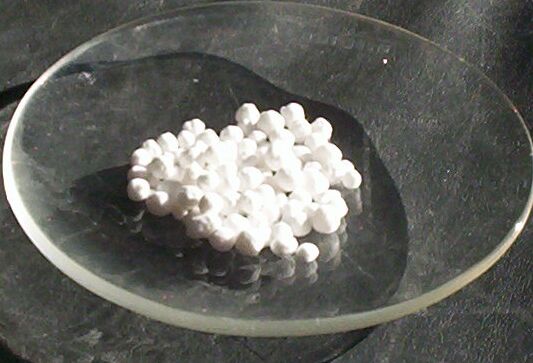
Appearance white solid
Odor odorless
Density 2.74 g/cm3
Melting point 734 °C (1,353 °F; 1,007 K)
Boiling point 1,435 °C (2,615 °F; 1,708 K)
535 g/L (0 °C)
678 g/L (25 °C)
1020 g/L (100 °C)
Solubility very slightly soluble in diethyl ether
Solubility in glycerol 217 g/L
Solubility in ethanol 47.6 g/L (80 °C)
−49.1×10⁻⁶ cm3/mol
1.559
Structure
Sodium chloride(Face-centered cubic)
octahedral
10.41 D (gas)
Pharmacology
QN03AX91 (WHO)
Hazards
GHS labelling:
GHS07: Exclamation mark
Warning
H319
P280, P305+P351+P338, P337+P313[1]
NFPA 704 (fire diamond)
Lethal dose or concentration (LD, LC):
3070 mg/kg (oral, rat)[2]
Related compounds
Other anions
Potassium fluoride
Potassium chloride
Potassium iodide
Other cations
Lithium bromide
Sodium bromide
Rubidium bromide
Caesium bromide
Francium bromide
Except where otherwise noted, data are given for materials in their standard state (at 25 °C [77 °F], 100 kPa).
☒N verify (what is checkY☒N ?)

Potassium bromide (KBr) is a salt, widely used as an anticonvulsant and a sedative in the late 19th and early 20th centuries, with over-the-counter use extending to 1975 in the US. Its action is due to the bromide ion (sodium bromide is equally effective). Potassium bromide is used as a veterinary drug, in antiepileptic medication for dogs. Under standard conditions, potassium bromide is a white crystalline powder. It is freely soluble in water; it is not soluble in acetonitrile. In a dilute aqueous solution, potassium bromide tastes sweet, at higher concentrations it tastes bitter, and tastes salty when the concentration is even higher. These effects are mainly due to the properties of the potassium ion—sodium bromide tastes salty at any concentration. In high concentration, potassium bromide strongly irritates the gastric mucous membrane, causing nausea and sometimes vomiting (a typical effect of all soluble potassium salts).[citation needed]

Chemical properties

[edit]

Potassium bromide, a typical ionic salt, is fully dissociated and near pH 7 in aqueous solution. It serves as a source of bromide ions. This reaction is important for the manufacture of silver bromide for photographic film:

KBr(aq) + AgNO3(aq) → AgBr(s) + KNO3(aq)

Aqueous bromide Br also forms complexes when reacted with some metal halides such as copper(II) bromide:

2 KBr(aq) + CuBr2(aq) → K2[CuBr4](aq)

Preparation

[edit]

A traditional method for the manufacture of KBr is the reaction of potassium carbonate with an iron(III, II) bromide, Fe3Br8, made by treating scrap iron under water with excess bromine:[4]

4 K2CO3 + Fe3Br8 → 8 KBr + Fe3O4 + 4 CO2

Applications

[edit]

Medical and veterinary

[edit]
A bottle of PRN Pharmaceutical Company (Pensacola, FL) K•BroVet veterinary pharmaceutical potassium bromide oral solution (250 mg/mL). The product is intended to be used in dogs, primarily as an antiepileptic (to stop seizures).[5] The pink color of the solution is artificial; pure potassium bromide solutions are colorless

The anticonvulsant properties of potassium bromide were first noted by Sir Charles Locock at a meeting of the Royal Medical and Chirurgical Society in 1857. Bromide can be regarded as the first effective medication for epilepsy. At the time, it was commonly thought that epilepsy was caused by masturbation.[6] Locock noted that bromide calmed sexual excitement and thought this was responsible for his success in treating seizures. In the latter half of the 19th century, potassium bromide was used for the calming of seizure and nervous disorders on an enormous scale, with the use by single hospitals being as much as several tons a year (the dose for a given person being a few grams per day).[6] By the beginning of the 20th century, the generic word had become so widely associated with being sedate that the term 'bromide' came to mean a dull, sedate person or a boring platitude uttered by such a person.[7]

There was not a better epilepsy drug until phenobarbital in 1912. The British Army has historically been claimed to lace soldiers' tea with bromide to quell sexual arousal and in the Victorian era prisoners in England were compulsorily dosed with the chemical.[8][9]

Bromide compounds, especially sodium bromide, remained in over-the-counter sedatives and headache remedies (such as the original formulation of Bromo-Seltzer) in the US until 1975, when bromides were outlawed in all over-the-counter medicines, due to chronic toxicity.[10] Bromide's exceedingly long biological half-life made it difficult to dose without side effects. Medical use of bromides for humans in the US was discontinued at this time, as many better and shorter-acting sedatives were known by then.

Potassium bromide is still used in veterinary medicine to treat epilepsy in dogs, either as first-line treatment or in addition to phenobarbital, when seizures are not adequately controlled with phenobarbital alone.[5] Use of bromide in cats is limited because it carries a substantial risk of causing lung inflammation (pneumonitis) in them. Why bromides should cause such inflammation in cats, but not in dogs, is not clear.[11]

The use of bromide as a treatment drug for animals means that veterinary medical diagnostic laboratories are able as a matter of routine to measure serum levels of bromide on order of a veterinarian, whereas human medical diagnostic labs in the US do not measure bromide as a routine test.

Potassium bromide is not approved by the US Food and Drug Administration (FDA) for use in humans to control seizures. In Germany, it is still approved as an antiepileptic drug for humans, particularly children and adolescents.[12] These indications include severe forms of generalized tonic-clonic seizures, early-childhood-related tonic–clonic seizures, and also severe myoclonic seizures during childhood. Adults who have reacted positively to the drug during childhood/adolescence may continue treatment. Potassium bromide tablets are sold under the brand name Dibro-Be mono (Rx-only). The drug has almost complete bioavailability, but the bromide ion has a relatively long biological half-life of 12 days in the blood,[6] making bromide salts difficult to adjust and dose. Bromide is not known to interfere with the absorption or excretion of any other anticonvulsant, though it does have strong interactions with chloride in the body, the normal body uptake and excretion of which strongly influences bromide's excretion.[6]

The therapeutic index (ratio of effectiveness to toxicity) for bromide is small. As with other antiepileptics, sometimes even therapeutic doses (3 to 5 grams per day, taking 6 to 8 weeks to reach stable levels) may give rise to intoxication. Often indistinguishable from 'expected' side-effects, these include:

Optics

[edit]

Potassium bromide is transparent from the near ultraviolet to long-wave infrared wavelengths (0.25-25 μm) and has no significant optical absorption lines in its high transmission region. It is used widely as infrared optical windows and components for general spectroscopy because of its wide spectral range. In infrared spectroscopy, samples are analyzed by grinding with powdered potassium bromide and pressing into a disc. Alternatively, samples may be analyzed as a liquid film (neat, as a solution, or in a mull with Nujol) between two polished potassium bromide discs.[13]

Due to its high solubility and hygroscopic nature it must be kept in a dry environment. The refractive index is about 1.55 at 1.0 μm.

Photography

[edit]

In addition to manufacture of silver bromide, potassium bromide is used as a restrainer in black and white developer formulas. It improves differentiation between exposed and unexposed crystals of silver halide, and thus reduces fog.[14]

References

[edit]
[edit]
Revisions and contributorsEdit on WikipediaRead on Wikipedia
from Grokipedia
Potassium bromide (KBr) is an consisting of cations and anions, typically appearing as a white, odorless crystalline powder with a salty, bitter . It has a molecular weight of 119.00 g/mol, a of 730 °C, and a of 1435 °C, and it exhibits high in (approximately 67.8 g/100 mL at 25 °C) due to its ionic nature, fully dissociating into neutral aqueous solutions with a near 7. Historically, potassium bromide was first synthesized in the 1820s and gained prominence in medicine after British physician Charles Locock introduced it in 1857 as an effective for treating , particularly in cases misdiagnosed as , marking it as the first reasonably reliable antiseizure drug. It served as the primary treatment for until the introduction of in 1912, and was also used as a for conditions like and anxiety, though its popularity waned due to side effects such as (chronic intoxication). In the late 19th and early 20th centuries, it was widely prescribed for various neurological and psychiatric applications, including muscle relaxation and as an alleged suppressant of sexual urges. In modern applications, potassium bromide remains a key veterinary antiepileptic, especially for managing seizures in dogs and cats, where it is often used alongside . Beyond medicine, it is employed in the optical industry for due to its transparency across a wide spectral range (from 250 cm⁻¹ to 25,000 cm⁻¹), in as an anti-fogging agent in film developers, and in industrial processes such as drilling fluids, nylon heat stabilization, and water disinfection in swimming pools as a chlorine alternative. Safety concerns include its upon or , with an oral LD50 of 3070 mg/kg in rats, potential for skin and eye irritation, and classification as a possible , necessitating careful handling.

Properties

Physical properties

Potassium bromide (KBr) appears as a white, crystalline, odorless powder or granules under standard conditions. It has a of 119.00 g/mol and a of 2.75 g/cm³ at 25 °C. The compound exhibits a of 730 °C (1,003 K) and a of 1,435 °C (1,708 K). Potassium bromide is highly soluble in , with solubility increasing with , and moderately soluble in while being insoluble in . The following table summarizes its solubility in at selected temperatures:
Temperature (°C)Solubility (g/100 mL )
053.5
2065.3
2567.8
100102.0
Solubility in is approximately 0.4 g/100 mL at , and it is practically insoluble in (<0.1 g/100 mL). The crystal structure of potassium bromide is cubic, adopting the rock salt (NaCl) type lattice, where K⁺ cations and Br⁻ anions alternate in a face-centered cubic arrangement with a lattice constant of approximately 6.60 Å. Due to its ionic nature, potassium bromide is hygroscopic, readily absorbing atmospheric moisture, which can lead to clumping or the formation of hydrated forms in humid environments.

Chemical properties

Potassium bromide (KBr) is an ionic compound consisting of potassium cations (K⁺) and bromide anions (Br⁻) in a 1:1 stoichiometric ratio, forming a stable crystal lattice characteristic of alkali metal halides. This compound demonstrates high thermal stability under standard conditions, remaining intact without decomposition up to elevated temperatures. In aqueous solutions, KBr serves as a source of bromide ions, enabling various precipitation and displacement reactions; for instance, it reacts with silver nitrate to produce the pale yellow, insoluble silver bromide precipitate via the equation: \ceKBr(aq)+AgNO3(aq)>AgBr(s)+KNO3(aq)\ce{KBr (aq) + AgNO3 (aq) -> AgBr (s) \downarrow + KNO3 (aq)} The bromide ion exhibits redox behavior, acting as a reducing agent that can be oxidized to elemental bromine by stronger halogens such as chlorine, following the displacement reaction: \ce2KBr(aq)+Cl2(g)>2KCl(aq)+Br2(aq)\ce{2KBr (aq) + Cl2 (g) -> 2KCl (aq) + Br2 (aq)} Aqueous solutions of potassium bromide are neutral, with a pH close to 7, as expected for a salt derived from a strong acid and a strong base. Regarding compatibility, KBr is generally stable with other halide salts but reacts with concentrated acids, such as sulfuric acid, to release hydrogen bromide gas, and it is incompatible with strong oxidizing agents that can liberate bromine.

Synthesis and production

Laboratory synthesis

Potassium bromide can be synthesized in the laboratory through a classic method involving the reaction of potassium carbonate with iron(III, II) bromide, often represented as Fe₃Br₈, which is prepared by treating iron with bromine. The balanced equation for this process is: 4K2CO3+Fe3Br88KBr+Fe3O4+4CO24 \mathrm{K_2CO_3} + \mathrm{Fe_3Br_8} \rightarrow 8 \mathrm{KBr} + \mathrm{Fe_3O_4} + 4 \mathrm{CO_2} Solutions of potassium carbonate and iron bromide are mixed and heated, producing potassium bromide in solution along with iron oxide precipitate and carbon dioxide gas. The mixture is then filtered to remove the iron oxide, and the filtrate is evaporated to obtain crude potassium bromide crystals. An alternative laboratory method involves the neutralization of with , a straightforward acid-base reaction. The balanced is: KOH+HBrKBr+H2O\mathrm{KOH} + \mathrm{HBr} \rightarrow \mathrm{KBr} + \mathrm{H_2O} Equimolar amounts of the reactants are dissolved in , combined slowly with stirring to control the , and the resulting solution is evaporated to isolate potassium bromide crystals. Purification of the crude product is typically achieved by recrystallization from hot , exploiting the high of potassium bromide in hot (approximately 100 g/100 mL at 100°C) and lower in cold . The crude salt is dissolved in the minimum amount of boiling , filtered while hot to remove insoluble impurities, and then cooled slowly to promote formation. The crystals are collected by , washed with cold or , and dried. These laboratory methods generally provide high yields, often exceeding 80% in simple setups due to the quantitative nature of the reactions and effective purification. Safety precautions are essential, particularly when using in the neutralization method, as it releases corrosive fumes that can irritate the eyes, skin, and . Work should be conducted in a well-ventilated , with appropriate including splash goggles, acid-resistant gloves, and a lab coat. Spill cleanup involves dilution with water followed by neutralization with .

Industrial production

Potassium bromide is produced on a commercial scale primarily through the reaction of with in , where is sourced from natural brines or salts. The reaction is a : 3Br2+6KOH5KBr+KBrO3+3H2O3 \mathrm{Br_2} + 6 \mathrm{KOH} \rightarrow 5 \mathrm{KBr} + \mathrm{KBrO_3} + 3 \mathrm{H_2O} This is conducted under controlled conditions (typically hot and concentrated KOH), followed by separation of KBrO₃ (lower ) and reduction of the to , often by heating with carbon powder: 2KBrO3+3C2KBr+3CO22 \mathrm{KBrO_3} + 3 \mathrm{C} \rightarrow 2 \mathrm{KBr} + 3 \mathrm{CO_2} The mixture is then filtered to remove impurities, evaporated to concentrate the solution, and cooled for crystallization of the potassium bromide product. Alternative industrial routes include processing bromide-rich natural brines (e.g., via chlorination to liberate Br₂, followed by the above reaction) or solvent extraction techniques for efficient recovery at scale. These methods prioritize cost-effectiveness and high throughput, with bromine extraction often involving chlorination of brines to liberate elemental bromine prior to the synthesis step. Major production occurs at facilities near bromide-rich deposits, such as the Dead Sea in and (e.g., by ICL Group), where brines yield significant volumes of precursor , and the in the United States (e.g., by Albemarle), contributing to salt processing integrated with recovery. Global annual output is estimated at approximately 25,000–30,000 metric tons as of 2025, driven by demand in specialized sectors while maintaining steady supply chains. The process yields varying purity grades, with pharmaceutical-grade potassium bromide achieving 99.9% purity through additional recrystallization and purification steps to meet regulatory standards, whereas industrial-grade material typically ranges from 98% to 99% purity for less stringent applications. Economic viability hinges on several cost factors, including volatile raw material prices for (influenced by global supply disruptions) and potassium salts like or chloride, which can account for up to 60% of production expenses. Energy consumption for and crystallization stages also plays a critical role, with optimization through efficient recovery systems reducing operational costs by 15-20% in modern plants.

Applications

Medical and veterinary applications

Potassium bromide was first introduced as a and for treating in humans in 1857 by Sir Charles Locock, who reported its efficacy in reducing seizures in patients with what was then termed "hysterical epilepsy." Its mechanism of action involves enhancing inhibitory neurotransmission by potentiating GABA_A receptor activity, which increases chloride ion influx into neurons, hyperpolarizing them and thereby elevating the . In human medicine, potassium bromide was widely used as an antiepileptic until the mid- but was largely replaced by the early with the advent of safer alternatives such as , and is no longer approved or used in the United States due to its narrow and associated risks. It remains approved and occasionally prescribed in for severe, refractory , particularly in children and adolescents with conditions like , at doses typically ranging from 40 to 70 mg/kg per day, adjusted to maintain therapeutic serum levels. In , potassium bromide serves as a primary antiepileptic agent, especially for dogs with idiopathic refractory to other treatments. It is typically administered orally at maintenance doses of 20-40 mg/kg per day, often in combination with to enhance control, with therapeutic serum bromide levels maintained between 1 and 3 mg/mL through regular monitoring. Common side effects of potassium bromide therapy include bromism, a condition characterized by neurologic symptoms such as ataxia, sedation, and altered consciousness, particularly when serum levels exceed the therapeutic range. Pharmacokinetically, bromide exhibits a plasma of approximately 12 days in humans, with primary elimination via renal , though this can vary in veterinary like dogs where the extends to 25-46 days. In 2025, the (EFSA) conducted a comprehensive review of bromide residues in food and feed arising from veterinary applications, such as its use in treating seizures in dogs, confirming maximum residue limits (MRLs) of 50 mg/kg for certain animal-derived products to ensure consumer safety while accounting for transfer from treated animals.

Optical applications

Potassium bromide (KBr) is widely utilized in as a material for windows, prisms, and beamsplitters, particularly in the mid- region spanning 4000 to 400 cm⁻¹, owing to its low absorption from interactions in this spectral range. This transparency enables high-fidelity transmission for Fourier-transform (FTIR) spectrometers, where KBr components facilitate sample analysis without significant signal interference. Key optical properties exploited include a of approximately 1.53 at 10 μm, low dispersion that minimizes chromatic aberrations in prisms, and enhanced resistance to moisture when surfaces are coated with anti-reflective or protective layers. These attributes make KBr suitable for constructing lenses and windows in thermal imaging systems, where broad mid-IR transmission (up to 26 μm) is essential. Single crystals of KBr are typically grown using the to achieve high optical homogeneity, supporting applications in FTIR spectrometers and thermal imaging . This growth technique yields large boules with minimal defects, enabling the fabrication of precision components that withstand mechanical shock better than some alternatives. In scientific instruments, KBr holds a significant market position for infrared optics, driven by its established role in spectroscopy and ongoing improvements in crystal fabrication for enhanced quality and cost efficiency. Compared to (KCl) or (NaBr), KBr is preferred for its broader transmission range extending to longer wavelengths, offering superior performance in mid- to far-IR applications despite similar hygroscopic challenges.

Photographic applications

Potassium bromide serves as a critical source of bromide ions in the preparation of emulsions for traditional photography, particularly in forming light-sensitive (AgBr) crystals within matrices. In this process, an aqueous solution of potassium bromide reacts with to precipitate AgBr grains, according to the reaction: KBr+AgNO3AgBr+KNO3\text{KBr} + \text{AgNO}_3 \rightarrow \text{AgBr} \downarrow + \text{KNO}_3 This precipitation occurs under controlled conditions to ensure the grains are finely dispersed and suspended in the , providing the photosensitive component essential for capturing images in black-and-white films. Historically, potassium bromide was indispensable in the production of black-and-white photographic films from the late through the , enabling the creation of stable that dominated analog imaging until the rise of in the and . As a restrainer in both preparation and developers, KBr helped prevent fogging—unwanted exposure during processing—while allowing precise control over image contrast and tonal gradation, which were vital for high-quality prints and negatives. In emulsion manufacturing, the double-jet precipitation method is commonly employed, where solutions of and potassium bromide are simultaneously added to a reaction vessel containing and water, promoting uniform and distribution for optimal sensitivity and resolution. This technique minimizes variations in morphology, resulting in emulsions with consistent photographic performance, such as reduced and improved sharpness in the final image. Today, potassium bromide finds niche applications in specialty films and , where it is incorporated as an additive to enhance sensitivity and efficiency in high-resolution recording materials. In holographic emulsions, KBr contributes to the formation of fine AgBr grains that support phase grating formation during exposure, enabling detailed three-dimensional image reconstruction with minimal scattering. The widespread adoption of technologies has led to a significant decline in the use of potassium bromide in mainstream since the early 2000s, as analog film production has contracted sharply. Nonetheless, it persists in archival and artisanal contexts, where traditional processes are valued for their permanence and aesthetic qualities in and historical preservation efforts.

Other applications

Potassium bromide serves as a brominating agent in , where it is oxidized by or other oxidants to form , providing effective disinfection against and other pathogens while offering stability in warm water conditions compared to alone. In pharmaceutical synthesis, potassium bromide acts as a precursor for organic , supplying ions for bromination reactions that produce key intermediates used in manufacturing, such as in the formation of aryl for further cross-coupling or functionalization steps. Industrially, potassium bromide is incorporated into oil fluids as a component of high-density brines, where inhibitors are added to mitigate its potential corrosivity on metal during completion and workover operations. Additionally, it functions as a in the production of additives for polymers, enhancing fire resistance in materials like high-impact by enabling the synthesis of effective bromine-containing compounds. Emerging applications in include its use in high-density brines for hydraulic fracturing, particularly in high-pressure, high-temperature reservoirs, with recent studies exploring alcohol-enhanced formulations of bromide-based brines to improve (up to 99 lb/ft³), reduce temperatures, and minimize while maintaining low . The global potassium bromide market is projected to reach approximately USD 34.5 million by 2030, with growth driven by rising industrial demand in , , and oilfield applications.

Historical development

Discovery and early uses

Potassium bromide was first synthesized shortly after the discovery of the element in 1826 by French chemist Antoine-Jérôme Balard, who isolated from the bitterns remaining after seawater salt evaporation and prepared the potassium salt by reacting with . Balard's work established as a new element, distinct from iodine, and by the , potassium bromide was recognized as a stable bromine salt suitable for chemical studies and applications. Early interest in the compound stemmed from its solubility and reactivity, with chemists like exploring bromine compounds in mineral analyses, though Liebig had encountered bromine-rich spring waters in 1825 without identifying the element. The medical use of potassium bromide emerged in 1857 when British physician Sir Charles Locock reported its effectiveness in treating , particularly in young women diagnosed with "hysterical epilepsy," based on its observed properties that were believed to suppress catamenial seizures. Locock prescribed doses of about 10 grains (0.66 g) three times daily, noting rapid seizure reduction in 15 cases discussed at the Royal Medical and Chirurgical Society, leading to its adoption as the first effective . By the 1860s, potassium bromide had become a staple in psychiatric asylums across and for managing and other convulsive disorders, with widespread clinical reports confirming its and antiepileptic effects. The pharmaceutical popularity of potassium bromide peaked in the early 1900s, when it was marketed as an over-the-counter for , nervousness, and headaches, often in effervescent formulations. A prominent example was , introduced in 1888 by pharmacist George H. Cook, which contained potassium alongside and , promoted as a remedy for "brain fatigue" and until its bromide content was phased out in the United States by 1975. Production surged during this era, with bromide salts becoming a multimillion-dollar industry due to their accessibility and perceived safety.

Modern regulatory status

In the United States, the Food and Drug Administration (FDA) classified potassium bromide as obsolete for human medical use in 1975 due to chronic toxicity concerns, leading to its withdrawal from the market for sedative and antiseizure applications. For veterinary purposes, the FDA granted conditional approval in 2021 for potassium bromide oral solution (KBroVet-CA1) to control seizures in dogs with idiopathic epilepsy under the Minor Use and Minor Species Animal Health Act, allowing its use as a second-line therapy. Additionally, the Animal Medicinal Drug Use Clarification Act of 1994 permits veterinarians to prescribe it extralabel for dogs when no approved alternative exists, subject to oversight to prevent residues in food animals. In the , the (EMA) restricts potassium bromide to limited human prescriptions, with only two products listed as of 2025: one discontinued and another available as an 850 mg tablet for under strict medical supervision. For veterinary applications, no specific maximum residue limits (MRLs) are established for the bromide ion in animal tissues under Commission Regulation (EU) No 37/2010, as it is classified as "not applicable" for all food-producing species, though monitoring for residues in meat, milk, and eggs is required to ensure . The (EFSA) evaluates bromide levels from veterinary sources, noting occasional exceedances in monitoring data but no routine MRL enforcement beyond general toxicity thresholds. The (WHO) does not include potassium bromide on its Model List of for human use, reflecting its obsolescence in modern human therapy. In veterinary contexts, it is recognized in guidelines such as the World Small Animal Veterinary Association's (WSAVA) List of for Cats and Dogs (2023 edition) as an antiepileptic for seizures in developing regions where access to alternatives like may be limited, alongside other options such as imepitoin, , , and . As of 2025, regulatory scrutiny has intensified on bromide residues entering the from veterinary use, prompted by EFSA's January opinion establishing a tolerable daily intake of 0.4 mg/kg body weight and recommending enhanced data collection on transfer from treated animals to edible tissues, influencing monitoring programs without altering existing MRL classifications. In the , FDA oversight under the Federal Food, Drug, and Cosmetic Act continues to emphasize residue avoidance in food-producing animals through veterinary prescribing guidelines.

Safety, toxicity, and environmental impact

Human and animal health effects

Potassium bromide exhibits low acute oral , with an LD50 of 3,070 mg/kg in rats. Acute ingestion can lead to gastrointestinal disturbances, including , , and . Chronic exposure to high doses of potassium bromide in humans can result in bromism, a condition featuring neurologic and psychiatric symptoms such as hallucinations and psychosis, along with dermatologic effects like skin rash. In animals, particularly dogs, prolonged administration often causes neurologic signs including ataxia and sedation. For humans, potassium bromide is classified under GHS as causing serious eye (H319), necessitating protective measures during handling. No specific OSHA (PEL) is established for potassium bromide; it is regulated as a with limits of 15 mg/m³ (total dust) and 5 mg/m³ (respirable fraction) to minimize respiratory risks. In animals, the 2025 EFSA review on bromide in food and feed highlights neurologic adverse events, such as , , and behavioral changes, in dogs treated with potassium bromide for control. of potassium bromide toxicity primarily involves immediate discontinuation of exposure, followed by supportive care including hydration and electrolyte correction. In severe cases of , can rapidly reduce serum bromide levels and alleviate symptoms. Although potassium bromide is used therapeutically in to manage in dogs, close monitoring is essential to prevent these health effects.

Environmental considerations

ions derived from potassium bromide are highly mobile and persistent in the environment, particularly in aquatic systems, where they do not readily degrade or bind to sediments, leading to their conservative behavior in and potential accumulation in aquifers through industrial discharges. This non-biodegradable nature allows to persist indefinitely in , exacerbating contamination from ongoing or legacy sources without natural attenuation. Primary environmental sources of bromide pollution include runoff from historical labs, residues from veterinary applications in agricultural settings, and discharges of bromide-rich brines from oil and gas extraction operations. Photographic labs contribute through legacy wastewater containing fixatives, while veterinary uses of potassium bromide as a result in and / runoff into waterways. Oil field brines, a of extraction, are particularly significant, often containing elevated bromide concentrations that enter surface and upon improper disposal. Ecologically, bromide exhibits moderate toxicity to aquatic life, with lethal concentration (LC50) values for fish species typically ranging from 100 to 500 mg/L, depending on exposure duration and water conditions, potentially disrupting and function in sensitive organisms. Additionally, elevated levels in source waters can lead to the formation of during ozonation in treatment, a regulated disinfection classified as a probable by the International Agency for Research on Cancer (Group 2B). This indirect impact amplifies risks to aquatic ecosystems by altering water quality downstream of treatment facilities. Additionally, can react with to form brominated disinfection byproducts such as , which are also probable carcinogens (). In response to these concerns, regulatory frameworks have evolved; under the European Union's REACH regulation, restrictions on brominated compounds indirectly limit bromide emissions from industrial processes, with ongoing evaluations emphasizing emission controls for persistent substances as of 2025. In the United States, the Environmental Protection Agency regulates produced waters from oil and gas extraction, which often contain elevated bromide levels, requiring monitoring to assess environmental impacts on . Mitigation strategies focus on preventing bromide release through advanced wastewater treatment, such as ion exchange resins that selectively remove bromide ions, regenerating them with brine solutions for reuse. Recycling bromide from oil field brines via evaporation or membrane processes further reduces environmental discharge, enabling recovery for industrial applications while minimizing ecological exposure. These approaches, including adsorption and electrochemical methods, are increasingly adopted to manage bromide-laden effluents effectively.

References

Add your contribution
Related Hubs
User Avatar
No comments yet.