Hubbry Logo
Kansai regionKansai regionMain
Open search
Kansai region
Community hub
Kansai region
logo
8 pages, 0 posts
0 subscribers
Be the first to start a discussion here.
Kansai region
Kansai region
from Wikipedia

The Kansai region (関西地方, Kansai Chihō; [kaꜜɰ̃.sai, kaɰ̃.sai tɕiꜜ.hoː] ) or the Kinki region (近畿地方, Kinki Chihō; Japanese pronunciation: [kʲiꜜŋ.ki, kʲiŋ.ki̥ tɕiꜜ.hoː]) lies in the southern-central region of Japan's main island Honshū.[3] The region includes the prefectures of Nara, Wakayama, Kyoto, Osaka, Hyōgo and Shiga, often also Mie, sometimes Fukui, Tokushima and Tottori. The metropolitan region of Osaka, Kobe and Kyoto (Keihanshin region) is the second-most populated in Japan after the Greater Tokyo Area.

Key Information

Name

[edit]

The terms Kansai (関西), Kinki (近畿), and Kinai (畿内) have their roots during the Asuka period. When the old provinces of Japan were established, several provinces in the area around the then-capital Yamato Province were collectively named Kinai and Kinki, both roughly meaning "the neighbourhood of the capital".

Kansai (literally west of the tollgate) in its original usage refers to the land west of the Osaka Tollgate (逢坂関), the border between Yamashiro Province and Ōmi Province (present-day Kyoto and Shiga prefectures).[4] During the Kamakura period, this border was redefined to include Ōmi and Iga Provinces.[4] It is not until the Edo period that Kansai came to acquire its current form.[5] (see Kamigata)

While the use of the terms "Kansai" and "Kinki" have changed over history, in most modern contexts the use of the two terms is interchangeable. The term "Kinai", once synonymous with Kinki, now refers to the Kyoto–Osaka–Kobe (Keihanshin) area at the center of the Kansai region. Like all regions of Japan, the Kansai region is not an administrative unit, but rather a cultural and historical one, which emerged much later during the Heian period after the expansion of Japan saw the development of the Kantō region to the east and the need to differentiate what was previously the center of Japan in Kansai emerged.

"Kinki" from an international perspective

[edit]

The name "Kinki" is pronounced similarly to the English word "kinky", which means "twisted" or "perverted". This has become a problem due to internationalization, and some organizations have changed their name as a result.

In April 2016, Kinki University (近畿大学, Kinki Daigaku) changed its English name to Kindai University.[6][7] Keizai sangyō-kyoku (経済産業局, Kinki Bureau of Economy) uses "Kansai" in English notation, and Kinki Unyukyoku (近畿運輸局, Kinki Transport Bureau) also uses "Kansai" in English notation since 2015.[8] The Kinki shōkō kaigi-sho rengō-kai (近畿商工会議所連合会, Kinki Chamber of Commerce and Industry Association) changed its name to "Kansai Chamber of Commerce and Industry Association" in July 2015.[9]

In the fall of 2014, Kansai Keizai Rengōkai (公益社団法人関西経済連合会, Kansai Economic Federation) asked the government to unify the name of the local agency to "Kansai".[8] In June 2003, the English name of the major private railway company Kintetsu Railway was changed from Kinki Nippon Railway Co., Ltd. to the official abbreviation Kintetsu Corporation. In April 2015, it was changed again to Kintetsu Railway Co., Ltd..

Overview

[edit]
A topographic map of Kansai
A satellite photo of the Kansai region
The Akashi Kaikyō Bridge, the longest suspension bridge in the world until 2022, with a centre span of 1,991 m

The Kansai region is a cultural center and the historical heart of Japan, with 11% of the nation's land area and 22,757,897 residents in 2010.[1] The Osaka Plain with the cities of Osaka and Kyoto forms the core of the region. From there the Kansai area stretches west along the Seto Inland Sea towards Kobe and Himeji, and east encompassing Lake Biwa, Japan's largest freshwater lake. In the north, the region is bordered by the Sea of Japan, to the south by the Kii Peninsula and the Pacific Ocean, and to the east by the Ibuki Mountains and Ise Bay.[10]

Four of Japan's national parks lie within its borders, in whole or in part. The area contains six of the seven top prefectures in terms of national treasures.[11] Other geographical features include Amanohashidate in Kyoto Prefecture and Awaji Island in Hyōgo.

The Kansai region is often compared with the Kantō region, which lies to its east and consists primarily of Tokyo and the surrounding area. Whereas the Kantō region is symbolic of standardization throughout Japan, the Kansai region displays many more idiosyncrasies – the culture in Kyoto, the mercantilism of Osaka, the history of Nara, or the cosmopolitanism of Kobe – and represents the focus of counterculture in Japan. This East-West rivalry has deep historical roots, particularly from the Edo period. With a samurai population of less than 1% the culture of the merchant city of Osaka stood in sharp contrast to that of Edo, the seat of power for the Tokugawa shogunate.[12][13][14][15]

Many characteristic traits of Kansai people descend from Osaka merchant culture. Catherine Maxwell, an editor for the newsletter Omusubi, writes: "Kansai residents are seen as being pragmatic, entrepreneurial, down-to-earth and possessing a strong sense of humor. Kantō people, on the other hand, are perceived as more sophisticated, reserved and formal, in keeping with Tokyo's history and modern status as the nation's capital and largest metropolis."[12][16]

Kansai is known for its food, especially Osaka, as supported by the saying "Kyotoites are ruined by overspending on clothing, Osakans are ruined by overspending on food." (京の着倒れ、大阪の食い倒れ, Kyō no Kidaore, Ōsaka no Kuidaore). Popular Osakan dishes include takoyaki, okonomiyaki, kitsune udon and kushikatsu. Kyoto is considered a mecca of traditional Japanese cuisine like kaiseki. Kansai has many wagyu brands such as Kobe beef and Tajima cattle from Hyōgo, Matsusaka beef from Mie and Ōmi beef from Shiga. Sake is another specialty of the region, the areas of Nada-Gogō and Fushimi produce 45% of all sake in Japan.[17] As opposed to food from Eastern Japan, food in the Kansai area tends to be sweeter, and foods such as nattō tend to be less popular.[12][16]

The dialects of the people from the Kansai region, commonly called Kansai-ben, have their own variations of pronunciation, vocabulary, and grammar. Kansai-ben is the group of dialects spoken in the Kansai area, but is often treated as a dialect in its own right.

Kansai is one of the most prosperous areas for baseball in Japan. Two Nippon Professional Baseball teams, Hanshin Tigers and Orix Buffaloes, are based in Kansai. Koshien Stadium, the home stadium of the Hanshin Tigers, is also famous for the nationwide high school baseball tournaments. In association football, the Kansai Soccer League was founded in 1966 and currently has 16 teams in two divisions. Cerezo Osaka, Gamba Osaka, and Vissel Kobe belong to J. League Division 1 and Kyoto Sanga F.C. belongs to J. League Division 2, the top professional leagues in Japan.[18]

History

[edit]
A map of provinces and circuits in 8th-century Japan

As a part of the Ritsuryō reforms of the seventh and eighth centuries, the provinces of Yamato, Yamashiro, Kawachi, Settsu, and Izumi were established by the Gokishichidō. These provinces were collectively referred to as Kinai or Kinki.[19]

Himeji Castle

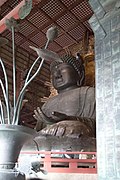
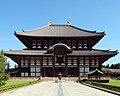
The Kansai region lays claim to the earliest beginnings of Japanese civilization. It was Nara, the most eastern point on the Silk Road, that became the site of Japan's first permanent capital.[20] This period (AD 710–784) saw the spread of Buddhism to Japan and the construction of Tōdai-ji in 745. The Kansai region has the Shinto religion's holiest shrine at Ise Shrine (built in 690 AD) in Mie prefecture.[21]

The Heian period saw the capital moved to Heian-kyō (平安京, present-day Kyoto), where it remained for over a thousand years until the Meiji Restoration. During this golden age, the Kansai region gave birth to traditional Japanese culture. In 788, Saicho, the founder of the Tendai sect of Buddhism established his monastery at Mount Hiei in Shiga prefecture.

Japan's most famous tale, and some say the world's first novel, The Tale of Genji was penned by Murasaki Shikibu while performing as a lady-in-waiting in Heian-kyo. Noh and Kabuki, Japan's traditional dramatic forms both saw their birth and evolution in Kyoto. Bunraku, Japanese puppet theater, is native to Osaka.

World Heritage Sites in Kansai region

Kansai's unique position in Japanese history, plus the lack of damage from wars or natural disasters, has resulted in Kansai region having more UNESCO World Heritage Listings than any other region of Japan.[22] The five World Heritage Listings include: Buddhist Monuments in the Hōryū-ji Area, Himeji Castle, Historic Monuments of Ancient Kyoto (Kyoto, Uji and Otsu Cities), Historic Monuments of Ancient Nara, and Sacred Sites and Pilgrimage Routes in the Kii Mountain Range.[23]

Demographics

[edit]

Per Japanese census data,[24][25] Kansai region much like Keihanshin has experienced a small population increase beginning around 2010.

Historical population
YearPop.±%
1920 9,212,000—    
1930 11,015,000+19.6%
1940 13,133,000+19.2%
1950 13,118,000−0.1%
1960 15,515,000+18.3%
1970 18,944,000+22.1%
1980 21,208,000+12.0%
1990 22,206,000+4.7%
2000 22,712,924+2.3%
2010 22,757,897+0.2%
2020 22,794,173+0.2%

Major cities

[edit]

Other cities

[edit]


Education

[edit]

International schools

[edit]

International schools have served expatriates in the Kansai region since 1909. Outside of Tokyo and Yokohama, Kansai has the largest number of international schools.

In 1909, Deutsche Schule Kobe was founded to serve German, Austrian and German-speaking Swiss expatriates, traders and missionaries living in the Kobe area.[26] After a long history of teaching a German curriculum, the school changed to The Primary Years Programme (PYP) in 2002. It provides curriculum in three languages: German, English, and Japanese.

In 1913, Canadian Methodist Academy opened its doors to sixteen children.[27] The school, renamed Canadian Academy in 1917, served children of missionary parents from grade one through high school and offered boarding facilities for students from throughout Asia. Today, the day and boarding school offers a PreK to Grade 12 education on the campus on Rokkō Island, a human-made island. The school, which is no longer affiliated with Canada or the church, is the largest school for expatriates in Kansai. The school is approved by the Japanese Ministry of Education and accredited by the Western Association of Schools and Colleges (WASC)[28] and the Council of International Schools.[29] The school awards both the International Baccalaureate (IB) and U.S. high school diplomas.

The number of international schools burgeoned after World War II.

In 1946, St. Michael's International School was established by Anglican Bishop Michael Yashiro and Miss Leonora Lee, a British missionary.[30] Today, the school offers a distinctive British-style primary education based on the National Curriculum of England and Wales. The school has joint accreditation from the Council of International Schools and the Western Association of Schools and Colleges.

Brother Charles Fojoucyk and Brother Stephen Weber founded Marist Brothers International School in 1951 after communist authorities pressured them to leave Tientsin, China.[31] Today, the international Montessori - Grade 12 school enrolls approximately 300 students. The school is accredited by the Western Association of Schools and Colleges.

In 1957, a missionary homeschooled her son, his best friend and another student in their home. The next year, the home turned into Kyoto Christian Day School and a full-time teacher was hired.[32] The school was renamed Kyoto International School in 1966. Today, the school serves students from two to fourteen years old. The school has been accredited by the Western Association of Schools and Colleges (WASC) since 1992 and authorized by the International Baccalaureate Organisation (IBO) since 2006.

Kansai is also served by Osaka International School, Lycée français international de Kyoto as well as Chinese and Korean schools.

Air transportation

[edit]
[edit]

See also

[edit]

Notes

[edit]

References

[edit]
[edit]
Revisions and contributorsEdit on WikipediaRead on Wikipedia
from Grokipedia
The Kansai region (関西), also known as the Kinki region (近畿), is a major geographical and cultural area in the central-western part of Japan's island, serving as the historical and spiritual heart of the nation. It comprises seven prefectures—Mie, Shiga, , , Hyōgo, Nara, and Wakayama—spanning approximately 33,000 square kilometers and home to a population of about 21.8 million people, which represents roughly 17% of Japan's total inhabitants. Renowned for its ancient capitals and enduring traditions, Kansai blends urban dynamism with preserved heritage, including World Heritage sites like the historic monuments of Nara and the cultural landscapes of . Historically, Kansai was the political center of for over 1,500 years, beginning with Nara as the nation's first permanent capital in 710 CE and followed by , which functioned as the imperial seat from 794 to 1868. This legacy has fostered a distinctive regional identity, characterized by refined arts such as tea ceremonies, theater, and cuisine, alongside vibrant festivals and a known as Kansai-ben that differs notably from standard Japanese. The region's major urban centers—Osaka, , and —form a densely populated metropolitan corridor that drives innovation while preserving sites like and the deer-filled parks of Nara. Economically, Kansai ranks as Japan's second-largest regional economy after the , with a nominal GDP of approximately $824 billion in 2021, accounting for 16% of the national total. Key industries include advanced , , pharmaceuticals, and energy technologies, with serving as a global trade hub through ports like and a concentration of research institutions pioneering innovations such as iPS cell therapies. The area hosted in from April to October 2025, further enhancing its role in international exchange and .

Etymology and Terminology

Origins of "Kansai"

The term "Kansai" originates from the kanji 関西 (kan-sai), which translates to "west of the barrier," referring to the geographic and strategic division created by ancient checkpoint stations (seki) along key transportation routes like the Tōkaidō, separating the central capital area from the eastern provinces of Honshū. These barriers, including the Suzuka Pass in present-day and the Fuwa Pass in , functioned as fortified passes and toll points that marked a historical boundary, with the region to their west designated as Kansai to denote its position relative to this divide. The earliest recorded use of "Kansai" dates to documents from the , where it explicitly contrasted with "Kantō" (east of the barrier) to describe the western heartland surrounding the imperial capital. In the context of the imperial court, this terminology underscored the political centrality of the Kansai area, encompassing provinces like those around and Nara, while portraying Kantō as the more peripheral eastern frontier often associated with military campaigns and expansion. This regional concept evolved from the administrative framework of the system, established in the late 7th and early 8th centuries, which divided into the (five core provinces around the capital: Yamashiro, Yamato, Kawachi, , and Settsu) and seven regional circuits (dō), including the Nankaidō to the southwest. Kansai effectively denoted the provinces west of the eastern barriers within this structure, integrating the as the political nucleus with adjacent western circuits, thereby solidifying its role as the foundational area for centralized governance and cultural development in early .

Historical and Modern Usage of "Kinki"

The term "Kinki" (近畿, kin-ki) derives from meaning "provinces near the capital," highlighting the region's historical role as the vicinity of Japan's ancient imperial seats in and Nara. This designation emerged during the in the late 19th century as part of the central government's efforts to modernize and organize Japan's administrative divisions into regional groupings known as chihō. In 1888, with the formalization of the modern prefectural system under the Local Autonomy Law, the Japanese government officially adopted "Kinki" to refer to the core area comprising the seven prefectures of Hyōgo, Kyōto, Nara, , Shiga, Wakayama, and Mie, facilitating coordinated governance and economic planning in this culturally significant zone. Following , the term persisted in official usage, including through entities like the Kinki Regional Development Bureau under the Ministry of Land, Infrastructure, Transport and Tourism, which managed regional infrastructure. Broader initiatives in 2015 shifted some organizations, such as business federations, to "Kansai" for unified promotion, though the bureau retained "Kinki" as of 2025. Internationally, "Kinki" has faced challenges due to its phonetic resemblance to the English "kinky," implying sexual deviance, which often elicits unintended humor or discomfort among non-Japanese speakers. This linguistic overlap has led to a growing preference for "Kansai" in global contexts since the 2000s, especially in and business, to prevent misinterpretations and enhance the region's appeal abroad. Modern definitions of "Kansai" sometimes vary from the historical "Kinki" core, with certain government and usages as of 2023 including while covering portions of Mie.

Geography and Environment

Location and Administrative Divisions

The Kansai region occupies the central-western portion of Honshū, Japan's largest island, spanning approximately latitudes 34° to 36° N and longitudes 134° to 136° E. This positioning places it in the southern-central expanse of the country, facilitating its role as a major transportation and economic hub. The region borders the to the east, the to the west, and extends southward to include the . Administratively, Kansai encompasses seven core prefectures: Fukui, Hyōgo, Kyōto, Nara, Ōsaka, Shiga, and Wakayama, which together cover an area of about 33,000 km². These divisions form the standard geographical and cultural definition of the region, reflecting its historical cohesion around ancient capitals like Kyōto and Nara. In broader contexts, such as economic collaborations or promotional initiatives, the region may extend to include along its eastern boundary or portions of , depending on whether the focus is cultural, industrial, or infrastructural. The current administrative structure traces its origins to the , when underwent rapid modernization following the 1868 ; in 1871, the feudal domains (han) were abolished and replaced by a centralized system of prefectures (ken and fu) to unify governance across the nation. This reform laid the foundation for the Kansai region's modern boundaries, which were further refined through subsequent consolidations by the late . Today, Kansai's prefectures operate within 's overarching framework of 47 administrative units, each with governors and assemblies responsible for local policies under national oversight.

Topography, Climate, and Natural Features

The Kansai region features a diverse topography characterized by expansive coastal plains, rugged mountain ranges, and intricate coastlines. The central Osaka Plain, encompassing much of and parts of Hyogo and prefectures, forms a broad alluvial lowland that supports intensive and urban expansion, stretching from inland toward the surrounding hills. To the east and south, the landscape rises into the Ōmine Mountains within Yoshino-Kumano National Park, where Mount Ōmine (1,895 m) stands as a prominent peak amid steep gorges and primeval forests, part of the Kii Peninsula's elevated terrain that spans Nara, Wakayama, and Mie prefectures. Coastlines along the to the west and the to the south include dramatic features like the Strait's tidal whirlpools and the rugged shores of , contributing to a varied physiography that transitions from flat basins to elevated plateaus. Major rivers shape the region's hydrology and have historically influenced settlement and farming patterns. The , formed by the confluence of the , Kizu, and Katsura rivers near , serves as the primary outlet from and flows southward into , providing vital water resources for irrigation and industry across and southern Shiga prefectures. The Kizu River, a key tributary originating in the mountains of Mie and Kyoto, merges into the Yodo system and supports agricultural productivity in the Nara Basin. Further south, the Kinokawa River traverses through deep valleys in Yoshino-Kumano , facilitating rice cultivation and hydropower generation while carving scenic gorges like Dorokyō. The climate of Kansai is classified as humid subtropical (Köppen Cfa), marked by hot, humid summers and mild winters with significant seasonal precipitation. Average summer temperatures range from 25–30°C (77–86°F), peaking in at around 31°C (88°F), while winter averages hover between 5–10°C (41–50°F), with January lows near 4°C (39°F). Annual rainfall totals approximately 1,200–1,500 mm, concentrated in the rainy season (up to 196 mm in June) and typhoon-prone autumn months from September to October, when storms from the Pacific can bring heavy downpours and winds. Natural features highlight Kansai's ecological richness, particularly in protected areas. Lake Biwa in Shiga Prefecture, Japan's largest freshwater lake, hosts over 1,700 aquatic species, including numerous endemics like the Biwa trout and rare mollusks, sustaining diverse ecosystems amid its ancient four-million-year-old basin. Biodiversity thrives in Yoshino-Kumano National Park's primeval forests and coastal waters, where coral reefs support tropical fish and the UNESCO-listed Sacred Sites and Pilgrimage Routes of the Kii Mountain Range preserve ancient woodlands. Urban sprawl in the Osaka Plain has pressured these habitats through habitat fragmentation and pollution, prompting conservation initiatives such as national park expansions and remote sensing-based monitoring to curb development and protect biodiversity hotspots.

History

Ancient and Classical Eras

The Kansai region, particularly the Nara Basin, served as a cradle for early human activity during the (c. 14,000–300 BCE), where communities relied on and produced some of the world's earliest marked with cord impressions. Archaeological excavations in reveal settlements adapted to the region's forested hills and river valleys, with sites like the Okawa Ruins in Yamazoe Village yielding pit dwellings, stone tools, and ceramic artifacts indicative of seasonal mobility and communal rituals. These findings underscore the Jōmon inhabitants' sophisticated environmental adaptation in what would become central Kansai, prior to agricultural transformations. The transition to the (c. 300 BCE–300 CE) marked a profound shift in the Kansai region, with the introduction of wet-rice farming, bronze and iron tools, and permanent villages, likely influenced by migrations from the Asian continent. Evidence of early rice cultivation appears in the Nara Basin, where paddy fields and irrigation systems supported population growth and social complexity. The Karako Kagi site in Tawaramoto, Nara, exemplifies this era as a large fortified settlement enclosed by moats and walls, housing up to 1,000 residents engaged in rice agriculture and weaving, highlighting the region's emergence as an economic and defensive hub. This agricultural foundation laid the groundwork for subsequent in Kansai. During the (c. 250–710 CE), the Kansai region, centered in the Nara area then known as , became the political heart of early Japanese unification under powerful clans that formed the imperial lineage. The Yamato court established administrative control over surrounding territories, fostering a proto-state through alliances, tribute systems, and monumental (keyhole-shaped tombs) that symbolized elite authority. (r. 661–671 CE), originally Prince Naka no Ōe, played a pivotal role in consolidating power, revising the court rank system in 664 to enhance bureaucratic efficiency and imperial oversight, thereby strengthening the central court's dominance in Nara. A landmark event was the Taika Reforms of 645 CE, led by Prince Naka no Ōe and Nakatomi no Kamatari, which overthrew the dominant and imposed a centralized land redistribution, taxation, and labor system modeled on Tang China, effectively unifying disparate clans under imperial rule and diminishing regional autonomy. The classical era in Kansai unfolded through the Nara (710–794 CE) and Heian (794–1185 CE) periods, periods of cultural and institutional maturation with the region as Japan's political epicenter. In 710 CE, established Heijō-kyō (modern Nara) as the nation's first permanent capital, a grid-planned city inspired by Chinese urban models, housing the imperial palace, government offices, and institutions that promoted literacy and law codes like the of 701. , officially endorsed since the Asuka era, flourished under state patronage; (r. 724–749 CE) ordered the construction of temple in 741 CE as the headquarters of a national temple network to invoke divine protection, culminating in the casting of the colossal Buddha statue (completed 749 CE) and the temple's dedication in 752 CE, which mobilized vast resources and artisans across the realm. In 794 CE, relocated the capital northward to (modern ) to escape Nara's entrenched influence and clerical politics, initiating over four centuries of aristocratic refinement in the Uda Basin, where the court developed indigenous kana script, refined governance, and patronized arts amid growing provincial estates. Cultural flourishing defined this classical phase, with the compilation of foundational texts preserving mythology, history, and poetry. The Kojiki (Records of Ancient Matters), completed in 712 CE by court scholar Ō no Yasumaro under Empress Genmei's commission, chronicled divine origins, imperial genealogies, and oral legends in a mix of Chinese characters and phonetic notation, legitimizing the Yamato lineage as descendants of the sun goddess Amaterasu. Complementing this, the Man'yōshū (Collection of Ten Thousand Leaves), the oldest extant waka poetry anthology, was finalized around 759 CE by Ōtomo no Yakamochi, assembling over 4,500 verses from the 7th–8th centuries that celebrated nature, love, and imperial loyalty, reflecting the vernacular voice of Nara's elite and commoners alike. These works, alongside the spread of esoteric Buddhism and courtly rituals, cemented Kansai's role as the wellspring of Japanese classical identity.

Medieval to Early Modern Periods

The Medieval to Early Modern Periods in the Kansai region were defined by the shift from imperial court dominance to military rule, marked by intense feudal conflicts and the emergence of powerful shogunates that reshaped political and economic landscapes. The (1180–1185), a pivotal clash between the Minamoto and Taira clans, featured key battles in the region, including the Battle of Uji near in 1180, where Minamoto forces defeated the Taira, leading to the clan's victory and the establishment of the in 1185. This marked the rise of shogunal authority, though the retained symbolic power while the shogunate governed from in eastern Japan. During the (1185–1333), Kansai experienced relative stability amid influence, with serving as a cultural hub despite the shogunate's distant administration. The Muromachi period (1336–1573), named after the Ashikaga clan's headquarters in 's Muromachi district, saw the consolidate power in the region as de facto military rulers. The shoguns, from onward, governed alongside lords, fostering artistic and economic innovation in despite underlying tensions. However, the (1467–1477), a rivalry that devastated , effectively collapsed the shogunate and ushered in the of widespread chaos. In this "Warring States" era (1467–1603), Kansai became a battleground, with emerging as a dominant figure who targeted Osaka's strategic Uemachi Plateau, attacking and burning the fortified temple over a decade to secure economic and military control. The transition to the Azuchi-Momoyama period (1573–1603) highlighted unification efforts under , who built starting in 1583 on the site of the destroyed as a grand military stronghold symbolizing his authority. Completed in 1597, the castle served as a base for Hideyoshi's campaigns, culminating in Japan's unification by 1590 and elevating Osaka's role as a power center. This era bridged to the (1603–1868), when the imposed lasting peace after defeating rivals at Osaka in 1615, shifting political focus to while preserving as the imperial and cultural capital. flourished under Tokugawa rule as a hub for arts, literature, and entertainment, benefiting from urban prosperity and merchant patronage amid the era's economic growth. Parallel to these political shifts, economic transformations in Kansai fostered a robust class, particularly through the ports of and . , emerging as a self-governing by the , thrived on salt production and trade, with voyages yielding profits up to three times investment by 1493; it became the primary departure point by 1500, its organizing shipments and securing protection from local pirates. During the , 's autonomy allowed (naya-shu) to facilitate temple trade for , but Hideyoshi's capture in the late relocated many to , integrating their networks into the town's economy. In the , evolved into a financial powerhouse under Tokugawa oversight, with developing canals and monopolizing coastal shipping; by 1694, the "Osaka 24" wholesale group dominated cargo transport to , underscoring the region's -driven commerce.

Modern Developments and Postwar Era

The of 1868 marked a pivotal shift for the Kansai region, as the capital moved from to (formerly ), diminishing Kansai's political centrality but elevating its economic role. , already a major commercial hub during the , solidified its position as "Japan's kitchen" (Tenka no Daidokoro), serving as the primary center for rice distribution and trade that supplied the nation, including the new capital. This transition spurred industrialization in Kansai, with emerging as a key port and manufacturing base, fostering merchant networks that drove regional commerce amid Japan's rapid modernization. During the Taishō (1912–1926) and early Shōwa (1926–1945) periods, Kansai experienced accelerated urbanization, with cities like and expanding as industrial powerhouses amid Japan's broader economic growth. The , which devastated and left over 1.5 million homeless, This era's momentum was interrupted by , when U.S. air raids severely damaged Kansai's urban centers; the March 1945 firebombing of Osaka destroyed about 8.1 square miles of the city and killed approximately 4,000 people, while similar raids on Kobe in March and June razed industrial districts, contributing to widespread infrastructure collapse. In the postwar era from onward, Kansai played a central role in Japan's , leveraging its manufacturing strengths in textiles, , and to achieve rapid recovery and growth, with GDP expanding fourfold between 1958 and 1973 through export-oriented industries centered in and . The region faced a major setback with the 1995 Great Hanshin Earthquake, which struck and surrounding areas, causing over 6,400 deaths and approximately $100 billion in property damage, the costliest in Japanese history at the time. Recovery efforts emphasized resilient infrastructure, drawing on Kansai's industrial base for reconstruction. In response to the , the Union of Kansai Governments coordinated aid by pairing prefectures like with affected Tohoku areas, providing emergency supplies, personnel, and long-term support to over 930,000 recovery volunteers nationwide. As of 2025, Kansai has focused on sustainable recovery and technological integration, highlighted by in , which concluded in October 2025 after attracting approximately 28 million visitors (including free entries) and showcasing innovations in carbon neutrality, life sciences, and mobility under the theme "Designing Future Society for Our Lives." The event, while falling short of its 28.2 million target with 25.6 million paid visitors, contributed to advancements in sustainable technologies. Post-COVID has rebounded strongly, with welcoming 36.87 million international visitors in 2024—exceeding pre-pandemic levels by 15.6%—driving eco-friendly initiatives in Kansai's cultural sites and urban centers to balance growth with environmental goals.

Demographics and Society

The Kansai region, encompassing the prefectures of Fukui, Shiga, , , Hyogo, Nara, and Wakayama, has an estimated total population of approximately 21.0 million as of 2025, reflecting a decline from its peak of around 21.5 million in 2005 primarily due to an aging population and low birth rates. This downward trend mirrors national patterns, with the region's population decreasing by about 0.4-0.6% annually in recent years amid broader demographic challenges. Population density varies significantly across the region, with exhibiting the highest at roughly 4,500 people per square kilometer, driven by its urban core, while has the lowest at about 200 people per square kilometer due to its more rural and mountainous terrain. The majority of the population—around 19 million—concentrates in the megalopolis, which spans , , and areas, forming one of Japan's most densely urbanized zones. Current trends include declining birth rates, with a regional fertility rate of approximately 1.3 children per woman, contributing to natural decrease, and net out-migration toward the metropolitan area, where younger residents seek employment opportunities. By , about 30% of the is projected to be aged 65 or older, exacerbating labor shortages and straining . Historically, the region experienced a postwar boom from the 1950s to 1970s, fueled by rural-to-urban influx for industrial jobs, which swelled urban centers. The 2020 census highlighted ongoing , with shifts from central city cores to surrounding areas in response to costs and preferences.

Ethnic and Cultural Composition

The Kansai region is predominantly inhabited by ethnic Japanese, who constitute approximately 97% of the , reflecting Japan's overall demographic homogeneity where foreign residents account for about 3% nationwide as of 2024. This majority group shares a common cultural framework shaped by historical and regional influences, with the , known as Kansai-ben, serving as a prominent linguistic marker that distinguishes local speech from the standard Tokyo-based Japanese (hyōjungo) through its unique intonation, vocabulary, and grammar—often perceived as more expressive and humorous. For instance, Kansai-ben's prevalence in () and everyday interactions reinforces a sense of regional pride and identity, particularly in urban centers like . Among minorities, Korean residents form the largest group, many of whom are Zainichi Koreans—descendants of those brought to during the colonial era (1910–1945) for labor under Japanese rule. These communities are concentrated in urban areas such as and , where they maintain cultural institutions like Korean schools and festivals, though many have pursued or special amid ongoing challenges of . Small Ainu communities exist in urban Kansai, though the indigenous Ainu population is primarily in , often migrating for economic opportunities. Chinese communities, numbering roughly 50,000 in alone as of 2024, are also present in urban hubs like and , driven by recent for and , contributing to Chinatowns and cultural exchanges. Regional identities within Kansai highlight diverse social fabrics, with embodying a rooted in its Edo-period role as Japan's commercial center, fostering a pragmatic, entrepreneurial spirit evident in local proverbs and business practices. In contrast, preserves an aristocratic heritage tied to its imperial past, influencing refined arts, tea ceremonies, and a more formal social demeanor among residents. Urban-rural divides are pronounced in Nara, where ancient temple communities blend historical reverence with modern suburban life, and in Wakayama, a more rural known for its mountainous isolation and traditional fishing villages that emphasize community self-reliance over urban . Social trends in Kansai have increasingly focused on integration since the 1995 Great Hanshin-Awaji Earthquake, which disproportionately affected Korean communities in and spurred "multicultural coexistence" (tabunka kyōsei) initiatives, including volunteer networks and policy reforms to support ethnic minorities in recovery efforts. By 2025, international residents have grown to about 2-3% of the regional population, mirroring national trends with rises in Vietnamese, Filipino, and other foreign-born workers, prompting local governments in and Hyogo to expand language support and community programs for better societal inclusion.

Economy

Key Industries and Economic Hubs

The Kansai region's economy is predominantly driven by , which accounts for approximately 25% of its as of 2021, a higher proportion than the national average of 22%. This sector features strong concentrations in electronics production centered in , where companies like and Sharp maintain major facilities focused on consumer and industrial electronics. Automotive thrives in Hyōgo Prefecture, with affiliates of operating assembly and parts production sites that support Japan's broader vehicle industry. Shipbuilding remains a key activity in , leveraging the port's strategic location for constructing commercial vessels and offshore structures. Services and trade form another pillar, with Osaka serving as a major financial center anchored by the Osaka Exchange, Japan's primary derivatives market handling equities, futures, and options trading. significantly bolsters the service sector, contributing around 5% to the regional GDP through an estimated ¥10 trillion in direct spending in 2024, driven by cultural sites in and events like Osaka, Kansai, which attracted 25.58 million visitors. Post-, tourism in Kansai saw a continued surge, with inbound spending contributing to national totals exceeding ¥8 trillion for the year. Agriculture in Kansai emphasizes high-value crops and , including premium varieties from Lake Biwa-adjacent areas in and fruits like mikan from Wakayama, alongside harvesting from coastal Wakayama waters. emerges as a growth area in , supported by institutions like , where research in iPS cells and life sciences integrates agricultural applications for sustainable food production. The metropolitan area—encompassing , , and —functions as the primary economic hub, generating about 16% of Japan's total GDP, valued at roughly $824 billion for the broader Kansai region as of 2021. Following the post-2020 economic recovery, Kansai has outpaced national growth rates, with a strategic emphasis on green technologies such as systems and advanced batteries to foster sustainable innovation. Looking to 2025, the region faces challenges including ongoing supply shortages disrupting chains and acute labor shortages in high-tech sectors, with job-to-applicant ratios exceeding 4 in key industries.

Major Corporations and Trade

The Kansai region's economic prominence traces its roots to the (1868–1912), when conglomerates like Sumitomo emerged as pivotal forces in Japan's industrialization. Founded in the late but expanding significantly during Meiji through , , and banking operations centered in and , Sumitomo exemplified the that fueled national growth in heavy industries and . This historical foundation laid the groundwork for Kansai's enduring role as a hub for innovative enterprises, transitioning from prewar conglomerates to postwar global players. Prominent corporations headquartered in Kansai continue to drive the region's economy, with Panasonic Holdings Corporation in Osaka leading in consumer electronics and appliances, reporting 8.46 trillion yen (approximately $56 billion) in revenue for fiscal year 2025 (ended March 31, 2025). Takeda Pharmaceutical Company Limited, also based in Osaka, stands as a global biotech leader focused on oncology and rare diseases, achieving $30.2 billion in revenue for fiscal year 2025 (ended March 31, 2025). In Kyoto, Nintendo Co., Ltd. dominates the gaming industry, generating approximately $11.2 billion in revenue for fiscal year 2024 (ended March 31, 2024) through hardware like the Nintendo Switch and titles such as the Mario franchise. These firms highlight Kansai's strengths in technology, healthcare, and entertainment, employing tens of thousands locally while exporting innovations worldwide. Trade dynamics in Kansai are anchored by the , which handled over 85 million tons of cargo annually in recent years, serving as a gateway for imports of raw materials and exports of manufactured goods. Exports from the region emphasize machinery and , accounting for roughly 30% of total outbound shipments, including precision components from companies like and . Japan's participation in free trade agreements, such as the (RCEP) with nations effective since 2022, has enhanced these links by reducing tariffs on and pharmaceuticals, boosting Kansai's volume with by facilitating smoother supply chains. The 2025 World Exposition in underscored Kansai's global trade orientation, with an estimated economic of approximately ¥1.8 trillion through increased , investments, and networking. This event amplified opportunities in high-tech sectors, drawing on the region's historical legacy to position Kansai as a bridge between and markets.

Urban Centers

Primary Metropolitan Areas

The primary metropolitan areas of the Kansai region—Osaka, Kyoto, and Kobe—form the densely integrated urban corridor, which drives much of Japan's western economic and cultural activity. These cities collectively anchor a dynamic urban landscape characterized by high population densities, advanced infrastructure, and diverse roles in trade, tourism, and innovation. stands as the commercial powerhouse, as the historical and spiritual heart, and as the international port gateway, their proximity fostering seamless economic synergies. Osaka Metropolis, with a city proper population of approximately 2.75 million residents, functions as a central hub for , , and in Kansai. The city's vibrant economy revolves around retail, finance, and media sectors, supported by iconic districts like , which serves as a major transportation node connecting lines, subways, and regional rail networks to facilitate daily commutes for millions. Umeda's skyscrapers, including Osaka Station City, host , arcades, and event spaces that underscore Osaka's role in national and flows. Kyoto, home to about 1.46 million people, embodies the region's cultural capital, preserving ancient traditions amid modern urban life. Renowned for its over 1,600 Buddhist temples and numerous shrines, many designated as World Heritage sites, the city attracts global visitors seeking historical immersion. Key tourist cores include the district, famed for its preserved wooden townhouses, performances, and lantern-lit streets evoking Edo-period ambiance, and , a western suburb featuring the iconic bamboo grove, Togetsukyo Bridge, and Tenryu-ji Temple gardens that draw crowds for their natural and architectural harmony. Kobe, with a population of roughly 1.49 million, operates as a cosmopolitan port city blending Japanese and Western influences, bolstered by its strategic harbor handling significant international cargo and cruise traffic. The city's economy emphasizes shipping, fashion, and high-tech industries, contributing to Kansai's export-oriented growth. Kitano-cho exemplifies Kobe's international vibe through its cluster of preserved foreign residences (ijinkan) from the , where Western-style mansions built by traders now function as museums and cafes, highlighting the port's historical role in Japan's opening to global trade. The integration unites , , and into one of the world's most productive urban agglomerations, encompassing a combined of approximately 19.2 million across a 13,091-square-kilometer area. Interconnected by efficient rail and systems, Keihanshin exemplifies polycentric urban development, where the cities' complementary strengths—'s , 's heritage, and 's —propel regional resilience and innovation, underscoring its status as a top-tier global economic center comparable to major European metros in scale and output.

Secondary Cities and Towns

Nara, with a population of approximately 352,000 as of 2024, serves as the capital of and is renowned as Japan's first permanent capital from 710 to 784 CE, featuring expansive deer parks and multiple World Heritage sites such as the Historic Monuments of Ancient Nara. These sites, including temples and shrines, underscore the city's role in preserving ancient Japanese heritage while contributing to the region's beyond the primary metropolitan areas. Nara's urban layout blends historical preservation with modern residential and commercial districts, fostering a unique identity that complements the broader Kansai economic network. In , boasts a population of around 530,000 residents in 2024 and stands out for its well-preserved feudal architecture, particularly , constructed in 1609 and designated a in 1993 for exemplifying design. The city's economy revolves around and , with the castle drawing visitors who explore its surrounding moats, gardens, and districts, enhancing Himeji's status as a key secondary hub in western Kansai. Ōtsu, the capital of with about 340,000 inhabitants as of 2024, occupies a strategic lakeside position adjacent to , Japan's largest freshwater lake, and functions as the prefecture's administrative center. Its proximity to influences development, yet Ōtsu maintains distinct features like waterfront promenades and the UNESCO-listed temple complex on , which supports local spiritual and educational activities. The city's blend of natural scenery and governance roles bolsters regional connectivity without overshadowing larger urban centers. Beyond these mid-sized cities, rural towns in Kansai sustain the region's diverse identity through traditional practices. Wakayama Prefecture's coastal fishing villages, such as Saikazaki and Kada, rely on time-honored methods like single-line fishing for species including and clams, preserving community-based livelihoods amid scenic bays. In , mountainous hamlets like those in the Yoshino and Dorogawa areas uphold ancestral lifestyles, including , sake brewing, and Shugendo mountain asceticism, where residents maintain kominka wooden homes and seasonal festivals in harmony with the rugged terrain. These areas exemplify Kansai's rural-urban balance, offering sustainable models of cultural continuity.

Culture and Traditions

Historical Arts and Festivals

The Kansai region's historical arts encompass a rich tapestry of performing traditions that emerged during the medieval and early modern periods, deeply intertwined with the area's role as Japan's cultural heartland. theater, one of the oldest extant forms of classical Japanese dance-drama, took shape in the late 14th century during the (1336–1573), evolving from earlier ritual performances like sarugaku and dengaku under the patronage of samurai elites in the -Yamato area. This art form flourished further in during the Momoyama period (late 16th century), where innovations in costumes, masks, and stage design reflected the opulent culture of the imperial capital, solidifying 's stylized movements, chants, and themes of spiritual transcendence. Complementing , theater originated in early 17th-century as a vibrant, popular entertainment pioneered by , a shrine attendant who blended dance, music, and dramatic skits inspired by and folk traditions to captivate urban audiences along the . By the (1603–1868), had evolved into a sophisticated spectacle featuring elaborate costumes, dynamic poses (mie), and all-male casts portraying historical tales and moral dramas, with 's Minamiza Theatre serving as a key venue for its development. Another prominent performing art is , or ningyō jōruri, a traditional theater that developed in the early 17th century in the area of Hyōgo Prefecture and later flourished in . Pioneered by puppeteers like Takeda Izumo and chanter Takemoto Chikamatsu, Bunraku combines intricate manipulation by three puppeteers, dramatic chanting (jōruri), and music to depict historical and domestic stories, often exploring themes of loyalty and tragedy. Performed at venues like the National Bunraku Theatre in Osaka, it represents a unique fusion of craftsmanship and narrative art central to Kansai's cultural legacy. Traditional crafts in Kansai highlight the region's mastery of artisanal techniques passed down through generations. In , kyo-yuzen dyeing emerged during the , innovated by fan painter Miyazaki Yuzensai around the late 17th century, who adapted his intricate designs to silk fabrics using rice-paste resist methods for vibrant, pictorial kimonos favored by the merchant class. This technique, protected as a traditional since 1978, involves hand-painting motifs like flowers and landscapes, followed by steaming and washing to fix colors, embodying Kyoto's aesthetic of refined elegance. In Nara, inkstone crafting (suzuri) traces its significance to the , with exemplary pieces preserved in the Shosoin Repository at Todaiji Temple, such as a rare blue-spotted stone inkstone with ceramic inlay, showcasing early Tang-influenced techniques for grinding ink sticks in and . These artifacts underscore Nara's pivotal role in introducing and refining East Asian writing implements during the (710–794), influencing Japan's scholarly and artistic heritage. Kansai's festivals preserve ancient rituals through spectacular communal events that blend Shinto devotion, performance, and pageantry. The Gion Matsuri in Kyoto, dating back over 1,000 years to 869 CE, originated as a purification rite to appease plague-bringing deities at Yasaka Shrine, featuring a grand parade of towering yamaboko floats on July 17 and 24 adorned with historical tapestries and pulled through streets by participants in Edo-era attire. Similarly, Osaka's Tenjin Matsuri, established in the 10th century around 951 CE to honor scholar-deity Sugawara no Michizane at Tenmangu Shrine, culminates on July 25 in a river procession of over 100 ornate boats on the Okawa River, accompanied by taiko drums, flutes, and fireworks illuminating the night sky. In Nara, the Kasuga Wakamiya Onmatsuri, held annually since 1136 CE to pray for bountiful harvests and health at Kasuga Taisha's subsidiary shrine, features a December 17 procession of costumed samurai, courtiers, and children evoking 12th-century nobility, followed by ritual dances (kagura) and archery displays that invoke the deity's blessings. These arts and festivals play a vital role in cultural preservation and , safeguarding amid modernization. (Noh and Kyogen) was proclaimed in 2001 and inscribed in 2008, while was proclaimed in 2005 and inscribed in 2008, on UNESCO's Representative List of the of Humanity, recognizing their transmission through master-apprentice lineages and contributions to Japan's expressive traditions, with Kyoto's Kobu district exemplifying localized Kabuki performances by in annual Kaomise events that maintain historical choreography. shares this status, inscribed in 2008 for its masterful techniques. In Kansai, these practices reinforce communal bonds and historical continuity, as seen in the festivals' designation as Important Intangible Folk Cultural Properties, fostering a sense of shared heritage that distinguishes the region's identity from more industrialized areas. In 2025, modern adaptations incorporate digital technologies to broaden access, such as live-streamed processions and recreations, with the Kasuga Wakamiya Onmatsuri featured on the National Theatre streaming platform for while preserving authenticity. These innovations, including GPS-enabled digital maps for festival navigation in , ensure that Kansai's heritage remains vibrant and inclusive without compromising its traditional essence.

Cuisine and Local Customs

The Kansai region's is renowned for its emphasis on fresh, seasonal ingredients and a balance of bold flavors and refined presentations, reflecting the area's historical role as a commercial hub. Signature street foods from , such as —a savory pancake customizable with cabbage, seafood, or meat—and —grilled balls filled with octopus and drizzled with sauce—embody the region's accessible, hearty eating style. In , offers an elegant multi-course meal that highlights seasonal produce through meticulously arranged dishes, often incorporating subtle broths and artistic plating. Meanwhile, Hyōgo Prefecture's , a premium variety graded A5 for its intense marbling and tenderness, represents the pinnacle of meat-centric , sourced exclusively from Tajima-strain raised in the region. Local customs in Kansai intertwine food with hospitality and community. Kyoto's , a selfless form of guest care rooted in anticipation of needs, is vividly expressed during tea ceremonies, where hosts serve and sweets in serene settings to foster harmony and mindfulness. In contrast, Osaka's kuidaore ethos—"eat till you drop"—encourages indulgent, carefree dining, stemming from the city's merchant heritage and abundance of affordable, flavorful options like konamon wheat-based snacks. Family-oriented participation in matsuri festivals further strengthens social bonds, with households joining processions, dances, and communal meals to honor traditions and seasonal changes. Regional variations showcase Kansai's diverse landscapes, including inland seafood from in , where freshwater fish like funa carp are fermented into funazushi or grilled for subtle, umami-rich dishes. Seasonal ingredients, such as sakura blossoms in spring, infuse sweets like sakura mochi—pink rice cakes wrapped in pickled leaves—or subtle flavorings in teas and rice preparations, celebrating the fleeting beauty of . These culinary traditions trace influences to the , when Osaka's merchants innovated affordable, ingredient-driven foods like early forms of and , leveraging the city's role as Japan's "kitchen" for rice distribution and trade. In 2025, health trends have spurred adaptations like vegan in , where Michelin-recognized restaurants reimagine plant-based shojin ryori with seasonal vegetables and , omitting animal products while preserving traditional artistry. Festival foods, such as yatai stalls offering during matsuri, briefly complement these customs by providing shared, on-the-go bites.

Education and Research

Higher Education Institutions

The Kansai region's higher education landscape traces its origins to the , when imperial universities were established to cultivate a skilled essential for Japan's rapid industrialization and modernization. Imperial University, founded in 1897, was the second such institution after , focusing on , , , and to support technological and administrative advancements amid the shift from to an industrial economy. These universities played a pivotal role in training engineers, scientists, and bureaucrats who drove innovations in , , and resource management, contributing to Japan's emergence as an industrial power by the early . Imperial University, established in 1931, extended this legacy by emphasizing human sciences, literature, and to address growing industrial needs in the Kansai economic hub. Among the region's premier institutions, stands out for its longstanding excellence in research and education, having produced multiple Nobel laureates in physics and , including in 1949 for his work on the particle and in 2012 for induced pluripotent stem (iPS) cell research. , with its strong emphasis on engineering and interdisciplinary sciences, continues to advance fields like and , building on its imperial foundations to foster innovations aligned with regional industries. , originating from the Kobe Higher Commercial School, has developed a renowned economics program as the second oldest among national universities, specializing in , international trade, and to support Kansai's commercial heritage. Key research hubs further elevate Kansai's academic profile, notably the Center for Biosystems Dynamics Research at the Kobe Campus, which conducts cutting-edge studies on and multi-omics approaches to understand cellular and organismal dynamics. Kyoto University's Center for iPS Cell Research and Application, led by Yamanaka, has pioneered through iPS cell breakthroughs, earning global recognition for potential applications in modeling and . These centers collaborate with universities to translate into practical advancements, reinforcing Kansai's status as a leader in life sciences and engineering. in has further promoted international research collaborations, including partnerships in sustainable technologies and innovation exchanges. Higher education institutions in the Kansai region support a robust system for domestic and global talent development. International programs have seen significant expansion, with enrollment growing by about 20% since 2020, driven by post-pandemic recovery and initiatives to attract diverse scholars through English-taught courses and research partnerships. As of 2024, Kansai hosts approximately 45,000 international students in higher education, reflecting its appeal as a regional hub.

International and Specialized Schools

The Kansai region features a range of international schools designed primarily for expatriate children and Japanese students pursuing globally oriented education, often emphasizing English-medium instruction and international curricula. Osaka International School of Kwansei Gakuin, established in 1991, stands out as one of the earliest institutions in Japan to implement the full International Baccalaureate (IB) continuum, encompassing the Primary Years Programme for ages 3-12, the Middle Years Programme for ages 11-16, and the Diploma Programme for ages 16-19. This school serves a diverse student body from the international community in Osaka and surrounding areas, fostering inquiry-based learning and intercultural understanding. Complementing these K-12 options, specialized higher-level programs at institutions like provide English-taught degrees alongside bilingual support, enabling seamless integration for non-Japanese speakers through American-style classes and interpretation services. Founded in 1989 and elevated to university status in 2011, the university focuses on liberal arts and , attracting students seeking transferable credits and experiences in Kyoto's historic setting. Vocational training in Kansai highlights the region's strengths in practical, industry-aligned education, particularly in and technology. The Tsuji Culinary Institute in , opened in 1960 by founder Shizuo Tsuji, is renowned as one of Asia's largest culinary academies, offering intensive programs in French, Japanese, and international cuisines with hands-on training across its , , and campuses. Enrollment trends in these schools reflect growing internationalization. However, bilingual integration remains challenging amid Japan's low English proficiency—ranked 87th out of 113 countries in the 2023 —requiring innovative approaches like immersion and support services to bridge linguistic gaps.

Transportation Infrastructure

Airports and Air Travel

The Kansai region, encompassing , , , and surrounding prefectures, relies on a network of airports that serve as vital gateways for domestic and international travelers, supporting , , and . The primary hub is (KIX), located on an artificial island in , which handles the majority of international traffic. Opened on September 4, 1994, KIX was constructed to alleviate severe congestion at the older (Itami) and to provide 24-hour operations for global connectivity. In fiscal year 2024 (April 2023 to March 2024), KIX accommodated 31.797 million passengers, including 25.079 million on international flights, marking a significant recovery from pandemic-era lows. The airport connects to over 100 international destinations across , , , and , operated by more than 80 airlines. KIX has demonstrated resilience amid natural challenges, notably surviving in September 2018, which caused flooding and a temporary shutdown but allowed for rapid recovery and infrastructure improvements. Ongoing expansions, including a major renovation of Terminal 1, with phases completed through 2025 and the final phase in 2026, aim to boost annual capacity to 40 million passengers in support of events like Osaka, Kansai, , which attracted 25.58 million visitors. These upgrades include expanded retail spaces, enhanced passenger facilities, and strengthened seawalls to combat and climate risks. The Expo contributed to record passenger numbers at KIX in 2025, with monthly highs exceeding 3 million in peak periods. Complementing KIX are domestic-focused facilities like Osaka International Airport (Itami), which handled 15.45 million passengers in fiscal year 2024, primarily serving routes within . Located inland near city, Itami remains a key node for short-haul travel despite its capacity constraints that prompted KIX's development. , a compact city-center facility on an opened in 2006, manages about 3.613 million passengers annually, focusing on domestic links with limited international charters. lacks a major commercial and instead depends on KIX and Itami for access, with only small, non-commercial aviation fields available for general or training purposes. Collectively, Kansai's three main airports processed a record 50.86 million passengers in 2024, driving economic activity through and . The operator, Kansai Airports, reported consolidated operating revenues of 186.8 billion yen for the ended March 31, 2024, reflecting robust recovery and contributions to the regional via inbound and expanded flight networks. Ground transportation links, such as rail and bus services, efficiently connect these airports to urban centers like and .

Rail, Road, and Maritime Networks

The rail network in the Kansai region is a cornerstone of regional connectivity, dominated by JR West lines that span urban and intercity routes. The Tokaido-Sanyo , operated by JR West, provides high-speed service from Shin-Osaka to , with an average travel time of approximately 2 hours and 21 minutes covering 552.6 km (343 miles). Private railways like the Keihan Electric Railway, which connects , , and Shiga with specialized train types for commuter and tourist needs, and the Railway, serving -Umeda and surrounding suburbs, complement JR services by offering dense local coverage. The system, with eight subway lines including the Midosuji, Tanimachi, and Chuo lines, operates over 123 stations, facilitating efficient urban transit across Greater . Road infrastructure in Kansai supports heavy freight and passenger movement but faces persistent challenges from congestion. The Hanshin Expressway network, spanning about 240 kilometers around Osaka, Kobe, and Kyoto, includes key routes like the Kobe and Bay Shore lines, handling millions of vehicles daily despite high congestion levels. The Meishin Expressway, a 194-kilometer toll road linking Nagoya to Kobe via Kansai's eastern edge, charges approximately 7,000-8,000 yen for the full traverse, enabling vital economic ties to central Japan. Urban traffic congestion remains acute, with average speeds in Osaka City around 24 km/h during rush hours as of 2024 (TomTom Traffic Index), well below national averages, exacerbated by dense population and limited road expansion. Maritime networks leverage Kansai's coastal position for cargo and passenger transport across the . The Port of handles 85.6 million tons of cargo annually (2022), with bulk goods like and chemicals comprising a significant portion alongside 32.4 million tons of containerized freight. services connect Kansai to , such as Nankai Ferry's 2-hour route from Wakayama to Tokushima and Orange Ferry's overnight sailings from Osaka Nanko to ports like Niihama and Toyo, accommodating vehicles and passengers. The routes, stretching 400 kilometers from toward and encompassing over 3,000 islands, serve as sheltered waterways for coastal shipping and inter-island ferries, supporting regional trade and tourism. Integration of these networks enhances seamless mobility through technologies like the contactless smart card, issued by JR West, which allows fare payments across JR lines, private railways, , buses, and some ferries in Kansai. Looking ahead, 2025 smart city initiatives, backed by Japan's government allocation of $225 million in FY2025 funding, promote autonomous vehicle deployment in urban areas like , including pilot programs for level 4 self-driving buses and taxis to alleviate congestion and integrate with existing rail and road systems.

Tourism and Attractions

Iconic Historical Sites

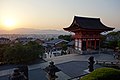
The Kansai region boasts a wealth of ancient and medieval landmarks that exemplify Japan's imperial, Buddhist, and heritage, drawing millions of visitors annually to explore preserved architectural marvels and spiritual sites. Among these, Kyoto's historic monuments stand out as primary attractions, recognized collectively for their cultural significance. , known as the Golden Pavilion, was originally constructed in 1397 as a retirement villa for , featuring three stories adorned with that reflect in its surrounding pond, symbolizing Muromachi-period elegance before its conversion to a temple after his death. Nearby, Fushimi Inari Taisha shrine captivates with its network of trails lined by approximately 10,000 vermilion gates, donated by worshippers over centuries and dedicated to the deity Inari, patron of prosperity and agriculture, creating an iconic pathway through forested hills. In Nara, the region's ancient capital from 710 to 784 CE, temple houses the Great , a colossal bronze statue completed in 752 under to invoke national peace amid epidemics and unrest, seated within the world's largest wooden building at the time of construction. Complementing this, shrine, founded in 768 by the influential , features four main halls enshrining deities protective of the imperial family, surrounded by over 3,000 stone and bronze lanterns that illuminate seasonal festivals, preserving Nara's traditions. Osaka's contributions include , initiated in 1583 by warlord as a symbol of his unification efforts, with its imposing stone walls and multi-tiered keep; the current main tower, a reconstruction completed in 1931, offers panoramic views and houses exhibits on feudal history. , one of Japan's oldest shrines established in 211 CE during the reign of , exemplifies early sumiyoshi-zukuri architecture with its unpainted gabled roofs and four main halls honoring sea and harvest deities, influencing shrine design nationwide. These sites form part of broader recognitions, notably the Historic Monuments of Ancient , inscribed in 1994 and comprising 17 properties including and elements near Fushimi Inari, highlighting the city's role as Japan's cultural heart from 794 CE onward. Pre-COVID, these Kansai landmarks collectively attracted over 50 million visitors annually, underscoring their enduring global appeal as testaments to millennia of Japanese artistry and .

Modern and Natural Destinations

The Kansai region blends contemporary urban innovations with pristine natural landscapes, offering visitors a diverse array of modern entertainment hubs and outdoor escapes. In , stands as a premier theme park, opened in 2001 and spanning 39 hectares with attractions inspired by Hollywood blockbusters, including the immersive area that debuted in 2021. This park attracted approximately 16 million visitors in 2023, providing thrilling rides, seasonal events, and character meet-and-greets that highlight Japan's fusion of global pop culture and cutting-edge technology. Nearby, the , established in 1990, ranks among the world's largest aquariums, housing over 30,000 marine animals from 620 species across habitats in a 5,400-ton central tank featuring whale sharks and manta rays. Its innovative ring-shaped design allows visitors to walk through underwater tunnels, emphasizing marine conservation and biodiversity education. A significant recent addition to Kansai's modern attractions was the Osaka Expo 2025, held from April 13 to October 13, 2025, on island in . Focused on the theme "Designing Future Society for Our Lives," the exposition showcased innovations in , , and international collaboration through pavilions from over 160 countries and organizations. It drew 25.58 million visitors, contributing to a surge in regional despite falling short of the initial 28.2 million target. Kansai's natural destinations provide serene contrasts to its bustling cities, with expansive parks and mountains ideal for , wildlife viewing, and seasonal spectacles. Lake Biwa in , Japan's largest freshwater lake at 670 square kilometers, serves as a vital ecological hub supporting over 1,000 plant and animal species, including migratory birds and endemic fish. Spanning activities from along its 235-kilometer shoreline to boating and viewing in spring, the lake's clear waters and surrounding wetlands offer year-round tranquility, drawing eco-tourists to sites like the Biwako Quasi-. In Hyogo Prefecture, Mount Rokko, the 931-meter peak of the Rokko Mountains, provides accessible nature experiences within Setonaikai , featuring panoramic vistas of and from observation decks like the Rokko Garden Terrace. trails through beech forests and herb gardens, coupled with winter skiing and summer stargazing at the Rokko Observatory, underscore the mountain's role as an urban-adjacent retreat restored through reforestation efforts since the 1970s. Further south, the Yoshino-Kumano National Park across Nara, Wakayama, and Mie prefectures encompasses diverse terrains from Mount Yoshino's renowned slopes—home to over 30,000 trees—to the rugged Kumano Kodo pilgrimage trails, a since 2004. These ancient paths, totaling 170 kilometers, wind through gorges, cliffs, and sacred forests, promoting spiritual hiking and encounters with hot springs and coastal shrines, while conservation initiatives protect the park's 61,406 hectares of . Together, these modern and natural sites illustrate Kansai's commitment to , balancing high-tech attractions with preserved environments that have drawn international acclaim for their accessibility and cultural depth.

References

Add your contribution
Related Hubs
User Avatar
No comments yet.