


Community hub
Recent from talks
Contribute something
Nothing was collected or created yet.
Lawyer
View on Wikipedia | |
| Occupation | |
|---|---|
| Names | Attorney, advocate, barrister, counsel, counselor, solicitor, legal executive |
Activity sectors | Law, business |
| Description | |
| Competencies | Analytical skills Critical thinking Law Legal research Legal writing Legal ethics |
Education required | Professional requirements |
Fields of employment | Courts, government, law firms, NGOs, legal aid, corporations |
Related jobs | Barrister, solicitor, legislator, judge, jurist, advocate, attorney, legal executive, prosecutor, law clerk, law professor, civil law notary, magistrate, politician, paralegal |
A lawyer is a person who is qualified to offer advice about the law, draft legal documents, or represent individuals in legal matters.
The exact nature of a lawyer's work varies depending on the legal jurisdiction and the legal system, as well as the lawyer's area of practice. In many jurisdictions, the legal profession is divided into various branches — including barristers, solicitors, conveyancers, notaries, canon lawyer — who perform different tasks related to the law.[1]
Historically, the role of lawyers can be traced back to ancient civilizations such as Greece and Rome. In modern times, the practice of law includes activities such as representing clients in criminal or civil court, advising on business transactions, protecting intellectual property, and ensuring compliance with laws and regulations.
Depending on the country, the education required to become a lawyer can range from completing an undergraduate law degree to undergoing postgraduate education and professional training. In many jurisdictions, passing a bar examination is also necessary before one can practice law.
Working as a lawyer generally involves the practical application of abstract legal theories and knowledge to solve specific problems. Some lawyers also work primarily in upholding the rule of law, human rights, and the interests of the legal profession.[2][3]
Terminology
[edit]Some jurisdictions have multiple types of lawyers, while others only have two or one.
England, the mother of the common law jurisdictions, emerged from the Middle Ages with a complexity in its legal professions similar to that of civil law jurisdictions, but then evolved by the 19th century to a single division between barristers and solicitors.[4][5]
Several countries that originally had two or more legal professions have since fused or united their professions into a single type of lawyer.[6][7][8][9] Most countries in this category are common law countries, though France, a civil law country, merged its jurists in 1990 and 1991 in response to Anglo-American competition.[10] In countries with fused professions, a lawyer is usually permitted to carry out all or nearly all the responsibilities listed below.
In some jurisdictions descended from the English common law tradition, including England and Wales, there are often two kinds of lawyers. A barrister (also known as an advocate or counselor) is a lawyer who typically specializes in arguing before courts, particularly in higher courts. A solicitor (or attorney) is a lawyer who prepares cases and gives advice on legal subjects. In some jurisdictions, solicitors also represent people in court. Fused professions, where lawyers have rights of both barristers and solicitors, have emerged in other former English common law jurisdictions, such as the United States, India, and Pakistan.[11][12]
Civil law jurisdictions do not have "lawyers" in the American sense, insofar as that term is used in American English to refer to a single unified type of general-purpose legal services provider.[13] Rather, their legal professions consist of a large number of different kinds of legally-trained persons, known as jurists, some of whom are advocates who are licensed to practice in the courts.[14][15][16] In some civil law countries, a similar distinction to the common law tradition exists between advocates and procurators.[17][18][19]
In the United States, Sri Lanka, and the Philippines, the preferred term for one practising law, "attorney at law", or "attorney-at-law", usually is abbreviated in everyday speech to "attorney". This term has its roots in the verb to attorn, meaning to transfer one's rights and obligations to another. South Africa only applies this term for certain practitioners.
Because each country has traditionally had its own method of dividing up legal work among its legal professionals, it has been difficult to formulate accurate generalizations that cover all the countries with multiple legal professions.[20] Other kinds of legal practitioners include:
- Patent attorneys
- Trademark attorneys
- Conveyancers
- Notaries[21][22]
- Scriveners[21][22]
- Legal executives
While some jurisdictions regulate the use of the title "lawyer", others do not.[11][23][24]
Titles
[edit]
Historically, lawyers in most European countries were addressed with the title of doctor. The first university degrees, starting with the law school of the University of Bologna in the 11th century, were all law degrees and doctorates.[25] Therefore, in many southern European countries, including Portugal, Italy, and Malta, lawyers have traditionally been addressed as "doctor", a practice that was transferred to many countries in South America and Macau. In some jurisdictions, the term "doctor" has since fallen into disuse, but it is still in use in many countries within and outside of Europe.[26][27]
The title of doctor has traditionally not been used to address lawyers in England or other common law countries. Until 1846, lawyers in England were trained by apprenticeship or in the Inns of Court, with no undergraduate degree being required.[28] Although the most common law degree in the United States is the Juris Doctor,[29] most J.D. holders in the United States do not use the title "doctor".[30] It is, however, common for lawyers in the United States to use the honorific suffix "Esq." (for "Esquire").
In French (France, Quebec, Belgium, Luxembourg, French-speaking area of Switzerland) and Dutch-speaking countries (Netherlands, Belgium), legal professionals are addressed as Maître ..., abbreviated to Me ... (in French) or Meester ..., abbreviated to mr. ... (in Dutch). In Poland, the title Mecenas is used to refer to advocates and attorneys at law,[31] although as an informal title its status is not protected by law.[32][33]
In South Africa and India, lawyers who have been admitted to the bar may use the title "Advocate", abbreviated to "Adv" in written correspondence. Lawyers who have completed two years of clerkship with a principal Attorney and passed all four board exams may be admitted as an "Attorney". Likewise, Italian law graduates who have qualified for the bar use the title "Avvocato", abbreviated in "Avv."
Responsibilities
[edit]Oral arguments in a courtroom
[edit]
Some lawyers, particularly barristers and advocates, argue the legal cases of clients case before a judge or jury in a court of law.[34][35]
In some jurisdictions, there are specialist lawyers who have exclusive rights of audience before a court.[36] In others, particularly fused legal jurisdictions, there are lawyers who specialize in courtroom advocacy but who do not have a legal monopoly over the profession.
In some countries, litigants have the option of arguing on their own behalf.[37] In other countries, like Venezuela, no one may appear before a judge unless represented by a lawyer.[38] The advantage of the latter regime is that lawyers are familiar with the court's customs and procedures, making the legal system more efficient for all involved. Unrepresented parties often damage their own credibility or slow the court down as a result of their inexperience.[39][40]
Research and drafting of court papers
[edit]Often, lawyers brief a court in writing on the issues in a case before the issues can be orally argued. They may have to perform extensive research into relevant facts. Also, they draft legal papers and prepare for an oral argument.
In split common law jurisdictions, the usual division of labor is that a solicitor will obtain the facts of the case from the client and then brief a barrister, usually in writing.[41] The barrister then researches and drafts the necessary court pleadings, which will be filed and served by the solicitor, and orally argues the case.[42]
In Spanish civil law, the procurator merely signs and presents the papers to the court, but it is the advocate who drafts the papers and argues the case.[43] In other civil law jurisdictions, like Japan, a scrivener or clerk may fill out court forms and draft simple papers for laypersons who cannot afford or do not need attorneys, and advise them on how to manage and argue their own cases.[44]
Advocacy in administrative hearings
[edit]In most developed countries, the legislature has granted original jurisdiction over highly technical matters to executive branch administrative agencies which oversee such things. As a result, some lawyers have become specialists in administrative law. In a few countries, there is a special category of jurists with a monopoly over this form of advocacy; for example, France formerly had conseils juridiques (who were merged into the main legal profession in 1991).[45] In other countries, like the United States, lawyers have been effectively barred by statute from certain types of administrative hearings in order to preserve their informality.[46]
Client intake and counseling
[edit]In some fused common law jurisdictions, the client-lawyer relationship begins with an intake interview where the lawyer gets to know the client personally, following which the lawyer discovers the facts of the client's case, clarifies what the client wants to accomplish, and shapes the client's expectations as to what actually can be accomplished. The second to last step begins to develop various claims or defenses for the client. Lastly, the lawyer explains her or his fees to the client.[47][48]
In England, only solicitors were traditionally in direct contact with the client,[49][needs update] but barristers nowadays may apply for rights to liaise with clients directly. The solicitor retained a barrister if one was necessary and acted as an intermediary between the barrister and the client.[50] In most cases barristers were obliged, under what is known as the "cab rank rule", to accept instructions for a case in an area in which they held themselves out as practicing, at a court at which they normally appeared and at their usual rates.[51][52]
Legal advice
[edit]Legal advice is the application of abstract principles of law to the concrete facts of the client's case to advise the client about what they should do next. In some jurisdictions, only a properly licensed lawyer may provide legal advice to clients for good consideration, even if no lawsuit is contemplated or is in progress.[53][54][55] In these jurisdictions, even conveyancers and corporate in-house counsel must first get a license to practice, though they may actually spend very little of their careers in court. Some jurisdictions have made the violation of such a rule the crime of unauthorized practice of law.[56]
In other countries, jurists who hold law degrees are allowed to provide legal advice to individuals or to corporations, and it is irrelevant if they lack a license and cannot appear in court.[57][58] Some countries go further; in England and Wales, there is no general prohibition on the giving of legal advice.[59] Singapore does not have any admission requirements for in-house counsel.[60] Sometimes civil law notaries are allowed to give legal advice, as in Belgium.[61]
In many countries, non-jurist accountants may provide what is technically legal advice in tax and accounting matters.[62]
Protecting intellectual property
[edit]In virtually all countries, patents, trademarks, industrial designs and other forms of intellectual property must be formally registered with a government agency in order to receive maximum protection under the law. The division of such work among lawyers, licensed non-lawyer jurists/agents, and ordinary clerks or scriveners varies greatly from one country to the next.[44][63]
Negotiating and drafting contracts
[edit]In some countries, the negotiating and drafting of contracts is considered to be similar to the provision of legal advice, so that it is subject to the licensing requirement explained above.[64] In others, jurists or notaries may negotiate or draft contracts.[65]
Conveyancing
[edit]Conveyancing is the drafting of the documents necessary for the transfer of real property, such as deeds and mortgages. In some jurisdictions, all real estate transactions must be carried out by a lawyer.[66] Historically, conveyancing accounted for about half of English solicitors' income, though this has since changed,[67] and a 1978 study showed that conveyancing "accounts for as much as 80 percent of solicitor-client contact in New South Wales."[68] In most common law jurisdictions outside of the United States, this monopoly arose from an 1804 law[69] that was introduced by William Pitt the Younger as a quid pro quo for the raising of fees on the certification of legal professionals such as barristers, solicitors, attorneys, and notaries.[70]
In others, the use of a lawyer is optional and banks, title companies, or realtors may be used instead.[71] In some civil law jurisdictions, real estate transactions are handled by civil law notaries.[72] In England and Wales, a special class of legal professionals–the licensed conveyancer–is also allowed to carry out conveyancing services for reward.[73]
Carrying out the intent of the deceased
[edit]In many countries, only lawyers have the legal authority to draft wills, trusts, and any other documents that ensure the efficient disposition of a person's property after death. In some civil law countries, this responsibility is handled by civil law notaries.[65]
Prosecution and defense of criminal suspects
[edit]In many civil law countries, prosecutors are trained and employed as part of the judiciary. They are law-trained jurists, but may not necessarily be lawyers in the sense that the word is used in the common law world.[74] In common law countries, prosecutors are usually lawyers holding regular licenses who work for the government office that files criminal charges against suspects. Criminal defense lawyers specialize in the defense of those charged with any crimes.[75]
Education and training
[edit]
The educational prerequisites for becoming a lawyer vary greatly across countries. In some countries, law is an undergraduate degree culminating in a bachelors or master's degree in law. In some of these jurisdictions, it is common or even required for students to earn another bachelor's degree at the same time.[76][77] Where law is taught as an undergraduate degree, legal training after law school may comprise advanced examinations, apprenticeships, and additional coursework at special government institutes. For example, in many English common law jurisdictions, individuals with a law degree have to undergo further education and professional training before qualifying as a lawyer, such as the Bar Professional Training Course.[78]
In other jurisdictions, particularly the United States and Canada, law is taught at the graduate level following the completion of an unrelated bachelor's degree.[79][80] In America, the Americans Bar Association decides which law schools to approve for the purposes of admission to the bar.[81] Law schools in the United States and Canada award graduating students a J.D. (Juris Doctor) as a professional degree.[82] In a handful of U.S. states, one may become an attorney (a so-called country lawyer) by simply "reading law" and passing the bar examination, without having to attend law school first, although very few people actually become lawyers that way.[83]
The methods and quality of legal education vary widely. Some countries require extensive clinical training in the form of apprenticeships or special clinical courses.[84] Others, like Venezuela, do not.[85] A few countries prefer to teach through assigned readings of judicial opinions (the casebook method) followed by intense in-class cross-examination by the professor (the Socratic method).[86][87] Many others focus on theoretical aspects of law, leaving the professional and practical training of lawyers to apprenticeship and employment contexts.[88][89][90]
Some countries, particularly industrialized ones, have a traditional preference for full-time law programs,[91] while in developing countries, students often work full- or part-time to pay the tuition and fees of their part-time law programs.[92][93] Law schools in developing countries share several common problems, such as an over reliance on practicing judges and lawyers who treat teaching as a part-time commitment, a concomitant scarcity of full-time law professors),[94][95] incompetent faculty with underqualified credentials,[96] and textbooks that lag behind the current state of the law.[94][97]
Earning the right to practice law
[edit]
Some jurisdictions grant a "diploma privilege" to certain institutions, so that merely earning a degree or credential from those institutions is the primary qualification for practicing law.[98] Mexico allows anyone with a law degree to practice law.[99] However, in a large number of countries, a law student must pass a bar examination (or a series of such examinations) before receiving a license to practice.[98][100][101]
Some countries require a formal apprenticeship with an experienced practitioner, while others do not.[102] A few jurisdictions still allow an apprenticeship in place of any kind of formal legal education, though the number of persons who actually become lawyers that way is increasingly rare.[103]
Career structure
[edit]
The career structure of lawyers varies widely from one country to the next.
Common and civil law
[edit]In most common law countries, especially those with fused professions, lawyers have many options over the course of their careers. Besides private practice, they can become a prosecutor, government counsel, corporate in-house counsel, administrative law judge, judge, arbitrator, or law professor.[104] There are also many non-legal jobs for which legal training is good preparation, such as politician, corporate executive, government administrator, investment banker, entrepreneur, or journalist.[105] In developing countries like India, a large majority of law students never actually practice, but simply use their law degree as a foundation for careers in other fields.[106]
In most civil law countries, lawyers generally structure their legal education around their chosen specialty; the boundaries between different types of lawyers are carefully defined and hard to cross.[107] After one earns a law degree, career mobility may be severely constrained.[108] For example, unlike their Anglo-American counterparts,[109] it is difficult for German judges to leave the bench and become advocates in private practice.[110] Another interesting example is France, where for much of the 20th century, all judiciary officials were graduates of an elite professional school for judges.[111]
In a few civil law countries, such as Sweden,[112] the legal profession is not rigorously bifurcated and everyone within it can easily change roles and arenas.
Specialization
[edit]In many countries, lawyers are general practitioners who represent clients in a broad field of legal matters.[113] In others, there has been a tendency since the start of the 20th century for lawyers to specialize early in their careers.[114][115] In countries where specialization is prevalent, many lawyers specialize in representing one side in one particular area of the law; thus, it is common in the United States to hear of plaintiffs' personal injury attorneys.[116][117]
Organizations
[edit]Lawyers in private practice generally work in specialized businesses known as law firms,[118] with the exception of English barristers. The vast majority of law firms worldwide are small businesses that range in size from 1 to 10 lawyers.[119] The United States,[120] United Kingdom and Australia are exceptions, home to several firms with more than 1,000 lawyers after a wave of mergers in the late 1990s.
Notably, barristers in England, Wales, Ireland, Northern Ireland and some states in Australia do not work in law firms. Those who offer their services to members of the general public—as opposed to those working in-house — are generally self-employed.[121] Most work in groupings known as "sets" or "chambers", where some administrative and marketing costs are shared. An important effect of this different organizational structure is that there is no conflict of interest where barristers in the same chambers work for opposing sides in a case, and in some specialized chambers this is commonplace.
Some large businesses employ their own legal staff in a legal department.[122] Other organizations buy in legal services from outside companies.[123]
Professional associations
[edit]
Mandatory licensing and membership in professional organizations
[edit]In some jurisdictions, either the judiciary[124] or the Ministry of Justice[125] directly supervises the admission, licensing, and regulation of lawyers.
Other jurisdictions, by statute, tradition, or court order, have granted such powers to a professional association which all lawyers must belong to.[126] In the U.S., such associations are known as mandatory, integrated, or unified bar associations. In the Commonwealth of Nations, similar organizations are known as Inns of Court, bar councils or law societies.[127] In civil law countries, comparable organizations are known as Orders of Advocates,[128] Chambers of Advocates,[129] Colleges of Advocates,[130] Faculties of Advocates,[131] or similar names. Generally, a nonmember caught practicing law may be liable for the crime of unauthorized practice of law.[132]
In common law countries with divided legal professions, barristers traditionally belong to the bar council (or an Inn of Court) and solicitors belong to the law society. In the English-speaking world, the largest mandatory professional association of lawyers is the State Bar of California, with 230,000 members.
Some countries admit and regulate lawyers at the national level, so that a lawyer, once licensed, can argue cases in any court in the land. This can be seen in countries including New Zealand, Japan, and Belgium.[133] Others, especially those with federal governments, tend to regulate lawyers at the state or provincial level; this is the case in the United States,[134] Canada,[135] Australia,[136] and Switzerland,[137] to name a few. Brazil is the most well-known federal government that regulates lawyers at the national level.[138]
Some countries, like Italy, regulate lawyers at the regional level,[139] and a few, like Belgium, even regulate them at the local level (that is, they are licensed and regulated by the local equivalent of bar associations but can advocate in courts nationwide).[140] In Germany, lawyers are admitted to regional bars and may appear for clients before all courts nationwide with the exception of the Federal Court of Justice of Germany (Bundesgerichtshof or BGH.[141]
Generally, geographic limitations can be troublesome for a lawyer who discovers that his client's cause requires him to litigate in a court beyond the normal geographic scope of his license. Although most courts have special pro hac vice rules for such occasions, the lawyer will still have to deal with a different set of professional responsibility rules, as well as the possibility of other differences in substantive and procedural law.
Some countries grant licenses to non-resident lawyers, who may then appear regularly on behalf of foreign clients. Others require all lawyers to live in the jurisdiction or to even hold national citizenship as a prerequisite for receiving a license to practice. But the trend in industrialized countries since the 1970s has been to abolish citizenship and residency restrictions. For example, the Supreme Court of Canada struck down a citizenship requirement on equality rights grounds in 1989,[142] and similarly, American citizenship and residency requirements were struck down as unconstitutional by the U.S. Supreme Court in 1973 and 1985, respectively.[143] The European Court of Justice made similar decisions in 1974 and 1977 striking down citizenship restrictions in Belgium and France.[144]
Voluntary associations
[edit]Voluntary lawyer associations may exist at all geographic levels from the provincial to the global.[99][145] Some associations are termed voluntary bar associations.[146] In some countries, lawyers have also formed trade unions.[147]
Regulation of lawyers
[edit]A key difference among countries is whether lawyers should be regulated solely by an independent judiciary and its subordinate institutions (a self-regulating legal profession),[148] or whether lawyers should be subject to supervision by the Ministry of Justice in the executive branch.
In most civil law countries, the government has traditionally exercised tight control over the legal profession in order to ensure a steady supply of loyal judges and bureaucrats. That is, lawyers were expected first and foremost to serve the state, and the availability of counsel for private litigants was an afterthought.[149] Even in civil law countries like Norway which have partially self-regulating professions, the Ministry of Justice is the sole issuer of licenses, and makes its own independent re-evaluation of a lawyer's fitness to practice after a lawyer has been expelled from the Advocates' Association.[125] Brazil is an unusual exception in that its national Order of Advocates has become a fully self-regulating institution with direct control over licensing and has successfully resisted government attempts to place it under the control of the Ministry of Labor.[150][151]
Of all the civil law countries, communist countries historically went the farthest towards total state control, with all communist lawyers forced to practice in collectives by the mid-1950s.[152][153] China is a prime example: technically, the People's Republic of China did not have lawyers, and instead had only poorly trained, state-employed "legal workers" prior to the enactment of a comprehensive reform package in 1996 by the Standing Committee of the National People's Congress.[154]
In contrast, common law lawyers have traditionally regulated themselves through institutions where the influence of non-lawyers, if any, was weak and indirect, despite nominal state control.[155] Such institutions have been traditionally dominated by private practitioners who opposed strong state control of the profession on the grounds that it would endanger the ability of lawyers to zealously and competently advocate their clients' causes in the adversarial system of justice.[156] However, the concept of the self-regulating profession has been criticized as a sham which serves to legitimize the professional monopoly while protecting the profession from public scrutiny.[157] In some jurisdictions, mechanisms have been astonishingly ineffective, and penalties have been light or nonexistent.[158][159][160]
Cultural perception
[edit]
Hostility towards the legal profession is a widespread phenomenon. For example, William Shakespeare famously wrote, "The first thing we do, let's kill all the lawyers" in Henry VI, Part 2, Act IV, Scene 2. The legal profession was abolished in Prussia in 1780 and in France in 1789, though both countries eventually realized that their judicial systems could not function efficiently without lawyers.[161] Complaints about too many lawyers were common in both England and the United States in the 1840s,[162][163] Germany in the 1910s,[164] and in Australia,[165] Canada,[166] the United States,[167][168][169] and Scotland[170] in the 1980s.
Public distrust of lawyers reached record heights in the United States after the Watergate scandal.[169][171] In the aftermath of Watergate, legal self-help books became popular among those who wished to solve their legal problems without having to deal with lawyers.[172] Lawyer jokes also soared in popularity in English-speaking North America as a result of Watergate.[173]
In Adventures in Law and Justice, legal researcher Bryan Horrigan dedicated a chapter to "Myths, Fictions, and Realities" about law and illustrated the perennial criticism of lawyers as "amoral [...] guns for hire"[174] with a quote from Ambrose Bierce's satirical The Devil's Dictionary that summarized the noun as: "LAWYER, n. One skilled in circumvention of the law."[175]
More generally, in Legal Ethics: A Comparative Study, law professor Geoffrey C. Hazard, Jr. with Angelo Dondi briefly examined the "regulations attempting to suppress lawyer misconduct" and noted that their similarity around the world was paralleled by a "remarkable consistency" in certain "persistent grievances" about lawyers that transcends both time and locale, from the Bible to medieval England to dynastic China.[176] The authors then generalized these common complaints about lawyers as being classified into five "general categories" as follows:
- abuse of litigation in various ways, including using dilatory tactics and false evidence and making frivolous arguments to the courts
- preparation of false documentation, such as false deeds, contracts, or wills
- deceiving clients and other persons and misappropriating property
- procrastination in dealings with clients
- charging excessive fees.[177]
Some studies have shown that suicide rates among lawyers in certain jurisdictions may be as much as six times higher than the average population, and commentators suggest that the low opinion the public has of lawyers, combined with their own high ideals of justice, which in practice they may see denied, increase the depression rates of those in this profession.[178][179] Additionally, lawyers are twice as likely to suffer from addiction to alcohol and other drugs.[180]
Compensation
[edit]
In the United States, lawyers typically earn between $100,000 and $220,000 per year, although earnings vary by age, experience, and practice setting.[181][182][183][184][185]
Lawyers are paid for their work in a variety of ways. In private practice, they may work for an hourly fee according to a billable hour structure,[186] a contingency fee,[187] or a lump sum payment. Normally, most lawyers negotiate a written fee agreement up front and may require a non-refundable retainer in advance. Recent studies suggest that when lawyers charge a fixed fee rather than billing by the hour, they work less hard on behalf of clients, and clients get worse outcomes.[188][189] In many countries there are fee-shifting arrangements by which the loser must pay the winner's fees and costs; the United States is the major exception,[190] although in turn, its legislators have carved out many exceptions to the so-called "American Rule" of no fee shifting.
Lawyers working directly on the payroll of governments, nonprofits, and corporations usually earn a regular annual salary.[191] In many countries, lawyers can also volunteer their labor in the service of worthy causes through an arrangement called pro bono (short for pro bono publico, "for the common good").[192] Traditionally such work was performed on behalf of the poor, but in some countries it has now expanded to many other causes such as environmental law.
In some countries, there are legal aid lawyers who specialize in providing legal services to the indigent.[193][194] France and Spain even have formal fee structures by which lawyers are compensated by the government for legal aid cases on a per-case basis.[195] A similar system, though not as extensive or generous, operates in Australia, Canada, and South Africa.[196]
In other countries, legal aid specialists are practically nonexistent. This may be because non-lawyers are allowed to provide such services; in both Italy and Belgium, trade unions and political parties provide what can be characterized as legal aid services. Some legal aid in Belgium is also provided by young lawyer apprentices subsidized by local bar associations (known as the pro deo system), as well as consumer protection nonprofit organizations and Public Assistance Agencies subsidized by local governments.[197] In Germany, mandatory fee structures have enabled widespread implementation of affordable legal expense insurance.[198]
History
[edit] | The examples and perspective in this section may not represent a worldwide view of the subject. (December 2023) |

Ancient Greece
[edit]The earliest people who could be described as "lawyers" were probably the orators of ancient Athens. However, Athenian orators faced serious structural obstacles. First, there was a rule that individuals were supposed to plead their own cases, which was soon bypassed by the increasing tendency of individuals to ask a "friend" for assistance.[199] However, around the middle of the fourth century, the Athenians disposed of the perfunctory request for a friend.[200] Second, a more serious obstacle, which the Athenian orators never completely overcame, was the rule that no one could take a fee to plead the cause of another. This law was widely disregarded in practice, but was never abolished, which meant that orators could never present themselves as legal professionals or experts.[201] They had to uphold the legal fiction that they were merely an ordinary citizen generously helping out a friend for free, and thus they could never organize into a real profession.[202] If one narrows the definition of lawyers to people who could practice the legal profession openly and legally, then the first lawyers would be the orators of ancient Rome.[203]
Ancient Rome
[edit]A law enacted in 204 BC barred Roman advocates from taking fees, but the law was widely ignored.[204] The ban on fees was abolished by Emperor Claudius, who legalized advocacy as a profession and allowed the Roman advocates to become the first lawyers who could practice openly—but he also imposed a fee ceiling of 10,000 sesterces.[205] This was apparently not much money; the Satires of Juvenal complained that there was no money in working as an advocate.[206]
Like their Greek contemporaries, early Roman advocates were trained in rhetoric, not law, and the judges before whom they argued were also not legally trained.[207] But very early on, unlike Athens, Rome developed a class of specialists who were learned in the law, known as jurisconsults (iuris consulti).[208] Jurisconsults were wealthy amateurs who dabbled in law as an intellectual hobby; they did not make their primary living from it.[208] They gave legal opinions (responsa) on legal issues to all comers (a practice known as publice respondere).[209] Roman judges and governors would routinely consult with an advisory panel of jurisconsults before rendering a decision, and advocates and ordinary people also went to jurisconsults for legal opinions.[208] The Romans were the first to have a class of people who spent their days thinking about legal problems, and this is why their law developed in a systematic and technical way.[208]

During the Roman Republic and the early Roman Empire, jurisconsults and advocates were unregulated, since the former were amateurs and the latter were technically illegal.[210] Any citizen could call himself an advocate or a legal expert, though whether people believed him would depend upon his personal reputation. This changed once Claudius legalized the legal profession. By the start of the Byzantine Empire, the legal profession had become well-established, heavily regulated, and highly stratified.[211] The centralization and bureaucratization of the profession was apparently gradual at first, but accelerated during the reign of Emperor Hadrian.[212] At the same time, the jurisconsults went into decline during the imperial period.[213]
By the fourth century, advocates had to be enrolled on the bar of a court to argue before it, they could only be attached to one court at a time, and there were restrictions on how many advocates could be enrolled at a particular court.[214] By the 380s, advocates were studying law in addition to rhetoric, thus reducing the need for a separate class of jurisconsults; in 460, Emperor Leo imposed a requirement that new advocates seeking admission had to produce testimonials from their teachers; and by the sixth century, a regular course of legal study lasting about four years was required for admission.[215] Claudius's fee ceiling lasted all the way into the Byzantine period, though by then it was measured at 100 solidi.[216] It was widely evaded, either through demands for maintenance and expenses or a sub rosa barter transaction.[216] The latter was cause for disbarment.[216]
The notaries (tabelliones) appeared in the late Roman Empire. Like their modern-day descendants, the civil law notaries, they were responsible for drafting wills, conveyances, and contracts.[217] They were ubiquitous and most villages had one.[217] In Roman times, notaries were widely considered to be inferior to advocates and jury consults.
Middle Ages
[edit]
After the fall of the Western Roman Empire and the onset of the Early Middle Ages, the legal profession of Western Europe collapsed. As James Brundage has explained: "[by 1140], no one in Western Europe could properly be described as a professional lawyer or a professional canonist in anything like the modern sense of the term 'professional.' "[218] However, from 1150 (when Decretum Gratiani was compiled) onward, a small but increasing number of men became experts in canon law but only in furtherance of other occupational goals, such as serving the Catholic Church as priests.[219] From 1190 to 1230, however, there was a crucial shift in which some men began to practice canon law as a lifelong profession in itself.[220]
The legal profession's return was marked by the renewed efforts of church and state to regulate it. In 1231, two French councils mandated that lawyers had to swear an oath of admission before practicing before the bishop's courts in their regions, and a similar oath was promulgated by the papal legate in London in 1237.[221] During the same decade, the emperor of the Holy Roman Empire Frederick II, the king of the Kingdom of Sicily, imposed a similar oath in his civil courts.[222] By 1250, the nucleus of a new legal profession had clearly formed.[223] The new trend towards professionalization culminated in a controversial proposal at the Second Council of Lyon in 1275 that all ecclesiastical courts should require an oath of admission.[224] Although not adopted by the council, it was highly influential in many such courts throughout Europe.[224] The civil courts in England also joined the trend towards professionalization; in 1275 a statute was enacted that prescribed punishment for professional lawyers guilty of deceit,[225] and in 1280 the mayor's court of the city of London promulgated regulations concerning admission procedures, including the administering of an oath.[226] And in 1345, the French crown promulgated a royal ordinance which set forth 24 rules governing advocates, of which 12 were integrated into the oath to be taken by them.[227]
The French medieval oaths were widely influential and of enduring importance; for example, they directly influenced the structure of the advocates' oath adopted by the Canton of Geneva in 1816.[228][229] In turn, the 1816 Geneva oath served as the inspiration for the attorney's oath drafted by David Dudley Field as Section 511 of the proposed New York Code of Civil Procedure of 1848, which was the first attempt in the United States at a comprehensive statement of a lawyer's professional duties.[228]
See also
[edit]- Avocats Sans Frontières
- Cause lawyer
- Counsel
- Corporate lawyer
- Court dress
- Fiduciary
- Ghost lawyer
- Law broker
- Lawyer-supported mediation
- Legalese
- List of jurists
- Notary public
- Privilege of the predecessors
- Public defender
- Rules lawyer
- Shyster
- Sole practitioner (lawyer)
- St. Ivo of Kermartin (patron saint of lawyers)
- Trainee solicitor
Notes
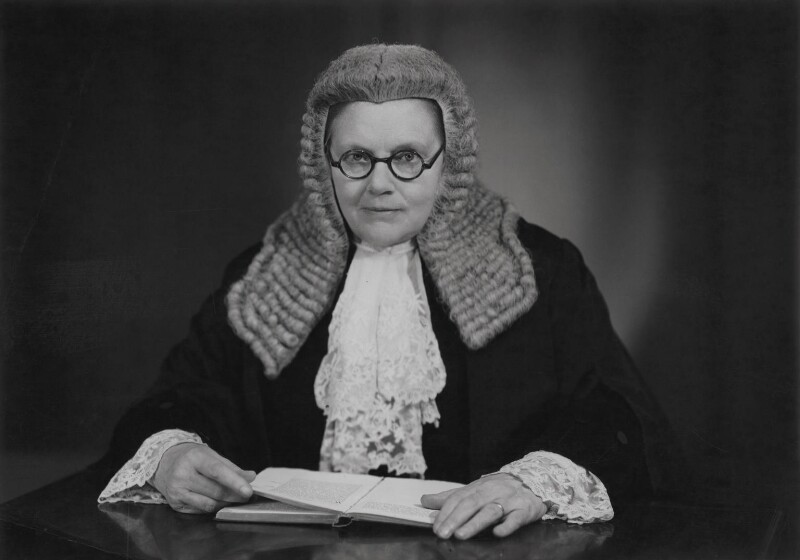
[edit]- ^ She is wearing the ceremonial robes of a King's Counsel.
References
[edit]- ^ Henry Campbell Black, Black's Law Dictionary, 5th ed. (St. Paul: West Publishing Co., 1979), 799.
- ^ Geoffrey C. Hazard, Jr. & Angelo Dondi, Legal Ethics: A Comparative Study (Stanford: Stanford University Press, 2004, ISBN 0-8047-4882-9), 20–23.
- ^ John Henry Merryman and Rogelio Pérez-Perdomo, The Civil Law Tradition: An Introduction to the Legal Systems of Europe and Latin America, 3rd ed. (Stanford: Stanford University Press, 2007),102–103.
- ^ Documents from Medieval and Early Modern England from the National Archives in London.[1] Archived 6 March 2016 at the Wayback Machine Publications of the Selden Society include a Year Books series and other volumes transcribing and translating the original manuscripts of early common law cases and law reports, each volume having its editor's scholarly introduction. Publications of the Selden Society
- ^ One history of the law before the Norman Conquest is Pollock and Maitland, The History of English Law before the Time of Edward I, .[2]
- ^ Bastard, 299, and Hazard, 45.
- ^ Harry W. Arthurs, Richard Weisman, and Frederick H. Zemans, "Canadian Lawyers: A Peculiar Professionalism", in Lawyers in Society: The Common Law World, vol. 1, eds. Richard L. Abel and Philip S.C. Lewis, 123–185 (Berkeley: University of California Press, 1988), 124.
- ^ David Weisbrot, "The Australian Legal Profession: From Provincial Family Firms to Multinationals", in Lawyers in Society: The Common Law World, vol. 1, eds. Richard L. Abel and Philip S.C. Lewis, 244–317 (Berkeley: University of California Press, 1988), 250.
- ^ Georgina Murray, "New Zealand Lawyers: From Colonial GPs to the Servants of Capital", in Lawyers in Society: The Common Law World, vol. 1, eds. Richard L. Abel and Philip S.C. Lewis, 318–368 (Berkeley: University of California Press, 1988), 324.
- ^ Anne Boigeol, "The Rise of Lawyers in France", in Legal Culture in the Age of Globalization: Latin America and Latin Europe, eds. Lawrence M. Friedman and Rogelio Pérez-Perdomo, 185–219 (Stanford: Stanford University Press, 2003), 208.
- ^ a b "THE ADVOCATES ACT, 1961" (PDF). Bar Council of India. 1961. Archived from the original (PDF) on 19 Aug 2008. Retrieved 1 May 2023.
- ^ "Rule 5.5: Unauthorized Practice of Law; Multijurisdictional Practice of Law". American Bar Association. Archived from the original on 2015-06-02. Retrieved 2015-04-18.
- ^ Weyrauch, Walter O. (1964). The Personality of Lawyers: A Comparative Study of Subjective Factors in Law, Based on Interviews with German Lawyers. New Haven: Yale University Press. pp. 26–27.
- ^ Jon T. Johnsen, "The Professionalization of Legal Counseling in Norway", in Lawyers in Society: The Civil Law World, vol. 2, eds. Richard L. Abel and Philip S.C. Lewis, 54–123 (Berkeley: University of California Press, 1988), 91.
- ^ Kahei Rokumoto, "The Present State of Japanese Practicing Attorneys: On the Way to Full Professionalization?" in Lawyers in Society: The Civil Law World, vol. 2, eds. Richard L. Abel and Philip S.C. Lewis, 160–199 (Berkeley: University of California Press, 1988), 164.
- ^ Merryman, 105.
- ^ Benoit Bastard and Laura Cardia-Vonèche, "The Lawyers of Geneva: an Analysis of Change in the Legal Profession", trans. by Richard L. Abel, in Lawyers in Society: The Civil Law World, vol. 2, eds. Richard L. Abel and Philip S.C. Lewis, 295–335 (Berkeley: University of California Press, 1988), 297.
- ^ Carlos Viladás Jene, "The Legal Profession in Spain: An Understudied but Booming Occupation", in Lawyers in Society: The Civil Law World, vol. 2, eds. Richard L. Abel and Philip S.C. Lewis, 369–379 (Berkeley: University of California Press, 1988), 369.
- ^ Vittorio Olgiati and Valerio Pocar, "The Italian Legal Profession: An Institutional Dilemma", in Lawyers in Society: The Civil Law World, vol. 2, eds. Richard L. Abel and Philip S.C. Lewis, 336–368 (Berkeley: University of California Press, 1988), 338.
- ^ Hazard, 21–33.
- ^ a b Richard L. Abel, "Lawyers in the Civil Law World", in Lawyers in Society: The Civil Law World, vol. 2, eds. Richard L. Abel and Philip S.C. Lewis, 1–53 (Berkeley: University of California Press, 1988), 4.
- ^ a b Merryman, 105–109.
- ^ Carl W. Battle, The Patent Guide: A Friendly Guide to Protecting and Profiting from Patents (New York: Allworth Press, 1997), 49.
- ^ David G. Cooper and Michael J. Gibson, Introduction to Paralegal Studies, 2nd ed.(Clifton Park: Thomson Delmar Learning, 1998), 4.
- ^ Herbermann, et al. (1915). Catholic Encyclopedia Archived 2017-08-04 at the Wayback Machine. New York: Encyclopedia Press. Accessed May 26, 2008. García y García, A. (1992). "The Faculties of Law Archived 2016-01-03 at the Wayback Machine", A History of the University in Europe, London: Cambridge University Press. Accessed May 26, 2008.
- ^ Regio Decreto 4 giugno 1938, n.1269 Archived 2009-08-09 at the Wayback Machine, Art. 48. (in Italian). Accessed February 10, 2009.
- ^ Florida Bar News.In Italy J.D. holders use the title of Dottore, but lawyers who have qualified for the bar only use the style Avvocato. Debate over 'doctor of law' title continues Archived 2009-08-04 at the Wayback Machine. Florida Bar Association, July 1, 2006.
- ^ Stein, R. (1981). The Path of Legal Education from Edward to Langdell: A History of Insular Reaction Archived 2021-03-03 at the Wayback Machine, Pace University School of Law Faculty Publications, 1981, 57 Chi.-Kent L. Rev. 429, pp. 430, 432, 434, 436
- ^ Association of American Universities Data Exchange. Glossary of Terms for Graduate Education Archived 2009-03-04 at the Wayback Machine. Accessed May 26, 2008; National Science Foundation (2006). NSF.gov Archived 2016-03-08 at the Wayback Machine "Time to Degree of U.S. Research Doctorate Recipients", "Info brief, Science Resource Statistics" NSF 06-312, 2006, p. 7. (under "Data notes" mentions that the J.D. is a professional doctorate); San Diego County Bar Association (1969). "Ethics Opinion 1969-5". Accessed May 26, 2008. (under "other references" discusses differences between academic and professional doctorate, and statement that the J.D. is a professional doctorate); University of Utah (2006). University of Utah – The Graduate School – Graduate Handbook Archived 2008-06-26 at the Wayback Machine. Accessed May 28, 2008. (the J.D. degree is listed under doctorate degrees); German Federal Ministry of Education. "U.S. Higher Education / Evaluation of the Almanac Chronicle of Higher Education" Archived 2008-04-13 at the Wayback Machine. Accessed May 26, 2008. (report by the German Federal Ministry of Education analysing the Chronicle of Higher Education from the U.S. and stating that the J.D. is a professional doctorate); Encyclopædia Britannica. (2002). "Encyclopædia Britannica", 3:962:1a. (the J.D. is listed among other doctorate degrees).
- ^ American Bar Association. Model Code of Professional Responsibility Archived 2017-08-30 at the Wayback Machine, Disciplinary Rule 2–102(E). Cornell University Law School, LLI. Accessed February 10, 2009. Peter H. Geraghty. Abanet.org Archived 2008-07-08 at the Wayback Machine
- ^ "mecenas". sjp.pwn.pl (in Polish). Retrieved 3 September 2024.
- ^ "Mecenas a adwokat – w czym tkwi różnica?". Adwokaci Ambicki Trela (in Polish). 5 September 2022. Retrieved 3 September 2024.
- ^ "Tytuł "mecenas" zarezerwowany jest dla adwokatów i radców prawnych". Adwokatura Polska (in Polish). Retrieved 3 September 2024.
- ^ "What is a Barrister?". Archived from the original on 2020-03-03. Retrieved 2020-04-06.
- ^ Hazard, 30–32.
- ^ Richard L. Abel, The Legal Profession in England and Wales (London: Basil Blackwell, 1989), 116.
- ^ See, e.g., Cal. Code. Civ. Proc. § 116.530 Archived 2009-08-09 at the Wayback Machine (preventing attorneys from appearing in small claims court except as parties or witnesses).
- ^ Rogelio Pérez-Perdomo, "The Venezuelan Legal Profession: Lawyers in an Inegalitarian Society", in Lawyers in Society: The Civil Law World, vol. 2, eds. Richard L. Abel and Philip S.C. Lewis, 380–399 (Berkeley: University of California Press, 1988), 387.
- ^ Gordon Kent, "Lawyerless Litigants: Is Justice Being Served?" Edmonton Journal, 27 January 2002, A1.
- ^ Alan Feuer, "Lawyering by Laymen: More Litigants Are Taking a Do-It-Yourself Tack", The New York Times, 22 January 2001, B1.
- ^ Fiona Boyle, Several Capps, Philip Plowden, Clare Sandford, A Practical Guide to Lawyering Skills, 3rd ed. (London: Cavendish Publishing, 2005), 47–50.
- ^ See Abel, England and Wales, 56 and 141.
- ^ Jene, 369.
- ^ a b Rokumoto, 164.
- ^ Anne Boigeol, "The French Bar: The Difficulties of Unifying a Divided Profession", in Lawyers in Society: The Civil Law World, vol. 2, eds. Richard L. Abel and Philip S.C. Lewis, 258–294 (Berkeley: University of California Press, 1988), 263; and Boigeol, "The Rise of Lawyers", 206.
- ^ Richard L. Abel, American Lawyers (New York: Oxford University Press, 1989), 132. See, e.g., Hines v. Lowrey, 305 U.S. 85 (1938) (upholding limitation on attorneys' fees in veterans' benefits cases to $10); Walters v. National Ass'n of Radiation Survivors, 473 U.S. 305 (1985) (same).
- ^ Paul J. Zwier & Anthony J. Bocchini, Fact Investigation: A Practical Guide to Interviewing, Counseling, and Case Theory Development (Louisville, CO: National Institute for Trial Advocacy, 2000), 13–44.
- ^ John H. Freeman, Client Management for Solicitors (London: Cavendish Publishing Ltd., 1997), 266–274.
- ^ Abel, England and Wales, 1 and 141.
- ^ J. R. Spencer and Richard M. Jackson, Jackson's Machinery of Justice, 8th ed. (Cambridge: Cambridge University Press, 1989), 336.
- ^ R.E. Megarry, Lawyer and Litigant in England (London: Stevens and Sons, 1962), 32.
- ^ Maureen Paton, "Cab-rank exits", The Times, 9 October 2001, 1. This brief article explains the uneasy tension between solicitors and barristers, and the loopholes that have developed. For example, a barrister need not accept a case if the fee is too low or the barrister is just too busy.
- ^ Arthurs, 125; Johnsen, 74; and Pérez-Perdomo, "Venezuelan Legal Profession", 387.
- ^ Erhard Blankenburg and Ulrike Schultz, "German Advocates: A Highly Regulated Profession", in Lawyers in Society: The Civil Law World, vol. 2, eds. Richard L. Abel and Philip S.C. Lewis, 124–159 (Berkeley: University of California Press, 1988), 124.
- ^ Joaquim Falcão, "Lawyers in Brazil", in Lawyers in Society: The Civil Law World, vol. 2, eds. Richard L. Abel and Philip S.C. Lewis, 400–442 (Berkeley: University of California Press, 1988), 401.
- ^ Justine Fischer and Dorothy H. Lackmann, Unauthorized Practice Handbook: A Compilation of Statutes, Cases, and Commentary on the Unauthorized Practice of Law (Buffalo: William S. Hein Company, 1990), 30–35.
- ^ Abel, England and Wales, 185; Bastard, 318.
- ^ Kees Schuyt, "The Rise of Lawyers in the Dutch Welfare State", in Lawyers in Society: The Civil Law World, vol. 2, eds. Richard L. Abel and Philip S.C. Lewis, 200–224 (Berkeley: University of California Press, 1988), 201.
- ^ Stephen J. McGarry, Multidisciplinary Practices and Partnerships: Lawyers, Consultants, and Clients, § 1.06[1] (New York: Law Journal Press, 2002), 1–29.
- ^ Holland & Marie (26 November 2018). "HMLegal – Your Outsourced, In-House Counsel Solution". Holland & Marie. Archived from the original on 10 August 2019. Retrieved 10 August 2019.
- ^ Luc Huyse, "Legal Experts in Belgium", in Lawyers in Society: The Civil Law World, vol. 2, eds. Richard L. Abel and Philip S.C. Lewis, 225–257 (Berkeley: University of California Press, 1988), 227.
- ^ Murray, 325; and Rokumoto, 164.
- ^ Lee Rousso, "Japan's New Patent Attorney Law Breaches Barrier Between The 'Legal' And 'Quasi-Legal' Professions: Integrity Of Japanese Patent Practice At Risk?" 10 Pac. Rim L. & Poly 781, 783–790 (2001).
- ^ Arthurs, 125; and Pérez-Perdomo, "Venezuelan Legal Profession", 387.
- ^ a b Huyse, 227.
- ^ Abel, England and Wales, 176; Hazard, 90–93; Murray, 325; and Pérez-Perdomo, "Venezuelan Legal Profession", 387.
- ^ Abel, England and Wales, 177.
- ^ Weisbrot, 292.
- ^ s. 14 Stamp Act 1804
- ^ Brian Abel-Smith and Robert Stevens, Lawyers and the Courts: A Sociological Study of the English Legal System, 1750–1965 (Cambridge: Harvard University Press, 1967), 23.
- ^ Weisbrot, 251.
- ^ Arthurs, 125; Huyse, 227; and Schuyt, 201.
- ^ Simon Domberger and Avrom Sherr, "The Impact of Competition on Pricing and Quality of Legal Services", in The Regulatory Challenge, eds. Matthew Bishop, John Kay, Colin Mayer, 119–137 (New York: Oxford University Press, 1995), 121–122.
- ^ Hazard, 34–35; Huyse, 227; Merryman, 105, and Schuyt, 201.
- ^ Larry J. Siegel and Joseph J. Senna, Introduction to Criminal Justice, 10th ed. (Belmont: Thomson Wadsworth, 2005), 311–325.
- ^ Lawrence M. Friedman and Rogelio Pérez-Perdomo, "Latin Legal Cultures in the Age of Globalization", in Legal Culture in the Age of Globalization: Latin America and Latin Europe, eds. Lawrence M. Friedman and Rogelio Pérez-Perdomo, 1–19 (Stanford: Stanford University Press, 2003), 6.
- ^ Abel, England and Wales, 45–59; Rokumoto, 165; and Schuyt, 204.
- ^ "The Bar Professional Training Course (BPTC)". Chambers Student. Archived from the original on 2012-03-23. Retrieved 2012-02-23.
- ^ Wayne L. Anderson and Marilyn J. Headrick, The Legal Profession: Is it for you? (Cincinnati: Thomson Executive Press, 1996), 52–53.
- ^ Anonymous, "Careers in the legal profession offer a variety of opportunities: While we may not think about it often, the legal system affects us every day", The Telegram, 14 April 2004, D8.
- ^ "ABA-Approved Law Schools". American Bar Association. Archived from the original on 2018-10-08. Retrieved 2015-04-18.
- ^ "ABA-Approved Law Schools". ABA. American Bar Association. Archived from the original on 22 November 2017. Retrieved 18 November 2017.
- ^ G. Jeffrey MacDonald, "The self-made lawyer: Not every attorney goes to law school", The Christian Science Monitor, 3 June 2003, 13.
- ^ Hazard, 127–129; Merryman, 103; and Olgiati, 345.
- ^ Pérez-Perdomo, "Venezuelan Legal Profession", 384.
- ^ Robert H. Miller, Law School Confidential: A Complete Guide to the Law School Experience, By Students, for Students (New York: St. Martin's Griffin, 2000), 25–27.
- ^ Anderson, 4–10.
- ^ Blankenburg, 132; Friedman and Pérez-Perdomo, 6; Hazard, 124–128; and Olgiati, 345.
- ^ Sergio Lopez-Ayllon and Hector Fix-Fierro, " 'Faraway, So Close!' The Rule of Law and Legal Change in Mexico: 1970–2000", in Legal Culture in the Age of Globalization: Latin America and Latin Europe, eds. Lawrence M. Friedman and Rogelio Pérez-Perdomo, 285–351 (Stanford: Stanford University Press, 2003), 324.
- ^ Herbert Hausmaninger, "Austrian Legal Education", 43 S. Tex. L. Rev. 387, 388 and 400 (2002).
- ^ Abel, American Lawyers, 57; Miller, 25; and Murray, 337.
- ^ Falcão, 410.
- ^ J.S. Gandhi, "Past and Present: A Sociological Portrait of the Indian Legal Profession", in Lawyers in Society: The Common Law World, vol. 1, eds. Richard L. Abel and Philip S.C. Lewis, 369–382 (Berkeley: University of California Press, 1988), 375.
- ^ a b Lopez-Ayllon, 324.
- ^ Eliane Botelho Junqueira, "Brazil: The Road of Conflict Bound for Total Justice", in Legal Culture in the Age of Globalization: Latin America and Latin Europe, eds. Lawrence M. Friedman and Rogelio Pérez-Perdomo, 64–107 (Stanford: Stanford University Press, 2003), 89.
- ^ Junqueira, 89.
- ^ Rogelio Pérez-Perdomo, "Venezuela, 1958–1999: The Legal System in an Impaired Democracy", in Legal Culture in the Age of Globalization: Latin America and Latin Europe, eds. Lawrence M. Friedman and Rogelio Perez-Perdomo, 414–478 (Stanford: Stanford University Press, 2003), 459. For example, a 1997 study found that not a single law school in Venezuela had bothered to integrate any part of the Convention on Children's Rights into its curriculum, even though Venezuela had signed the treaty in 1990 and subsequently modified its domestic laws to bring them into compliance. Rather than embark on curriculum reform, Venezuelan law schools now offer special postgraduate courses so that recent graduates can bring their legal knowledge up-to-date with current law.
- ^ a b Abel, American Lawyers, 62.
- ^ a b Lopez-Ayllon, 330.
- ^ Hazard, 127, 129, & 133; Miller, 335–341.
- ^ Alan A. Paterson, "The Legal Profession in Scotland: An Endangered Species or a Problem Case for Market Theory?" in Lawyers in Society: The Common Law World, vol. 1, eds. Richard L. Abel and Philip S.C. Lewis, 76–122 (Berkeley: University of California Press, 1988), 89.
- ^ Hazard, 129 & 133.
- ^ Weisbrot, 266.
- ^ Abel, American Lawyers, 167–175; Abel, England and Wales, 214; Arthurs, 131; Gandhi, 374; Merryman, 102, and Weisbrot, 277.
- ^ Anderson, 124–131.
- ^ Gandhi, 374.
- ^ In general, see, Legomsky, Stephen H. (1990) Specialized Justice: Courts, Administrative Tribunals, and a Cross-National Theory of Specialization Oxford University Press, New York, ISBN 978-0-19-825429-4
- ^ Merryman, 102–105.
- ^ Although it is common for former American judges to return to private practice, it is highly controversial for them to suggest that they still retain any judicial powers (for example, by wearing judicial robes in advertisements). Brad McElhinny, "Workman criticized for using robe in ad: Group files State Bar complaint about the way former justice seeks clients", Charleston Daily Mail, 3 February 2005, 1A.
- ^ Blankenburg, 133.
- ^ Boigeol, "The Rise of Lawyers", 202.
- ^ Bernard Michael Ortwein II, "The Swedish Legal System: An Introduction", 13 Ind. Int'l & Comp. L. Rev. 405, 440–445 (2003).
- ^ Hazard, 39–43; Olgiati, 353.
- ^ Abel, American Lawyers, 122.
- ^ Michael H. Trotter, Profit and the Practice of Law: What's Happened to the Legal Profession (Athens, GA: University of Georgia Press, 1997), 50.
- ^ Herbert M. Kritzer, "The fracturing legal profession: the case of plaintiffs' personal injury lawyers", 8 Int'l J. Legal Prof. 225, 228–231 (2001).
- ^ Information for lawyers – Penalista para hurto Archived 2015-12-28 at the Wayback Machine
- ^ Anderson, 111–117.
- ^ Hazard, 39.
- ^ Junqueira, 92. According to this source, as of 2003, there were 901 law firms with more than 50 lawyers in the United States.
- ^ Gary Slapper and David Kelly, The English Legal System, 7th ed. (London: Cavendish Publishing Ltd., 2004), 550.
- ^ Sobowale, J., BECOMING AN IN-HOUSE LAWYER, Canadian Bar Association, published 1 January 2015, accessed 15 March 2023
- ^ Charlson, J. and Chinyio, E., A case study of joint procurement and provision of legal services to a group of a universities in the Midlands Archived 2023-07-23 at the Wayback Machine, published in Smith, S.D and Ahiaga-Dagbui, D.D (eds), Procs 29th Annual ARCOM Conference, 2–4 September 2013, Reading, UK, Association of Researchers in Construction Management, 493-502, accessed 15 March 2023
- ^ Weisbrot, 264.
- ^ a b Johnsen, 86.
- ^ Boigeol, "The French Bar", 271; Merryman, 106, and Junqueira, 89.
- ^ Abel, England and Wales, 127 and 243–249; Arthurs, 135; and Weisbrot, 279.
- ^ Bastard, 295; and Falcão, 401.
- ^ Blankenburg, 139.
- ^ Jene, 370.
- ^ Paterson, 79.
- ^ Arthurs, 143.
- ^ Murray, 339; Rokumoto, 163; and Schuyt, 207.
- ^ Abel, American Lawyers, 116.
- ^ Arthurs, 139.
- ^ Weisbrot, 244.
- ^ Bastard, 299.
- ^ Falcão, 404.
- ^ Olgiati, 343.
- ^ Huyse, 239.
- ^ Howard D. Fisher, The German Legal System and Legal Language, 3rd ed. (London: Routledge Cavendish, 2002), 208–209.
- ^ Andrews v Law Society of British Columbia [1989] 1 SCR 143.
- ^ Abel, American Lawyers, 68.
- ^ Mary C. Daly, "Ethical and Liability Issues in International Legal Practice", in Comparative Law Yearbook of International Business, vol. 17, eds. Dennis Campbell and Susan Cotter, 223–268 (London: Kluwer Law International, 1995), 233.
- ^ Abel, England and Wales, 132–133.
- ^ Arthurs, 141.
- ^ Boigeol, "The French Bar", 274; and Olgiati, 344.
- ^ For a classic explanation of the self-regulating legal profession, see the Preamble Archived 2008-12-19 at the Wayback Machine to the ABA Model Rules of Professional Conduct, ¶¶ 10–13.
- ^ Abel, Civil Law World, 10; Johnsen, 70; Olgiati, 339; and Rokumoto, 161.
- ^ Falcão, 423.
- ^ Maria da Gloria Bonelli, "Lawyers' Associations and the Brazilian State, 1843–1997", 28 Law & Soc. Inquiry 1045, 1065 (2003).
- ^ Kandis Scott, "Decollectivization and Democracy: Current Law Practice in Romania", 36 Geo. Wash. Int'l L. Rev. 817, 820. (2004).
- ^ Timothy J. Tyler, "Judging the Past: Germany's Post-Unification Lawyers' Admissions Review Law", 29 Tex. Int'l L.J. 457, 472 (1994).
- ^ Michael J. Moser, "Globalization and Legal Services in China: Current Status and Future Directions", in The Internationalization of the Practice of Law, eds. Jens I. Drolhammer and Michael Pfeifer, 127–136 (The Hague: Kluwer Law International, 2001), 128–129.
- ^ Abel, American Lawyers, 142–143; Abel, England and Wales, 29; and Arthurs, 148.
- ^ Arthurs, 138; and Weisbrot, 281.
- ^ Abel, American Lawyers, 246–247.
- ^ Abel, American Lawyers, 147; Abel, England and Wales, 135 and 250; Arthurs, 146; Hazard, 135; Paterson, 104; and Weisbrot, 284.
- ^ Richard L. Abel, English Lawyers Between Market and State: The Politics of Professionalism (New York: Oxford University Press, 2003), 374–375.
- ^ William T. Gallagher, "Ideologies of Professionalism and the Politics of Self-Regulation in the California State Bar", 22 Pepp. L. Rev. 485, 490–491 (1995).
- ^ Blankenburg, 126; and Boigeol, "The French Bar", 272.
- ^ Abel, England and Wales, 37.
- ^ Gerald W. Gawalt, "Sources of Anti-Lawyer Sentiment in Massachusetts, 1740–1840", in Essays in Nineteenth-Century American Legal History, ed. Wythe Holt, 624–648 (Westport, CT: Greenwood Press, 1976), 624–625. According to this source, the strong anti-lawyer sentiment of the period was rather ironic, since lawyers were actually so scarce in the American colonies that a 1715 Massachusetts law forbade litigants from retaining two lawyers because of the risk of depriving one's opponent of counsel.
- ^ Blankenburg, 127.
- ^ Weisbrot, 246.
- ^ Arthurs, 128.
- ^ Marc Galanter, "Predators and Parasites: Lawyer-Bashing and Civil Justice, " 28 Ga. L. Rev. 633, 644–648 (1994).
- ^ Stephen D. Easton, "Fewer Lawyers? Try Getting Your Day in Court", Wall Street Journal, 27 November 1984, 1. This article rebuts the common complaint of too many lawyers in the U.S. by pointing out that it is virtually impossible for a plaintiff to prevail in the vast majority of countries with less lawyers, like Japan, because there are simply not enough lawyers or judges to go around. Even wrongful death cases with clear evidence of fault can drag on for decades in Japan. Thus, any reduction in the number of lawyers would result in reduced enforcement of individual rights.
- ^ a b Gerry Spence, With Justice For None: Destroying An American Myth (New York: Times Books, 1989), 27–40
- ^ Paterson, 76.
- ^ Jerold Auerbach, Unequal Justice: Lawyers and Social Change in Modern America (New York: Oxford University Press, 1976), 301.
- ^ For examples of legal self-help books written by lawyers which concede that the profession has a bad image, see Mark H. McCormack, The Terrible Truth About Lawyers (New York: Beech Tree Books, 1987), 11; Kenneth Menendez, Taming the Lawyers (Santa Monica, CA, Merritt Publishing, 1996), 2; and Stuart Kahan and Robert M. Cavallo, Do I Really Need A Lawyer? (Radnor, PA: Chilton Book Company, 1979), 2.
- ^ Gayle White, "So, a lawyer, a skunk and a catfish walk into a bar...: No shortage of jokes", National Post, 27 May 2006, FW8.
- ^ Bryan Horrigan, "Myths, Fictions, and Realities" (chap. 2), in Adventures in Law and Justice: Exploring Big Legal Questions in Everyday Life, Law at Large, 55–82 (Sydney: University of New South Wales Press, 2003, ISBN 0-86840-572-8), 55 & 62–66. Bierce is quoted p. 64 Archived 2016-04-15 at the Wayback Machine.
- ^ Ambrose Bierce, "Lawyer" Archived 2015-09-23 at the Wayback Machine, in The Devil's Dictionary (1911), electronic entry at Dict.org. Also found quoted in many legal books.
- ^ Hazard, 60 Archived 2016-04-15 at the Wayback Machine.
- ^ Hazard, 60.
- ^ "June, Daniel, "Increase of Kentucky Lawyer Suicides Exposes the Unique Stresses of the Profession"". 4 June 2013. Archived from the original on 2022-02-21. Retrieved 2013-06-04.
- ^ "Seven Reasons Why Practicing Law Might Be More Stressful Than Spending 18 Months in a POW Camp". BCGSearch.com. 2015-05-11. Archived from the original on 2017-07-03. Retrieved 2017-06-12.
- ^ Murray, Bob (2017-01-04). "Dealing with depression". Archived from the original on 2017-01-05. Retrieved 2017-01-04.
- ^ United States Census Bureau, American Community Survey
- ^ United States Census Bureau, Current Population Survey Archived 2017-01-10 at the Wayback Machine
- ^ United States Department of Labor, Bureau of Labor Statistics, Occupational Employment Statistics Archived 2006-05-07 at the Wayback Machine
- ^ "After the JD II" (PDF). Archived (PDF) from the original on 2016-03-03. Retrieved 2016-07-26.
- ^ [3]
- ^ Anderson, 111–112.
- ^ Herbert M. Kritzer, Risks, Reputations, and Rewards: Contingency Fee Legal Practice in the United States (Stanford: Stanford University Press, 2004), 258–259. According to this source, contingency fees (or de facto equivalents) are allowed, as of 2004, in Canada, England, Scotland, Northern Ireland, Ireland, New Zealand, Australia, the Dominican Republic, Greece, France, Brazil, Japan, and the United States.
- ^ Schwall, Benjamin (2015-06-25). "High-Powered Attorney Incentives: A Look at the New Indigent Defense System in South Carolina". Rochester, NY: Social Science Research Network. SSRN 2623202.
{{cite journal}}: Cite journal requires|journal=(help) - ^ "Research – Amanda Y. Agan". sites.google.com. Archived from the original on 2016-09-25. Retrieved 2016-05-06.
- ^ See Fleischmann Distilling Corp. v. Maier Brewing Co., 386 U.S. 714 (1967) (reviewing history of the American Rule).
- ^ Anderson, 120–121.
- ^ Abel, American Lawyers, 129–130.
- ^ Abel, American Lawyers, 133.
- ^ Arthurs, 161; Murray, 342; Pérez-Perdomo, 392; Schuyt, 211; and Weisbrot, 288.
- ^ Boigeol, "The French Bar", 280; and Jene, 376.
- ^ "We provide professional legal advice and representation to those who can't afford it". Legal Aid South Africa. Archived from the original on 23 February 2015. Retrieved 16 February 2015.
- ^ Huyse, 240–241.
- ^ Blankenburg, 143.
- ^ Robert J. Bonner, Lawyers and Litigants in Ancient Athens: The Genesis of the Legal Profession (New York: Benjamin Blom, 1927), 202.
- ^ Bonner, 204.
- ^ Bonner, 206.
- ^ Bonner, 208–209.
- ^ Hazard, 18.
- ^ John A. Crook, Law and Life of Ancient Rome (Ithaca: Cornell University Press, 1967), 90.
- ^ Crook, 90. Crook cites Tacitus, Annals VI, 5 and 7 for this point. For more information about the complex political affair that forced Emperor Claudius to decide this issue, see The Annals of Tacitus, Book VI (Franklin Center, PA: The Franklin Library, 1982), 208.
- ^ Crook, 91.
- ^ Crook, 87.
- ^ a b c d Crook, 88.
- ^ Crook, 89.
- ^ Crook, 90.
- ^ A. H. M. Jones, The Later Roman Empire, 284–602: A Social, Economic, and Administrative Survey, vol. 1 (Norman, OK: University of Oklahoma Press, 1964), 507.
- ^ Fritz Schulz, History of Roman Legal Science (Oxford: Oxford University Press, 1946), 113.
- ^ Schulz, 113.
- ^ Jones, 508–510.
- ^ Jones, 512–513.
- ^ a b c Jones, 511.
- ^ a b Jones, 515.
- ^ James A. Brundage, "The Rise of the Professional Jurist in the Thirteenth Century", 20 Syracuse J. Int'l L. & Com. 185 (1994).
- ^ Brundage, 185–186.
- ^ Brundage, 186–187.
- ^ Brundage, 188.
- ^ Brundage, 188–189.
- ^ Brundage, 190.
- ^ a b Brundage, 189.
- ^ Statute of Westminster 1275, ch. 29.
- ^ John Hamilton Baker, An Introduction to British Legal History, 3rd ed. (London: Butterworths, 1990), 179.
- ^ Lucien Karpik, French Lawyers: A Study in Collective Action, 1274 to 1994 (Oxford: Oxford University Press, 1999), 21.
- ^ a b Carol Rice Andrews, Standards of Conduct for Lawyers: An 800-Year Evolution Archived 2020-07-09 at the Wayback Machine, 57 SMU L. Rev. 1385 (2004).
- ^ Boon, Andrew (2022). Lawyers and the Rule of Law. London: Bloomsbury. p. 215. ISBN 9781509925230. Retrieved 29 October 2023.


Lawyer
View on GrokipediaTerminology
Definitions and Etymology
A lawyer is a licensed professional authorized to practice law, typically involving the provision of legal advice to clients, representation in court proceedings, and the preparation of legal documents such as contracts and wills.[2][1] This authorization generally requires completion of formal legal education, passage of a bar examination, and adherence to professional ethical standards enforced by regulatory bodies.[3] The term encompasses roles like advising on legal rights and obligations, conducting litigation, or negotiating transactions, though specific duties vary by jurisdiction and specialization.[8] In essence, lawyers act as intermediaries between clients and the legal system, interpreting statutes, precedents, and regulations to resolve disputes or facilitate compliance.[9] Etymologically, "lawyer" originates from Middle English lawier or lawere, first attested around 1336, formed by combining lawe (from Old English lagu, meaning law or custom) with the suffix -ier, indicating agency or occupation, thus denoting "one who works with the law."[10][11] This agentive suffix derives from Old French -ier and Latin -arius, reflecting a person skilled in or employed for legal matters, distinct from earlier informal roles of legal counsel in medieval Europe.[11] Historically, the definition emphasized proficiency in law for prosecuting or defending cases in courts of record, often for a fee, as articulated in early modern legal texts; by the 19th century, it solidified around formal training and licensure to distinguish qualified practitioners from unlicensed advisors.[8][12] This evolution paralleled the professionalization of the bar, shifting from guild-like associations to state-regulated professions amid growing legal complexity from the 14th century onward.[10]Professional Titles and Jurisdictional Variations
In common law jurisdictions such as the United States, the terms "lawyer" and "attorney at law" are used interchangeably to denote individuals who have completed legal education, passed a state bar examination, and are licensed to practice law, representing clients in legal matters ranging from advice to litigation.[13][14] Licensed practitioners often append the honorific "Esquire" (Esq.) to their names in professional correspondence, signifying bar admission but not conferring additional authority beyond licensure.[14] This unified title reflects the absence of a formal split profession, allowing attorneys to handle both transactional work and courtroom advocacy within state-specific rules.[15] In England and Wales, the legal profession maintains a historical division between solicitors and barristers, with solicitors primarily managing client relationships, providing legal advice, drafting documents, and preparing cases for court, while barristers specialize in oral advocacy, particularly in higher courts like the Crown Court or above.[16][17] Solicitors are regulated by the Solicitors Regulation Authority and may represent clients in lower courts, whereas barristers, overseen by the Bar Standards Board, focus on specialist advocacy and are typically instructed by solicitors rather than directly by lay clients, though "direct access" barristers can accept instructions from the public since reforms in the early 2000s.[18] This bifurcation stems from medieval origins, where barristers handled pleading and solicitors managed conveyancing, and persists to promote specialization despite some overlap in modern practice.[16] Civil law jurisdictions exhibit different structures, often without the solicitor-barrister divide. In France, the primary title for litigators and advisors is "avocat," who offer counsel on all legal matters, draft contracts, and represent clients in court, regulated by the Conseil National des Barreaux since the 1971 merger of prior advocate roles.[19] This contrasts with "notaire," a public official appointed by the state who authenticates deeds, handles real estate transfers, and drafts certain irrevocable acts like wills, operating under Ministry of Justice oversight rather than independent bar regulation.[20][21] In Germany, the unified title "Rechtsanwalt" applies to lawyers admitted to a regional bar (Rechtsanwaltskammer) after completing a law degree, two state exams, and practical training, enabling them to provide advice, draft documents, and appear in all courts without specialization mandates.[22][23] This title, protected under federal law, emphasizes independence and self-regulation by the Bundesrechtsanwaltskammer, differing from notaries (Notar) who perform public authentications similar to French counterparts.[22] Variations extend to other regions; for instance, in Australia and Canada (common law), titles mirror the UK split but with increasing fusion allowing solicitors "higher rights of audience" for court work, while in Japan, "bengoshi" denotes bar-admitted attorneys in a unified profession post-1949 reforms.[16] These differences arise from historical legal traditions—adversarial in common law versus inquisitorial in civil law—affecting role delineation, with common law favoring specialization and civil law prioritizing integrated representation.[15]| Jurisdiction | Primary Titles | Key Distinctions |
|---|---|---|
| United States | Lawyer, Attorney at law (Esq.) | Unified; interchangeable for licensed practitioners handling all aspects of practice.[13] |
| England and Wales | Solicitor, Barrister | Split: solicitors for advice/preparation, barristers for advocacy; regulated separately.[16] |
| France | Avocat | Advisory/litigation role; separate from state-appointed notaire for authentications.[20] |
| Germany | Rechtsanwalt | Unified for advice and court; distinct from notar for public deeds.[22] |
Responsibilities
Litigation and Courtroom Advocacy
Litigation constitutes the core adversarial process where lawyers represent clients in disputes before judicial tribunals, primarily handling civil lawsuits though extending to criminal defense roles. Responsibilities include initiating actions via complaints or responses, engaging in discovery to exchange evidence and information, filing motions to resolve issues pre-trial, and pursuing alternative dispute resolution such as mediation or settlement negotiations.[24][25][26] Preparation for litigation demands thorough factual investigation, legal research, and strategic case assessment to evaluate merits and potential outcomes. Lawyers draft pleadings outlining claims and defenses, conduct depositions to probe witness testimonies, and compile exhibits admissible under rules of evidence. In the United States, federal civil procedure mandates a scheduling order post-pleadings to timeline discovery and pre-trial conferences, aiming to narrow disputes and facilitate settlements.[24][27] Courtroom advocacy, though occurring in fewer than 5% of civil cases which proceed to trial, remains pivotal as credible trial readiness enhances leverage in negotiations.[28] During trials, litigators present opening statements framing the narrative, conduct direct examinations to elicit favorable testimony, perform cross-examinations to undermine opponents, introduce evidence, and deliver closing arguments synthesizing facts with law to persuade fact-finders. Appellate advocacy follows, involving oral arguments and briefs challenging trial errors before higher courts.[29][30] Essential skills for effective courtroom work encompass rhetorical persuasion, evidentiary mastery, situational awareness of judicial dynamics, and ethical restraint to avoid impropriety. Lawyers must adhere to professional conduct rules, exercising zealous advocacy bounded by duties of candor to the court and competence in procedure, while eschewing tactics designed solely to harass or delay.[4][31][30]Transactional and Contractual Work
Transactional lawyers primarily engage in non-litigious work that facilitates business operations and financial dealings, emphasizing the prevention of disputes through proactive legal structuring rather than resolving conflicts in court. This practice area encompasses advising clients on the formation, execution, and compliance of agreements that govern commercial activities, such as mergers, acquisitions, and partnerships.[32] Unlike litigators, who represent parties in adversarial proceedings, transactional attorneys mitigate risks by drafting precise documents that allocate responsibilities, protect assets, and ensure regulatory adherence, thereby supporting efficient market transactions.[33][34] Core responsibilities include conducting due diligence to identify potential liabilities in proposed deals, negotiating terms to align with client objectives, and preparing foundational documents like articles of incorporation, shareholder agreements, and loan contracts. For instance, in mergers and acquisitions, transactional lawyers review financial statements, assess intellectual property portfolios, and structure payment mechanisms to minimize tax exposure and operational disruptions.[35] They also handle real estate transactions by drafting leases, purchase agreements, and zoning compliance documents, ensuring title clarity and environmental regulatory conformity. In corporate governance, these professionals counsel on board fiduciary duties, securities filings with bodies like the U.S. Securities and Exchange Commission, and internal policies to avert shareholder litigation.[36][37] Transactional work extends to specialized fields such as intellectual property licensing, where lawyers negotiate terms for technology transfers, royalties, and non-disclosure agreements to safeguard innovations without immediate court involvement. Employment-related contracts, including executive compensation packages and non-compete clauses, fall under this domain, tailored to retain key personnel while complying with labor laws.[38] Compliance with evolving regulations, such as data privacy under the General Data Protection Regulation in Europe or antitrust scrutiny in cross-border deals, requires ongoing advisory roles to adapt contracts dynamically.[39] This preventive approach underscores the field's economic significance, as robust transactional frameworks underpin the majority of commercial value creation, with leading U.S. law firms reporting transactional practices comprising approximately 42% of their workload by 2022, reflecting a post-2015 upward trend amid increased deal volume.[40]Advisory and Client Counseling
In advisory and client counseling, lawyers provide clients with informed legal opinions, strategic guidance, and recommendations on potential courses of action to navigate legal risks and opportunities outside of litigation. This function emphasizes preventive lawyering, where attorneys assess facts, apply relevant statutes, precedents, and regulations to forecast outcomes, and advise on compliance, contractual terms, or decision-making in areas such as business transactions, estate planning, or regulatory adherence. Unlike courtroom advocacy, counseling prioritizes confidential discussions to empower clients with objective insights, often integrating non-legal factors like economic or reputational consequences when they intersect with legal implications.[41][42] Ethical rules mandate that lawyers exercise independent professional judgment and deliver candid advice, even if it contravenes the client's immediate preferences, to fulfill their role as counselors. Under the American Bar Association's Model Rule 2.1, this includes rendering straightforward evaluations of legal positions without sugarcoating weaknesses or overpromising success probabilities. Lawyers must also refrain from counseling or assisting in criminal or fraudulent conduct, as specified in Model Rule 1.2(d), while maintaining open communication to ensure clients understand risks, alternatives, and the rationale behind recommendations, per Model Rule 1.4. Failure to provide such forthright counsel can expose attorneys to malpractice claims or disciplinary action, underscoring the duty to prioritize client autonomy informed by accurate legal analysis over acquiescence.[43][44][45] The counseling process typically begins with structured client interviews to elicit comprehensive facts, followed by legal research and analysis to identify viable options, such as settlement strategies, negotiation tactics, or preventive measures to avert disputes. Attorneys may employ tools like risk assessments or scenario modeling to quantify uncertainties, drawing on jurisdiction-specific laws—for instance, advising corporations on antitrust compliance under the Sherman Act or individuals on liability exposure in tort claims. Competitions like the ABA Client Counseling Competition train lawyers in these skills, focusing on empathetic listening, clear articulation of complexities, and collaborative goal-setting to align advice with client objectives while mitigating ethical pitfalls like conflicts of interest. Effective counseling thus serves as a cornerstone of legal practice, reducing litigation costs—estimated by some studies to comprise over 70% of resolved disputes through negotiation—and fostering long-term client relationships grounded in trust and realism.[46][47]Specialized Duties
Lawyers specialize in various fields to address complex, domain-specific legal challenges, often requiring advanced knowledge of statutes, regulations, and industry practices beyond general practice. These specializations enable focused advocacy, compliance guidance, and dispute resolution tailored to particular sectors or issues, such as protecting innovations in technology or navigating fiscal policies. Certification programs in jurisdictions like California recognize expertise in areas including intellectual property, taxation, and environmental law through rigorous examinations and experience requirements.[48] In intellectual property law, attorneys draft and prosecute patent applications before agencies like the U.S. Patent and Trademark Office, enforce copyrights and trademarks through litigation or licensing agreements, and advise on trade secret protections to safeguard client innovations. They represent inventors, artists, and corporations in infringement disputes, often involving technical expertise in fields like biotechnology or software, with duties extending to international treaty compliance under frameworks such as the Berne Convention.[49][50] Corporate and business lawyers handle mergers and acquisitions, corporate governance, securities compliance under laws like the Sarbanes-Oxley Act of 2002, and structuring entities such as LLCs or joint ventures to minimize liability and optimize operations. Their responsibilities include drafting shareholder agreements, conducting due diligence for transactions valued in billions—such as the 2023 Microsoft-Activision deal scrutinized for antitrust issues—and advising boards on fiduciary duties amid regulatory scrutiny from bodies like the SEC.[51][52] Tax lawyers specialize in interpreting tax codes, such as the U.S. Internal Revenue Code, to structure transactions for tax efficiency, represent clients in audits or appeals before the IRS or Tax Court, and plan estates to mitigate inheritance taxes. They navigate complexities like cross-border taxation under treaties and advise on deductions or credits, with notable cases involving disputes over carried interest provisions that have persisted through multiple legislative cycles since 2007.[51][53] Environmental and regulatory specialists counsel on compliance with statutes like the Clean Air Act of 1970 or Endangered Species Act, defend against enforcement actions by agencies such as the EPA, and litigate permitting issues for projects involving land use or emissions. Duties include impact assessments for developments and negotiation of settlements in superfund cleanups, where liabilities can exceed hundreds of millions, as seen in ongoing remediation at sites like Love Canal.[53][54] In immigration law, practitioners prepare visa petitions, represent clients in deportation proceedings before immigration courts, and advise on asylum claims under the 1951 Refugee Convention protocols incorporated into national laws. They handle family-based or employment-sponsored applications, often dealing with backlogs exceeding 1 million cases in U.S. systems as of 2023, while challenging unlawful detentions or policy shifts like those under executive orders.[55][52]Education and Qualification
Academic Prerequisites and Law School
Academic prerequisites for legal practice vary significantly by jurisdiction, reflecting differences in common law and civil law traditions. In common law systems such as the United States, prospective lawyers must complete an undergraduate bachelor's degree prior to entering law school, where they pursue a professional doctorate.[56] [57] In contrast, the United Kingdom integrates legal education into the undergraduate level, requiring only secondary school qualifications for entry into a Bachelor of Laws (LLB) program. Civil law jurisdictions, prevalent in continental Europe and Latin America, typically commence formal legal studies immediately after secondary education, culminating in a bachelor's or equivalent degree followed by advanced postgraduate training.[58] In the United States, law school admission demands a baccalaureate degree from an accredited college or university, with no specific major required, though strong performance in undergraduate studies is essential.[59] [60] Applicants submit scores from the Law School Admission Test (LSAT), Graduate Record Examination (GRE), or equivalent, alongside undergraduate grade-point average (UGPA), which admissions committees weigh heavily as predictors of law school success.[56] The Juris Doctor (JD) degree, the standard qualification, spans three years full-time or four years part-time, emphasizing doctrinal analysis, case law, and practical skills through courses in constitutional law, contracts, criminal law, property, and torts.[61] [62] United Kingdom law degrees, such as the LLB, serve as the foundational academic prerequisite and are accessible via A-levels or equivalent qualifications, with top universities demanding grades from A*AA to AAB.[58] [63] No prior university degree is necessary, as the LLB functions as an undergraduate program lasting three years full-time, covering core modules in English legal systems, public and private law. Non-law graduates may pursue a one-year Graduate Diploma in Law (GDL) conversion course to qualify for vocational training.[64] In civil law systems, entry into legal education follows secondary school completion, often requiring entrance exams or high school grades, leading to a three-to-five-year bachelor's program focused on codified law, Roman law principles, and comparative systems. Advanced study, such as a master's or doctorate, may follow for specialization or practice eligibility, differing from the post-graduate model in the US.[65] These pathways ensure grounding in jurisdiction-specific legal methodologies, with empirical data indicating that rigorous admission standards correlate with bar passage rates exceeding 80% in accredited programs.[56]Bar Examination and Admission Processes
In common law jurisdictions, admission to the bar requires, following completion of a qualifying law degree, passage of a competency-based examination, practical experience or training, and evaluation of the applicant's moral character and fitness to practice. These processes aim to ensure minimum professional standards, with examinations testing substantive legal knowledge, analytical skills, and practical application. Variations exist by jurisdiction, but empirical data from bar pass rates—often below 70% on first attempts in the U.S.—underscore the rigor, reflecting causal links between exam difficulty and reduced entry of underprepared candidates.[66] In the United States, each of the 50 states and the District of Columbia oversees bar admission independently, typically mandating a Juris Doctor degree from an accredited law school. The bar examination, administered biannually in February and July, commonly incorporates components from the National Conference of Bar Examiners (NCBE), including the Multistate Bar Examination (MBE)—a six-hour, 200-question multiple-choice test (175 scored) on contracts, torts, evidence, real property, criminal law, constitutional law, and civil procedure. As of 2024, 41 jurisdictions employ the Uniform Bar Examination (UBE), which adds the Multistate Essay Examination (MEE) with six 30-minute essays and the Multistate Performance Test (MPT) assessing document analysis and advocacy skills; UBE scores are portable across adopting states, with minimum passing thresholds ranging from 260 to 280 on a 400 scale. All but four states require the separate Multistate Professional Responsibility Examination (MPRE), a 120-question ethics test with scaled scores from 50 to 150, typically needing 85 or 86 to pass. Final admission hinges on a character and fitness review, involving background checks, references, and disclosures of criminal history or financial issues, conducted by state boards to mitigate risks of professional misconduct.[67][68][69] In the United Kingdom, the Solicitors Regulation Authority (SRA) administers the Solicitors Qualifying Examination (SQE) since its rollout in September 2021, replacing prior routes for solicitors. SQE1 comprises two machine-marked multiple-choice assessments on functioning legal knowledge across practice areas like dispute resolution and business law, while SQE2 evaluates practical skills such as client interviewing, advocacy, and legal drafting through simulated exercises. Candidates must also complete two years of qualifying work experience (QWE), which can occur pre- or post-exams in up to four placements. For barristers, the Bar Standards Board requires the Bar Course Aptitude Test (BCAT), a vocational Bar Training Course with exams on knowledge and skills, and a one-year pupillage involving supervised practice; admission follows successful completion and character checks. These centralized exams prioritize skills over rote memorization, with pass rates for SQE1 around 50-60% in early administrations, indicating sustained selectivity.[70][71] Other common law systems, such as Australia's, eschew a uniform national bar exam in favor of state-based admission by supreme courts after a law degree and approved practical legal training (PLT), typically 6-12 months of supervised coursework covering core competencies like ethics and civil litigation; no standardized test exists, but academic performance and PLT assessments serve as gateways, with character declarations mandatory. In civil law traditions, admission integrates state-administered exams with extended academic and apprenticeship phases, emphasizing codified knowledge over adversarial simulation. France requires a master's in law, success in the competitive Certificat d'Aptitude à la Profession d'Avocat (CAPA) entrance exam (CRFPA), 18 months of formation at an institute including internships, and final CAPA exams on professional aptitude before bar enrollment by a local association. Germany mandates two state exams (Staatsexamen): the first post-university on theoretical law, followed by a two-year Referendariat with judicial training, then the second exam on practical application, culminating in bar admission upon proof of liability insurance and fitness; pass rates for the second exam hover around 80%, lower for the first at about 40%, enforcing high competence thresholds. These processes, rooted in state oversight rather than private bar associations, reflect civil law's focus on statutory interpretation and bureaucratic vetting over common law's exam-centric model.[72][73][74]Continuing Professional Development
Continuing professional development (CPD), also known as continuing legal education (CLE) in some jurisdictions, encompasses structured activities that licensed lawyers pursue post-qualification to sustain professional competence amid evolving laws, technologies, and practice demands. Regulatory bodies mandate or encourage CPD to mitigate risks of obsolescence, with empirical evidence from bar audits showing that non-compliant lawyers face higher malpractice rates in complex cases.[75][76] In the United States, CLE requirements are state-specific, as the American Bar Association provides model rules but lacks enforcement authority. As of 2025, 46 states and the District of Columbia impose mandatory CLE, typically ranging from 12 to 15 credit hours annually or biennially, including dedicated ethics and professionalism components; for example, Texas mandates 15 hours per year with at least three in ethics, while New York requires 24 hours every two years.[77][78] Non-mandatory jurisdictions like Wisconsin emphasize voluntary participation, though audits reveal that even there, active practitioners average 20+ hours yearly to align with peer standards.[79] The United Kingdom's Solicitors Regulation Authority (SRA) transitioned to an outcomes-focused regime on November 1, 2016, abolishing the prior 16-hour annual quota in favor of self-directed competence maintenance. Solicitors must annually assess needs across practice rights, skills, and ethics, documenting reflective learning via templates, with no minimum hours but verifiable records required for audits; failure to demonstrate competence can result in remedial orders or certificate revocation.[76][80] In Australia, uniform across states, lawyers holding practicing certificates must complete 10 CPD units annually from April 1 to March 31, including at least one unit each in substantive law, practice management, ethics, and skills development, with interactive activities prioritized for accreditation.[81][82] Jurisdictions like Victoria and New South Wales enforce this via random audits, where data indicates 95% compliance rates tied to certificate renewals.[83] Common CPD formats include in-person seminars, webinars, self-study modules, authoring publications, and pro bono mentoring, often accredited by bodies like state bars or the SRA. Enforcement mechanisms, such as fines up to $1,000 in U.S. states or SRA interventions, underscore causal links between verified CPD and reduced disciplinary actions, per regulatory reports.[84][85]Regulation and Ethics
Licensing Requirements and Bar Oversight
In the United States, admission to the bar and licensing to practice law occur at the state level, administered by state supreme courts via boards of bar examiners. Candidates must typically earn a Juris Doctor (J.D.) degree from a law school accredited by the American Bar Association (ABA), pass a state-specific bar examination—often incorporating the uniform Multistate Bar Examination (MBE) developed by the National Conference of Bar Examiners (NCBE)—and complete the Multistate Professional Responsibility Examination (MPRE) with a minimum score set by the jurisdiction, usually 85 or higher.[69] [66] [86] Additionally, applicants undergo a rigorous character and fitness review, involving background checks, interviews, and disclosure of any criminal history, financial issues, or ethical lapses to ensure moral suitability for practice.[87] As of 2023, all states except Wisconsin require the bar exam for J.D. graduates, with Wisconsin allowing diploma privilege for its own law school graduates.[69] State bar associations play a central role in oversight, with 32 states operating integrated (mandatory) bars where membership is required for licensed attorneys, enforcing rules on professional conduct, mandatory continuing legal education (CLE)—typically 10-15 hours annually—and investigating complaints leading to discipline ranging from reprimands to disbarment.[88] [89] Voluntary bar associations, like the ABA, provide accreditation for law schools and model rules but lack direct regulatory authority over individual lawyers, which resides with state entities.[69] These bodies maintain public records of disciplinary actions, with the ABA reporting over 100,000 active sanctions annually across jurisdictions as of recent data.[69] In the United Kingdom, solicitors' licensing falls under the Solicitors Regulation Authority (SRA), which mandates a qualifying law degree or equivalent, passage of the two-stage Solicitors Qualifying Examination (SQE)—introduced in 2021 to standardize assessment of legal knowledge and practical skills—and two years of qualifying work experience (QWE), alongside character and suitability checks.[90] Barristers are regulated separately by the Bar Standards Board (BSB), requiring completion of the Bar Professional Training Course (BPTC), pupillage (apprenticeship), and exams like the Bar Course Aptitude Test (BCAT).[70] The SRA and BSB enforce ongoing compliance through supervision, audits, and enforcement powers, including fines up to £25,000 and strike-off from the roll for misconduct.[91] Internationally, bar oversight varies significantly; in civil law jurisdictions like Germany, lawyers (Rechtsanwälte) must pass the Zweites Staatsexamen after university studies and practical training, with regulation by local bar associations (Rechtsanwaltskammer) under federal law, emphasizing mandatory liability insurance and ethical codes.[92] In contrast, some countries such as Japan require passing the National Bar Examination followed by a one-year training period overseen by the Japan Federation of Bar Associations, with strict numerus clausus limits historically capping annual admissions at around 1,500 until reforms in 2006 increased capacity.[93] These bodies collectively prioritize public protection through competence assurance, though critics note potential regulatory capture where associations prioritize incumbents' interests over broader access to the profession.[94]Codes of Professional Conduct
Codes of professional conduct delineate the ethical obligations and professional standards binding lawyers, encompassing duties to clients, the courts, and the public to safeguard the integrity of legal practice and the rule of law. These codes typically mandate competence, diligence, confidentiality, avoidance of conflicts of interest, and candor, with violations subject to disciplinary action by regulatory bodies. While principles derive from common ethical imperatives—such as fidelity to client interests and impartial justice administration—specific provisions vary by jurisdiction, reflecting local legal traditions and regulatory priorities.[4] In the United States, the American Bar Association's Model Rules of Professional Conduct, adopted by the ABA House of Delegates on August 2, 1983, serve as the foundational template for ethics rules in all 50 states and the District of Columbia, though each jurisdiction may adopt modifications. The rules are organized into client-lawyer relationship provisions (Rules 1.1–1.18), counseling concurrent and former clients (Rules 1.7–1.9), and broader duties like fairness to opposing parties (Rule 3.4) and misconduct prohibitions (Rule 8.4), which bar dishonesty, fraud, or prejudice to the administration of justice. For instance, Rule 1.6 strictly limits disclosure of client confidences except in narrow circumstances like preventing substantial bodily harm, emphasizing client autonomy over broader public interest disclosures. State bars, such as New York's, incorporate these with amendments, effective April 1, 2009, to address local needs like multidisciplinary practice.[95][96] In common law jurisdictions outside the U.S., analogous codes adapt these principles to national contexts. The UK's Solicitors Regulation Authority (SRA) Code of Conduct for Solicitors, Registered European Lawyers, Registered Foreign Lawyers, and Registered European Law Firms, effective from October 25, 2019, structures obligations around principles like acting with integrity and maintaining public trust, with specific paragraphs on client care (e.g., clear communication and fee transparency) and handling client money to prevent misuse. Canada's Federation of Law Societies of Canada maintains a Model Code of Professional Conduct, updated as of October 2024, which harmonizes provincial rules and mandates competence through ongoing education, conflict screening, and withdrawal only for good cause, influencing bodies like the Law Society of Ontario's rules.[97][98] Internationally, efforts to bridge variations include the International Bar Association's International Principles on Conduct for the Legal Profession, adopted in 2011, which outline core tenets like independence, confidentiality, and avoidance of unlawful conduct for cross-border practice, without binding force but as aspirational guidance amid divergent national codes—such as stricter collegiality in civil law systems versus adversarial emphases in common law ones. These frameworks underscore that ethical compliance hinges on jurisdictional authority, with lawyers required to navigate conflicts in multinational matters through choice-of-law analyses.Disciplinary Mechanisms and Enforcement
Disciplinary proceedings against lawyers typically begin with complaints filed by clients, opposing parties, judges, or the public alleging violations of professional conduct rules, such as dishonesty, neglect of client matters, or conflicts of interest.[99] In the United States, these complaints are processed by state bar associations or integrated disciplinary boards, which screen submissions for merit before initiating investigations.[100] Bar counsel or grievance committees conduct preliminary inquiries, gathering evidence and interviewing witnesses, often dismissing frivolous claims while referring substantiated ones to formal charges.[101] Formal enforcement follows the ABA's Model Rules for Lawyer Disciplinary Enforcement, adopted in 1989, which standardize procedures across jurisdictions including notice to the lawyer, opportunities for response, and evidentiary hearings before disciplinary boards or special masters.[100] Hearings afford due process, with lawyers entitled to representation, discovery, and appeals to state supreme courts, which retain ultimate authority over admissions and sanctions in most states.[102] Outcomes range from private admonitions for minor infractions to public reprimands, suspensions (temporary license revocation), or disbarment for severe misconduct like fraud or criminal convictions.[103] Enforcement statistics indicate rarity relative to the profession's size: in 2018, approximately 2,872 U.S. lawyers received public discipline out of over 1.3 million licensed, with 48% facing suspension and 22% disbarment.[104] California's State Bar, handling one of the largest caseloads, imposed discipline on 229 attorneys in fiscal year 2024, including 68 disbarments and 85 suspensions with probation.[103] Disbarments often stem from trust account mismanagement or client fund misappropriation, which account for a significant portion of cases.[105] In common law jurisdictions outside the U.S., such as the United Kingdom, enforcement mirrors these processes through bodies like the Solicitors Regulation Authority, which investigates complaints and imposes sanctions including striking off the roll equivalent to disbarment. Variations exist in civil law systems, where professional orders or courts handle discipline, but core principles emphasize public protection and procedural fairness. Mandatory reporting by lawyers of peers' serious misconduct bolsters proactive enforcement, though underreporting persists due to collegial reluctance.[100] State bars publish disciplinary orders publicly to deter violations and inform consumers, enhancing transparency.[106]Career Structure
Common Law vs. Civil Law Traditions
In common law jurisdictions such as England and Wales, the legal profession maintains a traditional division between solicitors and barristers, which shapes distinct career trajectories. Solicitors primarily engage in client-facing advisory roles, contract drafting, and case preparation, often within law firms or as in-house counsel, requiring qualification via a law degree, the Solicitors Qualifying Examination (SQE), and two years of qualifying work experience.[16] Barristers specialize in courtroom advocacy and higher court appearances, typically operating as self-employed advocates in chambers after completing the Bar Professional Training Course (BPTC) and a one-year pupillage under a senior barrister; progression involves building a practice through referrals from solicitors, with tenancy in chambers as a key milestone.[16] This bifurcation, rooted in historical guild structures, limits direct client access for barristers and emphasizes specialization in litigation, though fusion reforms since the 1990s have allowed some solicitors higher rights of audience.[16] In contrast, civil law systems, prevalent in countries like France, Germany, and Italy, feature a largely unified profession where lawyers (termed avocats, Rechtsanwälte, or equivalents) handle both advisory and representational duties without a formal split. Entry typically follows an extended undergraduate law degree—often five to seven years—culminating in rigorous state or professional examinations, such as France's examen du barreau after the Certificat d'Aptitude à la Profession d'Avocat (CAPA) and an 18-month practical training period, or Germany's two-state-exam system (Erstes Staatsexamen post-university, followed by a two-year Referendariat apprenticeship and Zweites Staatsexamen).[107] Career progression centers on establishing an independent practice or joining partnerships, with early years focused on apprenticeships or clerkships that blend theory and practice under mentorship, enabling broader versatility from outset.[107]| Aspect | Common Law (e.g., England/Wales) | Civil Law (e.g., France/Germany) |
|---|---|---|
| Profession Structure | Split: Solicitors (advisory/preparatory) vs. barristers (advocacy) | Unified: Lawyers perform advisory, litigation, and representation |
| Entry Training | Degree + vocational course (SQE/BPTC) + work-based (2 years/1 year) | Long degree (5-7 years) + exams + apprenticeship (1-2 years) |
| Progression Model | Firm associate to partner; chambers tenancy for barristers | Independent practice or firm partnership; judiciary tracks possible |
| Specialization Timing | Early divergence by branch; litigation for barristers | Flexible post-qualification; often via experience |
Areas of Specialization
Lawyers specialize in diverse fields reflecting the complexity of legal systems and societal needs, often requiring advanced knowledge beyond general practice. Common specializations include criminal law, where attorneys prosecute or defend individuals accused of crimes; civil litigation, encompassing disputes over contracts, torts, and property; and corporate law, focusing on business formation, mergers, acquisitions, and compliance.[3] These areas demand expertise in procedural rules, evidence handling, and negotiation, with practitioners typically gaining proficiency through years of focused experience or certifications.[51] In transactional practice, lawyers in areas like tax law advise on fiscal planning, audits, and disputes with revenue authorities, while intellectual property specialists protect patents, trademarks, and copyrights amid rising innovation demands. Real estate law involves property transactions, zoning, and land use regulations, supporting economic development. Labor and employment law addresses workplace issues such as discrimination claims, union negotiations, and compliance with statutes like the Fair Labor Standards Act of 1938.[3] Family law covers divorce, child custody, and adoption, often intersecting with state-specific domestic relations codes.[110] Emerging specializations reflect technological and regulatory shifts, including cybersecurity law for data breaches and privacy violations under frameworks like the General Data Protection Regulation (effective 2018 in Europe) and U.S. state laws; health law for regulatory compliance in medical practices and pharmaceuticals; and energy law addressing renewable sources and fossil fuel transitions. Intellectual property and technology-related fields show strong growth, driven by digital innovation, with blockchain and cannabis law gaining traction due to legalization trends in multiple U.S. states since 2012.[111] Employment in legal services is projected to grow 4% from 2024 to 2034, with about 31,500 annual openings, fueled by demand in specialized areas like IP and regulatory compliance.[3] Revenue leaders include business law at $191.8 billion and corporate law at $165.2 billion annually, underscoring economic incentives for these concentrations.[112] Public sector roles, such as government attorneys handling policy, prosecution, or regulatory enforcement, contrast with private practice by emphasizing public interest over billable hours. Environmental law focuses on compliance with statutes like the Clean Air Act of 1970, often involving litigation against polluters or advocacy for conservation. Specialization enhances efficacy but requires ongoing adaptation to jurisdictional variances and evolving case law, as generalists face competitive disadvantages in complex matters.[51]Firm Models and Career Progression
Law firms operate under diverse structural models, ranging from solo practices to large multinational entities. Solo practitioners maintain full autonomy over case selection, client relationships, and work hours, often handling general or niche practices with lower overhead costs but bearing all financial risks personally.[113] Small firms, typically with 2-9 attorneys, emphasize flexibility, personalized client service, and efficiency, enabling lower fees compared to larger counterparts while fostering closer attorney-client bonds; however, they generally lack the extensive resources and marketing capabilities of bigger organizations.[114] Mid-sized and large firms, including "BigLaw" entities with hundreds of lawyers, provide specialized services across multiple jurisdictions, leveraging economies of scale for complex litigation or transactions, but impose higher billing demands and hierarchical oversight.[115] Partnership structures further differentiate firm models. Traditional equity partnerships grant ownership stakes and profit shares, often via lockstep compensation tied to seniority or modified systems blending tenure with performance. Non-equity roles, such as "income partners" or "counsel," offer salaried positions without ownership, serving as intermediate steps in larger firms. Alternative models like "eat-what-you-kill" predominate in smaller or boutique practices, where compensation directly correlates to individual billings after overhead deduction, incentivizing personal client origination but potentially discouraging collaboration and cross-practice referrals.[116][117] Career progression varies markedly by firm size and model. In solo or small firms, advancement hinges on building a sustainable client base and reputation, with practitioners often transitioning from employee roles to ownership without rigid timelines, prioritizing work-life balance over aggressive growth. Large firms, particularly BigLaw, adhere to a pyramidal "up-or-out" structure, where associates—starting as juniors—advance through billable hour targets (typically 1,800-2,200 annually), mentorship, and business development milestones to senior associate or counsel positions after 3-5 years, with partnership eligibility around 7-10 years.[118][119] This model enforces attrition, as only a minority achieve partnership; for instance, at Latham & Watkins, approximately 19% of associates reach that level based on 2023 data.[120] Failure to progress often results in departure, reflecting the system's aim to maintain leverage and profitability amid high associate salaries starting at $215,000 in 2024 for first-years at top firms.[121] Emerging alternatives, such as virtual or hybrid firms, offer non-traditional paths with flexible equity shares (60-80% payouts) and reduced overhead, appealing to those seeking partnership without BigLaw's intensity.[122]Economic Aspects
Compensation Models and Earnings Data
Lawyers in private practice commonly receive compensation through hourly billing, where fees are charged at predetermined rates per hour of work, often ranging from $200 to $1,000 or more depending on experience and location.[123] Flat fees apply to discrete tasks such as document preparation or simple transactions, providing predictability for clients. Contingency fees predominate in plaintiff-side litigation like personal injury or class actions, entitling the lawyer to a percentage of any recovery—typically 33% to 40%—with no upfront payment if unsuccessful. Retainer agreements involve advance payments against future services, common for ongoing representation. In salaried roles, such as in-house corporate counsel, government attorneys, or public defenders, compensation consists of fixed base pay supplemented by bonuses, benefits, and sometimes equity. Law firm partners' compensation frequently incorporates profit-sharing models beyond associate salaries. Traditional approaches include "eat what you kill," rewarding individual billable hours and client origination; lockstep systems, advancing pay with seniority regardless of personal production; and equal partnerships, dividing firm profits evenly.[124] Hybrid or formula-based variants, such as the Hale and Dorr method, blend subjective evaluations of contributions like business development and mentorship with objective metrics.[117] These structures aim to align incentives but can foster internal competition or retention challenges in dynamic markets. Earnings disparities reflect practice area, firm size, geography, and experience. In the United States, the Bureau of Labor Statistics reported a median annual wage of $145,760 for lawyers as of May 2023, encompassing salaried and self-employed roles but excluding partnership draws.[125] The American Bar Association noted an average wage of $176,470 for the same period, likewise omitting partner profits, with higher figures in metropolitan areas like New York ($208,380 median) and California ($191,530 median).[126] National Association for Law Placement data indicated a median private-sector salary of $130,000 in 2023, rising modestly to reflect inflation but varying sharply by firm scale.[127] Compared to professions with similar educational requirements, such as medicine, lawyers exhibit lower average earnings; U.S. physicians report average annual compensation of approximately $374,000, supported by supply shortages, while lawyers' incomes vary more widely due to oversupply, though top BigLaw partners average over $1.4 million, exceeding many physician specialists.[128][129]| Firm Size/Category | Median/Base Salary (US, Recent Data) | Source |
|---|---|---|
| Overall Lawyers | $145,760 (May 2023 median) | BLS |
| Small Firms/Solo | $100,000–$250,000 (partners vary) | BCG Attorney Search |
| Midsize Firms | $155,000–$200,000 (first-year associates, 2025) | LeanLaw |
| Big Law (Large Firms) | $225,000 (first-year associates, 2025 base) | NALP/Bloomberg Law |
Market Dynamics and Supply-Demand Imbalances
In the United States, the legal profession experiences market dynamics shaped by modest projected employment growth and persistent distributional imbalances between supply and demand. The Bureau of Labor Statistics forecasts a 4 percent increase in lawyer employment from 2024 to 2034, roughly matching the average for all occupations, with approximately 31,500 annual openings arising from growth and replacements.[3] This pace reflects steady but not robust demand, influenced by factors such as economic cycles, regulatory changes, and efficiency gains in legal services. Law school graduation rates, hovering around 35,000 to 40,000 annually in recent years, align closely with these openings, suggesting aggregate supply-demand equilibrium at the national level, though micro-level mismatches persist.[3] This oversupply contributes to lawyers' lower average earnings compared to physicians, who benefit from demand exceeding supply and more consistent high compensation despite greater upfront investments in extended training. Recent data indicate strong entry-level absorption, with 93.4 percent of 2024 law graduates employed ten months post-graduation, marking a record high and up 0.8 percentage points from 2023.[134] However, underemployment affects 9.7 percent of these graduates in long-term, full-time roles, often in positions not requiring bar passage or full legal utilization, highlighting quality disparities in job matches.[135] Overall lawyer unemployment remains low at around 1 percent, underscoring resilience amid broader economic pressures, yet historical surveys of firm leaders have noted perceptions of oversupply, with 61 percent citing excess capacity diluting profitability as of 2017.[136][137] In law firms, lawyer headcount growth has outpaced billable demand since 2012, contributing to competitive pressures in urban and large-firm segments where new associates vie for limited high-value roles.[138] Geographic imbalances exacerbate these dynamics, particularly in rural areas designated as "legal deserts," where access to attorneys is severely limited. Approximately 40 percent of U.S. counties—or 1,272 out of 3,141—have fewer than one lawyer per 1,000 residents, and 54 counties report no practicing lawyers at all.[139] Rural regions, home to about 20 percent of the population, host only 2 percent of small law practices, driven by lower profitability, isolation, and preferences for urban opportunities among graduates.[140] This scarcity contrasts with urban oversaturation in prestigious markets, where supply exceeds demand for elite positions, leading to prolonged job searches or suboptimal placements for many entrants. Sectoral disparities further underscore supply-demand frictions, with shortages in public interest, government, and pro bono-adjacent roles amid abundant unmet legal needs. In California, for instance, legal problems affect residents across income levels, yet attorney supply fails to meet escalating demand, as evidenced by a 2024 justice gap study.[141] Nationally, two-thirds of Americans encounter at least one civil legal issue every few years, but affordability and specialization barriers limit service delivery, despite an overall lawyer population exceeding 1.3 million.[142] These gaps persist due to economic incentives favoring high-compensation private practice over lower-paid public sector work, resulting in chronic understaffing in areas like child welfare and rural justice systems.[143] Such imbalances not only strain access to justice but also contribute to inefficiencies, as excess urban supply underutilizes talent while peripheral demands go unserved.Historical Development
Ancient Origins
The earliest precursors to the legal profession appeared in ancient Mesopotamia around 1750 BCE with the Code of Hammurabi, where scribes recorded legal decisions and contracts, but no distinct class of advocates existed; disputes were resolved by judges or rulers without professional representation.[144] In ancient Egypt, from circa 2500 to 1800 BCE, administrative officials and judicial officers handled legal matters, including evidence presentation and dispute resolution, functioning in a system of legal pluralism that blended royal decrees, customary law, and temple oversight, though these roles were embedded in bureaucracy rather than independent advocacy.[145] In ancient Greece, particularly Athens during the 5th century BCE, logographers emerged as professional speechwriters who crafted arguments for litigants in courts, where self-representation was the norm but assistance from "friends" or experts was tolerated via written speeches read aloud.[146] Figures like Lysias (c. 445–380 BCE) specialized in forensic oratory, producing over 140 speeches for private suits involving inheritance, assault, and contracts, thereby laying groundwork for persuasive legal argumentation without formal courtroom advocacy.[147] This practice reflected a shift toward specialized rhetorical skills amid growing litigation in democratic assemblies, though logographers operated covertly to evade bans on paid speechwriting.[148] The Roman Republic (c. 509–27 BCE) formalized advocacy through orators and jurisconsults, with the priestly caste initially dominating legal interpretation before lay experts like Cicero (106–43 BCE) elevated public pleading in forums.[149] Advocates, often senators or equestrians, provided gratuitous counsel until Emperor Claudius in 52 CE permitted limited fees, marking the profession's economic recognition, while jurisconsults offered non-litigious advice on civil law, influencing the Twelve Tables (c. 450 BCE) and later codifications.[150] By the late Republic, increased accessibility to advocacy correlated with political influence, as orators shaped senatorial and judicial outcomes through eloquence rather than codified procedure.[151] These roles emphasized oral persuasion and legal opinion over modern representational duties, establishing causal links between advocacy and state stability in expanding empires.Medieval and Early Modern Periods
Following the collapse of the Western Roman Empire in the 5th century, the organized legal profession that had characterized Roman society largely disappeared in Europe amid the barbarian invasions and the dominance of customary Germanic laws, which emphasized personal representation in disputes rather than professional advocacy.[152] By the late 11th century, the rediscovery and study of Justinian's Corpus Juris Civilis sparked a revival of Roman law, beginning in Bologna around 1088, where scholars like Irnerius systematized its teaching, laying the foundation for Europe's first university and the training of jurisconsults or civilian lawyers skilled in civil law.[153] This academic revival intertwined with canon law instruction under the Church, initially producing mostly clerical advocates and procurators who represented parties in ecclesiastical and secular courts, as universities like Bologna, Paris, and Oxford emphasized formal legal education over apprenticeship.[154] Lay lawyers gradually emerged in the 12th and 13th centuries, filling roles in growing royal and urban courts where Roman and canon law principles addressed complex commercial and jurisdictional disputes, though their status remained subordinate to judges and often suspect due to associations with usury and sophistry in popular views.[155] In England, the development diverged from continental Europe, as the common law tradition evolved through royal writs and itinerant justices post-Norman Conquest in 1066, fostering pleaders who argued cases orally without reliance on Roman texts.[156] By the 13th century, these evolved into serjeants-at-law, an elite order of advocates granted exclusive rights to plead in the Court of Common Pleas, with the rank formalized by 1316 through the Order of the Coif; judges were typically drawn from their numbers, marking early professional regulation via guilds and oaths.[157] The Inns of Court, originating in the mid-14th century as hostels for lawyers in London—such as those in the Temple area—provided structured training through moots, readings, and apprenticeships, distinct from university civil law studies and emphasizing practical common law skills.[158] During the early modern period from the 15th to 18th centuries, the legal profession professionalized further amid expanding state bureaucracies and commerce, with barristers emerging as a subclass of advocates focused on courtroom pleading, while solicitors handled out-of-court matters like drafting and conveyancing, a division solidifying by the 16th century.[159] Continental Europe saw advocates (avvocati) and procurators licensed by sovereign courts, often requiring university degrees in civil law, as in France and the Holy Roman Empire, where the parlement courts demanded formal qualifications by the 16th century.[154] In England, the Inns of Court refined education through performances and debates, shaping barrister identity, though entry remained informal until later statutes; serjeants' exclusivity waned by the 17th century as King's Counsel gained prominence, reflecting shifts toward merit-based advancement amid growing caseloads from enclosure and trade disputes.[160] Regulation intensified with bans on unauthorized practice, as in 1550s English statutes prohibiting laymen from advising without inn admission, underscoring the profession's self-governing ethos to maintain competence and ethical standards.[161]Modern Professionalization
The modern professionalization of the legal profession emerged in the late 19th and early 20th centuries, transitioning from informal apprenticeships to formalized education, standardized licensing, and self-regulatory bodies. In the United States, legal training had long relied on clerkships in attorneys' offices, where aspirants studied texts and assisted in practice without structured oversight.[162] This system, dominant through much of the 19th century, produced lawyers of varying competence, prompting calls for reform amid growing legal complexity from industrialization and urbanization.[163] The founding of the American Bar Association (ABA) on August 21, 1878, in Saratoga Springs, New York, marked a key institutional step toward standardization.[164] The ABA advocated for elevated ethical norms, uniform admission criteria, and university-based legal education, viewing these as essential to distinguish lawyers as a learned profession rather than mere tradesmen.[165] It influenced states to adopt bar examinations—first documented in Delaware in 1783 but inconsistently applied until the late 19th century—as a competence filter, replacing or supplementing "diploma privileges" that automatically admitted law school graduates.[166] [167] By the 1920s, most U.S. jurisdictions required graduation from an ABA-approved law school and passage of a bar exam, solidifying the Juris Doctor (J.D.) as the entry credential and embedding the case method pioneered at Harvard Law School in 1870.[168] This framework created barriers to entry, fostering exclusivity while aiming to ensure quality; however, it also entrenched the profession's monopoly on legal services.[163] Parallel developments in England and Wales, through acts like the Judicature Acts of 1873–1875, formalized solicitor and barrister qualifications via exams and training contracts, reflecting broader Anglo-American trends toward regulation.[7] These reforms elevated lawyers' societal status, aligning practice with public interest through codes like the ABA's Canons of Professional Ethics in 1908, though enforcement relied on voluntary compliance until later state integrations.[169] Professionalization thus prioritized expertise and accountability, yet critics note it sometimes prioritized guild interests over access to justice.[170]Societal Role
Contributions to Rule of Law and Property Rights
Lawyers bolster the rule of law by advocating against arbitrary governmental authority, providing legal representation that enforces accountability, and facilitating access to justice through adversarial proceedings where laws are interpreted and applied consistently.[171] This role is evident in their capacity to challenge unlawful actions via litigation, ensuring that public officials and institutions adhere to legal constraints rather than exercising unchecked power.[171] Empirical assessments, such as the World Justice Project's Rule of Law Index, demonstrate that nations with active legal professions score higher on factors like constraints on government powers and absence of corruption, which correlate with sustained economic growth; for instance, a one-point index improvement links to a 0.82% GDP increase.[172][173] Countries prioritizing independent legal advocacy derive greater societal benefits from the profession, including more effective regulatory enforcement and policy formulation under legal oversight.[174] In protecting property rights, lawyers enforce ownership through contract drafting, dispute resolution, and defense against encroachments, such as in boundary conflicts or eminent domain challenges, thereby maintaining the enforceability essential for secure tenure.[175][176] They litigate to uphold titles, negotiate real estate transactions to prevent fraud, and represent owners in regulatory disputes, ensuring that property use aligns with legal entitlements without undue state interference.[177][178] This function underpins causal mechanisms for economic prosperity, as verifiable property rights incentivize investment; data spanning three decades indicate that robust rule-of-law frameworks, dependent on lawyer-mediated enforcement, drive long-term growth by safeguarding such rights against expropriation.[179] Historically, American lawyers contributed to embedding property protections in the Constitution, with framers like James Madison advocating clauses that limit takings without compensation, establishing precedents for judicial review of state actions.[180] The profession's collective impact extends to fostering independent bar associations that resist political co-optation, preserving impartial adjudication critical to both rule of law and property security.[181] In global contexts, where legal independence varies, stronger lawyer involvement correlates with improved civil justice outcomes, including fairer property dispute resolutions, as quantified in indices tracking regulatory and judicial efficacy.[182] These contributions, grounded in adversarial advocacy and precedent-building, causally reinforce institutional stability, though effectiveness hinges on ethical practice and autonomy from undue influence.[171]Criticisms and Systemic Abuses
Public trust in lawyers remains low, with only 16% of Americans rating their honesty and ethical standards as high or very high in a 2023 Gallup poll, placing the profession near the bottom alongside members of Congress and car salespeople.[183] [184] This perception stems from recurrent ethical lapses and a sense that lawyers prioritize financial gain over client or societal interests, as evidenced by surveys showing consistent negativity since the 1970s.[184] Systemic abuses arise from the legal profession's self-regulatory monopoly, enforced by state bar associations that control licensing and accreditation, limiting competition and inflating costs. Critics argue this structure, exemplified by the American Bar Association's (ABA) dominance, restricts entry into the profession, drives up legal education expenses—averaging over $150,000 in tuition—and contributes to access-to-justice gaps, with 80% of low-income Americans unable to afford civil legal aid.[185] [186] The ABA's accreditation standards have been faulted for prioritizing non-merit factors like diversity mandates over bar passage outcomes, potentially lowering professional quality while insulating underperforming schools from market pressures.[185] [187] Disciplinary systems exhibit leniency, with data from a study of 672,000 U.S. lawyers indicating that sanctions fail to adequately deter repeat offenders or incapacitate high-risk practitioners, as suspension rates hover below 1% annually despite widespread complaints of neglect and communication failures.[188] [189] Conflicts of interest in large firms, often involving positional or personal stakes, further erode integrity, as lawyers navigate representations that risk materially limiting zealous advocacy, with rules permitting such arrangements only under strict client consent that may not mitigate inherent biases.[190] [191] This incentive structure, tied to billable hours, encourages overwork and corner-cutting, contributing to documented ethical violations in corporate defense where firms accept payments to advocate controversial positions without sufficient accountability.[192]Modern Developments
Technological Impacts Including AI
Technological advancements have digitized core aspects of legal practice, including electronic discovery (e-discovery), case management systems, and secure cloud-based document collaboration, enabling faster processing of large volumes of data and remote workflows. For instance, e-discovery tools introduced in the early 2000s automated the review of electronic records in litigation, reducing manual labor in data sorting and privilege logging.[193] Video conferencing platforms, accelerated by the COVID-19 pandemic, have standardized virtual court appearances and client consultations, with adoption rates exceeding 90% in U.S. law firms by 2023.[194] These tools have improved efficiency but required lawyers to adapt to cybersecurity protocols, as breaches in legal data storage pose risks to client confidentiality.[193] The integration of artificial intelligence (AI) has accelerated these shifts, particularly since 2023, with generative AI tools automating routine tasks such as legal research, contract drafting, and predictive outcome analysis. Adoption of AI among legal professionals surged from 19% in 2023 to 79% by late 2024, driven by platforms like Thomson Reuters' CoCounsel and LexisNexis' Lexis+ AI, which handle document summarization and clause extraction.[195] Studies estimate that AI could automate 44% of legal tasks overall, including up to 75% of billable hours spent on repetitive work like due diligence reviews, freeing an average of 240 hours per lawyer annually for higher-value activities.[195][196] However, earlier assessments, such as McKinsey's 22% automation potential for core lawyer duties, underscore that complex judgment-intensive tasks like negotiation and advocacy remain resistant to full replacement.[197] AI's deployment has reshaped firm economics and skill demands, with 65% of law firms anticipating that effective generative AI use will distinguish competitive performers over the next five years, prompting shifts toward hybrid models blending human oversight with AI outputs.[198] AmLaw 100 firms report AI enhancing business models through cost reductions in operations, though it risks commoditizing entry-level roles like paralegal document review, estimated at 69% automatable.[199][200] Ethical challenges persist, including AI "hallucinations" generating fake case law, incorrect statutes, or inaccurate citations—as seen in benchmarks where legal models hallucinate in 1 out of 6 or more queries—as evidenced by disciplinary actions against lawyers in 2023 for submitting fabricated case law from tools like ChatGPT.[201][202] AI also lacks nuanced judgment for context, emotions, and ethics in legal matters; faces restrictions under bar association rules prohibiting it from providing direct advice or representation, as this constitutes unauthorized practice of law; risks biases and errors from training data that may perpetuate unfair outcomes; and cannot assume legal responsibility for mistakes, with accountability remaining on human lawyers.[203][204] These issues necessitate bar associations' guidelines on verification, competence, and ethical oversight. Long-term, chronic reliance on AI may erode professional judgment if routine automation supplants experiential learning, though empirical data shows no widespread job displacement yet, with productivity gains instead expanding service capacity.[202][196]Demographic and Global Trends
The legal profession exhibits significant variation in density across countries, with the United States hosting approximately 1.3 million active lawyers as of 2024, representing a 29% increase from 1.02 million in 2000.[205] Globally, lawyer-to-population ratios highlight disparities, as evidenced by rates per 100,000 inhabitants: Israel leads at 694, followed by the Dominican Republic at 565, Brazil at 474, the United States at 402, and Italy at 403, while Europe's average stood at 180 in 2022.[206] [207] These figures reflect structural differences in legal systems, economic development, and litigation cultures, with higher densities often correlating to adversarial common-law jurisdictions rather than inquisitorial civil-law systems.[206]| Country/Region | Lawyers per 100,000 Inhabitants (Recent Data) |
|---|---|
| Israel | 694 |
| Dominican Republic | 565 |
| Brazil | 474 |
| United States | 402 |
| Italy | 403 |
| Europe (avg.) | 180 |