


Community hub
Recent from talks
Contribute something
Nothing was collected or created yet.
List of beaches in California
View on Wikipedia
 | This article needs additional citations for verification. (December 2016) |

This list of California beaches is a list of beaches that are situated along the coastline of the State of California, US. The information in this article draws extensively from the California Coastal Access Guide, a comprehensive resource that provides detailed information on over 1150 public access points along California's extensive 1271-mile coastline.
North to South
[edit]The beaches are listed in order from north to south, and are grouped by county. The list includes all of the California State Beaches, but not all other beaches are listed here. In some cases (as indicated), more detailed list articles of beaches are available for certain areas of the coast, currently for Sonoma County and San Diego County.
 |
Del Norte County
[edit]Humboldt County
[edit]- Humboldt Lagoons State Park
- Sue-meg State Park
- Trinidad State Beach
- Little River State Beach
- Clam Beach County Park
- Sinkyone Wilderness State Park
Mendocino County
[edit]- Westport-Union Landing State Beach
- MacKerricher State Park
- Caspar Headlands State Beach
- Russian Gulch State Park
- Manchester State Park
- Schooner Gulch State Beach
- Glass Beach (Fort Bragg, California)
Sonoma County
[edit]Numbers in parentheses are Geographic Names Information System feature ids.[1][2]
Sonoma County ocean beaches
[edit]Coastal beaches, listed from north to south:
- Gualala Point Regional Park (224703)
- Sea Ranch, California (1723333):
- Salt Point State Park (232329):
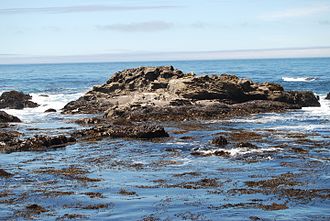
Salt Point State Park - Stump Beach (235621)
- Stillwater Cove Regional Park (235483)
- Fort Ross State Historic Park (223708):
- Clam Beach (221138)
- Sonoma Coast State Beach (234880):
- Goat Rock Beach (224252)

Russian River - Blind Beach (219448)
- Shell Beach (232932)
- Wrights Beach (238197)
- Gleason Beach (224208)
- Portuguese Beach (230964)
- Schoolhouse Beach
- Carmet Beach (220606)
- Arched Rock Beach (218349)
- Coleman Beach (221361)
- Miwok Beach (228878)
- North Salmon Creek Beach (229754)
- South Salmon Creek Beach (235107)
- Goat Rock Beach (224252)
- Doran Regional Park (222519):
- Doran Beach (222518)

Doran Beach
- Doran Beach (222518)
- Pinnacle Gulch


Sonoma County inland (river) beaches
[edit]- On the Russian River:
- Monte Rio Public Beach, in Monte Rio
- Vacation Beach (1656380)
- Johnson's Beach, Guerneville[3]
- Steelhead Beach Regional Park

Steelhead Beach - Healdsburg Veterans Memorial Beach (1799231)

Marin County
[edit]- Tomales Bay State Park
- Point Reyes National Seashore
- Mount Tamalpais State Park
- Stinson Beach Park
- Golden Gate National Recreation Area
- Dillon beach
- Muir Beach
Contra Costa County
[edit]- Miller/Knox Beach
- Point Molate beach
Alameda County
[edit]San Francisco County
[edit]San Francisco Bay
Pacific Ocean
- Marshall's Beach
- Baker Beach
- China Beach
- Lands End Beach
- Ocean Beach
- Golden Gate National Recreation Area - includes
- Fort Funston Beach
San Mateo County
[edit]- Thornton Beach State Park
- Palisades Park
- Northridge Park
- Mussel Rock Park
- Long View Park
- Beach State Park
- Rockaway Beach
- Tunitas Creek Beach
- Gray Whale Cove State Beach
- Montara State Beach
- El Granada Beach
- Vallejo Beach
- Miramar Beach
- Half Moon Bay State Beach, which includes:
- Roosevelt Beach (also known as Naples Beach)
- Dunes Beach
- Venice Beach
- Elmar Beach
- Francis Beach
- Poplar Beach
- Redondo State Beach
- Pelican Point Beach
- Cowell Ranch Beach
- Martins Beach
- San Gregorio Private Beach
- San Gregorio State Beach
- Pomponio State Beach
- Pescadero State Beach
- Pebble Beach
- Bean Hollow State Beach
- Pigeon Point Beach
- Gazos Creek Beach
- Año Nuevo State Park
Santa Cruz County
[edit]- Waddell Creek Beach - Big Basin Redwoods State Park
- Greyhound Rock County Park
- Scott Creek County Beach
- Coast Dairies State Park - Sharktooth, Bonny Doon, Yellow Bank, Laguna Creek, and Panther
- Scaroni Road beach
- Wilder Ranch State Park - Four Mile, Three Mile, Fern Grotto, Wilder
- Natural Bridges State Beach
- Mitchell's Cove Beach
- Lighthouse Field State Beach
- Santa Cruz Beach
- Twin Lakes State Beach
- Capitola City Beach
- New Brighton State Beach
- Seacliff State Beach
- Manresa State Beach
- Sunset State Beach
Monterey County
[edit]- Asilomar State Beach
- Carmel Beach City Park
- Carmel River State Beach
- John Little State Reserve
- Julia Pfeiffer Burns State Park
- Marina State Beach
- Monastery Beach
- Monterey State Beach
- Moss Landing State Beach
- Pebble Beach
- Point Lobos State Reserve
- Point Sur Lightstation State Historic Park
- Salinas River State Beach
- Sand Dollar Beach
- Zmudowski State Beach
San Luis Obispo County
[edit]- William Randolph Hearst Memorial State Beach
- Estero Bluffs State Park
- Cayucos State Beach
- Morro Bay
- Montaña de Oro State Park
- Ávila Beach
- Pismo State Beach
Santa Barbara County
[edit]
- Rancho Guadalupe Dunes County Park
- Point Sal State Beach
- Surf Beach
- Jalama Beach County Park
- Jack and Laura Dangermond Preserve
- Hollister Ranch
- Gaviota State Park
- Refugio State Beach
- El Capitán State Beach
- Santa Barbara Shores County Park
- Goleta Beach Park
- Arroyo Burro Beach
- Leadbetter Beach
- West Beach
- East Beach
- Butterfly Beach
- Lookout County Park
- Carpinteria State Beach
- Rincon Beach Park
Ventura County
[edit]- Emma Wood State Beach
- Ventura
- San Buenaventura State Beach / Ventura Beach
- Harbor Cove Beach
- McGrath State Beach
- Mandalay State Beach
- Oxnard Beach Park
- Channel Islands Beach
- Silver Strand Beach
- Port Hueneme Beach Park
- Point Mugu State Park
- County Line Beach
Los Angeles County
[edit]- Leo Carrillo State Park
- Robert Meyer Memorial State Beach
- El Pescador State Beach
- La Piedra State Beach
- El Matador State Beach
- Lechuza Beach[4]
- Broad Beach[5]
- Zuma Beach
- Point Dume State Beach
- Malibu Lagoon State Beach
- Topanga State Beach
- Will Rogers State Beach
- Sorrento Beach
- Santa Monica State Beach
- Venice City Beach (Venice, California)
- Charlie Beach
- Playa Del Rey
- Dockweiler State Beach
- El Segundo Beach
- El Porto Beach
- Manhattan Beach County Park
- Hermosa City Beach
- Redondo Beach
- Redondo Beach State Park
- Avenue H Beach
- Burnout Beach
- Torrance County Beach (Torrance, California)
- RAT Beach
- Royal Palms State Beach
- White Point Beach
- Cabrillo Beach Park
- Long Beach
- Long Beach City Beach
- Rosie's Dog Beach
- Alamitos Bay
- Bayshore Beach
- Marine Stadium Reserve / Mother's Beach
Orange County
[edit]- Seal Beach
- Surfside Beach
- Sunset Beach
- Bolsa Chica State Beach
- Huntington City Beach
- Huntington State Beach
- Santa Ana River County Beach
- Newport
- Newport Municipal Beach
- 10th St Beach
- 19th St Bay Beach
- Newport Dunes
- Bay Back Beach
- North Star Beach
- East Beach on Bay Island
- Balboa Beach
- West Jetty View Park
- Bayside Drive County Beach
- China Cove Beach
- Rocky Point
- Corona del Mar State Beach
- Little Corona del Mar Beach
- Crystal Cove State Park
- Crescent Bay Point Park
- Shaw's Cove
- Diver's Cove
- Rockpile Beach
- Picnic Beach
- Main Beach
- Brooks Beach
- Victoria Beach
- Laguna Beach
- Aliso Creek County Beach
- West Street Beach
- 1,000 Steps Beach
- Salt Creek County Beach
- Doheny State Beach
- Capistrano Beach
- Poche Beach
- Komo Beach
- San Clemente City Beach
- San Clemente State Beach
San Diego County
[edit]State beaches
[edit]California State Beaches are beaches designated as such by the California Department of Parks and Recreation. State beaches are part of the California State Parks system.
For a more detailed list beaches in the San Diego area, see List of beaches in San Diego, California.


.jpg)


.jpg)
.jpg)


.jpg)


.jpg)


,_Saturday,_September_17,_2011_(6157313339).jpg)


.jpg)


.jpg)


_howard_landing,_westport-union_state_beach,_mendocino_co,_ca_(33)_(32255009065).jpg)


See also
[edit]Further reading
[edit]- California Coastal Access Guide, Seventh Edition, published by the University of California Press in 2014. ISBN 978-0520278172. Compiled by the California Coastal Commission, this guide provides comprehensive details on over 1150 public coastal access points along California's 1271-mile shoreline.
External links
[edit]- California Coastal Access Guide - Comprehensive information on over 1150 public coastal access points in California.
References
[edit]- ^ Geographic Names Information System
- ^ County of Sonoma Regional Parks Department homepage
- ^ "Johnson's Beach and Resort". Retrieved December 22, 2008.
- ^ Carlson, Cheri (July 13, 2023). "Malibu city officials remove signs for publicly owned, hard-to-spot beach". Ventura County Star. Retrieved July 16, 2023.
- ^ "Broad Beach, Malibu, CA". California Beaches.


List of beaches in California
View on GrokipediaFar North Coast
Del Norte County
Del Norte County, California's northernmost coastal county, boasts a rugged, remote coastline shaped by relentless Pacific waves, frequent fog, and cold waters that foster diverse marine ecosystems. These ocean beaches, often backed by towering redwoods and dramatic cliffs, provide prime spots for tide pooling, agate hunting, and observing wildlife such as harbor seals, sea lions, and seabirds nesting on offshore sea stacks. The county's beaches are largely undeveloped, emphasizing solitude and natural preservation, with many accessible via Highway 101 or short trails within Redwood National and State Parks. Historically, these shores served as vital territories for the Tolowa people, who established villages at sites including Pebble Beach and south of Point St. George for fishing, gathering, and cultural practices; however, European exploration beginning with Jedediah Smith's 1826 expedition, followed by 19th-century gold mining, logging, and settlement, led to violent conflicts and a population decline of over 80% among the Tolowa by the 1850s due to massacres and disease.[7][8] Prominent beaches in the county include:- Pebble Beach: This expansive stretch of rocky shoreline and sandy coves, extending from Battery Point Lighthouse to Point St. George, is renowned for its tide pools teeming with anemones, starfish, and crabs, as well as abundant agates and jade for beachcombers at low tide. Access is straightforward via Pebble Beach Drive off Highway 101 in Crescent City, with parking and a paved trail offering views of sea stacks like Castle Rock, a key seabird rookery. The beach's foggy microclimate supports kelp forests visible offshore, ideal for whale watching in winter.[9]
- Crescent Beach: A wide, sandy expanse south of Crescent City, this beach spans several miles between South Beach and Endert's Beach, featuring gentle waves suitable for long walks and picnicking amid driftwood piles. Easy access from Enderts Beach Road includes ample parking, restrooms, and picnic tables, with nearby overlooks providing panoramic views of jagged sea stacks and the harbor. Its open terrain and cold waters attract migratory birds and occasional gray whale sightings, enhanced by the persistent coastal fog that maintains a temperate, misty atmosphere.[9]
- South Beach: Located just south of Crescent City Harbor along Highway 101, this broad, dark-sand beach offers a gradual slope into clear, chilly waters popular for surfing and leisurely strolls, with frequent sightings of sea lions basking on rocks. Parking is available at adjacent lots near the marina, making it one of the more accessible sites despite the rugged surroundings; the area's sea stacks and offshore kelp beds host diverse intertidal life, viewable during minus tides.[10][9]
- Endert's Beach: A secluded, pebbly cove within Redwood National Park, reached via a short 0.6-mile trail from the Crescent Beach Overlook parking area off Enderts Beach Road, this spot showcases dramatic cliffs, tide pools rich in marine invertebrates, and forested backdrops. The hike descends through redwood groves to reveal sea stacks battered by waves, supporting wildlife like black oystercatchers and harbor seals; its remote feel highlights the county's wild, fog-shrouded essence.[11]
- Pelican State Beach: California's northernmost state beach, situated near the Oregon border off Highway 101 in Smith River, this undeveloped 5-acre sandy stretch is ideal for quiet walks amid driftwood and offers sweeping ocean vistas with potential elephant seal sightings. Access involves a short pullout from the highway, leading to a secluded shore where cold currents sustain robust intertidal zones; its isolation underscores the minimal human impact on Del Norte's coastal geology.[12][13]
Humboldt County
Humboldt County's coastline features a diverse array of ocean beaches, ranging from expansive dune systems backed by coastal redwoods to secluded coves and estuarine shores along Humboldt Bay, supporting unique ecosystems that blend sandy stretches with rocky headlands and tidal wetlands.[14] These beaches attract visitors for activities like beachcombing, wildlife observation, and recreation, while emphasizing conservation of habitats vital to coastal species.[15] Managed primarily by Humboldt County Parks and California State Parks, access points include parking areas and trails, with regulations promoting environmental protection, such as leashed dogs and restrictions near sensitive nesting sites.[16] Samoa Beach, located on the Samoa Peninsula across from Eureka, spans several miles of sandy dunes within the 300-acre Samoa Dunes Recreation Area, offering opportunities for off-road vehicle use in a designated 75-acre zone, as well as surfing, fishing, and birdwatching amid stabilizing vegetation and migratory bird habitats.[17] This dune system, one of the longest undeveloped stretches on the California coast, provides a dynamic ecosystem for dune plants and insects, with public access via county-managed roads and fees for OHV permits.[18] Trinidad State Beach, situated 19 miles north of Eureka just off Highway 101, consists of a small sandy cove sheltered by rocky headlands and sea stacks, renowned for its accessible tide pools teeming with marine life like anemones, starfish, and crabs during low tide.[19] The beach's scenic bluffs offer viewpoints for whale watching, and a steep trail provides pedestrian access, connecting briefly to nearby Sue-meg State Park for extended coastal exploration.[18] Further south, Shelter Cove Beach in the remote Lost Coast region features dark black sand formed from eroded volcanic rock, accessible via a winding, hour-long drive on narrow roads from Highway 101 near Whitethorn.[20] This isolated stretch supports family-friendly activities like picnicking and tide pooling, with county-managed parking and a nearby boat launch, though its rugged setting limits facilities and emphasizes low-impact visitation.[21] Humboldt Bay's estuarine beaches, including areas around the Samoa Peninsula and Arcata Bay, form a complex of tidal mudflats and sandy shores that serve as critical foraging and resting grounds for migratory birds along the Pacific Flyway.[22] Surveys indicate over 500,000 shorebirds, including species like western sandpipers and dunlins, utilize the bay during spring migration alone, highlighting its status as a site of international importance for avian conservation.[23] Mad River Beach County Park, near Arcata at the mouth of the Mad River, offers consistent surfing conditions with beginner-friendly waves breaking over a sandy bottom, alongside amenities for picnicking, kayaking, and fishing in a dune-backed setting.[15] The beach's open exposure to Pacific swells makes it suitable for intermediate surfers, with county-provided restrooms and parking facilitating day use.[14] County-managed access to these beaches includes designated parking, restrooms, and interpretive signage at sites like Clam Beach County Park, which adjoins Mad River Beach and permits overnight camping with reservations.[16] Local regulations for clamming and beachcombing require a valid California fishing license, with razor clam limits set at 20 per day (no minimum size, first 20 dug must be retained) and gaper clams at 50 per day in combination in Humboldt Bay (no more than 25 gaper, no minimum size), subject to seasonal closures for domoic acid testing—such as advisories against consumption from Humboldt County beaches as of late 2025. As of November 2025, the razor clam fishery remains closed in Humboldt County due to elevated domoic acid levels.[24] Beachcombers must adhere to no-trace principles, avoiding disturbance to protected species like the western snowy plover, whose nesting areas are marked with fencing from March to September.[25]Mendocino County
Mendocino County's coastline features dramatic bluffs, sea arches, and secluded coves that attract artists and nature enthusiasts, with beaches integrated into state parks and preserves along the Pacific Ocean. These shores are part of the larger California Coastal Trail, offering segments for hiking amid wildflower blooms in spring and prime whale-watching opportunities during gray whale migrations from December to April.[26][27] Glass Beach, located within MacKerricher State Park near Fort Bragg, is renowned for its colorful sea glass remnants formed from decades of ocean-polished debris dumped between 1906 and 1967. The beach's tide pools and adjacent coastal trail provide access to diverse marine life, though collecting glass is discouraged to preserve the site.[28][29] Van Damme State Beach, a protected cove south of Mendocino Village, supports kayaking and diving amid shallow waters and nearby kelp forests, with easy access to the park's pygmy forest via a 0.25-mile boardwalk trail. The beach connects to over 10 miles of hiking paths, including the Fern Canyon Scenic Trail, which winds through lush vegetation and offers views of the rugged headlands.[30][31] Manchester State Beach, spanning five miles of sandy shoreline backed by dunes and wetlands in Manchester State Park, provides secluded spots for walking and birdwatching, including habitats for endangered snowy plovers and tundra swans. Trails like the 2.4-mile Manchester Beach Trail lead through grasslands dotted with spring wildflowers such as sea pinks, poppies, and lupines, while nearby creeks like Brush and Alder support steelhead fishing. Access is available via Kinney Lane off Highway 1, with parking and restrooms provided.[32][33] Mendocino Headlands State Park encompasses several beaches, including Big River Beach, accessible by trail or vehicle, where visitors can explore sea arches, hidden grottos, and cliffside paths suitable for hiking or horseback riding. The park's trails form part of the California Coastal Trail and offer vantage points for observing gray whale migrations in winter, with spring bringing vibrant wildflower displays along the bluffs. These beaches integrate with county access points, adjoining areas like Jug Handle State Natural Reserve for extended coastal exploration.[26] Nearby Russian Gulch State Park features a sandy beach beneath a historic bridge, with tide pools and headland trails that complement Mendocino's coastal offerings.[34]North Coast
Sonoma County
The Sonoma Coast in Sonoma County stretches approximately 55 miles along the Pacific Ocean, characterized by rugged bluffs, dramatic headlands, and diverse marine protected areas that support unique ecosystems including kelp forests and tide pools.[4] This coastline features a mix of state parks, regional preserves, and private community accesses, offering opportunities for hiking, wildlife viewing, and low-impact recreation while emphasizing protection for sensitive habitats like snowy plover nesting grounds.[4] The area's bluffs rise sharply from the sea, creating secluded coves and natural arches that highlight its geological significance, with ongoing conservation efforts by organizations like the Sonoma Land Trust preserving coastal prairies and estuaries.[35] Key ocean beaches include Salmon Creek Beach, a nearly two-mile stretch of sandy shoreline popular for surfing, beachcombing, and picnicking, though dogs are prohibited to protect endangered species.[4] North and South Salmon Creek Beaches, accessible via Highway 1 parking lots north of Bodega Bay, feature a seasonal lagoon formed where the creek meets the ocean, drawing surfers to its consistent waves while requiring caution due to strong currents.[36] In Bodega Bay, Doran Regional Park provides a wide, two-mile sandy beach ideal for kite flying, windsurfing, and dog walking on leash, with over 120 campsites offering direct ocean access and views of the harbor.[37] The Sea Ranch, a private coastal community south of Gualala, features several public-access coves via six bluff-top trails managed by Sonoma County Regional Parks, including Walk-On Beach with its steep staircase to a rocky shoreline and Black Point Beach, known for tide pools and dramatic waves.[38] Coastal features at Duncans Landing, located midway between Jenner and Bodega Bay, include prominent sea stacks and natural rock formations eroded by the Pacific, historically used as a landing for lumber ships but now renowned for spring wildflowers and tide pools—visitors must stay back from the edge due to hazardous surf.[4] Birdwatching thrives at Estero Americano, a tidal estuary on the Sonoma-Marin border serving as a Pacific Flyway stopover for raptors, waterfowl, and shorebirds amid coastal wetlands and bluffs rich in native bunchgrasses.[35] Access to beaches in the Jenner Headlands Preserve, a 5,680-acre property north of the Russian River mouth, involves free daily trails from 8 a.m. to sunset off Highway 1, with the Sea to Sky Trail descending through grasslands to coastal overlooks, though direct beach entry requires caution on steep paths.[39] Local traditions of seafood foraging along the Sonoma Coast emphasize sustainable harvesting of mussels, sea urchins, and seaweed, guided by classes that teach identification, cleaning, and preparation to balance ecological health with cultural practices rooted in coastal indigenous knowledge.[40] At the Russian River mouth near Jenner, the adjacent driftwood-strewn beach provides a brief transition point for ocean access, tying inland waters to the open coast.[41]Marin County
Marin County, located north of San Francisco, features a diverse array of beaches along the Pacific Ocean, San Francisco Bay, and Tomales Bay, many of which are protected within the Point Reyes National Seashore. These coastal areas offer opportunities for sunbathing, wildlife viewing, and recreational activities, with southern beaches providing scenic views toward the Golden Gate Bridge. The county's shoreline spans approximately 110 miles (including over 70 miles of ocean coast and 40 miles of bay shoreline), blending rugged cliffs, sandy expanses, and estuarine habitats that support unique ecosystems.[42] Key oceanfront beaches in Marin County include Stinson Beach, a wide sandy expanse stretching over three miles, ideal for sunbathing and swimming, managed by the Golden Gate National Recreation Area. Muir Beach, located just north of the county line, is a smaller, secluded cove known for its proximity to the historic Point Bonita Lighthouse and offers tide pooling and short hikes amid dramatic coastal scenery. Further north, Drakes Beach within Point Reyes National Seashore is renowned for its broad, windswept sands and nearby elephant seal rookeries, where visitors can observe Pacific harbor seals and migratory birds during breeding seasons from December to March. Along Tomales Bay, beaches emphasize calmer waters and bay-side activities. Lawson's Landing, a family-oriented site on the eastern shore, provides camping facilities, crabbing, and kayaking access, with amenities including RV hookups and boat launches amid oyster-rich shallows. Coastal erosion poses ongoing challenges here, exacerbated by rising sea levels and wave action, leading to shoreline retreat rates of up to 2 feet per year in vulnerable areas, as monitored by the California Coastal Commission. Hiking access to many Tomales Bay sites is facilitated through the Point Reyes National Seashore trail system, such as the Tomales Point Trail, which connects to remote beaches via 9.5 miles of coastal paths. Unique features distinguish Marin County's beaches, including thriving oyster farming operations along Tomales Bay, where aquaculture leases support sustainable harvesting of Pacific oysters, contributing to the local economy and cuisine since the early 20th century. Additionally, remnants of WWII-era coastal defense bunkers, such as those at Battery Townsley near Muir Beach, dot the landscape, offering historical insights into Marin County's role in Pacific fortifications built between 1940 and 1943.San Francisco Bay Area
San Francisco County
San Francisco County, coextensive with the city of San Francisco, features a compact array of urban beaches along the Pacific Ocean and San Francisco Bay, blending recreational opportunities with cultural landmarks amid the city's dense urban fabric. These beaches, managed primarily by the National Park Service as part of the Golden Gate National Recreation Area, attract visitors for activities ranging from surfing and picnicking to wildlife viewing, while highlighting the area's maritime history and environmental challenges. Despite their proximity to over 800,000 residents, these coastal spaces offer escapes influenced by the region's microclimate, including persistent summer fog that rolls in from the Pacific, creating a distinctive moody atmosphere for beachgoers.[43] Ocean Beach, stretching 3.5 miles along the city's western edge parallel to the Great Highway, serves as a prime surfing destination known for its powerful waves and cold waters, drawing enthusiasts since the post-World War II era when spots like Kelly's Cove became popular. The beach's wide sandy expanse supports kite flying and long walks, but it faces significant erosion threats, with severe shoreline retreat since the mid-1990s exacerbated by urban development and wave action, prompting adaptive measures like sandbag barriers along the Great Highway.[44][45][46][47] Baker Beach, a one-mile sandy stretch at the base of serpentine cliffs just west of the Golden Gate Bridge, offers stunning vistas of the iconic landmark and the Marin Headlands, making it a favored spot for picnics and photography. The northern end designates a clothing-optional area, adding to its countercultural appeal, though strong rip currents and frigid Pacific waters render swimming hazardous without lifeguards.[48][49] China Beach, a small, secluded cove nestled within the Presidio between Lands End and Baker Beach, provides a tranquil picnic and sunbathing area with calm waters sheltered from ocean swells, though swimming is discouraged due to strong currents and lack of lifeguard services. Historically tied to early Chinese fishermen who used the site for bathing and boat maintenance in the late 19th century, it now honors that legacy through a commemorative monument, emphasizing the beach's role in San Francisco's diverse immigrant history.[50][51][52] On the bayfront, Crissy Field stands out as a restored urban waterfront park with East and West Bluffs beaches, featuring reconstructed tidal marshes and wetlands that support birdwatching and habitat restoration efforts completed in the early 2000s. Its open waters and consistent westerly winds make it a hotspot for kiteboarding and windsurfing, with thermal updrafts drawing enthusiasts year-round.[53][54] Aquatic Park, located along the northern waterfront near Fisherman's Wharf, encompasses a historic lagoon formed in the 1930s as part of a Works Progress Administration project, offering protected swimming and rowing opportunities in its semi-enclosed cove amid Art Deco bathhouses and piers. The site's national historic landmark status underscores its significance as a hub for maritime recreation and education through the adjacent San Francisco Maritime National Historical Park.[55][56] These beaches collectively experience frequent fog patterns driven by the advection of warm inland air over the cooler California Current offshore, peaking in summer mornings and often enveloping the coastline in a marine layer that enhances the dramatic seascape but limits visibility for activities. Community events, including segments of the annual AIDS Walk San Francisco that pass near coastal areas like Golden Gate Park's edges, underscore the beaches' role in public health awareness and gatherings, though water quality monitoring ensures safe recreation amid urban runoff concerns. Adjacent Presidio trails provide hiking connections to these sites for extended exploration.[57][43][58]San Mateo County
San Mateo County beaches, located along the rugged Pacific coastline south of San Francisco, offer a mix of sandy shores, dramatic bluffs, and coastal prairies that provide serene escapes from urban life. These state-managed areas emphasize natural preservation, with activities centered on hiking, wildlife viewing, and low-impact recreation amid the influence of the nearby California Current, which brings cool waters and diverse marine life. The region's beaches are accessible via Highway 1 and attract visitors seeking tide pools, surf spots, and birdwatching opportunities in adjacent marshes. Half Moon Bay State Beach spans four miles of broad, sandy shoreline divided into sections like Francis, Venice, and Dunes Beaches, making it a prime destination for surfing due to consistent waves and a campground at Francis Beach that accommodates tents and RVs with electric hookups, hot showers, and picnic areas.[59] The beach's coastal trail, suitable for walking or biking, connects these areas and highlights the scenic bluffs overlooking the Pacific. Bean Hollow State Beach, about 17 miles south of Half Moon Bay, features two distinct sections: Pebble Beach, known for its collection of ocean-polished stones (collecting prohibited), and Bean Hollow Beach, a small sandy cove rich in tide pools teeming with anemones, crabs, sea urchins, and other intertidal species best observed without disturbance.[60] Further south, Pescadero State Beach provides a mile-long stretch of sandy coves backed by rocky cliffs and buttes, with accessible tide pools and fishing spots, while the adjacent Pescadero Marsh Natural Preserve serves as a bird sanctuary hosting species like great blue herons and white-tailed kites amid coastal dunes.[61] Pomponio State Beach, 12 miles south of Half Moon Bay, offers gently sloping sands at the base of towering sandstone bluffs up to 190 feet high, along with a small lagoon ideal for picnicking, though dogs are prohibited on the beach to protect wildlife.[62] Nearby, San Gregorio State Beach features a wide, driftwood-lined sandy expanse and estuary at the mouth of San Gregorio Creek, supporting bird habitats and small mammals on grassy bluffs; it is designated as California Historical Landmark 26 for its role as a campsite for the 1769 Portolá expedition, and the area includes coastal access parks with dunes popular for dog-friendly exploration (leash rules apply in designated zones).[63] Pillar Point Harbor, situated north of Half Moon Bay in Princeton-by-the-Sea, encloses calm beaches within its breakwaters that serve as a refuge for kayaking and shoreline walks, while the surrounding rocky reefs and kelp forests have historically been favored for abalone diving—though recreational take of red abalone remains closed statewide through at least March 31, 2026, with a proposed 10-year extension as of August 2025, under California Department of Fish and Wildlife regulations to aid population recovery.[64][65][66] The harbor's beaches connect to the California Coastal Trail, offering views of commercial fishing fleets and nearby surf breaks. Monarch butterfly groves, such as those in the Pescadero area near San Gregorio, provide seasonal overwintering sites from October to February, drawing conservation efforts to protect eucalyptus stands where clusters of the insects roost.[67] The Harley Farms goat dairy, established in the 1990s on a historic 1910 property near San Gregorio Beach, adds a cultural layer with its milking operations and cheese production using milk from over 200 American Alpine goats, reflecting the region's agricultural heritage alongside coastal recreation.[68] These beaches' proximity to Silicon Valley makes them popular for quick day trips, blending natural beauty with easy access from the Peninsula.[69]Contra Costa County
Contra Costa County's bay shorelines, stretching along the San Francisco Bay and Carquinez Strait, feature estuarine environments shaped by tidal marshes, urban development, and industrial legacies, offering recreational beaches focused on picnicking, fishing, kayaking, and wildlife viewing rather than traditional ocean swimming. These areas, managed primarily by the East Bay Regional Park District, emphasize restored habitats amid historical industrial impacts from refineries and shipping that once dominated the waterfront, now transitioning to public access and ecological recovery.[70] Key sites include off-leash dog areas, fishing piers, and kayak launches, with ongoing projects enhancing native species like Olympia oysters to bolster shoreline resilience.[71] Point Isabel Regional Shoreline, a 50-acre park in Richmond, serves as a popular off-leash dog area with expansive bay views, 3.5 miles of trails for walking and jogging, and prime bird-watching spots for species like snowy egrets and harbor seals.[72] The site's conditional designation as a San Francisco Bay Water Trail trailhead supports non-motorized water access, while its proximity to urban Richmond highlights the blend of recreational use and habitat preservation in a historically industrialized zone.[72] Keller Beach, located at the northern end of Miller/Knox Regional Shoreline in Richmond, provides a sandy bayfront area for wading, picnicking, and fishing, with no lifeguards on duty and facilities including restrooms and picnic tables.[73] Adjacent to Point Pinole Regional Shoreline's 2,432 acres of bluffs and marshes, it offers scenic views of the Golden Gate and supports activities like shoreline hiking, though water quality varies due to past industrial pollution from nearby refineries.[74] The beach's 1.5-acre park setting includes recent improvements for accessibility, reflecting efforts to reclaim waterfronts for public enjoyment.[75] Big Break Regional Shoreline in Oakley features a quarter-mile walk to a beach launch ideal for kayaking and canoeing through delta marshes teeming with birds and fish, part of the San Francisco Bay Water Trail system.[76] The 1,700-acre site includes a visitor center, fishing pier, and interpretive programs on the marsh ecosystem, where tidal waters from the Sacramento-San Joaquin Delta meet the bay, fostering diverse habitats despite historical agricultural and industrial influences.[76] Kayakers often explore sloughs for wildlife sightings, with guided tours available to highlight the area's role in regional biodiversity.[77] Along the Carquinez Strait, Radke Martinez Regional Shoreline in Martinez preserves a historic waterfront once known as an Italian fishing village from 1876, with visible remnants of a sunken schooner offshore and trails offering views of the strait and Benicia Bridge.[78] The 400-acre park includes picnic areas, benches, and docks for fishing, transformed in 1974 from underused industrial land into a public space emphasizing the county's maritime heritage of shipping and rail transport.[78] Nearby, ecological restoration at Point Pinole involves volunteers building and monitoring over 100 reef balls to create habitat for native Olympia oysters (Ostrea lurida), aiding water filtration and shoreline protection in areas impacted by over a century of industrial activity like oil refining.[71] Current wildlife refuges and protected shorelines in Contra Costa, such as the Antioch Dunes National Wildlife Refuge and integrated habitats within East Bay regional parks, support endangered species like the California clapper rail amid bay marshes, countering historical habitat loss from waterfront industrialization. These efforts, including oyster reef projects, enhance biodiversity and provide buffers against erosion, with the regional shorelines acting as de facto refuges for migratory birds and marine life along the estuarine bayfront.[79][80]Alameda County
Alameda County, located on the east side of San Francisco Bay, features a variety of bayfront beaches and shorelines that emphasize urban recreation, historical land reclamation, and ecological restoration rather than traditional oceanfront experiences. These areas, shaped by decades of bay fill projects that expanded usable land from the 1850s onward, now offer public access to calm waters suitable for swimming, fishing, and shoreline activities. Water quality has improved significantly since the 1970s due to federal Clean Water Act regulations and local efforts by the San Francisco Bay Regional Water Quality Control Board, reducing pollutants from urban runoff and industrial sources. Annual events like the Shoreline Festival at Crown Beach highlight these improvements through community cleanups and educational programs on bay ecology. Key beaches in the county include Crown Memorial State Beach in Alameda, a 2.5-mile stretch of sandy shoreline with a unique warm-water swimming lagoon heated by a nearby power plant, allowing year-round bathing in temperatures up to 75°F (24°C). Adjacent to it, Robert W. Crown Beach provides open spaces ideal for kite flying and biking, with paved paths connecting to the San Francisco Bay Trail for extended waterfront exploration. Further north, the Albany Bulb, a former landfill site transformed into a public park since the 1990s, features rugged shorelines dotted with artist-created sculptures and installations from recycled materials, attracting visitors for its mix of art, hiking, and birdwatching. In Oakland, the Middle Harbor Shoreline Park offers a 1-mile accessible waterfront with a fishing pier extending into the bay, supporting catch-and-release angling for species like perch and striped bass, while interpretive signs detail the area's industrial past. On Yerba Buena Island, part of the San Francisco–Oakland Bay Bridge, small coves such as those near the island's east shore provide quiet hiking access via trails maintained by the East Bay Regional Park District, offering views of the bay and limited pebble beaches for picnicking. These sites collectively represent Alameda County's commitment to reclaiming filled bay lands for public use, with ongoing restoration projects enhancing habitat for migratory birds and native plants.Central Coast
Santa Cruz County
Santa Cruz County, located along the northern edge of Monterey Bay, features approximately 29 miles of coastline renowned for its vibrant surf culture, family-friendly attractions, and ecological diversity, including proximity to ancient redwood forests. The county's beaches attract numerous visitors annually, drawn by consistent waves, tide pools teeming with marine life, and historic sites tied to early 20th-century rail development. As part of the Monterey Bay National Marine Sanctuary, these shores support diverse wildlife, from migrating whales to harbor seals.[81] The county's beaches span from rugged northern bluffs near Davenport to gentler southern sands near Watsonville, with surf spots that have shaped California's wave-riding heritage. In the 1950s, local innovator Jack O'Neill developed the first neoprene wetsuit in his Santa Cruz garage, revolutionizing cold-water surfing and enabling year-round sessions along the county's chilly coastline. Today, remnants of the Ocean Shore Railroad, an ambitious early 1900s line that aimed to connect San Francisco to Santa Cruz but was halted by the 1906 earthquake and landslides, can be seen in coastal tunnels and graded paths near beaches like Panther Beach and along West Cliff Drive.[82][83]Key Beaches and Features
- Santa Cruz Main Beach (also known as Cowell Beach): Situated adjacent to the iconic Santa Cruz Beach Boardwalk, this wide sandy stretch is a hub for amusement park activities, including roller coasters and arcade games, making it ideal for families and beginners learning to surf on its gentle, long-breaking waves. The beach hosts volleyball courts and people-watching opportunities, with lifeguards on duty during peak seasons.[81][84]
- Natural Bridges State Beach: Named for its distinctive double sandstone arch—one of the few remaining natural bridges on the West Coast—this 65-acre park is a prime spot for viewing monarch butterfly groves from October to February, where up to 10,000 butterflies clustered in eucalyptus trees during migration in recent years. Note that western monarch populations have declined significantly; as of November 2025, early counts are in the low thousands overall for the region. The beach's tide pools reveal anemones, starfish, and crabs at low tide, accessible via a half-mile bluff trail, while the surf break suits intermediate riders.[85][81][86]
- Capitola Beach: In the charming village of Capitola, this half-mile crescent of colorful, Venetian-inspired cottages overlooks a protected cove perfect for swimming, kayaking, and stand-up paddleboarding. The beach's east-side location offers a relaxed vibe with nearby Venetian Court architecture and annual whale-watching tours, though strong rip currents require caution for novice swimmers.[81][87]