


Community hub
Recent from talks
Contribute something
Nothing was collected or created yet.
Midrand
View on Wikipedia
Key Information


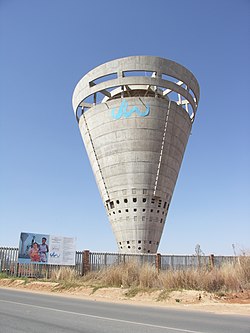
Midrand is a town in central Gauteng, South Africa. It is situated in-between Centurion and Sandton. Formerly an independent municipality, Midrand now forms part of the City of Johannesburg Metropolitan Municipality.
History
[edit]Midrand was established as a municipality in 1981 (in an area known as Halfway House, named after its position between Pretoria and Johannesburg[2]), but ceased to be an independent town in the restructuring of local government that followed the end of apartheid in 1994. It was incorporated in the City of Johannesburg Metropolitan Municipality in 2000. It was made part of Region 2 and, as of 2006, when the number of regions were reduced to seven, it forms part of Region A of the City of Johannesburg.
Though no longer an independent town, the name Midrand is still in common use to denote the suburbs around the N1 highway north of the Jukskei River up to the border with the City of Tshwane Metropolitan Municipality (this portion of the N1 highway is also known as the Ben Schoeman Highway). Suburbs that are generally regarded as being in Midrand include among others: Country View, Carlswald, Crowthorne, Ebony Park, Glen Austin, Ivory Park, Kaalfontein, Rabie Ridge, Halfway House, Halfway Gardens, Vorna Valley, Noordwyk, Randjesfontein, Randjespark, Blue Hills, Kyalami Agricultural Holdings and Waterfall City.
In 2010, it was reported that the Tshwane Metropolitan Municipality wished to annex Midrand from the City of Johannesburg, reportedly to boost its income, which was severely strained.[3]
The city is relatively modern, having experienced much growth in the last decade. Many businesses have relocated there due to its proximity to good highway links and its location in the economic centre of Gauteng Province. The development of Midrand has resulted in little break between the outskirts of Johannesburg and those of Pretoria.
Government
[edit]The South African Civil Aviation Authority is headquartered in Midrand,[4] as is the Railway Safety Regulator (RSR),[5] and the National Credit Regulator. Midrand is also the location of the African Union's Pan-African Parliament and of the NEPAD secretariat.
Politics
[edit]![[icon]](https://en.wikipedia.org/wiki/File:Wiki_letter_w_cropped.svg) | This section needs expansion. You can help by adding to it. (February 2023) |
Geography
[edit]As the name suggests, Midrand lies centrally within the Gauteng province positioned halfway between Johannesburg to the south (27 km) and Pretoria to the north (30 km). It forms the northernmost part of the City of Johannesburg Metropolitan Municipality, bordering two other metropolitan municipalities within Gauteng namely the City of Tshwane to the north and the City of Ekurhuleni to the east. Midrand is flanked by Centurion to the north, Sandton to the south and Thembisa to the east.
Landmarks
[edit]Midrand has the largest[citation needed] conference centre in South Africa which is known as Gallagher Estate which was built on the former site of Halfway House Primary School, which subsequently moved to new grounds near the fire station.
A landmark of Midrand is the Nizamiye Mosque, opened in 2012,[6] the largest mosque in South Africa. The Classical Turkish-style mosque was personally funded by Turkish-born construction tycoon Ali Katircioglu at a cost of R210 million.
The largest single-phase shopping mall built in Africa, The Mall of Africa, is located in the Waterfall City precinct of the town.[7][8]
It is now also home to the new headquarters for a multinational auditing-finance company, PWC. (Constructed by WSP) Visible, as currently (2018) the only skyscraper in Midrand. It will however be rivaled by its upcoming twin, The Falcon Building. Both the Falcon and PWC are in the same complex as Mall of Africa. Other landmarks include the Boulders Shopping centre, so named after the heritage site housing huge granite rocks which are approximately 3.5-billion years old.[9]
Business
[edit]Midrand is a thriving business node, home to the offices of major corporations such as Vodacom, Microsoft, Neotel, and Altech Autopage as well as an array of small and medium enterprises.
In 2013, Atterbury Properties announced plans to build the Mall of Africa, which would be one of the continent's largest.[7] The Mall of Africa is located within the green, mixed-use Waterfall City precinct.[7][8] The N1 Business Park and International Business Gateway are among the commercial developments in Midrand. The latest industrial development is called Waterfall Logistics Precinct.
Education
[edit]The University of South Africa's Graduate School of Business Leadership is located in Midrand. The Pearson Institute of Higher Education formerly known as Midrand Graduate Institute, was officially opened on 9 May 1990. A Varsity College campus was established in 2012. Macmillan Education South Africa relocated their offices in June 2017 from Melrose Arch. There are primary and high schools located in several areas.
Sports
[edit]Kyalami, an international renowned racetrack is in Midrand and is the venue for many of South Africa's premier motor racing events. The South African Lipizzaners riding academy is situated in the smallholdings of Kyalami.
Transport
[edit]Midrand lies along the N1 (Ben Schoeman Freeway) which runs through the town in a northerly direction from Johannesburg to Pretoria. Midrand is connected to the N1 by the M39 Allandale Road, M71 New Road, R562 Olifantsfontein Road and the M36 Samrand Road in Centurion. The N3 (Eastern Bypass) lying just south of Midrand, intersects the N1 at the Buccleuch Interchange and runs southwards to Germiston and Durban.
Midrand is intersected by three regional routes, namely; the R101 (Pretoria Main Road) from Sandton to Centurion and Pretoria, the R55 from Sandton to Centurion and Pretoria and the R562 from Thembisa to Diepsloot. Metropolitan routes within the Greater Johannesburg metropolitan region that intersect in Midrand include the M38 (Modderfontein Road; Allan Road) and M39 (Allandale Road), both connecting the town with Kempton Park to the south-east.
Midrand is the home of Grand Central Airport and also to one of the stations in the Gautrain rapid rail system on the route from Pretoria to Sandton.
Climate
[edit]Köppen-Geiger climate classification system classifies its climate as subtropical highland (Cwb).[10]
| Climate data for Midrand | |||||||||||||
|---|---|---|---|---|---|---|---|---|---|---|---|---|---|
| Month | Jan | Feb | Mar | Apr | May | Jun | Jul | Aug | Sep | Oct | Nov | Dec | Year |
| Mean daily maximum °C (°F) | 26.4 (79.5) |
26.1 (79.0) |
25.1 (77.2) |
22.8 (73.0) |
20.7 (69.3) |
17.9 (64.2) |
18.1 (64.6) |
21 (70) |
23.9 (75.0) |
25 (77) |
25.4 (77.7) |
26.1 (79.0) |
23.2 (73.8) |
| Daily mean °C (°F) | 20.5 (68.9) |
20.2 (68.4) |
19 (66) |
16.1 (61.0) |
13.2 (55.8) |
10.2 (50.4) |
10.3 (50.5) |
13 (55) |
16.2 (61.2) |
18.1 (64.6) |
19.1 (66.4) |
20 (68) |
16.3 (61.4) |
| Mean daily minimum °C (°F) | 14.6 (58.3) |
14.3 (57.7) |
12.9 (55.2) |
9.5 (49.1) |
5.7 (42.3) |
2.5 (36.5) |
2.6 (36.7) |
5 (41) |
8.6 (47.5) |
11.3 (52.3) |
12.9 (55.2) |
14 (57) |
9.5 (49.1) |
| Average precipitation mm (inches) | 140 (5.5) |
91 (3.6) |
83 (3.3) |
55 (2.2) |
15 (0.6) |
8 (0.3) |
6 (0.2) |
7 (0.3) |
23 (0.9) |
74 (2.9) |
111 (4.4) |
110 (4.3) |
723 (28.5) |
| Source: Climate-Data.org (altitude: 1587m)[10] | |||||||||||||
References
[edit]- ^ a b c d "Main Place Midrand". Census 2011.
- ^ "Dictionary of Southern African Place Names (Public Domain)". Human Science Research Council. p. 195.
- ^ "Fight for Midrand". Times LIVE. 3 May 2010. Archived from the original on May 7, 2010.
- ^ "Contacts Archived 2009-11-27 at the Wayback Machine." South African Civil Aviation Authority. Retrieved on 9 June 2009.
- ^ "Contact Us". Railway Safety Regulator. Retrieved 2020-06-26. - Addresses are at the bottom of the page.
- ^ Natashia Bearam (17 July 2012). "Constructing a masterpiece". LookLocal.co.za. Archived from the original on 2 October 2013. Retrieved 13 October 2012.
- ^ a b c "Atterbury develops SA's biggest single-phase retail centre, Mall of Africa at Waterfall – Property Wheel". propertywheel.co.za. Retrieved 2024-05-26.
- ^ a b Fraser, Luke (7 May 2024). "Ownership shift at South Africa's busiest mall". BusinessTech. Retrieved 26 May 2024.
- ^ "The Boulders adds some heritage to the shopping experience". Media Update. 14 February 2012. Retrieved 2021-07-28.
- ^ a b "Climate: Midrand - Climate graph, Temperature graph, Climate table". Climate-Data.org. Retrieved 2014-01-05.
External links
[edit]
| International | |
|---|---|
| National | |
| Geographic | |
| Other | |

Midrand
View on GrokipediaHistory
Origins as Halfway House
The area comprising modern Midrand originated as Halfway House, named for its geographic position approximately equidistant between Johannesburg and Pretoria, functioning primarily as a rest stop for travelers along early transport routes.[11][12] This designation reflected its role as an intermediate halting point for stagecoaches, including the Zeederberg coach service operating in the late 19th century, where passengers could refresh before continuing northward or southward.[12] Prior to formalized settlement, the surrounding lands consisted largely of farmland, with Voortrekker Daniel Erasmus claiming extensive territory in the 1800s extending from north of Pretoria to the Halfway House vicinity.[13] Halfway House Estate was formally laid out as a suburb in 1890, marking the initial structured development amid the peri-urban expansion between the two cities.[12] Specific farm holdings, such as Waterval, trace ownership to earlier figures including Miss Pimond, who transferred the property to the Gibson brothers around 1871 after their arrival from Britain.[14] These agricultural roots supported basic roadside amenities, with eucalyptus trees planted along the Old Pretoria Road likely originating from a Gibson family nursery, underscoring the area's transition from rural outpost to nascent settlement.[15] By 1920, Halfway House had evolved into a recognized town, reflecting incremental population growth and infrastructural needs, though it remained predominantly rural with scattered farmsteads and limited urban features until later decades.[13] A pioneer institution, Laerskool Halfway House, was established on April 18, 1923, as a small rural school serving primarily Afrikaans-speaking learners, highlighting the community's early educational and cultural foundations.[16] This period solidified Halfway House's identity as a transitional locale, bridging the economic hubs of Johannesburg and Pretoria without significant industrial or residential density.[10]Planned Development in the 1980s
In 1981, the area previously known as Halfway House—named for its midway position between Johannesburg and Pretoria—was redesignated as Midrand and established as an independent municipality to coordinate urban expansion amid growing economic pressures in the Pretoria-Witwatersrand-Vereeniging corridor.[17] This administrative change unified the separate developments of Halfway House in the west and Olifantsfontein in the east under a single authority in the early 1980s, enabling systematic planning for residential, industrial, and commercial zones.[10] The initiative responded to the gold price boom of 1979–1981, during which developers acquired substantial farmland for speculative urban conversion, laying groundwork for subdivided estates and infrastructure.[18] Provincial road planning in the 1980s identified primary routes through Midrand to support decongesting the adjacent metropolises, including alignments that facilitated freight and commuter traffic along the N1 highway.[19] Industrial estates emerged as focal points, with state-backed decentralization policies promoting manufacturing relocation to peripheral white-designated nodes like Midrand to distribute jobs and housing within the apartheid spatial framework.[20] By mid-decade, multinational firms such as BMW constructed headquarters facilities, drawn by tax incentives, land availability, and proximity to skilled labor pools in Johannesburg and Pretoria.[21] The late 1980s saw Midrand positioned as an emerging high-technology cluster, with investments in office parks and light industry capitalizing on its strategic location and lower development costs compared to inner-city areas.[18] This phase included the establishment of the Southern African Development Bank's headquarters in Midrand on September 1, 1983, underscoring its role in regional economic planning despite international sanctions on South Africa.[22] Overall, these efforts prioritized white middle-class settlement and business relocation, reflecting apartheid-era priorities of controlled urbanization over integrated growth, though empirical data on occupancy rates from the period remains limited due to restricted demographic reporting.[23]Post-Apartheid Expansion and Integration
Following the end of apartheid in 1994, Midrand underwent significant economic expansion as businesses relocated from Johannesburg's central business district, attracted by lower operating costs, modern infrastructure, and its midway position between Johannesburg and Pretoria. Demand for office space grew at an annual rate of 33 percent from 1994 onward, supporting the development of corporate head offices, warehousing, distribution centers, and light manufacturing clusters.[18] This relocation trend, estimated to drive annual economic growth of around 20 percent in the area, positioned Midrand as a key node in Gauteng's decentralizing economy, though its clusters emphasized administrative and logistical functions over high-technology research and development.[24] In 2000, Midrand's independent municipality status ended with its incorporation into the City of Johannesburg Metropolitan Municipality, part of broader post-apartheid reforms to consolidate fragmented local governments created under racial segregation policies.[1] This restructuring, enacted through the Local Government: Municipal Demarcation Act of 1998 and subsequent municipal structures legislation, integrated Midrand into Region A (formerly Region 2), enabling unified planning, service delivery, and infrastructure investment across the metro.[25] The move addressed apartheid-era spatial divisions by linking Midrand's growth to Johannesburg's resources, though it also highlighted ongoing challenges in harmonizing development rates between established nodes and peripheral areas. Post-incorporation, Midrand's expansion continued through property development and local economic strategies promoting sustainable urbanism, including eco-friendly initiatives branded as an "ecocity" model to balance growth with environmental concerns.[26] Property booms along key corridors like the N1 highway extended residential and commercial footprints, fostering integration into the Gauteng city-region while accommodating influxes of workers and firms seeking proximity to both metros.[10] However, rapid urbanization strained traffic and services, underscoring limits to uncoordinated expansion despite municipal unification.[18]Geography
Location and Topography
Midrand is situated in the central region of Gauteng Province, South Africa, within the City of Johannesburg Metropolitan Municipality. It occupies a strategic position approximately midway between Johannesburg to the south and Pretoria (via Centurion) to the north, along the N1 national highway corridor. The area's geographic coordinates are approximately 25.99° S latitude and 28.13° E longitude.[27][28][29] The topography of Midrand is characteristic of the Highveld plateau, featuring predominantly flat to gently undulating terrain at an average elevation of around 1,560 meters above sea level. This inland grassland region exhibits minimal relief, with subtle elevation variations supporting urban development and agriculture historically, though now dominated by commercial and residential expansion. The landscape includes open plains interspersed with seasonal watercourses, contributing to its role as a transitional zone in the Gauteng urban complex.[30][31]Environmental Features
Midrand lies within South Africa's Grassland Biome, specifically encompassing the Rocky Highveld Grassland vegetation type, dominated by tussock grasses such as Themeda triandra and Eragrostis curvula, interspersed with forbs and occasional rocky outcrops that support specialized plant communities.[32] This vegetation is adapted to frequent fires, grazing, and seasonal droughts characteristic of the Highveld region.[33] Urban expansion has severely fragmented these grasslands, reducing natural cover to isolated patches in open spaces and along drainage lines, with invasive alien species like Acer saccharinum encroaching in disturbed areas.[34] The area's climate is a temperate highland type with dry winters (Köppen Cwb), marked by warm to hot summers and cool, dry winters; average annual precipitation totals 693 mm, concentrated in summer thunderstorms from October to March, with January seeing the peak at approximately 104 mm.[35] Summer highs average 26°C, while winter lows dip to 2°C in July, supporting a seasonal rhythm in vegetation growth and water availability.[28] Hydrological elements include seasonal rivers and wetlands, such as those in the nearby Greater Kyalami area, which form ecological corridors fostering limited biodiversity amid urbanization; these features drain into broader Gauteng catchments but suffer degradation from development and pollution.[36] Air quality represents a pressing concern, with particulate matter (PM2.5) concentrations frequently exceeding 1,000 μg/m³ due to highway traffic, industrial emissions, and biomass burning, contributing to chronic respiratory health risks.[37] Wetlands face additional threats from infilling for infrastructure, exacerbating flood risks and biodiversity loss in an already transformed landscape.[38]Demographics
Population Composition
According to the 2011 South African census, Midrand's population stood at 87,387 residents across an area of 152.9 square kilometres, yielding a density of 571.6 inhabitants per square kilometre.[4] This figure reflects the area's status as a planned development node between Johannesburg and Pretoria, with subsequent estimates indicating substantial growth due to residential and commercial expansion, though granular 2022 census breakdowns for the Midrand main place remain unavailable from Statistics South Africa at the sub-municipal level.[39] Racial composition from the 2011 census showed Black Africans as the largest group at 54.5% (47,602 individuals), followed by Whites at 24.2% (21,168), Indians/Asians at 17.0% (14,829), and Coloureds at 3.3% (2,875).[4] [40] This distribution differs from the broader City of Johannesburg average, where Black Africans comprise over 80%, highlighting Midrand's relatively higher proportions of White and Indian/Asian residents, attributable to its appeal as a business and middle-income residential hub attracting skilled migrants and professionals.[41] Gender distribution was nearly balanced, with females accounting for 51% of the population.[40] English predominated as the first language spoken by 50% of residents, underscoring the area's cosmopolitan and economically integrated character compared to more linguistically homogeneous townships elsewhere in Gauteng.[40]Socioeconomic Indicators
Region A of the City of Johannesburg, which includes Midrand, recorded a Human Development Index (HDI) of 0.73 in 2019, exceeding the municipal average of 0.72 through contributions from life expectancy, education, and per capita income metrics.[42] This reflects Midrand's status as a commercial hub with professional employment in sectors like information technology and finance, attracting higher-skilled residents compared to national HDI levels around 0.71.[43] However, the region's Gini coefficient of 0.63 indicates pronounced income inequality, slightly above the city's 0.62, driven by disparities between affluent Midrand enclaves and adjacent informal settlements like Diepsloot.[42] Unemployment in the broader Gauteng province, where Midrand is located, reached 38.9% in the first quarter of 2024, lower than the national rate of 41.9%, but Midrand benefits from localized job creation in business parks and event facilities, yielding employment rates superior to provincial averages despite lacking granular sub-municipal data.[44] Household incomes in Midrand exceed national medians, with professional demographics supporting average annual earnings well above the country's R204,359 household figure reported in 2023, though precise quantification remains limited by aggregated reporting.[45] Poverty incidence is mitigated by economic opportunities, contrasting sharply with over 70% poverty in nearby Diepsloot and aligning with Gauteng's low extreme poverty rate of 4.6%.[46] Education levels contribute to these indicators, with Midrand's 2011 census data showing 50% English as the primary home language—a proxy for higher socioeconomic status and matric completion rates above national norms—and ongoing municipal improvements in access to tertiary institutions.[40] Recent declines in real per-capita disposable income in Region A, as noted in 2025 economic reviews, underscore vulnerabilities to broader Gauteng slowdowns, yet the area's infrastructure sustains resilience relative to South Africa's persistent 33% national unemployment in mid-2025.[47][48]Government and Administration
Municipal Governance
Midrand is administered as part of the City of Johannesburg Metropolitan Municipality, a Category A metropolitan entity responsible for local governance across Johannesburg, including service delivery in water, electricity, sanitation, waste management, and housing.[49] Following the 2000 local government elections and municipal boundary adjustments under South Africa's post-apartheid framework, Midrand lost its status as an independent municipality and was integrated into this structure, aligning with national demarcations to consolidate urban administration.[50] [51] Within the City of Johannesburg, Midrand falls under Region A, which encompasses northern areas such as Diepsloot, Ivory Park, Fourways, and Sunninghill, formed by merging former Regions 1 and 2 in 2006 to streamline regional management. The Region A administrative office, located at 300 15th Road, Randjespark, Midrand, handles local operations including customer service centres for accounts payments, enquiries, and credit control arrangements. This regional setup delegates day-to-day oversight while the metropolitan council retains legislative and oversight authority, electing an executive mayor—currently Dada Morero—and appointing a city manager, Floyd Brink, to execute policies.[50] Local representation in Midrand occurs through multiple wards, such as Wards 77, 92, and 110, each with elected ward councillors who address community issues via section 79 oversight committees and participate in mayoral committee deliberations. [52] Councillors in these wards, contactable through regional offices, focus on participatory governance, including public consultations on budgets and infrastructure, though challenges like service delivery delays persist amid broader municipal financial strains reported in Gauteng.[53] The structure emphasizes executive delegation to the mayor for policy implementation, with the council providing checks via portfolio committees, ensuring Midrand's integration benefits from metro-wide resources despite historical transitions from semi-rural to urban demands.Key Institutions Hosted
Midrand serves as the host location for several prominent pan-African and regional development institutions, underscoring its role as a continental hub for governance and integration initiatives under the African Union framework. The Pan-African Parliament (PAP), established in 2004 as a legislative organ of the African Union, has its permanent seat in Midrand at Gallagher Estate; initially inaugurated in Addis Ababa, Ethiopia, it relocated to facilitate broader African participation in policy-making and economic integration.[54][55] The African Union Development Agency (AUDA-NEPAD), headquartered at 230 15th Road in Randjespark, Midrand, coordinates continent-wide development programs originating from the New Partnership for Africa's Development (NEPAD), adopted by the AU in 2001 to promote sustainable growth, infrastructure, and policy alignment across member states.[56][57] Closely integrated with AUDA-NEPAD, the African Peer Review Mechanism (APRM), also based at the same Midrand address, operates as a voluntary governance assessment tool launched in 2003 to foster good political, economic, and corporate practices among participating countries, with over 40 African nations having acceded by 2023.[58] Additionally, the Development Bank of Southern Africa (DBSA), founded in 1983 as a government-owned entity, maintains its headquarters in Midrand and focuses on financing infrastructure projects to address regional imbalances in Southern Africa, having mobilized billions in investments for energy, water, and transport sectors since inception. These institutions, clustered in Midrand's business precincts, benefit from the area's strategic centrality between Johannesburg and Pretoria, enhancing operational efficiency and South Africa's positioning in African multilateralism.[59]Politics
Local Political Landscape
Midrand forms part of the City of Johannesburg Metropolitan Municipality, specifically within Region A, encompassing wards such as 112 and 132 that cover its suburban and business districts.[60] Local representation occurs via ward councillors elected under the municipality's mixed-member proportional system, with the overall 270-member council determining policy and budget allocation affecting Midrand's infrastructure and services.[61] In the 2021 municipal elections, the African National Congress (ANC) obtained the largest share of seats citywide but fell short of a majority, necessitating coalitions for governance stability. Within Midrand's wards, the Democratic Alliance (DA) has demonstrated notable strength, particularly in affluent northern areas, driven by voter emphasis on efficient service delivery amid business-oriented demographics.[62] Recent DA outreach in Ward 132, as of October 2025, underscores ongoing resident engagement and competition with the ANC on issues like utilities and economic development.[63] This competitive dynamic reflects broader Gauteng trends, where the DA has gained traction in suburban locales like Midrand through critiques of ANC-led mismanagement, while the ANC retains influence via historical loyalties and metro-level bargaining.[64] Coalition fragility has led to multiple mayoral changes in Johannesburg since 2021, including ANC's Dada Morero assuming the role amid inter-party negotiations, impacting local priorities such as Midrand's high-tech clusters. By-elections, like the ANC's September 2025 win in nearby Ward 130, highlight persistent volatility but do not alter DA's foothold in core Midrand precincts.[61]Service Delivery and Protests
Residents in Midrand's township areas, such as Klipfontein View, Ivory Park, and Ebony Park, have staged protests primarily over chronic water supply disruptions, which stem from broader Gauteng infrastructure strains including leaks, high demand exceeding system capacity, and power outages hindering pumping operations.[65][66][67] On August 5, 2024, Klipfontein View protesters blocked roads and boycotted work and school, demanding resolution to weeks-long water shortages attributed to municipal maintenance delays and reservoir depletion.[65] Similarly, on September 9, 2025, Ivory Park and Ebony Park residents marched against extended water outages lasting months, highlighting neglected pipe repairs and inconsistent supply from Rand Water systems serving the City of Johannesburg.[68] Electricity service delivery in Midrand involves frequent interruptions, often due to Eskom's planned maintenance or load shedding, which compounds water issues by disrupting treatment and distribution. For instance, on October 16, 2025, scheduled outages affected Midrand suburbs like Muldersdrift, prioritizing grid upgrades amid national energy shortages.[69] These disruptions have not sparked widespread protests in Midrand's commercial core but exacerbate tensions in residential peripheries, where unreliable power leads to sewage overflows and heightened vulnerability during water crises.[67] Protests reflect localized governance shortcomings within the City of Johannesburg's jurisdiction, including slow response times and aging infrastructure unable to meet population growth demands, despite Midrand's economic contributions funding municipal budgets.[66] Official interventions, such as Rand Water's September 2024 reservoir upgrades, have promised phased relief but failed to prevent recurring shortages into 2025, underscoring systemic underinvestment in maintenance over decades.[66] No large-scale violent unrest has been recorded in Midrand compared to other Gauteng townships, but demonstrations underscore disparities between the area's affluent business districts and underserved communities.[65]Economy
Economic Role in Gauteng
Midrand functions as a vital economic node within Gauteng, South Africa's wealthiest province, which accounted for approximately 33% of national GDP in 2022, equivalent to R2.2 trillion.[70] As part of Region A in the City of Johannesburg—which encompasses Midrand alongside areas like Diepsloot and Kya Sands—the locality contributes 13% to the city's gross value added (GVA), underscoring its role in bolstering Johannesburg's output that represents 44% of Gauteng's overall GVA.[47] This positioning leverages Midrand's midway location between Johannesburg and Pretoria, facilitating efficient logistics, commuting, and trade along the N1 highway corridor. The area's economy centers on high-value services, including information technology, telecommunications, and business process outsourcing, with clusters of corporate headquarters such as those of Vodacom and Microsoft driving employment in professional sectors.[1] Major developments like Waterfall City exemplify this dynamism; a R350 million investment announced in 2024 targets expanded commercial and residential infrastructure, projected to generate jobs, elevate property values, and enhance tax revenues for Gauteng.[71] Similarly, local economic programs in Waterfall City supported small and medium enterprises in yielding over R29 million in revenue by 2023, alongside 14 new full-time positions, highlighting Midrand's capacity to foster entrepreneurship amid Gauteng's service-led growth.[72] Midrand's convention and retail facilities further amplify its economic multiplier effects, with venues like Gallagher Estate hosting international events that stimulate tourism-related spending, while the Mall of Africa—opened in 2016—anchors retail activity in a province where trade and business services constitute key GDP components. Enhanced connectivity via the Gautrain has reinforced this role, promoting property development and inward investment in an economy where Gauteng's real sectors, including construction and professional services, employ over 27% of South Africa's workforce.[73] These attributes position Midrand as a counterbalance to urban congestion in Johannesburg and Pretoria, supporting Gauteng's aspirations for diversified, innovation-driven expansion despite challenges like infrastructure strain.High-Tech and Business Clusters
Midrand has emerged as a prominent high-tech and business cluster within Gauteng, driven by its strategic location between Johannesburg and Pretoria, which facilitates access to major transport corridors and skilled labor pools.[74] The area features specialized business parks equipped with advanced infrastructure, including high-speed internet and telecommunications, supporting sectors such as information technology, pharmaceuticals, and data processing.[75] Key developments like Waterfall City, a mixed-use precinct spanning commercial, office, and logistics spaces, have positioned Midrand as a hub for multinational corporations, with ongoing expansions attracting investments exceeding R350 million as of 2024.[76][77] Prominent business clusters include Waterfall City, often likened to a "new Sandton" due to its rapid growth in office parks and corporate campuses, hosting blue-chip firms in finance, consulting, and technology.[78] Other notable sites are Kyalami Business Park, offering A-grade office spaces with secure environments, and Innovation Worx properties focused on commercial leasing in strategic Midrand nodes.[79][80] These clusters benefit from proximity to innovation centers and have drawn headquarters of major companies, including Vodacom South Africa, the country's largest mobile network operator; automotive giants Nissan and BMW; and engineering firm Siemens.[74] The high-tech sector in Midrand emphasizes data centers and IT services, with expansions by providers like Africa Data Centres and Vantage Data Centers responding to rising demand for cloud computing and AI infrastructure.[81][82] As of 2025, Midrand ranks as South Africa's second-leading tech hub, with approximately 30 technology-related jobs per 100,000 residents, trailing only Stellenbosch and surpassing larger cities like Johannesburg.[6] This density reflects sustained cluster growth since the late 1990s, initially propelled by pharmaceuticals and IT multinationals, though recent data highlight persistent challenges in scaling local innovation amid broader economic constraints.[83][84]Challenges in Local Economic Development
Midrand's local economic development faces stark disparities between its burgeoning business districts and impoverished townships such as Ivory Park and Ebony Park, where poverty persists despite proximity to high-value commercial hubs.[26] These areas exhibit high levels of urban poverty, exacerbated by limited access to formal employment opportunities in the surrounding tech and corporate sectors, leading to reliance on informal activities like urban agriculture for subsistence.[85] In 2025, residents in Ivory Park protested prolonged water shortages, blocking roads and highlighting how inadequate basic services undermine economic productivity and deter investment in low-income zones.[86] Unemployment remains a core barrier, mirroring Gauteng's elevated rate of 38.9% in the first quarter of 2024, with Midrand's townships suffering from skills mismatches that prevent residents from accessing jobs in the area's high-tech clusters.[44] Local initiatives, such as craft enterprises and eco-villages aimed at poverty alleviation, have encountered implementation hurdles due to insufficient integration with broader economic strategies, perpetuating inequality where affluent sectors thrive while informal settlements lag.[26] Overcrowding in informal areas like Themba Khoza in Ivory Park, constrained by land servitudes for utilities, further restricts housing and commercial development, trapping communities in cycles of underemployment.[87] Infrastructure deficits compound these issues, with recurring service disruptions like water crises in 2025 disrupting both household livelihoods and business operations in Midrand's mixed-use landscape.[88] Policy frameworks for local economic development struggle to bridge social equity with growth imperatives, as early efforts in Midrand—pioneering in poverty-focused planning—have not fully resolved the tension between elite economic enclaves and underserved peripheries.[89] Recessionary pressures have intensified unemployment and debt in Midrand households, eroding savings and investment capacity essential for sustainable local growth.[45]Infrastructure and Transport
Road and Rail Networks
Midrand's road network is anchored by the N1 Ben Schoeman Freeway, a multi-lane toll highway that traverses the area, connecting Johannesburg to the south with Pretoria to the north and handling substantial daily traffic volumes essential for regional commerce.[90] Supporting arterial routes include the R55 (Olifantsfontein Road), R101 (Pretoria Main Road), and M57, which facilitate intra-urban movement and access to surrounding industrial and residential zones.[1] These roads form part of Gauteng's broader highway system, enabling efficient freight and passenger transport amid the province's high urbanization density.[91] Ongoing infrastructure enhancements address growing demands, such as the detailed design and construction of the K109 greenfields road, aimed at improving connectivity in underdeveloped sections.[92] Provincial initiatives under Gauteng Roads and Transport have prioritized upgrades to major arterials, including those impacting Midrand, to mitigate congestion and support economic activity, with commitments to complete key projects on budget and timeline as of August 2025.[93] Despite these advancements, the network faces pressures from rapid development, prompting investments in parallel alignments and intersections to parallel rail reserves where applicable.[94] The rail infrastructure in Midrand centers on the Gautrain rapid transit system, with a dedicated station providing high-speed links to Johannesburg Park Station, Pretoria, and O.R. Tambo International Airport, operating at frequencies of up to one train every 12-20 minutes during peak hours.[95] [96] The station includes secure parking, drop-off facilities, and integration with feeder bus routes, such as those along the M1 to Randjespark, enhancing multimodal access for commuters.[95] [97] As part of Gauteng's 80 km Gautrain network, this rail link alleviates highway overload by diverting passengers from roads, though it primarily serves affluent users due to fare structures and does not connect to legacy PRASA lines in the immediate vicinity.[98] Provincial expansions, including proposed extensions adding 146 km and 19 stations, could further integrate Midrand into a broader high-speed framework, though implementation remains in planning as of 2024.[99]Public Utilities and Energy Issues
Electricity supply in Midrand falls under the City of Johannesburg's City Power utility, which distributes power from Eskom and enforces national load shedding protocols amid ongoing generation shortfalls.[100] As of October 25, 2025, Eskom reinstated 14-hour daily load shedding across Gauteng, including Midrand areas, due to unplanned breakdowns at power stations and insufficient emergency reserves, exacerbating economic disruptions in the region's business hubs.[101] In February 2024, City Power conducted mass disconnections in Midrand residential and business complexes, targeting debts exceeding R50 million, highlighting revenue collection challenges that strain municipal infrastructure maintenance.[102] Water services are managed by Johannesburg Water, drawing from Rand Water bulk supplies, but persistent infrastructure deficits have led to intermittent shortages. In September 2025, residents in Ebony Park near Midrand faced severe outages, prompting reliance on fire hydrants for basic needs.[103] The President Park Tower and Grand Central Reservoir, critical for Midrand distribution, have experienced constrained supply since at least 2021, worsened by pipe bursts such as the 2019 Mastiff Road incident affecting Industria Park.[104] [105] Load shedding compounds these issues, as power failures halt pumping at Rand Water facilities, causing cascading outages in Ivory Park and surrounding Midrand suburbs as recently as October 26, 2025.[106] [107] Sewage infrastructure in Midrand suffers from aging pipes and overload, resulting in frequent spills and environmental risks. In April 2025, a collapsed sewer line in Carlswald caused prolonged spillage into Waterfall Dam, with heavy rains overwhelming the system and exposing maintenance backlogs.[108] [109] Similar failures in Blue Hills and Ivory Park, including over 3,000 blockages cleared in 2020 alone, stem from debris accumulation and inadequate capacity, threatening downstream water bodies like Hartbeespoort Dam.[110] [111] Johannesburg Water's efforts, such as hotspot interventions, have proven insufficient against systemic underinvestment, with raw sewage events reported persistently from 2019 to 2025.[112]Landmarks and Culture
Prominent Business and Convention Sites
Midrand hosts several prominent business parks and convention facilities that underscore its role as a commercial hub between Johannesburg and Pretoria. The Gallagher Convention Centre, established in 1993, spans a 32-hectare estate and features 27 multi-purpose venues capable of accommodating conferences, exhibitions, dinners, and product launches for up to thousands of attendees, making it one of Africa's largest such facilities.[113] [114] It hosts over 350 events annually across more than 30,000 square meters of exhibit space, attracting international gatherings due to its proximity to major highways like the N1.[115] Adjacent to the convention centre, the Gallagher Business Park provides secure warehouse and office spaces tailored for logistics and corporate operations, emphasizing functionality in Midrand's strategic location.[116] Complementing this, the Kyalami Business Park, a 72-hectare development, houses approximately 250 companies with premium office facilities and panoramic views of the Kyalami Grand Prix Circuit, fostering a mix of high-tech and professional services tenants.[79] The park's design prioritizes accessibility via key arterial roads, supporting Midrand's growth as a node for business expansion.[117] Other notable sites include the Kyalami Exhibition & Conference Centre, which offers dedicated spaces for trade shows and meetings, enhancing Midrand's event infrastructure.[118] The Midrand Conference Centre provides 10 versatile venues, from boardrooms to large halls, suitable for corporate functions and weddings, with awards recognizing its modern amenities.[119] Industrial-oriented parks like Northlink Industrial Park and MIFA Industrial Park cater to warehousing and light manufacturing, featuring secure units with direct highway access and mixed office-warehouse configurations across 25 suites in the latter.[120] [121] These facilities collectively drive economic activity by leveraging Midrand's central positioning and infrastructure.Cultural and Recreational Attractions
Midrand features limited but notable cultural sites, including the Nizamiye Mosque, a striking Ottoman-style complex built in 2012 that serves as a center for the Turkish Muslim community and attracts visitors for its architecture, gardens, and charitable activities. The mosque, designed by Turkish architect Ümit Murat Sancak, spans 10 hectares and includes a hospital, school, and cultural center, hosting events that promote Islamic heritage and interfaith dialogue. Another cultural draw is the South African Lipizzaners, established in 1982, which presents classical dressage performances featuring white Lipizzaner horses bred from historic European lines, emphasizing equestrian artistry rooted in Viennese traditions. These shows, held at Kyalami Equestrian Park, draw audiences for their precision and historical reenactments of Baroque-era riding techniques. Recreational options center on family-oriented wildlife experiences, such as Lory Park Zoo, a 20-hectare sanctuary founded in 1994 that houses over 400 animals, including big cats, primates, and a renowned owl breeding program with more than 20 species. Visitors engage in interactive feeding sessions and educational tours focused on conservation, with the facility emphasizing rehabilitation of rescued animals. Adjacent recreational pursuits include the Beaulieu Bird Sanctuary, a 5-hectare urban haven protecting indigenous and exotic birds, offering walking trails and observation hides for birdwatching enthusiasts. For adrenaline activities, the Kyalami Grand Prix Circuit, operational since 1961 and upgraded for Formula 1 events until 1993, provides motorsport experiences like track days, karting, and driving academies on its 4.2-kilometer layout. These venues cater primarily to locals and Gauteng day-trippers, reflecting Midrand's blend of suburban leisure amid its commercial focus rather than a dense array of traditional cultural institutions.Education and Innovation
Educational Institutions
Midrand serves as a hub for private higher education in Gauteng, with several institutions offering accredited degrees in business, information technology, law, and humanities, primarily located in the upscale Waterfall Estate precinct to attract students from the surrounding economic corridor. The IIE Varsity College's Waterfall campus provides undergraduate and postgraduate programs through contact and distance modes, emphasizing practical skills in a modern facility designed to foster innovation and collaboration.[122] STADIO Higher Education operates its Waterfall Midrand campus, delivering qualifications via specialized schools in arts and humanities, commerce, education, and law, with enrollment options for full-time and part-time students.[123] Eduvos maintains a presence in Midrand through its acquisition of the former Pearson Institute of Higher Education (originally the Midrand Graduate Institute, established in 1989), offering diplomas, degrees, and higher certificates in commerce, IT, and humanities across Gauteng sites including Midrand.[124] Primary and secondary education in Midrand features a predominance of private schools catering to the area's middle- and upper-income demographics, alongside public options under the Gauteng Department of Education. Prominent private institutions include Beaulieu College, which spans pre-primary to Grade 12 with a curriculum integrating academics, sports, and leadership development on its Midrand campus.[125] Summerhill College operates a unified nursery-to-matric facility in Noordwyk, enrolling over 1,000 students annually and emphasizing holistic education with strong matric pass rates exceeding 100% in recent years.[126] Other key private schools encompass Reddford House Blue Hills, providing early childhood to Grade 12 programs focused on inquiry-based learning, and Blue Hills College, a Christian-affiliated preparatory and high school prioritizing values-based instruction.[127][128] Public schools such as Bonwelong Primary and Allanridge Sekondêr serve local communities, though they receive less prominence in regional rankings compared to privates.[129]Research and Tech Hubs
Midrand serves as an emerging node for technology operations in Gauteng, primarily through business parks and data centers rather than dedicated public research institutions. Its strategic position between Johannesburg and Pretoria facilitates clustering of high-tech firms focused on IT services, software development, and digital infrastructure, with companies such as Xneelo, Esquire Technologies, and Miro maintaining operations there.[130] This ecosystem supports approximately 30 tech jobs per 100,000 residents, underscoring demand for skilled talent in areas like cybersecurity and cloud computing, though it lags behind specialized hubs like Stellenbosch in per capita density.[84] Key infrastructure includes multiple data centers, such as BCX's Midrand NDC1 facility, which offers Tier IV reliability with 99.995% uptime, catering to enterprise colocation and cloud services.[131] Similarly, Digital Parks Africa's Samrand facility in Midrand provides scalable data center capacity to address Africa's growing digital needs.[132] These installations position Midrand as a logistics and operational hub for tech rather than pure R&D, with earlier analyses noting a predominance of manufacturing, warehousing, and corporate headquarters over innovation-driven activities.[18] In June 2025, Schneider Electric inaugurated Africa's first dedicated innovation hub at its Midrand headquarters, featuring immersive demonstrations of energy management, automation, and IoT solutions for clients and partners.[133] This corporate-led initiative emphasizes practical application of technologies like sustainable power systems, aligning with global networks but tailored to African contexts such as grid resilience.[134] Business parks like Kyalami Park and Corporate Park further host over 250 tech-oriented tenants, providing modern office spaces with energy-efficient designs to attract software and engineering firms.[79] Despite these developments, Midrand's tech profile remains more commercially oriented, with limited evidence of independent research clusters compared to nearby Pretoria institutions.[135]Sports and Leisure
Major Facilities
The Kyalami Grand Prix Circuit serves as Midrand's flagship motorsport venue, encompassing a 4.529-kilometer international-grade racing track originally developed in 1961 and upgraded to modern standards by 2017, enabling it to host FIA Grade 2 events including rounds of the Superbike World Championship and local Formula racing series.[136] The facility includes a pit building with hospitality suites, a paddock area accommodating up to 100 teams, and ancillary infrastructure for track days, driver training, and karting, drawing over 50,000 spectators annually for major races while supporting non-motorsport uses like corporate karting challenges. Its elevation of 760 meters above sea level contributes to unique high-altitude racing dynamics, with safety features such as extended run-off areas and advanced barriers installed post-2015 renovations. Complementing high-speed pursuits, the World of Golf operates as South Africa's largest dedicated golf entertainment complex in Midrand, featuring a 52-bay floodlit driving range, two 9-hole pitch-and-putt courses, and a 3D virtual golf simulator, alongside leisure elements like mini-golf and a family adventure park with trampolines and climbing walls.[137] Opened in phases since 2010, it accommodates unlimited play via membership models and hosts junior academies, attracting approximately 100,000 visitors yearly for recreational golf and social events, with putting greens and pro shops enhancing accessibility for beginners and enthusiasts. Indoor community sports are facilitated by Midrand Action Sports, an all-weather arena providing dedicated pitches for action soccer (5-a-side), netball, and cricket, equipped with floodlights, changing rooms, and a kiosk for leagues involving over 20 local teams weekly.[138] Established to promote year-round participation, the venue supports corporate team-building and youth programs, emphasizing low-barrier entry sports that combine fitness with competition in a controlled environment. These facilities collectively address Midrand's emphasis on accessible, event-driven recreation amid its urban-business landscape, though larger spectator venues remain limited compared to Johannesburg proper.Community Engagement
Community engagement in Midrand primarily manifests through collaborative efforts addressing public safety, health awareness, youth development, and local governance participation, often involving partnerships between residents, non-profits, police, and municipal bodies. The Community Policing Forum (CPF) plays a central role in fostering resident involvement in crime prevention, exemplified by a joint operation on May 4, 2023, where Midrand Police Station, the Foundation for a Drug-Free World, Izosukuma Indoda NPO, and the CPF coordinated anti-drug and anti-crime awareness campaigns, distributing educational materials and engaging local youth to reduce substance abuse prevalence.[139] Health-focused initiatives highlight community-driven responses to mental well-being challenges. On October 26, 2025, the Halfway House Clinic organized a mental health awareness event featuring expert talks, interactive group activities, and participant testimonials, aiming to destigmatize mental health issues and promote accessible services among Midrand residents.[140] Such events underscore the clinic's role in bridging healthcare gaps in a rapidly urbanizing area with diverse socioeconomic demographics. Youth empowerment programs reflect corporate and institutional commitments to skill-building and employment. In March 2025, Cassava Technologies partnered with Microsoft to launch a community initiative targeting Midrand's youth, focusing on renewable energy training to create job opportunities amid South Africa's energy transition challenges, with plans to scale digital and technical skills programs.[141] Complementing this, regular recreational events like weekly parkruns at Noordwyk and cultural gatherings, such as the Cultural & Creatives Industries of Gauteng Association's August 30, 2025, capacity-building event at Plot Studios, encourage social cohesion and local talent development.[142][143] Municipal engagement occurs via the City of Johannesburg's public participation frameworks, where Midrand residents contribute to integrated development planning (IDP) through forums and consultations, as outlined in the 2023-24 Public Participation Outcomes Report, which emphasizes building a culture of accountability under the Municipal Systems Act.[144] These processes, while challenged by low turnout in some informal settlements, have informed upgrades in services like water and sanitation, reflecting causal links between resident input and infrastructure prioritization. Despite systemic barriers like inequality, such mechanisms promote causal realism in governance by tying community feedback directly to policy outcomes.Climate and Environment
Climatic Patterns
Midrand features a subtropical highland climate (Köppen Cwb), with warm, wet summers from October to March and cool, dry winters from May to August.[28] The region experiences two distinct seasons: a humid summer period marked by convective thunderstorms and higher humidity, and a temperate winter with predominantly clear skies and low precipitation.[28] Annual average temperatures range from a minimum of about 4°C (39°F) to a maximum of 26°C (79°F), with extremes rarely exceeding 29°C (85°F) or falling below 1°C (34°F).[28] [145] Precipitation averages 678–700 mm annually, concentrated in the summer months when over 80% of rainfall occurs, often in short, intense events driven by the Intertropical Convergence Zone and local topography.[146] [147] Winter months receive minimal rain, typically under 20 mm per month, contributing to drought risks if extended.[28] Sunshine hours are high year-round, averaging 2,500–2,800 hours annually, with winters offering the clearest conditions.[148]| Month | Avg High (°C) | Avg Low (°C) | Precipitation (mm) |
|---|---|---|---|
| Jan | 26 | 15 | 120 |
| Feb | 25 | 15 | 90 |
| Mar | 24 | 13 | 70 |
| Apr | 22 | 10 | 40 |
| May | 20 | 6 | 10 |
| Jun | 18 | 3 | 5 |
| Jul | 18 | 3 | 5 |
| Aug | 21 | 5 | 10 |
| Sep | 24 | 9 | 30 |
| Oct | 25 | 12 | 80 |
| Nov | 25 | 14 | 100 |
| Dec | 26 | 15 | 110 |