Hubbry Logo
Narco-stateNarco-stateMain
Open search
Narco-state
Community hub
Narco-state
logo
8 pages, 0 posts
0 subscribers
Be the first to start a discussion here.
Narco-state
Narco-state
from Wikipedia

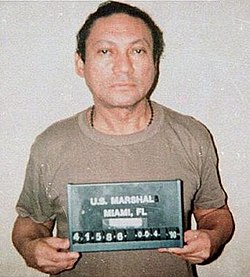
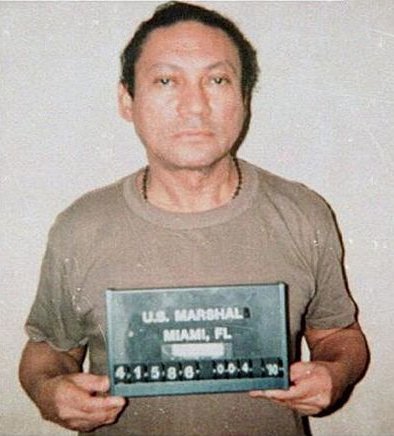
Panamanian leader Manuel Noriega, following his arrest by U.S. authorities

Narco-state, also called narco-capitalism or narco-economy,[a] is a political and economic term applied to countries where all legitimate institutions become penetrated by the power and wealth of the illegal drug trade.[2] The term was first used to describe Bolivia following the 1980 coup of Luis García Meza which was seen to be primarily financed with the help of narcotics traffickers.[3]

The term is often seen by critics as ambiguous because of the differentiation between narco-states. The overall description would consist of illegal organisations that either produce, ship or sell drugs and hold a grip on the legitimate institutions through force, bribery or blackmail.[4] This situation can arise in different forms. For instance, Colombia, where drug lord Pablo Escobar ran the Medellín Cartel (named after his birthplace) during most of the 1970s and 1980s, producing and trafficking cocaine to the United States of America. Escobar managed to take over control of most of the police forces in Medellín and surrounding areas through bribery and coercion, allowing him to expand his drug trafficking business.[5]

Currently, scholars argue that the term "narco-state" is oversimplified because of the underlying networks running the drug trafficking organisations.[6] For example, the Guadalajara Cartel in Mexico, led by Miguel Ángel Félix Gallardo, who managed to combine several small drug trafficking families into one overarching cartel,[7] controlling the marijuana production in the rural areas of Mexico,[8] while trafficking Colombian cocaine to the US at the same time.[9]

Over time, the cocaine market expanded to Europe, leading to new routes being discovered from Colombia through Brazil or Venezuela and Western Africa. These new routes proved to be more profitable and successful than shipping from North America and turned African states such as Nigeria, Ghana, and later on Guinea-Bissau into actual narco-states.[4] While cocaine was transported through Western Africa, the Taliban produced opium in the rural areas of Afghanistan using the revenues to fund their guerrilla war. Despite American and NATO efforts to impose laws on the Afghan opium production, the early 2000s incumbent Afghan governments shielded the opium trade from foreign policies as much as possible.[10] As of 2024, Syria's Assad regime was regarded as the world's largest narco-state, with an estimated global Captagon export worth $30–57 billion annually. Revenue from the illicit drug exports accounted for around 90% of the revenue of the Assad regime.[11][12][13][14]

Ongoing discussions divide scholars into separate groups either claiming or disclaiming the resemblance between narco-states and failed states. Depending on which properties are assigned to the definition of a failed state, the definition is in accordance with the narco-state. While most narco-states show signs of high rates of corruption, violence and murder, properties that are also assigned to failed states, it is not always clear if violence can be traced back to drug trafficking.[15]

Usage

[edit]

It has been argued that narco-states can be divided into five categories depending on their level of dependence on the narcotics trade and the threat the narcotics trade in said country poses to domestic and international stability. These five categories are (in ascending order): incipient, developing, serious, critical, and advanced;[16] however, use of the term narco-state has been questioned by some for being too widely and uncritically applied, particularly following the widespread media attention given to Guinea-Bissau as "the world's first narco-state" in 2008,[17] and should instead refer only to those countries in which the narcotics trade is state-sponsored and constitutes the majority of a country's overall GDP.[18]

Examples

[edit]

Afghanistan

[edit]
Seized opium from Afghanistan, 2005

Afghanistan was very well known for its opium production. As of 2021, Afghanistan's harvest produces more than 90% of illicit heroin globally, and more than 95% of the European supply.[19][20] Most of the opium was smuggled through Herat and Faizabad to the Golden Crescent countries such as Iran and Pakistan. Opium production and trafficking are known to have funded the Taliban's military activities and insurgency.[21][22]

Belize

[edit]

Belize has been described as a narco-state in Mexican media owing to close links between Belizean authorities and Mexican drug cartels. The country was a base of operations for Joaquín "El Chapo" Guzmán and Ismael Zambada García with his Sinaloa Cartel, along with Mexico and Honduras.[23] Johnny Briceño, elected prime minister of Belize in 2020, is the son of Elijio "Don Joe" Briceño, who in 1985 was convicted of trafficking marijuana and cocaine into the United States. Two others members of the Briceño family were also indicted, with prosecutors describing the clan as operating a "family marijuana business".[24][25]

Bolivia

[edit]

The drug trade in Bolivia gained its prominence in 1980s, when the demand for cocaine was booming across Latin America. Bolivia's most lucrative crop and economic activity in the 1980s was coca, whose leaves were processed clandestinely into cocaine.[26][27] The country was the second largest grower of coca in the world, supplying approximately fifteen percent of the US cocaine market in the late 1980s.[27] Analysts believed that exports of coca paste and cocaine generated between US$600 million and US$1 billion annually in the 1980s (depending on prices and output).[27]

In 1980, General Luis García Meza overthrew President Lidia Gueiler in a bloody coup d'état allegedly aided by drug cartels. The dictatorship of García Meza was very well known for its state sponsored drug trafficking activities. García Meza's regime oversaw Bolivia's 13-month period of isolation. The Reagan administration distanced themselves from García Meza's regime and halted some aid to Bolivia due to the regime's relationship with drug cartels. García Meza's time in office was short-lived as he was overthrown and replaced by General Celso Torrelio. García Meza was convicted in absentia for his human rights violations in Bolivia, and he was later extradited from Brazil in 1995 and sentenced to serve 30 years in a Bolivian prison. His collaborator, Colonel Luis Arce Gómez, was extradited to the United States to serve his sentence for drug trafficking in a United States federal prison. The 1980s coup was said to have been financed by Bolivia's most notorious drug baron, Roberto Suárez Gómez. Suárez Gómez was the founder of La Corporación, a Bolivian drug cartel tied to Pablo Escobar's Medellín Cartel. The organization was founded in the 1970s and mainly focused in Santa Cruz de la Sierra; it amassed $400 million annually.[28][29][30] The cocaine shipped from the Bolivian Amazon to Colombia was valued at $9,000 per kilogram. In 1988, Suárez Gómez was arrested by the Bolivian National Police and sentenced to 15 years in prison; his nephew Jorge Roca Suárez continued his business until his arrest in 1990.[31][32]

Brazil

[edit]

Since 1990, the phenomenon of urban violence has intensified. There are currently more than fifty criminal factions in Brazil.[33] Since the 1990s, Brazil has seen a significant increase in urban violence, often linked to drug trafficking and organized crime. The presence of over fifty criminal factions indicates a deeply entrenched network of illicit activities. These groups are involved in various illegal operations, including the local drug trade and international drug trafficking. The power and influence of these factions, such as the First Capital Command (PCC) and the Red Command (CV), extend beyond prisons into various urban areas, contributing to the issue. Brazil's extensive borders with major cocaine-producing countries like Colombia, Peru, and Bolivia make it a key transit country for drug trafficking. This geographic situation, combined with socio-economic factors and challenges in law enforcement and judicial systems, creates an environment conducive to the growth of organized crime and drug trafficking.

Former president Jair Bolsonaro's family has been linked to so called "milícias", composed of police officers and other government officials engaged in narcotrafic.[34] One of aides, who has been charged a 2 million euro fine over cocaine transportation, is being investigated for using an official airplane and the president's credit card for drug-trafficking.[35] During the presidential election of 2022, Bolsonaro supporters made claims regarding Lula's alleged links to criminal factions.[36] Other politicians, such as former president Fernando Collor de Mello, have been investigated for mobster relations.[37]

Colombia

[edit]
1976 mugshot of Pablo Escobar

Beginning in the mid-1970s, Colombian drug cartels became major producers, processors and exporters of illegal drugs, primarily marijuana and cocaine.[38] The drug trade in Colombia was monopolized by four drug trafficking cartels: Medellín, Cali, Norte del Valle, and North Coast.[39] However some guerilla warlords in the Colombian conflict were also said to be involved in drug trafficking in the country.

Cocaine seized by Colombian Police

The Medellín Cartel was once the largest drug cartel operating in Colombia, led by Pablo Escobar which focused its operations in the city of Medellín. Most of the imported drugs are originated from countries like Bolivia and Peru which were later processed in Colombia. The Medellín Cartel gained prominence in the 1980s when the cartel amassed $60 million worth of fortune from drug trade to the United States, mainly focused on Florida, New York, and California. This caused the United States government to sign an extradition treaty with Colombia. Escobar's business empire was known for its "reign of terror" as the cartel staged numerous kidnappings, assassinations and bombings around Colombia to ensure its business continuity. Pablo Escobar was shot to death by police in 1993; after the death of Pablo Escobar, the Medellín Cartel began to decline which eventually led to its disbandment.[40] The disbandment of the Medellín Cartel has led to the other three major cartels, especially the Cali Cartel, to seize the opportunity to expand their trade routes.

During the drug war, major Colombian cartels were known to be influencing Colombian politicians and warlords alike. In order to flex his muscle, Escobar went to politics and ran as candidate for the Chamber of Representatives under the banner of the Liberal Alternative; however, Escobar's ambition in politics was later thwarted after knowledge of his criminal activity was exposed to the representatives, which forced him to resign. This event become the root cause of the assassination of justice minister Rodrigo Lara Bonilla. In contrast to the Medellín Cartel, the Cali Cartel adopted a more subtle approach on influencing local politicians. In 1994, the outgoing president Ernesto Samper was involved in the Proceso 8000 scandal in which he was accused of being funded by drug money, allegedly from the Cali Cartel for his campaign in the 1994 Colombian presidential election.[41] The scandal caused then US president Bill Clinton to cut Colombian aid and later revoke Samper's visa.[42]

In 2023, Nicolas Petro, son of Colombian President Gustavo Petro was arrested for a money laundering case. Petro was accused of taking money from drug traffickers to fund his peace effort and presidential campaign which he would later deny. Nicolas Petro would later be told Semana that he and his father were not aware about the money he received was coming from drug traffickers.[43][44]

Guinea-Bissau

[edit]

Guinea-Bissau, in West Africa, has been called a narco-state due to government officials often being bribed by traffickers to ignore the illegal trade.[45] Colombian drug cartels used the West African coast as Jamaica and Panama increased policing. The Guardian noted that Guinea-Bissau's lack of prisons, poor policing, and poverty attracted the traffickers.[46] An article in Foreign Policy questioned the effectiveness of money from the United States, the European Union, and the United Nations designated to combat the illegal trade.[47]

Honduras

[edit]

Honduras has been labeled as a narco-state due to drug trafficking involvement of President Juan Orlando Hernández and his brother Tony Hernández, who was a congressman. Tony Hernández was captured in 2018 in the United States and was accused of conspiracy of cocaine trafficking to the US in 2019.[48] Also Fabio Lobo, the son of former president Porfirio Lobo, was arrested by DEA agents in Haiti in 2015. All of them are members of the National Party of Honduras.

Iran

[edit]

Since 2017, a sudden surge in crystal meth production and smuggling from Iran has contributed to a drug epidemic in neighboring Iraq and Turkey.[49]

Lebanon

[edit]

Illegal drugs trading pervaded in Lebanon since the 1960s.[50] In 2014, Lebanese authorities seized 25.4 million Captagon tablets at the airport and Port of Beirut.[51] In April 2015, the European Council stated that Lebanon had become a transit country for drug trafficking.[52] In April 2021, Greek authorities seized four tonnes of cannabis hidden in dessert-making machinery at Piraeus, which was en route from Lebanon to Slovakia.[53] In the same month, 5.3 million Captagon pills hidden in fruits imported from Lebanon were seized by authorities in Saudi Arabia.[54] In May 2021, Lebanese authorities confiscated cocaine hidden in Makdous, destined for Australia.[55] In the same month, Lebanese customs at Beirut Airport seized 60 tonnes of hashish, intended to be exported to the Netherlands.[56]

Mexico

[edit]
Mexican soldiers during a confrontation in Michoacán in August 2007

Government corruption has been a long-standing problem in Mexico. Drug cartels have been influential in Mexican politics, contributing large sums of money into Mexican electoral campaigns, supporting candidates sensitive to bribery in order to keep their businesses safe.[57] Since the early 20th century, drug trafficking had been tolerated by the Mexican government. Since 1929, the dominant party of Mexico, the Institutional Revolutionary Party (PRI), forged ties with various groups in order to gain political influence. Among them were drug traffickers. The ties between the PRI and the drug lords sustained an alliance with the drug traffickers and sanctioned their activities.[58]

During the 1980s and 1990s, the drug trade in Mexico accelerated. Before the 1980s most of Mexico produced marijuana and a small amount of heroin. Cocaine mostly reached the US through the Bahamas and the Caribbean. After the US shut down the routes that entered the state of Florida, Colombian drug cartels established a partnership with Mexican traffickers, finding new routes by which to smuggle cocaine over land into North America. A few small Mexican cartels merged into the Guadalajara cartel, led by Miguel Ángel Félix Gallardo. The Guadalajara cartel trafficked the cocaine produced by the Colombian Calí cartel, while expanding marijuana production in rural areas of Mexico.[58]

Joaquín "El Chapo" Guzmán

The US established a special force, named the Drug Enforcement Administration (DEA), to fight a war on drugs within their own borders and beyond. The DEA office in Mexico received extra resources to investigate the murder of one of their own agents, Enrique "Kiki" Camarena, who was abducted, tortured and murdered by a state police officer paid by members of the cartel. Their investigation confirmed the corruption that gripped Mexico in the 1980s and 1990s; however, not only police officers on the payroll obeyed Miguel Ángel Félix Gallardo and his cartel. Investigations show transactions to high officers in the federal government, such as the Federal Directorate of Security and the Mexican Federal Judicial Police.[58][15]

The Mexican drug war in 2006, initiated by Mexico's newly elected president, Felipe Calderón, began a government armed effort to fight the drug cartels in Mexico. Calderón's predecessor, Vicente Fox, elected in 2000, had been the first Mexican president from outside the PRI. Despite Calderón's efforts, the PRI was returned to power in 2012 with the election of Enrique Peña Nieto. During the court hearing for the most wanted cartel leader, Joaquín "El Chapo" Guzmán, it was alleged that former president Enrique Peña Nieto had accepted a $100 million bribe from the drug kingpin.[59]

Myanmar

[edit]

Myanmar is the second-largest opium producing nation in the world, only behind Afghanistan.[60] The opium trade network in Myanmar indirectly created a network widely known as the Golden Triangle, a term coined by the CIA, in the area around the Myanmar, Laos, and Thailand border. Opium production in Myanmar dates back to during the period of the Konbaung dynasty.[61] In aftermath of the Chinese civil war, some Kuomintang loyalists became involved in the opium trade in Burma. Most of the opium produced by the former Kuomintang soldiers was shipped south to Thailand.[62] One of the most notorious figures in Myanmar drug business was Khun Sa, who was also trained by Burmese Army and the Kuomintang. Khun Sa's operations were said to have dominated the drug trade network in the Golden Triangle area, earning him the title "Opium King". Khun Sa's influence began to decline in 1990's, and he surrendered himself to the authorities in 1996.[63]

North Korea

[edit]

The international isolation imposed on North Korea has made the North Korean regime rely on illicit activities such as the drug trade to support its economy. The North Korean regime was known to have operated drug trading activities varying from opium to methamphetamine.[citation needed] The regime's drug trade network dates back to the 1970s, when then leader Kim Il Sung sanctioned the creation of opium farms in the country.[64] The methamphetamine trade dates back to around the 1990s, with the regime known to have trafficked drugs to China's Jilin Province, later being sent to countries such as the Philippines, the United States, Hong Kong, Thailand, western Africa and others.[65] In 2001, income from illegal drugs amounted to between $500 million and $1 billion. In 2003, the North Korean owned cargo ship Pong Su was intercepted importing heroin into Australia. The ship was suspected of being involved in smuggling almost 125 kilograms (276 lb) of the drug into Australia, with an estimated street value of A$160 million.[citation needed]

Netherlands

[edit]

As early as 1996, the Netherlands was labelled as a narco-state in a French government report.[citation needed] Since then, the question of whether the Netherlands is actually a narco-state has been asked many times,[by whom?] and the answer depends strongly on which characteristics are attributed to a narco-state. In any case, the size of the drug sector in the Netherlands suggests that drug crime has been a persistent problem in the Netherlands for years,[citation needed] and that the fight against it constantly poses complex questions to politics and criminal justice[citation needed]. In 2018, several police detectives stated in a report by the Dutch Police Association that the Netherlands "already exhibited a painful number of characteristics of a narco-state".[citation needed] Minister Grapperhaus of Justice and Security stated in a response that the Netherlands is not a narco-state. After the murder of lawyer Derk Wiersum and crime reporter Peter R. de Vries, the qualification of the Netherlands as a narco-state received new attention.[66][67][68][69][70][71]

Nicaragua

[edit]

After the Nicaraguan Revolution, the Sandinista National Liberation Front, led by Daniel Ortega, took the national government of Nicaragua from the Somoza dynasty. In 1980s, the Sandinista government was accused of helping Pablo Escobar's Medellín Cartel by giving him access to a drug trafficking corridor within Nicaragua. According to the United States diplomatic cables leak, Ortega was said to receive drug money in order to influence the 2008 local elections in the country. Another cable also stated that Nicaraguan officials returned from Venezuela with a briefcase full of cash, indicating potential government involvement with drug cartels.[72][73]

Panama

[edit]
Operation Just Cause in 1989

The dictatorship of Manuel Noriega operated a state sponsored drug trade network which gave Panama a reputation of being a narco-state at the time.[citation needed] Noriega was well known[to whom?] to be involved in illegal drugs and arms trade which was dubbed as his "cash cow".[citation needed] Between 1981 and 1987, the Noriega regime had a cordial relationship with the United States due to a mutual interest where the Noriega administration helped arming the Contras in Nicaragua, in exchange for which the US ignored Noriega's illegal activities.[citation needed] Noriega's involvement in drug trafficking grew rapidly in the 1980s, reaching its peak in 1984.[74] The conflict in Colombia and Central American countries gave Noriega the opportunity to transport cocaine to United States. Noriega's regime also formed an alliance with the Medellín Cartel.[75]

In 1984, Noriega began to reduce his drug operation by targeting Jorge Ochoa's and Gilberto Rodríguez Orejuela's money laundering operations in order to clean his reputation, which gave him a positive image among American government elites. In the late 80's the Noriega regime's relations with the United States deteriorated after Noriega was accused of selling intelligence to Cuba. It was also reported that Hugo Spadafora, Noriega's most prominent critic, reported Noriega's drug operations to the Drug Enforcement Administration.[76] The United States would later invade Panama and capture Noriega, ending his regime. Noriega was later trialed in three countries; France, the United States, and Panama. He eventually died in 2017.[citation needed]

Suriname

[edit]

Suriname has been labeled as a narco-state due to the involvement of President Dési Bouterse and his family in drug trafficking. Bouterse was sentenced in absentia in the Netherlands to 11 years' imprisonment after being convicted of trafficking 474 kg (1,045 lb) of cocaine.[77] His son Dino Bouterse has been arrested twice in three different countries and is currently serving 16 years imprisonment in the United States on a charge of drug trafficking.[citation needed]

Syria

[edit]

Ba'athist Syria was home to a burgeoning black market drug industry run by associates and relatives of the former Syrian ruler, Bashar al-Assad.[78] The industry was run by a clandestine network of warlords, drug cartels, crime families and business men loyal to the Assad dynasty, operating across the regions of Syria and Lebanon.[79] It mainly produced captagon, an addictive amphetamine popular in the Arab world. Another major drug which was manufactured and smuggled globally is hashish. As of 2021, the export of illegal drugs eclipsed the country's legal exports, leading the New York Times to call Syria "the world's newest narcostate". The drug exports allowed the Assad regime to generate hard currency, pay daily wages for the deteriorating state army, finance private militias and hire mercenaries.[80][79][81] Centre of Operational Analysis and Research reported in 2021 that the Assad regime has turned Syria into "the global epicentre of Captagon production, which is now more industrialised, adaptive, and technically sophisticated than ever."[81]

During its occupation of Lebanon between 1976–2005, the Assad regime used its proxies in Lebanon for establishing its multi-billion dollar drug industry.[82] Syria was labeled as a narco-state by the United States for nearly a decade until 1997. Throughout the Syrian occupation of Lebanon when they controlled the cannabis cultivation in the Beqaa Valley in Lebanon,[83] the Assad regime was the Middle East's main source of hashish.[84]

Maher al-Assad, younger brother of Bashar al-Assad and commander of the Republican Guards, oversaw the operations of Syria's drug industry

During the Syrian Civil War, the Assad regime began mass production of drugs within Syria, and officers fed their men fenethylline, which they called "Captain Courage."[84] Several shipments containing tonnes of amphetamines were seized in different countries smuggled from Syria,[85] those shipments had sometimes millions of pills of fenethylline,[86] produced in the country since at least 2006.[87] After 2013, captogen production and export in Syria skyrocketed, with the direct support of the Assad regime, and its multi-billion dollar profits exceeded the total GDP. By 2020, Syria had become the world's biggest centre of captogen production, sales and exports.[88][89]

In November 2020, two drug shipments of hashish coming from Syria were seized by Egyptian authorities, the first shipment which arrived to Alexandria, included 2 tonnes of hashish,[90] while the second shipment had 6 tonnes and was found at the Damietta port.[91] The port of Latakia became under scrutiny of European and American police, as being favored by smugglers.[92] In May 2021, Turkish security forces used UAVs to stop 1.5 tonnes of marijuana being smuggled out of Syria.[93] According to the Centre for Operational Analysis and Research (COAR), Syrian seized drugs in 2020 had the value of no less than $3.4bn.[84] In late November 2024, Syrian opposition rebels took control of much of Syria, causing Bashar al-Assad and his family to flee the country to Russia, a longtime ally.[94] The Syrian transitional government ordered the cessation of the drug trade.[95]

Venezuela

[edit]

Since the late 2010s, Venezuela has been labeled a narco-state due to the relations between some Venezuelan government officials to drug cartels and criminal factions all across Latin America. For example, former vice president of Venezuela Tareck el Aissami has been accused of supporting drug trafficking and helping Mexican drug cartels. El Aissami has been sanctioned by the United States since 2017.[96] The nephews and sons of Venezuela's president Nicolas Maduro are also being accused of financing drug trades and being involved in the Narcosobrinos affair. In November 2017, the United States ambassador to the UN Nikki Haley accused Venezuela of being a "dangerous narco-state".[97]

See also

[edit]

Notes

[edit]

References

[edit]

Further reading

[edit]
[edit]
Revisions and contributorsEdit on WikipediaRead on Wikipedia
from Grokipedia
A narco-state is a country in which narcotics trafficking has permeated the political, economic, and security institutions, enabling drug organizations to exert undue influence or partial control over state functions through and coercion. This condition typically arises in nations serving as major production, transit, or laundering hubs for illicit drugs, where traffickers bribe or intimidate officials to protect operations, undermining and sovereignty. Historical exemplars include under General from the 1980s, who leveraged his command of the defense forces to aid the Cartel's cocaine shipments to the , transforming the country into a trafficking haven. More recent cases designated by U.S. authorities encompass , Africa's inaugural narco-state owing to elite complicity in transatlantic cocaine routes, and , where opium and flows from corrupt governance structures. The designation carries controversy, as some analysts contend it constitutes a conceptual , vaguely applied to any drug-affected without demonstrating wholesale , which empirical cases rarely exhibit due to persistent institutional resistance or incomplete infiltration. Defining traits involve not mere —prevalent across many states—but a symbiotic nexus where drug profits sustain ruling elites, eroding capacity for independent policy and fostering violence as cartels vie for territorial dominance. Such dynamics exacerbate , instability, and international isolation, prompting interventions like U.S.-led invasions or sanctions, though causal links between narco-influence and state fragility demand scrutiny beyond alarmist narratives.

Definition and Characteristics

Core Definition

A narco-state is a sovereign entity in which narcotics traffickers, through their economic power, corruption, and paramilitary capabilities, exert significant influence over the exercise of state authority, compromising institutions such as the government, judiciary, military, and law enforcement. This control often enables the illicit drug trade to operate with impunity, either by direct infiltration or covert state complicity, prioritizing trafficking profits over legitimate governance. The term emphasizes systemic penetration rather than isolated corruption, where drug revenues fund or dictate policy decisions, leading to weakened rule of law and prioritization of cartel interests. Key indicators include the drug economy's outsized role in national finances, as in where opiate trafficking generated an estimated 30% of GDP by the early , permeating official structures via bribes and . State actors may actively facilitate routes, launder proceeds, or deploy to protect shipments, blurring lines between criminal networks and formal power. This dynamic fosters dependency, where disrupting the trade risks institutional collapse, as traffickers provide parallel economic and social services in ungoverned spaces. Critics argue the narco-state label is imprecise and hyperbolic, as no state is wholly subordinated to ; instead, it reflects degrees of common in weak , without evidence of total . Nonetheless, empirical cases demonstrate causal links between unchecked trafficking and , where economic incentives from global demand erode institutional integrity, enabling traffickers to rival or exceed official authority in key domains.

Identifying Markers

A narco-state exhibits institutional corruption as a primary marker, characterized by the of high-level officials in narcotics trafficking, including protection of operations and diversion of state resources to sustain illicit networks. This often manifests in the failure of and to prosecute traffickers effectively, with from cases where political power shifts toward criminal actors, rendering anti-drug efforts nominal. Such corruption extends to paramilitary alliances, where state either collaborate with or are outmatched by drug operators' armed capabilities. Economic reliance on revenues distinguishes narco-states, where illicit proceeds dominate national income streams, often equaling or surpassing legitimate sectors like exports or formal GDP contributions. For example, Mexican cartels generated an estimated $30 billion annually in the early , four times the value of oil exports at the time, fostering dependency that undermines fiscal reforms. Indicators include volumes that inflate informal economies and state budgets indirectly subsidized by narco-funds, as seen in regions where drug trade turnover rivals half the legal economy. Territorial and political control by non-state actors further signals narco-state conditions, with cartels exercising over regions, including taxation, , and provision, while influencing national policy through or . This is empirically observable in fragmented , high rates for drug-related crimes (often exceeding 90% in affected areas), and legislative changes favoring traffickers, such as delays in treaties. Accompanying violence levels, where homicides tied to turf wars eclipse state capacities, reinforce these markers, though government responses like military deployments may mask rather than resolve underlying dependencies. A narco-state is distinguished from other forms of dysfunctional governance by the centrality of state-sponsored or state-integrated narcotics production and trafficking, where drug-related revenues and networks not only corrupt but actively shape institutional priorities and economic structures from the top down. Unlike broader corruption, this symbiosis requires measurable dominance of the drug economy—such as through illicit crop cultivation covering significant territory or trafficking volumes comprising a substantial GDP share—and deliberate state facilitation, rather than incidental involvement. In contrast to a , where central authority collapses, leading to and inability to monopolize violence or provide services, a narco-state retains coercive capacity and administrative functionality, albeit subordinated to cartel imperatives; for instance, governments may suppress rivals effectively while shielding operations, as seen in cases where state forces repress non-drug threats but enable transit of hundreds of metric tons of annually. This preserves a facade of order, distinguishing it from total state breakdown, though critics argue the label overstates such control when drug actors exert veto power over policy. The narco-state differs from a mafia state primarily in directionality and specificity: mafia states feature bottom-up infiltration by syndicates commandeering state levers for diverse illicit ends like or beyond drugs, whereas narco-states demand top-down state orchestration of narcotics as the dominant enterprise, with elites actively promoting cultivation or routes rather than merely coexisting as criminal participants. Overlap exists, as both involve elite-criminal fusion, but the narco variant hinges on drugs' outsized role, excluding regimes where non-narcotic rackets predominate. Compared to , which entails rulers and insiders systematically looting national resources for personal enrichment through mechanisms like or crony contracts irrespective of illicit trades, the narco-state integrates non-state networks as symbiotic partners, with trafficking proceeds fueling and in a manner that elevates narcotics to a quasi-rentier economic pillar, akin to but distinct from dependency in that it relies on criminal rather than licit global markets. Kleptocratic extraction may enable incidentally, but lacks the narco-state's requirement for state-driven industry expansion, such as subsidizing labs or securing routes, rendering narcokleptocracy a hybrid but not synonymous form. Scholars note definitional ambiguity in all these terms, cautioning against their use without empirical thresholds like GDP contributions exceeding 10-15% or state-protected cultivation areas surpassing national fractions.

Historical Development

Origins of the Term

The term "narco-state" emerged in the early to characterize the Bolivian under General Tejada, who seized power in a on July 17, 1980, with direct financial and logistical support from major traffickers. This event, dubbed the "Cocaine Coup," marked the first instance where drug syndicates overtly financed and influenced a , enabling traffickers like —Bolivia's largest producer, generating an estimated $400 million annually—to embed within state structures for protection and expansion of operations. The coup's backers included figures tied to the nascent Andean trade, which had surged due to Bolivia's coca cultivation in the Chapare and regions, providing raw material for 70-80% of the U.S.-bound supply by the late 1970s. U.S. officials and media applied the label to highlight how García Meza's 16-month rule (ending August 4, 1981) allowed narco-interests to penetrate the , , and executive, with traffickers receiving official tolerance in exchange for funding the amid Bolivia's economic instability and hyperinflation precursors. DEA agent Michael Levine, operating in the region, later described this as the birth of the "world's first narco-state," reflecting Washington's alarm over state complicity in narcotics amid anti-communist priorities that sometimes overlooked drug ties in allied dictatorships. The phrase, initially journalistic rather than a formal legal category, encapsulated a where illicit drug economies dictated governance, differing from mere by implying systemic capture rather than incidental bribery. Prior to 1980, discussions of drug-state links existed—such as in Peru's coined by President Terry in 1983—but Bolivia's coup provided the archetype, influencing later applications to amid the cartel's 1980s and under Manuel Noriega's narco-dictatorship exposed in 1989. García Meza's conviction in 1993 for abuses and drug-related crimes, including a 30-year sentence (served partially abroad), underscored the regime's narco-entanglement, with evidence of revenues funding groups like the "Death Squads." This origin reflects empirical patterns of institutional capture in coca-producing states, where weak and export bans incentivized black-market alliances over legitimate economic diversification.

Evolution Through Key Eras

The concept of the narco-state first gained prominence in the 1970s and 1980s in , particularly , where drug cartels transitioned from small-scale operations to powerful organizations controlling significant portions of the trade. Beginning in the mid-1970s, Colombian traffickers, led by figures like of the (active from 1976 to 1993), established dominance in cocaine production and export, generating immense revenues that enabled infiltration of political and judicial institutions through bribery and violence. By the early 1980s, the employed intimidation tactics, including the murders of officials such as Justice Minister Bonilla in 1984, to protect their interests and challenge state authority. This era marked the prototype narco-state, with cartels exerting control over regions and influencing national policy, as evidenced by the cartels' temporary sway over debates and legislative protections. In , the regime of General from 1983 to 1989 exemplified state-level complicity, transforming the country into a key transit and laundering hub for Colombian . , initially a U.S. ally, facilitated drug shipments by protecting cartel operations and receiving payments estimated in the millions, while using 's banking secrecy and canal proximity to enable trafficking. U.S. indictments in 1988 for drug trafficking and racketeering culminated in the 1989 invasion (Operation Just Cause), which ousted and highlighted how authoritarian control could align with narco-interests, leading to his conviction on U.S. charges. The saw a shift northward to , as Colombian cartels outsourced smuggling routes amid intensified U.S. interdiction in the , empowering Mexican organizations to capture greater profits and influence. By the late 1980s, Mexican groups like the had evolved into major players, but fragmentation in the —following the arrest of leaders like Miguel Ángel Félix Gallardo—led to rival factions such as the and cartels, escalating territorial wars. The of President in 2006 and his military offensive against cartels triggered unprecedented violence, with over 28,000 deaths by 2010, raising fears of devolving into a narco-state through localized failures and . Parallel developments occurred outside in the 2000s. In , following the 2001 U.S.-led invasion, production surged from 185 metric tons in 2001 to 8,200 tons by 2007, fueling a narco-economy intertwined with , insurgents, and corrupt officials, positioning the country as a major supplier and risking narco-state status despite eradication efforts. In , emerged as a cocaine transit hub by the mid-2000s, with military and political elites complicit in trafficking from to ; by 2008, the UN labeled it Africa's first narco-state amid coup-prone instability and weak institutions. These cases illustrate the of narco-state dynamics, driven by adaptable trafficking networks exploiting vacuums.

Causal Mechanisms

Institutional Corruption and Governance Failures

In narco-states, institutional manifests as the systematic co-optation of public officials by drug trafficking organizations, enabling cartels to operate with and erode the state's monopoly on legitimate . Low salaries, inadequate oversight, and weak mechanisms in and judicial systems create vulnerabilities that traffickers exploit through bribes, threats, or direct infiltration, allowing them to secure safe passage for illicit goods, launder proceeds via front companies, and influence decisions. For instance, networks in have been documented using public funds to finance illegal activities, with officials at municipal, state, and federal levels facilitating operations in exchange for payments estimated in the millions of dollars annually. This process is exacerbated by failures such as fragmented institutions with overlapping mandates and poor coordination, which fail to prosecute high-level offenders and perpetuate a cycle of . Governance failures further enable cartel control by undermining and , where narco-financing influences elections and judicial appointments. In regions plagued by narcotics trafficking, weak systems—characterized by low conviction rates for cases, often below 5%—allow traffickers to intimidate witnesses and judges, ensuring favorable outcomes in drug-related prosecutions. Empirical analyses indicate that drug trafficking networks shape state institutions through sustained , as seen in historical cases across , , and , where groups embedded allies within government structures to divert resources and . Such infiltration extends to and intelligence agencies, where officials provide protection rackets or share operational , directly contributing to territorial losses for the state. The causal link between these failures and narco-state consolidation lies in the reinforcement loop: initial weaknesses invite , which in turn hollows out institutions, reducing the state's capacity to respond to threats. Studies on narco-capitalism highlight how trafficking revenues—often exceeding legitimate GDP sectors—fund the co-optation of elites, distorting formal economies and prioritizing illicit interests over welfare. While some narco-state collaborations may temporarily reduce by aligning state and incentives, they fundamentally damage democratic and long-term stability, as evidenced by persistent institutional decay in affected countries despite international efforts.

Economic Incentives from Illicit Markets

The profitability of illicit drug markets, particularly , , and synthetic opioids, generates vast revenues that dwarf legitimate economic opportunities in many transit and production countries, incentivizing state actors to facilitate rather than suppress trafficking. Estimates place the global value of the illicit drug trade at between $426 billion and $652 billion annually, with markets alone contributing over $110 billion in retail expenditures driven by high demand in and . These margins arise from low production costs— cultivation and in countries like costs producers mere dollars per gram—contrasted with retail prices reaching thousands of times higher after transit, creating windfall profits that cartels can allocate to . In narco-states, where formal economies often stagnate due to weak institutions, these funds represent a rational alternative to underfunded public sectors, as officials weigh personal gain against enforcement duties. Cartels exploit salary disparities by offering bribes that exceed annual public wages by orders of magnitude, systematically eroding enforcement incentives. In , for example, where average police salaries hover around $10,000–$15,000 USD per year, cartels disburse multimillion-dollar payoffs to secure safe passage, as evidenced by cases where officials received sums equivalent to decades of pay for overlooking shipments. Similarly, in during the –1990s peak of the and cartels, bribes to judicial and military personnel often totaled millions, far outpacing government pay scales and enabling territorial control. This dynamic follows a basic economic logic: when illicit rents surpass the of legal duties (salary minus risks of non-compliance), rational actors defect, with cartels amplifying the temptation through threats or violence to lower the effective cost of refusal. Empirical patterns show higher prevalence in regions with elevated drug flows, as profits fund not only individual payoffs but also networks that buy loyalty from mid-level bureaucrats to politicians. Beyond direct bribes, illicit profits distort broader incentives by crowding out legitimate investment and fostering dependency, compelling states to tolerate trafficking to avoid . In affected areas, drug-related activities can account for 5–10% of GDP in peak periods, employing thousands in cultivation, , and logistics where formal jobs are scarce, thus creating vested interests among local elites and populations against aggressive . Cartels reinvest laundered funds into , , and , generating ancillary economic activity that state budgets cannot replicate, particularly in under-resourced rural zones. This reliance incentivizes policy inertia, as dismantling networks risks unemployment spikes and social unrest, reinforcing a feedback loop where weakened governance further elevates cartel leverage. Reports from organizations tracking financial flows highlight how such incentives perpetuate , with DTOs using revenues to co-opt regulatory agencies and influence legislation, prioritizing profit maximization over public welfare.

Geopolitical and Policy Contributors

The ' War on Drugs, declared by President in 1971, established a global prohibition regime that prioritized supply-side interdiction over demand reduction, creating sustained high-profit incentives for Latin American drug production and trafficking organizations. This approach, enforced through bilateral aid and military cooperation, such as the $10 billion launched in 2008 for , aimed to dismantle cartels but often exacerbated violence by fragmenting groups into more aggressive factions without resolving institutional corruption or economic alternatives for rural producers. In , , initiated in 2000 with over $10 billion in U.S. funding, reduced cultivation temporarily by 50% between 2000 and 2010 but failed to prevent resurgence, as eradication displaced cultivation to remote areas where state presence was minimal, enabling armed groups to entrench narco-economies. Empirical analyses indicate these policies inadvertently strengthened cartels by inflating drug values— wholesale prices in the U.S. remained stable at around $20,000 per kilogram despite interdiction—while ignoring that 80-90% of global supply originates from Andean nations, sustaining through and coercion. Geopolitical rivalries and inconsistent international enforcement have compounded these policy shortcomings by allowing narco-regimes to exploit alliances for protection. In , the Maduro government's ties to and since 2015 have deterred unified global action against state-linked trafficking, exemplified by the U.S. Treasury's 2025 sanctions on the Cartel de los Soles for supporting groups like and the with materiel and routes. U.S. sanctions, escalating from 2017 under 13808 targeting and abuses, have crippled oil exports by 99% from 2013 peaks to under 300,000 barrels daily by 2023, potentially heightening dependence on drug revenues as GDP contracted 75% since 2013, though direct causal links to cartel empowerment versus regime self-enrichment remain contested in peer-reviewed assessments. Similarly, Panama's experience under in the 1980s illustrates how U.S. tolerance of narco-dictators during anti-communist priorities enabled institutional infiltration until the 1989 invasion, which cited drug trafficking as a key justification alongside election annulment. Foreign policy emphasis on militarized responses over development has perpetuated governance failures conducive to narco-states. Latin American leaders, citing over 500,000 homicides linked to drug violence since 2006, have increasingly rejected , with legalizing in 2013 and others decriminalizing possession, yet U.S. resistance to broader reforms—evidenced by opposition to coca substitution successes in , where legal quotas reduced illicit cultivation by 20% from 2017-2022—maintains pressure on producer states to militarize without addressing poverty-driven participation, where 40% of Mexican cartel recruits cite economic desperation. These dynamics underscore how geopolitical prioritization of interdiction alliances over holistic frameworks fosters environments where supplant state authority, as seen in Michoacán's groups forming against in 2013.

Societal and Economic Ramifications

and

In narco-states, the illicit drug trade incentivizes organized criminal groups to employ extreme to secure production areas, trafficking routes, and , resulting in sustained high levels of and armed confrontations that overwhelm state . among fragments criminal networks, escalating turf wars as splinter groups vie for dominance without legal , leading to spikes in organized crime-related killings. For instance, in , where narco-trafficking has deeply penetrated , the national rate reached 23.3 per 100,000 inhabitants in 2024, with the majority of deaths attributed to activities. This violence manifests in brutal tactics, including mass executions, beheadings, and attacks on civilians perceived as collaborators, which deter cooperation with authorities and perpetuate cycles of retaliation. Cartel fragmentation following leadership disruptions, such as arrests or killings, has empirically correlated with homicide surges; after the 2024 capture of leader Ismael "El Mayo" Zambada, homicides in state rose by 400% within a year due to intensified infighting. States like and exhibit homicide rates exceeding 40 per 100,000, driven by cartels' control over drug cultivation and rackets, which displace populations and erode local economies. Beyond direct combat, narco-violence undermines domestic stability by targeting state institutions, with assassinations of mayors, police, and journalists averaging dozens annually in affected regions, fostering and governance vacuums. Cartels often impose rule in rural and urban enclaves, enforcing compliance through intimidation and providing selective services like , which supplants formal authority and hinders national cohesion. This parallel power structure correlates with broader instability, including forced migrations—over 300,000 internal displacements in from 2016 to 2023—and weakened public trust in security apparatuses infiltrated by . Empirical analyses indicate that areas with higher presence experience 17 additional homicides per fifth cartel operating, underscoring how market incentives amplify lethal competition.

Economic Distortions and Dependency

In narco-states, the influx of revenues from illicit drug production and trafficking profoundly distorts formal economic structures by inflating sectors vulnerable to , such as , , and informal , while crowding out legitimate and gains. This distortion arises because drug proceeds, often laundered through financial systems, create artificial booms that mask underlying weaknesses in diversified growth, leading to over-reliance on volatile illicit flows rather than sustainable industries. For instance, estimates indicate that global illegal economies, heavily driven by narcotics, account for 8 to 15 percent of world GDP, undermining legitimate markets by favoring short-term criminal capital over long-term development. Specific cases illustrate this dependency: in , cocaine trafficking generates approximately $15.3 billion annually, equivalent to 4.2 percent of the country's GDP, with associated activities comprising about 5.4 percent of GDP as of 2017, diverting resources from productive sectors and compelling the state to allocate 4 to 5 percent of GDP to security expenditures. In , state-enabled illicit trades, including narcotics, constituted 15.67 percent of GDP in 2022, fostering a criminal that rivals formal exports and entrenches dependency through and lack of alternatives. Similarly, cartels' operations yield $35 to $45 billion in annual revenues, distorting regional economies by prioritizing violence-sustained over innovation or diversification. This economic entanglement perpetuates a cycle of dependency, as governments and local elites become reliant on drug-derived for fiscal stability, deterring reforms that could expose fiscal voids or provoke backlash. Illicit financial flows exacerbate inequality by concentrating wealth among traffickers while eroding public trust in institutions, stunting , and hindering —outcomes observed across narco-influenced states where formal GDP growth lags behind potential due to failures tied to narcotics incentives. Transitioning away from such dependencies requires dismantling laundering networks, but anti-money laundering measures can inadvertently contract credit in affected areas, underscoring the causal lock-in effect of entrenched narco-capital.

International and Geopolitical Dimensions

Global Trade Networks

Narco-states serve as pivotal nodes in expansive global illicit drug trade networks, functioning as production epicenters, secure transit zones, and logistical facilitators due to entrenched and dominance over state institutions. The Office on Drugs and Crime (UNODC) documents that groups orchestrate these transnational operations, adapting to interdiction efforts by diversifying routes across land, sea, and air while exploiting vulnerabilities in global commerce. In 2023, production in narco-state reached a record potential of over 2,000 metric tons, underscoring the scale of output that fuels hemispheric and transatlantic flows. Cocaine networks originate primarily in the Andean region, with Colombia, Peru, and Bolivia as cultivation hubs, but narco-states like Venezuela and Mexico amplify trafficking efficiency through territorial control. Venezuela facilitates an estimated 200-250 metric tons of cocaine annually via its ports and airspace, serving as a bridge from Colombian labs to Caribbean maritime routes bound for Europe or northward paths through Central America. Mexican cartels, leveraging governance failures, dominate overland corridors to the United States, where demand drives the majority of flows; in 2022, UNODC seizure data highlighted intensified air and sea interdictions along these vectors, yet production surges outpaced captures. European markets increasingly receive direct shipments from South American origins, with Guinea-Bissau and West African ports emerging as secondary hubs influenced by narco-state spillover. Opiate trade networks center on , a narco-state under oversight, which accounted for about 80% of global supply in 2022 prior to a sweeping cultivation ban that reduced output but did not dismantle entrenched export infrastructure. derived from Afghan transits via the Balkan route through and to , or the northern corridor via , with traffickers embedding consignments in overland trucking and maritime containers to evade detection. These pathways sustain demand in and , generating persistent revenue streams that reinforce narco-state resilience despite periodic disruptions. Integration with legitimate global trade amplifies network durability, as cartels in narco-states corrupt port authorities and to conceal drugs within commercial shipments— in fruit exports from or in Afghan textiles—while financial laundering circuits recycle profits through informal value transfer systems and cryptocurrencies. UNODC analyses indicate that such adaptations have sustained trafficking volumes amid rising global consumption, with synthetic opioids like —precursors routed through —emerging as parallel threats tied to narco-state laboratories.

Foreign Influence and Sanctions

Foreign governments exert influence over narco-states through economic aid, military assistance, and diplomatic pressure to either combat illicit drug economies or, in some cases, sustain regimes tolerant of them for strategic gains. The United States, as the primary actor, channels billions in assistance via the Bureau of International Narcotics and Law Enforcement Affairs (INL) to bolster law enforcement and judicial institutions in affected countries, such as Mexico and Colombia, aiming to disrupt cartel operations and reduce state complicity. For instance, U.S. support includes technical training, equipment provision, and joint task forces like the Joint Interagency Task Force South (JIATF-S), which coordinates with partners including Mexico and Colombia to intercept drug shipments. These efforts reflect a causal link between foreign capacity-building and reduced governance failures enabling narco-control, though outcomes vary based on recipient state cooperation. In , designated a major illicit drug-producing and transit country, U.S. influence has escalated to include military strikes on suspected narco-trafficking vessels in the since September 2025, alongside deployments of aircraft carriers and B-1 bombers to pressure the Maduro regime, accused of leading one of the world's largest networks via the de los Soles. President Trump authorized CIA covert operations within on October 16, 2025, framing them as counter- measures but drawing accusations of pursuing amid the country's narco-state characteristics. Geopolitical rivals like and counter U.S. pressure by providing arms and investments to Maduro, prioritizing resource access—such as Venezuelan —over drug control, thereby enabling regime survival despite empirical evidence of state- integration. Sanctions serve as a key instrument of foreign influence, targeting individuals, entities, and economies intertwined with narco-trafficking to isolate kingpins and compel policy shifts. Under the , the U.S. Treasury's (OFAC) imposes asset freezes and transaction bans on designated traffickers and their networks, extending to businesses and associates, as seen in July 2025 sanctions on Venezuela's Cartel de los Soles for supporting groups like and . Annual Presidential Determinations identify failing states like , , and , triggering potential aid cuts; for example, 's 2025 decertification under President Petro led to sanctions on officials tied to illicit trade, reflecting ineffective counternarcotics policies. In , targeted sanctions on del Noreste leaders underscore U.S. leverage to enforce accountability, though broader state-level penalties are often waived for vital interests. These measures empirically disrupt financial flows but face critiques for limited impact on root institutional without complementary internal reforms.

Prominent Case Studies

Mexico

![Booking photo of Joaquín "El Chapo" Guzmán](./assets/Booking_photo_of_Joaquin_%E2%80%9CEl_Chapo%E2%80%9C_Guzman_frontfront Mexico demonstrates narco-state traits through the profound influence of drug cartels on governance, where organizations like the and Cartel Jalisco Nueva Generación (CJNG) have infiltrated institutions via and , undermining state authority. The U.S. has publicly acknowledged an "intolerable alliance" between Mexican drug-trafficking organizations and elements of the , exemplified by the imprisonment or extradition of multiple former governors linked to over the past decade. Cartels exert control over vast territories, with internal rifts in the reshaping criminal alignments and enabling CJNG expansion into key drug trafficking routes as of 2023-2025. Cartel violence has resulted in over 460,000 homicides since the escalation of the drug war in , with annual figures exceeding 30,000 under President (AMLO) from 2018 onward, marking the most violent period in modern Mexican history. Political assassinations underscore this control, with 1,271 politicians murdered since 2000 and 86 officials killed by cartels in the first part of 2025 alone; during the lead-up to the 2024 elections, at least 16 candidates were assassinated amid 1,709 targeted attacks on political figures since 2018. These acts serve to install favorable local officials or eliminate opposition, as seen in 311 lethal attacks on mayors and candidates from 2007-2012. AMLO's "hugs, not bullets" policy, emphasizing social programs over confrontation, has failed to diminish power or violence, with rates remaining above 24 per 100,000 in 2023 despite marginal declines. The and CJNG, primary producers of driving U.S. overdose deaths, continue to operate with , leveraging state weaknesses for global trafficking networks. This dynamic reflects systemic governance failures, where cartels not only corrupt officials but also manipulate policy and media to sustain their dominance.

Colombia

Colombia experienced profound narco-influence during the late , primarily through the and cartels, which dominated the global trade and infiltrated state institutions via corruption and violence. The , led by , controlled up to 80% of international trafficking in the 1980s, generating immense revenues that funded bribery of officials and forces. Escobar's election as an alternate congressman in 1982 exemplified cartel penetration into , though he was expelled in 1983 amid revelations of criminal ties. The cartels' "" included assassinations of judicial figures, such as Justice Minister Bonilla in 1984, and bombings that killed hundreds, aiming to coerce the government into halting extraditions to the . By the early 1990s, cartel violence had escalated to near-state collapse, with declaring war on the government, resulting in over 650 police deaths in 1989 alone and the bombing of , killing 107. 's death in a 1993 police raid fragmented the , while the more discreet briefly consolidated power through systematic corruption of judges, politicians, and military personnel before its dismantlement by 1995. Despite these setbacks, production surged from around 100,000 metric tons of dry leaves annually in 1980 to 300,000-350,000 by the 1990s, with emerging as the world's primary supplier. The U.S.-backed , initiated in 2000 with over $10 billion in aid, bolstered military and eradication efforts, halving homicide rates and reducing kidnappings and terrorist attacks by 90% over the subsequent decade. This intervention disrupted large cartels, shifting production to smaller, fragmented groups and guerrillas like FARC, which taxed cultivation to fund operations. However, cultivation rebounded, reaching historic highs by the 2020s, with accounting for about 70% of global supply as of recent estimates. persisted, exemplified by scandals like the "Cartel of the Robe" involving bribed judges in the 2010s, underscoring ongoing vulnerabilities despite strengthened institutions. While Colombia's government never fully capitulated to control—maintaining democratic elections and amid the turmoil—it represents a paradigm of narco-influence where illicit economies corrupted , fueled insurgencies, and distorted development, though aggressive counternarcotics measures restored relative stability without eradicating the trade's root incentives. Current challenges include dissident armed groups exploiting remote areas for drug processing, perpetuating localized violence and economic dependency on in rural regions.

Venezuela

Venezuela has been characterized as a narco-state due to extensive involvement of senior government and military officials in trafficking, primarily through the Cartel de los Soles, a network leveraging state institutions to facilitate the movement of drugs from toward the and . This structure, named after the sun emblems on Venezuelan generals' uniforms, reportedly originated in the but expanded significantly under President (1999–2013) and his successor , who assumed power in 2013, amid alliances with Colombian FARC guerrillas designated as terrorists by the U.S. and . The regime's control over ports, airports, and border regions enabled systematic protection rackets, with shipments often using official vessels and air routes, contributing to an estimated annual flow of tens of tons destined for international markets. Key evidence includes U.S. federal indictments unsealed on March 26, 2020, charging Maduro and 14 associates—including , the National Constituent Assembly president—with narco-terrorism, alleging a to import at least 5 kilograms of per flight to "flood" the U.S. market while enriching the regime and supporting FARC's terrorist activities. These charges drew on testimony from cooperating witnesses, including former FARC members and Venezuelan defectors, financial records tracing bribes, and intercepted communications. In 2015, Maduro's nephews—Francisco Flores de Freitas and Efraín Antonio Campo—were arrested in with 800 kilograms of hidden in a , pleading guilty in U.S. court to trafficking charges linked to Cartel de los Soles operatives. Further, in June 2025, a former Venezuelan director pleaded guilty to U.S. charges of narco-terrorism and drug trafficking, providing insider accounts of regime orchestration. U.S. Treasury sanctions in July 2025 targeted the cartel for materially supporting groups like and Mexico's , citing its role in laundering proceeds through state oil company . The Venezuelan government denies these allegations, labeling them a U.S.-fabricated pretext for and citing UN Office on Drugs and Crime (UNODC) data showing only about 5% of Colombian transiting , with seizures totaling over 50 tons annually by Venezuelan authorities. However, independent analyses, including from , indicate state complicity overrides transit statistics, as officials demand fixed fees per kilogram (up to $5,000) rather than seizing loads, fostering a hybrid criminal-state apparatus that atomized trafficking networks under Maduro to evade detection. This involvement has sustained the regime amid economic collapse, with drug revenues—estimated in billions—supplementing oil export declines, funding loyalist militias, and enabling that eroded institutional checks, as evidenced by the proliferation of colectivo armed groups tied to trafficking. By 2025, U.S. rewards for Maduro's arrest reached $25 million under narcotics programs, underscoring persistent international designations of as a major transit hub despite official denials.

Afghanistan

Afghanistan has long been characterized as a narco-state due to the opium economy's dominance in its rural livelihoods, governance structures, and revenue systems, with the country supplying approximately 80-90% of global illicit opiates in peak years. Opium poppy cultivation expanded dramatically after the 1979 Soviet invasion, but surged post-2001 under the U.S.-backed Islamic Republic, reaching 193,000 hectares by 2017 and producing over 9,000 tons annually, fueling corruption among officials and warlords who protected trafficking networks. The , during its 1996-2001 rule, imposed a ban in 2000 that reduced cultivation by 94% to 7,600 hectares, though this was short-lived and motivated partly by foreign aid incentives rather than sustained policy. As insurgents from 2001 to 2021, the group derived substantial income from taxing at various stages—imposing ushr (10% agricultural tax), transport fees, and processing levies—estimated at $75-100 million annually in some periods, comprising up to 60% of their budget in opium-rich areas like Helmand. Following the Taliban's August 2021 takeover, they initially formalized these taxation mechanisms as state revenue, with opium taxes integrated into provincial collection systems alongside customs and duties. In April 2022, Supreme Leader decreed a nationwide ban on cultivation, , and related drugs, enforced through eradication campaigns that destroyed fields via bulldozers and arrests. This led to a 95% drop in cultivation to 1,600 hectares in 2023 and production to 333 tons, though farm-gate income paradoxically rose due to higher prices amid scarcity. Cultivation rebounded 19% to 12,800 hectares in 2024, concentrated in southwestern provinces like Helmand and , with production at 433 tons—still 93% below 2022 pre-ban levels—but reflecting uneven enforcement and economic desperation amid . Despite the ban's impact, the 's prior reliance on drug levies—estimated at $40-500 million yearly during , varying by source and methodology—demonstrates narco-state traits, where illicit trade sustained parallel governance and military capacity. Post-ban, indirect benefits persist through taxes on residual trade and precursor chemicals for , an emerging alternative amid suppression, though official Taliban revenue now emphasizes licit sources like and , per their reports. Critics, including UNODC analyses, note that eradication exacerbates without viable crop substitutes, potentially undermining regime legitimacy in opium-dependent regions where 20-40% of rural GDP historically derived from poppies.

Other Instances

Panama under General from 1983 to 1989 represented a classic narco-state, with the military dictator directly facilitating trafficking and for Colombian cartels, including the group led by . Noriega's regime earned tens of millions annually from these operations, using Panama's banking secrecy and strategic location near the to process drug proceeds, while his intelligence services protected traffickers in exchange for bribes exceeding $4 million per year by the mid-1980s. This complicity led to U.S. indictments in 1988 on drug trafficking charges, culminating in the 1989 Operation Just Cause invasion that ousted him. Guinea-Bissau emerged as Africa's primary narco-state in the early , as senior officers and politicians systematically accepted bribes from South American cartels to enable transshipment of destined for , with flights landing uninspected at remote airstrips. By 2007, U.S. officials estimated the country facilitated over 1,000 kilograms of monthly, generating corruption revenues that dwarfed the national budget of approximately $300 million annually. The 2022 attempted coup against President underscored narcotics' destabilizing role, linked to arrests of high-ranking officers for drug ties, while a September 2024 seizure of 2.63 tonnes at airport highlighted ongoing elite involvement. Myanmar's in the Golden Triangle has functioned as a de facto narco-enclave since the 1990s, where ethnic armed groups like the control and production, yielding over 1,000 tonnes of meth annually by 2023 and funding insurgencies against the central junta. These entities impose taxes on labs producing synthetic drugs valued at billions, with minimal government interference due to deals, exporting via porous borders to and ; cultivation hit 45,000 hectares in 2024, second only to globally. While not fully state-wide, this narco-dominance erodes national , as traffickers leverage chaos post-2021 coup to expand operations.

Policy Responses and Critiques

Enforcement Strategies and the

Enforcement strategies against narco-states within the framework emphasize supply-side interventions, including crop eradication, interdiction of trafficking routes, asset seizures, and targeting of high-level operatives through the "kingpin strategy." The has led these efforts since President declared drug abuse "public enemy number one" in 1971, allocating over $1 trillion domestically and billions internationally by the , yet global illicit drug production has not declined. International cooperation is anchored in UN conventions of 1961, 1971, and 1988, which mandate criminalization and , though enforcement varies by and levels in narco-states. Direct military intervention represents a rare but aggressive tactic, exemplified by Operation Just Cause in December 1989, when U.S. forces invaded to depose General , indicted for facilitating cocaine shipments to the and laundering over $4.6 million. Noriega surrendered on January 3, 1990, after U.S. psychological operations, including blasting at his refuge, and was extradited for trial, convicted in 1992 on drug trafficking charges. This action disrupted 's role as a narco-transit hub but highlighted risks of civilian casualties—estimated at 200-500 Panamanians killed—and sovereignty concerns, with critics arguing it prioritized U.S. interests over . In , (2000-2015) provided $10 billion in U.S. aid for aerial fumigation of fields, military training, and systems, reducing cultivated area by 15% initially but failing to sustain declines as production rebounded to record highs by 2017. Violence dropped from 57,000 drug-related deaths (1994-2008) amid FARC weakening, yet output rose due to resilient farmers adapting with higher-yield strains and displacement to remote areas. RAND assessments credit it with gains but note limited long-term counternarcotics impact, as eradication displaced rather than eliminated supply. Mexico's , launched in 2008 with over $3.5 billion in U.S. equipment and training, supported President Felipe Calderón's 2006 militarized offensive, leading to 150,000 arrests and kingpin captures like Joaquín "El Chapo" Guzmán in 2016. However, homicides tripled from 8 to 23 per 100,000 inhabitants by 2012, as cartel fragmentation spurred turf wars and diversification into . By 2023, Mexico's murder rate exceeded 30,000 annually, with reports citing insufficient judicial reforms and corruption as barriers to sustained progress despite interdictions seizing tons of drugs yearly. Globally, UNODC data shows enforcement's limited efficacy: production hit all-time highs in 2023 at over 2,000 tons, while surged 34% to 3,708 tons amid Afghan instability, despite record seizures. The kingpin approach, applied in narco-states like and , disrupts leadership but often fragments organizations, escalating violence as mid-level cells compete—evident in 's post-Calderón spikes. Economic analyses indicate high enforcement costs yield marginal supply reductions, with prices stable or falling in consumer markets, suggesting elastic production responses in corrupt environments. Critics, including Brookings and RAND scholars, argue prohibition-centric strategies entrench narco-state dynamics by inflating profits— revenues estimated at $30-50 billion annually—fueling and undermining state institutions without addressing root demand or alternative livelihoods. In narco-states, enforcement aid frequently bolsters parallel power structures, as seen in Venezuela's sanctioned regimes where military complicity persists despite U.S. indictments. supports targeted financial sanctions and intelligence-sharing over broad , though systemic biases in academic critiques—often favoring —may underplay interdiction's role in temporary disruptions.

Alternative Approaches and Their Limitations

One prominent alternative to enforcement-heavy strategies involves drug legalization or decriminalization, particularly for marijuana, aimed at undermining cartels' revenue streams by shifting production to regulated markets. In Mexico, following U.S. state-level marijuana legalization starting in 2012, cartels experienced revenue losses estimated in the billions from cannabis sales, prompting some diversification into harder drugs like fentanyl and methamphetamine. However, this approach has limitations: cartels rapidly adapted by dominating unregulated segments or pivoting to more profitable synthetics, with negligible overall reduction in violence or trafficking dominance, as Mexican groups retain control over smuggling routes and domestic markets. Similarly, Uruguay's 2013 cannabis legalization and Canada's 2018 framework failed to eliminate illicit production, as black markets persisted due to price gaps between legal and illegal supply, sustaining organized crime involvement. Crop substitution programs represent another approach, offering farmers in narco-states economic incentives to replace illicit crops like or with legal alternatives, as implemented in 's National Integral Program for the Substitution of Crops Used for Illicit Purposes (PNIS) launched in 2017. These initiatives, supported by international aid, aim to address root causes of cultivation through sustainable livelihoods, with allocating resources for over 100,000 hectares by 2021. Yet, effectiveness is constrained by economic disparities: legal crops often yield 30-50% less income than , leading to program non-compliance and crop resurgence, as seen in where cultivation rose 25% from 2017 to 2019 despite substitutions. In , similar efforts since the , focusing on high-value alternatives, faltered due to poor , market access issues, and coercion, resulting in production hitting record highs of 6,300 metric tons in 2022. Implementation challenges, including voluntary participation requirements and lack of enforcement against , further limit impact, with studies showing persistent illicit farming even post-program launch. Harm reduction policies, emphasizing demand-side interventions like decriminalizing personal use, needle exchanges, and overdose prevention, seek to mitigate impacts without directly targeting narco-state supply chains. Portugal's 2001 decriminalization model, treating use as a issue, reduced infections among users by 95% and overdose deaths, influencing discussions in Latin American narco-states like . Limitations arise in supply-dominated contexts: these measures do little to erode cartels' economic power or , as production and trafficking remain profitable and violent, with no evidence of reduced cultivation or influence in implementing countries. Critics note that by potentially increasing demand through perceived lowered risks, could inadvertently bolster narco-economies unless paired with robust supply controls, though empirical data from producer nations shows minimal disruption to trafficking networks. Economic development aid, decoupled from enforcement, posits that poverty alleviation and infrastructure investment can diminish reliance on drug economies in narco-states. U.S. aid to under included $2.8 billion for development from 2000-2016, aiming to foster legal and . However, such programs often underperform against drug incentives: reveal illicit crops' higher returns (up to 10 times legal alternatives in remote areas), leading to aid diversion or insufficient scale, with narco-states like seeing development funds co-opted by corrupt regimes intertwined with cartels. Comparative analyses indicate that without addressing failures, aid reinforces rather than eroding narco-influence, as evidenced by persistent high hectarage in aided regions of and despite billions invested.

Debates on Effectiveness and Reform

Critics of supply-side anti-narcotics strategies argue that decades of enforcement have failed to significantly reduce global production or trafficking, with empirical data showing persistent or increasing availability despite expenditures exceeding $1 trillion by the since 1971. In , , initiated in 2000 with over $10 billion in U.S. aid, temporarily reduced cultivation by 50% between 2000 and 2010 through aerial eradication and , but cultivation rebounded to record highs by 2017, displacing production to remote areas and failing to dismantle trafficking networks long-term. Similarly, Mexico's militarized approach since 2006, backed by U.S. funding of $3.5 billion, correlated with a fragmentation of cartels into smaller, more violent groups, resulting in over 400,000 by 2023 without diminishing overall flows to the U.S. market, where purity increased and prices fell. Proponents counter that targeted operations, such as kingpin captures, have disrupted leadership and seized assets, citing 's rate drop from 70 per 100,000 in 1991 to under 25 by 2019 as partial evidence of efficacy, though attributing this more to overall state strengthening than -specific policies. Debates center on causal factors, with analysts emphasizing inelastic demand from consumer markets—primarily the U.S., where overdoses reached 81,000 in 2021—as sustaining narco-economies regardless of supply disruptions, which often exhibit a "balloon effect" by shifting production elsewhere. Institutional in narco-states exacerbates inefficacy; for instance, Mexican ' infiltration by cartels has undermined reforms, with over 1,000 police officers killed annually in peak years. Effectiveness metrics are contested due to unreliable data from biased sources, including government reports prone to underreporting cultivation, yet independent consistently shows policy shortfalls. Some studies link aggressive enforcement to heightened , as in Mexico post-2006, where cartel increased turf wars, challenging claims of net security gains. Reform proposals include partial or full to erode revenues by legitimizing markets, with U.S. state-level legalization since 2012 reducing Mexican cartels' marijuana profits by an estimated $2-3 billion annually, prompting shifts to synthetic opioids like , which now dominate U.S. trafficking. Advocates, including Colombian President , argue global prohibition fuels narco-state dynamics by generating black-market premiums funding corruption and insurgency, proposing regulated production to redirect economic incentives toward licit agriculture. Opponents contend legalization inadequately addresses hard-drug demand, as evidenced by persistent diversification into , human smuggling, and fuel theft in , where violence levels remain high post- reforms; moreover, regulatory frameworks risk new monopolies without curbing international flows. Alternative reforms emphasize demand reduction through interventions, such as Portugal's 2001 decriminalization model, which halved rates among users and stabilized prevalence without increasing overall consumption, though its scalability to export-driven narco-states is debated due to limited impact on transnational supply chains. Institutional measures, including anti-corruption vetting and , are advocated to break narco-state , with evidence from 's post-2000 reforms showing improved conviction rates for mid-level traffickers. Recent U.S. proposals under the Trump administration, like enhanced interdiction via carrier deployments in 2025, aim to intensify pressure but face critiques for escalating tensions without addressing root economic dependencies. Comprehensive approaches integrating —such as crop substitution programs yielding 20-30% income gains for ex-coca farmers in —show promise but require sustained investment amid skepticism over long-term viability against cartel coercion.

References

Add your contribution
Related Hubs
User Avatar
No comments yet.