


Community hub
Recent from talks
Contribute something
Nothing was collected or created yet.
Container garden
View on Wikipedia
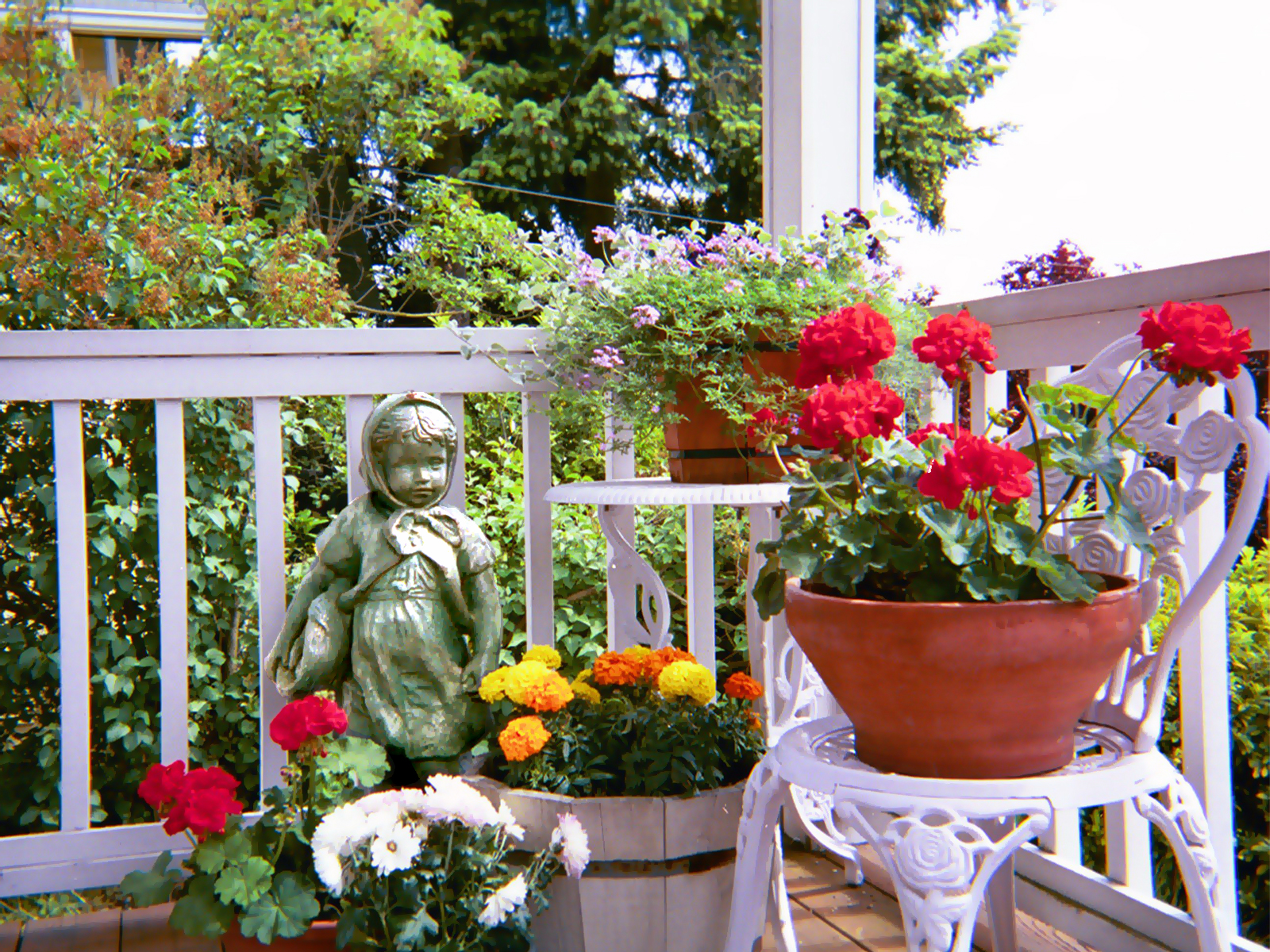
Container gardening or pot gardening/farming is the practice of growing plants, including edible plants, exclusively in containers instead of planting them in the ground.[1] A container in gardening is a small, enclosed and usually portable object used for displaying live flowers or plants. It may take the form of a pot, box, tub, basket, tin, barrel or hanging basket.
Methods
[edit]Pots, traditionally made of terracotta but now more commonly plastic, and window boxes are the most commonly seen. Small pots are called flowerpots.[2] In some cases, this method of growing is used for ornamental purposes. This method is also useful in areas where the soil or climate is unsuitable for the plant or crop in question. Using a container is also generally necessary for houseplants. Limited growing space, or growing space that is paved over, can also make this option appealing to the gardener.[2] Additionally, this method is popular for urban horticulture on balconies of apartments and condominiums where gardeners lack the access to the ground for a traditional garden.[3]
Species
[edit]Many types of plants are suitable for the container, including decorative flowers, herbs, cacti, vegetables, and small trees and shrubs.[4] Herbs and small edible plants such as chili peppers and arugula can be grown inside the house, if there is adequate light and ventilation, and on outdoor terraces, larger vegetables may be planted.[citation needed]
Types of containers
[edit]A wide variety of containers can be used in container gardens, each offering unique benefits and aesthetic qualities. Among the most popular types from a 2024 survey are:
- Hanging baskets
- Suitable for trailing plants, hanging baskets can be suspended from ceilings, walls, or specially designed stands, adding vertical interest and maximizing space in small gardens.
- Window boxes
- These containers fit on windowsills, and are suitable for flowers, herbs, and small vegetables.
- Wall planters
- Mounted on walls, these planters can be used for vertical gardening. They come in various designs, including pockets and shelves, making them suitable for a range of plant types.
Other common container options include traditional pots, which vary in material from terracotta to plastic, and sub-irrigated planters. Containers can also be repurposed items such as barrels and tins, allowing for creative and personalized garden designs.
Planting
[edit].jpg)
Containers range from simple plastic pots, to teacups, to complex automatically watered irrigation systems. This flexibility in design is another reason container gardening is popular with growers. They can be found on porches, front steps, and—in urban locations—on rooftops. Sub-irrigated planters (SIP) are a type of container that may be used in container gardens.[4][5]
Re-potting
[edit]Re-potting is the action of placing an already potted plant into a larger or smaller pot. A pot that fits a plant's root system better is normally used. Plants are usually re-potted according to the size of their root system. Most plants need to be re-potted every few years because they become "pot-" or "root-bound". A plants' roots can sense its surroundings, including the size of the pot it is in, and increasing the pot size allows plant size to increase proportionally.[6]
Gallery
[edit]-
 Balcony gardening at night
 -
 Tomato plants growing in a pot farm alongside a small house in fifteen garbage cans filled with soil
 -


See also
[edit]
References
[edit]- ^ Mills, Linn (29 January 2012). "Reap Benefits Of Container Gardening". Las Vegas Review Journal. Retrieved 1 January 2013.
- ^ a b "Welcome To The World Of Container Gardening". University of Illinois. Retrieved 1 January 2013.
- ^ Neville, Jayne (2008). Flowerpot farming : creating your own urban kitchen garden. Preston: Good Life. ISBN 978-1904871316.
- ^ a b Thompson, Al (18 December 2012). "Container Gardening Offers Many Benefits". Santa Maria Times. Retrieved 1 January 2013.
- ^ Note: SIP simply means watering from below, in large commercial applications it would not be strictly a container garden.
- ^ Society for Experimental Biology (1 July 2012). "Want bigger plants? Get to the root of the matter". (e) Science News. Retrieved 18 July 2014.
External links
[edit]


Container garden
View on GrokipediaFundamentals
Definition and History
Container gardening is the practice of cultivating plants in portable containers filled with soil or other growing media, rather than planting directly in the ground, making it adaptable for spaces with limited or unsuitable soil, such as urban balconies, patios, or indoor areas.[4] This method allows for flexibility in plant mobility and is particularly suited to temporary setups or environments where in-ground gardening is impractical.[5] The origins of container gardening trace back to ancient civilizations, where early forms of potted plants served both practical and ornamental purposes. In Mesopotamia around 4,000 BCE, the Sumerians utilized clay pots to grow crops like barley and wheat in urban settings, managing limited arable land through controlled soil and water systems.[6] Similarly, ancient Egyptians employed terra cotta containers as early as 1350 BCE to facilitate plant mobility for outdoor and indoor use, often in temples and homes for symbolic or ritualistic reasons, with plants such as date palms and lotus symbolizing deities.[7] Parallel developments occurred in ancient China around 1000 BCE, where early forms of penjing (precursors to bonsai) used shallow containers for miniature landscapes, blending aesthetics and cultivation.[8] One of the most iconic early examples is the Hanging Gardens of Babylon, constructed around 600 BCE by King Nebuchadnezzar II, which featured tiered containers elevating tropical plants with sophisticated irrigation, though its exact existence remains debated among historians.[9] During the Renaissance in Europe (14th–17th centuries), container gardening evolved into a symbol of wealth and scientific inquiry, with ornate marble and terra cotta urns used in formal gardens to showcase exotic species collected during explorations.[6] This period marked a revival of luxury horticulture, influenced by classical Roman designs, as affluent classes experimented with botanical specimens in portable pots.[9] By the 19th-century Victorian era, container gardening surged in popularity amid urbanization and colonial plant imports, with the invention of the Wardian case in 1833 by Nathaniel Bagshaw Ward—a sealed glass enclosure—enabling safe long-distance transport of plants and fueling crazes for ferns and orchids as indoor status symbols.[10] The Industrial Revolution further democratized the practice through mass-produced cast iron and zinc pots in the 18th and 19th centuries, making containers more accessible beyond elite gardens.[6] In the 20th century, container gardening expanded with technological advancements driven by post-World War II urbanization. Plastic pots, introduced in the 1950s and widely adopted by the 1960s, revolutionized production by allowing year-round plant sales and reducing costs compared to fragile clay alternatives.[11] The 1970s saw the rise of hydroponic container systems, pioneered by innovations like the Nutrient Film Technique (NFT) developed by Dr. Allan Cooper, which enabled soilless growing in controlled environments for commercial and hobbyist use.[12] As of 2025, contemporary trends since the 2000s have included vertical container designs for space efficiency in urban settings, smart containers integrating sensors for automated watering and monitoring, and pollinator-friendly plantings, reflecting a surge in sustainable, tech-enhanced gardening amid global population growth.[13][14]Benefits and Limitations
Container gardening offers several primary benefits over traditional in-ground methods, particularly in terms of flexibility and control. One key advantage is the mobility of containers, which allows gardeners to reposition plants for optimal sun exposure or to move them indoors during adverse weather, thereby extending growing seasons in variable climates.[1] This mobility also facilitates experimentation with microclimates, enabling tailored conditions for specific plants without altering the broader landscape.[4] Additionally, containers provide space efficiency, making gardening feasible on balconies, patios, or indoors where ground space is limited.[15] They offer precise soil control, using sterile soilless mixes that avoid contamination from poor native soils or pathogens, which is especially beneficial for disease-prone crops like tomatoes, where containers isolate plants from soil-borne diseases such as Fusarium wilt.[16][17] For gardeners with mobility impairments, raised or accessible containers reduce physical strain compared to bending over in-ground beds.[2] Environmentally and economically, container gardening supports sustainability in constrained urban settings. Targeted irrigation methods, such as drip systems or self-watering pots, can optimize water delivery directly to roots, potentially reducing overall usage per plant compared to broad in-ground watering, though frequent monitoring is required.[18] It lowers initial soil costs since only a small volume of potting mix is needed, avoiding the expense of amending large ground areas.[19] In urban areas, container gardens promote biodiversity by creating pocket habitats for pollinators and wildlife amid concrete environments, contributing to local ecosystem resilience.[20] Despite these advantages, container gardening presents notable limitations, primarily related to maintenance and plant health. Containers dry out faster than in-ground soil due to exposed surfaces and limited volume, necessitating more frequent watering—often daily in hot conditions—which increases labor demands.[4][19] Root restriction in confined spaces can lead to stunted growth and reduced yields; for instance, tomatoes in containers may produce less fruit than in-ground plants unless using sufficiently large pots (at least 5 gallons).[21][22] Container materials can degrade over time, with plastics potentially leaching chemicals into soil under UV exposure or heat, though unglazed clay offers a more stable alternative but requires salt leaching to prevent buildup.[23] Quality pots and periodic repotting add ongoing costs, making container setups more expensive long-term than in-ground gardening for larger scales.[24] Overall, while containers excel in controlled, small-scale scenarios, they demand vigilant care to mitigate these challenges compared to the self-sustaining nature of in-ground systems.[25]Containers and Materials
Types of Containers
Container gardens utilize a wide array of containers, categorized primarily by material, size, shape, and specialized designs to suit various plants and spaces. Materials influence moisture retention, aeration, weight, and durability, while size and shape accommodate root systems and placement options. Selection depends on factors like cost, aesthetics, and environmental conditions, ensuring compatibility with the chosen plants.[26][1][4]Material-Based Types
Containers are often selected based on their material properties, which affect water evaporation, root health, and portability. When growing edible plants, select food-safe materials to avoid leaching of toxins like lead from glazes or chemicals from recycled items into the soil.[4][27]- Terracotta (Clay): These porous pots allow air circulation and excess moisture to evaporate, promoting healthy roots but requiring more frequent watering; they are breathable yet heavy and prone to cracking in freezing temperatures.[26][1][4]
- Plastic: Lightweight and inexpensive, plastic containers are non-porous, retaining soil moisture longer and maintaining stable temperatures, though they may become brittle in prolonged sun exposure.[26][1][4]
- Ceramic or Glazed: Offering aesthetic appeal with vibrant colors and durability, these non-porous options hold water well but are fragile if unglazed versions crack easily upon impact.[26][4]
- Wood: Providing natural insulation against temperature fluctuations, wooden containers like cedar or redwood are biodegradable and porous for good drainage, but they can rot over time unless treated with non-toxic preservatives.[26][1]
- Metal: These deliver a modern look with strong durability and moisture retention, but they conduct heat, potentially overheating roots in direct sun.[26][1][4]
- Fabric or Smart Pots: Lightweight and reusable, fabric containers promote air-pruning of roots to prevent circling, enhancing plant health through superior aeration, though they may need replacement after several seasons.[26][1]
Size and Shape Variations
Container dimensions and forms vary to match plant root depths and growth habits, with deeper options suiting root vegetables like carrots and shallower ones for succulents or herbs. Common shapes include traditional pots and planters for ground placement, hanging baskets for vertical space utilization, window boxes for sills, and vertical towers for compact areas; for instance, tomatoes require at least 5 gallons and 12-18 inches depth, while lettuce thrives in 3-gallon shallow trays.[26][1][4]Specialized Containers
Advanced designs address specific needs, such as self-watering systems with built-in reservoirs to minimize maintenance, hydroponic setups for soilless cultivation using nutrient solutions, and mobile raised beds on wheels for easy relocation; eco-friendly choices incorporate recycled plastics or hypertufa (a lightweight concrete mix) to reduce environmental impact.[26][1][4]Selection Criteria
Choosing containers involves balancing durability against weather exposure (e.g., non-porous for longevity in rain), weight for portability (lighter fabrics for balconies), cost from budget recycled items to premium ceramics, and aesthetic harmony with garden themes, such as earthy terracotta for rustic designs.[26][1][4]Drainage and Placement Considerations
Proper drainage is crucial in container gardening to prevent waterlogging, which can lead to root rot and oxygen deprivation for plant roots. All containers must feature drainage holes at the bottom to allow excess water to escape freely, promoting healthy root aeration and reducing the risk of fungal diseases. Without these holes, soil remains saturated, increasing the likelihood of plant death from anaerobic conditions. If a container lacks holes, they can be added using a drill with an appropriate bit for the material. Contrary to common practice, adding gravel or pebbles at the bottom does not enhance drainage and may create a perched water table where moisture accumulates above the layer, exacerbating issues. For outdoor setups, elevating containers slightly with pot feet or bricks facilitates better airflow and prevents standing water from pooling around the base. For indoor container gardens, saucers placed beneath pots collect excess drainage water to protect floors, but they must be emptied promptly after watering to avoid root rot from prolonged contact with moisture. Placement decisions significantly influence plant health by addressing environmental needs such as light, wind, and microclimates. Sunlight exposure varies by plant type: vegetables and sun-loving flowers thrive in full sun (at least six hours daily), while shade-tolerant species like ferns prefer partial shade to avoid scorching. Wind protection is essential, particularly for taller or top-heavy plants, to prevent tipping or desiccation; positioning near walls or fences can shield containers effectively. Elevating pots on stands improves airflow around roots, reducing disease risk in humid conditions. Grouping multiple containers together creates a beneficial microclimate by trapping humidity and moderating temperature fluctuations, which supports tropical or moisture-loving plants. Site-specific considerations ensure suitability and longevity. On balconies, adhere to structural weight limits—typically 50-100 pounds per square foot—by consulting building management or an engineer before placing heavy, soil-filled pots to avoid overloading. Indoor placements near south- or west-facing windows maximize natural light, but rotate pots periodically for even growth. Rooftop gardens demand extra stability against high winds, which can double in speed every ten stories; opt for low-profile, heavy containers anchored with weights or ties to minimize tipping risks. Seasonal adjustments, such as relocating pots to sheltered spots or indoors during winter, protect against freezing temperatures and drying winds that threaten containerized roots more than in-ground plants. Safety and ergonomics in placement prioritize user well-being and hazard prevention. Position containers to maintain clear, wide pathways free of clutter or trailing hoses, reducing trip risks on patios or balconies. For accessibility, elevate pots on waist-high stands or tables to minimize bending and straining during watering or maintenance, accommodating gardeners with mobility limitations. Secure all setups against overturning, especially in high-traffic areas, to prevent injuries from falling pots or soil spills.Planting Medium and Preparation
Soil and Medium Selection
Selecting the appropriate soil or growing medium is essential for successful container gardening, as it directly influences root health, nutrient availability, and overall plant vigor. Garden soil is unsuitable for containers because it compacts easily, leading to poor aeration and drainage that can cause root rot.[28][29] Instead, lightweight, sterile potting mixes are preferred, as they provide optimal structure for confined root systems while minimizing disease risks.[30][31] These mixes are typically soilless formulations designed to retain moisture and nutrients without becoming waterlogged.[32] Potting mixes commonly incorporate organic components like peat moss or pine bark for moisture retention, combined with inorganic materials such as perlite or vermiculite to enhance aeration and drainage.[33] Perlite, a heated volcanic glass, improves air porosity, while vermiculite, a mica mineral, helps hold water and essential nutrients like potassium and magnesium.[34] A basic homemade soilless mix might consist of equal parts peat moss and perlite or vermiculite, ensuring a balanced environment for root development.[35] The volume of medium needed varies with container size, typically filling to within 1-2 inches of the rim to allow space for watering.[36] For hydroponic or specialized container systems, soilless alternatives like coco coir or rockwool offer viable options, particularly in organic versus synthetic blends. Coco coir, derived from coconut husks, provides excellent water retention and aeration similar to peat but renews more sustainably.[37] Rockwool, a spun mineral wool, is inert and supports rapid root establishment in water-based setups, though it requires pre-soaking to adjust pH.[38] These media are blended with perlite or expanded clay for added stability in non-soil applications.[39] Customization of the medium tailors it to specific plant requirements, optimizing growth in containers. Acid-loving plants like azaleas thrive in mixes with a pH of 4.5-6.0, achieved by incorporating peat moss or coir and avoiding alkaline amendments.[40] For succulents and cacti, well-draining blends using one part potting soil to one part coarse sand or perlite prevent water accumulation and root issues.[41] Flowering plants benefit from nutrient profiles enriched with higher phosphorus, such as through added bone meal in the mix, to promote bloom development.[42] Sustainability considerations favor peat-free alternatives to mitigate environmental impacts from peat harvesting, which depletes wetlands. Compost and coco coir serve as effective substitutes, with recipes like two parts compost, two parts coir, and one part perlite providing a balanced, eco-friendly medium.[43] These options maintain aeration and nutrient-holding capacity while reducing carbon emissions.[44] pH testing ensures the medium suits plant needs, with methods like the pour-thru technique involving saturating the container and extracting leachate for meter measurement. Adjustments involve adding elemental sulfur (at 1-2 pounds per cubic yard) to lower pH or lime to raise it, applied gradually and retested after 3-6 months.[45][46] Regular monitoring prevents nutrient lockout, supporting long-term container health.[47]Container Preparation Techniques
Container preparation begins with thorough cleaning and sterilization to eliminate pathogens, pests, and residue from previous uses, which can otherwise lead to disease transmission in new plantings. For reusable containers such as clay, plastic, or ceramic pots, start by scrubbing the interior and exterior with a stiff brush or fine steel wool to remove dirt, mineral salts, and debris, followed by washing in a solution of mild liquid dish soap and warm water.[48] Rinse thoroughly, then disinfect by soaking or wiping with a 10% bleach solution (one part household bleach to nine parts water) for at least 10 minutes to kill bacteria, fungi, and algae; a 1:9 dilution is commonly recommended for effective sanitation without damaging most materials.[19][49] After treatment, rinse again with clean water and allow the container to air-dry completely in a sunny or well-ventilated area to prevent moisture-related mold growth.[50] Next, ensure proper drainage by covering the container's drainage holes while maintaining water outflow. Place a single layer of coarse material, such as gravel, broken pottery shards (crockery), or small pebbles, over the holes to a depth of about 1-2 inches, which helps retain the planting medium without clogging the outlets and promotes excess water escape to avoid root rot.[51] Alternatively, use a piece of landscape fabric, window screen mesh, or coffee filter cut to fit, secured if necessary, to achieve the same purpose, particularly in containers with larger holes; for fabric pots, a thin lining of similar mesh at the base can prevent fine particles from sifting through while allowing aeration.[52] Note that while these layers are traditional, some studies indicate they may not enhance overall drainage and could retain more perched water in the medium, so prioritize containers with multiple adequately sized holes regardless.[53] The filling process involves layering the prepared planting medium to create a stable, aerated environment. Begin by partially filling the container to about one-third capacity with the selected medium—such as a well-draining potting mix compatible with the intended plants—positioning any heavier components, like amended soil bases, toward the bottom for stability in taller containers.[2] Continue adding medium in loose layers, gently tamping down with your fingers or a tool after each addition to eliminate large air pockets that could cause uneven settling or root exposure, but avoid excessive compaction, which reduces porosity and oxygen availability to roots.[54] Fill to within 1-2 inches of the rim to allow space for watering, mulching, and plant growth without overflow, ensuring the surface remains level for uniform moisture distribution.[55] Before planting, apply pre-treatments to optimize the medium's condition. If the potting mix is dry, pre-moisten it thoroughly—ideally with lukewarm water in a separate container—until it holds together when squeezed but does not drip, as this facilitates even hydration and reduces transplant stress; peat-based mixes may require warming the water to improve absorption.[35][56] For nutrient support, incorporate slow-release fertilizers into the upper layer of the medium at the recommended rate for the container size and plant type, providing sustained nutrition without immediate leaching; this is especially useful in soilless mixes lacking inherent fertility.[35][33]Plant Selection
Suitable Plant Species
Container gardens offer flexibility for growing a variety of plants, provided the container size accommodates the species' mature dimensions and root systems. Selection depends on factors such as light exposure, water needs, and eventual height or spread; for instance, small containers (under 12 inches in diameter) suit plants with mature sizes below 2 feet to prevent overcrowding and root binding.[26][15] Annuals and vegetables are popular for container gardening due to their compact growth habits and productivity in limited spaces. Tomatoes, particularly dwarf or patio varieties like 'Patio' types, perform well in pots of at least 5 gallons, yielding fruit with proper support and full sun.[57][58] Peppers, including bell and chili types, thrive in similar-sized containers, requiring consistent moisture and 6-8 hours of sunlight daily.[59] Lettuce and other salad greens, such as compact varieties like 'Salad Bowl', grow effectively in shallower pots (6-8 inches deep) and tolerate partial shade, allowing multiple harvests in one season.[4] Herbs like basil and mint are ideal for smaller containers (4-6 inches), with basil needing full sun and mint benefiting from containment to control its spreading nature.[59][60] Perennials and ornamentals provide longer-term interest in containers, often returning year after year with minimal replanting. Hostas, shade-tolerant perennials with lush foliage, excel in medium to large pots (10-14 inches) when paired with well-drained soil to avoid root rot.[61] Petunias, with their prolific blooms, are suited to hanging or upright containers, trailing up to 3 feet in full sun and benefiting from deadheading for continuous flowering.[62] Succulents such as sedums require low-water setups in shallow, gritty pots (6-8 inches), thriving in bright light with infrequent watering to mimic arid conditions.[63] Dwarf fruit trees, including citrus varieties like Meyer lemon, succeed in large containers (15-20 gallons) with acidic, well-drained media, producing fruit indoors or in protected outdoor spots.[64] Climbers and trailers add vertical or cascading elements to container displays, enhancing space utilization. Ivy (Hedera species) serves as a hardy trailer for pots or hanging baskets, climbing supports or draping over edges in partial shade with minimal care.[65] Strawberries, especially alpine or everbearing types, flourish in hanging baskets (10-12 inches deep) with good drainage, producing fruit in full sun while keeping runners contained.[4] Climate adaptability influences plant choice, with tropical species favoring indoor containers and hardy options enduring outdoor conditions. Fiddle-leaf fig (Ficus lyrata), a tropical evergreen, grows well in bright indoor pots (12-16 inches) with consistent humidity and indirect light, reaching 6-10 feet over time.[66] Lavender, a hardy perennial, adapts to outdoor containers in well-drained, alkaline soil, tolerating drought and full sun while releasing fragrance from summer blooms.[67]Companion Planting Strategies
Companion planting in container gardens involves strategically pairing plants to promote mutual benefits, such as improved growth, pest deterrence, and efficient use of limited space. This approach adapts traditional in-ground techniques to the confined environment of pots, where selecting compatible species with similar light, water, and soil needs is crucial to minimize competition. By interplanting, gardeners can create self-sustaining micro-ecosystems that enhance overall productivity.[68][24] Key benefits include pest repulsion, where certain plants release scents or act as traps to deter insects; for instance, marigolds planted with tomatoes repel nematodes and aphids through root exudates and volatile compounds. Nutrient sharing occurs when legumes like beans fix atmospheric nitrogen via symbiotic bacteria, benefiting nearby nitrogen-demanding crops such as corn in vertical arrangements that mimic the "Three Sisters" method. Space optimization is achieved by interplanting fast-maturing, shallow-rooted plants (e.g., lettuce or radishes) with slower-growing, deep-rooted ones (e.g., tomatoes or peppers), allowing layered use of the soil volume without overcrowding.[68][69][70] Strategies tailored to container types emphasize compatibility in root depth and growth habits. In mixed pots, employ the "thrillers, fillers, spillers" framework: select a central thriller for height (e.g., upright salvia), fillers for mid-level bulk (e.g., compact petunias), and spillers for trailing edges (e.g., ivy geraniums) to maximize vertical space and visual interest while ensuring roots do not compete excessively. For deeper containers, pair deep-rooted vegetables like carrots with shallow-rooted herbs like chives to access different soil layers efficiently. Always match growth rates to prevent dominance, such as combining average-speed growers like basil with petite varieties of marigolds.[71][70] Effective examples include nasturtiums alongside brassicas (e.g., cabbage or kale) in medium-sized pots, where nasturtiums serve as trap crops for aphids, luring them away from the main plants. Herbs such as chives planted near roses in decorative containers deter aphids and blackspot through their antimicrobial properties. Avoid antagonistic pairings, like fennel with most vegetables, as it inhibits growth via allelopathic chemicals that suppress seed germination and root development in companions such as tomatoes or beans.[68][69] Design tips focus on aesthetic and functional harmony, incorporating color contrasts (e.g., vibrant nasturtium blooms against green brassica foliage) and height variations to create dynamic arrangements that also support ecological interactions. Texture diversity, such as pairing fine-leaved dill with broad-leafed basil, adds visual appeal while promoting pollinator attraction for better yields. These elements ensure containers not only thrive but also contribute to a balanced, low-maintenance garden ecosystem.[24][71]Planting and Establishment
Planting Methods
Container gardening planting methods involve techniques for introducing seeds, seedlings, or cuttings into prepared pots or containers, ensuring optimal root establishment and plant health. These methods vary based on the propagation type and plant species, with direct sowing suitable for quick-germinating seeds and transplanting preferred for more controlled growth.[72] Seed starting in containers can be done via direct sowing or using transplants. Direct sowing involves scattering or placing seeds directly into the potting medium, which is ideal for plants like radishes or lettuce that germinate rapidly and do not transplant well due to delicate roots. In contrast, starting seeds indoors in small cells or trays and then transplanting them allows for earlier season extension and better management of environmental conditions. For both approaches, seeds should be planted at a depth approximately twice the diameter of the seed to promote even germination and prevent drying out.[72][5] Transplanting seedlings or young plants requires careful handling to minimize root disturbance. Begin by gently removing the plant from its nursery container, supporting the root ball with one hand while tapping the pot's base to loosen it, avoiding pulling by the stem. If roots are circling or compacted, lightly tease them apart to encourage outward growth. Dig holes in the container medium using a trowel or dibber, spacing plants according to their specific needs and the container size; for example, tomatoes typically require one plant per 5-gallon (or larger) container, while peppers can be spaced 12-18 inches apart in sufficiently large pots to ensure air circulation and prevent overcrowding.[73][74] For stability, especially in vining or tall plants such as tomatoes, bury the stem deeper than its original depth—up to the first set of leaves—to promote additional root formation along the buried portion, accommodating the plant's extensive root needs.[75][76][77] Layering and cuttings offer asexual propagation options for establishing multiple plants in a single container, particularly for herbs or ornamentals. For cuttings, select healthy stem sections 4 to 6 inches long, remove lower leaves, and insert the base into moist potting medium to about half its length, using a dibber to create precise holes without damaging the cutting. Layering involves bending a flexible stem to the container's surface, wounding it slightly, and securing it under soil with a peg or stone while keeping the tip exposed, allowing roots to develop while still attached to the parent plant. These methods suit multi-plant setups, such as trailing ivy or rosemary in larger pots, where tools like trowels help mound soil around the bases for secure anchoring.[78][79][80] Timing is crucial for successful planting, with most annuals and vegetables best introduced in spring after the last frost to leverage warming soil and longer days. Perennials, however, often establish better when planted in fall, allowing root development before winter dormancy. Seedlings started indoors require hardening off—a gradual exposure to outdoor conditions over 7 to 14 days—to acclimate them to wind, sun, and temperature fluctuations before final transplanting.[81][82][83]Initial Care After Planting
After planting, container gardens require careful watering to promote root establishment and prevent stress. Thoroughly soak the soil immediately following planting to ensure the entire root ball is moistened, allowing excess water to drain from the bottom to avoid waterlogging. In the initial weeks, maintain consistent soil moisture by watering when the top inch feels dry to the touch, typically daily or more frequently in warm conditions, while ensuring the medium remains evenly damp but not soggy to support healthy root development without risking rot.[84][85][86] Plants newly established in containers benefit from gradual acclimation to their outdoor site conditions to minimize environmental stress. For plants transitioned from indoor or shaded environments, begin in a protected, shaded location and slowly increase exposure to light over 10 to 14 days to prevent leaf scorch or wilting from sudden sun intensity. Protect against extreme temperatures by shielding from frost with covers during cool nights or relocating to cooler spots during heatwaves, aiming to maintain stable conditions around 50°F or higher for tender species.[87][88] Monitor for signs of transplant shock, such as wilting leaves, yellowing foliage, or leaf curling, which indicate inadequate moisture or environmental adjustment, and apply a 2- to 3-inch layer of organic mulch like wood chips around the base to retain soil moisture and regulate temperature. If symptoms appear, increase watering frequency while ensuring good drainage, and avoid disturbing roots to allow recovery within one to two weeks. For early feeding, withhold fertilizer for the first two to three weeks if the potting mix was pre-amended, then introduce a diluted, high-phosphorus starter solution to encourage root growth without overwhelming the plants.[89][86][90][91]Maintenance
Watering and Fertilizing
Proper watering is essential for container gardens, as confined root systems and limited soil volume lead to rapid drying or waterlogging compared to in-ground planting. Frequency depends on pot material: porous options like terracotta require daily watering due to evaporation through the sides, while nonporous materials such as plastic or glazed ceramic retain moisture longer and may need watering every two to three days.[2][84] Smaller containers dry out faster than larger ones, often necessitating checks multiple times daily during hot weather, whereas larger pots (e.g., 12-24 inches deep for vegetables) hold moisture for longer periods.[2] Soil type influences retention, with mixes high in organic matter or vermiculite holding water better than sandy compositions.[2] Effective methods include top-watering with a wand to thoroughly soak the soil until excess drains, bottom-watering by placing pots in a saucer of water to encourage deep root growth and minimize fungal issues on foliage, and drip irrigation systems that deliver water directly to roots for efficient, even distribution.[84][92][93] Drip systems significantly reduce evaporation and runoff, conserving water while preventing leaf diseases from overhead splashing.[93][94] Signs of underwatering include drooping or wilting leaves that recover temporarily after watering, while overwatering manifests as persistent yellowing of lower leaves, soft black roots indicating rot, or a sour soil odor.[95][96] Seasonal adjustments are crucial: increase watering frequency in summer heat to daily or twice daily for many plants, but reduce it in cooler months or winter dormancy to avoid root rot, especially for indoor setups.[2][84] Tools like soil moisture meters provide precise readings by inserting probes into the potting mix, helping avoid guesswork—aim for the top inch to feel dry before watering—while self-watering pots with reservoirs maintain consistent hydration, reducing evaporation and allowing roots to draw water as needed for up to several days.[84][97] Fertilizing replenishes nutrients leached by frequent watering in containers, where soil volumes are small and depletion occurs quickly. Use complete NPK fertilizers such as 10-20-10 for general vegetable growth, applying every two weeks during the active season, or opt for higher phosphorus ratios such as 5-10-5 to support fruiting.[98] Liquid fertilizers dissolve in water for quick uptake and are ideal for biweekly applications at half-strength, whereas granular slow-release types coated in resin provide steady nutrients over 3-4 months when mixed into the soil or top-dressed.[99] Organic options include compost tea, brewed by steeping mature compost in water for 24-48 hours, which supplies micronutrients and beneficial microbes without high nitrogen overload.[100] Adjust fertilizing based on growth stage and season: feed more frequently in summer for vigorous growth but withhold or reduce in fall and winter to match slower metabolism, monitoring for signs like pale leaves indicating deficiency.[99][2] Container size affects needs, with smaller pots requiring more concentrated applications to prevent dilution from frequent watering.[99] Periodically leach salts with plain water to avoid buildup, which can cause leaf burn.[99]Pruning, Support, and Seasonal Adjustments
Pruning in container gardens involves removing dead, diseased, or damaged parts to maintain plant health and prevent the spread of issues such as fungal infections.[101] This should be done promptly upon detection, using clean, sharp tools to make precise cuts just above a healthy bud or node, minimizing stress to the confined root system typical of potted plants.[101] For promoting bushier growth, particularly in herbs like basil or mint, pinching involves manually removing the terminal bud or growing tip with fingers or shears when shoots reach 4-6 inches, encouraging lateral branching and denser foliage without the need for extensive cutting.[102] Timing is critical to avoid stressing container plants; prune during the late dormant season (late winter to early spring) for woody species or after flowering for perennials, as excessive pruning in active growth periods can weaken limited-rooted specimens.[101] Support systems are essential for vining or top-heavy plants in containers to prevent tipping, breakage, or uneven growth due to the restricted space and potential wind exposure.[103] Common options include stakes made from bamboo, metal, or PVC inserted 6-12 inches into the soil for single-stem support, or cages formed from wire mesh (e.g., 4-inch grid hog wire) encircling the plant to contain sprawling types like tomatoes.[103] Trellises, such as vertical nylon mesh or A-frame structures anchored to heavy pots, suit climbers like peas or cucumbers, allowing upward growth to maximize vertical space.[103] Tying techniques use soft materials like polypropylene twine or plant clips loosely around stems, applied every 6-8 inches as growth occurs, to avoid girdling or bark damage while ensuring stability.[103] Seasonal adjustments adapt container gardens to environmental shifts, protecting plants from extremes that can exacerbate root zone vulnerabilities. In winter, insulate pots by burying them in soil up to the rim or grouping them in a sheltered area and mulching with 4-6 inches of straw, shredded leaves, or evergreen boughs to buffer against freezing temperatures, which can heave roots in exposed containers.[104] For perennials and shrubs, move containers to unheated garages or cold frames maintaining 30-45°F soil temperatures, reducing watering to keep media barely moist and prevent root rot.[104] During summer heat, provide shading by relocating pots to partial shade or using shade cloth during the hottest part of the day to mitigate wilting and scorching, especially for heat-sensitive species like ferns.[105] To promote even growth, rotate containers quarterly by turning them 90 degrees, countering phototropism where plants lean toward light sources, ensuring balanced development in asymmetrical exposures.[2] Regularly clean debris such as fallen leaves or spent flowers from soil surfaces using a soft brush or gentle rinse, as accumulated organic matter can retain moisture and foster mold or fungal growth in the humid microclimate of pots.[2] After pruning, a light application of balanced fertilizer can aid recovery and new growth, but only if soil is moist to avoid burn.[101]Repotting and Propagation
Repotting Procedures
Repotting container garden plants is essential when they outgrow their current containers or the growing medium becomes depleted, ensuring continued health and vigor. Common signs that repotting is needed include roots emerging from drainage holes, the potting mix drying out unusually quickly despite regular watering, slowed growth or yellowing lower leaves even with fertilization, and a dense root ball where circling roots are visible upon gentle inspection.[106][107] Soil depletion, indicated by nutrient deficiencies or compacted media, also signals the need for refreshment, as does general plant stress like wilting or stunted development.[108] The ideal timing for repotting is in spring, during the active growth phase, to minimize shock and promote root establishment.[106][107] For most container plants, the repotting process involves upsizing to a larger container to accommodate root expansion. Begin by watering the plant thoroughly about an hour before removal to moisten the root ball and ease extraction. Gently tap the pot's rim while holding the plant upside down, or slide a knife around the edges if roots are tightly bound, to remove it without damage. Inspect and prune any dead, diseased, or excessively circling roots to encourage new growth—then tease apart matted sections to promote outward spread.[106][108][107] Select a new container only 1-2 inches larger in diameter than the current one to avoid excess soil that retains moisture and risks root rot; ensure it has drainage holes and is cleaned with a diluted bleach solution if reused. Place a layer of fresh, well-draining potting mix at the bottom, position the root ball so the crown sits at or slightly above soil level, and backfill around the sides with additional mix, firming gently to eliminate air pockets while leaving about an inch of space at the top for watering.[106][108][107] For perennials that have formed dense clumps, repotting may involve dividing the plant to rejuvenate it and create multiples, rather than simply upsizing. After removing the plant, use a sharp knife or your hands to separate the root ball into sections, each with at least three to five shoots and a healthy portion of roots, discarding any woody or weak centers. This process, best done in spring or early fall, helps control size in containers and prevents overcrowding. Replant each division in its own appropriately sized container with fresh medium, maintaining the same depth as before.[109][110] Handle delicate roots carefully during both upsizing and dividing to avoid breakage, especially for species like hostas or astilbes that may have fibrous systems.[108] Post-repotting care focuses on reducing transplant shock and supporting recovery. Water the plant thoroughly immediately after repotting until excess drains out, then allow the top inch of soil to dry before the next watering to prevent over-saturation. Place the container in a location with indirect light initially, avoiding direct sun or drafts for the first week, and monitor for signs of stress such as wilting, adjusting humidity or temperature as needed. Minimal fertilization is recommended for the first few weeks; resume normal care once new growth appears, typically within 2-4 weeks.[106][107][109]Propagation Methods
Propagation in container gardens allows gardeners to reproduce plants from existing specimens, producing new individuals that are genetically identical in vegetative methods or potentially variable in seed-based approaches. Seed propagation involves collecting mature seeds from container-grown plants or purchasing them from reliable sources, then sowing them in small pots or trays filled with a sterile, soilless mix such as a blend of peat moss and vermiculite to prevent disease. Seeds should be planted at a depth twice their diameter, with fine seeds like those of petunias lightly pressed into the surface without covering, while larger seeds are sown in shallow furrows. Germination requires consistent moisture, adequate oxygen, and temperatures between 65°F and 75°F for most species, often achieved using a heat mat under the containers; some seeds, such as lettuce, need light exposure, while others like centaurea germinate better in darkness.[111][112] Vegetative propagation methods, which clone the parent plant, are particularly suited to container gardening and include stem cuttings, root cuttings, layering, and division. For stem cuttings, select healthy, non-flowering shoots of 4 to 6 inches, remove lower leaves, and dip the cut end in rooting hormone to promote root development before inserting into a moist medium; herbaceous cuttings from herbs like basil or coleus root readily under optimal conditions. Root cuttings, taken from dormant plants like oriental poppies (1-2 inches long), are buried horizontally in the mix. Layering involves bending a stem to contact the soil while still attached to the parent, such as simple layering for trailing plants or air layering for upright species like ficus, where a wounded section is wrapped in moist sphagnum moss until roots form. Division separates clumping container plants like ferns or spider plants into sections, each with roots and shoots, during repotting for minimal disruption. Rooting hormones, containing auxins like indole-3-butyric acid, significantly enhance rooting uniformity and speed, especially for woody or challenging cuttings.[78][112][113] Container-specific techniques optimize propagation success by mimicking ideal microenvironments. Propagation trays or cell packs with drainage holes allow bottom watering to maintain even moisture without disturbing delicate roots or seedlings, while clear plastic domes or bags create high humidity (around 70-80%) essential for rooting and germination, trapping warmth and reducing evaporation; domes should be vented once 50% of seeds have sprouted or cuttings show roots to prevent fungal issues like damping-off. These setups are ideal for space-limited container gardeners, enabling multiple propagules in a compact area.[114][112] Timing for propagation varies by method and plant, with spring or early summer ideal for most container species to leverage active growth, though some like pothos can be propagated year-round via stem cuttings in water or soil with high success rates due to their vigorous trailing nature. Easy propagators such as pothos, mint, and African violets succeed readily through cuttings or leaf sections, often rooting in 2-4 weeks, while challenging varieties like orchids require precise timing post-flowering for division or specialized keiki propagation, with lower success rates without sterile conditions. Herbs like rosemary or lavender benefit from semi-hardwood cuttings in late summer, yielding robust new plants for containers.[112][115]Design and Challenges
Container Garden Design
Container garden design emphasizes the aesthetic and functional arrangement of multiple pots to create cohesive, impactful displays in limited spaces such as patios, balconies, or urban yards.[4] Key principles guide this process, starting with unity, which is achieved through consistent elements that tie the composition together, ensuring all containers contribute to a harmonious whole.[116] Color themes play a central role in fostering this unity; designers often select analogous colors, such as shades of blue and green, or complementary pairs like orange and blue, to evoke specific moods—cool tones for calm, warm hues for energy—while repeating them across containers to avoid visual discord.[4] Repetition of shapes further enhances unity, such as using rounded pots or mounding plants in a sequence to establish rhythm and prevent a scattered appearance.[117] Scale and proportion ensure that individual elements relate appropriately to one another and the surrounding space, preventing any single container from dominating or appearing diminutive.[118] In practice, this involves selecting plants that mature to twice the height of the visible container for balanced vertical presence.[4] Tall accents, known as "thrillers," such as ornamental grasses or spikes, provide height and focal points, while low fillers like compact coleus occupy mid-level space to add density without overwhelming the design.[119] Trailing "spillers," such as calibrachoa, then cascade over edges to soften proportions and extend visual interest.[4] Layout strategies focus on spatial organization to maximize impact and accessibility. Grouping containers in odd numbers—typically three or five—creates a natural, dynamic flow that draws the eye more effectively than even arrangements, enhancing overall cohesion.[120] On patios, incorporating pathways between groups allows for easy navigation and defines functional zones, guiding movement while maintaining openness.[118] Vertical emphasis, achieved through stacked pots, wall-mounted planters, or trellises, suits narrow areas by lifting plants upward and conserving floor space, whereas horizontal layouts spread containers across surfaces for a grounded, expansive feel in wider settings.[1] Thematic ideas transform container arrangements into purposeful narratives. Edible landscapes integrate vegetables, herbs, and fruits—like tomatoes in tall pots paired with trailing strawberries—for productive beauty that connects users to their food sources.[121] Pollinator gardens feature nectar-rich blooms such as coneflowers and milkweed in clustered containers to support bees and butterflies, promoting biodiversity in urban environments.[122] Minimalist Zen arrangements, by contrast, employ sparse groupings of succulents or bamboo in simple ceramic pots to evoke tranquility, with asymmetrical placements mirroring natural imperfection.[123] Contemporary tools and trends emphasize adaptability and eco-consciousness. Modular systems, consisting of interlocking or stackable units made from recycled plastics, allow for customizable configurations that evolve with seasonal needs.[124] Lighting integration, via solar-powered LED strings or grow lights, extends usability into evenings and supports low-light plants, blending functionality with ambiance.[125] Sustainable designs increasingly incorporate upcycled elements, such as repurposed crates or tins as pots, reducing waste while adding unique textures to the arrangement.[126] As of 2025, smart technologies like self-watering systems with soil moisture sensors and mobile apps for monitoring plant health are gaining popularity, enabling automated care and water conservation in urban container setups.[127]Common Issues and Solutions
Container gardens are susceptible to various pests that can quickly proliferate in the confined environment, leading to stunted growth and leaf damage. Aphids, small sap-sucking insects, often cluster on new shoots and undersides of leaves, causing curled foliage and honeydew excretion that attracts ants.[128] Spider mites, tiny arachnids, produce fine webbing and speckled yellowing on leaves due to their feeding, thriving in dry, dusty conditions.[129] Solutions include applying neem oil or insecticidal soaps, which disrupt pest feeding and require repeated applications every 7-10 days for control.[128] Introducing beneficial insects, such as ladybugs for aphids or predatory mites for spider mites, provides a natural, eco-friendly predation method when populations are monitored early.[130] Washing plants with a strong water spray can dislodge both pests mechanically, especially effective for spider mites in humid settings.[131] Diseases like root rot and powdery mildew pose significant threats, often exacerbated by poor cultural practices. Root rot, caused by water mold pathogens such as Phytophthora or Pythium, results from overwatering and inadequate drainage, leading to blackened roots, wilting, and plant collapse.[132] Prevention involves using sterilized soil and pots, ensuring containers have drainage holes, and allowing soil to dry between waterings to avoid waterlogged conditions.[132] Once established, treatment is challenging; affected plants should be removed, and remaining ones treated with fungicides like mefenoxam, though success is limited without improving drainage.[133] Powdery mildew appears as white, powdery spots on leaves, favored by high humidity and poor airflow, inhibiting photosynthesis and causing leaf distortion.[134] Enhancing circulation through proper plant spacing and pruning dense growth prevents outbreaks, while sulfur-based or potassium bicarbonate fungicides offer effective treatment when applied at the first signs.[134] Neem oil serves as an organic option for mild cases, reducing spore spread without harming beneficial pollinators.[135] Environmental issues, including nutrient deficiencies and overwatering, frequently mimic pest or disease symptoms, requiring careful diagnosis. Overwatering leads to yellowing lower leaves, root suffocation, and fungal risks, distinguishable by soggy soil and poor drainage.[136] Correct by repotting into well-draining media and watering only when the top inch of soil is dry. Nutrient deficiencies, such as iron chlorosis, manifest as interveinal yellowing on young leaves with green veins, often due to high soil pH or overwatering in alkaline potting mixes.[137] Iron chelate applications via foliar spray or soil drench restore green coloration quickly in affected plants.[138]| Symptom | Likely Cause | Solution |
|---|---|---|
| Yellowing older leaves, uniform | Nitrogen deficiency | Apply balanced fertilizer; test soil pH.[139] |
| Interveinal yellowing on young leaves | Iron deficiency | Use chelated iron; acidify soil if pH >7.0.[137] |
| Wilting despite moist soil | Overwatering | Improve drainage; reduce frequency.[136] |
| Mottled yellowing, stunted growth | Potassium deficiency | Incorporate potash-rich fertilizer.[139] |