


Community hub
Recent from talks
Contribute something
Nothing was collected or created yet.
Pothohar Plateau
View on WikipediaKey Information


.svg)


| Part of a series on |
| Punjabis |
|---|
 |
 Punjab portal |
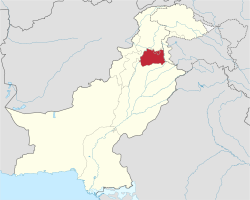
The Pothohar Plateau (Punjabi: پوٹھوہار پٹھار, romanized: Pо̄ṭhoā̀r Paṭhār; Urdu: سطح مرتفع پوٹھوہار, romanized: Satāh Murtafā Pо̄ṭhohār), also known as the Northern Punjab Plateau, is a plateau within the Sagar Doab of north-western Punjab in Pakistan. It is located between the Indus and Jhelum rivers.[1][2]
Etymology
[edit]A late medieval Persian manuscript, Kaigoharnameh, written by Raezadeh Diwan Duni Chand in A.D. 1725 to the order of Gakhar chiefs presents a detailed history of Gakhars in northern Punjab.[3][4] The term in the manuscript has been written variously as Pathwar, Pot har and Pothohar; and seems to be related to the Punjabi term for a plateau (Paṭhār).[3] According to Ahmad Hasan Dani, the term is derived from Prshtawar in Sanskrit, Prshta meaning "back" of the Indus River and War meaning "area".[3][5]
Geography
[edit]Pothohar Plateau is bounded on the east by the Jhelum River,[6] on the west by the Indus River, on the north by the Kala Chitta Range and the Margalla Hills, and on the south by the Salt Range.[1] The southern end of the plateau is bounded by the Thal desert.[1] The 5000 square miles of the plateau range from an average height of 1200 to 1900 feet above the sea level.[1] Sakesar (1525 m) in the Salt Range in Khushab District is the highest peak of the region.
History
[edit]Ancient history
[edit]The Sivapithecus indicus fossil skull of an extinct ape species was discovered in Potohar plateau.[7] The earliest evidence of human habitation in Punjab traces to the Soan valley of the Pothohar, where Soanian culture developed between 774,000 BC and 11,700 BC. This period goes back to the first interglacial period in the second Ice Age, from which remnants of stone and flint tools have been found.[8]
Taxila was the capital city of ancient Gāndhāra, situated on the eastern shore of the Indus—the pivotal junction of the Indian subcontinent and Central Asia;[9] it was founded around 1000 BCE. Some ruins at Taxila date to the time of the Achaemenid Empire, followed successively by the Maurya Empire, the Indo-Greek Kingdom, the Indo-Scythians, and the Kushan Empire. Owing to its strategic location, Taxila has changed hands many times over the centuries, with many polities vying for its control. When the great ancient trade routes connecting these regions ceased to be important, the city sank into insignificance and was finally destroyed in the 5th century by the invading Hunas.
Medieval period
[edit]Throughout much of its history, the Pothohar Plateau was primarily dominated by the local Khokhar and Gakhar tribes. Under the chieftainship of Shaikha Khokhar, the Khokhars resisted the Timurid invasion of Punjab in 1398 CE.[10] In the 15th century, Pothohar was conquered by Malik Jasrat Khokhar who had conquered most of Punjab from the Delhi Sultanate.[11]
During the Mughal Period, the Pothohar was a part of the Subah of Lahore.[12] Sarang Khan Gakhar was the chief of the Gakhars, who was made ruler of Pothohar Plateau in 1520 by the Mughal emperor Babur for his submission to the Mughals. He was captured and killed by Sher Shah Suri in 1546.[13] His son Kamal Khan Gakhar later assumed the throne of Pothohar Plateau by defeating his uncle Adam Khan in battle with help of the Mughal Emperor Jalaluddin Akbar.[14][15][16] Muqarrab Khan Gakhar rose to power and became the Sultan of Pothohar from 1739 until 1767 succeeding his father Mu'azzam Khan.
Modern period
[edit]The Punjab played a major role in the war effort of World War II, and a large proportion of these soldiers came from the Pothohar as well as the Salt Range.[17] In mid-19th century British India, ancient Taxila's ruins were rediscovered by British archaeologist Alexander Cunningham. In 1980, UNESCO designated Taxila as a World Heritage Site.[18] By some accounts, the University of ancient Taxila is considered to be one of the earliest universities in the world.[19][20][21][22][23] Because of the extensive preservation efforts and upkeep, Taxila is one of Punjab's popular tourist spots, attracting up to one million tourists every year.[24][25]
Demography
[edit]Punjabis are the native people of Pothohar, speaking Punjabi in forms of various dialects.[26] Major dialects or varieties spoken in the region include Pothwari, predominantly spoken in the northern and central areas of the plateau, with Dhanni being spoken in the southern areas, Majhi in the eastern and Hindko (specifically Ghebi and Chachhi) in the western areas.[27] Other Punjabi dialects, as well as other languages, are also spoken in major urban centres like Islamabad and Rawalpindi.
The major biradaris of the region (Punjabi: برادری) include Rajputs, Jats, Awans, Janjuas, Gujjars, Khokhars, and Gakhars.[28][29][30][31] Prior to the partition of India, other biradaris including the Khatris, Mohyal Brahmins, and Aroras were also present in large numbers throughout the region.[32][33][34]
Economy
[edit]The plateau covers about 7 percent of all the cultivated land of Pakistan and most of it is very fertile, but the region does not have any proper irrigation system, with the agriculture being largely dependent on rainfall.[35]
The plateau is the location of major Pakistani oil fields, the first of which were discovered at Khaur in 1915 and Dhuliān in 1935; the Tut field was discovered in 1968, Missa Keswal was discovered in 1992 and exploration continued in the area in the 1990s. The oil fields are connected by pipeline to the Attock Refinery in Rawalpindi.[36] Major reserves of oil and gas has been discovered at Chak Beli Khan near Rawalpindi in Punjab. A major oil reserve has been discovered near Jhelum in Punjab, opening up a new area for exploitation of hydrocarbon potential (e.g., Meyal Field[37]). With an estimated production of 5,500 barrels per day, the Ghauri X-1 oil well is expected to be the country's largest oil-producing well and is likely to start contributing its output to the system by the end of June 2014.
Due to low rain fall, extensive deforestation, coal mining, oil and gas exploration, the area is becoming devoid of vegetation.
Important sites
[edit]Taxila
[edit]

Taxila's archaeological sites lie near modern Taxila about 35 km (22 mi) northwest of the city of Rawalpindi.[38] The sites were first excavated by John Marshall, who worked at Taxila over a period of twenty years from 1913.[39]
The vast archaeological site includes neolithic remains dating to 3360 BCE, and Early Harappan remains dating to 2900–2600 BCE at Sarai Kala.[40] Taxila, however, is most famous for ruins of several settlements, the earliest dating from around 1000 BCE. It is also known for its collection of Buddhist religious monuments, including the Dharmarajika stupa, the Jaulian monastery, and the Mohra Muradu monastery.
The main ruins of Taxila include four major cities, each belonging to a distinct time period, at three different sites. The earliest settlement at Taxila is found in the Hathial section, which yielded pottery shards that date from as early as the late 2nd millennium BCE to the 6th century BCE. The Bhir Mound ruins at the site date from the 6th century BCE, and are adjacent to Hathial. The ruins of Sirkap date to the 2nd century BCE, and were built by the region's Greco-Bactrian kings who ruled in the region following Alexander the Great's invasion of the region in 326 BCE. The third and most recent settlement is that of Sirsukh, which was built by rulers of the Kushan empire, who ruled from nearby Purushapura (modern Peshawar).
Rohtas Fort
[edit]
Rohtas Fort is a 16th-century fortress located near the city of Jhelum in the Punjab province of Pakistan. The fort is one of the largest and most formidable in the subcontinent.[41] Rohtas Fort was never taken by force,[42] and it has remained remarkably intact.[42] The fortress was built by Raja Todar Mal on the orders of Sher Shah Suri. The fort is known for its large defensive walls and several monumental gateways. Rohtas Fort was declared a UNESCO World Heritage Site in 1997, as an "exceptional example of the Muslim military architecture of Central and South Asia."[42]
Katas Raj Temples
[edit]
The Katas Raj Temples also known as Qila Katas,[43] is a complex of several Hindu temples connected to one another by walkways.[43] The temple complex surrounds a pond named Katas which is regarded as sacred by Hindus.[44]
The temples' pond is said in the Puranas to have been created from the teardrops of Shiva, after he wandered the Earth inconsolable after the death of his wife Sati.[44][43] The pond occupies an area of two kanals and 15 marlas, with a maximum depth of 20 feet.
The temples play a role in the Hindu epic poem, the Mahābhārata,[45] where the temples are traditionally believed to have been the site where the Pandava brothers spent a significant portion of their exile.[44]
Rawat Fort
[edit]
Rawat Fort is an early 16th century fort near the city of Rawalpindi. The fort was built to defend the region from the forces of the Pashtun king Sher Shah Suri.[46]
Tilla Jogian
[edit]
Tilla Jogian is an abandoned Hindu temple and monastic complex located on the summit of the Tilla Jogian mountain in the Salt Range. The complex was the most important centre for Hindu jogis in Punjab prior to 1947, and had housed hundreds of ascetics. The site is also important in Sikhism for its association with the founder of the Sikh faith, Guru Nanak.
Khewra Salt Mine
[edit]
The Khewra Salt Mine in Khewra is the second largest salt mine in the world.[47][48][49]
The mine is famous for its production of pink Khewra salt, often marketed as Himalayan salt, and is a major tourist attraction, drawing up to 250,000 visitors a year.[50] Its history dates back to its discovery by Alexander's troops in 320 BC, but it started trading in the Mughal era.[51]
Manikyala Stupa
[edit]
The Manikyala Stupa is a Buddhist stupa near the village of Tope Mankiala. The stupa was built to commemorate the spot, where according to the Jataka tales, an incarnation of the Buddha called Prince Sattva sacrificed himself to feed seven hungry tiger cubs.[52][53]
Mankiala stupa's relic deposits were discovered by Jean-Baptiste Ventura in 1830. The relics were then removed from the site during the British Raj, and are now housed in the British Museum.[54]
Notable people
[edit]- Shaikha Khokhar - Punjabi chieftain of the Khokhar tribe
- Jasrat Khokhar - 15th Century Punjabi Muslim ruler who controlled the Potohar Plateau and the Salt Range
- Hania Amir - actress
- Raja Pervaiz Ashraf - former prime minister of Pakistan
- Shoaib Akhtar - former cricketer known as "The Rawalpindi Express"
- Muhammad Amir - cricketer
- Haris Rauf - cricketer
- Raja Muhammad Sarwar Bhatti - first recipient of the Nishan-e-Haider, the highest military award of Pakistan
- Sowar Muhammad Hussain Janjua - eighth recipient of the Nishan-e-Haider
- Bari Imam - Sufi saint
- Amir Khan Janjua - former boxer
- Pir Meher Ali Shah - Punjabi Sufi scholar and poet
See also
[edit]References
[edit]- ^ a b c d e Tikekar, Maneesha (2004). Across the Wagah: An Indian's Sojourn in Pakistan. Bibliophile South Asia. p. 180. ISBN 978-81-85002-34-7.
- ^ a b Öztürk, Münir Ahmet; Khan, Shujaul Mulk; Altay, Volkan; Efe, Recep; Egamberdieva, Dilfuza; Khassanov, Furkat O. (2022). Biodiversity, Conservation and Sustainability in Asia: Volume 2: Prospects and Challenges in South and Middle Asia. Springer Nature. p. 912. ISBN 978-3-030-73943-0.
- ^ a b c Salim, Mohammad (1997). The Palaeolithic Cultures of Potwar with Special Reference to the Lower Palaeolithic. Centre for the Study of the Civilizations Central Asia, Quaid-i-Azam Univ. pp. 2–3.
- ^ Chand, Raezadeh Diwan Duni (1965). Kaigoharnameh: An Unpublished History of Gakkhars Written Originally in 1137 A.H.(A.D.1725) by Raezadeh Diwan Duni Chand to the Order of Sultan Mobarez-ud-din and Sultan Delawar Khan Gakkhar Rulers of Akbarabad and Pharwala. Punjabi Adabi academy.
- ^ Mukherjee, Sreecheta (2015-06-01). Visual Culture in the Indian Subcontinent: Chitrolekha International Magazine on Art and Design, Volume V, Number 1, 2015. Chitrolekha International Magazine on Art and Design. p. 86.
- ^ MacLagan, R. (1885). "The Rivers of the Punjab". Proceedings of the Royal Geographical Society and Monthly Record of Geography. 7 (11): 705–719. doi:10.2307/1801407. ISSN 0266-626X. JSTOR 1801407.
- ^ A partial hominoid innominate from the Miocene of Pakistan: Description and preliminary analyses
- ^ Mohinder, Singh (1989). History and culture of Panjab. Atlantic Publishers and Distributors. OCLC 220695807.
- ^ Raymond Allchin, Bridget Allchin, The Rise of Civilization in India and Pakistan. Cambridge University Press, 1982 p.127 ISBN 052128550X
- ^ Sheikh, Majid (2023-06-11). "Harking back: Gakhars, Timur and the Sayyids fight over Lahore". DAWN.COM. Retrieved 2024-11-15.
- ^ Lal, K. S. (1958). "Jasrat Khokhar". Proceedings of the Indian History Congress. 21: 274–281. ISSN 2249-1937. JSTOR 44145212.
- ^ Robert, Wilkinson (1805), English: Lahore Subah of the Mughal Empire, established during Akbar's administrative reforms of 1572–1580., retrieved 2023-04-28
- ^ Chopra, Gulshan Lall (1940). Chiefs and Families of Note in the Punjab. Government Printing. p. 228.
Sarang Khan... and his brother made their submission to Babar, and Adam Khan, with a Gakhar force, attended him to Delhi, and for this service the Pothwar country was confirmed to them by the Emperor
- ^ Awrangābādī, Shāhnavāz Khān (1979). The Maāt̲h̲ir-ul-umarā: Being Biographies of the Muḥammadan and Hindu Officers of the Timurid Sovereigns of India from 1500 to about 1780 A.D. Janaki Prakashan. pp. 758–760.
- ^ Singh, Surinder; Gaur, I. D. (2008). Popular Literature and Pre-modern Societies in South Asia. Pearson Education India. p. 92. ISBN 978-81-317-1358-7.
- ^ Sharma, Parvati (2023-05-15). A Lamp for the Dark World: Akbar, India's Greatest Mughal. Rowman & Littlefield. pp. 100–101. ISBN 978-1-5381-7790-7.
- ^ Hussain, Shaheed. "'PUNJABISATION' IN THE BRITISH INDIAN ARMY 1857–1947 AND THE ADVENT OF MILITARY RULE IN PAKISTAN" (PDF). School of History & Classics University of Edinburgh.
- ^ UNESCO World Heritage Site, 1980. Taxila: Multiple Locations. Retrieved 13 January 2007.
- ^ Needham, Joseph (2004). Within the Four Seas: The Dialogue of East and West. Routledge. ISBN 978-0-415-36166-8.
- ^ Kulke, Hermann; Rothermund, Dietmar (2004). A History of India (4th ed.). New York: Routledge. ISBN 978-0-415-32919-4. In the early centuries the centre of Buddhist scholarship was the University of Taxila."
{{cite book}}: CS1 maint: postscript (link) - ^ Muniapan, Balakrishnan; Shaikh, Junaid M. (2007). "Lessons in corporate governance from Kautilya's Arthashastra in ancient India". World Review of Entrepreneurship, Management and Sustainable Development. 3 (1): 50. doi:10.1504/WREMSD.2007.012130. Kautilya was also a Professor of Politics and Economics at Taxila University. Taxila University is one of the oldest known universities in the world and it was the chief learning centre in ancient India."
{{cite journal}}: CS1 maint: postscript (link) - ^ Mookerji, Radha Kumud (1988) [1966], Chandragupta Maurya and his times (4th ed.), Motilal Banarsidass, p. 478, ISBN 81-208-0433-3. Thus the various centres of learning in different parts of the country became affiliated, as it were, to the educational centre, or the central university, of Taxila which exercised a kind of intellectual suzerainty over the wide world of letters in India."
{{citation}}: CS1 maint: postscript (link) - ^ Mookerji 1988, p. 479. This shows that Taxila was a seat not of elementary, but higher, education, of colleges or a university as distinguished from schools."
- ^ Raheela Nazir (2018-05-12). "Feature: Pakistan in efforts to rejuvenate Taxila, one of most important archaeological sites in Asia". XINHUANET.com. Archived from the original on 11 May 2018. Retrieved 2018-10-15.
- ^ "Taxila: an illustration of fascinating influences of multiple civilisations". Daily Times. 13 May 2018.
- ^ "Population Profile Punjab | Population Welfare Department". pwd.punjab.gov.pk. Retrieved 2023-02-15.
- ^ John, Asher (2009). "Two dialects one region : a sociolinguistic approach to dialects as identity markers". CardinalScholar 1.0.
- ^ Panjab. (1895). Gazetteer of the Rawalpindi district. "Civil and Military Gazette" Press. OCLC 455118747.
- ^ Singh, Kumar Suresh (2003). People of India: Jammu & Kashmir. Anthropological Survey of India. p. xxiii. ISBN 978-81-7304-118-1.
Gujars of this tract are wholly Muslims, and so are the Khokhar who have only a few Hindu families. In early stages the converted Rajputs continued with preconversion practices.
- ^ Malik, M. Mazammil Hussain (1 November 2009). "Socio-Cultural and Economic Changes among Muslims Rajputs: A Case Study of Rajouri District in J&K". Epilogue. 3 (11): 48.
Rajputs Kokhar were the domiciles of India and were originally followers of Hinduism, later on they embraced Islam and with the passage of time most of them settled near Jehlam, Pindadan Khan, Ahmed Abad and Pothar. In Rajouri District, Khokhars are residing in various villages.
- ^ Bakshi, S. R. (1995). Advanced History of Medieval India. Anmol Publ. p. 142. ISBN 9788174880284.
- ^ McLeod, W. H. (2009). The A to Z of Sikhism. W. H. McLeod. Lanham: Scarecrow Press. ISBN 978-0-8108-6344-6. OCLC 435778610.
- ^ Ruffle, Karen G. (April 20, 2021). Everyday Shi'ism in South Asia. Wiley. p. 42. ISBN 9781119357148.
This caste of Brahmins trace their origins to the Gandhara region, located in contemporary northwest Pakistan between Peshawar and Taxila. The region has long been associated with governmental administrative and military service. In addition to being referred to as "Husaini" Brahmins for their rituals of devotion to Imam Husain, which will be discussed below, this caste is more formally known as Mohyal.
- ^ Mehta, Balram Singh (December 27, 2021). The Burning Chaffees: A Soldier's First-Hand Account of the 1971 War. Penguin Random House India Pvt. Ltd. p. 32. ISBN 9789354923951.
The surname — Mehta — is actually a title granted to the more erudite and better educated amongst the Mohyal community, originating from the Gandhara region.
- ^ Amalric, F.; Banuri, T. (1995-10-15). People, the Environment and Responsibility: Case Studies from Rural Pakistan. CRC Press. p. 27. ISBN 978-1-85070-652-6.
- ^ "New Page 1".
- ^ Riaz, Muhammad; Nuno, Pimentel; Zafar, Tehseen; Ghazi, Shahid (2019). "2D Seismic Interpretation of the Meyal Area, Northern Potwar Deform Zone, Potwar Basin, Pakistan". Open Geosciences. 11 (1): 1–16. Bibcode:2019OGeo...11....1R. doi:10.1515/geo-2019-0001.
- ^ "Taxila | ancient city, Pakistan | Britannica". www.britannica.com. Retrieved 2022-08-17.
- ^ Wheeler, Mortimer. "Marshall, Sir John Hubert (1876–1958)". Oxford Dictionary of National Biography (online ed.). Oxford University Press. doi:10.1093/ref:odnb/34896. Retrieved 4 July 2017. (Subscription, Wikipedia Library access or UK public library membership required.)
- ^ Allchin, Bridget; Allchin, Raymond (1988). The rise of civilization in India and Pakistan. Cambridge [u.a.]: Cambridge University Press. p. 127. ISBN 978-0521285506.
- ^ "Pakistan: Rohtas Fort". World Archaeology (17). 7 May 2006.
- ^ a b c "Rohtas Fort". UNESCO. Retrieved 26 May 2017.
- ^ a b c Khalid, Laiba (2015). "Explore Rural India" (PDF). 3 (1). The Indian Trust for Rural Heritage and Development: 55–57. Archived from the original (PDF) on 30 April 2016. Retrieved 15 September 2017.
{{cite journal}}: Cite journal requires|journal=(help) - ^ a b c Sah, Krishna Kumar (2016). Deva Bhumi: The Abode of the Gods in India. BookBaby. p. 79. ISBN 9780990631491. Retrieved 15 September 2017.
- ^ Directorate General of Archaeology. "KATAS RAJ TEMPLES". Government of Punjab.
- ^ Malik, Iftikhar Haider (2006). Culture and Customs of Pakistan. Greenwood Publishing Group. ISBN 9780313331268.
- ^ "Inside Pakistan's Khewra, the second largest salt mine in the world". Arab News. 2019-01-19. Retrieved 2023-05-05.
- ^ Stanley J. Lefond (1 January 1969). Handbook of World Salt Resources (1st ed.). Springer. p. 347. ISBN 978-0-306-30315-9. Retrieved 3 April 2012.
- ^ Camerapix (July 1998). Spectrum Guide to Pakistan. Interlink Books. p. 150. ISBN 978-1-56656-240-9. Retrieved 8 April 2012.
- ^ "Khewra Salt Mines Project". Pakistan Mineral Development Corporation. Privatisation Commission of Pakistan. Archived from the original on 25 July 2012. Retrieved 12 April 2012.
- ^ Sarina Singh; Lindsay Brown; Lindsay Brown; Rodney Cocks; John Mock (1 May 2008). Lonely Planet Pakistan and the Karakoram Highway (7th ed.). Lonely Planet. p. 138. ISBN 978-1-74104-542-0. Retrieved 3 April 2012.
- ^ Bernstein, Richard (2001). Ultimate Journey: Retracing the Path of an Ancient Buddhist Monk who Crossed Asia in Search of Enlightenment. A.A. Knopf. ISBN 9780375400094. Retrieved 16 June 2017.
Mankiala tiger.
- ^ Cunningham, Sir Alexander (1871). Four Reports Made During the Years, 1862-63-64-65. Government Central Press. p. 155.
As Buddha offers his body to appease the hunger of the seven starving tiger - cubs, so Râsâlu offers himself instead of the woman's only son who was destined to ... Lastly, the scene of both legends is laid at Manikpur or Mânikyâla
- ^ The British Museum Collection
External links
[edit]

- . Encyclopædia Britannica. Vol. 15 (11th ed.). 1911. p. 413.
- . Encyclopædia Britannica. Vol. 12 (11th ed.). 1911. p. 713.
- Potwar Plateau – Encyclopædia Britannica from Encyclopædia Britannica Premium Service
- Regional Studies of the Potwar Plateau Area, Northern Pakistan United States Geological Survey

| International | |
|---|---|
| National | |


Pothohar Plateau
View on GrokipediaEtymology
Name Origins and Historical Usage
The name Pothohar derives from the Sanskrit Prshtawar, in which prshta means "back" and war indicates "area" or "enclave," denoting the plateau's location on the western bank—or "back"—of the Indus River system.[5] This interpretation originates from the analysis by Pakistani archaeologist Ahmad Hasan Dani, who linked it to ancient topographic descriptors in the region's linguistic history.[6] Local Pothwari dialects reinforce this by rendering poth as "back" (evoking the rear or elevated ridge of terrain) and war as "land" or "expanse," collectively implying an elevated, rearward-lying upland distinct from the riverine plains to the east.[6] Historically, the term Pothohar (or variants like Potwar) has designated the plateau as a cohesive geographical and tribal domain in northern Punjab, with usage traceable to indigenous references predating formal cartography.[7] Medieval accounts, such as those in Mughal emperor Babur's memoirs, indirectly evoke the region through descriptions of Gakhar-held territories in the 16th century, though without the exact modern nomenclature; the Gakhars maintained semi-autonomous control over Pothohar from the 11th century onward, fortifying it against invasions like Timur's in 1398.[8] By the Sikh era, Maharaja Ranjit Singh explicitly incorporated "Pothohar" into administrative conquests by 1810, reflecting its established local currency among Punjabi speakers for the area's rugged, salt-bearing uplands.[9] In British colonial documentation from the mid-19th century, the name standardized as Potwar Plateau in gazetteers and surveys, emphasizing its strategic position between the Jhelum and Indus rivers and its role in salt extraction and tribal governance.[10] This period marked the term's wider anglicized adoption, yet it preserved indigenous roots tied to the landscape's causal features—such as its dissected plateaus and seasonal nullahs—that shaped settlement patterns and defensive strongholds like Rohtas Fort, built in 1541 under Sher Shah Suri.[11] Earlier pre-colonial references remain sparse in written records, likely due to oral tribal traditions, but archaeological continuity in sites like Taxila underscores the region's enduring identity as a transitional highland buffer.[7]Geography
Physical Characteristics
 to the west, with northern boundaries marked by the Kala Chitta Range and Margalla Hills, and southern limits defined by the Salt Range. [1] [12] The plateau spans latitudes from approximately 32.5°N to 34°N and longitudes from 72°E to 74°E, encompassing an undulating terrain shaped by tectonic uplift and fluvial erosion. [13] Elevations across the plateau generally range from 300 to 600 meters above sea level, with higher residual hills such as those in the Kala Chitta Range exceeding 900 meters in places. [1] [12] The topography features broad, flat-topped interfluves interspersed with deep gullies and ravines (locally termed nullahs or choas), resulting from intense seasonal runoff and limited vegetative cover that exacerbates soil erosion rates up to 80 tons per hectare annually in vulnerable areas. [14] Geologically, the region comprises a foreland basin sequence of Miocene to Pleistocene Siwalik Group sediments overlying older Paleozoic and Mesozoic formations, with the adjacent Salt Range exposing thick Eocambrian evaporite deposits that influence local halokinesis and structural deformation. [15] [16] Drainage is dominated by ephemeral streams converging into perennial rivers like the Soan, which traverses the plateau northward before joining the Indus, carving valleys that highlight the erosional landscape. [17] Soils are predominantly loessal and alluvial loams, supporting sparse xerophytic vegetation adapted to semiarid conditions, though prone to degradation from overgrazing and deforestation. [18] The plateau's physiography reflects ongoing tectonic activity, with active thrust faulting along its margins contributing to seismic hazards and localized uplift. [19]Climate and Natural Resources
The Pothohar Plateau features a semi-arid to sub-humid climate with distinct seasonal variations, including hot summers and mild winters. Average monthly temperatures range from approximately 14°C in January to 37°C in June, based on data from the region.[20] Annual precipitation averages around 812 mm, with roughly half falling during the summer monsoon period from July to September.[20] Rainfall distribution is uneven, highest in the northwest and decreasing toward the arid southwest.[21] Recent analyses indicate increasing frequency of climate extremes, such as prolonged heatwaves, droughts, and erratic precipitation patterns, particularly from 1982 to 2023.[22] Natural resources in the Pothohar Plateau are dominated by mineral deposits, particularly in the underlying Eocambrian Salt Range Formation, which contains extensive rock salt and gypsum layers.[23] The Khewra Salt Mine, situated along the southern Salt Range boundary, exploits these deposits and ranks among the largest salt reserves globally.[23] Additional minerals include coal seams in Permian formations, limestone, and sandstone, with exploratory potential for petroleum and natural gas.[15] [1] Agriculturally, the plateau supports rainfed farming on its fertile loess soils, primarily for wheat, barley, and pulses, though only about 4% of the area is irrigated, leaving 96% dependent on seasonal rains.[24] Livestock grazing, including sheep and goats, is widespread due to the undulating terrain and sparse vegetation. Water resources are limited, with rivers like the Soan providing seasonal flows but facing challenges from erosion and low perennial discharge.[25] These factors constrain agricultural productivity, emphasizing the role of mineral extraction in the local economy.[1]History
Prehistoric Settlements
The Pothohar Plateau, encompassing the Soan Valley near Rawalpindi, preserves extensive Paleolithic archaeological evidence, primarily in the form of stone tools indicating early hominin occupation. Surveys along the Soan River have documented open-air factory sites yielding pebble-based implements, including choppers, scrapers, flakes, and cores fashioned from local quartzite and other durable stones. These artifacts, characteristic of the Soanian industry, differ from contemporaneous Acheulean assemblages elsewhere in South Asia by emphasizing unifacial tools and minimal bifacial working, likely reflecting adaptation to abundant riverine pebbles rather than scarcity-driven refinement.[26] Stratigraphic contexts in Potwar loess and terrace deposits suggest episodic human presence tied to fluvial environments, with tools distributed across multiple horizons but lacking signs of permanent structures or hearths indicative of settled communities. Instead, the distribution points to mobile hunter-gatherer groups exploiting the plateau's fauna, such as extinct elephants and bovids evidenced in associated faunal remains, and its silty soils for tool sourcing. Key sites like Jalalpur and Dina have provided lower Paleolithic material dated via paleomagnetic methods to approximately 600,000–400,000 years before present, aligning with Middle Pleistocene climatic shifts that may have facilitated dispersal into the region.[27][28] Chronological assessments of Soanian tools remain contentious, with initial classifications by de Terra and Paterson in the 1930s attributing pre-Soan and early Soan phases to the Lower Pleistocene (over 1 million years ago), based on stratigraphic correlation with Siwalik fossils. However, subsequent optically stimulated luminescence (OSL) dating of Potwar sediments has yielded younger ages for some upper horizons, ranging from Middle Pleistocene to as recent as the late mid-Holocene (around 4,000–2,000 years ago), prompting debates over whether later tools represent cultural continuity or recycled deposits. This revisionism underscores challenges in correlating artifact scatters with absolute timelines in dynamic alluvial settings, where erosion and redeposition complicate interpretations; nonetheless, the persistence of Soanian-style lithics across strata affirms long-term human engagement with the plateau's resources predating Neolithic farming by hundreds of thousands of years.[29][30][31]Ancient Civilizations
The Pothohar Plateau served as a cradle for several ancient civilizations, primarily centered around Taxila, which emerged as a prominent urban and cultural hub from the 6th century BCE. Archaeological evidence from the Bhir mound indicates the establishment of the earliest historic city during the Achaemenid Persian period, with the region incorporated into the empire's satrapy system under Darius I around 518 BCE. This era marked the introduction of administrative structures and trade networks linking the plateau to broader Persian domains.[32] Following Alexander the Great's invasion in 326 BCE, Taxila experienced Hellenistic influences, evident in the fortified city of Sirkap constructed in the 2nd century BCE during the Indo-Greek period. The site's grid layout, combining Greek urban planning with local elements, reflects cultural syncretism, as uncovered in excavations revealing coinage, pottery, and architectural features from Greco-Bactrian rulers. Subsequent Saka and Pahlava incursions in the 1st century BCE transitioned the region under Central Asian nomadic influences before Kushan consolidation.[32] Under the Mauryan Empire in the 3rd century BCE, Emperor Ashoka promoted Buddhism, leading to the construction of stupas and monasteries across Pothohar, including the Dharmarajika complex with its relic-bearing stupa erected circa 200 BCE. Taxila functioned as a key Buddhist learning center from the 5th century BCE to the 2nd century CE, attracting scholars and pilgrims, as corroborated by Chinese traveler accounts and on-site artifacts like Gandharan sculptures blending Greek and Indian styles. The Kushan Empire, from the 1st to 5th centuries CE, further elevated the plateau's status, with Emperor Kanishka's patronage fostering art, religion, and trade along the Silk Road; the Sirsukh city walls and Manikyala Stupa exemplify this period's monumental architecture.[32][33] Beyond Taxila, sparse evidence points to ancillary settlements like those in the Soan Valley, but the plateau's ancient prominence derives largely from Taxila's layered stratigraphy, spanning over a millennium of imperial successions and religious evolution without significant disruption until later declines.[32]Medieval Tribal Dynamics
During the Delhi Sultanate (1206–1526), the Pothohar Plateau's tribal dynamics were marked by the assertion of local autonomy by warrior clans such as the Gakhars and Khokhars amid the imposition of central Muslim rule. These tribes, leveraging the region's rugged terrain for defensive advantages, frequently resisted sultanal authority through rebellions and guerrilla warfare, while sultans responded with military expeditions to secure tribute and trade routes. Conversions to Islam occurred gradually from the 12th century onward, yet did not fully integrate the tribes into subservient roles, as they continued to prioritize independence over loyalty to distant Delhi.[34] The Gakhars, a prominent clan in northern Pothohar, exemplified this resistance; in 1008, they mobilized 30,000 horsemen to aid Hindu Shahi rulers against Mahmud of Ghazni near Hazro, inflicting heavy casualties before retreating. By the late 12th century, they opposed Muhammad of Ghor (1182–1205), temporarily repelling his forces and, according to historical accounts, assassinating him in 1206 during a rebellion quelled by Qutbuddin Aibak. In the 14th century, Sheikha Gakhar captured Lahore in 1342 after defeating the governor Tatar Khan, while Jasrat Gakhar seized the city multiple times (nine personally, 24 in alliance with Sheikha) and clashed with Timur's invasion in 1398, employing Mongol-style tactics to challenge Sayyid rulers.[35] Khokhars, concentrated in the Salt Range portion of Pothohar, similarly defied sultans throughout the era, disrupting commerce between the Jhelum and Chenab rivers and supporting rivals like Khusrau Malik against early Ghurids. They allied opportunistically, as with Razia Sultana's forces, but launched repeated uprisings; Jasrath Khokhar's revolts from 1421 to 1431 prompted campaigns by Mubarak Shah and others, underscoring the sultans' persistent challenges in subduing these warlike groups. Other clans like the Janjuas, who converted under Raja Mal Dev in the 12th century, contributed to the mosaic of semi-independent landholders navigating alliances and conflicts to preserve territorial control.[34]Colonial Era and Independence
The Pothohar Plateau fell under British control following the annexation of Punjab by the East India Company on 29 March 1849, after the defeat of Sikh forces in the Second Anglo-Sikh War, including the decisive Battle of Gujrat on 21 February 1849.[36] This incorporation integrated the region into British India as part of the Punjab province under the Bengal Presidency, initially administered through a Board of Administration led by figures like Henry Lawrence.[37] Rawalpindi, centrally located in Pothohar, was occupied in 1849 and designated a permanent military garrison by 1851, serving as a strategic base for British campaigns toward the North-West Frontier and Afghanistan due to its elevated terrain and proximity to key passes.[38] British colonial administration emphasized military consolidation in Pothohar, establishing the Rawalpindi Cantonment as the largest in the region, featuring tree-lined avenues, barracks, and European-style infrastructure to house troops and support logistics.[39] Local tribes, including Awans, Gakhars, and Janjuas, were classified under the British "martial races" doctrine, leading to extensive recruitment into the Indian Army; the rugged plateau's hardy inhabitants provided significant manpower for imperial forces, with clans like the Golra Awans resisting initial control through raids that necessitated permanent police outposts.[11] Economic developments included the expansion of salt mining at Khewra in the Salt Range, where British engineers introduced a 600 mm gauge tourist minecart railway in 1930 to access crystal deposits, enhancing extraction efficiency.[40] As independence approached, communal tensions escalated in Pothohar amid the broader partition of India. Riots erupted in Rawalpindi on 6 March 1947, triggered by Muslim anger over perceived Hindu and Sikh actions, resulting in widespread attacks on non-Muslim communities and marking the onset of localized violence before the formal partition.[39] The March 1947 massacres in Pothohar involved systematic assaults on Sikh villages, including beheadings and forced drownings, contributing to the exodus of Hindus and Sikhs, who formed a substantial pre-partition population in the region.[41] Upon the creation of Pakistan on 14 August 1947, the Pothohar Plateau was allocated to the new state within West Punjab, with Rawalpindi Cantonment transitioning to serve as the initial headquarters of the Pakistan Army, reflecting the area's enduring military significance.[39] This shift solidified Muslim-majority demographics, as remaining non-Muslims largely migrated eastward, leaving behind sites like Hindu-Sikh temples that deteriorated post-partition.[42]Demography and Society
Population Distribution and Ethnic Groups
The Pothohar Plateau spans the districts of Rawalpindi, Attock, Jhelum, and Chakwal in Punjab province, with the Rawalpindi Division recording a population of approximately 10 million in the 2017 census.[43] Updated 2023 census figures indicate 2,170,423 residents in Attock district, 1,734,854 in Chakwal, 1,382,308 in Jhelum, and over 5 million in Rawalpindi district, reflecting sustained growth rates of 2-2.5% annually in these areas.[44] Population density varies markedly, averaging 200-300 persons per square kilometer overall but reaching higher concentrations in fertile valleys along the Jhelum and Soan rivers and near transport corridors, while remaining sparse in arid uplands. Rural settlements predominate, comprising about 70-80% of the populace engaged in agriculture, though urban migration to Rawalpindi city and adjacent Islamabad has accelerated, contributing to 20-30% urbanization in core districts.[44] Ethnically, the region is dominated by Punjabis, subdivided into clans (biradaris) such as Awans, Rajputs, Gujars, Jats, and Maliars, who historically formed the bulk of the agrarian and martial communities.[11] Awans and Rajputs (including Janjua, Bhatti, and Minhas subclans) are particularly prominent, with accounts from the early 20th century estimating they accounted for up to two-thirds of the total population through landownership and tribal networks.[11] In Attock district, additional groups like Khattars, Syeds, Parachas, Mughals, Shaikhs, and Pashtun elements (e.g., Bangash and Khattak) coexist, often in northern tehsils bordering Khyber Pakhtunkhwa.[45] Language data from census enumerations serve as a proxy for ethnicity, showing Punjabi (including Pothwari dialect) spoken by 80-90% in Jhelum and Rawalpindi, with Hindko prevalent in Attock (up to 20-30%) and minor Pashto usage (5-10%) reflecting Pashtun settlements or influxes.[46] Smaller communities include Arains, Kashmiri speakers in upland pockets, and post-1947 Urdu-speaking migrants in urban enclaves, though these do not exceed 5-10% regionally. Tribal affiliations continue to influence social organization, land tenure, and endogamy, despite modernization pressures.[45]Cultural Practices and Social Structure
The social structure in the Pothohar Plateau is traditionally anchored in the biradari system, comprising endogamous clans or kinship groups such as Awans, Gakhars, Rajputs, Jats, and Gujjars, which dictate social identity, resource allocation, and community cohesion in rural settings.[47] These biradaris function as extended networks facilitating mutual support, with patriarchal elders holding authority in decision-making, though urbanization has eroded joint family households in favor of nuclear units since the mid-20th century.[48] Biradaris also mediate conflicts through informal panchayats, resolving disputes over land or honor with consensus-based rulings that prioritize group harmony over formal legal recourse, a practice prevalent in Punjab's agrarian villages.[48] Marriage customs reinforce biradari endogamy, typically arranged by family elders to preserve clan ties and inheritance patrilineally, with ceremonies involving folk singing contests like bait or sherkhwani—impromptu poetic duels performed at weddings—and communal feasts featuring traditional Pothwari dishes such as chapati prepared on-site.[49] Gender roles remain conservative, with women primarily managing domestic spheres and men handling external affairs, though economic migration has increased female participation in agriculture.[47] Cultural practices emphasize oral traditions in the Pothwari dialect, including Sufi-influenced folk music and dances performed during local festivals and life-cycle events, which blend indigenous and Islamic elements to foster community bonding.[47] These gatherings, often held at harvest or religious occasions, feature competitive storytelling and rhythmic performances, but participation has declined post-1980s due to globalization, media influence, and youth exodus to cities like Rawalpindi and Islamabad.[47] Despite preservation efforts through cultural documentation, modernization poses risks to these practices' continuity.[47]Economy
Agricultural and Mineral Resources
The Pothohar Plateau's agriculture is largely rainfed, dependent on erratic monsoon and winter precipitation in a semi-arid environment, with farming practices centered on staple crops like wheat, which over 95% of surveyed farmers cultivate as the dominant crop.[24] The Punjab Barani tract encompassing the plateau contributes 25% of the province's wheat production, though yields are constrained by low soil fertility, phosphorus deficiencies, and erosion from undulating terrain and conventional tillage methods such as moldboard plowing, which predominate over rarer conservation techniques like zero tillage.[50][51][52] Maize follows as a key secondary crop, with production highly variable due to rainfall fluctuations across sub-zones.[53] Under optimal rainfed conditions, wheat yields can surpass 1,200 kg per acre, but soil moisture stress and degradation limit overall productivity, making agriculture a primary livelihood source that accounts for up to 19.2% of the region's GDP.[54][55] Mineral resources are concentrated in the southern Salt Range extension, featuring substantial deposits of rock salt, gypsum, limestone, and coal. The Khewra Salt Mine yields high-purity halite (up to 99% NaCl), extracted by the Pakistan Mineral Development Corporation as pink Himalayan salt for industrial and export purposes.[56][57] Gypsum reserves support cement and construction sectors, while limestone and coal seams in the Potwar sub-region have undergone geological assessment for mining viability, with coal-bearing strata mapped across northern exposures.[58][59] These non-metallic minerals underpin local extraction industries, though development is hampered by infrastructural and environmental factors.[59]Industrial Development and Military Contributions
The Pothohar Plateau has emerged as a hub for defense-oriented industrial development, leveraging its strategic location and skilled workforce. Taxila, within the plateau, hosts key facilities such as heavy machine factories and the Heavy Mechanical Complex, which manufactures industrial equipment and supports engineering sectors. Wah Cantonment, nearby, operates ordnance factories specializing in ammunition and explosives production, contributing to national security infrastructure. These industries, established post-independence, emphasize self-reliance in heavy manufacturing and defense production, with Taxila's complexes playing a central role in armored vehicle assembly and mechanical engineering. Military contributions from the Pothohar region trace back to colonial recruitment patterns, where inhabitants from the plateau and adjacent Punjab plains enlisted in large numbers in the British Indian Army due to their physique and martial traditions. Post-1947 partition, Rawalpindi—situated in the plateau—became the site of the Pakistan Army's General Headquarters (GHQ), solidifying its status as a primary military nerve center with extensive cantonments and logistics bases. The region's tribes, known for resilience in rugged terrain, continue to provide disproportionate recruits to the Pakistan Army, particularly Punjabis from Potohar areas, influencing officer corps representation.[60][39] This integration of industrial and military assets has bolstered Pakistan's defense capabilities, with Pothohar's facilities producing tanks, artillery, and munitions that have been deployed in regional conflicts. The plateau's role extends to training and strategic planning, given its proximity to the federal capital and northern borders, though it faces challenges like resource constraints amid growing operational demands.Environmental Challenges
Water Scarcity and Soil Degradation
The Pothohar Plateau, characterized by its semi-arid climate and undulating terrain, experiences chronic water scarcity primarily due to low and erratic rainfall, averaging less than 1,000 mm annually in many areas, coupled with high evapotranspiration rates.[61] This results in substantial water deficits, estimated at 4.3 mm per month during both rabi and kharif seasons, exacerbating dependence on rain-fed agriculture and groundwater extraction.[61] In urban centers like Rawalpindi and Islamabad, groundwater levels have declined sharply; depths increased from 37.8 m to 59 m in Rawalpindi and from 22.8 m to 56 m in Islamabad between the early 2000s and 2020s, driven by over-extraction for domestic and agricultural use at rates of approximately 1 m per year in Islamabad and 1.5 m in Rawalpindi.[62][63] Such depletion threatens livelihoods in rain-fed zones, where water shortages have reduced crop yields and intensified vulnerability to droughts.[64] Soil degradation in the region is predominantly manifested through water-induced erosion, with rates reaching 2,500–5,000 tons per square kilometer in affected areas, accelerated by intensive rainstorms on sloping landscapes lacking vegetative cover.[65] Uneven topography, sparse vegetation, and practices such as overgrazing and deforestation contribute causally to this erosion, stripping topsoil and diminishing fertility, while wind erosion further compounds losses in drier sub-regions.[66][67] These processes lead to moisture stress and nutrient depletion, rendering soils less productive and heightening desertification risks, as evidenced by land-use changes that have intensified degradation since the mid-20th century.[68] Conservation efforts, including contour farming and check dams, have been implemented but face low adoption due to socioeconomic barriers, with adoption gaps exceeding 90% for practices like intercropping.[69] The interplay of erosion and scarcity forms a feedback loop, where degraded soils reduce water infiltration capacity, further straining available resources.[70]Climate Extremes and Conservation Efforts
The Pothohar Plateau experiences a semi-arid climate characterized by hot summers and cold winters, with mean annual rainfall varying from 400 mm in the west to 1,000 mm in the northeast, concentrated primarily during the monsoon season from July to September. Average temperatures range from a low of 9°C in December to a high of 31°C in June, though these norms are increasingly disrupted by extremes. Heatwaves have intensified over the past four decades (1982–2023), contributing to heightened water stress, reduced crop yields, and health risks such as heatstroke and dehydration among the population.[22][71] Droughts represent a persistent threat, with notable events including the 1999–2002 period when rainfall fell below 60% of long-term averages, and 2022 marking the driest year on record amid worsening aridity trends since the 1990s as indicated by standardized precipitation anomaly (SPA) analysis. Irregular rainfall patterns, including a slight decline from 1982 to 2015 followed by a sharp post-2015 increase peaking in 2021, have led to prolonged dry spells and erratic monsoons, severely impacting rain-fed agriculture—such as maize crops, which achieve optimal yields around 450 mm of precipitation but suffer sharp declines outside this range. Intense episodic rains have also triggered abnormal flash floods, exacerbating soil erosion and disrupting groundwater recharge in the undulating terrain.[22][22][72] Conservation efforts in the Pothohar Plateau focus on mitigating soil erosion, which averages 424.4 million tons annually across key districts (Attock: 81.4 million tons; Chakwal: 94.9 million tons; Jhelum: 83.4 million tons; Rawalpindi: 164.7 million tons), driven by steep slopes and variable rainfall. Geospatial assessments have prioritized high-risk watersheds for interventions, including terracing, afforestation with perennial trees, and improved agricultural practices to enhance soil organic carbon sequestration and land productivity. The Punjab government has constructed 55 small dams to bolster irrigation and rainwater storage, addressing water scarcity in this 2.2 million hectare rain-fed region.[67][67][73] Adaptation strategies emphasize resilience to extremes through drought-resistant crop varieties, drip irrigation, and rainwater harvesting systems, alongside watershed management and early warning mechanisms for heatwaves and floods. Heat Action Plans (HAPs) have been proposed to safeguard vulnerable communities, while ongoing studies promote conservation agriculture to counter erosion and climate variability, though implementation remains challenged by resource constraints and population pressures in this densely settled area.[22][22]Historical and Cultural Sites
Archaeological and Pre-Islamic Sites
The Pothohar Plateau hosts significant prehistoric archaeological evidence, including Paleolithic tools from the Soan Valley associated with the Soan Culture, dating back to approximately 1 million to 7000 BCE, indicating early human occupation in the region.[74] These findings, documented through surface surveys and excavations, reveal stone implements and fossils that underscore the area's role in early hominid activity along ancient river systems.[8] Taxila stands as the plateau's premier archaeological complex, encompassing multiple ancient urban settlements and religious structures spanning from the Neolithic period to the early centuries CE. The site includes the Neolithic tumulus at Saraikala, early urban layers at Bhir Mound from around the 6th century BCE under Achaemenid influence, the Greco-Bactrian planned city of Sirkap from the 2nd century BCE, and the Kushan-era fortifications at Sirsukh from the 1st century CE.[32] These layers illustrate successive cultural evolutions, from indigenous Iron Age communities to Hellenistic and Indo-Greek urban planning, followed by Central Asian Kushan expansions.[75] Buddhist monuments dominate the religious archaeology, with the Dharmarajika Stupa, constructed in the 2nd century BCE during the Mauryan Empire under Ashoka, serving as a reliquary for Buddha's ashes and featuring intricate relic caskets unearthed in 1913 excavations.[32] Nearby, the Jaulian Monastery complex, dating to the 2nd-5th centuries CE, preserves Gandharan architectural elements like assembly halls and monastic cells, reflecting the plateau's centrality in Buddhist scholastic traditions.[76] The Manikyala Stupa, located near Rawalpindi, exemplifies Kushan-era Buddhist architecture, likely erected between the 1st and 2nd centuries CE, possibly under Emperor Kanishka, to commemorate a Jataka tale site where Buddha incarnate fed himself to a tigress.[40] Excavations have yielded coins and relics confirming its role as a pilgrimage center, with the structure's massive brick dome and surrounding votive platforms highlighting engineering feats of the period.[77] In the Salt Range portion of the plateau, the Katas Raj temple complex preserves pre-Islamic Hindu architecture from the Hindu Shahi dynasty, circa 615-950 CE, centered around a sacred pool linked to Shiva mythology.[78] The site's interconnected shrines, including a main Shiva temple with intricate carvings, demonstrate continuity of Indic religious practices predating Islamic conquests, with structural phases potentially extending to earlier Gupta influences.[79] These sites collectively evidence the Pothohar's position as a crossroads of prehistoric, Vedic, Buddhist, and Hindu civilizations before the 8th-century Arab incursions.[32]Islamic and Colonial Era Monuments
The Islamic era monuments in the Pothohar Plateau primarily consist of military forts constructed by Afghan and local Muslim rulers to assert control over the strategically vital region. Rohtas Fort, located near Jhelum and overlooking the plateau, was commissioned in 1541 by Sher Shah Suri of the Sur Empire to suppress the rebellious Gakhar tribes and block Mughal advances.[80] This massive fortress, spanning 4 kilometers of walls with 68 bastions and four gates, exemplifies early modern Muslim military architecture adapted to gunpowder weaponry, featuring terraced defenses and water reservoirs; it was designated a UNESCO World Heritage Site in 1997 for its historical and architectural significance.[80] Rawat Fort, situated 17 kilometers east of Rawalpindi, dates to the early 16th century and was likely initiated as a caravanserai under the Delhi Sultanate before fortification by Gakhar chief Sultan Sarang Khan amid conflicts with Mughal forces.[81] The structure includes a central tomb for Sarang Khan and his associates, surrounded by graves inscribed with Pashto and Persian, and a three-domed mosque considered among the earliest surviving Islamic prayer sites in Pothohar after Taxila's Giri mosque.[82] Pharwala Fort, near Kahuta and over 500 years old, served as a primary stronghold for the Muslim Gakhar dynasty, which dominated Pothohar from the 14th to 16th centuries; it was conquered by Mughal emperor Babur around 1519 following resistance from Gakhar ruler Sultan Kailu.[83] Smaller Islamic structures, including forgotten mosques and tombs from the 19th and early 20th centuries, dot the plateau, such as the Jamia Mosque in Kuri and tombs in Makhad Sharif, Attock, featuring decorative calligraphy and graffiti reflective of local Muslim architectural traditions.[84] These sites underscore the Gakhar clan's role in transitioning Pothohar under Islamic governance, blending defensive utility with religious elements. Colonial era monuments in Pothohar are predominantly functional military and ecclesiastical buildings erected during British rule, when Rawalpindi emerged as a major garrison town after 1851. Gothic-style garrison churches, like St. Paul's Church completed in 1852, represent early colonial sacred architecture, constructed by British engineers to serve the European military community and incorporating pointed arches and ribbed vaults atypical of indigenous styles.[85] Existing Islamic forts, such as Rawat, were repurposed or maintained under British administration for strategic oversight, though few entirely new monumental structures were built beyond cantonment infrastructure.[86] Syncretic shrines in villages like Kot Fateh Khan blend Muslim, Sikh, and colonial influences, reflecting the era's administrative adaptations rather than grand standalone monuments.[87]Notable Individuals
Tribal Leaders and Warriors
![Rawat Fort, built during the era of Gakhar chiefs like Sarang Khan][float-right]The Gakhars, a prominent Punjabi tribe originating in the Pothohar Plateau, were renowned for their warrior traditions and resistance against successive invaders, establishing fortified strongholds across the region. Their chieftaincy, centered in areas like Rawalpindi and Jhelum, involved alliances and conflicts with Mughal and Afghan rulers, reflecting a history of martial independence.[11] Sultan Kai Gohar, an early Gakhar leader in the 11th century, is credited with constructing Pharwala Fort over pre-existing ruins and maintaining ties with Mahmud of Ghazni, underscoring the tribe's early military engagements in northern Punjab. In the 16th century, Sarang Khan Gakhar, appointed by Babur around 1520 to govern Pothohar, shifted the tribal capital to Rawat Fort after conflicts and died in 1546 defending against Sher Shah Suri's forces, exemplifying Gakhar defiance that prompted retaliatory constructions like Rohtas Fort.[88] The Janjua Rajputs, another key warrior clan in Pothohar, produced chiefs like Raja Jodh, who built fortifications in the 11th century to secure the plateau against regional threats, contributing to the area's legacy of Rajput martial governance.[89] Dhund Abbasis, claiming descent from Abbasid lines and inhabiting northern fringes, participated in tribal resistances, including 19th-century skirmishes against British expansion, though their warrior roles were more localized compared to Gakhar campaigns.[11]