Hubbry Logo
Nominal rigidityNominal rigidityMain
Open search
Nominal rigidity
Community hub
Nominal rigidity
logo
7 pages, 0 posts
0 subscribers
Be the first to start a discussion here.
Nominal rigidity
Nominal rigidity
from Wikipedia

In economics, nominal rigidity—also referred to as price stickiness or wage stickiness—describes a situation in which a nominal price is slow to adjust or resistant to change.

Complete nominal rigidity occurs when a price remains fixed in nominal terms for a relevant period of time. For example, the price of a good may be contractually set at $10 per unit for an entire year, regardless of changes in supply and demand conditions. Partial nominal rigidity occurs when prices can adjust, but less than they would under conditions of perfect flexibility. For instance, in a regulated market, there may be legal or institutional limits on how much a price can change within a given year.

Nominal rigidities are considered a central feature of many Keynesian and New Keynesian models, as they help explain why markets may not always clear and why shifts in aggregate demand can have real effects on output and employment in the short run. The concepts of sticky prices and sticky wages are particularly important for understanding the effectiveness of monetary policy.

If one looks at the whole economy, some prices might be very flexible and others rigid. This will lead to the aggregate price level (which we can think of as an average of the individual prices) becoming "sluggish" or "sticky" in the sense that it does not respond to macroeconomic shocks as much as it would if all prices were flexible. The same idea can apply to nominal wages. The presence of nominal rigidity is an important part of macroeconomic theory since it can explain why markets might not reach equilibrium in the short run or even possibly the long run. In his The General Theory of Employment, Interest and Money, John Maynard Keynes argued that nominal wages display downward rigidity, in the sense that workers are reluctant to accept cuts in nominal wages. This can lead to involuntary unemployment as it takes time for wages to adjust to equilibrium, a situation he thought applied to the Great Depression.

Evidence

[edit]

There is now a considerable amount of evidence about how long price-spells last, and it suggests that there is a considerable degree of nominal price rigidity in the "complete sense" of prices remaining unchanged.[citation needed] A price-spell is a duration during which the nominal price of a particular item remains unchanged. For some items, such as gasoline or tomatoes, prices are observed to vary frequently resulting in many short price spells. For other items, such as the cost of a bottle of champagne or the cost of a meal in a restaurant, the price might remain fixed for an extended period of time (many months or even years). One of the richest sources of information about this is the price-quote data used to construct the Consumer Price Index (CPI). The statistical agencies in many countries collect tens of thousands of price-quotes for specific items each month in order to construct the CPI. In the early years of the 21st century, there were several major studies of nominal price rigidity in the US and Europe using the CPI price quote microdata. The following table gives nominal rigidity as reflected in the frequency of prices changing on average per month in several countries. For example, in France and the UK, each month on average, 19% of prices change (81% are unchanged), which implies that an average price spell lasts about 5.3 months (the expected duration of a price spell is equal to the reciprocal of the frequency of price change if we interpret the empirical frequency as representing the Bernoulli probability of price change generating a negative binomial distribution of durations of price-spells).

Country (CPI data) Frequency (per month) Mean Price Spell duration (months) Data Period
US[1]
27%
3.7
1998–2005
UK[2][3]
19%
5.3
1996–2007
Eurozone[4]
15%
6.6
Various, covering 1989–2004
Germany[5]
10%
10
1998–2004
Italy[6]
9%
11.1
1996–2003
France[7]
19%
5.3
1994–2003
Switzerland[8]
27%
3.7
2008–2020

The fact that price spells last on average for 3.7 months does not mean that prices are not sticky. That is because many price changes are temporary (for example sales) and prices revert to their usual or "reference price".[9] Removing sales and temporary price cuts raises the average length of price-spells considerably: in the US it more than doubled the mean spell duration to 11 months.[10] The reference price can remain unchanged for an average of 14.5 months in the US data.[9] Also, it is prices that we are interested in. If the price of tomatoes changes every month, the tomatoes price will generate 12 price spells in a year. Another price that is just as important (for example, canned tomatoes) might only change once per year (one price spell of 12 months). Looking at these two goods prices alone, we observe that there are 13 price spells with an average duration of (12+13)/13 equals about 2 months. However, if we average across the two items (tomatoes and canned tomatoes), we see that the average spell is 6.5 months (12+1)/2. The distribution of price spell durations and its mean are heavily influenced by prices generating short price spells. If we are looking at nominal rigidity in an economy, we are more interested in the distribution of durations across prices rather than the distribution of price spell durations in itself.[11] There is thus considerable evidence that prices are sticky in the "complete" sense, that the prices remain on average unchanged for a prolonged period of time (around 12 months). Partial nominal rigidity is less easy to measure, since it is difficult to distinguish whether a price that changes is changing less than it would if it were perfectly flexible.

Linking micro data of prices and cost, Carlsson and Nordström Skans (2012), showed that firms consider both current and future expected cost when setting prices.[12] The finding that the expectation of future conditions matter for the price set today provides strong evidence in favor of nominal rigidity and the forward looking behavior of the price setters implied by the models of sticky prices outlined below.

Modeling sticky prices

[edit]

Economists have tried to model sticky prices in a number of ways. These models can be classified as either time-dependent, where firms change prices with the passage of time and decide to change prices independently of the economic environment, or state-dependent, where firms decide to change prices in response to changes in the economic environment. The differences can be thought of as differences in a two-stage process: In time-dependent models, firms decide to change prices and then evaluate market conditions; In state-dependent models, firms evaluate market conditions and then decide how to respond.

In time-dependent models price changes are staggered exogenously, so a fixed percentage of firms change prices at a given time. There is no selection as to which firms change prices. Two commonly used time-dependent models are based on papers by John B. Taylor[13] and Guillermo Calvo.[14] In Taylor (1980), firms change prices every nth period. In Calvo (1983), price changes follow a Poisson process. In both models the choice of changing prices is independent of the inflation rate.

The Taylor model is one where firms set the price knowing exactly how long the price will last (the duration of the price spell). Firms are divided into cohorts, so that each period the same proportion of firms reset their price. For example, with two-period price-spells, half of the firms reset their price each period. Thus the aggregate price level is an average of the new price set this period and the price set last period and still remaining for half of the firms. In general, if price-spells last for n periods, a proportion of 1/n firms reset their price each period and the general price is an average of the prices set now and in the preceding n − 1 periods. At any point in time, there will be a uniform distribution of ages of price-spells: (1/n) will be new prices in their first period, 1/n in their second period, and so on until 1/n will be n periods old. The average age of price-spells will be (n + 1)/2 (if the first period is counted as 1).

In the Calvo staggered contracts model, there is a constant probability h that the firm can set a new price. Thus a proportion h of firms can reset their price in any period, whilst the remaining proportion (1 − h) keep their price constant. In the Calvo model, when a firm sets its price, it does not know how long the price-spell will last. Instead, the firm faces a probability distribution over possible price-spell durations. The probability that the price will last for i periods is (1 − h)i−1, and the expected duration is h−1. For example, if h = 0.25, then a quarter of firms will rest their price each period, and the expected duration for the price-spell is 4. There is no upper limit to how long price-spells may last: although the probability becomes small over time, it is always strictly positive. Unlike the Taylor model where all completed price-spells have the same length, there will at any time be a distribution of completed price-spell lengths.

In state-dependent models the decision to change prices is based on changes in the market and is not related to the passage of time. Most models relate the decision to change prices to menu costs. Firms change prices when the benefit of changing a price becomes larger than the menu cost of changing a price. Price changes may be bunched or staggered over time. Prices change faster and monetary shocks are over faster under state dependent than time.[1] Examples of state-dependent models include the one proposed by Golosov and Lucas[15] and one suggested by Dotsey, King and Wolman.[16]

Significance in macroeconomics

[edit]

In macroeconomics, nominal rigidity is necessary to explain how money (and hence monetary policy and inflation) can affect the real economy and why the classical dichotomy breaks down.

If nominal wages and prices were not sticky, or perfectly flexible, they would always adjust such that there would be equilibrium in the economy. In a perfectly flexible economy, monetary shocks would lead to immediate changes in the level of nominal prices, leaving real quantities (e.g. output, employment) unaffected. This is sometimes called monetary neutrality or "the neutrality of money".

For money to have real effects, some degree of nominal rigidity is required so that prices and wages do not respond immediately. Hence sticky prices play an important role in all mainstream macroeconomic theory: Monetarists, Keynesians and new Keynesians all agree that markets fail to clear because prices fail to drop to market clearing levels when there is a drop in demand. Such models are used to explain unemployment. Neoclassical models, common in microeconomics, predict that involuntary unemployment (where an individual is willing to work, but unable to find a job) should not exist, as this would lead employers to cut wages; this would continue until unemployment was no longer a problem. While such models can be useful in other markets where prices adjust more readily, sticky wages are a common way to explain why workers cannot find jobs: as wages cannot be cut instantaneously, they will sometimes be too high for the market to clear.

Since prices and wages cannot move instantly, price- and wage-setters become forward looking. The notion that expectations of future conditions affect current price- and wage-setting decisions is a keystone for much of the current monetary policy analysis based on Keynesian macroeconomic models and the implied policy advice.

Huw Dixon and Claus Hansen showed that even if only part of the economy has sticky prices, this can influence prices in other sectors and lead to prices in the rest of the economy becoming less responsive to changes in demand.[17] Thus price and wage stickiness in one sector can "spill over" and lead to the economy behaving in a more Keynesian way.[18][19]

Mathematical example: a little price stickiness can go a long way

[edit]

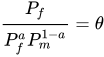
To see how a small sector with a fixed price can affect the way rest of the flexible prices behave, suppose that there are two sectors in the economy: a proportion a with flexible prices Pf and a proportion 1 − a that are affected by menu costs with sticky prices Pm. Suppose that the flexible price sector price Pf has the market clearing condition of the following form:

where is the aggregate price index (which would result if consumers had Cobb-Douglas preferences over the two goods). The equilibrium condition says that the real flexible price equals some constant (for example could be real marginal cost). Now we have a remarkable result: no matter how small the menu cost sector, so long as a < 1, the flexible prices get "pegged" to the fixed price.[18] Using the aggregate price index the equilibrium condition becomes
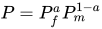
which implies that
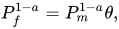
so that
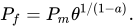
What this result says is that no matter how small the sector affected by menu-costs, it will tie down the flexible price. In macroeconomic terms all nominal prices will be sticky, even those in the potentially flexible price sector, so that changes in nominal demand will feed through into changes in output in both the menu-cost sector and the flexible price sector.

Now, this is of course an extreme result resulting from the real rigidity taking the form of a constant real marginal cost. For example, if we allowed for the real marginal cost to vary with aggregate output Y, then we would have

so that the flexible prices would vary with output Y. However, the presence of the fixed prices in the menu-cost sector would still act to dampen the responsiveness of the flexible prices, although this would now depend upon the size of the menu-cost sector a, the sensitivity of to Y and so on.

Sticky information

[edit]

In macroeconomics, sticky information is old information used by agents as a basis for their behavior—information that does not take into account recent events. The first model of sticky information was developed by Stanley Fischer in his 1977 article.[20] He adopted a "staggered" or "overlapping" contract model. Suppose that there are two unions in the economy, who take turns to choose wages. When it is a union's turn, it chooses the wages it will set for the next two periods. In contrast to John B. Taylor's model where the nominal wage is constant over the contract life, in Fischer's model the union can choose a different wage for each period over the contract. The key point is that at any time t, the union setting its new contract will be using the up-to-date latest information to choose its wages for the next two periods. However, the other union is still setting its wage based on the contract it planned last period, which is based on the old information.

The importance of sticky information in Fischer's model is that whilst wages in some sectors of the economy are reacting to the latest information, those in other sectors are not. This has important implications for monetary policy. A sudden change in monetary policy can have real effects, because of the sector where wages have not had a chance to adjust to the new information.

The idea of sticky information was later developed by N. Gregory Mankiw and Ricardo Reis.[21] This added a new feature to Fischer's model: there is a fixed probability that one can replan one's wages or prices each period. Using quarterly data, they assumed a value of 25%: that is, each quarter 25% of randomly chosen firms/unions can plan a trajectory of current and future prices based on current information. Thus if we consider the current period, 25% of prices will be based on the latest information available, and the rest on information that was available when they last were able to replan their price trajectory. Mankiw and Reis found that the model of sticky information provided a good way of explaining inflation persistence.

Evaluation of sticky information models

[edit]

Sticky information models do not have nominal rigidity: firms or unions are free to choose different prices or wages for each period. It is the information that is sticky, not the prices. Thus when a firm gets lucky and can re-plan its current and future prices, it will choose a trajectory of what it believes will be the optimal prices now and in the future. In general, this will involve setting a different price every period covered by the plan.

This is at odds with the empirical evidence on prices.[22][23] There are now many studies of price rigidity in different countries: the US,[1] the Eurozone,[4] the UK[2] and others. These studies all show that whilst there are some sectors where prices change frequently, there are also other sectors where prices remain fixed over time. The lack of sticky prices in the sticky information model is inconsistent with the behavior of prices in most of the economy. This has led to attempts to formulate a "dual stickiness" model that combines sticky information with sticky prices.[23][24]

Sticky inflation assumption

[edit]

The sticky inflation assumption states that "when firms set prices, for various reasons the prices respond slowly to changes in monetary policy. This leads the rate of inflation to adjust gradually over time."[25] Additionally, within the context of the short run model there is an implication that the classical dichotomy does not hold when sticky inflation is present. This is the case when monetary policy affects real variables. Sticky inflation can be caused by expected inflation (e.g. home prices prior to the recession), wage push inflation (a negotiated raise in wages), and temporary inflation caused by taxes. Sticky inflation becomes a problem when economic output decreases while inflation increases, which is also known as stagflation. As economic output decreases and unemployment rises the standard of living falls faster when sticky inflation is present. Not only will inflation not respond to monetary policy in the short run, but monetary expansion as well as contraction can both have negative effects on the standard of living.

See also

[edit]

References

[edit]

Further reading

[edit]
[edit]
Revisions and contributorsEdit on WikipediaRead on Wikipedia
from Grokipedia
Nominal rigidity, also termed price or wage stickiness, denotes the tendency of nominal prices and wages to adjust slowly or infrequently in response to shifts in economic fundamentals, such as changes in , supply, or monetary conditions, thereby impeding rapid . This friction arises from microeconomic adjustment costs and coordination challenges among agents, distinguishing it from real rigidities that involve inflexibility independent of the overall . In macroeconomic theory, nominal rigidity underpins the non-neutrality of , enabling nominal shocks—like unanticipated changes in the money supply—to exert lasting influence on real variables such as output and , a core feature of New Keynesian frameworks that incorporate staggered price-setting mechanisms like Calvo or Taylor contracts. Empirical evidence from disaggregated price data, including U.S. micro-records spanning 1988–2005, documents infrequent adjustments: regular prices exhibit median monthly change frequencies of 9.9% to 13.9%, implying durations of 7.2 to 9.6 months, while including temporary shortens posted price durations to 3.7–4.4 months. prices display comparable patterns, with sectoral variation—such as high flexibility in versus low in services—highlighting heterogeneity that aggregate models must accommodate. Proposed microfoundations include costs, representing fixed expenses (around 0.5% of ) for reprinting catalogs or reprogramming systems, alongside state-dependent pricing thresholds and strategic complementarities where firms delay changes awaiting peers' actions; however, scanner data analyses question costs as the primary driver, pointing instead to psychological price points (e.g., nine-ending prices) and patterns that persist even absent literal adjustment frictions. Nominal rigidities feature prominently in explaining dynamics and efficacy, as rigid prices amplify demand-side fluctuations by muting responses, yet quantitative calibrations reveal that only modest rigidity—far less than full-year durations—generates empirically plausible persistence in real effects from monetary shocks when paired with variable markups or other real frictions. This has fueled debates, with critics arguing that observed micro-level stickiness alone understates flexibility in high-inflation episodes and over-relies on assumed coordination failures to rationalize macro sluggishness, prompting refinements in models to better align with data on , heterogeneity, and rigidities.

Definition and Basic Concepts

Core Definition and Distinction from Real Rigidities

Nominal rigidity refers to the reluctance or slowness of nominal prices and wages—expressed in monetary units—to adjust fully and promptly to shifts in economic fundamentals such as supply, demand, or productivity. This phenomenon implies that is not neutral in the short run, as changes in the money supply can influence real output and by altering relative real prices indirectly through persistent nominal frictions. Empirical studies, including micro-level price from and surveys, document that individual prices change infrequently, with average durations of 8 to 11 months between adjustments in many economies, supporting the prevalence of such stickiness over flexible-price benchmarks. In contrast, real rigidities arise from structural features of the real economy that impede adjustments in s or quantities, independent of monetary denomination, such as , capacity constraints, or labor market search frictions that limit factor reallocation. For instance, under , firms face downward-sloping demand curves, creating incentives to maintain markups that resist changes in s even absent nominal frictions; these real factors amplify the aggregate effects of nominal rigidities by fostering strategic complementarities, where one firm's price adjustment depends on others'. While nominal rigidities alone might lead to dispersed price changes without strong macroeconomic propagation, real rigidities ensure that nominal stickiness translates into persistent deviations from efficient , as seen in models where micro-level real costs of relative price movements (e.g., via variable markups) interact with nominal menu costs. This distinction underscores that nominal rigidities operate through monetary transmission, whereas real rigidities stem from non-monetary production or market imperfections, though both contribute to observed inertia in New Keynesian frameworks. Menu costs refer to the fixed transaction costs that firms incur when altering their nominal prices, such as expenses for reprinting catalogs, reprogramming point-of-sale systems, or negotiating with suppliers. These costs, though small relative to a firm's output—often estimated at 0.1% to 1% of —can deter frequent price adjustments, resulting in nominal price stickiness. The concept was formalized by Eytan Sheshinski and Yoram Weiss in their 1977 model of optimal pricing under , where monopolistically competitive firms face convex adjustment costs and choose (S, s) pricing bands, adjusting prices only when deviations from optimal levels exceed thresholds driven by inflation and demand shocks. In state-dependent pricing models incorporating menu costs, firms weigh the benefit of realigning prices against the , leading to infrequent but larger adjustments; this generates aggregate price rigidity even with low individual costs, as synchronized inaction across firms amplifies deviations from equilibrium. For instance, Sheshinski and Weiss (1983) extended their framework to show that under steady , the amplitude of real price fluctuations increases with adjustment costs, while the frequency of changes rises, but nominal rigidity persists due to lumpy repricing. Subsequent work, such as Caplin and Spulber (1987), demonstrated that under certain conditions—like uniform firm sizes and Poisson-distributed shocks—menu costs may not propagate to aggregate rigidity, challenging early claims; however, empirical deviations from these assumptions, including heterogeneous firm responses, restore the link to macroeconomic stickiness. Empirical studies confirm ' role in price stickiness. Macroeconometric analyses using disaggregated consumer price data indicate average price durations of 4 to 12 months across , with explaining up to 30 days of observed rigidity in euro-area retail prices during currency transitions. Micro-level evidence from firm-level datasets shows that higher proxies—such as variation in physical adjustment expenses—correlate with 13.3% fewer price increases following shocks, particularly in sectors with high fixed costs like services. reactions to announcements of sticky-price firms further suggest these frictions impose real costs, as investors penalize non-adjusting firms with lower returns, implying encompass informational and strategic barriers beyond mere physical expenses. Adjustment frictions extend menu costs to broader barriers in nominal variable changes, including contractual lags, information processing delays, and financial constraints that raise the effective cost of repricing. In models, these frictions interact with menu costs to heighten nominal rigidity; for example, financially constrained firms exhibit greater price inertia, as credit limits amplify the of adjustment funds. Empirical wage data reveal similar frictions, with nominal adjustments clustering at year-ends due to renegotiation costs, contributing to downward rigidity where wages resist cuts despite . Overall, while menu costs provide a microfoundation for price stickiness, adjustment frictions underscore causal mechanisms—rooted in verifiable transaction hurdles—driving persistent nominal deviations from flexible-price equilibria, with aggregate effects scaling through firm heterogeneity and shock propagation.

Historical Development

Early Keynesian Foundations (1930s–1970s)

In The General Theory of Employment, Interest, and Money published in 1936, John Maynard Keynes posited that nominal wages exhibit downward rigidity, as workers resist cuts in money wages even when unemployment rises, preventing the labor market from clearing and sustaining involuntary unemployment. This rigidity arises from psychological and institutional factors, including workers' focus on nominal rather than real wages and the disruption caused by frequent wage renegotiations, leading to real wages that remain elevated relative to marginal productivity during deflationary periods. Keynes argued that such stickiness explains why economies fail to self-adjust to full employment, as falling prices would otherwise erode real wages but are thwarted by nominal frictions. Keynes extended nominal rigidity to prices, asserting that in the short run, both wages and prices adjust sluggishly due to contractual arrangements and uncertainty, blocking the classical mechanism of flexible prices restoring equilibrium output. This framework underpinned early Keynesian models, such as John Hicks's 1937 IS-LM synthesis, which assumed fixed nominal prices in the short run to analyze how fiscal and monetary policies could influence and output. Empirical observations from the , where U.S. nominal wages declined only modestly—by about 20% from 1929 to 1933 despite severe deflation—supported these ideas, as wage cuts were uneven and insufficient to restore . Through the 1940s to , Keynesian macroeconomics formalized nominal rigidities as a core assumption, justifying countercyclical policies to offset demand shortfalls without relying on . Textbooks and policy frameworks, including the relating to (A.W. Phillips, 1958), implicitly incorporated wage and price stickiness to explain trade-offs, influencing postwar economic management in Western economies where governments targeted via demand stimulus. However, these models treated rigidities as behavioral assumptions rather than microfounded frictions, a limitation later critiqued as empirical anomalies like 1970s emerged, challenging the stability of such rigidities under high .

Rise of New Keynesian Economics (1980s–1990s)

The rise of in the 1980s addressed the new classical school's emphasis on and the , which invalidated traditional Keynesian policy multipliers by assuming flexible prices rendered anticipated monetary actions neutral. New Keynesians retained Keynesian advocacy for countercyclical policy but grounded it in featuring optimizing agents under and nominal rigidities, enabling nominal disturbances to propagate into real output fluctuations. This framework explained empirical regularities like monetary non-neutrality during low-inflation periods, where price adjustments lagged despite rational agents. Central to this development were models of nominal price and wage stickiness derived from firm-level optimization. John B. Taylor's 1979 staggered wage contract model demonstrated how overlapping multi-period agreements, motivated by bargaining costs and information lags, generated persistent real effects from nominal shocks, with wages adjusting in discrete steps rather than continuously. Guillermo A. Calvo's 1983 staggered pricing mechanism extended this to prices, positing that only a fraction of firms optimally reset prices each period due to fixed adjustment costs, yielding a hybrid New Keynesian Phillips curve linking inflation to expected future inflation and output gaps. Gregory Mankiw's 1985 menu cost model further showed that even trivial fixed costs of price changes, under imperfect competition, could trigger large aggregate output responses via coordination failures and multiplier effects. By the 1990s, these microfounded rigidities were synthesized with real business cycle elements, forming models that dominated macroeconomic research. and Nobuhiro Kiyotaki's 1987 analysis highlighted demand externalities amplifying small price rigidities into economy-wide disequilibria, while Laurence Ball and David Romer's 1990 work integrated real rigidities—like variable markups—to enhance nominal frictions' macroeconomic impact. Julio Rotemberg and Michael Woodford's quadratic adjustment cost approximations facilitated tractable DSGE simulations, influencing practices by quantifying how nominal inertia shaped optimal rules amid . This era's empirical support came from vector autoregressions confirming monetary shocks' delayed effects on prices relative to output, validating the paradigm's causal claims over pure flexibility assumptions.

Evolution in the 2000s and Beyond

In the early , nominal rigidity models evolved beyond traditional time-dependent pricing frameworks, such as the Calvo model, toward alternatives emphasizing frictions. Mankiw and Reis (2002) proposed a sticky-information model where agents update prices based on outdated clusters, generating persistent responses to monetary shocks that better matched empirical dynamics than sticky-price alternatives. Concurrently, Sims (2003) introduced rational inattention, positing that firms and households optimally allocate limited cognitive resources to process economic signals, leading to infrequent price adjustments even without explicit menu costs. These approaches shifted focus from mechanical adjustment lags to endogenous costs, enhancing in New Keynesian frameworks. State-dependent pricing gained traction mid-decade, with Golosov and Lucas (2007) calibrating a menu-cost model using micro data to argue that small, infrequent firm-level adjustments could amplify into substantial aggregate rigidity under strategic selection effects. However, critiques noted that such models struggled to replicate observed persistence without additional real rigidities, prompting hybrid specifications combining time- and state-dependent elements. Empirical increasingly drew from scanner and firm-level datasets, revealing average price durations of 8-11 months in the U.S., shorter than previously assumed, which necessitated refinements to parameterize rigidity frequencies. Following the , attention turned to downward nominal wage rigidity (DNWR), as low and near-zero interest rates heightened risks of real wage constraints. Studies documented operative DNWR in U.S. data, with nominal cuts below 0% rare (occurring in under 2% of cases pre-crisis), constraining adjustment during the and contributing to unemployment spikes. New Keynesian models incorporated nominal wage stickiness alongside prices, often via Calvo-style wage setting in search-friction labor markets, improving fits to post-crisis output and paths. By the 2010s, Bayesian estimations favored nominal over real wage rigidities for capturing labor market dynamics, with wage durations estimated at 3-4 quarters. In the , high-inflation episodes tested rigidity assumptions, with evidence of accelerated price adjustments (durations shortening to 4-6 months in some sectors) yet persistent wage stickiness amid supply shocks. DSGE models evolved to include heterogeneous firm responses and financial amplifiers, maintaining nominal frictions as core to explaining without deep recessions, though debates persist on whether low pre-2021 inflation overstated DNWR's macroeconomic costs.

Types of Nominal Rigidities

Price Stickiness

Price stickiness refers to the observation that nominal prices of often fail to adjust rapidly or fully in response to shifts in supply, , or marginal costs, leading to persistent deviations from flexible-price equilibria. This phenomenon contributes to nominal rigidity by impeding the clearing of markets, particularly during economic fluctuations. Empirical studies consistently document that price changes occur infrequently relative to theoretical predictions under perfect flexibility, with the median duration of price spells exceeding one quarter in many sectors. For instance, analysis of U.S. data reveals that prices in the (CPI) change with a frequency of approximately 11% per month on average, implying an average duration of about 8-9 months. Several microeconomic frictions explain price stickiness. Menu costs, the fixed expenses associated with altering —such as updating catalogs, reprogramming computers, or negotiating with suppliers—deter frequent adjustments, especially for small deviations from optimal . Surveys of firm managers confirm that such costs, though modest in absolute terms (often under 1% of ), accumulate across large firms and amplify reluctance to repricing. Additional factors include long-term contracts that prices, customer search costs that reward stability to avoid eroding loyalty, and strategic complementarities where firms hesitate to cut prices unilaterally if competitors do not follow suit. These mechanisms operate more prominently for small cost shocks, where the benefits of adjustment fall below adjustment frictions, resulting in state-dependent behavior. Micro-level evidence from detailed price datasets underscores the prevalence of stickiness across industries. In a comprehensive study of 350 CPI categories covering 70% of U.S. consumer expenditures, prices changed with a median frequency such that half lasted less than 4.3 months, though durable goods and services exhibited longer spells (up to 10-12 months). Sectoral variations persist: raw commodities adjust more often (frequencies exceeding 20% monthly) than processed goods or services (under 10%), reflecting differences in competition and contract intensity. Macro evidence aligns, as sticky-price components of core CPI—excluding volatile food and energy—have shown slower mean reversion during disinflation episodes compared to flexible-price aggregates. Recent high- periods, including the 2021-2023 surge, highlight conditional flexibility: overall price change frequencies rose to 15-20% monthly in some datasets as exceeded 7% annually, driven by energy and supply shocks, yet core sticky prices (e.g., housing rents, ) decelerated more gradually, sustaining persistence into 2023-2024. This persistence reflects downward nominal price rigidity, where price decreases occur less frequently than increases, causing prices to remain elevated and broad price drops to be uncommon even as inflation cools. Post-pandemic analysis indicates a modest increase in adjustment speed for certain categories, with year-on-year CPI changes reflecting reduced backlogs, but stickiness in services remained elevated due to pass-through and capacity constraints. These patterns affirm that while extreme shocks erode stickiness, baseline frictions ensure incomplete passthrough, with implications for transmission.

Wage Stickiness and Downward Rigidity

Wage stickiness denotes the tendency for nominal wages to adjust infrequently or slowly in response to shifts in labor market conditions, contributing to nominal rigidities in macroeconomic models. Downward nominal rigidity (DNWR), a prominent manifestation, refers to the asymmetric resistance against nominal wage reductions, where cuts are rarer than increases even amid excess labor supply or recessions. This phenomenon implies that real wages may decline via rather than direct nominal cuts, preserving worker perceptions but potentially exacerbating as firms opt for layoffs or reduced hiring instead. Empirical analyses using micro-level data consistently document DNWR, with nominal wage cuts occurring in fewer than 2% of cases for job stayers in the United States, far below levels predicted by frictionless adjustment models. Theoretical rationales for DNWR draw from behavioral and contractual frictions rather than pure . models posit that firms maintain premiums above market-clearing levels to incentivize effort, deter shirking, and minimize turnover costs, rendering cuts counterproductive as they erode and . Implicit long-term contracts and insider-outsider dynamics further entrench rigidity, where incumbent workers' shields them from reductions, shifting adjustment burdens to new hires or levels. Survey-based from managerial interviews reinforces these mechanisms, revealing widespread aversion to cuts due to anticipated , , or quitting, with executives reporting that even small reductions trigger disproportionate effort withdrawals. One study interviewing over 300 firms during the found no instances of broad slashing, attributing persistence to fairness norms and reference-dependent utility. Empirical quantification of DNWR employs longitudinal datasets like the U.S. Panel Study of Income Dynamics (PSID) and employer payroll records, revealing bunching of wage changes at zero and positive thresholds. For instance, pre-2008 data indicate that 50-60% of workers experienced no nominal wage change year-over-year, with cuts comprising under 1% versus 10-15% increases, implying a "spike" at zero that intensifies during low-inflation periods. During the (2007-2009), despite peaking at 10%, the incidence of wage cuts rose modestly to 2-3% but remained suppressed relative to macroeconomic shocks, with rigidity bending the wage and amplifying output losses by 1-2% annually in simulations. Cross-country evidence from the International Wage Flexibility Project corroborates asymmetry, showing DNWR strongest in low-inflation advanced economies, where zero-cut fractions exceed 90% in some cohorts. Central bank analyses, including studies, estimate that DNWR accounts for 20-30% of persistence in recessions, as firms hoard labor inefficiently rather than renegotiate pay. In high-inflation episodes, such as the U.S. surge from 2021-2023, DNWR softened somewhat, with nominal cuts reaching 5-7% in tight labor markets, yet endured as reductions lagged demand-driven hikes. This adaptability underscores DNWR's sensitivity to expectations, where positive changes facilitate real erosion without nominal confrontation, aligning with causal from disinflation experiments in the where anticipated cuts met resistance absent cover. Overall, while microdata affirm DNWR's prevalence, debates persist on its macroeconomic amplification, with some calibrations suggesting modest effects absent complementary frictions like search costs.

Sticky Information and Rational Inattention

The sticky information model, proposed by N. Gregory Mankiw and Ricardo Reis in 2001, posits that nominal rigidities arise because economic agents update their information sets infrequently rather than because prices themselves are fixed. In this framework, price setters and wage negotiators form optimal plans based on a weighted average of current and past expectations, with a fraction λ updating fully each period while others retain outdated information. This leads to prices that adjust every period but incorporate stale data on aggregate shocks, such as changes, resulting in persistent deviations from flexible-price equilibria even after shocks dissipate. Unlike menu cost models, where adjustment frictions prevent price changes, sticky information generates dynamics with prolonged effects from past expectations, aligning with observed macroeconomic without requiring state-dependent costs. Empirical evaluations of the sticky information model, often compared to Calvo-style sticky models, show mixed results; for instance, Bayesian estimations using U.S. from 1954–2005 indicate that sticky information better captures the persistence of responses to output gaps in some specifications, though it underperforms in matching the hump-shaped impulse responses typical of vector autoregressions. Extensions incorporate general equilibrium settings, where households and firms optimize under sticky , amplifying the real effects of nominal shocks through lagged expectational terms in Euler equations and Phillips curves. Critics note that the model's assumption of uniform update probabilities across agents lacks direct microevidence, and it predicts frequent small changes inconsistent with sector-level showing infrequent adjustments. Rational inattention, formalized by Christopher Sims in 2003, provides an alternative microfoundation for nominal rigidities by modeling agents' limited information-processing capacity as a constraint on reduction, akin to Shannon's . Agents optimally allocate scarce to signals that maximize utility, leading to gradual incorporation of news into decisions; for prices, this implies sluggish adjustments to cost or demand shocks as firms partially ignore low-signal-to-noise variables. In monetary models, rational inattention generates in aggregate variables without fixed update intervals, as attention costs rise with the flow of surprising , endogenously varying with economic volatility. Unlike sticky information's discrete, probabilistic updates, rational inattention allows continuous but costly processing, often producing noisy private signals and heterogeneous responses across agents based on perceived signal precision. Applications to show firms setting prices farther from optimal levels during high-uncertainty periods, enhancing monetary non-neutrality; for example, simulations indicate that inattentive firms amplify output responses to shocks by 20–50% relative to full-information benchmarks. Empirical support includes sector analyses where sticky-price sectors exhibit stronger rigidity than predicted by pure inattention models, suggesting complementarities with menu costs, though inattention better explains forecast errors in surveys. Both models underscore cognitive frictions over physical costs, but rational inattention's flexibility in attention allocation aligns more closely with behavioral evidence of selective focus amid abundant .

Empirical Evidence

Microeconomic Studies and Firm-Level Data

Microeconomic analyses of disaggregated price data from sources such as the U.S. (BLS) (CPI) have established that individual s adjust infrequently, with median durations of unchanged prices ranging from 8 to 11 months in U.S. data spanning 1988 to 2005. Klenow and Kryvtsov (2008), examining BLS microdata, distinguished between regular price adjustments and temporary sales, finding that non-sale prices persist for a median of 11 months, while overall price spells average shorter durations due to sales activity that masks underlying rigidity. Similarly, Nakamura and Steinsson (2008) reported a monthly price change frequency of approximately 9.8% in the same dataset, implying an average duration of about 10 months, with greater stickiness in services (durations exceeding 12 months) compared to . Firm-level evidence reinforces these patterns, showing that adjustment frictions, including costs, contribute to infrequent repricing. Surveys of European manufacturing firms indicate that explicit costs—such as reprinting catalogs or updating software—represent a small of revenues (often less than 0.1%), but implicit costs like managerial time and dissatisfaction amplify the effective barrier, leading firms to tolerate deviations from optimal for extended periods. In U.S. retail settings, direct observation of reveals that managerial coordination and search costs outweigh physical costs, with firms changing prices only when cumulative cost deviations exceed thresholds equivalent to 10-20% of monthly . Cross-sectoral firm further highlight heterogeneity: small firms exhibit higher rigidity due to proportionally larger fixed adjustment costs per unit output, while large firms adjust more readily but still infrequently outside high-inflation episodes. These micro-level findings align with broader patterns in surveys, where managers cite strategic considerations—such as preserving relationships—and coordination frictions as primary deterrents to price changes, rather than insensitivity alone. For example, in Fifth District surveys, over 60% of firms reported delaying price hikes despite rising input s, attributing delays to anticipated customer resistance and internal decision lags. Empirical pass-through estimates from firm-level and price data average around 60%, indicating partial adjustment even to verifiable cost shocks, consistent with nominal frictions amplifying real effects. Such evidence from granular data underscores that nominal rigidity arises not from irrationality but from rational responses to adjustment costs in decentralized markets.

Macroeconomic Correlations and Business Cycle Patterns

Macroeconomic analyses reveal that nominal rigidities amplify fluctuations by impeding rapid adjustments in prices and wages to demand shocks, leading to persistent output gaps and asymmetric responses between expansions and recessions. In particular, downward nominal rigidities prevent significant wage reductions during downturns, resulting in higher persistence and deeper recessions compared to the expansions that follow. from U.S. historical and cross-sectional state-level data confirms that such rigidities account for a notable portion of aggregate fluctuations, with wage distributions showing bunching at zero changes during low-inflation periods. Price rigidities exhibit countercyclical patterns, with frequency of price adjustments declining during recessions, which correlates with slower and amplified real effects of . A structurally estimated series of U.S. aggregate price rigidities from 1978 to 2023 demonstrates that rigidity measures rise amid output contractions, contributing to the propagation of shocks through reduced price flexibility. This pattern aligns with "plucking" models of business cycles, where wage and price stickiness is more pronounced in downturns, fostering deviations from that resolve more gradually in recoveries. Inflation dynamics further underscore these correlations, as nominal rigidities link output gaps to lagged responses via mechanisms like the New Keynesian , where sticky prices sustain inflationary pressures or deflationary risks unevenly across cycles. Studies of persistent large output gaps in advanced economies show that rigidities moderate pass-through during expansions but exacerbate output losses in recessions, with downward constraints bending the short-run at low thresholds. Overall, these patterns indicate that nominal frictions heighten cycle volatility, with empirical models incorporating firm-specific capital and rigidities explaining up to substantial fractions of observed U.S. output variance.

Evidence from High-Inflation Periods and the 2020s

Studies of the U.S. Great Inflation period (roughly 1965–1982), when annual CPI averaged over 7%, reveal that the frequency of retail price changes rose significantly compared to prior low-inflation decades, with the incidence of price adjustments increasing by approximately 50% in some consumer goods categories, while the average size of changes remained modest. This pattern suggests that elevated reduced nominal price stickiness by incentivizing firms to update prices more often to avoid accumulating real price distortions, consistent with menu cost models where the opportunity cost of inaction grows with . Similar dynamics appeared in earlier high-inflation episodes; for instance, analysis of newsstand prices from 1953–1979 showed that rates above 5% correlated with adjustment frequencies doubling relative to stable-price periods, underscoring a state-dependent response rather than fixed-duration rigidity. These findings align with broader empirical patterns across cases, where price adjustment frequencies can reach daily levels, as the nominal drift from sticky pricing becomes unsustainable amid rapid monetary expansion. In such environments, the dispersion of relative prices temporarily widens due to heterogeneous adjustment speeds but narrows as most firms accelerate changes, providing evidence that nominal rigidities are not absolute but under high inflationary . This contrasts with low-inflation regimes, where average price durations extend to 8–12 months, supporting the causal role of nominal frictions in amplifying aggregate during business cycles. In the , particularly during the post-pandemic surge (2021–2023), when U.S. CPI peaked at 9.1% in June 2022, scanner data from retail outlets documented a sharp rise in price change frequency—from about 10% monthly pre-pandemic to over 15% by mid-2022—mirroring historical high- responses and marking the first such U.S. confirmation in large-scale microdata. Euro area firm surveys similarly reported state-dependent price-setters increasing adjustment rates from 11% to 25% as own-price expectations climbed to 8%, while time-dependent setters showed milder increases, indicating that high triggers opportunistic repricing beyond rigid schedules. For wages, nominal adjustments in the U.S. from 2020–2023 averaged 4.8% annually against 4.5% CPI growth, with tighter labor markets facilitating catch-up but evidence of bunching and downward rigidity persisting, as firms resisted cuts despite cooling demand pressures. Overall, these observations reinforce that nominal rigidities diminish in magnitude during inflationary episodes, allowing faster real price equilibration but highlighting their relevance in explaining delayed post-peak.

Theoretical Modeling

State-Dependent vs. Time-Dependent Pricing Models

In time-dependent pricing models, firms adjust prices according to a schedule that is independent of current economic conditions, such as a constant probability of price review each period regardless of shocks to costs or demand. The canonical example is the Calvo (1983) framework, where each firm faces a fixed probability λ\lambda (typically calibrated around 0.25 quarterly) of optimally resetting its price in any given period, while non-adjusting firms carry forward previous prices, leading to staggered adjustments across the economy. This setup generates aggregate price rigidity through selection effects, where recently adjusted prices are more responsive to shocks, but the overall frequency of changes remains invariant to the state. State-dependent pricing models, in contrast, posit that firms change prices only when the benefits of adjustment—driven by deviations between current optimal prices and existing ones—exceed fixed menu costs or other frictions, making the decision contingent on aggregate and idiosyncratic state variables like marginal costs. Originating from menu cost theories such as Sheshinski and Weiss (1977) and extended in Golosov and Lucas (2007), these models feature firms optimally timing adjustments, resulting in infrequent changes during low-variance states but clustered adjustments during large shocks, as high deviations trigger widespread repricing. Unlike time-dependent approaches, state dependence allows for endogenous selection, where firms farther from optimal prices are more likely to adjust, amplifying the responsiveness of the aggregate price level to macroeconomic disturbances. The core distinction lies in the responsiveness of price adjustment and magnitude to economic states: time-dependent models predict constant adjustment rates and symmetric responses, yielding persistent real effects from nominal shocks due to mechanical staggering, whereas state-dependent models produce countercyclical (more changes in booms or high-inflation episodes) and procyclical magnitude, with aggregate prices adjusting faster as shocks synchronize firm incentives. For instance, in state-dependent setups, a positive shock raises adjustment probabilities economy-wide, mitigating monetary non-neutrality more rapidly than in Calvo-style models, where only a fixed adjusts irrespective of the shock size. This difference arises because time dependence imposes exogenous timing, often overestimating rigidity in micro-founded simulations compared to state dependence, which better captures strategic firm behavior but requires solving high-dimensional fixed-point problems. Macroeconomic implications diverge notably in monetary policy transmission and business cycle dynamics. Time-dependent models, favored in tractable New Keynesian DSGE frameworks, imply longer-lived output responses to changes—e.g., a 1% monetary shock persisting for 8-12 quarters—due to the from non-adjusters dominating aggregate dynamics. State-dependent models, however, exhibit shorter persistence (often halved) and asymmetry, with expansionary shocks propagating more strongly than contractionary ones, as costs dampen small deviations but amplify large ones through granular firm heterogeneity. Empirical tests using micro price data, such as U.S. CPI records from 1988-2016, find mixed support: time dependence explains baseline persistence better in low-volatility periods, while state dependence fits hazard rates during high- events like the 2021-2023 U.S. surge, where adjustment frequencies rose with cost-push shocks, though costs alone underpredict the scale of price hikes. Recent calibrations suggest hybrid approaches, combining both mechanisms, may reconcile micro moments like S-shaped hazard functions with macro .

Integration with New Keynesian Frameworks

New Keynesian models integrate nominal rigidities by embedding microfounded frictions into (DSGE) frameworks with and , thereby generating sluggish aggregate price adjustment and real effects from nominal disturbances. This contrasts with New Classical models, where flexible prices imply , as rigidities create a wedge between and price, allowing to influence output and in the short run. The integration preserves optimizing behavior at the firm and household level while justifying deviations from , with nominal rigidities calibrated to match empirical duration of price spells, often around 8-12 months in advanced economies. A foundational approach is the Calvo (1983) timing mechanism, under which each firm independently faces a constant probability 1θ1 - \theta of resetting its price each period, while non-adjusting firms maintain prior prices; θ\theta represents the survival probability of unchanged prices, implying an average price duration of 1/(1θ)1/(1 - \theta) quarters. This time-dependent rule aggregates to a New Keynesian Phillips curve (NKPC) relating current inflation to expected future inflation and the output gap: πt=βEtπt+1+κyt\pi_t = \beta E_t \pi_{t+1} + \kappa y_t, where β\beta is the discount factor, κ\kappa captures the slope from marginal cost pass-through, and yty_t is the output gap. The parameter θ\theta directly influences κ\kappa, with higher rigidity (larger θ\theta) flattening the curve and amplifying policy transmission. Complementing Calvo pricing, Taylor's (1980) staggered contract model assumes firms set prices for a fixed horizon of NN periods in overlapping cohorts, with one NNth of firms adjusting each period; for quarterly N=4N=4, this yields two-quarter-ahead forward-looking dynamics. This structure produces a hybrid NKPC with both forward and backward terms, πt=λbπt1+(1λb)Etπt+1+κyt\pi_t = \lambda_b \pi_{t-1} + (1 - \lambda_b) E_t \pi_{t+1} + \kappa y_t, where λb\lambda_b depends on NN and increases persistence. Empirical calibrations often favor Taylor over pure Calvo for capturing observed , though both are critiqued for lacking state-dependence. In broader DSGE integration, nominal rigidities interact with real frictions like habit formation or variable capital utilization, enhancing model fit to data; for instance, wage rigidities alongside price stickiness amplify labor market responses to shocks. These elements underpin quantitative analyses of optimal policy, such as Taylor rules stabilizing deviations from the natural rate, with rigidities justifying positive targets to grease relative price adjustments. Estimated DSGE models, incorporating Calvo or Taylor frictions, replicate U.S. -output trade-offs post-1980s, though parameter stability remains debated amid low- regimes.

Mathematical Illustrations of Amplification Effects

In static models of partial price rigidity, amplification effects arise because a subset of prices remains fixed, flattening the curve and permitting larger real output responses to nominal shocks. Consider a simplified log-linear where is given by y=mpy = m - p, with yy denoting log output, mm log , and pp log (assuming unit interest semi-elasticity for simplicity). Flexible-price firms set prices equal to , normalized such that pflex=yp_{\text{flex}} = y (zero markup, constant returns for illustration). A fraction θ\theta of firms cannot adjust and retain prior prices pf=0p_f = 0 (initial equilibrium), while the remaining 1θ1 - \theta set pflex=yp_{\text{flex}} = y. The aggregate price level approximates p=θpf+(1θ)pflex=(1θ)yp = \theta p_f + (1 - \theta) p_{\text{flex}} = (1 - \theta) y. Substituting into yields y=Δm(1θ)yy = \Delta m - (1 - \theta) y, so y[1+(1θ)]=Δmy [1 + (1 - \theta)] = \Delta m, or y=Δm2θy = \frac{\Delta m}{2 - \theta}. In the full flexible-price case (θ=0\theta = 0), y=Δm2y = \frac{\Delta m}{2}, as prices fully adjust to offset the nominal shock via p=y=Δm2p = y = \frac{\Delta m}{2}. With rigidity (θ>0\theta > 0), the output response exceeds this benchmark, as 12θ>12\frac{1}{2 - \theta} > \frac{1}{2}; for example, at θ=0.75\theta = 0.75 (prices fixed three-quarters of the time), y=Δm1.25=0.8Δmy = \frac{\Delta m}{1.25} = 0.8 \Delta m, amplifying the real effect by a factor of 1.6 relative to flexibility. This occurs because the incomplete aggregate response (Δp=(1θ)y<Δm\Delta p = (1 - \theta) y < \Delta m) sustains higher real balances, boosting demand and output beyond the flexible equilibrium. The mechanism scales with θ\theta: as θ1\theta \to 1, the supply curve flattens asymptotically, implying unbounded amplification in this linear-cost setup, though realistic convex costs would cap it. Dynamic extensions, such as the Calvo (1983) model integrated into New Keynesian frameworks, preserve and generalize this amplification. Firms reset prices with fixed probability 1θ1 - \theta each period, leading to a downward-sloping New Keynesian Phillips curve πt=βEtπt+1+λy~t\pi_t = \beta E_t \pi_{t+1} + \lambda \tilde{y}_t, where πt\pi_t is inflation, y~t\tilde{y}_t is the output gap, β<1\beta < 1 is the discount factor, and λ=(1θ)(1βθ)θ1+ϕ1+ϕη\lambda = \frac{(1 - \theta)(1 - \beta \theta)}{\theta} \cdot \frac{1 + \phi}{1 + \phi \eta} (with ϕ\phi the marginal cost slope and η\eta elasticity). Higher θ\theta reduces λ\lambda, flattening the curve and magnifying output-gap responses to monetary shocks in the combined IS-Phillips system. Impulse response analyses show that a 1% innovation in the nominal interest rate (proxying monetary tightening) elicits an output contraction roughly proportional to 1/λ1/\lambda; calibrations with θ0.75\theta \approx 0.75 (average price duration of one year) yield peak responses 2-3 times larger than in flexible-price benchmarks. Heterogeneity across sectors or firms further intensifies amplification, as state-dependent adjustments (e.g., via menu costs) interact with time-dependent rigidity to propagate shocks unevenly. In multi-sector Calvo variants, cross-sectoral dispersion in θ\theta can double the aggregate output effect of monetary shocks relative to homogeneous models, as fixed-price sectors constrain overall price flexibility while flexible ones partially accommodate. These illustrations underscore how nominal rigidities transform neutral nominal disturbances into potent real fluctuations, a core rationale for their inclusion in macroeconomic modeling despite micro-level variability in adjustment frequencies.

Criticisms and Debates

Challenges to Microfoundations and Behavioral Realism

Microeconomic evidence from detailed price data challenges the of nominal rigidity models, as firm-level prices adjust more frequently than required to generate the observed macroeconomic persistence of inflation and output responses to nominal shocks. Analysis of U.S. data for approximately 70% of reveals that the median duration of price spells is around 5.7 months, with prices changing substantially in 86% of non-housing categories more often than for the stickiest goods like magazines. This frequency implies limited individual-level rigidity, yet New Keynesian models, particularly time-dependent ones like Calvo pricing, must calibrate adjustment probabilities to imply durations of 12-24 months or longer to match aggregate dynamics, rendering the aggregation from micro to macro implausible without additional unverified assumptions. Theoretical such as costs face similar scrutiny, as standard state-dependent models struggle to reconcile frequent small price changes at the micro level with infrequent large adjustments needed for amplification. Quantitative evaluations indicate that nominal frictions alone produce insufficient persistent real effects from monetary shocks, necessitating supplementary real rigidities like countercyclical markups, which undermine claims of purely nominal origins for aggregate stickiness. The Calvo framework, assuming random reoptimization timing independent of economic conditions, further deviates from empirical patterns where price adjustments exhibit state dependence, such as increased frequency during high-inflation episodes, highlighting a disconnect between optimizing firm and observed heterogeneity in adjustment hazards. These models' reliance on fully rational, optimizing agents lacks behavioral realism, as points to non-optimizing factors like fairness perceptions and effects driving nominal wage rigidity, which standard frameworks overlook in favor of mechanical costs or contracts. Downward nominal wage cuts provoke losses from perceived unfairness, a rooted in psychological points rather than profit-maximizing calculations under symmetric adjustment frictions, yet incorporated only peripherally in core New Keynesian setups. This omission persists despite behavioral insights revealing that agents deviate from hyper-rationality through heuristics and , better explaining persistent rigidities without invoking implausibly calibrated optimization parameters, thus questioning the causal fidelity of rational to real-world decision-making under uncertainty.

Alternative Explanations from Non-Keynesian Schools

Real (RBC) theory explains macroeconomic fluctuations through exogenous real shocks, primarily to , in models featuring flexible prices and wages that clear markets continuously. Developed by Kydland and Prescott in 1982, these dynamic general equilibrium frameworks assume rational agents optimize consumption, labor supply, and investment decisions intertemporally, generating properties—such as output volatility, procyclical hours worked, and investment swings—without invoking nominal rigidities as a propagation mechanism. Technology shocks are estimated to account for over 50% of postwar U.S. output variance, with calibration to microeconomic data showing efficient responses to supply-side disturbances rather than demand-side frictions or monetary non-neutrality. Austrian business cycle theory attributes booms and busts to central bank-induced credit expansion that lowers interest rates below their natural equilibrium level, distorting relative prices and prompting unsustainable investments in longer-term production processes (malinvestments). The subsequent bust corrects these intertemporal discoordinations through resource reallocation, with price signals—assumed to be relatively flexible—facilitating adjustment despite informational challenges in complex economies; nominal rigidities play no central causal role, as cycles stem from policy-driven capital structure imbalances rather than wage or price stickiness. New classical economics, building on rational expectations propositions from Lucas (1972), critiques reliance on nominal rigidities by positing that markets clear even in the short run, with only unanticipated shocks—real or monetary—generating temporary deviations from . Systematic policy lacks real effects due to agents' forward-looking behavior, rendering nominal frictions unnecessary for explaining cycles, which instead arise from unpredictable disturbances in a flexible-price equilibrium. Monetarist explanations, as articulated by and Schwartz (1963), trace business cycles to irregular changes in growth, which influence nominal spending and induce lags in adjustments, but emphasize long-run monetary neutrality where prices ultimately flex to restore equilibrium without persistent real distortions from rigidities. Velocity instability and errors amplify these monetary impulses, yet the core mechanism operates through quantity theory dynamics assuming sufficient responsiveness over time, downplaying nominal stickiness as the primary driver of output persistence.

Empirical Disputes on Magnitude and Causality

Empirical studies using micro-level price data have challenged the assumed magnitude of nominal price rigidity in macroeconomic models. Bils and Klenow (2004) analyzed U.S. data for 350 categories covering 70% of from 1995–1997, finding that the median price duration was 4.3 months overall and 5.5 months excluding temporary sales, implying more frequent adjustments than the 8–12 months often calibrated in New Keynesian models with Calvo-style . This evidence suggests that nominal rigidities may contribute less to aggregate price inertia than previously estimated, as large price changes during infrequent adjustments account for much of observed dynamics, potentially overstating the role of costs in standard frameworks. Klenow and Kryvtsov (2008) extended this analysis to 1988–2003 CPI microdata, confirming shorter durations and highlighting that durable goods exhibit greater flexibility, further questioning the universality and persistence of stickiness across sectors. Disputes persist regarding whether these micro findings scale to macroeconomic amplification of shocks. Critics argue that while individual prices adjust relatively often, strategic complementarities or state-dependent factors could sustain rigidity at the aggregate level, but empirical tests show mixed results; for instance, Gorodnichenko and Weber () found no significant stock market penalty for firms with stickier prices, implying limited real costs to rigidity and thus questioning its causal potency in driving output volatility. In contrast, Alvarez et al. () reconciled micro flexibility with macro persistence by emphasizing large but infrequent changes, yet this interpretation remains contested as it relies on assumptions about markup variability rather than of rigidity's independent effects. Recent post-pandemic analyses of CPI indicate heightened price flexibility during the , with faster pass-through of costs to consumers, suggesting that nominal rigidities weaken under high-inflation regimes and may not robustly explain disinflation delays or cycle asymmetries. On causality, structural vector autoregressions and business cycle decompositions reveal debates over whether nominal rigidities primarily cause or merely correlate with fluctuations. Altig et al. (2011) estimated that monetary shocks explain only a fraction of U.S. output variance in models incorporating sticky prices, with real shocks dominating, implying rigidities amplify but do not originate cycles. Real business cycle proponents, such as Chari et al. (2009), critique New Keynesian reliance on nominal frictions as ad hoc, arguing that observed stickiness lacks microfoundations sufficient to overturn evidence that productivity and supply shocks drive most variance without invoking price/wage sluggishness. Empirical Granger causality tests in hybrid models often fail to establish unidirectional influence from rigidity measures to output gaps, with bidirectional feedbacks or omitted real rigidities (e.g., habit formation) confounding attribution; for example, Durante and Trabandt (2024) document time-varying U.S. price rigidities from 1978–2023 but find their explanatory power for cycles diminishes post-2008, favoring financial and supply-side causal channels. These disputes underscore that while nominal rigidities correlate with non-neutral monetary transmission, causal claims require isolating them from confounding real and informational frictions, a challenge unmet in many calibrations.

Macroeconomic Implications and Policy Relevance

Role in Business Cycles and Recessions

Nominal rigidities contribute to business cycle fluctuations by impeding the rapid adjustment of prices and wages to economic shocks, thereby translating nominal disturbances into persistent real effects on output and employment. In standard New Keynesian frameworks, sticky prices prevent firms from optimally responding to aggregate demand changes, leading to quantity adjustments—such as reduced production and hiring—instead of price declines during downturns. This amplification mechanism accounts for a significant portion of observed output volatility, as monetary policy shocks propagate through the economy via these frictions, generating comovements in macroeconomic aggregates consistent with historical data. Similarly, nominal wage rigidities distort labor market clearing, where firms respond to negative shocks by cutting hours or laying off workers rather than lowering pay, heightening cyclical sensitivity. Empirical estimates of nominal price rigidities in the United States from 1978 to 2023 reveal time-varying degrees of stickiness, with rigidity peaking in the mid-1990s and mid-2010s, periods associated with greater vulnerability to contractions and slower recoveries. These fluctuations underscore how endogenous changes in pricing frictions can intensify dynamics, challenging models assuming constant rigidity and highlighting the role of sector-specific factors in modulating aggregate responses. For wages, microdata show that the frequency of nominal cuts remains low even amid slack, with rigidity constraining adjustment during expansions and contractions alike, though its effects are more pronounced in amplifying downturns. In recessions, downward nominal wage rigidities (DNWR) particularly deepen contractions by limiting real wage flexibility, fostering unemployment spikes as employers hoard labor less effectively and output falls short of potential. Quantitative assessments indicate that DNWR imposes measurable losses, with simulations showing output reductions of several percentage points in low-inflation environments due to impeded wage and resultant hiring frictions. During the (2007–2009), U.S. wage data evidenced persistent rigidity, where nominal wage growth decelerated but cuts were infrequent—occurring in under 2% of jobs annually—contributing to peaking at 10% and prolonging the recovery through pent-up deflationary pressures. This asymmetry aligns with "plucking" models of cycles, where rigidities permit expansions to approach potential but prevent symmetric contractions, explaining deeper recessions relative to booms observed in postwar U.S. data since 1948.

Effects on Monetary Policy Transmission

Nominal rigidities enhance the effectiveness of transmission by creating a lag in adjustments, which allows changes to temporarily alter real interest rates and thereby influence . In the absence of such rigidities, as in classical flexible- models, shocks primarily affect nominal variables without sustained real effects due to immediate price equilibration. With sticky prices, however, an expansionary policy shock—such as a cut in the short-term —reduces real rates because aggregate prices rise more slowly than , boosting output and through increased spending on durable goods and . In New Keynesian frameworks, the degree of nominal rigidity, often modeled via Calvo pricing where firms reoptimize prices randomly with probability 1θ1 - \theta (implying an average price duration of 1/(1θ)1/(1 - \theta) periods), amplifies these transmission channels. Lower adjustment frequencies (θ\theta closer to 1) flatten the short-run curve, leading to larger output responses and more persistent inflation dynamics following policy innovations, as shown in functions where real GDP peaks higher and decays more gradually compared to flexible-price benchmarks. Empirical estimates from vector autoregressions incorporating moderate rigidities replicate observed inflation inertia and output persistence after U.S. monetary shocks, with rigidities explaining up to 70% of the hump-shaped output response. Sectoral evidence further underscores this mechanism: industries with stickier prices, such as services, display amplified real output fluctuations to shocks relative to flexible-price sectors like traded goods, consistent with disaggregated impulse responses from data where sticky-price sectors contribute disproportionately to aggregate transmission. This heterogeneity implies that aggregate efficacy depends on the economy-wide prevalence of rigidities, with micro-level costs or state-dependent factors reinforcing downward rigidity in prices during contractions, potentially exacerbating risks if response is delayed.

Debates on Optimal Inflation Targets and Grease Effects

The concept of grease effects posits that moderate positive facilitates relative price and wage adjustments in economies characterized by nominal rigidities, particularly downward rigidity in nominal wages, by allowing real declines without explicit nominal cuts that may be resisted due to psychological, contractual, or institutional factors. This mechanism, first prominently articulated by in 1972 and elaborated in models incorporating menu costs and rigidity thresholds, suggests that inflation "greases the wheels" of labor and product markets by eroding over time when nominal adjustments are infrequent or asymmetric. from payroll data indicates that downward nominal wage rigidity is prevalent, with firms often compressing wage growth rather than imposing cuts during low- periods, supporting the grease hypothesis as a rationale for avoiding zero inflation targets. Debates on optimal inflation targets center on balancing these grease benefits against inflation's costs, such as increased , relative price variability (sand effects), and measurement biases in consumer price indices. Proponents of targets above zero, drawing from New Keynesian frameworks with downward nominal wage rigidity (DNWR), argue that the welfare gains from smoother adjustments outweigh shoe-leather costs at low positive rates; counterfactual simulations estimate that a 1% increase in reduces the share of workers facing binding downward rigidities by approximately 0.8-1%, potentially justifying targets around 2% as adopted by major central banks like the since 2012. However, quantitative models yield varying optima, with some heterogeneous-agent frameworks estimating rates as high as 8.8% under strong DNWR assumptions, though such extremes are critiqued for overstating rigidity prevalence and underweighting 's distortionary impacts on long-term contracts and investment. Critics, including monetarist and scholars, contend that grease effects are overstated relative to sand effects, where exacerbates nominal distortions and erodes credibility; micro-level studies reveal that while DNWR exists, its macroeconomic influence diminishes at aggregate levels due to offsetting adjustments in and hours, questioning the necessity of persistent positive targets. Central banks' adherence to 2% reflects a precautionary buffer against the on nominal interest rates alongside grease considerations, but post-2008 debates—intensified by —have seen proposals to raise targets to 3-4% for enhanced adjustment flexibility, countered by evidence that higher amplifies volatility without proportional gains in output stability. Empirical disputes persist on , with firm-level data showing but limited aggregate evidence linking low directly to prolonged recessions beyond other frictions like financial constraints. Overall, while grease effects provide a theoretically grounded case for positive , rigorous against microdata underscores that optimal targets likely remain modest, prioritizing stability over exaggerated adjustment benefits.

References

Add your contribution
Related Hubs
User Avatar
No comments yet.