Hubbry Logo
Stuffed toyStuffed toyMain
Open search
Stuffed toy
Community hub
Stuffed toy
logo
8 pages, 0 posts
0 subscribers
Be the first to start a discussion here.
Stuffed toy
Stuffed toy
from Wikipedia

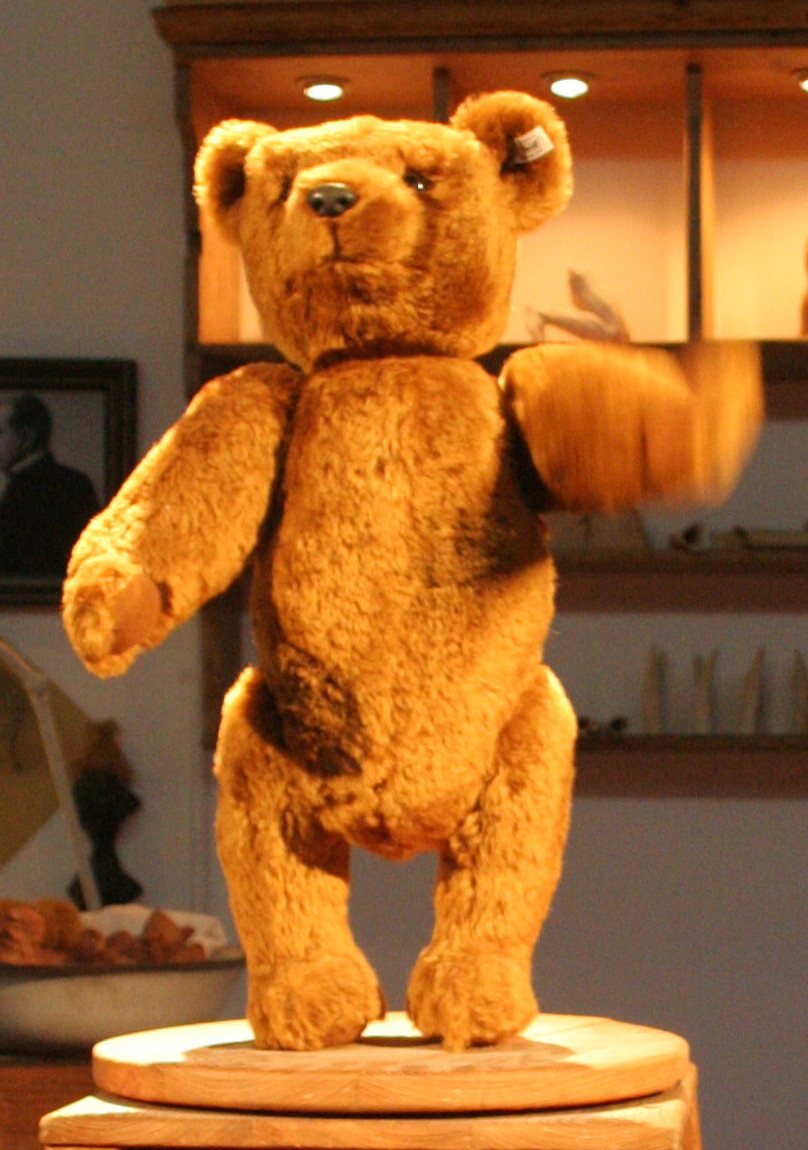
Replica of an original 1903 Steiff Bär PB 55 with moveable limbs, Steiff-Museum, Giengen, Germany

A stuffed toy is a toy with an outer fabric sewn from a textile and stuffed with flexible material. They are known by many names, such as stuffed animals, plush toys, plushies and stuffies; in Britain and Australia, they may also be called soft toys or cuddly toys. Stuffed toys are made in many different forms, but most resemble real animals (sometimes with exaggerated proportions or features), mythological creatures, cartoon characters, or inanimate objects. They can be commercially or home-produced from numerous materials, most commonly pile textiles like plush for the outer material and synthetic fiber for the stuffing. Often designed for children, some stuffed toys have become fads and collector's items.

In the late 19th century, Margarete Steiff and the Steiff company of Germany created the first stuffed animals. In 1902 a political cartoon of Theodore Roosevelt inspired the idea for "Teddy's bear". In 1903, Peter Rabbit was the first fictional character to be made into a patented stuffed toy. In 1921, A. A. Milne gave a stuffed bear to his son Christopher which would inspire the creation of Winnie-the-Pooh. In the 1970s, London-based Hamleys toy store bought the rights to Paddington Bear stuffed toys. In the 1990s, Ty Warner created Beanie Babies, a series of animals stuffed with plastic pellets that were popular as collector's items. Beginning in the 1990s electronic plush toys like Tickle Me Elmo and Furby became fads. Since 2005 beginning with Webkinz, toys-to-life stuffed toys have been sold where the toy is used to access digital content in video games and online worlds. In the 2020s plush toys like Squishmallows, Jellycat and Labubu became fads after going viral on social media.

Description

[edit]
Stuffed toy rabbit in Burkina Faso

Stuffed toys are distinguishable from other toys mainly by their softness, flexibility, and resemblance to animals or fictional characters. Stuffed toys most commonly take the form of animals, especially bears (in the case of teddy bears), mammalian pets such as cats and dogs, and highly recognizable animals such as zebras, tigers, pandas, lizards, and elephants. Many fictional animal-like characters from movies, TV shows, books, or other entertainment forms often appear in stuffed toy versions, as do both real and fictional humans if the individual or character is famous enough. These toys are filled with soft plush material.[1]

Stuffed toys come in an array of different sizes, with the smallest being thumb-sized and the largest being larger than a house.[2][3] However, the largest somewhat commonly produced stuffed toys are not much bigger than a person.[4] Most stuffed toys are designed to be an appropriate size for easy cuddling. They also come in a wide variety of colors, cloth surfaces, fur textures, and humanizing embellishments.[5]

Stuffed toys are commonly sold in stores worldwide. Vendors are often abundant at tourist attractions, airports, carnivals, fairs, downtown parks, and general public meeting places of almost any nature, especially if there are children present.[6][7]

Production

[edit]
A teddies shop in Lima, Peru

Stuffed toys are made from a range of materials. The earliest were created from felt, velvet, or mohair and stuffed with straw, horsehair, or sawdust.[8][9] Following World War II, manufacturers began to adopt more synthetic materials into production,[8] and in 1954, the first teddy bear made from easily washable materials was produced.[2] Modern stuffed toys are commonly constructed of outer fabrics such as plain cloth, pile textiles like plush or terrycloth, or sometimes socks. Common stuffing materials include synthetic fiber, batting, cotton, straw, wood wool, plastic pellets, and beans. Some modern toys incorporate electronics to move and interact with the user.[10]

Manufacturers sell two main types of stuffed toys: licensed, which are toys of characters or other licensed properties, or basic, which take the shape of ordinary animals or other non-licensed subjects.[10]

Stuffed toys can also be homemade from numerous types of fabric or yarn. For instance, amigurumi is a traditional Japanese type of knitted or crocheted stuffed toy typically made with an oversized head and undersized extremities to look kawaii ('cute').[11][12]

Cultural impact, marketing, and collectors

[edit]

Stuffed toys are among the most popular toys, especially for children. Their uses include imaginative play, comfort objects, display or collecting, and gifts to both children and adults for occasions such as graduation, illness, condolences, Valentine's Day, Christmas, or birthdays. In 2018, the global market for stuffed toys was estimated to be US$7.98 billion, with the growth in target consumers expected to drive sales upwards.[13] Many stuffed toys have become fads that have boosted the industry overall.[10]

Children, as well as adults, can use stuffed toys as comfort objects forming connections with them, often sleeping or cuddling with them for comfort. They can be sentimental objects that reduce anxiety around separation, self-esteem, and fear of the night.[14] In 2019 about a third of British adults reported sleeping with soft toys, and almost half had kept their childhood toys.[15]

History

[edit]

In 1878, The Delineator, an American magazine that offered sewing patterns, offered a "Pattern for an elephant and blanket" that was intended to be a child's toy.[16]

Two years later, the first known commercially available stuffed felt elephant originally sold as a pincushion, was made by Margarete Steiff, founder of the German Steiff company in 1880, using the Delinator pattern.[8] Steiff used newly developed technology for manufacturing upholstery to make its stuffed toys.[17] In 1892, the Ithaca Kitty became one of the first mass-produced stuffed animal toys in the United States, which was sold as "The Tabby Cat" printed pattern on muslin by Arnold Print Works.[18]

Homemade sock monkeys have been part of U.S. and Canadian culture since the Great Depression.

The toy industry significantly expanded in the early 20th century. In 1903, Richard Steiff, nephew of Margarete, designed a soft stuffed bear that differed from earlier traditional rag dolls because it was made of plush furlike fabric.[17] As an art student in Stuttgart he visited the zoo and sketched the bears, which became the inspiration for his first life-like toy bear, known as "55 PB".[19] At the same time, in the US, Morris Michtom created the first teddy bear after being inspired by a drawing of President "Teddy" Roosevelt with a bear cub.[20] In 1903, the character Peter Rabbit from English author Beatrix Potter was the first fictional character to be made into a patented stuffed toy.[21][22] The following year they went on sale and were mass produced by Steiff.[23] The popularity of stuffed toys grew, with numerous manufacturers forming in Germany, the United Kingdom,[8] and the United States.[17] Many people also handmade their own stuffed toys. For instance, sock monkeys originated when parents turned old socks into toys during the Great Depression.[24]

In 1921, A. A. Milne bought a stuffed toy from Harrods department store in London for his son Christopher Robin, a toy which would later inspire the author's creation of Winnie-the-Pooh.[25] Stuffed toys of Paddington Bear, a character created by Michael Bond, were first produced by the family of Jeremy Clarkson in 1972, with the family eventually selling the rights to London-based Hamleys toy store.[26]

Some Beanie Babies on display by a collector

In the 1990s, Ty Warner created Beanie Babies, a series of animals stuffed with plastic pellets. The toys became a fad through marketing strategies that increased demand and encouraged collection.[27][28]

Beginning in the 1990s, stuffed toys with electronics have become fads. Tickle Me Elmo, a laughing and shaking plush toy based on the character Elmo from the Sesame Street television show, was released in 1996 and was soon in demand, with some people buying and reselling the toy for hundreds of dollars.[29] This was followed by similar fads, including the robotic talking plush toy Furby released in 1998[30] and ZhuZhu Pets, a line of robotic plush hamsters released in 2009.[31][32]

More recent lines of stuffed animals have been created around unique concepts, like Uglydoll, introduced in 2001, with a number of recognizable characters and overarching style.[33] Pillow Pets, which can be folded from a pillow into a stuffed animal, were another successful brand, launching in 2003 and selling more than 30 million toys between 2010 and 2016.[34]

Beginning in 2005 with Webkinz from Ganz, toys-to-life stuffed toys that unlock online content appeared on the market. Webkins each came with a different "Secret Code" that gave access to the Webkinz World website and a virtual version of the toy for online play.[35][36] They were followed by other stuffed toys with codes to unlock digital content in online worlds, such as Disney's Club Penguin and Build-A-Bearville from Build-A-Bear Workshop.

Modern plushies from Japan are known for kawaii styles, generally thought of as (at least globally) starting with Sanrio's Hello Kitty, with characters from media franchises like Pikachu and Eevee from Pokémon, and characters from stationery company San-X including Rilakkuma and the Sumikko Gurashi characters.[37] There is also a trend of Japanese plushies being shaped like mochi. In 2013, Disney launched its first collection of Disney Tsum Tsum stuffed toys based on characters from different Disney properties. Inspired by the app of the same name, Tsum Tsums were first released in Japan (an example of mochi shaped plushies) before expanding to the United States.[38]

Squishmallows became a fad after going viral on social media, in particular TikTok, during the COVID-19 pandemic in 2020–21.[39] In the mid 2020s, stuffed toy keychains that could be used as fashion accessories, like Labubu and Jellycat, became fads after being worn by celebrities.[40]

See also

[edit]

References

[edit]
Revisions and contributorsEdit on WikipediaRead on Wikipedia
from Grokipedia
A stuffed toy is any article intended for use by children as a plaything, educational tool, or recreational item, which is wholly or partially filled with soft materials such as , kapok fibers, , , or pellets. These toys are typically fashioned from fabric, resembling animals, characters, or objects, and provide tactile comfort through their construction. The modern stuffed toy industry originated in in the late 19th century, when founded her manufactory in 1880, beginning with felt products including the "Elefäntle" toy elephant pincushion that evolved into a popular play item. In 1902, her nephew designed the "Bear 55 PB," the first jointed made from with movable limbs, which debuted successfully at the Toy Fair and sold 3,000 units to an American buyer. This innovation marked the advent of mass-produced plush animals, later branded with Steiff's "Button in Ear" trademark in 1904 to combat imitations, and the 's name derived from U.S. President Theodore Roosevelt's 1902 hunting anecdote. Early materials included natural fabrics like felt and stuffed with straw or rags, evolving to synthetic fibers and fillings for durability and safety in contemporary manufacturing. Stuffed toys hold enduring cultural value as companions fostering imagination, emotional security, and developmental skills in children, often functioning as "transitional objects" to ease separation anxiety. They are produced globally under strict safety standards to mitigate risks like choking hazards from small parts, flammability, and chemical exposure from materials, as enforced by regulations such as ASTM F963 . Despite their innocence, quality varies with manufacturing origins, prompting ongoing scrutiny of supply chains for compliance with lead, phthalate, and flammability limits.

Definition and Characteristics

Materials and Construction

Stuffed toys are constructed using outer fabrics and internal fillings selected for durability, softness, and safety. Early examples, such as those produced by starting in 1880, employed natural materials like —a fabric derived from the of Angora goats—for the exterior, providing a soft, durable pile that mimicked animal . Felt and velvet were also common for simpler forms, offering rigidity and texture suitable for shaping limbs and features. These fabrics were hand-cut and sewn, with stuffing materials including straw, wood shavings (excelsior), or kapok—a silky from seed pods—for volume and resilience. In contemporary production, synthetic fabrics dominate due to cost efficiency, uniformity, and ease of cleaning. Polyester-based plush, including short-pile minky and longer faux fur variants, accounts for the majority of outer coverings, comprising approximately 43.9% of the soft toy market by material share in 2024. These materials are flame-retardant and resistant to allergens, contrasting with natural fibers that could harbor dust or degrade over time. Stuffing has shifted to polyester fiberfill, a lightweight, resilient synthetic batting that maintains shape under compression and is machine-washable, widely adopted since the mid-20th century for its hypoallergenic properties and low flammability. Alternative fillings include polypropylene beads for weighted toys or recycled polyester for eco-focused variants, though polyester remains predominant for its balance of loft and affordability. Construction begins with pattern drafting, often digitally for precision in . Fabric is cut using dies or cutters to minimize waste, then sewn on industrial machines—typically inside-out to hide seams—with reinforced stitching at stress points like limbs. For articulated figures, such as jointed bears, metal pins, rivets, or joints connect movable parts, allowing while meeting child standards. The is inverted, stuffed through a small opening via automated blowers or manual insertion for custom work, and closed with a ladder stitch or seam. Features like embroidered eyes or noses are added post-stuffing to prevent detachment hazards. This process, labor-intensive in phases, integrates for scaling, as seen in factories where a single may require up to seven hours of hand-finishing for premium lines. Variations in construction accommodate specialized types, such as sock monkeys made from repurposed tubular socks stuffed with polyfill or remnants, sewn with basic hand tools for a rustic, non-jointed form. influences material choices, mandating non-toxic, flame-resistant components tested under standards like those from the U.S. Consumer Product Safety Commission, ensuring fillings do not exceed flammability thresholds and fabrics resist pilling or tearing.

Types and Variations

Stuffed toys are broadly classified by their external form and intended representation, with the majority depicting animals in anthropomorphic styles for companionship and play. The archetypal example is the , featuring a soft, cylindrical body with rounded limbs, often in brown or neutral tones to evoke ursine features, constructed from short-pile fabric and filled with synthetic fiberfill for . Other animal plush variants include realistic replicas of such as lions, elephants, or like dolphins, alongside farm animals (e.g., cows, sheep) and domestic pets (e.g., ), differentiated by species-specific detailing in fur texture and coloration to enhance tactile realism. ![Best sock monkeys.jpg][float-right] Character-based stuffed toys replicate figures from media, , or branding, such as licensed depictions of animals or protagonists, often with embroidered facial features and accessories to match source material; these comprise a significant market segment due to . Novelty variations extend beyond to include abstract or thematic shapes, such as items (e.g., plush fruits), vehicles, or household objects, filled similarly but shaped for decorative or stress-relief purposes like pillow-like forms. Handcrafted types, exemplified by sock monkeys sewn from repurposed tube with eyes and mouths, originated as Depression-era folk toys in the United States around the , emphasizing rudimentary stuffing with rags or cotton for affordability and customization. Interactive variants incorporate mechanisms like squeakers, battery-powered sounds, or LED lights, activated by pressure or motion to simulate animal behaviors, while weighted models use dense pellets for therapeutic grounding effects. Filling materials vary from traditional for uniform softness to plastic beans or pellets in posable designs like those popularized in the 1990s line, which allow weighted bases for upright display; exteriors range from for sheen to knitted fabrics for textured appeal, influencing durability and sensory feedback. Contemporary variations include eco-friendly stuffed toys made with natural and organic materials in response to consumer demand for sustainable options. These feature exteriors of GOTS-certified organic cotton and fillings of natural wool (such as lambswool or sheep's wool), providing hypoallergenic, breathable, and environmentally friendly alternatives. Notable examples include German brands Sigikid Organic and Senger Naturwelt, which produce premium plush toys with organic cotton exteriors and organic wool fillings, often machine-washable on wool cycles, as well as Hoppa dolls, which use organic cotton and sheep's wool for natural comfort and durability. These brands are praised in online parenting communities for their high quality, durability, machine-washability, and use of non-toxic natural materials. Size scales from palm-sized miniatures (under 6 inches) for portability to oversized giants exceeding 6 feet, with larger forms often requiring reinforced seams and denser stuffing to maintain structural integrity under handling. These adaptations reflect production efficiencies and consumer demands for functionality beyond basic cuddling, such as educational play or sensory .

History

Origins and Early Development

Archaeological evidence indicates that rudimentary stuffed toys, in the form of cloth dolls filled with rags or natural fibers, existed as early as ancient Egypt, with examples dating to the 21st century B.C. These precursors to modern stuffed toys were crafted from available fabrics and served as playthings for children in civilizations including Egypt, Greece, and Rome. The transition to more recognizable stuffed animals occurred in the late in , where began producing felt-based plush toys in 1880, starting with an pin cushion that evolved into playthings. By 1892, her workshop had expanded to include stuffed camels, horses, and dogs, marking the inception of commercially viable stuffed animals designed for children. A pivotal advancement came in 1902 when , Margarete's nephew, designed the first jointed teddy bear prototype (model 55 PB), independently paralleling developments in the United States inspired by a depicting President sparing a bear during a 1902 . This event, publicized in on November 15, 1902, led to the naming of "s" by American toy maker , who produced and sold the first such toys in late 1902, with Steiff's version gaining popularity in the U.S. market by 1903.

Industrial Era and Mass Production

Advancements in and mechanized during the 19th-century enabled the shift from artisanal cloth figures to factory-based production of stuffed toys, leveraging innovations like power looms and sewing machines introduced in the 1850s. In , which emerged as a hub for early plush toy manufacturing, Margarete founded her company in 1880 in Giengen an der Brenz, initially producing simple stuffed elephants and other animals from felt and fabric scraps, representing one of the first dedicated commercial efforts in scalable plush toy output. By the 1890s, adapted upholstery production techniques to create more durable stuffed animals using and excelsior filling, allowing for consistent quality and increased volume as demand grew among middle-class families. The pivotal breakthrough came in when , Margarete's nephew, designed the 55 PB—a 55-centimeter jointed made from fabric with movable limbs—inspired by observations of bears at the Zoo and the refusal of U.S. President to shoot a captive during a hunt, which popularized the "" moniker in America. This design facilitated mass appeal, with exporting 3,000 units to the following a large order at the 1903 Toy Fair, marking the onset of global distribution networks for toys. Post-1902, assembly-line methods proliferated, enabling companies like to produce over a million by 1907 and spurring competitors in and the U.S. to adopt similar factory processes, which reduced costs and made stuffed toys accessible beyond elite households. Early 20th-century innovations, such as improved stuffing machines transitioning from hand-cranked to semi-automated systems, further accelerated output, transforming stuffed toys from novelty items into staples of childhood play by the . This era's emphasis on and in materials laid the groundwork for the plush industry's expansion amid rising and consumer markets. In recent years, stuffed toys have incorporated and interactive technologies to enhance engagement, with AI-powered models featuring voice recognition, motion sensors, and capabilities that simulate conversation and respond to user input. The global AI plush toys market, valued at USD 102 million in 2025, is projected to reach USD 1,373 million by 2032, driven by demand for educational and companionship functions, though experts caution that such devices may disrupt by substituting human interaction with algorithmic responses, potentially altering neural pathways for social bonding. Customization has advanced through , , and AI-assisted design tools, enabling of personalized plush forms based on user specifications, which reduces production time and waste while appealing to niche markets like branded merchandise. Embedded features such as LED lights, sound modules, and app connectivity further transform traditional plush into multifunctional devices, with examples including toys that teach languages or track emotional states via sensors. Sustainability innovations emphasize biodegradable and recycled materials, including , recycled from plastic bottles, fiber, and corn-based PLA fibers, with producers like Aurora World reporting the diversion of over 700 million bottles from landfills through such practices. Bio-fluff, a scalable plant-derived filling produced at over 15,000 meters weekly, offers a recyclable alternative to petroleum-based synthetics, aligning with consumer demand for reduced environmental impact amid growing regulatory pressures on . Market trends reflect expansion into adult collectibles and sensory-focused designs, such as squishmallow-like textures for tactile comfort, alongside IP-licensed tied to media franchises, contributing to industry growth from USD 11.3 billion in 2025 to a projected USD 22.9 billion by 2035 at a 7.3% CAGR. , embroidered-safety standards have become prevalent for products, while nostalgia-driven revivals and eco-customization cater to millennial parents prioritizing durability and ethics over disposability.

Manufacturing and Production

Production Processes

The production of stuffed toys, also known as toys, typically follows a sequential industrial process that emphasizes efficiency, cost-effectiveness, and compliance with material standards. Factories, often located in regions like where over 80% of global plush toy production occurs, utilize a combination of automated machinery and manual labor to scale output from prototypes to millions of units annually. The process begins with fabric , where synthetic materials such as or fleece are sourced for their durability, softness, and properties, selected based on specifications for texture and colorfastness. Fabric preparation involves pre-treatment steps like washing or steaming to remove impurities and ensure even , followed by cutting into pattern pieces using or die-cutting machines for precision in high-volume runs. These pieces are then printed or with details such as features or via industrial printers or multi-head embroidery machines, which apply designs directly onto the fabric before assembly to minimize post- alterations. constitutes the core assembly phase, where cut pieces are stitched together inside-out using machines to form the toy's shell, leaving openings for ; this step often requires skilled workers to handle curves and joints, achieving seam strengths that withstand repeated handling. Stuffing follows, with fiber or pellets inserted via pneumatic blowers or manual funnels to achieve uniform density and shape retention, typically comprising 70-90% of the toy's final weight. Accessories like plastic eyes, noses, or ribbons are then attached via secure stitching or heat-sealing to prevent detachment, adhering to protocols that limit small parts for child-targeted products. Final hand-shaping corrects any distortions, followed by quality inspections for defects such as loose threads or uneven filling, with defective units reworked or discarded at rates below 5% in efficient lines. Packaging completes the cycle, often in polybags or boxes for retail distribution. Variations exist for custom or artisanal production, incorporating more manual or for prototypes, but industrial methods prioritize speed, with full cycles from cutting to packing spanning 20-50 days for batches of 500-10,000 units.

Global Industry Dynamics

The global stuffed and plush toys market reached a valuation of USD 11.76 billion in 2023, with projections estimating growth to USD 12.68 billion in 2024 and further expansion at a (CAGR) of approximately 8% into the 2030s, driven by rising disposable incomes in emerging markets, penetration, and demand for licensed character merchandise. This segment constitutes a subset of the broader toys industry, where items appeal primarily to children under 12 but increasingly to adult collectors via nostalgia-driven products. Key growth factors include personalization options, such as customizable stuffed animals offered by retailers like Build-A-Bear, and integration with digital media tie-ins from brands like and Pokémon. China maintains overwhelming dominance in production, exporting over 60% of the world's plush toys as of 2025, with manufacturing concentrated in provinces like , , and due to established supply chains, low labor costs, and access to synthetic filling materials such as polyester fiber. This concentration stems from post-1980s industrialization, where foreign brands like and outsourced assembly to leverage , resulting in China producing upwards of 70-80% of global toys overall, including stuffed variants reliant on imported fabrics and exported finished goods. Major multinational firms, including Ty Inc., Aurora World, , and , design in Western markets but fabricate predominantly in , with China's output supported by over 4,000 specialized factories handling everything from prototyping to high-volume injection molding for components. Global trade dynamics reflect this asymmetry, with as the primary exporter—accounting for billions in annual shipments to the , , and —while imports into consumer markets like the U.S. exceed $1 billion yearly for categories under code 9503.41 (stuffed toys representing animals). Tariffs imposed during the 2018-2020 U.S.- trade tensions, reaching 25% on certain toy imports, prompted partial diversification to and , though 's cost advantages and infrastructure sustain its lead, with exports rebounding post-2022. Emerging challenges include raw material volatility from petroleum-based synthetics and regulatory pressures for eco-friendly alternatives, yet the industry's resilience is evident in sustained double-digit growth in East Asian production hubs. and dominate consumption, representing over 50% of demand due to higher spending on children's toys, while production efficiencies enable competitive pricing worldwide.

Safety and Regulatory Standards

In the United States, the Consumer Product Safety Commission (CPSC) mandates compliance with ASTM F963-23, the Standard Consumer Safety Specification for , as a federal requirement for all toys intended for children under 14 years, including stuffed toys, effective April 20, 2024. This standard addresses mechanical hazards such as small detachable parts that pose risks for children under 3 years, requiring toys to withstand , tension, and impact tests without liberating components smaller than specified cylinder dimensions. Flammability testing under ASTM F963 and 16 CFR 1500.44 evaluates fabric surfaces and solid fillings, prohibiting burn rates exceeding 0.4 inches per second for cellulosic materials to mitigate fire risks. Chemical limits, reinforced by the Consumer Product Safety Improvement Act (CPSIA) of 2008, ban above 0.1% in accessible plastic parts and restrict like lead to 100 ppm in substrates, with third-party laboratory certification required prior to distribution. In the , the Toy Safety Directive 2009/48/EC establishes essential requirements for toys, including items, enforced through harmonized standards like series, which prohibit small parts for children under 36 months via small parts cylinder tests and mandate mechanical integrity to prevent seam failures that could release stuffing as ingestion hazards. Flammability under EN 71-2 limits burn rates for textile materials to under 30 mm per second and requires non-flammable fillings, while chemical safety via EN 71-3 restricts migration of elements such as to 4.5 mg/kg and mandates phthalate limits below 0.05% for restricted substances. Manufacturers must affix , supported by technical documentation and risk assessments, with national market surveillance ensuring compliance; violations have prompted recalls for non-conforming imported stuffed toys exhibiting excessive emissions or detachable eyes. Internationally, the ISO 8124 series provides benchmarks influencing national regulations, with ISO 8124-1:2022 specifying mechanical and physical tests for toys from birth to 14 years, including drop and squeeze tests for stuffed toys to avert entrapment or laceration risks, and prohibiting small parts for younger age groups. ISO 8124-2:2023 governs flammability, requiring toys to self-extinguish within specified times when exposed to flame, addressing rapid ignition in fabrics. Chemical migration limits in ISO 8124-3 align with global concerns over toxins like at 60 mg/kg, though adoption varies; many jurisdictions prioritize empirical testing over self-certification to counter risks from substandard imports, as evidenced by CPSC recalls of over 1 million non-compliant stuffed animals in 2023 for and lead violations. These standards emphasize washability for in stuffed toys to reduce microbial hazards, though enforcement gaps persist in unregulated markets.

Psychological and Developmental Role

Evidence-Based Benefits

Stuffed toys function as transitional objects, offering psychological comfort to children by symbolizing the caregiver's presence and mitigating separation anxiety during early childcare experiences, as evidenced by twin studies linking attachment to such objects with adaptive coping mechanisms. This attachment aligns with Donald Winnicott's 1953 conceptualization, where soft objects bridge the infant's internal world and external reality, fostering emotional security without pathological dependence when appropriately managed. Empirical interventions demonstrate stuffed toys' role in emotion regulation; for instance, children in middle childhood interacted with responsive plush toys to self-soothe following conflicts, slowing simulated heartbeats through calming strokes and thereby practicing physiological calming techniques. In clinical settings, programs involving play with plush toys reduced self-reported post-surgical pain in pediatric patients, with experimental groups scoring lower on pain scales compared to controls, attributed to and tactile soothing. Developmentally, engagement with stuffed toys through pretend play enhances social-emotional skills, including and construction, as children attribute emotions and roles to the objects, paralleling broader play's contributions to and linguistic growth. Library-based initiatives, such as stuffed animal "sleepovers," have increased children's reading engagement and attachment behaviors, promoting and sustained interest in stories. Preoperative exposure to , including varieties, similarly lowered anxiety levels in children awaiting , facilitating better cooperation and emotional preparedness.

Criticisms and Limitations

While transitional objects like stuffed toys offer short-term comfort by reducing immediate stress through tactile and familiarity, they lack the capacity for reciprocal interaction, guidance, or contingent responsiveness essential for developing complex social and emotional skills, potentially limiting their role in fostering genuine interpersonal relationships. Empirical studies indicate that attachments to such objects do not correlate with reduced behavioral disturbances or long-term improvements in emotional regulation, suggesting benefits are primarily situational rather than developmentally transformative. In contexts of childhood or emotional adversity, heightened attachment to stuffed often emerges as a compensatory mechanism, substituting for inadequate primary bonds but failing to resolve underlying attachment insecurities or relational deficits. A 2012 study published in the Journal of Genetic Psychology found that adolescents maintaining strong attachments to transitional objects exhibited poorer overall outcomes, including elevated anxiety and depressive symptoms, compared to peers who had relinquished such attachments. Similarly, research links persistent object attachment in later developmental stages to indicators of psychological distress, such as impaired interpersonal functioning. Critiques of the transitional objects framework, originating from Winnicott's , highlight its assumption of inherent temporariness, which empirical observations contradict; many individuals retain emotional bonds to stuffed toys into adulthood, potentially signaling unresolved separation-individuation challenges rather than normative progression. This endurance challenges the theory's causal claims about facilitating healthy autonomy, as prolonged reliance may perpetuate avoidance of real-world relational demands. Overall, while stuffed toys provide adjunctive support, their psychological utility is constrained by the absence of rigorous, large-scale longitudinal evidence demonstrating causal benefits beyond immediate soothing, underscoring the primacy of human interactions in .

Cultural and Social Dimensions

The global market for stuffed animals and plush toys was valued at approximately USD 11.76 billion in 2023, with projections estimating growth to USD 20.29 billion by 2030 at a (CAGR) of around 8%. In the United States, the segment reached USD 3.40 billion in 2023, driven by expansion and character licensing, with an expected CAGR of 6.1% through 2030. Sales volumes exceeded 1.2 billion units globally in 2024, reflecting sustained demand amid rising disposable incomes in emerging markets. Consumer demographics have shifted notably toward adults and older millennials, with 43% of U.S. adults reporting purchases of toys for personal use in the prior year as of 2024 surveys. Adult spending on toys surpassed that of preschoolers in early 2024, totaling over USD 1.5 billion for those aged 18 and up from January to April alone, fueled by nostalgia and stress-relief appeal of plush items. This trend aligns with broader patterns where millennials and Generation Z prioritize plush toys for emotional comfort, contributing to an 8.2% annual market expansion through 2030. Marketing strategies emphasize licensed characters from media franchises, which accounted for a significant portion of sales through tie-ins with films and animations, enhancing among children while appealing to adult collectors. options, such as custom and sizes, have gained traction, with consumers favoring versatile, high-quality designs for gifting and self-purchase. Sustainability drives purchasing decisions, as awareness of environmental impacts prompts demand for organic and recycled-material plush, including products featuring natural wool fillings. In online communities focused on natural parenting, such as Reddit's r/moderatelygranolamoms, popular recommendations include German brands like Sigikid Organic and Senger Naturwelt, along with Hoppa dolls, which are praised for their high-quality organic cotton exteriors (often GOTS-certified), wool stuffing, durability, machine-washability, and premium construction. Seasonal promotions around holidays and back-to-school periods, amplified via and platforms, further boost volumes, with regional adaptations tailoring offerings to cultural preferences.

Collecting and Adult Engagement

Adult collectors of stuffed toys, often referred to as plushophiles in hobbyist circles, pursue the activity for reasons including , emotional comfort, and potential value. A 2018 survey by OnePoll found that 43 percent of still with or otherwise engage with a stuffed from childhood, citing stress relief and a sense of as primary motivators. Research on suggests that retaining such items into adulthood can aid emotional regulation, particularly during periods of anxiety or transition, by evoking positive childhood associations without implying immaturity. Collectors often display their items in dedicated spaces, such as bookshelves or glass cases, to integrate them aesthetically into adult living environments while preserving condition for value retention. Vintage and limited-edition stuffed toys form the core of serious collections, with brands like commanding premium prices due to their historical craftsmanship and scarcity. For instance, a 1904 teddy bear with a growler mechanism fetched $142,000 at a 2010 , reflecting demand for pre-1915 examples in excellent condition. The 1990s phenomenon drew millions of adult investors, with rare prototypes like the "Gail" bear selling for over $6,000 in recent secondary markets, though most mass-produced items have depreciated significantly post-bubble. Contemporary trends include high-end collaborations, such as Pop Mart's Labubu figures, where a human-sized mint green version auctioned for $170,000 in 2025, driven by scarcity and celebrity endorsements rather than traditional toy utility. Organized communities facilitate engagement through online forums, social media groups, and events tailored to enthusiasts. Platforms like Reddit's r/plushies subreddit host discussions on acquisition strategies and preservation techniques, while broader toy conventions, such as the annual Toy Fair New York, feature plush vendor booths and collector meetups. These gatherings emphasize —verifying tags, materials, and —to mitigate counterfeits, which plague the market for items valued over $500. engagement extends beyond acquisition to customization and , where collectors anthropomorphize toys in personal narratives, enhancing emotional bonds without commercial intent. Preservation practices underscore the hobby's rigor, including climate-controlled storage to prevent degradation and avoidance of direct , as evidenced by guidelines from collector specialists. While psychological benefits are empirically linked to tactile comfort reducing levels in small-scale studies, investment returns remain speculative, with only pristine rarities appreciating amid broader market saturation.

Media Representation and Symbolism

Stuffed toys have been prominently featured in and media since the early , often anthropomorphized to explore themes of friendship, innocence, and emotional resilience. In A.A. Milne's (1926), the titular bear, inspired by Milne's son Christopher's real stuffed toys, symbolizes childlike wonder and companionship through gentle adventures in the , influencing subsequent animations starting in 1966. Similarly, ' The Velveteen Rabbit (1922) portrays a stuffed rabbit's quest for realness as a for love's transformative power, highlighting imagination's role in transcending material form. In film and television, stuffed toys serve as comic relief or poignant symbols of attachment. Seth MacFarlane's Ted (2012) depicts a magically animated teddy bear as a profane adult companion, subverting traditional innocence to critique maturity and loyalty, grossing over $549 million worldwide. Pixar's Toy Story 3 (2010) features Lots-O'-Huggin' Bear as a initially comforting yet ultimately tyrannical figure in a daycare setting, representing betrayed trust and the passage from childhood, contributing to the film's $1.06 billion box office. On television, Mr. Bean's Teddy (debuting 1990) embodies silent loyalty amid slapstick chaos, underscoring stuffed toys' role as unchanging confidants in narratives of isolation. Symbolically, stuffed toys function as transitional objects in , providing psychological comfort by bridging separation anxiety and fostering security, as evidenced by their association with oxytocin release and stress reduction in empirical studies on emotional support. Donald Winnicott's concept of the "not-me possession," such as a or blanket, underscores their role in allowing children to externalize and manage emotions independently. Culturally, originating from the 1902 inspired by Theodore Roosevelt's mercy toward a during a hunt, they evoke and conservation , evolving into emblems of unconditional care given at births, sympathies, or affections. In broader media, they often denote and lost , as in characters retaining childhood toys to signify or enduring vulnerability. This dual representation—playful yet profound—reflects their empirical utility in soothing anxiety, with research indicating visual appeal of correlates with increased caregiving motivation and emotional soothing.

Controversies and Challenges

Health and Safety Risks

Stuffed toys pose hazards primarily through detachable small parts such as eyes, noses, buttons, or squeakers, which can break off during play and become lodged in a child's airway, particularly for children under three years old. The U.S. Consumer Product Safety Commission (CPSC) mandates warning labels on toys intended for children aged 3-6 if they present risks to younger children, and has issued alerts for specific items like counterfeit Labubu dolls that fragment into small pieces. In 2025, the CPSC reported incidents of such fake dolls releasing ingestible parts, urging consumers to discard them immediately. For infants, stuffed toys increase suffocation risks when placed in sleep environments, as soft, compressible materials can obstruct airways or cover the face during rolling or repositioning. The recommends keeping free of soft objects, including plush toys, until at least 12 months of age to mitigate sudden unexpected death (SUID) associated with or . Studies link soft and toys to elevated suffocation rates, with mechanical suffocation remaining a leading cause of when such items are present. Hygiene concerns arise from microbial growth on stuffed toys, which accumulate like E. coli and mold spores if soiled, mouthed, or stored in damp conditions, potentially leading to gastrointestinal infections or respiratory issues in children with immature immune systems. A 2025 study detected harmful in every tested stuffed animal, emphasizing regular cleaning to prevent harboring. Improper drying after washing can foster mold, particularly in cellulose-based fillings, exacerbating allergies or infections. Chemical exposures include in plastic components of some stuffed toys, which act as endocrine disruptors linked to reproductive and developmental harms, though concentrations above 0.1% have been prohibited by the CPSC since for toys accessible to children under three. Imported or older toys may still contain elevated levels, as detected in surveys of Chinese-made plastics, prompting recommendations to inspect for non-toxic certifications. from synthetic fillings can also shed airborne particles during handling, contributing to risks.

Environmental and Ethical Concerns

The production of stuffed toys predominantly relies on synthetic materials such as polyester plush fabrics and plastic-based fillings derived from petroleum, contributing to significant environmental degradation through resource extraction and energy-intensive manufacturing processes. The toy industry, including plush items, consumes approximately 40 tons of plastic per $1 million in revenue, rendering it the most plastic-intensive sector globally. Around 90% of toys, encompassing stuffed animals, are composed of plastic, which often incorporates additives like heavy metals (e.g., lead or cadmium) and chemicals such as dioxins, posing risks during production and disposal. Disposal exacerbates these impacts, with nearly 80% of toys, including varieties, concluding their lifecycle in s, incinerators, or oceans, where non-biodegradable s persist for centuries and contribute to micro pollution. In the United States alone, toys account for about 6% of waste, with an estimated 40 million toys discarded annually. Specifically for stuffed animals, roughly 8 million units are thrown away each year worldwide, amplifying marine and terrestrial pollution as synthetic fibers degrade slowly. (PVC) used in some toys releases toxic dioxins during manufacturing and , further harming ecosystems and human health. arise from decomposition and production, with materials like exhibiting high global warming potential across the supply chain. Ethically, stuffed toy manufacturing has been linked to exploitative labor practices, particularly in factories in and other developing regions where oversight is limited. Investigations have documented child labor in the production of popular items, such as Disney's Cars-themed toys, where underage workers faced excessive overtime exceeding legal limits by threefold. Factories supplying brands like , , and have reported forced overtime, inadequate wages, unsafe working conditions, and instances of , with violations persisting as of 2018 and 2020 audits. The U.S. Department of Labor has identified child labor in soft toy production in countries like , involving minors in family-based operations handling materials such as fur. Broader reports highlight forced labor in China's toy sector, which dominates global production, underscoring opacity and weak enforcement of international standards. While some manufacturers have adopted sustainable alternatives like recycled polyester from plastic bottles or fillings to mitigate impacts, these remain niche efforts amid dominant mass-production models reliant on cheap, non-renewable inputs. Regulatory changes, such as Pennsylvania's law permitting recycled stuffing in plush toys, signal incremental progress, but systemic issues in persist without comprehensive oversight. Consumer demand for ethical sourcing has prompted certifications like Global Organic Textile Standard (GOTS) for select lines, yet investigations indicate widespread non-compliance in high-volume factories.

References

Add your contribution
Related Hubs
User Avatar
No comments yet.