Hubbry Logo
Cucumis meloCucumis meloMain
Open search
Cucumis melo
Community hub
Cucumis melo
logo
8 pages, 0 posts
0 subscribers
Be the first to start a discussion here.
Cucumis melo
Cucumis melo
from Wikipedia

Cucumis melo
Scientific classification Edit this classification
Kingdom: Plantae
Clade: Tracheophytes
Clade: Angiosperms
Clade: Eudicots
Clade: Rosids
Order: Cucurbitales
Family: Cucurbitaceae
Genus: Cucumis
Species:
C. melo
Binomial name
Cucumis melo
Synonyms[1]
List
    • Cucumis acidus Jacq.
    • Cucumis agrestis (Naudin) Greb. nom. inval.
    • Cucumis alba Nakai
    • Cucumis ambiguus Fenzl ex Hook.f. nom. inval.
    • Cucumis arenarius Schumach. & Thonn.
    • Cucumis aromaticus Royle
    • Cucumis bardanus Fenzl ex Naudin nom. inval.
    • Cucumis bisexualis A.M.Lu & G.C.Wang
    • Cucumis callosus (Rottler) Cogn.
    • Cucumis campechianus Kunth
    • Cucumis cantalupensis Haberle ex M.Roem. nom. illeg.
    • Cucumis cantalupo Rchb.
    • Cucumis chate Hasselq.
    • Cucumis chate L.
    • Cucumis chinensis (Pangalo) Pangalo
    • Cucumis chito C.Morren
    • Cucumis cicatrisatus Stocks
    • Cucumis cognata Fenzl ex Hook.f. nom. inval.
    • Cucumis conomon Thunb.
    • Cucumis cubensis Schrad.
    • Cucumis deliciosus Salisb. nom. illeg.
    • Cucumis dudaim L.
    • Cucumis eriocarpus Boiss. & Noë
    • Cucumis erivanicus Steud. nom. inval.
    • Cucumis flexuosus L.
    • Cucumis jamaicensis Bertero ex Spreng.
    • Cucumis jucunda F.Muell.
    • Cucumis laevigatus Chiov.
    • Cucumis maculatus Willd.
    • Cucumis microcarpus (Alef.) Pangalo
    • Cucumis microsperma Nakai
    • Cucumis microspermus Nakai
    • Cucumis momordica Roxb.
    • Cucumis moschatus Gray nom. illeg.
    • Cucumis odoratissimus Moench nom. illeg.
    • Cucumis odoratissimus W.M.Carp. & Riddell nom. illeg.
    • Cucumis officinarum-melo Crantz
    • Cucumis orientalis Kudr.
    • Cucumis pancherianus Naudin
    • Cucumis pedatifidus Schrad.
    • Cucumis persicodorus Seitz
    • Cucumis persicus (Sarg.) M.Roem.
    • Cucumis pictus Jacq.
    • Cucumis princeps Wender.
    • Cucumis pseudocolocynthis Royle
    • Cucumis pseudocolocynthis Wender.
    • Cucumis pubescens Willd.
    • Cucumis pyriformis Roxb. ex Wight & Arn. nom. inval.
    • Cucumis reflexus Zeyh. ex Ser. nom. inval.
    • Cucumis reginae Schrad.
    • Cucumis schraderianus M.Roem.
    • Cucumis serotinus Haberle ex Seitz
    • Cucumis trigonus Roxb.
    • Cucumis turbinatus Roxb.
    • Cucumis umbilicatus Salisb. nom. illeg.
    • Cucumis utilissimus Roxb.
    • Cucumis villosus Boiss. & Noë nom. inval.
    • Cucurbita aspera Sol. ex G.Forst. nom. inval.
    • Ecballium lambertianum M.Roem.
    • Melo adana (Pangalo) Pangalo
    • Melo adzhur Pangalo
    • Melo agrestis (Naudin) Pangalo
    • Melo ameri Pangalo
    • Melo cantalupensis (Naudin) Pangalo
    • Melo cassaba Pangalo
    • Melo chandalak Pangalo
    • Melo chinensis Pangalo
    • Melo conomon Pangalo
    • Melo dudaim (L.) Sageret
    • Melo figari Pangalo
    • Melo flexuosus (L.) Pangalo
    • Melo microcarpus (Alef.) Pangalo
    • Melo monoclinus Pangalo
    • Melo orientalis (Kudr.) Nabiev
    • Melo persicus Sageret
    • Melo sativus Sageret
    • Melo vulgaris Moench ex Cogn.
    • Melo zard Pangalo
    • Melo × ambiguua Pangalo

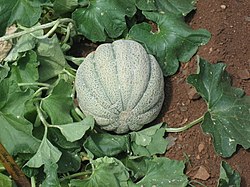
Cucumis melo, also known as melon,[2][3] is a species of Cucumis that has been developed into many cultivated varieties. The fruit is a pepo. The flesh is either sweet or bland, with or without an aroma, and the rind can be smooth (such as honeydew), ribbed (such as European cantaloupe), wrinkled (such as Casaba melon), or netted (such as American cantaloupe). The species is sometimes referred to as muskmelon.[4] However, there is no consensus about the usage of this term, as it can also be used as a specific name for the musky netted-rind American cantaloupe, or as a generic name for any sweet-flesh variety such the inodorous smooth-rind honeydew melon.[5][6]

The origin of melons is not known. Research has revealed that seeds and rootstocks were among the goods traded along the caravan routes of the Ancient World. Some botanists consider melons native to the Levant and Egypt, while others place their origin in Iran,[7] India or Central Asia.[8] Still others support an African origin; in modern times, wild melons can still be found in some African countries.[9]

Background

[edit]

The melon is an annual, trailing herb.[8] It grows well in subtropical or warm, temperate climates.[9] It can be found as a weed around sites of recently built airports in American Samoa.[10]

Melons prefer warm, well-fertilized soil with good drainage that is rich in nutrients,[8] but are vulnerable to downy mildew and anthracnose. Disease risk is reduced by crop rotation with non-cucurbit crops, avoiding crops susceptible to similar diseases as melons. Cross pollination has resulted in some varieties developing resistance to powdery mildew.[11] Insects attracted to melons include the cucumber beetle, melon aphids, melonworm moth and the pickleworm.[11]

Genetics

[edit]
Genomic information
NCBI ID3656
Ploidydiploid
Genome size374.77 Mb
Number of chromosomes12
Year of completion2012

Melons are monoecious or andromonoecious plants.[12] They do not cross with watermelon, cucumber, pumpkin, or squash, but varieties within the species intercross frequently.[13] The genome of Cucumis melo was first sequenced in 2012.[14] Some authors treat C. melo as having two subspecies, C. melo agrestis and C. melo melo. Variants within these subspecies fall into groups whose genetics largely agree with their phenotypic traits, such as disease resistance, rind texture, flesh color, and fruit shape. Variants or landraces (some of which were originally classified as species; see the synonyms list to the right) include C. melo var. acidulus (Mangalore melon), adana, agrestis (wild melon), ameri (summer melon), cantalupensis (cantaloupe), reticulatus (muskmelon), chandalak, chate, chito, conomon (Oriental pickling melon), dudaim (pocket melon), flexuosus (snake melon), inodorus (winter melon), momordica (snap melon), tibish, chinensis and makuwa (Oriental melon).

Not all varieties are sweet melons. The snake melon, also called the Armenian cucumber and Serpent cucumber, is a non-sweet melon found throughout Asia from Turkey to Japan.[15][9] It is similar to a cucumber in taste and appearance.[16] Outside Asia, snake melons are grown in the United States, Italy, Sudan and parts of North Africa, including Egypt.[9] The snake melon is more popular in Arab countries.[16]

Other varieties grown in Africa are bitter, cultivated for their edible seeds.[9]

For commercially grown varieties certain features like protective hard netting and firm flesh are preferred for purposes of shipping and other requirements of commercial markets.[11]

Nutrition

[edit]

For a reference amount of 100 g (3.5 oz), a raw cantaloupe melon provides 34 calories and is a rich source (defined as at least 20% of Daily Value, DV) of both vitamin A and vitamin C; other micronutrients are at a negligible level.[17] A raw melon is 90% water and 9% carbohydrates, with less than 1% each of protein and fat.[17]

Uses

[edit]

In addition to their consumption when fresh, melons are sometimes dried. Other varieties are cooked, or grown for their seeds, which are processed to produce melon oil. Still other varieties are grown only for their pleasant fragrance.[18] The Japanese liqueur Midori is flavored with melon.

It was once a frequently cultivated plant in Tonga (katiu) as a snack and its flowers used for leis, but has since been extirpated.[19]

History

[edit]

There is debate among scholars whether the abattiach in The Book of Numbers 11:5 refers to a melon or a watermelon.[20] Both types of melon were known in Ancient Egypt and other settled areas. Some botanists consider melons native to the Levant and Egypt, while others place the origin in Persia,[21] India or Central Asia, thus the origin is uncertain. Researchers have shown that seeds and rootstocks were among the goods traded along the caravan routes of the Ancient World.[8] Several scientists support an African origin, and in modern times wild melons can still be found in several African countries in East Africa like Ethiopia, Somalia and Tanzania.[9]

Melon was domesticated in West Asia and over time many cultivars developed with variety in shape and sweetness. Iran, India, Uzbekistan, Afghanistan and China became centers for melon production.[9] Melons were consumed in Ancient Greece and Rome.[22]

[edit]

See also

[edit]

References

[edit]
[edit]
Revisions and contributorsEdit on WikipediaRead on Wikipedia
from Grokipedia
Cucumis melo L. is an annual herbaceous vine in the family, cultivated globally for its edible pepo fruits, which are berries characterized by a tough rind enclosing juicy, often sweet flesh and numerous seeds. The plant features sprawling or climbing stems up to 1.5–3 meters long, supported by tendrils, large palmately lobed leaves, and monoecious flowers that are yellow and funnel-shaped. Native to tropical and subtropical regions of , the , the , , and northern and , C. melo thrives in seasonally dry tropical biomes and has been introduced widely as a . Domestication of Cucumis melo occurred independently at least twice, in and , with archaeological evidence dating back nearly 3,000 years before present, evolving from wild progenitors into diverse cultivated forms valued for , , and . The species encompasses several horticultural groups based on fruit morphology and use, including Cantalupensis (netted-rind muskmelons like , with aromatic, orange flesh), Inodorus (smooth-rind types such as honeydew and casaba, featuring green or white, mildly flesh), Flexuosus (elongated, cucumber-like snake or Armenian melons for fresh eating or ), and others like Dudaim (small, scented pomegranate melons) and Chito (non-, small-fruited types). These varieties exhibit diploid (2n=24) and show significant diversity in fruit size (from 100 g to over 10 kg), (spherical to oblong), rind texture (netted, smooth, or warty), and flavor profiles ranging from highly to bland. As a warm-season , Cucumis melo requires full sun, temperatures above 15–20°C for optimal growth, and a frost-free period of 70–100 days to maturity, performing best in well-drained, fertile sandy or soils with pH 6.0–7.5 and high content. Cultivation involves direct seeding or transplanting in rows spaced 1–2 meters apart, with vines trained on trellises or allowed to sprawl to improve air circulation and reduce disease risk from pathogens like powdery mildew or . Major production occurs in subtropical and temperate regions, including parts of the , , and the Mediterranean, where it serves as an economically significant vegetable-fruit hybrid, contributing to global trade and providing nutritional benefits such as high , vitamins A and C, and antioxidants.

Description and Taxonomy

Botanical description

Cucumis melo is an annual in the family, characterized by a trailing or climbing vine growth habit that can reach lengths of up to 3 meters. The stems are slender, ribbed, and often hispid (covered with stiff hairs), bearing simple, unbranched tendrils that arise opposite the leaves and facilitate climbing or support on structures. The consists of a strong with numerous fibrous secondary roots, which extend laterally up to 2 meters or more beyond the vine's spread to access water and nutrients in the soil. The leaves are simple, palmately lobed (typically three- to five-lobed), with a broad, heart-shaped base and sizes ranging from 5 to 20 cm in width; they are usually rough-textured and covered in soft to stiff hairs. Flowers are monoecious and unisexual, featuring bright , five-petaled corollas approximately 1-3 in diameter; male flowers occur in axillary clusters on peduncles 3-5 cm long, while female flowers are solitary and develop into the fruit. The is a pepo, an indehiscent with a leathery rind enclosing a fleshy interior and central cavity; it varies from spherical to oblong in shape, measuring 5-30 cm in or length, with rind textures ranging from smooth and to netted, warty, or furrowed in tan or hues. The is moist and colorful, spanning , white, cream, to orange, surrounding numerous flat, oval that are 0.7-1.3 cm long, pale tan to white, and embedded in a mucilaginous matrix; a single typically contains 200-500 . Varietal differences primarily manifest in rind patterns and coloration.

Classification and etymology

Cucumis melo is a species within the genus Cucumis in the family Cucurbitaceae, order Cucurbitales. The full taxonomic hierarchy places it under the kingdom Plantae, phylum Tracheophyta, class Magnoliopsida, reflecting its position among flowering eudicots. The species was formally described by Carl Linnaeus in 1753 as Cucumis melo L., with synonyms including Cucumis melo subsp. melo and historical variants like Cucumis Melo L. The of the binomial name traces to ancient roots. "" derives from the Latin word for , itself borrowed from the Greek kukus or kykyon, denoting a gourd-like . The specific "melo" is a shortening of melopepo, a Latinization of the Greek mēlopepōn, meaning "apple-shaped " or fruit resembling an apple in form. Botanically, C. melo is divided into two primary subspecies: C. melo subsp. melo, encompassing the cultivated varieties, and C. melo subsp. agrestis, the wild form recognized as the African progenitor of the domesticated melon. Subspecies agrestis represents the feral and wild populations native to tropical Africa, from which cultivated forms likely emerged and spread. Phylogenetically, C. melo belongs to the family, sharing close relations with other economically important species such as (Cucumis sativus) in the same and (Citrullus lanatus) in a related . Molecular studies indicate that C. melo and C. sativus diverged approximately 10 million years ago, highlighting their recent common ancestry within the Cucumis . While botanical classification emphasizes subspecies based on morphology and wild origins, horticultural systems categorize C. melo into groups defined by fruit characteristics and uses, such as the Inodorus group for smooth-skinned winter melons like honeydew. This distinction arises because horticultural groupings, including Cantalupensis and Flexuosus, prioritize varietal diversity for cultivation over strict phylogenetic boundaries.

Genetics and Reproduction

Genome characteristics

Cucumis melo is a diploid with a number of 2n = 2x = 24 and an estimated of approximately 450 Mb. The first draft sequence was assembled in 2012 using the double-haploid line DHL92, covering 375 Mb (83.3% of the estimated ) and identifying 24,910 protein-coding genes. A high-quality chromosome-scale assembly was achieved in 2020 for the C. melo ssp. agrestis, spanning 354 Mb with 23,064 predicted protein-coding genes, enhancing resolution for genetic mapping. More recently, a telomere-to-telomere (T2T) assembly was completed in 2023 for the semi-wild line '821' (C. melo ssp. agrestis var. acidulus), spanning complete haplotypes of ~373 Mb each and revealing structural variations relative to cultivated lines. In 2024, a pan-NLRome was constructed from seven melon , cataloging 208 variable nucleotide-binding (NLR) receptors for enhanced disease resistance breeding. Key genomic features include genes involved in fruit ripening, particularly those in the biosynthesis pathway, such as CmACO1 (1-aminocyclopropane-1-carboxylic acid ), which regulates production during climacteric ripening. resistance loci, such as the Pm genes (e.g., Pm-1, Pm-2F), confer protection against powdery mildew caused by Podosphaera xanthii, with multiple quantitative trait loci identified on chromosomes 2, 5, and 12. Genetic diversity is notably higher in wild relatives compared to domesticated lines, reflecting domestication bottlenecks that reduced variability; expected heterozygosity (He) levels in cultivated accessions typically range from 0.1 to 0.4. Recent studies from 2023 to 2025 have utilized /Cas9 editing to target CmACO1, extending fruit shelf-life by disrupting synthesis and delaying ripening in varieties like 'Harukei-3'.

Reproductive biology

Cucumis melo exhibits a monoecious or andromonoecious , producing unisexual flowers that develop sequentially along the , with male flowers typically emerging earlier on older nodes and female flowers on younger nodes. Flower development begins with bisexual primordia that differentiate into either male or female structures; male flowers feature five stamens on elongated peduncles, while female flowers possess an inferior with three carpels fused into a single pistil, often accompanied by rudimentary stamens in andromonoecious varieties. These flowers bloom primarily in summer, with occurring in the morning to facilitate activity. Pollination in C. melo is predominantly entomophilous, relying on such as bees from genera Apis, Halictus, and like Plebeia and for effective transfer between flowers. The is self-compatible, allowing , but is favored due to spatial separation of flowers on the plant, promoting ; wind serves as a minor secondary vector. determination is genetically regulated by major loci such as a (andromonoecy) and g (gynoecy), with acting as a key hormonal signal that promotes femaleness by inhibiting development and enhancing carpel growth in gynoecious lines, which produce higher levels than monoecious counterparts. Following successful , occurs in the sac, where one nucleus fuses with the to form the and the other with the central cell to develop the , typically resulting in one per fertilized within the multi-ovulate . viability under optimal conditions ranges from 80% to 90%, influenced by efficiency and environmental factors during maturation. In breeding programs, is commonly employed to produce F1 hybrids by controlled crosses between selected lines, ensuring purity and desired traits. Fruit set in C. melo generally requires pollination to initiate ovary enlargement, but parthenocarpy—seedless fruit development without fertilization—can be induced in select varieties through hormonal applications such as gibberellins (GA4+7) or cytokinins like CPPU, which mimic pollination signals to promote cell division and expansion in the pericarp. This trait is valuable for greenhouse cultivation, reducing dependence on pollinators and yielding uniform seedless fruits, though it is less common in wild accessions and requires genetic selection for stability.

Varieties and Cultivars

Horticultural groups

Cucumis melo is classified into several horticultural groups based on distinct fruit morphology, behavior, aroma, and primary uses, reflecting adaptations from diverse origins across , , and the . These groups, established through and regional cultivation, emphasize variations in rind texture, flesh color, and edibility rather than progenitor traits. The primary groupings include Inodorus, Reticulatus, Cantalupensis, Flexuosus, Dudaim, and Chito, each suited to specific culinary or ornamental purposes. The Inodorus group features smooth-rinded fruits with pale green to white flesh, lacking a netted surface and exhibiting late ripening for extended storage, often referred to as winter melons due to their shelf life. Originating from , these melons, such as honeydew and casaba types, have a mild, non-musky flavor and are prized for fresh consumption in temperate regions. In contrast, the Reticulatus group is characterized by distinctly netted or reticulated rinds, musky aroma, and typically orange or flesh, with Eastern subtypes tracing back to Asian sites. Known as muskmelons or netted melons, including Persian varieties, they ripen earlier than Inodorus types and are widely grown for their aromatic, sweet fruits in warm climates. The Cantalupensis group, distinct from North American "cantaloupes" (which belong to Reticulatus), displays warty or scaly rinds with deep ribs and orange flesh, originating from European cultivation around the Mediterranean. These true cantaloupes, less common in the , emphasize a textured exterior and intense sweetness, selected for dessert use in traditions. The Flexuosus group produces elongated, snake-like fruits resembling cucumbers, with smooth, thin green skin and crisp, mildly sweet flesh, primarily used as a rather than a dessert fruit. Native to regions in the and , exemplified by the , these melons are harvested immature for salads or , thriving in hot, arid conditions. Members of the Dudaim group bear small, spherical to oval fruits with smooth, tender skin and white, bland flesh, valued mainly for their strong, musky fragrance rather than edibility. Of Asian origin, these ornamental melons, such as or Queen Anne's pocket types, are grown for decorative purposes or as , with early maturity and compact vines suiting garden settings. The Chito group encompasses miniature fruits, often lemon-sized with smooth skin and white, cucumber-like flesh, selected for due to their firm texture and low sugar content. Originating from African wild relatives, these early-maturing melons are utilized in preserved forms across tropical regions, distinguishing them from larger dessert varieties.

Notable cultivars

Hale's Best is a classic muskmelon (Cucumis melo var. reticulatus) developed in the United States during the . It was discovered in by I.D. Hale in a field of a Japanese market grower near , and introduced commercially in 1924 for its superior qualities. The produces oval fruits weighing 2 to 3 pounds (0.9 to 1.4 kg) with a heavily netted, gray-green rind and crisp, sweet, salmon-orange flesh that offers a high content. Its early maturity and reliable flavor made it a staple in American gardens and markets, influencing many subsequent shipping-type varieties. Galia represents a breakthrough in melon breeding as the first Israeli , developed in the 1970s at the Newe Ya'ar Research Center by Dr. Zvi Karchi. Released in 1974, it resulted from crosses involving the smooth-skinned Ha'Ogen and the netted Russian Krymka varieties, selected for adaptability to intensive cultivation and high yields under plastic tunnels. The round fruits average 2 to 3 pounds (0.9 to 1.4 kg), featuring yellow-orange skin with light netting and pale green, aromatic flesh that delivers a spicy-sweet flavor profile. This green-fleshed type quickly gained global popularity for its disease tolerance and consistent quality. Charentais is a renowned small-fruited (Cucumis melo var. cantalupensis) from , with roots tracing to the in the region of western . Refined through in the early , it became associated with the town of , where production emphasizes traditional methods. The holds protected status via the French Label Rouge certification (n° LA06/23), ensuring superior taste and appearance for yellow Charentais types with minimum 600g fruits, green-to-cream rind with prominent ribs, and intense, orange-hued flesh. Its compact size (about softball-sized, 1 to 2 pounds or 0.45 to 0.9 kg) and exceptional aroma distinguish it as a . Piel de Sapo (Spanish for "toad skin") is an elongated inodorus-type native to , descending from ancient varieties introduced during the Roman era. Widely cultivated in regions like and Castilla-La Mancha, it is valued for its high yields, often exceeding those of other landraces in Mediterranean trials. The fruits are oblong, weighing 4 to 6 pounds (1.8 to 2.7 kg), with a mottled rind resembling skin, firm white-to-green flesh, and mild, sweet flavor that maintains quality during extended storage. Breeding efforts have focused on enhancing fruit firmness and while preserving its adaptability to arid conditions. Honey Rock is an early Eastern muskmelon (Cucumis melo var. reticulatus) selected for its robust performance, earning Selections recognition in as an hybrid suited to northern climates. Developed through crosses emphasizing flavor and vigor, it yields compact vines with nearly spherical fruits of 3 to 4 pounds (1.4 to 1.8 kg), featuring a ribbed, gray-green rind and tender, salmon-colored flesh with exceptional sweetness. Notable for resistance to (race 1), it outperforms many contemporaries in disease-prone soils while delivering juicy, high-brix fruit. Seedless varieties in Cucumis melo, such as triploid hybrids like 'Tasty Sweet', provide with minimal or no viable seeds for enhanced eating convenience. These sterile types arise from crosses between diploid and tetraploid parents, necessitating interplanting with diploid varieties (e.g., seeded muskmelons) at a of about 1:3 to facilitate transfer and set. Though less common than in watermelons, they maintain typical traits like sweet flesh while reducing seed-related waste, with production focused on high tunnels for controlled .

Cultivation

Environmental requirements

Cucumis melo is a warm-season that thrives in temperate to subtropical climates, requiring consistently warm conditions for optimal growth and fruit development. It is highly sensitive to and low temperatures, which can damage seedlings and vines at any stage, necessitating planting after the last when soil temperatures exceed 15°C. Optimal daytime temperatures range from 25°C to 30°C, while nighttime temperatures should remain above 15°C, ideally between 18°C and 20°C, to support vigorous vegetative growth and . The plant prefers well-drained soils to prevent , with sandy being ideal due to its balance of and retention. Soil pH should be maintained between 6.0 and 7.5 for efficient uptake, and incorporating high levels of enhances moisture retention without compromising drainage. Poorly drained or heavy clay soils can lead to waterlogging, stunting growth and increasing risk. Irrigation is critical during establishment and fruit set, with C. melo requiring 25-50 mm of per week to maintain without excess. is preferred to deliver directly to the zone, minimizing and foliar wetting. Once established, the crop exhibits some , but insufficient reduces fruit size and quality, leading to bland flavor and cracking. Full exposure of 6-8 hours per day is essential for and sugar accumulation in , as C. melo is photoperiod neutral and does not require specific day lengths for flowering. Shaded conditions can result in leggy growth and lower yields. Proper spacing accommodates the sprawling vines, typically 1-2 m between and 2-3 m between rows, allowing for adequate air circulation and penetration. Trellising supports vertical growth, which is particularly useful in smaller spaces or high-density systems, reducing pressure and facilitating . Recent adaptations include hydroponic systems for controlled environments, such as the Deep Flow Technique (DFT), which 2025 studies have shown to improve nutrient delivery and yield stability in soilless cultivation by maintaining optimal root oxygenation and . Hydroponic systems, such as the Deep Flow Technique (DFT), enable cultivation in warmer conditions by maintaining optimal root oxygenation and environmental control, as shown in 2025 studies.

Propagation and harvesting

Cucumis melo is typically propagated through direct seeding or the use of transplants. Seeds are sown directly in the field at a depth of 2-3 cm after the last , ensuring soil temperatures are suitable for , which occurs in 4-10 days at 25-30°C. Transplants, started indoors 4-6 weeks prior, should have 2-3 true leaves before being set out to reduce transplant shock and accelerate establishment. The growing cycle for C. melo from seeding to harvest generally spans 70-100 days, influenced by variety, climate, and management practices. Shorter-season cultivars like some cantaloupes may mature in 65-75 days, while longer-season types such as winter melons require up to 100 days or more. Fertilization is essential for vigorous growth and development, with recommended NPK applications around 100-150 kg/ha , 50-100 kg/ha (as P₂O₅), and 100-150 kg/ha (as K₂O), adjusted based on tests. A portion of is often applied as a sidedress once vines begin to run, promoting sustained growth without excess vegetative vigor. Trellising and enhance air circulation, reduce pressure, and optimize yield by supporting heavy fruits and directing energy to productive branches. Vines are trained onto trellises up to 1.5-2 m high, with excess lateral shoots pruned after the first few nodes to limit branching and concentrate resources on 2-4 main fruits per plant. Harvesting relies on maturity indices specific to variety: muskmelons (reticulatus group) are picked at full slip, when the layer causes the stem to detach easily from the , indicating peak content. Other types, such as honeydews, are harvested based on rind color change from green to creamy yellow and slight softening at the blossom end. Fruits are hand-picked to minimize damage, often every 1-2 days during peak production to capture optimal . Field yields for C. melo typically range from 20-40 tons per under irrigated conditions, depending on variety, , and pest management. In hydroponic systems, yields can reach up to 50 tons per under optimized conditions.

Pests, Diseases, and Management

Common pests

Cucumis melo, commonly known as , is susceptible to several key and pests that can significantly impact plant health and fruit production. These pests primarily cause direct feeding damage or serve as vectors for pathogens, leading to reduced , distorted growth, and lower marketable yields. Without effective control measures, infestations can result in yield losses of up to 50% in affected fields. Aphids (Aphis gossypii), also known as cotton-melon aphids, are piercing-sucking insects that feed on sap from leaves, stems, and petioles of . This feeding weakens the , causes leaf curling and yellowing, and promotes the growth of on honeydew excretions. A. gossypii exists in both winged () and wingless (apterous) forms, with the winged morph facilitating dispersal to new hosts. As a major vector, it transmits non-persistent viruses during brief probing. The life cycle is parthenogenetic in warm climates like those suitable for cultivation, with females giving live birth to nymphs that mature in 4-7 days under warm conditions, allowing rapid population buildup of up to 30 generations per season in southern regions. Some genotypes exhibit genetic resistance to A. gossypii, as detailed in characteristics. Cucumber beetles (Diabrotica spp.), including the spotted cucumber beetle (D. undecimpunctata) and related , are chewing pests that damage foliage, flowers, and roots. Adults skeletonize leaves and scar rinds, while larvae feed on roots, potentially stunting seedlings and reducing vigor. These beetles overwinter as adults in litter or protected sites, emerging in spring to lay eggs at the base; the complete life cycle spans 40-60 days with one to two generations per year in temperate regions. As vectors, they spread during feeding, exacerbating damage in cucurbit fields. Melon flies () are tropical fruit flies whose larvae tunnel into developing fruits, causing internal decay, premature ripening, and fruit drop. Females lay eggs under the skin of young fruits, and hatching maggots feed on the pulp, leading to infestation rates that render fruits unmarketable. The life cycle varies with temperature, lasting 21-179 days overall, but egg-to-adult development takes about 13-30 days at optimal conditions (25-30°C); in tropical areas, 2-4 overlapping generations occur annually, with pupation in . Native to the Indo-Malayan , this pest poses a severe threat where introduced, with losses ranging from 30% to 100% depending on infestation timing and host susceptibility. Spider mites (Tetranychus urticae), commonly the two-spotted spider mite, rasp leaf cells to extract contents, resulting in stippling (tiny white or yellow dots), bronzing, and leaf drop on melon plants. Fine covers infested undersides, protecting colonies and worsening damage under hot, dry conditions. Females overwinter in protected areas, but active populations reproduce rapidly via , with a generation time of 5-20 days at 20-30°C, potentially producing dozens of offspring per female and leading to explosive outbreaks in arid melon-growing regions. Thrips (Frankliniella spp.), such as the (F. occidentalis), use rasping-sucking mouthparts to feed on tender melon tissues, including leaves, flowers, and developing fruits, causing silvering, scarring, and deformed rinds that reduce market value. Nymphs and adults aggregate in flowers, where feeding disrupts and fruit set. The life cycle completes in 10-30 days, with 10-15 generations possible in warm seasons; eggs are inserted into plant tissue, and pupation occurs in . These pests also vector tospoviruses, amplifying indirect effects on yield.

Major diseases and control

Cucumis melo, commonly known as , is susceptible to several major diseases caused by fungi, , and viruses, which can significantly impact yield and fruit quality if not managed effectively. These diseases often thrive in warm, humid conditions typical of melon-growing regions, leading to symptoms such as leaf discoloration, wilting, and . Effective control relies on a combination of cultural practices, resistant cultivars, and targeted chemical applications, integrated within broader pest management strategies. Powdery mildew, caused by the fungus Podosphaera xanthii, manifests as white, powdery fungal growth primarily on the upper surfaces of leaves, starting on older foliage and spreading to younger leaves, stems, and sometimes fruits. This reduces , leading to premature defoliation and lower fruit yields. Control measures include planting resistant varieties, such as those with Pm genes for tolerance, and applying sulfur-based preventively, especially during dry, warm weather when the sporulates. with non-host every 2–3 years and maintaining good air circulation through proper spacing further minimize infection risk. Downy mildew, incited by the oomycete Pseudoperonospora cubensis, produces angular yellow lesions on the upper leaf surfaces that turn brown, with corresponding grayish-purple sporulation on the undersides, often leading to rapid defoliation in cool, wet conditions. Affected plants exhibit reduced vigor and sun-scalded fruits. Management involves using copper-based fungicides or more specific products like applied at 7–10 day intervals after scouting detects early symptoms, alongside to non-cucurbit hosts for at least two years to reduce soilborne inoculum. and wide row spacing promote leaf drying and air movement, enhancing resistance in tolerant melon varieties. Fusarium wilt, caused by the soilborne fungus Fusarium oxysporum f. sp. melonis, results in vascular discoloration, yellowing of lower leaves, and unilateral wilting that progresses to plant collapse, particularly in warm soils above 27°C. The pathogen persists in soil for years via chlamydospores. Control strategies emphasize long-term out of cucurbits for 5–7 years, soil fumigation with metam sodium prior to planting in heavily infested fields, and susceptible scions onto resistant rootstocks like interspecific hybrids. Seed treatment with fungicides such as provides additional protection against seedling infections. Bacterial wilt, induced by the bacterium Erwinia tracheiphila, causes sudden and collapse of vines starting from the base, with vascular browning and a sticky in stems, often following feeding wounds. Once established, the disease spreads systemically, killing plants within days. Prevention focuses on controlling cucumber vectors through early-season insecticides and row covers, combined with field sanitation to remove and destroy infected debris. Resistant varieties, though limited, and avoiding planting in -prone areas reduce incidence. Viral diseases, including (CMV) and (WMV), are aphid-vectored and produce mosaic patterns of light and dark green on leaves, along with puckering, stunting, and deformed fruits. Recent emergences include Watermelon chlorotic stunt virus (WmCSV) in US melons (as of 2024), causing mosaic and chlorotic spotting, and Melon yellow spot virus (MYSV) (as of 2025), leading to leaf spots and fruit discoloration. These potyviruses and cucumoviruses persist in weed hosts and are introduced via contaminated tools or seeds. Management entails rogueing and destroying infected plants promptly to limit spread, using virus-free certified seeds, and reflective mulches to deter vectors. Planting resistant cultivars, such as those with tolerance to WMV, is the most reliable long-term approach. Integrated pest management (IPM) for these pests and diseases in C. melo incorporates cultural practices like and to disrupt cycles, biological controls such as predatory insects for vector suppression, and judicious chemical applications based on economic thresholds and . This holistic approach minimizes resistance development in pathogens and reduces environmental impact while sustaining productivity.

Nutritional Value

Chemical composition

The fruit flesh of Cucumis melo consists primarily of , comprising 85-95% of its composition, which contributes to its hydrating properties, while seeds exhibit significantly lower moisture levels, typically around 5-10%. Carbohydrates form the main macronutrient in the , accounting for 7-10% of the fresh weight, predominantly as simple sugars including , glucose, and , with present at approximately 0.9 g per 100 g. The fruit is a notable source of vitamins, particularly at about 36 mg per 100 g in cantaloupe varieties, provitamin A in the form of beta-carotene providing around 3000 IU per 100 g, and at 0.07 mg per 100 g. Minerals in the fruit include at 267 mg per 100 g, magnesium at 12 mg per 100 g, and low levels of sodium, typically under 20 mg per 100 g. Phytochemicals in C. melo encompass cucurbitacins, which are bitter triterpenoid compounds prevalent in wild types, alongside and concentrated in the rind and seeds. Recent studies indicate that processing methods such as drying and frying can reduce content in the fruit by 20-50%, while potentially increasing phenolic levels due to concentration effects. Melon seeds are rich in , comprising about 30% of their weight with as the dominant , and contain approximately 25% protein, making them a valuable for nutritional applications.

Health benefits

Cucumis melo fruits, such as and honeydew, contribute to hydration due to their high , approximately 90%, which supports overall in the body. With only about 34 kcal per 100 g serving, they offer a low-calorie option that aids by promoting without excessive energy intake, making them suitable for inclusion in calorie-controlled diets. The antioxidant properties of Cucumis melo are primarily attributed to beta-carotene, a provitamin A abundant in varieties like , which helps reduce by neutralizing free radicals. This compound is linked to eye health benefits, including the prevention of age-related (AMD), as beta-carotene supplementation has been shown to lower AMD risk in clinical studies. For cardiovascular health, the potassium content in Cucumis melo, around 417 mg per cup of , supports regulation by counteracting sodium effects and relaxing blood vessel walls, aligning with recommendations from the . Additionally, the , approximately 1.4 g per cup, contributes to lowering levels by binding acids in the gut, facilitating their and reducing LDL absorption. Anti-inflammatory effects of Cucumis melo stem from compounds like and , which may inhibit pro-inflammatory cytokines such as TNF-α and IL-6. A 2024 study on wild varieties highlighted cucurbitacin B's role in suppressing inflammatory pathways, potentially benefiting conditions involving chronic . In terms of , the combination of high water content and in Cucumis melo helps prevent by softening stool and promoting regular bowel movements. Furthermore, melon peels and seeds exhibit prebiotic potential, supporting the growth of beneficial gut bacteria like during fermentation, which enhances short-chain production for . Regarding , in Cucumis melo seeds and rind demonstrate anti-proliferative activity against various lines, including breast and colon cancers, by inducing and inhibiting . A 2024 scoping review confirmed the promising anti-cancer effects of Cucumis melo extracts across eight cancer types in both and models. Clinical evidence for Cucumis melo's role in immunity is tied to its content, with meta-analyses up to 2023 showing that supplementation reduces the duration and severity of common colds by 8-14% and supports immune cell function, though long-term trials specific to melon consumption remain limited.

Uses

Culinary applications

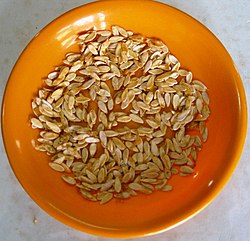
_Cucumis melo fruits, encompassing varieties such as and honeydew, are widely enjoyed fresh at peak ripeness to capture their inherent sweetness and juiciness, often consumed as simple slices or incorporated into salads. Vegetable-type cultivars, harvested immature, provide a crisp texture suitable for raw preparations like salads, where their mild flavor complements greens and dressings. In regions like Puglia, , local landraces such as barattiere are eaten raw in salads when immature, valued for their cucumber-like qualities and subtle bitterness that enhances fresh vegetable medleys. Processed forms expand the versatility of Cucumis melo beyond fresh eating; the flesh can be juiced for beverages, pureed into smoothies, or frozen for sorbets and granitas, leveraging the fruit's high water content and natural sugars. Certain varieties are dried to create chewy snacks or flavoring agents, particularly in where sun-dried pieces add tang to and chutneys. The rind of select vegetable types, such as those in culinary traditions, is pickled to yield tangy condiments that accompany rice-based dishes like dosakaya pappu, a featuring the melon. Regional cuisines highlight Cucumis melo in diverse ways, reflecting local preferences for both sweet and savory profiles. In , immature culinary melons like dosakaya are stir-fried or added to sambar, a spiced , providing a refreshing contrast to robust flavors. French Charentais melons feature prominently in desserts, such as chilled bowls with or sorbets enhanced by lime, emphasizing their aromatic, orange-fleshed sweetness. In Italian appetizers, muskmelon pairs with for a classic , where the fruit's juiciness balances the cured ham's saltiness. Common pairings elevate Cucumis melo in both sweet and savory contexts; for instance, slices with or cheese create harmonious contrasts of sweet, salty, and creamy elements in salads or skewers. Yogurt-based accompaniments, such as in Indian-inspired raitas using immature varieties, incorporate spices like to temper the melon's mildness. Wine pairings, particularly light whites, complement the fruit's subtlety in desserts or fresh platters. For optimal quality, whole uncut Cucumis melo should be stored at 2-5°C with high humidity for 7-14 days, as the fruit is sensitive to and low temperatures can cause chilling . Once cut, at similar temperatures extends usability to 3-5 days, preventing spoilage from microbial growth. By-products from Cucumis melo offer additional culinary value; seeds are roasted as snacks in Arabian cuisines or ground for flavoring in Indian desserts, providing a nutty crunch. Seed oil, extracted from varieties like muskmelon, serves as a neutral cooking fat in various dishes due to its mild taste and stability. The rind, when edible in certain cultivars, contributes to jams or further experiments, minimizing waste in traditional preparations.

Medicinal and other uses

In traditional medicine systems such as and Unani, the seeds of Cucumis melo are valued for their diuretic properties and are commonly used to treat urinary disorders, including painful micturition, burning , and kidney or stones. Decoctions prepared from 5–10 g of seeds are traditionally administered to reduce in the urinary tract and promote diuresis. The fruit pulp also serves as a cooling and agent in these traditions for addressing renal issues and ulcers of the urinary tract. Pharmaceutically, extracts from C. melo, particularly from leaves and seeds, exhibit anti-diabetic activity by lowering blood glucose levels and improving insulin sensitivity in diabetic animal models. Seed oil from C. melo is incorporated into cosmetic formulations for its moisturizing effects, attributed to high levels of and vitamins A and E, which strengthen the skin barrier and provide benefits. The vines and cull fruits of C. melo are utilized as for , offering a nutritious supplement that can replace portions of traditional forages like hay in diets. These by-products show promise for ensilage, with achieving suitable contents (25–40%) for fermentation into high-quality that supports fermentation. Certain varieties within the Dudaim group of C. melo, such as Queen Anne's Pocket Melon, are grown ornamentally for their small, apricot-sized fruits featuring attractive orange-to-maroon striping and a fruity , often displayed in decorative arrangements. Industrially, C. melo oil serves as a non-food feedstock for production, yielding with favorable properties like low and high through processes. Emerging research highlights the potential of and other by-products for value-added sustainable products, leveraging their lignocellulosic fibers for biofuels and biofilms. Wild or bitter varieties of C. melo can contain elevated levels, imparting a strong bitterness to the and posing a of rare , which manifests as severe , , and due to the compounds' at doses above 2 mg/kg.

History and Distribution

Origins and domestication

The wild progenitor of Cucumis melo is C. melo subsp. agrestis, which occurs naturally in , including the Kalahari region, where it produces small, bitter fruits adapted to arid environments. These wild forms, characterized by green-striped, unpalatable fruits containing cucurbitacins, represent the basal from which cultivated melons evolved. Domestication of C. melo occurred independently at least twice, beginning in around 3700–3500 BCE and in around 3000 BCE, with archaeological evidence from sites in , , and later . This process involved multiple independent events, with primary centers in and , leading to genetic bottlenecks that significantly reduced overall diversity while fixing key traits such as the loss of bitterness through mutations in cucurbitacin biosynthesis pathways. Archaeological evidence supports this timeline, including melon seeds recovered from predynastic Egyptian contexts such as the site of (~3500 BCE) and later sites in —identified via dental calculus remains indicating consumption—and . Prehistoric human activities further shaped C. melo's development through trade networks, including early routes that prefigured the , which disseminated African and Near Eastern lineages eastward into , influencing local varietal groups and promoting adaptations like non-climbing vine habits for easier management in settled . Secondary introductions to the following Columbus's voyages in the late established new cultivation centers, though these represent post-domestication dispersals rather than independent origins.

Global cultivation and trade

Cucumis melo, commonly known as , is cultivated extensively across temperate and subtropical regions, with global production reaching 29.54 million metric tons in 2023 and estimated at approximately 30 million metric tons in 2024, with forecasts indicating stable output through 2025 despite climate impacts. dominates as the largest producer, contributing approximately 13.5 million metric tons in 2023 (nearly half of the worldwide total). Other key producers include with 1.64 million tons, at 1.50 million tons, and , which ranks among the top five contributors. In the United States, output totals around 532,000 short tons in 2024, concentrated in states like (~59% of national production) and Georgia. International trade in melons emphasizes fresh fruit shipments, with leading exporters including (364,000 tons in 2024), , , and , collectively accounting for over 46% of global exports. serves as a primary supplier to the , exporting $690 million worth in 2023, while focuses on the market. Exports typically peak during summer seasons to meet demand in northern hemispheres, supporting year-round availability. The global melon market holds significant economic value, estimated at $29.9 billion in 2024, with projections for steady growth to $36.8 billion by 2035. Fresh s constitute about 90% of production and trade volume, while processed forms like juices and purees represent roughly 10%, driven by consumer preference for whole fruit consumption. Emerging trends include increasing demand for organic varieties, particularly in where local producers meet much of the niche market, and adoption of hydroponic systems in the to counter and boost yields. However, exacerbates challenges, with projections indicating potential yield reductions of 10-15% from stress and elevated temperatures in major growing regions. Trade dynamics are constrained by phytosanitary regulations, notably quarantines targeting pests like the melon fly (), which requires treatments such as or for exports to pest-free areas like the and . Additionally, disputes over agricultural subsidies in producing countries can distort market competitiveness and lead to retaliatory tariffs. Distribution remains predominantly local, with over 80% of production consumed within producing countries, though air freight enables off-season imports to high-value markets in and Europe.

References

Add your contribution
Related Hubs
User Avatar
No comments yet.