Hubbry Logo
Two-stroke engineTwo-stroke engineMain
Open search
Two-stroke engine
Community hub
Two-stroke engine
logo
8 pages, 0 posts
0 subscribers
Be the first to start a discussion here.
Two-stroke engine
Two-stroke engine
from Wikipedia
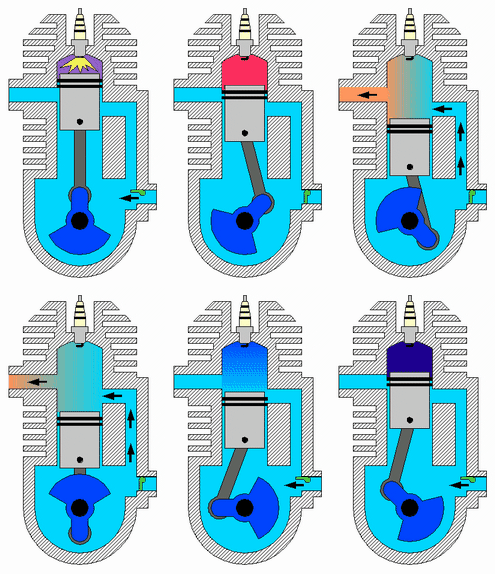
Animation of a two-stroke engine

A two-stroke (or two-stroke cycle) engine is a type of internal combustion engine that completes a power cycle with two strokes of the piston, one up and one down, in one revolution of the crankshaft in contrast to a four-stroke engine which requires four strokes of the piston in two crankshaft revolutions to complete a power cycle. During the stroke from bottom dead center to top dead center, the end of the exhaust/intake (or scavenging) is completed along with the compression of the mixture. The second stroke encompasses the combustion of the mixture, the expansion of the burnt mixture and, near bottom dead center, the beginning of the scavenging flows.

Two-stroke engines often have a higher power-to-weight ratio than a four-stroke engine, since their power stroke occurs twice as often. Two-stroke engines can also have fewer moving parts, and thus be cheaper to manufacture and weigh less. In countries and regions with stringent emissions regulation, two-stroke engines have been phased out in automotive and motorcycle uses. In regions where regulations are less stringent, small displacement two-stroke engines remain popular in mopeds and motorcycles.[1] They are also used in power tools such as chainsaws and leaf blowers. SSG and SLG glider planes are frequently equipped with two-stroke engines.

History

[edit]

The first commercial two-stroke engine involving cylinder compression is attributed to Scottish engineer Dugald Clerk, who patented his design in 1881.[2] However, unlike most later two-stroke engines, his had a separate charging cylinder. The crankcase-scavenged engine, employing the area below the piston as a charging pump, is generally credited to Englishman Joseph Day.[3][4] On 31 December 1879, German inventor Karl Benz produced a two-stroke gas engine, for which he received a patent in 1880 in Germany. The first truly practical two-stroke engine is attributed to Yorkshireman Alfred Angas Scott, who started producing twin-cylinder water-cooled motorcycles in 1908.[5]

Two-stroke gasoline engines with electrical spark ignition are particularly useful in lightweight or portable applications such as chainsaws and motorcycles. However, when weight and size are not an issue, the cycle's potential for high thermodynamic efficiency makes it ideal for diesel compression ignition engines operating in large, weight-insensitive applications, such as marine propulsion, railway locomotives, and electricity generation. In a two-stroke engine, the exhaust gases transfer less heat to the cooling system than a four-stroke, which means more energy to drive the piston, and if present, a turbocharger.

Emissions

[edit]

Crankcase-compression two-stroke engines, such as common small gasoline-powered engines, are lubricated by a petroil mixture in a total-loss system. Oil is mixed in with their petrol fuel beforehand, in a fuel-to-oil ratio of around 32:1. This oil then forms emissions, either by being burned in the engine or as droplets in the exhaust, historically resulting in more exhaust emissions, particularly hydrocarbons, than four-stroke engines of comparable power output. The combined opening time of the intake and exhaust ports in some two-stroke designs can also allow some amount of unburned fuel vapors to exit in the exhaust stream. The high combustion temperatures of small, air-cooled engines may also produce NOx emissions.

Applications

[edit]
1966 Saab Sport
A two-stroke minibike
Lateral view of a two-stroke Forty series British Seagull outboard engine; the serial number dates it to 1954/1955

Two-stroke gasoline engines are preferred when mechanical simplicity, light weight, and high power-to-weight ratio are design priorities. By mixing oil with fuel, they can operate in any orientation as the oil reservoir does not depend on gravity.

A number of mainstream automobile manufacturers have used two-stroke engines in the past, including the Swedish Saab, German manufacturers DKW, Auto-Union, VEB Sachsenring Automobilwerke Zwickau, VEB Automobilwerk Eisenach, and VEB Fahrzeug- und Jagdwaffenwerk, and Polish manufacturers FSO and FSM. The Japanese manufacturers Suzuki and Subaru did the same in the 1970s.[6] Production of two-stroke cars ended in the 1980s in the West, due to increasingly stringent regulation of air pollution.[7] Eastern Bloc countries continued until around 1991, with the Trabant and Wartburg in East Germany.

Two-stroke engines are still found in a variety of small propulsion applications, such as outboard motors, small on- and off-road motorcycles, mopeds, motor scooters, motorized bicycles, tuk-tuks, snowmobiles, go-karts, RC cars, ultralight and model airplanes. Particularly in developed countries, pollution regulations have meant that their use for many of these applications is being phased out. Honda,[8] for instance, ceased selling two-stroke off-road motorcycles in the United States in 2007, after abandoning road-going models considerably earlier.

Due to their high power-to-weight ratio and ability to be used in any orientation, two-stroke engines are common in handheld outdoor power tools including leaf blowers, chainsaws, and string trimmers.

Two-stroke diesel engines are found mostly in large industrial and marine applications, as well as some trucks and heavy machinery.

Designs

[edit]

Although the principles remain the same, the mechanical details of various two-stroke engines differ depending on the type. The design types vary according to the method of introducing the charge to the cylinder, the method of scavenging the cylinder (exchanging burnt exhaust for fresh mixture) and the method of exhausting the cylinder.

Inlet port variations

[edit]

Piston-controlled inlet port

[edit]

Piston port is the simplest of the designs and the most common in small two-stroke engines. All functions are controlled solely by the piston covering and uncovering the ports as it moves up and down in the cylinder. In the 1970s, Yamaha worked out some basic principles for this system. They found that, in general, widening an exhaust port increases the power by the same amount as raising the port, but the power band does not narrow as it does when the port is raised. However, a mechanical limit exists to the width of a single exhaust port, at about 62% of the bore diameter for reasonable piston ring life. Beyond this, the piston rings bulge into the exhaust port and wear quickly. A maximum 70% of bore width is possible in racing engines, where rings are changed every few races. Intake duration is between 120 and 160°. Transfer port time is set at a minimum of 26°. The strong, low-pressure pulse of a racing two-stroke expansion chamber can drop the pressure to -7 psi when the piston is at bottom dead center, and the transfer ports nearly wide open. One of the reasons for high fuel consumption in two-strokes is that some of the incoming pressurized fuel-air mixture is forced across the top of the piston, where it has a cooling action, and straight out the exhaust pipe. An expansion chamber with a strong reverse pulse stops this outgoing flow.[9]

A fundamental difference from typical four-stroke engines is that the two-stroke's crankcase is sealed and forms part of the induction process in gasoline and hot-bulb engines. Diesel two-strokes often add a Roots blower or piston pump for scavenging.

Reed inlet valve

[edit]
A Cox Babe Bee 0.049 in3 (0.80 cm3) reed valve engine, disassembled, uses glow-plug ignition. Its mass is 64 g.

The reed valve is a simple but highly effective form of check valve commonly fitted in the intake tract of the piston-controlled port. It allows asymmetric intake of the fuel charge, improving power and economy, while widening the power band. Such valves are widely used in motorcycle, ATV, and marine outboard engines.

Rotary inlet valve

[edit]

The intake pathway is opened and closed by a rotating member. A familiar type sometimes seen on small motorcycles is a slotted disk attached to the crankshaft, which covers and uncovers an opening in the end of the crankcase, allowing charge to enter during one portion of the cycle (called a disc valve).

Another form of rotary inlet valve used on two-stroke engines employs two cylindrical members with suitable cutouts arranged to rotate one within the other - the inlet pipe having passage to the crankcase only when the two cutouts coincide. The crankshaft itself may form one of the members, as in most glow-plug model engines. In another version, the crank disc is arranged to be a close-clearance fit in the crankcase, and is provided with a cutout that lines up with an inlet passage in the crankcase wall at the appropriate time, as in Vespa motor scooters.

The advantage of a rotary valve is that it enables the two-stroke engine's intake timing to be asymmetrical, which is not possible with piston-port type engines. The piston-port type engine's intake timing opens and closes before and after top dead center at the same crank angle, making it symmetrical, whereas the rotary valve allows the opening to begin and close earlier.

Rotary valve engines can be tailored to deliver power over a wider speed range or higher power over a narrower speed range than either a piston-port or reed-valve engine. Where a portion of the rotary valve is a portion of the crankcase itself, of particular importance, no wear should be allowed to take place.

Scavenging variations

[edit]

Cross-flow scavenging

[edit]
Deflector piston with cross-flow scavenging

In a cross-flow engine, the transfer and exhaust ports are on opposite sides of the cylinder, and a deflector on the top of the piston directs the fresh intake charge into the upper part of the cylinder, pushing the residual exhaust gas down the other side of the deflector and out the exhaust port.[10] The deflector increases the piston's weight and exposed surface area, and the fact that it makes piston cooling and achieving an effective combustion chamber shape more difficult is why this design has been largely superseded by uniflow scavenging after the 1960s, especially for motorcycles, but for smaller or slower engines using direct injection, the deflector piston can still be an acceptable approach.

Loop scavenging

[edit]
The two-stroke cycle
  1. Top dead center (TDC)
  2. Bottom dead center (BDC)
  A: Intake/scavenging
  B: Exhaust
  C: Compression
  D: Expansion (power)

This method of scavenging uses carefully shaped and positioned transfer ports to direct the flow of fresh mixture toward the combustion chamber as it enters the cylinder. The fuel/air mixture strikes the cylinder head, then follows the curvature of the combustion chamber, and then is deflected downward.

This not only prevents the fuel/air mixture from traveling directly out the exhaust port, but also creates a swirling turbulence which improves combustion efficiency, power, and economy. Usually, a piston deflector is not required, so this approach has a distinct advantage over the cross-flow scheme (above).

Often referred to as "Schnuerle" (or "Schnürle") loop scavenging after Adolf Schnürle, the German inventor of an early form in the mid-1920s, it became widely adopted in Germany during the 1930s and spread further afield after World War II.

Loop scavenging is the most common type of fuel/air mixture transfer used on modern two-stroke engines. Suzuki was one of the first manufacturers outside of Europe to adopt loop-scavenged two-stroke engines. This operational feature was used in conjunction with the expansion chamber exhaust developed by German motorcycle manufacturer, MZ, and Walter Kaaden.

Loop scavenging, disc valves, and expansion chambers worked in a highly coordinated way to significantly increase the power output of two-stroke engines, particularly from the Japanese manufacturers Suzuki, Yamaha, and Kawasaki. Suzuki and Yamaha enjoyed success in Grand Prix motorcycle racing in the 1960s due in no small way to the increased power afforded by loop scavenging.

An additional benefit of loop scavenging was the piston could be made nearly flat or slightly domed, which allowed the piston to be appreciably lighter and stronger, and consequently to tolerate higher engine speeds. The "flat top" piston also has better thermal properties and is less prone to uneven heating, expansion, piston seizures, dimensional changes, and compression losses.

SAAB built 750- and 850-cc three-cylinder engines based on a DKW design that proved reasonably successful employing loop charging. The original SAAB 92 had a two-cylinder engine of comparatively low efficiency. At cruising speed, reflected-wave, exhaust-port blocking occurred at too low a frequency. Using the asymmetrical three-port exhaust manifold employed in the identical DKW engine improved fuel economy.

The 750-cc standard engine produced 36 to 42 hp, depending on the model year. The Monte Carlo Rally variant, 750-cc (with a filled crankshaft for higher base compression), generated 65 hp. An 850-cc version was available in the 1966 SAAB Sport (a standard trim model in comparison to the deluxe trim of the Monte Carlo). Base compression comprises a portion of the overall compression ratio of a two-stroke engine. Work published at SAE in 2012 points that loop scavenging is under every circumstance more efficient than cross-flow scavenging.

Uniflow scavenging

[edit]
The uniflow two-stroke cycle:
  1. Top dead center (TDC)
  2. Bottom dead center (BDC)
  A: Intake (effective scavenging, 135°–225°; necessarily symmetric about BDC; Diesel injection is usually initiated at 4° before TDC)
  B: Exhaust
  C: Compression
  D: Expansion (power)

In a uniflow engine, the mixture, or "charge air" in the case of a diesel, enters at one end of the cylinder controlled by the piston and the exhaust exits at the other end controlled by an exhaust valve or piston. The scavenging gas-flow is, therefore, in one direction only, hence the name uniflow.

The design using exhaust valve(s) is common in on-road, off-road, and stationary two-stroke engines (Detroit Diesel), certain small marine two-stroke engines (Gray Marine Motor Company, which adapted the Detroit Diesel Series 71 for marine use), certain railroad two-stroke diesel locomotives (Electro-Motive Diesel) and large marine two-stroke main propulsion engines (Wärtsilä). Ported types are represented by the opposed piston design in which two pistons are in each cylinder, working in opposite directions such as the Junkers Jumo 205 and Napier Deltic.[11] The once-popular split-single design falls into this class, being effectively a folded uniflow. With advanced-angle exhaust timing, uniflow engines can be supercharged with a crankshaft-driven blower, either piston or Roots-type.[12][13]

Stepped piston engine

[edit]

The piston of this engine is "top-hat"-shaped; the upper section forms the regular cylinder, and the lower section performs a scavenging function. The units run in pairs, with the lower half of one piston charging an adjacent combustion chamber.

The upper section of the piston still relies on total-loss lubrication, but the other engine parts are sump lubricated with cleanliness and reliability benefits. The mass of the piston is only about 20% more than a loop-scavenged engine's piston because skirt thicknesses can be less.[14]

Power-valve systems

[edit]

Many modern two-stroke engines employ a power-valve system. The valves are normally in or around the exhaust ports. They work in one of two ways; either they alter the exhaust port by closing off the top part of the port, which alters port timing, such as Rotax R.A.V.E, Yamaha YPVS, Honda RC-Valve, Kawasaki K.I.P.S., Cagiva C.T.S., or Suzuki AETC systems, or by altering the volume of the exhaust, which changes the resonant frequency of the expansion chamber, such as the Suzuki SAEC and Honda V-TACS system. The result is an engine with better low-speed power without sacrificing high-speed power. However, as power valves are in the hot gas flow, they need regular maintenance to perform well.

Direct injection

[edit]

Direct injection has considerable advantages in two-stroke engines. In carburetted two-strokes, a major problem is a portion of the fuel/air mixture going directly out, unburned, through the exhaust port, and direct injection effectively eliminates this problem. Two systems are in use: low-pressure air-assisted injection and high-pressure injection.

Since the fuel does not pass through the crankcase, a separate source of lubrication is needed.

Two-stroke reversibility

[edit]

For the purpose of this discussion, it is convenient to think in motorcycle terms, where the exhaust pipe faces into the cooling air stream, and the crankshaft commonly spins in the same axis and direction as do the wheels i.e. "forward". Some of the considerations discussed here apply to four-stroke engines (which cannot reverse their direction of rotation without considerable modification), almost all of which spin forward, too. It is also useful to note that the "front" and "back" faces of the piston are - respectively - the exhaust port and intake port sides of it, and are not to do with the top or bottom of the piston.

Regular gasoline two-stroke engines can run backward for short periods and under light load with little problem, and this has been used to provide a reversing facility in microcars, such as the Messerschmitt KR200, that lacked reverse gearing. Where the vehicle has electric starting, the motor is turned off and restarted backward by turning the key in the opposite direction. Two-stroke golf carts have used a similar system. Traditional flywheel magnetos (using contact-breaker points, but no external coil) worked equally well in reverse because the cam controlling the points is symmetrical, breaking contact before top dead center equally well whether running forward or backward. Reed-valve engines run backward just as well as piston-controlled porting, though rotary valve engines have asymmetrical inlet timing and do not run very well.

Serious disadvantages exist for running many engines backward under load for any length of time, and some of these reasons are general, applying equally to both two-stroke and four-stroke engines. This disadvantage is accepted in most cases where cost, weight, and size are major considerations. The problem comes about because in "forward" running, the major thrust face of the piston is on the back face of the cylinder, which in a two-stroke particularly, is the coolest and best-lubricated part. The forward face of the piston in a trunk engine is less well-suited to be the major thrust face, since it covers and uncovers the exhaust port in the cylinder, the hottest part of the engine, where piston lubrication is at its most marginal. The front face of the piston is also more vulnerable since the exhaust port, the largest in the engine, is in the front wall of the cylinder. Piston skirts and rings risk being extruded into this port, so having them pressing hardest on the opposite wall (where there are only the transfer ports in a crossflow engine) is always best and support is good. In some engines, the small end is offset to reduce thrust in the intended rotational direction and the forward face of the piston has been made thinner and lighter to compensate, but when running backward, this weaker forward face suffers increased mechanical stress it was not designed to resist.[15] This can be avoided by the use of crossheads and also using thrust bearings to isolate the engine from end loads.

Large two-stroke ship diesels are sometimes made to be reversible. Like four-stroke ship engines (some of which are also reversible), they use mechanically operated valves, so require additional camshaft mechanisms. These engines use crossheads to eliminate sidethrust on the piston and isolate the under-piston space from the crankcase.

On top of other considerations, the oil pump of a modern two-stroke may not work in reverse, in which case the engine suffers oil starvation within a short time. Running a motorcycle engine backward is relatively easy to initiate, and in rare cases, can be triggered by a back-fire.[citation needed] It is not advisable.

Model airplane engines with reed valves can be mounted in either tractor or pusher configuration without needing to change the propeller. These motors are compression ignition, so no ignition timing issues and little difference between running forward and running backward are seen.

See also

[edit]

References

[edit]

Further reading

[edit]
[edit]
Revisions and contributorsEdit on WikipediaRead on Wikipedia
from Grokipedia
A two-stroke engine is an internal combustion engine that completes a power cycle with two piston strokes—one upward and one downward—corresponding to one crankshaft revolution, integrating intake, compression, power, and exhaust phases. This contrasts with the four-stroke engine, which requires four strokes over two crankshaft revolutions for the same cycle, allowing the two-stroke design to deliver a power stroke every revolution rather than every other. In typical gasoline two-stroke engines, crankcase compression pre-mixes fuel and air, with ports in the cylinder wall uncovering for scavenging fresh charge to displace exhaust gases as the piston moves. The design's mechanical simplicity—lacking valves and cams—results in lower weight and cost, yielding higher power-to-weight ratios ideal for portable tools like chainsaws, weed trimmers, and recreational vehicles such as dirt bikes and outboard motors. However, inherent challenges include poorer fuel efficiency from short scavenging time, incomplete combustion leading to higher emissions of unburned hydrocarbons, and the need for oil-fuel premixing, which exacerbates pollution and limits adoption in emissions-regulated automotive and larger stationary applications. Large two-stroke diesel engines, employing uniflow scavenging with separate blower systems, power marine propulsion and generators due to their efficiency at scale despite complexity. Developed in the late 19th century, with practical crankcase-scavenged versions patented around 1891 by Joseph Day, two-stroke engines peaked in small-engine ubiquity before environmental regulations favored cleaner four-stroke alternatives.

Fundamentals

Operating Principle

A two-stroke engine completes a thermodynamic cycle in two piston strokes, equivalent to one crankshaft revolution, producing one power stroke per revolution. This contrasts with four-stroke engines, which require four strokes or two revolutions for a power stroke. In typical crankcase-scavenged designs, the engine lacks valves, relying instead on ports in the cylinder wall uncovered by piston movement to manage intake, transfer, and exhaust processes. The cycle integrates compression, power, exhaust, and intake phases across the upstroke and downstroke. During the upward piston stroke, the space above the piston undergoes compression of the air-fuel mixture, while the crankcase below experiences reduced pressure, drawing in fresh mixture through an inlet port or reed valve. At top dead center, ignition occurs via spark plug, initiating the power stroke as expanding gases drive the piston downward. This downward motion pressurizes the crankcase mixture, which awaits transfer. As the piston descends further, it first exposes the exhaust port near bottom dead center, releasing high-pressure burnt gases to atmosphere, aided by exhaust tuning in some designs. Subsequently, the piston uncovers transfer ports, allowing the pressurized crankcase to enter the cylinder at an , facilitating scavenging—the displacement of residual exhaust gases by incoming charge. Effective scavenging, quantified by delivery and trapping , is critical, as incomplete removal leads to charge dilution and reduced power density. Common methods include loop scavenging, where transfer ports direct flow to loop around the cylinder, and cross-flow scavenging with deflector pistons, though uniflow scavenging in larger engines uses opposed ports and separate blowers for superior . occurs via oil mixed in the , as the crankcase handles combustible . This principle enables higher power-to-weight ratios but sacrifices fuel due to potential short-circuiting of fresh charge during scavenging.

Comparison to Four-Stroke Engines

Two-stroke engines complete a power cycle in one crankshaft , firing once per revolution, whereas four-stroke engines require two revolutions for a power stroke every other revolution. This fundamental difference results in two-stroke engines delivering approximately twice the power output per unit of displacement compared to four-stroke engines of equivalent size, enabling higher power-to-weight ratios suitable for applications like portable tools and lightweight vehicles. However, this comes at the cost of efficiency, as two-stroke engines suffer from incomplete scavenging, where fresh air-fuel mixture mixes with exhaust gases, leading to reduced volumetric efficiency and higher fuel consumption. Four-stroke engines achieve higher , typically 20-30% greater than two-stroke designs in comparable small applications, to dedicated and exhaust strokes that minimize charge loss and enable better control. In two-stroke operation, the reliance on piston-controlled ports and crankcase compression often results in 10-20% of the incoming charge escaping unburned through exhaust ports, exacerbating . Four-stroke engines also separate from , using an oil sump that reduces and allows operation without oil-fuel premixing, which in two-strokes contributes to carbon buildup and shorter lifespan. Emissions profiles differ markedly: two-stroke engines emit higher levels of hydrocarbons and particulate matter—often 2-5 times more than four-strokes—owing to oil burning and short-circuiting of unburned mixture during scavenging. Four-stroke engines, with valves enabling timed exhaust clearance and after-treatment compatibility, produce lower unburned hydrocarbons and nitrogen oxides in regulated applications. Mechanically, two-strokes feature fewer components (no camshaft or valves), reducing weight by up to 30% and simplifying maintenance for intermittent use, though they demand frequent rebuilds due to lubrication challenges.
AspectTwo-Stroke Advantage/DisadvantageFour-Stroke Advantage/Disadvantage
Power DensityHigher (twice per revolution)Lower per displacement
Thermal EfficiencyLower (scavenging losses)Higher (complete cycles)
Weight/ComplexityLighter, simpler designHeavier, more parts
EmissionsHigher pollutantsLower, cleaner combustion
Fuel ConsumptionHigher per power outputLower overall
In large marine diesel contexts, two-strokes can achieve comparable or superior through uniflow scavenging and low-speed operation, powering over 90% of global shipping as of 2023, but two-strokes lag in for and small marine uses.

Historical Development

Invention and Early Innovations

The two-stroke engine's emerged from late 19th-century efforts to achieve density in internal combustion engines compared to the four-stroke cycle patented by Nikolaus in 1876. Scottish Dugald is credited with developing the first successful two-stroke cycle, constructing a in 1878 that featured two rigidly connected pistons of unequal diameters—one larger for the power stroke and a smaller one for inducing the fresh charge—allowing compression and expansion within a single revolution of the crankshaft. secured a British patent for this design in 1881 (No. 484, later improved in 1886), which relied on slide valves for intake and exhaust, though early models suffered from incomplete scavenging and low efficiency due to the mechanical complexity of the differential pistons. Independently, German inventor Karl Benz produced a single-cylinder two-stroke in late 1878, patenting it on December 31 in (DRP 5298) as a reliable unit capable of powering stationary and early automotive applications, with spark ignition and a displacement of approximately 1.7 liters delivering 0.75 horsepower at 250 rpm. Benz's design incorporated a slide valve for exhaust and intake via the crankcase, foreshadowing simpler configurations, and was tested in his 1880 road vehicle prototypes, validating the cycle's potential for mobile use despite challenges like fuel dilution of lubricant. These initial engines prioritized mechanical simplicity over thermal efficiency, operating at compression ratios around 3:1 and producing exhaust with unburned hydrocarbons due to rudimentary port timing. A pivotal early innovation arrived in 1891 when British engineer Joseph Day patented a valveless two-stroke engine (British Patent No. 5590) that utilized crankcase compression for scavenging, enclosing the crankshaft to draw in and compress the air-fuel mixture before transferring it through ports uncovered by the descending piston. Day's design featured cylinder wall ports for inlet and exhaust, controlled solely by piston motion, and a deflector on the piston crown to separate incoming charge from outgoing gases, reducing the need for auxiliary valves or multiple pistons and enabling production of lightweight engines up to 5 horsepower by 1900. This configuration addressed prior limitations in Clerk's and Benz's models by improving charge purity, though it introduced challenges like asymmetric port timing that required empirical tuning for optimal volumetric efficiency around 70-80%.

Commercial Adoption and Peak Usage

Two-stroke engines saw initial commercial adoption in marine propulsion with Ole Evinrude's 3-horsepower outboard motor introduced in 1909, which utilized a two-stroke cycle for its compact design and reliable operation in portable applications. This marked the first mass-produced outboard, enabling widespread recreational boating and commercial fishing by the 1920s, as manufacturers like Elto and Johnson scaled production of similar two-stroke units. In motorcycles, adoption accelerated in Europe during the interwar period, with DKW launching production models in 1928 featuring tuned exhausts for improved scavenging, leading to affordable commuter bikes that outsold four-strokes in volume markets like Germany by the 1930s. Automotive use emerged post-World War II, particularly in resource-constrained economies, where German firms like Auto-Union (successor to ) and Swedish Saab employed two-strokes for cost-effective assembly; Saab's 750 cc twin-cylinder in the 92 model, produced from 1949, delivered 33 horsepower and powered over 500,000 units by the due to its high . Large-scale two-strokes entered shipping in the late , as vessel sizes exceeded four-stroke limits, with MAN and Sulzer designs achieving up to 10,000 horsepower per cylinder by the through uniflow scavenging. Handheld tools like chainsaws and lawn adopted carbureted two-strokes from the onward, with brands such as and Homelite dominating markets through simple compression systems. Peak usage occurred from the 1950s to the 1980s across consumer and industrial sectors, driven by advantages in power density and manufacturing simplicity. In motorcycles, two-strokes powered over 90% of Grand Prix winners from 1968 to 1976, with production street models like Yamaha's RD350 (1968 debut, 40 horsepower from 347 cc) achieving global sales peaks in the 1970s before regulatory shifts. Outboard motors reached ubiquity by the 1970s, comprising nearly all units under 25 horsepower sold annually in the U.S., with Evinrude and Mercury producing millions of two-stroke variants for their lightweight torque suited to planing hulls. Saab's two-stroke automobiles hit production highs in the early 1960s, with the 96 model exceeding 547,000 units total, while in off-road and recreational vehicles like snowmobiles, two-strokes powered the market boom from 1965 to 1975, when U.S. sales surged to over 400,000 units yearly. This era's dominance stemmed from empirical performance metrics, such as double the power strokes per revolution compared to four-strokes, enabling compact designs without valves, though oil-mixed fueling limited scalability in larger displacements.

Decline Due to Regulations

The high emissions profile of conventional two-stroke engines, characterized by elevated unburned hydrocarbons (HC) and particulate matter (PM) from oil-fuel premixing and incomplete scavenging, prompted regulatory interventions starting in the 1990s to curb air pollution in urban and recreational applications. In the United States, the Environmental Protection Agency (EPA) implemented Phase 1 emission standards in 1995 for nonroad spark-ignition (SI) engines under 19 kW, targeting HC + NOx reductions of up to 30-40% compared to uncontrolled levels for small off-road equipment like chainsaws and lawnmowers. These were followed by more stringent Phase 2 standards effective in 2001 for nonhandheld engines and 2007 for handheld variants, mandating HC + NOx limits as low as 50 g/kW-hr and CO at 610 g/kW-hr, which compelled manufacturers to adopt direct fuel injection (DFI) systems or transition to four-stroke alternatives, as carbureted two-strokes often exceeded limits by factors of 5-10. In , the adoption of Euro emission directives similarly accelerated the phase-out of two-stroke motorcycles and mopeds. Euro 2 standards, effective from 2003 for light two-wheelers, imposed HC limits of 2.0 g/km and CO at 6.0 g/km, but Euro 3 in 2006 tightened HC to 1.0 g/km (or 0.3 g/km HC + 0.15 g/km for larger engines), rendering many two-stroke designs non-compliant without costly catalytic converters or electronic , which increased complexity and cost. This led major manufacturers like and Yamaha to discontinue production of road-legal two-stroke motorcycles by the mid-2000s, shifting market dominance to four-strokes that achieved compliance more readily through better . Marine outboard motors and snowmobiles faced parallel restrictions; for instance, U.S. EPA standards in 2006 for outboards required over 70% HC reductions, prompting innovations like oxygenated fuels and exhaust traps but ultimately favoring four-stroke or advanced two-stroke DFI engines in new sales. In competitive applications, such as North American dirt bike racing, tightening state-level rules aligned with federal standards in the 1980s and 1990s further diminished two-stroke prevalence, as evidenced by the cessation of factory two-stroke support in AMA motocross by 2007. While some niche two-stroke variants persist with after-treatment technologies meeting Euro 5 (2016) or EPA Phase 3 (2012 onward) criteria, the regulatory emphasis on verifiable emission cuts—driven by empirical data showing two-strokes contributing disproportionately to urban PM and VOC—has marginalized their use in consumer and light-duty sectors.

Design Configurations

Inlet and Port Systems

In two-stroke engines using crankcase scavenging, the inlet facilitates the entry of the air-fuel mixture into the crankcase below the , which serves as a compression . As the approaches top dead (TDC) during the compression , it creates a partial in the crankcase, drawing the mixture through the , often equipped with a reed valve acting as a one-way flap to prevent reverse flow during subsequent compression. In piston-ported designs without valves, the in the crankcase wall is uncovered by a cutaway in the skirt during the appropriate phase of the cycle, typically providing an open duration of around 120 degrees for engines peaking at 6000 rpm, with longer durations required for higher-revving variants to maintain volumetric efficiency. Rotary or disc valves, consisting of a slotted rotating component driven by the crankshaft, offer finer control over inlet timing and are favored in high-performance applications for improved top-end power over reed or piston-ported s. The cylinder port system comprises the exhaust port and transfer ports machined into the cylinder liner, with their opening and closing governed directly by the piston's reciprocation, eliminating the need for camshaft-actuated valves. The exhaust port, positioned highest—typically opposite the transfer ports—uncovers first as the piston descends toward bottom dead center (BDC), initiating blowdown to reduce cylinder pressure ahead of scavenging; in street engines, the blowdown interval between exhaust opening and transfer opening spans 25-30 degrees, extending to 35 degrees in racing configurations to balance trapping efficiency against power output. Transfer ports, located below the exhaust port, connect the pressurized crankcase to the combustion chamber and number three to five in loop-scavenged designs, angled to direct the incoming charge upward along the cylinder wall to displace exhaust gases while minimizing short-circuiting of fresh mixture out the exhaust. Port widths, heights, and roof angles are optimized via empirical tuning, as wider exhaust ports enhance blowdown but risk excessive charge loss if not tuned with expansion chamber exhaust systems to exploit pressure wave tuning for re-trapping. In cross-flow variants, a deflector crown on the piston redirects the charge, though loop configurations predominate for superior scavenging due to reduced deflector obstruction to flame propagation.

Scavenging Methods

In two-stroke engines, scavenging is the process of displacing exhaust gases from the with a fresh air-fuel charge (or air in diesel engines) during the overlap period when both intake and exhaust ports are open, relying on the of the incoming charge and the differential from the or blower. This phase is critical for , as incomplete scavenging leads to residual exhaust dilution of the fresh charge, reducing power output and increasing emissions. The three primary scavenging methods—cross-flow, loop, and uniflow—differ in port , flow direction, and , with uniflow generally achieving the highest scavenging ratios due to minimized charge mixing. Cross-flow scavenging, also known as tangential scavenging, positions intake ports on one side of the cylinder liner and exhaust ports on the opposite side, with the piston crown featuring a deflector lip to redirect the incoming charge upward and across the cylinder head, away from the exhaust ports. This method, common in early small-displacement two-stroke engines like those in pre-1950s motorcycles, promotes a sweeping flow but suffers from higher short-circuiting—where fresh charge escapes directly to the exhaust—resulting in scavenging efficiencies typically below 70%. It requires a piston skirt extension to seal the crankcase during the upward stroke and is mechanically simple but prone to incomplete exhaust removal due to turbulent mixing. Loop scavenging, often implemented via , arranges multiple ports angled rearward toward the centerline, creating a looping flow path where the fresh charge rises along the walls, sweeps across the head, and exits through centrally located exhaust ports. Developed in the 1920s for improved charge utilization over cross-flow, it eliminates the need for a deflector, allowing flatter crowns for higher compression ratios, and achieves scavenging efficiencies of 75-85% in optimized designs. Widely used in modern small gasoline two-strokes, such as chainsaws and outboard motors up to 100 cc, loop scavenging benefits from the blowdown phase where exhaust ports open first, reducing backpressure before flow begins. However, it still experiences some short-circuiting at high speeds, limiting its application in large engines. Uniflow scavenging directs the fresh charge linearly through the , with ports near the end and exhaust outlets (ports or valves) at end near the , minimizing and piston-controlled with camshaft-driven exhaust valves or opposed pistons. This unidirectional flow yields the highest efficiencies, often exceeding 90%, as seen in low-speed marine diesel engines like MAN B&W models producing over 10,000 kW per , where turbocharged blowers supply scavenge air at pressures up to 2.5 bar. Employed in medium-speed diesels such as EMD 645 series locomotives since , uniflow reduces residual gas fractions to under 5% but demands precise timing and higher to align port timings with position. Scavenging across methods is quantified by the delivery (scavenge air to trapped ) and trapping (retained fresh charge ), with uniflow excelling in high-boost applications to lower pumping losses, while - and loop-flow suit compact, low-cost designs despite higher consumption from incomplete cycles. Empirical tests on loop-scavenged engines show delivery of 1.1-1.3 at wide-open , dropping under partial loads, whereas uniflow systems maintain above 1.2 across operating ranges via auxiliary blowers.

Special Variations

Opposed-piston two-stroke engines feature two pistons moving in opposite directions within a single cylinder, eliminating the need for cylinder heads and valves, which reduces mechanical complexity and heat transfer losses while enabling higher power density. This configuration compresses the air-fuel mixture between the pistons, with intake and exhaust ports controlled by their motion, achieving efficiencies up to 20% higher than conventional four-stroke diesels due to uniflow scavenging and optimized combustion. Achates Power's 10.6-liter three-cylinder opposed-piston diesel, tested by Walmart in 2021, delivers 270 horsepower and 800 Nm torque with reduced NOx and particulate emissions through advanced direct injection. Fairbanks Morse introduced a modernized opposed-piston diesel in 2018 for distributed generation, emphasizing reliability in high-load applications like combined heat and power systems. Uniflow scavenging represents a specialized port configuration in two-stroke engines where fresh charge enters through piston-controlled ports at the cylinder bottom and exits via dedicated exhaust valves or ports at the top, creating unidirectional flow that minimizes charge contamination and maximizes trapping efficiency compared to loop or cross-flow methods. This design, prevalent in large low-speed marine diesels and medium-speed locomotives like Electro-Motive Diesel (EMD) engines, achieves scavenging efficiencies exceeding 90% under optimal boost pressures, supporting specific fuel consumptions as low as 170 g/kWh in MAN B&W two-stroke marine engines. Variants such as boosted uniflow scavenged direct-injection gasoline (BUSDIG) engines, researched at Brunel University, integrate turbocharging and timed injection to yield brake thermal efficiencies over 40%, addressing historical limitations in small-displacement applications. Stratified charge two-stroke engines employ directed injection or auxiliary air valves to create a localized rich fuel-air mixture near the spark plug amid a leaner overall charge, reducing unburned hydrocarbon emissions by limiting short-circuiting while improving fuel economy. In STIHL's 2-MIX technology, introduced in professional chainsaws around 2009, stratified combustion via separate air-fuel metering achieves up to 20% lower fuel consumption and 70% reduced exhaust emissions relative to conventional carbureted two-strokes, without sacrificing power output. Direct-injection stratified variants, such as those in Aprilia's 2022 fuel-injected two-stroke motorcycle concept, position injectors above the combustion chamber and use compressed air assist for precise stratification, enabling compliance with stringent Euro 5 standards while maintaining the cycle's inherent power-to-weight advantages.

Performance and Efficiency

Power Delivery and Output

Two-stroke engines generate power through a combustion event during every downward piston stroke, producing one power impulse per cylinder per crankshaft revolution, in contrast to four-stroke engines which deliver power only every second revolution. This design inherently doubles the firing frequency for equivalent displacement and rotational speed, enabling theoretically up to twice the power output, though practical limitations such as incomplete scavenging reduce this to approximately 1.5 times or more in optimized configurations. Specific power density in two-stroke engines frequently surpasses that of four-strokes with comparable displacement, owing to the higher cycle frequency and lighter construction, often achieving 150-300 horsepower per liter in high-performance applications like motorcycle Grand Prix engines. For instance, opposed-piston two-stroke designs demonstrate elevated power density through efficient charge trapping, leading to compact packaging with superior output relative to conventional four-strokes. Brake mean effective pressure (BMEP), a measure of volumetric efficiency and combustion quality, supports this by allowing two-strokes to maintain competitive cylinder pressures despite port timing constraints, though values are moderated by fresh charge dilution from exhaust residuals. The and power curves of two-stroke engines exhibit a characteristic peakiness, with maximum output concentrated in a narrow RPM band—typically 2,000-4,000 RPM wide—demanding precise tuning of ports, exhaust systems, and effects to shift and broaden this range. Low-end is comparatively due to poorer at partial and reliance on inertial scavenging, resulting in a "hit" of acceleration once the powerband is engaged rather than linear delivery. This profile yields rapid response and high peak power but requires rider or operator skill to maintain optimal revs, as seen in applications like dirt bikes where power surges abruptly after a flat low-RPM region.

Mechanical Advantages

Two-stroke engines exhibit mechanical simplicity due to the absence of components such as valves, camshafts, and valve springs found in four-stroke designs, resulting in fewer overall. This configuration reduces mechanical , lowers from valvetrain operation, and facilitates easier assembly and . The port-based and exhaust systems, controlled directly by movement, eliminate the need for additional timing mechanisms, further streamlining the engine's architecture. The two-stroke cycle completes , compression, power, and exhaust processes within one , delivering a power stroke every compared to every other in four-stroke engines. For engines of comparable displacement and operating speed, this yields approximately twice the power output, enhancing mechanical . Consequently, two-stroke engines achieve superior power-to-weight ratios, often with overall weights 50% lower than equivalent four-stroke units, to reduced requirements and compact construction. This design also promotes compactness, with two-stroke engines occupying less volume and requiring smaller crankcases for equivalent power, benefiting applications prioritizing minimal size and mass. Lower from fewer reciprocating and rotating masses enables higher achievable rotational speeds, amplifying peak power potential through increased per cycle. These attributes stem directly from the cycle's inherent , independent of ancillary systems like or cooling, though practical realizations depend on scavenging efficiency and material strength.

Fuel Consumption and Durability

Two-stroke engines typically demonstrate higher fuel consumption relative to four-stroke counterparts due to inherent thermodynamic losses during the scavenging phase, where a fraction of the incoming fuel-air mixture—often 20-30% in loop-scavenged designs—escapes unburnt via the exhaust port, reducing volumetric and combustion efficiency. This results in (BSFC) values for small-displacement gasoline two-strokes ranging from 300-450 g/kWh under load, compared to 240-320 g/kWh for equivalent four-strokes, translating to 20-50% greater fuel use per unit of power output. Empirical tests on outboard motors confirm this disparity, with conventional carbureted two-strokes consuming up to 40% more fuel at cruising speeds than modern four-strokes, though direct variants narrow the gap to under 10% by timing injection post-scavenging. Durability in two-stroke engines stems from their mechanical simplicity—lacking valves, camshafts, and separate oil pumps—which minimizes modes from component but is offset by reliance on premixed fuel-oil (typically 1:50 ratios), leading to uneven film distribution, accelerated and scoring, and carbon deposits that exacerbate wear. In high-revving applications like dirt bikes or , this manifests as top-end rebuilds every 100-200 hours, with full engine overhauls after 500-1,000 hours, versus 2,000+ hours for four-strokes under similar duty cycles; factors include contaminants from incomplete and thermal stresses from continuous port timing. Large marine two-strokes, employing separate systems, achieve greater longevity—often exceeding 20,000 hours between overhauls—but still face risks from scuffing if feed rates deviate by more than 5-10%. Proper , including fresh oil ratios and cooling, can extend , underscoring that while two-strokes excel in , their wear rates demand more frequent interventions than four-strokes.

Emissions Profile

Pollutant Generation Mechanisms

In two-stroke engines, arises primarily from the inherent features of the crankcase-scavenged cycle, where fresh air-fuel charge enters the while the exhaust port remains open, leading to incomplete separation of and exhaust flows. This scavenging , essential for expelling burned gases without a dedicated train, results in short-circuiting losses, where 20-40% of the incoming charge can bypass and exit directly through the exhaust port, particularly at high loads. Such losses elevate unburned (HC) emissions by releasing fuel-laden mixture untreated, compounded by the engine's reliance on premixed for , which introduces additional combustible volatiles. Hydrocarbon emissions stem causally from this short-circuiting during the overlap period of intake and exhaust ports, as the piston descends to uncover both, allowing fresh charge to mix with residual exhaust and escape uncombusted; studies quantify this as the dominant source, contributing up to 70-80% of total HC output in conventional loop-scavenged designs. Incomplete further exacerbates HC formation through quenching near cold walls and crevices, where films evaporate slowly, releasing vaporized hydrocarbons during the short power stroke. (CO) generation follows from oxygen-deficient zones in the rich air- mixtures typical of two-strokes (equivalence ratios often exceeding 1.2), where insufficient oxidation during the brief event prevents full conversion to CO₂, with scavenging dilution of the charge reducing temperatures and efficiency. Particulate matter (PM), including soot and condensed organics, originates from the partial of lubricating oil mixed with fuel at ratios of 1:50 to 1:100, which vaporizes incompletely and forms carbon-rich residues during in fuel-lean or oxygen-starved regions; this mechanism accounts for the characteristically high PM yields, often 10-50 times those of four-stroke equivalents, as unburned oil droplets nucleate into aerosols upon cooling in the exhaust. oxides () form via the thermal Zeldovich pathway at peak temperatures above 1800 , though less prominently in small-displacement two-strokes due to shorter residence times and charge dilution from scavenging; elevated scavenging pressures can however boost NOx by increasing in-cylinder oxygen availability and post-compression temperatures. Overall, these mechanisms interlink through the cycle's , where poor trapping efficiency (typically 50-70%) sustains a cycle of residual gas retention and fresh charge waste, amplifying all exhaust constituents relative to four-stroke counterparts.

Technological Mitigations

Direct fuel injection systems in two-stroke engines mitigate (HC) emissions by timing fuel delivery after the scavenging phase, thereby minimizing short-circuiting of unburned fuel through exhaust ports during the overlap of and exhaust. This approach separates air scavenging from fuel introduction, achieving up to 80% reductions in exhaust HC compared to carbureted baselines in small SI engines. Low-pressure direct injection variants further enhance efficiency while curbing emissions in air-cooled two-stroke designs, with experimental data showing improved combustion completeness and lower unburned fuel losses. Multiple injection strategies within direct injection frameworks have also demonstrated reductions in particulate matter alongside HC control. Stratified charge configurations address emissions by creating a localized rich fuel-air mixture near the spark plug amid leaner surrounding charge, reducing overall fuel consumption and HC output without compromising power density. In stratified scavenged two-stroke engines, replacing 50% of the charge flow with exhaust gas or air stratification yields 11% lower specific fuel consumption and 26% HC reductions. This method emulates near-perfect scavenging asymmetry, promoting better trapping efficiency and lower short-circuiting, as validated in flow simulations and combustion tests on reed-valve equipped prototypes. Auto-ignition variants of stratified charge expand operable load ranges while maintaining or decreasing NOx and HC levels relative to homogeneous charging. Exhaust gas recirculation (EGR) primarily targets emissions in large two-stroke diesel engines by diluting intake charge with recirculated exhaust, lowering peak combustion temperatures. High-pressure EGR systems enable compliance with IMO Tier III limits in marine applications, with parametric studies confirming effective reductions without excessive soot penalties under optimized valve timings. Selective EGR designs trap and recirculate short-circuited fresh charge fractions, enhancing overall emission control in looped scavenging setups. In sailing conditions, EGR integration sustains performance while curbing formation. Catalytic converters serve as after-treatment for oxidizing HC and CO in two-stroke exhaust streams, with adaptations for and high temperatures. Non-noble metal catalysts developed for two-wheelers achieve stable HC conversions despite oil-laden exhaust, as tested in modified substrates. Early implementations, such as STIHL's 1989 system for chainsaws, integrated converters to meet emerging standards, though backpressure effects can reduce engine output by impeding exhaust pulse progression. In large stationary two-strokes, combined SCR and oxidation catalysts have enabled continuous monitoring and compliance, reducing pollutants in gas compressor applications.

Empirical Environmental Data

Empirical measurements from and field studies consistently demonstrate that two-stroke engines elevated emissions of hydrocarbons (HC), (CO), and particulate matter (PM) relative to four-stroke engines of comparable power output, primarily due to incomplete and fuel short-circuiting during scavenging. For carbureted two-stroke outboard motors, unburned fuel emissions can reach 25-30% of total fuel input, discharging directly into exhaust gases or surrounding water bodies. In handheld applications such as string trimmers and chainsaws, unburned HC levels are particularly high, with fresh fuel-air mixture bypassing the , resulting in HC emissions that exceed those from equivalent four-stroke devices by factors of 10 or more in toxicity assays for aquatic environments. U.S. Environmental Protection Agency (EPA) assessments indicate that small two-stroke engines in lawn and garden equipment accounted for approximately 5-10% of national totals for CO, CO2, , HC, and PM2.5 emissions as of the early , with HC and CO contributions specifically at 10.5% and 4.8% of overall U.S. emissions. In fleet-specific analyses, such as urban two-stroke and scooter populations, these engines have been measured to contribute 73% of total HC, 42% of CO, and 29% of PM from the vehicular sector, underscoring their disproportionate impact despite lower aggregate usage. Comparative testing of two- and four-stroke air-cooled engines under varying ambient conditions confirms that two-strokes exhibit 50-90% higher HC and PM outputs, with CO levels comparable but notably lower due to shorter durations. Field data from in-use portable two-stroke gasoline engines show emission factors for HC and CO decreasing with increasing load—e.g., from 200-300 g/kWh at idle to under 100 g/kWh at full load—but absolute outputs remain elevated compared to four-strokes, with oil-fuel ratios influencing PM composition toward higher aromatic and polyaromatic hydrocarbons. In marine contexts, two-stroke outboards have been observed to release emissions 10 times more voluminous in unburned fuel than four-strokes, correlating with measurable declines in local water quality parameters like dissolved oxygen and biota health in recreational lake studies. Regulatory responses, including EPA standards phased in from 1999 onward, targeted a 75% reduction in spark-ignition two-stroke emissions by 2020, yet persistent high-emission legacy units in developing regions continue to drive disproportionate pollution shares, as evidenced by Asian urban air quality monitoring where two-strokes amplify HC and PM by burning oil-gasoline mixtures. These findings derive from peer-reviewed dynamometer tests and ambient sampling, highlighting causal links between design-induced losses and observable pollutant burdens without reliance on modeled extrapolations.

Applications

Portable and Small-Scale Uses

Two-stroke engines are extensively employed in portable handheld power tools, including chainsaws, trimmers, hedge trimmers, and leaf blowers, due to their high and mechanical simplicity. These engines deliver power in every crankshaft revolution, enabling compact designs with output suitable for intermittent, high-torque tasks while minimizing overall tool weight for user mobility. The absence of valves, cams, and separate lubrication systems results in 30 to 40 fewer moving parts compared to four-stroke engines, further reducing mass and enhancing portability in applications where operators carry for extended periods. For lubrication, these engines rely on a premixed gasoline-oil blend, typically at a 50:1 ratio for displacements up to 75 cc, eliminating the need for oil reservoirs and simplifying maintenance in field conditions. Manufacturers like Husqvarna and produce such engines in the 25 to 60 cc range, yielding 1 to 5 horsepower for cutting, trimming, and blowing operations. Beyond , small two-stroke engines power portable outboard motors for lightweight boats and dinghies, where their ability to operate in tilted positions and deliver thrust from minimal displacement—often 2 to 6 horsepower—supports applications in and utility propulsion. In hobbyist domains, engines with displacements as small as 0.049 cubic inches drive radio-controlled , boats, and vehicles, prioritizing over for short-duration, high-revolution performance. These uses leverage the engine's crankcase-scavenged design, which suits low-cost, disposable operation in non-critical, intermittent service.

Vehicular and Recreational Applications

Two-stroke engines found extensive use in passenger cars during the mid-20th century, particularly in Europe, due to their compact design and favorable power-to-weight ratio. Saab employed two-stroke inline-three-cylinder engines in models like the 96, produced from 1960 to 1980, with outputs reaching 65 horsepower from 750 cc displacement by 1967, before transitioning to four-stroke units amid tightening emissions standards. Similarly, East German manufacturers such as VEB Sachsenring produced the Trabant from 1957 to 1991, featuring a 600 cc two-cylinder two-stroke engine delivering around 26 horsepower, valued for simplicity in resource-constrained production but criticized for high emissions and smoky operation. DKW and Wartburg vehicles also relied on two-strokes, with DKW's pre-World War II designs influencing postwar models until the 1960s. In motorcycles and scooters, two-stroke engines dominated street and off-road applications for decades, prized for explosive power delivery and lightweight construction. Manufacturers like and Yamaha produced high-performance models such as the RG500 (1974-1982), a 498 cc square-four two-stroke generating up to 67 horsepower, popular in racing circuits. Today, two-strokes persist in and enduro bikes from brands including KTM, , and Beta, with 2024 models like the KTM 300 SX offering displacements from 125 to 300 cc and power outputs exceeding 50 horsepower, favored by riders for superior throttle response over four-strokes in competitive off-road scenarios. Snowmobiles historically leveraged two-stroke engines for their high in cold environments, with most models from and using carbureted two-strokes until the early 2000s. As of 2023, a significant portion of snowmobiles continue to employ two-strokes, such as Yamaha's 600 cc variants producing 130-150 horsepower, though manufacturers like and Yamaha introduced four-strokes in 2002 and 2003 respectively to meet cleaner air mandates; two-strokes remain prevalent in classes for their tunability and weight savings. , including Jet Skis, predominantly used two-strokes until the late 1990s for rapid acceleration, but regulatory pressures shifted production to four-strokes by 2006, leaving two-strokes in niche or legacy stand-up models. Recreational vehicles like all-terrain vehicles (ATVs) and have employed two-strokes for agile performance, though ATVs largely phased them out post-2000 due to EPA emissions rules, with off-road exceptions persisting in sport quads. Two-strokes excel in these applications via simpler mechanics and higher rev ceilings, enabling compact, high-output designs— for instance, historical ATV models from Yamaha featured 250 cc two-strokes yielding 30-40 horsepower— but four-strokes now dominate street-legal units for efficiency. In go-kart racing, two-strokes such as tuned 125 cc units from IAME or deliver over 30 horsepower, sustaining popularity in karting series for cost-effective power.

Industrial and Marine Contexts

In , large low-speed two-stroke diesel engines dominate the powering of oceangoing commercial vessels, including ships, tankers, and bulk carriers, due to their efficiency in direct drive at rotational speeds of 50 to 120 RPM. These engines employ uniflow scavenging with exhaust valves in the and ports in the liner, enabling high mean effective pressures up to 21 bar in advanced models. Manufacturers like MAN Energy Solutions produce B&W series engines with power outputs ranging from 4,350 kW to 82,440 kW, optimized for fuel economy and extended vessel range through precise combustion control. The global two-stroke marine market reached USD 10.2 billion in 2023, reflecting their prevalence in handling over 80% of the world's shipping via low-speed configurations that minimize mechanical losses. Advantages in marine use stem from the two-stroke cycle's inherent power stroke per crankshaft revolution, yielding higher brake mean effective pressures and simpler crosshead designs without overhead valves, which reduce weight and maintenance needs in harsh saltwater environments. For instance, turbo-compound systems like Kawasaki's K-GET further enhance efficiency by recovering exhaust energy, lowering specific fuel consumption in high-output applications. Empirical data from biofuel tests on low-speed two-strokes confirm sustained performance under varied loads, with adaptations for alternative fuels maintaining output stability. In industrial contexts, two-stroke engines are applied in niche stationary roles such as natural gas-fired compressors and small-scale combined heat and power (CHP) systems, where their compact size and fewer moving parts facilitate installation in remote or space-constrained sites. Historical examples include Detroit Diesel two-stroke series used for driving pumps and generators in oilfields, prized for high power-to-weight ratios and quick throttle response over four-strokes. Vibrational analysis of single-cylinder variants highlights their suitability for portable equipment like water pumps and field generators, though large-scale industrial adoption remains limited by emissions constraints favoring four-stroke alternatives. Recent optimizations, such as rotary exhaust valves in experimental designs, aim to revive two-strokes for cleaner industrial power delivery without sacrificing torque density.

Modern Developments

Direct Injection and Advanced Charging

Direct injection in two-stroke engines involves injecting fuel directly into the after the and exhaust ports have closed, minimizing fuel loss through short-circuiting during the scavenging phase. This technique significantly reduces unburned emissions and improves compared to carbureted systems, where a portion of the air-fuel mixture escapes unburned. For instance, direct injection systems can achieve up to 50% lower emissions while maintaining power output. Early implementations appeared in the , such as the high-pressure diesel direct-injection system in the GP700 two-stroke engine. By the , companies like developed boosted direct injectors capable of operating without traditional high-pressure pumps, enabling stratified charge combustion for further efficiency gains. In modern applications, (GDI) has been adapted for two-strokes in outboard motors, chainsaws, and motorcycles, often paired with electronic control for precise timing and operation. Systems like KTM's Transfer Port Injection (TPI), introduced around 2018, inject fuel into the transfer ports rather than the chamber but achieve similar benefits to full chamber injection by timing injection post-scavenging. These advancements have allowed two-strokes to meet stringent emissions standards, such as Euro 5 for motorcycles, by enabling better air-fuel ratio control and reduced oil-fuel mixing. Advanced charging techniques, primarily supercharging and turbocharging, enhance two-stroke performance by increasing intake air density and improving scavenging efficiency. Superchargers, often Roots-type driven by the , provide immediate boost to force fresh air through ports or valves, displacing exhaust gases more effectively and enabling higher power densities without relying solely on crankcase compression. Mazda patented a supercharged two-stroke design in 2022 featuring poppet valves for intake and exhaust, which eliminates port timing limitations and supports direct injection for stratified combustion. This configuration promises up to 20% better fuel economy over conventional two-strokes by optimizing charge stratification and reducing pumping losses. Turbocharging in two-strokes, common in large diesel variants like those from , uses exhaust energy to drive a turbine-compressor, but poses challenges due to overlapping intake-exhaust events, requiring uniflow scavenging or systems for stability. Recent developments combine turbocharging with direct injection for operation in hybrid applications, as demonstrated in a 2025 SAE study where a supercharged DI two-stroke achieved stable under high boost pressures. These integrated systems have revitalized two-stroke viability in marine and industrial contexts, offering power-to-weight ratios superior to four-strokes while addressing historical efficiency drawbacks.

Variable Timing Systems

Variable timing systems in two-stroke engines primarily address the inherent limitation of fixed port timings, where exhaust and transfer port openings are determined by piston position relative to machined port heights in the cylinder, optimizing either low-speed or high-speed power but not both effectively. These systems dynamically adjust the effective height or contour of the exhaust to vary its opening duration and timing as a function of engine speed, enabling broader power delivery across the RPM range. By delaying exhaust opening at low speeds, fresh charge retention improves, boosting low-end , while full exposure at high speeds maximizes blowdown and scavenging for peak power. The most common implementation involves exhaust power valves, often mechanical linkages actuated by crankshaft rotation or electronic controls that raise or lower flaps or pins within the exhaust port. For instance, Yamaha's system, patented in 1980, employs an exhaust timing control member positioned near the port entrance, which variably obstructs the port to alter timing, improving by up to 10-15% in tested configurations through optimized exhaust residue expulsion and reduced short-circuiting. Similar mechanisms, such as Honda's ATAC introduced in 1983 for motorcycles, use rotary valves in the exhaust passage synchronized to RPM, extending effective port closure to enhance cylinder filling at partial loads. Advanced variants extend to intake timing via variable reed valve stiffness or electronically controlled auxiliary ports, though exhaust-focused systems dominate due to their greater impact on scavenging dynamics. In diesel two-strokes, uniflow designs may incorporate variable valve actuation for poppet exhaust valves, allowing precise control of lift and duration independent of piston motion, as explored in military engine prototypes for multi-fuel operation. Recent innovations, like Mazda's 2024 patent for a supercharged two-stroke with cam-driven valves and variable timing mechanisms, aim to integrate four-stroke-like flexibility, potentially achieving higher thermal efficiencies while mitigating emissions through stratified charging. Empirical data from port timing adjustments confirm torque gains of 20-30% at low RPMs without sacrificing peak output, though system complexity increases maintenance demands and failure risks in high-vibration environments.

Recent Innovations Post-2020

In two-stroke engine development since , a primary focus has been on architectural modifications to minimize scavenging losses and enable stratified charge , thereby reducing unburned emissions while preserving . Alpha-Otto Technologies' REV Force engine, prototyped starting in 2022, exemplifies this through a patented rotary exhaust that supplants traditional piston-controlled ports, allowing independent timing of and exhaust phases alongside supercharging and direct injection. This configuration supports low-temperature for thermal efficiencies ranging from 42% to 52%, multi-fuel compatibility (including , , biofuels, and without hardware alterations), and emissions profiles competitive with four-strokes due to eliminated fuel short-circuiting. The inline twin-cylinder variant, displacing 578 cc, delivers 127 kW at 8000 rpm and 160 Nm torque at 48 kg dry weight, positioning it for hybrid range-extender roles in uncrewed aerial vehicles where high power-to-weight ratios exceed 2.6 kW/kg. Opposed-piston two-stroke diesel engines have seen parallel progress, leveraging uniflow scavenging—where intake and exhaust ports operate at opposite ends—to achieve near-complete charge renewal without valve trains, yielding brake thermal efficiencies above 50% in prototypes. Achates Power's post-2020 iterations incorporate advanced injection strategies and electronic port timing, reducing by over 90% and particulates via high-pressure common-rail systems, with demonstrated specific fuel consumption below 200 g/kWh in multi-cylinder tests suitable for medium-duty trucks. Recent simulations of hydrogen-fueled opposed-piston designs project 25 kW output from 0.95 L displacement at 3000 rpm, emphasizing port geometry optimizations for and stratification to curb . In consumer applications, electronic transfer port injection refinements have enabled compliance with Euro 5 standards in off-road motorcycles, as seen in 2025 models from brands like KTM and Husqvarna, which integrate sensor-based fuel metering to cut outputs by 50-70% relative to carbureted predecessors without exhaust aftertreatment. Kawasaki's January 2025 teaser for a revived KX-series two-stroke hints at supercharging integration for enhanced , potentially reviving high-revving performance in competitive dirt bikes amid regulatory pressures favoring lightweight powerplants. These advancements, driven by defense and recreational demands, underscore a shift toward hybrid-compatible two-strokes, with market projections indicating 4-5% annual growth through 2033 in drone and marine sectors due to superior over electrics.

Controversies

Regulatory Bans and Their Justifications

In the United States, the Environmental Protection Agency (EPA) established emission standards under the Clean Air Act that effectively phased out carbureted two-stroke engines for new sales in categories such as personal watercraft and outboard motors by 2006, requiring compliance with Phase 3 standards that reduced hydrocarbons (HC) and nitrogen oxides (NOx) by up to 80% compared to uncontrolled engines. These regulations targeted recreational marine applications due to documented high emissions of unburned fuel—up to 25-30% in carbureted two-strokes—leading to elevated HC, carbon monoxide (CO), and particulate matter (PM) in exhaust and water discharge, which contribute to smog formation and aquatic contamination in confined waterways. Similarly, the California Air Resources Board (CARB) adopted parallel rules in 1998, mandating reductions for new marine engines sold after 2001, with further cuts of 20-50% by 2004-2009, justified by data showing two-strokes emit significantly more pollutants than four-strokes owing to their total-loss lubrication systems that mix oil with fuel, resulting in incomplete combustion. Local implementations, such as outright prohibitions on two-stroke-powered watercraft on Lake Tahoe since the early 1990s and in certain national parks like Lake Mead post-2012 for non-2006-compliant units, cite protection of sensitive ecosystems from oil residues and volatile organic compounds (VOCs) that exacerbate ozone and water quality degradation. In the , Directive 2002/51/EC imposed stricter limits on two- and three-wheeled vehicles, including two-stroke mopeds and motorcycles, with Euro 2 standards from 2003 requiring reductions to 3.0 g/km and further tightening under subsequent non-road mobile machinery directives like Stage V (effective 2019-2020), which set PM limits at 0.015 g/kWh for small engines. These measures were predicated on that conventional two-strokes, prevalent in urban fleets, emit 10-100 times more primary organic aerosols and aromatic VOCs than four-strokes, forming secondary organic aerosols that impair air quality in densely populated areas. For snowmobiles and other off-road uses, EU standards parallel U.S. Phase 2 requirements, emphasizing HC and CO cuts because two-strokes' scavenging process expels 20-30% of intake charge unburned, amplifying PM and outputs relative to . Justifications across jurisdictions prioritize causal links between these emissions and health impacts, such as respiratory issues from PM2.5 and environmental persistence of oil-derived pollutants, though regulations exempt existing engines and permit direct-injection two-strokes that achieve parity with four-strokes via stratified charging. Regulatory frameworks do not universally ban two-strokes but enforce technology-forcing standards, with proponents arguing they drive while averting disproportionate from outdated designs; critics, including some analyses, contend the rules overlook two-strokes' superior for lightweight applications and may inflate compliance costs without proportional global emission reductions, as developing regions continue widespread use. Empirical data from certification tests underpin these policies, showing carbureted two-strokes exceed HC limits by factors of 5-10 under real-world loads compared to compliant alternatives.

Debates on Environmental vs. Practical Trade-offs

Two-stroke engines emit significantly higher levels of unburned hydrocarbons (HC), volatile organic compounds (VOCs), and particulate matter than four-stroke engines of comparable power, owing to the incomplete of oil-fuel mixtures necessary for and the lack of a dedicated lubrication system. For instance, two-stroke outboard engines discharge HC emissions into waterways at rates up to 10 times higher than four-strokes, rendering the effluent markedly more toxic to aquatic life. While two-strokes produce lower (NOx) emissions due to cooler temperatures, their overall pollutant profile—equivalent in some cases to 30–50 times that of a four-stroke automobile per —has prompted stringent regulations, including phase-outs for new sales in regions like the for certain recreational uses since the early 2000s. Proponents of two-stroke retention emphasize their inherent practical superiorities, including power-to-weight ratios up to twice that of four-strokes for equivalent displacement, stemming from a power stroke every revolution rather than every other. This enables lighter, more compact designs suited to portable tools like chainsaws, weed trimmers, and outboard motors for remote or small-scale operations where added mass from four-stroke valvetrains and oil sumps would compromise usability—e.g., in marine applications demanding quick response or in handheld equipment limited by operator strength. Simplicity yields further benefits: fewer reduce costs by 20–30% and maintenance demands, as no adjustments or separate oil changes are required, making them economical for developing economies or intermittent rural use. The core debate pits these efficiencies against environmental imperatives, with regulators arguing that per-unit emission disparities necessitate bans to curb localized hotspots, such as lakes contaminated by outboard exhaust or urban air degraded by tools. However, skeptics of outright prohibitions highlight that total societal emissions from two-strokes remain modest given their niche, low-duty-cycle deployments—far below vehicular fleets—and contend that four-stroke alternatives inflate operational costs and ergonomic burdens without proportional global benefits. In contexts like Asia's vast two-stroke scooter populations, where affordability drives mobility, phased bans risk exacerbating by forcing heavier, pricier substitutes, potentially stifling access to essential . Advances such as stratified-charge direct injection have demonstrated HC reductions exceeding 90% in prototypes, suggesting regulatory focus on verifiable tech upgrades over categorical rejection could balance trade-offs without discarding proven mechanical merits. This tension underscores broader questions of causal prioritization: whether empirical per-engine justifies overriding application-specific utility, or if policy overlooks scalable mitigations amid biases toward regardless of context.

Perspectives on Innovation Suppression

Critics of two-stroke engine regulations argue that policies implemented in the and , such as the U.S. EPA's phased emission standards for nonroad spark-ignition engines (40 CFR Part 90, effective from 1994 with full compliance by 1999 for small engines), effectively suppressed ongoing by imposing uniform hydrocarbon limits that penalized conventional carbureted designs without adequately incentivizing advanced variants like direct (DFI). These standards, which required up to 70-80% reductions in hydrocarbons and carbon monoxide, led manufacturers to redirect R&D investments toward four-stroke alternatives, which achieved compliance through simpler modifications rather than addressing two-stroke-specific challenges like short-circuiting losses. As a result, promising technologies such as stratified-charge two-strokes, demonstrated in prototypes by companies like Orbital Engine Corporation in the 1980s- to achieve near-zero oil emissions, saw limited commercialization due to regulatory uncertainty and the economic dominance of four-stroke production lines. Engineering perspectives, including those from opposed-piston two-stroke developers like Achates Power, contend that the regulatory focus on tailpipe emissions overlooked the inherent causal advantages of two-strokes—such as 20-30% higher power-to-weight ratios and simpler mechanics enabling lower manufacturing costs—which could have driven more efficient hybrid or lightweight applications if not for the shift to four-strokes post-2000. For instance, marine outboard regulations under EPA Phase 3 (2006 deadline) banned high-emission carbureted two-strokes, yet DFI models like Evinrude's E-TEC (introduced 2004) met or exceeded limits with 80-90% fewer hydrocarbons than predecessors, only to face market contraction as four-stroke adoption reached 90% by 2010 due to perceived reliability edges and lobbying influences favoring established technologies. This path dependency, critics assert, stemmed from regulations prioritizing absolute emission floors over performance-normalized metrics, potentially biasing outcomes toward heavier, less agile engines despite empirical data showing advanced two-strokes' viability in meeting Euro 5-equivalent standards by 2018 in select markets. Mainstream environmental advocacy sources, often aligned with institutional priorities, have emphasized pollution equivalence (e.g., one two-stroke outboard equaling 50-100 cars in hydrocarbons per Discover Magazine analysis), but understate how such comparisons ignore lifecycle efficiency and overlook engineering papers demonstrating DFI two-strokes' 50%+ fuel economy gains in small-displacement applications. Renewed interest post-2010, driven by CAFE-like efficiency mandates rather than emission caps, has prompted reconsideration, with prototypes like those from EcoMotors (now Achates) achieving 50% brake in two-stroke diesels, suggesting prior suppression delayed broader adoption in drones, hybrids, and portable power where weight savings yield causal benefits in range and portability. Attributed opinions from industry engineers, such as in SAE publications, hold that overreliance on four-stroke compliance stifled first-principles exploration of uniflow scavenging or variable compression in two-strokes, which could reduce by 90% via tuned without added complexity. However, regulatory frameworks' emphasis on verifiable stack tests, while empirically grounded, arguably created a on speculative R&D, as evidenced by the near-disappearance of two-stroke motorcycles in regulated markets after Euro 3 (2006), despite Asian markets sustaining innovation yielding 30% emission cuts via electronic port control by 2020.

References

Add your contribution
Related Hubs
User Avatar
No comments yet.