Hubbry Logo
Electronic waste recyclingElectronic waste recyclingMain
Open search
Electronic waste recycling
Community hub
Electronic waste recycling
logo
8 pages, 0 posts
0 subscribers
Be the first to start a discussion here.
Contribute something
Electronic waste recycling
from Wikipedia
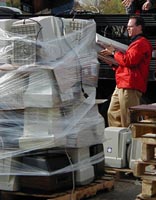
Computer monitors are typically packed into low stacks on wooden pallets for recycling and then shrink-wrapped.[1]

Electronic waste recycling, electronics recycling, or e-waste recycling is the disassembly and separation of components and raw materials of waste electronics; when referring to specific types of e-waste, the terms like computer recycling or mobile phone recycling may be used. Like other waste streams, reuse, donation, and repair are common sustainable ways to dispose of information technology (IT) waste.

Since its inception in the early 1990s, more and more devices are being recycled worldwide due to increased awareness and investment. Electronic recycling occurs primarily to recover valuable, rare-earth metals and precious metals, which are in short supply, as well as plastics and metals. These are resold or used in new devices after purification, in effect creating a circular economy. Such processes involve specialised facilities and premises, but within the home or ordinary workplace, sound components of damaged or obsolete computers can often be reused, reducing replacement costs.

Recycling is considered environmentally friendly because it prevents hazardous waste, including heavy metals and carcinogens, from entering the atmosphere, landfill, or waterways.[2] While electronics make up a small fraction of total waste generated, they are far more dangerous. There is stringent legislation designed to enforce and encourage the sustainable disposal of appliances, the most notable being the Waste Electrical and Electronic Equipment Directive of the European Union and the United States National Computer Recycling Act.[3] In 2009, 38% of computers and a quarter of total electronic waste were recycled in the United States, 5% and 3% up from 3 years prior, respectively.[4]

Reasons for recycling

[edit]

Obsolete computers and old electronics are valuable sources for secondary raw materials if recycled; otherwise, these devices are a source of toxins and carcinogens. Rapid technology change, low initial cost, and planned obsolescence have resulted in a fast-growing surplus of computers and other electronic components around the globe. Technical solutions are available, but in most cases a legal framework, collection system, logistics, and other services need to be implemented before applying a technical solution. The U.S. Environmental Protection Agency, estimates 30 to 40 million surplus PCs, classified as "hazardous household waste",[5] would be ready for end-of-life management in the next few years. The U.S. National Safety Council estimates that 75% of all personal computers ever sold are now surplus electronics.[6]

In 2007, the United States Environmental Protection Agency (EPA) stated that more than 63 million computers in the U.S. were traded in for replacements or discarded. Today, 15% of electronic devices and equipment are recycled in the United States. Most electronic waste is sent to landfills or incinerated, which releases materials such as lead, mercury, or cadmium into the soil, groundwater, and atmosphere, thus having a negative impact on the environment.

Many materials used in computer hardware can be recovered by recycling for future production. The reuse of tin, silicon, iron, aluminium, and a variety of plastics that are present in bulk in computers or other electronics can reduce the costs of constructing new systems. Components frequently contain copper, gold, tantalum,[7][8] silver, platinum, palladium, and lead as well as other valuable materials suitable for reclamation.[9][10]

Computer hardware contains many toxic substances, like dioxins, polychlorinated biphenyls (PCBs), cadmium, chromium, radioactive isotopes, and mercury. A typical computer monitor may contain more than 6% lead by weight, much of which is in the lead glass of the cathode-ray tube (CRT). A typical 15-inch (38 cm) computer monitor may contain 1.5 pounds (1 kg) of lead,[5] but other monitors have been estimated to have up to 8 pounds (4 kg) of lead.[1] Circuit boards contain considerable quantities of lead-tin solders that are more likely to leach into groundwater or create air pollution due to incineration. In US landfills, about 40% of the lead content levels are from e-waste.[11] The processing (e.g., incineration and acid treatments) required to reclaim these precious substances may release, generate, or synthesize toxic byproducts.

Export of waste to countries with lower environmental standards is a major concern. The Basel Convention includes hazardous wastes such as, but not limited to, CRT screens as an item that may not be exported transcontinentally without the prior consent of both the country exporting and receiving the waste. Companies may find it cost-effective in the short term to sell outdated computers to less developed countries with lax regulations. It is commonly believed that a majority of surplus laptops are routed to developing nations.[12] The high value of working and reusable laptops, computers, and components (e.g., RAM) can help pay the cost of transportation for many worthless commodities.[clarification needed] Laws governing the exportation of waste electronics are put in place to govern recycling companies in developed countries, which ship waste to Third World countries. However, concerns about the impact of e-recycling on human health, the health of recycling workers, and environmental degradation remain.[13] For example, due to the lack of strict regulations in developing countries, sometimes workers smash old products, propelling toxins onto the ground, contaminating the soil, and putting those who do not wear shoes in danger. Other procedures include burning away wire insulation and acid baths to resell circuit boards. These methods pose environmental and health hazards, as toxins are released into the air and acid bath residue can enter the water supply.[11]

Regulations

[edit]
An abandoned monitor

Europe

[edit]

In Switzerland, the first electronic waste recycling system was implemented in 1991, beginning with collection of old refrigerators; over the years, all other electric and electronic devices were gradually added to the system. The established producer responsibility organization is SWICO, mainly handling information, communication, and organization technology.[14] The European Union implemented a similar system in February 2003, under the Waste Electrical and Electronic Equipment Directive (WEEE Directive, 2002/96/EC).[15]

Pan-European adoption of the legislation was slow on take-up, with Italy and the United Kingdom being the final member states to pass it into law. The success of the WEEE directive has varied significantly from state to state, with collection rates varying between 13 kilograms per capita per annum to as little as 1 kg per capita per annum. Computers & electronic waste collected from households within Europe are treated under the WEEE directive via Producer Compliance Schemes (whereby manufacturers of electronics pay into a scheme that funds its recovery from household waste recycling centres (HWRCs) and nominated waste treatment facilities (known as Obligated WEEE).

However, recycling of ex-corporate computer hardware and associated electronic equipment falls outside the Producer Compliance Scheme (known as non-obligated). In the UK, waste or obsolete corporate-related computer hardware is treated via third-party authorized treatment facilities, which normally impose a charge for its collection and treatment.

Since mid-2020, the classification of WEEE has changed with regard to POPs (persistent organic pollutants). In the UK, WEEE containing POPs is now classified as a hazardous waste, which includes printed circuit boards, cable from WEEE, and categories 1,2,3,6,7 (cat 4 and 5 unless evidence provided to the contrary).

United States

[edit]

Federal

[edit]

The United States Congress considers several electronic waste bills, like the National Computer Recycling Act introduced by Congressman Mike Thompson (D-CA).[16] The main federal law governing solid waste is the Resource Conservation and Recovery Act of 1976. It covers only CRTs, though state regulations may differ.[17] There are also separate laws concerning battery disposal. On March 25, 2009, the House Science and Technology Committee approved funding for research on reducing electronic waste and mitigating environmental impact, regarded by sponsor Ralph Hall (R-TX) as the first federal bill to directly address electronic waste.[18] The Electronic Device Recycling Research and Development Act was passed in April 2009 to distribute grants to universities, government labs, and private industries for research in developing projects in line with e-waste recycling and refurbishment.[19]

State

[edit]

Many states have introduced legislation concerning the recycling and reuse of computers or computer parts, or other electronics.[20] Most American computer recycling legislations address it from within the larger electronic waste issue.

In 2001, Arkansas enacted the Arkansas Computer and Electronic Solid Waste Management Act, which requires that state agencies manage and sell surplus computer equipment, establishes a computer and electronics recycling fund, and authorizes the Division of Environmental Quality, a subset of the Arkansas Department of Energy and Environment, to regulate and/or ban the disposal of computer and electronic equipment in Arkansas landfills.[21]

In 2003, California passed the Electronic Waste Recycling Act (EWRA), which established California's system for managing e-waste. It mandated electronics manufacturers to submit an annual report detailing efforts to reduce hazardous substances.[22] It required fees, based on screen sizes, to be paid during sales of covered electronic devices and added restrictions on hazardous materials like lead and mercury in electronic devices.[22] The program is scheduled to expand in 2026 to include battery-embedded products.[22] All fees paid are proceeds towards environmentally responsible recycling and disposal of electronic devices in California.

In 2010, the New York State Electronic Equipment Recycling and Reuse Act was signed into law, mandating electronics manufacturers to disclose the levels of regulated materials, like lead, in products to ensure they remain within legal limits.[23] It also required anyone responsible for collecting electronic waste to report details concerning the consumers that provided the waste, as well as the manner in which they disposed of this waste, ensuring compliance with previous regulations.[24] The New York State Department of Environmental Conservation is responsible for overseeing these regulations, collection sites, and ensuring overall compliance with environmental laws.[23][25]

Canada

[edit]

Canada has implemented various electronic waste (e-waste) recycling regulations, primarily at the provincial level. The Electronic Products Recycling Association (EPRA) oversees e-waste recycling programs nationwide.[26] Additionally, the federal government has introduced the Canadian right-to-repair legislation, which is pending approval.

In Ontario, the Electrical and Electronic Equipment (EEE) Regulation (O. Reg. 522/20) mandates producers to establish systems for the collection and proper disposal of electronic products. Producers of information technology, telecommunications, and audio-visual (ITT/AV) equipment were required to register by November 30, 2020, with collection and management obligations commencing on January 1, 2021.[27]

In Quebec, the "Regulation respecting the recovery and reclamation of products by enterprises" (Q-2, r. 40.1) governs the recycling of electronic waste (e-waste). This regulation requires companies to collect and recycle the electronic products they sell, encouraging the development of ecologically sustainable products.[28]

The Electronic Products Recycling Association of Québec (EPRA-Québec), an industry-led, not-for-profit organization, manages the province's e-waste recycling program. Residents can drop off their unwanted electronics free of charge at EPRA-Québec authorized collection points. The program funds itself through Environmental Handling Fees (EHF) applied to new electronic products sold in Quebec.[29]

Similarly, British Columbia has adopted extended producer responsibility (EPR) programs under its Recycling Regulation, requiring manufacturers to manage the collection and recycling of electronic waste.[30]

Asia

[edit]

In Japan, sellers and manufacturers of certain electronics (such as televisions and air conditioners) are required to recycle them.[31] This is covered by at least two legislations: the Law for the Promotion of Effective Utilization of Resources (LPUR) and the Law for the Recycling of Specified Kinds of Home Appliances (LRHA). The former, which was passed in 2001, encouraged manufacturers to voluntarily help recycle goods, while the LRHA, which was adopted in 2009, required more recycling efforts by consumers and manufacturers of home appliances.[32] However, no legislation exists to cover the recycling of computer or cellphone-related waste.[33]

It is required in South Korea and Taiwan that sellers and manufacturers of electronics be responsible for recycling 75% of their used products. In South Korea, some local governments have introduced recycling initiatives, such as the case of Seoul, which launched its specialized e-waste recycling program. This includes the SR Center recycling facility, which takes apart and salvages materials from a fifth of the 10-ton e-waste that the city generates each year.[34]

According to a report by UNEP titled, "Recycling – from E-Waste to Resources," the amount of e-waste produced – including mobile phones and computers – could rise by as much as 500 percent over the next decade in some countries, such as India.[35]

Electronic waste is often exported to developing countries.
4.5-volt, D, C, AA, AAA, AAAA, A23, 9-volt, CR2032 and LR44 cells are all recyclable in most countries.

One theory is that increased regulation of electronic waste and concern over the environmental harm in mature economies creates an economic disincentive to remove residues prior to export. Critics of trade in used electronics maintain that it is too easy for brokers calling themselves recyclers to export unscreened electronic waste to developing countries, such as China,[36] India and parts of Africa, thus avoiding the expense of removing items like bad cathode-ray tubes (the processing of which is expensive and difficult). The developing countries are becoming big dump yards of e-waste. Proponents of international trade point to the success of fair trade programs in other industries, where cooperation has led creation of sustainable jobs, and can bring affordable technology in countries where repair and reuse rates are higher.

Organizations like A2Z Group have stepped in to take up the responsibility to collect and recycle e-waste at various locations in India.

In China, several key regulations have been implemented to manage electronic waste.

In November 2004, the National Development and Reform Commission (NDRC) established the Management of Recycling Home Appliances and Electronic Equipment policy to improve the recovery of valuable materials in discarded electronic devices, like gold, silver, and copper, reducing the need to extract new raw materials from the earth.[37]

In March 2007, the Ministry of Industry and Information Technology (MIIT), National Development and Reform Commission, the Ministry of Commerce, and multiple other government agencies introduced the Management Methods for Pollution Control of IT Products to regulate hazardous substances in electronic products.[38] It mandated manufacturers of electronics to minimize the use of hazardous materials in products and to label their toxic components.[37][39] It required electronic products imported from other countries to also abide by national standards.[39] These government agencies oversee implementation, imposing penalties such as fines for non-compliance.[37]

In Singapore, the Environmental Public Health Act (EPHA) was amended in April 2014 to introduce the Mandatory Waste Reporting scheme (MWR).[40] This required, upon written notice from the National Environment Agency, to report annual waste data and submit waste reduction plans.[41] The MWR was introduced to focus management attention on waste volumes.[42] Affected premises were to report via the Waste and Resource Management System (WRMS), detailing waste disposal, recycling quantities, and progress on reduction initiatives.[43] They were also required to keep waste disposal records for at least five years.[44] The National Environment Agency provided guidelines, training, and practices for hotels, malls, and industrial developments to support waste management efforts.[45]

South Africa

[edit]

South Africa's environmental protection is covered by the National Environmental Management Act (1998) and the National Environmental Management: Waste Act (2008).

The National Environmental Management Act of 1998 established the National Environmental Advisory Forum to advise the Minister of Forestry, Fisheries, and the Environment on matters pertaining to the sustainability of the environment in South Africa.[46] The act aims to integrate environmental management into all development activities, ensuring sustainability while progressing the economy and protecting natural resources.[46]

The National Environmental Management: Waste Act of 2008 was established to regulate waste management in South Africa by setting standards and frameworks for responsible waste disposal and reduction.[47] The act aims to minimize the environmental impact of waste by promoting recycling, recovery, and sustainable waste management practices while supporting economic growth and protecting natural resources.[47]

Under the act, penalties for violations vary based on the severity of the offence. For severe offences, violations such as illegal waste disposal or causing significant environmental harm could result in a fine of up to R10 million, imprisonment for up to 10 years, or both. Less severe offences carry penalties of up to R5 million in fines, imprisonment for up to five years, or both. Minor and continuing offences may result in fines for up to R1,000 per day and imprisonment for a duration ranging from 20 days to six months.

Recycling methods

[edit]
Computers being collected for recycling at a pickup event in Olympia, Washington, United States

Consumer recycling

[edit]

Consumer recycling options consist of (see below) selling, donating computers directly to organizations in need, sending devices directly back to their original manufacturers, or getting components to a convenient recycler or refurbisher.

Scrapping recycling

[edit]

In the recycling process, TVs, monitors, mobile phones, and computers may be tested for reuse and repaired. If broken, they may be disassembled for parts, still having high value if labour is cheap enough. Other e-waste is shredded to roughly 100 mm pieces and manually checked to separate toxic batteries and capacitors, which contain poisonous metals. The remaining pieces are further shredded to ~10 mm and passed under a magnet to remove ferrous metals. An eddy current ejects non-ferrous metals, which are sorted by density either by a centrifuge or vibrating plates. Precious metals can be dissolved in acid, sorted, and smelted into ingots. The remaining glass and plastic fractions are separated by density and sold to re-processors. TVs and monitors must be manually disassembled to remove either toxic lead in CRTs or the mercury in flat screens.[48][49][50]

Corporations face risks both for incompletely destroyed data and for improperly disposed of computers. In the UK, some recycling companies use a specialized WEEE-registered contractor to dispose of IT equipment and electrical appliances. In America, under the Resource Conservation and Recovery Act, companies are liable for compliance with regulations even if the recycling process is outsourced. Companies can mitigate these risks by requiring waivers of liability, audit trails, certificates of data destruction, signed confidentiality agreements, and random audits of information security. The National Association of Information Destruction is an international trade association for data destruction providers.[51]

Sale

[edit]

Online auctions are an alternative for consumers willing to resell for cash with fewer fees, in a complicated, self-managed, competitive environment[52] where paid listings might not sell.[53] Online classified ads can be similarly risky due to forgery scams and uncertainty.[54]

Take back

[edit]

When researching computer companies before a computer purchase, consumers can find out if they offer recycling services. Most major computer manufacturers offer some form of recycling. At the user's request, they may mail in their old computers or arrange for pickup from the manufacturer.

Hewlett-Packard also offers free recycling, but only one of its "national" recycling programs is available nationally, rather than in one or two specific states.[55] Hewlett-Packard also offers to pick up any computer product of any brand for a fee, and to offer a coupon against the purchase of future computers or components; it was the largest computer recycler in America in 2003, and it has recycled over 750,000,000 pounds (340,000,000 kg) of electronic waste globally[5] since 1995.[56] It encourages the shared approach of collection points for consumers and recyclers to meet.[57]

Exchange

[edit]

Manufacturers often offer a free replacement service when purchasing a new PC. For example, Dell Computers and Apple Inc. may take back old products when one buys a new one. Both refurbish and resell their computers with a one-year warranty.[54]

Many companies purchase and recycle all brands of working and broken laptops and notebook computers from individuals and corporations. Building a market for recycling desktop computers has proven more difficult than exchange programs for laptops, smartphones, and other smaller electronics.[58] A basic business model is to provide a seller with an instant online quote based on laptop characteristics, then to send a shipping label and prepaid box to the seller, to erase, reformat, and process the laptop, and to pay rapidly by cheque.[12] A majority of these companies are also generalized electronic waste recyclers as well; organizations that recycle computers exclusively include Cash For Laptops, a laptop refurbisher in Nevada that claims to be the first to buy laptops online in 2001.[58]

Donations/nonprofits

[edit]

With the constantly rising costs due to inflation, many families or schools do not have sufficient funds available for computers to be used along with education standards.[59] Families also impacted by disaster suffer as well due to the financial impact of the situation they have incurred.[60] Many nonprofit organizations, such as InterConnection.org, can be found locally as well as around the web and give detailed descriptions as to what methods are used for dissemination and detailed instructions on how to donate. The impact can be seen locally and globally, affecting thousands in need.[61][62] In Canada non profit organizations engaged in computer recycling, such as The Electronic Recycling Association Calgary, Edmonton, Vancouver, Winnipeg, Toronto, Montreal,[63] Computers for Schools Canada wide,[64] are very active in collecting and refurbishing computers and laptops to help the non-profit and charitable sectors and schools.

Junkyard Computing

[edit]

The term junkyard computing is a colloquial expression for using old or inferior hardware to fulfill computational tasks while handling reliability and availability on the software level.[65] It uses abstraction of computational resources via software, allowing hardware replacement with very low effort.[66] Ease of replacement is hereby a corner point since hardware failures are expected at any time due to the condition of the underlying infrastructure. This paradigm became more widely used with the introduction of cluster orchestration software like Kubernetes or Apache Mesos, since large monolithic applications require reliability and availability on the machine level, whereas this kind of software is fault-tolerant by design. Those orchestration tools also introduced fairly fast set-up processes, allowing to use junkyard computing economically and even making this pattern applicable in the first place. Further use cases were introduced when continuous delivery was getting more widely accepted. Infrastructure to execute tests and static code analysis was needed, which requires as much performance as possible while being extremely cost-effective. From an economic and technological perspective, junkyard computing is only practicable for a small number of users or companies. It already requires a decent number of physical machines to compensate for hardware failures while maintaining the required reliability and availability.[65] This implies a direct need for a matching underlying infrastructure to house all the computers and servers.[65] Scaling this paradigm is also quite limited due to the increasing importance of factors like power efficiency and maintenance efforts, making this kind of computing perfect for mid-sized applications.[65]

Health and Environmental Impacts of Informal Recycling

[edit]

While e-waste recycling is essential for recovering valuable materials, it poses serious environmental and health risks when handled improperly. Toxic substances such as lead, mercury, and cadmium can be released through unsafe methods. In particular, burning e-waste emits hazardous chemicals like dioxins, furans, polycyclic aromatic hydrocarbons (PAHs), persistent halogenated aromatic hydrocarbons (PHAHs), and hydrogen chloride, which contaminate air, water, soil, and surrounding ecosystems.[67]

In many developing countries, informal recycling practices—such as manual dismantling, open burning, and crude plastic processing—release toxic metals, including arsenic, manganese, nickel, lead, and zinc, along with organic pollutants like flame retardants, PCBs, and dioxins.[68] Workers exposed to these substances face severe health risks, including respiratory problems and cancer.[67]

Improper recycling also leads to soil and water contamination as hazardous metals leach into the environment, degrading water quality and soil health. Techniques like acid leaching and dismantling emit persistent toxins such as PCBs and dioxins that accumulate over time, posing lasting ecological and health threats.[2]

Moreover, many informal methods are inefficient, recovering fewer materials and causing greater environmental damage. Improperly processed e-waste often becomes non-recyclable, compounding the waste problem. Some techniques are also energy-intensive, offsetting the environmental gains of recycling. Without stronger regulations and safer recycling systems, the environmental costs of current practices may surpass their economic benefits, highlighting the urgent need for more sustainable approaches.

History

[edit]

Although consumer electronics such as the radio have been popular since the 1920s, recycling was almost unheard of until the early 1990s.[69] At the end of the 1970s, the accelerating pace of domestic consumer electronics drastically shortened the lifespan of electronics such as TVs, VCRs and audio. New innovations appeared more quickly, making older equipment obsolete. Increased complexity and sophistication of manufacture made local repair more difficult. The retail market shifted gradually, but substantially, from a few high-value items that were cherished for years and repaired when necessary, to short-lived items that were rapidly replaced owing to wear or simply fashion, and discarded rather than repaired. This was particularly evident in computing, highlighted by Moore's Law. In 1988, two severe incidents highlighted the approaching e-waste crisis. The cargo barge Khian Sea was loaded with more than 14,000 tons of toxic ash from Pennsylvania, which had been refused acceptance in New Jersey and the Caribbean. After sailing for 16 months, all the waste was dumped as "topsoil fertiliser" in Haiti and in the Bay of Bengal by November 1988. In June 1988, a large illegal toxic waste dump, which had been created by an Italian company, was discovered.[70] This led to the formation of the Basel Convention to stem the flow of poisonous substances from developed countries in 1989.[71]

In 1991, the first electronic waste recycling system was implemented in Switzerland, beginning with collection of old refrigerators but gradually expanding to cover all devices. The organisation SWICO handles the programme, and is a partnership between IT retailers.[72]

The first publication to report the recycling of computers and electronic waste was published on the front page of the New York Times on April 14, 1993, by columnist Steve Lohr. It detailed the work of Advanced Recovery Inc., a small recycler, in trying to safely dismantle computers, even if most waste was landfilled.[73] Several other companies emerged in the early 1990s, chiefly in Europe, where national 'take back' laws compelled retailers to use them.

After these schemes were set up, many countries could not deal with the sheer quantity of e-waste they generated or its hazardous nature. They began to export the problem to developing countries without enforced environmental legislation. This is cheaper: the cost of recycling computer monitors in the US is ten times more than in China. Demand in Asia for electronic waste began to grow when scrap yards found they could extract valuable substances such as copper, iron, silicon, nickel, and gold during the recycling process.[74]

The Waste Electrical and Electronic Equipment Directive (WEEE Directive) became European Law in February 2003 and covers all aspects of recycling all types of appliances. This was followed by the Electronic Waste Recycling Act, enshrined in California law in January 2005

The 2000s saw a large increase in both the sale of electronic devices and their growth as a waste stream: in 2002, e-waste grew faster than any other type of waste in the EU.[75] This caused investment in modern, automated facilities to cope with the influx of redundant appliances.[76][77][78][79]

E-cycling

[edit]

E-cycling or "E-waste" is an initiative by the United States Environmental Protection Agency (EPA) which refers to donations, reuse, shredding and general collection of used electronics. Generically, the term refers to the process of collecting, brokering, disassembling, repairing and recycling the components or metals contained in used or discarded electronic equipment, otherwise known as electronic waste (e-waste). "E-cyclable" items include, but are not limited to: televisions, computers, microwave ovens, vacuum cleaners, telephones and cellular phones, stereos, and VCRs and DVDs, just about anything that has a cord, light, or takes some kind of battery.[80]

Investment in e-cycling facilities has been increasing recently due to technology's rapid rate of obsolescence, concern over improper methods, and opportunities for manufacturers to influence the secondary market (used and reused products). Higher metal prices can result in more recycling taking place.[81] The controversy around methods stems from a lack of agreement over preferred outcomes.

World markets with lower disposable incomes consider 75% repair and reuse to be valuable enough to justify 25% disposal. Debate and certification standards may be leading to better definitions, though civil law contracts, governing the expected process, are still vital to any contracted process, as poorly defined as "e-cycling".

Pros of e-cycling

[edit]

The e-waste disposal occurring after processing for reuse, repair of equipment, and recovery of metals may be unethical or illegal when e-scrap of many kinds is transported overseas to developing countries for such processing. It is transported as if to be repaired and/or recycled, but after processing the less valuable e-scrap becomes e-waste/pollution there. Another point of view is that the net environmental cost must be compared to and include the mining, refining and extraction with its waste and pollution cost of new products manufactured to replace secondary products, which are routinely destroyed in wealthier nations, and which cannot economically be repaired in older or obsolete products.

As an example of negative impacts of e-waste, pollution of groundwater has become so serious in areas surrounding China's landfills that water must be shipped in from 18 miles (29 km) away.[82] However, mining of new metals can have even broader impacts on groundwater. Either thorough e-cycling processing, domestic processing or overseas repair, can help the environment by avoiding pollution. Such e-cycling can theoretically be a sustainable alternative to disposing of e-waste in landfills. In addition, e-cycling allows for the reclamation of potential conflict minerals, like gold and wolframite, which requires less of those to be mined and lessens the potential money flow to militias and other exploitative actors in third-world that profit from mining them.

Supporters of one form of "required e-cycling" legislation argue that e-cycling saves taxpayers money,[83] as the financial responsibility would be shifted from the taxpayer to the manufacturers. Advocates of more simple legislation (such as landfill bans for e-waste) argue that involving manufacturers does not reduce the cost to consumers, if reuse value is lost, and the resulting costs are then passed on to consumers in new products, particularly affecting markets which can hardly afford new products. It is theorized that manufacturers who take part in e-cycling would be motivated to use fewer materials in the production process, create longer lasting products, and implement safer, more efficient recycling systems.[84] This theory is sharply disputed and has never been demonstrated.

Criticisms of e-cycling

[edit]

The critics of e-cycling are just as vocal as its advocates. According to the Reason Foundation, e-cycling only raises the product and waste management costs of e-waste for consumers and limits innovation on the part of high-tech companies.[85] They also believe that e-cycling facilities could unintentionally cause great harm to the environment. Critics claim that e-waste doesn't occupy a significant portion of total waste.

Another opposition to e-cycling is that many problems are posed in disassembly: the process is costly and dangerous because of the heavy metals of which the electronic products are composed, and as little as 1–5% of the original cost of materials can be retrieved. A final problem that people find is that identity fraud is all too common in regards to the disposal of electronic products.[86] As the programs are legislated, creating winners and losers among e-cyclers with different locations and processes, it may be difficult to distinguish between criticism of e-cycling as a practice, and criticism of the specific legislated means proposed to enhance it.

The fate of e-waste

[edit]
Workers recovering metals from e-waste in Agbogbloshie, a e-waste recovery site in Ghana. Exported e-waste is frequently processed in situations that are unhealthy for the workers, where they are exposed to toxics.

A hefty criticism often lobbed at reuse based recyclers is that people think that they are recycling their electronic waste, when in reality it is actually being exported to developing countries like China, India, and Nigeria. For instance, at free recycling drives, "recyclers" may not be staying true to their word, but selling e-waste overseas[82] or to parts brokers.[87] Studies indicate that 50–80% of the 300,000 to 400,000 tons (270,000 to 360,000 tonnes) of e-waste is being sent overseas, and that approximately 2 million tons (1.8 million tonnes) per year go to U.S. landfills.[82]

Although not possible in all circumstances, the best way to e-cycle is to upcycle e-waste.[88] On the other hand, the electronic products in question are generally manufactured, and repaired under warranty, in the same nations, which anti-reuse recyclers depict as primitive. Reuse-based e-recyclers believe that fair-trade incentives for export markets will lead to better results than domestic shredding. There has been a continued debate between export-friendly e-cycling and increased regulation of that practice.[89]

In the European Union, debate regarding the export of e-waste has resulted in a significant amendment to the WEEE directive (January 2012) with a view to significantly diminishing the export of WEEE (untreated e-waste). During debate in Strasburg, MEPs stated that "53 million tonnes of WEEE were generated in 2009 but only 18% collected for recycling"[90] with the remainder being exported or sent to landfill. The Amendment, voted through by a unanimous 95% of representatives, removed the re-use (repair and refurbishmet) aspect of the directive and placed more emphasis upon recycling and recovery of precious metals and base metals. The changes went further by placing the burden upon registered exporters to prove that used equipment leaving Europe was "fit for purpose".

Policy issues and current efforts

[edit]

Currently, pieces of government legislation and a number of grassroots efforts have contributed to the growth of e-cycling processes which emphasize decreased exports over increased reuse rates. The Electronic Waste Recycling Act was passed in California in 2003.[91] It requires that consumers pay an extra fee for certain types of electronics, and the collected money be then redistributed to recycling companies that are qualified to properly recycle these products. It is the only state that legislates against e-waste through this kind of consumer fee; the other states' efforts focus on producer responsibility laws or waste disposal bans. No study has shown that per capita recovery is greater in one type of legislated program (e.g. California) versus ordinary waste disposal bans (e.g. Massachusetts), though recovery has greatly increased in states which use either method.

As of September, 2006, Dell developed the nation's first completely free recycling program,[92] furthering the responsibilities that manufacturers are taking for e-cycling. Manufacturers and retailers such as Best Buy, Sony, and Samsung have also set up recycling programs.[93] This program does not accept televisions, which are the most expensive used electronic item, and are unpopular in markets which must deal with televisions when the more valuable computers have been cherry picked.

Another step being taken is the recyclers' pledge of true stewardship, sponsored by the Computer TakeBack Campaign. It has been signed by numerous recyclers promising to recycle responsibly. Grassroots efforts have also played a big part in this issue, as they and other community organizations are being formed to help responsibly recycle e-waste.[92] Other grassroots campaigns are Basel, the Computer TakeBack Campaign (co-coordinated by the Grassroots Recycling Network), and the Silicon Valley Toxics Coalition. No study has shown any difference in recycling methods under the Pledge, and no data is available to demonstrate difference in management between "Pledge" and non-Pledge companies, though it is assumed that the risk of making false claims will prevent Pledge companies from wrongly describing their processes.

Many people believe that the U.S. should follow the European Union model in regards to its management of e-waste, such as the Extended Producer Responsibility, which was started in Sweden in 1990.[94] In this program, a directive forces manufacturers to take responsibility for e-cycling; it also demands manufacturers' mandatory take-back and places bans on exporting e-waste to developing countries. British Columbia has more than 20 EPR programs under the Recycling Regulation legislation, which stops e-waste from being put into landfills and recycles them instead. There are more than 80 programs in Canada as of 2013.[94]

Another longer-term solution is for computers to be composed of less dangerous products and many people disagree. No data has been provided to show that people who agree with the European model have based their agreement on measured outcomes or experience-based scientific method.

Data security

[edit]
Electronic waste dump at Agbogbloshie, Ghana. Organized criminals commonly search the drives for information to use in local scams.[95]

E-waste presents a potential security threat to individuals and exporting countries. Hard drives that are not properly erased before the computer is disposed of can be reopened, exposing sensitive information. Credit card numbers, private financial data, account information and records of online transactions can be accessed by most willing individuals. Organized criminals in Ghana commonly search the drives for information to use in local scams.[95]

Government contracts have been discovered on hard drives found in Agbogbloshie, Ghana. Multimillion-dollar agreements from United States security institutions such as the Defense Intelligence Agency (DIA), the Transportation Security Administration and Homeland Security have all resurfaced in Agbogbloshie.[95][96]

Reasons to destroy and recycle securely

[edit]

There are ways to ensure that not only hardware is destroyed but also the private data on the hard drive. Having customer data stolen, lost, or misplaced contributes to the ever-growing number of people who are affected by identity theft, which can cause corporations to lose more than just money. The image of a company that holds secure data, such as banks, law firms, pharmaceuticals, and credit corporations is also at risk. If a company's public image is hurt, it could cause consumers to not use their services and could cost millions in business losses and positive public relation campaigns. The cost of data breaches "varies widely, ranging from $90 to $50,000 (under HIPAA's new HITECH amendment, that came about through the American Recovery and Revitalization act of 2009), as per customer record, depending on whether the breach is "low-profile" or "high-profile" and the company is in a non-regulated or highly regulated area, such as banking or medical institutions."[97]

There is also a major backlash from the consumer if there is a data breach in a company that is supposed to be trusted to protect their private information. If an organization has any consumer info on file, they must by law (Red Flags Clarification act of 2010) have written information protection policies and procedures in place, that serve to combat, mitigate, and detect vulnerable areas that could result in identity theft. The United States Department of Defense has published a standard to which recyclers and individuals may meet in order to satisfy HIPAA requirements.

Secure recycling

[edit]

Countries have developed standards, aimed at businesses and with the purpose of ensuring the security of Data contained in 'confidential' computer media [NIST 800–88: US standard for Data Remanence][HMG CESG IS5, Baseline & Enhanced, UK Government Protocol for Data Destruction]. National Association for Information Destruction (NAID) "is the international trade association for companies providing information destruction services. Suppliers of products, equipment and services to destruction companies are also eligible for membership. NAID's mission is to promote the information destruction industry and the standards and ethics of its member companies."[98] There are companies that follow the guidelines from NAID and also meet all Federal EPA and local DEP regulations.

The typical process for computer recycling aims to securely destroy hard drives while still recycling the byproduct. A typical process for effective computer recycling:

  1. Receive hardware for destruction in locked and securely transported vehicles.
  2. Shred hard drives.
  3. Separate all aluminum from the waste metals with an electromagnet.
  4. Collect and securely deliver the shredded remains to an aluminum recycling plant.
  5. Mold the remaining hard drive parts into aluminum ingots.

The Asset Disposal and Information Security Alliance (ADISA) publishes an ADISA IT Asset Disposal Security Standard that covers all phases of the e-waste disposal process from collection to transportation, storage and sanitization's at the disposal facility. It also conducts periodic audits of disposal vendors.[99]

See also

[edit]

References

[edit]
[edit]
Revisions and contributorsEdit on WikipediaRead on Wikipedia
from Grokipedia
Electronic waste recycling encompasses the systematic collection, disassembly, and material recovery from discarded electrical and electronic equipment, aiming to extract reusable components and raw materials while mitigating the release of hazardous substances into the environment. In 2022, global e-waste generation hit a record 62 million metric tons, or 7.8 kilograms per capita, driven by rapid obsolescence of devices like smartphones, computers, and appliances, yet only 22.3 percent underwent formal recycling, with projections indicating a decline to 20 percent by 2030 amid surging production. This discrepancy highlights the untapped economic potential, as unrecycled e-waste forfeits recoverable resources valued at approximately $62 billion annually, including precious metals such as gold, silver, and copper, which exceed concentrations found in natural ores. Formal methods employ mechanical shredding, hydrometallurgical leaching, and pyrometallurgical smelting to separate metals, plastics, and glass, though challenges persist in sorting heterogeneous waste streams and achieving high recovery efficiencies without excessive energy use. A major controversy surrounds informal recycling prevalent in developing countries, where rudimentary techniques like open-air burning and acid baths—often involving child labor—expose workers and nearby communities to toxic heavy metals and persistent organic pollutants, resulting in documented health effects such as respiratory disorders, neurological damage, and elevated blood lead levels. These practices, fueled by illegal exports from wealthier nations, underscore systemic failures in global waste management, including weak enforcement of the Basel Convention and insufficient incentives for formal infrastructure, perpetuating environmental degradation in sites like Agbogbloshie, Ghana.

Definition and Scale

Definition of E-Waste

Electronic waste, commonly abbreviated as e-waste, refers to electrical or electronic equipment that has been discarded, encompassing all components, sub-assemblies, and consumables part of the product at the time of disposal. This includes devices powered by electricity or batteries that reach the end of their useful life due to functional failure, technological obsolescence, or replacement by superior models. E-waste originates from diverse sources, including consumer households discarding outdated gadgets, businesses retiring office equipment, and industrial operations phasing out machinery. Typical e-waste comprises complex assemblies such as printed circuit boards containing metals like and , rechargeable batteries with or lead, cathode ray tubes or LCD screens in monitors and televisions, and wiring harnesses. Items still suitable for direct , refurbishment, or repair—such as functional devices transferred to secondary markets—are excluded from e-waste classification until they verifiably become obsolete or irreparable, emphasizing end-of-life status over mere age. Standard classifications adopted by the divide e-waste into five categories to facilitate measurement and management: temperature exchange equipment (e.g., refrigerators, air conditioners); screens and monitors (excluding those integrated into larger appliances); lamps (e.g., fluorescent tubes); large equipment (e.g., washing machines, printers larger than 50 cm); and small equipment (e.g., mobile phones, toasters smaller than 50 cm). These categories reflect empirical distinctions in form, function, and material composition, derived from international standards rather than regulatory fiat.

Global Generation and Composition

Global e-waste generation totaled 62 million metric tons in 2022, corresponding to 7.8 kilograms worldwide. This figure is projected to reach 82 million metric tons by 2030, driven by an annual growth rate of 2.6 million metric tons amid the proliferation of electronic devices. Formal collection and recycling accounted for only 22.3 percent of the 2022 total, leaving the majority undocumented or handled informally. E-waste composition consists predominantly of metals, which comprised about 50 percent or 31 million metric tons in 2022, including metals, non-ferrous metals, and trace precious metals such as , silver, and . Plastics formed roughly 27 percent or 17 million metric tons, with the balance—approximately 23 percent or 14 million metric tons—encompassing minerals, , and composite materials. Hazardous components, including lead, mercury, and brominated flame retardants, are embedded across categories, particularly in circuit boards, batteries, and casings. Asia accounted for nearly 50 percent of global e-waste generation in 2022, equating to about 30 million metric tons. In contrast, low- and middle-income regions, including much of and parts of , exhibit elevated informal processing rates due to constrained formal infrastructure, with formal recycling often below 1 percent in African countries. This annual volume expansion of 2.6 million metric tons surpasses the pace of global recycling system development.

Economic Drivers

Material Value and Recovery Potential

Electronic waste contains a diverse array of recoverable metals and materials, including base metals like and aluminum, as well as precious metals such as , silver, and , and critical elements like rare earths. In 2022, the 62 million tonnes of global e-waste generated held an estimated $91 billion in value, primarily from these metals, underscoring e-waste as a secondary comparable to traditional outputs. This value arises from the concentrated presence of metals in components like printed circuit boards and batteries, where extraction yields surpass those from declining primary ore grades in many cases. Precious metals exemplify the recovery potential: a tonne of electronic circuit boards can contain 40 to 800 times more than an equivalent weight of typical gold ore, with ore grades often at 1-5 grams per tonne versus hundreds of grams per tonne in e-waste. , a dominant constituent, comprises up to 20-30% by weight in certain e-waste fractions like wiring and boards, enabling substantial recovery volumes that rival primary copper mining efficiencies when aggregated globally. Rare earth elements, vital for magnets and displays, are present in lower concentrations (often parts per million) but offer feasibility for recovery through targeted processes, despite challenges from heterogeneous waste streams and chemical complexity. The concept of frames e-waste as an "urban ore deposit," leveraging these materials to mitigate vulnerabilities in primary supply chains, including energy-intensive extraction and geopolitical dependencies on concentrated regions. Primary for metals like requires vast land disruption and high inputs—often 10-20 times more than secondary recovery—while e-waste demands less upfront investment, positioning as a viable alternative amid ore grade declines and supply constraints. This approach not only preserves material stocks but also stabilizes costs, as demonstrated by the untapped $91 billion annual value lost to inadequate collection rates below 25%.

Market Incentives and Industry Economics

The profitability of formal e-waste hinges on the recovery and resale of valuable materials such as , silver, , and rare earth elements, whose market prices provide primary economic incentives independent of regulatory mandates. Commodity price fluctuations directly influence recycler margins; for instance, high prices exceeding $2,000 per in 2024 bolstered returns from printed circuit boards, where yields up to 300 times more per ton than ore mining. This material value drives private investment, with the global e-waste market valued at approximately USD 50 billion in 2024 and projected to grow at a CAGR of over 11% through 2030, reflecting sustained profitability for operators targeting high-density . Key barriers to broader profitability include high collection and costs, which can account for 30-50% of total expenses due to dispersed sources and transportation challenges, often exceeding recovery values for low-grade items like bulk appliances. However, incentives strengthen for compact, high-value products such as smartphones and laptops, where recovery—after processing—frequently surpasses disposal fees; economic analyses indicate these yields positive margins when metal values offset dismantling costs, unlike landfilling, which forgoes resale despite lower upfront expenses of $150-250 per metric ton versus $450-1,000 for . In the U.S., IT asset disposition (ITAD) firms exemplify this, profiting from refurbishment, resale, and secure services; one case involved zero-cost disposal for a client while recovering equipment value equivalent to $120,000 in avoided penalties and asset returns. Asian refineries, processing imported e-waste streams, similarly capitalize on labor cost advantages to extract metals, though often in less regulated settings that evade formal compliance overheads. Informal markets emerge where stringent regulations inflate formal sector costs, suppressing participation and allowing low-tech dismantling to capture untapped volumes based on local labor and spot metal prices rather than subsidized . Overreliance on subsidies distorts these dynamics by insulating operators from true market signals, potentially delaying innovations in ; instead, commodity-driven models—evident in periods of metal price surges—better align recycling rates with genuine , as seen in 's edge over virgin extraction costs, where e-waste yields metals at 10-50% lower and expense. This approach sustains jobs in disassembly and refining, contributing to sector employment growth amid expanding e-waste volumes of 62 million tonnes annually.

Environmental and Health Realities

Impacts of Improper Disposal and Informal Processing

Improper disposal of through landfilling results in the leaching of hazardous substances, including like lead and , into and , posing risks to local ecosystems and water supplies. Uncontrolled exacerbates by releasing dioxins, furans, and volatile , contributing to atmospheric deposition and respiratory hazards for nearby populations. These methods, often employed due to inadequate infrastructure, concentrate contaminants in specific locales rather than dispersing them globally. Informal processing, prevalent in regions lacking formal facilities, involves manual dismantling, open burning to extract and precious metals, and acid leaching for recovery, leading to direct releases of pollutants into the environment. Open burning generates particulate matter laden with and persistent organic pollutants (POPs) such as (PBDEs), with soil concentrations in affected sites reaching 4250 ng/g for PBDEs near acid leaching operations. Acid leaching contaminates and water with elevated levels of lead, , and , often exceeding safe thresholds by orders of magnitude in processing hotspots; at-home precious metal extraction attempts using similar techniques, such as sulfuric or nitric acid baths and cyanide leaching, expose individuals to risks of chemical burns, poisoning, inhalation injuries, fire and explosion hazards from improper handling, and localized environmental contamination from chemical waste disposal. Air quality deteriorates from fumes containing and mercury, with studies documenting significantly higher heavy metal deposition in surrounding areas compared to non-impacted sites. Health data from exposed populations reveal elevated blood lead levels in children and workers, surpassing WHO guidelines and correlating with neurological impairments, reduced lung function, and developmental delays. In , , informal recyclers exhibit higher incidences of work-related injuries, chronic respiratory issues, and heavy metal bioaccumulation compared to controls. Similar patterns emerge in former Chinese sites like Guiyu, where residents show increased POPs and metals in bodily tissues, linked to disruptions and DNA damage. Children face amplified vulnerabilities due to hand-to-mouth behavior and proximity to sites, though effects remain predominantly localized to these communities rather than constituting a widespread . Globally, the 2022 generation of 62 million tonnes of e-waste saw only 22.3% formally documented for , leaving approximately 48 million tonnes undocumented and susceptible to informal handling or dumping. These impacts arise primarily from rudimentary techniques necessitated by economic pressures and infrastructural deficits in developing economies, amplifying localized beyond levels seen in regulated primary operations for equivalent metals, though total emissions from informal e-waste remain a fraction of global extractive industries. underscores that while severe in hotspots, the harms are containable through targeted interventions rather than indicative of inherent e-waste toxicity alone.

Comparative Risks: Recycling vs. Virgin Material Extraction

Lifecycle assessments of e-waste recycling reveal that material recovery from electronics typically yields lower overall environmental and health risks than virgin extraction, as secondary processing displaces energy-intensive mining and refining while minimizing upstream habitat disruption and downstream waste. For key metals like copper and aluminum prevalent in e-waste, recycling consumes 80-85% less energy than primary production; copper recovery, for instance, avoids the high electricity demands of smelting sulfide ores, which can exceed 40 GJ per tonne in virgin processes. Similarly, aluminum recycling from e-waste achieves 90-95% energy savings over bauxite mining and electrolysis, reducing reliance on electricity-heavy Hall-Héroult methods that contribute to acid rain and fluoride emissions. These efficiencies stem from skipping ore beneficiation and extraction phases, where open-pit mining for copper generates 2-5 tonnes of waste rock per tonne of ore, amplifying land degradation and water contamination risks not proportionally seen in controlled recycling facilities.
MetalEnergy Savings (Recycling vs. Primary, %)Approximate CO2 Avoided (tonnes per tonne recycled)
Aluminum90-959-14
Copper80-851-2.5
CO2 emission reductions further underscore 's net benefits, with studies estimating avoidance of 1-2.5 tonnes of CO2 equivalent per tonne of recycled —offsetting the 5-10 tonnes emitted in primary and —while aluminum averts 9-14 tonnes per tonne by bypassing carbon-intensive alumina refining. Formal operations emit low levels of pollutants due to enclosed systems and emission controls, contrasting with virgin extraction's persistent and heavy metal leaching into watersheds. Even informal , despite localized air and from open burning and acid leaching, often yields net emission savings in lifecycle models by substituting for virgin materials; for example, recovering precious metals from circuit boards—concentrated 40-800 times higher than in ores—curbs demand for cyanide-laced , which releases mercury and at scales far exceeding informal e-waste sites. Critiques emphasizing e-waste recycling's risks, such as releases or worker exposures in informal sectors, overlook comparative baselines: primary for rare earths and base metals in e-waste drives greater , with operations like those in the of Congo linked to of 10,000+ hectares annually and chronic community health burdens from overflows. No empirical supports a "toxic legacy" from dominating global metal cycles; instead, e-waste recovery has demonstrably lowered pressures, as evidenced by stabilized copper ore grades and reduced exploration needs in recent decades. Health risks concentrate in unregulated hotspots like , , but aggregate LCAs affirm that scaling formal amplifies offsets against extraction's diffuse, long-term ecological harms, including 10-100 times higher water usage per tonne of metal produced.

Recycling Processes and Technologies

Formal Mechanical and Chemical Methods

Formal mechanical and chemical methods in electronic waste recycling encompass industrialized processes conducted in regulated facilities to separate and recover valuable materials such as metals, plastics, and glass while minimizing environmental releases. These methods prioritize scalability through automated equipment, beginning with selective disassembly of components like circuit boards and batteries to facilitate . Shredding reduces e-waste to uniform small fragments, typically a few centimeters in size, enabling efficient liberation of materials for separation. Mechanical separation follows shredding and employs physical principles to sort fractions without chemical alteration. uses magnets to extract metals like and iron. separation induces currents in non-ferrous metals such as aluminum and , propelling them away from non-conductive materials. Electrostatic separation exploits differences in electrical conductivity to isolate plastics from metals, while density-based techniques, often using air classifiers or water flotation, differentiate glass, heavier metals, and lighter polymers based on specific gravity—heavier components sink, and lighter ones float. These steps achieve initial sorting of non-hazardous fractions, with recovered and non-ferrous metals directed to smelters for . Chemical methods complement mechanical processing by targeting precious and base metals embedded in complex alloys or circuit boards. involves leaching shredded material with aqueous solutions, such as acids or bases, to dissolve target metals like , silver, and , followed by precipitation or solvent extraction for purification. For example, a single computer motherboard typically yields 0.02 to 0.5 grams of gold, requiring processing of dozens of boards to obtain grams, underscoring the need for large-scale operations to achieve economic viability. This approach is noted for its selectivity and lower energy demands compared to thermal methods. , conversely, entails high-temperature in furnaces to melt and separate base metals like and , with impurities volatilized or slagged off; for instance, is smelted at specialized plants for direct . These processes are integrated in large-scale operations to handle heterogeneous e-waste streams. Certified standards underpin these methods to ensure accountability and emission minimization. The R2 standard, developed for electronics recyclers, mandates independent audits of processing practices, including verification of downstream vendors for responsible handling of outputs from mechanical and chemical operations. Similarly, the RIOS standard integrates quality, environmental, and health management systems tailored to recycling, often combined with R2 for e-waste to enforce controls on hazardous releases during shredding, leaching, or . Such certifications facilitate compliance with engineering-based protocols for material throughput in formalized settings.

Informal Dismantling and Recovery Techniques

Informal dismantling of involves low-technology methods predominantly practiced in developing regions such as and , where workers manually disassemble devices using basic hand tools to separate reusable components and extract metals. In sites like , Ghana, and Guiyu, China, common techniques include stripping circuit boards, removing casings, and isolating wiring for recovery. These operations often occur in open-air settings without specialized equipment, enabling access to materials from low-value e-waste that formal facilities might deem uneconomical. To recover metals, informal processors employ open burning to strip insulation from wires and incinerate plastics, yielding exposed and aluminum, while acid leaching—using solutions like hydrochloric or —is applied to circuit boards for and other precious metals extraction. These labor-intensive approaches achieve selective recovery of base metals like through meticulous sorting and stripping, often surpassing mechanized yields for certain hand-recoverable fractions, though overall efficiency remains variable due to incomplete separation. Precious metals such as benefit from targeted acid treatments, but rare earth elements are largely lost, as methods lack the precision for their isolation from complex alloys and magnets. While informal methods highlight the potential for precious metal recovery, attempts at at-home extraction using similar rudimentary techniques are inadvisable due to safety risks and inefficiency. No practical non-chemical methods exist for extracting precious metals from circuit boards at home, as even mechanical separation typically requires chemical assistance for effective recovery of thinly plated materials. Safer alternatives involve collecting e-waste and utilizing professional recycling programs, certified recyclers, or electronics retailer take-back initiatives that adhere to environmental agency guidelines, ensuring safe metal recovery and potentially offering compensation for high-value boards. The informal sector sustains employment for thousands in specific hubs, with estimates of 6,300 to 9,600 workers in Ghana's e-waste processing alone, supporting dependent populations exceeding 121,000. Globally, informal e-waste recycling operations provide livelihoods for hundreds of thousands, particularly among urban poor in developing economies, functioning as an economic entry point for alleviation by monetizing discarded goods through resale of salvaged parts and metals. In , for instance, over 100,000 individuals engage in such activities, underscoring the sector's scale in resource-scarce contexts. These techniques, while inefficient and unregulated, demonstrate adaptability for integration into formalized systems, as evidenced by initiatives promoting models and safer practices to retain labor benefits while enhancing recovery rates and reducing losses. Efforts in regions like have explored improving informal workflows with minimal infrastructure, suggesting pathways to upgrade without wholesale displacement of workers.

Emerging Innovations and Efficiency Gains

Robotic systems integrated with have advanced e-waste disassembly since 2020, enabling precise sorting and handling of complex components to improve recovery yields and reduce manual labor risks. For instance, AI-driven optical recognition and algorithms identify materials like circuit boards and batteries in mixed streams, achieving sorting accuracies exceeding 95% for high-value fractions such as printed circuit boards. Apple's Daisy robot, updated for efficiency gains by 2024, disassembles up to 200 iPhones per hour across 29 models, extracting rare earths and for reuse while minimizing shredding losses. These systems lower operational costs by 20-30% compared to traditional methods through of repetitive tasks. Biotechnological approaches, particularly , have emerged for recovering metals from low-grade e-waste ores, using microbial consortia to solubilize , , and other valuables under ambient conditions. Two-step bioleaching processes applied to printed circuit boards from mobile devices have demonstrated recovery rates up to 98.5% by weight, outperforming chemical leaching in energy efficiency for dilute sources. This method avoids high-temperature , reducing emissions by leveraging acidophilic bacteria like Acidithiobacillus ferrooxidans. In battery recycling, innovations have pushed recovery beyond 95%, addressing the surge in end-of-life packs. CATL's Brunp subsidiary reported 96.5% extraction alongside 99.6% for , , and from recycled power batteries in 2025, using hydrometallurgical refinements. Independent processes have achieved 99.99% recovery in under 30 minutes via , enabling closed-loop supply for new cells. Aqua Metals' modular systems similarly yielded over 99% for , , and in 2024 trials. Urban mining initiatives in and are scaling formal recovery infrastructures, targeting e-waste as secondary ore deposits to extract critical minerals like and rare earths. In , advancements in separation technologies have boosted potential capacities, with pilot plants processing urban e-waste flows equivalent to millions of tons annually by 2025. 's frameworks emphasize and disassembly, recovering metals at rates competitive with primary while curbing informal sector dominance. These efforts project formal rates rising 15-20% globally by 2030 through tech integration, diminishing reliance on hazardous informal methods.

Regulatory Frameworks

International Treaties and Trade Controls

The on the Control of Transboundary Movements of Hazardous Wastes and Their Disposal, adopted on March 22, 1989, and entering into force on May 5, 1992, regulates international shipments of hazardous wastes to minimize risks to and the environment in importing countries, particularly developing ones. Electronic wastes containing hazardous components, such as lead, mercury, and brominated flame retardants, are classified under Annex VIII (entry A1180) as requiring prior (PIC) from importing and transit states before export. The convention's Basel Ban Amendment, adopted in 1995, aims to prohibit exports of hazardous wastes from countries and parties with similar economic status (Annex VII) to non-Annex VII countries, though it has not achieved the necessary ratifications for full and binds only ratifying parties. Amendments to the Basel Convention's Annexes II, VIII, and IX, agreed upon in 2019 and entering into force on January 1, 2025, extend controls to non-hazardous e-waste and scrap, subjecting all transboundary movements of electrical and electronic wastes to PIC procedures regardless of hazard classification. These changes address prior loopholes where non-hazardous e-waste evaded scrutiny, aiming to curb exports disguised as reusable goods or scrap for informal processing. The European Union's Waste Electrical and Electronic Equipment (WEEE) Directive (2012/19/), though regionally focused, reinforces Basel principles by banning exports of untreated e-waste from states to non-OECD countries unless destined for environmentally sound recovery facilities under bilateral agreements. Intended to reduce documented shipments to high-risk destinations, the convention has correlated with lowered official e-waste import volumes in select Asian nations like , , and , per econometric analysis of trade data post-ratification. However, illegal trade persists through mislabeling—such as declaring e-waste as "second-hand " or "metal scrap"—with estimates indicating 1.5 million tons of hazardous e-waste annually exported from the to via such means as of 2025. Environmental organizations advocate for even stricter enforcement to avert toxic exposures in informal sites, emphasizing causal links between uncontrolled imports and localized . In contrast, some economists contend that broad bans limit access to low-cost recovery in labor-abundant regions, potentially elevating global material costs and undermining incentives for local capacity-building in safe processing.

National and Regional Policies

The European Union's Waste Electrical and Electronic Equipment (WEEE) Directive, initially adopted in 2002 and revised in 2012 (Directive 2012/19/EU), imposes on manufacturers for the collection, treatment, recovery, and recycling of e-waste, with member states required to achieve minimum collection rates of 45% of electrical and electronic equipment placed on the market from 2016 onward, increasing to 65% or 85% (whichever is higher) by 2019. Producers must finance these activities without creating incentives for early obsolescence, and separate collection is mandatory to prevent mixing with other wastes. In the United States, no comprehensive federal legislation mandates e-waste , with management largely occurring at the state level; as of 2025, 25 states plus the District of Columbia have enacted electronics laws, typically involving producer take-back programs or fees. California's Electronic Waste Act of 2003 (SB 20) established the first statewide program, imposing an advanced fee of $4 to $10 on covered devices such as televisions and computer monitors at to fund collection and processing by registered recyclers. China implemented a nationwide ban on imports of solid wastes, including most categories of e-waste, effective January 1, 2018, as part of the "National Sword" policy, with enforcement intensified through customs campaigns like Blue Sky 2018 and expanded to prohibit all solid waste imports by January 1, 2021. Domestically, producers are required to comply with e-waste management standards under the Solid Waste Pollution Prevention Law, emphasizing formal channels. India's E-Waste (Management) Rules, notified in 2016 and amended in 2018, 2022, 2023, and 2024, mandate , requiring manufacturers and importers to collect and recycle specified percentages of e-waste generated from their products—such as 30% in the first two years of implementation, rising to 70% by the seventh year—with registration and annual reporting to the . Canada applies frameworks for e-waste across nine provinces (excluding ), where producers finance and organize collection, , and end-of-life management through stewardship organizations, with programs varying by province but generally targeting designated electronics like computers and peripherals. South Africa's National Environmental Management: Waste Act incorporates regulations gazetted in 2021, obligating producers and importers of electrical and electronic equipment to register with the Department of Forestry, Fisheries and the Environment, develop plans, and achieve progressive collection and targets to minimize disposal.

Assessment of Regulatory Effectiveness

Despite the implementation of international frameworks such as the since 1992, the documented global collection and recycling rate for e-waste stood at only 22.3% in 2022, with projections indicating a decline to 20% by 2030 due to insufficient scaling of formal processing capacity relative to generation growth. This persistent shortfall, well below 25%, underscores regulatory failures in achieving widespread compliance, as economic incentives for informal handling often override enforcement mechanisms in regions with weak institutional oversight. In the United States, the absence of cohesive federal e-waste recycling mandates—relying instead on voluntary programs and patchwork state laws—has contributed to low domestic recovery rates of approximately 15% and substantial exports of hazardous materials, circumventing Basel restrictions through mislabeling or transshipment. These exports, documented as flooding destinations like Southeast Asia as recently as 2025, highlight how regulatory gaps incentivize offshoring rather than local remediation, exacerbating environmental harms abroad without reducing overall improper disposal. Critics argue that stringent regulations impose burdensome costs, including specialized , liability, and certification requirements, which erode producer and consumer participation by elevating expenses beyond marginal benefits, thereby channeling more volume toward unregulated informal sectors. supports this, as formal recycling's high operational overhead—often 2-5 times that of virgin material extraction in low-regulation contexts—fails to compete without subsidies, leading to overstated environmental gains relative to market-driven alternatives like design-for-disassembly incentives. While some regulatory achievements include localized collection upticks, such as member states meeting WEEE Directive targets for higher recovery in bulky equipment categories, these are offset by unintended consequences like the proliferation of illegal trade networks, which have grown to handle up to 80-90% of global e-waste flows through evasion tactics linked to . Such dynamics reveal causal pitfalls where compliance costs inadvertently amplify transboundary dumping, undermining policy intent and perpetuating health risks in informal processing hubs.

Global Flows and Trade Dynamics

The legal export and import of for recycling are primarily regulated under the on the Control of Transboundary Movements of Hazardous Wastes and Their Disposal, which classifies most e-waste as hazardous and requires prior informed consent (PIC) from importing countries before shipments occur. The PIC procedure involves notification by the exporter, explicit consent from the importer and any transit countries, and issuance of movement documents to track shipments, ensuring they are destined for environmentally sound recycling facilities. This framework, effective since 1992 and ratified by 191 parties as of 2025, prohibits exports to non-consenting parties and mandates verification of disposal or recovery methods. OECD member countries adhere to supplementary guidelines under the OECD Decision on the Control of Transboundary Movements of Waste, updated in June 2024 to align with amendments on e-waste controls, facilitating harmonized data collection on legal flows and restricting non-compliant shipments even among members. For example, exports from the to OECD Asia-Pacific countries like or often proceed without PIC if destined for recovery, but shipments to non-OECD Asian nations require full PIC procedures, including end-use certifications for material recovery. These certified chains employ tracking technologies and audits to confirm compliance, such as verifying that circuit boards are processed for extraction rather than landfilling. Legal trade flows from OECD exporters, including the and , to Southeast Asian importers like and , have increased post-2018 following China's import restrictions, driven by the latter's capacity for labor-intensive dismantling and at lower costs than in origin countries. In 2019, alone accounted for notable legal e-waste exports to under these regimes, recovering secondary materials such as and that offset primary extraction needs. The economic rationale centers on efficient allocation of global recycling infrastructure, where importing developing economies gain formal sector employment—potentially thousands of jobs in compliant facilities—and knowledge transfer in hydrometallurgical techniques, while exporters avoid high domestic disposal costs. Legal streams in the contributed to global secondary material values exceeding $10 billion annually from tracked e-waste recovery, underscoring the viability of compliant trade for resource circularity.

Informal Trade Routes and Developing Economies' Roles

Informal e-waste trade routes primarily channel undocumented shipments from developed nations in the West and to developing economies in and , often evading regulations through container misdeclaration as reusable electronics, scrap metals, or other commodities. Prior to China's 2018 import ban, that country processed over 70% of the world's e-waste, with the majority originating from Western countries. Following the ban, transboundary flows shifted, with an estimated 5.1 million metric tons of e-waste shipped globally in recent years, including 35% via uncontrolled or illegal routes to destinations like , other Southeast Asian nations, and West African sites such as in . In developing economies, informal sectors dominate e-waste processing, handling the bulk of volumes that formal systems cannot absorb due to capacity limits and regulatory gaps. In , for instance, informal operations collect and recycle approximately 95% of generated e-waste, employing an estimated one million workers in dismantling, sorting, and material recovery activities. These sectors recover critical metals like , , and silver—resources often overlooked or uneconomically processed under stringent formal regulations—providing essential livelihoods in regions with limited alternative employment options. Debates over informal highlight tensions between export bans and regulated approaches, as prohibitions risk driving activities underground without addressing root economic demands, while controlled could formalize benefits. Evidence suggests informal achieves higher overall recovery rates in low-formality contexts compared to formal systems' low collection efficiencies, yielding net resource gains despite concentrated local from primitive methods like open burning. Proponents of regulated argue it balances recovery economics with gradual improvements in safeguards, avoiding the pitfalls of bans that fail to curb undocumented flows.

Data Security Considerations

Privacy Risks in E-Waste Handling

Electronic devices processed through e-waste streams frequently retain sensitive personal, financial, and operational data on components like hard disk drives, solid-state drives, SIM cards, and chips, as standard deletion methods fail to overwrite or physically destroy stored information, enabling forensic recovery by equipped actors. This persistence arises from the physical nature of digital storage, where magnetic or holds latent data unless subjected to certified erasure protocols, a step often omitted in informal or cost-driven recycling practices. Empirical audits underscore the scale of exposure: a 2021 analysis by Blancco Technology Group examined used drives in secondary markets and determined that 42% retained recoverable data, including emails, credentials, and documents, despite claims of prior sanitization. Similarly, investigations into recycled have revealed intact personal identifiers in over 40% of sampled devices destined for resale or refurbishment abroad, highlighting systemic gaps in pre-disposal verification. For individuals, these lapses enable , with criminals extracting details like Social Security numbers or banking logs from e-waste to perpetrate ; the European Waste Collection and Recycling Association notes that discarded gadgets serve as "treasure troves" for such exploitation in unregulated channels. Corporate and governmental entities face amplified threats, including leakage, as unscrubbed drives from decommissioned systems have yielded trade secrets to rivals or state actors, per cybersecurity analyses of disposal chains. The surge in Internet of Things (IoT) deployments exacerbates these vulnerabilities, with billions of connected sensors and appliances generating persistent logs of user behaviors and network data that persist into e-waste; 's examination of disposal warns that unsanitized IoT remnants pose cascading cyber risks, as their embedded identifiers and enable targeted or supply-chain attacks. Global e-waste volumes, projected to hit 82 million metric tons by 2030, will intensify this data trove, driven by short device lifecycles in consumer and industrial IoT ecosystems.

Secure Destruction and Certification Standards

Secure data destruction in electronic waste recycling involves standardized protocols to render information irrecoverable, primarily through overwriting, , or physical destruction methods outlined in NIST Special Publication 800-88 Revision 1. Overwriting, or "clearing," employs software-based multi-pass or single-pass techniques compliant with NIST guidelines, where a single overwrite with random data suffices for most modern hard disk drives (HDDs) due to high areal density making residual infeasible with standard forensic tools. applies a strong to neutralize data on magnetic media like HDDs, purging information by disrupting magnetic domains and rendering platters unusable for further reading. Physical destruction, such as shredding to particles smaller than 2 mm², targets both HDDs and solid-state drives (SSDs), ensuring no readable remnants remain even under advanced recovery attempts. Certifications like NAID AAA, administered by i-SIGMA, verify adherence to these methods through rigorous audits covering operational , employee screening, and chain-of-custody protocols, confirming compliance with protection laws such as those under GDPR or HIPAA equivalents. NAID standards mandate verifiable processes, including certificates of destruction with serial numbers and media type details, distinguishing genuine sanitization from superficial compliance. These certifications emphasize destruction over mere erasure for high-risk , reducing recovery risks to near zero when physical methods are applied correctly, as overwriting alone may leave traces on damaged sectors. Adoption of these standards is driven by legal liabilities for data breaches, with formal recyclers incentivized to certify processes to mitigate fines and under regulations requiring demonstrable irrecoverability. Industry indicates certified operations achieve compliance rates exceeding 99% in audits, prioritizing verifiable destruction to align with causal requirements for data rather than probabilistic erasure.

Historical Development

Early E-Waste Management Practices

The emergence of electronic waste (e-waste) management practices in the 1970s coincided with growing awareness of hazardous materials in discarded electronics, prompted by the U.S. Resource Conservation and Recovery Act (RCRA) of 1976, which regulated hazardous waste including toxic elements like lead in cathode ray tubes (CRTs) and batteries found in early consumer devices such as televisions and computers. Initial handling was predominantly informal, involving manual dismantling in junkyards and scrap yards to recover ferrous metals, copper wiring, and components for resale or basic smelting, with little regard for environmental safeguards or worker safety. During the , the boom and rapid adoption of personal computers exponentially increased e-waste volumes, as device obsolescence accelerated due to technological advancements and shorter product lifespans, often reducing from years to mere months for components. Much of this waste ended up in municipal landfills or incinerators, where U.S. Environmental Protection Agency standards were deemed sufficient for containment despite leaching risks from and other contaminants, reflecting the absence of e-waste-specific prohibitions on landfilling. By the 1990s, nascent industry responses included the rise of refining operations targeting , silver, and in circuit boards through pyrometallurgical and emerging hydrometallurgical leaching processes, driven by economic incentives from fluctuating metal prices and landfill capacity constraints. Early exports of used to began to supplement domestic efforts, leveraging low labor costs for disassembly, though these were informally routed and preceded stricter controls under the 1989 on transboundary movements. Formalization remained limited, with rates low and reliant on unregulated collectors, underscoring a patchwork of ad-hoc practices over systematic infrastructure.

Key Policy and Technological Milestones

The on the Control of Transboundary Movements of and Their Disposal, adopted in 1989 and entering into force in 1992, marked the first major international policy framework addressing trade, including e-waste components like circuit boards containing lead and mercury, by requiring prior for exports to developing nations and prohibiting shipments lacking environmentally sound management capacity. This convention laid the groundwork for restricting illegal e-waste dumping, though enforcement gaps persisted, with early global rates below 10% due to limited domestic . In 2003, the European Union's Waste Electrical and Electronic Equipment (WEEE) Directive (2002/96/EC) introduced producer responsibility principles, mandating separate collection targets (initially 4 kg per capita annually by 2006) and quotas for categories like IT equipment (65-75% recovery rates), spurring infrastructure development across member states and influencing similar laws globally. Concurrently, California's Electronic Waste Act (SB 20), enacted the same year, established the first U.S. state-level program financing household e-waste through fees on video display devices, processing over 700 million pounds annually by the late 2000s via certified facilities. Technological progress complemented these policies; by the early 2010s, automated sorting systems using and transmission enabled efficient separation of plastics and metals from shredded e-waste streams, boosting material recovery yields from under 50% in manual processes to over 90% for select fractions. The launch of the Global E-waste Monitor in 2014 by the and partners provided standardized annual reporting, revealing 41.8 million tonnes generated that year with formal of 6.5 million tonnes (about 16%), highlighting policy-driven gains but underscoring informal sector dominance. In 2017, announced a nationwide ban on importing solid wastes including unsorted e-waste, fully implemented by end-2018, which curtailed 45% of global flows previously destined there and compelled exporters to enhance domestic or alternative capacities. By 2019, these cumulative efforts elevated documented global to 8.3 million tonnes out of 53.6 million generated (roughly 15%), though rates remained below 20% amid rising volumes.

Post-2020 Trends and Projections

In 2022, global e-waste generation reached a record 62 million tonnes, equivalent to 7.8 kg per capita, marking a continued rapid increase driven by rising consumption and shorter product lifespans. Documented formal collection and rates stood at 22.3% that year, reflecting persistent gaps between generation volumes and recovery efforts despite incremental improvements in select regions. Post-2020 trends have emphasized specialized recycling for high-value components, particularly lithium-ion batteries amid the (EV) surge, with global capacity projected to exceed 3 million tonnes annually by 2025 to address demands for critical minerals. Technological advancements, including AI-driven sorting and robotic disassembly, have enhanced processing efficiency for mixed e-waste streams, enabling higher purity material recovery and reducing manual labor risks. Regulatory shifts, such as the amendments effective January 1, 2025, have imposed prior informed consent requirements on all transboundary movements of electrical and electronic waste, regardless of hazard classification, aiming to curb illegal exports while complicating legitimate trade. Projections indicate e-waste volumes will climb 32% to 82 million tonnes by 2030, outpacing documented infrastructure and forecasting a decline in collection rates to 20%, underscoring the need for scaled to extract secondary resources like and rare earths from obsolete devices. holds potential for resource conservation and reduced environmental impacts compared to primary extraction, yet infrastructure deficiencies in handling complex persist, particularly in developing economies lacking integrated facilities and market incentives for formal . Without reforms to incentivize in collection networks and processing technologies, the gap is expected to widen, forfeiting billions in recoverable metals annually.

Challenges and Debates

Economic and Logistical Barriers

The global e-waste recycling rate stood at 22.3% in , reflecting operational inefficiencies driven primarily by economic and logistical hurdles rather than inherent material limitations. Collection costs often exceed processing expenses due to the low density and dispersed nature of e-waste, which requires extensive transportation networks to aggregate sufficient volumes for viable operations. alone can account for up to one-third of total recycling costs, as bulky items like televisions and printers yield minimal recoverable value per unit volume, amplifying expenses relative to output. In rural areas, these challenges intensify because of sparse population densities, which demand disproportionate investments in collection infrastructure to achieve , often rendering programs uneconomical without subsidies. non-participation further exacerbates low collection volumes, with surveys indicating that around 60% of younger demographics, such as and , lack familiarity with e-waste recycling options, leading to participation rates below 30% in many regions. Limited awareness of formal drop-off points and infrequent collection schedules compound this, as individuals opt for convenience over recycling, perpetuating insufficient feedstock for processors. Varying and complex regulations across jurisdictions inflate compliance costs, including and reporting requirements that disproportionately burden smaller operators and discourage scaling. , for instance, only about half of states mandate programs, creating patchwork coverage that increases administrative overhead and logistical fragmentation without uniform incentives. These factors collectively sustain low efficiency, as the of overcoming dispersal and variability outweighs short-term recovered material revenues amid fluctuating commodity prices.

Controversies Over Bans, Trade, and Informal Sectors

Environmental advocacy groups, such as the Basel Action Network, have campaigned for prohibitions on e-waste exports to developing nations under the , asserting that transboundary shipments facilitate hazardous informal processing leading to soil, water, and air contamination with and dioxins. These positions emphasize documented health risks, including elevated exposure to lead and other toxics among workers and nearby populations in sites like , , where blood lead levels in children have exceeded WHO thresholds. However, implementation of such bans has been criticized for driving underground trade—estimated at hundreds of thousands of metric tons annually from and the US—and for overlooking economic dependencies, as export restrictions can eliminate vital income sources for informal recyclers processing up to 39% of national e-waste volumes in countries like . Opponents of blanket bans, including free-market analysts, argue that informal sectors deliver tangible benefits, such as yielding , , and plastics at lower costs than formal alternatives, while providing to tens of thousands in urban slums where formal jobs are scarce. Life cycle assessments (LCAs) of informal e-waste handling reveal net emission savings, primarily from avoided primary and for recovered materials like printed circuit boards and , with one study quantifying overall environmental gains despite localized . Sensationalized depictions of "toxic horror" sites like have faced empirical rebuttal, as actual imported e-waste inflows are limited—around 13,000 to 17,000 tons per year, mostly domestic—and hotspots are often tied to broader urban waste practices rather than e-waste alone, challenging narratives that attribute disproportionate global blame to informal trade. These critiques favor pragmatic regulations, such as improved dismantling techniques, over prohibitions that could amplify by curtailing access to reusable components for repair markets in low-income regions. A related tension involves versus reuse incentives: while secure destruction methods like data wiping or physical shredding mitigate breach risks from residual information on exported devices—potentially recoverable via forensic tools in informal settings—opponents highlight that aggressive destruction policies undermine second-life extension, which LCAs show reduces overall emissions by displacing virgin material production. Proponents of argue that verifiable sanitization standards can reconcile these priorities, avoiding the causal pitfall of equating all informal handling with inevitable , though empirical cases of e-waste-derived underscore the stakes in unregulated chains.

Pathways for Improvement

Strategies to enhance e-waste markets emphasize incentive-aligned mechanisms, such as targeted subsidies for advanced separation technologies and public-private partnerships (PPPs) to expand collection . For instance, incentives like rebates or discounts on new have demonstrated potential to boost collection volumes, with retailers leveraging these to increase participation rates by up to 20% in pilot programs. PPPs, involving governments and industry, enable scalable for reverse supply chains, as evidenced by collaborative models that integrate municipal systems with manufacturer take-back programs, recovering higher yields of valuable metals like and . Such approaches prioritize economic viability over mandates, fostering investment in facilities that process over 1 million tonnes annually in regions with established frameworks. Formalizing informal recycling sectors requires pragmatic integration rather than suppression, through targeted programs and transfers that mitigate risks while preserving local economic roles. In areas like Guiyu, , initiatives providing informal workers with safer dismantling tools and have reduced exposure to toxins like lead by integrating them into formal value chains, maintaining employment for thousands without disrupting material recovery economics. Access to and modular equipment upgrades further enables these operators to adopt efficient processes, such as automated sorting, yielding environmental benefits like 30-50% lower emissions compared to unregulated methods. This bottom-up formalization leverages existing labor pools, avoiding the inefficiencies of outright bans that could drive activities underground. Advancing circular design in necessitates incentives for manufacturers to prioritize , repairability, and material recoverability from the outset. Policies offering credits or grants for products with standardized components have accelerated adoption, as seen in programs incentivizing designs that enable 80-90% disassembly rates, thereby increasing efficiency and reducing virgin resource demand. Ongoing monitoring via datasets like the Global E-waste Monitor () supports adaptive policymaking; the 2024 GEM report documents a mere 22.3% global rate against 62 million tonnes generated, highlighting needs for real-time flow tracking to refine incentives and target underperforming regions. This data-driven approach ensures policies evolve with generation trends projected to reach 82 million tonnes by 2030.

References

Add your contribution
Related Hubs
Contribute something
User Avatar
No comments yet.