Hubbry Logo
Federal Police of BrazilFederal Police of BrazilMain
Open search
Federal Police of Brazil
Community hub
Federal Police of Brazil
logo
8 pages, 0 posts
0 subscribers
Be the first to start a discussion here.
Federal Police of Brazil
from Wikipedia
Federal Police of Brazil
Polícia Federal
Polícia Federal emblem
Polícia Federal flag
Common nameFederal Police
AbbreviationPF
Agency overview
Formed28 March 1944; 81 years ago (1944-03-28)
Employees17,658 (2023)
Annual budgetR$ 8.7 billion (2023)
Jurisdictional structure
Federal agencyBrazil
Operations jurisdictionBrazil
General nature
Operational structure
HeadquartersSetor de Autarquias Sul, Quadra 6, Brasília, Distrito Federal, Brazil
Agency executive
  • Andrei Rodrigues, Director-General
Parent agencyMinistry of Justice and Public Security
Units
15
  • - Tactical Operations Command (COT)
  • - Police Intelligence Direction (DIP)
  • - Operational Aircraft Coordination (CAOP)
  • - Bomb Disposal Unit
  • - Cyber-Crime Repression Service
  • - National System of Firearms (SINARM)
  • - Immigration Police Coordination (CGPI)
  • - Public Resources Deviation Repression Service (SRDP)
  • - Witness Protection Program (DDH)
  • - National Police Academy (ANP)
  • - National Criminalistics Institute (INC)
  • - National Identification Institute (INI)
  • - Immigration Police Unit (CGPI)
  • - Maritime Police Unit (NEPOM)
  • - Technical-Scientific Unit (DITEC)
Website
gov.br/pf

The Federal Police of Brazil (Portuguese: Polícia Federal do Brasil) or Department of Federal Police (Portuguese: Departamento de Polícia Federal) is a federal law enforcement agency of Brazil and one of the most well-known nationwide police forces of the Executive Power of Brazil. Besides with Federal Highway Police and Polícia Penal Federal (Federal Prisons Police) and the Polices from the Capital, Brasília, Federal District, which is also organized and maintained from the Federal government. In addition Brazil has more federals Polices from another powers, like the Institutional Polices from the Congress (Polícia Legislativa Federal), Federal Prosecutor’s Office Police (Polícia do MPU) and Judicial Police of the Federal Judiciary. From 1944 to 1967 it was called the Federal Public Safety Department (Portuguese: Departamento Federal de Segurança Pública).

The Federal Police Department is responsible for combating crimes against federal institutions, international drug trafficking, terrorism, cyber-crime, organized crime, public corruption, white-collar crime, money laundering, immigration, border control, airport security and maritime policing. It is subordinate to the Ministry of Justice and Public Security.

[edit]

The DPF's mandate was established in the first paragraph of the Article 144 of the Brazilian Constitution, which assigns it the following roles:[1][2]

  1. To investigate criminal offenses against political and social order, or against goods, services and interests of Brazilian federal government, its organs and companies, as well as interstate and international crime in a need of uniform repression in Brazil;
  2. To prevent and repress smuggling and drug trafficking;
  3. To be Brazil's maritime police, air transport enforcement agency, immigration agency and border patrol;
  4. To combat federal and interstate crime.

Other federal statutes give the Federal Police the authority and responsibility to:

  • Prevent and combat terrorism;
  • Ensure the safety of foreign heads of state and heads of international organizations when visiting Brazil;
  • Investigate cyber crime;[3]
  • Represent the International Police (Interpol) in Brazil;
  • Prevent and repress crime against indigenous people;
  • Investigate and repress public corruption and white-collar crime;[4]
  • Investigate and repress organized crime
  • Regulate, via licensing, the sale, possession, and transportation of firearms and ammunition by civilian people in Brazil;[5]
  • Prevent crimes against the environment.
  • Manage the national database of criminal's genetic profiles;[6]
  • Prevent and process the violation of human rights and civil rights;[7]
  • Investigate and repress money laundering;
  • Assist the other Brazilian's police on investigations, when requested
  • Run a witness protection program

History

[edit]
The former President of Brazil, Getúlio Vargas, and his personal guard from the DFSP

On 28 March 1944, the Police Department of the Federal District in Rio de Janeiro was transformed into the "Departamento Federal de Segurança Pública" (Federal Department of Public Safety), or DFSP. The aim was to create a police with jurisdiction in the whole country, not just in its original state. Despite its name change, initially the DFSP only served in the Federal District, but acted at the national level as the maritime police.

In the first half of 1946, the DFSP was given national jurisdiction, especially in cases of the illegal narcotics trade and crimes against public faith, and in the interest of national finance. However, a new constitution drafted on September 18 gave states the power to meet their needs of government and administration.

When the federal capital moved in 1960, the DFSP moved to Brasília, providing Guanabara State with their public security services and personnel. Due to a shortage of staff, the DFSP had to be restructured, merging its staff with another local security agency from Brasilia, called the Special Guard of Brasilia (GEB). Afterwards, the DFSP improved its structure to mimic the model of the United States FBI and police forces in England and Canada, as well as to expand operations throughout the whole Brazilian territory. Also in 1967, the new Brazilian Constitution changed the agency name to Departamento de Policia Federal (Department of Federal Police) through art.210 of Decree-Law No. 200 of February 25, 1967.[8] As a federal investigation agency, the idea after the 1960s was to mold the Federal Police into the shape and effectiveness of the American FBI. In 1996, all positions in the Federal Police came to require a bachelor's degree.

Organization

[edit]
New headquarters of the Federal Police of Brazil in Brasília
Federal Police Agents in operation

With an area of expertise that covers all national territory, the Federal Police adopts a structure similar to that of the state Civil Police forces throughout the country, but with an administrative structure that allows planning, coordination and centralized control with decentralized execution. Integration with the other federal and state government agencies on a routine basis occur through formal requests, but eventually there is a high level of coordination. The Director-General provides accounting and technical support agencies in Brasília, entrusted with the tasks of planning, coordination and control.

For the operational activities, the PF has 27 regional superintendents (the office in a state capital), 95 Federal Police offices (called Delegacias), 12 border outposts, 12 maritime (or riverine) bases and 2 bases on inland waterways.

The Federal Police Commissioners command investigations, request search and arrest warrants, decide on the arrest of a criminal etc. The field investigations and operational services are performed by the Federal Agents (Agentes de Polícia Federal). The agency also has Forensic specialists (Peritos Criminais Federais), Notary Agents (Escrivães de Polícia Federal) and fingerprints specialists (Papiloscopistas Policiais Federais). A bachelor's degree is required for candidates to apply for any position in Federal Police. Commissioners must have a law degree and also at least three years of legal practice. No previous police experience is required for any jobs. Candidates applying for a position as Federal Agent, Notary Agent and Fingerprints specialist, are required to have a bachelor's degree in any area. Candidates applying for Forensics specialists should have specific degrees, depending on their area of expertise, such as Civil Engineering, Veterinary, Accounting and Chemistry degrees.

Admission tests for the Federal Police have one of the highest candidates per spot ratio in the country.

Tactical Operations Command

[edit]
Members of the COT during an anti-terrorism exercise
Field agents of the Federal Police's Tactical Operations Command

The Comando de Operações Táticas (COT; English: Tactical Operations Command) of the Federal Police was created in 1987 by the Ministry of Justice through the Federal Police Department – DPF with a mission of responding to terrorist attacks inside the country. To do so, its members were trained in technical and tactical units of the Special Armed Forces in Brazil and abroad – in special units in the U.S., France and Germany (especially by GSG 9). Today, this elite force for armed action plays a large range of operations.

Throughout its existence, the COT has participated in several high risk missions such as drug seizures in the country, expropriation actions, rural conflicts, VIP security, dismantling of criminal organizations, and is commonly used to escort high risk prisoners.

To belong to the COT the applicant must be in the ranks of the Federal Police. The training involving tactical and physical disciplines are practiced with the same intensity of the Training Course of the National Police Academy – ANP, including training by other specialized forces in the country, such as Rio de Janeiro's Military Police elite group called Batalhão de Operações Policiais Especiais (BOPE) specialized in urban operations.

The headquarters of the COT is in Brasília, in an area of 40 thousand square meters, located in Police Sector South, from where they send operators for missions throughout the country.

Marine Police

[edit]

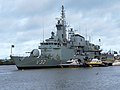
The Special Center of Maritime Police (Núcleo Especial de Polícia Marítima – NEPOM) was created in twelve Brazilian cities in response to the high rate of crime in Brazilian ports, as well as the need to ostensibly patrol to prevent the occurrence of criminal offenses in Amazonian rivers and Brazilian borders (especially Itaipu Lake on the Brazil-Paraguay border). The maritime policing has the latest equipment, recently acquired by the Brazilian government in order to meet the country to the ISPS Code standards (International Ship and Port Facility Security Code).[9] In addition to the routine patrolling, surveillance is carried out in the international traffic in dozens of ships docking and undocking in major Brazilian ports. Agents of action is also taken around the clandestine coming on board vessels. The Nepom the police receive special training in the Navy of Brazil, and is enabled in the category of Crew of State vessel.

Operational Aviation Coordination

[edit]

The CAOP (Coordenação de Aviação Operacional – Aviation Operational Coordination) is a unit of federal police agents, responsible for transporting policeman to anywhere in the country, besides the air support operations to the Federal Police.

Was established in 1986, because the demand for transportation to any place, quickly, and the need for air support in the actions and tactics without having to depend on the Armed Forces.

In 1995 the corporation had the name of advising operational issues when he received three aircraft, two Bell 412s and an HB-350 Squirrel. Already in 1996 the Office became the Division of Aviation Operations. In the year 1999 the unit won these assignments and in 2001 finally received the current designation of the CAOP.

The unit is divided into two squadrons, one fixed-wing and the other rotorcraft.

Its current fleet includes:

Photo Aircraft Quantity Comments
Airbus AS350 B2 Squirrel 3
Airbus AS355 N Squirrel 2
Bell 412 2
AgustaWestland AW139 2
Embraer ERJ-145 2 PR-DPF & PR-PFN
Embraer ERJ-175 2[10] PS-DPF & PS-CAV ex Flybe Leasing
Cessna C-208B Grand Caravan 2
Beech King Air 350i 1
IAI Heron 3

Equipment

[edit]

Vehicles

[edit]
Name Origin Type Quantity Photo
Sherpa Light  France Armored vehicle 3
STREIT Scorpion  United Arab Emirates/ Canada Armored vehicle 8

See also

[edit]

Notes

[edit]
[edit]
Revisions and contributorsEdit on WikipediaRead on Wikipedia
from Grokipedia

The Federal Police of Brazil (Portuguese: Polícia Federal, PF) is the principal federal law enforcement agency responsible for investigating crimes against the federal government, combating , and enforcing and border controls. Operating nationwide under the and , it functions as a career with delegated authority to conduct administrative and criminal inquiries into federal offenses, including corruption, , , drug trafficking, environmental violations, and crimes by federal officials. Defined by Article 144, §1 of the 1988 Constitution as the instrumental body for federal public prosecution in policing matters, the PF employs specialized units for , forensics, and tactical operations, maintaining a of sworn officers empowered to execute arrests, searches, and asset seizures. Notable for spearheading from 2014 onward, which dismantled corruption networks involving politicians and executives, recovered billions in illicit funds, and secured convictions through plea bargains, the agency has demonstrated capacity for large-scale enforcement but encountered institutional challenges, including judicial annulments of key probes on procedural grounds and allegations of selective targeting amid Brazil's polarized political landscape.

Authority and Jurisdiction

The authority of the Brazilian Federal Police (Polícia Federal) derives from Article 144, §1 of the 1988 Constitution of the Federative Republic of , which designates it as a permanent organ structured on a career basis under the and Public Security. This provision assigns the Federal Police exclusive responsibility for exercising the Union's functions, encompassing the investigation of penal infractions that threaten the political or social order or harm the assets, services, or interests of the federal government, its autarchic entities, or public enterprises. Its competencies further include preventing and repressing illicit narcotics trafficking, , and customs evasion (descaminho), in coordination with fiscal authorities; conducting maritime, aerial, and border policing to secure federal frontiers, ports, and airports; and addressing crimes with interstate or international repercussions that necessitate uniform federal repression. These roles extend to ostensive policing duties at international borders and entry points, distinguishing the Federal Police from state-level civil police, which handle most non-federal judicial investigations. Jurisdictionally, the Federal Police operates nationwide with primacy over federal competencies, including indigenous territories, electoral offenses, and threats to national institutions, superseding state authorities in such domains as delineated by . Complementary legislation, such as Law No. 10.683 of May 28, 2003, reinforces this framework by integrating the agency into the Ministry's structure for coordinated execution of investigative and preventive actions. This delineation ensures centralized handling of matters impacting national sovereignty, though operational coordination with state and municipal forces occurs for localized enforcement.

Governing Laws and Oversight

The Federal Police of Brazil (Polícia Federal) derives its authority from Article 144 of the 1988 , which establishes it as a permanent federal institution tasked with investigating federal crimes, combating , illicit drug trafficking, , and ensuring border security and compliance with federal laws. This provision mandates that the Federal Police operate as a body, with entry requiring public competitive examinations and higher education qualifications for advanced roles, and it is maintained and organized by the federal government under the executive branch. Complementary federal , including Decree-Law No. 2.320 of July 29, 1987, which regulates entry into the federal police , and Law No. 9.266 of March 15, 1996, which reorganizes the structure in line with prior decrees such as Decree-Law No. 2.251 of 1985, provides operational and administrative frameworks. More recent enactments, such as Law No. 15.047 of December 20, 2024, introduce a updated disciplinary regime specifically for Federal Police personnel, emphasizing accountability for misconduct while aligning with constitutional standards for public servants. Administrative oversight falls under the and Public Security, to which the Federal Police is subordinated, with its director-general appointed by the for a fixed term, subject to approval since amendments in 2019 aimed at enhancing stability and reducing politicization. Internal mechanisms include the Corregedoria-Geral da Polícia Federal, which handles disciplinary proceedings, investigations into officer conduct, and enforcement of ethical standards derived from statutory regimes. External oversight is constitutionally vested in the Ministério Público Federal (MPF), which exercises control over police activities pursuant to Article 129, inciso VII, of the , encompassing verification of police records, inquiries, arrests, and procedural compliance to prevent abuses and ensure legality. This authority is detailed in Complementary Law No. 75 of May 20, 1993, which empowers the MPF to inspect detention facilities, analyze occurrence reports and inquéritos policiais, and intervene in cases of irregularity, promoting democratic accountability without subordinating the police hierarchically. Judicial review by federal courts provides additional checks, particularly on investigative powers under the Code of Criminal Procedure (Decree-Law No. 3.689 of 1941, as amended), while congressional committees monitor budget and policy through annual oversight hearings. These layers reflect a balance between operational and safeguards against overreach, though implementation has faced criticism for inconsistencies in enforcement, as noted in reports on police .

History

Establishment and Early Years

The Federal Police of Brazil traces its modern origins to March 28, 1944, when Decree-Law No. 6,378 transformed the Civil Police of the Federal District into the Federal Department of Public Security (DFSP), directly subordinate to the Minister of Justice. This restructuring occurred under President ' Estado Novo regime, centralizing authority over federal security matters amid wartime concerns and internal political consolidation. The DFSP assumed responsibilities for police investigation, prevention, and repression of offenses against federal interests, including crimes impacting the political and social order, national borders, and economic integrity. In its formative phase through the late , the DFSP focused on safeguarding regime stability, which included providing personal security details for Vargas and suppressing perceived threats to the dictatorship's authority. Established during Brazil's alignment with Allied forces in , the agency handled federal-level inquiries into espionage, subversion, and illicit activities crossing state lines, laying groundwork for nationwide jurisdiction despite initial concentration in the capital, Rio de Janeiro. Personnel drawn from the prior civil police force numbered in the hundreds, with operations emphasizing intelligence gathering and direct intervention to protect central government prerogatives. By the early 1950s, following Vargas' resignation in 1945 and his return to power in , the DFSP adapted to democratic transitions while retaining a mandate for federal crimes, such as counterfeiting and protecting . Its role expanded modestly to include oversight of and port security, reflecting Brazil's post-war economic and demographic shifts, though resource constraints limited proactive enforcement beyond political hotspots. The agency's early emphasis on loyalty to the executive underscored its evolution from local policing to a national instrument of state security, a function that persisted until its redesignation as the Department of Federal Police in 1967.

Military Dictatorship Period

During the military regime from 1964 to 1985, the Federal Police, then structured as the Departamento de Polícia Federal under the , functioned as an auxiliary instrument of state control, conducting investigations into activities classified as threats to . This included surveillance of political opponents, labor leaders, and groups suspected of leftist subversion, often in coordination with organs like the Serviço Nacional de Informações (SNI) and the Departamento de Ordem Política e Social (DOPS) at state levels. The PF's federal jurisdiction extended to crimes against the constitutional order, enabling arrests and interrogations that supported the regime's suppression of dissent following the Institutional Acts that curtailed . The agency's Divisão de Inteligência played a central role in gathering and archiving data on "subversive" elements, such as communist networks and individuals involved in or organization against the government, with operations documented in regional delegations across states like , Paraná, and Santa Catarina. These efforts contributed to broader repressive networks, including cross-border intelligence sharing under frameworks like , where Brazilian authorities collaborated with dictatorships to track and neutralize exiles. Additionally, the PF administered the Divisão de Censura de Diversões Públicas, which reviewed and restricted publications, films, and performances to prevent the dissemination of ideas challenging the regime's ideology, thereby enforcing cultural and informational control. While primary repression often fell to military-led units such as DOI-CODI, the Federal Police's involvement in political policing implicated it in human rights violations, including arbitrary detentions and support for documented in declassified archives. In a 2023 public acknowledgment, then-Director-General Andrei Rodrigues affirmed that the PF "cannot evade" its historical responsibility for aiding the coup and subsequent authoritarian measures, recognizing its prior alignment with the Union's repressive apparatus while noting institutional reforms post-1985 to align with democratic norms. This role reflected the regime's fusion of civilian policing with military objectives, prioritizing internal security over impartial amid widespread political persecution estimated to affect thousands of opponents.

Democratic Era and Expansion

The following the end of Brazil's in March 1985 prompted institutional reforms that reshaped the Federal Police (PF). The 1988 Federal Constitution, promulgated on October 5, formalized the PF as a permanent force for federal under Article 144, §1, I, assigning it primary responsibility for investigating crimes against the political and , federal assets and interests, execution of federal criminal police functions, maintenance of criminal records, and policing of borders, maritime regions, airports, and international traffic. This framework shifted the PF's emphasis from regime repression to investigative duties aligned with democratic governance, expanding its jurisdiction over , financial offenses, and transnational threats while subordinating it to civilian oversight via the . Post-1988, the PF experienced operational and structural growth amid rising challenges from drug trafficking, money laundering, and corruption scandals. The late initiated a paradigm shift toward large-scale investigations, supported by legal advancements such as the 1998 Money Laundering Law (Law 9.613/1998) and improved intelligence integration, enabling the PF to conduct mega-operations against entrenched criminal networks. By the early , this expansion manifested in high-impact actions like in February 2003, which dismantled smuggling rings and highlighted enhanced surveillance and inter-agency coordination, marking a departure from prior resource constraints. Personnel and budgetary increases facilitated broader coverage, with the PF establishing regional delegations and specialized squads to handle federal crimes more effectively, though persistent underfunding relative to caseloads strained capacity. The democratic era solidified the PF's role in upholding through probes, including early 2000s efforts against privatization fraud and vote-buying schemes, which built public trust in its autonomy despite occasional executive pressures. This period's expansions, driven by causal links between constitutional empowerment, legislative tools, and escalating illicit economies, positioned the PF as a key democratic safeguard, conducting thousands of operations annually by the while fostering international partnerships for border security.

Contemporary Developments

The Federal Police of Brazil achieved international recognition in the 2010s through Operation Lava Jato, launched on March 17, 2014, which targeted a multibillion-dollar corruption and money-laundering scheme centered on Petrobras state oil company executives, politicians, and contractors. The operation encompassed 79 phases, over 1,000 search and arrest warrants executed domestically and abroad, and the recovery of approximately R$6 billion (about US$1.2 billion at the time) in illicit assets by 2021. Key outcomes included the 2018 arrest of former President Luiz Inácio Lula da Silva on corruption charges, alongside convictions of over 100 politicians and executives from parties including the Workers' Party (PT), though some sentences were later annulled by Brazil's Supreme Federal Court in 2021 on jurisdictional grounds. Despite subsequent critiques of prosecutorial overreach from PT-aligned sources, the operation empirically dismantled entrenched bribery networks, leading to corporate leniency agreements and systemic reforms in public contracting. In the late 2010s and early 2020s, the Federal Police navigated political tensions under President (2019–2023), maintaining operational autonomy amid attempts to replace leadership, including the 2019 dismissal of director Mauricio Valeixo following Sergio Moro's resignation as justice minister. The agency expanded investigations into election interference, falsified vaccination records, and environmental crimes in the Amazon, arresting hundreds in operations against and . himself became a target, with Federal Police probes uncovering alleged irregularities in his 2022 reelection campaign, including fake polling data dissemination. The January 8, 2023, riots in , where Bolsonaro supporters stormed Congress, the , and Planalto Palace, prompted an immediate Federal Police response, resulting in over 2,000 arrests and the identification of organized incitement networks via . A 2024 Federal Police report detailed an alleged coup plot involving Bolsonaro and aides, recommending indictments for crimes including abolition of democratic rule and falsification of health documents to justify electoral challenges; these findings were forwarded to the . Under President Lula's second term (2023–present), Director Andrei Rodrigues has prioritized "discreet" tactics over media-intensive operations like Lava Jato, reporting over 9,000 in-flagrante arrests in 2024, including high-profile detentions, while enhancing focus on cyber threats and transnational organized crime groups such as the (PCC).

Organization

Leadership and Administration

The Federal Police of Brazil is led by the Director-General (Diretor-Geral), the highest-ranking official responsible for directing investigations, operations, and administrative functions across the institution. This position is appointed by the and is reserved exclusively for an active Federal Police delegate holding special class status, ensuring leadership by a career officer with extensive experience in the force. The Director-General reports directly to the Minister of Justice and , maintaining the agency's subordination to executive oversight while preserving operational autonomy in enforcement matters. Andrei Augusto Passos Rodrigues has served as Director-General since January 10, 2023, when he was sworn in following his nomination by President . Prior to this, Rodrigues accumulated over two decades as a delegate, including roles in high-profile investigations, which positioned him for the top role amid a transition from the previous administration. Administratively, the Director-General oversees the Executive Directorate (Diretoria Executiva - DIREX), which manages core functions such as , crime combating, and internal affairs through subordinate directorates including the Directorate of Police (Diretoria de Inteligência Policial - DIP), the Directorate to Combat (Diretoria de Combate ao Crime Organizado - DICOR), and the General Corrections Office (Corregedoria-Geral de Polícia - COGER). These units ensure coordinated administration, with the COGER handling disciplinary oversight and ethical compliance to maintain institutional integrity. The structure is defined by federal , such as Decree No. 11.348/2023, which outlines organograms for operational efficiency and resource allocation.

Structure and Divisions

The Brazilian Federal Police (PF) operates under a hierarchical structure led by the Director-General, headquartered in , with authority extending nationwide through central and decentralized units. Central units, based in the capital, handle specialized functions such as intelligence, investigations, technical analysis, and administrative support, while decentralized units execute operations at regional and local levels. This division ensures coordinated federal oversight of crimes like , , and border security, as defined in the PF's internal regulations. Key central directorates include the Directorate of Intelligence (DIP) for gathering and analyzing intelligence data; the Directorate of Personnel Management (DGP) for human resources; the Directorate of Information Technology and Communications (DTI) for technological infrastructure; and the Directorate of Administration and Logistics (DLOG) for operational support. Investigative arms encompass the Directorate of Investigation and Combat to Organized Crime and Corruption (DICOR), focusing on high-level threats like drug trafficking and financial crimes; the Directorate of Technical-Scientific Police (DITEC) for forensic and expert services; the Directorate of Administrative Police (DPA) for immigration and border controls; and specialized units like the Directorate of Amazon and Environment (DAMAZ) for environmental enforcement and the Directorate of Cybercrime (DCIBER) for digital threats. Additional central bodies include the Executive Directorate (DIREX) for overall coordination, the Directorate of International Cooperation (DCI), and support entities such as the General Corrections Office (COGER) for internal oversight and the Superior Council for policy guidance. Decentralized units comprise 27 Regional Superintendencies (SR), one per state and the , each subdivided into Executive Regional Delegations (DREX) for operational tasks and Judicial Regional Delegations (DRPJ) for judicial inquiries. These are supported by 54 Regional Delegations, 27 Regional Corrections Offices, and approximately 96 Federal Police Delegations, including specialized outposts like three Delegations of Immigration Police (DEAIN) and two Delegations (DEAER) for . This network enables localized enforcement while reporting to central command, with structures adapted via decrees such as Decreto nº 11.348/2023 for ongoing refinements.

Personnel and Training

The personnel of the Brazilian Federal Police comprises career civil servants categorized primarily as delegates (requiring a and leadership in investigations), agents (operational investigators), clerks (administrative and evidentiary support), criminal experts (forensic analysts), and papiloscopists (fingerprint specialists), supplemented by administrative staff. As of recent federal transparency data, the organization maintains approximately 14,145 servers in active exercise, though this figure encompasses both sworn officers and support roles amid persistent staffing shortages relative to operational demands. These shortages have necessitated repeated recruitment drives, including a 2025 public contest for over 1,000 vacancies to address deficits that have prevented the force from reaching its legislated minimum effective strength of 15,000 sworn personnel. Entry into the Federal Police occurs via rigorous public competitive examinations (concursos públicos), which evaluate candidates on intellectual aptitude through written tests covering law, logic, and Portuguese, followed by physical aptitude assessments, medical evaluations, and psychological examinations to ensure suitability for high-risk duties. Approved applicants then undertake the mandatory Curso de Formação Profissional at the Academia Nacional de Polícia (ANP) in Brasília, founded in 1960 as the primary institution for federal law enforcement preparation. The course, specific to each career track, lasts approximately 4 to 5 months or 850 instructional hours, integrating theoretical modules on criminal procedure, constitutional law, and ethics with hands-on components including tactical shooting, defensive driving, physical endurance training, and simulated investigations to build operational proficiency. The ANP also administers continuous professional development through distance and in-person programs, such as specialized media training and advanced tactical courses, to maintain skills amid evolving federal threats like and border security. This framework emphasizes empirical skill acquisition over rote theory, with course completion serving as a prerequisite for full commissioning and deployment.

Specialized Units

Tactical Operations Command

The Comando de Operações Táticas (COT), the elite tactical unit of the Brazilian Federal Police, was established in 1987 to fulfill the need for a dedicated counter-terrorism capability, prompted by parliamentary recommendations amid rising security concerns. This creation aligned with broader efforts to professionalize federal responses to complex threats, drawing inspiration from international models like Germany's GSG 9. COT operators specialize in high-risk interventions, including hostage rescues, aircraft hijacking responses, counter-terrorism raids, and tactical support for federal investigations involving armed resistance. The unit deploys for reconnaissance and security at critical infrastructure, such as airports during elevated threat levels, exemplified by its assumption of perimeter security at Porto Alegre's airport in May 2024. In disaster scenarios, COT provides crisis management expertise, as seen in its deployment of trained personnel during the May 2024 floods in Rio Grande do Sul. Selection and training emphasize physical endurance, tactical proficiency, and specialized skills, with annual courses like the XVIII Curso de Operações Táticas covering breaching, parachuting, precision shooting, and negotiation. Operators qualify in areas such as explosives, tactical medicine, less-lethal munitions, and vertical assault techniques, undergoing continuous drills to maintain readiness for "any time, any place, any mission." The unit's structure includes coordination under the Federal Police's operational directorate, enabling rapid integration with other federal assets. Headquartered in Brasília, DF, adjacent to the Federal Police Superintendency on an area of approximately 40,000 m², the COT operates nationwide and deploys to states like Paraná as needed for tactical operations, training evaluations, or security missions, without a dedicated base or regional unit in Curitiba or Paraná. It is distinct from the Centro de Observação Criminológica e Triagem (COT), a facility in Curitiba belonging to the state prison system under the Polícia Penal do Paraná. Equipment encompasses advanced firearms like the Blaser Tactical 2 sniper rifle, ballistic shields, breaching tools, and recent procurements valued at 3.4 million reais for sniper upgrades in 2025. Federal investments also supply modern intervention gear to COT and affiliated rapid intervention groups, enhancing nationwide tactical capacity. Internationally, COT extends expertise through training programs, such as the 2025 course for Haitian special forces on tactical operations.

Marine Police

The Núcleo Especial de Polícia Marítima (NEPOM), or Special Maritime Police Unit, operates as the maritime branch of the Brazilian Federal Police, focusing on in aquatic environments including ports, coastal waters, internal seas, and riverine areas. Its primary mandate involves preventing and repressing federal crimes such as drug trafficking, smuggling, , illegal fishing, and occurring in port facilities, adjacent zones, maritime installations, and inland waterways. NEPOM units are deployed regionally, with specialized nuclei in states like Santa Catarina and , conducting patrols via boats and supporting interagency efforts with the Brazilian for border security and anti-crime operations. NEPOM's operational scope extends to fluvial and coastal patrols, where agents have documented encounters such as wildlife interventions during routine river surveillance on September 17, 2025, in , highlighting their role in remote aquatic domains. In combating , the unit participates in joint inspections of vessels, including hull searches for concealed narcotics, as evidenced by collaborations yielding significant seizures in major ports like Santos, where over 780 kilograms were apprehended in one operation involving Federal Police divers. International partnerships enhance capabilities, including training exchanges with entities like the Spanish National Police on vessel search techniques since 2023 and receipt of five remotely operated vehicles (ROVs) from the Office on Drugs and Crime on September 17, 2025, for underwater inspections in seaports to detect hidden compartments. Training for NEPOM personnel emphasizes specialized skills in maritime and fluvial operations, with the inaugural Curso de Operações em Ambiente Marítimo e Fluvial (COAMF) conducted in May 2025 to certify agents in tactical aquatic maneuvers, navigation, and enforcement protocols. These units integrate with broader Federal Police structures, subordinating to regional delegations while aligning with national strategies against transnational threats, such as those addressed in Operação Ágata Fronteira Sul, which resulted in R$13 million in seizures of drugs, cigarettes, and goods across southern borders in September 2025.

Operational Aviation Coordination

The Coordenação de Aviação Operacional (CAOP) functions as the dedicated aviation branch of the Brazilian Federal Police, tasked with planning, directing, implementing, coordinating, and evaluating tactical aviation operations to support enforcement. Established under the Diretoria de Polícia Federal, the CAOP proposes policies for aerial operations, maintains aviation infrastructure, and conducts for aircrew personnel specialized in police missions. Its operations encompass rapid deployment of agents, aerial , and logistical transport across Brazil's vast territory, particularly in remote areas like the Amazon region where ground access is limited. CAOP aircraft facilitate a range of missions, including reconnaissance over sites, border patrols, and support for high-profile investigations such as drives and counter-narcotics efforts. For instance, in combating in the Amazon, CAOP units have provided overhead monitoring and insertion capabilities for ground teams, contributing to enforcement actions that protect environmental resources and indigenous lands. The unit's air assets enable real-time gathering via onboard sensors, enhancing the Federal Police's ability to disrupt networks operating in hard-to-reach terrains. The fleet includes both rotary-wing and fixed-wing platforms suited for diverse operational needs. Helicopters such as the and support tactical insertions, search-and-rescue, and , with capabilities for night operations and hoist extractions. comprise E175 jets for long-range executive transport of VIPs and evidence, 208B Grand Caravans for regional surveillance and cargo, and previously utilized ERJ-145s for larger passenger loads before transfers. In April 2025, the CAOP incorporated an additional 208B to bolster its utility fleet for intelligence and patrol duties. Maintenance contracts, such as the July 2025 agreement with Azul Conecta, ensure operational readiness through comprehensive logistical support. CAOP personnel undergo rigorous training in aerotactical maneuvers, emphasizing coordination with ground units like the Comando de Operações Táticas (COT). The unit operates from bases including and regional hubs, with forward deployments for sustained campaigns. In international contexts, CAOP has provided air support for events like the 2019 Summit, demonstrating interoperability with military and other . This integration underscores the CAOP's role in maintaining through superior aerial mobility and response capabilities.

Operations

Domestic Investigations

The Federal Police of Brazil investigates federal crimes under Article 144, §1, of the 1988 Constitution, including offenses against federal institutions, crimes with national or international repercussions, and those involving organized criminal groups operating across state lines. This jurisdiction covers schemes impacting , from illicit activities, trafficking networks within national territory, environmental violations against federal patrimony, and financial frauds exceeding state-level authority. A landmark domestic investigation was Operation Lava Jato, launched on March 17, 2014, targeting systemic corruption and money laundering at , Brazil's state oil company. Over seven years, it encompassed 79 phases, leading to 295 arrests, 179 convictions, and the recovery of approximately R$6 billion in assets by 2021. The operation exposed kickback schemes involving politicians from multiple parties and executives, revealing how billions in bribes distorted public contracts. In combating , the Federal Police has targeted groups like the (PCC), responsible for much of Brazil's domestic drug distribution and related violence. Operation Mafiusi, dubbed the "Lava Jato of the PCC," initiated phases in 2025, arresting financiers and seizing assets tied to through fuel distribution and financial firms, with schemes processing R$52 billion from 2020 to 2024. Complementary actions in August 2025 disrupted PCC-linked networks in the energy sector, involving falsified documents and billions in evaded taxes. Domestic probes also address militias and paramilitary groups in urban areas, as in Operation Calicute (2017), which dismantled a Rio de Janeiro militia controlling utilities and extorting residents, resulting in arrests and seizures of weapons and cash. These investigations often employ wiretaps, undercover operations, and interagency task forces to map criminal enterprises, prioritizing disruption of command structures and illicit revenue streams over mere street-level enforcement.

Border and International Operations

The Federal Police of Brazil (Polícia Federal, PF) conducts border operations primarily to combat transnational organized crime, including drug smuggling, human trafficking, and illegal arms flows, at the country's extensive 16,886-kilometer land and river borders. These activities involve surveillance at legal crossings, joint patrols, and rapid response to illicit activities, often in coordination with the Brazilian Army and state police forces under programs like the National Border Security Program (VIGIA), which has equipped border agents with advanced monitoring tools since 2022. PF agents operate from integrated border operation centers, such as the Centro Integrado de Operações de Fronteira (CIOF), established to enhance real-time intelligence sharing and interdiction efforts against cross-border threats. Notable border enforcement actions include the August 2024 operation along the frontier, which targeted prevention and repression of while disrupting clandestine migration and goods flows. In February 2024, PF inspected vehicles at the Ponte da Amizade bridge connecting to , focusing on document fraud, hidden compartments, and prohibited cargo transport. The April 2023 Operação Fronteira Segura V, triggered by a 500 kg marijuana seizure, extended into Paraguayan territory to dismantle local networks. These efforts have contributed to larger seizures, such as those integrated with Receita Federal operations, yielding millions in illicit goods annually. Internationally, PF engages in bilateral and multilateral cooperation to address drug trafficking, , and human exploitation, leveraging agreements with entities like Interpol's National Central Bureau in for fugitive extraditions and evidence exchange. Key partnerships include the expanded memorandum with U.S. Immigration and Customs Enforcement (ICE) signed in April 2025, targeting firearms trafficking and cybercrimes, and the March 2025 accord with for joint probes into narcotics, environmental offenses, and child exploitation. With Paraguay's SENAD, PF launched the 51st phase of Operação Nova Aliança in June 2025, yielding arrests and infrastructure recoveries amid cross-border drug routes. Additional collaborations, such as with UNODC for Amazon-region anti-trafficking centers and remotely operated vehicles deployed in seaports in September 2025, bolster maritime and riverine interdictions. Operations like in July 2025 exposed European sex trafficking rings originating in , resulting in arrests across three states.

Major Campaigns and Operations

The Federal Police of Brazil (PF) has conducted numerous large-scale operations targeting , , drug trafficking, and environmental violations, often resulting in significant arrests, asset seizures, and recovered funds. One of the most prominent is Operação Lava Jato, launched on March 17, 2014, which investigated a vast scheme centered on state-owned oil company , involving bribery, money laundering, and political kickbacks estimated at over R$42 billion (approximately US$10 billion at the time). The operation spanned 79 phases, executed more than 1,000 warrants, led to 295 convictions by 2021, and recovered over R$6 billion in assets, marking it as the longest and most extensive probe in PF history. Other anti-corruption efforts include Operação Anaconda in November 2003, which dismantled a network selling favorable judicial decisions, arresting judges, federal police officers, and lawyers, and seizing weapons and documents evidencing within the and law enforcement. Similarly, Operação Satiagraha, initiated in July 2008, targeted and public fund diversion linked to banker Daniel Dantas, resulting in temporary arrests of high-profile figures and the seizure of financial records, though key evidence was later ruled inadmissible due to unauthorized involvement. These operations highlighted systemic vulnerabilities in public contracting and judicial integrity, with PF collaborating with the to apply plea bargains and laws. In combating organized crime, PF's Operação Carbono Oculto (August 2025) represented the largest such effort to date, involving 1,400 agents across eight states to disrupt a PCC-linked fuel adulteration and tax evasion scheme that siphoned R$76 billion, leading to 350 arrest warrants, seizures of vehicles and documents, and international cooperation to trace offshore funds. Drug trafficking campaigns, such as those under the National Border Security Program (VIGIA) launched in April 2019, have focused on dismantling cartels along Brazil's 16,886 km of borders, yielding over 200 tons of seized narcotics and 500 arrests annually by 2022 through integrated intelligence and aerial surveillance. Environmental enforcement operations, particularly in the Yanomami Indigenous Territory, exceeded 1,000 actions by July 2024, destroying illegal mining equipment, confiscating mercury (a toxic byproduct), and arresting garimpeiros responsible for deforestation and health crises among indigenous populations. Collectively, PF operations inflicted R$5.6 billion in damages to criminal networks in 2024 alone, emphasizing interdiction of financial flows and transnational linkages. These campaigns underscore PF's role in applying federal jurisdiction to interstate and cross-border threats, often leveraging advanced forensics and international treaties, though outcomes vary due to evidentiary challenges and legal appeals.

Equipment

Firearms and Weapons

The standard sidearm for agents of the Brazilian Federal Police is the Glock 17 pistol, chambered in , selected for its reliability, simplicity, and performance in investigative and operational contexts. In December 2023, the agency contracted America for the supply of over 3,000 firearms, valued in the millions of reais, to modernize and expand its inventory of service pistols for field agents. Specialized units, including the Comando de Operações Táticas (COT), employ a variety of long arms such as assault rifles, submachine guns, and precision rifles for high-risk interventions, border security, and counter-narcotics operations. In December 2023, the Federal Police acquired 146 manual and semi-automatic precision rifles, accompanied by 100 scopes, 74 thermal and night-vision sights, and 47 bipods, specifically to equip sniper teams with enhanced accuracy and low-light capabilities. Federal Police armament also includes less-lethal options like tasers and rubber-bullet launchers for and arrests, though primary reliance remains on lethal firearms calibrated to restricted calibers approved under joint Army-Federal Police ordinances, such as those permitting 9mm and 5.56mm for official use. These selections prioritize operational effectiveness while adhering to national regulations on restricted weaponry, which differentiate permitted calibers for civilian versus applications.

Vehicles and Transportation

The Brazilian Federal Police maintains a fleet of ground vehicles suited for investigative and enforcement operations, including sedans, sport utility vehicles (SUVs), vans, and specialized armored cars. These vehicles support rapid response, , and transport across urban and rural terrains. In late 2024, the agency launched a bidding process to acquire 133 armored vehicles with protection levels III-A or IV, budgeted at R$69.3 million, to replace aging units and enhance officer safety in confrontational scenarios. Aerial transportation is provided through the Comando de Aviação Operacional (CAOP), which operates a mix of and rotary-wing helicopters for missions such as , troop transport, and rapid intervention. The fixed-wing fleet includes two Embraer EMB-175 jets for long-range operations, two ERJ-145 regional jets, one 208B Grand Caravan turboprop, and additional light aircraft like the and Piper Seneca III. Helicopter assets comprise approximately eight units, including two twins, Leonardo AW139 and AW169 models, and Eurocopter AS350B2 variants, enabling tactical insertions, , and medical evacuations. As of 2024, the PF supplemented its six operational helicopters with leased aircraft to bolster anti-crime efforts against organized groups like the PCC and CV. Maritime and riverine transportation includes patrol boats and support vessels, particularly for operations in the and coastal areas, though specific fleet details remain limited in public records. These assets facilitate , anti-smuggling raids, and environmental enforcement, often integrated with the Marine Police unit's capabilities.

Technology and Surveillance

The Brazilian Federal Police (PF) utilizes unmanned aerial vehicles (UAVs), including Israeli-manufactured models such as the , for reconnaissance, border monitoring, and operational surveillance in remote areas. These systems enable real-time imaging and intelligence gathering, supporting investigations into environmental crimes like in the Amazon region, where geospatial technologies integrate data with ground operations to track and illicit activities. PF , including Embraer 145 surveillance jets and helicopters like the Bell 412 and AW139, are equipped with advanced sensors for aerial patrols, enhancing detection capabilities during operations. In the cyber domain, the PF's Specialized Unit for Repression of Cybercrimes (Unidade de Repressão a Crimes Cibernéticos) investigates digital threats, including hacking, online , and cryptocurrency laundering networks, as demonstrated in Operation Lusocoin launched in September 2025, which dismantled a scheme involving over $540 million in illicit funds. This unit collaborates with international partners like to combat cross-border cyber threats, employing forensic tools for data analysis and network tracing. To counter emerging aerial threats, the PF deployed the EnforceAir 2 anti-drone system, acquired from for approximately R$59 million in 2025, which uses radiofrequency detection to identify, track, and neutralize unauthorized drones. This technology was first operationalized during the July 2025 BRICS summit and the November 2024 , establishing a Central Anti-Drone Monitoring facility to safeguard integrity at high-profile events. Additionally, PF agents apply specialized equipment, such as particle accelerators, to verify the illicit origin of in anti-smuggling efforts, integrating chemical analysis with for evidentiary purposes.

Achievements and Impact

Anti-Corruption Efforts

The Federal Police (Polícia Federal, PF) has spearheaded Brazil's most significant anti-corruption investigations, leveraging specialized units and collaboration with federal prosecutors to dismantle schemes involving public funds, state-owned enterprises, and private contractors. Operation Lava Jato, launched on March 17, 2014, exemplifies these efforts, originating from probes into at a car wash that revealed systematic bribery at , where executives allegedly received kickbacks estimated at over 2% of contracts from firms like and OAS in exchange for inflated bids. The operation expanded nationwide and internationally, implicating politicians from multiple parties, including former President Luiz Inácio Lula da Silva, who was convicted in 2017 for receiving undue benefits tied to the scheme before the ruling was annulled by Brazil's in 2021 on procedural grounds. Through Lava Jato, PF agents executed more than 1,000 search and arrest warrants across dozens of phases, resulting in over 400 indictments, the imprisonment of high-profile figures such as executives and lawmakers, and the blocking or recovery of assets exceeding R$ 10 billion by 2020, including fines from leniency agreements with implicated companies. Complementary operations, such as Zelotes (targeting judicial in rulings from 2015) and Sépsis (probing medical supply linked to politicians in 2017), further demonstrated PF's focus on institutional graft, yielding additional arrests and asset seizures totaling hundreds of millions of reais. These initiatives relied on advanced financial tracking, international via mutual legal assistance treaties, and plea bargains, which incentivized from over 80 companies under Brazil's 2013 Anti-Corruption Law. Post-2018, PF anti-corruption activities shifted amid political transitions and judicial scrutiny, with annual corruption-related arrests dropping from 607 in 2019 to 136 by 2024, attributed by officials to a pivot toward prevention and complex indiciamentos, which rose from 1,108 to 4,256 over the same period. In 2024, PF operations against , including corruption elements, inflicted R$ 5.6 billion in losses to illicit networks, surpassing prior years by 70%, through seizures and disruptions in public procurement . Despite criticisms of reduced operational tempo under successive administrations, PF maintains dedicated coordination via its Executive Secretariat, emphasizing data analytics and cross-agency task forces to address entrenched practices in sectors like and taxation.

Combating Transnational Crime

The Brazilian Federal Police (PF) plays a central role in investigating and disrupting transnational criminal activities, including drug trafficking, arms smuggling, human trafficking, and money laundering networks that span Brazil's borders. Under Brazil's 1988 Constitution, the PF has primary jurisdiction over federal crimes with international dimensions, such as those involving organized groups like the Primeiro Comando da Capital (PCC) and Comando Vermelho (CV), which maintain ties to suppliers in Colombia and Paraguay and export cocaine to Europe and Africa. In 2025, PF operations led to the dismantling of a cartel smuggling cocaine via international flights from Brazil to South Africa, highlighting their focus on air and maritime routes used by these networks. International cooperation is integral to PF efforts, with partnerships enabling joint operations and intelligence sharing. In 2025, the PF expanded collaboration with U.S. agencies like Investigations (HSI) and Immigration and Enforcement (ICE), resulting in arrests of dozens of criminals involved in cross-border threats, building on prior successes like a 2021 disruption of from the U.S. to via transnational criminal organizations. In March 2025, a joint operation with U.S. authorities targeted alien networks linked to , , and , executing searches that dismantled Brazil-based facilitation rings. PF also coordinates with through Brazil's National Central Bureau, accessing databases for regional operations against drug trafficking and ; a June 2025 taskforce launch during President Lula's visit targeted Latin American networks, emphasizing PF's role in evidence-based responses. Efforts against environmental and resource-based transnational crimes further demonstrate PF's scope. In September 2025, the inauguration of the International Police Centre facilitated joint actions among nine Pan-ian countries to combat drug, arms, and , supported by UNODC projects integrating PF intelligence. UNODC delivered remotely operated vehicles to PF for seaport inspections, enhancing detection of drug shipments in partnership with U.S. initiatives like the International Narcotics and Affairs bureau. Additionally, PF expanded gold-tracing programs with in 2025 to curb smuggling from illegal mines, adapting methods for global use against illicit financial flows tied to . These initiatives underscore PF's reliance on and to address the PCC's documented links to groups like in drug operations and CV's expansion into international routes.

Contributions to National Security

The Brazilian Federal Police (PF) plays a central role in counter-terrorism efforts, leading investigations into domestic and transnational threats through its specialized Anti-Terrorism Division. In 2023, the PF initiated 51 formal inquiries into terrorism-related activities, marking a significant escalation from prior years amid heightened monitoring of extremist networks and online radicalization. This includes operations targeting individuals inspired by groups like ISIS, such as Operation Hashtag in 2016, which resulted in the arrest of suspects planning attacks during the Rio Olympics and remains the largest such action in Brazilian history. PF contributions extend to securing major international events and infrastructure, integrating intelligence with military and state forces. For the 2025 COP30 in Belém, the PF developed a comprehensive security plan incorporating anti-terrorism protocols, bomb detection sweeps, and coordinated threat assessments to mitigate risks from potential disruptors. The agency participates in the Joint Command for the Prevention and Combating of Terrorism, facilitating inter-agency operations that have enhanced Brazil's capacity to preempt attacks, as demonstrated during the 2014 World Cup and 2016 Olympics where no major incidents occurred despite global threats. In border security, the PF supports the National Border Security Program (VIGIA), launched in 2019, through patrols and intelligence operations that disrupt smuggling networks funding with implications. These efforts target illicit flows of arms, drugs, and precursors that bolster groups like the (PCC), whose activities undermine state authority in vulnerable regions. International partnerships amplify this, including a 2025 memorandum with U.S. ICE to combat transnational threats and coordination via PF's National Central Bureau for sharing on fugitives and plots. The PF also addresses hybrid threats from organized crime, dismantling networks like the one in Operation Lusocoin (2025), which laundered over $540 million in cryptocurrency tied to illicit activities potentially enabling broader instability. By regulating private security firms—overseeing 2,471 companies—the PF ensures standards that prevent infiltration by criminal elements, indirectly bolstering national resilience. These multifaceted operations underscore the PF's empirical impact in maintaining sovereignty against evolving dangers, though effectiveness depends on sustained funding and inter-institutional coordination.

Controversies and Criticisms

Political Involvement and Bias Allegations

The Federal Police of Brazil has been accused of political bias in its investigative activities, particularly during high-profile operations targeting political figures across the ideological spectrum. Critics from left-leaning sectors alleged selective prosecution during Operation Lava Jato (2014–2021), which exposed widespread corruption involving state oil company and implicated numerous politicians, predominantly from the (PT). Lula da Silva's defense team described the July 2016 indictment against him as a "piece of fiction" with political bias, coinciding with electoral calendars and exemplifying ""—the alleged manipulation of legal processes for political ends. However, a 2022 analysis found Lava Jato processes distributed proportionally across parties, with the Brazilian Democratic Movement (MDB) facing the most defendants, though PT figures received heightened scrutiny due to the scale of implicated schemes. Federal Police and prosecutors, including then-Judge , rebutted bias claims, emphasizing evidence-driven probes into bribery, , and fraud totaling billions of reais. Subsequent Vaza Jato leaks in 2019 revealed private messages suggesting coordination between Moro and Curitiba prosecutors, fueling perceptions of partiality, though Moro maintained these did not compromise judicial independence. Under President (2019–2023), allegations shifted toward claims of executive interference in PF autonomy. In April 2020, Justice Minister resigned, accusing Bolsonaro of violating promises of non-interference by dismissing Federal Police Director Mauricio Valeixo to gain influence over investigations involving Bolsonaro's family, including probes into his sons' finances and alleged dissemination. Moro cited repeated requests for access to sensitive case reports as evidence of politicization, prompting protests and calls against Bolsonaro. The PF's subsequent independence allowed it to pursue inquiries into Bolsonaro's inner circle, including a 2024 report detailing an alleged coup plot to overturn his 2022 election loss to Lula da Silva, based on seized messages, drafts of decree-like documents, and witness testimonies from over 100 military and civilian figures. Post-2023, under President Lula da Silva, Bolsonaro and allies have reciprocated bias accusations against the PF, particularly in probes related to the January 8, 2023, riots by his supporters, which damaged government buildings in an attempted disruption of the new administration's inauguration. Bolsonaro's legal team contended that PF evidence-gathering, overseen by Justice , exhibited prejudice, with the former president labeling charges of coup orchestration as unsubstantiated and politically motivated. Federal Police actions included seizures and raids yielding documents on plans against Lula and mobilization schemes, leading to formal indictments against Bolsonaro and 36 associates in 2024. Bolsonaro denied involvement, framing the PF's role as part of a judicial overreach aligned with the incumbent government, though evidentiary trails from and insider accounts have sustained the cases in court. These reciprocal claims highlight structural tensions: the PF director is a presidential appointee, potentially enabling influence, yet institutional safeguards like oversight aim to preserve operational independence amid polarized politics.

Operational Abuses and Accountability

The Brazilian Federal Police (Polícia Federal, PF) has encountered allegations of operational abuses primarily in the context of large-scale enforcement actions, including procedural irregularities and excessive force during raids targeting and illegal activities. In September 2025, the Senate's and Participatory Legislation Commission (CDH) initiated an inquiry into reported abuses during a PF operation against illegal mining in Amazonas state, prompted by complaints from indigenous communities and local authorities regarding disproportionate interventions and potential violations of . Such incidents highlight tensions between federal enforcement mandates and local concerns, though independent verification of the claims remains pending as of late 2025. Corruption among PF officers represents another documented area of misconduct, with several high-profile cases leading to arrests and indictments. In June 2016, Newton Ishii, a PF delegate known for escorting detained executives during (Lava Jato), was arrested at São Paulo's airport for facilitating the smuggling of Japanese whiskey; he was subsequently convicted in 2017 of passive and violating import regulations, receiving a four-year sentence later converted to fines and . More recently, in May 2025, PF agent Philipe Roters Coutinho was apprehended with approximately US$200,000 in cash linked to an Instituto Nacional do Seguro Social (INSS) fraud scheme involving undue benefits and . Additionally, Operation Overclean, launched in 2024 and continuing into 2025, uncovered PF personnel receiving monthly bribes estimated at R$6,000 in exchange for influencing public contract awards, resulting in arrests and indictments for , , and . Accountability mechanisms within the PF include the Corregedoria-Geral da Polícia Federal, an internal oversight body tasked with investigating officer misconduct, which has processed thousands of complaints annually, leading to administrative penalties and referrals for criminal prosecution. However, enforcement outcomes are mixed; while the unit expelled or suspended dozens of agents between 2020 and 2024 for infractions ranging from to unauthorized disclosures, broader critiques from international observers, including the U.S. State Department, point to persistent in enforcement due to evidentiary challenges and jurisdictional overlaps with courts in some cases. Federalization protocols under Law 12,850/2013 enable the PF to assume investigations of grave violations when state-level efforts falter, but implementation has been inconsistent, with only selective application in high-visibility operations. These structures aim to enforce internal discipline, yet data from PF annual reports indicate that rates for indicted officers hover below 20% in corruption-related probes, underscoring gaps in judicial follow-through.

Effectiveness and Resource Allocation Debates

The Federal Police of Brazil has demonstrated measurable effectiveness in disrupting organized crime, with official reports indicating that its 2024 operations imposed financial losses of R$5.6 billion on criminal factions through seizures and disruptions, alongside a 9% increase in instituted inquiries to 48,732 compared to 2023. These outcomes reflect targeted federal interventions in areas like corruption and transnational trafficking, where PF's specialized capabilities yield higher impact per operation than state-level policing, as evidenced by historical data showing 6,888 operations in 2020 alone resulting in R$10.6 billion in assets seized. However, effectiveness metrics face scrutiny; while lawmakers have described PF as "efficient" in federal mandates, its limited personnel—insufficient to cover national scope—constrains broader crime reduction, with state police handling over 80% of faction arrests. Critics, including former Justice Minister Lewandowski, have acknowledged high overall efficiency but highlighted execution gaps in arrests and follow-through, amid debates on whether operational surges prioritize volume over sustainable impact. Resource allocation debates center on chronic underfunding and personnel shortages, exemplified by PF's October 2025 warning of potential passport issuance suspension after expending 95% of its R$329.4 million budget for the system, totaling R$314.2 million by late October. A planned 1,000-vacancy recruitment in 2025 fails to address a deficit nearly double that figure, exacerbating operational strain across Brazil's vast territory and diverting agents from investigative priorities to administrative duties. Internal initiatives like the 2025 Desafio PF competition, which quadrupled operations across 27 superintendencies to boost "efficiency," have drawn criticism from delegate associations for inducing burnout, metric-driven pressures, and resource misprioritization toward quantifiable outputs over long-term strategy. Broader controversies involve federal versus state resource distribution, with proposed constitutional amendments expanding PF's role criticized for risking centralization that overlooks state-level efficiencies in routine policing, potentially straining national budgets already facing cuts like a projected R$500 million reduction in security funds. Empirical analyses of spending reveal inefficiencies in allocation, where federal emphasis on high-profile operations yields targeted successes but underperforms in preventive or localized deterrence compared to integrated state-federal models. These debates underscore causal tensions: while PF's mandate demands specialized resources, fiscal constraints and personnel gaps limit scalability, prompting calls for reallocation toward hiring and technology over reactive competitions.

References

Add your contribution
Related Hubs
User Avatar
No comments yet.