Hubbry Logo
Nail (anatomy)Nail (anatomy)Main
Open search
Nail (anatomy)
Community hub
Nail (anatomy)
logo
8 pages, 0 posts
0 subscribers
Be the first to start a discussion here.
Nail (anatomy)
Nail (anatomy)
from Wikipedia
Nail
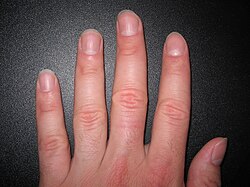
Human fingernails
Details
SystemIntegumentary system
Identifiers
Latinunguis
MeSHD009262
TA98A16.0.01.001
TA27065
THH3.12.00.3.02001
FMA54326
Anatomical terminology

A nail is a protective plate characteristically found at the tip of the digits (fingers and toes) of almost all primates (exception: Marmosets), corresponding to the claws in other tetrapod animals. Fingernails and toenails are made of a tough rigid protein called alpha-keratin, a polymer also found in the claws, hooves, and horns of vertebrates.[1]

Structure

[edit]
A. Nail plate; B. lunula; C. root; D. sinus; E. matrix; F. nail bed; G. hyponychium; H. free margin.

The nail consists of the nail plate, the nail matrix and the nail bed below it, and the grooves surrounding it.[2]

Parts of the nail

[edit]

The nail matrix is the active tissue (or germinal matrix) that generates cells. The cells harden as they move outward from the nail root to the nail plate.[3] The nail matrix is also known as the matrix unguis, keratogenous membrane, or onychostroma.[4] It is the part of the nail bed that is beneath the nail and contains nerves, lymph, and blood vessels. The matrix produces cells that become the nail plate. The width and thickness of the nail plate is determined by the size, length, and thickness of the matrix, while the shape of the fingertip bone determines if the nail plate is flat, arched, or hooked. The matrix will continue to produce cells as long as it receives nutrition and remains in a healthy condition.[5] As new nail plate cells are made, they push older nail plate cells forward; and in this way older cells become compressed, flat, and translucent. This makes the capillaries in the nail bed below visible, resulting in a pink color.[citation needed]

The lunula ("small moon") is the visible part of the matrix, the whitish crescent-shaped base of the visible nail. The lunula can best be seen in the thumb and may not be visible in the little finger. The lunula appears white due to a reflection of light at the point where the nail matrix and nail bed meet.

The nail bed is the skin beneath the nail plate. It is the area of the nail on which the nail plate rests. Nerves and blood vessels found here supply nourishment to the entire nail unit. Like all skin, it is made of two types of tissues: the dermis and the epidermis. The epidermis is attached to the dermis by tiny longitudinal "grooves" called matrix crests (cristae matricis unguis).[3] In old age, the nail plate becomes thinner, and these grooves become more visible.[citation needed] The nail bed is highly innervated, and removal of the nail plate is often excruciatingly painful as a result.[citation needed]

The nail sinus (sinus unguis) is where the nail root is;[3] i.e. the base of the nail underneath the skin. It originates from the actively growing tissue below, the matrix.[citation needed]

The nail plate (corpus unguis)[3] sometimes referred to as the nail body, is the visible hard nail area from the nail root to the free edge, made of translucent keratin protein. Several layers of dead, compacted cells cause the nail to be strong but flexible. Its (transverse) shape is determined by the form of the underlying bone.[citation needed] In common usage, the word nail often refers to this part only. The nail plate is strongly attached to the nail bed and does not contain any nerves or blood vessels.

The free margin (margo liber) or distal edge is the anterior margin of the nail plate corresponds to the abrasive or cutting edge of the nail.[3] The hyponychium (informally known as the "quick")[6] is the epithelium located beneath the nail plate at the junction between the free edge and the skin of the fingertip. It forms a seal that protects the nail bed. The onychodermal band is the seal between the nail plate and the hyponychium. It is just under the free edge, in that portion of the nail where the nail bed ends and can be recognized in fair-skinned people by its glassy, greyish colour. It is not visible in some individuals while it is highly prominent on others.[citation needed]

Eponychium

[edit]

Together, the eponychium and the cuticle form a protective seal. The cuticle is the semi-circular layer of almost invisible dead skin cells that "ride out on" and cover the back of the visible nail plate. The eponychium is the fold of skin cells that produces the cuticle. They are continuous, and some references view them as one entity. (Thus the names eponychium, cuticle, and perionychium would be synonymous,[7] although a distinction is still drawn here.) It is the cuticle (nonliving part) that is removed during a manicure, but the eponychium (living part) should not be touched due to risk of pain, bleeding, and infection. The eponychium is a small band of living cells (epithelium) that extends from the posterior nail wall onto the base of the nail.[3] The eponychium is the end of the proximal fold that folds back upon itself to shed an epidermal layer of skin onto the newly formed nail plate.[contradictory] The perionyx is the projecting edge of the eponychium covering the proximal strip of the lunula.[3]

The nail wall (vallum unguis) is the cutaneous fold overlapping the sides and proximal end of the nail. The lateral margin (margo lateralis) lies beneath the nail wall on the sides of the nail, and the nail groove or fold (sulcus matricis unguis) are the cutaneous slits into which the lateral margins are embedded.[3]

Paronychium

[edit]

The paronychium is the soft tissue border around the nail,[8] and paronychia is an infection in this area. The paronychium is the skin that overlaps onto the sides of the nail plate, also known as the paronychial edge. The paronychium is the site of hangnails, ingrown nails, and paronychia, a skin infection.

Hyponychium

[edit]

The hyponychium is the area of epithelium, particularly the thickened portion, underlying the free edge of the nail plate. It is sometimes called the "quick", as in the phrase "cutting to the quick".

Function

[edit]

A healthy fingernail has the function of protecting the distal phalanx, the fingertip, and the surrounding soft tissues from injuries. It also serves to enhance precise delicate movements of the distal digits through counter-pressure exerted on the pulp of the finger.[2] The nail then acts as a counter-force when the end of the finger touches an object, thereby enhancing the sensitivity of the fingertip,[9] although the nail itself has no nerve endings.

Finally, the nail functions as a tool, enabling a so-called "extended precision grip" (e.g., pulling out a splinter in one's finger), and certain cutting or scraping actions.

Growth

[edit]

The growing part of the nail is under the skin at the nail's proximal end under the epidermis, which is the only living part of a nail.

In mammals, the growth rate of nails is related to the length of the terminal phalanges (outermost finger bones). Thus, in humans, the nail of the index finger grows faster than that of the little finger; and fingernails grow up to four times faster than toenails.[10]

In humans, fingernails grow at an average rate of approx. 3.5 mm (0.14 in) a month, whereas toenails grow about half as fast (approx. average 1.6 mm (0.063 in) a month).[11] Fingernails require three to six months to regrow completely, and toenails require twelve to eighteen months. Actual growth rate is dependent upon age, sex, season, exercise level, diet, and hereditary factors.[12] The longest female nails known ever to have existed measured a total of 8.65 m (28 ft 4.5 in).[13] Contrary to popular belief, nails do not continue to grow after death; the skin dehydrates and tightens, making the nails (and hair) appear to grow.[14]

Permeability

[edit]

The nail is often considered an impermeable barrier, but this is not true. In fact, it is much more permeable than the skin,[15] and the composition of the nail includes 7–12% water. This permeability has implications for penetration by harmful and medicinal substances; in particular cosmetics applied to the nails can pose a risk. Water can penetrate the nail as can many other substances including paraquat, a fast acting herbicide that is harmful to humans; urea which is often an ingredient in creams and lotions meant for use on hands and fingers; several fungicidal agents such as salicylic acid, miconazole branded Monistat, natamycin; and sodium hypochlorite which is the active ingredient in common household bleach (but usually only in 2–3% concentration).[15]

Clinical significance

[edit]
Thumbnail of the right hand with cuticle (left) and hangnail (top)

Healthcare and pre-hospital-care providers (EMTs or paramedics) often use the fingernail beds as a cursory indicator of distal tissue perfusion of individuals who may be dehydrated or in shock.[16] However, this test is not considered reliable in adults.[17] This is known as the CRT or blanch test. The fingernail bed is briefly depressed to turn the nail-bed white. When the pressure is released, the normal pink colour should be restored within a second or two. Delayed return to pink color can be an indicator of certain shock states such as hypovolemia.[18][19]

Nail growth record can show the history of recent health and physiological imbalances, and has been used as a diagnostic tool since ancient times.[20] Deep, horizontally transverse grooves known as "Beau's lines" may form across the nails (horizontal, not along the nail from cuticle to tip). These lines are usually a natural consequence of aging, although they may result from disease. Discoloration, thinning, thickening, brittleness, splitting, grooves, Mees' lines, small white spots, receded lunula, clubbing (convex), flatness, and spooning (concave) can indicate illness in other areas of the body, nutrient deficiencies, drug reaction, poisoning, or merely local injury.

Nails can also become thickened (onychogryphosis), loosened (onycholysis), infected with fungus (onychomycosis), or degenerate (onychodystrophy). A common nail disorder is an ingrowing toenail (onychocryptosis).

DNA profiling is a technique employed by forensic scientists on hair, fingernails, toenails, etc.

Health and care

[edit]
A set of professional nail care tools

The best way to care for nails is to trim them regularly. Filing is also recommended, as to keep nails from becoming too rough and to remove any small bumps or ridges that may cause the nail to get tangled up in materials such as cloth.[21]

Bluish or purple fingernail beds may be a symptom of peripheral cyanosis, which indicates oxygen deprivation.

Nails can dry out, just like skin. They can also peel, break, and be infected. Toe infections, for instance, can be caused or exacerbated by dirty socks, specific types of aggressive exercise (long-distance running), tight footwear, and walking unprotected in an unclean environment. [citation needed] Common organisms causing nail infections include yeasts and molds (particularly dermatophytes).[22]

Nail tools used by different people may transmit infections. Standard hygiene and sanitation procedures avoid transmission. In some cases, gel and cream cuticle removers can be used instead of cuticle scissors.

Human toenails

Nail disease can be very subtle and should be evaluated by a dermatologist with a focus in this particular area of medicine. However, most times it is a nail stylist who will note a subtle change in nail disease.

Inherited accessory nail of the fifth toe occurs where the toenail of the smallest toe is separated, forming a smaller "sixth toenail" in the outer corner of the nail.[23] Like any other nail, it can be cut using a nail clipper.

Finger entrapment injuries are common in children and can include damage to the finger pulp and fingernail. These are usually treated by cleaning the area and applying a sterile dressing. Surgery may sometimes be required to repair the laceration or broken bones.[24]

Effect of nutrition

[edit]

Biotin-rich foods and supplements may help strengthen brittle fingernails.[25]

Vitamin A is an essential micronutrient for vision, reproduction, cell and tissue differentiation, and immune function. Vitamin D and calcium work together in cases of maintaining homeostasis, creating muscle contraction, transmission of nerve pulses, blood clotting, and membrane structure. A lack of vitamin A, vitamin D, or calcium can cause dryness and brittleness.

Insufficient vitamin B12 can lead to excessive dryness, darkened nails, and rounded or curved nail ends. Insufficient intake of both vitamin A and B results in fragile nails with horizontal and vertical ridges. Some over-the-counter vitamin supplements such as certain multivitamins and biotin may help in growth of strong nails, although this is quite subjective. Both vitamin B12 and folate play a role in red blood cell production and oxygen transportation to nail cells. Inadequacies can result in discoloration of the nails.[26]

Diminished dietary intake of omega-3 fatty acids may contribute to dry and brittle nails.[27]

Protein is a building material for new nails; therefore, low dietary protein intake may cause anemia and the resultant reduced hemoglobin in the blood filling the capillaries of the nail bed reflects varying amounts of light incident on the nail matrix resulting in lighter shades of pink ultimately resulting in white nail beds when the hemoglobin is very low. When hemoglobin is close to 15 or 16 grams, most of the spectrum of light is absorbed and only the pink color is reflected back and the nails look pink.

Essential fatty acids play a large role in healthy skin as well as nails. Splitting and flaking of nails may be due to a lack of linoleic acid.

Iron-deficiency anemia can lead to a pale color along with a thin, brittle, ridged texture. Iron deficiency in general may cause the nails to become flat or concave, rather than convex. As oxygen is needed for healthy nails, an iron deficiency or anemia can lead to vertical ridges or concavity in the nails.[28] RDAs for iron vary considerably depending on age and gender. The recommendation for men is 8 mg per day, while that of women aged 19–50 is 18 mg per day. After women hit age 50 or go through menopause, their iron needs drop to 8 mg daily.[29][30]

Society and culture

[edit]

Fashion

[edit]
Toenails painted with magenta nail polish
Nail art

Manicures (for the hands) and pedicures (for the feet) are health and cosmetic procedures to groom, trim, and paint the nails and manage calluses. They require various tools such as cuticle scissors, nail scissors, nail clippers, and nail files. Artificial nails can also be fixed onto real nails for cosmetic purposes.

A person whose occupation is to cut, shape and care for nails as well as to apply overlays such as acrylic and UV gel is sometimes called a nail stylist. The place where a nail stylist works may be a nail salon or nail shop or nail bar.

Painting the nails with colored nail polish (also called nail lacquer and nail varnish) to improve the appearance is a common practice dating back to at least 3000 BC.

Acrylic nails are made out of acrylic glass (PMMA). When it is mixed with a liquid monomer (usually ethyl methacrylate mixed with some inhibitor) it forms a malleable bead. This mixture begins to cure immediately, continuing until completely solid in minutes. Acrylic nails can last up to 21 days but can last longer with touch-ups. To give acrylic nails color, gel polish, nail polish, and dip powders can be applied.[31]

Gel nails can be used in order to create artificial nail extensions, but can also be used like nail polish. They are hardened using ultraviolet light. They last longer than regular nail polish and do not chip. They have a high-gloss finish and last for two to three weeks.[32]

Nail wraps are formed by cutting pieces of fiberglass, linen, silk fabric, or another material to fit on the surface of the nail (or a tip attached prior), to be sealed onto the nail plate with a layer of resin or glue. They do not damage the nail and also provide strength to the nail but are not used to lengthen it. It can also be used to fix broken nails. However, the treatment is more expensive.

With the dip powder method, a clear liquid is brushed onto a nail and the nail is then placed into pigmented powder.[33] Dip nails tend to last about a month, 2–3 weeks longer than gel and acrylic nails. It can be worn on natural nails, or with tips to create an artificial nail. Dip powder nails do not require any UV/LED light to be cured, instead they are sealed using an activator.[citation needed] The quickest way to remove dip powder is to drill, clip off, or buff out layers of the powder so, when they are soaking in acetone, they slide right off.[34][35]

Length records

[edit]

Guinness World Records began tracking record fingernail lengths in 1955, when a Chinese priest was listed as having fingernails 1 foot 10.75 inches (57.79 cm) long.

The current record-holder for men, according to Guinness, is Shridhar Chillal from India who set the record in 1998 with a total of 20 feet 2.25 inches (615.32 cm) of nails on his left hand. His longest nail, on his thumb, was 4 feet 9.6 inches (146.3 cm) long.

The former record-holder for women was Lee Redmond of the U.S., who set the record in 2001 and as of 2008 had nails with a total length on both hands of 28 feet (850 cm), with the longest nail on her right thumb at 2 feet 11 inches (89 cm).[36] However, as of 2022, the record for women is held by Diana Armstrong from Minneapolis. Her nails were 42 feet 10.4 inches long (1,306.58 cm).[37]

Evolution in primates

[edit]
Nails are a distinguishing feature of the primate order.

The nail is an unguis, meaning a keratin structure at the end of a digit. Other examples of ungues include the claw, hoof, and talon. The nails of primates and the hooves of running mammals evolved from the claws of earlier animals.[38]

In contrast to nails, claws are typically curved ventrally (downwards in animals) and compressed sideways. They serve a multitude of functions—including climbing, digging, and fighting—and have undergone numerous adaptive changes in different animal taxa. Claws are pointed at their ends and are composed of two layers: a thick, deep layer and a superficial, hardened layer which serves a protective function. The underlying bone is a virtual mold of the overlying horny structure and therefore has the same shape as the claw or nail. Compared to claws, nails are flat, less curved, and do not extend far beyond the tip of the digits. The ends of the nails usually consist only of the "superficial", hardened layer and are not pointed like claws.[38]

With only a few exceptions, primates retain plesiomorphic (original, "primitive") hands with five digits, each equipped with either a nail or a claw. For example, nearly all living strepsirrhine primates have nails on all digits except the second toe which is equipped with a grooming claw. Tarsiers have a grooming claw on second and third toes. Less commonly known, a grooming claw is also found on the second pedal digit of owl monkeys (Aotus), titis (Callicebus), and possibly other New World monkeys.[39] The needle-clawed bushbaby (Euoticus) has keeled nails (the thumb and the first and the second toes have claws) featuring a central ridge that ends in a needle-like tip.

A study of the fingertip morphology of four small-bodied New World monkey species indicated a correlation between increasing small-branch foraging and:

  1. expanded apical pads (fingertips),
  2. developed epidermal ridges (fingerprints),
  3. broadened distal parts of distal phalanges (fingertip bones), and
  4. reduced flexor and extensor tubercles (attachment areas for finger muscles on bones).

This suggests that whereas claws are useful on large-diameter branches, wide fingertips with nails and epidermal ridges were required for habitual locomotion on small-diameter branches. It also indicates keel-shaped nails of Callitrichines (a family of New World monkeys) is a derived postural adaptation rather than retained ancestral condition.[40]

An alternative theory is that the nails of primates evolved to enable silent movement through trees while stalking prey, replacing noisier claws to make ambush hunting more effective.[41]

Nails in nonprimates

[edit]

Carpolestes simpsoni, an extinct species of Plesiadapiforms, an early late Paleocene primate-like mammal had a nail on its opposable hallux.[42] Rodentia, have nails on their first digit used in manual food handling. Such a nail combined with dexterous feeding movement with incisors allow rodents to exploit hard seeds and nuts, a niche that they dominate. This thumbnail is argued to be ancestrial with exceptions being linked to its replacement by claws in subterranean habits and for oral-only feeding.[43]

See also

[edit]

References

[edit]
Revisions and contributorsEdit on WikipediaRead on Wikipedia
from Grokipedia
The nail is a rigid, keratinized structure that forms a protective plate over the dorsal surface of the distal phalanges of the fingers and toes in humans and other . Composed primarily of compacted keratinized cells called onychocytes, the nail plate is translucent, avascular, and approximately 0.5 millimeters thick, featuring longitudinal ridges that enhance its attachment to underlying tissues. It originates from the nail matrix, a specialized epithelial region beneath the proximal nail fold, where rapid produces the plate at a rate of about 3 millimeters per month for fingernails and 1 millimeter per month for toenails. The nail's anatomy includes several key components that contribute to its form and function. The nail matrix lies deep to the proximal nail fold and is responsible for generating the nail plate, with its distal portion visible as the pale, crescent-shaped lunula; approximately 80% of the plate's thickness arises from the proximal matrix. Beneath the plate lies the nail bed, a soft, without a , which adheres to the plate via interlocking ridges and extends to the hyponychium, the thickened under the free edge that serves as a barrier against . Surrounding the plate are the nail folds: the proximal nail fold covers the matrix, sealed by the cuticle (eponychium) to prevent entry, while the lateral nail folds the sides, providing additional protection. Functionally, the nail protects the sensitive distal digits from trauma, enhances fine motor skills by aiding grip and manipulation of small objects, and amplifies tactile sensation through its rigid support. It also contributes to via underlying glomus bodies and serves cosmetic and mechanical roles, such as scratching or scratching. Nail growth begins around the 8th week of and is influenced by factors including age, trauma, systemic , and environmental conditions, with abnormalities often signaling underlying diseases like nutritional deficiencies or dermatological disorders.

Anatomy and Structure

Components of the nail unit

The nail is a specialized, keratinized plate located at the tips of the digits in , serving as a protective covering for the distal . It forms part of the nail unit, a complex structure comprising the nail plate and surrounding soft tissues that together ensure its growth, attachment, and protection. The nail plate is the visible, hard, translucent dorsal structure that covers the distal , composed of compacted keratinized cells arranged in layers with a smooth dorsal surface and subtle longitudinal ridges on the ventral side for . Beneath the proximal portion of the nail plate lies the nail matrix, a germinal responsible for producing the plate; it divides into a proximal matrix, which contributes about 80% to the dorsal aspect, and a distal matrix, which forms the ventral aspect. The nail bed, a specialized , underlies the nail plate distal to the matrix, adhering closely to its ventral surface via interlocking ridges except at the free edge, where the plate detaches. The proximal nail fold is a skin fold that overlaps the base of the nail plate, enclosing the matrix and featuring the , or , on its ventral surface to form a protective seal. Lateral nail folds consist of borders on either side of the nail plate, preventing lateral ingrowth of and epithelia. At the distal end, the represents the thickened beneath the free edge of the nail plate, creating a seal between the plate and underlying . The lunula appears as a whitish, crescent-shaped area at the junction of the matrix and nail plate, most prominently visible on the thumbnails due to the translucent overlay. Fingernails and toenails differ in gross structure, with toenails generally thicker (approximately 1.4 mm in women and 1.65 mm in men) and exhibiting greater curvature, while their lateral margins in the great toe extend nearly halfway around the terminal for enhanced stability. These components are arranged in a layered from proximal to distal: the proximal nail fold and matrix at the base, the nail plate overlying the bed, lateral folds along the sides, the lunula at the proximal plate, and the at the free edge, as depicted in standard anatomical diagrams.

Histology and biochemical composition

The nail plate is composed of three distinct histological layers: the dorsal, intermediate, and ventral regions, which differ in cell and orientation. The dorsal layer, originating from the proximal nail matrix, consists of tightly packed onychocytes with thickened plasma membranes and longitudinally oriented filaments, providing the hardest and most rigid portion of the plate. The intermediate layer represents a transitional zone with eosinophilic cytoplasm, occasional nuclear remnants, and transverse fibers, exhibiting moderate cell . The ventral layer, produced by the distal matrix, features flatter onychocytes arranged in a looser configuration without , contributing to the plate's flexibility. Onychocytes, specialized keratinocytes unique to the nail, undergo a process of matricial keratinization in the nail matrix's keratogenous zone, where they differentiate by flattening, accumulating keratin, and extruding their nuclei to form anucleate cells. This keratinization lacks a granular layer, distinguishing it from epidermal processes, and results in a translucent plate due to the dense packing of non-nucleated, overlapping cells without a stratum corneum equivalent. The nail matrix produces hard and soft alpha-keratins that form the structural framework, with alpha-keratin filaments providing rigidity through disulfide cross-links, while the bed epithelium remains non-cornified with a monocellular basal layer. Biochemically, the nail is dominated by hard (types I and II), comprising approximately 80% of its dry weight, with 20% soft ; these proteins form sulfur-rich cross-links that confer rigidity and durability. The nail plate's low water content (7-12%) and minimal (0.1-1%) enhance its hardness while allowing limited flexibility, as primarily reside intercellularly without the ceramide-rich profile of . The surface of the nail plate is around 5, with an of approximately 4.7, and it contains trace electrolytes such as sodium, , calcium, magnesium, and , which influence ion permeability and structural integrity. Compared to the plate, has higher proliferative activity and softer keratin profiles, while the bed shows elevated vascularity but lower keratin density and no cornification.

Vascular and neural supply

The arterial supply to the nail unit originates from branches of the radial and ulnar arteries, which form the superficial and deep palmar arches in the hand. These give rise to common digital arteries that bifurcate into proper digital arteries, further branching into dorsal and volar components; the dorsal branches form a superficial arcade approximately 0.5 cm proximal to the , supplying the proximal nail fold and matrix, while longitudinal subungual vessels anastomose to create proximal and distal subungual arcades that perfuse the nail and matrix. In the foot, the toenail unit receives supply from volar and dorsal proper digital arteries that merge around the distal interphalangeal , forming similar arcades with tortuous longitudinal arteries along the nail to withstand mechanical stress. Venous drainage parallels the arterial network, primarily through superficial collecting veins in the lateral nail folds and volar digital veins, which contribute to the visible pink hue of the nail bed by reflecting oxygenated through the translucent nail plate. Lymphatic drainage is sparse within the nail unit, with vessels following venous pathways from the digits to the in the . Sensory innervation arises from the paired digital nerves mirroring the vascular supply; in fingernails, the supplies the thumb, index, middle, and radial half of , while the innervates the ulnar half of and , with branches trifurcating to reach the proximal nail fold, matrix, and distal pulp. For toenails, innervation comes from the via its medial and lateral plantar branches, which provide sensory input to the respective toes. The nail contains dense free endings, primarily unmyelinated C-fibers for and touch sensation, alongside specialized receptors such as Pacinian and Ruffini corpuscles for pressure and stretch. Autonomic sympathetic fibers accompany these sensory nerves, regulating vasomotor tone through fine arborizations that influence local blood flow. Regional variations in supply are notable, with the proximal matrix receiving a richer and to support active , compared to the sparser distal bed vasculature focused on attachment and nutrition. This differential underlies the nail's characteristic coloration in the onychodermal band, derived from the of the underlying nail bed.

Development and

Embryonic formation

The nail field first appears during the 8th to 10th week of embryonic development as an epidermal at the tip of the digit, marking the initial site of nail . This structure, known as the primary nail field or placode, forms as a localized thickening of the dorsal overlying the of the distal , establishing the foundational ectodermal-mesodermal interface essential for subsequent differentiation. By 12 to 16 weeks of , the nail matrix begins to form through proliferation of the placode, with the ventral matrix emerging first as cells invaginate and organize into a germinal region beneath the proximal nail fold; the dorsal matrix develops slightly later, contributing to the layered structure of the mature nail apparatus. Keratinization initiates around the 14th week, as onychocytes in the matrix undergo terminal differentiation to produce hard keratins, leading to the formation of initial nail plate fragments by approximately 20 weeks, when the plate begins to cover part of the underlying nail bed. Ectodermal-mesodermal interactions drive these processes, with signaling pathways such as BMP and Wnt playing critical roles in ridge formation and placode specification; for instance, BMP signaling via BMPR1a promotes onychocyte differentiation, while Wnt/β-catenin pathway activation, modulated by factors like Wnt7a and R-spondin, ensures proper dorsal-ventral patterning and matrix proliferation. By full term, the nails extend to the distal tips of the digits and often protrude slightly beyond, fully keratinized and functional. Hand nails develop earlier than foot nails, with fingernail fields appearing around week 10 compared to week 14 for toenails, reflecting the proximal-distal gradient in limb maturation. Disruptions in embryogenesis, such as mutations in genes like MSX1, can lead to congenital anomalies including , as seen in Witkop syndrome where impaired epithelial-mesenchymal signaling results in absent or dysplastic nails.

Growth mechanisms and rates

Nail growth originates from the proximal nail matrix, where undifferentiated cells in the germinal layer undergo mitotic proliferation, generating new that are continuously pushed distally toward the nail plate. This proliferative activity in the matrix's basal layer ensures a steady supply of cells, with the central portion of the matrix exhibiting faster growth compared to the lateral regions, contributing to the overall shape and curvature of the nail. As these migrate distally, they undergo a process of keratinization, flattening into corneocytes, hardening through the accumulation of proteins, and losing their nuclei to form the translucent, durable nail plate. This transformation occurs progressively, with the proximal matrix primarily contributing to the dorsal aspect of the plate and the distal matrix to the ventral side, resulting in a layered structure that emerges from under the proximal nail fold. Fingernails typically grow at a rate of 3-4 mm per month (approximately 0.1 mm per day), while toenails grow more slowly at 1-1.5 mm per month, reflecting differences in vascular supply and mechanical demands between hands and feet. Full renewal of a fingernail plate takes about 4-6 months, whereas toenails require 12-18 months for complete replacement. Growth exhibits a , with rates accelerating during the day compared to nighttime, and is also influenced by seasonal variations, slowing in winter. Several factors modulate these growth rates. Peak growth occurs in the 20s, declining with age due to reduced matrix cell turnover; for instance, rates may drop by up to 50% by age 80. Trauma to the nail can stimulate matrix proliferation, accelerating regrowth, while hormonal changes, such as elevated estrogen and progesterone during pregnancy, increase rates by 10-20%. Following avulsion, regeneration is possible if the germinal matrix remains intact, allowing partial or full regrowth of the nail plate over several months, though scarring may alter the final shape. In such cases, the new nail emerges from the preserved matrix, restoring functionality provided no extensive damage to the proliferative zone has occurred.

Functions

Protective and mechanical roles

The nail plate serves as a rigid counterstructure to the soft distal finger pad, providing essential support against compression during gripping and manipulative tasks, thereby enhancing overall hand dexterity and stability. This mechanical opposition prevents deformation of the fingertip under pressure, allowing for more effective force distribution when holding objects. In its protective capacity, the nail unit shields the underlying nail matrix and bed from external trauma, such as impacts or abrasions, while also forming a barrier against microbial invasion and irritants. The proximal nail fold and create a sealed compartment around the matrix, minimizing entry points for pathogens, and the at the distal free edge further reinforces this seal by adhering the nail plate to the underlying , preventing ingress of debris or . The nail plate's composition, primarily hard with extensive disulfide cross-links from high content in onychocytes, confers exceptional hardness and resistance to shear forces, enabling it to withstand daily mechanical stresses without fracturing. Mechanically, the nail enhances fine motor activities by providing leverage for pinching, scratching, and using the free edge as a natural probe or tool, such as for picking at small surfaces or extracting embedded materials. This utility stems from the nail's compact, non-desquamating structure, which maintains a stable, edged tip for precise interactions. Although primarily impermeable as a barrier to pathogens, the nail allows limited transungual absorption of substances, with studies on topical antifungals such as showing penetration rates of approximately 0.5% of the applied dose. Additionally, the nail contributes to through the underlying nail bed's rich vascular supply, including glomus bodies that modulate blood flow via arteriovenous anastomoses to adjust heat dissipation from the distal digit. From an evolutionary standpoint, the development of flat nails in , in contrast to claws in other mammals, facilitated the of precision grips by allowing pulp-to-pulp opposition of digits without obstruction, supporting advanced tool use and in early hominins.

Sensory and tactile contributions

The nail plate serves as a mechanical amplifier for tactile sensations, transmitting vibrations and pressure from external stimuli to the underlying nerve endings in the nail bed and surrounding tissues. This transmission enhances the detection of fine details, as the rigid plate distributes forces evenly across the sensitive subungual structures, including Merkel cells and Ruffini endings, which respond to sustained pressure and skin stretch. In this way, the nail augments the fingertip's sensory capabilities beyond what soft tissue alone could achieve, allowing for more precise perception during contact with objects. The nail contributes significantly to tactile discrimination, enabling improved resolution of fine touch, such as texture detection, through subungual receptors. Studies demonstrate that humans can localize tactile stimuli on the fingernail plate with high precision, nearly comparable to the fingertip, and exhibit static thresholds of about 6.7 mm and moving thresholds of approximately 2.4 mm on the nail plate. Slowly adapting mechanoreceptors clustered in the nail borders further support this by encoding fingertip forces and aiding in the discrimination of spatial patterns during manipulation. The distal nail bed exhibits a high of sensory innervation, with numerous free endings and encapsulated receptors, facilitating this enhanced sensitivity. Free nerve endings in the nail matrix and bed play a key role in mediation, signaling potential injury through nociceptive pathways, which can lead to heightened sensitivity () following trauma. Additionally, the nail provides proprioceptive feedback, assisting in the of digit position and force application during precise tasks, as evidenced by mechanoreceptors that track fingertip deformations. Fingernails exhibit greater tactile sensitivity than toenails, reflecting the higher functional demands of manual dexterity. Experimental underscores the nail's importance: alterations in nail length impair and finger manipulation speed, with extensions beyond 0.5 cm reducing performance by limiting joint range and force control, suggesting that intact nails are essential for optimal sensory-guided grip. Sensitivity may diminish in pathological states, though this is secondary to normal physiological roles.

Clinical Significance

Common disorders and pathologies

Onychomycosis, a primarily caused by dermatophytes invading the nail unit, manifests as nail thickening, discoloration (often yellow or white), and brittleness, affecting toenails more commonly than fingernails. This condition accounts for approximately half of all nail disorders, with a global of around 10% in the general population. In special populations, such as those with comorbidities, the can reach up to 20% over a lifetime. Paronychia involves inflammation of the nail folds, typically due to bacterial (e.g., staphylococci) or infections, and presents in acute or chronic forms. Acute , lasting less than six weeks, causes sudden pain, redness, swelling, and around the nail, often following minor trauma like hangnails. Chronic , persisting over six weeks, features tenderness, swelling, and nail changes such as thickening or ridging, frequently linked to repeated exposure to irritants or moisture. Onycholysis refers to the separation of the nail plate from the nail bed, leading to a white or yellowish distal area that may become painful or infected if debris accumulates. Common causes include physical trauma, such as injuries or pressure on the nail, and underlying conditions like , which disrupts attachment through inflammatory changes. This separation exposes the nail bed, increasing vulnerability to secondary infections. Ingrown nails, or onychocryptosis, occur when the lateral edge of the nail embeds into the surrounding , predominantly affecting toenails like the big toe, causing localized , redness, swelling, and potential . Risk factors include improper nail trimming (cutting too short or rounded), tight-fitting shoes, and foot deformities that alter pressure distribution. In severe cases, forms, exacerbating inflammation. Brittle nails, characterized by splitting, flaking, or crumbling of the nail plate, often result from age-related changes that reduce moisture retention and elasticity, as well as environmental factors like frequent water exposure or chemical irritants. This condition affects up to 20% of the population, with longitudinal ridging and lamellar splitting (onychoschizia) being hallmark features in older adults. Repeated hydration-dehydration cycles, common in occupational settings, further contribute to fragility. Leukonychia appears as white spots, streaks, or bands on the nail plate, typically arising from minor trauma to the nail matrix that disrupts keratinization. True leukonychia, the most common form, originates in the matrix and moves distally with nail growth, often presenting as punctate spots from repetitive pressure or injury. In children and active individuals, it frequently correlates with habits like or sports-related impacts. Nail clubbing involves leading to bulbous enlargement of the fingertips and curved, shiny nails with increased nail bed fluctuation. It serves as a sign of underlying systemic diseases, particularly thoracic malignancies like , where it occurs in 5% to 15% of cases due to platelet-derived growth factors. Other associations include chronic lung conditions such as , though neoplastic causes predominate in acquired clubbing. Diagnostic methods for nail disorders include direct microscopy with potassium hydroxide (KOH) preparation to visualize fungal elements, fungal culture for species identification, and nail biopsy for histopathological confirmation in ambiguous cases. Onychoscopy, a non-invasive dermoscopic technique, aids in detecting subtle changes like subungual debris or matrix irregularities. Biopsy, involving nail clipping or longitudinal excision, provides the highest sensitivity for infections like onychomycosis when combined with periodic acid-Schiff staining. As of 2025, prevalence is rising alongside the epidemic, with diabetic individuals facing a three-fold higher due to impaired circulation and immunity, affecting up to one-third of this group. Epidemiological data indicate this trend contributes to increased healthcare burdens, particularly in aging populations.

Health maintenance and care

Maintaining nail health involves consistent practices and protective measures to prevent damage and promote growth. According to the (AAD), keeping nails clean and dry is essential to inhibit bacterial and fungal growth, with routine trimming recommended weekly for fingernails using sharp clippers to cut straight across and slightly round the tips, avoiding overly short cuts into corners that could lead to ingrown nails. Moisturization plays a key role in preventing dryness and cracking, particularly around the cuticles; dermatologists advise applying or to nails and cuticles after or , as dry can lead to splits that compromise the nail barrier. For enhanced protection, a nail hardener can be used sparingly on brittle nails to reduce splitting without overuse, which may cause weakening. Protective habits are crucial during daily activities: wear cotton-lined rubber gloves when doing wet work or handling chemicals to minimize water exposure and , and ensure toenails are safeguarded with properly fitting shoes, alternating pairs daily to allow evaporation and reduce . In public areas like pools or showers, flip-flops should be worn to lower risks from contaminated surfaces. For manicures and pedicures, is paramount to avoid introducing pathogens; use sterile, single-use tools, and never cut or forcefully push back cuticles, as this breaches the skin barrier—instead, gently soften and push them after soaking if needed. Individuals should seek professional care from a dermatologist if experiencing persistent pain, swelling, nail separation from the , or changes in color or thickness, as these may indicate underlying issues requiring evaluation. In older adults, nails often become more brittle and grow slower due to age-related changes, necessitating gentler trimming techniques—such as soaking in warm water beforehand—and less frequent cuts every 6-8 weeks to avoid splitting, while using electric tools for thickened if manual trimming is challenging. Following nail trauma, such as crushing or avulsion, protect the nail matrix to support proper regrowth, which can take 3-6 months for fingernails; clean the area gently with and water, apply to stop bleeding, cover with a loose , and keep nails short to prevent reinjury, consulting a dermatologist if pain persists or the nail bed is exposed. The AAD's 2025 recommendations emphasize these practices as foundational for nail longevity, advising board-certified dermatologist consultation for personalized advice, especially for those with comorbidities like .

Systemic and nutritional influences

Nails serve as indicators of systemic health, reflecting underlying nutritional deficiencies and broader physiological conditions. , often associated with , can manifest as , characterized by concave, spoon-shaped nails due to impaired hemoglobin synthesis and reduced oxygen delivery to the nail matrix. , though rare, leads to brittle nails with longitudinal ridging, as is essential for carboxylase enzymes involved in and structure integrity. disrupts in the nail matrix, resulting in —transverse grooves indicating interrupted growth from acute nutritional insult. Systemic diseases also influence nail morphology. Yellow nail syndrome, a rare lymphatic disorder, presents with thickened, yellow-discolored nails alongside lymphedema and chronic respiratory conditions like pleural effusions, stemming from impaired lymphatic drainage affecting nail bed circulation. In psoriasis, an autoimmune condition, nail pitting—small depressions on the nail surface—occurs in up to 50% of cases due to parakeratotic shedding of proximal nail matrix cells. Hormonal fluctuations can alter nail characteristics; during pregnancy, elevated estrogen levels can increase nail thickness and cause softening, with some reports of faster growth, though studies indicate no significant acceleration in growth rate, attributed to increased vascularity and matrix activity. Certain medications impact nails as side effects: beta-blockers such as propranolol may induce blue-black discoloration from melanin deposition in the nail bed, and chemotherapy agents like taxanes often cause temporary nail loss or onycholysis through mitotic arrest in rapidly dividing matrix keratinocytes. With aging, nails undergo progressive changes including thinning and reduced growth rates, linked to diminished proliferative capacity of the nail matrix and decreased blood flow, typically slowing growth by 50% after age 60. Nail alterations hold diagnostic value; for instance, pale nails or may signal from chronic blood loss or , while brittle, slow-growing nails can indicate due to impaired thyroid hormone regulation of epidermal turnover. Adequate nutrition supports nail health; the recommended dietary allowance for is 30 micrograms per day for adults, crucial for preventing brittleness, while sufficient protein intake—approximately 0.8 grams per of body weight daily—provides like for synthesis. Recent 2025 research highlights the gut microbiome's role in nutrient absorption, suggesting may exacerbate deficiencies affecting nails by impairing uptake of iron and , with preliminary studies proposing interventions to mitigate such impacts.

Cultural and Evolutionary Perspectives

Social, aesthetic, and cultural roles

Human nails have long served roles beyond their biological functions, particularly in fashion, where adornment practices date back to ancient civilizations. In around 5000 BCE, both men and women of high dyed their nails using and other plant-based dyes to signify wealth and distinction, with archaeological evidence from mummified remains showing red-hued nail pigmentation achieved through these natural substances. This tradition evolved over millennia, with similar practices in around 3000 BCE and around 5000 BCE using vegetable dyes for nail coloring to denote . By the 20th century, modern innovations like emerged in the 1920s, initially as clear coatings for automobile paint testing before being adapted for cosmetic use, leading to the widespread application of colored enamels. The introduction of acrylic nails in the , pioneered by dentist Fred Slack who created a prosthetic fingernail from dental acrylic after injuring his own, marked a shift toward extensions and enhancements. polishes, developed in the , offered longer-lasting color and shine, while modern extensions combine acrylics, gels, and UV-cured resins for customizable lengths and designs, reflecting ongoing advancements in synthetic materials for aesthetic appeal. Culturally, nails have symbolized status and social roles across societies, often tied to grooming rituals that reinforce identity and hierarchy. In China (1644–1912 CE), elongated fingernails, sometimes protected by ornate gold or silver guards up to several inches long, indicated exemption from manual labor and elite standing, particularly among Manchu nobility and imperial women like , whose lavish nail adornments underscored imperial authority and detachment from common toil. These practices extended to broader rituals, such as bridal preparations in various Asian cultures where nail painting with or signified purity and transition to womanhood. In Western contexts, nail grooming has historically aligned with norms, evolving from 19th-century manicure kits for the to 20th-century mass-market products that democratized adornment. Gender influences nail aesthetics significantly, with women often favoring longer lengths for ornamental purposes while men prioritize shorter ones for functionality. This is evident in professional settings, where women in creative fields may opt for elaborate designs, contrasting with men's preference for trimmed, unadorned nails to convey and dexterity. Notable records highlight extreme cultural fascinations with nail length, such as Shridhar Chillal's for the longest fingernails on a single hand, grown from 1952 to 2018 and measuring a combined 909.6 cm (29 ft 10 in) before removal due to complications. Other achievements include Lee Redmond's previous record for the longest nails on both hands, totaling 8.65 m (28 ft 5.5 in) in , symbolizing personal dedication to unconventional standards. Group efforts, like synchronized events, underscore communal aspects but lack formal length , focusing instead on artistic displays. Psychologically, nail-related behaviors like onychophagia () serve as indicators of stress and anxiety, estimated to affect 20-30% of the population including adults, often as a means of tension relief exacerbated by emotional triggers. This compulsive action, classified as a , can signal underlying mental health issues, prompting interventions like to address its roots in nervousness or . The nail care industry reflects these social and aesthetic dimensions economically, with the global market for nail products and services projected to exceed $25 billion in , driven by demand for polishes, extensions, and salon treatments amid rising consumer interest in self-expression. In the U.S. alone, and nail salons are forecasted to generate $90.9 billion in revenue by year's end, highlighting the sector's scale. However, artificial enhancements like acrylics and gels carry risks, including allergic reactions to acrylates such as , which can cause , itching, or swelling in sensitive individuals.

Evolutionary development in vertebrates

The evolutionary origins of nails in vertebrates trace back to keratinous structures derived from reptilian scales, which served as precursors to more specialized appendages like claws. These scales, composed primarily of β-keratins, provided protective coverings on the skin of early tetrapods and reptiles, evolving into hardened structures at digit tips for environmental interaction. In early mammals, these developed into claws, which functioned mainly for traction during locomotion, such as climbing or digging, offering mechanical support and grip on varied substrates. Claws in non-primate mammals emphasized protection against abrasion and predation, with curved shapes enabling secure anchorage but limiting fine manipulation. A key transition occurred in around 60 million years ago, when ancestral claws flattened into , adapting to arboreal lifestyles that demanded enhanced grasping capabilities. This shift from pointed claws to broad, flat facilitated precise handling of branches and food, reducing the risk of snagging during leaping and climbing. Fossil records indicate that early euprimates retained some claw-like features alongside emerging , suggesting a gradual morphological tied to ecological pressures like increased reliance on visual in forested environments. In modern , flat nails predominate across all digits except in callitrichids like and tamarins, which retain claws on most fingers and toes for vertical clinging and exudativory, with nails limited to the hallux for partial opposability. This nail configuration uniquely enables full opposability of and fingers, amplifying tactile sensitivity and precision grip essential for manipulative behaviors. Comparatively, other vertebrates exhibit divergent digit tip structures: ungulates evolved hooves as elongated, weight-bearing nails for efficient terrestrial locomotion on hard ground, while chelonians ( and ) possess claws on their digits for propulsion in water or soil, alongside keratinous shells derived from modified scales rather than true nails. Nails, as flattened plates, are largely absent in non-mammalian vertebrates, where claws or scaley sheaths suffice for protection without the need for primate-like dexterity. Genetically, , particularly those in the Hoxc cluster, regulate the development of digit tip structures by directing collinear expression in the limb , influencing the differentiation between claws and through modulation of production and appendage . Fossil evidence from ancestors, such as adapiform primates like dating to the Eocene, reveals intermediate forms with grooming claws on specific digits (e.g., pedal digit II) coexisting with on others, indicating a where specialized claws persisted for while advanced for grasping. Genomic analyses highlight how conserved HOX-mediated pathways in hominin supported nail retention, correlating with enhanced hand dexterity that facilitated early tool use by providing stable counter-pressure during precision tasks. In non-s, claws primarily serve broad protective roles, shielding digits from injury and aiding in locomotion or defense, whereas primate nails prioritize precision, enhancing sensory feedback and fine for over sheer durability.

References

Add your contribution
Related Hubs
User Avatar
No comments yet.