


Community hub
Recent from talks
Contribute something
Nothing was collected or created yet.
Colloidal gold
View on Wikipedia |


| Part of a series of articles on |
| Nanomaterials |
|---|
 |
| Carbon nanotubes |
| Fullerenes |
| Other nanoparticles |
| Nanostructured materials |


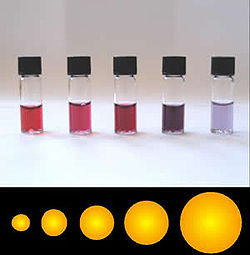
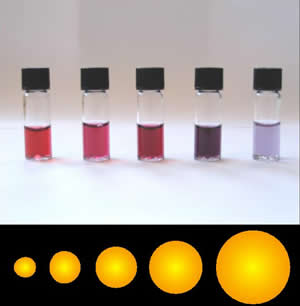
Colloidal gold is a sol or colloidal suspension of nanoparticles of gold in a fluid, usually water.[1] The colloid is coloured usually either wine red (for spherical particles less than 100 nm) or blue-purple (for larger spherical particles or nanorods).[2] Due to their optical,[3] electronic, and molecular-recognition properties, gold nanoparticles are the subject of substantial research, with many potential or promised applications in a wide variety of areas, including electron microscopy, electronics,[4] nanotechnology, materials science,[5] and biomedicine.[6][7][8][9]
The properties of colloidal gold nanoparticles, and thus their potential applications, depend strongly upon their size and shape.[10] For example, rodlike particles have both a transverse and longitudinal absorption peak, and anisotropy of the shape affects their self-assembly.[11]
History
[edit]
Used since ancient times as a method of staining glass, colloidal gold was used in the 4th-century Lycurgus Cup, which changes color depending on the location of light source.[12][13]
During the Middle Ages, soluble gold, a solution containing gold salt, had a reputation for its curative property for various diseases. In 1618, Francis Anthony, a philosopher and member of the medical profession, published a book called Panacea Aurea, sive tractatus duo de ipsius Auro Potabili[14] (Latin: gold potion, or two treatments of potable gold). The book introduces information on the formation of colloidal gold and its medical uses. About half a century later, English botanist Nicholas Culpepper published a book in 1656, Treatise of Aurum Potabile,[15] solely discussing the medical uses of colloidal gold.
In 1676, Johann Kunckel, a German chemist, published a book on the manufacture of stained glass. In his book Valuable Observations or Remarks About the Fixed and Volatile Salts-Auro and Argento Potabile, Spiritu Mundi and the Like,[16] Kunckel assumed that the pink color of Aurum Potabile came from small particles of metallic gold, not visible to human eyes. In 1842, John Herschel invented a photographic process called chrysotype (from the Greek χρῡσός meaning "gold") that used colloidal gold to record images on paper.
Modern scientific evaluation of colloidal gold did not begin until Michael Faraday's work in the 1850s.[17][18] In 1856, in a basement laboratory of Royal Institution, Faraday accidentally created a ruby red solution while mounting pieces of gold leaf onto microscope slides.[19] Since he was already interested in the properties of light and matter, Faraday further investigated the optical properties of the colloidal gold. He prepared the first pure sample of colloidal gold, which he called 'activated gold', in 1857. He used phosphorus to reduce a solution of gold chloride. The colloidal gold Faraday made 150 years ago is still optically active. For a long time, the composition of the 'ruby' gold was unclear. Several chemists suspected it to be a gold tin compound, due to its preparation.[20][21] Faraday recognized that the color was actually due to the miniature size of the gold particles. He noted the light scattering properties of suspended gold microparticles, which is now called Faraday-Tyndall effect.[18]
In 1898, Richard Adolf Zsigmondy prepared the first colloidal gold in diluted solution.[22] Apart from Zsigmondy, Theodor Svedberg, who invented ultracentrifugation, and Gustav Mie, who provided the theory for scattering and absorption by spherical particles, were also interested in the synthesis and properties of colloidal gold.[11][23]
With advances in various analytical technologies in the 20th century, studies on gold nanoparticles has accelerated. Advanced microscopy methods, such as atomic force microscopy and electron microscopy, have contributed the most to nanoparticle research. Due to their comparably easy synthesis and high stability, various gold particles have been studied for their practical uses. Different types of gold nanoparticle are already used in many industries.
Physical properties
[edit]Optical
[edit]
Colloidal gold has been used by artists for centuries because of the nanoparticle's interactions with visible light. Gold nanoparticles absorb and scatter light[24] resulting in colours ranging from vibrant reds (smaller particles) to blues to black and finally to clear and colorless (larger particles), depending on particle size, shape, local refractive index, and aggregation state. These colors occur because of a phenomenon called localized surface plasmon resonance (LSPR), in which conduction electrons on the surface of the nanoparticle oscillate in resonance with incident light.
Effect of size, shape, composition and environment
[edit]As a general rule, the wavelength of light absorbed increases as a function of increasing nanoparticle size.[25] Both the surface plasmon resonance frequency and scattering intensity depend on the size, shape composition and environment of the nanoparticles. This phenomenon may be quantified by use of the Mie scattering theory for spherical nanoparticles. Nanoparticles with diameters of 30–100 nm may be detected easily by a microscope, and particles with a size of 40 nm may even be detected by the naked eye when the concentration of the particles is 10−4 M or greater. The scattering from a 60 nm nanoparticle is about 105 times stronger than the emission from a fluorescein molecule.[26]
Effect of local refractive index
[edit]Changes in the apparent color of a gold nanoparticle solution can also be caused by the environment in which the colloidal gold is suspended.[27][28] The optical properties of gold nanoparticles depend on the refractive index near the nanoparticle surface, so the molecules directly attached to the nanoparticle surface (i.e. nanoparticle ligands) and the nanoparticle solvent may both influence the observed optical features.[27] As the refractive index near the gold surface increases, the LSPR shifts to longer wavelengths.[28] In addition to solvent environment, the extinction peak can be tuned by coating the nanoparticles with non-conducting shells such as silica, biomolecules, or aluminium oxide.[29]
Effect of aggregation
[edit]When gold nanoparticles aggregate, the optical properties of the particle change, because the effective particle size, shape, and dielectric environment all change.[30]
Medical research
[edit] | This section needs more reliable medical references for verification or relies too heavily on primary sources. (August 2017) |
Electron microscope labelling
[edit]Colloidal gold and various derivatives have long been among the most widely used labels for antigens in biological electron microscopy.[31][32][33][34][35] Colloidal gold particles can be attached to many traditional biological probes such as antibodies, lectins, superantigens, glycans, nucleic acids,[36] and receptors. Particles of different sizes are easily distinguishable in electron micrographs, allowing simultaneous multiple-labelling experiments.[37]
In addition to biological probes, gold nanoparticles can be transferred to various mineral substrates, such as mica, single crystal silicon, and atomically flat gold(III), to be observed under atomic force microscopy (AFM).[38]
Drug delivery system
[edit]Gold nanoparticles can be used to optimize the biodistribution of drugs to diseased organs, tissues or cells, in order to improve and target drug delivery.[39][40] Nanoparticle-mediated drug delivery is feasible only if the drug distribution is otherwise inadequate. These cases include drug targeting of unstable (proteins, siRNA, DNA), delivery to the difficult sites (brain, retina, tumors, intracellular organelles) and drugs with serious side effects (e.g. anti-cancer agents). The performance of the nanoparticles depends on the size and surface functionalities in the particles. Also, the drug release and particle disintegration can vary depending on the system (e.g. biodegradable polymers sensitive to pH). An optimal nanodrug delivery system ensures that the active drug is available at the site of action for the correct time and duration, and their concentration should be above the minimal effective concentration (MEC) and below the minimal toxic concentration (MTC).[41]
Gold nanoparticles are being investigated as carriers for drugs such as Paclitaxel.[42] The administration of hydrophobic drugs require molecular encapsulation and it is found that nanosized particles are particularly efficient in evading the reticuloendothelial system.
Tumor detection
[edit]In cancer research, colloidal gold can be used to target tumors and provide detection using SERS (surface enhanced Raman spectroscopy) in vivo. These gold nanoparticles are surrounded with Raman reporters, which provide light emission that is over 200 times brighter than quantum dots. It was found that the Raman reporters were stabilized when the nanoparticles were encapsulated with a thiol-modified polyethylene glycol coat. This allows for compatibility and circulation in vivo. To specifically target tumor cells, the polyethylenegylated gold particles are conjugated with an antibody (or an antibody fragment such as scFv), against, e.g. epidermal growth factor receptor, which is sometimes overexpressed in cells of certain cancer types. Using SERS, these pegylated gold nanoparticles can then detect the location of the tumor.[43]
Gold nanoparticles accumulate in tumors, due to the leakiness of tumor vasculature, and can be used as contrast agents for enhanced imaging in a time-resolved optical tomography system using short-pulse lasers for skin cancer detection in mouse model. It is found that intravenously administered spherical gold nanoparticles broadened the temporal profile of reflected optical signals and enhanced the contrast between surrounding normal tissue and tumors.[44]

Gene therapy
[edit]Gold nanoparticles have shown potential as intracellular delivery vehicles for siRNA oligonucleotides with maximal therapeutic impact.

Gold nanoparticles show potential as intracellular delivery vehicles for antisense oligonucleotides (single and double stranded DNA) by providing protection against intracellular nucleases and ease of functionalization for selective targeting.[45]
Photothermal agents
[edit]Gold nanorods are being investigated as photothermal agents for in-vivo applications. Gold nanorods are rod-shaped gold nanoparticles whose aspect ratios tune the surface plasmon resonance (SPR) band from the visible to near-infrared wavelength. The total extinction of light at the SPR is made up of both absorption and scattering. For the smaller axial diameter nanorods (~10 nm), absorption dominates, whereas for the larger axial diameter nanorods (>35 nm) scattering can dominate. As a consequence, for in-vivo studies, small diameter gold nanorods are being used as photothermal converters of near-infrared light due to their high absorption cross-sections.[46] Since near-infrared light transmits readily through human skin and tissue, these nanorods can be used as ablation components for cancer, and other targets. When coated with polymers, gold nanorods have been observed to circulate in-vivo with half-lives longer than 6 hours, bodily residence times around 72 hours, and little to no uptake in any internal organs except the liver.[47]
Despite the unquestionable success of gold nanorods as photothermal agents in preclinical research, they have yet to obtain the approval for clinical use because the size is above the renal excretion threshold.[48][49] In 2019, the first NIR-absorbing plasmonic ultrasmall-in-nano architecture has been reported, and jointly combine: (i) a suitable photothermal conversion for hyperthermia treatments, (ii) the possibility of multiple photothermal treatments and (iii) renal excretion of the building blocks after the therapeutic action.[50]
Radiotherapy dose enhancer
[edit]Considerable interest has been shown in the use of gold and other heavy-atom-containing nanoparticles to enhance the dose delivered to tumors.[51] Since the gold nanoparticles are taken up by the tumors more than the nearby healthy tissue, the dose is selectively enhanced. The biological effectiveness of this type of therapy seems to be due to the local deposition of the radiation dose near the nanoparticles.[52] This mechanism is the same as occurs in heavy ion therapy.
Detection of toxic gas
[edit]Researchers have developed simple inexpensive methods for on-site detection of hydrogen sulfide H
2S present in air based on the antiaggregation of gold nanoparticles (AuNPs). Dissolving H
2S into a weak alkaline buffer solution leads to the formation of HS-, which can stabilize AuNPs and ensure they maintain their red color allowing for visual detection of toxic levels of H
2S.[53]
Gold nanoparticle based biosensor
[edit]Gold nanoparticles are incorporated into biosensors to enhance its stability, sensitivity, and selectivity.[54] Nanoparticle properties such as small size, high surface-to-volume ratio, and high surface energy allow immobilization of large range of biomolecules. Gold nanoparticle, in particular, could also act as "electron wire" to transport electrons and its amplification effect on electromagnetic light allows it to function as signal amplifiers.[55][56] Main types of gold nanoparticle based biosensors are optical and electrochemical biosensor.
Optical biosensor
[edit]
Gold nanoparticles improve the sensitivity of optical sensors in response to the change in the local refractive index. The angle of the incidence light for surface plasmon resonance, an interaction between light waves and conducting electrons in metal, changes when other substances are bounded to the metal surface.[57][58] Because gold is very sensitive to its surroundings' dielectric constant,[59][60] binding of an analyte significantly shifts the gold nanoparticle's SPR and therefore allows for more sensitive detection. Gold nanoparticle could also amplify the SPR signal.[61] When the plasmon wave pass through the gold nanoparticle, the charge density in the wave and the electron I the gold interact and result in a higher energy response, referred to as electron coupling.[54] When the analyte and bio-receptor both bind to the gold, the apparent mass of the analyte increases and therefore amplifies the signal.[54] These properties had been used to build a DNA sensor with 1000-fold greater sensitivity than without the Au NP.[62] Humidity sensors have also been built by altering the atom interspacing between molecules with humidity change, the interspacing change would also result in a change of the Au NP's LSPR.[63]
Electrochemical biosensor
[edit]Electrochemical sensor convert biological information into electrical signals that could be detected. The conductivity and biocompatibility of Au NP allow it to act as "electron wire".[54] It transfers electron between the electrode and the active site of the enzyme.[64] It could be accomplished in two ways: attach the Au NP to either the enzyme or the electrode. GNP-glucose oxidase monolayer electrode was constructed use these two methods.[65] The Au NP allowed more freedom in the enzyme's orientation and therefore more sensitive and stable detection. Au NP also acts as immobilization platform for the enzyme. Most biomolecules denatures or lose its activity when interacted with the electrode.[54] The biocompatibility and high surface energy of Au allow it to bind to a large amount of protein without altering its activity and results in a more sensitive sensor.[66][67] Moreover, Au NP also catalyzes biological reactions.[68][69] Gold nanoparticle under 2 nm has shown catalytic activity to the oxidation of styrene.[70]
Immunological biosensor
[edit]Gold nanoparticles have been coated with peptides and glycans for use in immunological detection methods.[71] The possibility to use glyconanoparticles in ELISA was unexpected, but the method seems to have a high sensitivity and thus offers potential for development of specific assays for diagnostic identification of antibodies in patient sera.[72]
Thin films
[edit]Gold nanoparticles capped with organic ligands, such as alkanethiol molecules, can self-assemble into large monolayers (>cm2). The particles are first prepared in organic solvent, such as chloroform or toluene, and are then spread into monolayers either on a liquid surface or on a solid substrate. Such interfacial thin films of nanoparticles have close relationship with Langmuir-Blodgett monolayers made from surfactants.
The mechanical properties of nanoparticle monolayers have been studied extensively. For 5 nm spheres capped with dodecanethiol, the Young's modulus of the monolayer is on the order of GPa.[73] The mechanics of the membranes are guided by strong interactions between ligand shells on adjacent particles.[74] Upon fracture, the films crack perpendicular to the direction of strain at a fracture stress of 11 2.6 MPa, comparable to that of cross-linked polymer films.[75] Free-standing nanoparticle membranes exhibit bending rigidity on the order of 10 eV, higher than what is predicted in theory for continuum plates of the same thickness, due to nonlocal microstructural constraints such as nonlocal coupling of particle rotational degrees of freedom.[76] On the other hand, resistance to bending is found to be greatly reduced in nanoparticle monolayers that are supported at the air/water interface, possibly due to screening of ligand interactions in a wet environment.[77]


Surface chemistry
[edit]In many different types of colloidal gold syntheses, the interface of the nanoparticles can display widely different character – ranging from an interface similar to a self-assembled monolayer to a disordered boundary with no repeating patterns.[78] Beyond the Au-Ligand interface, conjugation of the interfacial ligands with various functional moieties (from small organic molecules to polymers to DNA to RNA) afford colloidal gold much of its vast functionality.
Ligand exchange/functionalization
[edit]After initial nanoparticle synthesis, colloidal gold ligands are often exchanged with new ligands designed for specific applications. For example, Au NPs produced via the Turkevich-style (or Citrate Reduction) method are readily reacted via ligand exchange reactions, due to the relatively weak binding between the carboxyl groups and the surfaces of the NPs.[79] This ligand exchange can produce conjugation with a number of biomolecules from DNA to RNA to proteins to polymers (such as PEG) to increase biocompatibility and functionality. For example, ligands have been shown to enhance catalytic activity by mediating interactions between adsorbates and the active gold surfaces for specific oxygenation reactions.[80] Ligand exchange can also be used to promote phase transfer of the colloidal particles.[78] Ligand exchange is also possible with alkane thiol-arrested NPs produced from the Brust-type synthesis method, although higher temperatures are needed to promote the rate of the ligand detachment.[81][82] An alternative method for further functionalization is achieved through the conjugation of the ligands with other molecules, though this method can cause the colloidal stability of the Au NPs to breakdown.[83]
Ligand removal
[edit]In many cases, as in various high-temperature catalytic applications of Au, the removal of the capping ligands produces more desirable physicochemical properties.[84] The removal of ligands from colloidal gold while maintaining a relatively constant number of Au atoms per Au NP can be difficult due to the tendency for these bare clusters to aggregate. The removal of ligands is partially achievable by simply washing away all excess capping ligands, though this method is ineffective in removing all capping ligand. More often ligand removal achieved under high temperature or light ablation followed by washing. Alternatively, the ligands can be electrochemically etched off.[85]
Surface structure and chemical environment
[edit]The precise structure of the ligands on the surface of colloidal gold NPs impact the properties of the colloidal gold particles. Binding conformations and surface packing of the capping ligands at the surface of the colloidal gold NPs tend to differ greatly from bulk surface model adsorption, largely due to the high curvature observed at the nanoparticle surfaces.[78] Thiolate-gold interfaces at the nanoscale have been well-studied and the thiolate ligands are observed to pull Au atoms off of the surface of the particles to form "staple" motifs that have significant Thiyl-Au(0) character.[86][87] The citrate-gold surface, on the other hand, is relatively less-studied due to the vast number of binding conformations of the citrate to the curved gold surfaces. A study performed in 2014 identified that the most-preferred binding of the citrate involves two carboxylic acids and the hydroxyl group of the citrate binds three surface metal atoms.[88]
Health and safety
[edit]As gold nanoparticles (AuNPs) are further investigated for targeted drug delivery in humans, their toxicity needs to be considered. For the most part, it is suggested that AuNPs are biocompatible,[89] but the concentrations at which they become toxic needs to be determined, and if those concentrations fall within the range of used concentrations. Toxicity can be tested in vitro and in vivo. In vitro toxicity results can vary depending on the type of the cellular growth media with different protein compositions, the method used to determine cellular toxicity (cell health, cell stress, how many cells are taken into a cell), and the capping ligands in solution.[90] In vivo assessments can determine the general health of an organism (abnormal behavior, weight loss, average life span) as well as tissue specific toxicology (kidney, liver, blood) and inflammation and oxidative responses.[90] In vitro experiments are more popular than in vivo experiments because in vitro experiments are more simplistic to perform than in vivo experiments.[90]
Toxicity and hazards in synthesis
[edit]While AuNPs themselves appear to have low or negligible toxicity,[citation needed] and the literature shows that the toxicity has much more to do with the ligands rather than the particles themselves, the synthesis of them involves chemicals that are hazardous. Sodium borohydride, a harsh reagent, is used to reduce the gold ions to gold metal.[91] The gold ions usually come from chloroauric acid, a potent acid.[92] Because of the high toxicity and hazard of reagents used to synthesize AuNPs, the need for more "green" methods of synthesis arose.
Toxicity due to capping ligands
[edit]Some of the capping ligands associated with AuNPs can be toxic while others are nontoxic. In gold nanorods (AuNRs), it has been shown that a strong cytotoxicity was associated with CTAB-stabilized AuNRs at low concentration, but it is thought that free CTAB was the culprit in toxicity .[92][93] Modifications that overcoat these AuNRs reduces this toxicity in human colon cancer cells (HT-29) by preventing CTAB molecules from desorbing from the AuNRs back into the solution.[92] Ligand toxicity can also be seen in AuNPs. Compared to the 90% toxicity of HAuCl4 at the same concentration, AuNPs with carboxylate termini were shown to be non-toxic.[94] Large AuNPs conjugated with biotin, cysteine, citrate, and glucose were not toxic in human leukemia cells (K562) for concentrations up to 0.25 M.[95] Also, citrate-capped gold nanospheres (AuNSs) have been proven to be compatible with human blood and did not cause platelet aggregation or an immune response.[96] However, citrate-capped gold nanoparticles sizes 8-37 nm were found to be lethally toxic for mice, causing shorter lifespans, severe sickness, loss of appetite and weight, hair discoloration, and damage to the liver, spleen, and lungs; gold nanoparticles accumulated in the spleen and liver after traveling a section of the immune system.[97] There are mixed-views for polyethylene glycol (PEG)-modified AuNPs. These AuNPs were found to be toxic in mouse liver by injection, causing cell death and minor inflammation.[98] However, AuNPs conjugated with PEG copolymers showed negligible toxicity towards human colon cells (Caco-2).[99] AuNP toxicity also depends on the overall charge of the ligands. In certain doses, AuNSs that have positively-charged ligands are toxic in monkey kidney cells (Cos-1), human red blood cells, and E. coli because of the AuNSs interaction with the negatively-charged cell membrane; AuNSs with negatively-charged ligands have been found to be nontoxic in these species.[94] In addition to the previously mentioned in vivo and in vitro experiments, other similar experiments have been performed. Alkylthiolate-AuNPs with trimethlyammonium ligand termini mediate the translocation of DNA across mammalian cell membranes in vitro at a high level, which is detrimental to these cells.[100] Corneal haze in rabbits have been healed in vivo by using polyethylemnimine-capped gold nanoparticles that were transfected with a gene that promotes wound healing and inhibits corneal fibrosis.[101]
Toxicity due to size of nanoparticles
[edit]Toxicity in certain systems can also be dependent on the size of the nanoparticle. AuNSs size 1.4 nm were found to be toxic in human skin cancer cells (SK-Mel-28), human cervical cancer cells (HeLa), mouse fibroblast cells (L929), and mouse macrophages (J774A.1), while 0.8, 1.2, and 1.8 nm sized AuNSs were less toxic by a six-fold amount and 15 nm AuNSs were nontoxic.[94] There is some evidence for AuNP buildup after injection in in vivo studies, but this is very size dependent. 1.8 nm AuNPs were found to be almost totally trapped in the lungs of rats.[102] Different sized AuNPs were found to build-up in the blood,[103][104] brain,[103] stomach,[103] pancreas,[103] kidneys,[103] liver,[103][104] and spleen.[103][104]
Biosafety and biokinetics investigations on biodegradable ultrasmall-in-nano architectures have demonstrated that gold nanoparticles are able to avoid metal accumulation in organisms through escaping by the renal pathway.[105][106]
Synthesis
[edit]
Generally, gold nanoparticles are produced in a liquid ("liquid chemical methods") by reduction of chloroauric acid (H[AuCl
4]). To prevent the particles from aggregating, stabilizing agents are added. Citrate acts both as the reducing agent and colloidal stabilizer.
They can be functionalized with various organic ligands to create organic-inorganic hybrids with advanced functionality.[17]
Turkevich method
[edit]This simple method was pioneered by J. Turkevich et al. in 1951[107][108] and refined by G. Frens in the 1970s.[109][110] It produces modestly monodisperse spherical gold nanoparticles of around 10–20 nm in diameter. Larger particles can be produced, but at the cost of monodispersity and shape. In this method, hot chloroauric acid is treated with sodium citrate solution, producing colloidal gold. The Turkevich reaction proceeds via formation of transient gold nanowires. These gold nanowires are responsible for the dark appearance of the reaction solution before it turns ruby-red.[111]
Capping agents
[edit]A capping agent is used during nanoparticle synthesis to inhibit particle growth and aggregation. The chemical blocks or reduces reactivity at the periphery of the particle—a good capping agent has a high affinity for the new nuclei.[112] Citrate ions or tannic acid function both as a reducing agent and a capping agent.[113][114] Less sodium citrate results in larger particles.
Brust-Schiffrin method
[edit]This method was discovered by Brust and Schiffrin in the early 1990s,[115] and can be used to produce gold nanoparticles in organic liquids that are normally not miscible with water (like toluene). It involves the reaction of a chlorauric acid solution with tetraoctylammonium bromide (TOAB) solution in toluene and sodium borohydride as an anti-coagulant and a reducing agent, respectively.
Here, the gold nanoparticles will be around 5–6 nm.[116] NaBH4 is the reducing agent, and TOAB is both the phase transfer catalyst and the stabilizing agent.
TOAB does not bind to the gold nanoparticles particularly strongly, so the solution will aggregate gradually over the course of approximately two weeks. To prevent this, one can add a stronger binding agent, like a thiol (in particular, alkanethiols), which will bind to gold, producing a near-permanent solution.[117][118] Alkanethiol protected gold nanoparticles can be precipitated and then redissolved. Thiols are better binding agents because there is a strong affinity for the gold-sulfur bonds that form when the two substances react with each other.[119] Tetra-dodecanthiol is a commonly used strong binding agent to synthesize smaller particles.[120] Some of the phase transfer agent may remain bound to the purified nanoparticles, this may affect physical properties such as solubility. In order to remove as much of this agent as possible, the nanoparticles must be further purified by soxhlet extraction.
Perrault method
[edit]This approach, discovered by Perrault and Chan in 2009,[121] uses hydroquinone to reduce HAuCl4 in an aqueous solution that contains 15 nm gold nanoparticle seeds. This seed-based method of synthesis is similar to that used in photographic film development, in which silver grains within the film grow through addition of reduced silver onto their surface. Likewise, gold nanoparticles can act in conjunction with hydroquinone to catalyze reduction of ionic gold onto their surface. The presence of a stabilizer such as citrate results in controlled deposition of gold atoms onto the particles, and growth. Typically, the nanoparticle seeds are produced using the citrate method. The hydroquinone method complements that of Frens,[109][110] as it extends the range of monodispersed spherical particle sizes that can be produced. Whereas the Frens method is ideal for particles of 12–20 nm, the hydroquinone method can produce particles of at least 30–300 nm.
Martin method
[edit]This simple method, discovered by Martin and Eah in 2010,[122] generates nearly monodisperse "naked" gold nanoparticles in water. Precisely controlling the reduction stoichiometry by adjusting the ratio of NaBH4-NaOH ions to HAuCl4-HCl ions within the "sweet zone," along with heating, enables reproducible diameter tuning between 3–6 nm. The aqueous particles are colloidally stable due to their high charge from the excess ions in solution. These particles can be coated with various hydrophilic functionalities, or mixed with hydrophobic ligands for applications in non-polar solvents. In non-polar solvents the nanoparticles remain highly charged, and self-assemble on liquid droplets to form 2D monolayer films of monodisperse nanoparticles.
Nanotech studies
[edit]Bacillus licheniformis can be used in synthesis of gold nanocubes with sizes between 10 and 100 nanometres.[123] Gold nanoparticles are usually synthesized at high temperatures in organic solvents or using toxic reagents. The bacteria produce them in much milder conditions.
Navarro et al. method
[edit]For particles larger than 30 nm, control of particle size with a low polydispersity of spherical gold nanoparticles remains challenging. In order to provide maximum control on the NP structure, Navarro and co-workers used a modified Turkevitch-Frens procedure using sodium acetylacetonate as the reducing agent and sodium citrate as the stabilizer.[124]
Sonolysis
[edit]Another method for the experimental generation of gold particles is by sonolysis. The first method of this type was invented by Baigent and Müller.[125] This work pioneered the use of ultrasound to provide the energy for the processes involved and allowed the creation of gold particles with a diameter of under 10 nm. In another method using ultrasound, the reaction of an aqueous solution of HAuCl4 with glucose,[126] the reducing agents are hydroxyl radicals and sugar pyrolysis radicals (forming at the interfacial region between the collapsing cavities and the bulk water) and the morphology obtained is that of nanoribbons with width 30–50 nm and length of several micrometers. These ribbons are very flexible and can bend with angles larger than 90°. When glucose is replaced by cyclodextrin (a glucose oligomer), only spherical gold particles are obtained, suggesting that glucose is essential in directing the morphology toward a ribbon.
Block copolymer-mediated method
[edit]An economical, environmentally benign and fast synthesis methodology for gold nanoparticles using block copolymer has been developed by Sakai et al.[127] In this synthesis methodology, block copolymer plays the dual role of a reducing agent as well as a stabilizing agent. The formation of gold nanoparticles comprises three main steps: reduction of gold salt ion by block copolymers in the solution and formation of gold clusters, adsorption of block copolymers on gold clusters and further reduction of gold salt ions on the surfaces of these gold clusters for the growth of gold particles in steps, and finally its stabilization by block copolymers. But this method usually has a limited-yield (nanoparticle concentration), which does not increase with the increase in the gold salt concentration. Ray et al.[128] improved this synthesis method by enhancing the nanoparticle yield by manyfold at ambient temperature.
Applications
[edit]Antibiotic conjugated nanoparticle synthesis
[edit]Antibiotic functionalized metal nanoparticles have been widely studied as a mode to treat multi-drug resistant bacterial strains. For example, kanamycin capped gold-nanoparticles (Kan-AuPs) showed broad spectrum dose dependent antibacterial activity against both gram positive and gram negative bacterial strains in comparison to kanamycin alone.[129]
See also
[edit]- Colloidal silver
- Fiveling, also called decahedral nanoparticles
- Gold nanorods
- Gold nanoparticles in chemotherapy
- Nanozymes
- Colloidal gold protein assay
References
[edit]- ^ Voliani, Valerio (2020-04-20). Gold Nanoparticles: An Introduction to Synthesis, Properties and Applications. De Gruyter. doi:10.1515/9781501511455. ISBN 978-1-5015-1145-5. S2CID 219789607.
- ^ Sapsford KE, Algar WR, Berti L, Gemmill KB, Casey BJ, Oh E, Stewart MH, Medintz IL (March 2013). "Functionalizing nanoparticles with biological molecules: developing chemistries that facilitate nanotechnology". Chemical Reviews. 113 (3): 1904–2074. doi:10.1021/cr300143v. PMID 23432378. S2CID 206896854.
- ^ Sreekumar, S.; Shah, N.; Mondol, J.; Hewitt, N.; Chakrabarti, S. (February 2022). "Broadband absorbing mono, blended and hybrid nanofluids for direct absorption solar collector: A comprehensive review" (PDF). Nano Futures. 103 (2): 504–515. Bibcode:2022NanoF...6b2002S. doi:10.1088/2399-1984/ac57f7. S2CID 247095942.[permanent dead link]
- ^ Gorji, Saleh; Cheong, Kuan Yew (2015). "Au nanoparticles embedded at the interface of Al/4H-SiC Schottky contacts for current density enhancement". Applied Physics A. 118 (1): 315–325. Bibcode:2015ApPhA.118..315G. doi:10.1007/s00339-014-8733-4. S2CID 96824985.
- ^ Torres-Torres, D.; Trejo-Valdez, M.; Castañeda, L.; Torres-Torres, C.; Tamayo-Rivera, L.; Fernández-Hernández, R. C.; Reyes-Esqueda, J. A.; Muñoz-Saldaña, J.; Rangel-Rojo, R.; Oliver, A. (2010-08-02). "Inhibition of the two-photon absorption response exhibited by a bilayer TiO2 film with embedded Au nanoparticles". Optics Express. 18 (16): 16406–16417. Bibcode:2010OExpr..1816406T. doi:10.1364/OE.18.016406. ISSN 1094-4087. PMID 20721027.
- ^ Yang X, Yang M, Pang B, Vara M, Xia Y (October 2015). "Gold Nanomaterials at Work in Biomedicine". Chemical Reviews. 115 (19): 10410–88. doi:10.1021/acs.chemrev.5b00193. PMID 26293344.
- ^ Mulvaney P (2003). The beauty and elegance of Nanocrystals: How invisibly small particles will colour and shape our future (Report). University of Melbourne. Archived from the original on 2004-10-28.
- ^ Rao CN, Kulkarni GU, Thomas PJ, Edwards PP (2000). "Metal nanoparticles and their assemblies". Chemical Society Reviews. 29 (1): 27–35. doi:10.1039/A904518J. S2CID 59025862.
- ^ Dreaden EC, Alkilany AM, Huang X, Murphy CJ, El-Sayed MA (April 2012). "The golden age: gold nanoparticles for biomedicine". Chemical Society Reviews. 41 (7): 2740–79. doi:10.1039/c1cs15237h. PMC 5876014. PMID 22109657.
- ^ Zeng S, Yong KT, Roy I, Dinh XQ, Yu X, Luan F (2011). "A review on functionalized gold nanoparticles for biosensing applications" (PDF). Plasmonics. 6 (3): 491–506. doi:10.1007/s11468-011-9228-1. S2CID 34796473. Archived from the original (PDF) on 2017-08-09. Retrieved 2015-09-16.
- ^ a b Sharma V, Park K, Srinivasarao M (2009). "Colloidal dispersion of gold nanorods: Historical background, optical properties, seed-mediated synthesis, shape separation and self-assembly". Materials Science and Engineering: R: Reports. 65 (1–3): 1–38. doi:10.1016/j.mser.2009.02.002.
- ^ "The Lycurgus Cup". British Museum. Retrieved 2015-12-04.
- ^ Freestone I, Meeks N, Sax M, Higgitt C (2007). "The Lycurgus Cup — A Roman nanotechnology". Gold Bulletin. 40 (4): 270–277. doi:10.1007/BF03215599.
- ^ Antonii F (1618). Panacea aurea sive Tractatus duo de ipsius auro potabili. Ex Bibliopolio Frobeniano.
- ^ Culpeper N (1657). Mr. Culpepper's Treatise of aurum potabile Being a description of the three-fold world, viz. elementary celestial intellectual containing the knowledge necessary to the study of hermetick philosophy. Faithfully written by him in his life-time, and since his death, published by his wife. London.
- ^ Kunckel von Löwenstern J (1678). Utiles observationes sive animadversiones de salibus fixis et volatilibus, auro et argento potabili (etc.). Austria: Wilson.
- ^ a b Reddy VR (July 2006). "Gold nanoparticles: synthesis and applications". Synlett. 2006 (11): 1791–2. doi:10.1055/s-2006-944219.
- ^ a b Faraday M (January 1857). "The Bakerian Lecture: Experimental Relations of Gold (and Other Metals) to Light". Philosophical Transactions of the Royal Society of London. 147: 145–181. Bibcode:1857RSPT..147..145F. doi:10.1098/rstl.1857.0011.
- ^ "Michael Faraday's gold colloids | The Royal Institution: Science Lives Here". www.rigb.org. Retrieved 2015-12-04.
- ^ Gay-Lussac (1832). "Ueber den Cassius'schen Goldpurpur". Annalen der Physik. 101 (8): 629–630. Bibcode:1832AnP...101..629G. doi:10.1002/andp.18321010809.
- ^ Berzelius JJ (1831). "Ueber den Cassius' schen Goldpurpur". Annalen der Physik. 98 (6): 306–308. Bibcode:1831AnP....98..306B. doi:10.1002/andp.18310980613.
- ^ Zsigmondy R (December 11, 1926). "Properties of colloids" (PDF). Nobel Foundation. Retrieved 2022-09-19.
- ^ Zeng S, Yu X, Law WC, Zhang Y, Hu R, Dinh XQ, H o HP, Yong KT (2013). "Size dependence of Au NP-enhanced surface plasmon resonance based on differential phase measurement". Sensors and Actuators B: Chemical. 176: 1128–1133. Bibcode:2013SeAcB.176.1128Z. doi:10.1016/j.snb.2012.09.073.
- ^ Anderson ML, Morris CA, Stroud RM, Merzbacher CI, Rolison DR (1999-02-01). "Colloidal Gold Aerogels: Preparation, Properties, and Characterization". Langmuir. 15 (3): 674–681. doi:10.1021/la980784i.
- ^ Link S, El-Sayed MA (1999-05-01). "Size and Temperature Dependence of the Plasmon Absorption of Colloidal Gold Nanoparticles". The Journal of Physical Chemistry B. 103 (21): 4212–4217. CiteSeerX 10.1.1.596.6328. doi:10.1021/jp984796o.
- ^ Huang, Xiaohua; Jain, Prashant K; El-Sayed, Ivan H; El-Sayed, Mostafa A (October 2007). "Gold nanoparticles: interesting optical properties and recent applications in cancer diagnostics and therapy". Nanomedicine. 2 (5): 681–693. doi:10.2217/17435889.2.5.681. ISSN 1743-5889. PMID 17976030.
- ^ a b Ghosh SK, Nath S, Kundu S, Esumi K, Pal T (2004-09-01). "Solvent and Ligand Effects on the Localized Surface Plasmon Resonance (LSPR) of Gold Colloids". The Journal of Physical Chemistry B. 108 (37): 13963–13971. doi:10.1021/jp047021q.
- ^ a b Underwood S, Mulvaney P (1994-10-01). "Effect of the Solution Refractive Index on the Color of Gold Colloids". Langmuir. 10 (10): 3427–3430. doi:10.1021/la00022a011.
- ^ Xing S, Tan LH, Yang M, Pan M, Lv Y, Tang Q, Yang Y, Chen H (2009-05-12). "Highly controlled core/shell structures: tunable conductive polymer shells on gold nanoparticles and nanochains". Journal of Materials Chemistry. 19 (20): 3286. doi:10.1039/b900993k. S2CID 96293198.
- ^ Ghosh SK, Pal T (November 2007). "Interparticle coupling effect on the surface plasmon resonance of gold nanoparticles: from theory to applications". Chemical Reviews. 107 (11): 4797–862. doi:10.1021/cr0680282. PMID 17999554. S2CID 46326525.
- ^ Horisberger M, Rosset J (April 1977). "Colloidal gold, a useful marker for transmission and scanning electron microscopy". The Journal of Histochemistry and Cytochemistry. 25 (4): 295–305. doi:10.1177/25.4.323352. PMID 323352.
- ^ Electron microscopy: principles and techniques for biologists (2nd ed.). Jones and Bartlett. October 1998. ISBN 978-0-7637-0192-5.
- ^ Hunter EE (September 1993). Practical electron microscopy: a beginner's illustrated guide (2nd ed.). Cambridge University Press. ISBN 978-0-521-38539-8.
- ^ Electron microscopy: methods and protocols. Methods in Molecular Biology (2nd ed.). Humana Press. February 2007. ISBN 978-1-58829-573-6.
- ^ Romano EL, Romano M (1977). "Staphylococcal protein a bound to colloidal gold: A useful reagent to label antigen-antibody sites in electron microscopy". Immunochemistry. 14 (9–10): 711–715. doi:10.1016/0019-2791(77)90146-X.
- ^ Fetni R, Drouin R, Lemieux N, Messier PE, Richer CL (December 1991). "Simultaneous visualization of chromosome bands and hybridization signal using colloidal-gold labeling in electron microscopy". Proceedings of the National Academy of Sciences of the United States of America. 88 (23): 10916–20. Bibcode:1991PNAS...8810916F. doi:10.1073/pnas.88.23.10916. PMC 53043. PMID 1961763.
- ^ Kasamatsu H, Lin W, Edens J, Revel JP (July 1983). "Visualization of antigens attached to cytoskeletal framework in animal cells: colocalization of simian virus 40 Vp1 polypeptide and actin in TC7 cells". Proceedings of the National Academy of Sciences of the United States of America. 80 (14): 4339–43. Bibcode:1983PNAS...80.4339K. doi:10.1073/pnas.80.14.4339. PMC 384033. PMID 6308616.
Double labeling with colloidal gold particles of different sizes
- ^ Grobelny J, DelRio FW, Pradeep N, Kim DI, Hackley VA, Cook RF (2011). "Size measurement of nanoparticles using atomic force microscopy". In McNeil SE (ed.). Characterization of nanoparticles intended for drug delivery. Humana Press. pp. 71–82. ISBN 978-1-60327-198-1.
- ^ Han G, Ghosh P, Rotello VM (February 2007). "Functionalized gold nanoparticles for drug delivery". Nanomedicine. 2 (1): 113–23. doi:10.2217/17435889.2.1.113. PMID 17716197.
- ^ Han G, Ghosh P, Rotello VM (2007). "Multi-Functional Gold Nanoparticles for Drug Delivery". Bio-Applications of Nanoparticles. Advances in Experimental Medicine and Biology. Vol. 620. pp. 48–56. doi:10.1007/978-0-387-76713-0_4. ISBN 978-0-387-76712-3. PMID 18217334.
- ^ Langer R (February 2000). "Biomaterials in drug delivery and tissue engineering: one laboratory's experience". Accounts of Chemical Research. 33 (2): 94–101. doi:10.1021/ar9800993. PMID 10673317.
- ^ Gibson JD, Khanal BP, Zubarev ER (September 2007). "Paclitaxel-functionalized gold nanoparticles". Journal of the American Chemical Society. 129 (37): 11653–61. Bibcode:2007JAChS.12911653G. doi:10.1021/ja075181k. PMID 17718495. S2CID 12034022.
- ^ Qian X, Peng XH, Ansari DO, Yin-Goen Q, Chen GZ, Shin DM, Yang L, Young AN, Wang MD, Nie S (January 2008). "In vivo tumor targeting and spectroscopic detection with surface-enhanced Raman nanoparticle tags". Nature Biotechnology. 26 (1): 83–90. doi:10.1038/nbt1377. PMID 18157119. S2CID 15309464.
- ^ Sajjadi AY, Suratkar AA, Mitra KK, Grace MS (2012). "Short-Pulse Laser-Based System for Detection of Tumors: Administration of Gold Nanoparticles Enhances Contrast". Journal of Nanotechnology in Engineering and Medicine. 3 (2) 021002. doi:10.1115/1.4007245.
- ^ Giljohann DA, Seferos DS, Prigodich AE, Patel PC, Mirkin CA. Gene regulation with polyvalent siRNA-nanoparticle conjugates. J Am Chem Soc 2009;131:2072–2073.
- ^ Mackey MA, Ali MR, Austin LA, Near RD, El-Sayed MA (February 2014). "The most effective gold nanorod size for plasmonic photothermal therapy: theory and in vitro experiments". The Journal of Physical Chemistry B. 118 (5): 1319–26. doi:10.1021/jp409298f. PMC 3983380. PMID 24433049.
- ^ Niidome T, Yamagata M, Okamoto Y, Akiyama Y, Takahashi H, Kawano T, Katayama Y, Niidome Y (September 2006). "PEG-modified gold nanorods with a stealth character for in vivo applications". Journal of Controlled Release. 114 (3): 343–7. doi:10.1016/j.jconrel.2006.06.017. PMID 16876898.
- ^ Cassano, Domenico; Pocoví-Martínez, Salvador; Voliani, Valerio (2018-01-17). "Ultrasmall-in-Nano Approach: Enabling the Translation of Metal Nanomaterials to Clinics". Bioconjugate Chemistry. 29 (1): 4–16. doi:10.1021/acs.bioconjchem.7b00664. ISSN 1043-1802. PMID 29186662.
- ^ Vlamidis, Ylea; Voliani, Valerio (2018-10-08). "Bringing Again Noble Metal Nanoparticles to the Forefront of Cancer Therapy". Frontiers in Bioengineering and Biotechnology. 6 143. doi:10.3389/fbioe.2018.00143. ISSN 2296-4185. PMC 6186777. PMID 30349817.
- ^ Cassano, Domenico; Santi, Melissa; D'Autilia, Francesca; Mapanao, Ana Katrina; Luin, Stefano; Voliani, Valerio (2019). "Photothermal effect by NIR-responsive excretable ultrasmall-in-nano architectures". Materials Horizons. 6 (3): 531–537. doi:10.1039/C9MH00096H. hdl:11384/77439. ISSN 2051-6347.
- ^ Hainfeld JF, Slatkin DN, Smilowitz HM (September 2004). "The use of gold nanoparticles to enhance radiotherapy in mice". Physics in Medicine and Biology. 49 (18): N309–15. doi:10.1088/0031-9155/49/18/N03. PMID 15509078. S2CID 28457097.
- ^ McMahon SJ, Hyland WB, Muir MF, Coulter JA, Jain S, Butterworth KT, Schettino G, Dickson GR, Hounsell AR, O'Sullivan JM, Prise KM, Hirst DG, Currell FJ (2011). "Biological consequences of nanoscale energy deposition near irradiated heavy atom nanoparticles". Scientific Reports. 1 18. Bibcode:2011NatSR...1...18M. doi:10.1038/srep00018. PMC 3216506. PMID 22355537.
- ^ Zhang Z, Chen Z, Wang S, Qu C, Chen L (May 2014). "On-site visual detection of hydrogen sulfide in air based on enhancing the stability of gold nanoparticles". ACS Applied Materials & Interfaces. 6 (9): 6300–7. Bibcode:2014AAMI....6.6300Z. doi:10.1021/am500564w. PMID 24754960. S2CID 206794098.
- ^ a b c d e Xu S (2010). "Gold nanoparticle-based biosensors". Gold Bulletin. 43: 29–41. doi:10.1007/BF03214964.
- ^ Wang J, Polsky R, Xu D (2001). "Silver-Enhanced Colloidal Gold Electrochemical Stripping Detection of DNA Hybridization". Langmuir. 17 (19): 5739. doi:10.1021/la011002f.
- ^ Wang J, Xu D, Polsky R (April 2002). "Magnetically-induced solid-state electrochemical detection of DNA hybridization". Journal of the American Chemical Society. 124 (16): 4208–9. Bibcode:2002JAChS.124.4208W. doi:10.1021/ja0255709. PMID 11960439.
- ^ Daniel MC, Astruc D (January 2004). "Gold nanoparticles: assembly, supramolecular chemistry, quantum-size-related properties, and applications toward biology, catalysis, and nanotechnology". Chemical Reviews. 104 (1): 293–346. doi:10.1021/cr030698+. PMID 14719978. S2CID 29293663.
- ^ Hu M, Chen J, Li ZY, Au L, Hartland GV, Li X, Marquez M, Xia Y (November 2006). "Gold nanostructures: engineering their plasmonic properties for biomedical applications". Chemical Society Reviews. 35 (11): 1084–94. doi:10.1039/b517615h. PMID 17057837. S2CID 2259806.
- ^ Link S, El-Sayed MA (1996). "Spectral Properties and Relaxation Dynamics of Surface Plasmon Electronic Oscillations in Gold and Silver Nanodots and Nanorods". J. Phys. Chem. B. 103 (40): 8410. doi:10.1021/jp9917648. S2CID 40012876.
- ^ Mulvaney, P. (1996). "Surface Plasmon Spectroscopy of Nanosized Metal Particles". Langmuir. 12 (3): 788. doi:10.1021/la9502711.
- ^ Lin HY, Chen CT, Chen YC (October 2006). "Detection of phosphopeptides by localized surface plasma resonance of titania-coated gold nanoparticles immobilized on glass substrates". Analytical Chemistry. 78 (19): 6873–8. doi:10.1021/ac060833t. PMID 17007509. S2CID 13373307.
- ^ He L, Musick MD, Nicewarner SR, Salinas FG (2000). "Colloidal Au-Enhanced Surface Plasmon Resonance for Ultrasensitive Detection of DNA Hybridization". Journal of the American Chemical Society. 122 (38): 9071. Bibcode:2000JAChS.122.9071H. doi:10.1021/ja001215b.
- ^ Okamoto T, Yamaguchi I, Kobayashi T (2000). "Local plasmon sensor with gold colloid monolayers deposited upon glass substrates". Opt Lett. 25 (6): 372–4. Bibcode:2000OptL...25..372O. doi:10.1364/OL.25.000372. PMID 18059883.
- ^ Brown KR, Fox P, Natan MJ (1996). "Morphology-Dependent Electrochemistry of Cytochromecat Au Colloid-Modified SnO2Electrodes". Journal of the American Chemical Society. 118 (5): 1154. Bibcode:1996JAChS.118.1154B. doi:10.1021/ja952951w.
- ^ Xiao Y, Patolsky F, Katz E, Hainfeld JF, Willner I (March 2003). ""Plugging into Enzymes": nanowiring of redox enzymes by a gold nanoparticle". Science. 299 (5614): 1877–81. Bibcode:2003Sci...299.1877X. doi:10.1126/science.1080664. PMID 12649477. S2CID 40388898.
- ^ Gole A, Dash C, Ramakrishnan V, Sainkar SR, Mandale AB, Rao M, Sastry M (2001). "Pepsin−Gold Colloid Conjugates: Preparation, Characterization, and Enzymatic Activity". Langmuir. 17 (5): 1674. doi:10.1021/la001164w.
- ^ Gole A, Vyas S, Phadtare S, Lachke A, Sastry M (2002). "Studies on the formation of bioconjugates of Endoglucanase with colloidal gold". Colloids and Surfaces B: Biointerfaces. 25 (2): 129. doi:10.1016/s0927-7765(01)00301-0.
- ^ Valden M, Lai X, Goodman DW (September 1998). "Onset of catalytic activity of gold clusters on titania with the appearance of nonmetallic properties". Science. 281 (5383): 1647–50. Bibcode:1998Sci...281.1647V. doi:10.1126/science.281.5383.1647. PMID 9733505. S2CID 21287894.
- ^ Lou Y, Maye MM, Han L, Zhong CJ (2001). "Gold–platinum alloy nanoparticle assembly as catalyst for methanol electrooxidation". Chemical Communications. 2001 (5): 473. doi:10.1039/b008669j.
- ^ Turner M, Golovko VB, Vaughan OP, Abdulkin P, Berenguer-Murcia A, Tikhov MS, Johnson BF, Lambert RM (August 2008). "Selective oxidation with dioxygen by gold nanoparticle catalysts derived from 55-atom clusters". Nature. 454 (7207): 981–3. Bibcode:2008Natur.454..981T. doi:10.1038/nature07194. PMID 18719586. S2CID 4355469.
- ^ Marradi M, Chiodo F, García I, Penadés S (2013). "Glyconanoparticles as multifunctional and multimodal carbohydrate systems". Chem. Soc. Rev. 42 (11): 4728–45. doi:10.1039/C2CS35420A. PMID 23288339.
- ^ Chiodo F, Marradi M, Tefsen B, Snippe H, van Die I, Penadés S (2013). "High sensitive detection of carbohydrate binding proteins in an ELISA-solid phase assay based on multivalent glyconanoparticles". PLOS ONE. 8 (8) e73027. Bibcode:2013PLoSO...873027C. doi:10.1371/journal.pone.0073027. PMC 3754922. PMID 24014084.
- ^ Mueggenburg KE, Lin XM, Goldsmith RH, Jaeger HM (September 2007). "Elastic membranes of close-packed nanoparticle arrays". Nature Materials. 6 (9): 656–60. Bibcode:2007NatMa...6..656M. doi:10.1038/nmat1965. PMID 17643104. S2CID 444592.
- ^ He J, Kanjanaboos P, Frazer NL, Weis A, Lin XM, Jaeger HM (July 2010). "Fabrication and mechanical properties of large-scale freestanding nanoparticle membranes". Small. 6 (13): 1449–56. Bibcode:2010Small...6.1449H. doi:10.1002/smll.201000114. PMID 20521265. S2CID 206491859.
- ^ Wang Y, Kanjanaboos P, Barry E, McBride S, Lin XM, Jaeger HM (February 2014). "Fracture and failure of nanoparticle monolayers and multilayers". Nano Letters. 14 (2): 826–30. Bibcode:2014NanoL..14..826W. doi:10.1021/nl404185b. PMID 24467462. S2CID 207673690.
- ^ Wang Y, Liao J, McBride SP, Efrati E, Lin XM, Jaeger HM (October 2015). "Strong Resistance to Bending Observed for Nanoparticle Membranes". Nano Letters. 15 (10): 6732–7. Bibcode:2015NanoL..15.6732W. doi:10.1021/acs.nanolett.5b02587. PMID 26313627. S2CID 29849022.
- ^ Griesemer SD, You SS, Kanjanaboos P, Calabro M, Jaeger HM, Rice SA, Lin B (May 2017). "The role of ligands in the mechanical properties of Langmuir nanoparticle films". Soft Matter. 13 (17): 3125–3133. Bibcode:2017SMat...13.3125G. doi:10.1039/c7sm00319f. PMID 28397901.
- ^ a b c Sperling RA, Parak WJ (March 2010). "Surface modification, functionalization and bioconjugation of colloidal inorganic nanoparticles". Philosophical Transactions. Series A, Mathematical, Physical, and Engineering Sciences. 368 (1915): 1333–83. Bibcode:2010RSPTA.368.1333S. doi:10.1098/rsta.2009.0273. PMID 20156828. S2CID 1666203.
- ^ Tauran Y, Brioude A, Coleman AW, Rhimi M, Kim B (August 2013). "Molecular recognition by gold, silver and copper nanoparticles". World Journal of Biological Chemistry. 4 (3): 35–63. doi:10.4331/wjbc.v4.i3.35. PMC 3746278. PMID 23977421.
- ^ Taguchi T, Isozaki K, Miki K (December 2012). "Enhanced catalytic activity of self-assembled-monolayer-capped gold nanoparticles". Advanced Materials. 24 (48): 6462–7. Bibcode:2012AdM....24.6462T. doi:10.1002/adma.201202979. PMID 22968900. S2CID 205247206.
- ^ Heinecke CL, Ni TW, Malola S, Mäkinen V, Wong OA, Häkkinen H, Ackerson CJ (August 2012). "Structural and theoretical basis for ligand exchange on thiolate monolayer protected gold nanoclusters". Journal of the American Chemical Society. 134 (32): 13316–22. Bibcode:2012JAChS.13413316H. doi:10.1021/ja3032339. PMC 4624284. PMID 22816317.
- ^ Perumal S, Hofmann A, Scholz N, Rühl E, Graf C (April 2011). "Kinetics study of the binding of multivalent ligands on size-selected gold nanoparticles". Langmuir. 27 (8): 4456–64. doi:10.1021/la105134m. PMID 21413796.
- ^ McMahon JM, Emory SR (January 2007). "Phase transfer of large gold nanoparticles to organic solvents with increased stability". Langmuir. 23 (3): 1414–8. doi:10.1021/la0617560. PMID 17241067.
- ^ Tyo EC, Vajda S (July 2015). "Catalysis by clusters with precise numbers of atoms". Nature Nanotechnology. 10 (7): 577–88. Bibcode:2015NatNa..10..577T. doi:10.1038/nnano.2015.140. PMID 26139144.
- ^ Niu Z, Li Y (2014-01-14). "Removal and Utilization of Capping Agents in Nanocatalysis". Chemistry of Materials. 26 (1): 72–83. doi:10.1021/cm4022479.
- ^ Häkkinen H, Walter M, Grönbeck H (May 2006). "Divide and protect: capping gold nanoclusters with molecular gold-thiolate rings". The Journal of Physical Chemistry B. 110 (20): 9927–31. doi:10.1021/jp0619787. PMID 16706449.
- ^ Reimers JR, Ford MJ, Halder A, Ulstrup J, Hush NS (March 2016). "Gold surfaces and nanoparticles are protected by Au(0)-thiyl species and are destroyed when Au(I)-thiolates form". Proceedings of the National Academy of Sciences of the United States of America. 113 (11): E1424–33. Bibcode:2016PNAS..113E1424R. doi:10.1073/pnas.1600472113. PMC 4801306. PMID 26929334.
- ^ Park JW, Shumaker-Parry JS (February 2014). "Structural study of citrate layers on gold nanoparticles: role of intermolecular interactions in stabilizing nanoparticles". Journal of the American Chemical Society. 136 (5): 1907–21. Bibcode:2014JAChS.136.1907P. doi:10.1021/ja4097384. PMID 24422457.
- ^ Liu, Rui Rui; Song, Li Ting; Meng, Ya Jie; Zhu, Min; Zhai, Hong Lin (2019-09-05). "Study on Biocompatibility of AuNPs and Theoretical Design of a Multi-CDR-Functional Nanobody". The Journal of Physical Chemistry B. 123 (35): 7570–7577. doi:10.1021/acs.jpcb.9b05147. ISSN 1520-6106. PMID 31401833. S2CID 199538860.
- ^ a b c Alkilany AM, Murphy CJ (September 2010). "Toxicity and cellular uptake of gold nanoparticles: what we have learned so far?". Journal of Nanoparticle Research. 12 (7): 2313–2333. Bibcode:2010JNR....12.2313A. doi:10.1007/s11051-010-9911-8. PMC 2988217. PMID 21170131.
- ^ Perala SR, Kumar S (August 2013). "On the mechanism of metal nanoparticle synthesis in the Brust-Schiffrin method". Langmuir. 29 (31): 9863–73. doi:10.1021/la401604q. PMID 23848382.
- ^ a b c Alkilany AM, Nagaria PK, Hexel CR, Shaw TJ, Murphy CJ, Wyatt MD (March 2009). "Cellular uptake and cytotoxicity of gold nanorods: molecular origin of cytotoxicity and surface effects". Small. 5 (6): 701–8. Bibcode:2009Small...5..701A. doi:10.1002/smll.200801546. PMID 19226599.
- ^ Takahashi H, Niidome Y, Niidome T, Kaneko K, Kawasaki H, Yamada S (January 2006). "Modification of gold nanorods using phosphatidylcholine to reduce cytotoxicity". Langmuir. 22 (1): 2–5. doi:10.1021/la0520029. PMID 16378388.
- ^ a b c Goodman CM, McCusker CD, Yilmaz T, Rotello VM (June 2004). "Toxicity of gold nanoparticles functionalized with cationic and anionic side chains". Bioconjugate Chemistry. 15 (4): 897–900. doi:10.1021/bc049951i. PMID 15264879.
- ^ Connor EE, Mwamuka J, Gole A, Murphy CJ, Wyatt MD (March 2005). "Gold nanoparticles are taken up by human cells but do not cause acute cytotoxicity". Small. 1 (3): 325–7. Bibcode:2005Small...1..325C. doi:10.1002/smll.200400093. PMID 17193451.
- ^ Dobrovolskaia MA, Patri AK, Zheng J, Clogston JD, Ayub N, Aggarwal P, Neun BW, Hall JB, McNeil SE (June 2009). "Interaction of colloidal gold nanoparticles with human blood: effects on particle size and analysis of plasma protein binding profiles". Nanomedicine. 5 (2): 106–17. doi:10.1016/j.nano.2008.08.001. PMC 3683956. PMID 19071065.
- ^ Chen YS, Hung YC, Liau I, Huang GS (May 2009). "Assessment of the In Vivo Toxicity of Gold Nanoparticles". Nanoscale Research Letters. 4 (8) 858: 858–864. Bibcode:2009NRL.....4..858C. doi:10.1007/s11671-009-9334-6. PMC 2894102. PMID 20596373.
- ^ Cho WS, Cho M, Jeong J, Choi M, Cho HY, Han BS, Kim SH, Kim HO, Lim YT, Chung BH, Jeong J (April 2009). "Acute toxicity and pharmacokinetics of 13 nm-sized PEG-coated gold nanoparticles". Toxicology and Applied Pharmacology. 236 (1): 16–24. Bibcode:2009ToxAP.236...16C. doi:10.1016/j.taap.2008.12.023. PMID 19162059.
- ^ Gref R, Couvreur P, Barratt G, Mysiakine E (November 2003). "Surface-engineered nanoparticles for multiple ligand coupling". Biomaterials. 24 (24): 4529–37. doi:10.1016/s0142-9612(03)00348-x. PMID 12922162.
- ^ Boisselier E, Astruc D (June 2009). "Gold nanoparticles in nanomedicine: preparations, imaging, diagnostics, therapies and toxicity". Chemical Society Reviews. 38 (6): 1759–82. doi:10.1039/b806051g. PMID 19587967.
- ^ Tandon A, Sharma A, Rodier JT, Klibanov AM, Rieger FG, Mohan RR (June 2013). "BMP7 gene transfer via gold nanoparticles into stroma inhibits corneal fibrosis in vivo". PLOS ONE. 8 (6) e66434. Bibcode:2013PLoSO...866434T. doi:10.1371/journal.pone.0066434. PMC 3682981. PMID 23799103.
- ^ Gratton SE, Pohlhaus PD, Lee J, Guo J, Cho MJ, Desimone JM (August 2007). "Nanofabricated particles for engineered drug therapies: a preliminary biodistribution study of PRINT nanoparticles". Journal of Controlled Release. 121 (1–2): 10–8. doi:10.1016/j.jconrel.2007.05.027. PMC 1994820. PMID 17643544.
- ^ a b c De Jong WH, Hagens WI, Krystek P, Burger MC, Sips AJ, Geertsma RE (April 2008). "Particle size-dependent organ distribution of gold nanoparticles after intravenous administration". Biomaterials. 29 (12): 1912–9. doi:10.1016/j.biomaterials.2007.12.037. PMID 18242692.
- ^ Cassano, Domenico; Mapanao, Ana-Katrina; Summa, Maria; Vlamidis, Ylea; Giannone, Giulia; Santi, Melissa; Guzzolino, Elena; Pitto, Letizia; Poliseno, Laura; Bertorelli, Rosalia; Voliani, Valerio (2019-10-21). "Biosafety and Biokinetics of Noble Metals: The Impact of Their Chemical Nature". ACS Applied Bio Materials. 2 (10): 4464–4470. doi:10.1021/acsabm.9b00630. ISSN 2576-6422. PMID 35021406. S2CID 204266885.
- ^ Cassano, Domenico; Summa, Maria; Pocoví-Martínez, Salvador; Mapanao, Ana-Katrina; Catelani, Tiziano; Bertorelli, Rosalia; Voliani, Valerio (February 2019). "Biodegradable Ultrasmall-in-Nano Gold Architectures: Mid-Period In Vivo Distribution and Excretion Assessment". Particle & Particle Systems Characterization. 36 (2) 1800464. doi:10.1002/ppsc.201800464. S2CID 104434042.
- ^ Turkevich J, Stevenson PC, Hillier J (1951). "A study of the nucleation and growth processes in the synthesis of colloidal gold". Discuss. Faraday Soc. 11: 55–75. doi:10.1039/df9511100055. S2CID 97664009.
- ^ Kimling J, Maier M, Okenve B, Kotaidis V, Ballot H, Plech A (August 2006). "Turkevich method for gold nanoparticle synthesis revisited". The Journal of Physical Chemistry B. 110 (32): 15700–7. doi:10.1021/jp061667w. PMID 16898714. S2CID 11729630.
- ^ a b Frens, G. (1972). "Particle size and sol stability in metal colloids". Colloid & Polymer Science. 250 (7): 736–741. doi:10.1007/bf01498565. S2CID 92726968.
- ^ a b Frens, G. (1973). "Controlled nucleation for the regulation of the particle size in monodisperse gold suspensions". Nature. 241 (105): 20–22. Bibcode:1973NPhS..241...20F. doi:10.1038/physci241020a0.
- ^ Pong BK, Elim HI, Chong JX, Trout BL, Lee JY (2007). "New Insights on the Nanoparticle Growth Mechanism in the Citrate Reduction of Gold(III) Salt: Formation of the Au Nanowire Intermediate and Its Nonlinear Optical Properties". J. Phys. Chem. C. 111 (17): 6281–6287. doi:10.1021/jp068666o.
- ^ Niu Z, Li Y (2014). "Removal and Utilization of Capping Agents in Nanocatalysis". Chemistry of Materials. 26: 72–83. doi:10.1021/cm4022479.
- ^ Fang Y, Tan J, Lan T, Foo SG, Pyun DG, Lim S, Kim DH (2018). "Universal one-pot, one-step synthesis of core–shell nanocomposites with self-assembled tannic acid shell and their antibacterial and catalytic activities". Journal of Applied Polymer Science. 135 (6) 45829. doi:10.1002/app.45829. hdl:10220/49931. S2CID 103854124.
- ^ Fang Y, Tan J, Choi H, Lim S, Kim DH (2018). "Highly sensitive naked eye detection of Iron (III) and H2O2 using poly-(tannic acid) (PTA) coated Au nanocomposite". Sensors and Actuators B: Chemical. 259: 155–161. doi:10.1016/j.snb.2017.12.031. hdl:10356/91753.
- ^ Brust M, Walker M, Bethell D, Schiffrin DJ, Whyman R (1994). "Synthesis of Thiol-derivatised Gold Nanoparticles in a Two-phase Liquid-Liquid System". Chem. Commun. (7): 801–802. doi:10.1039/C39940000801.
- ^ Manna A, Chen P, Akiyama H, Wei T, Tamada K, Knoll W (2003). "Optimized Photoisomerization on Gold Nanoparticles Capped by Unsymmetrical Azobenzene Disulfides". Chemistry of Materials. 15 (1): 20–28. doi:10.1021/cm0207696.
- ^ Gao J, Huang X, Liu H, Zan F, Ren J (March 2012). "Colloidal stability of gold nanoparticles modified with thiol compounds: bioconjugation and application in cancer cell imaging". Langmuir. 28 (9): 4464–71. doi:10.1021/la204289k. PMID 22276658.
- ^ Bekalé, Laurent; Barazzouk, Saïd; Hotchandani, Surat (2012). "Beneficial role of gold nanoparticles as photoprotector of magnesium tetraphenylporphyrin". J. Mater. Chem. 22 (7): 2943–2951. doi:10.1039/C1JM13861H.
- ^ Templeton AC, Wuelfing WP, Murray RW (January 2000). "Monolayer-protected cluster molecules". Accounts of Chemical Research. 33 (1): 27–36. CiteSeerX 10.1.1.501.2383. doi:10.1021/ar9602664. PMID 10639073. S2CID 36704243.
- ^ Louis C (2017). "Chemical preparation of gold nanoparticles on surfaces". In Louis C, Pluchery O (eds.). Gold nanoparticles for physics, chemistry and biology (Second ed.). Hackensack (N.J.); London: World Scientific. p. 155. ISBN 978-1-78634-124-2.
- ^ Perrault SD, Chan WC (December 2009). "Synthesis and surface modification of highly monodispersed, spherical gold nanoparticles of 50-200 nm". Journal of the American Chemical Society. 131 (47): 17042–3. doi:10.1021/ja907069u. PMID 19891442.
- ^ Martin MN, Basham JI, Chando P, Eah SK (May 2010). "Charged gold nanoparticles in non-polar solvents: 10-min synthesis and 2D self-assembly". Langmuir. 26 (10): 7410–7. doi:10.1021/la100591h. PMID 20392108. A 3-min demonstration video for the Martin synthesis method is available at YouTube
- ^ Kalishwaralal K, Deepak V, Ram Kumar Pandian S, Gurunathan S (November 2009). "Biological synthesis of gold nanocubes from Bacillus licheniformis". Bioresource Technology. 100 (21): 5356–8. Bibcode:2009BiTec.100.5356K. doi:10.1016/j.biortech.2009.05.051. PMID 19574037.
- ^ Navarro JR, Lerouge F, Cepraga C, Micouin G, Favier A, Chateau D, Charreyre MT, Lanoë PH, Monnereau C, Chaput F, Marotte S, Leverrier Y, Marvel J, Kamada K, Andraud C, Baldeck PL, Parola S (November 2013). "Nanocarriers with ultrahigh chromophore loading for fluorescence bio-imaging and photodynamic therapy". Biomaterials. 34 (33): 8344–51. doi:10.1016/j.biomaterials.2013.07.032. PMID 23915950.
- ^ Baigent CL, Müller G (1980). "A colloidal gold prepared using ultrasonics". Experientia. 36 (4): 472–473. doi:10.1007/BF01975154. S2CID 32998274.
- ^ Zhang J, Du J, Han B, Liu Z, Jiang T, Zhang Z (February 2006). "Sonochemical formation of single-crystalline gold nanobelts". Angewandte Chemie. 45 (7): 1116–9. Bibcode:2006AngCh.118.1134Z. doi:10.1002/ange.200503762. PMID 16389606.
- ^ Sakai T, Alexandridis P (April 2005). "Mechanism of gold metal ion reduction, nanoparticle growth and size control in aqueous amphiphilic block copolymer solutions at ambient conditions". The Journal of Physical Chemistry B. 109 (16): 7766–77. Bibcode:2005JPCB..109.7766S. doi:10.1021/jp046221z. PMID 16851902.
- ^ Ray D, Aswal VK, Kohlbrecher J (March 2011). "Synthesis and Characterization of High Concentration Block Copolymer-Mediated Gold Nanoparticles". Langmuir. 27 (7): 4048–56. doi:10.1021/la2001706. PMID 21366279.
- ^ Payne NJ, Waghwani HK, Connor MG, Hamilton W, Tockstein S, Moolani H, Chavda F, Badwaik VD, Lawrenz MB, Dakshinamurthy R (May 2016). "Novel Synthesis of Kanamycin Conjugated Gold Nanoparticles with Potent Antibacterial Activity". Frontiers in Microbiology. 7. 607. doi:10.3389/fmicb.2016.00607. PMC 4908860. PMID 27330535.
Further reading
[edit]- Boisselier E, Astruc D (June 2009). "Gold nanoparticles in nanomedicine: preparations, imaging, diagnostics, therapies and toxicity". Chemical Society Reviews. 38 (6): 1759–82. doi:10.1039/b806051g. PMID 19587967.
External links
[edit]
- Moriarty, Philip. "Au – Gold Nanoparticle". Sixty Symbols. Brady Haran for the University of Nottingham.
- Point-by-point methods for citrate synthesis and hydroquinone synthesis of gold nanoparticles are available here.