Recent from talks
Nothing was collected or created yet.
Golf course
View on WikipediaThis article needs additional citations for verification. (September 2011) |

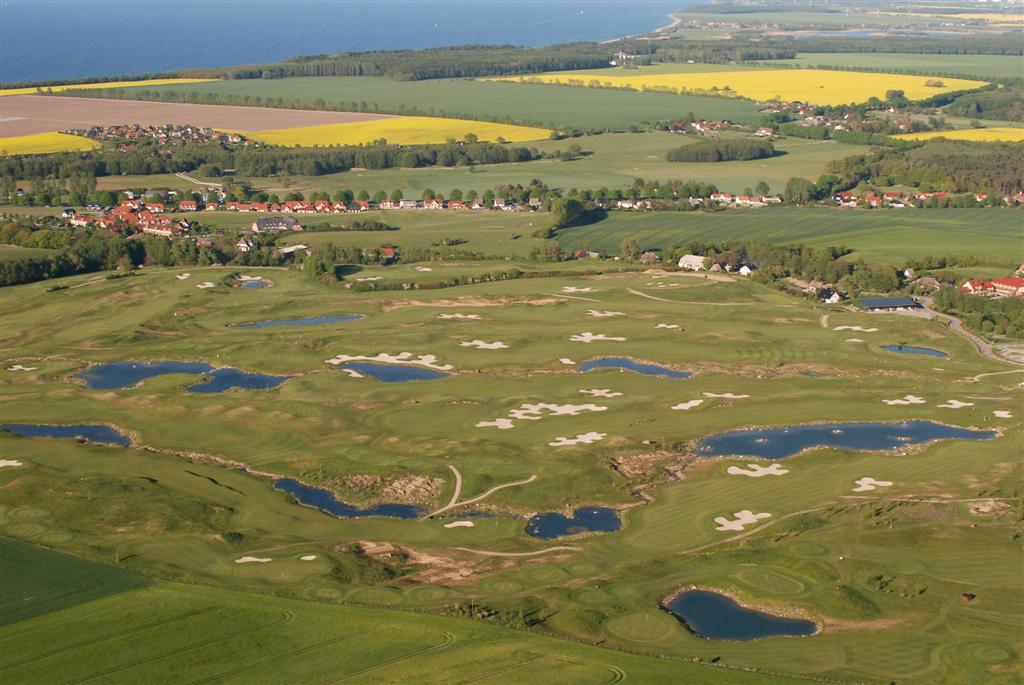
A golf course is the grounds on which the sport of golf is played. It consists of a series of holes, each consisting of a tee box, a fairway, the rough and other hazards, and a green with a cylindrical hole in the ground, known as a "cup". The cup holds a flagstick, known as a "pin". A standard round of golf consists of 18 holes,[1] and as such most courses contain 18 distinct holes; however, there are many 9-hole courses and some that have holes with shared fairways or greens. There are also courses with a non-standard number of holes, such as 12 or 14.[2][3]
The vast majority of golf courses have holes of varying length and difficulties that are assigned a standard score, known as par, that a proficient player should be able to achieve; this is usually three, four or five strokes. Par-3 courses consist of holes all of which have a par of three. Short courses have gained in popularity; these consist of mostly par 3 holes, but often have some short par 4 holes.[4]
Many older courses are links, often coastal. The first golf courses were based on the topography of sand dunes and dune slacks with a ground cover of grasses, exposed to the wind and sea.[5] Courses are private, public, or municipally owned, and typically feature a pro shop. Many private courses are found at country clubs.
History
[edit]The golf course has its roots dating to the 18th century. The 18-hole course Old Course was established in 1764 at St Andrews, Scotland, and has existed under its name since 1895.
In 2009, Nullarbor Links, the world's longest golf course spanning 1,365 kilometres, was established along the Eyre Highway, in Australia.
In 2023, the golf course at Moundbuilders Country Club, was integrated into the world heritage-listed Hopewell Culture National Historical Park.
Design
[edit]Although a specialty within landscape design or landscape architecture, golf course architecture is considered a separate field of study. Some golf course designers become celebrities in their own right, such as Alister MacKenzie; others are professional golfers of high standing and demonstrated appreciation for golf course composition, such as Jack Nicklaus. The field is partially represented by the American Society of Golf Course Architects, the European Institute of Golf Course Architects, and the Society of Australian Golf Course Architects, although many of the finest golf course architects in the world choose not to become members of any such group, as associations of architects are not government-sanctioned licensing bodies, but private groups. While golf courses often follow the original landscape, some modification is unavoidable. This is increasingly the case as new courses are more likely to be sited on less optimal land. Bunkers and sand traps are always built in by architects unless the formation of such items is already in the course's natural terrain.[6]
The layout of a course follows certain traditional principles, such as the number of holes (nine and 18 being most common), their par values, and the number of holes of each par value per course. It is also preferable to arrange greens to be close to the tee box of the next playable hole, to minimize travel distance while playing a round, and to vary the mix of shorter and longer holes. Combined with the need to package all the fairways within what is frequently a compact square or rectangular plot of land, the fairways of a course tend to form an oppositional tiling pattern. In complex areas, two holes may share the same tee box, fairway, or even green. It is also common for separate tee-off points to be positioned for men, women, and amateurs, each one respectively lying closer to the green. Eighteen-hole courses are traditionally broken down into a "front 9" (holes 1–9) and a "back 9" (holes 10–18). On older courses (especially links courses, like the Old Course at St. Andrews), the holes may be laid out in one long loop, beginning and ending at the clubhouse, and thus the front 9 is referred to on the scorecard as "out" (heading out away from clubhouse) and the back 9 as "in" (heading back in toward the clubhouse). More recent courses (and especially inland courses) tend to be routed with the front 9 and the back 9 each constituting a separate loop beginning and ending at the clubhouse. This is partly for the convenience of the players and the club, as then it is easier to play just a 9-hole round, if preferred, or stop at the clubhouse for a snack between the front 9 and the back 9.[7]
A successful design is as visually pleasing as it is playable. With golf being a form of outdoor recreation, the strong designer is an adept student of natural landscaping who understands the aesthetic cohesion of vegetation, water bodies, paths, grasses, stonework, and woodwork, among many other elements.[8]
New environmentally responsible design practices mean that a successful design more than harmonizes with the landscaping; it benefits the environment. A successful design also not just pleasing and playable, but is environmentally responsible.[9]
Par
[edit]Most golf courses have only par-3, −4, and −5 holes, although some courses include par-6 holes. The Ananti CC and the Satsuki golf course in Sano, Japan, are the only courses with par-7 holes.[10]
Par is primarily determined by the playing length of each hole from the teeing ground to the putting green. Holes are generally assigned par values between three and five, which includes a regulation number of strokes to reach the green based on the average distance a proficient golfer hits the ball, and two putts.[11] On occasion, factors other than distance are taken into account when setting the par for a hole; these include altitude, terrain and obstacles that result in a hole playing longer or shorter than its measured distance, e.g. route is significantly uphill or downhill, or requiring play of a stroke to finish short of a body of water before hitting over it.[12]
Under the United States Golf Association, the typical distances for the various holes from standard tees are as follows:[12]
Men
- Par 3 – Under 260 yards (240 m)
- Par 4 – 240–490 yards (220–450 m)
- Par 5 – 450–710 yards (410–650 m)
- Par 6 – 670 yards (610 m) or longer
Women
- Par 3 – Under 220 yards (200 m)
- Par 4 – 200–420 yards (180–380 m)
- Par 5 – 370–600 yards (340–550 m)
- Par 6 – 570 yards (520 m) or longer
Features
[edit]
1 = teeing area
2 = penalty area
3 = rough
4 = out of bounds
5 = fairway bunker
6 = penalty area
7 = fairway
8 = putting green
9 = flagstick
10 = hole
Teeing area
[edit]The first section of every hole consists of the teeing ground, or tee-box. There is typically more than one available box where a player places his ball, each one a different distance from the hole (and possibly with a different angle of approach to the green or fairway) to provide differing difficulty. The teeing ground is generally as level as feasible, with closely mown grass very similar to that of a putting green, and most are slightly raised from the surrounding fairway.
Each tee box has two markers showing the bounds of the legal tee area. The teeing area spans the distance between the markers, and extends two-club lengths behind the markers. A golfer may stand outside the teeing area, but the ball must be placed and hit from inside it.[13] A golfer may place his ball directly on the surface of the teeing ground (called hitting it "off the deck"), or the ball may be supported by a manufactured tee (limited to a height of four inches), or by any natural substance, such as a mound of sand placed on the teeing surface.
Fairway and rough
[edit]
After the first shot from the tee ("teeing off"), the player whose ball is farthest from the green hits the ball from where it came to rest; this spot is known as its "lie". When the ball is in play and not out of bounds or in a hazard the player must play the ball as it lies.[14] The area between the tee box and the putting green where the grass is cut even and short is called the fairway. The area between the fairway and the out-of-bounds markers, and also between a mowed apron surrounding the green and out of bounds, is the rough; the grass there is cut higher and is often of a coarser strain than on the fairways, making roughs disadvantageous areas from which to hit. On par-3 holes, the player is expected to be able to drive the ball to the green on the first shot from the tee box. On holes longer than par 3, players are expected to require at least one additional shot to reach their greens.
While many holes are designed with a direct line-of-sight from the teeing ground to the green, a hole may bend either to the left or to the right. This is called a "dogleg", in reference to the similarity to a dog's ankle. The hole is called a "dogleg left" if the hole angles leftwards, and a "dogleg right" if the hole angles rightwards. A hole's direction may bend twice, which is called a "double dogleg".

Just as there are good-quality grasses for putting greens, there are good-quality grasses for the fairway and rough. The quality of grass influences the roll of the ball as well as the ability of the player to "take a divot" (effectively, the ability to hit down into the ball, hitting the ball first, then hitting the turf and removing a portion of it as the club continues its arc). Fairways on prestigious tours, like the PGA Tour, are cut low. Mowing heights influence the play of the course. For example, the grass heights at U.S. Open events are alternated from one hole to the next in order to make the course more difficult. One example of this is the infamous roughs at U.S. Opens, which are often 3 to 5 inches high, depending on how close to the fairway or green the section of grass will be. This makes it difficult for a player to recover after a bad shot.
Variants of grass used for fairways and roughs include bent grass, Tifway 419 Bermuda grass,[15] rye grass, Kentucky bluegrass, and Zoysiagrass. As in putting-green grass types, not every grass type works equally well in all climate types.
Greens
[edit]
The putting green, or simply the green, is an area of very closely trimmed grass on relatively even, smooth ground surrounding the hole, allowing players to make precision strokes on it. To "putt" is to play a stroke on this surface, usually with the eponymous "putter" club, which has very low loft so that the ball rolls smoothly along the ground, and hopefully into the cup. The shape and topology of the green can vary almost without limit, but for practical purposes the green is usually flatter than other areas of the course, though gentle slopes and undulations can add extra challenge to players who must account for these variations in their putting line. The green typically does not include any fully enclosed hazards such as sand or water; however, these hazards can be — and often are — placed adjacent to the green, and depending on the shape of the green and surrounding hazards, and the location of the hole (which often changes from day to day to promote even wear of the turf of the green), there may not be a direct putting line from a point on the green to the cup.
Golfers use a method known as "reading" the green to enhance their chances of making a putt. Reading a green involves determining the speed, grain, incline, decline and tilt of the green on the line of the putt. Most putts are not struck directly at the hole, instead they must be struck to take into account the characteristics of the green to arrive at the hole at the proper angle and speed. The best players will read the green by walking around the green and studying the characteristics of the green before addressing the ball. Many golfers consider reading the green and putting to be the most difficult part of the game.
The green is typically surrounded by slightly higher grass, cut at a height between that of the green and fairway, and then by the fairway and/or rough. This longer grass surrounding the green is known as the fringe and is designed to slow and stop balls rolling along the green from an approach shot or errant putt, preventing them from exiting the green. Though putting strokes can be made on it, the higher grass can interfere with the path of the ball, so players often choose to use a lofted club such as an iron to make a "chip shot" or a "bump and run", where the ball carries in the air for a few yards and then rolls along the green like a normal putt.
The grass of the putting green (more commonly just "green") is cut very short so that a ball can roll for a long distance. The most common types of greens are for cold winter, but warmer summer regions (i.e., not extremely warm, as in the Southern and Southwestern United States) are bent grass greens. A green may consist of a thin carpet so that bad weather is not allowed to become a serious factor in maintaining the course. These are considered the best greens because they may be cut to an extremely low height, and because they may be grown from seed. Bent grass does not have grain, which makes it superior as a putting surface. However, bent grass may become infested with Poa annua, a costly and time-consuming weed. Augusta National is one of many golf courses to use this type of green. The original design of Augusta National did not include bent grass greens, but in the early 1980s the greens were converted from Bermuda to bent grass. This affected the speed of the greens, making them too quick, and several areas were subsequently remodelled to reduce the slopes and make them more playable.[16] Many other golf courses subsequently made the decision to change from Bermuda to bent grass when they observed increased business at courses that had already changed over.[17]
Another type of grass common for greens is TifDwarf Hybrid Bermuda (other variants exist, but TifDwarf is one of the most common), or simply Bermuda grass. Bermuda is more common in regions that have very warm summers and mild winters, such as the Southern and Southwestern United States. Red Bridge Golf Course was the first course in North Carolina to utilize a special Bermuda called Mini Verde. A green is generally established from sod which has had the soil washed off of it (to avoid soil compatibility problems) and which is then laid tightly over the green, then rolled and topdressed with fine sand. Another common and more economical approach for establishing a putting green is to introduce hybrid Bermuda sprigs (the stolon of the grass which are raked out at the sod farm), which are laid out on the green.

Two downside factors of Bermuda greens are cost of maintenance, and also the existence of grain (the growth direction of the blades of grass), which affects the ball's roll and which is called "the grain of the green" and not to be confused with "the rub of the green" which are idiosyncrasies encountered getting through the hole. The slope or break of the green also affects the roll of the ball. The hole, or cup, is always found within the green and must have a diameter of 108 millimeters (4.25 in) and a depth of at least 10 centimeters (3.94 in). Its position on the green is not fixed and typically is changed daily by a greenskeeper in order to prevent excessive localized wear and damage to the turf. A new hole will be cut by a device that removes a plug of the turf from the ground, and the reinforced cup is then moved, before the old hole is filled in with the plug cut from the new hole and levelled. The hole has a flag on a pole positioned in it so that it may be seen from a distance, but not necessarily from the tee. This location marker is officially called the "flagstick" but is also commonly referred to as the "pin". Flagsticks are made of either coated fiberglass, metal, or wood and have a metal or synthetic bottom (called a ferrule) that is designed to fit in the hole cup.
Putting greens are not all of the same quality. The finest-quality greens are well-kept so that a ball will roll smoothly over the closely mowed grass. Excess water can be removed from a putting green using a machine called a water hog. Golfers describe a green as fast if a light stroke on the ball makes it roll a long distance; conversely, on a slow green a stronger stroke is necessary to roll the ball the same distance. The exact speed of a green can be determined with a stimp meter. By collecting sample measurements, golf courses can be compared in terms of average green speed. It is, however, illegal by the rules of golf to test the speed of a green while playing by rolling a ball on it, or by feeling or rubbing the green.
The cost of installing and maintaining grass greens constitutes a considerable proportion of the expense of installing and maintaining a golf course. To save money, many low budget courses catering to casual players have sand greens instead of real grass. In recent years, artificial turf has also become an increasingly popular surface as a less costly alternative to grass which more closely resembles the appearance and feel of real grass compared to a sand surface.
Design of a green with an elevated front is called a false front, as it deceptively causes the balls hitting this part of the green to roll off back.[18]
Hazards
[edit]
Holes often include hazards, which are special areas that have additional rules for play, and are generally of two types: (1) water hazards, such as ponds, lakes, and rivers; and (2) bunkers, or sand traps.
Special rules apply to playing a ball that falls in a hazard. For example, a player may not touch the ground or water with their club before playing the ball, not even for a practice swing. A ball in any hazard may be played as it lies without penalty. If it cannot be played from the hazard, the ball may be hit from another location, generally with a penalty of one stroke. The Rules of Golf specify exactly the point from which the ball may be played outside a hazard. Bunkers are small to medium areas, usually lower than the fairway but of varying topography, that are filled with sand and generally incorporate a raised lip or barrier. It is more difficult to play the ball from sand than from grass, as the ball may embed itself into the sand, and the loose nature of the sand and more severe sloping of many bunkers make taking one's stance more difficult. As in any hazard, a ball in a bunker must be played without touching the sand with the club except during the stroke, and loose impediments (leaves, stones, twigs) must not be moved before making the stroke.
Courses may also have other design features which the skilled player will avoid; there are earth bunkers (pits or depressions in the ground that are not filled with sand but require a lofted shot to escape), high grass and other dense vegetation, trees or shrubs, ravines and other rocky areas, steep inclines, etc.; while disadvantageous to play from, these are typically not considered "hazards" unless specifically designated so by the course (a ravine or creek bed may be termed a "water hazard" even if completely dry)
Driving range
[edit]Often, a golf course will include among its facilities a practice range or driving range, usually with practice greens, bunkers, and driving areas. Markers showing distances are usually included on a practice range for the golfer's information. Driving ranges are also commonly found as separate facilities, unattached to a golf course, where players may simply hit balls into the range for practice or enjoyment.
There may even be a practice course (often shorter and easier to play than a full-scale course), where players may measure the distance they can obtain with a specific club, or in order to improve their swing technique. Practice courses often consist of old holes of a previous design that are kept and maintained for practice purposes or as substitute holes if one or more holes become unplayable; a 21-hole golf course, for instance, will have three additional holes that can be used for practice or as substitutes for a flooded or otherwise damaged hole.
Signature hole
[edit]Many golf courses have what may be referred to as a "signature hole". This will commonly be the most memorable, aesthetically pleasing or photogenic hole.[19]
Types
[edit]Links
[edit]
Links is a Scottish term, from the Old English word hlinc : "rising ground, ridge", describing coastal sand dunes and sometimes similar areas inland.[20] It is on links land near the towns of central eastern Scotland that golf has been played since the 15th century.[21]
The shallow topsoil and sandy subsoil made links land unsuitable for the cultivation of crops or for urban development and was of low economic value. The links were often treated as common land by the residents of the nearby towns and were used by them for recreation, animal grazing and other activities such as laundering clothes.
The closely grazed turf and naturally good drainage of the links was ideal for golf, and areas of longer grass, heather, low growing bushes and exposed sand provided the hazards that are familiar on modern courses. Although early links courses were often close to the sea it was rarely used as a hazard, perhaps due to the instability of the dunes closest to the water and the high cost of hand-made golf balls precluding anything that could result in their irrecoverable loss. The land is naturally treeless and this combined with their coastal location makes wind and weather an important factor in links golf.
Traditional links courses are often arranged with holes in pairs along the coastline; players would play "out" from the town through a series of holes to the furthest point of the course, and then would return "in" along the second set of holes.[21] The holes may share fairways and sometimes greens (such as at St Andrews to economize on land use, but in modern times this is rare due to the potential for injury from balls coming the other way.
Famous links courses include the Old Course at St. Andrews, often described as the "Home of Golf", and Musselburgh Links, which is generally regarded as the first recorded golf course. The Open Championship, the oldest of golf's major championships, is always played on a links course.[22] Links and links-style golf courses have been developed throughout the world, reproducing the broken, treeless terrain with deep bunkers of their Scottish prototypes.
Executive
[edit]An executive course or short course is a course with a total par significantly less than that of a typical 18-hole course. Two main types exist:
- A "9-hole course", typically the type referred to as an "executive course", has only 9 holes instead of 18, but with the otherwise normal mix of par-3, par-4 and par-5 holes (typically producing a par score of between 34 and 36), and the course can be played through once for a short game, or twice for a full round.
- A "par-3" course has either 9 or 18 holes, and the distance of each hole is a par 3 rating (typically 240 yards or less from the "men's" tee), with no par-4 or par-5 holes mandating shots through the green (though, occasionally, a "par-3" course may feature a par-4 or even a par-5 hole). As a result, the total par for 18 holes of a par-3 course would be 54 instead of a typical 68–72. Some par-3 courses still require the use of a wood on some tee shots, and thus a "complete" set of clubs is used.
- A common standardized type of par-3 course is the "Pitch and Putt" course, where each of the 9 or 18 holes has a distance from tee to cup of less than 100 yards, with an overall 18-hole course distance no more than 1,200 yards (so each hole averages 67 yards). This allows the course to be played without a full set of clubs; typically only wedges are needed, possibly a 9-iron for the longest holes, along with a putter, to play the course. The rules for formal Pitch and Putt competitions mandate a three-club limit, consisting of two irons and one putter.
These types of courses provide a faster pace of play than a standard course, and get their name from their target patronage of business executives who would play the course on a long lunch or as part of a meeting. They are also popular with young professionals, because during the normal golf season, the course can usually be played in the time between the end of the work day and sundown.
The popularity of the 9-hole course has waned in recent decades; a full 18-hole course still allows for the player to play only the "front nine" or "back nine" as a shorter game, while attracting more golfers seeking to play a traditional full round of 18 distinct holes. Many older executive courses have been upgraded "in-place" to 18 holes and a traditional par score, or the original course was sold for other development, and new land was acquired and built into an 18-hole course. By contrast, par-3 courses, especially Pitch and Putt, are rising in popularity as a compromise between the long play time and high skill levels required of a traditional 18-hole course, and the artificial nature and single-minded putting focus of miniature golf. Pitch and Putt, specifically its governing association the IPPA, has received financial support and logo rights from the R&A.
In 2014, the PGA Tour held a Champions Tour event on a nine-hole par-3 course, the Big Cedar Lodge Legends of Golf in Ridgedale, Missouri, with four (regular division) or three (over-65 division) rounds played over the par-3 course, and one round played on a nearby regulation 18-hole course with par of 71.
Pitch and putt
[edit]
Pitch and putt is an amateur sport, similar to golf and is also known as chip and putt. The maximum hole length for international competitions is 90 metres (100 yd) with a maximum total course length of 1,200 metres (1,310 yd). Players may only use three clubs; one of which must be a putter. The game is played from raised artificial teeing surfaces using a tee and it has its own handicap system.[23]
Ownership and management
[edit]There are three main categories of ownership and management of a golf course: private, commercial, and municipal.[24]
Private
[edit]A private course is owned and managed by a golf club on behalf of its members, on a non-profit basis. Many of the courses opened during the golf booms in the late 19th and early 20th centuries are of this type.[25] Some courses, such as Augusta National, are highly exclusive and will only allow visitors to play at the invitation of and alongside a member of the club. Others allow visitors at certain times but may insist on advance booking and proof of golfing competency.
Commercial
[edit]A commercial course is owned and managed by a private organization and is operated for profit. They may be constructed to provide a core or supplementary attraction for visitors to a hotel or commercial resort, as the centrepiece to a real estate development, as an exclusive Country Club, or as a "Pay and Play" course open to the general public. Notable examples include Pinehurst in the US and Gleneagles in Scotland.
Municipal
[edit]A municipal course is owned and managed by a local government body for the benefit of residents and visitors. Some of the historic Scottish golf courses, including St Andrews and Carnoustie fall into this category along with Bethpage and Pebble Beach in the US and many others of less renown. It is increasingly common for the management of municipal courses to be contracted out to commercial or other organisations or the course to be sold or shut down completely.[26]
Associated clubs
[edit]Many commercial and municipal establishments have associated golf clubs, who arrange competitions for their members on the courses and may provide clubhouse facilities. In the UK particularly, some older private members clubs have an associated "Artisan" club, originally established to provide low-cost golf with limited playing rights in exchange for unpaid work on the course.[25] These associated clubs may be totally independent organizations from the course management, or may have various degrees of formal or informal links.
Golf courses around the world
[edit]As per 2019 there were 38,864 golf courses around the world. A 2019 study[27] revealed that 78% of the world's supply of golf courses are located in 10 countries: the United States, Japan, Canada, England, Australia, Germany, France, South Korea, Sweden and Scotland.[27]
| Country | Golf courses | Percentage of total world golf courses |
|---|---|---|
| USA | 16,752 | 43.10% |
| Japan | 3,169 | 8.15% |
| Canada | 2,633 | 6.77% |
| England | 2,270 | 5.84% |
| Australia | 1,616 | 4.16% |
| Germany | 1,050 | 2.70% |
| France | 804 | 2.07% |
| South Korea | 798 | 2.05% |
| Sweden | 662 | 1.70% |
| Scotland | 614 | 1.58% |
| China | 599 | 1.54% |
| Spain | 497 | 1.28% |
| Ireland | 494 | 1.27% |
| South Africa | 489 | 1.26% |
| New Zealand | 418 | 1.08% |
| Argentina | 349 | 0.90% |
| Denmark | 346 | 0.89% |
| Netherlands | 330 | 0.85% |
| Italy | 321 | 0.83% |
| Thailand | 315 | 0.81% |
Environmental impact
[edit]This section needs additional citations for verification. (July 2022) |
Environmental concerns over the use of land for golf courses have grown since the 1960s. Specific issues include the amount of water required for irrigation and the use of chemical pesticides and fertilizers in maintenance, as well as the destruction of wetlands and other environmentally important areas during construction.
Pesticides and fertilizers
[edit]These pesticides run off into bodies of water and cause over flowing of pesticides into water which causes algae blooms that destroys whole ecosystem shutdowns.
The U.S. Environmental Protection Agency prohibited the use of Diazinon on golf courses and sod farms because of its negative impact on bird species in 1988.[28][29]
Irrigation
[edit]The United States Golf Association (USGA) reported in 2012 that in the U.S. golf course irrigation used approximately 2.08 billion gallons of water per day to irrigate its golf courses.[30] The United Nations estimates that, worldwide, golf courses consume about 2.5 billion gallons/9.5 billion litres of water per day.[citation needed]
In 2022 the U.S. Geological Survey reported that the state of Utah uses about 38 million gallons of water on its golf courses per day - enough water to fill almost 58 Olympic-sized swimming pools.[31]
Carbon footprint
[edit]Studies have also found that golf courses take up 2,244,415 acres of land nationwide. A golf course's carbon footprint is ten times greater than an average person's everyday life.[citation needed]
A result of modern equipment is that today's players can hit the ball much farther than previously. As a result, because of demand from course customers who possess this enhanced equipment, and also out of an expressed concern for safety, golf course architects have had to lengthen and widen golf courses. Where a 7,000-yard course used to be a great rarity, courses measuring 7,500-yards are now not uncommon, and courses of 8,000-yards are being contemplated. The cause of modern science allows these specifications that cause more acreage to be used up. All this has led to a ten-percent increase in the acreage required to build a typical course.
Environmental concerns, along with concerns about cost and human health, have led to research into more environmentally sound practices and turf grasses. The USGA shares best management practices and case studies of U.S. golf courses, on topics such as irrigation efficiency, use of recycled water, storm water infrastructure, native grasses, and increasing pollinator habitat.[32] Golf course superintendents are often trained in the uses of these practices and grasses. This has led to significant reduction in the amount of water and chemicals on courses. Golf course turf is an excellent filter for water and has been used in communities to cleanse grey water, such as incorporating them into bioswales.
The use of natural creeks and ponds is generally desirable when designing a golf course for their aesthetics and the increase in playing difficulty. However, such areas also typically include wetlands within the flood plain that are unsuitable for golfing and are often filled in and raised to remain dry. In arid areas, dry creek beds can be marked as "water hazards", but the importation of non-native grasses and other plant life can have a detrimental effect on native landscapes, often requiring non-native soil and large quantities of water and fertilizer to maintain the course. In these areas, course builders are often prohibited from growing and maintaining non-native grass on areas of the course other than the fairway, or even on the fairway itself, in which case only greens are allowed to have grass.
Water restrictions established by communities have forced courses to limit the amount of maintained turf grass. While most modern 18-hole golf courses occupy as much as 60 hectares (150 acres) of land, the average course has 30 hectares (74 acres) of maintained turf.[33][34]
Golf courses can be built on sandy areas along coasts, on abandoned farms, among strip mines, and quarries, and in deserts and forests. Many Western countries have instituted environmental restrictions on where and how courses are allowed to be built.[35][36] The problem in today's society with building multibillion-dollar courses is that it takes the place for much better use of land. Those methods of use include building communities for the homeless and under privileged, national parks and forests for tourism, growth of wildlife, and animals to roam free. There is also a problem with giving up farm land which is a top necessity in the US economy which causes problems in the supply chain.[37]
In some parts of the world, attempts to build courses and resorts have led to protests, vandalism, and violence. Populists perceive golf as an elitist activity, and thus golf courses become a target for popular opposition. Resisting golf tourism and golf's expansion has become an objective of some land-reform movements, especially in the Philippines and Indonesia.[citation needed]
In The Bahamas, opposition to golf developments has become a national issue. Residents of Great Guana Cay and Bimini, for example, are engaged in legal and political opposition to golf developments on their islands, for fear the golf courses will destroy the nutrient-poor balance on which their coral reef and mangrove systems depend.[citation needed]

In Saudi Arabia and elsewhere in arid regions, golf courses have been constructed on nothing more than oil-covered sand. Players may use a roller on the "greens" to smooth the intended path before putting. In November 2022, four Saudi Arabian golf courses were certified by the GEO foundation that solidifies those courses pledge and to higher the sustainability in the courses in the area and to improve economic output. This act was supported by very strict laws in Saudi Arabia including stewardship, carbon and climate footprint reduction, and restoration of the economy as well.[39]
A course in Coober Pedy, Australia, consists of nine holes dug into mounds of sand, diesel fuel, and oil, with no grass appearing anywhere on the course. Players carry a small piece of astroturf from which they tee the ball. Other Australian golf courses in locations where water is scarce or water conservation is a priority sometimes feature "scrapes" in place of greens. These are made of fine dirt which requires raking between uses but does not require watering.[citation needed]
Programs to address environmental issues
[edit]Audubon International has an educational and certification program for golf courses to achieve higher environmental standards and become a Certified Audubon Cooperative Sanctuary.[40] The Golf Course Superintendents Association of America (GCSAA) has developed a program to provide best environmentally sustainable management practices for each state in the U.S.[41]
While golf courses are a big contributor to pollution and global warming, there have been good efforts to evolve golf into a game which helps the environment and not the opposite, of destroying it. Golf courses often create large green spaces that serve as habitats for various plants and animals. Some courses incorporate natural features and wildlife corridors, contributing to biodiversity. This is a big step forward in the movement towards a greener environment. Golf courses as a whole also typically require substantial water for irrigation. Properly managed courses can showcase efficient water management practices, such as the use of reclaimed water or sustainable irrigation systems. These are the first crucial stages to conquer environmental issues and the problems within the golf industry. The sustainability issue hits when animals and non-invasive plant life are displaced and there are alteration and distortion to many prominent swamps, wetlands, and other prominent wildlife fixtures.[42]
Land use and taxation
[edit]Various people have proposed taking the extensive land used for golf courses and converting that land to affordable housing.[43][44][45]
In many states, the method of taxation of the land used for the golf course is controversial. Real and personal property is, in most states, assessed based on fair market value, the value of its "highest and best use." However, in some states golf courses are taxed by current use assessment.[46]
Abandoned golf courses
[edit]The closure of golf courses has increased in recent decades, particularly in the United States, where more than 1,500 facilities shut down during the early 21st century.[47] Similar patterns have been reported in parts of Asia and Australia, where participation rates have declined and the rising cost of land has made golf less financially viable.[48] The closure of these facilities creates a set of ecological and social considerations that vary by region and land management practices.
One environmental consequence of abandonment is the spread of invasive species. Without mowing, irrigation, and turf maintenance, fast-growing plants can dominate former fairways and greens, often replacing native vegetation and altering habitat structure.[48] In tropical regions, plant succession can occur rapidly; for example, Chromolaena odorata has been observed to expand across unmanaged land.[48] The discontinuation of pesticide and fertilizer applications may also allow soils and nearby waterways to recover from previous chemical use, although outcomes depend on site conditions and management after closure.
Built infrastructure can also deteriorate once maintenance stops. Many golf courses include artificial ponds, canals, and drainage systems designed for irrigation. If left unmanaged, these systems can stagnate, affecting water quality and potentially creating habitats for mosquitoes or other pests.[49] In coastal areas, erosion may increase when turf and stabilizing vegetation die back due to the loss of irrigation.
Abandoned courses can influence surrounding communities as well. In residential areas, closed courses are sometimes described as visual blight, and nearby property values may decline following closure.[50] In areas that depend on tourism, abandoned facilities can affect local economies and the image of resort developments. Local governments and homeowners’ associations often face decisions regarding whether to redevelop, conserve, or sell these sites.
Some former golf courses have been converted for alternative uses. Documented examples include conversion into public parks, restored wetlands, or community greenways that provide ecological and recreational functions.[47][48][50] In the United States, the American Society of Landscape Architects reported that since 2010 at least 20 defunct courses have been turned into public parks and natural areas.[47] One example is the Rancho Vistoso Golf Club in Oro Valley, Arizona, which closed in 2018 and was converted into a 202-acre nature preserve with hiking trails and native vegetation.[50] Other projects in Florida, Texas, and California have focused on wetland restoration, stormwater management, and the creation of community open space.
Research has identified potential environmental benefits from such reuse, including improved stormwater absorption, reduced runoff, and habitat connectivity.[47] The extent of these benefits depends on local ecological conditions and management objectives. Because many golf courses are located in densely developed or flood-prone areas, their reuse has been examined within broader discussions of urban planning and green infrastructure.
In some countries, redevelopment takes different forms. In Japan and South Korea, where golf expanded during the late 20th century but later declined, closed courses have been repurposed for solar power installations or agricultural production.[48] These projects illustrate how the outcomes of course closures vary with local policy, economic incentives, and environmental priorities.
Although golf facilities have been criticized for high water use, chemical inputs, and land conversion, abandonment and reuse can offer opportunities to mitigate some of these effects. Managing closed courses is part of ongoing discussions on sustainable land use and community planning.[48][50]
Gallery
[edit]See also
[edit]References
[edit]- ^ "Why does a golf course have 18 holes?", www.ScottishGolfHistory.org, 2003–2007, webpage: SGH18.
- ^ "Do 12-hole golf courses have a chance". 18 August 2010. Archived from the original on 14 April 2021.
- ^ Lu, Garry (14 April 2021). "Barnbougle Opens 'Bougle Run': A Stunning 14-Hole Short Course".
- ^ "Short Courses Are Gaining Favor With Golfing Families". The New York Times. 1 April 2022.
- ^ European Institute of Golf Course Architects (EIGCA) (2017). "Golf Courses as Designed Landscapes of Historic Interest. Historic England Research Report 42/2017". research.historicengland.org.uk. Archived from the original on 6 May 2021. Retrieved 16 June 2020.
- ^ "The Ghost Course - Links to the past on a Scottish island". The New Yorker. 13 April 2009.
- ^ Richardson, Forrest (29 July 2002). Routing the Golf Course. John Wiley & Sons. ISBN 978-0-471-43480-1.
- ^ Reviriego, Javier; Brown, Thomas (22 February 2020). "Who is the most underrated golf architect of all time?". Golf Magazine.
- ^ Love, Bill. "An Environmental Approach to Golf Course Development" (PDF). American Society of Golf Course Architects. asgca.org. Retrieved 15 May 2025.
- ^ Victoria Robb (13 April 2007). "The World's Longest Golf Hole". Esquire. Retrieved 10 September 2015.
- ^ "How is par on a golf course determined?". Sporting News. 23 March 2015. Retrieved 26 June 2022.
- ^ a b "Rules of Handicapping | Appendix F: Establishing Par". USGA. Retrieved 26 June 2022.
- ^ Rules of Golf and the Rules of Amateur Status 2008–2011 (PDF). St Andrews, Fife, Scotland: The Royal and Ancient Golf Club of St Andrews and United States Golf Association. September 2007. p. 67. Archived from the original (PDF) on 29 October 2008. Retrieved 16 September 2008.
- ^ "USGA Rules of Golf Experience". Usga.org. Retrieved 23 May 2018.
- ^ "Tifway 419 Bermuda". Phillip Jennings Turf Farms. Retrieved 2 March 2009.
- ^ Madden, Michael (10 April 1986). "Master builders change course". The Boston Globe. p. 56. Retrieved 11 August 2023 – via Newspapers.com.
- ^ "Bermuda, bent, rye: Grass types make big difference". USA Today. Retrieved 12 November 2016.
- ^ Mallon, Bill; Jerris, Randon (21 January 2011). Historical Dictionary of Golf. Bloomsbury Publishing USA. p. 103. ISBN 979-8-216-31019-8. Retrieved 25 September 2025.
- ^ Kelley, Brent (23 September 2016). "What Is a 'Signature Hole' on a Golf Course?". About.com. Archived from the original on 13 February 2017. Retrieved 6 July 2022.
- ^ "Links". Dictionary of the Scots Language. Scottish Language Dictionaries, Edinburgh. Retrieved 16 July 2012.
- ^ a b "A Brief History of The Links". St Andrews Links Trust. Archived from the original on 4 July 2012. Retrieved 16 July 2012.
- ^ "Open Venues". The Open Championship. The R&A. Archived from the original on 3 August 2012. Retrieved 16 July 2012.
- ^ "Pitch and putt rules". EPPA. Archived from the original on 27 October 2013.
- ^ MW Associates, Edinburgh (February 2003). "Golf Audit Summary Report" (PDF). sportscotland. Retrieved 25 February 2015.[dead link]
- ^ a b Lowerson, John (5 May 1983). "Scottish Croquet: The English Golf Boom, 1880–1914". History Today. Retrieved 25 February 2015.
- ^ Harte, Nigel (24 June 2014). "The decline of municipal golf clubs during the economic downturn". Golf Club Management. Archived from the original on 2 May 2015. Retrieved 25 February 2015.
- ^ a b updated, Elliott Heath last (29 July 2022). "How Many Golf Courses Are There In The World?". Golf Monthly Magazine. Retrieved 4 April 2024.
{{cite web}}:|last=has generic name (help) - ^ "EPA PROHIBITS USE OF DIAZINON ON GOLF COURSES AND SOD FARMS". Deseret News. 31 March 1988. Retrieved 3 July 2023.
- ^ "Sân golf". Archived from the original on 1 June 2011. Retrieved 3 July 2023.
- ^ Lyman, Gregory T. "Golf's Use of Water: Solutions for a More Sustainable Game" (PDF). United States Golf Association USGA Green Section Record. United States Golf Association. Retrieved 6 June 2025.
- ^ Bauer, Ethan (23 March 2022). "An illogical oasis". Deseret News. Deseret News Publishing Company. Retrieved 22 June 2022.
- ^ "Best Management Practice Case Studies". United States Golf Association (USGA). Retrieved 10 May 2023.
- ^ Shackelford, Geoff (2005). The Future of Golf: How Golf Lost Its Way and how to Get it Back. Sasquatch. ISBN 978-1-57061-456-9. Retrieved 17 November 2022.
- ^ Sources include the National Golf Foundation and the Golf Course Superintendents Association of America GCSAA.
- ^ C.M. Hogan; G. Deghi; M. Papineau; et al. (1992). Environmental Impact Report for the Pebble Beach Properties project by Del Monte Forest. Earth Metrics Inc., Prepared for the city of Monterey and State of California Clearinghouse.
- ^ U.S. Federal Register: 2 August 1995 (Volume 60, Number 148, Pages 39326-39337)
- ^ "View: Golf has grown into an 'ecological villain'". euronews. 17 July 2022. Retrieved 13 November 2023.
- ^ Foote, Chris (6 September 2023). "Are golf courses an alligator's paradise?". Advanced Science News. Retrieved 13 April 2025.
- ^ "Golf Saudi". golfsaudi.com. Retrieved 8 December 2023.
- ^ "ACSP for Golf". Audubon International. Retrieved 10 May 2023.
- ^ "State BMP (Best Management Practices) Guides". Golf Course Superintendents Association of America. Retrieved 6 June 2025.
- ^ "Wayback Machine" (PDF). auduboninternational.org.
- ^ George Carlin about golfing. 5 January 2011 – via YouTube.
- ^ Dillon, Liam (18 April 2022). "'Gimme Shelter': Should L.A.'s golf courses become affordable housing?". Los Angeles Times.
- ^ "Editorial: Turn golf courses into housing? We're desperate enough that it should be on the table". Los Angeles Times. 22 April 2022.
- ^ Hamilton, Billy. "The Perfectly Logical Illogic of Golf Course Tax Breaks". taxnotes. Tax Analysts 2025. Retrieved 4 April 2025.
- ^ a b c d Cederberg, C. (2019). "Taking Golf Out of Golf Course: Trajectories to Convert Facilities to Parks and Open Space Preserves" (PDF). Council of Educators in Landscape Architecture. Retrieved 5 October 2025.
- ^ a b c d e f Stokowski, P. (2019). "As hundreds of golf courses close, nature gets a chance to make a comeback". Ensia. Retrieved 5 October 2025.
- ^ "The Fate of Golf Courses in Changing Landscapes". Taylor & Francis. doi:10.1080/01426397.2018.1550753 (inactive 13 October 2025). Retrieved 5 October 2025.
{{cite web}}: CS1 maint: DOI inactive as of October 2025 (link) - ^ a b c d Schneider, K. (2022). "Golf Course Redevelopment & Housing". The New York Times. Retrieved 5 October 2025.
External links
[edit]- USGA Course Rating Primer Archived 3 August 2020 at the Wayback Machine at the website of the United States Golf Association
Golf course
View on GrokipediaHistory
Origins in Scotland
The modern game of golf originated in Scotland during the 15th century, emerging organically on the coastal links land—sandy, dune-strewn public pastures along the east coast formed by glacial retreat and marine deposition—where players struck leather balls stuffed with feathers using rudimentary wooden clubs shaped like hockey sticks or modern irons.[10] The earliest documentary evidence appears in an Act of the Scottish Parliament on March 6, 1457, under King James II, which banned "ye golf" (along with football) to redirect focus toward archery practice amid ongoing border conflicts with England, implying the game was already widespread enough to warrant prohibition.[11] [10] This ban was reaffirmed in 1471 by James III and again in 1491 by James IV, yet enforcement proved ineffective as the activity persisted among commoners and nobility alike.[10] Royal endorsement followed in 1502, when James IV formally revoked the prohibitions following the Treaty of Perpetual Peace with England and personally commissioned golf clubs and balls from Perth craftsmen, marking the first recorded purchase of equipment and signaling the game's integration into courtly leisure.[3] Early play centered on sites like Leith Links near Edinburgh, referenced as a golf venue by 1504, and Perth, with the first named individual golfer, William Lounie, noted there in 1502 as a clubmaker.[10] The natural contours of links terrain—bunkers from rabbit scrapes, firm turf from sea breezes, and undulating fairways—shaped the game's foundational rules, emphasizing low-trajectory shots and strategic navigation without artificial maintenance, a causal dynamic rooted in Scotland's coastal ecology rather than deliberate design.[12] By the 16th century, golf had permeated Scottish society, with Mary, Queen of Scots, documented playing at Seton in 1567 shortly after her husband's murder, an event that fueled contemporary moral critiques of the sport as frivolous amid political turmoil.[3] The St Andrews Links, now home to the Old Course, saw its earliest confirmed golf reference in 1552, though local tradition attributes informal play to the prior century; the site's public accessibility fostered communal evolution, contrasting later enclosed courses elsewhere.[10] Wooden-shafted clubs, often imported or locally hewn from beech or apple, and hand-stitched featherie balls limited distance to about 150-200 yards per shot, enforcing a patient, ground-game style suited to the terrain's challenges.[3] Organized elements emerged in the 17th century, with King Charles I recorded playing at Leith in 1641 during a diplomatic visit, and the first competitive match noted in 1682 between Edinburgh and Leith players.[13] These developments, unburdened by formal governance until the 18th century, reflect golf's grassroots origins as a low-cost, egalitarian pursuit on shared public land, distinct from aristocratic field sports, with empirical records underscoring Scotland's unique role in codifying a sport that prioritized skill over equipment sophistication.[10]Spread to other regions
Golf spread from Scotland to England during the 18th century, primarily through Scottish expatriates and military personnel. The Royal Blackheath Golf Club, located near London, holds the distinction of being England's oldest surviving golf club, with documented records dating to 1766, despite unsubstantiated claims of origins in 1608 linked to King James VI's court.[14] [15] The club's formation reflects early adoption south of the border, where golf was played on commons like Blackheath before formal courses developed.[16] The game extended across the British Isles in the 19th century, reaching Ireland with the founding of the Royal Curragh Golf Club in County Kildare around 1850, recognized as Ireland's oldest course, initially laid out on military lands.[17] By the 1880s, established Irish clubs included Royal Belfast (1881) and Royal Dublin (1885), both links-style venues influenced by Scottish designs.[18] Overseas expansion began via British colonial networks, with the Royal Calcutta Golf Club in India established in 1829 by army officers, marking the first golf club outside the British Isles and featuring one of the world's oldest surviving courses at 18 holes by the late 19th century.[19] [20] This was followed by the Royal Bombay Golf Club in 1842. In continental Europe, the Pau Golf Club in southwestern France opened in 1856, founded by British residents and officers, introducing the sport to the mainland amid growing Anglo-French ties.[21] North American adoption accelerated in the mid-to-late 19th century. Canada's Royal Montreal Golf Club, formed in 1873, became the continent's oldest surviving club, built by Scottish immigrants on Isle of Sainte-Hélène in Quebec.[19] In the United States, early informal play occurred in the 1700s among Scottish settlers in Georgia and South Carolina, but organized golf emerged post-Civil War, with the first documented permanent course at Foxburg Country Club in Pennsylvania (1887) and the inaugural 18-hole layout at Chicago Golf Club in 1893, spurring nationwide growth.[22] [23] By the 1880s, golf had also taken root in Australia, New Zealand, and South Africa through British settlers and administrators, with courses like Royal Adelaide (1880) exemplifying colonial transplantation.[24] This proliferation tied to imperial mobility, as officers and merchants carried clubs, balls, and rules, adapting Scottish links play to diverse terrains.[25]20th-century standardization and innovations
The early 20th century witnessed the "Golden Age" of golf course architecture, roughly spanning the 1910s to 1930s, when professionals like Donald Ross, A.W. Tillinghast, and Alister MacKenzie formalized strategic design principles that emphasized natural landforms, precise bunker placements, and contoured greens to reward shot-making over brute force.[26][27] Ross, for instance, designed over 400 courses, standardizing the use of native soils for bunkers and multi-tiered greens that integrated seamlessly with terrain, as exemplified by Pinehurst No. 2 (redesigned 1935).[28] Tillinghast contributed templates for "Edinburgh" bunkers and severely sloped greens, influencing durability and playability standards still evident in restorations today.[29] A pivotal standardization tool emerged in 1935 when Edward Stimpson devised the Stimpmeter, a 36-inch aluminum ramp calibrated to release a ball at consistent velocity, measuring green speed via roll distance in feet to ensure uniform putting conditions.[30] Adopted by the United States Golf Association (USGA) in 1936, it quantified speeds previously gauged subjectively, with early averages around 8-9 feet rising to 10-12 feet for championships by mid-century, enabling data-driven maintenance like mowing heights and moisture control.[31][32] This device addressed inconsistencies in course setup, particularly for tournaments, by providing an objective metric independent of weather or turf variability.[33] Post-World War II innovations shifted toward "heroic" architecture, led by Robert Trent Jones Sr., who lengthened courses and incorporated spectator-friendly hazards like carried water and elevated greens to accommodate persimmon woods and balata balls, as in Chambers Bay (1957 prototype elements) and subsequent designs exceeding 7,000 yards.[34][35] The USGA further standardized playability through early course rating prototypes in the 1950s, adjusting for difficulty beyond raw yardage, while mechanical innovations like reel mowers and chemical fertilizers enabled bentgrass dominance on greens for faster, truer surfaces.[36] These advancements professionalized upkeep, reducing regional disparities and supporting the sport's suburban boom, with U.S. courses numbering over 10,000 by 1970.[37]Recent developments since 2000
Since 2000, golf course development has experienced cycles of contraction and revival, influenced by economic factors and shifting participation trends. Following the dot-com bust and the 2008 financial crisis, new course openings in the United States declined sharply from the 1990s peak, with annual builds dropping to fewer than 200 by the mid-2010s as developers shifted toward renovations and "specialty" projects on marginal land. Globally, the total number of courses stabilized around 38,000 by the early 2020s, with approximately 21,507 in nations affiliated with The R&A, reflecting modest net growth amid closures in oversaturated markets like parts of Europe and the U.S. A post-2020 surge, driven by pandemic-era participation increases—adding 3.1 million on-course golfers worldwide from 2022 to 2023—has spurred over 50 notable new or renovated U.S. courses annually in recent years, emphasizing premium, destination-style layouts such as expansions at Bandon Dunes (e.g., Sheep Ranch in 2020) and international venues like Cabot Cliffs in Canada.[38][39][40][41][42] Architectural trends have pivoted toward minimalism and strategic depth, prioritizing natural landforms, native vegetation, and low-intervention maintenance over the template-driven, bunker-heavy designs of the late 20th century. Architects like Tom Doak and Bill Coore have popularized "ground game" options with fescue grasses and undulating greens, reducing reliance on irrigation and chemicals while enhancing playability for skilled golfers; this approach, evident in courses like Sand Valley (opened 2012), counters equipment advancements that lengthened courses to averages exceeding 7,000 yards by the 2010s. Technological tools, including GPS mapping, CAD software, and aerial LiDAR surveying, have enabled precise earthmoving and drainage systems, allowing designs that integrate seamlessly with topography—such as the routing at Cape Wickham (2015) in Australia—while minimizing environmental disruption. Shorter formats, including par-3 and "adventure" courses under 3,000 yards, have proliferated to broaden accessibility, with junior participation rising 36% in the U.S. from 2020 to 2023, addressing demographic shifts toward younger and female players.[43][44][38][45][46] Sustainability has emerged as a core focus, responding to criticisms of high water and pesticide use through data-driven practices that demonstrate reduced resource demands. U.S. courses, for instance, have cut per-acre water application by 30-50% since 2000 via soil moisture sensors, drought-tolerant bentgrass cultivars, and recycled wastewater systems, with many facilities achieving certifications like Audubon International's Sanctuary program. Renewable integrations, such as solar panels on maintenance buildings and out-of-play areas, now power up to 20% of operations at forward-thinking venues, while native habitat restorations—replacing manicured rough with wildflowers and wetlands—boost biodiversity; a 2024 industry analysis notes over 3,000 U.S. courses implementing such measures, correlating with lower operational costs and regulatory compliance amid water scarcity pressures in regions like California. These adaptations, tracked by organizations like the Golf Course Superintendents Association, underscore causal links between precision agronomy and ecological viability, countering narratives of inherent unsustainability with empirical gains in efficiency.[47][48][49][50]Design Fundamentals
Architectural principles
Golf course architecture centers on creating strategic challenges that test a player's skill in shot-making, course management, and adaptation to terrain, with principles emphasizing variety, natural integration, and risk-reward balance. Influential architect Alister MacKenzie outlined 13 foundational rules in 1920, advocating for courses arranged in two nine-hole loops to optimize land use and return to the clubhouse efficiently.[6] He prescribed a mix of hole lengths, including a majority of solid par-4s, at least four par-3s, and minimal par-5s limited to three, ensuring no two holes resemble each other to sustain engagement across 18 holes.[6] Strategic hazard placement forms a cornerstone, where bunkers, water, and rough are positioned not merely as penalties but as guides that reward bold, precise shots while allowing recovery options for conservative play. MacKenzie stressed that ideal hazards should appear more threatening than they are, fostering psychological tension without excessive punishment, and be camouflaged to blend seamlessly with the landscape.[6] This approach, echoed in Harry Colt's designs, prioritizes using existing contours over artificial mounds, promoting greens that follow natural slopes for undulating putting surfaces rather than flat, oversized targets.[51] Contemporary principles build on these by incorporating playability through generous fairway widths and multiple strategic lines of attack, avoiding overly narrow, penal layouts that frustrate average golfers. Firm turf conditions enable bounce and run, amplifying terrain's role in shot outcomes and reducing reliance on aerial carry, as noted in analyses of effective designs where ground game options enhance variety.[52] [53] Environmental fidelity remains paramount, with architects like Scott Macpherson advocating minimal alteration of sites to preserve native features, thereby creating authentic, low-maintenance courses that evolve with weather and seasons.[54]Par system and course rating
The par system in golf designates the expected number of strokes for a skilled golfer, defined as expert play under ordinary conditions, to complete a hole, including two putts on the green. Par values are primarily determined by hole length, with the United States Golf Association (USGA) providing standardized yardage ranges: for men, par 3 holes measure up to 250 yards, par 4 from 251 to 470 yards, and par 5 exceed 470 yards; for women, the thresholds are 210 yards for par 3, 211 to 400 yards for par 4, and over 400 yards for par 5. When a hole's length spans adjacent par categories, architects or rating committees may assign par based on additional factors such as terrain obstacles or effective playing distance, though length remains the dominant criterion. A standard 18-hole course typically totals par 72, comprising a mix of four par 3s, ten par 4s, and four par 5s, though variations exist to suit terrain or design intent. Par serves as a scoring benchmark rather than a direct measure of difficulty, as holes of equal par can vary significantly in challenge due to hazards, green contours, or wind exposure; for instance, a long par 3 may prove harder than a short par 4 despite the numerical parity. Course rating quantifies a course's playing difficulty for a scratch golfer (zero handicap) under normal conditions, expressed as a numerical score such as 72.5, representing the expected strokes to complete 18 holes.[55] Established by USGA-trained rating teams, it evaluates factors beyond length, including effective shot length, landing area width, green target size, hazards, terrain recovery difficulty, and putting challenge, with ratings conducted from specific teeing areas. Unlike par, which ignores many strategic elements, course rating incorporates these to provide a precise difficulty index, enabling equitable handicapping across courses.[55] Complementing course rating, slope rating measures relative difficulty for a bogey golfer (approximately 20 handicap for men, 24 for women) compared to the scratch player, with 113 indicating average challenge and values above reflecting greater disparity in hardness for higher-handicap players. Calculated as (bogey rating minus course rating) multiplied by 5.381 for men or 4.240 for women, slope emphasizes how obstacles and layout penalize errant shots more severely for average players, informing course handicap adjustments under the World Handicap System. Both ratings, distinct from par, ensure standardized competition by accounting for empirical playing demands rather than nominal stroke expectations.[55]Strategic and aesthetic elements
Strategic elements in golf course design emphasize player decision-making through risk-reward opportunities, where layouts present multiple viable paths rather than singular punitive challenges. Designers position hazards such as bunkers and water features to reward precise shot-making while penalizing errant play, compelling golfers to weigh safer, longer routes against aggressive, shorter lines that demand accuracy. For instance, dogleg holes require fades or draws to navigate bends optimally, as straight drives may encounter trees or rough, altering the angle and distance to the green.[56][53] Fairway contours and green complexes further enhance strategy by influencing approach shots; undulating terrain can funnel balls toward ideal positions or repel them into trouble, while tiered greens demand controlled trajectory and spin. Pioneering architects like Alister MacKenzie advocated for invisible strategic lines, where optimal routes blend seamlessly with natural features, deceiving the eye and rewarding course knowledge over brute force. This approach contrasts with penal designs that offer no alternatives, prioritizing instead adaptability across skill levels through varied tee placements and pin locations that alter hole dynamics daily.[6][57] Aesthetic elements prioritize harmony with the site's topography and ecology, ensuring artificial features like mounds and hazards mimic natural formations to avoid visual discord. Courses integrate native vegetation and water bodies not merely for challenge but to create scenic vistas, with clubhouse positioning to frame panoramic views of the layout. Designers such as Stanley Thompson selected properties for inherent beauty, employing subtle earth-moving to enhance rather than dominate the landscape, fostering an immersive experience where strategic demands arise organically from the environment.[58][59] Unity in form, color, and scale—through varied hole lengths and hazard placements—balances visual interest without overwhelming the player, as excessive uniformity diminishes both appeal and play value.[60]Core Features
Teeing areas and fairways
The teeing area, also known as the tee box or teeing ground, is the designated starting point for each hole on a golf course, defined as a rectangular space two club-lengths in depth from the front edge marked by tee-markers.[61] [62] The front edge is two club-lengths from the tee-markers' intersection points, and the sides are perpendicular lines extending rearward, with the ball required to be played from within this boundary under the Rules of Golf.[63] This setup ensures a consistent starting position, accommodating the natural variability in tee shots while enforcing precision in placement. Modern courses typically feature multiple sets of teeing areas to suit varying player abilities, with championship tees positioned farthest from the green for longer distances, often exceeding 7,000 yards total course length, while forward tees reduce yardage for beginners, seniors, or shorter hitters, sometimes under 5,000 yards.[64] Common color-coded markers include black or blue for back tees, white for middle, and red or gold for forward, with typical yardage gaps of 400-450 yards between sets across 18 holes, equating to about 22-25 yards per hole difference.[65] These variations promote inclusivity and pacing, as shorter tees allow average golfers—driving around 200-220 yards—to reach greens in regulation more feasibly without excessive difficulty.[66] Fairways connect the teeing area to the green, comprising closely mowed turfgrass strips intended as the optimal landing zone for approach shots, distinguishing them from surrounding rough by height and playability.[67] Typical fairway widths range from 25 to 65 yards, with medium-width designs at 35-45 yards balancing challenge and forgiveness; narrower fairways, often 30-39 yards on elite courses, demand greater accuracy, while historical layouts favored 50-60 yards before modern tightening for strategic emphasis.[68] [69] [70] Construction involves subsurface drainage systems with pipes spaced 15-50 feet apart, gravel layers for percolation, and turf establishment via seeding or sodding of cool-season grasses like bentgrass or warm-season varieties like bermudagrass, tailored to climate.[71] Maintenance targets uniform mowing heights of 0.35-0.50 inches to optimize ball roll and turf health, with regular verticutting, topdressing, and fertilization to control thatch and enhance drainage, preventing compaction from foot and cart traffic.[72] [73] Fairway contours often incorporate subtle slopes or doglegs to influence shot selection, rewarding centered drives with cleaner lies while penalizing errant ones via adjacent hazards, though empirical data from top venues shows widths averaging 39 yards at peak challenge without rendering play untenable for skilled players.[74] Regrassing efforts, as implemented on select courses since the 2010s, prioritize drought-resistant cultivars to reduce water use by up to 30% amid environmental pressures.[75]Greens and surrounds
The putting green, or simply "green," constitutes the final target area on each hole, consisting of a finely manicured turf surface optimized for rolling the ball toward the hole with a putter. Typically circular or oval in shape and ranging from 3,000 to 7,000 square feet in size depending on the hole's par and strategic demands, greens are engineered with subtle contours to introduce breaks and slopes that influence ball speed and direction.[76] Construction follows standardized methods, such as the USGA's recommendations, which specify a multi-layered profile: a gravel drainage base at least 12 inches deep, overlain by a 12-inch sand-based root zone mix with 80-90% medium to coarse sand for optimal percolation rates exceeding 6 inches per hour, ensuring rapid drainage to prevent waterlogging and support year-round playability.[77] [78] Turf selection for greens prioritizes fine texture, density, and tolerance to low mowing heights, varying by regional climate. In temperate and cool-season regions of the United States and Europe, creeping bentgrass (Agrostis stolonifera) cultivars like Penn A-4 or T-1 dominate, comprising about 72% of putting greens in recent surveys due to their smooth putting surface and disease resistance under frequent verticutting.[79] In warmer southern states, hybrid bermudagrasses such as TifEagle or MiniVerde prevail for their heat tolerance and rapid recovery, often overseeded with ryegrass in winter; these accounted for increasing adoption from 2005 to 2015 as water restrictions favored drought-resistant varieties.[80] [81] Annual bluegrass (Poa annua) frequently invades as a winter green in transitional zones, offering true roll but requiring vigilant management to avoid thatch buildup.[79] Greens are maintained at ultra-low mowing heights of 0.100 to 0.125 inches (2.5-3.2 mm) during peak season, achieved via walk-behind or greens mowers with sharp reels adjusted daily to minimize scalping and promote uniform speed, often measured by Stimpmeter readings of 9-13 feet for tournament conditions.[82] [83] This height demands intensive care, including daily rolling, syringing for moisture, and fungicide applications, as the shallow root zone heightens vulnerability to traffic compaction and black layer formation from anaerobic conditions.[84] The surrounds encompass the immediate perimeter of the green, forming the "green complex" that includes aprons (gently sloping extensions of the green), collars (tightly mown bands around the edge), fringes (transitional rough), and chipping or approach areas designed for recovery shots from off the green.[85] [86] These areas are typically mowed higher than the green—at 0.40 to 0.50 inches (10-13 mm) for collars and approaches—to create a distinct boundary that penalizes imprecise approaches while allowing bump-and-run or flop shots, with turf often matching the green's grass type for seamless play but aerified less frequently to build resilience.[87] [88] Architecturally, surrounds incorporate strategic elements like false fronts (sloping turf that rejects short shots) or run-off zones with collection bunkers, enhancing defense without relying solely on severe undulations; for instance, closely mown surrounds in modern restorations improve short-game variety by permitting low-trajectory chips that feed toward the hole.[76] Maintenance focuses on consistent cushioning between collars and hazards, with verticutting to control grain and prevent weed encroachment, ensuring surrounds complement the green's contours for causal predictability in ball behavior based on slope and friction.[86]Hazards and water features
Hazards in golf course design encompass engineered and natural obstacles intended to penalize inaccurate shots while promoting strategic decision-making, such as bunkers and penalty areas that force players to weigh risk against reward.[89] Bunkers, typically depressions filled with sand or similar material, are positioned to guard greens, fairways, and strategic landing zones, with their depth, size, and placement varying to challenge different skill levels; for instance, fairway bunkers often require longer carries to avoid, while greenside bunkers protect pin placements.[90] Under the Rules of Golf effective since 2019, bunkers remain distinct hazards where grounding the club or removing loose impediments prior to a stroke incurs penalties, emphasizing precision in sand play.[91] Penalty areas, formerly known as water hazards, include any body of water or defined non-water impediments like deserts or jungles marked by yellow or red stakes/lines, allowing relief options with a one-stroke penalty such as dropping behind the hazard, laterally for red-marked areas, or back on the line of entry.[92] [93] These features are strategically placed to create carry requirements—e.g., ponds crossing fairways to shorten doglegs—or to frame holes visually, with architects like those at Augusta National using them to amplify psychological pressure on approach shots.[89] [94] Water features extend beyond hazards to serve multifaceted roles in course architecture, including stormwater retention, irrigation supply, and ecological enhancement through native aquatic vegetation that supports biodiversity while maintaining playability.[95] [96] Design considerations prioritize natural integration, such as meandering streams over artificial ponds for aesthetic flow and reduced maintenance, though liners and pumps are employed in arid regions to prevent seepage; maintenance involves aeration, algae control, and depth management to depths of 6-10 feet for effective hazard play without excessive water loss.[95] [97] In modern designs, water elements like lateral streams crossing fairways diagonally heighten strategic depth, compelling players to alter club selection or aim lines, as seen in courses where such features reduce playable angles by up to 20-30 yards.[98]Practice facilities
Practice facilities on golf courses enable targeted skill development separate from the playing areas, typically including driving ranges for long shots, putting greens for short strokes, and short-game zones for chipping and pitching. These amenities have evolved from early afterthoughts, constrained by space and costs, to essential investments for player retention and attraction, particularly since the 2000s as courses seek to accommodate busy golfers preferring efficient practice.[99] Driving ranges consist of a tee line with hitting stalls or mats, often 10-12 feet wide each, extending to a landing area 300 yards long and at least 500 feet wide to safely accommodate full swings with drivers and irons. Distance markers, target greens, and netting enhance accuracy training, while grass or synthetic tees and automated ball dispensers support repeated shots.[100][101] Putting greens, distinct from course greens to avoid wear, provide large, undulating surfaces—often several thousand square feet—for multiple users to practice alignment, speed control, and reading breaks. Short-game areas feature chipping greens with bunkers, slopes, and varied grass heights to replicate on-course scenarios, emphasizing safety through barriers and layout to prevent stray balls.[102][103] Effective design prioritizes turf health, with irrigation and drainage to match course conditions, and management practices like divot repair to sustain usability. Well-maintained facilities correlate with improved golfer proficiency and course revenue from non-round usage.[99]Variations and Types
Links and coastal courses
Links golf courses represent the original and most traditional form of the game, originating in Scotland on coastal land known as linksland, which consists of sandy, dune-strewn terrain situated between the sea and agricultural fields.[104] The term "links" derives from the Old English word hlinc, referring to rising ground or ridges, reflecting the undulating dunes and hills characteristic of these layouts.[105] The earliest documented links course is the Old Course at St Andrews, with golf played there since at least the 15th century, as evidenced by parliamentary acts banning the game in 1457 to preserve archery skills, though play continued.[106] True links courses feature firm, fast-draining sandy soil overlaid with native fine fescues and bentgrasses, resulting in bouncy fairways that encourage low, running shots rather than high aerial play.[107] They typically lack trees, relying instead on natural wind exposure for strategic challenge, with deep pot bunkers carved into dunes and undulating greens defended by run-off areas and false fronts.[108] Only about 92 of Scotland's approximately 550 golf courses, or 17%, qualify as authentic links, underscoring their rarity even in the sport's birthplace.[109] This terrain demands adaptability to variable weather, particularly coastal winds, which can alter ball flight and ground conditions dramatically. Coastal courses encompass a broader category than pure links, including layouts on seaside cliffs, headlands, or beaches where ocean proximity influences design and play, but not always with the sandy subsoil of true linksland.[110] For instance, clifftop courses like Old Head in Ireland feature dramatic elevation changes and sea views but may incorporate more manicured elements or rocky outcrops absent in classic dune links.[105] Unlike inland parkland courses with lush turf and tree-lined holes, coastal variants emphasize natural hazards such as gorse, marram grass, and tidal influences, promoting ground-game strategies while exposing players to salt-laden air that affects turf hardness.[111] These courses, prevalent in regions like the UK, Ireland, and parts of the US Pacific coast, test precision under unpredictable elements, with wind speeds often exceeding 20-30 mph during play.[112]Parkland and inland layouts
![Klagenfurt Seltenheim Golfplatz, an example of a parkland layout]float-right Parkland golf courses represent a predominant style of inland layout, constructed away from coastal regions and featuring lush, tree-lined fairways amid manicured turf and often undulating terrain shaped by human intervention.[105] These courses emphasize precision over the ground-game bounce characteristic of links styles, with flat or gently rolling fairways that promote controlled shots and penalize errant play through encroaching woodlands rather than wind or native fescue.[113] Unlike seaside links built on sandy soils for natural drainage and firmness, parkland designs incorporate artificial elements such as sculpted bunkers, ponds, and streams to create strategic challenges, reflecting adaptations to fertile, loamy inland soils that retain moisture and support denser vegetation.[114] The evolution of parkland layouts traces to the early 20th century as golf proliferated beyond Scotland's linksland, with architects like Alister MacKenzie, Donald Ross, and later Robert Trent Jones Sr. pioneering designs that integrated park-like aesthetics with playability on non-coastal sites.[115] These courses often leverage existing meadows or woodlands, minimizing natural hazards like dunes or gorse while amplifying visual drama through mature trees—typically hardwoods such as oaks and pines—that frame holes and influence ball flight via shading and root interference. Inland variations, including heathland subtypes, extend this paradigm to more open, sandy interiors mimicking links firmness but without oceanic exposure, as seen in courses with heather and firmer turf for year-round play.[105] Prominent examples include Augusta National Golf Club in Georgia, opened in 1933 and redesigned by MacKenzie, where towering pines and floral accents define a quintessential parkland venue hosting the Masters Tournament annually since 1934, demanding accuracy amid its 7,475-yard layout from the tips.[113] Other notables like Oakland Hills in Michigan, renovated in recent decades to restore Donald Ross's 1920s vision, showcase how parkland courses balance aesthetic appeal with championship rigor, often requiring intensive maintenance to sustain bentgrass greens and irrigation-dependent fairways.[116] These layouts dominate modern inland golf, comprising the majority of U.S. and European courses due to their adaptability to varied topographies and appeal to players favoring shot-shaping over elemental unpredictability.[117]Desert and tropical adaptations
Desert golf courses adapt to arid conditions primarily through stringent water conservation measures, as precipitation is minimal and evaporation rates high. Irrigation systems, often utilizing recycled wastewater or effluent, are designed for precision application via drip or low-volume sprinklers, achieving reductions of over 25% in water use in pilot programs. Turfgrass selection favors drought- and heat-tolerant species such as bermudagrass and seashore paspalum, which require less frequent watering and can withstand saline irrigation sources common in regions like Arizona and the UAE. Regulatory limits, such as Arizona's cap of five irrigated turf acres per hole (90 acres maximum for an 18-hole course), compel designs that minimize playable turf while incorporating native xeriscaping for non-play areas, as exemplified by the Ambiente course in Mexico, where replacing 140 acres of turf with native grasses saved 43 million gallons annually.[118][119][120][121] In tropical environments, adaptations address excessive humidity, frequent heavy rainfall, and accelerated pest proliferation rather than water scarcity. Warm-season turfgrasses like bermudagrass, zoysiagrass, and seashore paspalum dominate due to their resilience to high temperatures and moisture, thriving in sandy soils prevalent in areas such as Florida and Southeast Asia. Drainage systems are engineered to handle intense rain events—often detaining two- to five-year storms via subsurface pipes and swales—to prevent waterlogging that exacerbates fungal diseases fostered by 80-90% relative humidity levels. Integrated pest management (IPM) protocols, including biological controls and resistant cultivars, mitigate challenges from insects and pathogens that multiply rapidly in warm, wet conditions, as seen in Florida where humidity promotes turf diseases requiring vigilant monitoring and targeted applications.[122][123][124][125] Both adaptations emphasize sustainability: desert courses prioritize reduced irrigated footprints and effluent reuse to comply with water restrictions, while tropical designs focus on resilient, low-maintenance turf and robust infrastructure to withstand seasonal monsoons without compromising playability. These strategies, informed by agronomic research, enable golf in extreme climates but demand ongoing innovation amid climate variability.[126]Short and executive courses
Short and executive courses represent specialized variants of golf layouts designed for expedited play and broader accessibility, typically featuring reduced overall length and simplified hole configurations compared to regulation 18-hole courses that often exceed 6,000 yards. These courses prioritize par-3 holes, supplemented by shorter par-4s, with par-5s either absent or rare, resulting in total yardages generally between 2,000 and 5,000 yards for an 18-hole round and par ratings not exceeding 65.[127][128][129] Rounds on such courses typically conclude in 2 to 3 hours, accommodating time-constrained players including professionals, families, and novices who seek practice in short-game skills like chipping and putting without the demands of longer approaches.[130][131] The distinction between short and executive courses lies in their scope and intent: short courses encompass a wider array of compact formats, including pure par-3 loops, pitch-and-putt setups under 1,000 yards, and hybrid designs for recreational use, while executive courses specifically emulate scaled-down regulation play with a mix of hole lengths to simulate strategic elements in a condensed form. Executive layouts emerged in the mid-20th century to serve business executives desiring quick outings amid demanding schedules, evolving from early par-3 experiments into standalone or adjunct facilities that emphasize efficiency over endurance.[132][133][134] This format facilitates higher throughput, with courses supporting multiple groups per day and lower green fees, often half those of full-length venues, thereby enhancing economic viability through reduced land and maintenance requirements.[135][136] Notable examples include the par-3 courses at major resorts, such as The Cradle at Pinehurst Resort in North Carolina, a 10-hole layout measuring 1,092 yards opened in 2017, and The Hay at Pebble Beach Golf Links in California, a three-hole practice venue integrated into the iconic property. In the United States, states like California (74 par-3 courses) and Florida (58) host the highest concentrations, reflecting regional demand for accessible golf amid population density and tourism.[137] Despite these assets, the sector faced challenges, with over 800 par-3 and executive courses closing between 2004 and 2024, accounting for 20% of total U.S. golf course closures due to underutilization and rising operational costs.[138][139] These courses benefit players by fostering skill development in precision shots, providing an entry point for beginners and high-handicap golfers deterred by the time and intimidation of standard play, and promoting physical activity through walkable distances without fatigue from extended carries. Economically, they contribute to industry growth by attracting non-traditional participants, lowering barriers to entry, and enabling facilities to diversify revenue streams, though sustained viability depends on strategic integration with broader resort or municipal operations to counter closure trends.[140][141][133]Management and Operations
Ownership models
Private golf courses restrict access to members and their invited guests, with ownership typically divided into equity and non-equity structures. In equity models, members collectively own the club through shares or certificates, sharing profits and liabilities while governing via elected boards; this fosters long-term stewardship but can lead to disputes over capital calls for improvements. Non-equity private clubs are owned by external entities such as individuals, corporations, or investment groups, where members pay initiation fees and dues for usage rights without ownership stakes, allowing owners to retain control over strategic decisions like renovations or fee adjustments.[142] Public-access courses, which emphasize revenue from green fees paid by any golfer, are owned privately but operated on a daily-fee basis, contrasting with private models by prioritizing volume over exclusivity. In the United States, public courses constitute approximately 73% of the nearly 16,000 total facilities, reflecting broader accessibility driven by market demand for affordable play.[143][144] Municipal courses represent a subset of public ownership, directly controlled by local governments or counties to serve residents, often subsidized by taxes or bonds to keep fees low and promote community recreation. Around 2,500 such courses operate in the U.S., typically featuring simpler facilities and higher annual rounds per course compared to private venues, though maintenance funding can strain public budgets during economic downturns.[145] Resort-affiliated courses integrate golf into hospitality portfolios owned by hotel chains or developers, targeting tourists with bundled packages that boost occupancy; these often feature premium designs but face seasonal revenue volatility tied to travel trends. Increasingly, third-party management firms like Troon Golf or KemperSports handle operations across ownership types—over 200 U.S. companies manage multiple facilities—enabling owners to outsource expertise in maintenance, marketing, and revenue optimization amid rising costs.[146][147] Globally, ownership patterns mirror U.S. trends in developed markets like the UK and Australia, with private clubs dominant in affluent areas, while emerging regions see more public and resort models funded by tourism investments; however, data scarcity limits precise breakdowns outside North America.[148]Maintenance practices
Golf course maintenance encompasses a range of agronomic practices aimed at sustaining turf health, playability, and aesthetic standards while managing environmental factors such as soil compaction, nutrient levels, and water availability. These practices, guided by organizations like the United States Golf Association (USGA) and the Golf Course Superintendents Association of America (GCSAA), emphasize outcomes like turf density, firmness, and smoothness over rigid inputs, adapting to regional climates, grass species, and course demands.[149][123] Mowing is a daily core activity, with putting greens typically maintained at heights of 0.110 to 0.135 inches during the growing season to promote smooth ball roll and density, often mowed multiple times per day using walk-behind or greens mowers with sharp reels to avoid scalping. Fairways are mowed to approximately 0.38 to 0.50 inches, varying seasonally—lower in summer for stress tolerance—and rough areas to 1.0 to 1.75 inches to penalize errant shots while preventing excessive thatch buildup.[150] Mowing frequency aligns with growth rates, removing no more than 10-15% of the leaf blade per cut to minimize stress, with clippings often left on fairways for nutrient recycling unless disease risks warrant removal.[151] Soil cultivation through aeration addresses compaction from foot traffic and equipment, typically performed annually or semi-annually using core aerators that extract plugs to depths of 2-4 inches, enhancing root respiration and water infiltration.[152] This is followed by topdressing with sand at rates of 25-35 cubic feet per 1,000 square feet yearly to dilute organic matter, improve surface firmness, and facilitate recovery from divots or ball marks, with lighter, more frequent applications preferred over heavy annual dumps to maintain playability.[153][154] Irrigation systems deliver precise water volumes, often 0.5-1 inch per week depending on evapotranspiration rates and soil moisture monitoring, using automated controllers to apply water deeply but infrequently for root development rather than shallow daily wetting that promotes disease.[155] Fertigation integrates fertilization into irrigation, enabling uniform nutrient delivery—such as nitrogen at 0.5-1 pound per 1,000 square feet monthly during peak growth—via soluble slow-release sources to reduce leaching on sand-based rootzones like greens and tees.[156] Pest, weed, and disease management relies on integrated approaches, including cultural practices like proper drainage and mowing to foster resilient turf before chemical interventions, with thresholds based on economic injury levels rather than prophylactic applications. Soil testing every 1-3 years informs pH adjustments (ideally 5.8-6.5 for cool-season grasses) and micronutrient corrections to prevent deficiencies that could compromise turf vigor.[157] These protocols, when executed by certified superintendents, balance golfer expectations with sustainable resource use, though outcomes vary by site-specific factors like traffic volume and weather extremes.[158]Technological and operational advancements
Modern golf courses employ advanced irrigation systems that integrate sensors, weather data, and automation to optimize water usage and turf health. These smart systems, such as those from Rain Bird's CirrusPRO platform introduced in 2022, allow remote monitoring and precise scheduling to reduce evaporation and overwatering, potentially saving up to 30% in water consumption compared to traditional methods.[159] Similarly, Toro's water management solutions consolidate irrigation data into intuitive interfaces for real-time adjustments based on soil moisture and evapotranspiration rates.[160] Such technologies address resource constraints while maintaining playability, with adoption driven by regulatory pressures in water-scarce regions.[161] Drones and unmanned aerial vehicles (UAVs) have emerged as tools for efficient turf scouting and targeted maintenance. Since around 2019, the USGA has documented drone use for detecting localized stress areas like disease or drought spots that manual inspections might miss, enabling superintendents to apply treatments only where needed and reduce chemical inputs by up to 40% in some applications.[162][163] Equipped with multispectral cameras and AI-driven image analysis, these devices map course conditions rapidly, supporting precision agriculture practices akin to those in row-crop farming.[164] Artificial intelligence and data analytics are transforming operational efficiency through predictive modeling and real-time insights. Platforms like foreUP's Business Intelligence tool, launched in 2025, leverage AI to analyze tee time data, revenue trends, and player behavior, helping operators optimize staffing and pricing dynamically.[165] In maintenance, AI algorithms process inputs from weather, traffic, and growth sensors to automate mowing patterns and irrigation, as seen in 2024 trends from AquariTintTurf, which report improved turf uniformity and labor savings.[166] Systems like FAIRWAYiQ use GPS tracking for carts and walkers to manage pace of play, reducing bottlenecks and enhancing throughput on busy courses.[167] Automated machinery, including GPS-guided mowers and robotic sprayers, further streamlines labor-intensive tasks. By 2023, advancements in self-driving mowers integrated with AI for obstacle avoidance had gained traction, allowing consistent cutting heights and freeing staff for higher-value work, according to reports from the Golf Course Superintendents Association.[168] Cloud-based software unifies these elements, enabling mobile access for superintendents to monitor operations remotely and integrate with enterprise resource planning for holistic facility management.[169] These innovations collectively lower operational costs—estimated at 10-20% reductions in some cases—while supporting sustainability goals amid rising environmental scrutiny.[170]Economic Significance
Industry contributions to GDP
In the United States, the golf industry generated a direct economic impact of $102 billion in 2023, encompassing spending at golf courses, on equipment, apparel, and related real estate, marking a 20% increase from the $84 billion reported in 2016.[171] [172] This direct figure, derived from industry data using input-output modeling, reflects core value added activities before multiplier effects. Including indirect and induced impacts—such as supply chain expenditures and employee spending—the total economic contribution reached $226.5 billion, supporting over 1.65 million jobs.[172] These estimates, produced by the National Golf Foundation, highlight golf's role in recreational sectors but are based on self-reported facility data and economic models that may incorporate assumptions about local multipliers, potentially subject to upward bias from industry advocacy.[171] In the United Kingdom, golf-related consumer spending totaled £5.1 billion in 2022, accounting for approximately 10% of the £51 billion spent on sports overall and contributing to gross value added (GVA) through facilities, tourism, and equipment sales.[173] A satellite account analysis for 2021 estimated golf's direct GVA at around £3.5 billion, with inbound tourism adding £338 million in export-equivalent revenue, though these figures predate recent participation growth. In Scotland, a key hub, the sector's direct GVA stood at £264 million, underscoring regional concentrations where golf clusters amplify economic activity via employment in maintenance, hospitality, and construction.[174] Such contributions, tracked via standardized national accounting methods, demonstrate golf's integration into tourism-driven economies but rely on participation surveys that may undercount casual play. Globally, comprehensive GDP estimates remain fragmented, with industry analyses suggesting golf courses and related activities contribute over $180 billion annually, driven largely by North American and European markets.[175] Golf tourism alone was valued at $25.3 billion in 2024, projected to grow amid rising participation, yet this subset excludes domestic spending and equipment markets.[176] Absent unified international data, these figures aggregate national studies, revealing golf's modest but stable share—typically under 0.5% of GDP in high-participation nations—tied to discretionary income and land use efficiencies rather than broad productivity gains.[177]Employment and tourism impacts
The golf industry generates substantial employment through direct roles such as greenskeeping, course management, and pro shop operations, as well as indirect positions in supply chains including equipment manufacturing and hospitality support. In the United States, golf supports over 1.65 million jobs with a broader economic impact, including 307,623 direct employees in golf courses and country clubs as of 2024. Globally, precise aggregate employment data remains limited, but regional expansions—such as in Asia and Europe—have driven job growth tied to new course developments and maintenance demands, with the sector's $83 billion market value underscoring its labor-intensive nature.[172][178][179] Golf courses significantly bolster tourism by attracting participants and spectators who contribute to local economies via ancillary spending on lodging, dining, and transportation. The global golf tourism market reached $25.34 billion in 2024, projected to grow at a 9.1% CAGR through 2030, fueled by destinations offering bundled packages and major events. In specific locales, such impacts are pronounced; for instance, the Myrtle Beach area golf market generated a $1.6 billion economic contribution in 2024, sustaining 13,340 jobs and $482.9 million in wages through visitor expenditures. This tourism draw often exhibits multiplier effects, where each dollar spent on greens fees circulates 2-3 times in regional economies via induced consumption.[176][180] These employment and tourism benefits are causally linked to golf's infrastructure demands and its appeal as a leisure activity, though they vary by region: high-density areas like Scotland or Florida amplify tourism revenues, while maintenance-heavy operations ensure year-round jobs despite seasonal fluctuations in play. Studies attribute much of the $40 billion annual U.S. golf travel impact—40% of the sport's total economic footprint—to such dynamics, highlighting courses as economic anchors rather than isolated amenities.[181]Local and regional multipliers
Golf courses exert local and regional economic multipliers through direct expenditures on operations and fees, which trigger indirect effects via supplier purchases and induced effects from employee and visitor spending on goods and services. Input-output models, such as IMPLAN, quantify these as total economic output per dollar of direct spending, typically ranging from 1.3 to 1.9 for the golf sector, varying by regional economic structure, leakage rates, and tourism dependency. Higher multipliers occur in areas with substantial non-resident visitation, minimizing spending recirculation within the local economy, while rural settings exhibit lower values due to greater self-sufficiency and import reliance.[182][183] In Arizona, the 2021 golf industry analysis revealed an output multiplier of approximately 1.88, expanding $3.209 billion in direct contributions (from courses, tourism, and related activities) to $6.039 billion in total output, alongside a 1.41 employment multiplier supporting 66,180 jobs from 47,029 direct positions.[183] A study of Polk County, Wisconsin, found a more modest 1.26 output multiplier from golfer trip spending, generating $3.14 million in regional output from $2.48 million direct, highlighting rural constraints on ripple effects despite attracting higher-income visitors.[184] In tourism-oriented Spain, golf's multiplier is pronounced, with seven of every eight euros of generated activity benefiting non-golf sectors through chained expenditures, underscoring its role in amplifying regional value in export-dependent economies.[185] These effects extend regionally via interstate supply chains for equipment and labor mobility, though state-level IMPLAN models indicate variations, with tourist hubs like Florida yielding higher per-facility impacts (up to $6 million output) compared to inland states. Multipliers are derived from empirical transaction data but can overstate net benefits if substituting other local activities, necessitating caution in causal attribution.[186][182]Global Distribution
Prevalence by continent and country
As of 2023, there were approximately 38,000 golf courses worldwide, distributed across more than 200 countries and territories, with the vast majority concentrated in a handful of nations.[187][188] Over 75% of the global supply resides in just 10 countries, reflecting historical development patterns tied to economic affluence, land availability, and cultural adoption originating from Scotland in the 15th century.[189]| Continent | Approximate Number of Courses | Key Countries and Figures |
|---|---|---|
| North America | ~19,500 (51% of global total) | United States: 16,752; Canada: 2,633; Mexico: ~180[190][191] |
| Europe | ~6,800 | United Kingdom: ~2,500 (England: 2,270); Germany: 1,050; France: ~700[192][190] |
| Asia | ~6,500 | Japan: 3,090; South Korea: ~900; China: ~500; India: ~300[191][193] |
| Oceania | ~1,700 | Australia: 1,616; New Zealand: ~100[190] |
| Africa | ~600 | South Africa: ~450; Others (e.g., Egypt, Morocco): ~150 combined[193] |
| South America | ~500 | Brazil: ~150; Argentina: ~100; Others: ~250[189] |


