Hubbry Logo
search
logo
2053412

Julian March

logo
Community Hub0 Subscribers
Read side by side
from Wikipedia

The Julian March (Croatian and Slovene: Julijska krajina), also called Julian Venetia (Italian: Venezia Giulia; Venetian: Venesia Julia; Friulian: Vignesie Julie; Austrian German: Julisch Venetien), is an area of southern Central Europe which is currently divided among Croatia, Italy, and Slovenia.[1][2] The term was coined in 1863 by the Italian linguist Graziadio Isaia Ascoli, a native of the area, to demonstrate that the Austrian Littoral, Veneto, Friuli, and Trentino (then all part of the Austrian Empire) shared a common Italian linguistic identity. Ascoli emphasized the Augustan partition of Roman Italy at the beginning of the Empire, when Venetia et Histria was Regio X (the Tenth Region).[2][3][4]

Key Information

The term was later endorsed by Italian irredentists, who sought to annex regions in which ethnic Italians made up most (or a substantial portion) of the population: the Austrian Littoral, Trentino, Fiume and Dalmatia. The Triple Entente promised the regions to Italy in the dissolution of the Austro-Hungarian Empire in exchange for Italy's joining the Allied Powers in World War I. The secret 1915 Treaty of London promised Italy territories largely inhabited by Italians (such as Trentino) in addition to those largely inhabited by Croats or Slovenes; the territories housed 421,444 Italians, and about 327,000 ethnic Slovenes.[5][6]

A contemporary Italian autonomous region, bordering on Slovenia, is named Friuli-Venezia Giulia ("Friuli and Julian Venetia").[7]

Etymology

[edit]
The Triveneto, or Tre Venezie, according to Graziadio Ascoli

The term "Julian March" is a partial translation of the Italian name "Venezia Giulia" (or "Julian Venetia"), coined by the Italian historical linguist Graziadio Ascoli, who was born in Gorizia. The term "March" in "Julian March" refers to a medieval European designation for a borderland or frontier district, more specifically, a buffer zone between different realms.

In an 1863 newspaper article,[4] Ascoli focused on a wide geographical area north and east of Venice which was under Austrian rule; he called it Triveneto ("the three Venetian regions"). Ascoli divided Triveneto into three parts:

According to this definition, Triveneto overlaps the ancient Roman region of Regio X – Venetia et Histria introduced by Emperor Augustus in his administrative reorganization of Italy at the beginning of the first century AD. Ascoli (who was born in Gorizia) coined his terms for linguistic and cultural reasons, saying that the languages spoken in the three areas were substantially similar. His goal was to stress to the ruling Austrian Empire the region's[8] Latin and Venetian roots and the importance of the Italian linguistic element.[4]

The term "Venezia Giulia" did not catch on immediately, and began to be used widely only in the first decade of the 20th century.[4] It was used in official administrative acts by the Italian government in 1922–1923 and after 1946, when it was included in the name of the new region of Friuli-Venezia Giulia.

History

[edit]

Early Middle Ages to the Republic of Venice

[edit]
Map of Dalmatia and Istria with the boundaries set by the Treaty of London (1915) (red line) and those actually obtained from Italy (green line). The black line marks the border of the Governorate of Dalmatia (1941–1943). The ancient domains of the Republic of Venice are indicated in pink (dashed diagonally, the territories that belonged occasionally).

At the end of the Roman Empire and the beginning of the Migration Period, the area had linguistic boundaries between speakers of Latin (and its dialects) and the Germanic- and Slavic-language speakers who were moving into the region. Germanic tribes first arrived in present-day Austria[broken anchor] and its surrounding areas between the fourth and sixth centuries. They were followed by the Slavs, who appeared on the borders of the Byzantine Empire around the sixth century and settled in the Eastern Alps between the sixth and eighth centuries. In Byzantine Dalmatia, on the east shore of the Adriatic Sea, several city-states had limited autonomy. The Slavs retained their languages in the interior, and local Romance languages (followed by Venetian and Italian) continued to be spoken on the coast.[9]

Beginning in the early Middle Ages, two main political powers shaped the region: the Republic of Venice and the Habsburg (the dukes and, later, archdukes of Austria). During the 11th century, Venice began building an overseas empire (Stato da Màr) to establish and protect its commercial routes in the Adriatic and southeastern Mediterranean Seas. Coastal areas of Istria and Dalmazia were key parts of these routes[a] since Pietro II Orseolo, the Doge of Venice, established Venetian rule in the high and middle Adriatic around 1000.[10] The Venetian presence was concentrated on the coast, replacing Byzantine rule and confirming the political and linguistic separation between coast and interior. The Republic of Venice began expanding toward the Italian interior (Stato da Tera) in 1420,[10] acquiring the Patriarchate of Aquileia (which included a portion of modern Friuli—the present-day provinces of Pordenone and Udine—and part of internal Istria).

The Habsburg held the March of Carniola, roughly corresponding to the central Carniolan region of present-day Slovenia (part of their holdings in Inner Austria), since 1335. During the next two centuries, they gained control of the Istrian cities of Pazin and Rijeka-Fiume, the port of Trieste (with Duino), Gradisca and Gorizia (with its county in Friuli).

Republic of Venice to 1918

[edit]

The region was relatively stable from the 16th century to the 1797 fall of the Republic of Venice, which was marked by the Treaty of Campo Formio between Austria and France. The Habsburgs gained Venetian lands on the Istrian Peninsula and the Quarnero (Kvarner) islands, expanded their holdings in 1813 with Napoleon's defeats and the dissolution of the French Illyrian provinces. Austria gained most of the republic's territories, including the Adriatic coast, Istria and portions of present-day Croatia (such as the city of Karlstadt).

Habsburg rule abolished political borders which had divided the area for almost 1,000 years. The territories were initially assigned to the new Kingdom of Illyria, which became the Austrian Littoral in 1849. This was established as a crown land (Kronland) of the Austrian Empire, consisting of three regions: the Istrian peninsula, Gorizia and Gradisca, and the city of Trieste.[11]

The Italian-Austrian war of 1866, followed by the passage of what was then known as Veneto (the current Veneto and Friuli regions, except for the province of Gorizia) to Italy, did not directly affect the Littoral; however, a small community of Slavic speakers in northeastern Friuli (an area known as Slavia Friulana – Beneška Slovenija) became part of the Kingdom of Italy. Otherwise, the Littoral lasted until the end of the Austrian Empire in 1918.

The Italians in Julian March supported the Italian Risorgimento: as a consequence, the Austrians saw the Italians as enemies and favored the Slav communities of Julian March.[12] During the meeting of the Council of Ministers of 12 November 1866, Emperor Franz Joseph I of Austria outlined a wide-ranging project aimed at the Germanization or Slavization of the areas of the empire with an Italian presence:[13]

His Majesty expressed the precise order that action be taken decisively against the influence of the Italian elements still present in some regions of the Crown and, appropriately occupying the posts of public, judicial, masters employees as well as with the influence of the press, work in South Tyrol, Dalmatia and Littoral for the Germanization and Slavization of these territories according to the circumstances, with energy and without any regard. His Majesty calls the central offices to the strong duty to proceed in this way to what has been established.

— Franz Joseph I of Austria, Council of the Crown of 12 November 1866[14][15]

Istrian Italians were more than 50% of the total population of Istria for centuries,[16] while making up about a third of the population in 1900.[17]

Kingdom of Italy (1918–1943)

[edit]
Changes to the Italian eastern border from 1920 to 1975.
  Areas annexed to Italy in 1920 by the Treaty of Rapallo (with adjustments of its border in 1924 after the Treaty of Rome); ceded to Yugoslavia in 1947 by the Treaty of Paris
  Areas annexed to Italy in 1920 which remained Italian after 1947
  Areas annexed to Italy in 1920 which passed to the Free Territory of Trieste in 1947 with the Paris treaties; definitively assigned to Italy in 1975 by the Treaty of Osimo
  Areas annexed to Italy in 1920 which passed to the Free Territory of Trieste in 1947 with the Paris treaties; definitively assigned to Yugoslavia in 1975 by the Osimo treaty

The Kingdom of Italy annexed the region after World War I according to the Treaty of London and later Treaty of Rapallo, comprising most of the former Austrian Littoral (Gorizia and Gradisca, Trieste and Istria), south-western portions of the former Duchy of Carniola, and the current Italian municipalities of Tarvisio, Pontebba and Malborghetto Valbruna which had been Carinthian (aside from Fusine in Valromana in eastern Tarvisio, which had been part of Carniola). The annexed areas included many partially or fully Slovene or Croat areas. The island of Krk and the municipality of Kastav, which had formerly been part of the Austrian Littoral, became part of the Kingdom of Serbs, Croats and Slovenes (renamed the Kingdom of Yugoslavia in 1929).[18]

Rijeka-Fiume, which had enjoyed special status within the Lands of the Crown of Saint Stephen (the Hungarian part of Austria-Hungary), became an independent city-state in the Treaty of Rapallo: the Free State of Fiume. It was abolished following the 1924 Treaty of Rome and divided between Italy and the Kingdom of Serbs, Croats and Slovenes.

The new provinces of Gorizia (which was merged with the Province of Udine between 1924 and 1927), Trieste, Pola and Fiume (after 1924) were created. Tarvisio, Pontebba, Malborghetto Valbruna, and the westernmost part of the former Littoral around Cervignano del Friuli remained part of Udine (and so Euganean Venetia) after 1927.

Italians lived primarily in cities and along the coast, and Slavs inhabited the interior. Fascist persecution, "centralising, oppressive and dedicated to the forcible Italianisation of the minorities",[19] caused the emigration of about 105,000[6] Slovenes and Croats from the Julian March—around 70,000 to Yugoslavia and 30,000 to Argentina. Several thousand Dalmatian Italians moved from Yugoslavia to Italy after 1918, many to Istria and Trieste.

In response to the Fascist Italianization of Slovene areas, the militant anti-Fascist organization TIGR emerged in 1927. TIGR co-ordinated Slovene resistance against Fascist Italy until it was dismantled by the secret police in 1941, and some former members joined the Yugoslav Partisans. The Slovene Partisans emerged that year in the occupied Province of Ljubljana, and spread by 1942 to the other Slovene areas which had been annexed by Italy twenty years earlier.

German occupation and resistance (1943–1945)

[edit]

After the Italian armistice of September 1943, many local uprisings took place. The town of Gorizia was temporarily liberated by partisans, and a liberated zone in the Upper Soča Valley known as the Kobarid Republic lasted from September to November 1943. The German Army began to occupy the region and encountered severe resistance from Yugoslav partisans, particularly in the lower Vipava Valley and the Alps. Most of the lowlands were occupied by the winter of 1943, but Yugoslav resistance remained active throughout the region and withdrew to the mountains.

In the aftermath of the fall 1943 Italian armistice, the first of what became known as the Foibe massacres occurred (primarily in present-day Croatian Istria). The Germans established the Operational Zone of the Adriatic Littoral, officially part of the Italian Social Republic but under de facto German administration, that year. Many areas, (especially north and north-east of Gorizia) were controlled by the partisan resistance, which was also active on the Karst Plateau and interior Istria. The Nazis tried to repress the Yugoslav guerrillas with reprisals against the civilian population; entire villages were burned down, and thousands of people were interned in Nazi concentration camps. However, the Yugoslav resistance took over most of the region by the spring of 1945.

Italian resistance in the operational zone was active in Friuli and weaker in the Julian March, where it was confined to intelligence and underground resistance in the larger towns (especially Trieste and Pula). In May 1945, the Yugoslav Army entered Trieste; over the following days, virtually the entire Julian March was occupied by Yugoslav forces. Retaliation against real (and potential) political opponents occurred, primarily to the Italian population.

Contested region (1945–1954)

[edit]
Colour-coded map of Trieste
Division of the Julian March between June 1945 and September 1947, with the Morgan Line in red

The Western allies adopted the term "Julian March" as the name for the territories which were contested between Italy and the People's Federal Republic of Yugoslavia between 1945 and 1947. The Morgan Line was drawn in June 1945, dividing the region into two militarily administered zones. Zone B was under Yugoslav administration and excluded the cities of Pula, Gorizia, Trieste, the Soča Valley and most of the Karst Plateau, which were under joint British-American administration. During this period, many Italians left the Yugoslav-occupied area.

In 1946, U.S. President Harry S. Truman ordered an increase in U.S. troops in their occupation zone (Zone A) and the reinforcement of air forces in northern Italy after Yugoslav forces shot down two U.S. Army transport planes.[20] An agreement on the border was chosen from four proposed solutions[21] at the Paris Peace Conference that year. Yugoslavia acquired the northern part of the region east of Gorizia, most of Istria and the city of Fiume. A Free Territory of Trieste was created, divided into two zones—one under Allied and the other under Yugoslav military administration. Tensions continued, and in 1954 the territory was abolished and divided between Italy (which received the city of Trieste and its surroundings) and Yugoslavia,[22] under the terms of the London Memorandum.

Since 1954

[edit]

In Slovenia the Julian March is known as the Slovene Littoral, encompassing the regions of Goriška and Slovenian Istria. In Croatia, the traditional name of Istria is used. After the divisions of 1947 and 1954, the term "Julian March" survived in the name of the Friuli-Venezia Giulia region of Italy.

The Treaty of Osimo was signed on 10 November 1975 by the Socialist Federal Republic of Yugoslavia and the Italian Republic in Osimo, Italy, to definitively divide the Free Territory of Trieste between the two states: the port city of Trieste with a narrow coastal strip to the north-west (Zone A) was given to Italy; a portion of the north-western part of the Istrian peninsula (Zone B) was given to Yugoslavia. The treaty became effective on 11 October 1977. For the Italian Government, the treaty was signed by Mariano Rumor, Minister for Foreign Affairs. For Yugoslavia, the treaty was signed by Miloš Minić, the Federal Secretary for Foreign Affairs.

Ethnolinguistic structure

[edit]
Old colour-coded map
1855 ethnographic map of the Austrian Empire by Karl Freiherrn von Czoernig
Another colour-coded map
Ethnolinguistic map of Istria based on the 1880 census. Italian areas are shown in blue, Slovene areas in yellow and Croat areas in aquamarine.

Two major ethnolinguistic clusters were unified in the region. The western portion was inhabited primarily by Italians (Italian, Venetian and Friulian were the three major languages), with a small Istriot-speaking minority. The eastern and northern areas were inhabited by South Slavs (Slovenes and Croats), with small Montenegrin (Peroj) and Serb minorities.

Other ethnic groups included Istro-Romanians in eastern Istria, Carinthian Germans in the Canale Valley and smaller German- and Hungarian-speaking communities in larger urban centres, primarily members of the former Austro-Hungarian elite. This is illustrated by the 1855 ethnographic map of the Austrian Empire compiled by Karl von Czoernig-Czernhausen and issued by the Austrian k. u. k. department of statistics. According to the 1910–1911 Austrian census, the Austrian Littoral (which would be annexed by Italy from 1920 to 1924) had a population of 978,385. Italian was the everyday language (Umgangsprache) of 421,444 people (43.1 percent); 327,230 (33.4 percent) spoke Slovene, and 152,500 (15.6 percent) spoke Croatian.[23] About 30,000 people (3.1 percent) spoke German, 3,000 (0.3 percent) spoke Hungarian, and small clusters of Istro-Romanian and Czech speakers existed. The Friulian, Venetian and Istriot languages were considered Italian; an estimated 60,000 or more "Italian" speakers (about 14 percent) spoke Friulian.[24]

Romance languages

[edit]
Colour-coded map of Istria
Percentage of native Italian (including Venetian and Istriot) speakers in Istria, according to the 1910 Austrian census

The standard Italian language was common among educated people in Trieste, Gorizia, Istria and Fiume/Rijeka. In Trieste (and to a lesser extent in Istria), Italian was the predominant language in primary education. The Italian-speaking elite dominated the governments of Trieste and Istria under Austro-Hungarian rule, although they were increasingly challenged by Slovene and Croatian political movements. Before 1918, Trieste was the only self-governing Austro-Hungarian unit in which Italian speakers were the majority of the population.

Most of the Romance-speaking population did not speak standard Italian as their native language, but two other closely related Romance languages: Friulian and Venetian.[25] There was no attempt to introduce Venetian into education and administration.

Friulian was spoken in the south-western lowlands of the county of Gorizia and Gradisca (except for the Monfalcone-Grado area, where Venetian was spoken), and in the town of Gorizia. Larger Friulian-speaking centres included Cormons, Cervignano, and Gradisca d'Isonzo. A dialect of Friulian (Tergestine) was spoken in Trieste and Muggia, evolving into a Venetian dialect during the 18th century. According to contemporary estimates, three-quarters of the Italians in the county of Gorizia and Gradisca were native Friulian speakers—one-quarter of the county's population, and seven to eight percent of the population of the Julian March.

Venetian dialects were concentrated in Trieste, Rijeka and Istria, and the Istro-Venetian dialect was the predominant language of the west Istrian coast. In many small west Istrian towns, such as Koper (Capodistria), Piran (Pirano) or Poreč (Parenzo), the Venetian-speaking majority reached 90 percent of the population and 100 percent in Umag (Umago) and Muggia. Venetian was also a strong presence on Istria's Cres-Lošinj archipelago and in the peninsula's eastern and interior towns such as Motovun, Labin, Plomin and, to a lesser extent, Buzet and Pazin. Although Istro-Venetian was strongest in urban areas, clusters of Venetian-speaking peasants also existed. This was especially true for the area around Buje and Grožnjan in north-central Istria, where Venetian spread during the mid-19th century (often in the form of a Venetian-Croat pidgin). In the county of Gorizia and Gradisca, Venetian was spoken in the area around Monfalcone and Ronchi (between the lower Isonzo River and the Karst Plateau) in an area popularly known as Bisiacaria and in the town of Grado. In Trieste the local Venetian dialect (known as Triestine) was widely spoken, although it was the native language of only about half the city's population. In Rijeka-Fiume, a form of Venetian known as Fiumano emerged during the late 18th and early 19th centuries and became the native language of about half the city's population.

In addition to these two large language groups, two smaller Romance communities existed in Istria. In the south-west, on the coastal strip between Pula and Rovinj, the archaic Istriot language was spoken. In some villages of eastern Istria, north of Labin, the Istro-Romanian language was spoken by about 3,000 people.

South Slavic languages

[edit]

Slovene was spoken in the north-eastern and southern parts of Gorizia and Gradisca (by about 60 percent of the population), in northern Istria and in the Inner Carniolan areas annexed by Italy in 1920 (Postojna, Vipava, Ilirska Bistrica and Idrija). It was also the primary language of one-fourth to one-third of the population of Trieste. Smaller Slovene-speaking communities lived in the Canale Valley (Carinthian Slovenes), in Rijeka and in larger towns outside the Slovene Lands (especially Pula, Monfalcone, Gradisca d'Isonzo and Cormons). Slavia Friulana – Beneška Slovenija, the community living since the eighth century in small towns (such as Resia) in the valleys of the Natisone, Torre and Judrio Rivers in Friuli, has been part of Italy since 1866.

A variety of Slovene dialects were spoken throughout the region. The Slovene linguistic community in the Julian March was divided into as many as 11 dialects (seven larger and four smaller dialects), belonging to three of the seven dialect groups into which Slovene is divided. Most Slovenes were fluent in standard Slovene, with the exception of some northern Istrian villages (where primary education was in Italian and the Slovene national movement penetrated only in the late 19th century) and the Carinthian Slovenes in the Canale Valley, who were Germanised until 1918 and frequently spoke only the local dialect.

Slovene-Italian bilingualism was present only in some north-west Istrian coastal villages and the confined semi-urban areas around Gorizia and Trieste, while the vast majority of Slovene speakers had little (or no) knowledge of Italian; German was the predominant second language of the Slovene rural population.

Croatian was spoken in the central and eastern Istrian peninsula, on the Cres-Lošinj archipelago; it was the second-most-spoken language (after Venetian) in the town of Rijeka. The Kajkavian dialect of Serbo-Croatian was spoken around Buzet in north-central Istria; Čakavian was predominant in all other areas, frequently with strong Kajkavian and Venetian vocabulary influences. Italian-Croatian bilingualism was frequent in western Istria, on the Cres-Lošinj archipelago and in Rijeka, but rare elsewhere.

Linguistic minorities

[edit]

German was the predominant language in secondary and higher education throughout the region until 1918, and the educated elite were fluent in German. Many Austrian civil servants used German in daily life, especially in larger urban centres. Most of the German speakers would speak Italian, Slovene or Croatian on social and public occasions, depending on their political and ethnic preferences and location. Among the rural population, German was spoken by about 6,000 people in the Canale Valley. In the major urban areas (primarily Trieste and Rijeka), Hungarian, Serbian, Czech and Greek were spoken by smaller communities.

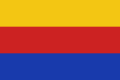
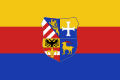
Flags

[edit]

See also

[edit]

Notes

[edit]

References

[edit]
[edit]
Revisions and contributorsEdit on WikipediaRead on Wikipedia
from Grokipedia
The Julian March, known in Italian as Venezia Giulia, denotes a historical region in southeastern Europe encompassing the former Austrian Littoral crown land, which included the city of Trieste, the Istrian Peninsula, and adjacent coastal territories along the Adriatic Sea.[1] According to the 1910 Austrian census, the Littoral's population of 827,269 included 356,495 Italians, concentrated predominantly in urban areas and coastal districts, alongside Slovenes and Croats in inland regions.[1] Annexed by Italy after World War I as part of the irredentist claims, the region became a focal point of ethnic tensions during World War II, marked by Italian fascist policies toward Slavic minorities and subsequent Yugoslav partisan reprisals.[2] Postwar, under the 1947 Treaty of Paris and later agreements, most of the Julian March beyond Trieste was ceded to Yugoslavia, triggering the Istrian-Dalmatian exodus of around 300,000 ethnic Italians fleeing violence, property confiscations, and forced assimilation.[3] This demographic shift, involving mass killings such as those in the foibe pits and suppression of Italian culture, reshaped the region's composition, with Italy retaining only the Trieste area after the 1975 Treaty of Osimo.[4] The Julian March's history exemplifies causal dynamics of imperial borderlands, where linguistic majorities in key economic centers clashed with rural ethnic distributions, leading to contested partitions influenced by wartime atrocities rather than plebiscites.[2]

Geography

Location and Borders

The Julian March, historically designated as Venezia Giulia, occupies a strategic position along the northern Adriatic seaboard in southern Central Europe, featuring a mix of coastal plains, karst plateaus, and alpine highlands. The region spans approximately 8,000 square kilometers in its historical extent and is presently divided among northeastern Italy, southwestern Slovenia, and northwestern Croatia.[5] Its traditional western boundary follows the Isonzo (Soča) River, demarcating it from the adjacent Friuli lowlands; to the north, the Julian Alps and Carnic Prealps form a natural barrier shared with Austrian Carinthia; the eastern limits historically reached the Arsia (Arsa) River in Istria, adjoining inland Croatian and Slovenian territories; while the southern edge abuts the Adriatic Sea, providing vital maritime access. These contours reflect the pre-World War II configuration under Italian sovereignty, as outlined in the 1920 Treaty of Rapallo, which incorporated the former Austrian crownlands of Trieste, Gorizia-Gradisca, and Istria. Post-1945 border adjustments, including the 1975 Osimo Treaty, assigned the bulk of Istria to Yugoslavia (later Croatia and Slovenia), leaving Italy with Trieste and environs, while Slovenia retained coastal enclaves like the Gulf of Koper.[6][7]

Physical Features

The Julian March features a diverse geomorphology transitioning from alpine highlands in the north to karst plateaus and coastal lowlands in the south. The northern extent includes the southern flanks of the Julian Alps, where tectonic uplift, glacial erosion, and fluvial incision have formed high-relief plateaus, deep valleys, and karstic depressions, as exemplified by the Canin Mountains area with elevations exceeding 2,500 meters.[8] Centering the region is the expansive Karst (Carso/Kras) plateau, a dissected limestone upland rising 200–600 meters above sea level, characterized by dissolution-driven landforms such as dolines, uvalas, poljes, and subterranean drainage systems; these features arise from prolonged chemical weathering of Cretaceous and Eocene carbonates, fostering evaporite sinkholes and abrupt escarpments.[9] The plateau's thin soils and sparse vegetation contribute to its barren, fissured appearance, with surface water scarcity offset by aquifers like the Timavo River, which resurges after flowing underground for approximately 40 kilometers.[10] The southern boundary abuts the Adriatic Sea along a 100-kilometer-plus rocky coastline, comprising steep cliffs, promontories (such as those near Trieste and in Istria), and a narrow littoral plain rarely wider than 5 kilometers; this zone includes the Gulf of Trieste's enclosed bays and scattered islets, with localized marshes and subsidence-prone deltas influenced by tectonic subsidence rates of up to 2 millimeters per year in the late 20th century.[11] Principal rivers, including the Soča (Isonzo), incise the terrain from alpine sources through karst gorges to coastal outlets, shaping narrow alluvial fans and contributing to sediment delivery along the shore.[12]

Etymology

Name Origins and Historical Usage

The designation "Venezia Giulia," rendered in English as "Julian Venetia" or "Julian March," emerged in the mid-19th century amid Italian unification movements seeking to assert claims over Adriatic territories administered by Austria. The term was introduced in 1863 by Graziadio Isaia Ascoli, an Italian linguist born in Gorizia in 1829, who proposed it to encompass the Austrian Littoral—encompassing present-day Trieste, Gorizia, and Istria—as an extension of Venetian cultural and linguistic domains, paralleling his contemporaneous coinage of "Venezia Tridentina" for Trentino.[13][4] Etymologically, "Giulia" traces to Latin Iulia, denoting descent from or association with Julius Caesar (100–44 BCE), whose reforms and foundations influenced regional nomenclature, including the nearby Julian Alps named after the Roman colony Iulium Carnicum established circa 50 BCE. "Venezia" invokes the medieval Republic of Venice's dominion over coastal areas until its dissolution in 1797, framing the region as a natural appendage to Veneto. Ascoli's formulation aimed to highlight Romance-language continuity against Slavic and Germanic elements, supporting irredentist arguments without altering administrative realities under Habsburg rule.[14][15] Prior to 1915, "Venezia Giulia" circulated informally among Italian nationalists as an alternative to the official Habsburg term Küstenland (Coastal Land), denoting the crownland formed in 1849 from reformed Illyrian provinces. Post-World War I, following the 1919 Treaty of Saint-Germain-en-Laye and 1920 Treaty of Rapallo, Italy formalized the name for its new Province of Venezia Giulia, delimited on October 31, 1920, and reorganized into four provinces (Trieste, Gorizia, Monfalcone, Pola) by Royal Decree on January 16, 1923, integrating circa 800,000 residents across 12,331 square kilometers.[4] In the interwar era, the name symbolized fascist assimilation policies, including Italianization of toponyms and demographics. During 1945–1954 border disputes, Anglo-American diplomatic correspondence adopted "Julian March" for Zone A (Trieste and environs) under Allied administration, distinguishing it from Yugoslav-claimed Zone B while avoiding partisan endorsements; this usage persisted in Treaty of Osimo (1975) references to ceded territories. Today, the term denotes the broader historical area partitioned among Italy, Slovenia, and Croatia, with Italy's Friuli-Venezia Giulia region (established 1963, 7,924 km², 1.2 million residents as of 2021) retaining "Venezia Giulia" for its eastern province.[16]

History

Ancient Period to Early Middle Ages

The Julian March region, encompassing parts of modern Friuli, Trieste, and Istria, was primarily inhabited by Illyrian tribes prior to Roman expansion, with the Histri dominating the Istrian peninsula and coastal areas. These groups engaged in agriculture, piracy, and trade, maintaining fortified settlements like Nesactium, their chief stronghold.[17][18] Roman forces subdued the Histri between 178 and 177 BCE, capturing Nesactium after a siege, which facilitated control over the eastern Adriatic approaches. In 181 BCE, Rome established the Latin colony of Aquileia near the Natisone River, settling 3,000 infantry veterans to secure the frontier against Illyrian and Celtic incursions from the north.[19][20] Aquileia rapidly developed into a key commercial and military hub, featuring a river port and serving as the gateway for Roman trade with the Danube regions and eastern provinces; by the 1st century CE, it was among the empire's largest cities, administering Regio X Venetia et Histria.[19][21] The region integrated into Italia proper, with roads like the Via Gemina linking it to the Po Valley and beyond. In 452 CE, Aquileia suffered severe destruction during Attila's Hunnic invasion, though it was partially rebuilt under subsequent Roman administration. Following the deposition of Romulus Augustulus in 476 CE, the area fell under Odoacer's Herulian rule before Theodoric the Ostrogoth conquered Italy in 493 CE, crossing the Julian Alps in 489 CE to defeat Odoacer at the Isonzo River. Theodoric's kingdom preserved much of the Roman infrastructure, with Aquileia retaining ecclesiastical prominence as the seat of an early Christian patriarchate.[22][23] Emperor Justinian I's Gothic War (535–554 CE) saw Byzantine forces under Belisarius and Narses reconquer the Ostrogothic kingdom, including heavy campaigns in northern Italy that devastated Aquileia and surrounding territories; Justinian commissioned a monumental basilica there as part of post-war reconstruction efforts. Byzantine control proved tenuous, limited to coastal enclaves like Istria by the time of the Lombard invasion in 568 CE, when King Alboin led approximately 150,000 Lombards across the Julian Alps, establishing the Duchy of Friuli at Cividale del Friuli after defeating local Byzantine and Roman forces.[24][25] The Lombards fragmented Byzantine holdings, creating duchies while Byzantium retained Istria and the Dalmatian coast under the Exarchate of Ravenna; the Aquileian patriarchate split, with Paulinus II relocating to Grado in 569 CE to align with Byzantine orthodoxy, fostering the origins of the Aquileian schism.[26][27] By the 8th century, Lombard Friuli had developed a semi-autonomous identity, blending Germanic and Roman elements, until Charlemagne's conquest in 774 CE incorporated it into the Frankish realm as a march.[27]

Medieval Period under Venice and Habsburgs

The Julian March, encompassing the coastal territories around Trieste, Gorizia, and western Istria, experienced divided governance during the medieval period, with Venice asserting dominance over coastal and lowland areas while the Habsburgs secured strategic inland and urban footholds. The Patriarchate of Aquileia initially held temporal sway over Friuli and adjacent Istrian districts from the 11th century, functioning as a semi-independent ecclesiastical state that mediated between imperial, Venetian, and local noble interests.[28] This authority waned amid feudal fragmentation, paving the way for Venetian incursions into Istria, where coastal cities like Koper and Pula acknowledged Venetian overlordship following defeats in revolts by 1145 and formal recognition via the 1285 Treaty of Peace, which ceded sovereignty over the Istrian littoral to the Republic.[29][30] Venice's expansion intensified in the early 15th century, culminating in the conquest of the Patriarchate of Aquileia in 1420, which incorporated Friuli's plains and reinforced maritime control across the Julian March's Adriatic fringe, integrating these territories into the Stato da Mar through direct administration and fortified ports.[29][27] This shift emphasized commercial exploitation, with Venetian policies favoring trade guilds, shipbuilding, and salt production, though inland agrarian zones retained some feudal autonomies under local gastaldi. The Republic's rule fostered economic prosperity via Adriatic routes but imposed heavy taxation and naval conscription, sparking intermittent resistance from Istrian communes. In contrast, Habsburg influence crystallized through alliances with local nobility wary of Venetian hegemony. Trieste, seeking protection from encroaching maritime power, voluntarily submitted to Duke Leopold III on 30 September 1382 via the Dedition of Graz, granting the Habsburgs feudal suzerainty while preserving the city's statutes and autonomy as a free port precursor.[31][32] The dynasty further extended into the March of Istria by 1374, absorbing territories from the Counts of Görz, and fully inherited the County of Gorizia in 1500 upon the extinction of its ruling line, consolidating inland buffers like the Karst plateau and Soča Valley.[33] Habsburg governance emphasized feudal hierarchies, imperial privileges, and defensive alliances, maintaining Trieste's role as a counterweight to Venetian commerce until the early modern era. This dual sovereignty persisted, delineating a Venetian-oriented coast against Habsburg-dominated enclaves, with borders fluidly contested through diplomacy and skirmishes until the 16th century.

19th Century Nationalism and Irredentism

Following the Congress of Vienna in 1815, the territories comprising the Julian March were integrated into the Austrian Empire, initially as the Kingdom of Illyria and subsequently reorganized into the Austrian Littoral (Küstenland) after administrative reforms in the 1840s.[34] The region exhibited a multi-ethnic character, with Italians forming the majority in urban coastal centers such as Trieste—where they constituted approximately 77% of the population around 1900—while Slovenes and Croats predominated in rural hinterlands.[34] The Revolutions of 1848 stirred national sentiments across the empire, including demands for constitutional governance and linguistic rights in the Littoral, though these were swiftly suppressed, reinforcing Habsburg control.[34] After the unification of Italy in 1870, Italian irredentism gained traction, advocating the annexation of Italian-speaking territories like Trieste, Istria, and Gorizia to the Kingdom of Italy, viewing them as unredeemed lands (terre irredente).[35] This movement challenged loyalty to the Habsburg Monarchy, particularly as Italian liberals in Trieste pushed for cultural autonomy while harboring unification aspirations.[34] Concurrently, Slovene and Croatian national awakenings intensified in the second half of the century, with organizations demanding equal status for their languages in administration and education amid immigration and urban Italian dominance.[34] The 1867 Ausgleich, establishing the Austro-Hungarian dual monarchy, introduced electoral politics that amplified ethnic rivalries, as national parties vied for representation in Trieste and Istria.[35] Austrian policies maintained Italian as an official language alongside German, but denied an Italian university in Trieste after the loss of Lombardy-Venetia in 1866, fueling irredentist grievances.[34] By the 1890s, irredentist activities crystallized with the founding of the Lega Nazionale in 1891 in Trieste and Trento, which combined demands for Habsburg autonomy with covert unification goals, marking a shift from broader liberal nationalism to targeted territorial claims.[35] These developments underscored the Littoral's role as a hotspot of competing nationalisms, with Italians emphasizing urban linguistic majorities and Slavs asserting rural demographic strengths, setting the stage for interwar conflicts.[34]

World War I and Italian Annexation

The Julian March, encompassing the Austrian Littoral provinces of Trieste and Istria, became a primary theater of the Italian front during World War I following Italy's entry into the conflict on May 24, 1915, prompted by irredentist aspirations to annex territories with significant Italian-speaking populations as outlined in the secret Treaty of London signed on April 26, 1915. This agreement, between Italy and the Triple Entente powers, promised Italy control over Trentino-Alto Adige, much of the Julian March including Trieste and Istria, and parts of Dalmatia in exchange for joining the Allies against Austria-Hungary.[36][37] The region saw intense fighting in the Battles of the Isonzo, a series of twelve engagements from June 1915 to October 1917 along the Soča River, characterized by mountainous terrain and high casualties totaling over 1 million combined for both sides, with Italians capturing Gorizia in the Sixth Battle (August 1916) but suffering a major defeat at Caporetto (October-November 1917), where Austro-German forces advanced deep into Italian territory before a Allied stabilization at the Piave River.[38][39] The collapse of Austria-Hungary in late 1918 led to Italian occupation of the Julian March under the Armistice of Villa Giusti on November 3, 1918, with Italian forces advancing to the agreed lines of the Treaty of London, including Fiume (Rijeka), despite initial Allied hesitance at the Paris Peace Conference where U.S. President Woodrow Wilson advocated self-determination, complicating full fulfillment of Italy's claims.[7] Negotiations with the newly formed Kingdom of Serbs, Croats, and Slovenes (later Yugoslavia) culminated in the Treaty of Rapallo on November 12, 1920, which delineated the border by assigning Italy Trieste, the Istrian Peninsula, Gorizia, and the bulk of the Julian March—renamed Venezia Giulia—while ceding smaller inland areas with Slavic majorities to Yugoslavia, reflecting a compromise between ethnic distributions from the 1910 Austrian census (showing Italians comprising about 77% in Trieste and 38% in Istria overall, concentrated in urban and coastal zones) and strategic considerations.[40][41] This annexation incorporated approximately 800,000 inhabitants into Italy, with Italian sources emphasizing the cultural and linguistic ties of the Italian community in key ports and cities, though Yugoslav perspectives highlighted Slavic rural majorities and contested the plebiscite-free process amid post-war instability.[42] The settlement formalized Italy's control over the region until World War II, prioritizing coastal Italian populations over uniform ethnic self-determination as promoted by Wilsonian principles, which had been selectively applied in the Adriatic.[7]

Interwar Italian Rule and Policies

Following the armistice of Villa Giusti on November 3, 1918, Italian forces occupied the territories of the former Austrian Littoral, including Trieste and much of Istria, in fulfillment of irredentist claims rooted in the 1915 Treaty of London. This occupation was formalized by the Treaty of Rapallo, signed on November 12, 1920, between Italy and the Kingdom of Serbs, Croats, and Slovenes, which ceded to Italy the Julian March regions west of the Wilson Line, encompassing the provinces of Trieste, Gorizia, Pola, and Zara, while Yugoslavia retained eastern Istria and Dalmatia in exchange for Italy renouncing claims beyond Fiume.[43] The treaty aimed to resolve border disputes but sowed seeds of ethnic tension by incorporating substantial Slovene and Croat populations into Italy, estimated at around 500,000 non-Italians in the annexed areas based on pre-war Austrian censuses adjusted for migrations.[44] Under the liberal government prior to 1922, policies emphasized cultural assimilation through promotion of the Italian language in administration and education, with gradual closure of Slovene and Croat schools starting in 1919 and restrictions on bilingual signage, though some minority cultural associations persisted.[45] The advent of Benito Mussolini's Fascist regime in October 1922 marked a shift to aggressive denationalization, framing Slovenes and Croats as "allogeni" (aliens) whose assimilation was essential for national unity, drawing on imperial Roman precedents to justify cultural dominance.[44] By 1925-1927, Fascist prefects oversaw the dissolution of nearly all Slavic gymnastic societies (e.g., Orel and Sokol), reading clubs, and cooperatives, while the last Slovene and Croat newspapers ceased publication between 1928 and 1930 under press laws enforced by the regime.[46] Educational Italianization intensified, with all minority-language schools phased out by 1926-1928, mandating Italian-only instruction and requiring teachers to swear loyalty oaths; this affected over 400 previously Slovene or Croat primary schools, leading to underground clandestine education networks among affected communities.[45] Toponymic reforms from the late 1920s onward systematically Italianized place names—e.g., Ljubljana's nearby villages renamed en masse—erasing Slavic linguistic markers in official maps and documents to reinforce territorial integration.[47] Administrative positions were filled preferentially with Italians, often transferred from mainland regions, while Slavic officials faced demotions or dismissals unless they adopted Italian surnames and denied ethnic origins, fostering emigration among approximately 100,000 Slovenes and Croats by the mid-1930s.[48] In response, the militant organization TIGR (Tigrova organizacija Slovenske in Hrvatske) formed in 1927 to resist through sabotage, propaganda, and armed actions against symbols of Italianization, conducting bombings and assassinations that prompted Fascist reprisals including arrests and executions.[44] Economic policies supported infrastructure development, such as expanding Trieste's port facilities and rail links to integrate the region commercially, but prioritized Italian settlers—around 20,000 relocated by 1939—often on expropriated Slavic lands, exacerbating resentments without fully resolving underlying ethnic divisions.[49] These measures, while achieving superficial linguistic uniformity, failed to eradicate Slavic identities, as evidenced by persistent underground cultural preservation and cross-border ties with Yugoslavia.[50]

World War II Occupations and Conflicts

Following the Italian armistice with the Allies on 8 September 1943, German forces launched Operation Wolkenbruch to seize control of the northern Adriatic coast, occupying key ports including Trieste, Rijeka (Fiume), and Pula (Pola) within days to secure supply lines and counter potential Allied advances.[51] On 10 September 1943, Adolf Hitler formally established the Operationszone Adriatisches Küstland (Operational Zone of the Adriatic Littoral), annexing the Italian provinces of Udine, Gorizia, and Trieste, along with the governorates of Pola, Fiume, and Ljubljana (the latter seized from Yugoslavia in 1941).[52] This de facto incorporated much of the Julian March under direct German military administration, governed from Trieste by Gauleiter Friedrich Rainer, who also served as Higher SS and Police Leader, coordinating anti-partisan repression and economic exploitation.[52] German occupation policies emphasized fortification of the Gothic Line extensions, forced labor conscription—deporting approximately 20,000-30,000 local residents, primarily Slovenes and Italians, to Reich factories—and brutal counterinsurgency operations against resistance groups.[52] The Risiera di San Sabba complex in Trieste was converted into a concentration camp starting October 1943, functioning as a transit point for prisoners en route to extermination sites like Auschwitz, as well as a site for on-site executions via gas vans or crematoria; records indicate at least 3,000 victims, including partisans, Jews, and anti-fascist civilians, were killed there by mid-1945.[53] Collaborating Italian forces from the Italian Social Republic (RSI) provided auxiliary support, engaging in joint sweeps that razed villages suspected of harboring guerrillas. Yugoslav communist-led partisans, organized through the Liberation Front, exploited the post-armistice chaos to launch offensives in Istria and the Slovenian Littoral, targeting German garrisons, RSI units, and perceived Italian collaborators; in September-October 1943, they briefly seized areas around Istrian towns like Parenzo and Albona, executing hundreds of Italian civil servants, military personnel, and civilians by throwing them into foibe sinkholes, an act framed by partisans as retribution against fascism but often extending to ethnic Italians indiscriminately.[54] German reprisals followed, recapturing most territory by November 1943 and deporting over 10,000 Slovenes from the Ljubljana area alone.[52] Partisan strength grew through 1944, with sabotage disrupting rail lines to Trieste and ambushes claiming hundreds of German lives; by early 1945, units like the 9th Corpus Slovene Partisans controlled swathes of rural Istria and Karst plateau, coordinating with Tito's broader offensive.[55] As Allied forces breached the Gothic Line in spring 1945, multi-sided clashes escalated: German-Italian remnants defended urban centers like Trieste, while partisans advanced from the east, capturing the city on 1 May 1945 after Germans surrendered to the Yugoslav 4th Army, only for British and New Zealand troops of the 8th Army to arrive hours later on 2 May, enforcing a tense standoff and partitioning the area pending postwar negotiations.[56] These final engagements resulted in over 1,000 combat deaths across factions, underscoring the region's role as a chaotic crossroads of collapsing Axis control and competing liberation claims.[55]

Postwar Atrocities and Foibe Massacres

Following the unconditional surrender of Nazi Germany on May 8, 1945, Yugoslav Partisan forces under Marshal Josip Broz Tito advanced into the Julian March, occupying Istria and Trieste by May 1, with the 4th Yugoslav Army capturing key areas before Allied forces arrived.[57] In Trieste alone, the OZNA (Yugoslav security service) arrested approximately 1,500 individuals in the initial days, targeting Italian civil servants, military personnel, clergy, and civilians suspected of fascist collaboration, though many lacked evidence of such ties and included outspoken anti-fascists or ethnic Italians regardless of politics.[58] These actions, part of a broader campaign to secure territorial claims amid ethnic tensions exacerbated by two decades of Italian irredentism and wartime policies, involved summary executions without formal trials, often conducted by local partisan units motivated by revenge, communist ideology, and Slavic nationalism.[59] The term "foibe" derives from the Istrian dialect for deep karst sinkholes prevalent in the region's limestone terrain, where victims were frequently thrown alive or after torture and killing, their bodies concealed to erase traces.[54] Major sites included the foiba at Basovizza near Trieste, where groups were executed en masse, and pits around Albona (Labin) and Pola (Pula) in Istria; documented cases from September 1943—after Italy's armistice—saw initial reprisals with hundreds killed, but the 1945 wave was larger, coinciding with the brief Yugoslav administration lasting until June 12, when British and American troops enforced the withdrawal under the terms of the 1943 armistice.[60] Victims encompassed not only Italians but also anti-communist Slovenes, Croats, and remaining Germans, with methods including shootings, stabbings, and disposals that caused deaths from blunt trauma or suffocation; Allied investigations in 1945 confirmed atrocities but prioritized geopolitical stability with Tito's regime over full accountability.[61] Victim estimates remain contested, with Italian historians Raoul Pupo and Roberto Spazzali placing the 1945 foibe deaths at around 5,000, based on archival records of disappearances and partial exhumations yielding over 1,000 identified remains by the 1990s.[58] Broader tallies, including executions outside foibe and deaths in deportations to Yugoslav camps like those on the Adriatic islands, reach 10,000–12,000 total postwar losses in the region, though some accounts inflate figures to equate the scale with fascist crimes in Yugoslavia, while leftist narratives in Yugoslav-era sources framed killings as justified anti-fascist purges, downplaying ethnic targeting evident in survivor testimonies and partisan orders.[54] [59] These events accelerated the Italian exodus from Istria and Dalmatia, as fear of further reprisals prompted mass flight, with Yugoslav authorities seizing abandoned properties under agrarian reforms. Italian parliamentary recognition came in 2004 via Law 92, designating February 10 as National Memorial Day for foibe victims, acknowledging the acts as systematic violence rather than mere wartime excess.[62]

Border Contests and 1954 Settlement

Following the end of World War II in Europe, Yugoslav forces entered Trieste and surrounding areas of the Julian March on May 1, 1945, establishing initial control over much of the disputed territory.[63] Anglo-American troops arrived shortly thereafter in June 1945, leading to the establishment of the Morgan Line as a temporary demarcation separating Allied-occupied areas to the northwest from Yugoslav-held regions to the southeast.[64] This division reflected competing claims: Italy sought to retain the region based on its prewar sovereignty and predominant Italian population in urban centers like Trieste, while Yugoslavia asserted rights over territories with significant South Slavic populations and cited wartime partisan contributions.[65] The Paris Peace Treaty, signed on February 10, 1947, formalized the creation of the Free Territory of Trieste (FTT), a demilitarized buffer zone intended to be neutral and administered by a governor appointed by the UN Security Council.[66] The FTT encompassed approximately 800 square kilometers, divided into Zone A (northwestern portion including the city of Trieste, under Anglo-American military government) and Zone B (southeastern portion, under Yugoslav military administration).[67] However, Soviet vetoes prevented the UN from appointing a governor, leaving the zones under provisional Allied and Yugoslav control, with Yugoslavia effectively annexing Zone B and resisting internationalization.[68] Diplomatic tensions persisted, exacerbated by Italy's NATO membership and Yugoslavia's post-1948 rift with the Soviet Union, which drew Western support for a resolution favoring stability.[65] By 1953, escalating rhetoric and military posturing along the zonal boundary prompted urgent Western mediation to avert conflict amid Cold War dynamics.[69] The United States and United Kingdom, prioritizing Italian alliance cohesion and Yugoslav independence from Soviet influence, facilitated negotiations between Italy and Yugoslavia.[65] These efforts culminated in the London Memorandum of Understanding, initialed on October 5, 1954, by representatives of the United States, United Kingdom, Italy, and Yugoslavia.[70] Under the memorandum, Anglo-American forces withdrew from Zone A within one month, allowing Italy to extend civil administration over the area, including Trieste, effective October 26, 1954.[70] Yugoslavia retained administration of Zone B, with minor boundary adjustments delineated in an annexed map and to be demarcated within three weeks by a joint commission.[70] Provisions included maintenance of Trieste's free port status as per the Paris Treaty, a special statute for cross-border rights, and amnesties for political activities, establishing a de facto partition pending further agreements.[70] This settlement resolved immediate border contests but left underlying ethnic and sovereignty issues unaddressed until the 1975 Treaty of Osimo.[63]

Developments Since 1954

The administration of Free Territory of Trieste's Zone A, encompassing Trieste and its hinterland, was transferred to Italian civil authority on October 26, 1954, pursuant to the London Memorandum, effectively reintegrating the area into Italy amid local celebrations and the continuation of Allied military presence until full handover.[71] Zone B, including much of the Slovenian Littoral and northern Istria, remained under Yugoslav administration, preserving the provisional division amid ongoing Cold War tensions that positioned Trieste as a NATO frontline city.[72] Administrative reorganization followed, with the Italian-held portion incorporated into the Friuli-Venezia Giulia autonomous region established by Italian law on January 31, 1963, granting it special status for bilingualism and minority protections in areas with Slovenian populations, such as the Karst plateau and valleys near the Isonzo River.[73] Border frictions persisted through the 1960s and early 1970s, involving incidents over maritime delimitations and property claims from wartime displacements, until the Treaty of Osimo, signed November 10, 1975, definitively fixed the boundary along the 1954 lines, renounced mutual territorial claims, and established joint economic zones including Trieste's international free port for Yugoslav access.[74] The accord also addressed compensation for Italian property losses in Zone B and formalized safeguards for the Slovenian linguistic minority in Italy, though it drew domestic Italian criticism for conceding claims to ethnically mixed areas without full restitution for post-World War II exiles.[75] The 1991 breakup of Yugoslavia and Slovenia's declaration of independence on June 25, 1991—following the brief Ten-Day War—transformed the Yugoslav-held portion of the Julian March into Slovenian territory, with minimal direct border disruptions due to the prior Osimo delineation, though it initially strained relations over debt apportionment and minority repatriation issues.[76] Slovenia's accession to the European Union on May 1, 2004, and the Schengen Area on December 21, 2007, eliminated physical border controls with Italy by 2008, enabling seamless cross-border mobility, joint infrastructure projects like the Trieste-Koper rail links, and economic synergies in logistics and tourism.[74] Economically, Trieste evolved from postwar stagnation—marked by deindustrialization and unemployment peaking above 20% in the 1970s—into a revitalized hub for intermodal transport and trade, handling over 60 million tons of cargo annually by the 2010s through port expansions and EU-funded corridors connecting to Central Europe.[73] In the Slovenian Littoral, centers like Koper emerged as competing ports, with GDP per capita in the Primorska region surpassing the Slovenian average by 10-15% post-independence, driven by shipping and light industry, while cross-border initiatives mitigated competition via shared maritime safety protocols. The Slovenian minority in Italy, numbering around 50,000-60,000, experienced initial postwar economic advantages in sectors like shipbuilding but faced relative decline by the 2020s due to globalization and automation, notwithstanding legal bilingualism in 24 municipalities.[73] Ethnic relations stabilized overall, with joint commemorations of shared history emerging since the 2000s, though residual sensitivities over World War II massacres and migrations persist in local discourse.

Demographics and Ethnolinguistics

Historical Population Shifts

In the mid-19th century, under Habsburg rule, the Julian March exhibited a diverse ethnic composition with Italians concentrated along the coast and in urban centers like Trieste, while Slovenes and Croats predominated in inland rural areas. The 1857 ethnographic survey conducted by Carl Czoernig, based on linguistic criteria, mapped these distributions, showing Italians as a significant plurality in the Austrian Littoral despite Slavic majorities in specific districts.[77] This reflected long-standing settlement patterns where Romance-language speakers held economic advantages in ports and trade, fostering relative stability until rising nationalism in the late 1800s prompted minor migrations and cultural assertions without major demographic upheaval. The 1910 Austrian census for the Austrian Littoral recorded a total population of approximately 894,000, with Italian speakers at 39.6%, Slovenes at 29.5%, and Croats (classified under Serbo-Croatian) comprising a substantial portion of the remainder alongside smaller German and other groups. Italians dominated Trieste (over 90% Italian) and coastal Istria, while Slovenes formed majorities in the Karst plateau and Croats in southern Istria. Urbanization and Habsburg administrative policies encouraged Italian immigration to cities, slightly increasing their share from earlier decades, but rural Slavic populations grew through natural increase.[78] Post-World War I Italian annexation led to limited population adjustments, including Slovene and Croat emigration (estimated at 50,000-100,000) and Italian settlement incentives, though ethnic proportions remained broadly similar per 1921 Italian census data adjusted for language self-declaration. Fascist policies from the 1920s promoted Italianization through resettlement and suppression of Slavic schooling, marginally boosting Italian numbers but sparking resentment without transformative shifts until World War II disruptions. The most profound changes followed World War II amid Yugoslav occupations and border disputes. From 1945 onward, violence including the foibe massacres prompted immediate flight; in Slovenian coastal areas, the Italian population declined by 92% between 1945 and 1956, with about 70% of emigrants being Italian. Overall, the Istrian-Dalmatian exodus from Istria, northern Dalmatia, and the Julian March involved 200,000 to 350,000 Italians relocating primarily to Italy by the 1950s, radically altering ethnic balances in territories ceded to Yugoslavia in 1947 and 1954.[79][80] This exodus, driven by political persecution and economic collapse under communist rule, reduced Italians from majorities in affected cities like Capodistria (Koper) to negligible remnants, replaced by Slavic inflows from inland Yugoslavia. In the Italian-administered Zone A of the Free Territory of Trieste, post-1954 stability preserved a Slovene minority amid Italian majorities.

Current Ethnic Composition

In the Italian portion of the Julian March, primarily the Province of Trieste (population 228,396 as of 2024) and parts of the Province of Gorizia, ethnic Italians form the clear majority, reflecting post-1945 border stabilizations and demographic shifts including the exodus of South Slavs from the Free Territory of Trieste Zone A. The Slovene minority, recognized under Italian law with bilingual provisions in 25 coastal communes, numbers approximately 60,000 speakers region-wide in Friuli-Venezia Giulia, with concentrations in Trieste (estimated 20,000–30,000) and Gorizia areas; however, assimilation, intermarriage, and underreporting in surveys yield official linguistic data showing fewer than 3,000 declaring Slovene as their primary language in recent ISTAT samples. Small communities of Croats (under 1,000) persist in inland valleys, alongside recent immigrants from the Balkans comprising 10–12% of Trieste's residents, mostly Serbs, Bosniaks, and Albanians.[81][82][83] The Slovenian section, centered in the Obalno-kraška statistical region (population ~140,000 as of 2021), is overwhelmingly ethnic Slovene (over 85% per 2002 census extrapolations adjusted for national trends), with a residual Italian minority of about 2,000–3,000 in coastal municipalities like Koper-Capodistria and Piran-Pirano, where Italian holds co-official status. Croat speakers number around 5,000, mainly in mixed border zones, while Bosniaks and Serbs from 1990s Yugoslav dissolution inflows add 2–3% in urban centers; no full ethnic census has occurred since 2002, complicating precise updates amid net migration outflows.[84][85] Croatian Istria County (population 195,794 as of 2021 census) features Croats at 76.4%, with Italians at approximately 5% (concentrated in western towns like Buje-Buie and Vodnjan-Dignano), Serbs at 2.6%, and smaller Bosniak, Albanian, and Roma groups; this composition stems from 20th-century Italian emigration and Croat in-migration, with official bilingualism protecting the Italian minority despite its decline from historical peaks.[86][87]

Romance-Language Speakers

Romance-language speakers in the Julian March have historically been concentrated in urban centers, coastal areas, and the western parts of Istria, primarily speaking Italian or closely related dialects such as Istro-Venetian and Istriot. The 1910 Austrian census recorded Italian as the primary language for 36% of Istria's population, with higher concentrations in cities like Trieste, where Italian speakers comprised 62.3% of residents.[88][89] These figures encompassed both standard Italian and dialects, reflecting the region's Venetian cultural influence extending from the Republic of Venice's former territories. Istro-Venetian dialects predominated along the western Istrian coast, while Istriot, a distinct Italo-Dalmatian Romance language, was spoken in southwestern Istrian villages.[90] By the early 20th century, Istriot had several hundred speakers, though exact counts were not separated in censuses. Venetian-influenced speech persisted in Trieste and nearby areas, contributing to the broader Romance linguistic mosaic amid Slavic majorities in rural interiors.[91] Following World War II and the 1947 peace treaty, which assigned much of the Julian March to Yugoslavia, an exodus of approximately 250,000-350,000 Italian speakers drastically reduced their numbers in the transferred territories. In the remaining Italian zones (Trieste and Gorizia provinces), Romance speakers formed the overwhelming majority, with Italian as the dominant language. Friuli-Venezia Giulia's total population of about 1.2 million includes a Romance-speaking base exceeding 1 million, accounting for Slovenian and German minorities totaling under 100,000.[92] Today, in Slovenia's coastal municipalities (former Slovenian Istria), the Italian minority numbers around 3,000-4,000 registered members, many bilingual in Italian and Slovene. In Croatia's Istrian region, the 2021 census reported 9,784 Italians, concentrated in western coastal towns. Istriot survives with fewer than 400 native speakers, primarily elderly, in Croatian villages near Rovinj. Venetian dialects linger in pockets but are largely supplanted by standard Italian or Croatian/Slovene.[93]

South Slavic-Language Speakers

In the Julian March, South Slavic-language speakers have historically encompassed ethnic Slovenes, concentrated in the northern and eastern hinterlands around Gorizia and Trieste, and Croats, predominant in the southern Istrian peninsula. These groups settled the region through Slavic migrations from the 6th-7th centuries onward, forming majorities in rural inland areas by the 19th century, while Italians held sway in ports and cities.[94] Following Italy's annexation of the region after World War I, the Italian-administered territories—encompassing present-day eastern Friuli-Venezia Giulia, Slovene Littoral, and northern Istria—contained approximately 500,000 Slovenes and Croats, who faced systematic Italianization under Fascist policies from 1922 onward, including bans on Slavic languages in schools and administration.[42] The 1910 Austro-Hungarian census in Istria documented Italians as 36% of the population by primary language, with Slavic speakers (chiefly Croats in the south and Slovenes in the north) comprising the remainder alongside smaller German and other groups.[88] Post-World War II border settlements ceded most Croat-majority Istria to Yugoslavia (now Croatia), leaving Croatian speakers in Italy's retained Trieste area as a small, assimilated remnant, numbering in the low thousands historically but fewer today amid emigration and language shift.[95] In contrast, the Slovene population in Italy's Julian March portion endured partial exodus but persisted, with current estimates of 46,000 Slovene speakers in Friuli-Venezia Giulia, primarily in Trieste and Gorizia provinces, where they benefit from bilingual signage and education under 1950s autonomy statutes and EU minority protections.[96] These figures reflect self-reported data, potentially undercounting due to historical stigma from wartime divisions and assimilation efforts.[97]

Linguistic and Ethnic Minorities

The principal linguistic minorities in the Italian-administered portions of the Julian March, integrated into the Friuli-Venezia Giulia autonomous region, are Slovene and Croatian speakers, whose presence reflects the area's historical multi-ethnic composition under Habsburg rule. These groups benefit from protections under national Law No. 482 of December 9, 1999, which recognizes and safeguards Italy's historical linguistic minorities through measures such as bilingual administrative signage, toponymy, and educational programs in designated areas.[98] In Friuli-Venezia Giulia, regional statutes further specify safeguards for Slovene, Friulian, and German communities, including funding for cultural activities and media.[99] The Slovene minority numbers approximately 46,000 speakers, primarily residing in 32 municipalities across the provinces of Trieste (6 municipalities), Gorizia (6), and Udine (20), with concentrations along the border with Slovenia. Regional Law No. 26 of December 15, 2007, provides targeted protections for this community, mandating Slovene-language instruction in public schools where demand exists, bilingual public services, and preservation of cultural institutions, such as the return of the Narodni Dom cultural center in Trieste to Slovene ownership in 2020 after a century of disputes.[100] These measures address historical assimilation pressures, particularly during the interwar and fascist periods, though implementation varies by locality due to demographic dilution from postwar migrations. The Croatian minority, smaller and more dispersed, maintains an autochthonous presence mainly in the Province of Trieste, linked to historical settlements from the Istrian and Dalmatian coasts under the former Austrian Littoral. Estimates of Croatian-origin residents in the broader northeast, including recent economic migrants, reach around 30,000 near Trieste, but active speakers of the autochthonous variety number in the low thousands.[101] Advocacy groups have pressed for formal recognition of Croatian as a protected language in Friuli-Venezia Giulia since at least 2017, seeking parity with Slovene in education, media subsidies, and official use, citing centuries-old ties and bilateral Italy-Croatia agreements on minority rights.[102] Progress remains limited, with protections largely extending from national frameworks rather than region-specific statutes. Ethnic minorities in the area overlap significantly with these linguistic groups, as Slovene and Croatian identities are tied to distinct cultural and ancestral origins rather than recent immigration. Smaller pockets of other groups, such as residual German speakers in the Resia Valley (overlapping with Slovene areas), fall under broader Rhaeto-Romance or Germanic protections, but do not constitute distinct ethnic minorities in the strict Julian March context.[99] Demographic data from regional censuses underscore ongoing challenges, including language shift toward Italian among younger generations due to urbanization and intermarriage.[103]

Italian Exodus and Migrations

The Italian exodus from the Julian March, particularly the Istrian peninsula, Rijeka (Fiume), and adjacent Dalmatian territories, occurred primarily between 1945 and 1956, following the cession of these areas to Yugoslavia under the 1947 Paris Peace Treaty. This migration involved an estimated 250,000 to 350,000 ethnic Italians, with Italian exile associations citing 350,000 as the rounded figure based on adjusted refugee registrations and demographic data. The exodus was triggered by a combination of factors, including reprisal killings in the foibe massacres, systematic discrimination against Italians by Yugoslav communist authorities, property expropriations, and forced nationalizations that targeted Italian-owned businesses and lands. Yugoslav policies emphasized Slavicization, compelling many Italians to choose between assimilation or departure amid widespread violence and intimidation.[104][105] The process unfolded in phases: initial flights during the 1943-1945 Yugoslav partisan occupations, mass departures after Allied recognition of Yugoslav control in 1945, and continued outflows following the treaty's ratification, which assigned most of Istria and the Julian hinterlands to Yugoslavia. In coastal Istrian cities like Trieste's hinterland, Koper (Capodistria), and Pula (Pola), Italian populations declined by over 90% between 1945 and 1956, as documented in comparative censuses. For instance, in Slovenian Istrian towns, approximately 70% of emigrants were Italian, reflecting the ethnic composition's rapid inversion from Italian-majority to Slavic-majority. Refugee arrivals in Italy were registered through government commissions, with peaks in 1946-1947 exceeding 100,000 documented cases from these territories.[79][106][107] Most refugees initially concentrated in provisional camps in northeastern Italy, such as those at Pisino, Bolzano, and Padriciano near Trieste, where over 200,000 passed through by 1954. Dispersal then occurred to regions like Veneto, Friuli-Venezia Giulia, and Lazio, with some relocating to Sicily and Sardinia under state repopulation programs. Economic hardships in camps—marked by overcrowding, disease, and unemployment—prompted secondary migrations, including to Australia (around 20,000 by the 1950s) and Argentina. Italian government aid, via the Commissariat for Julian-Dalmatian Istria (established 1947), provided subsidies but struggled with integration, as exiles faced stigma and limited repatriation options. Yugoslav records underreported the exodus, attributing departures to economic motives rather than persecution, a narrative contested by Italian demographic analyses showing non-voluntary patterns tied to political violence.[104][108][109]

Economy

Historical Economic Foundations

The Austrian Littoral, encompassing the Julian March territories of Trieste, Istria, and Gorizia-Gradisca, formed a key economic periphery of the Habsburg Monarchy from the late 18th century onward, serving primarily as a maritime outlet for the empire's landlocked interior. Trieste emerged as the central hub, leveraging its Adriatic position to channel exports of grain, timber, and textiles from Central Europe alongside imports of colonial goods like coffee and cotton. This orientation contrasted with the monarchy's more industrialized Bohemian and Austrian core regions, positioning the Littoral as a trade-dependent enclave with limited heavy industry until the late 19th century.[110] The designation of Trieste as a free port in 1719 by Emperor Charles VI marked a pivotal foundation, exempting transshipped goods from duties and spurring rapid commercial expansion; by the early 19th century, the port handled over half of the monarchy's overseas trade volume, fostering ancillary sectors in shipping, warehousing, and finance. Population influx drove urban growth, with Trieste's residents swelling from approximately 6,000 in 1719 to over 200,000 by 1910, supported by institutions like the Assicurazioni Generali insurance company established in 1831. Infrastructure investments, including rail links to Vienna completed in 1857, further integrated the region into imperial supply chains, though competition from Hungarian Fiume eroded some dominance post-1867 Ausgleich.[111][112][110] Inland and peninsular areas like Istria relied on agrarian foundations, with viticulture producing renowned varieties such as Malvasia wine, alongside olive oil, cereals, and livestock rearing on terraced karst landscapes; Habsburg reforms in the 19th century enhanced productivity through land reclamation and export incentives, turning Istria into a supplementary provisioning zone for urban Trieste. Quarrying of Istrian stone for construction and limited salt extraction from coastal pans added niche outputs, while Gorizia's fertile plains emphasized fruit and wine cultivation. These activities underpinned a diversified yet subordinate role, with agriculture comprising the bulk of non-port employment.[113] Pre-1914 economic performance reflected this structure, with the Littoral's GDP per capita rising from 1,415 international dollars in 1870 to 2,126 in 1910 (1.02% annual growth), outperforming the Austrian average of 0.97% but trailing core industrial zones like Lower Austria. High market potential from declining transport costs bolstered trade orientation, though structural dependence on imperial demand exposed vulnerabilities to policy shifts, such as the partial revocation of free-port privileges in 1891.[110]

Key Sectors in Italian Territory

The Italian territory of the Julian March, encompassing the Province of Trieste and adjacent areas in Gorizia province within Friuli-Venezia Giulia, features an economy anchored in maritime logistics, advanced manufacturing, and services, with the Port of Trieste serving as a pivotal hub for regional and national trade. In 2022, the port managed 57.6 million tons of freight, positioning it as Italy's leading cargo port and the Mediterranean's primary oil terminal, facilitating imports via pipelines to Central Europe and supporting container traffic growth.[114] This sector generates substantial employment and value added, with port activities in Trieste and nearby Monfalcone contributing to production, taxation, and resilience against economic shocks through diversified cargo handling.[115] Manufacturing constitutes a core strength, particularly in shipbuilding, metallurgy, and machinery, driven by small- and medium-sized enterprises characteristic of the North-East Italian model. Friuli-Venezia Giulia's maritime industry, concentrated in areas like Monfalcone, accounts for nearly 40% of Italy's shipbuilding exports, valued at €3.496 billion regionally, underscoring specialized production in transport equipment worth €2.94 billion in exports for 2024.[116] Metallurgy products (€2.87 billion) and machinery (€2.86 billion) further highlight industrial output, with these sectors benefiting from the region's export-oriented orientation and proximity to European markets.[117] Services dominate the economic structure, encompassing logistics, finance, and tourism, with the latter drawing visitors to Trieste's coastal and cultural sites. The region's overall GDP grew by 0.6% in real terms in 2023, slightly below the national average, supported by service-sector stability amid manufacturing export strengths.[118] These sectors leverage Trieste's free-port status for customs advantages, enhancing trade flows in goods like chemicals and food products.[114][117]

Economic Integration Post-1954

Following the London Memorandum signed on 5 October 1954, which provisionally assigned Zone A of the former Free Territory—including Trieste and its immediate hinterland—to Italian civil administration effective 26 October 1954, the Italian portion of the Julian March integrated into the national economy amid initial setbacks.[70] The abrupt division severed longstanding trade links with the Yugoslav hinterland, causing a sharp drop in Trieste's port throughput—from handling over 3 million tons of cargo annually in the early 1950s to under 2 million tons by the mid-1950s—and contributing to unemployment rates exceeding 20% in the city by 1955.[119] This reflected the region's prior role as a Habsburg-era transit hub reliant on Balkan markets, now disrupted by the Iron Curtain border.[120] Italian authorities countered these challenges through special legislative measures, including tax exemptions, subsidies, and infrastructure investments totaling over 100 billion lire by the early 1960s, aimed at revitalizing the Free Port of Trieste—retained from its 1719 origins as a duty-free zone for re-export goods.[121] These efforts aligned with Italy's national "economic miracle," yielding average annual GDP growth of 5.8% from 1951 to 1963, though Friuli-Venezia Giulia (autonomous region established 1963) lagged behind central Italy, with per capita income at 85% of the national average by 1960 due to Trieste's port reorientation toward Western Europe.[122] Industrial diversification emerged, with shipbuilding output rising to 200,000 gross tons annually by 1965 and small enterprises in metallurgy and chemicals expanding, supported by Cassa per il Mezzogiorno extensions northward.[123] In the Yugoslav-administered Zone B (later Slovenian and Croatian territories), integration into the socialist federation emphasized self-sufficiency and state-directed industrialization, with port facilities at Koper expanded from negligible capacity in 1954 to handling 1.5 million tons by 1970 through dredging and quay construction.[124] Istrian agriculture modernized via collectivization, boosting wine and olive production, while tourism infrastructure grew, attracting 500,000 visitors annually by the late 1960s.[125] The 1975 Treaty of Osimo definitively delimited the border while mandating economic collaboration, including joint industrial projects and facilitated transit rights, which by 1980 increased bilateral trade to 1.2 billion dollars annually and eased Trieste's hinterland isolation through protocols for goods movement.[126][74] This framework, supplemented by a 1983 economic cooperation agreement, fostered cross-border value chains in logistics and manufacturing until Yugoslavia's dissolution.[127]

Culture and Symbols

Shared Cultural Heritage

The Julian March's shared cultural heritage originates with its Roman legacy, prominently embodied in Aquileia, founded as a military colony in 181 BC to secure the empire's northeastern frontiers. As a major hub for trade and administration, Aquileia featured extensive infrastructure including ports, forums, and basilicas, with preserved mosaics and archaeological sites highlighting its influence on regional urbanism and early Christianity. These elements, designated a UNESCO World Heritage Site in 1998, represent a foundational layer common to Italian, Slovene, and Croatian inhabitants, predating modern ethnic delineations.[128][19] In the early medieval period, the Patriarchate of Aquileia emerged as a pivotal ecclesiastical and temporal authority, extending jurisdiction over Friuli, Istria, and adjacent Slovenian territories from the 4th to 15th centuries. This institution facilitated the dissemination of Christianity into Central Europe, as evidenced by the Patriarchal Basilica's mosaics and structures dating to the 4th century, fostering religious and administrative unity across diverse populations. The patriarchate's role in evangelization and governance created enduring Christian traditions that bridged linguistic communities in the region.[128][129] Under Habsburg rule as part of the Austrian Littoral from 1382, particularly after Trieste's designation as a free port in 1719, the area developed a multicultural fabric integrating Italian, Slovene, Croat, and German elements. Trieste, as a commercial nexus, hosted diverse linguistic groups—Italian, Slovenian, Serbo-Croatian, and German—yielding hybrid architectural styles blending Baroque and neoclassical features with Central European motifs. This cosmopolitanism promoted shared economic practices and cultural exchanges, evident in institutions like theaters and cafes that served interethnic patronage.[32] Culinary traditions further illustrate this synthesis, with staples like jota, a soup combining beans, sauerkraut, potatoes, and smoked meats, prevalent across Friuli-Venezia Giulia, Slovenian Littoral, and Istrian areas, reflecting Austro-Slavic intermingling during Habsburg and earlier periods. Similarly, fermented turnips (brovada) paired with sausages transcend borders, underscoring practical adaptations to local agriculture and historical migrations. These elements persist in regional festivals and daily fare, embodying pre-nationalist cohesion.[130][131]

Distinct Regional Traditions

The Julian March's cultural traditions vary distinctly across its subregions, reflecting geographic divides between coastal urban centers like Trieste, hilly agricultural zones around Gorizia, and the historically Italian portions of Istria, each shaped by layered Mediterranean, Central European, and Slavic influences under Habsburg, Venetian, and later Italian administration. Coastal Trieste emphasizes cosmopolitan, mitteleuropean practices, including a cafe culture originating in the 18th century with establishments like Caffè degli Specchi serving as hubs for intellectual discourse, alongside dishes such as gulaschsuppe and jota—a bean, potato, and sauerkraut soup adapted from Austro-Hungarian recipes.[132][133] These urban customs contrast with the more insular, ritualistic observances in the Karst plateau hinterlands, where pastoral festivals involve communal herding songs and seasonal migrations tied to transhumance patterns documented since the 19th century.[134] In Gorizia and its environs, traditions center on artisanal crafts and viticulture, exemplified by merletto goriziano, a bobbin lace technique using fine linen threads to produce intricate motifs for ecclesiastical and domestic use, preserved through guild-like family workshops since the 16th century under Spanish and Austrian patronage.[135] Wine-related rites in the Collio hills include sagre dedicated to ribolla gialla varietals, with harvest processions and tastings that integrate Germanic pressing methods and Slavic communal feasting, differing from Trieste's seafood-oriented lenten boreto alla triestina.[134] Folk dances like the ziguzaine, a courtship mazurka variant performed at rural weddings with accordion accompaniment, underscore Gorizia's blend of Italian waltz forms and Slovenian polka rhythms, often enacted during epiphany celebrations featuring the "Tre Re" questua rituals of costumed alms collection.[136][137] Historical Italian Istria preserved maritime and agrarian customs distinct from mainland Venezia Giulia, such as the preparation of pinza ischitana—a sweet Easter bread enriched with eggs and anise, baked in wood ovens for family blessings—traced to Venetian-era recipes shared across Pola and Trieste communities until mid-20th-century migrations. Folkloric elements included istrian razvod assemblies for resolving disputes via customary law, alongside musical traditions of tamburitza ensembles playing polkas and kolo dances during coastal sagre, which incorporated Dalmatian fishing lore and truffle hunts in Motovun interiors, setting them apart from Gorizia's lace-focused domestic arts. These practices, documented in 19th-century ethnographic surveys, highlight Istria's peninsular insularity, with communal boat regattas and olive harvest blessings emphasizing seafaring resilience over the inland wine-centric rituals of Gorizia.[138]

Flags and Heraldry

The heraldry of the Julian March derives primarily from the region's Habsburg-era configuration as the Austrian Littoral (Küstenland), established in 1849, encompassing Trieste, Gorizia, Istria, and adjacent territories. The provincial coat of arms quartered elements from its components: a silver halberd on red for the Imperial Free City of Trieste, azure with two golden lions for the Princely County of Gorizia and Gradisca, and blue with golden griffins for the Margraviate of Istria, often topped by imperial insignia.[139] Flags associated with the Littoral included variants of the red-white-red horizontal tricolour, rooted in Carniolan and Illyrian provincial colors from the 1848 revolutions, sometimes charged centrally with the coat of arms.[140] Following annexation to the Kingdom of Italy in 1918 and formalization under the 1920 Treaty of Rapallo, the region as Venezia Giulia adopted the national green-white-red tricolour for official use, with provincial administrations retaining local heraldry such as Trieste's red shield with white halberd—symbolizing the city's 14th-century privileges—and Gorizia's lions denoting medieval county arms. No distinct regional flag emerged during the interwar or Fascist periods (1922–1943), as emphasis fell on national unification symbols amid irredentist campaigns extending claims to Dalmatia.[141] Post-World War II, the 1947 Paris Peace Treaty created the Free Territory of Trieste (1947–1954), whose constitution designated the red flag with white halberd—mirroring Trieste's municipal banner—as the emblem for the entire zone, underscoring the city's historic role as a free port under Habsburg and Napoleonic rule.[142] After the 1954 London Memorandum returned Zone A to Italy, integration into the Friuli-Venezia Giulia autonomous region (established January 1, 1963) introduced the regional flag: light blue field with a golden eagle grasping a silver towered bastion, derived from the 13th-century Patriarchate of Aquileia's eagle, symbolizing ecclesiastical sovereignty over Friuli, Istria, and Carniola until 1420.[140] Local entities preserve distinct arms, including Istrian griffins in Croatian and Slovenian municipalities today, reflecting partitioned post-1947 borders.

Controversies and Historical Debates

Interpretations of Irredentism

Italian irredentism in the Julian March encompassed aspirations to annex territories from the Austro-Hungarian Empire, particularly Trieste, Istria, and parts of Dalmatia, deemed ethnically and culturally Italian. Emerging in the late 19th century amid the Risorgimento's completion, it drew on historical Venetian influence and linguistic ties in coastal urban areas. Proponents framed irredentism as an extension of national self-determination, aligning with post-World War I principles articulated by Woodrow Wilson. In Trieste, Italians constituted a demographic majority in the early 20th century, with the 1910 Austrian census indicating significant Italian-speaking populations in the city and littoral zones, justifying claims against Habsburg rule.[143] Italian nationalists argued these lands were "unredeemed" due to shared Roman heritage and economic integration with Italy proper, viewing annexation as rectification of artificial imperial borders. Critics, including Slavic historians and post-war scholars, interpret irredentism as expansionist nationalism that overlooked mixed ethnic realities. In Istria, the 1910 census revealed Italians as a minority overall, concentrated in coastal towns, while Slovenes and Croats predominated inland, leading to accusations of selective demographic emphasis to legitimize territorial grabs.[144] This perspective highlights how irredentist rhetoric facilitated policies of cultural assimilation, escalating interethnic tensions and contributing to violence during and after World War I, as evidenced by the Treaty of Rapallo in 1920, which awarded Italy ethnically heterogeneous zones despite Allied reservations.[145] Under fascist rule from 1922, irredentism transformed into coercive Italianisation, involving toponymy changes, school closures for minorities, and suppression of Slavic languages, which scholars attribute to ideological imperialism rather than mere unification. Such measures, enforced until 1943, discredited the movement internationally, associating it with authoritarian excess. Post-1945 interpretations, influenced by anti-fascist narratives prevalent in Yugoslav and Western academia, often portray pre-fascist irredentism as proto-imperialist, though Italian sources counter that systemic biases in post-war historiography minimize the legitimacy of Italian ethnic presence and Habsburg-era discriminations against Italophones. Despite this, empirical ethnic data from Habsburg censuses underscores the plausibility of urban Italian majorities, challenging monolithic expansionist labels.[146]

Foibe Massacres and Yugoslav Actions

The Foibe massacres encompassed mass executions perpetrated mainly by Yugoslav Partisan units in the Julian March (Venezia Giulia), Istria, and Dalmatia, where victims—predominantly ethnic Italians but also Slovenes, Croats, and others deemed unreliable—were killed and often dumped into natural karst sinkholes known as foibe. These acts occurred in two primary phases: a smaller one in September-October 1943, immediately after Italy's armistice with the Allies on September 8, when Yugoslav forces exploited the ensuing chaos in former Italian territories to eliminate administrators, military personnel, and civilians suspected of collaboration with the fascist regime; and a more extensive phase in May-June 1945, following the Axis surrender, as Tito's Ninth Corps advanced into the region, conducting purges before Allied forces (primarily British and American) compelled their partial withdrawal from Trieste on June 12, 1945.[147][58] The killings involved summary trials, torture, shootings, and live burials in the pits, with documented cases of mutilation and starvation; motivations combined ethnic retribution against Italian irredentism, elimination of potential anti-communist elements, and consolidation of Yugoslav territorial claims, rather than strictly judicial anti-fascism, as victims included non-fascists such as clergy, intellectuals, and ordinary residents.[148] Estimates of direct casualties from the foibe and associated summary executions range widely due to incomplete records and political suppression, with Italian parliamentary inquiries and commemorative bodies citing 5,000 to 10,000 confirmed deaths in 1945 alone, though broader tallies including unretrieved bodies and camp transfers reach 11,000-20,000 across both waves; lower scholarly figures, based on exhumed remains and survivor testimonies, hover around 2,000-6,000 for the foibe specifically, emphasizing the evidentiary challenges posed by the disposal method and Yugoslav cover-ups.[147][149] These numbers exclude deaths in Yugoslav labor camps like those on the Adriatic islands, where thousands more Italians were deported post-1945 and perished from harsh conditions, with total Yugoslav-inflicted losses in the region estimated at up to 30,000 when factoring in executions, forced marches, and attrition.[150] Yugoslav narratives, propagated through state-controlled historiography until the 1990s, framed the killings as legitimate reprisals for Italian wartime atrocities—such as the Rab concentration camp operations—yet empirical reviews indicate disproportionate targeting of Italian ethnics irrespective of fascist ties, reflecting a deliberate policy of demographic homogenization to Slav majorities in contested borderlands.[58] Yugoslav actions extended beyond the massacres to systematic expulsions and property seizures, catalyzing the Istrian-Dalmatian exodus of 250,000 to 350,000 Italians from 1945 to 1956, as families fled intimidation, collectivization, and cultural suppression under the administration of the Free Territory of Trieste's Zone B (Yugoslav-controlled until 1954) and annexed areas per the 1947 Paris Peace Treaty.[151] In Istria and Rijeka (Fiume), Yugoslav forces confiscated Italian-owned lands and businesses, imposed Serbo-Croatian as the official language, and razed Italian monuments, accelerating flight; by 1954, the Italian population had plummeted from pre-war levels of over 500,000 to under 50,000 remnants, many denationalized or imprisoned.[152] Allied reports from 1945 documented these as ethnic cleansing, with U.S. and British observers noting organized terror tactics, though geopolitical imperatives—prioritizing containment of Soviet influence—led to muted international response and Italy's tacit acceptance of the losses in exchange for Trieste's Zone A.[153] Post-Yugoslav dissolution, Croatian and Slovenian archives partially corroborated the scale, but leftist biases in Western academia and media have historically minimized the events by contextualizing them excessively as anti-fascist blowback, overlooking primary evidence of premeditated communist expansionism.[154] Italy's 2004 Law 92 formalized February 10 as the Day of Remembrance (Giorno del Ricordo), acknowledging the suppressed trauma and rejecting earlier communist-sympathizing silences in Italian historiography.[155]

Italian Victimhood vs. Anti-Fascist Narratives

The Italian victimhood narrative regarding the Julian March emphasizes the ethnic cleansing and mass displacement of approximately 250,000 to 350,000 Italians from Istria, Rijeka (Fiume), and Dalmatia between 1945 and 1956, portraying these events as a systematic campaign of communist Yugoslav terror rather than mere wartime reprisals.[156][157] Proponents highlight the foibe massacres—summary executions where victims, including civilians, clergy, and even some anti-fascists, were thrown into karst sinkholes—as emblematic of broader atrocities, with estimates of 500 to 2,000 direct foibe deaths amid wider killings and deportations exceeding 10,000.[148] This perspective argues that Italian suffering was minimized in post-war Italy due to a dominant anti-fascist consensus that equated recognition of esuli (exiles) hardships with sympathy for fascism, leading to decades of official silence until the establishment of Giorno del Ricordo in 2004 to commemorate the victims.[158] In contrast, anti-fascist narratives frame the foibe and exodus primarily as retributive justice against fascist collaborators and Italian oppressors who had pursued aggressive Italianization policies in the region since 1918, suppressing Slavic languages and cultures.[58] These accounts, prevalent in leftist historiography and Yugoslav-era accounts, contend that many victims were active fascists, Nazi allies, or informants who targeted partisans, positioning the killings as an extension of legitimate resistance rather than indiscriminate ethnic violence.[159] Critics of the victimhood view, often from academic circles with ties to anti-fascist traditions, argue that equating foibe with genocide risks relativizing the Holocaust or Nazi crimes, while downplaying the context of Italian aggression in Yugoslavia during World War II, where fascist forces committed documented atrocities against civilians.[160] The tension between these narratives reflects deeper historiographical divides, with Italian scholarship on the exodus emerging comprehensively only in the late 1970s and 1980s, often challenging earlier partisan accounts that obscured non-fascist victims.[161] Empirical evidence, including victim lists and survivor testimonies, indicates that while some executions targeted genuine collaborators, the operations involved OZNA (Yugoslav secret police) rounding up ethnic Italians en masse for internment or elimination, driven by communist ideological goals of homogenizing the new federation rather than purely anti-fascist purge.[162] Mainstream media and academia, influenced by post-war leftist dominance, have historically favored the reprisal framing, labeling victimhood commemorations as nationalist revisionism, though recent cross-border Italian-Slovenian-Croatian dialogues acknowledge mutual sufferings without fully reconciling the causal asymmetry of premeditated expulsions versus wartime chaos.[153][155]

Border Memory and National Identities

Border memory in the Julian March refers to the collective recollections of ethnic Italians and Slovenes/Croats regarding territorial partitions, forced migrations, and violence during and after World War II, which have shaped divergent national identities along the Italy-Slovenia-Croatia frontier.[106] Following the 1945 partition of the region between Italy and Yugoslavia, approximately 250,000 to 350,000 ethnic Italians fled or were expelled from Istria, Rijeka (Fiume), and parts of the Dalmatian coast, resettling primarily in Trieste and other Italian cities.[163] This exodus, often termed the Istrian-Dalmatian exodus, stemmed from Yugoslav partisan reprisals against perceived fascist collaborators, including the foibe massacres where thousands of Italians were killed and dumped into sinkholes.[164] In Italy, particularly among exile communities in Trieste, these events fostered a memory narrative centered on loss of homeland, ethnic cleansing, and the defense of italianità (Italianness), reinforcing a national identity tied to victimhood and irredentist claims over Venezia Giulia.[165] Exiles constructed group identities emphasizing cultural purity and continuity with Habsburg-era multicultural legacies, while portraying the border as a site of unresolved injustice; this perspective persisted through commemorative practices and literature, influencing Friuli-Venezia Giulia's regional identity.[166] Historians like Pamela Ballinger note that such memories were reconfigured post-Cold War to align with European integration, yet retained symbolic boundaries separating "pure" Italian spaces from Slavic ones.[167] On the Slovenian and Croatian sides, border memory prioritizes anti-fascist resistance against Italian occupation (1918–1943), during which fascist policies suppressed Slavic languages and cultures, framing the post-war annexations as liberation and just retribution.[106] Yugoslav authorities downplayed the Italian exodus, attributing it to voluntary flight by fascists, which marginalized remaining Italian minorities and integrated the territories into a narrative of socialist unity; this contributed to Slovenian and Croatian national identities viewing the Julian March as inherently multiethnic yet Slavic-majority heartland.[61] Post-1991 independence, Slovenia and Croatia have grappled with these memories amid EU accession, with some reconciliation efforts acknowledging mutual sufferings, though Italian claims of systematic ethnic cleansing remain contested in local historiography.[168] These clashing memories have perpetuated identity tensions, evident in disputes over bilingual signage, toponyms, and heritage sites along the border; for instance, the 1975 Treaty of Osimo formalized the division but fueled Italian exile grievances by renouncing claims without addressing property losses.[119] Generational shifts show younger cohorts in Trieste exhibiting more hybrid identities, blending Italian exile narratives with multicultural realities, while in Slovenian Istria, economic ties to Italy soften rigid national boundaries without erasing historical grievances.[169] Empirical studies indicate that border proximity correlates with stronger attachment to regional over national identities, yet events like the 2004 EU enlargement prompted dialogues on shared victimhood under totalitarianism.[170]

References

User Avatar
No comments yet.