Hubbry Logo
Mole ValleyMole ValleyMain
Open search
Mole Valley
Community hub
Mole Valley
logo
8 pages, 0 posts
0 subscribers
Be the first to start a discussion here.
Mole Valley
Mole Valley
from Wikipedia

Mole Valley is a local government district in Surrey, England. Its council is based in Dorking, and the district's other town is Leatherhead. The largest villages are Ashtead, Fetcham and Great Bookham, in the northern third of the district.

Key Information

Most of the district is on the escarpments of or adjoins the Surrey Hills, a designated Area of Outstanding Natural Beauty, which cover parts of the North Downs and Greensand Ridge, including locally Leith Hill, Polesden Lacey and Box Hill. Denbies Wine Estate, the largest vineyard in the country, is on the hills north-west of Dorking.[2] The Pilgrims' Way footpath runs along the North Downs. There are stations on the LondonWorthing and ReadingGatwick Airport railways, and in the northern third, a commuter stopping-service pattern line, LondonGuildford (via Epsom) line.

The A24 road and the M25 motorway are the main thoroughfares and relative to London the incidence of car ownership is high. Between 2011 and its final iteration in 2019, the area hosted hill-focused sub-laps of the London–Surrey Classic cycling tour, an event established as preparation for the visit to Mole Valley of the 2012 Olympic Games Road Races.

The neighbouring districts are Epsom and Ewell, Reigate and Banstead, Crawley, Horsham, Waverley, Guildford, Elmbridge and Kingston upon Thames, the latter being a London borough.

History

[edit]

The district was created on 1 April 1974 under the Local Government Act 1972, covering three former districts which were all abolished at the same time:[3][4]

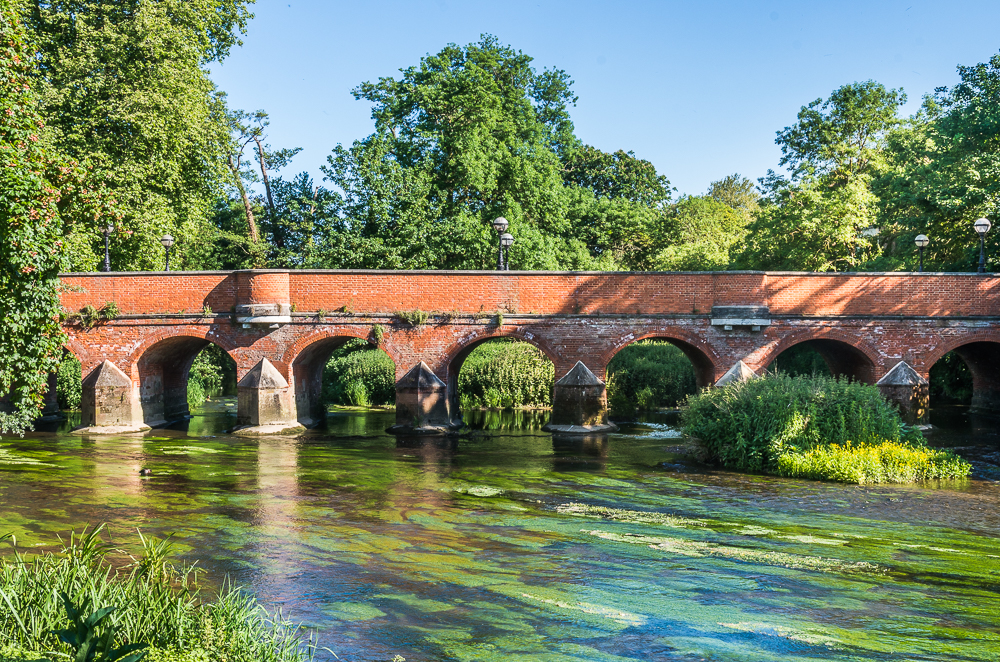
The new district was named after the River Mole, which flows through the area.[5]

Governance

[edit]

Towns and parishes

[edit]

The former Leatherhead Urban District, which included Ashtead, Fetcham, Great Bookham and Little Bookham, is an unparished area, as is the majority of the former Dorking Urban District.[6][7]

The rest of the district is covered by civil parishes:[8][9]

Demographics

[edit]

A Legatum Prosperity Index published by the Legatum Institute in October 2016 showed Mole Valley as the second most prosperous council area in the United Kingdom, after the nearby Borough of Waverley.[10]

Churches graded II* or above

[edit]
St Nicolas, Great Bookham
St John, Wotton
St Michael, Mickleham
St Michael's Betchworth, 13th century, used in Four Weddings and a Funeral
Church Place Listed building
Class
St Michael Betchworth I [11]
St Nicolas Great Bookham I[12]
All Saints Little Bookham II*
St Nicholas Charlwood I[13]
St Michael Mickleham I [14]
St John the Evangelist Wotton I [15]
St Mary & St Nicholas Leatherhead II*[16]
St Barnabas Ranmore Common II* [17]
St Mary Pixham II* [18]
St Martin Dorking II* [19]
St Mary Fetcham II* [20]
St Giles Ashtead II* [21]
St James Abinger Common II* [22]
Holy Trinity Westcott II* [23]
St Bartholomew Leigh II* [24]
St Margaret Ockley II* [25]
St John the Baptist Walliswood II* [26]

Emergency services

[edit]

Mole Valley is served by these emergency services:

  • Surrey Police. Dorking Police Station is the lead station in Mole Valley Division, Leatherhead Police Station is now closed.
  • South East Coast Ambulance Service The district has two Ambulance Stations – one in North Holmwood (1 mile (2 km) south of Dorking), and the other in Leatherhead.
  • Surrey Fire & Rescue Service, The district has two Fire Stations one in North Holmwood and the other in Leatherhead.
  • SURSAR, The district is covered by Surrey Search & Rescue
  • Hospital, Each town has a small NHS Hospital with no A&E. They are used for outpatients and rehabilitation.

Freedom of the District

[edit]

See also

[edit]

References

[edit]
[edit]
Revisions and contributorsEdit on WikipediaRead on Wikipedia
from Grokipedia
Mole Valley is a district in , , administered by Mole Valley District Council from its base in . The district spans 258 square kilometres of predominantly rural in south-central , named for the River Mole that flows northward through its . As of mid-2023 estimates, its stood at 88,709, with major settlements including the towns of and , where around 72% of residents live. Formed in 1974 amid local government reorganization, Mole Valley functions as a non-metropolitan district under County Council, overseeing services like planning, housing, and waste management while preserving its green belt and Areas of Outstanding Natural Beauty. The area combines commuter accessibility to London with agricultural and natural features, including chalk hills and the North Downs, contributing to its affluent, semi-rural character.

Geography

Location and boundaries

Mole Valley is a local government district occupying the south-central portion of Surrey in South East England. The area covers approximately 100 square miles (259 km²). Its population was recorded as 87,400 in the 2021 census. The district's boundaries adjoin several other local authorities within Surrey, including Elmbridge, Epsom and Ewell, Guildford, Reigate and Banstead, and Waverley. To the south, it shares a border with West Sussex, specifically the districts of Horsham and Crawley. The northern extent approaches Greater London, with proximity to the London Borough of Kingston upon Thames. These boundaries encompass a mix of rural landscapes and settlements along the River Mole valley.

Topography and natural features

Mole Valley district exhibits a diverse topography shaped by its position within the North Downs, featuring rolling chalk downland with elevations ranging from 50 metres above ordnance datum (AOD) in the low Weald floodplains to over 250 metres AOD on ridges such as Box Hill at 224 metres AOD and Leith Hill at 294 metres AOD. The landscape includes steep chalk scarp slopes, undulating dipslopes, and complex valley sides formed by minor ridges and dry valleys known as coombes. The dominant feature is the River Mole, which originates in the clays and cuts a dramatic gorge, the Mole Gap, through the between and , creating steep-sided valleys with cliffs and narrow floodplains. This incision results from the river's path across a narrow belt overlying impermeable clays, with the porous facilitating underground drainage via swallow holes, contributing to dry valleys in the surrounding downs. Geologically, the district overlies Upper chalk formations including the Nodular, Seaford, and Newhaven members, interspersed with Lower greensand beds such as the Hythe, Sandgate, and formations, and Tertiary in lower areas. These strata produce varied soils—heavy, poorly drained clays in the , lighter sandy soils on s, and rendzinas on —supporting natural features like ancient woodlands on slopes, grasslands on escarpments, and riparian habitats along watercourses including the Tillingbourne and Pipp Brook tributaries. The escarpment forms a prominent , with wooded hills adding to the undulating character.

Settlements and parishes

Mole Valley District comprises 13 civil parishes administering its rural areas, with unparished portions encompassing the main urban centers of and , as well as northern villages including , , and Fetcham. These unparished areas handle local matters through residents' associations or directly via the district , amid ongoing discussions for potential parish formation in some locales. The civil parishes are: Abinger, , Brockham, Buckland, Capel, Charlwood, Headley, Holmwood, Leigh, Mickleham, Newdigate, Ockley, and Wotton. Each parish governs smaller settlements, such as Abinger Hammer and Abinger Common in Abinger, Brockham in Brockham, and Friday Street in Wotton, often featuring historic villages amid the Surrey Hills. Key settlements within the parishes include , Capel (with Beare Green), Headley, Holmwood, Leigh, Mickleham, Newdigate, and Ockley, supporting populations engaged in , , and linked to features like the River Mole. The parishes collectively represent about 28% of the district's area but a smaller share of its 87,000 as of 2021, with density concentrated in unparished towns.

History

Prehistoric and ancient periods

Archaeological evidence indicates prehistoric human activity in Mole Valley primarily through scattered flint tools and settlement features rather than monumental structures. A flintworking site dating to approximately 10,000–4,000 BCE has been identified in Cockshott's Hollow, a valley east of Leith Hill, reflecting early post-glacial foraging and tool production in the area's greensand ridges. In Fetcham, along the River Mole, Late Upper Palaeolithic/Early (c. 12,000–9,000 BCE) and Late (c. 7,000–4,000 BCE) flint scatters, including blades and microliths, point to repeated ephemeral campsites exploiting riverine resources. Neolithic (c. 4,000–2,500 BCE) occupation is evidenced by flintwork, such as polished axes and arrowheads, alongside Bronze Age (c. 2,500–800 BCE) pits and Iron Age (c. 800 BCE–43 CE) enclosures and ditches uncovered during pipeline excavations, suggesting small-scale farming and pastoral communities in the fertile valley floors and downs. These finds, concentrated near Fetcham Springs—an internationally significant multi-period site—demonstrate continuity of low-density settlement focused on the Mole River corridor, with no large henges or barrows recorded, consistent with Surrey's broader pattern of dispersed prehistoric use rather than nucleated villages. Roman period (43–410 CE) remains are limited but include a 1st–2nd century villa complex in Ashtead Common, comprising a main residence, bathhouse, , and clay pits, indicative of rural estate possibly tied to nearby ironworking or . In Fetcham, foundations of a Roman building, potentially a or farmstead, alongside pottery and tile fragments, highlight unusual valley-bottom occupation in a region otherwise dominated by hilltop or plateau sites. Additional traces near Cocks Farm and hilltop settlements suggest modest economic integration into the provincial network, though the district's overall Roman footprint remains sparse compared to urban centers like London, with no major roads or forts documented.

Medieval and early modern eras

The medieval of the Mole Valley consisted primarily of scattered manors focused on arable and , with emerging nucleated settlements at and along the River Mole and ancient routes like Stane . Leatherhead's Pachesham manor appears in Alfred's will from the late 9th or early , held by the of at Domesday in 1086, and later granted to secular lords including Piers Gaveston in the early 14th century before passing through families like the by 1382–3. Thorncroft manor, part of Richard de Tonbridge's Domesday holdings, was conveyed to Walter de Merton in 1267 to endow Merton College, Oxford, remaining in its possession thereafter. Dorking's market, centered initially at Pump Corner, involved trades such as smithing, skinning, weaving, and tailoring, reflecting a localized economy tied to rural production. Religious institutions anchored , with St. Nicholas Church in originating in the and expanded in the 14th, its shifting from to the in 1287 and by 1341. Edward III granted Leatherhead markets on Tuesdays and fairs at the feasts of St. Peter ad Vincula (1 ) and (6 ) in 1331, fostering modest urban growth amid manorial fragmentation, as seen in the subdivision of Pachesham by the . Other manors like Mynchin, claimed in 1195 and held by the Apperdele family, supported chantries by the 14th century. In the early modern era, manorial consolidation and agricultural continuity prevailed, with Pachesham unified under Thomas Stydolf by before sales to later proprietors like Anthony Chapman in 1766. St. Nicholas Church underwent restoration in –2, its vesting with the Dean and Chapter of Rochester after the Dissolution. The avoided major enclosures until the , sustaining and ancillary activities like and brick-making, while Dorking exhibited nonconformist religious sentiments among into the 17th and 18th centuries. improvements, such as the widening of Leatherhead Bridge under an Act of 1782, supported local trade without transforming the predominantly rural character.

Modern development and district formation

The towns of Leatherhead and Dorking experienced accelerated development in the mid-19th century following the extension of railway lines into Surrey, which transformed the region from predominantly agricultural use to a burgeoning commuter corridor for London workers. Leatherhead gained a station on the Horsham branch of the London, Brighton and South Coast Railway in 1846, while Dorking was connected via the Reading, Guildford and Reigate Railway in 1847, fostering population influx and commercial expansion in these market centers. These infrastructure improvements, part of Surrey's dense suburban rail network—the world's densest by the late 19th century—shifted the area's economy toward services and light industry while preserving much rural character. By the early , and had formalized as urban under Act , with Urban established that year and Urban shortly thereafter, overseeing , , and amid . The interwar and post- periods saw further modest growth as part of the commuter belt, driven by improved like the and for semi-rural residences, though strict designations from onward limited large-scale to protect farmland and countryside. Rural , surrounding parishes, complemented these urban areas by managing agricultural and village affairs until boundary adjustments, such as Urban 's expansion to include Mickleham and parts of Okewood. The modern administrative structure of Mole Valley emerged from the comprehensive local government reorganization enacted by the Local Government Act 1972, which abolished over 1,000 smaller authorities nationwide to create more efficient districts. On 1 April 1974, Mole Valley District was formed by merging Dorking Urban District, Leatherhead Urban District, and Dorking Rural District, encompassing approximately 250 square kilometers of diverse terrain including the Surrey Hills. This consolidation aimed to streamline services like planning and waste management while maintaining the area's low-density, affluent profile, with initial population around 75,000 drawn from the 1971 census figures of its predecessors. The new district council, seated in Dorking, inherited responsibilities for green belt enforcement and rural preservation, reflecting the balance between controlled development and environmental safeguards that has defined the region since.

Governance and administration

District council structure and operations

Mole Valley District Council employs a leader and cabinet executive model of governance, adopted in November 2007 and implemented from March 2008, in line with provisions under the Local Government Act 2000. This structure separates executive decision-making, primarily handled collectively by the cabinet, from regulatory and scrutiny functions performed by dedicated committees. The council's constitution, outlined in seven parts, delineates these roles, including member responsibilities, officer delegations, and procedural rules for meetings and conduct. The full council consists of elected councillors representing 13 wards, who convene periodically to approve the annual budget, set levels, and establish overarching policies such as the local for development. Cabinet, comprising the leader—currently Councillor Bridget Kendrick (elected May )—and up to nine other members with portfolio responsibilities (e.g., deputy leader for , resources, and community services), formulates and executes strategic decisions on service delivery and . Decisions are made collectively at cabinet meetings, with provisions for call-in by scrutiny bodies to . Regulatory committees include the Development Management Committee, which determines major planning applications; the Licensing Committee and sub-committees, overseeing alcohol, , and licenses; and the Standards Committee, addressing councillor conduct breaches. The provides independent oversight of financial reporting and , while the Scrutiny Committee reviews cabinet decisions, service , and , often commissioning external reviews or consultations. These bodies operate under delegated powers specified in the , ensuring specialized handling of quasi-judicial matters. Day-to-day operations are managed by the (SLT), a group of senior officers led by Chief Executive Karen Brimacombe, who advises councillors, implements approved policies, and oversees service delivery across areas like , , allocation, , and facilities. The SLT includes the chief executive and four executive heads of service covering , commercial operations, resources, , and functions, ensuring efficient execution under elected direction. is monitored through internal audits and partnerships, with recent emphases on strategies and financial resilience amid potential reorganization.

Political composition and elections

Mole Valley District Council consists of 39 councillors, with three members elected from each of 13 wards. Elections occur annually for approximately one-third of the seats (13 councillors), except in the fourth year of the cycle, which aligns with elections. As of , the political composition is dominated by the Liberal Democrats, who hold overall control with 31 seats, followed by 6 Informal Independents and 2 Conservatives.
Party/GroupSeats
Liberal Democrats31
Informal Independents6
Conservatives2
Total39
The Liberal Democrats gained majority control in the 2019 elections, shifting from a previous Conservative-Independent administration, and have retained it through subsequent cycles. In the May 2024 district elections, the Liberal Democrats secured 12 of the 14 contested seats, strengthening their position. A by-election in the Holmwoods and Beare Green ward on 20 March 2025 resulted in a Liberal Democrat hold, with candidate Bradley Nelson elected, increasing their vote share in the ward.

Intergovernmental relations

Mole Valley operates within England's two-tier framework, responsibilities with , the upper-tier . handles devolved functions including permissions, allocation, , facilities, and , while manages county-wide services such as , , , and libraries. This division necessitates ongoing coordination on overlapping matters like economic regeneration, , and , often through committees or officer-level partnerships. Relations with central government center on funding allocation and policy implementation via the Department for Levelling Up, Housing and Communities. Mole Valley receives its core spending power through the annual local government finance settlement, which for 2025/26 confirmed no increase in baseline funding, prompting the council to pursue efficiencies and asset sales to balance its budget. Specific grants from UK government departments support targeted initiatives, including over £149,000 in business support funding distributed to local enterprises in July 2025. In response to the English Devolution White Paper published on December 16, 2024, which promotes simplification of two-tier systems, Mole Valley District Council collaborated with and Elmbridge Borough Council to propose restructuring Surrey into two unitary authorities. Their joint submission on August 1, 2025, advocates for an East Surrey unitary encompassing Mole Valley alongside Epsom and Ewell, Reigate and Banstead, and Tandridge Boroughs, aiming to consolidate services and devolve enhanced powers over , skills , and investment from , with corresponding transfers. This proposal followed a government consultation launched June 17, 2025, with final decisions anticipated by December 2025 and potential shadow elections in May 2026 if approved. Surrey's exclusion from the national devolution priority programme has deferred local elections to May 2025 to align with reorganisation timelines.

Economy

Key industries and economic indicators

Mole Valley's economy is characterized by high productivity and low unemployment, with total gross value added (GVA) reaching £4.9 billion in 2022. Labour productivity stands at £56 per hour worked, exceeding the UK average by 41% and ranking the district 13th nationally among local authorities. The employment rate for residents aged 16-64 was 84.5% in the year ending December 2023, surpassing the South East regional average, while the unemployment rate was 2.1% for those aged 16 and over. The district's key industries are dominated by knowledge-intensive sectors, with professional, scientific, and technical activities accounting for over 30% of GVA, more than 17% of employment, and 25% of businesses. Knowledge-intensive business services (KIBS) comprise over 30% of total jobs, reflecting Mole Valley's role as a commuter hub for London-based professionals. Construction, retail, and administrative and support services have shown growth in employment, contributing to a diversified base that includes smaller-scale manufacturing and agriculture in rural areas. Micro-businesses (fewer than 10 employees) represent 90.6% of the business stock, though the 25 largest firms provide 27% of jobs, underscoring concentration in high-value operations. Economic indicators highlight resilience, with a five-year of 47% for enterprises starting in , above East (44%) and (39%) averages, despite a 3.7% decline in the overall since 2020. Deprivation remains low, ranking Mole Valley 294th out of 317 least deprived , though localized pockets exist in areas like Dorking's Goodwyns Estate. In the year ending December 2023, Mole Valley recorded an rate of 84.5% for residents aged 16 to 64, marking an increase from 74.0% in the prior year and surpassing the South East region's 79.3%. The rate stood at 2.1% for those aged 16 and over, down from 2.3% the previous year and below the South East's 2.9% and the UK's 3.7%. Economic inactivity affected 15.5% of the 16-64 age group, lower than the regional 18.3% and national 21.2%, reflecting a robust local labour market recovery post-pandemic.
IndicatorMole Valley RateChange from Previous YearSouth East Comparison
Employment (16-64)84.5% (YE Dec 2023)+10.5 ppHigher than 79.3%
Unemployment (16+)2.1% (YE Dec 2023)-0.2 ppLower than 2.9%
Economic Inactivity (16-64)15.5% (YE Dec 2023)Not specifiedLower than 18.3%
Claimant (16-64)1.8% (Mar 2024)+0.1 ppLower than regional
from model-based estimates; claimant from administrative . Employment composition emphasizes high-skill sectors, with professional, scientific, and technical activities comprising over 17% of jobs and knowledge-intensive business services exceeding 30% of total employment as of 2024. Over 57% of residents hold managerial or professional roles, above the UK average of 51.3%, supported by elevated qualification levels where 50.7% possess level 4 or higher. Self-employment remains prominent at 16.5%, exceeding regional and national figures, though it moderated after a 20-30% pandemic surge. Key challenges include pockets of economic inactivity, peaking during the COVID-19 period before declining, with 20% of working-age residents reporting work-limiting disabilities and 32% of this subgroup inactive. Barriers to employment, particularly in deprived locales like Goodwyns Estate and Kingston Road—among the most deprived lower-layer super output areas—encompass education gaps (affecting 30% of job seekers), long-term health conditions, and limited access to suitable roles amid high living costs. Despite overall low deprivation (ranked 294th least deprived of 317 districts in 2019), 7.5% of children live in low-income families, correlating with intergenerational employment hurdles. Initiatives like the Mole Valley Employment and Skills Hub address these through targeted job placements and skills support, exceeding annual targets for referrals and fairs by 2023.

Business environment and innovation

Mole Valley maintains a supportive business environment characterized by council-led initiatives aimed at retention, growth, and infrastructure enhancement. The district's Economic Development Action Plan for 2025/26 prioritizes retaining and expanding local firms through a new account management system, alongside enterprise support including networking events and one-to-one advisory sessions, with 65 such sessions delivered in 2024/25. Infrastructure improvements, such as the Dorking Banking Hub and development of a Leatherhead Business Improvement District (BID), further facilitate operations for small and medium enterprises. Over 90% of businesses in the district are micro-enterprises (0-9 employees), though they contribute the least to total employment, underscoring a predominance of smaller-scale operations. The district exhibits a strong orientation toward knowledge-intensive sectors, with 32.7% of employment in such industries—the highest share within —encompassing , scientific, and technical activities that drive higher . Council's Economic targets recognition by 2028 as a prime attracting creative and innovative talent, supported by totaling £149,000 awarded to local small firms in 2024/25 via the UK Shared Fund (UKSPF). Additional resources include the Mole Valley for Business portal, which logged 8,100 users and 23,000 page views from April 2024 to January 2025, providing access to funding opportunities and local economic data to inform investment decisions. Innovation efforts emphasize fostering an entrepreneurial culture through targeted programs, including the & Skills Hub, which generated £4.6 million in social impact from to by aiding skills development and startups. Facilities like and The Atrium Centre offer flexible, modern workspaces conducive to and tech-oriented firms, though the district lacks dedicated large-scale hubs compared to other locales. integration forms a core aspect, with council policies promoting environmental practices among to align with broader economic resilience goals. The district's rate exceeds the South East average, reflecting a stable base for innovation-driven growth amid commuting patterns to London.

Demographics

Population size and growth

The population of Mole Valley district stood at 87,386 according to the 2021 Census conducted by the Office for National Statistics (ONS). This marked an increase of approximately 2,020 residents from the 85,366 recorded in the 2011 Census, yielding a decennial growth rate of 2.4%. By comparison, the South East region as a whole experienced a 7.5% population rise over the same interval, highlighting Mole Valley's relatively subdued expansion amid broader regional trends driven by net migration and natural increase. Mid-year population estimates from the ONS further illustrate modest ongoing growth, with the figure reaching 87,769 by mid-2022, reflecting a year-over-year increase of about 0.4% from mid-2021 levels. authority aligned with ONS methodologies reported a of 88,709 in more recent estimates, consistent with incremental gains influenced by patterns within and limited inflows from outside the .
Census YearPopulationAbsolute ChangePercentage Growth
201185,366--
202187,386+2,020+2.4%
This table summarizes the intercensal shift, underscoring a trajectory of low-single-digit growth that contrasts with faster urbanization in adjacent districts like Reigate and Banstead, where expansion reached 9.4% over the decade. Such patterns align with Mole Valley's semi-rural character and planning restrictions that prioritize preservation over rapid development.

Ethnic and social composition

According to the 2021 , 92.7% of Mole Valley identified their ethnic group as , a decrease from 95.1% in 2011. Within this category, formed the largest at 85.8%, compared to the of 76.6%, while non-British accounted for 6.9% (versus 8.8% in ). Non- ethnic groups comprised 7.3% of the , with Asian or Asian British at approximately 3.0%, Mixed or Multiple at 2.5%, or British at 0.8%, Other ethnic group at 0.7%, and Arab at 0.3%. These figures reflect Mole Valley's location in the affluent South East commuter belt, where ethnic diversity remains lower than national but shows gradual increases in non- and non-British proportions over the decade.
Ethnic Group (2021 Census)Percentage
White (total)92.7%
White British85.8%
White non-British6.9%
Asian/Asian British3.0%
Mixed/Multiple2.5%
0.8%
Other ethnic group0.7%
0.3%
Mole Valley exhibits a socially affluent composition, characterized by low deprivation levels and high rates of ownership. In the 2019 Index of Multiple Deprivation, the district ranked 294th out of 317 local authorities in (where rank 1 indicates highest deprivation), placing it among the least deprived areas nationally. Approximately 74.2% of was owner-occupied in 2021, exceeding the figure of 71.7%, with social rented accommodation at 11.7% and private rentals at 12.1%. Household deprivation affected 31% of residences, aligning closely with 's profile but below national levels, primarily in pockets around urban centers like Dorking and Leatherhead rather than widespread rural areas. This socioeconomic structure supports a population skewed toward higher-skilled professions and financial stability, consistent with the district's role as a suburban extension of London with limited industrial employment.

Housing and socioeconomic data

The average house price in Mole Valley reached £540,000 in July 2025, marking a provisional 1.6% increase from July 2024, driven partly by a 2.6% rise in semi-detached properties. Detached homes dominate the market, contributing to elevated values, with one in five properties exceeding £1 million by June 2025. Annual sales totaled 1,096 in the year ending March 2023, down from prior periods amid broader market slowdowns. Housing supply constraints persist, as the district's 2023 Housing Delivery Test score fell below 95% of the five-year requirement, signaling under-delivery relative to . Demand remains high, with 662 households registered for social as of June 2025, exacerbated by affordability challenges in a district where median approximate £50,900 annually. Initiatives like First Homes offer discounts 30% on new builds capped at £250,000, targeting first-time buyers amid these pressures. Socioeconomically, Mole Valley ranks among England's least deprived districts, placing 294th out of 317 local authorities in the 2019 Index of Multiple Deprivation, though pockets of need exist in urban wards. Census 2021 data reveal 56.7% of households deprived in no dimension—encompassing employment, education, health/disability, and housing—compared to national averages, with 31.0% affected in one dimension only. Employment metrics underscore prosperity: an 84.5% rate for ages 16-64, unemployment at 2.1%, and claimant count at 1.8% as of May 2024. These figures reflect a professional, commuter-oriented economy tied to London and Surrey hubs, with low income deprivation overall per ONS indicators.

Infrastructure

Transportation networks

The road network in Mole Valley is dominated by the trunk road, which runs north-south through key towns such as , , and , providing primary access to and connections to the at Junction 9 near Leatherhead. The orbital motorway forms part of the district's northern boundary, enabling efficient to and the wider southeast network, though Junction 10 improvements, completed in phases through 2025, aim to alleviate congestion at the Leatherhead interchange. The road supports east-west travel across the district, intersecting with the A24 in Dorking. Rail services operate along the Mole Valley Line, part of the Sutton and Mole Valley network, connecting London Victoria and Waterloo to Horsham via stations in the district including Ashtead, Leatherhead, Bookham, Dorking (with separate facilities at Dorking, Dorking West, and Dorking Deepdene), Holmwood, and Betchworth. These lines, constructed between 1847 and 1868, are managed by Southern and South Western Railway operators, serving commuters with frequent services to central London. Bus has shifted toward demand-responsive services amid , with the Mole Valley Connect digital on-demand bus operating across since , allowing bookings via app for flexible rural connectivity. This service expanded in under Surrey Council's initiative to enhance without fixed timetables. Traditional routes, such as those operated by Buses 4U, supplement this for scheduled needs like or trips. Sustainable transport initiatives include the Mole Valley Local and Walking (LCWIP), a 10-year identifying priority corridors such as Leatherhead to Bookham and Leatherhead to , developed through to promote active . is being coordinated with Mole Valley under the to support low-emission mobility.

Utilities and public services

Water supply in Mole Valley is provided by SES Water, which serves areas including Dorking, , and surrounding villages, drawing from sources in the region. Wastewater and services are managed by , operating treatment works such as those at Pixham and Dorking, though the network has faced challenges with overflows into the River Mole, prompting a £37 million upgrade announced in April 2025 to mitigate internal flooding and spills. Electricity distribution is handled by , covering the region including . Gas distribution falls under SGN, responsible for the southern England network. Public services related to are overseen by , which coordinates fortnightly collections for recyclables, , and refuse, alongside a subscription-based service operating year-round. The also facilitates bulky collections and composting initiatives to reduce use. Libraries, including branches in , , and , are operated by , offering lending, digital resources, and programs such as extended self-service hours introduced in 2024. In emergencies involving failures, can contact providers directly or the 's out-of-hours line at 01306 885001 for non-999 issues like power outages or water disruptions.

Emergency services provision

Surrey Police provides coverage for Mole Valley as part of its Eastern Division, which encompasses the district alongside , , and Tandridge. The district's main policing areas include the towns of and , as well as villages such as , Fetcham, Bookham, Capel, and Leigh. Surrey Police maintains access to 51 public realm cameras across 38 locations in Mole Valley, primarily for investigative purposes following incidents, with district council support formalized in 2024 to sustain record-only monitoring. Surrey Fire and Rescue Service operates two fire stations within Mole Valley: one in Dorking and one in Leatherhead. These stations handle fire incidents, road traffic collisions, water rescues, and other emergencies across the district, which includes areas like Ashtead, Fetcham, and Great Bookham. The service's 2024/25 district plan prioritizes community safety initiatives tailored to local risks in these locations. Ambulance services for are provided by the Service (SECAmb), which covers alongside , , and parts of . SECAmb responds to 999 calls for life-threatening emergencies and operates services in the , though no dedicated station remains in the district following the of the former site in . Mole Valley coordinates , including potential assistance centers for evacuees, but defers core response to these statutory providers via the national 999 . Non-emergency response, such as for falls, is supplemented by Mole Valley Life's and Responder Service, which supports vulnerable but does not replace interventions.

Heritage and culture

Historic sites and listed buildings

Mole Valley district encompasses over 1,000 listed recorded in the , comprising 6 Grade I, 51 Grade II*, and 961 Grade II structures, alongside 35 scheduled monuments reflecting prehistoric, Roman, and medieval heritage. These assets highlight the area's from settlements to post-medieval , with protections emphasizing architectural merit, historical associations, and archaeological potential. Polesden Lacey, a Regency-style house rebuilt between 1821 and 1823 and extensively remodeled in Edwardian style by 1906, stands as a prominent Grade II* listed country house and estate. Acquired by the in 1942, it served as a wedding gift venue for King George VI and Queen Elizabeth in 1923, preserving interiors with Old Master paintings, ceramics, and tapestries alongside formal gardens and downland views. Betchworth Castle ruins, a scheduled monument originating as a fortified medieval manor house licensed in 1379, represent defensive architecture adapted in the 18th century with strengthened corners before partial collapse. Overlooking the River Mole near Brockham, the site includes consolidated stone remnants amid a golf course, with historical ties to local manorial holdings extending to Box Hill. Other notable secular sites include scheduled monuments such as barrows and Roman villas, underscoring Mole Valley's layered , though many remain earthworks rather than upstanding structures. conservation efforts by Mole Valley maintain these amid pressures, prioritizing fabric over modern alterations.

Churches and religious heritage

The religious heritage of Mole Valley is characterized by a collection of ancient Church of England parishes, many with origins tracing back to the Saxon or Norman periods, reflecting the district's long-standing Christian tradition amid rural Surrey landscapes. These churches, often Grade I or II* listed by Historic England, feature architectural elements such as Norman towers, medieval chancels, and Saxon remnants, serving as focal points for local communities since the Domesday Book era. Nonconformist chapels emerged later, particularly in the 19th century, but the predominant heritage stems from Anglican structures tied to historical manors and villages like Leatherhead, Dorking, and Wotton. St Mary and St Nicholas in Leatherhead stands as the town's parish church, with elements dating to the 11th or 12th century and continuous use for nearly 1,000 years; the structure includes a 13th-century nave and underwent restorations by architects Blomfield (1873–1894) and Ewan Christian. Grade II* listed, it exemplifies medieval flint construction with limestone dressings, incorporating transepts and an aisled nave. Further , St in Wotton dates to Saxon , with surviving Norman tower and from the and 13th-century expansions; Grade I listed, it overlooks the and holds associations with the Evelyn , including diarist (–1706). St Michael and All Angels in Mickleham, mentioned in the Domesday Book (1086), preserves Saxon origins in its early nave and chancel, augmented by a circa 1140 tower and 1180 chancel; this Grade II* listed building maintains 19th-century additions while retaining Norman features. In Betchworth, St Michael's Church, Grade I listed, primarily dates to the mid-13th century with 11th-century fragments integrated, notable for its size relative to the rural setting, possibly due to encompassing multiple medieval villages; Norman north windows highlight its early heritage. St Martin's in Dorking traces to a 12th-century medieval build under the de Warenne family, replacing an earlier , with later Victorian expansions preserving its as a central . These sites collectively Mole Valley's continuity, with many open for appreciation and tied to local heritage events, though maintenance challenges persist for smaller rural congregations.

Local traditions and events

Mole Valley hosts several rooted in musical and artistic traditions, reflecting the district's in choral , , and folk . The Musical , established in , is a competitive choral event for choirs from the area, held over two days in at Halls, culminating in combined concerts. Founded by Williams, it a cornerstone of regional music-making, with choirs from areas including Capel, Dorking, Leatherhead, and Oxshott participating annually. The , Mole Valley's largest event, occurs throughout and features over 100 productions in , , , , , and , with 135 programmed in 2025. Launched with free in and , it emphasizes inclusive, volunteer-driven activities such as exhibitions, workshops, and talks, drawing on the district's artistic . Other recurring festivals include the Leatherhead Drama Festival, which showcases amateur theatrical performances, and the Surrey Artists Open Studios in June, where local creators open their workspaces to the public. The Charlwood Music Festival in July highlights live performances in the village of Charlwood. Folk traditions persist through events like the annual Dorking Wassail on 11 January, organized by the Box Hill Bedlam Morris dancers and Dorking Community Orchard, involving singing and rituals to bless fruit trees for bountiful harvests—a practice derived from ancient English orchard-visiting customs aimed at ensuring crop health. Regular farmers' markets in villages such as Capel, Ockley, and Bookham offer traditional local produce and crafts, supporting rural community ties.

Planning and development

Green belt policies and constraints

Approximately 76% of Mole Valley District's land area, equating to around 19,522 hectares, is designated as Metropolitan Green Belt, ranking it fourth in Surrey for extent. This designation aligns with the National Planning Policy Framework (NPPF), which establishes the Green Belt's fundamental aim of preventing urban sprawl by keeping land permanently open and safeguarding the countryside from encroachment. The Mole Valley Local Plan 2020-2039, adopted on 15 , reinforces through EN1: The , which protects designated areas against inappropriate development—defined as any that harms openness and purposes—unless very special circumstances demonstrably outweigh the . Inappropriate development carries great in , with permissions granted only if benefits manifestly exceed combined from inappropriateness and other impacts, such as to or . The supports enhancement of uses, including improved access for , retention, and remediation of derelict , while monitoring applications via indicators like approvals and appeals. Development constraints are stringent: new dwellings are contrary to both national and local policies and will not receive , limiting growth primarily to exceptions that preserve . These include limited infilling in existing villages (per Policy EN3), proportionate extensions or replacements of buildings (not materially larger), agricultural or uses, outdoor facilities, and reuse of substantial existing structures or previously developed land without greater impact. Boundary alterations occur only exceptionally, using permanent features for clarity, with the 2020-2039 plan retaining 99.35% of Green Belt intact and releasing under 1% (approximately 0.67%) for targeted allocations around settlements like Ashtead, Bookham, , and , prioritizing brownfield sites elsewhere. Overlying constraints from the Surrey Hills National and sites like the Mole Gap to further impacts on visual , heritage settings, and , requiring in any permitted works. The Policies delineates these areas, enforcing spatial that caps at 336 dwellings annually—below assessed need—due to Green Belt dominance and sensitivities.

Housing development debates

Mole Valley District Council has faced significant contention over housing development within its Local Plan, primarily due to the district's extensive Green Belt designation, which covers approximately 80% of its land and aims to prevent urban sprawl from London. The draft Local Plan, submitted for examination in 2023, proposed allocating sites for around 10,900 new homes between 2020 and 2037, including exceptional circumstances releases from the Green Belt to meet assessed housing needs, amid national pressures to address shortages. Local residents and councillors have argued that such releases threaten environmental integrity, flood risks along the River Mole, and inadequate infrastructure like sewage capacity, with over 300 objections lodged against specific proposals. A focal point of the Hookwood 3 site west of , designated for homes including affordable units, which the initially sought to exclude from the citing unsustainable impacts and local opposition. In , councillors voted to withdraw Green Belt allocations entirely, prompting intervention by the Secretary of State for Up, and Communities, who directed the to proceed with the draft to avoid and planned development. Proponents, including some housing advocates, emphasize the urgency of affordable homes in a district where median house prices exceed £600,000, far outpacing local incomes, while critics contend government targets inflate needs via outdated projections and an "affordability penalty." Legal challenges have underscored these tensions, as seen in Mole Valley v for Up, and Communities (2025), where the contested a inspector's approval of development on , arguing it constituted inappropriate development harming . The dismissed the claim in 2025, affirming that visual and spatial impacts alone do not render proposals inappropriate if is preserved, providing for "very special circumstances" in cases. Despite permissions granted for up to 200 homes on de-designated in February 2025, concerns persist over sewage network strain, with residents highlighting repeated overflows. The acknowledges affordability as a "significant problem" but prioritizes brownfield sites and smaller-scale infill to minimize encroachment. Ongoing disputes, such as the redevelopment of the Foundry site in for since 2014, illustrate protracted negotiations between economic regeneration and community preservation. These debates reflect broader conflicts between national housing mandates—driven by England's shortfall of over 4 million homes—and local imperatives to safeguard countryside and infrastructure resilience. In 2025, Mole Valley District Council advanced several initiatives funded through developer contributions, including a £24 million commitment from the Community Infrastructure Levy (CIL) to support local enhancements such as , , and facilities. This allocation, detailed in July 2025 spending plans, directed approximately £11 million toward rail upgrades, school expansions, healthcare improvements, and recreational spaces, addressing capacity pressures from ongoing housing growth. Concurrently, the council progressed the Foundry and Church Street workshop redevelopment in , reaching the next planning stage in September 2025; the project incorporates zero-carbon features like air source heat pumps, solar panels, and with heat recovery to minimize environmental impact. The adoption of three Supplementary Planning Documents on July 22, 2025—covering , design guidance for house extensions, and landscape character—aimed to guide future developments amid constraints, building on the Mole Valley Local Plan 2020-2039 ratified in October 2024. Smaller-scale efforts included £130,000 in Neighbourhood Fund grants awarded in September 2025 for community projects, emphasizing localized improvements without large-scale contention. Legal disputes have centered on green belt protections and planning permissions. In Mole Valley District Council v Secretary of State for Housing, Communities and Local Government EWHC 2127 (Admin), the council challenged a planning inspector's February 2025 decision to grant retrospective permission for development on green belt land at Pixham, Leatherhead, after works began without approval in April 2024; the High Court dismissed the claim on August 15, 2025, upholding that "appropriate development" compliant with policy does not inherently harm green belt openness or purposes, provided site deliverability is evidenced. This ruling clarified national policy application, rejecting the council's arguments on visual and spatial impacts. Planning appeals have also arisen, such as the May 2025 dismissal of Hawksmoor Homes' appeal against refusal for residential development in (Murreys Court site), citing conflicts with local plan policies on density and heritage; a separate March 2025 appeal decision by Richborough Estates addressed similar and concerns post-local plan adoption. These cases highlight tensions between development pressures and environmental safeguards, with inspectors prioritizing policy compliance over local objections in upheld appeals.

Honors and recognitions

Freedom of the District

The Freedom of the District is a ceremonial honor conferred by Mole Valley District Council upon individuals, military units, or institutions in recognition of exceptional contributions to the local community or , traditionally permitting recipients to exercise privileges such as marching through the streets with colors flying, bayonets fixed, and drums beating. On 25 May 2010, the council awarded this honor to the Defence Medical Rehabilitation Centre (DMRC) , a specialized facility in the district dedicated to rehabilitating wounded personnel, many injured in operations in and . The recognition highlighted the centre's vital role in supporting military recovery and its positive impact on the local area through employment, community engagement, and enhanced security measures implemented in response to its operations. The granting followed a council proposal approved after consultations, culminating in a formal presentation of a ceremonial scroll to the centre's staff and patients. This marked a rare instance of the award in Mole Valley, underscoring the district's ties to military welfare; , operational since 1940 and expanded post-2003 for modern conflict injuries, continued serving until its 2018 relocation to a new facility in .

Other civic awards

Mole Valley District Council presents awards to recognize outstanding and contributions beyond the Freedom of the District. The Youth Awards, held periodically in partnership with Youth Voice and the district's Youth Council, honor young residents aged 11 to 18 for achievements in areas such as , arts, sports, and academic excellence. Categories include the Young Volunteer Award, with past recipients like Jamie McLeod-Smith in 2019 for dedicated community involvement. In 2025, the council launched the inaugural Sustainable Mole Valley Awards to acknowledge efforts advancing environmental . These awards cover seven categories, including Food & Drink, , , and Community Action, open to residents, businesses, and organizations. Winners announced at the 16 October 2025 ceremony included Mid Surrey Community Fridges for Food & Drink and other initiatives for reducing carbon emissions and promoting renewables.

References

Add your contribution
Related Hubs
User Avatar
No comments yet.