Hubbry Logo
Patrician (post-Roman Europe)Patrician (post-Roman Europe)Main
Open search
Patrician (post-Roman Europe)
Community hub
Patrician (post-Roman Europe)
logo
8 pages, 0 posts
0 subscribers
Be the first to start a discussion here.
Patrician (post-Roman Europe)
from Wikipedia

The Nobel Prize-winning author Thomas Mann belonged to a Hanseatic patrician family (the Mann family) and portrayed the patriciate in his 1901 novel Buddenbrooks.[1][2]
The German banker Johann Hinrich Gossler married Hamburg patrician heiress Elisabeth Berenberg, and became owner of Berenberg Bank. His descendants reached the highest positions in the "aristocratic republic", including as senators and head of state.

Patricianship, the quality of belonging to a patriciate, began in the ancient world, where cities such as Ancient Rome had a social class of patrician families, whose members were initially the only people allowed to exercise many political functions. In the rise of European towns in the 12th and 13th centuries, the patriciate, a limited group of families with a special constitutional position, in Henri Pirenne's view,[3] was the motive force. In 19th century Central Europe, the term had become synonymous with the upper Bourgeoisie and cannot be interchanged with the medieval patriciate in Central Europe. In the maritime republics of the Italian Peninsula as well as in German-speaking parts of Europe, the patricians were as a matter of fact the ruling body of the medieval town. Particularly in Italy, they became part of the nobility and it became a noble title.

With the establishment of the medieval towns, Italian city-states and maritime republics, the patriciate was a formally defined social class of governing wealthy families. They were found in the Italian city-states and maritime republics, particularly in Venice, Genoa, Pisa and Amalfi. They were also found in many of the free imperial cities of the Holy Roman Empire, such as Nuremberg, Ravensburg, Augsburg, Konstanz, Lindau, Bern, Basel, Zürich, St. Gallen and many more.

As in Ancient Rome, patrician status could generally only be inherited. However, membership in the patriciate could be passed on through the female line.[citation needed] For example, if the union was approved by her parents, the husband of a patrician daughter was granted membership in the patrician society Zum Sünfzen [de] of the Imperial Free City of Lindau as a matter of right, on the same terms as the younger son of a patrician male (i.e., upon payment of a nominal fee), even if the husband was otherwise deemed socially ineligible.[citation needed] Accession to a patriciate through this mechanism was referred to as "erweibern."[4][clarification needed]

In any case, only male patricians could hold, or participate in elections for, most political offices. Often, as in Venice, non-patricians had almost no political rights. Lists were maintained of who had the status, of which the most famous is the Libro d'Oro (Golden Book) of the Venetian Republic.

From the fall of the Hohenstaufen (1268), city-republics increasingly became principalities, like the Duchy of Milan and the Lordship of Verona. The smaller ones were swallowed up by monarchical states or sometimes other republics, like Pisa and Siena by Florence. Following these developments, any special role for the local patricians was restricted to municipal affairs.

The few remaining patrician constitutions, notably those of Venice and Genoa, were swept away by the conquering French armies of the period after the French Revolution, although many patrician families remained socially and politically important, as some do to this day.

In the modern era the term "patrician" is also used broadly for the higher bourgeoisie (not to be equated with aristocracy) in many countries; in some countries it vaguely refers to the non-noble upper class, especially before the 20th century.[5]

The patricius in Late Antiquity and the Early Middle Ages

[edit]

There was an intermediate period under the Late Roman Empire and Byzantine Empire when the title was given to governors in the Western parts of the Empire, such as SicilyStilicho, Aetius and other 5th-century magistri militari usefully exemplify the role and scope of the patricius at this point. Later the role, like that of the Giudicati of Sardinia, acquired a judicial overtone, and was used by rulers who were often de facto independent of Imperial control, like Alberic II of Spoleto, "Patrician of Rome" from 932 to 954.

In the 9th and 10th centuries, the Byzantine emperors strategically used the title of patrikios to gain the support of the native princes of southern Italy in the contest with the Carolingian Empire for control of the region. The allegiance of the Principality of Salerno was bought in 887 by investing Prince Guaimar I, and again in 955 from Gisulf I. In 909 the Prince of Benevento, Landulf I, personally sought and received the title in Constantinople for both himself and his brother, Atenulf II. In forging the alliance that won the Battle of the Garigliano in 915, the Byzantine strategos Nicholas Picingli granted the title to John I and Docibilis II of Gaeta and Gregory IV and John II of Naples.

At this time there was usually only one "Patrician" for a particular city or territory at a time; in several cities in Sicily, like Catania and Messina, a one-man office of patrician was part of municipal government for much longer. Amalfi was ruled by a series of Patricians, the last of whom was elected Duke.

Formation of the European patriciates

[edit]
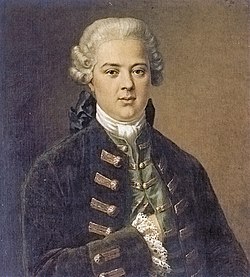
The Swiss patrician Franz Rudolf Frisching in the uniform of an officer of the Bernese Huntsmen Corps with his Berner Laufhund, painted by Jean Preudhomme in 1785.

Though often mistakenly so described, patrician families of Italian cities were not in their origins members of the territorial nobility, but members of the minor landowners, the bailiffs and stewards of the lords and bishops, against whose residual powers they led the struggles in establishing the urban communes. At Genoa the earliest records of trading partnerships are in documents of the early 11th century; there the typical sleeping partner is a member of the local petty nobility with some capital to invest, and in the expansion of trade leading roles were taken by men who already held profitable positions in the feudal order, who received revenues from rents or customs tolls or market dues. Then in the 12th and 13th centuries, to this first patrician class were added the families who had risen through trade, the Doria, Cigala and Lercari.[6] In Milan, the earliest consuls were chosen from among the valvasores, capitanei and cives. H. Sapori found the first patriaciates of Italian towns to usurp the public and financial functions of the overlord to have been drawn from such petty vassals, holders of heritable tenancies and rentiers who farmed out the agricultural labours of their holdings.[7]

At a certain point it was necessary to obtain recognition of the independence of the city, and often its constitution, from either the Pope or the Holy Roman Emperor - "free" cities in the Empire continued to owe allegiance to the Emperor, but without any intermediate rulers.

In the late Middle Ages and early modern period patricians also acquired noble titles, sometimes simply by acquiring domains in the surrounding contado that carried a heritable fief. However, in practice the status and wealth of the patrician families of the great republics was higher than that of most nobles, as money economy spread and the profitability and prerogatives of land-holding eroded, and they were accepted as of similar status. The Republic of Genoa had a separate class, much smaller, of nobility, originating with rural magnates who joined their interests with the fledgling city-state. Some cities, such as Naples and Rome, which had never been republics in post-Classical times, also had patrician classes, though most holders also had noble titles. The Republic of Ragusa was ruled by a strict patriciate that was formally established in 1332, which was subsequently modified only once, following the 1667 Dubrovnik earthquake.

Subsequently, "patrician" became a vaguer term used for aristocrats and elite bourgeoisie in many countries.

Transformations within patriciates

[edit]
Francesco Loredan (1665 - 1715), Venetian nobleman and magnate, head of the Santo Stefano branch of the House of Loredan.[8]

In some Italian cities an early patriciate drawn from the minor nobles and feudal officials took a direct interest in trade, notably the textile trade and the long-distance trade in spices and luxuries as it expanded, and were transformed in the process. In others, the inflexibility of the patriciate would build up powerful forces excluded from its ranks, and in an urban coup the great mercantile interests would overthrow the grandi, without overthrowing the urban order, but simply filling its formal bodies with members drawn from the new ranks, or rewriting the constitution to allow more power to the "populo". Florence, in 1244, came rather late in the peak period of these transformations, which was between 1197, when Lucca followed this route, and 1257, when Genoa adopted similar changes.[9] However Florence was to have other upheavals, reducing the power of the patrician class, in the movement leading to the Ordinances of Justice in 1293, and the Revolt of the Ciompi in 1378.

Of the major republics, only Venice managed to retain an exclusively patrician government, which survived until Napoleon. In Venice, where the exclusive patriciate reserved to itself all power of directing the Serenissima Repubblica and erected legal barriers to protect the state increased its scrutiny over the composition of its patriciate in the generation after the Battle of Chioggia. Venetians with a disputed claim to the patriciate were required to present to the avogadori di comun established to adjudicate such claims a genealogy called a prova di nobiltà, a "test of nobility". This was particularly required of Venetian colonial elite in outlying regions of the Venetian thalassocracy, as in Crete, a key Venetian colony 1211–1669, and a frontier between Venetian and Byzantine, then Ottoman, zones of power. For Venetians in Venice, the prova di nobiltà was simply a pro forma rite of passage to adulthood, attested by family and neighbours; for the colonial Venetian elite in Crete the political and economic privileges weighed with the social ones, and for the Republic, a local patriciate in Crete with loyalty ties to Venice expressed through connective lineages was of paramount importance.[10]

Recruitment to patriciates

[edit]

Active recruitment of rich new blood was also a character of some more flexible patriciates, which drew in members of the mercantile elite, through ad hoc partnerships in ventures, which became more permanently cemented by marriage alliances. "In such cases an upper group, part feudal-aristocratic, part mercantile would arise, a group of mixed nature like the 'magnates' of Bologna, formed of nobles made bourgeois by business, and bourgeois ennobled by city decree, both fused together in law."[11] Others, like Venice, tightly restricted membership, which was closed in 1297, though some families, the "case nuove" or "new houses" were allowed to join in the 14th century, after which membership was frozen.

German cities of the Holy Roman Empire

[edit]

Beginning in the 11th century, a privileged class which much later came to be called Patrizier[12] formed in the German-speaking free imperial cities. Besides wealthy merchant Grand Burghers (German: Großbürger), they were recruited from the ranks of imperial knights, administrators and ministeriales; the latter two groups were accepted even when they were not freemen.

Members of a patrician society entered into oaths of loyalty to one another and directly with respect to the Holy Roman Emperor.

German medieval patricians, Patrician (post-Roman Europe) did not refer to themselves as such. Instead, they organized themselves into closed societies (i.e., Gesellschaften)[citation needed] and would point to their belonging to certain families or "houses" (i.e., Geschlechter), as documented for Imperial Free Cities of Cologne, Frankfurt am Main, Nuremberg[citation needed]. The Dance Statute of 1521 is an example of such closed identification. The use of the word Patrizier to refer to the most privileged segment of urban society dates back not to the Middle Ages but to the Renaissance. In 1516 the Nuremberg councillor and jurist Christoph Scheuerl (1481–1542) was commissioned by Johann Staupitz, the vicar general of the order of St. Augustine, to draft a précis of the Nuremberg constitution, presented on 15 December 1516 in the form of a letter. Because the letter was composed in Latin, Scheuerl referred to the Nuremberg "houses" as "patricii", making ready use of the obvious analogy to the constitution of ancient Rome. His contemporaries soon turned this into the loan words Patriziat and Patrizier for patricianship and patricians. However, this usage did not become common until the 17th and 18th centuries.

The Patrizier filled the seats of town councils and appropriated other important civic offices to themselves. For this purpose they assembled in patrician societies and asserted a hereditary claim to the coveted offices. In Frankfurt the Patrizier societies began to bar admittance of new families in the second half of the 16th century. The industrious Calvinist refugees from the southern Netherlands made substantial contributions to the city's commerce. But their advancement was largely limited to the material sphere. At the time this was summed up as

The Roman Catholics have the churches, the Lutherans have the power, and the Calvinists have the money.[13]

Jews were in any case never even considered for membership in patricians' societies. Unlike non-Lutheran Christians and until their partial emancipation brought on by Napoleonic occupation, however, other avenues to advancement in society were also closed to them.

As in the Italian republics, this was opposed by the craftsmen who were organized in guilds of their own (Zünfte). In the 13th century they began to challenge the prerogatives of the patricians and their guilds. Most of the time the guilds succeeded in achieving representation on a town's council. However, these gains were reversed in most Imperial Free Cities through the reforms in 1551–1553 by Emperor Charles V (of the Holy Roman Empire, 1519–1556) and patricians consolidated their exclusive right to city counsel seats and associated offices, making the patriciate the only families eligible for election to the city council.

During the formative years of a patrician junker, it was common to pursue international apprenticeships and academic qualification. During their careers patricians often achieved high military and civil service positions in the service of their cities and the emperor. It was also common for patricians to gain wealth as shareholders of corporations which traded commodities across Europe.

In the territories of the former Holy Roman Empire, patricians were considered the equal of the feudal nobility (the "landed gentry").[14] Indeed, many patrician societies such as the Suenfzen of Lindau, referred to their members as "noble" and themselves as a "noble" or even "high noble" societies. Some patrician societies such as that of Bern, officially granted their members the right to use noble predicates whereas other patricians chose to use the noble predicate "von" in connection with their original name or a country estate, see e.g., the Lindau patrician families Heider von Gitzenweiler (also von Heider), Funk von Senftenau, Seutter von Loetzen (also von Seutter), Halder von Moellenberg (also von Halder), Curtabatt (also von Curtabat or de Curtabat). In 1696 and 1697 Emperor Leopold affirmed the noble quality (i.e., ebenburtigkeit") of Nuremberg Patrizier and their right to elevate new families to their society.[14]

Notwithstanding that membership in a patrician society (or eligibility there for, i.e., "Ratsfähigkeit") was per se evidence of belonging to the highest of social classes of the Holy Roman Empire, patricians always had the option to have their noble status confirmed by a patent of nobility from the Holy Roman Emperor which was granted as a matter course upon the payment of fee.[15] In any case, when travelling to other parts of Europe for example to the court of Louis XIV, members of the patrician societies of imperial free cities were recognized as noble courtiers as documented in the autobiography of Lindau Suenfzenjunker Rudolf Curtabatt.[16]

The Holy Roman Empire ceased to exist in 1806. Although not the arbiter of who belongs to the historical German patriciate, the modern Genealogisches Handbuch des Adels (= Genealogical Handbook of Nobility) following appropriate review by the fourth chamber of the German Adelsrechtsausschuß [de] or Noble Law Committee, will include families even without a title of nobility affirmed by the Emperor, when there is proof that their progenitors belonged to hereditary "council houses" in German imperial cities. To the extent patricians and their descendants chose to avail themselves of a noble predicate after 1806 and, therefore, without imperial affirmation, such titles and predicates would also be accepted by the German Adelsrechtsausschuß if acquired through a legal mechanism akin to adverse possession, i.e., Ersitzung.[17]

In any case, in the Netherlands (see below) and many Hanseatic cities such as Hamburg, patricians scoffed at the notion of ennoblement[citation needed]. Indeed, Johann Christian Senckenberg, the famous naturalist, commented, "An honest man is worth more than all the nobility and all the Barons. If anyone were to make me a Baron, I would call him a [female canine organ] or equally well a Baron. This is how much I care for any title."[18]

In 1816, Frankfurt's new constitution abolished the privilege of heritable office for the patricians.[19] In Nuremberg, successive reforms first curtailed the patricians privileges (1794) and then effectively abolished them (1808), although they retained some vestiges of power until 1848.

Patricianship in the Netherlands

[edit]
Cornelis de Graeff (1599-1664), regent and burgomaster of Amsterdam, painted by Pickenoy (1636)

The Netherlands also has a patriciate. These are registered in Nederland's Patriciaat, colloquially called The Blue Book (see List of Dutch patrician families). To be eligible for entry, families must have played an active and important role in Dutch society, fulfilling high positions in the government, in prestigious commissions and in other prominent public posts for over six generations or 150 years.

The longer a family has been listed in the Blue Book, the higher its esteem. The earliest entries are often families seen as co-equal to the lower nobility (Jonkheers, knights and barons), because they are the younger branches of the same family or have continuously married members of the Dutch nobility over a long period of time.

There are "regentenfamilies", whose forefathers were active in the administration of town councils, counties or the country itself during the Dutch Republic. Some of these families declined ennoblement because they did not keep a title in such high regard. At the end of the 19th century, they still proudly called themselves "patriciërs". Other families belong to the patriciate because they are held in the same regard and respect as the nobility but for certain reasons never were ennobled. Even within the same important families there can be branches with and without noble titles.

Scandinavia

[edit]
Members of the patriciate of Skien; the Altenburg/Paus families (late 1810s). To the right: Henrik Ibsen's mother Marichen Altenburg.

In Denmark and Norway, the term "patriciate" came to denote, mainly from the 19th century, the non-noble upper class, including the bourgeoisie, the clergy, the civil servants and generally members of elite professions such as lawyers. The Danish series Danske Patriciske Slægter (later Patriciske Slægter and Danske patricierslægter) was published in six volumes between 1891 and 1979 and extensively described Danish patrician families.[20][21][22] The term was used similarly in Norway from the 19th century, based on the Danish model; notably Henrik Ibsen described his own family background as patrician.[23] Jørgen Haave defines the patriciate in the Norwegian context as a broad collective term for the civil servants (embetsmenn) and the burghers in the cities who were often merchants or ship's captains, i.e. the non-noble upper class.[23] The bourgeoisie frequently intermarried with the families of higher civil servants and the nobility; the boundaries between the groups were not sharp.

Switzerland

[edit]

While Switzerland was part of the Holy Roman Empire patricianship developed as per the other free imperial cities of the Holy Roman Empire, creating an aristocratic-like closed ruling class. It was composed by both noble and upper bourgeoisie families. After Switzerland officially seceded from the Holy Roman Empire in 1648, the wealthy urban cantons were politically dominant, and were in turn governed by the patricians of the Old Swiss Confederacy until the "Gracious Lords" were overthrown by the Helvetic Republic and finally by the liberal revolutions of the 1830s and 1840s. However, they were still able to maintain political and economic influence, especially in the cities. As in the German imperial cities, the patricians of these republics often became aristocrats at an early stage; thus, one speaks of "urban aristocracies" at the apex of the so-called "aristocratic republics."[24]

See also

[edit]

Citations

[edit]
  1. ^ Charles Neider, The stature of Thomas Mann, 1968
  2. ^ Wolfgang Beutin, A history of German literature: from the beginnings to the present day, Routledge, 1993, ISBN 0-415-06034-6, p. 433
  3. ^ Pirenne, Medieval Cities: Their Origins and the Revival of Trade (1927) offers a late, developed view of the "Pirenne thesis" with origins in articles on the origins of urban constitutions in 1895: see Henri Pirenne#Pirenne Thesis.
  4. ^ Alfred Otto Stolze, Der Sünfzen zu Lindau. Das Patriziat einer schwäbischen Reichsstadt (Bernhard Zeller, Lindau/Konstanz, 1956) discusses this mechanism for accession to the Patriciate; "Wenn die Tochter eines Sünfzen Genossen sich mit Willen ihrer Eltern vermählte, so wurde der Ehemann aufgenommen, "der gleich der Sünfzen sonnst nit fähig wäre" gegen zwei Gulden, bzw. wie ein jüngerer Sohn"
  5. ^ T. K. Derry, A History of Scandinavia, London, George Allen & Unwin, 1979, p. 193, ISBN 0-04-948004-9
  6. ^ Hibbert, A. B. (1953). "The Origins of the Medieval Town Patriciate". Past & Present. 3 (3): 15–27 [p. 18]. doi:10.1093/past/3.1.15. JSTOR 650033.
  7. ^ H. Sapori, article in International Historical Congress 1950, noted by Hibbert 1953 note 10.
  8. ^ "LOREDAN, Francesco in "Dizionario Biografico"". www.treccani.it (in Italian). Retrieved 2 February 2022.
  9. ^ Hall, Peter (1999). Cities in Civilization. London: Phoenix. p. 91. ISBN 0-7538-0815-3.
  10. ^ O'Connell, Monique (2004). "The Venetian Patriciate in the Mediterranean: Legal Identity and Lineage in Fifteenth-Century Venetian Crete". Renaissance Quarterly. 57 (2): 466–493. JSTOR 1261723. Stanley Chojnacki has also studied the Venetian patriciate in a number of articles.
  11. ^ Hibbert 1953:19.
  12. ^ This word is used for both the singular and plural form.
  13. ^ Körner, p. XIII. Later, the Huguenot refugees flocking to Frankfurt following the revocation of the Edict of Nantes by French king Louis XIV in 1685 proved similarly valuable additions to the city's economy, but they too found membership in the Patrizier societies elusive.
  14. ^ a b Endres, Rudolf. Adel in der frühen Neuzeit. Enzyklopaedie Deutscher Geschichte, Band 18, Oldenbourg, p. 72.
  15. ^ Der Titel "von" beruht also nur auf den Adelsbriefen, die man sich mit Geld erwerben konnte. Die eine Familie legte Wert darauf, sich den Titel 'von' beizulegen, und die andere nicht. Stolze, Alfred O., Der Suenfzen zu Lindau, Das Patriziat einer Schwaebischen Reichsstadt, 1956.
  16. ^ Das Leben des Lindauer Bürgermeisters Rudolf Curtabatt. Hrsg. von Franz Joetze, Sch.V.G.B. 35 S. 355 FF
  17. ^ "Discussion relating the IV. Kammer of the ARA and to non-objection of noble status for descendants of Patrizier and Ersitzung of a noble predicate on pages 6-7" (PDF). www.adelsrecht.de.
  18. ^ Quoted in August de Bary's biography of Senckenberg, 2004 reprint of 1947 edition, p. 162: "Ein ehrlicher Mann ist mehr als aller Adel und Baron. Wenn mich einer zum Baron machte, ich wollte ihn einen Hundsfott oder auch einen Baron schelten. So lieb sind mir alle Titel."
  19. ^ Die Macht der Patrizier Archived 19 September 2008 at the Wayback Machine, Frankfurter Rundschau Online
  20. ^ Sofus Elvius and Hans Rudolf Hiort-Lorenzen (eds.), Danske Patriciske Slægter, Copenhagen, 1891
  21. ^ Theodor Hauch-Fausbøll and H. R. Hiort-Lorenzen (eds.), Patriciske Slægter, 3. vols., 1911–1930
  22. ^ Wilhelm von Antoniewitz, Danske patricierslægter: ny række, 2. vols., 1956–1979
  23. ^ a b Jørgen Haave, Familien Ibsen, Museumsforlaget, 2017, ISBN 9788283050455
  24. ^ "Patriziato cittadino". hls-dhs-dss.ch (in Italian). Retrieved 10 September 2025.

General references

[edit]
[edit]
Revisions and contributorsEdit on WikipediaRead on Wikipedia
from Grokipedia
In post-Roman Europe, patricians constituted a hereditary class of elite families who monopolized political authority and economic dominance in autonomous urban centers, particularly the and free imperial cities of the , emerging as a distinct from the amid the decline of feudal structures and rise of commerce. These families, often blending merchant wealth with noble pretensions, controlled councils and guilds, fostering republican governance that prioritized trade networks over monarchical rule and enabling prolonged independence from imperial or papal overlords. In , the patriciate's oligarchic character was formalized by the Serrata del Maggior Consiglio in 1297, which restricted Great Council membership to a closed roster of noble lineages inscribed in the , thereby institutionalizing exclusionary politics that sustained the republic's stability for over five centuries. Similar closures occurred in and other Ligurian republics, where patrician clans navigated factional strife and commercial rivalries, while in German cities like , patricians derived from ministerial knights or affluent burghers who entrenched power through self-perpetuating senates, often clashing with artisan guilds in urban upheavals. Defining characteristics included strict , palatial residences symbolizing status, and of and , though their rule provoked recurrent conflicts with rising middle classes, underscoring the causal tensions between entrenched privilege and mercantile dynamism in pre-modern European .

Origins in Late Antiquity and the Early Middle Ages

Evolution of the Patricius Title

In the late Roman Republic and early Empire, patricius denoted membership in the hereditary aristocracy tracing back to the founding families of Rome, distinct from plebeians and holding exclusive access to certain priesthoods and consulships. By the 3rd century AD, amid administrative reforms, the term evolved from a class identifier to an honorific title bestowed by emperors on high officials, signaling personal distinction and loyalty rather than birthright. Emperor Constantine I formalized this shift around 312–337 AD, instituting patricius Romanorum as a lifetime award for principal collaborators, granting precedence second only to consuls and emphasizing service over lineage. This usage persisted into the 4th century, as seen in grants to generals and imperial kin, reinforcing hierarchical continuity in a bureaucracy strained by invasions and fiscal pressures. During the 5th century, as the Western Empire fragmented, the title facilitated administrative bridging between Roman institutions and barbarian rulers. In 476 AD, following the deposition of , Eastern Emperor Zeno appointed patricius and dux Italiae, authorizing him to govern under nominal Byzantine while preserving tax collection, senatorial roles, and legal frameworks inherited from . This arrangement empirically sustained governance structures, with minting coins in imperial names and upholding praetorian prefectures, countering narratives of total rupture. In the Eastern Empire, Byzantine emperors continued granting patricius to military leaders and envoys through the 6th–7th centuries, such as to generals under , embedding recipients in the sacrum palatium hierarchy to ensure loyalty amid Persian and Arab threats. By the mid-8th century, papal adoption extended the title's utility in . In 754 AD, anointed as King of the and conferred patricius Romanorum upon him and his sons at the , formalizing Frankish protection of the papacy against Lombard incursions while invoking Roman imperial precedent. This act, rooted in the title's late antique role as a mark of delegated , causally linked Roman bureaucratic traditions to Carolingian kingship, enabling continuity in and without feudal reinvention. Overall, the patricius honorific's adaptability—evident in over 50 recorded grants from 300–800 AD—underscored empirical persistence of centralized command amid ethnic shifts, prioritizing functional legitimacy over ethnic or institutional purity.

Transition Amid Roman Collapse and Barbarian Kingdoms

As the Western Roman Empire fragmented in the fifth century, the patricius title—originally an imperial honor conferred on high-ranking officials for lifetime service, denoting precedence in senatorial order—persisted in barbarian successor kingdoms, adapting to denote delegated royal authority over fiscal, judicial, and military matters rather than purely hereditary senatorial privilege. In Frankish Gaul under Merovingian rule, patricii emerged as regional governors, particularly in Romanized areas like Burgundy and Provence, where they exercised control over taxation, land administration, and dispute resolution, as evidenced by charters recording their oversight of estates and legal privileges. This integration reflected causal continuity in governance: Frankish kings, lacking full administrative infrastructure, co-opted Roman titulature to legitimize rule over Gallo-Roman populations, prioritizing functional authority over ethnic distinctions. Specific attestations in Merovingian sources illustrate this evolution; for instance, Abbo served as patricius of until his death in 751, managing royal domains and judicial appeals in a that blended Frankish overlordship with preserved Roman legal mechanisms. Similarly, earlier figures like Philippus and Auderadus held personal patriciates in southern , documented in acts confirming land grants and fiscal exemptions, underscoring the title's shift from birthright eligibility—tied to senatorial landownership—to merit-based royal appointment for effective administration. In the of , charters from the sixth and seventh centuries reference patricii among the elite, often denoting nobles with imperial-style honors like genus senatorum, who handled provincial justice and tribute collection under kings such as (r. 568–586), thereby maintaining Roman-derived fiscal realism amid Germanic settlement. In Lombard Italy, following the invasion of 568, kings like Rothari (r. 636–652) and subsequent rulers employed patricius-like designations for governors in contested provinces, as chronicled in Paul the Deacon's Historia Langobardorum, where the title signified oversight of Roman-inherited cities and duchies, preserving judicial continuity over ethnic divides despite Lombard preference for duces. This adaptation countered total rupture narratives by empirically demonstrating institutional resilience: charters from Lombard realms, such as those involving or , show patricii adjudicating disputes and collecting renders from mixed Roman-Lombard subjects, with authority derived from royal conferral rather than antique senatorial descent. By the eighth century, as in Pepin the Short's receipt of patricius Romanorum circa 754—initially papal but echoed in Byzantine recognition—the title increasingly signified cross-kingdom elite status, tied to service in Italy and , evolving toward imperial-papal validation.

Formation of Urban Patriciates

Emergence in Italian Communes

In the late 11th and early 12th centuries, northern Italian cities experienced the rise of patrician families as governing elites within emerging communes, driven by imperial decentralization amid the (1075–1122), which preoccupied Holy Roman Emperors with papal conflicts and weakened central oversight. Local merchant and landowning groups formed sworn associations to administer justice and defense, installing consulates composed of boni homines—trustworthy urban notables often termed iudices in charters—who prioritized trade interests over feudal ties to distant emperors or bishops. This shift reflected causal pressures from , agricultural surplus, and expanding commerce, allowing these families to monopolize guilds and fiscal offices while rejecting vassalage in favor of pragmatic urban self-rule. In , patrician consolidation began with the commune's formation around 1097, as families like early branches of the Torriani and others seized control of the credenza di sant'Ambrogio, an advisory body evolving into consular magistracies dominated by commercial lineages. Pavia followed suit in the early , achieving communal autonomy evidenced by over 100 brick towers erected from the onward as symbols of elite family power and territorial claims within the city. Charters from this era, such as those referencing centum nobiles et boni homines in Lombard contexts by 1102, document how these groups adjudicated disputes and levied taxes, embedding their authority in oriented toward market efficiencies rather than imperial . Venice formalized its patrician exclusivity in the 13th century via the Serrata del Maggior Consiglio of 1297, restricting political participation to a hereditary cadre of merchant nobles whose lineages were retrospectively codified in the Libro d'Oro beginning in 1315, thereby closing ranks against newer entrants. Genoa's trade elites similarly coalesced into alberghi—kin-based clans—from the late 11th century, leveraging consular offices established by 1099 to dominate Levantine shipping and banking, as seen in notarial records of commercial pacts. Amalfi's earlier maritime patricians, active from the 10th century, exemplified this pattern through duke-led councils of boni homines that secured Byzantine trade privileges via naval alliances, underscoring a broader trend where urban nobles harnessed geographic advantages for economic hegemony unbound by feudal hierarchies.

Expansion to Northern European Cities

In the 12th and 13th centuries, the patrician model prevalent in Italian communes extended northward to trade centers and emerging Hanseatic hubs, propelled by rapid , riverine commerce along the , and the coalescence of merchant associations for mutual protection and . This diffusion adapted Italian precedents to local imperial and frameworks, where economic opportunities in fairs, production, and long-distance exchange incentivized elite consolidation among merchant-entrepreneurs and administrative classes, fostering self-governing oligarchies without centralized feudal mandate. In cities , patricians originated largely from ministeriales—hereditarily unfree knights and officials tied to the archbishopric—who leveraged service roles into economic dominance via trade privileges and urban landholdings, transitioning into autonomous urban lords by the late . These families, such as those descending from figures like Gottschalk van Overstolz (c. 1170–after 1215), monopolized council seats and judicial authority, with government offices exclusively in their hands after circa 1200, reflecting an organic accrual of power through wealth from , goldsmithing, and shipping rather than noble inheritance alone. Parallel developments occurred in Hanseatic precursors like , refounded in 1143 as a Baltic gateway, where patrician lineages among incoming merchants formed closed councils by the mid-13th century, capitalizing on league-like pacts originating in the late to secure trade routes to Novgorod and . This expansion intertwined with imperial privileges, such as those granted to in 1226, enabling patricians to erect fortified enclaves (kontore) and enforce monopolies, yielding proto-capitalist networks evidenced by documented surges in shipbuilding and commodity flows—e.g., 's annual exports reaching thousands of barrels by 1300—prioritizing profit-driven alliances over hierarchical fiat.

Core Characteristics and Functions

Economic Foundations in Trade and Commerce

The economic foundations of post-Roman European patriciates were laid in the commercial revival of the , when elite families in emerging urban centers amassed wealth through long-distance in such as spices, silks, and slaves, transported via maritime and overland routes. This shift from agrarian rents to mercantile profits enabled patricians to dominate lanes, where like secured exclusive trading privileges, such as the 1082 chrysobull from Byzantine Emperor Alexios I granting Venetian merchants duty-free access to and its ports. In , patrician-led ventures controlled Hanseatic Baltic routes, facilitating the exchange of timber, furs, and for grain and metals, with annual volumes documented in Danish Sound tolls exceeding 100,000 ships by the . These activities generated surpluses through rational arbitrage and risk-sharing partnerships, as evidenced by notarial contracts in specifying profit divisions from voyages to the . Banking innovations further amplified patrician fortunes, with families extending to monarchs and pilgrims via bills of exchange that mitigated coinage transport risks, originating in 12th-century Italian fairs like Champagne. complemented , as patricians invested in specialized production; Flemish urban elites controlled cloth finishing from English wool, exporting over 30,000 pieces annually from and by the late 13th century, per customs ledgers. In , patrician oversight of the —established by 1104—pioneered modular techniques, producing galleys with pre-fabricated components for rapid fleet assembly, funding drawn from duties yielding 1.5 million ducats yearly by 1300. Tax rolls and merchant ledgers, such as those from Lübeck's council archives, confirm how these revenues financed city walls and navies, with patrician households reinvesting 20-30% of profits into communal infrastructure to safeguard routes. This commerce-driven accumulation challenged prevailing agrarian stasis, spurring proto-industrial growth and market integration across by fostering guilds that standardized weights and enforced contracts, as seen in the expansion of circuits handling valued at millions of silver marks annually. Empirical records, including Venetian state accounts and Hanseatic protocols, reveal patricians' profit-maximizing strategies—such as systems reducing losses by 50%—directly causal to urban fortifications and sustained dominance, rather than mere inheritance or feudal dues. In Venetian governance, patricians exclusively formed the Great Council, which elected the doge for life from their ranks through a multi-stage process involving nominations and lotteries to prevent factional dominance. This system, formalized after the 1297 Serrata del Maggior Consiglio, restricted eligibility to enrolled patrician families, ensuring oligarchic control over executive authority. Florentine patricians dominated republican institutions, serving in the and influencing selections, though were typically appointed from outside the city to mitigate internal rivalries among elite families. In the post-republican era under Medici rule, patricians supplied lifetime members to the , advising on legislation and appointments. In cities like and , patricians monopolized council seats by hereditary right, directing urban policy and judicial administration independent of imperial oversight following grants of immediacy. These councils codified , incorporating elements from the , a 13th-century Saxon code that influenced municipal statutes across for property, inheritance, and governance. Patrician-led cities secured imperial privileges, such as charters from emperors like Frederick I in the 12th century, exempting them from feudal lords and affirming self-rule, which enabled sustained republican structures—Venice persisting until 1797—outlasting contemporaneous monarchies in stability.

Hereditary Structure and Social Closure

In the late 13th and early 14th centuries, urban patriciates across post-Roman Europe transitioned from relatively open elites incorporating wealthy merchants to rigidly hereditary groups, enforcing social closure through formal registries and lineage requirements. In Venice, the Serrata del Maggior Consiglio of 1297 restricted membership in the Great Council—the republic's primary legislative body—to descendants of families already participating, rendering eligibility hereditary among male lines and excluding newcomers regardless of wealth. This was formalized in 1315 with the creation of the Libro d'Oro, a golden book inscribing approximately 200 patrician families, whose male members alone could hold office or participate in governance. Similar mechanisms appeared in Genoa, where a comparable register closed the patriciate to unlisted families by the early 14th century, and in German cities of the Holy Roman Empire such as Nuremberg, where patrician lineages monopolized inner council seats through hereditary entitlement by the mid-14th century. Endogamy served as a core mechanism for maintaining exclusivity, with patrician families preferentially intermarrying to preserve wealth, status, and political alliances within the group. In Florence, quantitative analysis of marriage records from 1282 to 1494 reveals that elite families achieved high endogamy rates, using intermarriage to solidify factional stability and block dilution of resources by outsiders after consolidating power. Venetian patricians similarly limited marital alliances to inscribed houses, with only about 60% of males marrying at all to avoid fragmenting patrimonies, prioritizing class preservation over expansion. Inheritance practices adapted feudal primogeniture for commercial contexts, favoring partible division among sons to sustain family enterprises like trading firms, rather than concentrating assets in a single heir as in rural nobility; this ensured multiple branches remained viable within the closed elite while tying succession to verified patrician descent. Social closure intensified by excluding the "new rich"—merchants who amassed fortunes post-1300—through demands for proof of ancient or pre-closure enrollment, often retroactively claiming lineages to legitimize barriers. While early patriciates had integrated such wealth-holders for economic vitality, post-1300 immobility became normative, with registries like Venice's barring entry except in exceptional, emperor-approved cases. This structure fostered governance continuity and enabled long-term investments in commerce and urban infrastructure, as families planned across generations without disruptive competition from parvenus. However, contemporaries and later analysts noted risks of stagnation, as closure reduced adaptability to economic shifts, though from the shows it initially supported elite cohesion amid factional strife.

Internal Dynamics and Transformations

Recruitment Mechanisms and Social Mobility

In medieval European urban patriciates, recruitment primarily occurred through co-optation of economically successful outsiders, often during periods of commercial expansion, with mechanisms including the purchase of citizenship, elevation via public service, strategic marriages, and integration of guild elites. This process was most pronounced in the thirteenth century, amid buoyant trade economies that rewarded entrepreneurial risk-taking and resource commitment, enabling individuals from middling or rural origins to ascend into governing elites. Such mobility countered notions of rigid stasis, as empirical records demonstrate pathways tied to verifiable wealth accumulation rather than abstract equality. In Italian maritime republics like , wealthy foreigners could acquire citizenship—and thereby potential access to patrician circles—through direct purchase or equivalent investments, a practice rooted in the need to attract capital for ventures during the thirteenth-century . This mechanism facilitated the integration of merchant dynasties, though entry into the core patriciate often required subsequent demonstrations of loyalty and economic contribution, such as financing communal debts or naval expeditions. Similarly, in northern German cities, masters from backgrounds occasionally gained co-optation into patrician councils by leveraging monopolistic profits, particularly in Hanseatic ports where structures intersected with . Notable cases illustrate rare but causal links between merit-based wealth generation and patrician status. The , originating as rural weavers from near in 1367, ascended to the city's mercantile patriciate by the early sixteenth century through textile trade, copper mining, and banking innovations that amassed fortunes exceeding imperial revenues. Their rise, documented in notarial records and family ledgers, exemplifies how sustained commercial acumen—rather than alone—enabled outsiders to secure council seats and hereditary privileges, peaking in eras of market liberalization before social closures in the fourteenth century. alliances further amplified mobility, as patrician families strategically wed daughters to prosperous newcomers to consolidate fortunes, a pattern evident in prosopographic studies of Italian and Low Country elites where inter-class unions preserved lineage while injecting capital. Overall, these dynamics reveal patriciates as adaptive oligarchies responsive to economic imperatives, where recruitment favored those generating through or mastery, fostering limited upward flows that stabilized urban hierarchies without undermining control. Post-thirteenth-century ennoblements via imperial grants or communal service became scarcer as patriciates prioritized closure, yet the era's cases underscore a realist : social ascent hinged on causal contributions to communal , not redistributive ideals.

Internal Conflicts and Reforms

In during the , patrician families frequently divided along Guelph-Ghibelline lines, pitting pro-papal merchant clans against those favoring imperial authority, which fueled intra-elite violence over control of trade networks and communal offices. These rivalries originated in competition for economic dominance, as families vied for monopolies in , banking, and Mediterranean shipping routes, leading to clashes and exiles that destabilized oligarchic rule without altering hereditary exclusion. Patricians responded with pragmatic arbitration mechanisms, such as temporary pacts enforced by (external magistrates) to curb vendettas, preserving core power structures amid the chaos. The in in 1378 exemplified how external pressures from unrepresented laborers amplified patrician factionalism, as wool carders allied with dissident s to seize della , demanding new guilds and tax relief from the entrenched . Patrician leaders, divided by disputes, conceded temporary reforms like creating three new guilds for lower artisans and expanding the priors' council, but these measures lasted only until 1382, when conservative families reasserted control through military suppression and electoral closures. This adjustment integrated select guild elements into without diluting hereditary patrician dominance, reflecting a calculated response to maintain stability amid economic strains from the and war debts. In , the establishment of the in 1310 following a patrician against Doge Marino Morosini addressed internal threats by granting the body extraordinary powers to investigate and punish factional intrigue within the nobility. Composed of elected patricians, the council functioned as a security apparatus, using informants and trials to neutralize rivalries stemming from overseas trade competitions, thereby reinforcing oligarchic cohesion without broadening participation. Such reforms prioritized elite self-regulation over ideological shifts, enabling Venice's patriciate to sustain its closed serrata (enrollment lock) from 1297 onward. Northern Italian communes like and saw similar adjustments in the , where patrician councils incorporated arbitration to resolve disputes among families, as in Genoa's 1407 reforms limiting consul terms to prevent monopolization by clans like the Doria and Spinola. These mechanisms, driven by causal pressures from competing merchant consortia, allowed selective co-optation of influences while upholding social closure, averting broader upheavals seen in .

Regional Variations and Adaptations

German Cities of the Holy Roman Empire

In the free imperial cities of the , patricians formed a closed hereditary class of urban elites who monopolized seats on the city councils, or Rat, wielding unchallenged authority over governance, justice, and economic policy from the late medieval period onward. These families, often tracing descent to early merchant or ministerial lineages, secured their dominance through birthright admission to inner councils, as exemplified in where patricians controlled the Ratsherr positions after wresting power from burgraves around 1219 and consolidating it post-1349 artisan uprising. In cities like and , similar oligarchic structures prevailed, with councils numbering 20 to 40 members drawn exclusively from 10-20 patrician clans, enforcing social closure via marriage and exclusion of guildmasters or newcomers. This council contrasted with broader communal assemblies in earlier phases, reflecting a shift to aristocratic self-perpetuation by the 14th century. Patricians in these cities attained quasi-noble status, equated in privileges and fiscal exemptions to imperial knights (Reichsritter), as their urban wealth from trade and crafts rivaled rural estates, and many held extramural territories equivalent to minor baronies—Nuremberg's patricians, for instance, administered over 1,220 square kilometers of hinterland. (Reichsunmittelbarkeit), conferring direct subordination to the without intermediary princes, underpinned this elevated standing, granting legal autonomy in coinage, tolls, and fortifications—privileges cumulatively affirmed through charters from Frederick II (e.g., 1218 for select Swabian cities) and later diets. Unlike Italian communes, where papal interdicts and Guelph-Ghibelline strife eroded urban independence, German free cities leveraged Reichsfreiheit for stable oligarchies aligned with imperial authority against territorial lords, with formal Reichstag representation secured at the 1489 Frankfurt diet for collective input on empire-wide matters. Northern Hanseatic free cities such as amplified patrician power via league affiliations, where council families like the Hanseaten directed Baltic trade monopolies, diplomatic envoys, and naval defenses, sustaining amid Danish and princely pressures—'s patricians, for example, repelled foreign incursions in 1368-1370 through league-backed fleets. This commercial leverage equated urban patricians to territorial magnates in influence, though reliant on emperor-granted exemptions from feudal levies, distinguishing their role from purely local Italian systems.

Patricianship in the Netherlands and Low Countries

In the Low Countries, patrician elites in cities such as Bruges, Antwerp, and Amsterdam exercised control over municipal governance through councils like the vroedschap, merging trade-based oligarchies with accommodations to princely oversight from Burgundian and later Habsburg rulers. In Bruges, patrician families with stakes in the medieval Flemish cloth industry dominated urban politics, leveraging their economic dominance in wool and textile exports—key commodities that fueled the city's prosperity as a North Sea trade hub—to marginalize craft guilds and maintain social preeminence. The 15th-century Burgundian consolidation under (r. 1384–1404) and successors integrated these patricians into a nascent , where local elites retained vroedschap influence but aligned with ducal policies, including suppression of urban revolts that threatened trade monopolies documented in Flemish port customs ledgers. In , families like the Van Halmale navigated this era by commissioning family histories to assert patrician status amid Burgundian administrative reforms that occasionally disrupted traditional closures. Amsterdam's patricians, termed regents, similarly monopolized the vroedschap—a body of approximately 36 to 40 members selected from a tight-knit cadre of families—who directed the city's ascent in spice imports via Portuguese routes in the , capitalizing on Antwerp's decline after 1585. This system, chronicled in J.E. Elias's analysis of vroedschap membership from 1578 to 1795, featured leading clans (voormannen) rotating key posts like to perpetuate control. Habsburg rule introduced dynamics of princely intervention, such as Charles V's (r. 1519–1556) appointments to councils, fostering relative fluidity compared to Italian models' rigid exclusions; this allowed selective co-optation of merchants, amplified by post-Revolt influxes from the south, though oligarchic heredity persisted through intermarriage and office-sharing.

Scandinavian Patriciates

In medieval Sweden, urban elites known as rådsmän () formed the core of town governance in cities like , comprising wealthy merchants selected for life terms to ensure economic expertise and social honor. These councils rotated membership every three years in , allowing only about one new appointment annually, which contributed to a degree of closure despite elections emphasizing personal merit over strict ; familial connections influenced roughly 20% of selections, with rare multi-generational continuity, such as the case of Hans Laurensson as a third-generation . Councils expressed their cohesive identity through rituals like public processions, specialized attire, and reserved church seating, fostering a patrician-like exclusivity amid limited . In Norway, particularly Bergen, patrician elites emerged prominently from the 1350s onward through Hanseatic League dominance, where German immigrant merchants controlled trade via the Bryggen kontor, exporting fish and importing goods, thereby concentrating wealth and advisory roles to the crown following the civil wars and demographic collapses after 1300. The Black Death of 1349 exacerbated this by halving Norway's population and decimating aristocratic ranks, prompting kings to rely more on surviving urban merchant families as royal advisors while accelerating guild and council closures to preserve elite control over commerce. Danish cities mirrored this pattern on a smaller scale, with merchant councils in ports like Copenhagen intertwined with royal privileges rather than autonomous rule, their German-influenced patriciates navigating tensions from Hanseatic trade dominance. Unlike more independent urban republics elsewhere, Scandinavian patriciates operated on a reduced scale, with fewer families—often of partial German descent—and greater subordination to monarchical authority, as seen in their support for the (1397–1523) to counter Hanseatic economic leverage while advising on trade policies. This integration limited their autonomy, positioning them as intermediaries between crown interests and Baltic commerce rather than self-governing oligarchs.

Comparative Analysis with Italian Models

Italian patrician systems, particularly in and , exhibited more rigid social closure than their northern European equivalents. The Serrata del Maggior Consiglio enacted in in 1297 limited Great Council membership to established noble families, establishing a hereditary patriciate documented in the and excluding non-nobles, including guild representatives, from political participation. This closure, progressively enforced until 1323, contrasted with northern patriciates in cities, where merchant elites maintained exclusivity but periodically integrated prosperous guild masters or newcomers to mitigate conflicts, resulting in relatively higher social permeability. Economically, Italian models emphasized maritime dominance in high-value Mediterranean trade, such as spices and silks, which concentrated wealth among closed family networks and sustained oligarchic control. Venice's naval supremacy from the 13th century facilitated this orientation, linking to Levantine markets. Northern patricians, aligned with the , prioritized bulk overland and commerce in commodities like timber, furs, and salted fish, fostering collaborative confederations across cities rather than insular family monopolies and exposing elites to broader mercantile influences. In terms of durability, Italian patriciates proved more resilient due to geographic isolation—Venice's lagoon barriers and Genoa's coastal fortifications—enabling sustained republican autonomy until Napoleonic conquests in 1797. Northern variants, embedded in the fragmented , contended with imperial oversight and princely encroachments, accelerating decline through events like the and the (1618–1648), which eroded urban privileges by the mid-17th century. Scholars view Italian patriciates as archetypes of , unencumbered by feudal ties, whereas northern counterparts represented hybrids, intertwining commercial with lingering aristocratic and dynamics amid feudal hierarchies. This distinction underscores how southern from overlords, versus northern dependencies, shaped institutional and internal cohesion.

Achievements and Societal Impact

Contributions to Economic Growth and Urban Autonomy

In medieval such as and , patrician elites dominated long-distance trade and pioneered financial innovations like the contract, a profit-sharing that mitigated risks for maritime ventures by pooling capital from stationary investors and traveling merchants, emerging prominently from the onward. The Venetian variant, known as colleganza, further evolved as a precursor to joint-stock companies by enabling multiple investors to fund expeditions with , fueling expansion in , , and slave trades that generated substantial wealth and institutional stability through reputation-based enforcement mechanisms. Patricians' control over these activities, often intertwined with state policy, incentivized investments in and over redistributive feudal obligations, directly contributing to urban economic dynamism. Patrician-led communes asserted autonomy from feudal overlords by negotiating charters that curtailed arbitrary tolls and taxes, as seen in 12th-century Lombard cities where merchant guilds compelled bishops and counts to grant privileges, thereby lowering transaction costs and stimulating . This resistance to seigneurial exactions—exemplified by and repelling rural lords' encroachments through fortified leagues and legal innovations—fostered proto-capitalist environments where patricians could reinvest profits into like arsenals and canals, precursors to in . Such self-rule prioritized trade facilitation over subsistence extraction, enabling cities to capture surpluses from agrarian hinterlands via markets rather than coercion. In , patricians of Hanseatic cities like and organized trade networks from the , culminating in the Hanseatic League's formalization by , which standardized weights, measures, and while collectively bargaining to dismantle internal tolls and secure naval protection against . These merchant oligarchs' emphasis on mutual defense and barrier reduction integrated Baltic fisheries, timber, and grain exports with Flemish textiles, driving regional specialization and volume growth that outpaced feudal manorial economies. These patrician-driven mechanisms correlated with verifiable urban expansion: European town populations roughly tripled between 1000 and 1300, with Italian centers like growing from under 20,000 inhabitants around 1100 to over 100,000 by 1330, and Hanseatic ports experiencing similar booms amid the ' commercial revival. By aligning governance with profit motives, patricians created scalable incentives for technological adoption—such as improved hull designs and —yielding sustained output gains absent in more centralized feudal systems.

Preservation of Institutions and Cultural Patronage

Urban patricians in medieval and early modern European cities contributed to the preservation of institutional frameworks by integrating principles from the Corpus Juris Civilis into municipal legal codes, thereby sustaining elements of Roman administrative and juridical continuity against the backdrop of feudal decentralization. This process, accelerated by the 12th-century revival of Roman law studies at Bologna, allowed patrician-dominated councils to codify statutes that blended customary practices with Roman concepts of contract, property, and governance, as seen in the reception of ius commune across Italian communes and imperial free cities. In the Holy Roman Empire, patrician elites in cities like Nuremberg adapted these influences into Stadtrecht charters, which emphasized rational legal ordering over purely feudal or ecclesiastical norms, ensuring the longevity of self-governing urban corporations into the early modern period. This institutional preservation extended to cultural patronage, where patricians leveraged their wealth to sponsor and the arts, fostering the recovery and dissemination of classical knowledge. In , members of the patrician class, such as Willibald Pirckheimer from one of the city's oldest families, provided financial and intellectual support to artists like , enabling the production of works that bridged medieval traditions with innovations in and portraiture during the early . Similarly, in , urban elite families exemplified by the commissioned libraries and academies that housed thousands of ancient manuscripts, with initiating collections that preserved Greco-Roman texts and advanced scholarly inquiry. In , patrician governance supported the proliferation of presses from the late , funding editions of classical authors and texts that reinforced institutional stability through widespread access to Roman-derived knowledge, though direct familial often intertwined with state privileges granted by the nobility-controlled Great Council. This not only mythologized but empirically anchored urban identities in pre-feudal legacies, as evidenced by the durability of patrician charters and the output of humanist that informed reforms.

Criticisms, Controversies, and Decline

Oligarchic Exclusivity and Class Conflicts

In Venetian practice, the Serrata del Maggior Consiglio enacted in 1297 restricted eligibility for the Great Council—a key legislative body—to male descendants of families already enrolled by that date, codifying and excluding rising merchant and artisan classes from governance. This closure, progressively enforced through subsequent laws until , entrenched oligarchic exclusivity by limiting political offices to approximately 2,000 eligible out of a population exceeding 100,000, prioritizing familial networks over broader merit. Sienese patricians under the Government of the Nine (1287–1355) similarly confined magistracies to a narrow mercantile , prompting popolo uprisings; butchers and other members led tumults in the 1310s and 1340s against this body's monopoly, which drew from just nine oligarchic monti (factions) representing wealthy traders. These revolts targeted restrictive enrollment in the Council of the People, where participation required affiliation with approved or families, fueling demands for popolo minuto (lesser commons) inclusion amid economic strains like the 1348 . In Bruges, patrician councils dominated by international merchants excluded Flemish-speaking guilds from decision-making, igniting the 1280–1281 urban revolt where commons seized the town hall to protest oligarchic vetoes on guild charters and taxes favoring elites. Further 14th-century clashes during Franco-Flemish wars (1297–1306) saw guilds challenge patrician alliances with counts, as evidenced by assault on elite properties and calls for proportional seats based on guild membership numbers exceeding patrician households. Central European guild revolts, peaking in the 1330s–1380s across 104 documented cities, assailed patrician exclusivity codified in charters like those barring non-patricians from aldermanic elections; data indicate 41 successful takeovers, though most yielded hybrid regimes with token guild representation (e.g., 1–3 seats per council) rather than equality. In Florence's of 1378, wool carders (ciompi) numbering thousands briefly ousted patrician- alliances, enacting three populist guilds for the unskilled before suppression restored oligarchic priors within months. Contemporary defenses framed patrician rule as competence-driven, rooted in elites' navigational, commercial, and diplomatic expertise essential for urban prosperity, positing that populism invited demagoguery and fiscal ruin over tested hierarchies. Egalitarian critiques, echoed in later , highlight suppressed talents among excluded strata—evidenced by -led innovations in textiles—yet empirical patterns show revolts quelled via patrician militias or princely interventions in over 70% of cases, conceding only marginal reforms like advisory roles without diluting veto powers. These dynamics reveal causal tensions between inherited capital's stability and participatory pressures, with oligarchies adapting minimally to sustain rule amid verifiable wealth disparities (patricians holding 80–90% of liquid assets in audited ledgers).

Tensions with Monarchs and Feudal Nobility

In the , patrician elites governing free imperial cities often resisted imperial efforts to impose centralized control, interpreting such measures as encroachments on long-held charters of self-governance. Emperors like Frederick I Barbarossa faced organized opposition from urban leagues, exemplified by the Lombard League's formation in 1167, where city patricians allied to defend local jurisdictions against feudal overlordship; this culminated in the league's victory at the on May 29, 1176, forcing the emperor to concede urban rights via the Peace of Constance in 1183. Similar dynamics persisted in northern German cities, where Hanseatic patricians leveraged commercial networks to counterbalance monarchical ambitions, maintaining autonomy as rivals to both emperors and territorial princes through economic leverage rather than outright submission. Feudal , reliant on agrarian revenues, frequently viewed patrician wealth—derived from monopolies and urban taxation—with resentment, prompting attempts to erode city privileges through alliances with monarchs or direct coercion. Chronicles from the period, such as those detailing princely campaigns against prosperous Hanseatic centers like , highlight this envy, portraying rural lords as seeking to redistribute urban riches amid declining manorial yields in the . In the , patrician councils in cities like and clashed with Habsburg counts over fiscal impositions, resisting centralizing edicts that threatened guild-regulated economies; these tensions foreshadowed broader revolt, as urban leaders petitioned against royal alcabala taxes in the 1530s, prioritizing local charters over dynastic uniformity. Historians debate whether patrician resistance constituted principled defense of liberties or oligarchic self-interest obstructing , yet causal evidence from imperial diets and archives indicates it demonstrably curbed absolutist consolidation; for example, the 1548 Augsburg Interim under Charles V, aimed at religious uniformity, provoked defiance from Protestant patrician republics like , reinforcing fragmented sovereignty over unified monarchy. This pattern underscores patricians' role in sustaining constitutional restraints, as emperors repeatedly granted or reaffirmed privileges to cities precisely to offset noble power, thereby perpetuating a balance that precluded the emergence of a centralized empire comparable to contemporary or .

Factors Leading to Erosion and Modern Interpretations

The erosion of patrician dominance in post-Roman European urban centers from the onward stemmed primarily from the centralizing pressures of absolutist princes and the disruptive effects of religious conflicts. wars, including the (1546–1547) and the (1618–1648), devastated urban economies and infrastructures, weakening patrician control as territorial rulers exploited the chaos to assert sovereignty over formerly autonomous cities, such as through the imposition of imperial diets that curtailed Hanseatic privileges. In the , this manifested in the gradual absorption of urban patricians into broader titled nobility, with families seeking ennoblement to secure protection amid declining monopolies and princely encroachments, diluting their distinct mercantile identity by the 18th century. Napoleonic reforms accelerated this process in the early 19th century by systematically dismantling legal barriers that had sustained patrician oligarchies. In regions like the Rhineland (1798–1804) and Westphalia (1808–1809), the abolition of guilds, serfdom, and feudal dues under the Code Napoléon opened markets to competition, eroding the economic exclusivity of urban elites who had relied on closed corporations for wealth preservation. This shift not only fostered broader urbanization but also compelled patrician families to adapt by intermarrying with rural gentry or transitioning to rentier lifestyles, as seen in Amsterdam where rentiers exceeded 60% of elites by 1650, reflecting a loss of adaptive mercantile vigor. Modern historiographical interpretations of patrician erosion diverge sharply along ideological lines. Marxist analyses, such as those framing urban elites as precursors to bourgeois , attribute decline to upheavals that shattered feudal remnants, viewing patricians' oligarchic exclusivity as a transitional barrier overcome by egalitarian reforms and industrial forces. In contrast, conservative perspectives emphasize the patriciate's role as organic, tradition-bound elites whose erosion resulted from artificial state centralization and absolutist overreach, which undermined localized without inherent class flaws. Post-2000 scholarship, drawing on empirical studies of power structures, underscores a hybrid feudal-mercantile character in patrician formation, arguing that decline arose from internal failures in adaptability—such as over-reliance on static rents over dynamic —compounded by external state integration, rather than moral or structural injustice. This view, informed by archival data on kinship and economic shifts, rejects deterministic narratives by highlighting contingent factors like princely alliances that preserved but eroded political autonomy, as evidenced in Swiss and cases where patricians persisted culturally yet lost governing leverage by 1900.

References

Add your contribution
Related Hubs
User Avatar
No comments yet.