Hubbry Logo
PleatPleatMain
Open search
Pleat
Community hub
Pleat
logo
8 pages, 0 posts
0 subscribers
Be the first to start a discussion here.
Pleat
Pleat
from Wikipedia
Catholic clergymen wearing pleated rochets

A pleat (plait in older English) is a type of fold formed by doubling fabric back upon itself and securing it in place. It is commonly used in clothing and upholstery to narrow a wide piece of fabric through gathering.[1]

Pleats are categorized as pressed, that is, ironed or otherwise heat-set into a sharp crease, or unpressed, falling in soft rounded folds. Pleats sewn into place are called tucks.

Types

[edit]

Accordion

[edit]
Knife pleat

Accordion pleats or knife pleats are a form of tight pleating which allows the garment to expand its shape when moving. Accordion pleating is also used for some dress sleeves, such as pleating the end of the elbow, with the fullness of the pleat gathered closely at the cuff. This form of pleating inspired the "skirt dancing" of Loie Fuller.[2] Accordion pleats may also be used in hand fans.

Box

[edit]
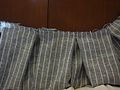
Box pleats
Double box pleats

Box pleats are knife pleats back-to-back, and have a tendency to spring out from the waistline.[3] They have the same 3:1 ratio as knife pleats, and may also be stacked to form "stacked-" or "double-box pleats". These stacked box pleats create more fullness and have a 5:1 ratio. They also create a bulkier seam. Inverted box pleats have the "box" on the inside rather than the outside. This pleat was 'invented' in 1984 by Hana Havelova-Vanek (immigrant from Prague, CZ) for use in women's golf and tennis wear (and sold worldwide under the labels Hanasport & Golf Couture) [4]. Contrasting colors and fabrics can be hidden by a box pleat that create accents and highlights during movement of the garment.

Cartridge

[edit]
Cartridge pleats

Cartridge pleats are used to gather a large amount of fabric into a small waistband or armscye without adding bulk to the seam. This type of pleating also allows the fabric of the skirt or sleeve to spring out from the seam. During the 15th and 16th centuries, this form of pleating was popular in the garments of men and women. Fabric is evenly gathered using two or more lengths of basting stitches, and the top of each pleat is whipstitched onto the waistband or armscye. Cartridge pleating was resurrected in 1840s fashion to attach the increasingly full bell-shaped skirts to the fashionable narrow waist.[5][6][7]

Fluted

[edit]

Fluted pleats or "flutings" are very small, rounded or pressed pleats used as trimmings.[8] The name comes from their resemblance to a pan flute.

Fortuny

[edit]

Fortuny pleats are crisp pleats set in silk fabrics by designer Mariano Fortuny in the early 20th century, using a secret pleat-setting process which is still not understood.

Honeycomb

[edit]

Honeycomb pleats are narrow, rolled pleats used as a foundation for smocking.

Kick

[edit]

Kick pleats are short pleats leading upwards from the bottom hem of garments such as skirts or coats, usually at the back. They allow the garment to drape straight down when stationary while also allowing freedom of movement.

Kingussie

[edit]
Kingussie pleats

Kingussie pleats, named after the town in Scotland, are a very rarely seen type of pleat used in some Scottish kilts. They consist of a single centrally located box pleat in the rear of the kilt with knife pleats fanning out on either side.

Knife

[edit]

Knife pleats are used for basic gathering purposes, and form a smooth line rather than springing away from the seam they have been gathered to. The pleats have a 3:1 ratio–three inches of fabric will create one inch of finished pleat. Knife pleats can be recognized by the way that they overlap in the seam.[3]

Organ

[edit]

Organ pleats are parallel rows of softly rounded pleats resembling the pipes of a pipe organ. Carl Köhler[9] suggests that these are made by inserting one or more gores into a panel of fabric.

Plissé

[edit]

Plissé pleats are narrow pleats made by gathering fabric with stitches, wetting the fabric, and "setting" the pleats by allowing the wet fabric to dry under weight or tension. Linen chemises or smocks pleated with this technique have been found in the tenth century Viking graves in Birka.[10]

Rolled

[edit]

Rolled pleats create tubular pleats which run the length of the fabric from top to bottom. A piece of the fabric to be pleated is pinched and then rolled until it is flat against the rest of the fabric, forming a tube. A variation on the rolled pleat is the stacked pleat, which is rolled similarly and requires at least five inches of fabric per finished pleat. Both types of pleating create a bulky seam.

Watteau

[edit]

Watteau pleats are one or two box pleats found at the back neckline of 18th century sack-back gowns and some late 19th century tea gowns in imitation of these. The term is not contemporary, but is used by costume historians in reference to these styles as portrayed in the paintings of Antoine Watteau.[11]

Modern usage

[edit]

Clothing features pleats for practical reasons (to provide freedom of movement to the wearer) as well as for purely stylistic reasons.

Shirts, blouses, jackets

[edit]
A girl wearing a pleated plaid skirt. (Tekkoshocon, Pittsburgh, Pennsylvania, 2010)

Shirts and blouses typically have pleats on the back to provide freedom of movement and on the arm where the sleeve tapers to meet the cuff. The standard men's shirt has a box pleat in the center of the back just below the shoulder or alternately one simple pleat on each side of the back.

Jackets designed for active outdoor wear frequently have pleats (usually inverted box pleats) to allow for freedom of movement. Norfolk jackets have double-ended inverted box pleats at the chest and back.

Skirts and kilts

[edit]

Skirts, dresses and kilts can include pleats of various sorts to add fullness from the waist or hips, or at the hem, to allow freedom of movement or achieve design effects.

  • One or more kick pleats may be set near the hem of a straight skirt to allow the wearer to walk comfortably while preserving the narrow style line.
  • Modern kilts may be made with either box pleats or knife pleats, and can be pleated to the stripe or pleated to the sett (see main article Kilts: Pleating and stitching).

Trousers

[edit]
Jumpsuit with pleated legs.

Pleats just below the waistband on the front of the garment are typical of many styles of formal and casual trousers including suit trousers and khakis. There may be one, two, three, or no pleats, which may face either direction. When the pleats open towards the pockets they are called reverse pleats (typical of khakis and corduroy trousers) and when they open toward the crotch, they are known as forward pleats.

Utilitarian or very casual styles such as jeans and cargo pants are mostly flat-front (without pleats at the waistband) but may have bellows pockets.

Pleated trousers were popular before World War II. Pleated pants, especially of the double reverse pleat variety, were commonplace in the 1980s and 1990s, but by the late 2000s they had fallen out of favour.[12]

Pockets

[edit]

A bellows pocket is patch pocket with an inset box pleat to allow the pocket to expand when filled. Bellows pockets are typical of cargo pants, safari jackets, and other utilitarian garments.

Pleated blinds

[edit]

The pleated blinds are curtains made of a dense fabric that folds up in an accordion when lifted. The model was developed in Germany in the middle of the 20th century. Today pleated blinds are popular all over the world due to their functionality, variety of design and effective protection from sunlight they provide.

[edit]
  1. Woodblock print of sunray pleated folding fan, Japan, 19th century
  2. Afternoon costume with box pleated skirt and unpressed box pleated bodice panel, France, 1886
  3. Fortuny pleated Delphos gown, 1917
  4. Knife-pleated kilt with pleats sewn down to the hip line, 2005
  5. Organ pleated gown, Florentine, 1470
  6. Tea gowns with Watteau-pleated backs, Russia, 1899
  7. Fustanella - Balkans men's garb with pleats

See also

[edit]

References

[edit]

Sources

[edit]
  • Arnold, Janet: Patterns of Fashion: the cut and construction of clothes for men and women 1560–1620, Macmillan 1985. Revised edition 1986. ISBN 0-89676-083-9
  • Arnold, Janet: Patterns of Fashion 1 (cut and construction of women's clothing, 1660–1860), Wace 1964, Macmillan 1972. Revised metric edition, Drama Books 1977. ISBN 0-89676-026-X.
  • Kohler, Carl: A History of Costume, Dover Publications reprint, 1963, ISBN 0-486-21030-8
  • Owen-Crocker, Gale R., Dress in Anglo-Saxon Englandrevised edition, Boydell Press, 2004, ISBN 1-84383-081-7
  • Picken, Mary Brooks, The Fashion Dictionary, Funk and Wagnalls, 1957. (1973 edition ISBN 0-308-10052-2)
  • Tozer, Jane and Sarah Levitt, Fabric of Society: A Century of People and their Clothes 1770–1870, Laura Ashley Press, ISBN 0-9508913-0-4
[edit]
Revisions and contributorsEdit on WikipediaRead on Wikipedia
from Grokipedia
A pleat is a type of fold formed by doubling fabric back upon itself and securing it in place, creating structured volume and texture in garments or other textile applications. This technique, derived from the Latin plicāre meaning "to fold," has roots in Middle English as "pleit" or "plite," with the noun form first attested in the 15th century and the verb in the 14th. Pleats originated in ancient civilizations, with archaeological evidence from Egypt's Middle Kingdom (circa 2055–1650 BCE) revealing finely pleated linen garments used in elite attire, such as kilts and dresses, to enhance airflow in the hot climate while signifying wealth and status. These early pleats were achieved by folding lightweight linen and treating it with natural stiffeners like gum arabic or starch to maintain sharp creases, often depicted in tomb carvings and statuary as protruding, elegant folds. Over millennia, pleating evolved across cultures, appearing in Greek chitons and Roman togas before becoming a staple in European fashion during the Renaissance and beyond, where it added decorative flair and functionality to skirts, blouses, and formal wear. In sewing and garment construction, pleats serve both aesthetic and practical purposes, allowing for controlled fullness, ease of movement, and visual interest without excess bulk. Common types include:
  • Knife pleats: Narrow, evenly spaced folds pressed in one direction, often used in skirts for a streamlined silhouette.
  • Box pleats: Formed by two facing folds creating a flat center, providing structured volume as seen in traditional school uniforms or dresses.
  • Inverted pleats: Folds that meet at the center and open outward, ideal for adding subtle flare in pants or skirts.
  • Accordion pleats: Zigzag-style folds resembling an accordion bellows, typically heat-set for durability in modern synthetic fabrics.
  • Kick pleats: Short inverted slits at garment hems, incorporated for walkability in fitted skirts.
Contemporary continues to innovate with pleats, employing industrial techniques like heat-pressing or pleating for everything from high-end couture to everyday apparel, while sustainable practices revive hand-pleating in artisanal .

Fundamentals

Definition and Purpose

A pleat is a type of fold formed by doubling fabric back upon itself and securing it in place, typically creating a structured crease that adds dimensionality to the . This intentional manipulation contrasts with unintentional creases, as pleats are designed to enhance the fabric's form while maintaining its integrity. Commonly applied in , pleats can vary in scale but fundamentally serve to transform flat into a more volumetric structure. The primary purposes of pleats include providing functional ease, such as facilitating movement in garments like skirts by allowing fabric to expand and contract without restriction. Aesthetically, they introduce texture and visual interest, creating a sense of flow and layering that elevates the overall design. Practically, pleats enable the gathering of excess fabric, controlling fullness to fit varying body shapes or architectural elements in apparel and furnishings. In terms of basic , a pleat consists of key components including the fold lines—where the fabric is bent—the creases that form sharp edges along those lines, and the depth, which measures the distance between the outer visible fold and the inner hidden fold. Pleats can be secured through pressing with heat and steam to set the shape, stitching along the edges for permanence, or left loose for a softer, more fluid effect, depending on the desired outcome. The underlay, often twice the depth, refers to the layered fabric beneath the visible pleat, contributing to its stability. Pleats manipulate fabric tension by distributing stress across the folds, which prevents pulling or in high-movement areas and promotes a controlled drape that follows the body's contours more naturally. This redistribution allows excess material to be absorbed into the pleats, reducing overall tautness while enhancing the fabric's ability to flow and recover shape during wear.

Materials and Suitability

Pleats can be formed in a variety of materials, with suitability depending on the desired permanence and application. Natural fibers such as , , and are commonly used for pleating in apparel due to their versatility and aesthetic qualities, though they often require additional treatments to maintain shape after washing. Synthetic fibers like and offer greater durability for permanent pleats, as they respond well to heat-setting processes that lock in folds. Non-fabric materials, including and sheets, are suitable for non-apparel uses such as filters, , or architectural elements, where mechanical folding provides rigidity without the need for fiber-based retention. Key material properties influence pleat durability and appearance. Crispness, achieved through starching in cotton fabrics, helps hold sharp, defined folds by increasing and resisting deformation. In contrast, silk's natural drape allows for soft, flowing pleats that enhance fluidity in garments, but its smooth surface can lead to slippage during formation. provides resilience and insulation, making it ideal for structured pleats in outerwear, though its crimp may cause uneven folding if not pre-conditioned. Knitted fabrics pose challenges due to their elasticity, which can result in wrinkling or distortion rather than clean pleats, limiting their use without stabilization. Preparation techniques are tailored to material type to optimize pleat retention. Natural fibers like and often undergo or chemical stiffening with resins to set folds, while weighting agents can enhance drape in for temporary effects. Synthetics such as benefit from application in cabinets or presses, which molecularly fixes the pleats for long-term durability. For and , mechanical pressing with molds suffices, avoiding heat to prevent cracking. Certain materials present limitations that require specialized handling. Slippery fabrics like , often derived from or synthetics, tend to shift during pleating, necessitating pinning, underlays, or fine silk pins to prevent misalignment and ensure even folds. Additionally, natural fibers' susceptibility to moisture can cause pleats to relax over time, unlike synthetics' inherent crease retention.

Historical Context

Early Origins

The earliest evidence of pleating appears in ancient Egyptian linen garments dating back to around 3000 BCE, where fine pleated sleeves on shirts and tunics were crafted from high-thread-count to create structured folds that enhanced in the hot climate. In (c. 2000–1450 BCE), women wore flounced skirts with layered, pleat-like elements for decorative effect. From the Archaic period through the Classical era, the Ionic featured pleated skirts formed by gathering fabric with a , while the often included upper-edge pleats fastened with pins to produce straight, elegant lines down the back, as depicted in vase paintings and statuary like the Caryatids of the . Similarly, in from the period onward, togas were draped in complex series of folds and pleats, with the fabric—typically 12 to 18 feet long—wrapped around the body in multiple layers, starting over the left shoulder and pulled under the right arm to form weighted, cascading pleats that reached the calf, as illustrated in sculptures such as those on the (13–9 BCE). Across other cultures, pleating manifested in draped garments that emphasized folds for form and function. In India, sari-like drapery originated in the Indus Valley Civilization (c. 2800–1800 BCE), with the garment referenced in the Rig Veda (c. 1500 BCE), in the traditional Nivi style incorporating multiple pleats at the waist tucked into a petticoat and a pleated pallu (loose end) draped over the shoulder, allowing fluid movement while adhering to modesty norms. Japanese kimono construction, evolving from the 8th century CE Heian period, included a subtle adjustment pleat sewn into the back seam of women's garments to accommodate the wide obi sash and adjust for the wearer's size, ensuring a smooth silhouette when tied, as evidenced in historical textile analyses. In various African traditions, such as among Yoruba communities in Nigeria, wrappers were long cotton cloths pleated and tied around the waist or as skirts, often using resist-dyeing techniques like adire where fabric was gathered and stitched into pleats before indigo dyeing to create patterned folds, reflecting communal craftsmanship. Traditional pleating methods in these pre-modern societies relied on manual techniques without machinery, primarily involving hand-pressing dampened fabrics to set folds. In ancient Egypt, linen was soaked in starch derived from plant gums like gum arabic, then squeezed forcefully or pressed between wooden boards or with heavy tools to form uniform pleats measuring about 16 mm apart, sometimes achieving a self-pleating effect through weaving and humidity exposure. Greek and Roman draping similarly used hand-folding of wool or linen, often weighted at the ends and secured with pins or belts to maintain pleats, while in India and Africa, fabrics were washed, pleated by hand or with threads, and sometimes heated over low fire or pressed with stones to fix the creases during dyeing or wrapping processes. Pleats held significant symbolic roles in ancient societies, often denoting , purity, or divine favor through their labor-intensive creation and visual complexity. In , intricately pleated kilts and tunics were reserved for pharaohs, nobles, and , symbolizing elevated rank and cleanliness—white represented purity, with pleats evoking the sun's rays and , as non-elites wore simpler, unpleated wraps. In and , pleated garments like the or signified citizenship and moral virtue for free men, while in contexts across cultures, such as Indian sarees in Hindu ceremonies or African pleated wrappers in communal rites, folds embodied , , and ancestral ties.

Development in Fashion Eras

During the period, particularly in 16th-century , pleats were employed to create dramatic volume in gowns, often draping over farthingales—hooped understructures that supported wide skirts—and forming intricate ruffs around the for ornamental effect. These ruffs, constructed from starched or and set into fine pleats, evolved from simple collars into elaborate, standing frills that symbolized wealth and status, reaching their peak in the late across . By the , pleating techniques advanced in Western women's robes, such as the robe à la française, where wide pleats cascaded from the shoulders to the floor, enhancing the gown's sweeping silhouette and adding luxurious fullness without excessive fabric bulk. Cartridge pleats were also used in fitted-back styles like the robe à l'anglaise to gather skirts efficiently around the hips, contributing to the era's emphasis on elegant, voluminous . These innovations reflected a shift toward more structured yet fluid expressions of opulence in courtly attire. In the , integrated pleats into bustles and crinolines to define the exaggerated silhouette, with and pleats often pleated into waistbands over structures to support expansive skirts and create textured depth at the rear. This period saw pleats not only for volume but also for decorative layering in day dresses and evening gowns, aligning with the era's focus on and elaborate form. The early marked a pivotal innovation with Mariano Fortuny's Delphos gown, introduced in 1907, which featured finely pleated permanently set using a secretive heat process involving rollers, allowing the garment to retain its fluid, sculptural folds without ironing. This breakthrough revived ancient-inspired in modern couture, emphasizing ease and artistry over rigid structuring. Post-World War II, Christian Dior's New Look collection of 1947 reintroduced pleats to achieve extravagant skirt fullness, using layered knife pleats and heavy interfacings to evoke pre-war femininity amid fabric abundance. Skirts often incorporated up to 13 yards of pleated material, folded at the waist for a cinched effect that contrasted wartime austerity. Wartime rationing during profoundly influenced pleat designs by imposing strict limits on fabric use, such as prohibiting excessive pleats, full skirts, and hems wider than two inches in both the and to prioritize military needs and promote efficiency. These restrictions spurred innovations in minimalist pleating, like shallow knife pleats in , which conserved material while maintaining style, paving the way for post-war exuberance in pleated silhouettes.

Classification of Pleats

Accordion Pleats

Accordion pleats feature even, parallel folds that create a narrow pattern, mimicking the expandable of an instrument, with pleats typically pressed flat for a crisp appearance. These folds are uniform and closely spaced, often measuring around 1/4 inch in width, providing a subtle yet dynamic texture to the fabric surface. The creation of accordion pleats involves precise manipulation of the fabric to achieve permanent creases. In industrial settings, machines roll the fabric between heated blades or rollers, applying pressure and heat to compress and set the folds, particularly effective on materials. Hand-crimping offers a more artisanal approach, where fabric is manually folded and pressed between heated tools to embed the structure without chemical treatments. Key characteristics of accordion pleats include their expandability, which allows the fabric to for increased volume and fluid movement during wear, making them ideal for adding drape to garments. They maintain their shape effectively in synthetic fabrics, where heat-setting locks the pleats in place for durability, but perform less reliably in heavy or natural fabrics, where the fine folds may crush or lose definition over time. Lighter-weight materials thus enhance their visual and functional appeal. Historically, accordion pleats rose to prominence in the , especially in flapper dresses, where their ability to expand and sway complemented the era's liberated silhouette and emphasis on energetic motion in daytime and evening attire.

Box Pleats

Box pleats consist of two equal folds of fabric that are brought together to meet at a central crease, creating a symmetrical, box-like shape that adds structured volume to a garment. These pleats are typically 1 to 2 inches wide, depending on the desired fullness and fabric weight. To create box pleats, the fabric is first folded along marked lines to form the outer creases, which are then pressed firmly to set the shape. The folded edges are brought inward to meet at the centerline without overlapping, and the pleat is secured by stitching along the or hem, often using pins or tacks to maintain the inversion and ensure even distribution. This method allows for precise control over the pleat's depth and alignment during garment assembly. Box pleats provide stable, structured fullness that holds its form well, making them particularly suitable for stiffer fabrics like or blends that retain creases. They can be configured as outward-facing for visible decoration or inverted to conceal the folds while still expanding the . In historical , box pleats were commonly used in 18th-century petticoats to project the skirt outward, contributing to the wide, rococo-inspired silhouettes of the period. This technique appeared in ensembles like the robe à la française, where wide box pleats enhanced the garment's dramatic drape and volume.

Cartridge Pleats

Cartridge pleats, also known as cartridge gathers or gaging, consist of small, tightly formed pleats measuring approximately 1/4 to 1/2 inch in width for lighter fabrics, arranged in multiple rows to distribute fullness evenly across a garment while minimizing bulk at the attachment point. This technique creates rounded, cylindrical shapes in the fabric that resemble small cartridges, allowing large widths of material—often several yards—to be condensed into a narrow or edge without creating excessive thickness. The resulting structure provides a controlled, spring-like projection of fabric from the , enhancing volume in skirts while maintaining a smooth transition to the upper garment. The creation process begins with marking even rows of dots along the top edge of the fabric, typically two to four rows spaced about 1/2 inch apart, using a spacing that matches the desired pleat depth—narrower for and broader for heavier materials. Strong thread, such as twist, is then used to sew stitches through these marks, which are pulled taut to form the compact pleats; the threads are knotted to hold the shape. These gathered cartridges are subsequently attached by whipstitching them directly to a finished or tape, with precise alignment to ensure uniform distribution and even spacing, a step that demands careful hand-sewing to avoid distortion. This method requires meticulous planning, as the ratio of fabric fullness to measurement can be as high as 3:1 or more, depending on the garment's . In terms of characteristics, cartridge pleats excel at replicating the structured fullness of historical silhouettes in contemporary recreations, offering a neat, stacked appearance that supports voluminous lower garments without the need for additional stiffening in some cases. They perform best with medium-weight fabrics like or , where the material's drape allows the pleats to hold their rounded form, though they can be adapted to lighter silks with adjusted stitch lengths. Historically, this technique was employed in Elizabethan-era farthingales and skirts, where it gathered overskirts over supportive hoop structures to achieve the era's wide-hipped profile, and extended into 17th-century dresses and for similar control in formal attire.

Fluted Pleats

Fluted pleats are characterized by their small, rounded or wavy folds that produce a scalloped, ruffled effect, evoking the appearance of a pan flute's pipes. Unlike broader pleat types, they are shallow in depth, typically measuring around 1/8 inch, and emphasize ornamental detailing over structural support. These pleats are formed by cutting fabric strips along scalloped edges or using gathering stitches to create the curved waves, followed by pressing to set the shape. Historically, a specialized fluting iron—a heated tool with grooved surfaces—was employed to imprint the rounded creases into the fabric, though modern methods often involve or lightweight strips as ready-made trim. Fluted pleats impart a delicate texture and gentle movement to garments, enhancing visual interest without adding bulk. They are particularly suited to lightweight, sheer materials like chiffon or , which allow the subtle undulations to catch light and flow gracefully. In the of the 1810s, fluted pleats appeared as trims on bodices and evening gowns, contributing to the era's neoclassical aesthetic through their ripple-like ruching effects on fine silks and satins.

Fortuny Pleats

Fortuny pleats are fine, irregular vertical folds, typically measuring about 1/8 inch (2.8–3 ) in depth, created in lightweight fabric to produce a , shimmering effect reminiscent of classical . These pleats feature subtle horizontal undulations or ripples, with an average periodicity of around 14 , allowing the material to drape closely to the body while maintaining flexibility and movement. The resulting is highly durable yet soft, with pleats that can be restored through gentle manipulation after exposure to moisture, making it suitable for elegant, form-fitting garments. The pleats were developed through a proprietary method patented on November 4, 1909, by Spanish designer Mariano Fortuny (French 408.629), in collaboration with his wife, French designer Henriette Nigrin, who is credited as the inventor on the application. The process involves hand-pleating damp under tension using basting threads, followed by setting the folds with and —typically at 15 psi and 121°C—without the need for stitching or mechanical machinery. While the exact technique remained a closely guarded , even in the patent, modern analyses suggest the silk may have been treated with a protein , such as albumen from egg whites, to enhance the pleats' resilience. This innovation allowed for permanent fixation in natural silk fibers, distinguishing it from temporary mechanical pleating methods. Inspired by the finely draped robes of statues, such as of , Fortuny pleats were prominently featured in the Delphos gowns, introduced around and produced in until the mid-20th century. These tube-like dresses, often in solid colors and weighted with hand-blown Venetian glass beads for added drape, became icons of early 20th-century avant-garde fashion, favored by elite figures including dancers and , and actress . The technique's enduring legacy lies in its artisanal exclusivity to the Fortuny brand for decades, influencing later designers like and appearing in major exhibitions, such as the 2023 show on women in . Recent experimental replications have begun to approximate the effect, but the original process's subtlety continues to evade full duplication.

Honeycomb Pleats

Honeycomb pleats consist of narrow, rolled folds in fabric that interlock to form a cellular, honeycomb-like pattern, primarily serving as the foundational structure for smocking embroidery. This design creates small air pockets within the layered pleats, providing a lightweight yet insulating texture that enhances warmth while allowing flexibility and stretch in garments. The resulting three-dimensional effect adds decorative depth, making it suitable for both thermal functionality in practical clothing and ornamental applications in fashion. The creation of honeycomb pleats begins with marking a grid of dots on the fabric to guide even gathering, followed by pulling threads through these points to form tight, alternating rolls of pleats, often in a double-layered setup for added dimension. These pleats are then secured and shaped using stitches, such as the stitch, which links adjacent pleats into interlocking cells without flattening the structure; this process can be done manually with a needle or aided by pleating tools for precision. The technique results in a fabric that expands and contracts slightly, mimicking the adaptability of cellular structures while maintaining a compact, textured form. Historically, honeycomb pleats trace their origins to 16th-century European textiles, particularly in clothing like pleated hems on shirts (hemd), where they were combined with for both aesthetic and practical insulation in everyday wear. By the , the technique evolved in English farming smocks, adapting quilt-like layering principles to create warm, durable outer garments for rural laborers exposed to harsh weather. This adaptation influenced modern decorative uses in home goods, such as cushions and linens, extending the pleat's role beyond apparel.

Kick Pleats

A kick pleat is an inverted pleat positioned at the hem of a narrow skirt or fitted garment, creating a functional vent that typically extends 6 to 10 inches upward from the hemline to facilitate ease of movement while walking. This design element, often formed as a small box or inverted fold, lies flat against the fabric when the wearer is stationary, maintaining a sleek silhouette without adding bulk. In construction, the kick pleat is created by first marking the pleat location on the or fabric, then folding the hem edges inward to form the inverted before seams that secure the folds up to the point where the vent begins. Stitching is applied along the fold lines to ensure the pleat remains closed at rest but separates naturally during strides; underlining with lightweight fabric, such as , is commonly used to reinforce the structure and prevent fraying in professional garments. This method emphasizes durability and subtlety, allowing the pleat to open only as needed for mobility in tight-fitting attire. Kick pleats serve a practical role by preventing seam splitting in closely fitted skirts, making them a staple in professional and office wear where ease of movement is essential without compromising form. They emerged prominently in the alongside the rise of the , a popularized by designers like for its streamlined appeal in postwar women's fashion, particularly suited to the era's emphasis on polished, functional clothing for working women.

Kingussie Pleats

Kingussie pleats represent a rare and distinctive variation in Scottish kilt construction, named after the town of in the where early examples were discovered. This style emerged in the early , with surviving kilts dating to around , coinciding with the romantic revival of during King George IV's visit to , organized by Sir Walter Scott. Unlike more common pleating methods, Kingussie pleats feature a central box pleat at the back, flanked by knife pleats that fan outward in opposite directions toward the front aprons, creating a balanced, symmetrical appearance when the fabric is properly aligned. The creation of pleats requires meticulous hand-pleating of fabric to ensure continuity of the pattern, or , across the folds, which is essential for preserving the visual integrity of the plaid in Highland attire. Tailors form the central wide box pleat at the rear, then arrange the adjacent knife pleats to radiate symmetrically, typically resulting in 9 to 15 pleats overall using about 5 yards of material. These pleats are securely stitched at the to match the sett lines precisely, with deep reverse pleats added at the edges for improved fit and drape. This process demands skilled craftsmanship to achieve even spacing and alignment, distinguishing it from standard knife pleating. Characteristically, pleats maintain plaid symmetry through their centered design, where the pleats face inward toward the middle back rather than uniformly in one direction, allowing the to flow continuously without disruption. This configuration provides a gentle, controlled swing during movement, making it particularly suited for outdoor activities like in rugged terrain, though it can become unruly in strong winds. Culturally, the style holds specificity to Scottish traditions, embodying an improvised yet enduring adaptation of kilts that highlights regional tailoring heritage.

Knife Pleats

Knife pleats are characterized by narrow, flat folds formed by doubling the fabric back on itself and pressing it in a single direction, creating sharp, precise creases that lie smoothly against the body. These pleats typically measure ½ to 1 inch (1.3 to 2.5 cm) in width and are evenly spaced to produce a streamlined, elegant without added bulk. Unlike more structured pleat types, knife pleats emphasize , allowing the fabric to drape fluidly while maintaining a tailored appearance. The creation of knife pleats involves marking the fabric at regular intervals, folding it to form the pleat, and securing it either by pressing with and for a temporary hold or by stitching along the upper edge for permanence. This method can be applied unidirectionally, with all folds facing the same way for a flow, or adapted in bi-directional arrangements for subtle variation, though the former is most common for their classic form. The technique requires crisp fabrics such as , , or synthetics to retain the sharp edges, as softer materials like may require additional or fusing to prevent shifting. Knife pleats offer a sleek and versatile aesthetic, providing subtle fullness and movement while avoiding the dimensionality of inverted or box styles; they excel in garments needing controlled drape, such as skirts or dresses, but tend to flatten under prolonged wear or moisture without reinforcement. In historical context, knife pleats formed a key basis for the bias-cut dresses developed by innovators like , enhancing the era's emphasis on fluid, body-conforming lines and modern sophistication.

Organ Pleats

Organ pleats, also known as pleats, consist of parallel rows of softly rounded, cylindrical folds that evoke the upright pipes of a , providing a bold, protruding effect for added volume in garments. These pleats typically measure 1 to 2 inches in and stand erect to emphasize and texture, distinguishing them from shallower or flatter styles. The construction involves gathering fabric into tubular forms by stitching parallel lines at regular intervals to form the rounded cylinders, followed by fanning the pleats outward from a central attachment point, such as the or , to achieve the desired spread. This method, akin to advanced gauging techniques, requires precise to maintain the structural integrity of each fold. Stiff fabrics like are ideal, as their crispness supports the upright posture and prevents collapse, enhancing the dramatic . Originating in the era, organ pleats appeared in European fashion around the early , notably on overgowns like the giornea, where they radiated fullness from the for ornate, voluminous skirts. By the , the technique—often termed organ pleating or gauging—gained prominence in the for formal attire, including gowns, where it shaped dome-like skirts from full fabric widths to accentuate the era's structured, Romantic silhouettes supported by layered petticoats. The style experienced a revival in 1980s eveningwear, incorporating tubular organ-pipe pleats into couture designs for opulent, layered effects that echoed historical grandeur.

Plissé Pleats

Plissé pleats feature fine, corrugated ridges, typically about 1/16 inch wide, that run across the entire surface of the fabric, creating a crinkled, textured appearance without the need for structural folds. This effect mimics the puckered quality of crepe or while using more accessible materials, adding subtle volume and movement to garments. The creation process relies on a chemical treatment rather than mechanical folding or . Caustic soda, or , is printed or applied selectively to the fabric in lines or patterns, causing the treated areas to shrink and pucker while the untreated sections remain intact, forming the ridges. Following this, the fabric undergoes neutralization in an or rinse with a mild like soda ash to halt the reaction and stabilize the texture, requiring no stitching for permanence. This method allows for efficient, industrial-scale production on fabrics like , , or organdy. These pleats exhibit high durability, especially in synthetic fibers such as , where the chemical sets the ridges permanently, resisting washing and wear without losing shape. Unlike delicate natural silks, plissé on synthetics provides a cost-effective alternative, achieving a luxurious, rippled surface at a fraction of the price of hand-pleated luxury alternatives. Developed in the late as part of advancing finishing techniques, plissé pleats surged in popularity during the 1960s mod fashion era, appearing in bold, geometric skirts and dresses that emphasized youthful, textured silhouettes.

Rolled Pleats

Rolled pleats are formed by rolling the fabric edge into narrow tubes, typically measuring 1/8 to 1/4 inch in diameter, and securing them with fine stitching to produce a pleated border along garment edges. This method creates a cylindrical fold with a double-rolled edge and hidden internal seam, achieved through a spiral rolling technique that results in a tubular, rounded appearance suitable for lightweight, fluid fabrics such as or chiffon. The creation process begins with preparing the fabric edge by trimming it close if necessary, then manually rolling it tightly between the fingers while stitching with a fine needle and thread in small, even whip stitches to hold the roll in place. For machine production, a rolled hem foot guides the fabric into a narrow , where adjusted tensions cause the edge to roll automatically as it is stitched, forming the pleated effect along borders like hems or collars. This dual approach allows for precision in handwork or speed in industrial settings, with the resulting pleats often spaced closely to form a continuous trim. Characteristics of rolled pleats include their neat, inconspicuous finish that conceals raw edges effectively, making them ideal for delicate applications where durability and aesthetics intersect. They impart a subtle texture that enhances curves without bulk, providing an elegant, low-profile decoration on items like collars and sleeve cuffs. Historically, rolled pleats appeared commonly in Victorian-era , where the technique offered a refined edge treatment for sheer undergarments constructed from fine cottons and linens. By the , they gained popularity in bias-cut trims, accentuating the draped silhouettes of dresses and evening wear with their fluid, unobtrusive texture.

Watteau Pleats

Watteau pleats consist of loose, unstitched box pleats that cascade from the shoulder or down the back of a garment, forming expansive folds that create a fluid, train-like drape. These pleats, often two in number, are typically formed from lightweight, flowing fabrics to emphasize their natural movement and graceful fall. The style originates from early 18th-century , particularly the robe à la française, where the pleats were a defining feature of the sack-back . Named after the artist , whose paintings from the 1710s frequently portrayed women in such billowing, pleated gowns, the technique evokes the artistic and aristocratic elegance of the period. To create Watteau pleats, fabric is draped and folded into wide box pleats at the upper edge, then loosely tacked or stitched only at the or shoulders, permitting the remainder to hang freely without further attachment along its length. This minimal securing allows the pleats to retain their unstructured flow, enhancing the garment's sense of movement and volume. Characterized by their ability to produce a regal, elongated back profile, Watteau pleats suit supple materials like silk taffeta or , which amplify their soft, undulating quality. The style saw a notable revival in through bias-cut evening gowns and tailored s, as exemplified by Gabrielle Chanel's red velvet ensemble, which adapted the pleats for a modern, romantic interpretation of historical .

Production Techniques

Manual Construction

Manual construction of pleats relies on skilled handwork to form precise, durable folds in fabric, allowing artisans to achieve custom fits and artistic effects in small-scale production. This approach emphasizes control over each fold, contrasting with automated methods by enabling adjustments for unique garment shapes or fabric behaviors. Common in couture and sewing, manual pleating demands patience and precision to ensure the pleats lie flat and symmetrical after completion. Essential tools for manual pleating include a steam iron for setting folds, glasshead pins for temporary securing, a clear and water-soluble marking tool for accuracy, needles for stitching, and bone folders for creating sharp creases without damaging the fabric. Pleating boards, which feature grooved channels, guide the fabric into uniform folds during pressing, particularly useful for repetitive patterns like or pleats. These tools facilitate the process on various fabrics, provided the material has been prepped for handling, such as by pre-shrinking. The core steps begin with measuring the fabric length and calculating pleat dimensions based on the desired fullness—for instance, knife pleats typically require one-and-a-half to three times the finished width. Mark fold lines and placement lines parallel to the fabric edge using a ruler and chalk or marker. Fold the fabric along the marked lines, aligning folds to the placement guides, and insert pins perpendicular to the folds to hold them in place without distorting the grain. Steam the pinned pleats generously, then press firmly with the iron in an up-and-down motion at the fabric's recommended temperature to set the shape; a solution of one part vinegar to three parts water can enhance permanence by relaxing fibers. For structured types like knife or box pleats, topstitch along the waistline or seam allowance, 1/8 inch from the edge, to anchor the folds, removing pins as stitching progresses. In box pleats, ensure the inner folds face opposite directions to form the characteristic boxed appearance. Variations adapt these steps to specific pleat styles. Hand-crimping for accordion pleats involves marking very narrow, alternating folds—often 1/4 inch wide—and crimping tightly by hand before pinning and applying sustained heat to create the zigzag effect, ideal for lightweight silks. For Watteau pleats, the process shifts to draping: cut a wide fabric panel for the back, gather and pleat it loosely by hand from the neckline downward, securing with running or prick stitches while adjusting on a dress form to achieve fluid, cascading lines that flare at the hem. These methods briefly reference the directional folding of knife pleats but emphasize manual adjustment over rigid marking. Challenges in manual pleating include maintaining even spacing and depth across the fabric, particularly on curves where the may shift, leading to puckering or uneven fullness. Patterned fabrics exacerbate this, as aligning motifs with folds requires extra marking and test presses to avoid distortion. Artisans mitigate these by working in sections, using frequent measurements, and allowing the fabric to relax between steps, though achieving perfect symmetry often demands multiple iterations.

Mechanical and Industrial Processes

Mechanical and industrial processes for pleating fabrics rely on specialized machinery to achieve uniform folds at scale, enabling efficient production for various applications. Key machines include heat-based pleaters equipped with heated rollers or plates that apply to set accordion-style pleats on synthetic fabrics, ensuring permanent creases through controlled temperature and pressure. For plissé pleats, industrial setups use chemical vats containing caustic solutions like to shrink and crinkle natural fibers such as , creating a puckered texture that mimics fine pleats. Precision is enhanced by laser-guided systems in modern pleating machines, which align fabric edges and maintain consistent fold depths during high-speed operations, particularly for and garment production. The core industrial begins with fabric feeding, where automated systems introduce material at controlled tension to prevent wrinkles, followed by folding via mechanical blades, gears, or rotary mechanisms that form pleats at precise intervals. Setting occurs through heat and pressure in pleaters, which bond folds in synthetics, or chemical immersion for natural fibers, locking the structure without reversion. integrates sensors for real-time monitoring of pleat uniformity, tension, and defects, with automated adjustments to minimize waste and ensure compliance with specifications. Advancements in the introduced automation, such as the pleater invented in the by the Read Company, which used grooved cylinders to create even pleats for apparel, marking a shift toward rotary and -based systems for higher throughput. By the late , patents for control devices in pleating machines further refined precision in factories. Contemporary innovations incorporate (CAD) software, like Optitex, to generate custom pleat patterns digitally, simulating folds and integrating them into garment or furnishing blueprints before physical production. These processes offer scalability for , such as uniform pleating for or work uniforms and blinds, where machines achieve outputs exceeding thousands of meters per hour, reducing labor costs and enabling consistent quality across large volumes. However, chemical-intensive methods like plissé generate , including neutralized caustic effluents that contribute to if not properly treated, prompting industry shifts toward eco-friendly alternatives to mitigate environmental impacts.

Applications in Design

Clothing and Accessories

In upper body garments, knife pleats are commonly integrated into shirt collars to provide structured folds that enhance visual detail and allow for subtle volume without bulk. Box pleats appear in blouses, particularly for creating ruffled effects at necklines or yokes, which add feminine drape and movement to the . Jackets frequently employ kick pleats in side or back vents, enabling ease of motion while maintaining a tailored fit, as seen in structured blazers where the inverted folds prevent fabric strain during wear. For lower body apparel, accordion pleats are a staple in skirts, offering a texture that promotes fluid flow and versatility across lengths from mini to maxi. The style of kilt features a central box pleat flanked by knife pleats that alternate direction, providing balanced drape and allowing the pattern to wrap dynamically around the body. Trousers often feature forward-facing pleated fronts, which create additional room at the hips for natural drape and a polished, elongated line, particularly in or blends for professional attire. Pleated accessories extend these techniques to smaller scales, with rolled pleats in scarves creating lightweight, textured layers that drape elegantly over shoulders or as neck wraps, while fluted variations appear in brims or belt designs for added dimension and style. In the , sustainable pleating has emerged as a key trend, with couture houses emphasizing hand-formed pleats from recycled or low-waste fabrics to minimize environmental impact, in contrast to fast fashion's reliance on synthetic, machine-pleated alternatives that prioritize volume production over durability.

Furnishings and Non-Apparel Uses

Pleated blinds, particularly or cellular varieties, are widely used in treatments for their energy-efficient insulation properties. These shades consist of pleated fabric that forms -like cells, trapping air to create a barrier against loss in winter and gain in summer, reducing loss by up to 40% and potentially saving 10-20% on heating and cooling costs compared to bare . The accordion-style folding allows the shades to stack compactly at the top of the window when raised, maximizing views while providing diffusion and when lowered. In other home furnishings, knife pleats are commonly incorporated into curtains to achieve controlled fullness and elegant gathers, enabling the fabric to drape smoothly with added volume for aesthetic appeal without excessive bulk. Box pleats appear in table skirts to facilitate even drops and structured folds around table edges, enhancing visual interest and allowing the fabric to hang neatly in settings like halls. Beyond furnishings, pleats serve functional roles in non-apparel contexts. Fluted architectural screens, often made from glass or wood with vertical grooves resembling pleats, diffuse natural light to create soft, ambient illumination while maintaining privacy and adding textural depth to interior spaces. In bookbinding, rolled pleats can be applied to edge treatments for decorative reinforcement, folding material to form precise corners and secure bindings in custom volumes. HEPA filters in medical applications, such as systems in ventilators and respirators, often use a pleated design to maximize surface area and capture 99.97% of airborne particles as small as 0.3 microns, ensuring sterile air delivery. The development of energy-efficient pleated shades traces back to the 1970s oil crisis, when rising energy costs spurred innovations like the design, prototyped in 1977 by Wendell Colson to address heat loss amid widespread fuel shortages. This breakthrough was acquired by and formalized in products like Duette shades by 1985, emphasizing mechanical pleating processes to produce insulating cells, influencing modern and .

References

Add your contribution
Related Hubs
User Avatar
No comments yet.