Hubbry Logo
Catholic Marian church buildingsCatholic Marian church buildingsMain
Open search
Catholic Marian church buildings
Community hub
Catholic Marian church buildings
logo
8 pages, 0 posts
0 subscribers
Be the first to start a discussion here.
Catholic Marian church buildings
from Wikipedia
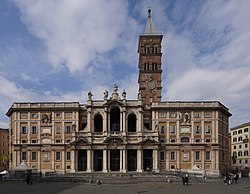
Santa Maria Maggiore, the first Marian church in Rome

Catholic Marian churches are religious buildings dedicated to the veneration of the Blessed Virgin Mary. These churches were built throughout the history of the Catholic Church, and today they can be found on every continent including Antarctica. The history of Marian church architecture tells the unfolding story of the development of Catholic Mariology.

The construction and dedication of Marian churches is often indicative of the Mariological trends within a period, such as a papal reign. For instance, the 1955 rededication by Pope Pius XII of the church of Saint James the Great in Montreal, with the new title Mary, Queen of the World, Cathedral, was a reflection of his being called "the most Marian pope". A year earlier, Pius had proclaimed that title for the Virgin Mary in his 1954 encyclical Ad Caeli Reginam.[1] This encyclical on the Queen of Heaven is an example of how the interplay between churches and Marian art reinforces the effect of Marian devotions.

The beginnings

[edit]
Santa Maria Antiqua, in the Forum Romanum, 5th century, seat of Pope John VII

The New Testament indicates that the practice of meeting together was an important part of the Christian faith from the very early days: "let us not give up the habit of meeting together... instead, let us encourage one another all the more" (Hebrews 10:25). Prior to the fourth century, Christians worshiped in private due to persecutions. After the edict of Milan was issued in 313, Christians were permitted to worship and build churches openly.[2] The generous and systematic patronage of Roman Emperor Constantine I changed the fortunes of the Christian church, and resulted in both architectural and artistic development.[3] In the following decades, congregations built churches for public worship.

The Church of Mary in Ephesus may be one of the earliest Marian churches and is dated to the early 5th century, coinciding with the Council of Ephesus in 431.[4] It may have been built specifically for the council, during which the title of Theotokos, God-bearer, for the Mother of Christ was decided.[4][5] The first Marian churches in Rome: Santa Maria in Trastevere, Santa Maria Antiqua and Santa Maria Maggiore, date from the first part of the fifth century and house some of the earliest forms of public Marian art.[6] The church of Santa Maria Maggiore is now a papal basilica, where the pope presides over the annual Feast of the Assumption of Mary (celebrated each 15 August) and the church includes major pieces of Catholic Marian art.[7]

Some of the early Roman churches were quite small. An example is the church of Santa Maria Antiqua (i.e. ancient St. Mary) built in the 5th century in the Forum Romanum. Pope John VII used Santa Maria Antiqua in the early 8th century as the see of the bishop of Rome. This church includes the earliest Roman depiction of Santa Maria Regina, portraying the Virgin Mary as a Queen in the 6th century.[8][9][10]

Other churches, such as Santa Maria Maggiore, have seen significant additions to their art and architecture over the centuries.[7] The Basilica of the National Shrine of Our Lady of Aparecida in Aparecida, Brazil, is now the second-largest Catholic place of worship in the world, second only to St. Peter's Basilica in Vatican City. In 1984 it was officially declared as "the largest Marian Church in the world."[11]

Some Marian churches are major pilgrimage sites. According to Bishop Francesco Giogia, the Basilica of Our Lady of Guadalupe in Mexico City was the most visited Catholic shrine in the world in 1999, followed by San Giovanni Rotondo (not a Marian shrine) and Our Lady of Aparecida in Brazil.[12] While in 1968 Aparecida had about four million pilgrims,[13] the number has since reached eight million pilgrims per year.[14] Given the millions of visitors per year to Our Lady of Lourdes and Our Lady of Fatima, the major Marian churches receive over 30 million pilgrims per year. In December 2009, the Basilica of Our Lady of Guadalupe set a new record with 6.1 million pilgrims during Friday and Saturday for the anniversary of Our Lady of Guadalipe.[15]

Progression of architecture and belief

[edit]
St. Mary's Basilica, Kraków

Through the centuries, the progression of Medieval architecture towards Romanesque, Gothic, Renaissance, Baroque and eventually modern Marian church architectures may be viewed as a manifestation of the growth of Marian belief – just as the development of Marian art and music were a reflection of the growing trends in the veneration of the Blessed Virgin Mary in the Catholic tradition.[16][17]

A good example of the continuation of Marian traditions from the Gothic period to the present day is found at St. Mary's Basilica, Kraków in Poland. On every hour, a trumpet signal called the hejnał (meaning "St. Mary's dawn" and pronounced hey-now) is still played from the top of the taller of St. Mary's two towers, the noon-time hejnał being heard across Poland and abroad broadcast live by the Polish national Radio 1 Station.[18][19] St. Mary's in Kraków also served as an architectural model for many of the churches that were built by the Polish diaspora abroad, particularly St. Michael's and St. John Cantius in Chicago, designed in the so-called Polish Cathedral style.[20]

Popes have at times viewed the existence of Marian churches as a key to the spread of Marian devotions, e.g. as he entrusted Europe to the Virgin Mary, Pope John Paul II stated: "Thanks to the countless Marian shrines dotting the nations of the continent, devotion to Mary is very strong and widespread among the peoples of Europe."[21]

Apparition-based Marian churches

[edit]
Sanctuary of Our Lady of Lourdes

Marian apparitions have resulted in the construction of major Marian churches.[22] Some of the very largest Catholic Marian churches in the world did not start based on a decisions made by informed theologians in Rome but based on the statements of young and less-than-sophisticated people about their religious experiences on remote (and often unheard of) hilltops.[23][24]

There are remarkable similarities in the accounts of the reported visions which have led to the construction of the churches.[25][26] Two cases in point are the largest Marian churches in Mexico and France, based on the reported Marian apparitions to Saint Juan Diego in Cerro del Tepeyac, (Guadalupe) Mexico in 1531 and Saint Bernadette Soubirous as a child in Lourdes in 1858. Both saints reported visions in which a miraculous lady on a hill asked them to request that the local priests build a chapel at that site of the vision. Both visions had a reference to roses and led to very large churches being built at the sites.[25][26] Like Our Lady of Lourdes in France, Our Lady of Guadalupe is a major Catholic symbol in Mexico.[27] And like the Sanctuary of Our Lady of Lourdes in France, the Basilica of Our Lady of Guadalupe complex is one of the largest and most visited Catholic churches in the Americas.[27]

Three Portuguese children, Lúcia dos Santos, Jacinta and Francisco Marto were equally young and without much education when they reported the apparition of Our Lady of Fátima in Cova da Iria, 1917. The local administrator initially jailed the children and threatened that he would boil them one by one in a pot of oil. Yet, eventually with millions of followers and Catholic believers, the reported visions at Fatima gathered respect and Popes Pius XII, John XXIII, Paul VI, John Paul II, Benedict XVI and Pope Francis voiced their acceptance of the supernatural origin of the Fátima, Portugal, events. The Sanctuary of Our Lady of Fátima is now a major Marian church in Europe.

The Shrine of Nostra Signora della Guardia in Genoa, Italy, has a similar story. In 1490 a peasant Benedetto Pareto reported that the Virgin Mary had asked him to build a chapel on a mountain. Pareto reported that he replied that he was only a poor man and would not be able to do that, but he was told by the Virgin Mary: "Do not be afraid!". After falling from a tree, Pareto changed his mind and built a small wooden room that was eventually enlarged to the present shrine.

And the trend has continued. The first approval for a Marian apparition in the 21st century was granted to the reported visions of Jesus and Mary by Benoite Rencurel in Saint-Étienne-le-Laus in France from 1664 to 1718. The approval was granted by the Holy See in May 2008. Again, in this case, a young Benoite Rencurel (who could not read or write) reported that a lady in white appeared to her on a remote mountain top in Saint-Étienne-le-Laus and asked her for a church to be built there.[28][29][30][31]

In May 2016, the local ordinary of the Diocese of San Nicolás de los Arroyos Bishop Cardelli approved as "worthy of belief" the apparitions associated with the Marian image of Our Lady of the Rosary of San Nicolás. A Shrine erected in honor of Mary under this title was inaugurated in 2014. Reports of unusually radiant, glowing rosary beads were followed by a number of brief visions of Our Lady appearing to housewife and mother-of-two Gladys Motta developed into a series of interior locutions over several years, beginning on October 13 the anniversary of apparitions at Fátima. Specific messages led to the discovery—and restoration to veneration—of a long-neglected statue of a Madonna carrying the Christ Child. Occurring at the close of the twentieth century[2] the messages mirror those given at the beginning of the twentieth century to young shepherds in Portugal where the Virgin Mary reportedly identified herself as the Lady of the Rosary. Following approval of the spiritual merits by local religious authorities, a new church dedicated to Marian devotion under this title was erected as requested by Our Lady during the apparitions.

Churches, icons and devotions

[edit]
Basilica of Our Lady of Guadalupe

Major Marian churches at times house major Marian symbols or icons and the interplay between churches and these symbols can reinforce the effect of Marian devotions. For instance, the Borghese or Pauline Chapel of the Santa Maria Maggiore church houses Salus Populi Romani, which has historically been the most important Catholic Marian art icon in Rome. On 1 April 1899, Eugenio Pacelli (later Pope Pius XII) celebrated his first Holy Mass there. Almost 50 years later, in 1953, Pius XII had Salus Populi Romani carried from Santa Maria Maggiore through Rome to initiate the first Marian year in Church history. In 1954, the icon was crowned by Pius XII as he introduced a new Marian feast Queenship of Mary with the encyclical Ad Caeli Reginam.

Perhaps the ultimate example of this interplay is on Tepeyac hill, in Mexico, the site of the reported apparition of Our Lady of Guadalupe to Saint Juan Diego Cuauhtlatoatzin. The Basilica of Our Lady of Guadalupe on Tepeyac hill houses the tilma (cloak) of Saint Juan Diego on which the image of Our Lady of Guadalupe is said to have been miraculously imprinted, where he had gathered roses. Saint Juan Diego's tilma is a key national and religious icon in Mexico. The series of Marian churches on Tepeyac hill that have housed the tilma since 1531 have received an ever-increasing number of pilgrims and the Basilica of Our Lady of Guadalupe (one of the largest churches in the world) was constructed in 1974 to accommodate the over 5 million pilgrims that arrive there every year.

Architectural periods

[edit]
Santa Maria in Cosmedin

The progress of Marian church architectures manifests both the progress of architecture and the spread of Marian devotions.

If there is a single Marian location that captures several types of architecture, it is the area surrounding the Sanctuary of Our Lady of Lourdes. The Rosary Basilica was built with the Byzantine architecture in the 19th century. The "Basilica of the Immaculate Conception" known widely as the Upper Basilica, was consecrated in 1876 and is an elaborate building in the Gothic style, while the Basilica of St. Pius X, is a very modern building that was completed in 1958 and is almost entirely underground.

Romanesque

[edit]

The basilica of Santa Maria in Cosmedin in the Forum Boarium in Rome is an early example of a Romanesque Marian church. It is the site of the famous La Bocca della Verità, an ancient Roman sculpture which draws many visitors every year.

Speyer Cathedral (also known as the Mariendom) in Speyer, Germany, is an imposing basilica of red sandstone and one of the largest Romanesque churches in the world. The distinctive colonnaded gallery that surrounds it and its imposing triple-aisled vaulted design influenced the development of Romanesque architecture in the 11th and 12th centuries.

Our Lady of Flanders Cathedral in Tournai is one of the key architectural monuments in Belgium. It combines the work of three design periods: the heavy and severe character of the Romanesque nave contrasting with the Transitional work of the transept and the fully developed Gothic style of the choir.

This early period, also included growth and development in other aspects of Mariology, with activities by key figures such as John Damascene and Bernard of Clairvaux. Chants such as Ave Maris Stella and the Salve Regina emerged and became staples of monastic plainsong. Devotional practices grew in number. The Ave Maria prayer gained popularity.

Gothic

[edit]
Chartres Cathedral

Notre Dame de Paris Cathedral is a prime example of French Gothic architecture. It was among the first buildings in the world to use the flying buttress. Its sculptures and stained glass show the heavy influence of naturalism, giving them a more secular look that was lacking from earlier Romanesque architecture.

Chartres Cathedral near Paris is also a good example of a French Gothic cathedral. Its two contrasting spires and the complex flying buttresses that surround it capture key architectural elements of the time. Reims Cathedral, where the kings of France were once crowned, exemplifies the heavier Gothic architecture present in the northern Franco-Germanic areas.

Further south, the façade of Santa Maria Assunta Cathedral in Siena Italy is an excellent example of Tuscan Gothic architecture by Giovanni Pisano.

The interior of Notre-Dame Cathedral, Luxembourg shows the Gothic style of design at its height. The basilica is a good example of late gothic architecture with many Renaissance elements and adornments.

The Basilica of Our Lady of Good Health, a Gothic Marian shrine in Velankanni, India.

One major Mariological issue in this period was the Immaculate Conception. Gradually the idea that Mary had been cleansed of original sin at the very moment of her conception began to predominate, particularly after Duns Scotus dealt with the major objection to Mary's sinlessness from conception, that being her need for redemption.[32] Popes issued degrees and authorized feasts and processions in honor of Mary. Pope Clement IV (1265–1268) created a poem on the seven joys of Mary, which in its form is considered an early version of the Franciscan rosary.

Renaissance

[edit]
Dome of Basilica of Santa Maria del Fiore

Perhaps the key example of early Renaissance Quattrocento Marian architecture is the Dome of Basilica of Santa Maria del Fiore in Florence, Italy. The cathedral was consecrated by Pope Eugene IV in 1436 and was the first 'octagonal' dome in history to be built without a wooden supporting frame and was the largest dome built at the time (it is still the largest masonry dome in the world).

The facade of the Basilica of Santa Maria Novella in Florence is another example of the beginnings of the early Renaissance.

The Basilica of Santa Maria delle Grazie (Milan), famous for the mural of the Last Supper by Leonardo da Vinci is an example of the progression of architecture beyond the Gothic period and towards the Renaissance.

This period also saw unprecedented growth in venerative Marian art with the likes of Donatello, Sandro Botticelli, Masaccio, Filippo Lippi, Piero di Cosimo and Paolo Uccello among many others.

Baroque

[edit]
Santa Maria della Salute, Venice

The Santa Maria della Pace's Baroque façade, designed by Pietro da Cortona is a good example of a Marian church in Rome that progressed beyond the Renaissance.

The Basilica of Our Lady of the Pillar in Zaragoza, Spain, is a Baroque church built upon previous churches at the same site, dating back to the Romanesque period. Being a large rectangle with a nave and two aisles, with two other all-brick chapels, it has a typically Aragonese style and is illuminated by large oculi, characteristic of the buildings of the region from the 17th century onwards.

Some Marian churches are built as a response to specific events, e.g. Santa Maria della Salute in Venice was built to give thanks to thank the Virgin Mary for the city's deliverance from the plague. The church is full of Marian symbolism – the great dome represents her crown, and the eight sides the eight points on her symbolic star.

Baroque literature on Mary experienced unforeseen growth with over 500 pages of Mariological writings during the 17th century alone with contributors such as Francisco Suárez, Lawrence of Brindisi, Robert Bellarmine and Francis of Sales[33] After 1650, the Immaculate Conception was the subject of over 300 publications. In this period Saint Louis de Montfort wrote his highly influential Marian books that influenced several popes centuries later.

Baroque Mariology was supported by Pope Paul V and Gregory XV. Alexander VII declared in 1661, that the soul of Mary was free from original sin. Pope Clement XI ordered the feast of the Immaculata for the whole Church in 1708. The feast of the Rosary was introduced in 1716, the feast of the Seven Sorrows in 1727. The Angelus prayer was strongly supported by Pope Benedict XIII in 1724 and by Pope Benedict XIV in 1742.[34]

Modern

[edit]

The modern period has witnessed unprecedented growth both for Marian churches and for papal and popular support for Marilogy, with a significant increase in the number of pilgrims to Marian shrines.

Basilica of Our Lady of Aparecida, Brazil, 1955. This basilica is the largest Marian church building in the world

.

The Basilica of the National Shrine of Our Lady of Aparecida in Brazil is the largest Marian church building in the world, the largest cathedral and also the second largest church in interior area after Saint Peter's Basilica in Vatican City. It was constructed between 1955-1980 and consecrated by Pope John Paul II. It receives approximately 12 million visitors per year.[35]

Two major Marian Basilicas were built in North America during the 20th Century in the capital cities of Mexico and the U.S. The first was the Basilica of the National Shrine of the Immaculate Conception; Washington, DC. The original plans called for a gothic structure, but were changed in 1918. It was decided at that time to build a structure with a Romanesque exterior and a Byzantine-style interior.[36] From 1974 to 1976, a new Basilica of Our Lady of Guadalupe on Tepeyac hill, north of Mexico City, was built next to the 1709 church which was no longer safe due to weakened foundations. Both buildings are at the site of the apparition of Our Lady of Guadalupe to Saint Juan Diego Cuauhtlatoatzin. It is the most important pilgrimage site in Mexico and perpetual adoration takes place there by many people. By using its atrium, 40,000 people can attend mass at the basilica.

Other Marian churches started to appear around the globe. The Basilica of Our Lady of She Shan was built near Shanghai, China, as the largest Christian church building in East Asia. The new Immaculate Conception Cathedral was built in Manila, Philippines, and the Basilica of Our Lady of Candelaria in Tenerife, Spain.

Our Lady of the Rosary of San Nicolás, Argentina, 2014

This period also saw the growth of lay Marian devotional organizations such as free rosary distribution groups. An example is Our Lady's Rosary Makers which was formed with a $25 donation for a typewriter in 1949 and now has thousands of volunteers who have distributed hundreds of millions of free rosaries to Catholic missions worldwide.

During this period key Marian papal encyclicals and Apostolic Letters were issued and Pope Pius X and Pope Pius XII both took major steps in establishing new Marian dogmas.

The encyclical Ad diem illum of Pope Pius X commemorated the fiftieth anniversary of the dogma of Immaculate Conception, and Pope Pius XII issued the Apostolic constitution Munificentissimus Deus to define ex cathedra the dogma of the Assumption of the Blessed Virgin Mary. More recently, Pope John Paul II's encyclical Redemptoris Mater took the step of addressing the role of the Virgin Mary as Mediatrix.

The Sanctuary of Our Lady of Lichen in Stary Licheń was constructed between 1994 and 2004. It is Poland's largest church, the seventh largest in Europe and eleventh in the World. It houses a 200-year-old painting known as the Our Lady of Sorrows, Queen of Poland.

Begun in 1987 the Sanctuary dedicated to Our Lady of the Rosary of San Nicolás in Buenos Aires province, Argentina was inaugurated May 25, 2014. It houses an historical statue of Our Lady identified by private revelations to a lay woman of the diocese that occurred over a number of years, and were documented in a book by Fr. Rene Laurentin, and subsequently approved as "worthy of belief" by the local ordinary Bishop Cardella in May 2016.

See also

[edit]

References

[edit]

Further reading

[edit]
Revisions and contributorsEdit on WikipediaRead on Wikipedia
from Grokipedia
Catholic Marian church buildings are religious structures within the Roman Catholic tradition dedicated to the of the Blessed Virgin Mary, encompassing basilicas, shrines, cathedrals, and parish churches that honor her as the Mother of God (). These buildings often originate from sites of Marian apparitions, miracles, or historical events, serving as focal points for pilgrimage, liturgical celebration, and devotional practices that foster spiritual renewal and communal faith. The tradition of constructing such edifices dates back to the early Church, with the Basilica of Our Lady of the Pillar in , —erected around 40 AD following an apparition to James—regarded as the first church dedicated to Mary. By the fifth century, the Basilica of Saint Mary Major in emerged as the oldest surviving Marian shrine in the Western Church, built to commemorate the (431 AD), which affirmed Mary's divine motherhood, and featuring relics such as fragments of the Holy Crib. Over centuries, Marian devotion has inspired thousands of these structures worldwide, with approximately 80% of Catholic shrines dedicated to Mary, drawing millions of pilgrims annually to sites like in (around 20 million visitors annually as of 2024) and in France (4 to 6 million annually). Architecturally and symbolically, these church buildings often embody Mary as an icon of the Church itself, mirroring heavenly order through elements like altars representing her Immaculate Heart and ornate designs evoking the Mystical Body of Christ. Their significance is underscored in papal teachings, such as Pope John Paul II's Redemptoris Mater (1987), which describes Marian shrines as part of a "geography of faith" that highlights Mary's pilgrimage-like role in salvation history, and in the 1983 Code of Canon Law (Canons 1230–1234), which defines shrines as sacred places promoting devotion and sacraments. Notable modern examples include the Basilica of Our Lady of Aparecida in Brazil, consecrated in 1980 and one of the largest Catholic churches in the world by capacity, and the National Shrine of the Immaculate Conception in Washington, D.C., which houses over 80 chapels dedicated to various Marian advocations. These buildings not only preserve relics and artworks but also facilitate ecumenical outreach, charitable works, and the integration of Marian liturgy, such as the Collection of Masses of the Blessed Virgin Mary approved in 1986.

Historical Development

Origins and Early Churches

The veneration of the Virgin Mary as , or Mother of God, gained formal ecclesiastical endorsement through key early councils, catalyzing the dedication of churches in her honor across the late Roman and early Byzantine worlds. The in 431 AD explicitly affirmed Mary's title as in response to Nestorian challenges, emphasizing her role in the and prompting widespread devotional expressions, including architectural dedications. This doctrinal clarity was reinforced by the in 451 AD, which upheld the unity of Christ's divine and human natures while reiterating Mary's divine motherhood, further encouraging the construction of Marian shrines as symbols of orthodox faith in both the Western and Eastern Roman Empires. One of the earliest and most prominent examples is the Basilica of Santa Maria Maggiore in , commissioned by in 432 AD as a direct response to the . Built on the Esquiline Hill, this papal basilica adopted a classic Roman plan with a wide flanked by aisles, an , and , featuring intricate fifth-century mosaics that depict scenes from Mary's life and biblical narratives affirming her role as . The church's dedication underscored the rapid institutionalization of Marian devotion in the Latin West, serving as a liturgical center for emerging feasts and a model for subsequent basilicas. Slightly earlier, Santa Maria Antiqua emerged around the mid-fifth century in Rome's Roman Forum, repurposing a structure from Emperor Domitian's palace complex dating to the late first century AD. Located at the foot of the Palatine Hill, it became a pivotal site for Byzantine-influenced worship under papal patronage, renowned for its sixth- to eighth-century frescoes portraying Mary as Theotokos in scenes such as the Annunciation and her intercession, which preserved early iconographic traditions amid the transition from antiquity to the medieval period. Marian devotion spread concurrently to the Eastern Empire, exemplified by the Church of the at in , founded around 450 AD by Empress and her husband Emperor . Situated in the city's northwestern quarter near the Theodosian walls, this housed revered relics including Mary's robe and veil, drawing pilgrims and fostering a that intertwined imperial piety with popular ; its holy spring (hagiasma) enhanced its status as a . Early Marian feasts, such as the (celebrated from the late fourth century) and the Purification (from the fifth century onward), played a formative role in these dedications by integrating Mary's life events into the liturgical calendar of both Eastern and Western churches, inspiring communities to erect spaces for communal prayer and processions.

Medieval Expansion and Progression

The expansion of Catholic Marian church buildings during the High and Late Middle Ages, from the 11th to 15th centuries, was significantly propelled by the influence of monastic orders and the , which heightened devotion to the Virgin Mary across . The Cistercian order, founded in 1098, played a pivotal role in promoting Marian piety through liturgical practices, hymns, and architectural dedications, viewing Mary as the order's patroness and a model of humility and purity. This devotion manifested in numerous foundations, such as the Abbey of Notre-Dame de Sénanque in , established in 1148 by Cistercian monks from the monastery of Mazan, exemplifying the austere Romanesque style adapted for Marian veneration. The further amplified this growth by facilitating the importation of Eastern relics associated with Mary, inspiring new constructions and renovations in to house these artifacts and commemorate her intercessory role. Scholastic theology, emerging in the 12th century, intertwined with established Marian feasts to fuel a boom in church building, particularly in France and England, where intellectual advancements emphasized Mary's role in salvation history. The Feast of the Assumption, formalized as a mandatory observance across the Carolingian Empire by the Council of Mainz in 813 under Charlemagne, underscored Mary's bodily assumption into heaven and became a catalyst for dedications, influencing later medieval expansions amid scholastic debates on her graces. Theologians like Bernard of Clairvaux, a Cistercian, advanced Mariology by portraying Mary as the "Star of the Sea" and mediatrix, encouraging the erection of churches as centers of devotion. Between 1150 and 1250, this fervor resulted in numerous cathedrals and parish churches dedicated to Mary in western Europe, reflecting the era's theological maturation and economic prosperity from trade and pilgrimage. Prominent examples illustrate this progression, such as in , dedicated to Notre-Dame and rebuilt after a fire in 1194, completed in the early 13th century with features like the —symbolizing a to Mary—and extensive stained-glass windows depicting her life, which survive largely intact from the medieval period. In , , formally the Cathedral Church of the Blessed Virgin Mary, saw construction phases from the late 11th century through the 15th, incorporating Gothic elements to honor Marian themes amid Norman influences. These structures not only served liturgical purposes but also drew pilgrims, reinforcing Mary's centrality in medieval piety. The evolving belief in Mary's , intensely debated in medieval theology from the onward—though not dogmatically defined until 1854—further spurred architectural adaptations, including the addition of side chapels and altars dedicated to this mystery. Thinkers like John Duns Scotus defended her sinless conception in the late , influencing Franciscan and university circles and leading to localized devotions that prompted such features in churches across regions like and by the 14th and 15th centuries. This theological progression, rooted in scholastic inquiry, transformed existing buildings into multifaceted spaces for Marian prayer, marking a shift toward more personal and visually emphatic veneration.

Theological and Devotional Foundations

Marian Doctrines and Their Influence

The doctrine of Mary as , or Mother of God, was formally proclaimed at the in 431 AD, affirming her role in the as the one who bore the divine Son through the . This declaration resolved Christological debates and sparked widespread joy among Christians, leading to the earliest dedications of churches to Mary under this title, such as the in itself, which became a foundational model for Marian basilicas emphasizing her divine maternity. The title thus provided a theological basis for the proliferation of Marian churches across the Eastern and Western traditions, integrating her into the architectural and liturgical fabric of early spaces. The , articulated by early including St. in his treatise Against Helvidius around 383 AD, underscored her lifelong consecration to , portraying her as the Ever-Virgin model of purity and fidelity. This doctrine influenced church dedications by inspiring titles like "Mary Ever Virgin," which appeared in early basilicas and prompted architectural features symbolizing virginity, such as enclosed sanctuaries or icons depicting her solitude. It reinforced the theological framework for Marian churches as spaces of spiritual dedication, echoing Jerome's defense that Mary's virginity extended "before, during, and after" Christ's birth, thereby elevating her role in salvation history. The , venerated liturgically since the 6th century and dogmatized by in Munificentissimus Deus on November 1, 1950, declares that she was taken body and soul into heavenly glory at the end of her earthly life. This privilege, rooted in ancient feasts and patristic writings, directly spurred dedications of shrines and churches to the "Assumed Virgin," with numerous temples worldwide reflecting her eschatological triumph and serving as pilgrimage centers for the faithful seeking her intercession. The Immaculate Conception, defined by Pope Pius IX in the apostolic constitution Ineffabilis Deus on December 8, 1854, teaches that Mary was preserved from original sin from the first moment of her conception by a singular grace from God. This dogma, building on long-standing devotion, catalyzed a surge in Marian church constructions in the late 19th and 20th centuries, as communities sought to honor her sinless purity through dedicated basilicas and shrines. A prominent example is the Basilica of the National Shrine of the Immaculate Conception in Washington, D.C., whose foundation stone was laid in 1920—over 65 years after the dogma—following the U.S. bishops' 1846 declaration of Mary under this title as national patroness, formalized by Pius IX in 1847, and reflecting the doctrinal momentum that drove its Byzantine-Romanesque design as a symbol of American Catholic identity. The title of Mary as , solemnly proclaimed by on November 21, 1964, at the close of the Second Vatican Council, portrays her as the spiritual mother of all and a model for the Church's faith and charity. Rooted in Scripture and Tradition, this title, emphasized in (no. 56), has inspired dedications of churches and chapels worldwide under "Mary, Mother of the Church," often featuring architectural elements like maternal imagery or ecclesial symbols that highlight her role in nurturing the . Certain doctrines also shaped specific architectural and devotional elements in Marian churches. The title "," established after the Christian victory at the on , 1571—attributed to widespread prayers urged by Pope St. Pius V—led to the institution of the feast and the creation of dedicated chapels within churches, featuring altars and frescoes commemorating the event as a sign of Mary's protective . These elements integrated doctrinal themes of Mary's into church layouts, often with spaces for processional prayer. Papal teachings further amplified these influences. In Ad Caeli Reginam (1954), proclaimed Mary's Queenship, rooted in her divine motherhood and redemptive association with Christ, exhorting the faithful to frequent her churches and renew global consecrations on her feast, thereby encouraging new dedications and restorations worldwide as centers of hope amid modern crises. Similarly, Pope St. John Paul II's Redemptoris Mater (1987) highlighted Mary's role in the pilgrim Church, describing a "geography of faith" marked by shrines and churches that embody doctrines like the and Assumption, fostering as an expression of her maternal guidance toward Christ. More recently, the Doctrinal Note Mater Populi fidelis (November 4, 2025), issued by the Dicastery for the Doctrine of the Faith, provides clarification on select Marian titles concerning her cooperation in the work of salvation, such as , reinforcing the theological basis for devotional practices and potential future church dedications centered on these aspects of her role. Collectively, these doctrines provided the prerequisite theological rationale for the historical and architectural development of Marian churches, emphasizing her unique privileges in salvation.

Icons, Devotions, and Church Features

Catholic Marian church buildings prominently feature icons, devotions, and architectural elements that emphasize Mary's role as intercessor and protector, evolving significantly after the Council of Trent in the 16th century. The Council affirmed the veneration of sacred images as aids to piety and devotion, countering Protestant iconoclasm by encouraging their use in churches to foster faith and combat heresy. This post-Tridentine emphasis led to a renewed integration of Marian icons and devotional spaces in church designs, promoting visual and liturgical expressions of Catholic doctrine. Among the most revered icons are the , an ancient image housed in Rome's Basilica of Santa Maria Maggiore since at least the 5th century, depicting the Virgin Mary holding the and venerated by numerous popes for its protective intercession. Similarly, the , a 14th-century Byzantine-style icon enshrined in Poland's , portrays Mary with a darkened face and scars from historical attacks, drawing millions in for its attributed miraculous powers. These icons often occupy central chapels or altars, serving as focal points for communal prayer and processions. Devotional features in Marian churches include dedicated spaces such as altars, where beads and scriptural meditations honor Mary's life, and shrines equipped with perpetual lights symbolizing unwavering faith and Mary's constant presence. Side chapels frequently commemorate specific Marian feasts, like , with statues evoking her compassion during Christ's Passion. Replicas of the , inspired by the 1858 apparitions to , appear in thousands of churches worldwide, often constructed from local stone to replicate the original French site and facilitate private reflection and healing prayers. Liturgical elements further integrate Marian devotion, with high altars commonly featuring statues of Mary crowned as , facilitating rituals like the May crowning—a tradition where a places a floral crown on a Marian amid hymns and prayers during the month dedicated to her. Processional paths within the church, sometimes lined with Marian imagery, enable devotees to retrace symbolic journeys from the to the Assumption, enhancing the nave's role as a space for meditative progression. Global variations reflect cultural adaptations, particularly in , where replicas of Our Lady of Guadalupe's tilma—based on the 1531 apparition image on Juan Diego's cloak—are displayed in side altars and shrines, inspiring conversions and indigenous devotion across and beyond. In , ex-voto chapels in Marian churches collect votive offerings like painted tablets or silver hearts, expressing gratitude for perceived miracles and adorning walls near the Virgin's image as tangible testimonies of faith.

Special Types of Marian Churches

Apparition-Based Shrines

Apparition-based shrines are buildings and sanctuaries constructed at locations where the Virgin Mary is reported to have appeared, following ecclesiastical approval of the events as worthy of belief. These sites serve as focal points for devotion, , and the of Marian titles associated with the apparitions. The employs rigorous criteria to authenticate such phenomena, ensuring they align with doctrine and produce positive spiritual effects. In 1978, the Congregation for the Doctrine of the Faith issued norms, approved by on February 24, for bishops to follow in discerning presumed apparitions or revelations. These guidelines emphasize verifying the moral certainty of a origin, the absence of doctrinal errors or moral harm, and the presence of spiritual fruits such as conversions and healings, while allowing for non-supernatural explanations if evidence is inconclusive. A seminal example is the Basilica of Our Lady of Guadalupe in , erected near Tepeyac Hill following the 1531 apparitions to the indigenous convert , where Mary identified herself as the "Virgin of Guadalupe" and requested a church. The original shrine dates to the 16th century, but structural concerns with the 18th-century basilica prompted the construction of a new one from 1974 to 1976, designed by architect Pedro Ramírez Vázquez in a modern circular form to seat up to 10,000 pilgrims while providing clear views of the miraculous tilma image. This design facilitates mass gatherings and underscores the site's role in promoting indigenous evangelization and cultural integration within Catholicism. In France, the Sanctuary of Our Lady of Lourdes developed around the 18 apparitions to 14-year-old Bernadette Soubirous in 1858, during which Mary revealed herself as the Immaculate Conception and indicated a healing spring. The Basilica of the Immaculate Conception, also known as the Upper Basilica, was the first major structure, consecrated in 1876 directly above the apparition grotto to accommodate growing crowds. Complementing it is the Basilica of the Rosary, begun in 1884 and completed in 1889, with consecration in 1901 and a concrete dome added by 1958, capable of holding 1,500 worshippers and symbolizing communal prayer through its rosary-themed mosaics. The sanctuary draws millions of visitors annually, with over 370,000 organized pilgrims, including sick pilgrims, in 2023 alone, many seeking the site's renowned spiritual and physical healings. Portugal's Sanctuary of Our Lady of Fátima centers on the 1917 apparitions to three shepherd children—Lúcia dos Santos and siblings —over six months, culminating in the "" witnessed by thousands, and attracting 6.2 million pilgrims in 2024. The , built from 1919 to 1921 on the precise holm oak site as per Mary's instruction, marks the core of the complex and hosts the first Mass on , 1921. Adjacent is the of , constructed in the 1920s and completed with its tower in 1953, featuring and the tombs of the visionaries, who were canonized in 2017. This development transformed the rural village into a global pilgrimage hub emphasizing , , and Russia's conversion. Other notable sites include the Shrine of Our Lady of Knock in , stemming from a silent 1879 apparition on the gable wall, observed by 15 villagers including Mary alongside Saint Joseph and Saint John the Evangelist. While the 1828 stood at the site, a modern of Our Lady, Queen of Ireland—designed for 1,500—was constructed from 1968 to 1971 under parish priest Monsignor James Horan to support international pilgrims, with its completion coinciding with Pope John Paul II's 1979 visit. In the , the of Our Lady of La Salette arose from the 1846 apparition to children and Mélanie Calvat, where a weeping Mary warned of famine and urged repentance. Bishop Philibert de Bruillard approved the event in 1851, with the basilica's cornerstone laid in 1852; the structure, blending Gothic and Romanesque elements, was completed by 1865 at 6,000 feet elevation, serving as a remote haven for contemplation. These shrines often link directly to Marian doctrines, such as the affirming the 1854 dogma, prompting swift church constructions to channel burgeoning devotion. The resulting complexes not only preserve apparition sites but also drive massive , with exemplifying an annual influx that sustains ecclesial recognition and fosters widespread spiritual renewal through sacraments and processions.

Pilgrimage and Basilica Designations

Catholic Marian church buildings often serve as focal points for due to their association with apparitions, miracles, or longstanding devotional traditions centered on the Virgin Mary. These sites draw millions of pilgrims annually, fostering spiritual renewal through practices such as processions, recitations, and participation. For instance, the in , established following the 1858 apparitions to St. , attracts around 3-4 million visitors each year as of 2023, emphasizing themes of and as encouraged by the Virgin Mary. Similarly, the in , site of the 1917 apparitions, hosts global , particularly on May 13 and October 13, commemorating the "," and serves as a center for and confession, with 6.2 million pilgrims in 2024. Official recognition as pilgrimage destinations typically comes from local bishops or the , enhancing their role in popular piety without formal canonical status beyond that of a . The designation of a Marian church as a elevates its status, conferring privileges such as the right to a conopaeum (umbrelia) and (bell), and the ability to impart a under specific conditions. According to the norms outlined in the 1989 Vatican document Ecclesiae, the title of minor is granted by papal to churches of outstanding liturgical, , or historical importance, requiring them to exemplify active life and suitable architectural dignity. For Marian basilicas, this status often underscores their role in promoting devotion to the Blessed Virgin, as seen in the of the of the in , dedicated in 1959 and recognized as the preeminent Marian shrine in the United States, dedicated to Mary under her title of . The process involves petitioning the Congregation for Divine Worship and the Discipline of the Sacraments, ensuring the church's commitment to outreach, including pilgrim accommodations and liturgical celebrations. Many prominent Marian pilgrimage sites hold minor basilica status, linking devotional travel with canonical honors. The Rosary Basilica at , begun in 1884, completed in 1889, and consecrated in 1901, exemplifies this integration, hosting international Eucharistic congresses and serving as a venue for the annual Feast of the Assumption. In , the Basilica of , built over the site of the 1531 apparition to St. and granted basilica status in 1904, receives up to 20 million pilgrims yearly, particularly on December 12, symbolizing Mary's role as patroness of the . These designations not only affirm the site's spiritual significance but also impose obligations, such as maintaining high liturgical standards and facilitating pilgrim access, as per Domus Ecclesiae. Major papal basilicas with Marian dedication, like St. Mary Major in (one of the four ancient patriarchal basilicas), further highlight this tradition, serving as obligatory stops in the Roman Jubilee pilgrimage route and housing relics like the Holy Crib venerated since the 5th century.

Architectural Styles

Romanesque

Romanesque architecture, prevalent in Catholic Marian church buildings from the 10th to the 12th centuries, emphasized solidity and massiveness, reflecting the era's theological focus on divine stability and protection. Key structural elements included rounded arches, barrel vaults, and exceptionally thick walls—often up to nine feet in depth—to support heavy stone roofs and create enduring, fortress-like forms. These features allowed for large-scale plans with naves, transepts, and radiating chapels, facilitating pilgrim circulation while maintaining a dark, contemplative interior lit only by narrow windows. In Marian contexts, such robust designs symbolized unyielding refuge, evoking the Virgin Mary's role as the "," a title from the Litany of Loreto drawn from 4:4, representing her protective for the faithful amid medieval uncertainties. Prominent examples illustrate these traits in dedicated Marian shrines. The Basilica of Santa Maria in Cosmedin in Rome, rebuilt in the 12th century, exemplifies Romanesque solidity with its thick walls, rounded arches, and a soaring 34-meter bell tower featuring mullioned windows, alongside a crypt and Cosmati mosaics depicting the Virgin and Child. Similarly, Notre-Dame du Puy Cathedral in France, constructed primarily in the 12th century with earlier foundations, serves as a premier Romanesque Marian pilgrimage site, its compact plan with barrel-vaulted nave and apse emphasizing Mary's Assumption; the structure houses a revered Black Madonna statue, drawing devotees since the 5th century. Regional variations appear in Norman Romanesque, as seen in England's 11th-century churches like Norwich Cathedral, where massive piers and rounded arches frame spaces for Marian devotions, though primarily Trinitarian in dedication. In southern Europe, the Church of Saint Mary of Eunate in Navarra, Spain (c. 1170), showcases an octagonal Romanesque form with 33 carved arches, possibly built by the Knights Templar as a pilgrim hospice. Devotional integration was central, with mosaics and frescoes of the Virgin and Child adorning interiors to inspire , as in Santa Maria in Cosmedin's 19th-century restorations of medieval imagery. Along pilgrimage routes like the , Romanesque Marian stops such as Eunate and Le Puy provided halting points for prayer, reinforcing Mary's role as guide and protector; Le Puy, on the , attracted thousands annually for its healing associations. By the late , these heavy forms began evolving toward Gothic verticality, introducing pointed arches and larger windows to symbolize heavenly ascent and , marking a stylistic transition in Marian architecture.

Gothic

Gothic architecture emerged in the as a transformative style in building, particularly in structures dedicated to the Virgin Mary, emphasizing verticality and an abundance of light to evoke spiritual elevation and divine purity. Key innovations included pointed arches, which distributed weight more efficiently to allow taller structures; ribbed vaults that supported expansive ceilings; flying buttresses that enabled thinner walls and larger windows; and rose windows that flooded interiors with colored light from . These elements symbolized the soul's upward aspiration toward heaven, mirroring the theological theme of Mary's Assumption, where her purity and exaltation were metaphorically represented through soaring heights and luminous spaces. Prominent Marian churches exemplify these features, such as in , constructed primarily between 1194 and 1220 and dedicated to Our Lady, which houses the revered statue and a used for meditative paths symbolizing the journey to spiritual enlightenment. , begun in 1211 and completed within about 60 years, is also dedicated to the Virgin Mary and served as the coronation site for 25 French kings, incorporating dedicated Marian chapels that highlight her role as . In , Cathedral's construction commenced in 1248 on the feast of the , reflecting deep Marian devotion through its towering spires and role as a destination, though formally co-dedicated to St. Peter. Marian-specific elements in Gothic churches often included extensive stained glass cycles narrating scenes from Mary's life, such as the , Visitation, and Assumption, which served as visual catechisms for the faithful and reinforced her purity through radiant depictions. Spires, reaching dramatic heights, symbolized the upward thrust toward divine realms, akin to Mary's Assumption, while lily motifs in decorative elements—evident in and —underscored her virginal purity, a longstanding symbol in . Rose windows frequently centered on Marian themes, bathing altars in ethereal light to evoke her immaculate nature. Regional variations flourished, notably the English style, characterized by intricate fan vaults and expansive window tracery, seen in Minster's 15th-century eastern additions, including the rebuilt between 1361 and 1405, which incorporated Marian in its and chapels to enhance devotional focus. This late Gothic phase emphasized even greater verticality and light, adapting to local liturgical needs while maintaining Marian centrality. The style's prominence waned after the in 1348-1349, which disrupted construction across due to labor shortages and economic strain, leading to a shift toward simpler forms in and reduced scale elsewhere. Despite this, Gothic principles endured in pilgrimage churches, where Marian shrines continued to draw devotees, sustaining the style's influence into the through ongoing repairs and expansions.

Renaissance

The Renaissance period marked a pivotal shift in Catholic Marian church architecture, emphasizing a revival of that integrated symmetry, domes, and the Doric, Ionic, and Corinthian orders to create structures of balanced proportion and harmonious form. These elements symbolized the divine order and Mary's harmonious role in salvation history, portraying her as the balanced mediator between heaven and earth, with architectural unity reflecting her purity and central position in Christian theology. Architects like and drew on humanist principles to design spaces that evoked emotional and rational devotion, moving away from the vertical exuberance of Gothic designs toward grounded, human-scaled forms that enhanced Marian . A prime example is the Basilica of Santa Maria del Fiore in , known as the , dedicated to the Virgin Mary as "Lady of the Flower," symbolizing the city's Marian patronage and floral emblem. Construction began in the Gothic style in 1296 under , but the iconic dome, engineered by Brunelleschi without scaffolding using a double-shell herringbone brick pattern, was completed and consecrated in 1436 by , representing a triumph in engineering and aesthetics. Another notable instance is in , initiated in 1591 by the order during the late transition, featuring a plan with classical pilasters and a towering dome designed by , completed in 1622; its Farnese Chapel incorporates restrained motifs in marble and frescoes, underscoring familial devotion within a Marian context. Innovations in this era included centralized plans, such as circular or octagonal layouts, which improved visibility and focus on Marian icons and altarpieces, fostering intimate devotional experiences; Brunelleschi's and subsequent churches adapted these for better integration of sacred imagery. Frescoes by artists like further enriched interiors, as seen in his designs for the in (, 1513–1516), where Marian scenes like the employed linear perspective and harmonious composition to elevate her doctrinal significance. Humanism profoundly influenced these developments through the rediscovery of Vitruvius's , which provided theoretical foundations for proportion and beauty, inspiring architects to blend classical ideals with Christian symbolism in church designs. Donato Bramante's Tempietto at (, 1502), a small circular martyrium with Doric columns evoking ancient Roman temples, exemplified this synthesis and indirectly shaped Marian dedications by promoting centralized harmony that later informed broader . Renaissance Marian church styles spread to and through royal patronage and colonial missions, where architects like Juan de Herrera adapted classical orders for structures such as the Cathedral of Seville's Renaissance facade (completed 16th century), dedicated to the Virgin of the Kings, influencing mission churches in the that propagated Marian devotion amid evangelization efforts. In , the in (begun 1502) incorporated Manueline-Renaissance elements with Marian motifs, serving as a model for overseas basilicas in and during the 16th-century explorations.

Baroque

The Baroque style in Catholic Marian church buildings, emerging in the 17th and 18th centuries, is characterized by exuberant curves, dramatic contrasts of light and shadow, and highly ornate facades that create a sense of dynamic movement and emotional intensity, symbolizing the Virgin Mary's intercessory role in salvation. These features, including undulating walls, Solomonic twisted columns, and gilded ornamentation, were designed to overwhelm the senses and evoke awe, drawing worshippers into a theatrical spiritual experience. In the context of the , following the , the promoted such architecture to reaffirm doctrines like Mary's and her role as intercessor, using art to inspire fervent devotion and counter Protestant austerity. Marian churches exemplified this by integrating symbolic elements like flowing drapery and radiant light to represent flowing through the Virgin. Prominent examples in highlight Baroque exuberance tied to Marian . The di Santa Maria della Salute in , designed by Baldassare Longhena and constructed from 1631 to 1687, features an innovative octagonal plan with undulating white Istrian stone facades and a soaring central dome, built as a to the Virgin Mary after the 1630 plague that claimed over 80,000 lives. Similarly, the in , dedicated to the Nativity of the Virgin Mary, boasts the world's largest elliptical dome—spanning 36.5 meters and rising 74 meters—completed in 1733 under architect Francesco Gallo, its vast frescoed interior by Mattia Bortoloni depicting Marian themes in swirling motion. The Church of Il Gesù in , the Jesuit consecrated in 1584 with later 17th-century embellishments, includes the Chapel of the housing a 14th-century of the Virgin, serving as a focal point for Marian devotion to inspire faith amid religious strife. Baroque Marian architecture extended globally through colonial missions, particularly to Latin America, where it blended European forms with local traditions to foster devotion. In Mexico, the original chapel at the Basilica of Our Lady of Guadalupe underwent significant 17th-century expansions, culminating in the Old Basilica completed in 1709 with a Baroque facade of carved estípite columns and intricate retablos, designed by Cristóbal de Aguilera to honor the Virgin's 1531 apparition and accommodate growing pilgrim masses. In , sculptors and architects like and elevated Marian basilicas through integrated sculptural and spatial innovations. Bernini's (1647–1652), a marble group with gilded rays and hidden light sources in the Cornaro Chapel of Santa Maria della Vittoria—a church dedicated to Our Lady of Victory—dramatizes mystical union under Mary's protective gaze, using swirling forms and theatrical lighting to heighten emotional piety. Borromini contributed to Santa Maria dei Sette Dolori with dynamic facade designs and undulating geometries in the mid-17th century, emphasizing the Seven Sorrows of Mary through concave-convex walls that symbolize spiritual turbulence and resolution.

Modern and Contemporary

The architecture of Catholic Marian church buildings in the modern and contemporary periods, spanning the 19th to 21st centuries, reflects a blend of revivalist and innovative , adapting to liturgical reforms, technological advances, and cultural contexts while emphasizing Marian devotion. In the late 19th and early 20th centuries, revival styles drew on historical forms to evoke grandeur and continuity, as seen in the in Washington, D.C., which fuses Romanesque and Byzantine elements with massive walls, arches, groin vaults, domes, and mosaics to create a distinctly American monument dedicated to Mary's . Construction began in 1920 and culminated in its dedication in 1959, incorporating eclectic features like ornamented ambulatories and marble revetments to symbolize national unity in faith. This approach contrasted with stricter Gothic revivals elsewhere but prioritized symbolic accessibility and scale for pilgrims. Mid-20th-century modernism introduced materials like concrete and glass to enhance openness and community participation, aligning with evolving Marian shrines that accommodated larger gatherings. A prime example is the Cathedral of Our Lady of the Angels in Los Angeles, designed by Rafael Moneo and completed in 2002, featuring a dynamic contemporary form without right angles, poured architectural concrete mimicking sun-baked adobe, and earthquake-resistant base isolators for durability. Its artistic elements, including bronze doors by Robert Graham depicting abstracted figures and a 50-foot illuminated alabaster lantern cross, integrate modern abstraction with Marian iconography to reflect 21st-century Catholic diversity. Similarly, expansions at the Sanctuary of Our Lady of Fátima in Portugal during the 1980s included a modernist glass-and-wood enclosure around the Chapel of Apparitions, prioritizing functional simplicity and visibility for devotees. The later Basilica of the Holy Trinity (2004–2007), with its circular 125-meter-diameter plan, intersecting beams, and photovoltaic-paneled roof, further exemplifies this trend, seating 9,000 in a light-filled space that fosters communal prayer opposite the historic basilica. Following Vatican II in the 1960s, designs shifted toward community-focused layouts that emphasized active participation and Marian intercession in everyday life, often reorienting spaces for closer assembly around altars. This is evident in adaptations like those at , a 19th-century Revival structure that underwent liturgical updates to align with post-conciliar norms, enhancing accessibility and communal worship in its vast nave modeled after . Broader trends included fan-shaped or circular plans, as in Fátima's Basilica of the Holy Trinity, which uses symmetrical geometry and natural daylight to draw pilgrims into shared devotion without hierarchical barriers. Post-2020 developments incorporate sustainability, responding to Pope Francis's ecological calls while maintaining Marian centrality, with eco-friendly features in European shrines promoting . For instance, the of in features energy-efficient lighting and climate controls, alongside reduced-emission transport during s, blending devotion with green practices. Similarly, Mátraverebély-Szentkút in employs , water-saving systems, and to conserve surrounding nature as part of its Marian site. In the U.S., the of Our Lady of Champion (formerly Good Help) in received Vatican approval in 2023 for a new and name, with updates enhancing visitor access and liturgical focus on the 1859 apparition. Globally, particularly in and , contemporary Marian churches adopt hybrid styles merging Western forms with local motifs to inculturate devotion. The of in Donglü, originally a Gothic-style church built in 1903 after the 1900 apparition, was rebuilt in 1992 as northern China's largest church, incorporating Chinese imperial elements in Marian like embroidered silk robes on statues while retaining arched and tower structures. In , post-colonial churches in blend French colonial symmetry with indigenous wood carvings and curved roofs, creating hybrid typologies for Marian that reflect cultural resilience. African examples, such as vernacular-inspired designs in sub-Saharan regions, integrate thatched elements and communal courtyards to evoke tribal gathering spaces around Marian altars, prioritizing tactile over imported styles.

References

Add your contribution
Related Hubs
User Avatar
No comments yet.