Hubbry Logo
Seed plantSeed plantMain
Open search
Seed plant
Community hub
Seed plant
logo
8 pages, 0 posts
0 subscribers
Be the first to start a discussion here.
Seed plant
Seed plant
from Wikipedia

Seed plants
Temporal range: Famennian–Present
Scots pine, Pinus sylvestris, a member of the Pinophyta
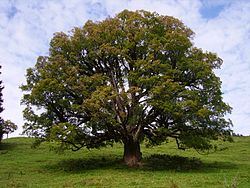
Sycamore maple, Acer pseudoplatanus, a member of the Eudicots
Scientific classification Edit this classification
Kingdom: Plantae
Clade: Tracheophytes
Clade: Spermatophytes
Extant divisions
Synonyms
  • Phanerogamae

A seed plant or spermatophyte (lit.'seed plant'; from Ancient Greek σπέρμα, (spérma), meaning "seed", and φυτόν (phytón), meaning "plant"),[1] also known as a phanerogam (taxon Phanerogamae) or a phaenogam (taxon Phaenogamae), is any plant that produces seeds. It is a category of embryophyte (i.e. land plant) that includes most of the familiar land plants, including the flowering plants and the gymnosperms, but not ferns, mosses, or algae.

The term phanerogam or phanerogamae is derived from Ancient Greek φανερός (phanerós), meaning "visible", in contrast to the term "cryptogam" or "cryptogamae" (from Ancient Greek κρυπτός (kruptós) 'hidden', and γαμέω (gaméō), 'to marry'). These terms distinguish those plants with hidden sexual organs (cryptogamae) from those with visible ones (phanerogamae).

Description

[edit]

The extant spermatophytes form five divisions, the first four of which are classified as gymnosperms, plants that have unenclosed, "naked seeds":[2]: 172 

The fifth extant division is the flowering plants, also known as angiosperms or magnoliophytes, the largest and most diverse group of spermatophytes:

  • Angiosperms, the flowering plants, possess seeds enclosed in a fruit, unlike gymnosperms.

In addition to the five living taxa listed above, the fossil record contains evidence of many extinct taxa of seed plants, among those:

  • Pteridospermae, the so-called "seed ferns", were one of the earliest successful groups of land plants, and forests dominated by seed ferns were prevalent in the late Paleozoic.
  • Glossopteris was the most prominent tree genus in the ancient southern supercontinent of Gondwana during the Permian period.

By the Triassic period, seed ferns had declined in ecological importance, and representatives of modern gymnosperm groups were abundant and dominant through the end of the Cretaceous, when the angiosperms radiated.

Evolutionary history

[edit]
Drawing of Runcaria megasporangium and cupule, resembling a seed without a solid seed coat

A series of evolutionary changes began with a whole genome duplication event in the ancestor of seed plants occurred about 319 million years ago.[3]

A middle Devonian (385-million-year-old) precursor to seed plants from Belgium has been identified predating the earliest seed plants by about 20 million years. Runcaria, small and radially symmetrical, is an integumented megasporangium surrounded by a cupule. The megasporangium bears an unopened distal extension protruding above the mutlilobed integument. It is suspected that the extension was involved in anemophilous (wind) pollination. Runcaria sheds new light on the sequence of character acquisition leading to the seed. Runcaria has all of the qualities of seed plants except for a solid seed coat and a system to guide the pollen to the seed.[4]

Runcaria was followed shortly after by plants with a more condensed cupule, such as Spermasporites and Moresnetia. Seed-bearing plants had diversified substantially by the Famennian, the last stage of the Devonian. Examples include Elkinsia, Xenotheca, Archaeosperma, "Hydrasperma", Aglosperma, and Warsteinia. Some of these Devonian seeds are now classified within the order Lyginopteridales.[5]

Phylogeny

[edit]

Seed-bearing plants are a clade within the vascular plants (tracheophytes).[6]

Internal phylogeny

[edit]

The spermatophytes were traditionally divided into angiosperms, or flowering plants, and gymnosperms, which includes the gnetophytes, cycads,[6] ginkgo, and conifers. Older morphological studies believed in a close relationship between the gnetophytes and the angiosperms,[7] in particular based on vessel elements. However, molecular studies (and some more recent morphological[8][9] and fossil[10] papers) have generally shown a clade of gymnosperms, with the gnetophytes in or near the conifers. For example, one common proposed set of relationships is known as the gne-pine hypothesis and looks like:[11][12][13]

Spermatophytes
Angiosperms

(flowering plants)

Gymnosperms

Cycads

Ginkgo

Pinaceae (the pine family)

Gnetophytes

other conifers

However, the relationships between these groups should not be considered settled.[7][14]

Other classifications

[edit]

Other classifications group all the seed plants in a single division, with classes for the five groups:[citation needed]

A more modern classification ranks these groups as separate divisions (sometimes under the Superdivision Spermatophyta):[citation needed]

Reconstruction of the extinct order Bennettitales

Unassigned extinct spermatophyte orders, some of them formerly grouped as "Pteridospermatophyta", the polyphyletic "seed ferns".[15]

References

[edit]
Revisions and contributorsEdit on WikipediaRead on Wikipedia
from Grokipedia
Seed plants, also known as spermatophytes or Spermatophyta, are a major of vascular within the embryophytes that reproduce primarily through , which are multicellular structures containing an , nutritive tissue such as , and a protective seed coat that facilitates , protection, and dispersal. This reproductive strategy marks a key evolutionary advancement over spore-based in earlier land , allowing seed plants to dominate terrestrial ecosystems with adaptations for efficient and seed establishment in diverse environments. Originating from fern-like ancestors in the late period around 360 million years ago, seed plants exhibit a sporic life cycle with a dominant generation and a highly reduced phase confined to microscopic cells within grains and ovules. Key structural innovations include (production of distinct microspores and megaspores), megaphyllous leaves, vascular tissues for secondary thickening, and the absence of swimming sperm in favor of tubes for fertilization in most lineages. They are homoiohydric, maintaining internal independently of the environment, which supports their woody growth forms and global distribution from arctic tundras to tropical rainforests. Seed plants are divided into two principal groups: gymnosperms (non-flowering seed plants with "naked" seeds typically borne on cones or open structures) and angiosperms (flowering plants with seeds enclosed in ovaries that develop into fruits). Gymnosperms comprise four extant classes—cycads (Cycadopsida, ~370 tropical species with palm-like trunks as of 2025), (Pinopsida, ~650 species including pines and dominant in temperate forests as of 2025), (Ginkgoopsida, one living species with fan-shaped leaves), and gnetophytes (Gnetopsida, ~110 species in three genera like Ephedra and adapted to arid conditions as of 2025)—totaling around 1,100 species as of 2025. Angiosperms, by contrast, represent approximately 370,000 species (as of 2023) and are subdivided into monocots (, with one seed leaf and parallel veins, including grasses and orchids) and (part of Magnoliopsida, with two seed leaves and netted veins, including roses and oaks), forming the basis of , , and human economies worldwide. Reproduction in seed plants involves wind, insect, or animal , with male gametophytes as grains and female gametophytes developing within ovules; advanced features like (one sperm fertilizing the egg and another forming ) evolved in angiosperms and some gnetophytes, enhancing nutritional efficiency. Their diversity underscores ecological roles from in vast forests to symbiotic relationships, such as nitrogen-fixing in ginkgo roots, making seed plants foundational to and global food webs.

Characteristics

Definition and Scope

Seed plants, also known as Spermatophyta, are a monophyletic group of vascular plants characterized by the production of seeds as their primary reproductive unit, in which the embryo is enclosed within a protective structure that facilitates survival and dispersal. This defining feature distinguishes them from other embryophytes, enabling adaptation to diverse terrestrial environments by providing nourishment and protection to the developing embryo. The taxonomic scope of seed plants encompasses all extant gymnosperms, which include about 1,100 species such as , cycads, gnetophytes, and ginkgo, and angiosperms (flowering ), which comprise approximately 370,000 species (as of 2016 estimates) including grasses, trees, and ; together, they account for over 90% of all land plant species. The clade Spermatophyta is nested within the larger Embryophyta, representing a of seed-bearing plants that evolved from earlier vascular lineages. A key prerequisite for this classification is the distinction between seeds and spores: unlike spores, which are typically unicellular and lack nutritive reserves or embryonic structures, seeds contain a multicellular along with or similar nutritive tissue, allowing independent development and until favorable conditions arise. This underscores the evolutionary success of seed plants in colonizing varied habitats.

Morphological Features

Seed plants display a diverse array of growth habits, ranging from small herbaceous forms to towering trees and shrubs, enabling adaptation to varied terrestrial environments. This morphological diversity stems from their evolutionary origins in heterosporous ancestors, where differentiation between microspores and megaspores facilitated the development of specialized structures, though modern seed plants exhibit uniformity in possessing megaphyllous foliage rather than the microphylls seen in more primitive vascular plants. Root systems in seed plants are adapted for anchorage, water uptake, and absorption, typically organized as either systems—characterized by a prominent primary with lateral branches—or fibrous systems consisting of numerous adventitious forming a dense network. predominate in many dicotyledonous angiosperms, providing deep penetration into , while fibrous are common in monocotyledons for shallow, widespread coverage. A significant proportion of seed , up to 90%, form symbiotic mycorrhizal associations with fungi, enhancing acquisition particularly of in nutrient-poor . Stems of seed plants serve as supportive axes for leaves and reproductive structures, varying from herbaceous (non-woody) in annuals and many monocots to woody in perennials like and trees, allowing for and increased stature. Vascular tissues, including for water transport and for nutrient distribution, are organized in bundles arranged in an eustele—a cylindrical ring typical of seed plant stems—which supports efficient conduction in upright habits. Leaves in seed plants are megaphylls, featuring complex branching venation that enhances structural support and resource distribution, distinguishing them from the simpler microphylls of lycophytes. In gymnosperms such as conifers, leaves often take the form of needles or scales, reducing water loss through a thick cuticle and small surface area suited to arid conditions. Flowering plants (angiosperms), in contrast, typically bear broad, flat leaves with net-like or parallel venation, optimizing photosynthesis in diverse habitats.

Anatomical Adaptations

Seed plants exhibit advanced vascular tissues that facilitate , primarily through the activity of the , a lateral that produces secondary inward and secondary outward. The secondary , often referred to as , consists of lignified cells that provide structural support and efficient long-distance water conduction, while the secondary contributes to the inner bark for nutrient transport. This radial thickening allows seed plants to develop robust stems and roots, distinguishing them from non-vascular or primarily vascular spore-bearing plants. Within the , gymnosperms primarily rely on tracheids—elongated, tapered cells with lignified walls and bordered pits—for transport, offering mechanical strength but lower hydraulic due to their imperforate ends. In contrast, angiosperms feature vessels, which are chains of shorter vessel elements connected by plates at their ends, enabling faster flow and greater conductivity, though potentially at higher risk of . These differences in conduit structure optimize conduction for diverse habitats, with vessels supporting the rapid growth and diverse forms seen in flowering plants. To combat terrestrial desiccation, seed plants possess a waxy covering their aerial surfaces, composed of cutin and waxes that minimizes evaporative water loss while providing a barrier against pathogens and UV radiation. Stomata, paired surrounding adjustable pores, regulate by allowing uptake for and oxygen release, while controlling to balance . This coordinated system enables efficient resource acquisition in variable environments. In woody seed plants, the periderm replaces the during , forming a protective outer layer of cork (phellem), (phellogen), and phelloderm that shields against physical damage, pathogens, and further . , a major group, feature specialized resin canals—tubular structures lined with secretory epithelial cells—that produce and store , a mixture that physically entraps and chemically deters herbivores and upon wounding. These canals, both constitutive and trauma-induced, enhance defense by rapidly mobilizing resins to seal breaches and inhibit microbial invasion. These anatomical adaptations collectively underpin the terrestrial success of seed plants by enabling taller stature and perennial growth; the lignified vascular system supports heights exceeding 100 meters in some species, far surpassing the limitations of spore plants reliant on or simpler conduction. Efficient water transport via , coupled with protective cuticles, stomata, and periderm, allows seed plants to dominate diverse ecosystems, optimizing resource use and resilience against environmental stresses.

Reproduction

Life Cycle Overview

Seed plants exhibit an characterized by a dominant diploid phase and a highly reduced haploid phase. The is the independent, photosynthetic, and long-lived stage that constitutes the visible plant body, such as trees or shrubs, and it produces spores through in specialized sporangia. In contrast to homosporous ferns, where the is a free-living, independent structure, the in seed plants is microscopic, nutritionally dependent on the , and develops entirely within protective structures. A defining feature of seed plants is , the production of two distinct spore types: smaller microspores and larger megaspores, formed in separate microsporangia and megasporangia, respectively. Microspores develop into male gametophytes, known as pollen grains, which consist of a few cells and produce cells. Megaspores, retained within the , give rise to female gametophytes that contain the cells and provide nourishment for the developing . This dimorphism ensures separation of male and female reproductive functions, differing from the single spore type in homosporous cycles that yields bisexual gametophytes. The life cycle progresses through four key stages. Sporogenesis begins with in the , generating microspore tetrads in microsporangia and typically a single functional megaspore in each megasporangium after degeneration of three others. Gametogenesis follows, with mitotic divisions within the spores producing the multicellular microgametophyte ( and ) and megagametophyte ( sac with ). Fertilization occurs when from the microgametophyte fuses with the in the megagametophyte, forming a diploid . Embryogenesis then ensues, as the divides to form the , which remains protected within the until initiates the next generation. This cycle culminates in the , which encapsulates the and nutritive tissues for dispersal.

Pollination and Fertilization

In seed plants, is the process by which grains, which serve as the male gametophytes, are transferred from the male reproductive structures to the female ovules, initiating fertilization without the need for free water unlike in earlier groups. In gymnosperms, is primarily by wind, with insect occurring in some groups such as cycads and gnetophytes; for example, release vast quantities of lightweight in spring to facilitate this transfer. Angiosperms exhibit a broader range of strategies, including abiotic methods similar to gymnosperms but more frequently biotic interactions where animals such as , birds, or bats transport from the anther to the stigma, often guided by floral scents, colors, or rewards to promote cross- and . Following , the grain germinates to produce a , a specialized cellular extension that grows through maternal tissues to deliver sperm cells to the . In gymnosperms, this tube emerges slowly from the landing on the micropyle of the and extends toward the female , often taking months to a year; the generative cell within divides to form two sperm cells, but only one typically participates in fertilization. In angiosperms, the grows more rapidly—up to several centimeters per hour—through the style toward the , guided by chemical signals like LURE peptides from the synergid cells, before rupturing to release the two non-motile sperm cells directly into the embryo sac. Fertilization in gymnosperms involves a single fusion event, where one from the pollen tube unites with the haploid in the female to form a diploid that develops into the , while the second often degenerates without function. In contrast, angiosperms feature , a defining where one fuses with the to produce the and the other fuses with the two polar nuclei in the central cell to form the triploid , a nutrient-rich tissue that supports development; this process ensures efficient resource allocation and is triggered by proteins like HAP2/GCS1 for fusion. These mechanisms provide evolutionary advantages by enabling in terrestrial environments, protecting gametes from through enclosed structures, and fostering via , which enhances adaptability; the accelerated growth in angiosperms further decouples fertilization timing from structural constraints, contributing to their rapid diversification.

Seed Development and Dispersal

Following fertilization of the , seed development in seed plants proceeds through a series of stages that transform the fertilized structure into a mature capable of and eventual . In both gymnosperms and angiosperms, the process begins with the division of the to form the , while nutritive tissues develop to support early growth; however, the specifics differ due to variations in fertilization and enclosure. In gymnosperms, the develops within the haploid female gametophyte of the , which serves as the primary nutritive tissue, and the process culminates in a naked exposed on scales. In contrast, angiosperms undergo , producing a diploid and a triploid that acts as the nutritive tissue, with the maturing enclosed within the ovary-derived . The anatomy of a mature seed includes the , nutritive tissue, and protective seed coat. The consists of a diploid axis with a (embryonic root), plumule (shoot apex), and one or more cotyledons for initial storage and mobilization; gymnosperms typically feature multiple cotyledons, while angiosperms have one or two. Nutritive tissues vary: gymnosperms rely on the persistent haploid megagametophyte (or perisperm in some cases like ), whereas angiosperms predominantly use the triploid , which accumulates reserves such as starch, proteins, and oils during maturation. The seed coat, or testa, derives from the ovule's and provides physical protection against , pathogens, and mechanical damage; gymnosperms usually have a single integument forming a simpler coat, while angiosperms often possess two, enabling more complex textures and colors in the fruit-enclosed seed. Dormancy mechanisms ensure seeds remain viable until environmental conditions favor , preventing premature sprouting. Common types include physiological dormancy (PD), regulated by hormones like (ABA) to inhibit growth, and morphological dormancy (MD), involving underdeveloped that require after-ripening; combined morphophysiological dormancy (MPD) occurs in some lineages. In gymnosperms, such as cycads, warm stratification breaks PD, while angiosperms exhibit diverse dormancy, with PD prevalent and often responsive to or cues. These mechanisms, embedded in the coat and embryo, promote survival in variable habitats by synchronizing with suitable seasons. Seed dispersal involves the transport of mature seeds away from the parent plant to reduce and enhance colonization. Mechanisms include animal-mediated dispersal, where seeds attach via hooks (e.g., burdock in angiosperms) or are ingested and excreted after passing through digestive tracts, as in fleshy fruits attracting birds or mammals; in gymnosperms, examples include bird-dispersed fleshy bracts in Ephedra species. Wind dispersal relies on lightweight structures like samaras (winged seeds in maples, angiosperms) or winged seeds in pines (gymnosperms), allowing over distances. Water dispersal occurs in buoyant seeds, such as coconuts in coastal angiosperms, facilitating oceanic spread. Ballistic dispersal, rarer, involves explosive dehiscence to propel seeds, as seen in (angiosperms). dispersal has deep evolutionary roots, with gymnosperms showing evidence from the Permian and angiosperms diversifying via dinosaurs in the and birds/mammals in the Tertiary. These developmental and dispersal adaptations provide critical benefits: the seed coat and dormancy protect against environmental stresses, nutritive tissues ensure embryonic nutrition for establishment, and dispersal strategies enable propagation across landscapes, promoting and habitat colonization in seed plants.

Evolutionary History

Origins and Early Evolution

The origins of seed plants trace back to the Late period, approximately 380 million years ago, when progymnosperms such as represented key transitional forms between ferns and true seed-producing plants. These woody, tree-like progymnosperms exhibited vascular tissues and similar to modern gymnosperms but lacked seeds, reproducing instead via spores. Fossils of from this era, including advanced root systems capable of deep soil penetration, indicate an ecological shift toward dominating terrestrial landscapes, foreshadowing the structural adaptations of seed plants. The first true seed plants emerged toward the end of the , with definitive evidence of appearing in fossils from the Famennian stage around 372–359 million years ago. By the early period (approximately 359–323 million years ago), more diverse seed plants proliferated, including the Lyginopteridales and pteridosperms, commonly known as "seed ferns." These early spermatophytes, such as those in the Lyginopteridales order, featured fern-like fronds but bore seeds attached to foliar structures, marking a pivotal reproductive innovation. Pteridosperms, encompassing groups like Lyginopteridales, utilized a primitive reproductive strategy termed hydrasperman reproduction, involving capture in a fluid-filled chamber within the . A defining in these early seed plants was the of enclosed ovules from modified megasporangia, providing protection for the developing female gametophyte and . In the lignophyte lineage, which includes progymnosperms and their seed-bearing descendants, megasporangia transformed into nucelli surrounded by integuments or cupules, reducing vulnerability to and herbivores. Recent research suggests that the development of lamellae in roots and vascular tissues further enabled seed plants to regulate water transport effectively, contributing to their success in drier environments over fern-like ancestors. This enclosure, derived from fertile short shoots or branches, enabled without free water, a critical departure from ancestral fern-like . This evolutionary progression occurred in the context of post-Silurian environmental changes, including the spread of drier continental interiors during the and . Seed plants adapted by minimizing reliance on external water for gamete transfer, thriving in upland and disturbed habitats where spore-based plants struggled. The development of drought-tolerant features, such as protective seed coats, facilitated colonization of arid terrains, contributing to the decline of progymnosperm dominance.

Major Evolutionary Milestones

The Permian period marked a significant diversification of seed plants, particularly amid the formation of the Pangea, which facilitated widespread dispersal and adaptation to varied terrestrial environments. and cycads emerged as prominent groups, with voltzialean dominating many assemblages and cycad-like bennettitales appearing in tropical lowlands, as evidenced by fossil records from equatorial sites in present-day that include precocious mixed floras of these lineages alongside pteridosperms. In , glossopterids—arborescent gymnosperms with tongue-shaped leaves—became the dominant floral element, forming extensive peat-forming forests that contributed to coal deposits and adapted to cooler, seasonal climates across southern continents. During the era, achieved dominance as the primary vegetation, forming vast forests that supported diverse ecosystems from the through the . , cycads, and gnetophytes radiated widely, with their wind-dispersed pollen and resilient seeds enabling colonization of arid and upland habitats across Pangea. A key innovation was the co-evolution with for , as seen in evidence of and other arthropods interacting with reproductive structures, including pollination drops that attracted early pollinators and predated angiosperm flowers. The period witnessed the explosive radiation of angiosperms, driven by innovations in flowers and fruits that enhanced efficiency and protection, leading to rapid diversification and eventual replacement of many lineages. Angiosperm fossils indicate a burst in from the Early to , with pioneer species invading disturbed habitats and outcompeting in mesic environments through higher productivity and faster growth rates. This shift contributed to a decline in abundance, particularly in and riparian zones, as angiosperms rose to comprise over 70% of floral diversity by the end of the period. Seed plants demonstrated remarkable resilience during mass extinction events, notably the Triassic-Jurassic boundary crisis around 201 million years ago, where their protected s and vegetative propagation allowed survival amid global warming and habitat disruption. While some groups like peltasperm seed ferns went extinct, and other gymnosperms persisted due to adaptations such as thick cuticles and , enabling rapid recolonization of post-extinction landscapes. This endurance underscores the evolutionary advantage of the seed habit in buffering against environmental volatility.

Transition to Modern Lineages

Following the Cretaceous-Paleogene (K-Pg) approximately 66 million years ago, seed plants underwent significant recovery in the period, with angiosperms rapidly expanding in diversity and ecological dominance. This recovery was marked by decreased rates and increased among angiosperms, allowing them to fill niches vacated by gymnosperms and other groups, which contributed to a restructuring of terrestrial ecosystems. By the Eocene, angiosperms had become the prevalent component of many floras, buffering associated against further losses and setting the stage for their modern prevalence. Building on foundations where angiosperms began diversifying, this surge established the broad architectural patterns of contemporary seed plant communities. In the epoch, around 23 to 5 million years ago, the evolution of open habitats like further transformed seed plant distributions, driven by cooling climates and the rise of C4 in grasses. Fossil evidence indicates that C4 grasses became locally abundant by 21 to 16 million years ago, creating heterogeneous landscapes from forests to wooded and promoting diversification among herbaceous angiosperms. This expansion, facilitated by allopolyploidy in some lineages, enhanced seed plant adaptability to drier conditions and influenced the global spread of savanna-like ecosystems. During the period, spanning the last 2.6 million years, seed plants adapted to repeated cycles through survivals in refugia and extensive migration patterns that reshaped their geographic distributions. Forest trees maintained despite climatic fluctuations, with populations retreating to southern refugia during glacial maxima and recolonizing northern areas during interglacials, leading to homogenized phylogenetic diversity across regions like . These migrations, influenced by Quaternary climate oscillations, underscore the resilience of seed plants and their current latitudinal gradients. Human activities have profoundly influenced seed plant transitions since the , beginning with the of crops around 10,000 years ago in regions such as Southwest Asia, , and the . This process involved of angiosperms like , , and , fundamentally altering their reproductive traits and expanding their cultivated ranges. Subsequent , accelerated since the , has disrupted and led to trait replacements in tropical forests, favoring smaller-seeded species over large-seeded trees dependent on animal dispersers, thereby contracting native ranges and homogenizing vegetation. In modern contexts, ongoing evolution manifests through hybridization, which introduces novel and facilitates adaptive shifts, as seen in events enhancing fitness in changing environments. Invasive seed plants, often angiosperms like weeds and ornamentals, exemplify these transitions by rapidly colonizing disturbed habitats via traits such as earlier and , amplifying their global spread amid anthropogenic pressures. Recent genomic studies (as of 2025) on gymnosperms have identified over 22,000 conserved genes involved in development, offering insights into evolutionary history and potential applications for seed enhancement in .

Phylogeny and Classification

Phylogenetic Framework

Seed plants, collectively known as Spermatophyta, constitute a monophyletic clade within the vascular plants (Tracheophyta), positioned as the sister group to the monilophytes—which encompass ferns, horsetails, and whisk ferns—within the broader euphyllophyte lineage. This placement is supported by both morphological synapomorphies, such as the presence of a bifacial vascular cambium producing secondary xylem, and molecular data. The Spermatophyta exhibit a basal divergence into two primary lineages: the gymnosperms, forming the monophyletic Acrogymnospermae clade that includes all extant non-flowering seed plants, and the angiosperms, which represent the dominant flowering plant radiation. Recent phylogenomic studies, including a 2024 analysis of 7,923 angiosperm species using 353 nuclear genes, further refine this framework and confirm key divergence times. The of Spermatophyta is robustly confirmed by extensive efforts, including analyses of plastid genes such as rbcL and multi-gene datasets encompassing up to 81 plastid loci across diverse taxa. These molecular phylogenies, combined with fossil-calibrated divergence time estimates using Bayesian methods and multiple fossil constraints, indicate that the seed plant lineage originated in the Late period, around 360–350 million years ago, with key innovations like and seed development evolving within this . A critical node in this framework is the lignophyte , which encompasses all seed plants alongside extinct relatives such as progymnosperms and "seed ferns," united by lignified and providing the ancestral context for spermatophyte . The angiosperm crown group, marking the diversification of all living flowering plants, is estimated to have arisen approximately 140 million years ago during the Early Cretaceous, based on fossil-calibrated phylogenomic trees incorporating thousands of loci. Within the gymnosperm branch, phylogenetic controversies have centered on the placement of Gnetales (including Ephedra, Gnetum, and Welwitschia), once hypothesized as close relatives of angiosperms but now resolved as the sister group to conifers—specifically Pinaceae—in modern analyses supported by whole-genome and transcriptomic data. This Gnepine hypothesis underscores the paraphyletic nature of traditional gymnosperms relative to angiosperms while affirming the overall coherence of the seed plant tree.

Major Divisions

Seed plants are classified into two primary extant divisions: gymnosperms and angiosperms, distinguished by seed enclosure and reproductive structures. Gymnosperms produce naked seeds exposed on cones or similar structures, without enclosure in fruits, while angiosperms develop seeds within ovaries that mature into fruits. This division reflects their evolutionary divergence, with gymnosperms representing more ancient lineages and angiosperms the dominant modern group. The gymnosperms encompass four main divisions, totaling approximately 1,000 species worldwide. The Cycadophyta, or cycads, consist of about 300 species of palm-like plants with pinnate leaves, primarily found in tropical and subtropical regions; they feature large, feather-like fronds and produce seeds in cones. The Ginkgophyta includes a single extant species, , known for its fan-shaped leaves and dioecious habit, with seeds borne on short shoots. The Pinophyta, or , is the largest gymnosperm division with around 630 species, including pines, spruces, and ; these trees and shrubs typically have needle-like or scale-like leaves and produce woody cones. The comprises three genera—Ephedra, , and —with about 70 species exhibiting diverse habits from shrubs to vines; notably, they possess vessel elements in their , a trait shared with angiosperms. Angiosperms, far more diverse with an estimated 352,000 species (as of 2025), are unified in the division Magnoliophyta and feature enclosed seeds that enhance protection and dispersal. Their major subclades include the , comprising grasses, lilies, and orchids with one , parallel leaf venation, and fibrous roots, totaling about 70,000 species; and the (core dicots within Magnoliopsida), which include roses, beans, and sunflowers, characterized by two , netted venation, and taproots, encompassing roughly 200,000 species. These subclades, along with like , dominate terrestrial ecosystems due to their advanced reproductive adaptations. Several extinct divisions highlight the evolutionary history of seed plants and contributed key traits to modern lineages. The pteridosperms, or seed ferns, emerged in the Late Devonian as the earliest known seed plants, bearing seeds on fern-like fronds and serving as the phylogenetic backbone for subsequent seed plant diversification through innovations like integumented ovules. The Bennettitales, prevalent from the to the , were cycad-like plants with bisporangiate, flower-resembling reproductive structures that may have influenced the evolution of angiosperm flowers via shared morphological features like bract-derived organs. These extinct groups underscore the progressive development of seed protection and reproductive complexity in spermatophytes.

Alternative Classifications

One prominent traditional classification system for seed plants was developed by and in their seminal work Genera Plantarum (1862–1883), which organized the phanerogams (seed-bearing plants) into three main classes: Gymnospermae, Monocotyledonae, and Dicotyledonae. These classes were further subdivided into subclasses, series, cohorts, and orders based on correlated natural characters such as floral structure, seed characteristics, and vegetative morphology, emphasizing practical utility for identification over strict evolutionary descent. This hierarchical arrangement covered over 97,000 species and remained influential in for over a century due to its comprehensive descriptions and balance of artificial and natural elements. In the mid-20th century, phenetic approaches, also known as , gained traction as an alternative method, grouping seed plants primarily by overall phenotypic similarity derived from numerous morphological traits, including seed shape, enclosure (naked versus enclosed), and surface sculpturing. Pioneered by Robert Sokal and Peter Sneath in the 1950s, this system quantified similarities using , assigning equal weight to all characters without prioritizing evolutionary relationships, which often resulted in clusters based on convergent features like mechanisms. However, phenetic classifications of seed plants proved limited in capturing deep phylogenetic signals and were largely supplanted after the by cladistic and molecular methods, as they failed to account for in traits such as seed coat ornamentation. Early 20th-century views sometimes proposed polyphyletic groupings, exemplified by the anthophyte , which united gnetophytes with angiosperms in a separate from other gymnosperms, based on shared morphological innovations like vessel elements in and reduced, flower-like strobili. First articulated by Agnes Arber and John Parkin in , this interpreted these similarities as evidence of a direct angiosperm-gnetophyte lineage, excluding cycads, ginkgo, and , and influenced several subsequent schemes until molecular data in the demonstrated its invalidity. The was definitively rejected by phylogenomic analyses showing gnetophytes nested within , rendering the anthophyte group artificial. Modern critiques of these alternative systems highlight their frequent portrayal of gymnosperms as a paraphyletic grade of basal seed plants, lumping diverse lineages without reflecting , in contrast to the current recognition of Acrogymnospermae as a cohesive encompassing all living gymnosperms (cycads, ginkgo, , and gnetophytes) as the to angiosperms. This shift underscores how pre-molecular classifications often prioritized morphological convenience over shared ancestry, leading to non-monophyletic assemblages that obscured the unified evolutionary history of seed plants.

Diversity and Ecology

Gymnosperm Diversity

Gymnosperms encompass approximately 1,133 extant (as of 2025) across four major lineages, representing a modest of seed plant diversity compared to the approximately 328,000 angiosperm . This limited is attributed to their ancient origins and specialized ecological niches, often in nutrient-poor or extreme environments where rapid has been constrained. Despite their underrepresentation in , gymnosperms exhibit remarkable morphological and physiological diversity, from ancient relicts to fire-adapted dominants in vast ecosystems. Cycads, comprising about 379 species primarily in the order Cycadales, are palm-like dioecious plants predominantly found in tropical and subtropical habitats across the , , , and . These ancient gymnosperms retain motile, multiflagellated delivered by drops, a primitive trait shared with ferns and contrasting with the non-motile pollen tubes of most other seed . Many cycad species form symbiotic associations with nitrogen-fixing in specialized roots, enhancing their persistence in low-nutrient soils. However, approximately 71% of cycad species are threatened with due to habitat loss from and overharvesting for ornamental trade, underscoring their vulnerability in fragmented tropical landscapes. The ginkgophytes consist of a single extant species, , a native to temperate regions of eastern but widely cultivated globally. This "living fossil" features distinctive fan-shaped leaves with dichotomous venation, an ancient trait persisting from ancestors over 200 million years old. G. biloba exhibits notable tolerance to urban , compacted soils, and , making it a popular street in cities worldwide. Its dioecious reproduction involves wind-pollinated male cones and fleshy seeds dispersed by birds, though natural populations remain scarce and threatened by habitat alteration. Conifers, the most speciose group with around 654 in the Pinophyta division, dominate boreal, montane, and temperate forests as trees or shrubs, including familiar genera like Pinus (pines), Abies (), and Picea (spruces). Reproduction occurs via woody cones: male cones release , while female cones develop winged seeds after fertilization, facilitating wind dispersal across expansive landscapes. These plants are key structural components of ecosystems, with distributions spanning cold boreal to high-elevation montane zones, where they stabilize soils and influence global carbon cycles. Many conifer exhibit , such as serotinous cones that open only after heat exposure, enabling post-fire regeneration in fire-prone habitats. Gnetophytes, totaling about 112 species in the Gnetales, display the most derived morphology among gymnosperms, including vessel elements in their —efficient water-conducting structures analogous to those in angiosperms, though not evolutionarily homologous. This group includes three genera: Ephedra (around 70 species of desert-adapted shrubs, such as E. viridis in arid North American and Asian steppes, valued for ephedrine alkaloids); Gnetum (about 40 tropical vine or tree species in mesic forests of , , and ); and Welwitschia (a single species, W. mirabilis, a long-lived with two persistent leaves in the hyper-arid Desert of southwestern ). These plants often feature reduced leaves and compound cones, reflecting adaptations to xeric or shaded environments. Overall, gymnosperms trend toward slower growth rates and extended lifespans, with average tree longevity of 366 years compared to 216 years for angiosperms, enabling dominance in , resource-limited settings. Fire adaptations, particularly in , promote resilience in disturbance-prone biomes through traits like thick bark and heat-triggered release. Despite these specializations, gymnosperms constitute less than 1% of plant species, highlighting their evolutionary conservatism and niche specificity relative to the more versatile angiosperms.

Angiosperm Dominance

Angiosperms, or flowering plants, exhibit an extraordinary level of dominance in contemporary terrestrial ecosystems, comprising approximately 90% of all extant plant species and totaling around 328,000 described species. This vast diversity underscores their ecological preeminence, far surpassing the more limited representation of gymnosperms. Angiosperms occupy an unparalleled range of habitats, from fully aquatic environments exemplified by water lilies (Nymphaea spp.), which thrive in freshwater systems with specialized submerged pollination mechanisms, to arid deserts where cacti (Cactaceae) have evolved succulent stems and reduced leaves for water conservation. The morphological diversity of angiosperms is profoundly shaped by their reproductive structures, spanning a spectrum from delicate orchids (Orchidaceae) with intricate floral architectures to robust oaks (Quercus spp.) bearing acorns as nut-like fruits. Flowers facilitate specialized syndromes, attracting a wide array of animal vectors through variations in color, scent, and nectar rewards, which enhance reproductive efficiency compared to wind-dependent gymnosperms. Complementing this, fruits exhibit immense variability—from dry dehiscent pods in to fleshy berries in nightshades—promoting via animals, wind, or water, thereby enabling widespread colonization. This dominance stems from multiple adaptive radiations, beginning with basal angiosperms such as Amborella and water lilies (Nymphaeales), which represent early divergences around 140–250 million years ago, and extending to the rapid speciation of core eudicots following the Cretaceous-Paleogene extinction event approximately 66 million years ago. Post-Cretaceous diversification accelerated, driven by efficient double fertilization in flowers that produces endosperm for nutrient-rich seeds and symbiotic relationships with pollinators like insects and mycorrhizal fungi that bolster nutrient uptake and stress tolerance. These innovations collectively propelled angiosperms to radiate into diverse niches, achieving their current ubiquity.

Ecological Roles

Seed plants serve as the primary producers in most terrestrial ecosystems, forming vast forests, grasslands, and other vegetation types that underpin global food webs. Through , they fix atmospheric into organic compounds, playing a central role in the global and mitigating by sequestering an estimated 2.5 billion tons of carbon annually in terrestrial . This process also releases oxygen as a , contributing significantly to the Earth's atmospheric oxygen levels, which support aerobic life forms. As foundational elements of ecosystems, seed plants provide critical habitats for countless animal species, from to large mammals, fostering high levels of in diverse biomes. Their and fruits form key components of food webs, serving as primary sources that sustain herbivores and seed-dispersing animals, while their flowers facilitate complex networks involving bees, birds, and other pollinators essential for and stability. Seed plants have profound economic importance to humans, with providing the majority of global timber for construction, paper, and furniture industries, accounting for over 80% of industrial roundwood production. Angiosperms dominate , supplying staple foods such as grains (e.g., , ) and fruits (e.g., apples, bananas) that form the basis of human diets worldwide. Many seed plants yield valuable medicines, including taxol derived from the bark of the Pacific (), a chemotherapeutic agent used in . Despite their vital roles, seed plants face severe conservation challenges from , which has led to the loss of over 420 million hectares of since , disrupting ecosystems and exacerbating . Approximately 30% of assessed plant species, including many seed plants, are threatened with due to loss, overexploitation, and . Recent AI-based predictions suggest up to 45% of angiosperm species may be threatened with . Seed plants are indispensable for regulation, as their vegetation cover moderates temperatures, prevents , and maintains hydrological cycles, underscoring the urgency of conservation efforts to preserve these functions.

References

Add your contribution
Related Hubs
User Avatar
No comments yet.