Recent from talks
Nothing was collected or created yet.
Annona squamosa
View on Wikipedia
| Annona squamosa | |
|---|---|
| Cross section of the fruit shown on right | |
| Scientific classification | |
| Kingdom: | Plantae |
| Clade: | Tracheophytes |
| Clade: | Angiosperms |
| Clade: | Magnoliids |
| Order: | Magnoliales |
| Family: | Annonaceae |
| Genus: | Annona |
| Species: | A. squamosa
|
| Binomial name | |
| Annona squamosa | |
| Synonyms | |
|
Annona asiatica L.[3] | |
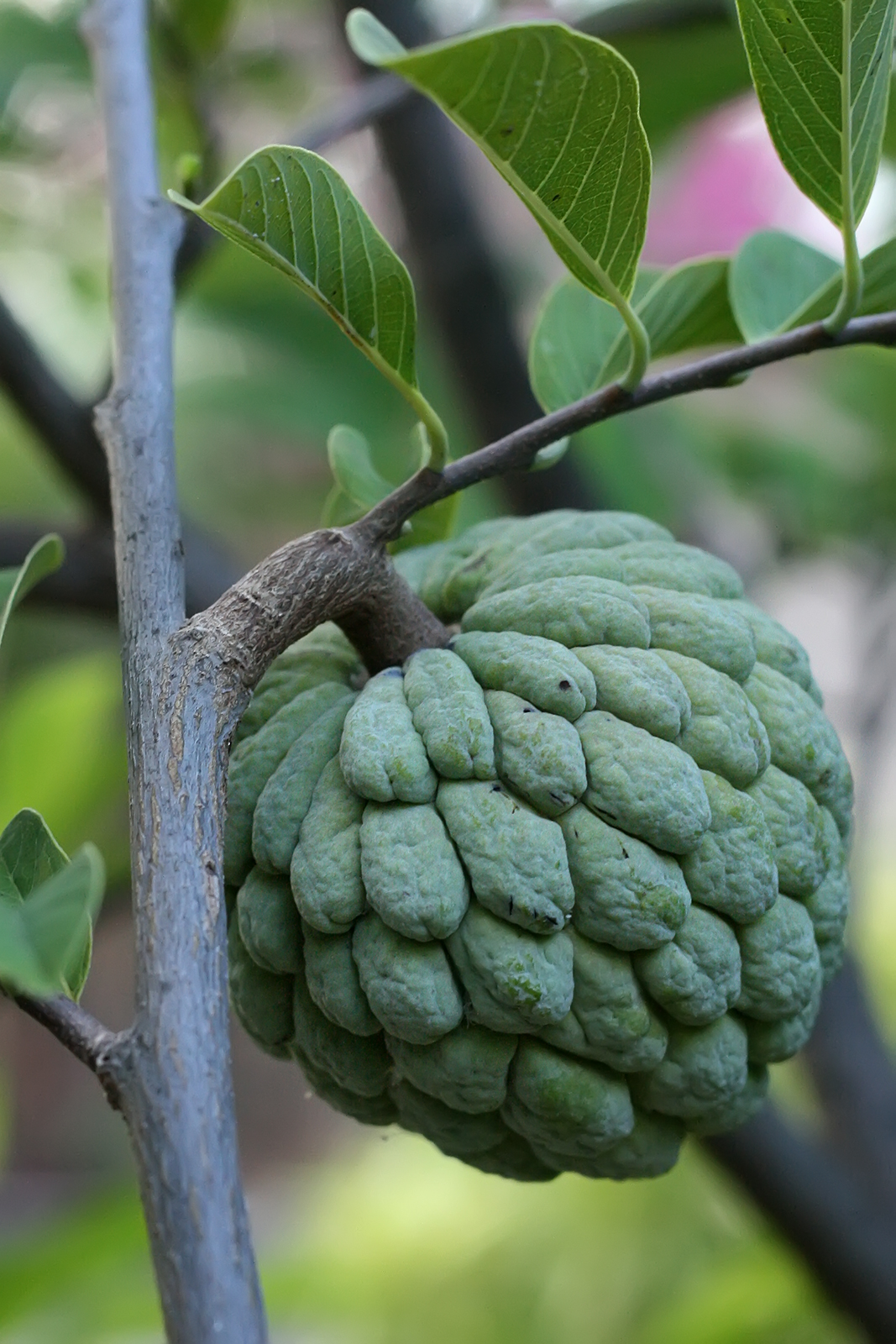
Annona squamosa is a small, well-branched tree or shrub[7] from the family Annonaceae that bears edible fruits called sugar apples or sweetsops or custard apples.[8] It tolerates a tropical lowland climate better than its relatives Annona reticulata and Annona cherimola[6] (whose fruits often share the same name)[3] helping make it the most widely cultivated of these species.[9]
Annona squamosa is semi-(or late) deciduous,[10] and 3 to 8 metres (10 to 26 feet) tall[7][10], similar to soursop (Annona muricata).[11] It is native of tropical climate in the Americas and West Indies, and Spanish traders aboard the Manila galleons docking in the Philippines brought it to Asia.[12]

The fruit is spherical-conical, 5–10 centimetres (2–4 inches) in diameter and 6–10 cm (2+1⁄4–4 in) long, and weighing 100–240 grams (3.5–8.5 ounces), with a thick rind composed of knobby segments. The colour is typically pale green through blue-green, with a deep pink blush in certain varieties, and typically has a bloom. It is unique among Annona fruits in being segmented; the segments tend to separate when ripe, exposing the innards.
The flesh is fragrant and sweet, creamy white through light yellow, and resembles and tastes like custard. The seeds are coated with the flesh, It is found adhering to 13-to-16-millimetre-long (1⁄2 to 5⁄8 in) seeds forming individual segments arranged in a single layer around a conical core. It is soft, slightly grainy, and slippery. The hard, shiny seeds may number 20–40 or more per fruit and have a brown to black coat, although varieties exist that are almost seedless.[12][13] The seeds can be ground for use as an insecticide, although this has not been approved by the US EPA or EU authorities.[8] The stems run through the centre of the fruit connecting it to the outside. The skin is shaped like a Reuleaux triangle coloured green and rough in texture. Due to the soft flesh and structure of the sugar apple it is very fragile to pressure when ripe.
New varieties are also being developed in Taiwan and Hong Kong. The atemoya or "pineapple sugar-apple", a hybrid between the sugar-apple and the cherimoya, is popular in Taiwan, although it was first developed in the United States in 1908. The fruit is similar in sweetness to the sugar-apple, but has a very different taste. As its name suggests, it tastes like pineapple.
Description
[edit]


The fruit of A. squamosa (sugar-apple) has sweet whitish pulp, and is popular in tropical markets.[10]
Stems and leaves
[edit]
Branches with light brown bark and visible leaf scars; inner bark light yellow and slightly bitter; twigs become brown with light brown dots (lenticels – small, oval, rounded spots upon the stem or branch of a plant, from which the underlying tissues may protrude or roots may issue).[6]
Thin, simple, alternate leaves[11] occur singly,[6] 5 to 17 centimetres (2 to 6+3⁄4 inches) long and 2 to 6 cm (3⁄4 to 2+3⁄8 in) wide;[10][6] rounded at the base and pointed at the tip (oblong-lanceolate).[10] They are pale green on both surfaces and mostly hairless[6] with slight hairs on the underside when young.[7] The sides sometimes are slightly unequal and the leaf edges are without teeth, inconspicuously hairy when young.[6][11]
The leaf stalks are 0.4 to 2.2 cm (1⁄8 to 7⁄8 in) long,[10] green, and sparsely pubescent.[6]
Flowers
[edit]Solitary or in short lateral clusters of 2–4 about 2.5 cm (1 in) long,[10] greenish-yellow flowers on a hairy, slender[6] 2 cm (3⁄4 in) long stalk.[10] Three green outer petals, purplish at the base, oblong, 1.6 to 2.5 cm (5⁄8 to 1 in) long, and 0.6 to 0.75 cm (1⁄4 to 5⁄16 in) wide, three inner petals reduced to minute scales or absent.[7][10] Very numerous stamens; crowded, white, less than 1.6 cm (5⁄8 in) long; ovary light green. Styles white, crowded on the raised axis. Each pistil forms a separate tubercle (small rounded wartlike protuberance), mostly 1.3 to 1.9 cm (1⁄2 to 3⁄4 in) long and 0.6 to 1.3 cm (1⁄4 to 1⁄2 in) wide which matures into the aggregate fruit.[6]
Flowering occurs in spring-early summer[10] and flowers are pollinated by nitidulid beetles.[14] Its pollen is shed as permanent tetrads.[15]
Fruits and reproduction
[edit]Fruits ripen 3 to 4 months after flowering.[16]
Aggregate and soft fruits form from the numerous and loosely united pistils of a flower[6] which become enlarged[10] and mature into fruits which are distinct from fruits of other species of genus[6] (and more like a giant raspberry instead).
The round or heart-shaped[6] greenish yellow, ripened aggregate fruit is pendulous[10] on a thickened stalk; 5 to 10 cm (2 to 3+7⁄8 in)[6][7] in diameter[10][11] with many round protuberances[6] and covered with a powdery bloom. Fruits are formed of loosely cohering or almost free carpels (the ripened pistels).[7]
The pulp is white tinged yellow,[7] edible and sweetly aromatic. Each carpel containing an oblong, shiny and smooth,[6] dark brown[7] to black, 1.3 to 1.6 cm (1⁄2 to 5⁄8 in) long seed.[6]
Nutrition and uses
[edit]| Nutritional value per 100 g (3.5 oz) | |||||||||||||||||||||||||||||||||||||||||||
|---|---|---|---|---|---|---|---|---|---|---|---|---|---|---|---|---|---|---|---|---|---|---|---|---|---|---|---|---|---|---|---|---|---|---|---|---|---|---|---|---|---|---|---|
| Energy | 393 kJ (94 kcal) | ||||||||||||||||||||||||||||||||||||||||||
23.64 g | |||||||||||||||||||||||||||||||||||||||||||
| Dietary fiber | 4.4 g | ||||||||||||||||||||||||||||||||||||||||||
0.29 g | |||||||||||||||||||||||||||||||||||||||||||
2.06 g | |||||||||||||||||||||||||||||||||||||||||||
| |||||||||||||||||||||||||||||||||||||||||||
| †Percentages estimated using US recommendations for adults,[17] except for potassium, which is estimated based on expert recommendation from the National Academies.[18] | |||||||||||||||||||||||||||||||||||||||||||
Sugar-apple is high in energy, an excellent source of vitamin C and manganese, a good source of thiamine and vitamin B6, and provides vitamin B2, B3 B5, B9, iron, magnesium, phosphorus and potassium in fair quantities.[19]
Chemistry
[edit]The diterpenoid alkaloid atisine is the most abundant alkaloid in the root. Other constituents of Annona squamosa include the alkaloids oxophoebine,[20] reticuline,[20] isocorydine,[21] and methylcorydaldine,[21] and the flavonoid quercetin-3-O-glucoside.[22]
Bayer AG has patented the extraction process and molecular identity of the annonaceous acetogenin annonin, as well as its use as a biopesticide, although this use has not been approved by US or EU authorities.[23] Other acetogenins have been isolated from the seeds,[24] bark,[25] and leaves.[citation needed]
Distribution and habitat
[edit]Annona squamosa is native to the tropical Americas and West Indies, but the exact origin is unknown. It is now the most widely cultivated of all the species of Annona, being grown for its fruit throughout the tropics and warmer subtropics, such as India, Indonesia, Thailand, Taiwan, and China as far north as Suzhou;[26] it was introduced to southern Asia before 1590. It is naturalized as far north as Cuba, South Florida, United States and as far south as Bahia, Brazil, and is an invasive species in some areas.[6][9][11]
- Native
- Neotropic
- Caribbean: Antigua and Barbuda, Bahamas, Barbados, Cuba, Dominica, Dominican Republic, Grenada, Guadeloupe, Haiti, Jamaica, Martinique, Montserrat, Netherlands Antilles, Puerto Rico, St Kitts and Nevis, St Lucia, St Vincent and the Grenadines, Suriname, Trinidad and Tobago, Virgin Islands.
- Central America: Costa Rica, El Salvador, Guatemala, Honduras, Nicaragua, Panama
- Northern South America: Suriname, French Guiana, Guyana, Venezuela
- Western South America: Bolivia, Colombia, Ecuador, Peru
- Southern South America: Argentina, Brazil, Chile, Paraguay, Uruguay[6]
- Naturalised
-
- Pacific: Samoa, Tonga
- North America: Mexico, Belize
- Afrotropic: Angola, Namibia, Sudan, Tanzania, Uganda, Zanzibar, Kenya
- Australasia: Australia, Fiji, New Zealand, Papua New Guinea, Solomon Islands
- Indomalaya: Bangladesh, Cambodia, China, India, Indonesia, Laos, Malaysia, Nepal, Pakistan, Philippines, Sri Lanka, Taiwan, Thailand, Myanmar, Vietnam
- Palearctic: Cyprus, Greece, Lebanon, Malta,[6] Israel
Climate and cultivation
[edit]This section needs additional citations for verification. (February 2021) |
Like most species of Annona, it requires a tropical or subtropical climate with summer temperatures from 25 °C (77 °F) to 41 °C (106 °F), and mean winter temperatures above 15 °C (59 °F). It is sensitive to cold and frost, being defoliated below 10 °C (50 °F) and killed by temperatures of a couple of degrees below freezing. It is only moderately drought-tolerant, requiring at least 700 millimetres (28 in) of annual rainfall, and does not produce fruit well during droughts.
It will grow from sea level to an altitude of 2,000 metres (6,600 feet) and thrives in hot dry climates, differing in its tolerance of lowland tropics from many of the other fruit bearers in the Annona family.
It is quite a prolific bearer, and it produces fruit within as little as two to three years. A five-year-old tree can produce as many as 50 sugar apples. Poor fruit production has been reported in Florida because there are few natural pollinators (honeybees have a difficult time penetrating the tightly closed female flowers); however, hand pollination with a natural fibre brush is effective in increasing yield. Natural pollinators include beetles (coleoptera) of the families Nitidulidae, Staphylinidae, Chrysomelidae, Curculionidae and Scarabaeidae.[9][13]
Ecology
[edit]In the Philippines, the fruit is commonly eaten by the Philippine fruit bat (kabag or kabog), which then spreads the seeds from island to island.
It is a host plant for larvae of the butterfly Graphium agamemnon (tailed jay).
Uses
[edit]In traditional Indian, Thai, and Native American medicines, the leaves are boiled down with water, possibly mixed with other specific botanicals, and used in a decoction to treat dysentery and urinary tract infection.[27] In traditional Indian medicine, the leaves are also crushed for use as a poultice, and applied to wounds.[27] In Mexico, the leaves are rubbed on floors and put in hens' nests, to repel lice.[9]. Extracts are used in ethnomedicine.[28] In Haiti, the fruit is known as cachiman and is used to simply make juice.[29]
Gallery
[edit]-
Annona squamosa fruit from Myanmar
-
Sugar apple (right), with Taiwanese "pineapple shijia" (atemoya) (left)
-
The sugar apple readily breaks open when ripe.
-
A deconstruction of a sugar apple shows a lobe of fruit and pulpy segments with seeds.
-
A sugar apple ready to eat
-
Sugar apple (Annona squamosa) seeds
-
Red sugar apples from Myanmar
-
Sugar apples in Taitung, Taiwan
-
Sugar apple tree in Philippines
-
Two sugar apples in Bangladesh
-
A sugar apple in tree in Terai of Nepal
References
[edit]- ^ Botanic Gardens Conservation International (BGCI); IUCN SSC Global Tree Specialist Group (2019). "Annona squamosa". IUCN Red List of Threatened Species. 2019 e.T146787183A146787185. doi:10.2305/IUCN.UK.2019-2.RLTS.T146787183A146787185.en. Retrieved 16 December 2022.
- ^ Natural Resources Conservation Service (NRCS). "PLANTS Profile, Annona squamosa L". The PLANTS Database. United States Department of Agriculture. Retrieved 17 April 2008.
- ^ a b "Annona squamosa". Germplasm Resources Information Network. Agricultural Research Service, United States Department of Agriculture. Retrieved 17 April 2008.
- ^ Dr. Richard Wunderlin, Dr. Bruce Hansen. "synonyms of Annona squamosa". Atlas of Florida Vascular Plants. Institute for Systematic Botany, University of Florida. Retrieved 17 April 2008.
- ^ Missouri Botanical Garden (1753). "Annona squamosa L". Tropicos. Retrieved 17 April 2008.
- ^ a b c d e f g h i j k l m n o p q r s t "Current name: Annona squamosa". AgroForestryTree Database. International Center For Research In Agroforestry. Archived from the original on 26 May 2011. Retrieved 17 April 2008.
- ^ a b c d e f g h "Compilation: Annona squamosa". Global Plants. JSTOR. Retrieved 5 September 2019.
- ^ a b The Complete Guide to Edible Wild Plants. United States Department of the Army. New York: Skyhorse Publishing. 2009. p. 100. ISBN 978-1-60239-692-0. OCLC 277203364.
{{cite book}}: CS1 maint: others (link) - ^ a b c d Morton, Julia (1987). "Sugar Apple Annona squamosa". Fruits of warm climates. Department of Horticulture & Landscape Architecture, Purdue University. p. 69. Archived from the original on 5 April 2008. Retrieved 17 April 2008.
- ^ a b c d e f g h i j k l m Kral, Robert. "Annona squamosa Linnaeus, Sp. Pl. 1: 537. 1753". In Flora of North America Editorial Committee (ed.). Flora of North America North of Mexico. Vol. 3. Retrieved 5 September 2019.
- ^ a b c d e "Annona squamosa". Pacific Island Ecosystems at Risk (PIER). 5 January 2008. Archived from the original on 12 May 2008. Retrieved 17 April 2008.
- ^ a b Morton, Julia (1987). "Annona squamosa". Fruits of warm climates. p. 69. Retrieved 6 March 2013.
- ^ a b "Annona squamosa". AgroForestryTree Database. Archived from the original on 14 March 2007. Retrieved 16 September 2013.
- ^ McGregor, S.E. Insect Pollination Of Cultivated Crop Plants Archived 26 March 2023 at the Wayback Machine USDA, 1976
- ^ Walker JW (1971) Pollen Morphology, Phytogeography, and Phylogeny of the Annonaceae. Contributions from the Gray Herbarium of Harvard University, 202: 1-130.
- ^ Grant, Amy (2021). "What Is Sugar Apple Fruit: Can You Grow Sugar Apples". Gardening Know How. Retrieved 4 August 2023.
- ^ United States Food and Drug Administration (2024). "Daily Value on the Nutrition and Supplement Facts Labels". FDA. Archived from the original on 27 March 2024. Retrieved 28 March 2024.
- ^ "TABLE 4-7 Comparison of Potassium Adequate Intakes Established in This Report to Potassium Adequate Intakes Established in the 2005 DRI Report". p. 120. In: Stallings, Virginia A.; Harrison, Meghan; Oria, Maria, eds. (2019). "Potassium: Dietary Reference Intakes for Adequacy". Dietary Reference Intakes for Sodium and Potassium. pp. 101–124. doi:10.17226/25353. ISBN 978-0-309-48834-1. PMID 30844154. NCBI NBK545428.
- ^ "Benefits of Custard apple". 22 December 2014.
- ^ a b Dholvitayakhun A, Trachoo N; et al. (2013). "Potential applications for Annona squamosa leaf extract in the treatment and prevention of foodborne bacterial disease". Natural Product Communications. 8 (3): 385–388. doi:10.1177/1934578X1300800327. PMID 23678817.
- ^ a b Yadav DK, Singh N; et al. (2011). "Anti-ulcer constituents of Annona squamosa twigs". Fitoterapia. 82 (4): 666–675. doi:10.1016/j.fitote.2011.02.005. PMID 21342663.
- ^ Panda S, Kar A (2007). "Antidiabetic and antioxidative effects of Annona squamosa leaves are possibly mediated through quercetin-3-O-glucoside". BioFactors. 31 (3–4): 201–210. doi:10.1002/biof.5520310307. PMID 18997283. S2CID 38336427.
- ^ Moeschler HF, Pfluger W; et al. (August 1987). "Insecticide US 4689232 A". Retrieved 3 December 2014.
- ^ Chen Y, Xu SS; et al. (2012). "Anti-tumor activity of Annona squamosa seeds extract containing annonaceous acetogenin compounds". Journal of Ethnopharmacology. 142 (2): 462–466. doi:10.1016/j.jep.2012.05.019. PMID 22609808.
- ^ Li XH, Hui YH; et al. (1990). "Bullatacin, bullatacinone, and squamone, a new bioactive acetogenin, from the bark of Annona squamosa". Journal of Natural Products. 53 (1): 81–86. doi:10.1021/np50067a010. PMID 2348205.
- ^ "Sweetsop (Annona squamosa)". January 2020.
- ^ a b Dholvitayakhun A, Trachoo N; et al. (2016). "Using scanning and transmission electron microscopy to investigate the antibacterial mechanism of action of the medicinal plant Annona squamosa Linn". Journal of Herbal Medicine. 7: 31–36. doi:10.1016/j.hermed.2016.10.003.
- ^ Bisht, Manohar S.; Mahajan, Shruti; Chakraborty, Abhisek; Sharma, Vineet K. (June 2025). "A high-quality genome assembly of Annona squamosa (custard apple) provides functional insights into an emerging fruit crop". DNA Research. 32 (3). doi:10.1093/dnares/dsaf007. PMC 12116420.
- ^ "Cachiman (Annona reticulata L.)". Carib Fruits. Retrieved 8 November 2020.
External links
[edit]- "Annona squamosa L." Integrated Taxonomic Information System. Retrieved 17 March 2008.
- David Lee. "Photographs of trees Annona squamosa". The Miami Tree Puzzle. Florida International University. Archived from the original on 7 April 2008. Retrieved 17 April 2008.
- Annona squamosa L.—Medicinal Plant Images Database (School of Chinese Medicine, Hong Kong Baptist University) (in Chinese and English)
- Flora of North America: Annona squamosa
- "Annona squamosa". Germplasm Resources Information Network. Agricultural Research Service, United States Department of Agriculture.
- Fruits from Americas: Annona squamosa
- Pacific Island Ecosystems at Risk: Annona squamosa
- Growing Sugar Apple Annona squamosa
Annona squamosa
View on GrokipediaTaxonomy and nomenclature
Etymology
The genus name Annona is a Latinization of indigenous Taíno or Arawak terms like anon or hanon used by Hispaniolan peoples for fruits in this group; Linnaeus associated it with the Latin word annōna, meaning "annual produce" or "provisions."[5][6][7] The specific epithet squamosa comes from the Latin squāmōsus, meaning "scaly" or "covered in scales," alluding to the knobby, scale-like segments on the immature fruit.[8] Common names for Annona squamosa reflect its sensory qualities and regional adaptations, with "sugar apple" or "sweetsop" emphasizing the sweet, granular pulp, while "custard apple" highlights the creamy, custard-like texture—though the latter is more precisely applied to A. reticulata in some contexts.[4][9] In the Philippines, it is known as atis or ata, and in Brazil as pinha or fruta-do-conde.[10] The species was first formally described by Carl Linnaeus in his Species Plantarum in 1753, under the binomial Annona squamosa, based on specimens from tropical America.[11]Classification and synonyms
Annona squamosa belongs to the kingdom Plantae, phylum Tracheophyta, class Magnoliopsida, order Magnoliales, family Annonaceae, genus Annona, and species squamosa.[12][13] Within the Annonaceae family, A. squamosa exemplifies key characteristics such as an apocarpous gynoecium composed of numerous free carpels and syncarpous fruits formed by the fusion of these carpels into an aggregate structure.[14][15] Accepted synonyms for A. squamosa include Annona asiatica L., Annona cinerea Dunal, and Annona distincta Raeusch., reflecting historical taxonomic variations in classifications.[12] Recent genomic studies, including a high-quality chromosome-level genome assembly published in 2025, have confirmed the phylogenetic position of A. squamosa within Annonaceae, revealing it as most closely related to Annona cherimola (cherimoya), with the two species diverging approximately 4.2 million years ago and forming a sister subclade with Annona montana.[16]Botanical description
Habit and stems
Annona squamosa is a deciduous or semi-deciduous small tree or shrub that typically reaches a height of 3 to 8 meters, forming a low, spreading canopy with an open, rounded or irregular outline.[4][17][18] The plant exhibits a moderate growth rate, with upright to spreading branches that contribute to its bushy habit, and in cultivation, it can have a lifespan of up to 20-30 years.[19][8][20] The stems feature light brown to grayish bark that is slightly furrowed and thin, providing a smooth texture on mature branches.[21][18] Young branches are pubescent, covered in fine hairs that eventually become glabrous as they mature, while the overall branching pattern is irregular and often low on the cylindrical trunk.[4][21] This structure supports an adaptive wood composition that enhances drought tolerance, allowing the plant to withstand periods of water stress in tropical environments.[22][23] However, A. squamosa is highly susceptible to frost damage, with temperatures below -2°C causing severe injury or death to young trees and disrupting growth in established ones.[1][19] Leaves are alternately attached along the stems, contributing to the plant's overall architecture without altering its primary habit.[4]Leaves
The leaves of Annona squamosa are simple, alternate, and distichous (two-ranked), often appearing clustered at the tips of branches. They exhibit an oblong-lanceolate to elliptic shape, typically measuring 5–17 cm in length and 2–6 cm in width, with an acute to obtuse apex and cuneate to rounded base, petiole 0.4–1 cm long.[24][25][26] The adaxial surface is pale green and glabrous upon maturity, though young leaves are slightly pubescent; the abaxial surface is paler, bearing a prominent midrib and secondary veins that are raised beneath and impressed above. When crushed, the leaves release a distinctive aromatic scent attributable to their essential oil content, which includes compounds such as β-caryophyllene and germacrene D.[1][27][28] Annona squamosa displays a semi-deciduous habit, shedding its leaves during prolonged dry seasons to enhance drought tolerance, with new leaf flushes emerging at the start of wet periods to support renewed growth.[3][4]Flowers
The flowers of Annona squamosa are bisexual, pendulous, and typically greenish-yellow, measuring 2–3 cm in length. They emerge solitary or in small clusters of 2–4 from short peduncles (1–2 cm long) in the leaf axils of year-old shoots or new growth. Flowering occurs primarily in spring to early summer, coinciding with periods of new vegetative flushing in subtropical and tropical regions.[1][12] Structurally, the flowers lack prominent sepals beyond three small, inconspicuous, triangular green ones (1.5–2 mm long) that are persistent but minimally visible. The perianth features three outer petals that are oblong, 1.6–2.5 cm long, 6–7.5 mm wide, thick, fleshy, green with purple at the base, and keeled inside; the inner petals are reduced to minute scales or absent.[12][4][29] The androecium consists of numerous stamens (typically 20–30), arranged in a dense, central mass around a conical receptacle, with each stamen featuring a short filament and oblong anther (about 1 mm long). The gynoecium includes 20–40 free, oblong carpels (1.5–2 mm long), each with a single ovule and a capitate stigma. These flowers exhibit protogyny, with the stigmas becoming receptive in the female phase prior to anther dehiscence in the male phase, facilitating cross-pollination.[12][4][29] The blooms produce a mildly fruity scent, which serves to attract specific nitidulid beetles as pollinators. This odor, combined with the pendulous orientation and enclosed floral chamber formed by the perianth, creates an environment suited to beetle activity within the flower.[29][1]Fruits
The fruit of Annona squamosa is an aggregate type known as a syncarp, developed from the fusion of numerous carpels derived from a single flower. It typically exhibits a spherical to heart-shaped form, with dimensions of 5–10 cm in diameter and a weight ranging from 100–240 g. The exterior surface is characterized by 20–40 knobby, scale-like carpels that create a distinctive bumpy or tuberculate appearance, separated by shallow grooves.[2][21][30] The skin is thin and pale green when unripe, transitioning to yellowish with a slight powdery bloom upon maturation. The interior features creamy white, custard-like pulp that is soft, slightly grainy, and aromatic, surrounding individual seeds within each carpel.[2][1] Following pollination, the fruit begins to form and develops over 3–4 months, with maturation occurring irregularly across the tree's crop. Due to this uneven ripening on the plant, fruits are optimally harvested while still green and allowed to ripen off-tree, a process that usually takes 2–5 days.[31][4] Each fruit contains numerous hard, shiny black seeds, typically 1–2 cm long and ovoid-ellipsoid in shape, with one seed per carpel. These seeds are poisonous if consumed raw, primarily due to annonacin, a potent neurotoxic acetogenin that can cause irritation and toxicity.[2][8][32]Reproduction
Pollination
Annona squamosa is primarily pollinated by nitidulid beetles, such as Carpophilus dimidiatus and Carpophilus hemipterus, which enter flowers in the female phase, remain trapped overnight, and transfer pollen during anther dehiscence the following day.[29] These beetles feed on floral tissues and mate within the flowers, facilitating pollination before exiting in the male phase.[33] The inner petals form a specialized chamber that traps the beetles, enhancing their role as effective pollinators.[29] Pollination by bees or wind is ineffective due to the flowers' structure and the beetles' exclusive behavior.[33] The species exhibits protogynous dichogamy, with the stigma receptive in the female phase before anthers dehisce in the male phase, promoting outcrossing through temporal separation.[34] However, A. squamosa is self-compatible, allowing fruit set from self-pollen if transferred, though cross-pollination often yields higher seed viability.[34] In introduced ranges such as Florida and India, low densities of native nitidulid beetles result in poor natural fruit set, typically ranging from 1% to 8% without intervention.[1][35] This scarcity leads to deformed or sparse fruit development, limiting commercial yields. Hand pollination, involving manual transfer of pollen from male-phase to female-phase flowers using a brush or similar tool, achieves fruit set rates exceeding 80% and substantially boosts yields in pollinator-poor areas.[36][37] This technique is particularly vital in regions like Florida, where natural set can approach zero, and in Indian orchards, where it enhances fruit quality and quantity despite labor demands.[1][38]Seed dispersal and propagation
The seeds of Annona squamosa are primarily dispersed through zoochory, where animals consume the sweet, edible pulp of the ripe fruit and excrete the intact seeds away from the parent plant.[4] Birds and fruit bats, such as the Philippine flying fox (Acerodon jubatus), play key roles in this process, particularly in tropical regions where the fruit ripens on the tree and attracts these dispersers.[4] Mammals like rats and squirrels also contribute by feeding on fallen fruits and scattering seeds.[4] In flood-prone habitats, hydrochory occurs as buoyant seeds are carried by water currents, aiding long-distance dispersal.[4] Each fruit typically contains 20-40 hard, brown to black seeds, which exhibit short viability, often lasting only a few weeks to two months under natural conditions before germination potential declines significantly.[4][39] Fresh seeds achieve 50-95% germination rates under optimal moist, warm conditions (25-30°C), typically emerging in 3-4 weeks after testa rupture and radicle protrusion.[4][39] Scarification, such as soaking in water for 3 days or mechanical nicking, enhances germination by overcoming the impermeable seed coat.[40] Human propagation of A. squamosa commonly begins with direct seed sowing in well-drained media, yielding variable offspring due to cross-pollination.[4] For superior cultivars, vegetative methods like air-layering, budding, inarching, or grafting onto rootstocks (e.g., A. squamosa or other Annona species) ensure true-to-type plants and dwarfing for easier management.[4][41] Cuttings are less reliable but can succeed with rooting hormones.[42] Vegetative propagation offers advantages over seeding, including faster time to fruiting (1-2 years versus 3-4 years from seed), uniform crop characteristics, and improved resistance to soil-borne diseases through selected rootstocks.[43][41]Distribution and habitat
Native range
Annona squamosa, commonly known as the sugar apple or sweetsop, is native to the Neotropical region, encompassing Central America from Mexico southward to Panama, northern South America including countries such as Venezuela and Colombia, and the Caribbean islands of the West Indies. This distribution spans diverse lowland ecosystems where the species likely originated and evolved, with its exact center of origin remaining somewhat uncertain due to extensive pre-Columbian human influence.[12][4][44][8] Within its native habitats, A. squamosa thrives in lowland tropical moist forests, open savannas, and disturbed sites such as hillocks, gravelly slopes, and waste lands, generally at elevations ranging from sea level to 1,500 meters. The plant shows a strong preference for well-drained, sandy or gravelly soils in warm, subtropical to tropical climates with seasonal dry periods, allowing it to tolerate both moist lowlands and drier upland margins. These ecological niches support its semi-deciduous habit and opportunistic growth in areas altered by natural disturbances or early human activity.[4][12][10] Historical evidence from archaeological contexts reveals that indigenous peoples in the Americas domesticated A. squamosa, with independent centers of cultivation emerging in Central America and northwestern South America. Botanical remains and linguistic records from pre-Columbian sites in the West Indies and mainland regions indicate its integration into early agricultural systems, where it was valued for its edible fruit and propagated in managed landscapes. The species holds a conservation status of Least Concern on the IUCN Red List, owing to its broad native distribution across approximately 3.5 million square kilometers and a stable overall population trend. Nonetheless, localized declines occur in fragmented habitats due to deforestation and agricultural expansion, underscoring the need for monitoring in vulnerable subpopulations.[12]Introduced ranges
Annona squamosa was introduced to Southeast Asia, particularly the Philippines, prior to 1590 by Spanish traders via the Manila galleons, marking one of the earliest trans-Pacific dispersals of the species from its native tropical American range.[4] By the early 17th century, Portuguese explorers had facilitated its spread to southern India, where it quickly became established in tropical lowlands.[27] Introduction to Africa occurred through European colonial trade routes in the 1600s, primarily to West African regions, leading to its cultivation and naturalization in suitable tropical climates.[45] Today, the species is pantropical, cultivated or naturalized in over 50 countries across Asia, Africa, Oceania, and the Americas due to its valued fruit and adaptability. Major cultivation occurs in India, the world's leading producer with an annual output of approximately 514,000 metric tons from 56,300 hectares (as of 2023-24), particularly in states like Maharashtra, Gujarat, Madhya Pradesh, and Andhra Pradesh.[46] Other key regions include Thailand, where it supports significant commercial orchards; Brazil, with concentrated production in Alagoas and São Paulo; and Australia, focused on subtropical areas for export markets.[4] The species has naturalized in subtropical zones such as Florida, where it grows wild in the Keys, and Hawaii, though it remains primarily planted rather than widespread.[47] In some introduced areas, particularly Pacific islands like French Polynesia, Nauru, and Mayotte, Annona squamosa exhibits weedy tendencies, forming dense thickets that compete with native vegetation for resources and space.[17] This invasiveness is generally limited, and the species is often managed through agroforestry practices to mitigate ecological impacts while preserving its economic value.[4] Recent phylogeographic analyses, including a 2024 high-quality genome assembly, reveal that populations in introduced ranges show genetic introgression with wild Annona relatives, enhancing adaptive traits like drought tolerance and contributing to local diversity.[16]Cultivation
Climate and soil requirements
Annona squamosa, commonly known as sugar apple or sweetsop, thrives in tropical climates with daytime temperatures ranging from 25°C to 41°C and minimum temperatures not falling below 15°C, as these conditions support optimal growth and fruiting. The plant is highly frost-sensitive, with young trees suffering damage at 0°C to -1°C and mature trees tolerating brief exposures to -2°C but dying at lower temperatures; it is best suited to USDA hardiness zones 10 to 11.[1][2][48] Annual rainfall of 700 to 2,000 mm is ideal, with adequate moisture during the growing season and fruit development to prevent reduced yields, though the plant exhibits moderate drought tolerance and benefits from dry periods preceding flowering to promote bloom initiation. In arid regions, supplemental irrigation is essential to maintain soil moisture without waterlogging.[2][49][1] The species prefers well-drained sandy loam or alluvial soils with a pH range of 5.5 to 7.5, tolerating a broader spectrum from slightly acidic to mildly alkaline conditions but performing poorly in heavy clay or waterlogged environments that lead to root rot. It is intolerant of flooding for more than 7 to 10 days, emphasizing the need for good drainage to ensure healthy root aeration.[1][49][50] For fruit production, full sun exposure is required, providing at least 6 to 8 hours of direct sunlight daily, though juvenile plants show some tolerance to partial shade during establishment.[1][50]Planting and care
Annona squamosa trees are typically planted at spacings of 4 to 6 meters between trees to accommodate their canopy spread of up to 5 meters, allowing for adequate light penetration and air circulation in commercial or home orchards.[1] Planting holes should be dug to dimensions of approximately 50 x 50 x 50 cm, filled with a mixture of topsoil and 10-20 kg of organic manure such as farmyard manure to improve soil fertility and drainage before inserting the seedling.[51] In suitable tropical climates with well-drained soils, trees establish roots quickly and begin bearing fruit within 3-4 years.[2] Routine care involves annual pruning to maintain tree health and productivity, focusing on the removal of dead wood, water suckers, and crossing branches to enhance airflow and reduce disease risk while training the tree to an open-center shape for better light distribution.[1] Pruning is best performed in early spring or post-harvest, limiting cuts to about one-third of the previous year's growth to avoid stressing the tree.[50] Fertilization supports vigorous growth and fruiting, with balanced NPK fertilizers such as 10-10-10 or similar formulations applied at rates of 200-300 g per tree annually for young trees, increasing to 1-2 kg for mature specimens divided into 2-4 applications per year.[50] Micronutrients like zinc and manganese are supplemented via foliar sprays 2-4 times yearly to address deficiencies common in sandy soils, while a 5-8 cm layer of organic mulch around the base helps retain soil moisture and suppress weeds.[1] Harvesting occurs 2-3 times per year in tropical regions after the tree reaches 3 years of age, with mature trees yielding 10-50 kg of fruit depending on pollination and management, typically picked when the skin turns yellowish-green to avoid damage.[2] Post-harvest, fruits ripen optimally at 20-25°C over 2-5 days, after which they can be stored in refrigeration for up to 4 days to extend shelf life.[52]Varieties and cultivars
Annona squamosa cultivars vary in fruit characteristics, yield, and adaptability to local conditions. In Florida, 'Thai Lessard' is a recommended selection with green-peeled fruits weighing 227–454 g and excellent eating quality, while 'Kampong Mauve' features reddish-purple peel and fruits of 136–398 g with good to very good quality.[1] In India, the 'Balanagar' variety from Telangana stands out for its high yield under rain-fed, rocky soils, thick rind, high pulp content, few seeds, inherent sweetness, and prolonged shelf life without irrigation or fertilizers. In June 2025, a geographical indication (GI) tag application was filed for Balanagar custard apple (application no. 1569), which remains pending as of November 2025.[53][54] Breeding programs have emphasized selections for drought tolerance and reduced seediness, such as Indian varieties including 'Balanagar', 'Arka Sahan', and 'APK (Ca)1', evaluated for performance in rainfed vertisols with yields varying by genotype but favoring adaptable, high-pulp types.[55] Hybrids like Atemoya (A. squamosa × A. cherimola) enhance desirable traits over pure A. squamosa. The 'Gefner' Atemoya cultivar, suited to Florida, produces large conical to ovate fruits up to 908 g with creamy, sweet pulp, high yields of 75–200 fruits per tree, and no need for hand pollination.[56] 'African Pride', an Australian Atemoya selection, is an early, consistent bearer of medium to large heart-shaped fruits (500–800 g) with low seed counts and self-fertility, though prone to skin blackening from diseases like purple spot.[57] Atemoya hybrids are widely cultivated in Taiwan, particularly in Taitung County, for their superior flavor, larger sizes, and export potential to markets like China.[58] Cultivar and hybrid selection prioritizes fruit size (up to 500 g or more in hybrids), sweetness (15–20° Brix), and shelf life, as seen in evaluations of genotypes showing soluble solids in this range alongside high pulp recovery.[59]Pests and diseases
Annona squamosa is susceptible to several insect pests that can significantly impact fruit quality and tree vigor. Mealybugs, particularly Planococcus citri and Pseudococcus spp., infest stems, leaves, and fruits, excreting honeydew that promotes sooty mold growth, leading to reduced photosynthesis and aesthetic damage.[1] Fruit borers, including the annona seed borer Bephratelloides cubensis and the yellow peach moth Conogethes punctiferalis, bore into developing fruits and seeds, causing internal decay, premature fruit drop, and up to 20-80% crop loss in severe cases, especially during late summer.[60][61] Fungal diseases pose major threats, particularly in humid environments. Anthracnose, caused by Colletotrichum gloeosporioides, affects flowers, leaves, and fruits, manifesting as dark lesions, blossom blight, and post-harvest rot, with reported crop losses ranging from 10-100%.[62] Root rot, primarily from Phytophthora spp. such as P. capsici and P. nicotianae in poorly drained soils, results in wilting, yellowing leaves, stunted growth, and root decay, often leading to tree decline or death.[63][64] Plant-parasitic nematodes, notably root-knot nematodes (Meloidogyne spp.), attack roots, forming galls that disrupt water and nutrient uptake, causing stunted growth and reduced vigor in infested trees.[65] Management of these biotic threats relies on integrated pest management (IPM) strategies combining cultural, biological, and targeted chemical approaches. Cultural practices include pruning for improved air circulation to minimize humidity-related diseases and crop rotation to break nematode cycles, while avoiding overwatering prevents root rot.[60] Biological controls, such as releasing predatory insects like ladybugs for mealybugs or parasitic wasps for borers, enhance natural enemy populations.[60] Chemical interventions are limited to essentials like neem oil for soft-bodied pests such as mealybugs, and copper-based fungicides (e.g., copper hydroxide) for anthracnose, applied sparingly to preserve beneficial organisms; resistant rootstocks are recommended for nematode-prone areas.[1][62]Ecology
Interactions with pollinators and dispersers
Annona squamosa exhibits a specialized pollination syndrome reliant primarily on nitidulid beetles (Coleoptera: Nitidulidae), such as species in the genera Carpophilus and Colopterus, which are attracted to the flowers' yeasty odor and feed on floral tissues during their nocturnal visits.[33] These beetles enter the flowers in the female phase, become trapped overnight within the sturdy petals that form a protective chamber, and effect pollination by transferring pollen during the subsequent male phase when anthers dehisce.[66] In its native range, secondary pollination may occur through ants, which visit flowers frequently but contribute less effectively due to their foraging behavior limiting pollen transfer, while thrips play a minor role in some related Annonaceae species but are not primary for A. squamosa.[67] Seed dispersal in A. squamosa is facilitated by frugivorous animals that consume the sweet, aril-covered seeds and deposit them away from the parent plant, promoting wider distribution. In its native American range, bats such as Artibeus jamaicensis and birds like manakins (Pipridae) serve as key dispersers, ingesting the fruit pulp and excreting intact seeds during flight or perching.[68] In introduced Asian regions, rodents including rats (Rattus spp.) and primates such as macaques contribute to dispersal by carrying and dropping seeds after feeding on the ripe fruit.[69] These interactions represent mutualistic relationships where A. squamosa provides resources in exchange for reproductive services. Flowers offer nitidulid beetles shelter from predators and adverse weather within the pollination chamber, along with protein-rich tissues for feeding and breeding, enabling the beetles to survive and reproduce effectively.[70] Similarly, the nutritious, fleshy arils of the fruit reward dispersers with energy, while the hard-coated seeds pass through their digestive systems unharmed, facilitating transport to suitable germination sites.[71] In cultivated monocultures, these mutualisms can be disrupted by broad-spectrum pesticides, which reduce nitidulid beetle populations and lead to lower fruit set and yields, often necessitating hand pollination to compensate for diminished natural pollinator activity.[72]Role in ecosystems
Annona squamosa contributes to biodiversity in tropical ecosystems by serving as a larval host plant for the butterfly Graphium agamemnon (tailed jay), providing essential foliage for caterpillar development and supporting lepidopteran populations in native and naturalized ranges.[73] Its flowers attract nitidulid beetles as primary pollinators, offering pollen and nectar resources that sustain these insects and promote their role in broader pollination networks.[74] These interactions enhance local insect diversity, particularly in agroforestry systems where the tree is integrated. The species forms mutualistic associations with arbuscular mycorrhizal fungi (AMF), which colonize its roots to improve nutrient absorption, especially phosphorus, thereby bolstering plant vigor and indirectly supporting soil microbial communities in nutrient-poor tropical soils.[75] Although its root system is relatively shallow, it helps stabilize surface soil in sloped tropical terrains, contributing to erosion mitigation when planted in mixed agroecosystems.[1] In introduced regions such as parts of the Caribbean, Central America, Jamaica, and Cambodia, A. squamosa exhibits invasive potential, establishing dense thickets that alter understory light availability and suppress native vegetation through competitive shading and resource allocation.[4] As an indicator species for tropical disturbances, A. squamosa thrives in degraded or human-modified landscapes, reflecting ecosystem stress from land-use changes. It also plays a role in carbon sequestration within modified habitats.Nutritional composition
Macronutrients and calories
The fruit of Annona squamosa, commonly known as sugar apple or sweetsop, provides approximately 94 kcal of energy per 100 g of edible portion, with the majority derived from carbohydrates. This caloric content positions it as a moderate-energy fruit suitable for snacks or dietary inclusion in tropical regions.[76] The macronutrient profile is dominated by carbohydrates at 23.6 g per 100 g, comprising sugars—primarily fructose, glucose, and sucrose—and 4.4 g of dietary fiber, which supports digestive health. Protein contributes a modest 2.1 g, while fat is minimal at 0.29 g, making the fruit low in lipids overall. Water content ranges from 68% to 75%, which accounts for its juicy texture and relatively low nutrient density compared to drier fruits. Nutritional content can vary by cultivar and maturity.[76][4] In comparison to other tropical fruits such as bananas or mangos, A. squamosa offers a similar overall caloric and carbohydrate profile but stands out with higher levels of readily accessible sugars, providing quick energy without excessive fat or protein. This composition aligns with its role as a fresh, hydrating fruit in diets where rapid carbohydrate replenishment is beneficial.[4]Vitamins and minerals
The pulp of Annona squamosa fruit is notably rich in vitamin C, containing 36.3 mg per 100 g, which provides approximately 60% of the recommended daily value and plays a key role in supporting immune function by acting as an antioxidant and aiding collagen synthesis.[76] It also supplies vitamin B6 at 0.2 mg per 100 g (12% DV), essential for protein metabolism, neurotransmitter synthesis, and red blood cell formation.[76] Key minerals in the fruit include manganese at 0.42 mg per 100 g (18% DV), which contributes to bone health and antioxidant enzyme activity; copper at 0.11 mg per 100 g (12% DV), supporting connective tissue formation and iron utilization; and potassium at 247 mg per 100 g (5% DV), helping maintain electrolyte balance and nerve function.[76][77] The fruit is low in sodium, with levels typically under 10 mg per 100 g, making it suitable for sodium-restricted diets.[76] The ascorbic acid (vitamin C) in A. squamosa enhances non-heme iron absorption in the body, where iron content is about 0.6 mg per 100 g, thereby improving overall bioavailability of this mineral for preventing anemia.[77] Nutrient concentrations, particularly vitamins, tend to be higher in fully ripe fruits due to continued biosynthesis during maturation.[78]| Nutrient | Amount per 100 g | % Daily Value |
|---|---|---|
| Vitamin C | 36.3 mg | 60% |
| Vitamin B6 | 0.2 mg | 12% |
| Manganese | 0.42 mg | 18% |
| Copper | 0.11 mg | 12% |
| Potassium | 247 mg | 5% |
| Iron | 0.6 mg | 3% |
| Sodium | <10 mg | <1% |
