Hubbry Logo
Infiltration (hydrology)Infiltration (hydrology)Main
Open search
Infiltration (hydrology)
Community hub
Infiltration (hydrology)
logo
8 pages, 0 posts
0 subscribers
Be the first to start a discussion here.
Infiltration (hydrology)
from Wikipedia
Cross-section of a hillslope depicting the vadose zone, capillary fringe, water table, and phreatic or saturated zone. (Source: United States Geological Survey.)

Infiltration is the process by which water on the ground surface enters the soil. It is commonly used in both hydrology and soil sciences. The infiltration capacity is defined as the maximum rate of infiltration. It is most often measured in meters per day but can also be measured in other units of distance over time if necessary.[1]  The infiltration capacity decreases as the soil moisture content of soils surface layers increases. If the precipitation rate exceeds the infiltration rate, runoff will usually occur unless there is some physical barrier.

Infiltrometers, parameters and rainfall simulators are all devices that can be used to measure infiltration rates.[2]

Infiltration is caused by multiple factors including; gravity, capillary forces, absorption, and osmosis. Many soil characteristics can also play a role in determining the rate at which infiltration occurs. When it rains, excess water can drain through the soil at macropores.

Factors that affect infiltration

[edit]

Precipitation

[edit]

Precipitation can impact infiltration in many ways. The amount, type, and duration of precipitation all have an impact. Rainfall leads to faster infiltration rates than any other precipitation event, such as snow or sleet. In terms of amount, the more precipitation that occurs, the more infiltration will occur until the ground reaches saturation, at which point the infiltration capacity is reached. The duration of rainfall impacts the infiltration capacity as well. Initially when the precipitation event first starts the infiltration is occurring rapidly as the soil is unsaturated, but as time continues the infiltration rate slows as the soil becomes more saturated. This relationship between rainfall and infiltration capacity also determines how much runoff will occur. If rainfall occurs at a rate faster than the infiltration capacity runoff will occur.

Soil characteristics

[edit]

The porosity of soils is critical in determining the infiltration capacity. Soils that have smaller pore sizes, such as clay, have lower infiltration capacity and slower infiltration rates than soils that have large pore sizes, such as sands. One exception to this rule is when the clay is present in dry conditions. In this case, the soil can develop large cracks which lead to higher infiltration capacity.[3]

Soil compaction also impacts infiltration capacity. Compaction of soils results in decreased porosity within the soils, which decreases infiltration capacity.[4]

Hydrophobic soils can develop after wildfires have happened, which can greatly diminish or completely prevent infiltration from occurring.

Soil moisture content

[edit]

Soil that is already saturated has no more capacity to hold more water, therefore infiltration capacity has been reached and the rate cannot increase past this point. This leads to much more surface runoff. When soil is partially saturated then infiltration can occur at a moderate rate and fully unsaturated soils have the highest infiltration capacity.

Organic materials in soils

[edit]

Organic materials in the soil (including plants and animals) all increase the infiltration capacity. Vegetation contains roots that extend into the soil which create cracks and fissures in the soil, allowing for more rapid infiltration and increased capacity. Vegetation can also reduce the surface compaction of the soil which again allows for increased infiltration. When no vegetation is present infiltration rates can be very low, which can lead to excessive runoff and increased erosion levels.[3] Similarly to vegetation, animals that burrow in the soil also create cracks in the soil structure.

Land cover

[edit]
Relationship between impervious surfaces and infiltration

If the land is covered by impermeable surfaces, such as pavement, infiltration cannot occur as the water cannot infiltrate through an impermeable surface. This relationship also leads to increased runoff. Areas that are impermeable often have storm drains that drain directly into water bodies, which means no infiltration occurs.[5]

Vegetative cover of the land also impacts the infiltration capacity. Vegetative cover can lead to more interception of precipitation, which can decrease intensity leading to less runoff, and more interception. Increased abundance of vegetation also leads to higher levels of evapotranspiration which can decrease the amount of infiltration rate.[5]  Debris from vegetation such as leaf cover can also increase the infiltration rate by protecting the soils from intense precipitation events.

In semi-arid savannas and grasslands, the infiltration rate of a particular soil depends on the percentage of the ground covered by litter, and the basal cover of perennial grass tufts. On sandy loam soils, the infiltration rate under a litter cover can be nine times higher than on bare surfaces. The low rate of infiltration in bare areas is due mostly to the presence of a soil crust or surface seal. Infiltration through the base of a tuft is rapid and the tufts funnel water toward their own roots.[6]

Slope

[edit]

When the slope of the land is higher runoff occurs more readily which leads to lower infiltration rates.[5]

Process

[edit]

The process of infiltration can continue only if there is room available for additional water at the soil surface. The available volume for additional water in the soil depends on the porosity of the soil[7] and the rate at which previously infiltrated water can move away from the surface through the soil. The maximum rate at that water can enter soil in a given condition is the infiltration capacity. If the arrival of the water at the soil surface is less than the infiltration capacity, it is sometimes analyzed using hydrology transport models, mathematical models that consider infiltration, runoff, and channel flow to predict river flow rates and stream water quality.

Research findings

[edit]

Robert E. Horton[8] suggested that infiltration capacity rapidly declines during the early part of a storm and then tends towards an approximately constant value after a couple of hours for the remainder of the event. Previously infiltrated water fills the available storage spaces and reduces the capillary forces drawing water into the pores. Clay particles in the soil may swell as they become wet and thereby reduce the size of the pores. In areas where the ground is not protected by a layer of forest litter, raindrops can detach soil particles from the surface and wash fine particles into surface pores where they can impede the infiltration process.

Infiltration in wastewater collection

[edit]

Wastewater collection systems consist of a set of lines, junctions, and lift stations to convey sewage to a wastewater treatment plant. When these lines are compromised by rupture, cracking, or tree root invasion, infiltration/inflow of stormwater often occurs. This circumstance can lead to a sanitary sewer overflow, or discharge of untreated sewage into the environment.

Infiltration calculation methods

[edit]

Infiltration is a component of the general mass balance hydrologic budget. There are several ways to estimate the volume and water infiltration rate into the soil. The rigorous standard that fully couples groundwater to surface water through a non-homogeneous soil is the numerical solution of Richards' equation. A newer method that allows 1-D groundwater and surface water coupling in homogeneous soil layers and that is related to the Richards equation is the Finite water-content vadose zone flow method solution of the Soil Moisture Velocity Equation. In the case of uniform initial soil water content and deep, well-drained soil, some excellent approximate methods exist to solve the infiltration flux for a single rainfall event. Among these are the Green and Ampt (1911)[9] method, Parlange et al. (1982).[10] Beyond these methods, there are a host of empirical methods such as SCS method, Horton's method, etc., that are little more than curve fitting exercises.

General hydrologic budget

[edit]

The general hydrologic budget, with all the components, with respect to infiltration F. Given all the other variables and infiltration is the only unknown, simple algebra solves the infiltration question.

where

F is infiltration, which can be measured as a volume or length;
is the boundary input, which is essentially the output watershed from adjacent, directly connected impervious areas;
is the boundary output, which is also related to surface runoff, R, depending on where one chooses to define the exit point or points for the boundary output;
P is precipitation;
E is evaporation;
T is transpiration;
ET is evapotranspiration;
S is the storage through either retention or detention areas;
is the initial abstraction, which is the short-term surface storage such as puddles or even possibly detention ponds depending on size;
R is surface runoff.

The only note on this method is one must be wise about which variables to use and which to omit, for doubles can easily be encountered. An easy example of double counting variables is when the evaporation, E, and the transpiration, T, are placed in the equation as well as the evapotranspiration, ET. ET has included in it T as well as a portion of E. Interception also needs to be accounted for, not just raw precipitation.

Richards' equation (1931)

[edit]

The standard rigorous approach for calculating infiltration into soils is Richards' equation, which is a partial differential equation with very nonlinear coefficients. The Richards equation is computationally expensive, not guaranteed to converge, and sometimes has difficulty with mass conservation.[11]

Finite water-content vadose zone flow method

[edit]

This method approximates Richards' (1931) partial differential equation that de-emphasizes soil water diffusion. This was established by comparing the solution of the advection-like term of the Soil Moisture Velocity Equation[12] and comparing against exact analytical solutions of infiltration using special forms of the soil constitutive relations. Results showed that this approximation does not affect the calculated infiltration flux because the diffusive flux is small and that the finite water-content vadose zone flow method is a valid solution of the equation [13] is a set of three ordinary differential equations, is guaranteed to converge and to conserve mass. It requires the assumption that the flow occurs in the vertical direction only (1-dimensional) and that the soil is uniform within layers.

Green and Ampt

[edit]

The name was derived from two men: Green and Ampt. The Green-Ampt[14] method of infiltration estimation accounts for many variables that other methods, such as Darcy's law, do not. It is a function of the soil suction head, porosity, hydraulic conductivity, and time.
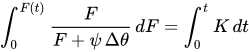
where

is wetting front soil suction head (L);
is water content (-);
is hydraulic conductivity (L/T);
is the cumulative depth of infiltration (L).

Once integrated, one can easily choose to solve for either volume of infiltration or instantaneous infiltration rate:

Using this model one can find the volume easily by solving for . However, the variable being solved for is in the equation itself so when solving for this one must set the variable in question to converge on zero, or another appropriate constant. A good first guess for is the larger value of either or . These values can be obtained by solving the model with a log replaced with its Taylor-Expansion around one, of the zeroth and second order respectively. The only note on using this formula is that one must assume that , the water head or the depth of ponded water above the surface, is negligible. Using the infiltration volume from this equation one may then substitute into the corresponding infiltration rate equation below to find the instantaneous infiltration rate at the time, , was measured.

Horton's equation

[edit]

Named after the same Robert E. Horton mentioned above, Horton's equation[14] is another viable option when measuring ground infiltration rates or volumes. It is an empirical formula that says that infiltration starts at a constant rate, , and is decreasing exponentially with time, . After some time when the soil saturation level reaches a certain value, the rate of infiltration will level off to the rate .

Where

is the infiltration rate at time t;
is the initial infiltration rate or maximum infiltration rate;
is the constant or equilibrium infiltration rate after the soil has been saturated or the minimum infiltration rate;
is the decay constant specific to the soil.

The other method of using Horton's equation is as below. It can be used to find the total volume of infiltration, F, after time t.

Kostiakov equation

[edit]

Named after its founder Kostiakov[15] is an empirical equation that assumes that the intake rate declines over time according to a power function.
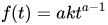
Where and are empirical parameters.

The major limitation of this expression is its reliance on the zero final intake rate. In most cases, the infiltration rate instead approaches a finite steady value, which in some cases may occur after short periods of time. The Kostiakov-Lewis variant, also known as the "Modified Kostiakov" equation corrects this by adding a steady intake term to the original equation.[16]

in integrated form, the cumulative volume is expressed as:

Where

approximates but does not necessarily equate to the final infiltration rate of the soil.

Darcy's law

[edit]

This method used for infiltration is using a simplified version of Darcy's law.[14] Many would argue that this method is too simple and should not be used. Compare it with the Green and Ampt (1911) solution mentioned previously. This method is similar to Green and Ampt, but missing the cumulative infiltration depth and is therefore incomplete because it assumes that the infiltration gradient occurs over some arbitrary length . In this model the ponded water is assumed to be equal to and the head of dry soil that exists below the depth of the wetting front soil suction head is assumed to be equal to .

where

is wetting front soil suction head
is the depth of ponded water above the ground surface;
is the hydraulic conductivity;
is the vague total depth of subsurface ground in question. This vague definition explains why this method should be avoided.

or

[17]
Infiltration rate f (mm hour−1))
is the hydraulic conductivity (mm hour−1));
is the vague total depth of subsurface ground in question (mm). This vague definition explains why this method should be avoided.
is wetting front soil suction head () = () (mm)
is the depth of ponded water above the ground surface (mm);

See also

[edit]

References

[edit]
[edit]
Revisions and contributorsEdit on WikipediaRead on Wikipedia
from Grokipedia
Infiltration in hydrology refers to the process by which water, typically from or , enters the surface and moves vertically through the soil pores under the influences of and forces. This downward movement allows water to penetrate the soil profile, where it can be stored temporarily, recharge aquifers, or contribute to subsurface flow. As a fundamental component of the , infiltration regulates the balance between and replenishment, influencing water availability, flood risks, and . The rate of infiltration, often measured in units such as millimeters per hour, varies based on several key factors including and structure—sandy soils permit faster infiltration than clay-rich ones due to larger pore spaces—initial content, cover, and the intensity and duration of rainfall. For instance, vegetated surfaces enhance infiltration by reducing raindrop impact and increasing , which improves permeability, while compacted or saturated soils can limit it, leading to increased overland flow and . In urban or agricultural settings, human activities like paving or further alter these rates, often reducing natural infiltration capacity. Understanding infiltration is crucial for applications in water resource management, control, and agricultural , where predictive models such as Horton's empirical equation or Philip's analytical solution are used to estimate rates and volumes. These models, grounded in for unsaturated flow, help quantify how infiltration transitions from initial high rates to equilibrium under conditions, aiding in the design of sustainable land-use practices. Overall, infiltration not only sustains in streams during dry periods but also plays a vital role in nutrient cycling and pollutant transport through soils.

Fundamentals

Definition

In hydrology, infiltration refers to the process by which from or other sources on the ground surface enters the through the surface boundary. This downward entry is driven primarily by and forces acting within the pores. The rate of infiltration is quantified as the volume of absorbed per unit surface area per unit time, commonly expressed in millimeters per hour (mm/h), while infiltration capacity denotes the maximum rate at which the can absorb under specific conditions. Infiltration is distinct from related processes in the hydrologic cycle. involves the subsequent downward movement of water through the soil profile, particularly below the root zone toward , whereas infiltration focuses solely on the initial surface entry. , by contrast, describes the capture and temporary retention of by canopies or other above-ground structures, preventing it from directly reaching the surface until or throughfall occurs. Typical infiltration rates span a wide range based on characteristics, from approximately 0.1 mm/h in dense clay soils to more than 100 mm/h in coarse sands, reflecting the 's ability to transmit into its pore spaces. These rates determine the potential for when rainfall exceeds capacity. The modern understanding of infiltration as a key mechanism in overland flow generation was formalized in the early , particularly through E. Horton's 1933 work, which introduced the infiltration-excess overland flow concept.

Hydrologic Importance

Infiltration plays a central role in the hydrologic cycle by facilitating , which sustains in rivers and streams during dry periods. that infiltrates the percolates downward to replenish aquifers, providing a stable source of subsurface flow that contributes significantly to river discharge, often accounting for 50-80% of in humid watersheds. Note that while much infiltrated supports and , only a portion percolates to recharge aquifers. Additionally, infiltration maintains essential for plant , supporting vegetation growth and processes that return to the atmosphere. By partitioning between and subsurface storage, infiltration reduces peak flows and mitigates flooding while enabling storage to sustain water availability during droughts. In humid regions, infiltration typically captures 50-90% of annual , resulting in low , depending on and conditions, whereas in arid zones, even small infiltration rates are critical for limited water resources. This process enhances resilience by promoting wetting that supports , nutrient cycling, and in terrestrial environments. Economically, infiltration influences irrigation efficiency by preserving soil moisture, controls soil erosion to protect agricultural lands, and improves water quality through natural filtration of pollutants as water percolates through soil layers. In arid regions, enhanced infiltration practices can secure water supplies for communities, reducing reliance on costly imports and supporting sustainable land management.

Influencing Factors

Soil Properties

Soil texture, defined by the relative proportions of , , and clay particles, is a primary determinant of infiltration capacity through its control over and permeability. Sandy soils feature large particles that create macropores with total often reaching 35-50%, enabling high permeability and rapid infiltration rates typically exceeding 50 mm/h. In contrast, clay-rich soils possess finer particles forming micropores with effective ranging from 1-18%, which restricts water movement due to smaller pore sizes and potential swelling upon wetting, resulting in infiltration rates of 1-10 mm/h. Loamy soils, combining balanced proportions of these components, offer optimal infiltration for hydrological balance, with steady-state rates commonly between 20-50 mm/h as observed in various soil classifications. , the spatial arrangement of particles into aggregates or peds, further modulates these effects by influencing pore connectivity; well-aggregated structures enhance vertical water flow compared to compact, massive forms. Compaction elevates soil —often from 1.2-1.4 g/cm³ in loose soils to 1.6-1.8 g/cm³ or higher—by compressing air-filled pores and reducing overall , which directly impedes infiltration. This process diminishes macropore volume essential for initial rapid entry of water, leading to steady-state rates that can be 55-82% lower than in uncompacted conditions for increases of 10-20%. In managed landscapes, infiltration in tilled soils can exceed that of compacted counterparts by factors of three or more, highlighting the role of mechanical disturbance in maintaining pore space. Chemical properties like and alter aggregation and surface stability, thereby affecting infiltration dynamics. Moderate promotes of clay particles into stable aggregates, potentially increasing permeability, but high sodium levels in sodic s (exchangeable sodium percentage >15%) induce dispersion, collapsing structure and forming impermeable crusts that seal the surface and reduce rates by orders of magnitude. Elevated , typically above 8.5 in such sodic environments, exacerbates dispersion by weakening electrostatic bonds between particles, further promoting crust development and hindering entry.

Vegetation and Organic Matter

Vegetation plays a crucial role in enhancing infiltration by providing structural modifications through systems that create macropores and channels, allowing preferential flow of into the subsurface. These -induced macropores can significantly increase infiltration rates compared to bare , as observed in grasslands where dense networks maintain and reduce surface compaction. For instance, studies on grasslands demonstrate that proliferation forms continuous pathways that facilitate rapid entry, mitigating runoff during intense rainfall events. Surface litter and mulch from vegetation further promote infiltration by absorbing initial rainfall, thereby reducing the kinetic energy of raindrops that could otherwise compact the soil and form surface seals. This protective layer slows overland flow, enhances water retention temporarily, and fosters microbial activity that contributes to soil aggregation and improved permeability. Organic mulches, such as leaf litter, have been shown to increase steady-state infiltration rates by protecting against erosion and maintaining higher soil moisture for biological processes. Soil organic matter, particularly levels of 5-10%, strengthens by binding particles into stable aggregates, which enlarges pore spaces and boosts infiltration capacity. High content improves water-stable aggregates, leading to enhanced and reduced susceptibility to crusting. Additionally, supports burrowing organisms like earthworms, which generate biopores that act as conduits for , further elevating infiltration rates by creating vertical channels. In forested ecosystems, the combined effect of litter layers and organic-rich forest floors can result in infiltration rates up to 9 times higher than on bare sandy soils. This biotic influence complements static soil properties, such as texture, by dynamically sustaining over time.

Antecedent Conditions

Antecedent status significantly preconditions infiltration rates by determining the available pore space and in the profile. In dry soils, initial infiltration rates are high as rapidly fills empty pores and overcomes matric , often reaching up to several millimeters per minute until approaching the 's saturation capacity; however, as increases, rates decline sharply due to reduced hydraulic gradients and pore filling. In contrast, wet soils exhibit much lower initial rates, sometimes approaching zero when near saturation, as additional faces minimal storage capacity and leads to surface . For instance, in loamy sand soils, average infiltration rates can decrease from approximately 0.97 mm/min under low antecedent content to 0.50 mm/min under high content, effectively halving the capacity. Precipitation intensity and duration further modulate these effects by interacting with antecedent to control how quickly infiltration capacity is exceeded. High-intensity storms rapidly surpass the 's infiltrability, promoting early and overland flow even in moderately dry conditions, while limiting cumulative infiltration. Prolonged low-intensity rainfall, however, allows more gradual wetting, enabling higher total infiltration volumes as the adjusts without immediate saturation, particularly beneficial in drier antecedent states. This dynamic is evident in semi-arid regions, where intense events on wet s yield minimal additional infiltration compared to extended gentle rains on dry profiles. Temporal aspects of antecedent conditions are often quantified using the Antecedent Precipitation Index (API), a weighted exponential decay model that serves as a proxy for soil wetness based on prior rainfall history. The API integrates recent precipitation with a decay factor (typically 0.85–0.98) to estimate moisture storage, influencing seasonal infiltration variations; higher API values indicate wetter conditions and reduced rates, while lower values post-drought enhance infiltration. Hysteresis in wetting-drying cycles exacerbates these temporal effects, as drying paths retain less water than wetting paths due to air entrapment and contact angle differences, leading to variable moisture states that precondition higher infiltration after dry periods compared to immediate post-rain wetting. For example, post-drought profiles can exhibit infiltration rates up to twice those after recent heavy rain in loamy sand soils, contributing to increased runoff potential under wet antecedent conditions.

Topographic Features

Topographic features significantly influence the interaction between and during infiltration processes by altering the dynamics of water distribution, , and gravitational forces. angle, in particular, plays a critical role: on steeper slopes exceeding 15% gradient (approximately 8.5°), the reduced contact time between rainfall and the soil surface promotes overland flow at the expense of infiltration. This phenomenon aligns with Horton's conceptualization of infiltration-excess overland flow, where gravity accelerates water movement downslope, limiting the opportunity for vertical into the matrix. Field studies quantify this effect, demonstrating that steady-state infiltration rates decrease with increasing gradient, as observed in controlled experiments across various types. These reductions are most pronounced in areas without protective cover, where bare on inclines exacerbates the shift toward . Aspect, or the orientation of slopes relative to solar exposure, further modulates infiltration through its impact on . In the , south-facing slopes typically experience higher solar radiation and , resulting in drier antecedent conditions that facilitate greater initial infiltration rates compared to shadier, moister north-facing slopes. Microtopography, including small-scale depressions and undulations, enhances this variability: depressions act as temporary storage for ponded , prolonging contact time and boosting local infiltration by up to several times the rates on smoother surfaces. At the broader scale, topographic position dictates infiltration potential. Flat valleys and depositional areas promote extensive infiltration by minimizing gravitational pull and allowing prolonged water-soil interaction, often leading to deeper and . In contrast, convex hillslopes and elevated crests limit infiltration through rapid downslope drainage, concentrating overland flow and reducing overall water retention in upland positions. These patterns underscore how geometry governs the partitioning of between surface and subsurface pathways.

Physical Processes

Infiltration Mechanics

Infiltration mechanics describe the physical es by which enters the surface and moves into the subsurface pores, governed primarily by gravitational and forces. Initially, when rainfall or contacts dry , is drawn into the pores through capillarity, a driven by at the air- interface and adhesive forces between and particles, creating a sharp wetting front that advances downward. This wetting front represents the boundary between the saturated zone near the surface and the unsaturated below, with early-stage infiltration rates often high due to the strong suction in initially dry conditions. As infiltration proceeds, becomes the dominant force, pulling water deeper into larger pores while continues to facilitate entry into finer micropores through adsorption and meniscus formation. In micropores, water movement occurs via matrix flow, a slow, uniform process where capillary forces fill the small voids against , leading to gradual saturation of the matrix. Conversely, in macropores—such as cracks, channels, or earthworm burrows—preferential flow dominates, allowing rapid, -driven bypass of the matrix with minimal interaction, which can enhance overall infiltration but also promote uneven wetting. If the rainfall intensity exceeds the soil's infiltration capacity, surface occurs, where excess water accumulates before potential runoff. A foundational for these mechanics is the infiltration excess proposed by Horton, which posits that the soil's infiltration capacity starts high in dry conditions but declines over time as the surface layer saturates, reducing available pore space and slowing the rate until it approaches a constant minimum. This temporal decline reflects the interplay of the front's progression and diminishing potential, with eventually limiting further intake in saturated zones. Horton's framework emphasizes how initial rapid entry gives way to capacity-limited flow, influencing the partition of water between infiltration and surface processes.

Saturation and Runoff Dynamics

When the soil profile reaches its , further cannot infiltrate vertically, leading to saturation overland flow where excess water spreads laterally across the surface or contributes to channel flow. This process is particularly prominent in areas with shallow soils or impermeable layers that restrict downward , causing water to accumulate near the surface and generate sheet flow. Saturation overland flow can occur under partial or full soil saturation conditions, distinguished by two primary mechanisms: infiltration-excess (Hortonian) and saturation-excess (Dunne). In the Hortonian mechanism, intense rainfall exceeds the soil's infiltration capacity, resulting in partial saturation at the surface where runoff forms regardless of deeper soil moisture levels; this was first conceptualized by Horton in 1933 based on observations of surface runoff generation. Conversely, the Dunne mechanism involves full saturation from below, where rising groundwater or subsurface flow fills soil pores to the surface, enabling runoff even under low-intensity rain; this was experimentally demonstrated by Dunne and Black in 1970 through hillslope studies showing variable source areas expanding with antecedent moisture. Antecedent soil moisture preconditions the landscape for these dynamics, amplifying saturation-excess contributions in wetter periods. Feedback loops further influence saturation and runoff by altering infiltration post-onset. Surface crusting, formed by raindrop impact and particle dispersion, seals pores and reduces subsequent infiltration rates, perpetuating overland flow during prolonged or repeated events. After rainfall ceases, and plant gradually deplete , resetting saturation levels and restoring infiltration capacity over hours to days, depending on atmospheric conditions and vegetation cover. In arid regions, rapid saturation from infrequent high-intensity storms can trigger flash floods via saturation overland flow, as seen in semiarid basins where subsurface connectivity leads to sudden surface emergence of . For instance, flash floods in central Arizona's wadis often result from localized saturation on steep, impermeable substrates, amplifying peak discharges. In steep, wet catchments, such as humid mountainous areas, runoff coefficients can reach 0.25-0.35 (25-35% of ) or higher due to saturation-excess dominance, particularly on slopes exceeding 7% where variable source areas expand with antecedent moisture.

Measurement Techniques

Field Methods

Field methods for measuring infiltration rates in hydrology involve direct, in-situ techniques that assess how water enters the under natural or simulated conditions. These approaches are essential for evaluating site-specific hydrologic behavior, such as in agricultural fields, forested areas, or management sites, where understanding vertical water movement helps predict runoff and recharge. Common tools include infiltrometers and rainfall simulators, which provide data on initial abstraction, cumulative infiltration, and steady-state rates, typically ranging from 1 to 100 mm/h depending on and conditions. Infiltrometers are widely used devices that pond on the surface to measure entry rates. The single-ring consists of a metal , usually 7.6 to 15 cm in diameter and 10 to 30 cm tall, driven 5 to 10 cm into the to minimize . To conduct a test, the ring is filled with to a constant head (e.g., 5 cm depth), and the volume of added to maintain this head is recorded over time intervals, often every 1 to 5 minutes, until a steady-state infiltration rate is achieved after 30 to . This method primarily captures vertical flow and is suitable for with rates up to 150 mm/h, though it can overestimate due to lateral divergence of flow near the ring walls. The double-ring infiltrometer improves accuracy by using two concentric cylinders—the inner ring (typically 30 cm diameter) for measurement and the outer ring (50 cm diameter) to maintain constant head and suppress lateral flow. Water is simultaneously ponded in both rings, with readings focused on the inner ring's cumulative infiltration volume versus time, following a similar procedure to the single-ring but with extended equilibration periods up to 2 hours for low-permeability soils. Standardized under ASTM D3385, this method yields more reliable vertical infiltration rates, particularly for field-saturated in the range of 0.1 to 50 mm/h, and is recommended for engineering applications like design. Tension infiltrometers address unsaturated flow conditions by applying a controlled negative pressure () at the soil-water interface through a porous disk, typically 5 to 20 cm in , placed on the surface. is supplied via a Mariotte bottle or low-flow reservoir, and infiltration rates are measured at multiple tension levels (e.g., 0 to -30 cm) to detect macropore contributions and near-saturated . This technique is particularly useful for structured soils where preferential flow paths dominate, providing data on without full saturation, though it requires careful bubbling control and corrections. Measurements often reveal rates from 0.5 to 20 mm/h in unsaturated zones, aiding in the identification of anisotropic flow. Rainfall simulators replicate natural events to quantify infiltration under dynamic conditions, using nozzles or drip systems to deliver uniform drops at intensities of 20 to 100 mm/h over a 0.25 to 1 plot. The procedure involves pre-wetting the , applying simulated rain for 20 to 60 minutes while collecting runoff and measuring infiltration as the difference between applied and volumes, distinguishing initial high rates (due to air displacement) from steady-state equilibrium. Portable models, such as those with capillary tubes for drop formation, are effective for erosion-prone sites and capture processes like crusting or sealing not evident in ponded tests. Despite their utility, field methods face limitations from disturbance during installation, which can compact or crack the surface and alter rates by 20-50%, as well as high spatial variability requiring multiple replicates (at least 3-5 per site) across heterogeneous landscapes. Temporal factors like antecedent and temperature also influence results, necessitating standardized protocols such as those from ASTM D3385 or USDA guidelines, which recommend 30-60 minute tests with constant head maintenance to ensure comparability. These measurements are occasionally used to calibrate hydrologic models but primarily serve direct assessment of .

Laboratory and Remote Sensing Approaches

Laboratory approaches to measuring infiltration primarily involve controlled experiments on samples to determine , a key parameter influencing entry into the . Constant-head permeameters apply a steady to saturated samples, typically granular soils like sands and gravels with (K) greater than 10410^{-4} cm/s, allowing calculation of K from the steady-state flow rate through principles. Falling-head permeameters, suited for finer, cohesive soils with lower permeability, measure the rate at which level drops in a connected to an unsaturated sample, providing estimates of unsaturated under varying head conditions. These devices enable precise, repeatable assessments in controlled environments, isolating and structure effects on infiltration potential. Soil core sampling complements permeameter tests by extracting undisturbed cylindrical samples from the field for laboratory analysis, preserving natural and critical for accurate infiltration rate derivation. In these tests, water is applied to the core's surface under controlled conditions, and the cumulative infiltration volume is recorded over time to compute rates, often integrated with texture analysis via to link physical properties to hydraulic behavior. This method is particularly valuable for assessing layered soils or those with macropores, where disturbance could alter flow paths, and results are commonly validated against field measurements for scaling up to site-specific applications. Remote sensing techniques offer non-invasive, large-scale inference of infiltration potential by mapping surface and subsurface properties that govern water entry. NASA's (SMAP) satellite mission provides global data at 9-36 km resolution using L-band and , enabling of antecedent conditions that modulate infiltration capacity during rainfall events. Geographic Information Systems (GIS) integrate with land cover classifications from sensors like Landsat to delineate and impervious areas, indirectly predicting infiltration rates based on and cover type. (LiDAR) generates high-resolution digital elevation models (DEMs) to quantify topographic features such as and microtopography, which influence overland flow and thus infiltration distribution across landscapes. Recent advances in have enhanced infiltration assessment through , which captures narrow spectral bands to estimate content—a factor that improves aggregation and for higher infiltration. , such as those on unmanned aerial vehicles or satellites like Hyperion, correlate visible-near-infrared with levels, achieving accuracies of R² > 0.7 in diverse types. Post-2020 integrations of , particularly algorithms like random forests and neural networks, have improved infiltration by fusing data with empirical models, addressing spatial variability in water-scarce regions with errors reduced by up to 30% compared to traditional methods. These AI-driven approaches enable scalable of infiltration rates from multi-sensor datasets, supporting broader hydrologic monitoring.

Modeling Methods

Empirical Models

Empirical models approximate infiltration rates through mathematical functions derived from observed field , providing practical tools for estimating entry into the without relying on detailed mechanistic derivations. These -driven approaches emerged in the early to address the need for simple predictions in hydrologic applications, particularly where physical parameters are difficult to measure. The Horton equation, a foundational empirical model, describes the time-dependent decline in infiltration capacity. It is expressed as f(t)=fc+(f0fc)ektf(t) = f_c + (f_0 - f_c) e^{-kt} where f(t)f(t) represents the infiltration rate at time tt, f0f_0 is the initial infiltration rate, fcf_c is the steady-state or constant final rate, and kk is an empirical decay coefficient that governs the rate of decline. This exponential form effectively captures the rapid initial decrease in infiltration due to factors like surface crusting or pore filling, based on Horton's observations of rainfall experiments. The Kostiakov equation offers another straightforward empirical formulation, often applied to both infiltration rates and cumulative volumes. For the infiltration rate, it takes the power-law form f(t)=atbf(t) = a t^{-b} where aa and bb (typically 0<b<10 < b < 1) are parameters fitted to experimental data, reflecting soil-specific behavior. The corresponding cumulative infiltration is F(t)=a1bt1bF(t) = \frac{a}{1-b} t^{1-b}, making it useful for integrating over time in practical scenarios. This model was developed from laboratory measurements of water movement in soils, emphasizing empirical fitting over process details. These models excel in ease of calibration, requiring only short-duration field tests like infiltrometers to estimate parameters, which facilitates their use in agriculture for optimizing irrigation scheduling and predicting water requirements. For instance, the Horton equation's realistic approach to a non-zero equilibrium rate aids in simulating border irrigation advance, while Kostiakov's simplicity suits quick assessments in cropped fields. Despite their practicality, empirical models such as Horton and Kostiakov lack grounding in physical processes like forces or variations, restricting their extrapolation to untested conditions or heterogeneous soils. They often underperform during prolonged storms, where Kostiakov unrealistically predicts rates approaching zero and an infinite initial value, and Horton may not adapt well to changing antecedent wetness without recalibration. In contrast to physically based models, they prioritize observational fit over mechanistic insight, limiting broader hydrologic simulations.

Physically Based Models

Physically based models of infiltration in rely on fundamental principles of soil physics, such as and mass conservation, to simulate water movement through unsaturated . These models derive parameters directly from measurable properties like , moisture content, and suction head, enabling predictions of infiltration rates and wetting front propagation without extensive calibration to field data. Unlike empirical approaches that fit curves to observed infiltration rates for simplicity, physically based models provide mechanistic insights into processes like capillary forces and gravity-driven flow. The Green-Ampt model, introduced in , represents an early physically based approach assuming piston-like flow where a sharp wetting front advances uniformly through a homogeneous profile. The infiltration rate f(t)f(t) is given by f(t)=Ks(1+ψΔθF)f(t) = K_s \left(1 + \frac{\psi \Delta \theta}{F}\right) where KsK_s is the saturated , ψ\psi is the wetting front suction head, Δθ\Delta \theta is the change in volumetric water content across the wetting front, and FF is the cumulative infiltration depth. This model simplifies unsaturated flow by neglecting behind the front, making it computationally efficient for applications requiring rapid estimates of infiltration capacity. Philip's model, developed in 1957, provides an approximate analytical solution to Richards' for short times, expressing cumulative infiltration as F(t)=St1/2+AtF(t) = S t^{1/2} + A t where SS is the sorptivity (characterizing capillary imbibition), and AA approximates the constant-rate stage influenced by . This two-term captures both the initial diffusive phase and the later gravitational flow, offering a balance between physical basis and computational simplicity for predicting early-stage infiltration in homogeneous soils. Richards' equation, formulated in 1931, offers a more comprehensive description of unsaturated flow as a combining continuity and . In one dimension for vertical flow, it is expressed as θt=z[K(θ)(hz+1)]\frac{\partial \theta}{\partial t} = \frac{\partial}{\partial z} \left[ K(\theta) \left( \frac{\partial h}{\partial z} + 1 \right) \right] where θ\theta is the volumetric water content, tt is time, zz is depth, hh is the , and K(θ)K(\theta) is the unsaturated . This equation accounts for both capillary and gravitational forces but requires numerical solutions, such as or finite element methods, due to its nonlinearity and dependence on soil-specific retention and conductivity functions. The finite water-content method provides a discretized approximation to Richards' equation, dividing the vadose zone into thin layers and calculating infiltration by sequentially filling each layer to its capacity before advancing the wetting front. This approach tracks changes in water content explicitly within each layer, incorporating soil water retention curves to estimate flux between layers and avoiding the need for fine spatial grids in fully numerical solvers. It is particularly useful for simulating transient infiltration under varying rainfall intensities. These models find applications in predicting the depth of the wetting front during rainfall events, aiding in assessments of dynamics and potential runoff generation. Laboratory validations have demonstrated their accuracy for a range of textures; for instance, the Green-Ampt model closely matches measured infiltration rates in sands and clays under controlled conditions, with errors typically below 10% when parameters are derived from core analyses. Richards' equation and the finite water-content method similarly perform well in column experiments, capturing capillary rise and redistribution in layered profiles.

Integrated Hydrologic Approaches

Integrated hydrologic approaches in treat infiltration as a key component of the broader equation, enabling landscape-scale estimations that account for interconnected processes across watersheds. The general hydrologic can be expressed as infiltration equaling minus the sum of runoff, , and , providing a framework for partitioning inputs and outputs over extended areas. This budgeting method facilitates holistic assessments by integrating infiltration with surface and subsurface flows, rather than isolating it at the point scale. A foundational technique within this budget is the Soil Conservation Service Curve Number (SCS-CN) method, developed in , which estimates runoff as a function of , , and antecedent moisture to indirectly derive infiltration volumes. By applying curve numbers ranging from 30 to 98 based on hydrologic soil groups and hydrologic conditions, the method simplifies runoff for ungaged basins, allowing infiltration to be computed as the residual in the . This empirical integration has been widely adopted for due to its simplicity and applicability to diverse landscapes. To link point-scale infiltration to subsurface dynamics, is integrated into models, where the flux qq is given by q=Khq = -K \nabla h, with KK as and h\nabla h as the gradient. In tools like , this equation simulates saturated flow conditions, incorporating infiltration as a recharge boundary to model how surface water percolates into aquifers over large domains. Such integration supports predictions of from infiltration events, essential for basin-wide management. Coupled surface-subsurface models further advance these approaches by embedding infiltration subroutines within comprehensive simulations. The Soil and Water Assessment Tool () combines infiltration estimates with routing and land management processes to simulate watershed responses, including event-based hydrology influenced by soil properties and precipitation patterns. Similarly, the Hydrologic Engineering Center's Hydrologic Modeling System (HEC-HMS) incorporates infiltration losses alongside unit hydrographs for storm event simulations, enabling real-time flood forecasting and water yield assessments at the basin scale. Addressing uncertainties inherent in parameter variability and future scenarios is critical in these integrated frameworks. Monte Carlo simulations propagate errors in infiltration parameters, such as , through the hydrologic budget to quantify prediction confidence intervals, often reducing the number of runs needed via optimized sampling techniques. Post-2020 advancements have incorporated projections into these models, adjusting inputs and rates to evaluate altered infiltration regimes under warming scenarios, as demonstrated in national-scale applications that reveal shifts in recharge patterns.

Applications

Natural and Agricultural Systems

In natural ecosystems such as forests and wetlands, infiltration rates are often elevated due to the accumulation of , which enhances and . In forested areas, rates can range from 16 to 117 mm/h in temperate regions like the southern Appalachians and up to 206 mm/h on slopes in tropical environments like the , facilitating efficient entry and reducing . Organic layers in these systems promote macropore formation, allowing rapid absorption during events. Wetlands often exhibit low direct infiltration due to saturated, fine-textured soils but benefit from high organic content that supports hydrologic buffering across surrounding landscapes by storing and slowly releasing excess , thereby modulating peak flows and supporting retention. In agricultural croplands, infiltration is frequently lower than in undisturbed natural systems due to management practices that alter properties. Conventional disrupts soil aggregates and increases compaction, reducing infiltration rates and accelerating , with studies showing notable declines in water entry compared to untilled conditions. Conservation practices, such as and leaving crop residues on the surface, counteract these effects by preserving and enhancing , thereby restoring higher infiltration capacities. Irrigation practices in can further influence infiltration, particularly when over-application leads to surface sealing. Excessive from overhead or methods detaches particles, forming crusts that impede entry and increase risk, as observed in silty clay soils under sprinkler systems. In contrast, minimizes such sealing by delivering directly to the root zone at controlled rates, reducing excess surface wetting and preserving permeability. USDA-supported case studies highlight the benefits of cover crops in agricultural systems, demonstrating their role in boosting infiltration and curbing . For instance, integrating cover crops like cereal rye in corn-soybean rotations has been shown to substantially increase water infiltration, with some implementations yielding up to 90% reductions in through improved surface protection and root-enhanced . These practices not only elevate infiltration by factors observed in field trials but also mitigate nutrient runoff, underscoring their value in sustainable farming.

Urban and Stormwater Management

In urban environments, the proliferation of impervious surfaces such as pavement and asphalt drastically reduces infiltration rates to near zero by preventing from percolating into the ground, leading to higher volumes of and an increased risk of flash ing. This alteration in hydrologic response can elevate peak flood discharges by factors of 2 to 6 times compared to pre-development conditions, depending on the extent of impervious cover and local rainfall intensity. Consequently, urban areas experience more frequent and intense events, straining drainage and exacerbating flood vulnerabilities. To mitigate these effects, low-impact development (LID) strategies have emerged as key approaches to restore natural infiltration processes in built landscapes. Techniques such as permeable pavements and rain gardens allow to infiltrate through porous materials or vegetated depressions, promoting recharge and reducing runoff volumes. Additionally, bioretention cells—engineered basins filled with soil and plants—capture and filter pollutants from while facilitating infiltration, thereby improving and replenishment in urban settings. The urban heat island (UHI) effect further complicates infiltration dynamics by elevating local temperatures, which intensifies evaporation rates and indirectly depletes availability for subsequent rainfall absorption. Impervious surfaces exacerbate this by limiting evaporative cooling from and , creating a feedback loop where drier soils reduce infiltration and amplify UHI intensities during dry periods. In densely developed areas, this can lead to compacted soils with diminished permeability, as observed through field measurements of built environments. Recent trends in urban hydrology emphasize the integration of to address these challenges. As of , England's national standards have made sustainable drainage systems (SuDS) mandatory for major new developments to manage flood risk and enhance ecosystem restoration, promoting features like infiltration trenches and green roofs. These initiatives have driven widespread implementation, reducing reliance on conventional piped systems and fostering multifunctional urban spaces that support infiltration and .

Wastewater and Infrastructure

Inflow and infiltration (I/I) refer to the unintended entry of and into systems through structural defects in pipes and manholes, significantly affecting wastewater infrastructure by increasing hydraulic loads and straining treatment capacities. In older urban systems, I/I can constitute 20-40% of the total flow in sewer pipes, leading to elevated treatment volumes that exacerbate operational challenges such as sanitary sewer overflows (SSOs). This extraneous water dilutes wastewater but raises overall flows, often pushing treatment plants beyond design limits during peak events. Primary sources of I/I include joint failures and cracks in aging pipes, where groundwater seeps in continuously, as well as root intrusion that compromises pipe integrity and creates pathways for water entry. Illegal connections, such as roof drains or sump pumps tied to sanitary lines, contribute to inflow, particularly during storms. These issues are more pronounced in wet weather, with seasonal peaks from rainfall or causing rapid surges in extraneous flows that can overwhelm systems. In systems, which integrate sanitary and flows, I/I amplifies the risk of overflows into receiving waters. Mitigation strategies focus on identifying and sealing entry points to reduce volumes. Pipe rehabilitation techniques, such as slip-lining or (CIPP) liners, seal defects and extend infrastructure life, often providing 50-year service with proper maintenance. Monitoring programs employ flow meters and rainfall gauges to quantify wet-weather contributions, while (CCTV) inspections, smoke testing, and pinpoint sources for targeted repairs. These approaches have proven effective in reducing SSO incidents by addressing root causes like joint deterioration. US Environmental Protection Agency (EPA) reports highlight the scale of urban I/I impacts, estimating that related SSOs discharge 3-10 billion gallons of untreated wastewater annually. Case studies from cities like Belmont, California, demonstrate rehabilitation expenses of $10.6-12.6 million for slip-lining 80,000 linear feet of pipe to curb I/I. The origins of I/I challenges trace to the 1930s, when many U.S. cities installed diversion weirs in combined sewers to route flows to emerging treatment plants, yet retained overflow structures that perpetuated untreated discharges during high flows—a legacy persisting in modern infrastructure.

Environmental Impacts

Climate Change Effects

Climate change is altering infiltration processes through more frequent and intense events, leading to shifts in hydrology and water availability. Intensified storms, characterized by higher intensities, reduce the time available for water to infiltrate into soils, thereby increasing by 10-30% in many regions, including and high northern latitudes. This effect is driven by heavy rainfall events that exceed infiltration capacities, promoting overland flow and elevating risks, particularly in areas with already compacted or low-permeability soils. Alternating wet-dry extremes, exacerbated by , induce structural changes in soils that further disrupt infiltration dynamics. During prolonged dry periods, soils experience cracking, which initially enhances preferential flow pathways but ultimately reduces overall water retention capacity. Subsequent wetting events can cause surface sealing through aggregate breakdown and dispersion, impeding infiltration rates and contributing to a feedback loop of increased runoff and . These cycles are projected to intensify, with drought severity rising in regions like the Mediterranean and , amplifying vulnerabilities in water-scarce ecosystems. Regional variations highlight differential impacts on infiltration. In arid areas, such as the Mediterranean and southwestern , declining recharge rates—up to 30% by 2100—stem from reduced and increased , leading to depletion. Conversely, tropical regions like the Amazon and may see rises in saturation-excess overland flow due to episodic intense rainfall, which overwhelms storage and boosts runoff despite potential for enhanced episodic recharge. Global models project a 5-20% reduction in infiltration in drylands and other vulnerable regions by 2100 under the RCP8.5 scenario, driven by widespread soil drying and altered precipitation patterns, with implications for aquifer sustainability and flood management. As of 2025, updated models under SSP scenarios continue to highlight similar risks, with emerging research emphasizing adaptive land management. Adaptation strategies, including enhanced monitoring of soil moisture and antecedent conditions, are essential to mitigate these changes and support resilient water resource planning.

Soil Degradation and Restoration

Soil degradation significantly impairs infiltration in hydrologic systems by altering and reducing , primarily through anthropogenic activities such as and . compacts soil via livestock trampling, leading to substantial reductions in infiltration rates; for instance, studies in forested watersheds have shown percolation rates dropping by approximately 77% in grazed areas compared to ungrazed ones, from 132 inches/hour to 30.2 inches/hour in surface horizons. exacerbates this by exposing soil to heavy machinery and foot traffic, further compacting the surface and diminishing infiltration capacity, which promotes increased and . Salinization, often resulting from poor practices, seals soil surfaces by dispersing clay particles and reducing , severely limiting water entry and creating impermeable crusts, particularly in sodic soils with exchangeable sodium percentage exceeding 15%. Erosion acts as a feedback mechanism in degraded soils, where the loss of diminishes and aggregate stability, further hindering infiltration. Global estimates indicate that human-induced totals around 24 billion tons per year, stripping fertile layers and exacerbating compaction in vulnerable regions. This depletion reduces the soil's ability to absorb , perpetuating a cycle of runoff and degradation, as observed in arid and semi-arid landscapes. Restoration strategies effectively counteract these impairments by rebuilding soil structure and enhancing organic content. Afforestation increases infiltration rates by approximately threefold in tropical and semi-arid regions through improved root penetration and accumulation, as demonstrated in meta-analyses of field experiments. Terracing similarly boosts infiltration by leveling slopes and increasing , which can elevate retention by 5 to 6 times relative to untreated slopes, allowing greater water . additions further aid recovery by enhancing and aggregate stability; applications of 2-5% have been shown to increase easily available by up to 50% in low-organic soils, indirectly supporting higher infiltration through better . Long-term restoration efforts, such as those on China's since the early 2000s, illustrate measurable recovery in infiltration capacity. Post-2010 studies reveal that vegetation restoration over 10-40 years significantly elevates saturated , with rates doubling from 13.8 mm/hour in farmland to 27 mm/hour in 40-year-old scrublands, representing 20-100% improvements depending on restoration duration and vegetation type. These gains, driven by increased organic inputs and reduced compaction, underscore the potential for 20-40% recovery in infiltration within a decade under sustained and conversion programs.

References

Add your contribution
Related Hubs
User Avatar
No comments yet.
