


Community hub
Recent from talks
Contribute something
Nothing was collected or created yet.
Abbé Pierre
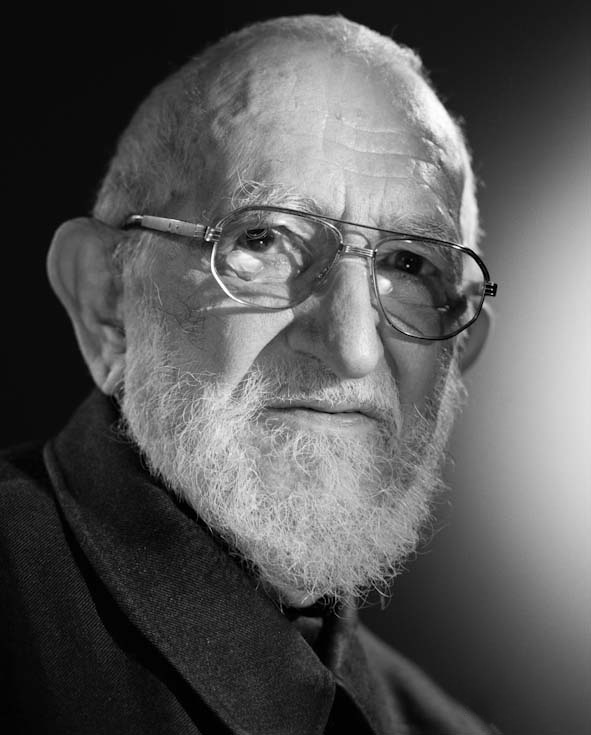
View on WikipediaAbbé Pierre GOQ (born Henri Marie Joseph Grouès;[1] 5 August 1912 – 22 January 2007) was a French Catholic priest. He was a member of the Resistance during World War II and deputy of the Popular Republican Movement. In 1949, he founded the Emmaus movement, with the goal of helping poor and homeless people. For several decades, he was one of the most popular public figures in France. Allegations of sexual abuse of at least 57 women, as well as several underage girls, emerged in 2024 and 2025.
Key Information


Youth and education
[edit]Grouès was born on 5 August 1912 in Lyon, France to a wealthy Catholic family of silk traders, the fifth of eight children. The writer and murderer Héra Mirtel was one of his aunts. He spent his childhood in Irigny, near Lyon. He was twelve when he met François Chabbey and went for the first time with his father to an Order circle, the brotherhood of the "Hospitaliers veilleurs" in which the mainly middle-class members would serve the poor by providing barber services.[citation needed]
Grouès became a member of the Scouts de France in which he was nicknamed "Meditative Beaver" (Castor méditatif). In 1928, aged 16, he made the decision to join a monastic order, but he had to wait until he was seventeen and a half to fulfill this ambition. In 1931, Grouès entered the Capuchin Order, renouncing his inheritance and offering all his possessions to charity.[citation needed]
Known as frère Philippe (Brother Philippe), he entered the monastery of Crest in 1932, where he lived for seven years and was ordained a priest on 24 August 1938. He had to leave in 1939 after developing severe lung infections, which made monastic life difficult to cope with. He became chaplain to the sick at several places[2] and then was nominated as curate of Grenoble's cathedral in April 1939, only a few months before the invasion of Poland.[3]
The theologian Henri de Lubac told him on the day of his priestly ordination: "Ask the Holy Spirit to grant you the same anti-clericalism of the saints".[4]
World War II
[edit]When World War II broke out in 1939, he was mobilised as a non-commissioned officer in the train transport corps. According to his official biography, he helped Jewish people to escape Nazi persecution following the July 1942 mass arrests in Paris, called the Rafle du Vel' d'Hiv, and another raid in the area of Grenoble in the non-occupied zone: "In July 1942, two fleeing Jews asked him for help. Having discovered the persecution taking place, he immediately went to learn how to make false passports. Starting in August 1942, he guided Jewish people to Switzerland".[5]
His pseudonym dates from his work with the French Resistance during the Second World War, when he operated under several different names. Based in Grenoble, an important center of the Resistance, he helped Jews and politically persecuted escape to Switzerland.[6] In 1942, he assisted Jacques de Gaulle (the brother of Charles de Gaulle) and his wife escape to Switzerland.[7]
He participated in establishing a section of the maquis where he officially became one of the local leaders in the Vercors Plateau and in the Chartreuse Mountains. He helped people to avoid being taken into the Service du travail obligatoire (STO), the Nazi forced-labour program agreed upon with Pierre Laval, by creating in Grenoble the first refuge for resistants to the STO; he founded the clandestine newspaper L'Union patriotique indépendante.[2][8] For a time, in 1943, he was given shelter by Lucie Coutaz, a Resistance member who later became his secretary and was his assistant in his charity work until her death in 1982.[9]
He was arrested twice, once in 1944 by the Nazi police in the town of Cambo-les-Bains in the Pyrénées-Atlantiques, but was quickly released and travelled to Spain then Gibraltar before joining the Free French Forces of General de Gaulle in Algeria.[8] In the Free North Africa, he became a chaplain in the French Navy on the battleship Jean Bart in Casablanca. He had become an important symbol of the French Resistance.[citation needed]
At the end of the war, he was awarded the Croix de Guerre 1939–1945 with bronze palms and the Médaille de la Résistance.[citation needed]
Political career (1945–1951) and the 1960s–1970s
[edit]When the war was over, following de Gaulle's entourage's advice and the approbation of the archbishop of Paris, Abbé Pierre was elected deputy for Meurthe-et-Moselle department in both National Constituent Assemblies in 1945–1946 as an independent close to the Popular Republican Movement (MRP), mainly consisting of Christian democratic members of the Resistance. In 1946, he was re-elected as a member of the National Assembly, but this time as a member of the MRP. Abbé Pierre became vice-president of the World Federalist Movement in 1947, a universal federalist movement.[citation needed]
After a bloody accident resulting in the death of a blue-collar worker, Édouard Mazé, in Brest in 1950, Henri Antoine Grouès decided to put an end to his MRP affiliation on 28 April 1950, writing a letter titled "Pourquoi je quitte le MRP" ("Why I'm leaving the MRP"), where he denounced the political and social attitude of the MRP party. He then joined the Christian socialist movement named Ligue de la jeune République, created in 1912 by Marc Sangnier, but decided to finally end his political career. In 1951, before the end of his mandate, he returned to his first vocation: helping the homeless. With the modest funds he had received as a deputy, he invested in a run-down house near Paris in the Neuilly-Plaisance neighbourhood, repairing the whole house. He made it the first Emmaus base (because, according to him, it was simply too big for one person).[citation needed]
Although the priest had left representative politics, preferring to invest his energies in the Emmaus charity movement, he never completely abandoned the political field, taking strong stances on many and various subjects. Thus, when the decolonization movement was slowly beginning to emerge in the whole world, he attempted in 1956 to convince Tunisian leader Habib Bourguiba to obtain independence without using violence. Present in various international conferences at the end of the 1950s, he met Colombian priest Camilo Torres (1929–1966), a predecessor of Liberation theology, who asked for his advice on the Colombian Church's criticism of "workers' priests". He was also received by US president Eisenhower and Mohammed V of Morocco in 1955 and 1956. In 1962, he resided for several months in Charles de Foucauld's retreat in Béni-Abbés (Algeria). [citation needed]
Abbé Pierre was then called to India in 1971 by Jayaprakash Narayan to represent, along with the Ligue des droits de l'homme (Human Rights League) France in the issues of refugees. Indira Gandhi then invited him to deal with the question of Bengali refugees, and Grouès founded Emmaus communities in Bangladesh. [citation needed]
Emmaus
[edit]1949: the origin
[edit]Emmaus (Emmaüs in French) was started in 1949. Its name is a reference to a village in Palestine appearing in the Gospel of Luke, where two disciples extended hospitality to Jesus just after his resurrection without recognizing him. In that way, Emmaus's mission is to help poor and homeless people. It is a secular organization. In 1950 the first community of Emmaus companions was created in Neuilly-Plaisance close to Paris in France. The Emmaus community raises funds for the construction of housing by selling used goods. "Emmaus, it's a little like the wheelbarrow, the shovels and the pickaxes coming before the banners. A sort of social fuel derived from salvaging defeating men".[10]
There were initial difficulties raising funds, so in 1952, Abbé Pierre decided to be a contestant on the Radio Luxembourg game show Quitte ou double (Double or Nothing) for the prize money; he ended up winning 256,000 francs.[citation needed]
Winter 1954: "Uprising of kindness"
[edit]Grouès became famous during the extremely cold winter of 1954 in France, when homeless people were dying in the streets. Following the failure of the projected law on lodgings, he gave a well-remembered speech on Radio Luxembourg on 1 February 1954, and asked Le Figaro, a conservative newspaper, to publish his call, in which he stated soberly that "a woman froze to death tonight at 3:00 AM, on the pavement of Sebastopol Boulevard, clutching the eviction notice which the day before had made her homeless". He went on to describe the drama of homeless life, claiming that in "every town in France, in every quarter of Paris" ministry was needed based on "these simple words: 'If you suffer, whoever you are, enter, eat, sleep, recover hope, here you are loved'".[11]
The next morning, the press wrote of an "uprising of kindness" (insurrection de la bonté) and the now-famous call for help ended up raising 500 million francs in donations (Charlie Chaplin gave 2 million[8]). This enormous amount was totally unexpected; telephone operators and the postal service were overwhelmed, and owing to the volume of donations, several weeks were needed just to sort them, distribute them, and find a place to stock them throughout the country. Moreover, this call attracted volunteers from all over the country to help them, including wealthy bourgeoises who were emotionally shaken by the Abbé's call: first to do the redistribution, but then to duplicate the effort all around France. Quite quickly, Grouès had to organise his movement by creating the Emmaus communities on 23 March 1954. [citation needed]
.jpg)
A book was written by Boris Simon called Abbé Pierre and the ragpickers of Emmaus. It spread knowledge about the Emmaus community. In 1955, the priest gave President Eisenhower an English translation of the book in the oval office. [citation needed] The Emmaus communities quickly spread worldwide. Grouès traveled to Beyrouth (Beirut, Lebanon) in 1959, to assist in the creation of the first multiconfessional Emmaus group there; it was founded by a Sunni (Muslim), a Melkite (Catholic) archbishop and a Maronite (Christian) writer. [citation needed]
1980s to 2000s
[edit]After the 1981 election of President François Mitterrand (Socialist Party, PS), during which Abbé Pierre called for voters to vote in blank[12]), he supported the initiative of the French Premier Laurent Fabius (PS) to create in 1984 the Revenu minimum d'insertion (RMI), a welfare system for indigent people.[13] The same year, he organized the operation "Charity Christmas", which, relayed by France Soir, raised 6 million francs and 200 tons of products. The actor Coluche, who had organized the charitable Restos du Cœur, offered him 150 million French cents received by his organisation.[13] Coluche's huge success with the Restos du Cœur, caused by his popularity (Coluche had even tried to nominate himself as a candidate in the 1981 presidential election before withdrawing), convinced the Abbé again of the necessity and value of such charitable struggles and the usefulness of the media in such endeavours. [citation needed]
In 1983, he spoke with Italian President Sandro Pertini to plead the cause of Vanni Mulinaris, imprisoned on charge of assistance to the Red Brigades (BR), and even observed eight days of hunger strike from 26 May to 3 June 1984 in the Cathedral of Turin to protest against detention conditions of "Brigadists" in Italian prisons and the imprisonment without trial of Vanni Mulinaris, who was recognized innocent sometimes afterwards.[14] Italian magistrate Carlo Mastelloni recalled in the Corriere della Sera in 2007 that a niece of the Abbé was a secretary at Hyperion language school in Paris, directed by Vanni Mulinaris, and married to one of the Italians refugees then wanted by the Italian justice.[15] According to the Corriere della Sera, it would even have been him who convinced then president François Mitterrand to grant protection from extradition to left-wing Italian activists who took refuge in France and had broken with their past.[16]
More than 20 years later, the ANSA, Italian press agency, recalled that he had supported in 2005 one of his physicians, Michele d'Auria, who was a former member of Prima Linea, an Italian far-left group, and was accused of having participated in hold-ups during 1990. Like many other Italian activists, he had exiled himself to France during the "years of lead", and then joined the Emmaus companions.[17] La Repubblica specified that Italian justice has recognized the innocence of all people close to the Hyperion School.[18]
Following Grouès' death in January 2007, Italian magistrate Carlo Mastelloni declared to the Corriere della Sera that during the abduction of Aldo Moro Abbé Pierre had gone to the Christian Democrats' headquarters in Rome in an attempt to speak with its secretary Benigno Zaccagnini, in favor of a "hard line" of refusal of negotiations along with the BR.[15]
In 1988, Abbé Pierre met representatives of the International Monetary Fund (IMF) to discuss the difficult financial, monetary and human issues brought by the huge Third World debt (starting in 1982, Mexico had announced it could not pay the service of its debt, triggering the 1980s Latin American debt crisis). In the 1990s, the Abbé criticized the apartheid regime in South Africa. In 1995, after a three-year-long siege of Sarajevo, he went there to exhort nations of the world to put an end to the violence, and requested French military operation against the Serb positions in Bosnia.[citation needed]
During the Gulf War (1990–91), Abbé Pierre directly addressed himself to US President George H. W. Bush and Iraq President Saddam Hussein. He asked French president François Mitterrand to engage himself in matters concerning refugees, in particular by the creation of a stronger organisation than the current UN High Commissioner for Refugees (HCR). He encountered this year the Dalai Lama during inter-religious peace encounters. A staunch supporter of the Palestinian cause, he has attracted attention with some of his statements on the Israeli-Palestine conflict.[19]
His support "à titre amical" ("in title of friendship") for Roger Garaudy in 1996 brought controversy. The "Garaudy Affair" had been revealed in January 1996 by the Canard enchaîné satirical newspaper, which prompted a series of denunciations against his book, "The Foundational Myths of Israeli Politics", and led Garaudy to be charged of negationism (before being convicted in 1998, under the 1990 Gayssot Act). But Garaudy provoked public indignation when he announced in March that he was supported by the Abbé Pierre, who was immediately excluded from the honour committee of the LICRA (International League against Racism and Anti-Semitism). The Abbé condemned those who tried to "negate, banalize or falsify the Shoah", but his continued support to Garaudy as a friend was criticized by all anti-racist, Jewish organisations (MRAP, CRIF, Anti-Defamation League, etc.) and the Church hierarchy.[20] His friend Bernard Kouchner, co-founder of Médecins Sans Frontières (MSF), criticized him for "absolving the intolerable",[21] while Cardinal Jean-Marie Lustiger (and archbishop of Paris from 1981 to 2005) publicly disavowed him.[22] The Abbé then went into retreat in the Benedictine monastery of Praglia near Padua, Italy.[23] In the film documentary Un abbé nommé Pierre, une vie au service des autres, the Abbé declared that his support had been towards the person of Roger Garaudy, and not towards statements in his book, which he had not read.[citation needed]
The curator of the Deportation and Resistance Museum of the Isère department where Grouès carried out most of his resistance activities declared that Abbé Pierre would have merited ten times to be named Righteous Among the Nations for his struggle in favor of Jews during Vichy.[7]
Following this 1996 controversial support to a personal acquaintance, the Abbé was shunned for a period by the media,[13] although Grouès remained a popular figure.
Positions on the Church hierarchy and the Vatican's policies
[edit]The Abbé's positions towards the Church and the Vatican also brought controversy. His positions on social issues and engagements were at times explicitly socialist and opposed to the Church. [clarification needed] He maintained a relationship with the progressive French Catholic Bishop Jacques Gaillot, to which he recalled his duty of "instinct of a measured insolence".[13] He did not like Mother Teresa; despite her work for the poor, her strict adherence to Catholic teaching on morality did not sit well with Abbé Pierre's left wing ideology. He had difficult relations with the Vatican. L'Osservatore Romano, known for reporting the deaths of priests, did not report on his death right away in 2007. Even though it is not customary for the Pope to offer condolences on the death of individual priests, Abbé Pierre's supporters were heavily critical of Pope Benedict XVI for not making an exception. Father Lombardi, spokesman of the Vatican, pointed journalists to the statement made by the French Church, while Benedict XVI did mention his death in private audiences. Official reactions from the Church came in two interviews of French cardinals, Roger Etchegaray and Paul Poupard. His criticisms of what he considered the lavish lifestyle of the Vatican got him a lot of publicity (especially when he reproached John Paul II for his expensive travels), but were not well received by the public. Cardinal Secretary of State Tarcisio Bertone lauded his "action in favor of poor":[24] "Informed of the death of Abbe Pierre, the Holy Father gives thanks for his activity in favor of the poorest, by which he bore witness to the charity that comes from Christ. Entrusting to divine mercy this priest whose whole life was dedicated to fighting poverty, he asks the Lord to welcome him into the peace of His kingdom. By way of comfort and hope, His Holiness sends you a heartfelt apostolic blessing, which he extends to the family of the departed, to members of the communities of Emmaus, and to everyone gathering for the funeral".[citation needed]
His support for the ordination of women[25] and for married clergy put him at odds with Catholic tradition, Church leaders and a substantial portion of French Catholics that followed the traditional teaching of the Church. The same stances, according to British state media, made him popular among the declining number of left-wing Catholics in France.[19] In his book Mon Dieu... pourquoi? (God... Why?, 2005), co-written with Frédéric Lenoir, he admitted to breaking his solemn promise of celibacy by having had casual sex with women.[26][27] Despite very strong grassroots opposition to adoption by same-sex couples, Abbé Pierre dismissed people's concerns that it deprives children of a mother or father and turns them into objects. The Abbé also opposed the traditional Catholic policy on contraceptives.[13]
Global policy
[edit]He was one of the signatories of the agreement to convene a convention for drafting a world constitution.[28][29] As a result, for the first time in human history, a World Constituent Assembly convened to draft and adopt a Constitution for the Federation of Earth.[30]
Public image
[edit]International recognition
[edit]Abbé Pierre had the distinction of having been voted France's most popular person for many years, though he was surpassed in 2003 by Zinedine Zidane, moving to second place.[31] In 2005, Abbé Pierre came third in a television poll to choose Le Plus Grand Français (The Greatest Frenchman).[citation needed]
In 1998, he has been made Grand Officer of the National Order of Quebec while in 2004, he was awarded the Grand Cross of the Legion of Honor by Jacques Chirac. He also received the Balzan Prize for Humanity, Peace and Brotherhood among Peoples in 1991 "For having fought, throughout his life, for the defence of human rights, democracy and peace. For having entirely dedicated himself to helping to relieve spiritual and physical suffering. For having inspired – regardless of nationality, race or religion – universal solidarity with the Emmaus Communities".[32]
Accidents and health problems
[edit] |
He was often sick, particularly in the lungs when he was young. He was left unscathed in several dangerous situations:
- In 1950, while on a flight in India, his plane had to make an emergency landing due to engine failure.
- In 1963, his ship was shipwrecked in the Río de la Plata, between Argentina and Uruguay. He survived by clinging to a wooden part of the ship, while around him 80 passengers died. On a later trip to Algiers he showed the pocket knife which had enabled him to survive this ordeal.
Death
[edit]Abbé Pierre remained active until his death on 22 January 2007 in the Val-de-Grâce military hospital in Paris, following a lung infection, aged 94.[33] He took a stance on most social struggles: supporting illegal aliens, assisting the homeless on the "Enfants de Don Quichotte" movement (end of 2006–start of 2007) and social movements in favor of requisitioning empty buildings and offices (squats), etc. He continued to read La Croix, the Catholic social newspaper every day.[34] In January 2007, he went to the National Assembly to lobby for a law on lodging homeless people.[8] Following his death, the Minister of Social Cohesion Jean-Louis Borloo (UMP) decided to give Abbé Pierre's name to the law, despite the latter's scepticism of the law's real value.[35] In 2005 he opposed conservative deputies who wanted to reform the Gayssot Act on housing projects (loi SRU), which would have imposed a 20% housing project limit in each town.[2]
After homage by dignitaries, several hundred ordinary Parisians (among them professor Albert Jacquard, who worked with the abbé for the cause of homelessness) went to the Val-de-Grâce chapel to pay their respects.[36] His funeral on 26 January 2007 at the Cathedral of Notre Dame de Paris was attended by numerous dignitaries: President Jacques Chirac, former President Valéry Giscard d'Estaing, Prime Minister Dominique de Villepin, many French Ministers, and the Companions of Emmaus, who were seated in the cathedral's first rows according to Abbé Pierre's last wishes. He was buried in a cemetery in Esteville, a small village in Seine-Maritime where he once lived.[37]
Sexual abuse allegations
[edit]In July 2024, the Fondation Abbé Pierre and Emmaus issued a statement about the results of an investigation they had commissioned after reports of abuse by Pierre had come to light. An independent research group reported that seven women (one of them a minor at the time of abuse) gave testimony about abuse they suffered at the hands of the French priest between the late 1970s and 2005.[38][39]
In September 2024, a report commissioned by the Fondation reported that Abbé Pierre sexually harassed or assaulted at least two dozen women.[40] An 8–9 year child was also allegedly abused.[40] The abuse happened in France and in the United States. The second report led the Abbé Pierre Foundation being retitled, and Emmaus France voting on removing the priest's name from its logo. The Abbé Pierre Centre in Esteville in Normandy, where he lived for many years and is buried, was to close, and the disposal of hundreds of statuettes, busts and other images of the charity's creator was discussed. There was evidence that colleagues in Emmaus and the Catholic Church knew about Abbé Pierre's sexual behaviour, but did not speak out.[41]
On 14 January 2025, the Bishops' Conference of France took legal action after the nine new accusations of sexual violence, in order to request the opening of an investigation.[42]
Honours
[edit] France:
 Grand Cross of the Order of the Legion of Honor (2004)[1]
 Grand Officer of the Order of the Legion of Honor (1992)[a]
 Commander of the Order of the Legion of Honor (1987)
 Officer of the Order of the Legion of Honor (1981)
 Recipient of the Médaille militaire
 Recipient of the Croix de guerre 1939–1945 with bronze palms
 Recipient of the Médaille de la Résistance
 Quebec:

Grand Officer of the National Order of Quebec(1995, stripped in 2025)[43]


Awards
[edit]Bibliography
[edit]He wrote many books and articles, including a book for children aged over ten, titled C'est quoi la mort?. Many of his publications have been translated into English. All profits from authors' rights (books, discs and videos) go to the Fondation Abbé Pierre which supports homeless and hungry people.
- 1987: Bernard Chevallier interroge l'abbé Pierre: Emmaüs ou venger l'homme, with Bernard Chevalier, éd. LGF/Livre de Poche, Paris. — ISBN 2-253-04151-3.
- 1988: Cent poèmes contre la misère, éd. Le Cherche-midi, Paris — ISBN 2-86274-141-8.
- 1993: Dieu et les hommes, with Bernard Kouchner, éd. Robert Laffont — ISBN 2-221-07618-4.
- 1994: Testament... — ISBN 2-7242-8103-9. Réédition 2005, éd. Bayard/Centurion, Paris — ISBN 2-227-47532-3.
- 1994: Une terre et des hommes, éd. Cerf, Paris.
- 1994: Absolu, éd. Seuil, Paris.
- 1996: Dieu merci, éd. Fayard/Centurion, Paris.
- 1996: Le bal des exclus, éd. Fayard, Paris.
- 1997: Mémoires d'un croyant, éd. Fayard, Paris.
- 1999: Fraternité, éd. Fayard, Paris.
- 1999: Paroles, éd. Actes Sud, Paris.
- 1999: C'est quoi la mort?
- 1999: J'attendrai le plaisir du Bon Dieu: l'intégrale des entretiens d'Edmond Blattchen, éd. Alice, Paris.
- 2000: En route vers l'absolu, éd. Flammarion, Paris.
- 2001: La Planète des pauvres. Le tour du monde à vélo des communautés Emmaüs, de Louis Harenger, Michel Friedman, Emmaus international, Abbé Pierre, éd. J'ai lu, Paris — ISBN 2-290-30999-0.
- 2002: Confessions, éd. Albin Michel, Paris — ISBN 2-226-13051-9.
- 2002: Je voulais être marin, missionnaire ou brigand, rédigé avec Denis Lefèvre, éd. Le Cherche-midi, Paris — ISBN 2-7491-0015-1. Réédition en livre de poche, éd. J'ai lu, Paris — ISBN 2-290-34221-1.
- 2004: L'Abbé Pierre, la construction d'une légende, by Philippe Falcone, éd. Golias — ISBN 2-914475-49-7.
- 2004: L'Abbé Pierre parle aux jeunes, with Pierre-Roland Saint-Dizier, éd. Du Signe, Paris — ISBN 2-7468-1257-6.
- 2005: Le sourire d'un ange, éd. Elytis, Paris.
- 2005: Mon Dieu... pourquoi? Petites méditations sur la foi chrétienne et le sens de la vie, with Frédéric Lenoir, éd. Plon — ISBN 2-259-20140-7.
- 2006: Servir: Paroles de vie, with Albine Navarino, éd. Presses du Châtelet, Paris — ISBN 2-84592-186-1.
Discography
[edit]- 2001: Radioscopie: Abbé Pierre - Entretien avec Jacques Chancel, CD Audio - OCLC 416996272.
- 1988–2003: Éclats De Voix, suite de CD Audio, Poèmes et réflexions, en 4 volumes:
- 2005: Le CD Testament..., pour fêter le 56e anniversaire de la Foundation d'Emmaüs (réflexions personnelles, textes et paroles inspirées de la Bible) - ISBN 2-227-47532-3.
- 2005: Avant de partir..., le testament audio de l'Abbé Pierre, CD audio et vidéos pour PC, prières et musiques de méditation - OCLC 319795796.
- 2006: L'Insurgé de l'amour, label Revues Bayard, Paris - OCLC 936964597.
- 2006: Paroles de Paix de l'Abbé Pierre, CD audio, label Fremeux - OCLC 419366250.
Filmography
[edit]- 1955: Les Chiffonniers d'Emmaüs from Robert Darène with Pierre Mondy.
- 1989: Hiver 54, l'abbé Pierre from Denis Amar, with Lambert Wilson and Claudia Cardinale.
- 2023: Abbé Pierre – A Century of Devotion from Frédéric Tellier with Benjamin Lavernhe and Emmanuelle Bercot.
See also
[edit]Notes
[edit]- ^ He was nominated in 1992 but accepted it only in 2001, the delay being a protest of the French government's refusal to give vacant lodgings to homeless people.
References
[edit]- ^ a b "Décret du 13 juillet 2004 portant élévation aux dignités de grand'croix et de grand officier". JORF. 2004 (162): 12696. 14 July 2004. PREX0407464D. Retrieved 9 April 2009.
- ^ a b c L'insurgé de la bonté[permanent dead link], L'Humanité, 23 January 2007 (in French)
- ^ Fondation Abbé Pierre Archived January 23, 2007, at the Wayback Machine
- ^ «demandez à l'Esprit saint qu'il vous accorde l'anticléricalisme des saints», quote in Le diable et le bon dieu, Le Figaro, 26 January 2007 (in French)
- ^ Clarke, P. J. (2012). Lives That Made a Difference. Strategic Book Publishing. p. 187. ISBN 978-1-62212-014-7.
- ^ Abbé Pierre, the conscience of France, dies at the age of 94 Archived 2007-09-18 at the Wayback Machine, The Scotsman, 23 January 2007 (in English)
- ^ a b Il aurait mérité dix fois d'être fait "Juste parmi les nations", testimony of Jean-Claude Duclos, curator of the Musée de la Résistance et de la Déportation de l'Isère, in Libération, 25 January 2007 (in French)
- ^ a b c d In Le Monde's obituary, in English: "ABBÉ PIERRE, FOUNDER OF EMMAÜS, IS DEAD" Archived September 30, 2007, at the Wayback Machine, 23 January 2007 (original article here Archived 2007-03-09 at the Wayback Machine) (in English and French)
- ^ "Mlle Lucie Coutaz". Centre Abbe Pierre Emmaus Esteville. 13 January 2011. Archived from the original on 4 April 2018. Retrieved 4 April 2018.
- ^ Albine Novarino. (2007) L'abbé Pierre: Citations (French) Paris: Huitième Jour Editions. ISBN 978-2-914119-88-7
- ^ l'Appel de l'Abbé Pierre (in French)
- ^ le Vaillant, Luc (24 September 2002). "L'abbé ne fait pas le moine" (in French). Libération.
- ^ a b c d e Le diable et le Bon Dieu, Le Figaro, 26 January 2007 (in French)
- ^ CAMT. Répertoire papiers Abbé Pierre/Emmaus Archived May 13, 2008, at the Wayback Machine, on the website of the French Archives Nationales (National Archives) (in French)
- ^ a b «Quel giorno in Tribunale con lui Difese i terroristi rossi e l' Hyperion» Archived March 19, 2007, at the Wayback Machine, Corriere della Sera, 23 January 2007 (in Italian)
- ^ Abbé Pierre, il frate ribelle che scelse gli emarginati Archived March 19, 2007, at the Wayback Machine, Corriere della Sera, 23 January 2007 (in Italian)
- ^ D'inattendues amitiés brigadistes, Libération, 24 January 2007 (in French)
- ^ AFP news cable: "ROME, 23 January 2007 (AFP) - L'Abbé Pierre et les Brigades rouges italiennes: un épisode méconnu" (23 January 2007), published on La Croix's website here Archived 2007-01-26 at the Wayback Machine (in French)
- ^ a b Nation to honour French activist, BBC, 22 January 2007 (in English)
- ^ L’abbé Pierre exclu de la LICRA Archived June 21, 2005, at the Wayback Machine, L'Humanité, 2 May 1996 (in French)
- ^ L’abbé Pierre persiste et s’exclut de la LICRA Archived April 19, 2006, at the Wayback Machine, L'Humanité, 30 April 1996 (in French)
- ^ L'ami du révisionniste Garaudy, Le Nouvel Observateur, 27 January 2007 (in French)
- ^ See Abbazia di Praglia
- ^ L’abbé Pierre: un prêtre gênant même après sa mort Archived January 26, 2007, at the Wayback Machine, Marianne, 23 January 2007 (in French)
- ^ FRENCH CHAMPION OF HOMELESS DIES AGED 94 Archived September 30, 2007, at the Wayback Machine, by Delphine Strauss, Financial Times, 22 January 2007 AND English transl. of Le Monde obituary, "ABBÉ PIERRE, FOUNDER OF EMMAÜS, IS DEAD", 23 January 2007 (original article here Archived 2007-03-09 at the Wayback Machine (in English and French)
- ^ Sex confessions of 'living saint' shock France, The Guardian, 28 October 2005 (in English)
- ^ French champion of homeless dies aged 94, Financial Times, January 22, 2007
- ^ "Letters from Thane Read asking Helen Keller to sign the World Constitution for world peace. 1961". Helen Keller Archive. American Foundation for the Blind. Retrieved 2023-07-01.
- ^ "Letter from World Constitution Coordinating Committee to Helen, enclosing current materials". Helen Keller Archive. American Foundation for the Blind. Retrieved 2023-07-03.
- ^ "Preparing earth constitution | Global Strategies & Solutions | The Encyclopedia of World Problems". The Encyclopedia of World Problems | Union of International Associations (UIA). Archived from the original on 2023-07-19. Retrieved 2023-07-15.
- ^ Le Top 50 des personnalités - Août 2005 Archived February 2, 2007, at the Wayback Machine
- ^ "A Man of Humanity: Abbé Pierre (1912-2007)". May 15, 2008.
- ^ "Abbe Pierre, French campaigner for the poor, dies," Reuters news cable of Monday January 22, 2007 4:50am, ET31 - Temporarily available here Archived 2007-03-31 at the Wayback Machine (in English)
- ^ L'abbé Pierre, l'insurgé de Dieu, Le Figaro Magazine, January 26, 2007 (in French)
- ^ Le nom de l’Abbé Pierre réquisitionné par Borloo[permanent dead link], L'Humanité, 23 January 2007 (in French)
- ^ Des centaines de Parisiens venus saluer l'abbé Pierre, Le Figaro, January 24, 2007 (in French)
- ^ L'abbé Pierre inhumé dans l'intimité Archived 2007-01-28 at the Wayback Machine, Le Monde (with the Agence France-Presse, 25 January 2007 — actualized on January 26) (in French)
- ^ "L'abbé Pierre est accusé de violences sexuelles par plusieurs femmes, annoncent Emmaüs et la Fondation Abbé-Pierre" [Abbé Pierre is accused of sexual violence by several women, announce Emmaus and the Fondation Abbé Pierre] (in French). France Info. AFP. 17 July 2024.
- ^ Plummer, Robert (July 18, 2024). "French priest accused of sexual assaults 17 years after death". BBC.
- ^ a b Breeden, Aurelien (2024-09-14). "Sexual Abuse Allegations Shatter a Crusading Priest's Legacy". The New York Times. Retrieved 2024-09-17.
- ^ Schofield, Hugh (9 September 2024). "New abuse allegations emerge against venerated Abbé Pierre". BBC News.
- ^ Ferrand, Emma (17 January 2024). "Abbé Pierre : la Conférence des évêques de France demande l'ouverture d'une enquête à la justice". Le Figaro.
- ^ "Quebec strips Abbé Pierre of National Order of Quebec after sex-assault allegations". Yahoo News. 2025-09-20. Retrieved 2025-09-20.
External links
[edit]
- Emmaus International, Abbé Pierre's sole legatee
- Fondation Abbé Pierre
- International Balzan Foundation
- Obituary in Le Monde (Paris), 23 January 2007 (English translation)
- 7 January 1954 call for homeless people, published in Le Figaro (22 January 2007)
- French review of press titles for his death
- An "Insight" episode which mentions Abbe Pierre, who was portrayed by Ricardo Montalbán


| International | |
|---|---|
| National | |
| Academics | |
| Artists | |
| People | |
| Other | |

Abbé Pierre
View on GrokipediaEarly Life
Birth, Family, and Upbringing
Henri Marie Joseph Grouès, who later adopted the name Abbé Pierre, was born on 5 August 1912 in Lyon, France.[14] [4] He was the fifth of eight children in a prosperous, devout Catholic family engaged in the silk trade, with his father serving as a merchant in that industry. [3] The family's wealth and religious commitment provided a stable, piety-centered environment during his early years, fostering an initial exposure to Catholic doctrine and social responsibility.[4] [14]Education and Path to Priesthood
Henri-Antoine Grouès, born on August 5, 1912, in Lyon, France, received his secondary education at the Collège des Jésuites in Lyon, a prestigious Jesuit institution that emphasized classical and religious formation.[15] Influenced by his devout Catholic family background in the silk manufacturing trade, Grouès discerned a religious vocation during his youth, leading him to renounce material possessions at age 19. In November 1931, he entered the novitiate of the Capuchin Franciscan order in Crest, Drôme, adopting the religious name Brother Philippe and committing to a rigorous seven-year formation marked by asceticism, contemplation, and cloistered life.[16] [17] During this period, he professed solemn vows and pursued theological studies within the order, though his health deteriorated due to severe lung infections, likely tuberculosis, exacerbated by the austere conditions.[15] [17] Grouès was ordained a priest on August 24, 1938, initially within the Capuchin order, but the physical demands of monastic life proved unsustainable given his respiratory ailments.[18] On April 18, 1939, he departed the Capuchins to join the diocesan clergy of Grenoble, allowing for a less rigorous lifestyle conducive to recovery while continuing priestly ministry; he subsequently served as a hospital chaplain before becoming vicar at Grenoble Cathedral in 1941.[19] This transition marked the completion of his path to active priesthood, free from the order's constraints.[17]World War II
Resistance Activities
In 1942, Henri Grouès, a Capuchin priest serving in Grenoble, adopted the pseudonym Abbé Pierre to conceal his identity while joining the French Resistance against the Nazi occupation and Vichy regime.[20][21] Operating from Grenoble, a key Resistance hub in the Isère department, he manufactured forged identity papers to aid persecuted individuals, including Jews whose parents had been arrested by Vichy authorities.[20][7] He organized border crossings into Switzerland, smuggling Jewish families and politically targeted refugees to safety, including the brother of General Charles de Gaulle in 1943.[22] Grouès extended his efforts to supporting maquis guerrilla units in rural Isère, such as those near Malleval, where he coordinated logistics including food supplies (ravitaillement) and combat training for fighters, often with assistance from collaborator Lucie Coutaz.[23] These activities targeted Vichy collaboration and German forces, contributing to sabotage and evasion networks amid escalating reprisals; after a Nazi attack on Malleval maquisards on January 29, 1944, which Grouès later described as "the first Oradour" of France, he had already relocated to evade Gestapo pursuit from Lyon.[23] His dual role as spiritual guide and operative leveraged clerical networks for intelligence and sheltering downed Allied airmen, though exact numbers of those assisted remain undocumented in primary records.[20]Imprisonment and Escape
In early 1944, Henri Grouès, operating under his Resistance pseudonym Abbé Pierre, traveled to Spain to establish an escape route across the Pyrenees for refugees and Allied agents pursued by German forces.[24] Upon returning to France, he was arrested by the Gestapo on May 19, 1944, in Cambo-les-Bains, Pyrénées-Atlantiques, a border town near Spain.[25] [24] Grouès was held briefly in Gestapo custody, during which his Resistance activities, including aiding Jewish escapes to Switzerland and sheltering downed Allied airmen, placed him at high risk of execution or deportation.[24] He escaped imprisonment during the night of May 19–20, 1944, evading immediate recapture amid intensifying German sweeps in southwestern France.[25] [24] To link up with Free French forces under General de Gaulle, Grouès recrossed into Spain shortly thereafter, where Spanish authorities under Francisco Franco—neutral but cooperative with Axis powers on fugitives—arrested him as a suspected subversive.[26] Aided by Red Cross intervention, he secured release and assumed the false identity of a Canadian pilot to board a ship for Algiers, arriving in North Africa by late May 1944 to serve as a chaplain with French naval forces.[26] [15] These events marked at least two captures and escapes for Grouès during the war, underscoring the perils of his border-crossing operations.[15]Post-War Career
Political Involvement (1945–1951)
Following the liberation of France in 1945, Henri Grouès, known as Abbé Pierre, was elected on October 21 to the First National Constituent Assembly representing the department of Meurthe-et-Moselle, running as an independent candidate affiliated with the Mouvement Républicain Populaire (MRP), a Christian democratic party emphasizing social Catholicism, anti-communism, and European federalism.[27][28] He was re-elected on June 2, 1946, to the Second National Constituent Assembly for the same constituency under the MRP label.[29][30] In the subsequent legislative elections of November 10, 1946, Abbé Pierre secured a seat in the newly formed National Assembly, serving as MRP deputy for Meurthe-et-Moselle until the term's end on July 4, 1951./5918) During this period, he channeled his deputy's salary toward aiding the homeless and impoverished, foreshadowing his later social initiatives, while advocating for progressive social legislation amid post-war reconstruction challenges like housing shortages and economic dislocation.[8] His parliamentary interventions focused on pacifism and international reconciliation, including his role as president of the executive committee of the Mouvement Universel pour une Confédération Mondiale, which promoted global federalism to prevent future conflicts.[25][31] Abbé Pierre's political stance aligned with MRP principles of moral renewal and social justice rooted in Catholic doctrine, though he critiqued institutional shortcomings in addressing immediate human suffering.[32] He opposed rapid remilitarization in Europe and supported disarmament efforts, reflecting a broader pacifist commitment that drew from his Resistance experiences without endorsing isolationism.[33] By 1951, disillusioned with the constraints of parliamentary work—which he later described as ineffective for direct action—he opted not to seek re-election, redirecting his efforts toward founding and expanding the Emmaüs movement in 1949.[8][34] This shift marked the end of his formal political involvement, prioritizing grassroots aid over legislative influence.[28]Disengagement from Politics and Shift to Social Work
After serving three terms as a deputy for the Meurthe-et-Moselle department under the Christian-democratic Mouvement Républicain Populaire (MRP) from 1945 to 1951, Abbé Pierre resigned his seat in the National Assembly following his re-election on June 17, 1951. This step concluded his formal political engagement, which he later characterized as ineffective for addressing immediate human suffering, describing himself as a "useless deputy" unable to enact meaningful change through legislative channels.[8] His disengagement reflected a prioritization of direct action over institutional politics, driven by the growing demands of charitable work amid post-war poverty in France. The resignation enabled Abbé Pierre to shift his full attention to social welfare, building on the Emmaüs community he had established in 1949 near Paris to house and employ homeless individuals. Prior to 1951, he had supplemented Emmaüs's early finances with his parliamentary salary, supporting companions like the former priest Georges Legay, but recognized that divided commitments hindered expansion.[2] By forgoing political office, he committed to a hands-on model of aid, emphasizing self-reliance through labor—such as collecting and reselling scrap—over state dependency, a approach rooted in his wartime experiences and Catholic social teaching. This pivot intensified his advocacy for the marginalized, free from partisan constraints.[35] Abbé Pierre's departure from politics occurred amid MRP's internal debates and France's unstable Fourth Republic governments, but his rationale centered on personal conviction rather than party dynamics; he sought to embody evangelical imperatives through tangible relief efforts, eschewing the compromises of parliamentary negotiation. This transition solidified his public image as a dedicated priest-activist, though it drew criticism from some ecclesiastical quarters wary of his independence from hierarchical oversight.Founding and Expansion of Emmaüs
Inception in 1949
In 1949, amid the post-World War II housing crisis and widespread homelessness in France, Abbé Pierre—born Henri-Antoine Grouès—encountered Georges Legay, a former convict who had attempted suicide after his release from prison, finding himself destitute and without prospects. Rather than offering direct financial aid, Abbé Pierre proposed that Legay join him in assisting others facing similar despair, emphasizing mutual support over traditional charity. This pivotal interaction, involving Abbé Pierre and collaborator Lucie Coutaz, laid the groundwork for the Emmaüs movement by shifting focus to self-reliant communal effort.[36][37][38] By November 1949, Abbé Pierre had secured and restored a dilapidated house in Neuilly-Plaisance, a Paris suburb, establishing the first Emmaüs community there. Legay became the inaugural "companion," joined soon after by other homeless individuals who lived communally while engaging in ragpicking—collecting discarded items such as scrap metal, clothing, and furniture for resale. Proceeds from these sales funded the group's sustenance and enabled aid to additional needy families, rejecting dependency on donations in favor of labor-based dignity and recycling as a core economic activity.[38][36][39] The community's model drew inspiration from the biblical account of the Road to Emmaus, symbolizing the recognition of human worth in the marginalized, and prioritized reintegration through work over passive relief. This approach addressed immediate survival needs while fostering long-term autonomy, setting a template for subsequent Emmaüs groups that expanded the practice of "recuperation" to combat exclusion. Initial operations remained small-scale, accommodating a handful of companions in Neuilly-Plaisance, but demonstrated viability in a era when official responses to poverty were inadequate.[36][38][37]The 1954 "Uprising of Kindness" Appeal
In the winter of 1953–1954, post-war France faced a dire homelessness crisis, with persistent housing shortages and sub-zero temperatures claiming lives on the streets.[40] On February 1, 1954, after learning of a homeless woman who had frozen to death in a Paris hallway that night, Abbé Pierre requested an unscheduled slot on Radio Luxembourg (now RTL) and delivered an impassioned midnight appeal around 1 a.m.[40][41]My friends, help! A woman has just died frozen tonight in Paris, in a hallway. There are thousands more who will die if we do not help them. An uprising of kindness is necessary—cut the heat in your homes by one degree, send the savings to Emmaüs; give us your blankets, your old clothes; open your homes to those without shelter tonight.[40][42]The broadcast, which lasted about five minutes, directed aid toward Emmaüs communities and triggered what became known as the "Uprising of Kindness" (insurrection de la bonté), an unprecedented surge of public solidarity.[43][42] The response was immediate and overwhelming: telephone switchboards collapsed under thousands of calls, with the post office handling up to 20,000 letters per hour in the ensuing days, many containing cash donations that totaled over 500 million French francs (equivalent to approximately $12.5 million in 2024 dollars).[44] Over 120 tons of blankets, clothing, food, and other goods arrived within the first week alone.[45] Thousands of citizens volunteered, offering spare rooms, transportation, and labor, which enabled Emmaüs to house hundreds in makeshift barracks and accelerate the construction of the "Cité de la Solidarité" emergency shelter in Neuilly-Plaisance near Paris.[46] The appeal not only bolstered Emmaüs's resources for rapid expansion—adding multiple communities and work sites—but also pressured the government, which three days later allocated 10 billion francs (about €2.3 billion today) to build 10,000 emergency dwellings nationwide. This event marked a turning point, transforming Emmaüs from a modest initiative into a national movement and establishing Abbé Pierre as a moral authority on poverty, though it also drew criticism for bypassing official channels.[7][42]