


Community hub
Al-Nusra Front
View on Wikipedia
Al-Nusra Front or Jabhat al-Nusra or Jabhat Nusrat Ahl al-Sham,[a] also known as Front for the Conquest of the Levant,[b] and also later known as Jabhat Fatah al-Sham was a Salafi-jihadist organization that fought against Ba'athist regime forces in the Syrian Civil War. Its aim was to overthrow president Bashar al-Assad and establish an Islamic state ruled by Sharia law in Syria.[36]
Key Information


.svg)


Formed in 2012, in November of that year The Washington Post described al-Nusra as "the most aggressive and successful" of the rebel forces.[37] While secular and pro-democratic rebel groups of the Syrian Revolution such as the Free Syrian Army were focused on ending the decades-long reign of the Assad family, al-Nusra Front also sought the unification of Islamist forces in a post-Assad Syria, anticipating a new stage of the civil war. It denounced the international assistance in support of the Syrian opposition as "imperialism"; viewing it as a long-term threat to its Islamist goals in Syria.[36]
In December 2012, the US Department of State designated it as a "foreign terrorist organization".[38] In April 2013, Al-Nusra Front was publicly confirmed as the official Syrian affiliate of al-Qaeda,[39] after Emir Ayman al-Zawahiri rejected the forced merger attempted by Abu Bakr al-Baghdadi and ordered the dissolution of newly-formed Islamic State of Iraq and Levant.[40] In March 2015, the militia joined other Syrian Islamist groups to form a joint command center called the Army of Conquest.[41] In July 2016, al-Nusra formally re-designated itself from Jabhat al-Nusra to Jabhat Fatah al-Sham ("Front for the Conquest of the Levant") and officially announced that it was breaking ties with Al-Qaeda.[42][43]
The announcement caused defections of senior Al-Nusra commanders and criticism from al-Qaeda ranks, provoking a harsh rebuke from Ayman al-Zawahiri, who denounced it as an "act of disobedience".[44] On 28 January 2017, following violent clashes with Ahrar al-Sham and other rebel groups, Jabhat Fatah al-Sham (JFS) merged with four other groups to form Hayat Tahrir al-Sham (HTS), a new Sunni Islamist militant group.[45] Tahrir al-Sham denies any links to the al-Qaeda network and said in a statement that the group is "an independent entity and not an extension of previous organizations or factions".[46] Mutual hostilities eventually deteriorated into one of violent confrontations, with Al-Nusra commander Sami al-Oraydi accusing HTS of adopting nationalist doctrines. Sami al-Oraydi, alongside other Al-Qaeda loyalists like Abu Humam al-Shami, Abu Julaybib and others, mobilised Al-Qaeda personnel in northwestern Syria to establish an anti-HTS front in north-western Syria, eventually forming Hurras al-Din on 27 February 2018.[47][48][44]
Name
[edit]| Part of a series on |
| Jihadism |
|---|
 Islam portal Islam portal |
From 2012 to 2013, al-Nusra Front's full name was the "Victory Front for the People of the Levant by the Mujahideen of the Levant on the Fields of Jihad" (Arabic: جبهة النصرة لأهل الشام من مجاهدين الشام في ساحات الجهاد, romanized: Jabhat an-Nuṣrāh li-ahli ash-Shām min Mujāhidīn ash-Shām fī Sahat al-Jihād).[49]
Ideology
[edit]The al-Nusra Front was estimated to be primarily made up of Syrian jihadists.[50][51] Its goals were to overthrow Bashar al-Assad's government in Syria and to create an Islamic emirate under sharia law,[52][53] with an emphasis from an early stage on focusing on the "near enemy" of the Syrian regime rather than on global jihad.[16] Syrian members of the group claimed that they are fighting only the Assad regime and would not attack Western states;[54] while the official policy of the group was to regard the United States and Israel as enemies of Islam,[55] and to warn against Western intervention in Syria,[54] al-Nusra Front leader Julani stated that "We are only here to accomplish one mission, to fight the regime and its agents on the ground, including Hezbollah and others".[56] In early 2014, Sami al-Oraydi, a top sharia official in the group, acknowledged that it is influenced by the teachings of al-Qaeda member Abu Musab al-Suri. The strategies derived from Abu Musab's guidelines included providing services to people, avoiding being seen as extremists, maintaining strong relationships with local communities and other fighting groups, and putting the focus on fighting the government.[57]
The tactics of al-Nusra Front differed markedly from those of rival jihadist group ISIL; whereas ISIL has alienated local populations by demanding their allegiance and carrying out beheadings, al-Nusra Front cooperated with other militant groups and declined to impose sharia law where there has been opposition. Analysts have noted this could have given the al-Nusra Front a greater long-term advantage.[58]
In early 2015, al-Qaeda leader Ayman al-Zawahiri instructed al-Nusra Front leader Julani to pursue the following five goals:[59]
- Better integrate his movement within the Syrian revolution and its people
- Coordinate more closely with all Islamic groups on the ground
- Contribute towards the establishment of a Syria-wide Sharia judicial court system
- Use strategic areas of the country to build a sustainable al-Qaeda power base
- Cease any activity linked to attacking the West[59]
Both al-Qaeda and al-Nusra tried to take advantage of ISIL's rise by presenting themselves as "moderate" in comparison. While they had the same aim of establishing sharia and a caliphate, they intended to implement it in a more gradual manner.[60][61][62][63][64] Al-Nusra criticized the way ISIL alienated people by precipitously instituting sharia, preferring the more gradual approach favored by al-Qaeda of preparing society through indoctrination and education before implementing the hudud (scripturally-mandated punishment) aspects of sharia. They particularly criticised ISIL's enthusiasm for punishments such as executing gay people, chopping limbs off, and public stoning. However, Al-Qaeda agrees that hudud punishments should be implemented in the long term.[65] The main criticism of defectors from ISIL is that the group is killing and fighting other Sunni Muslims, and that they are unhappy that other Sunnis like Jabhat al-Nusra are being attacked by ISIL.[66]
A video called The Heirs of Glory was issued by al-Nusra in 2015, which included old audio by Osama bin Laden (such as his 1998 announcement that "So we seek to incite the Islamic Nation so it may rise to liberate its lands and perform Jihad in the path of Allah, and to establish the law of Allah, so the Word of Allah may be supreme"). The video glorified the 11 September attacks and the Islamists Sayyid Qutb and Abdullah Azzam.[67] Its magazine, Al Risalah, was first issued in July 2015. In 2015 Al-Qaeda leader al-Zawahiri urged ISIL fighters to unite with all other jihadists against their enemies and stop the infighting.[68][69]
In an Amnesty International report in July 2016, the al-Nusra Front was accused of torture, child abduction, and summary execution. In December 2014, al-Nusra Front fighters shot dead a woman execution-style on accusations of adultery. They have also stoned to death women accused of extramarital relations.[70] Overall, they have "applied a strict interpretation of Shari'a and imposed punishments amounting to torture or other ill-treatment for perceived infractions."[71]
Allegations of sectarianism
[edit]Members of the group were accused of attacking the religious beliefs of non-Sunnis in Syria, such as the Alawites.[55] The New York Times journalist C. J. Chivers cites "some analysts and diplomats" as noting that al-Nusra Front and the Islamic State of Iraq and the Levant "can appear less focused on toppling" the Assad government than on "establishing a zone of influence spanning Iraq's Anbar Province and the desert eastern areas of Syria, and eventually establishing an Islamic territory under their administration".[72]
On 10 June 2015, al-Nusra fighters shot dead at least 20 Druze civilians in Qalb Loze after one of them, a supporter of the Assad regime, opposed the expropriation of his house by a Nusra commander. Al-Nusra's leadership issued an apology and claimed that the killings had been carried out against the group's guidelines. In an official statement issued a few days later, the organization expressed "deep regret" regarding the incident, acknowledging that the killings were carried out by certain members without orders from the leadership and in violation of the organization's policies. Al-Nusra Front also sent a delegation to the Druze community in the village and assured that the perpetrators of the massacre would be brought to trial in a Sharia court.[73][74]
Analysts at the American magazine Foreign Affairs asserted that Al-Jazeera was engaged in whitewashing Al-Nusra and that there was absolutely no reference to the Druze in Al-Nusra's "apology", claiming that Al-Nusrah forced the Druze to renounce their religion, destroyed their shrines and now considers them Sunni. Emile Hokayem, senior fellow at the IISS, asserted that the Al-Jazeera news network was actively involved in the "mainstreaming" of the Al-Nusra Front in Syria.[75][76][77]
Flags
[edit]-
 Variant flag of the al-Nusra Front, used 2012–2012
 -
 Flag of the al-Nusra Front, most commonly used until July 2016
 -
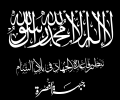 Flag of Tanzim Qaidat al-Jihad fi Bilad al-Sham - Jabhat al-Nusra ("Organization of Jihad's Base in the Levant - Victory Front") used from April 2013 to July 2016
 -
 Flag of Jabhat al-Nusra's branch in Lebanon used from 2013 to 2014
 -
 Variant flag of the al-Nusra Front, used 2012–16
 -
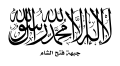 Flag of Jabhat Fatah al-Sham, July 2016–January 2017
 -
 Variant flag of Jabhat Fatah al-Sham, July 2016–January 2017


.svg)
.svg)
Structure
[edit]Leadership
[edit]The leader of al-Nusra was Ahmed al-Sharaa. During his time as leader of the front he went by the name of Abu Mohammad al-Julani, which implied that he is from the Golan Heights (al-Jawlan, in Arabic).[36] Prior to the formation of Jabhat al-Nusra, he was a senior member of the Islamic State of Iraq, heading operations in Nineveh Governorate.[78] On 18 December 2013, he gave his first television interview, to Tayseer Allouni, a journalist originally from Syria, for Al Jazeera, and spoke classical Arabic with a Syrian accent.[79]
| Name | Position | Situation |
|---|---|---|
| Abu Mohammad al-Julani | Emir |
Founder and Emir of al-Nusra Front[80] |
| Sami al-Oraydi | Deputy Emir |
Deputy leader and senior religious official in al-Nusra[80] Left the group after the formation of Tahrir al-Sham.[81] |
| Abu Maria Al-Qahtani | Emir of the Eastern area |
Held the position of general religious authority and Emir of the Eastern area until 30 July 2014[80] |
Hierarchy
[edit]The structure of the group varied across Syria. In Damascus, the organisation operated in an underground clandestine cell system, while in Aleppo, the group was organised along semi-conventional military lines, with units divided into brigades, regiments, and platoons.[36] All potential recruits were required to undertake a ten-day religious training course, followed by a 15–20-day military training program.[4]
Al-Nusra contained a hierarchy of religious bodies, with a small Majlis-ash-Shura (Consultative Council) at the top, making national decisions on behalf of the group. Religious personnel also played an important role in the regional JN leadership, with each region having a commander and a sheikh. The sheikh supervised the commander from a religious perspective and is known as dabet al-shar'i (religious commissioner).[36]
Foreign fighters
[edit]A number of Americans have attempted to join the fighting in Syria, specifically with al-Nusra.[82] Sinh Vinh Ngo Nguyen, also known as Hasan Abu Omar Ghannoum, was arrested in California on 11 October 2013, on charges of attempting to travel to join al-Qaeda, after reportedly having fought in Syria.[82] As of November 2013, there had also been five additional publicly disclosed cases of Americans fighting in Syria, three of which were linked to al-Nusra.[83] In February 2015, charges of conspiracy to support terrorism were laid against six Bosnian-Americans who were alleged to have financially supported another Bosnian-American, the late Abdullah Ramo Pazara, who they alleged died fighting with al-Nusra in 2014.[84]
In September 2015 Nusra absorbed Katibat Imam al Bukhari, an Uzbek group which is a part of al-Qaeda.[citation needed] Child soldiers were used by Katibat Imam al-Bukhari.[85] al-Fu'ah and Kafriya were attacked by the group in September 2015.[citation needed] They also participated in the 2015 Jisr al-Shughur offensive.[86]
It was estimated that al-Nusra's fighting force was approximately 30% foreign fighters and 70% native Syrian fighters in July 2016.[87]
Media
[edit]All statements and videos by al-Nusra Front have been released by its media outlet, al-Manarah al-Bayda (Arabic: المنارة البيضاء) (The White Minaret), via the leading jihadist webforum Shamoukh al-Islam (Arabic: شموخ الإسلام).[4]
Relations with al-Qaeda
[edit]In early 2015, there were reports that Qatar and other Gulf states were trying to get al-Nusra to split away from al-Qaeda, after which they would support al-Nusra with money.[88] Western observers[89] and a Syrian observer[59] considered such a split unlikely, and in March 2015, al-Nusra's leadership denied a break-up or that talks with Qatar had occurred.[89] Other Syrian observers considered such a split conceivable[59] or imminent.[90]
With members of al-Qaeda still enmeshed throughout the group's leadership, it can be considered that al-Qaeda was not "external" to the group. After the announcement, numerous senior al-Qaeda members still within the group were targeted by the US in airstrikes.[91] The group's leader Abu Mohammad al-Julani, in his first recorded video message, stated its new name would be Jabhat Fatah al-Sham ("Front for the Conquest of the Levant").[42] During the renaming announcement in July 2016, al-Julani thanked al-Qaeda leaders Ayman al-Zawahiri and Abu Khayr al-Masri. Ahmad Salama Mabruk, an associate of al-Zawahiri, sat alongside al-Julani during the announcement.[92]
Despite the group re-branding and announcing no external affiliations, the United States Central Command continued to consider it to be a branch of al-Qaeda and "an organization to be concerned about".[93] Al-Jazeera journalist Sharif Nashashibi noted that immediately after the rebranding, both the US and Russia called it "cosmetic" and promised that air strikes would continue" against al-Nusra.[94] Journalist Robin Wright described the rebranding as a "jihadi shell game" and "expedient fiction"—a tactic known as "marbling" by jihadi groups—and that as of December 2016 Al-Qaeda had embedded "two dozen senior personnel" in the group.[95]
Writing shortly after the rebranding, Nashashibi argued that it might help generate more "regional support", which the group needed in the face of Syrian government and Russian military success.[94] Wright wrote that the move was effective with many conservative Sunnis in the region, and that hundreds of them joined its ranks since the rebranding, believing the group to be "less extreme" than the rival Islamic State.[95]
Al-Qaeda and Khorasan group
[edit]Khorasan, also known as the Khorasan Group, is an alleged group of senior al-Qaeda members who operate in Syria.[96] The group has been reported to consist of a small number of fighters who are all on terrorist watchlists, and to co-ordinate with al-Nusra Front. Al-Nusra Front leader Abu Mohammad al-Golani denied the existence of this alleged "Khorasan group" in an interview with Al-Jazeera on 28 May 2015.[97]
History
[edit]Origin
[edit]Upon the outbreak of the Syrian Civil War in 2011, Islamic State of Iraq's leader Abu Bakr al-Baghdadi and al-Qaeda's central command authorized the Syrian Abu Mohammad al-Golani to set up a Syrian offshoot of al Qaeda in August 2011, to bring down the Assad government and establish an Islamic state there. Golani and six colleagues crossed the border from Iraq into Syria, and reached out to Islamists released from Syria's Sednaya military prison in May–June 2011 who were already active in fighting against Assad's security forces. The six men who founded Nusra alongside Julani were Saleh al-Hamawi (Syrian), Abu Maria Al-Qahtani (Iraqi), Mustafa Abd al-Latif al-Saleh (kunya:Abu Anas al-Sahaba) (Jordanian/Palestinian), Iyad Tubasi (kunya: Abu Julaybib) (Jordanian/Palestinian), Abu Omar al-Filistini (Palestinian) and Anas Hassan Khattab (Syria).[49][36][98]
A number of meetings were held between October 2011 and January 2012 in Rif Dimashq and Homs, where the objectives of the group were determined.[36] Golani's group formally announced itself under the name "Jabhat al-Nusra l'Ahl as-Sham" (Support Front for the People of the Sham) on 23 January 2012.[36][98]
Iraq's deputy interior minister said in early February 2012 that weapons and Islamist militants were entering Syria from Iraq.[99] The Quilliam Foundation reported that many of Nusra's members were Syrians who were part of Abu Musab al-Zarqawi's Islamist network fighting the 2003 American invasion in Iraq;[36] Iraqi Foreign Minister Hoshyar Zebari agreed to that in 2012.[100] The British The Daily Telegraph stated in December 2012 that many foreign al-Nusra fighters were hardened veterans from conflicts in Iraq and Afghanistan.[54]
Strength in 2012
[edit]By the second half of 2012, Jabhat al-Nusra stood out among the array of armed groups emerging in Syria as a disciplined and effective fighting force.[98] Nusra in October 2012 refused a call for a four-day ceasefire in Syria during Eid al-Adha feast.[101]
In November 2012, they were considered by The Huffington Post to be the best-trained and most experienced fighters among the Syrian rebels.[102] According to spokesmen of a moderate wing of the Free Syrian Army (FSA), Nusra had in November 2012 between 6,000 and 10,000 fighters, accounting for 7–9% of the FSA's total fighters.[37] Commentator David Ignatius for The Washington Post described Nusra then as the most aggressive and successful arm of the FSA.[37] The United States Department of State stated likewise: "From the reports we get from the doctors, most of the injured and dead FSA are Jabhat al-Nusra, due to their courage and [the fact they are] always at the front line".[37]
On 10 December 2012, the U.S. designated Nusra a foreign terrorist organization and an alias of Al Qaeda in Iraq. That decision made it illegal for Americans to deal financially with Nusra. Days earlier, the American ambassador to Syria, R. Ford, had said: "Extremist groups like Jabhat al-Nusra are a problem, an obstacle to finding the political solution that Syria's going to need".[103]
Relations with other Syrian rebels in 2012
[edit]
In August 2012, there were signs of Nusra cooperating with other rebels. The group took part in military operations with the Free Syrian Army (FSA).[104] Abu Haidar, a Syrian FSA co-ordinator in Aleppo's Saif al-Dawla district said that al-Nusra Front "have experienced fighters who are like the revolution's elite commando troops."[105]
In October–December 2012 Nusra received words of praise and appreciation for their efforts in the "revolution" against Assad from non-specified 'rebels',[101] an FSA spokesman in the Aleppo region,[106] a group of 29 civilian and military groups,[107][108] and the leader of the Syrian National Coalition.[109] At the same time, two anonymous FSA leaders,[54][101] and a secular rebel in north Syria,[54] expressed disapproval of the Islamist 'religious prison' Nusra might be wanting to turn Syria into.
Attacks by Nusra (2012–2013)
[edit]The 6 January 2012 al-Midan bombing was claimed by al-Nusra, in a video seen by AFP on 29 February 2012.[110] It was allegedly carried out by Abu al-Baraa al-Shami. Footage of the destruction caused by the blast was released on a jihadist forum.[111] An al-Nusra-affiliated group announced the formation of the "Free Ones of the Levant Battalions", in a YouTube video statement that was released on 23 January 2012. In the statement, the group claimed that it attacked the headquarters of security in Idlib province.[112] "To all the free people of Syria, we announce the formation of the Free Ones of the Levant Battalions," the statement said, according to a translation obtained by The Long War Journal. "We promise Allah, and then we promise you, that we will be a firm shield and a striking hand to repel the attacks of this criminal Al Assad army with all the might we can muster. We promise to protect the lives of civilians and their possessions from security and the Shabiha [pro-government] militia. We are a people who will either gain victory or die."[112]
The March 2012 Damascus bombings were claimed by Nusra.[113]
The 10 May 2012 Damascus bombings were allegedly claimed by al-Nusra Front in an Internet video;[114] however, on 15 May 2012, someone claiming to be a spokesman for the group denied that the organisation was responsible for the attack, saying that it would only release information through jihadist forums.[115]
On 29 May 2012, a mass execution was discovered near the eastern city of Deir ez-Zor. The unidentified corpses of 13 men had been discovered shot to death execution-style.[116] On 5 June 2012, al-Nusra Front claimed responsibility for the killings, stating that they had captured and interrogated the soldiers in Deir ez-Zor and "justly" punished them with death, after they confessed to crimes.[117]
On 17 June 2012, Walid Ahmad al-Ayesh, described by Syrian authorities as the "right hand" of al-Nusra Front, was killed when Syrian authorities discovered his hiding place. He was reportedly responsible for the making of car bombs that were used to attack Damascus in the previous months.[118] The Syrian authorities reported the killing of another prominent member of the group, Wael Mohammad al-Majdalawi, killed on 12 August 2012 in an operation conducted in Damascus.[119]
On 27 June 2012, a group of Syrian rebels attacked a pro-government TV station in the town of Drousha, just south of the capital Damascus. The station's studios were destroyed with explosives. Seven people were killed in the attack on Al-Ikhbariya TV, including four guards and three journalists.[120] Al-Nusra claimed responsibility for the attack and published photos of 11 station employees they kidnapped following the raid.[121]
The murder in July 2012 of journalist Mohammed al-Saeed, a well-known government TV news presenter, was claimed by Nusra in a video released on 3 or 4 August, according to Syrian Observatory for Human Rights.[122][123]

The 3 October 2012 Aleppo bombings were claimed by Al-Nusra.[124] Three suicide car bombs exploded at the eastern corner of the central Saadallah Al-Jabiri Square killing 48 people.[125] More than 122 people were reported to be heavily injured.[126] The bombs targeted the Officers' club and the nearby buildings of the Touristic Hotel and the historic "Jouha Café". The hotel received major damage while the café was entirely destroyed. A small building within the Officers' club was ruined as well.[127][128]
Al-Nusra Front also claimed responsibility for attacking numerous Syrian military bases, including:
- Aleppo district: an air defence base, on: 12 October 2012
- Aleppo city: the Hanano barracks
- Raqqah: the Suluq barracks
In the air defence base assault they reportedly destroyed buildings and sabotaged radar and rockets after over-running the base in co-operation with the al-Fajr Islamic Movement and a group of Chechen fighters. During the storming of the Hanano barracks 11 soldiers were killed and they held the complex for six hours before retreating. They also claimed killing 32 soldiers during the raid on the Raqqah base.[129]
In October 2012, they joined other rebels in an attack on the Wadi Deif base around Maraat al Numan, in a prolonged fighting that turned into a siege of the base.[130] They also led an attack on the Taftanaz Air Base in November 2012, an important and strategic base for the Syrian army, containing up to 48 helicopters.[102]
The group seized three army checkpoints around Saraqeb at the end of October 2012, forcing the Syrian Army to withdraw from the area the next day. In the battle, 28 Syrian soldiers were killed as well as five Nusra fighters. Some of the captured soldiers were summarily executed after being called "Assad dogs". The video of these executions was widely condemned, with the United Nations referring to them as probable war crimes.[131][132]
Members of al-Nusra Front carried out two suicide attacks in early November 2012. One occurred in a rural development center in Sahl al-Ghab in Hama province, where a car bomb killed two people; while the other occurred in the Mezzeh neighbourhood of Damascus, where a suicide bomber killed 11 people.[133] The SOHR claimed a total of 50 soldiers were killed in the Sahl al-Ghab attack.[134]
Al Jazeera reported on 23 December 2012 that al-Nusra Front had declared a "no-fly-zone" over Aleppo, using 23 mm and 57 mm anti-aircraft guns to down planes. This would include commercial flights which al-Nusra believed transported military equipment and troops. In a video sent to Al Jazeera, they warned civilians against boarding commercial flights.[135]
In February 2013, Al Nusra fighters were involved in fighting in Safira with government reinforcements, preventing these forces from reaching their destination of the city of Aleppo. A monitoring group claims this resulted in more than two hundred casualties over a period of two weeks.[136]
Though it was initially reported that Syrian Catholic priest François Murad was beheaded by Nusra at a church in Gassanieh in June 2013, he was actually shot dead.[137]
As of June 2013, al-Nusra Front had claimed responsibility for 57 of the 70 suicide attacks in Syria during the conflict.[138]
In December 2013, al-Nusra abducted 13 nuns from a Christian monastery in Maaloula. They were held in the town of Yabroud until 9 March 2014, The nuns reported they had not been harassed and could keep religious symbols.[139]
Dispute with ISIL (2013)
[edit]By January 2013, Nusra was a formidable force alleged to have strong popular support in Syria,[98] and it continued to grow in strength during the following months.[140] In January 2013, the Quilliam counter-extremism thinktank estimated its membership at 5,000 fighters[141] with 2,000 trainees.[142] In May 2013, analysts Ken Sofer and Juliana Shafroth estimated 6,000 foreign and domestic fighters.[143] By July, The Economist estimated its strength at 7,000 fighters.[144] Other size estimates, however, were more conservative; a report in the Turkish daily Hurriyet in March 2013 said that the group had increased its membership from around 300–400 jihadists to 1,000 as Syrian fighters in Iraq have returned to their country in the wake of the US designation of al-Nusra as a terrorist organisation.[145]
On 8 April 2013, the leader of the then Islamic State of Iraq (ISI), Abu Bakr al-Baghdadi, released a recorded audio message on the Internet, in which he announced that Jabhat al-Nusra was part of his network,[146] and that he was merging Jabhat al-Nusra with ISI into one group, "Islamic State of Iraq and al-Sham" (ISIL), under his command.[98][147] Al-Baghdadi also claimed that Abu Mohammad al-Julani had been dispatched by the ISI to Syria to meet with pre-existing cells in the country and that the ISI had provided Jabhat al-Nusra with the plans and strategy needed for the Syrian Civil War, and had been funding their activities.[147]
The next day al-Julani rejected the proposed merger and affirmed the group's allegiance to al-Qaeda and its leader, Ayman al-Zawahiri.[98] Al-Julani was quoted as saying, "We inform you that neither the al-Nusra command nor its consultative council, nor its general manager were aware of this announcement. It reached them via the media and if the speech is authentic, we were not consulted."[148] Nusra then split, with some members, particularly foreign fighters, following Baghdadi's edict and joining ISIL, while others stayed loyal to Golani or left to join other Islamist brigades.[98][149][150]
In May 2013, Reuters reported that al-Baghdadi had travelled from Iraq to Syria's Aleppo Governorate province and begun recruiting members of al-Nusra.[151] In June 2013, Al Jazeera reported that it had obtained a letter written by al-Qaeda leader Ayman al-Zawahiri, addressed to both Abu Bakr al-Baghdadi and Abu Mohammad al-Julani, in which he ruled against the merger of the two organisations and appointed an emissary to oversee relations between them and put an end to tensions.[152] Later in the month, an audio message from al-Baghdadi was released in which he rejected al-Zawahiri's ruling and declared that the merger of the two organisations into the Islamic State of Iraq and the Levant was going ahead. This sequence of events caused much confusion and division amongst members of al-Nusra.[150]
In November 2013, al-Zawahiri ordered the disbandment of ISIL and said al-Nusra should be considered the (only) al-Qaeda branch in Syria,[40] and bestowed the title "Tanzim Qa'edat Al-Jihad fi Bilad Al-Sham" ("the Qae'dat Al-Jihad organization in the Levant") on them, officially integrating Nusra into al-Qaeda's global network.[39]
Open fights between Nusra–ISIL (2013–2015)
[edit]Some units of al-Nusra began taking part in clashes against the Islamic State of Iraq and the Levant in late 2013.[153]
In February 2014, after efforts to end the dispute between ISIL and Nusra had failed, al-Qaeda formally dissociated itself from its onetime affiliate ISIL, leaving Jabhat al-Nusra the sole representative of al-Qaeda in Syria.[154] In the same month, al-Julani threatened to go to war with ISIL over their suspected role in the killing of senior Ahrar ash-Sham commander Abu Khaled al-Souri. Al-Julani gave ISIL five days to submit evidence that they were innocent of the attack to three imprisoned Jihadist clerics, Abu Muhammad al-Maqdisi, Abu Qatada al-Falastini, and Suleiman al-Alwan.[155] On 16 April 2014, ISIL killed al-Nusra's Idlib chief Abu Mohammad al-Ansari together with his family, the Syrian Observatory for Human Rights reported.[156] In May 2014, open fighting broke out between ISIL and al-Nusra in Deir ez-Zor Governorate, leaving hundreds dead on both sides.[157]
By July 2014, al-Nusra had largely been expelled from Deir ez-Zor Governorate.[158] Also in July, an audio recording attributed to al-Julani appeared online, in which he said that al-Nusra planned to establish an Islamic emirate in the areas of Syria where they had a presence. A statement issued on 12 July 2014 by al-Nusra's media channel affirmed the authenticity of the recording, but stated that they had not yet declared the establishment of an emirate.[159][160][161][162]
In June 2015, al-Julani stated in regards to ISIL: "There is no solution between us and them in the meantime, or in the foreseeable future [...] We hope they repent to God and return to their senses ... if not, then there is nothing but fighting between us."[56]
Attacks by Nusra (2014–2015)
[edit]On 28 August 2014, militants from the group kidnapped 45 UN peacekeepers from Fiji from Golan Heights in the United Nations Disengagement Observer Force Zone.[163] The group demanded that it be removed from the UN's list of terrorist organisations in exchange for the lives of the peacekeepers. In addition to UN personnel, the group routinely captures UN vehicles to use as car bombs.[164] At the same time, two groups of UN peacekeepers from Philippines were trapped under fire in nearby Rwihinah.[165] On 31 August, one group of 32 Filipinos soldiers was rescued and the other group of 40 soldiers escaped.[166] The rescue operation was carried out by Irish peacekeepers.[167] Colonel Ezra Enriquez of the Philippines, who oversaw the operations, resigned over disagreements with Indian Lieutenant General Iqbal Singh Singha. Singha had allegedly ordered the Filipinos peacekeepers to surrender arms to ensure the safe release of the Fijian soldiers.[168] On 8 September, Rodrigo Duterte, the mayor of Davao City, called for Singha's death after he allegedly called the Filipinos soldiers cowards.[169] On 11 September, the kidnapped Fijian soldiers were released.[170]

In late October 2014, al-Nusra began attacking some FSA and moderate Islamist groups that it was formerly allied with, reportedly in a bid to eventually establish its own Islamic state in the cities it controlled in Idlib Governorate and other neighbouring Governorates.[171][172]
In June 2015, fighters of al-Nusra massacred 20 Druze villagers in Idlib province located in north-west Syria.[173] Al-Jazeera claimed that Al-Nusra's leadership apologized and blamed the incident on a few undisciplined fighters.[174]
In October 2015, al-Nusra offered bounties worth millions of dollars for the killing of Syrian President Bashar al-Assad and Hezbollah leader Hassan Nasrallah.[175] Al-Julani said he would pay "three million euros ($3.4 million) for anyone who can kill Bashar al-Assad and end his story".[176]
In December 2015, two Army of Revolutionaries fighters were beheaded by Nusra, according to sources on social media.[177][178][better source needed] In December 2015, Nusra fighters celebrated the ransoming and exchange of Lebanese army prisoners in the town of Arsal in Lebanon, according to sources on social media.[179][180]
Relations with other Syrian rebels in 2015–2016
[edit]
In 2015, rebel factions[which?] in southern Syria vowed to distance themselves from the 'extremists' of al-Nusra in April 2015, but were seen cooperating with them in Daraa only days later.[181] In May 2015, al-Nusra was estimated to have 10,000 fighters in Southern Syria, far fewer than the Free Syrian Army, but with superior weaponry on which the FSA depended in joint operations against the government.[182]
During successful Syrian opposition offensives in the northern Idlib Governorate from March until May 2015 (see also March–April offensive and April–June 2015 offensive), al-Nusra effectively coordinated its operations with the FSA, moderate and conservative Syrian Islamists, and some independent jihadist factions.[181]
On 24 January 2016, Ahrar ash-Sham expelled al-Nusra Front from the Syrian town of Harem, after tensions between the two groups boiled over. Subsequent clashes erupted in Salqin.[183]
On 17 February 2016, nearly half of Jund al-Aqsa, numbering 400 fighters, joined al-Nusra. Five days later, two Damascus-based jihadist groups swore allegiance to al-Nusra.[184][185] On 25 February, al-Nusra Front withdrew from the town of Sarmada, near the Turkish border in the Idlib Province, in an attempt to prevent Russian warplanes from bombing the town after the implementation of the Syria ceasefire.[186]
Jaysh al-Islam leader Zahran Alloush addressed Jabhat al-Nusra as "our brothers", saying that "The summary of this issue is that we in Jaish Al-Islam praise our brothers of the Nusrah Front and we don't consider them Khawarij as is propagated against us, We fight alongside them and they fight alongside us".[187][better source needed]
According to the BBC in 2016, "Jabhat Fateh al-Sham has a complex relationship with the more moderate Free Syrian Army (FSA), which is itself an alliance of allied groups, some of which were more willing to co-operate with Nusra than others."[188]
Russian air raids (2015–2016)
[edit]Russia sees al-Nusra as a terrorist organization.[189] Russian air strikes reportedly targeted positions held by al-Nusra from September 2015[190] and Al-Nusra set a reward for the seizure of Russian soldiers.[191]
In October 2015 Al-Nusra militant Abu Ubaid Al-Madani, who speaks Russian, released a video addressed to the Russians warning that they would massacre Russian soldiers.[192] Abu Mohammad al-Julani called for Russian civilians to be attacked by former Soviet Muslims and called for attacks on Alawite villages in Syria.[193][194][195] In November 2015, al-Nusra fighters and Turkish-supported Syrian Turkmen Brigades were engaged in heavy fighting in Syria's northwestern Latakia Governorate against the Syrian government forces supported by the Shiite militias and the Russian air force.[196]
Speculations on a split with al-Qaeda (2015–2016)
[edit]On 29 July 2016 Al-Nusra leader Abu Mohammad al-Julani announced the group changed its name to Jabhat Fath al Sham and had "no affiliation to any external entity".[197] While some analysts have interpreted this to mean breaking away from Al-Qaeda, the group and association with it were not specifically mentioned in the announcement, nor has it been said that Al-Nusra's oath of allegiance to Ayman al-Zawahiri have been renounced.[198] According to Sharif Nashashibi of Al-Jazeera, al-Qaeda had "given the split its blessing", and the separation "meant no change in the group's ideology".[94] With numerous senior members of Al-Qaeda enmeshed within Al-Nusra, it can be considered that Al-Qaeda are not "external" to the group.[198] To this extent, other analysts say that the announcement was cosmetic, a ruse to obfuscate their continued association and membership within Al-Qaeda.[94] In the time after the announcement, a number of senior Al-Qaeda members have been targeted and killed by US air strikes, while operating within Al-Nusra.[91][199]
For over a year prior to this there had been speculation that the group would separate from Al-Qaeda and about what it would mean.
On 12 February 2015, SITE Intelligence Group cited rumours that Nusra leader al-Julani had plans to disassociate from al-Qaeda.[200]
On 4 March 2015, Reuters reported that "sources within and close to al-Nusra" said that in the past months Qatar and other Gulf states had talked with Nusra leader Abu Mohammad al-Julani and encouraged him to abandon al-Qaeda, promising funding to Nusra once that break-up was carried out. An official close to the Qatari government had confirmed to Reuters that Qatar wanted Nusra to become purely Syrian and disconnect from al-Qaeda, after which Qatar would start to support Nusra with money and supplies. Muzamjer al-Sham, reportedly a 'prominent jihadi close to Nusra' had said that Nusra would soon merge with Jaish al-Muhajireen wal-Ansar and other small jihadi brigades and disengage from al-Qaeda, but that not all Nusra emirs had yet agreed to that.[88]
On 9 March 2015, in a statement issued on Twitter, al-Nusra denied "completely all reports of a meeting with Qatari" and reports of a break-up with al-Qaeda. Expert Thomas Pierret at the University of Edinburgh assumed that Qatar was trying to force the hand of Al-Nusra with this "leak" about a split, and said a break with Al-Qaeda was very unlikely. French expert on jihadism Romain Caillet agreed: "The overwhelming majority of Al-Nusra members want to stay in al-Qaeda, particularly foreign fighters who represent at least one-third of the organisation".[89]
But in May 2015 Abu Maria al-Qahtani, the commander of al-Nusra in Deir ez-Zor province, still strongly advocated a split with al-Qaeda.[90] Muhamed Nabih Osman, leading a charitable organisation for former Assad prisoners, said to website The Daily Beast on 4 May 2015: "I think it will happen soon. You have to understand that al-Nusra consists of two very different parts and that one part, mostly local fighters, are not interested in global jihad".[90]
On 7 May 2015, a Turkish official said that Turkey and Saudi Arabia were bolstering Ahrar al-Sham at Nusra's expense, hoping that al-Sham's rise puts pressure on Nusra to renounce its ties to al-Qaeda and open itself to outside help.[201]
A "well-connected Syrian Islamist" cited in May 2015 by Charles Lister in The Huffington Post said: "There are now two main currents... the conservatives are keen on keeping ties to Al-Qaeda and the others are more inclined towards the new Syria-focused approach". Another "Islamist official from Damascus" is cited: "Nusra's disengagement from al Qaeda would be good for the revolution, but Jabhat al-Nusra will always be in dire need of al Qaeda's name to keep its foreign fighters away from IS. Most Jabhat foreign fighters will never accept to fight and die for what looks like an Islamic national project."[59]
In late July 2016, through various sources, the Middle East Eye claimed that an organizational split from al-Qaeda is "imminent", with the proposal reportedly been approved by AQ leaders and proposed a new name called "Jabhat Fatah al-Sham", or the "Conquest of the Levant Front". However, the sources claimed that the move would not affect al-Nusra's al-Qaeda ideology and its plan to commit attacks on the West.[202]
The organisation grew in early 2016. Charles Lister reported that "According to three Islamist sources based in the area, Jabhat al-Nusra successfully recruited at least 3,000 Syrians into its ranks between February and June 2016."[49] In mid-2016, reports suggested it was composed of around 5,000 to 10,000 fighters,[203][204] with the Russian ministry of defence estimating 7,000 fighters in Idlib province.[205]
As Jabhat Fatah al-Sham (July 2016 – January 2017)
[edit]
In August 2016, the BBC estimated Jabhat Fatah al-Sham as having 5,000–10,000 fighters, all Syrian.[206] Lister gave a figure of 10,000.[49] In a public statement issued by its spokesperson, JFS announced that it was officially splitting from Al-Qaeda:
[Before this change, Jabhat al-Nusra] was an official branch of al-Qaeda. We reported to their central command and we worked within their framework; we adhered to their policies. With the formation of JFS, we are completely independent. That means we don't report to anyone, we don't receive directives from any external entity. If dissolving external organizational affiliations or ties will remove the obstacles in the way of unity, then this must be done. When we were part of al-Qaeda ... our core policy was to focus all of our efforts on the Syrian issue. That was our policy before and it will be our policy today and tomorrow.[44]
In July Jabhat Fatah al-Sham kidnapped the American journalist Lindsey Snell in northern Syria. She escaped to Turkey's Hatay Province in August and was subsequently arrested by Turkish authorities for being in a military exclusion zone and imprisoned.[207] The mid-2016 rebel offensive in Aleppo was made by Jabhat Fatah al-Sham alongside the Turkistan Islamic Party and Ahrar al-Sham.[208] On 31 August, Hezbollah attacked a JFS outpost in the Qalamoun Mountains near the city of Arsal, Lebanon, on the Lebanon–Syria border, killing a number of their fighters.[209]
On 8 September an airstrike of unknown origin killed the top JFS military commander, Abu Hajer al-Homsi (nom de guerre Abu Omar Saraqeb), among several other Army of Conquest commanders in the countryside of the Aleppo Governorate,[2] the rebels accused the United States of conducting the strike, but this was denied by the Pentagon and subsequently Russia took responsibility.[2] On 3 October, Ahmad Salama Mabruk, an Egyptian JFS and al-Qaeda commander, was killed by a US airstrike against his vehicle in Jisr al-Shughur.[210]
On 9 October, Jund al-Aqsa, after infighting between them and numerous rebel groups including Ahrar al-Sham, merged with JFS. In early October, according to pro-government Al-Masdar News, a number of Mountain Hawks Brigade fighters defected to join Jabhat Fatah al-Sham due to several disagreements, mainly due to the established of the Free Idlib Army.[211][better source needed] On 25 January 2017, according to rebel social media, they returned, along with their leader Lt. Col. Nasha'at Haj Ahmad to the Mountain Hawks Brigade.[212]
.svg)
(For a more detailed, interactive map, see Template:Syrian Civil War detailed map.)
As of late 2016, al-Nusra mainly controlled territory throughout Idlib Governorate, alongside other factions in the Army of Conquest.[213][214] It also held some areas in the Quneitra Governorate.
On 1 January 2017, a US drone strike killed Abu Omar al-Turkistani, a senior Al-Qaeda member and Jabhat Fatah al-Sham military commander, along with three other JFS members near the town of Sarmada in the northern Idlib Governorate.[215] The next day, more than 25 JFS members were killed in an air raid by suspected US planes.[216] The Tora Bora battle saw Turkistani's participation.[217] The Islamic Jihad Union enlisted Turkistani as a member.[218][219] Jabhat Fath al Sham included Turkistani.[220][221][222] SOHR identified al-Turkestani from among the dead.[223] Before dying in Syria, al-Turkistani was in the Afghanistan war.[224][225][226] He was also the emir for the al-Qaeda-affiliated Ansar Jihad in Central Asia.[227][228] Europeans make up an amount while Central Asians make up the majority of foreigners in the Afghanistan-based Islamic Jihad Union which is allied to Al-Qaeda.[229]
On 19 January 2017, US airstrikes by Boeing B-52 Stratofortress strategic bombers struck the former Syrian Army Sheikh Suleiman military base in western Aleppo, which was used by Jabhat Fatah al-Sham and the Nour al-Din al-Zenki Movement, killing at least 110 al-Qaeda fighters,[230] including Abu Hasan al-Taftanaz, an al-Qaeda senior leader, along with some al-Zenki fighters. Since 1 January 2017, more than 150 AQ members were killed by US airstrikes in 2017.[231] Condolences were issued to Jabhat Fatah al-Sham over the killings, by the Uyghur jihadist Turkistan Islamic Party.[citation needed] The training camp had been operated by al-Nusra Front and al-Zenki since 2013.[230] Outrage over the lack of condolences from other factions over an American bombing and killing of 100+ JFS members was voiced by Muhaysini.[232]
On 21 January 2017, five factions from Ahrar al-Sham left to join the al-Nusra Front;- Jaish al-Ahrar, al-Bara, Dhu Nurayn, al-Sawa'iq and Usud al-Har Battalion, according to social media sources.[233][234] On the same day, 2 al-Nusra Shura Council members based in Aleppo announced that they left the group.[citation needed] Ahrar al-Sham, the Suqour al-Sham Brigade, Jabhat Ahl al-Sham, Jaysh al-Islam and Fastaqim Union then established a joint operations room to combat al-Nusra and its subfaction Jund al-Aqsa.[citation needed]
Abu Umar Saraqib and Abu Faraj's deaths received condolences from the Turkistan Islamic Party.[235]
Formation of Tahrir al-Sham (January 2017)
[edit]On 28 January 2017, several Salafist jihadist groups, including Jabhat Fatah al-Sham, agreed upon a merger agreement, resulting in the formation of a new group called Hay'at Tahrir al-Sham ("Organization for the Liberation of the Levant").[236] With Jabhat Fateh al-Sham being one of the most powerful/influential groups in the new formation, its leader Abu Mohammad al-Julani was appointed the high-level position of overall military commander of the new group.[citation needed] The only other position of equal or greater authority in the new group is the Emir, to which role was appointed Abu Jaber, who defected from Ahrar al-Sham to join this new group.[236]
External support
[edit]At least one Arab government[237] accused Qatar of helping al-Nusra.[238][239][13][240] In October 2014, U.S. Vice President Joe Biden said that Turkey, Saudi Arabia, and the United Arab Emirates had "poured hundreds of millions of dollars and tens of thousands of tons of weapons into anyone who would fight against Al-Assad, except that the people who were being supplied were al-Nusra, and al Qaeda, and the extremist elements of jihadis coming from other parts of the world."[241] In 2015, The Independent reported that Saudi Arabia and Turkey were "focusing their backing for the Syrian rebels on the combined Jaish al-Fatah, or the Army of Conquest, a command structure for jihadist groups in Syria that [included] Jabhat al-Nusra."[242]
Al-Nusra was also materially supported by multiple foreign fighters. Most of these fighters were from Europe and the Middle East, as pipelines to Syria from those locations are better established and navigable.[243] However, as of November 2013, there were also 6 publicly disclosed cases of American citizens and permanent residents who joined or attempted to join al-Nusrah in 2013 alone.[83]
The US government sent weapons to rebels in Syria from at least late 2013,[244] and perhaps as early as 2012,[245] during the beginning phases of the conflict (CIA's covert program Timber Sycamore). Some of these weapons reportedly fell into the hands of al-Nusra.[246] Weapons have been passed on to Nusra by Ahrar ash-Sham according to a Nusra member and rebels.[247] The Pentagon confirmed in September 2015 that a small group of US-trained New Syrian Forces rebels gave six pickup trucks and a portion of their ammunition to al-Nusra Front in exchange for safe passage.[248]
There were cases of al-Nusra combatants receiving medical aid in Israel and returning to fight. Former head of Mossad, Efraim Halevy, in an interview for al-Jazeera implicitly confirmed that such practices had taken place, as part of a general Israeli policy of treating wounded rebel fighters on the border.[249][250] Israel, however, denies formal ties of any sort between itself and al-Nusra[251] and Elizabeth Tsurkov reported that Nusra refused to cooperate with Israel, in fact kidnapping and assassinating suspected collaborators.[252]
Qatari involvement
[edit]The Emir of Qatar publicly admitted, in an interview with Christiane Amanpour, that he doesn't always see eye to eye with American terrorist designations: "I know that in America and some countries they look at some movements as terrorist movements. ... But there are differences. There are differences that some countries and some people that any group which comes from Islamic background are terrorists. And we don't accept that. It would be a 'big mistake', to consider every Islamic movement to be 'extremists'."[253] It has been suggested[by whom?] that one of the designated groups that the Emir spoke of in this interview at CNN was Al-Nusra Front.[citation needed]
Al Nusra has kidnapped a diverse group of people from nationalities that span the globe, including Turkey, Fiji, Lebanon, Syria and Italy. On each occasion, Qatar engaged in a substantial financial agreement with Al Nusra in exchange for hostages. According to the one analyst, the reason why Al Nusra was the only plausible threat was because of Saudi and Qatari funding: "Jabhat al-Nusra has become the best-armed force among the opposition groups. It has been at the tip of the spear in operations in Eastern Syria, Aleppo, and Damascus. Its combat proficiency and relatively greater access to material and funding have led other opposition groups to tolerate its participation in military operations across the country."[254]
Qatar managed the negotiations with al-Nusra Front that ultimately led to American writer Peter Theo Curtis's release. Qatari Intelligence Chief Ghanim Khalifa al-Kubaisi sent a contact a text with the words "Done"—and a thumbs-up emoticon—after Curtis's release was completed.[255][256]
According to The Fiscal Times, Qatar had great influence over the group that goes beyond ransom payments. In many cases, Qatar acted as a political mediator between Al Nusra and other countries such as Lebanon:[257] "A prisoner swap between the Lebanese government and al-Qaeda's branch in Syria, Al-Nusra Front in early December showed how powerful the group has become on the ground. The deal released 16 Lebanese soldiers and police officers who were captured during a joint ISIS–al-Nusra operation along with 29 civilians, some of whom are known terrorists."[257] Indeed, Qatar's mediation between Al Nusra and Lebanon ultimately guaranteed al-Nusra freedom of movement inside what was once a safe haven in Lebanon's Hamid valley, bordering Syria, giving Al Nusra access to the Lebanese town of Arsal.[257]
But one diplomat went so far as to suggest that, beyond the scope of mediation and paying ransom, "They [Qatar] are partly responsible for Jabhat al-Nusra having money and weapons and everything they need." The diplomat went on to say that while Qatar hasn't directly funded ISIS, it is responsible for the fact that ISIS gained Al Nusra weapons as members of Al Nusra are known to defect to ISIS.[258]
Qatar's alleged support of Al Nusra was highly criticized in both U.S. and U.K media.[259]
According to a 2021 articles by The Times, Qatar has allegedly played a central role in a secret money laundering operation to send hundreds of millions of dollars to Al-Nusra Front terrorists in Syria.[260]
Weaponry and tactics
[edit]
The organisation is believed to have used, at various times and in various places, the following tactics: car-bombs, chemical weapons, suicide-attacks, targeting of checkpoints, conventional assault of military bases, assassination of political and military figures and members of the shabiha,[36] targeting (destruction/killing) of pro-government media stations and personnel.[261]
By June 2013, there had been apparently 70 suicide-attacks in Syria. Of these, the group denied responsibility for 13 but claimed responsibility for the other 57. In June 2012, the group attacked the pro-government TV station at Drousha, near Damascus. The following month the government-TV presenter Mohammed al-Saeed disappeared; the group later declared him dead.
In June 2014, Human Rights Watch reported that several rebel groups, including al-Nusra, have enlisted child soldiers into their ranks.[262]
In November 2014, al-Nusra claimed to have captured U.S.-made TOW anti-tank missiles supplied by the United States to moderate anti-Assad rebels.[263] The group allegedly captured tanks, machine guns, ammunition, vehicles and American anti-tank missiles from the U.S.-backed Syrian Rebel Front.[264]
Al-Nusra Front allegedly have an elite sniper unit known as the "Wolf Group". Training is conducted in Aleppo by veteran jihadists who belong to the Khorasan Group, a collection of veteran al-Qaeda operatives sent from al-Qaeda strongholds along the Afghan-Pakistan border.[265][better source needed]
In October 2015, al-Julani called for indiscriminate attacks on Alawite villages in Syria. He said "There is no choice but to escalate the battle and to target Alawite towns and villages in Latakia".[194]
Turkish arrests for alleged chemical weapon purchase
[edit]On 30 May 2013, Turkish newspapers reported that Turkish security forces had arrested al-Nusra fighters in the southern provinces of Mersin and Adana near the Syrian border and confiscated 2 kg of sarin gas.[266][267][verification needed] The governor of Adana claimed that the security forces had not found sarin gas but unknown chemicals.[268] The Turkish Ambassador to Moscow later said that tests showed the chemical seized was anti-freeze, not sarin.[269] In September, six of those arrested in May (one Syrian, Heysem Topalca, and five Turks, alleged to be members of al-Nusra and Ahrar ash-Sham) were charged with attempting to acquire chemicals which could be used to produce sarin; the indictment said that it was "possible to produce sarin gas by combining the materials in proper conditions."[270] The indictment said that "The suspects have pleaded not guilty saying that they had not been aware the materials they had tried to obtain could have been used to make sarin gas. Suspects have been consistently providing conflicting and incoherent facts on this matter." The indictment said the suspects working for al-Nusra and to Ahrar ash-Sham.[271][266] The prosecutors were dismissed and the men were freed in October 2013. A new arrest warrant was later issued, but the perpetrators were never tried. Topalca was tried and convicted in absentia for other terrorism crimes, but not apprehended; he died in 2021.[272][273][274]
War crimes
[edit]On 29 May 2012, a mass execution was discovered near the eastern city of Deir ez-Zor.[275] On 5 June 2012, the al-Nusra Front claimed responsibility for the 13 killings.[276]
During the 2013 Latakia offensive by rebel Islamist groups including al-Nusra Front in early August, according to Human Rights Watch, Salafist rebel forces led by al-Nusra systematically killed at least 190 civilians in several Alawite villages.[277]
On 10 September 2013, al-Nusra fighters attacked the Alawite village of Maksar al-Hesan, in Homs province.[278] Al-Nusra later admitted to the killing of 30 civilians overall in three Alawite villages, includes those in Maksar al-Hesan.[279]
On 11 December 2013, the rebel Islamic Front and al-Nusra Front groups[280] infiltrated the industrial area of the town of Adra, northeast of Damascus, attacking buildings housing workers and their families. The rebels targeted Alawites, Druze, Christians and Shiites, killing them on a sectarian basis. Some people were shot while others were beheaded.[281]
On 10 June 2015, the al-Nusra killed at least 20 Druze villagers in Qalb Lawzeh in Idlib province.[282]
On 12 May 2016, according to pro-government media, rebels led by al-Nusra Front and Ahrar ash-Sham massacred 42 civilians and seven NDF militiamen while kidnapping up to 70 people after taking control of the Alawite village of Zara'a in Southern Hama.[283][284][unreliable source?]
During the last days of the 17th Aleppo offensive in mid-December 2016, the al-Nusra Front arrested a media activist at a field hospital while he filmed the hospital operations. He was interrogated at al-Nusra's headquarters before the evacuation. During the evacuation of rebels from Aleppo, al-Nusra were the first to leave, along with prisoners whom they kidnapped.[285]
Designation as a terrorist organisation
[edit]Countries and organisations below have listed al-Nusra Front as a terrorist organisation:
| Country | Date | References |
|---|---|---|
 Iran Iran
|
3 January 2012 | [286] |
 United States United States
|
10 December 2012 | [103] |
 United Nations Security Council United Nations Security Council
|
May 2013 | [287][288] |
 France France
|
30 May 2013 | [289] |
 Australia Australia
|
28 June 2013 | [290] |
 United Kingdom United Kingdom
|
19 July 2013 | [291][292] |
 Canada Canada
|
7 November 2013 | [293] |
 Malaysia Malaysia
|
2013 | [294] |
 Saudi Arabia Saudi Arabia
|
7 March 2014 | [295] |
 New Zealand New Zealand
|
14 May 2014 | [296] |
 United Arab Emirates United Arab Emirates
|
19 May 2014 | [297] |
 Turkey Turkey
|
2 June 2014 | [288][298] |
 Russia Russia
|
29 December 2014 | [189][299] |
 Japan Japan
|
[300] | |
 Bahrain Bahrain
|
[301] | |
 Kyrgyzstan Kyrgyzstan
|
[302] | |
 Kazakhstan Kazakhstan
|
[303] | |
 Tajikistan Tajikistan
|
[304] | |
 Ba'athist Syria Ba'athist Syria
|
[305] | |
 Kuwait Kuwait
|
[306] | |
 Lebanon Lebanon
|
[307] | |
 Iraq Iraq
|
[308] |
Relations with Israel
[edit]Israeli supported several Syrian opposition factions such as Fursan al-Joulan, Firqat Ahrar Nawa, Saif al-Sham Brigade, Jaydour Horan Brigade, Al-Ezz bin Abdul Salam Brigade, Omar Bin Al-Khattab Brigade, Al-Haramein Battalion, Alwiya al-Furqan, Syrian Revolutionaries Front, Jabhat Ansar al-Islam, Ahrar Gathering, Abu Amara Brigades and others.
Circa 2014, Israel received information about an infiltration attack that Al-Nusra Front militants were planning from the Syrian side of the Golan Heights to one of the kibbutzim inside the Israeli-controlled Golan Heights. The information made it possible to thwart the attack, which was supposed to kill Israelis. Reportedly, Ahmed al-Sharaa himself approved of the attack.[309]
In January 2015, A Syrian activist quoted Al-Monitor claimed that "the battle to capture Quneitra on Sept. 27 was preceded by coordination and communications between Abu Dardaa, a leader of Jabhat al-Nusra, and the Israeli army to pave the way for the attack. And according to an FSA commander who partly participated in this battle, the Israeli army provided Abu Dardaa with maps of the border area and the Syrian army’s strategic posts in the southern area". He added that the rebels’ battle, led by Jabhat al-Nusra, to control the Quneitra crossing took place in coordination with the Israeli army through Abu Dardaa and that during the clashes, the Israelis heavily bombarded many of the regime’s posts, shot down a warplane that was trying to impede the progress of the fighters and targeted other aircraft. Another Syrian opposition activist told Al-Monitor that the Israeli support in the battle of Tal al-Hara was at a high level, and the Israeli army was the mastermind of this battle in terms of plans, tactics and follow-up. The communication devices released precise instructions in Arabic about what should be done by the fighters, moment by moment. An SAA general told Al-Monitor that Israel is not only supporting the rebels militarily and logistically and treating their wounds, but is also training them in the Israeli-controlled Golan Heights, and that they have filed a complaint about this training camp to the head of UNDOF and threatened to target it, yet the observers have no responded and the camp is still there.[310]
In July 2015, Israel claimed that following a policy change regarding members of Al-Nusra Front that came about six weeks ago, it ceased treating wounded fighters of Al-Nusra Front in Israeli hospitals. An unnamed Israeli officer told Haaretz the injured Al-Nusra militants "infiltrated" into Israel to receive the medical care and that the Israeli army's background checks had not been comprehensive enough to properly check their identity. The IDF's decision to no longer treat these Al-Nusra fighters came a month after a Druze mob attacked an ambulance transporting wounded Syrian rebels, killing one of the injured in the process. Five members of the Druze community were later arrested for the lynching.[311] However, on an interview which was conducted on 19 June 2017, Fursan al-Joulan leader, Abu Muhammad, claimed that Hay'at Tahrir al-Sham wounded militants were receiving treatment in Israel. This however does not prove that it is a matter of Israeli policy to provide treatment for Hay'at Tahrir al-Sham members.[312]
It is believed that on 4 August 2018, the Israeli Mossad assassinated the Syrian scientist, Aziz Azbar, with the assistance of Abu Amara Brigades, which is faction within Hay'at Tahrir al-Sham.
See also
[edit].svg)
Notes
[edit]References
[edit]- ^ "Time Exclusive: Meet the Islamist Militants Fighting Alongside Syria's Rebels". Time. 26 July 2012. Retrieved 13 July 2021.
- ^ a b c Foundation, Thomson Reuters (9 September 2016). "Air strike kills top commander of former Nusra group in Syria". Reuters. Archived from the original on 29 September 2018. Retrieved 1 October 2016.
{{cite web}}:|first1=has generic name (help) - ^ Caleb Weiss (14 February 2017). "Uighur jihadist fought in Afghanistan, killed in Syria". Long War Journal. Retrieved 22 February 2017.
- ^ a b c "Interview with Official of Jabhat al-Nusra, Syria's Islamist Militia Group". Time. 25 December 2012. Retrieved 29 November 2013.
- ^ "Syria Islamist factions, including former al Qaeda branch, join forces - statement". Thomson Reuters Foundation. 28 January 2017. Archived from the original on 2 February 2017. Retrieved 1 February 2017.
- ^ "Syria: ISIS tightens grip, Nusra takes losses". Al-Monitor. 2 May 2014. Retrieved 9 June 2015.
- ^ Abdallah Suleiman Ali (12 February 2014). "ISIS losing ground in Syria to Jabhat al-Nusra". Al-Monitor. Archived from the original on 22 February 2014. Retrieved 14 February 2014.
- ^ Nick Paton Walsh and Laura Smith-Spark (6 November 2014). "Report: Airstrikes target another Islamist group in Syria". CNN. Retrieved 24 May 2018.
- ^ "Syria's Qaeda leader killed in explosion". ARA News. Archived from the original on 8 March 2015. Retrieved 6 March 2015.
- ^ a b "An internal struggle: Al Qaeda's Syrian affiliate is grappling with its identity". Brookings Institution. 31 May 2015. Retrieved 1 June 2015.
- ^ "Al Nusra Front claims Lebanon suicide attack". Al Jazeera. 11 January 2015. Retrieved 12 January 2015.
- ^ Ghanmi, Elyès; Punzet, Agnieszka (11 June 2013). "The involvement of Salafism/Wahhabism in the support and supply of arms to rebel groups around the world" (PDF). European Parliament.
- ^ a b Hudson, Valerie (30 June 2015). The Hillary Doctrine. Columbia University. p. 154. ISBN 9780231539104. Retrieved 15 January 2016.
- ^ "Jabhat al-Nusra". Australian National Security. 28 June 2013. Archived from the original on 21 September 2014. Retrieved 23 April 2015.
- ^ "Jabhat al-Nusra, A Strategic Briefing" (PDF). Quilliam Foundation. Archived from the original (PDF) on 28 March 2015. Retrieved 23 April 2015.
- ^ a b "Al-Nusra Front". 2012. Retrieved 24 May 2018.
- ^ "New Syrian jihadist body formed to fight ISIS". Al Monitor. 28 May 2014. Archived from the original on 6 June 2014. Retrieved 3 June 2014.
- ^ a b "Rebels launch full-on assault of Idlib city". Syria Direct. Archived from the original on 2 April 2015. Retrieved 25 March 2015.
- ^ Nawaf Obaid (15 August 2018). "Trump Will Regret Changing His Mind About Qatar". Foreign Policy. Retrieved 25 August 2018.
- ^ "Qatar 'maybe' supported al-Qaeda in Syria, says former PM". Middle East Eye. 30 October 2017. Retrieved 25 August 2018.
- ^ "Qatar denies support for Muslim Brotherhood, Nusra Front - Xinhua | English.news.cn". www.xinhuanet.com. Archived from the original on 20 July 2020. Retrieved 18 July 2020.
- ^ "Free Syrian Army commander praises Al Nusrah Front as 'brothers' | FDD's Long War Journal". www.longwarjournal.org. 30 March 2013.
- ^ "من هي جبهة النصرة الجهادية التي تقاتل مع الجيش السوري الحر؟". مراقبون - فرانس 24. 13 December 2012.
- ^ "Abu Bakr Shishani Now Fighting Alongside Ajnad al-Kavkaz in Latakia". 9 February 2016. Archived from the original on 5 June 2019. Retrieved 31 July 2016.
- ^ a b "Former Guantanamo detainee killed while leading jihadist group in Syria". Long War Journal. 4 April 2014. Retrieved 21 May 2014.
- ^ Aymenn Jawad Al-Tamimi (11 May 2014). "Key Updates on Iraq's Sunni Insurgent Groups". Brown Moses Blog. Retrieved 24 May 2018.
- ^ "Syria Update: January 6-12, 2015". Institute for the Study of War. 13 January 2015.
- ^ Mortada, Radwan (19 May 2014). "Hezbollah fighters and the "jihadis" Mad, drugged, homicidal, and hungry". al-Akhbar English. Archived from the original on 7 July 2014. Retrieved 9 June 2014.
- ^ "Kata'ib Sayyid al-Shuhada | Mapping Militant Organizations". web.stanford.edu.
- ^ "صفحه مورد نظر یافت نشد". www.alalamtv.net. Archived from the original on 18 May 2020. Retrieved 19 November 2019.
- ^ "Jabhat al-Nusra launches war against IS in Qalamoun". CNN. 15 May 2015. Archived from the original on 14 May 2015. Retrieved 15 May 2015.
- ^ "Jabhat al-Nusra, IS clash in Daraa". 16 December 2014. Archived from the original on 26 January 2015. Retrieved 24 May 2018.
- ^ "Rebels fight ISIS-linked group near Israeli-occupied Golan". AFP. 28 April 2015. Retrieved 9 May 2015.
- ^ "Al-Qaeda defeats Syrian moderate rebels in Idlib". ARA News. 2 November 2014. Archived from the original on 2 November 2014. Retrieved 12 November 2014.
- ^ "Jabhat al-Nusra looks for battlefield breakout". As-Safir. 29 March 2015. Archived from the original on 31 March 2015. Retrieved 29 March 2015.
- ^ a b c d e f g h i j "Jabhat al-Nusra A Strategic Briefing" (PDF). Quilliam Foundation. 8 January 2013. Archived from the original (PDF) on 22 July 2014. Retrieved 22 August 2014.
- ^ a b c d Ignatius, David (30 November 2012). "Al-Qaeda affiliate playing larger role in Syria rebellion". The Washington Post. Archived from the original on 9 June 2018. Retrieved 28 August 2015.
- ^ "Terrorist Designations of the al-Nusrah Front as an Alias for al-Qa'ida in Iraq". U.S. Department of State. Archived from the original on 4 February 2017. Retrieved 8 June 2018.
- ^ a b R., Green (25 November 2013). "Al-Qaeda Upgrades Its Presence in Syria". Middle East Media Research Institute. Archived from the original on 1 February 2017. Retrieved 24 August 2015.
- ^ a b "Zawahiri disbands main Qaeda faction in Syria". Agence France-Presse. 8 November 2013. Archived from the original on 9 November 2013.
- ^ Hubbard, Ben (1 October 2015). "A Look at the Army of Conquest, a Prominent Rebel Alliance in Syria". The New York Times. Archived from the original on 4 October 2015. Retrieved 9 June 2018.
- ^ a b "Syrian Nusra Front announces split from al-Qaeda". BBC News. 28 July 2016. Archived from the original on 30 July 2016. Retrieved 28 July 2016.
- ^ "Al-Nusra chief in Syria announces break with al Qaeda". France24. 28 July 2016. Archived from the original on 14 August 2022.
- ^ a b c Lister, Charles (February 2018). "How al-Qa'ida Lost Control of its Syrian Affiliate: The Inside Story". CTC Sentinel. 11 (2). Archived from the original on 4 May 2022 – via CTC.
- ^ Joscelyn, Thomas (28 January 2017). "Al Qaeda and allies announce 'new entity' in Syria". Long War Journal. Archived from the original on 28 January 2017. Retrieved 9 June 2018.
- ^ Joscelyn, Thomas (10 February 2017). "Hay'at Tahrir al Sham leader calls for 'unity' in Syrian insurgency". Long War Journal. Archived from the original on 16 February 2017. Retrieved 11 February 2017.
- ^ Joscelyn, Thomas (4 March 2018). "Jihadists form 'Guardians of the Religion' organization in Syria". Long War Journal. Archived from the original on 1 February 2022.
- ^ "Rewards for Justice - Reward Offer for Information on Senior Leaders of Hurras al-Din". United States Department of State. Retrieved 17 December 2022.
- ^ a b c d Charles Lister (24 July 2016). "Profiling Jabhat al-Nusra" (PDF). The Brookings Project on U.S. Relations with the Islamic World.
- ^ "New enemies across Syrian border". Haaretz. August 2014. Retrieved 24 May 2018.
- ^ "The Syrian rebel groups pulling in foreign fighters". BBC News. 2013. Retrieved 24 May 2018.
- ^ al-Khatieb, Mohammed (July 2014). "Jabhat al-Nusra, IS compete for foreign fighters". Al-Monitor. Archived from the original on 19 October 2017. Retrieved 24 May 2018.
- ^ "Al-Nusra Front not yet dead as its emir devises "Islamic Emirate of the Levant"". al-akhbar. July 2014. Archived from the original on 22 July 2014. Retrieved 24 May 2018.
- ^ a b c d e Sherlock, Ruth (2 December 2012). "Inside Jabhat al Nusra - the most extreme wing of Syria's struggle". The Daily Telegraph. London. Archived from the original on 12 January 2022. Retrieved 2 December 2012.
- ^ a b "Profile: Syria's al-Nusra Front". BBC News. 15 May 2012. Retrieved 31 July 2012.
- ^ a b "Nusra leader: No end to conflict with ISIL in Syria". Al Jazeera. 4 June 2015. Retrieved 5 June 2015.
- ^ Hassan Hassan (4 March 2014). "A jihadist blueprint for hearts and minds is gaining traction in Syria". The National. Archived from the original on 6 March 2014. Retrieved 5 March 2014.
- ^ Hubbard, Ben (9 June 2015). "Al Qaeda Tries a New Tactic to Keep Power: Sharing It". The New York Times. Retrieved 10 June 2015.
Cooperating with others could also give Al Qaeda a long-term advantage in its competition with the extremists of the Islamic State, analysts said [...] Civilians living in Nusra Front areas, too, say the group has built local support, refraining from imposing Shariah when residents resisted.
- ^ a b c d e Lister, Charles (31 May 2015). "An Internal Struggle: Al Qaeda's Syrian Affiliate Is Grappling With Its Identity". Huffington Post. Retrieved 27 August 2015.
- ^ Joscelyn, Thomas (25 October 2015). "Al Qaeda appears 'moderate' compared to Islamic State, veteran jihadist says". Long War Journal.
- ^ Joscelyn, Thomas (26 October 2015). "A rare interview with an experienced Al Qaeda commander shows how the group is using ISIS to make itself look 'moderate'". Business Insider.
- ^ Joscelyn, Thomas (5 June 2015). "The Al Nusrah Front's 'inherited jihad'". Long War Journal.
- ^ Joscelyn, Thomas (20 July 2015). "Officials from Al Nusrah Front, Ahrar al Sham vow to continue fight against Islamic State". Long War Journal.
- ^ JOSCELYN, THOMAS (9 February 2015). "Al Qaeda Uses ISIS to Try to Present Itself as Respectable, Even Moderate". the weekly Standard. Archived from the original on 16 February 2015.
- ^ Joscelyn, Thomas (29 September 2015). "US counterterrorism efforts in Syria: A winning strategy?". Long War Journal.
- ^ "Number of ISIS defectors growing, disillusioned with killing fellow Muslims: Study". The Straits Times. London. Agence France-Presse. 21 September 2015. Archived from the original on 25 September 2015.
- ^ Joscelyn, Thomas (29 June 2015). "Al Nusrah Front celebrates 9/11 attacks in new video". Long War Journal.
- ^ Joscelyn, Thomas (2 November 2015). "Al Qaeda chief calls for jihadist unity to 'liberate Jerusalem'". Long War Journal.
- ^ Joscelyn, Thomas (13 September 2015). "Zawahiri calls for jihadist unity, encourages attacks in West". Long War Journal.
- ^ "Syria and Islamist groups guilty of war crimes, YPG cleared: UN report". Kom News. 15 March 2017. Archived from the original on 17 March 2017. Retrieved 16 March 2017.
- ^ "Syria: Abductions, torture and summary killings at the hands of armed groups". Amnesty International. 5 July 2016.
- ^ Chivers, C. J. (5 September 2013). "Brutality of Syrian Rebels Posing Dilemma in West". The New York Times. Retrieved 5 September 2013.
- ^ "لماذا اعتذرت جبهة النصرة عن مجزرة قلب لوزة في سوريا؟" [Why did Al-Nusra Front apologize for the Qalb Lozeh massacre in Syria?]. عربي21. 15 June 2015. Archived from the original on 17 June 2015.
- ^ Hardan, Mohammed (16 June 2022). "Syrian jihadi leader courts Druze community in Idlib". Al-Monitor. Archived from the original on 16 June 2022.
- ^ Gartenstein-Ross, Daveed; Al-Tamimi, Aymenn Jawad (19 November 2015). "Al Nusra's Rebranding and What It Means for Syria". Foreign Affairs.
- ^ yalibnan (19 March 2015). "Al Qaeda forces Druze of Idlib Syria to destroy their shrines and convert". yalibnan.com.
- ^ Aymenn Jawad Al-Tamimi (6 October 2015). "Additional Notes on the Druze of Jabal al-Summaq". Aymenn Jawad Al-Tamimi.
- ^ "Elusive Al-Qaeda leader in Syria stays in shadows". The Times of Israel. Retrieved 13 January 2017.
- ^ "Al-Qaeda leader in Syria speaks to Al Jazeera". Al Jazeera. 19 December 2013. Retrieved 2 August 2014.
- ^ a b c "Who's who in the Nusra Front?". al-Araby. 15 December 2014. Retrieved 2 June 2015.
- ^ "The Formation of Hay'at Tahrir al-Sham and Wider Tensions in the Syrian Insurgency". Combating Terrorism Center at West Point. 22 February 2017. Archived from the original on 11 April 2017. Retrieved 23 February 2017.
- ^ a b "California Arrest Underscores Ongoing Concern Over Americans Joining Al Qaeda Abroad". Access ADL. Anti-Defamation League. Archived from the original on 18 October 2013. Retrieved 16 October 2013.
- ^ a b "North Carolina Arrest Marks 6th American in 2013 Associated With Al Qaeda in Syria". Access ADL. Anti-Defamation League. Archived from the original on 13 November 2013. Retrieved 13 November 2013.
- ^
Robert Patrick (9 April 2017). "funding case hope to prove St. Louis man was 'lawful combatant'". St Louis Post-Dispatch.
Seamus Hughes, deputy director of George Washington University's Program on Extremism, has researched Pazara's activities and called the defense motion "a very novel but uphill battle."
- ^ Roggio, Bill; Weiss, Caleb (29 December 2015). "Uzbek group in Syria trains children for jihad". Long War Journal. Foundation for Defense of Democracies.
- ^ Weiss, Caleb (30 April 2015). "Turkistan Islamic Party had significant role in recent Idlib offensive". Long War Journal. Foundation for Defense of Democracies.
- ^ "Everything You Need To Know About the New Nusra Front". Time. 28 July 2016.
- ^ a b Karouny, Mariam (4 March 2015). "Insight - Syria's Nusra Front may leave Qaeda to form new entity". Reuters. Archived from the original on 15 December 2015. Retrieved 30 August 2015.
- ^ a b c "Qaeda in Syria denies plan to break away". Yahoo! News. AFP. 9 March 2015. Retrieved 30 August 2015.
- ^ a b c Dettmer, Jamie (4 May 2015). "SYRIA'S REBELS ON WINNING STREAK—IN ALLIANCE WITH AL QAEDA". The Daily Beast. Retrieved 4 May 2015.
"I think it will happen soon," says Muhamed Nabih Osman, who oversees a charitable association for former Assad prisoners. "You have to understand that al Nusra consists of two very different parts and that one part, mostly local fighters, are not interested in global jihad." [...] But local fighters—who likely make up 80 percent of al Nusra—have been opposed to deal-making with ISIS and have been critical of the harsh governance methods used by some of their pro-ISIS comrades in territory controlled by al Nusra.
- ^ a b "Egyptian al Qaeda leader killed by US drone strike in Idlib, Syria". Business Insider. Retrieved 13 January 2017.
- ^ "Analysis: Al Nusrah Front rebrands itself as Jabhat Fath Al Sham". The Long War Journal. 28 July 2016. Retrieved 29 July 2016.
- ^ "Syrian branch of Al Qaeda rebrands in effort to escape foreign air strikes". ABC News. 29 July 2016.
- ^ a b c d Nashashibi, Sharif (7 August 2016). "The ramifications of the Nusra's split from al-Qaeda". Al Jazeera. Retrieved 10 December 2016.
- ^ a b Wright, Robin (12 December 2016). "After the Islamic State". The New Yorker. Retrieved 9 December 2016.
- ^ Karouny, Mariam (26 September 2014). "Insight - U.S.-led strikes pressure al Qaeda's Syria group to join with Islamic State". Reuters. Archived from the original on 4 July 2016. Retrieved 19 October 2014.
- ^ "Nusra leader: Our mission is to defeat Syrian regime". Al Jazeera. 28 May 2015. Retrieved 6 June 2015.
- ^ a b c d e f g Abouzeid, Rania (23 June 2014). "The Jihad Next Door". Politico. Retrieved 3 September 2018.
- ^ "Jihadists, weapons 'moving from Iraq to Syria'". Agence France-Presse. 11 February 2012. Retrieved 3 June 2015.
- ^ Karam, Zeina (6 July 2012). "Iraq: Al-Qaeda migrates to Syria". Associated Press.
- ^ a b c "With wary eye, Syrian rebels welcome Islamists into their ranks". The Times of Israel. 25 October 2012. Retrieved 28 November 2012.
- ^ a b "Syria Conflict: Rebels, Army Battle Over Taftanaz Airbase". The Huffington Post. 3 November 2012. Archived from the original on 5 November 2012. Retrieved 7 May 2013.
- ^ a b "U.S. Places Militant Syrian Rebel Group on List of Terrorist Organizations". The New York Times. 10 December 2012. Retrieved 4 March 2015.
- ^ Bill Roggio (4 August 2012). "Al Nusrah Front conducts joint operation with Free Syrian Army". Longwarjournal.org. Retrieved 3 June 2015.
- ^ "Syria revolt attracts motley foreign jihadi corps". Agence France-Presse. 18 August 2012. Retrieved 3 June 2015.
- ^ "Islamist groups gaining prominence in Syria fight". USA Today. 14 December 2012. Retrieved 14 December 2012.
- ^ "Syrian rebels defy US and pledge allegiance to jihadi group". The Telegraph. London. 10 December 2012. Archived from the original on 12 January 2022. Retrieved 14 December 2012.
- ^ "Syrian protesters slam U.S. blacklisting of jihadist group". Daily Star. Agence France-Presse. 14 December 2012. Retrieved 26 August 2015.
- ^ "For newly recognized Syrian rebel coalition, a first dispute with US". The Christian Science Monitor. 12 December 2012. Retrieved 26 August 2015.
- ^ 'Islamist group post video claiming Syria attacks'. Archived 19 October 2017 at the Wayback Machine NOW., 29 February 2012. Retrieved 27 August 2015.
- ^ "Unknown Islamist group claims suicide attacks in Syria". Al Arabiya. 29 February 2012. Archived from the original on 30 March 2012. Retrieved 25 March 2012.
- ^ a b Bill Roggio (26 February 2012). "Al Nusrah Front claims suicide attack in Syria". The Long War Journal. Retrieved 25 March 2012.
- ^ "Islamist group claims Syria bombs 'to avenge Sunnis'". Al Arabiya. 21 March 2012. Archived from the original on 23 March 2012. Retrieved 23 March 2012.
- ^ "Jihadist group claim responsibility for Damascus blasts". ITV News. 12 May 2012. Retrieved 12 May 2012.
- ^ "Jihadist group denies claiming Damascus bombings". Dawn. Agence France-Presse. 15 May 2012. Archived from the original on 19 July 2012. Retrieved 7 May 2013.
- ^ Gladstone, Rick (30 May 2012). "U.S. Envoy Sees Grim Outcome for Syria". The New York Times. Retrieved 11 June 2013.
- ^ "Militant group claims killing of 13 in Syria". Reuters. 5 June 2012. Retrieved 11 June 2012.
- ^ "Terrorist Al-Ayesh, Who Supervised Rigging Car Bombs Detonated in Damascus, Killed". Archived from the original on 31 October 2012. Retrieved 24 October 2014.
- ^ "Authorities Clash with Terrorists in Aleppo, Kill Prominent Member of…". Archived from the original on 29 November 2012.
- ^ "Seven killed in attack on Syrian TV station". Mail & Guardian. 27 June 2012. Retrieved 7 May 2013.
- ^ "Jihadists claim Syria attacks". Associated Press. 4 July 2012. Archived from the original on 8 November 2013. Retrieved 15 November 2013.
- ^ "Syrian TV presenter executed - Doha Freedom Centre". dc4mf.org. 5 August 2012. Retrieved 27 August 2015.
- ^ "Syrian TV presenter Mohammad al Saeed has been executed by Islamist armed group Al-Nusra, says rights group". Al Jazeera. 4 August 2012. Archived from the original on 4 March 2016. Retrieved 7 May 2013.
- ^ "Militant group Al-Nusra claim suicide bombings in Aleppo". Reuters. 4 October 2012. Retrieved 8 October 2012.
- ^ "Militant group Al-Nusra claim suicide bombings in Aleppo". Reuters. 4 October 2012. Archived from the original on 3 February 2016. Retrieved 3 June 2015.
- ^ "Sada el-Balad". El-balad.com. 3 October 2012. Archived from the original on 29 November 2014. Retrieved 7 May 2013.
- ^ "ABC News:Dozens killed in Aleppo bomb blasts". Australian Broadcasting Corporation. 3 October 2012. Retrieved 7 May 2013.
- ^ Albert Aji; Zeina Karam (3 October 2012). "Syrian official: 27 killed in Aleppo bombings". Associated Press. Retrieved 5 January 2014.
- ^ "Militant group says was behind Aleppo air defense base assault". Reuters. 20 October 2012. Retrieved 7 May 2013.
- ^ "Syria, most rebels agree to four-day truce". Afr.com. 25 October 2012. Retrieved 7 May 2013.
- ^ "Syrian rebels kill 28 soldiers as fighting continues". The Jordan Times. 1 November 2012. Archived from the original on 28 November 2012. Retrieved 7 May 2013.
- ^ Matthew Weaver (2 November 2012). "Syria conflict: rebel 'war crime' caught on video". The Guardian. London. Retrieved 7 May 2013.
- ^ "At least 50 pro-Assad forces killed in Syria suicide bombing, activists say". Haaretz. 5 November 2012. Retrieved 5 November 2012.
- ^ Karouny, Mariam (5 November 2012). "Suicide bomber kills 50 Syrian security men: opposition". Reuters. Retrieved 7 May 2013.
- ^ "Syria 'secures chemical weapons stockpile'". Al Jazeera. 23 December 2012. Retrieved 29 December 2012.
- ^ "Syrian rebels push offensive for major airport". Ynet. 18 February 2013. Retrieved 11 June 2013.
- ^ "Priest Beheaded on Video By Syrian Jihadists Bears 'No Relation' To Death of Father François Murad [Correction]". International Business Times. 2 July 2013. Retrieved 21 January 2014.
- ^ "Suicide bombers kill 14 in Damascus". 11 June 2013. Retrieved 3 June 2015.
- ^ Barnard, Anne; Saad, Hwaida (9 March 2014). "Nuns Released by Syrians After Three-Month Ordeal". The New York Times.
- ^ "Free Syrian Army rebels defect to Islamist group Jabhat al-Nusra". The Guardian. London. 8 May 2013.
- ^ Al Nusra Front: Syria's Top Islamist Militia, Wilson Centre, 9 January 2017
- ^ Tracey Shelton Syria: One on one with the leader of Jabhat al-Nusra GlobalPost 4 March 2013
- ^ "The Structure and Organization of the Syrian Opposition". Center for American Progress. 14 May 2013. Retrieved 5 January 2022.
- ^ Competition among Islamists, The Economist, 20 July 2013
- ^ Ariel Ben Solomon, AL-QAIDA LINKED GROUP DOUBLES SIZE IN SYRIA, Jerusalem Post, 28 March 2013
- ^ "Qaeda in Iraq confirms Syria's Nusra is part of network". Agence France-Presse. 9 April 2013. Archived from the original on 13 May 2013. Retrieved 9 April 2013.
- ^ a b "ISI Confirms That Jabhat Al-Nusra Is Its Extension in Syria, Declares 'Islamic State of Iraq And Al-Sham' As New Name of Merged Group". MEMRI. 8 April 2013. Archived from the original on 6 October 2014. Retrieved 10 April 2013.
- ^ "Al-Nusra Commits to al-Qaeda, Deny Iraq Branch 'Merger'". Agence France-Presse. 10 April 2013. Retrieved 18 May 2013.
- ^ Spencer, Richard (19 May 2013). "Syria: Jabhat al-Nusra split after leader's pledge of support for al-Qaeda". The Telegraph. London. Archived from the original on 12 January 2022. Retrieved 21 May 2013.
- ^ a b "Iraqi al-Qaeda chief rejects Zawahiri orders". Al Jazeera. 15 June 2013. Retrieved 15 June 2013.
- ^ "Insight: Syria's Nusra Front eclipsed by Iraq-based al Qaeda". Reuters. 17 May 2013. Retrieved 18 May 2013.
- ^ "Qaeda chief annuls Syrian-Iraqi jihad merger". Al Jazeera. 9 June 2013. Retrieved 10 June 2013.
- ^ "Factbox: Syria's rebel groups". Reuters. 9 January 2014. Retrieved 9 January 2014.
- ^ Liz Sly (3 February 2014). "Al-Qaeda disavows any ties with radical Islamist ISIS group in Syria, Iraq". The Washington Post. Retrieved 27 August 2015.
- ^ "Syria: al-Nusra Front declares war on ISIS". Al Akhbar English. 26 February 2014. Archived from the original on 28 January 2015. Retrieved 18 August 2014.
- ^ "Al-Nusra chief killed by rivals in Syria". 16 April 2014. Archived from the original on 24 July 2015. Retrieved 3 June 2015.
- ^ "Hundreds killed as ISIL insurgents gain ground in east Syria". Reuters. 10 June 2014. Retrieved 12 July 2014.
- ^ "Al Qaeda leaves east Syria strongholds to Islamic State -monitor". Reuters. 3 July 2014. Archived from the original on 3 February 2016. Retrieved 24 October 2014.
- ^ "Al Qaeda's rise in southern Syrian pushes moderate rebels to sideline". Retrieved 24 October 2014.
- ^ "Will the 'Emirate of the Levant' be announced on Eid al-Fitr?". Archived from the original on 13 November 2014. Retrieved 24 October 2014.
- ^ "Jabhat al-Nusra, IS compete for foreign fighters". Al-Monitor. 18 July 2014. Archived from the original on 19 October 2017. Retrieved 24 October 2014.
- ^ "Rebels Call on Al Nusra Front to Rethink Establishing its "Emirat". Syrian National Coalition of Syrian Revolution and Opposition Forces. Archived from the original on 19 October 2017. Retrieved 24 October 2014.
- ^ "UN official defends Indian general in Syrian peacekeeping controversy". Zee News. IANS. 4 September 2014. Retrieved 13 September 2014.
- ^ Kais, Roi. "Qaeda-rebels: UN Peacekeepers to be judged according to God." Ynetnews. 5 September 2014. 5 September 2014.
- ^ "UN soldiers seized by rebels in Golan Heights". Al Jazeera. Retrieved 13 September 2014.
- ^ "UN soldiers escape siege by Syria rebels". Al Jazeera. 31 August 2014. Retrieved 13 September 2014.
- ^ "Irish troops evacuate Filipino peacekeepers in Syria". The Irish Times. 30 August 2014. Retrieved 13 September 2014.
- ^ "UN official defends Indian general in Syrian peacekeeping controversy". 4 September 2014. Retrieved 13 September 2014.
- ^ "Duterte: Shoot Undof chief in the head". Inquirer. Retrieved 13 September 2014.
- ^ "Syria conflict: Rebels release Fijian UN peacekeepers". BBC News. Retrieved 13 September 2014.
- ^ "Islamic State, rival Al Nusra Front each strengthen grip on Syria". Los Angeles Times. 28 November 2014. Retrieved 6 December 2014.
- ^ "U.S.-backed Syria rebels routed by fighters linked to al-Qaeda". The Washington Post. 1 November 2014. Retrieved 8 December 2014.
- ^ "Syrian civil war: Jabhat al-Nusra's massacre of Druze villagers shows they're just as nasty as Isis". Independent. Archived from the original on 13 June 2015. Retrieved 7 July 2015.
- ^ "For Syria's Druze, survival hinges on choosing the right ally". Al Jazeera. Retrieved 7 July 2015.
- ^ "Bounty For Bashar Assad? Al Qaeda Nusra Front Offers $3.4M For Syrian President, $2.3M For Hezbollah's Hassan Nasrallah, Leader Says". International Business Times. 13 October 2015.
- ^ "Nusra Front issues bounties for Assad, Nasrallah". Al Arabiya. 13 October 2015.
- ^ Moussa, Jenan [@jenanmoussa] (1 December 2015). "2days ago masked men cut off heads of 2Syrian rebels in Jabal Zawiya, north-Syria. I'm not posting vid but @J_N_Violation has horror video >" (Tweet). Retrieved 24 December 2020 – via Twitter.
- ^ Moussa, Jenan [@jenanmoussa] (1 December 2015). "Acc to vid, 2beheaded men were accused of belonging to rebel group Jamal Marouf, which was destroyed by Nusra (Al-Qaeda) in 2014 > @akhbar" (Tweet). Retrieved 24 December 2020 – via Twitter.
- ^ الجزيرة مباشر [@ajmubasher] (1 December 2015). "#شاهد رد فعل مقاتلي #جبهة_النصرة مع بدء تنفيذ صفقة تبادل الأسرى #مباشر #لبنان #عرسال https://t.co/1Si8ZcjOwC" (Tweet) (in Arabic). Retrieved 24 December 2020 – via Twitter.
- ^ Moussa, Jenan [@jenanmoussa] (1 December 2015). "Watch video of AlQaeda fighters inside #Lebanon celebrating prisoner swap. AlJazeera is the exclusive broadcaster. https://t.co/zPKa2arjMu" (Tweet). Retrieved 24 December 2020 – via Twitter.
- ^ a b "Why Assad is losing". Foreign Policy. 5 May 2015. Retrieved 31 August 2015.
- ^ "Syria crisis: Spooked by rebel gains, Jordan doubles down on Islamic State". The Christian Science Monitor. 4 May 2015. Retrieved 4 May 2015.
- ^ "إذاعة النور - الأخبار - "أحرار الشام" تطرد مسلحي "النصرة" من "حارم" واشتباكات بينهما في مدينة سلقين - إذاعة النور". alnour.com.lb. Archived from the original on 30 January 2016. Retrieved 25 January 2016.
- ^ "Jund al Aqsa leaders join Al Nusrah Front". The Long War Journal. 17 February 2016. Retrieved 9 April 2016.
- ^ "2 Damascus-based jihadist groups swear allegiance to Al Nusrah Front". The Long War Journal. 22 February 2016.
- ^ khaled (25 February 2016). "جبهة النصرة تخلي مقارها في سرمدا الحدودية مع تركيا منعاً لاستخدامها كذريعة لقصف البلدة". المرصد السورى لحقوق الإنسان.
- ^ Islam Army Sheikh Zahran Alloush -- Jabhat al-Nusra are our Brothers. YouTube. 6 April 2015. Retrieved 19 August 2015.
- ^ "Syria war: Who are Jabhat Fateh al-Sham?". BBC News. 1 August 2016.
- ^ a b "Russia calls on all states to put Islamic State, Jabhat al-Nusra on terrorist lists". Russian News Agency "TASS". Archived from the original on 29 May 2016. Retrieved 29 December 2014.
- ^ "Russia launches media offensive on Syria bombing". BBC News. 1 October 2015.
- ^ "Al-Qaeda Affiliate Issues Bounty for Capture of Russian Soldiers in Syria". Newsweek. 2 October 2015.
- ^ "Syria's Russian Jihadists Vow To Slaughter Putin's Invading Army". vocativ.com. Archived from the original on 17 October 2015. Retrieved 26 October 2015.
- ^ "Russian Embassy shelled in Syria as insurgents hit back". Yahoo News. 13 October 2015. Archived from the original on 19 October 2015. Retrieved 14 October 2015.
- ^ a b "Syria's Nusra Front leader urges wider attacks on Assad's Alawite areas to avenge Russian bombing". The Daily Telegraph. 13 October 2015. Archived from the original on 12 January 2022.
- ^ "Head of al Qaeda's Syrian branch threatens Russia in audio message". The Long War Journal. 13 October 2015. Retrieved 16 October 2015.
- ^ "After shooting down Russian jet, what's next for Turkey?". Al-Monitor. 26 November 2015. Archived from the original on 31 December 2015. Retrieved 5 December 2015.
- ^ "Al-Nusra leader Jolani announces split from al-Qaeda". al Jazeera. 29 July 2016. Retrieved 10 December 2016.
- ^ a b "Analysis: Al Nusrah Front rebrands itself as Jabhat Fath Al Sham". FDD's Long War Journal. 28 July 2016. Retrieved 13 January 2017.
- ^ "US drone strike kills prominent Turkish al-Qaeda leader". ARA News. 3 November 2016. Archived from the original on 15 December 2017. Retrieved 13 January 2017.
- ^ "Al Nusra Front Has 'Dissociated' from Al Qaeda, Says Abu Muhammad al Julani". International Business Times. 12 February 2015. Retrieved 27 August 2015.
- ^ Butler, Desmond (7 May 2015). "Turkey Officials Confirm Pact With Saudi Arabia To Help Rebels Fighting Syria's Assad". Huffington Post. AP. Archived from the original on 8 May 2015. Retrieved 27 August 2015.
Turkish officials say they distinguish between international jihadist groups and others with more localized aims. They place al-Sham in the latter category. Moreover, they hope to use al-Sham's rise to put pressure on Nusra to renounce its ties to al-Qaida and open itself to outside help.
- ^ "Nusra Front split from al-Qaeda 'imminent', sources claim". Middle East Eye. 25 July 2016.
- ^ Schmitt, Eric (15 May 2016). "Al Qaeda Turns to Syria, With a Plan to Challenge ISIS". The New York Times. Archived from the original on 28 February 2017. Retrieved 19 December 2022.
- ^ By Cameron Glenn The Nusra Front: Al Qaeda's Affiliate in Syria, The Wilson Centre, 17 June 2016
- ^ Lidia Kelly Russia announces daily ceasefires in Syria's Aleppo to let in aid, Reuters, 10 August 2016
- ^ BBC Syria war: Who are Jabhat Fateh al-Sham? 1 August 2016
- ^ "US journalist who escaped Jabhat Fateh Al-Sham captivity, lands in Turkey jail for violating military zone". International Business Times. 1 September 2016.
- ^ Bilal Abdul-Kareem (29 January 2017). OGN – Tahreer Sham: Who won in this merger?. OGN TV. Archived from the original on 17 November 2021.
- ^ "Hezbollah kills Jabhat Fateh al Sham militants on Lebanese border". Al-Bawaba. 1 September 2016.
- ^ "Statement by Pentagon Press Secretary Peter Cook on Strike against al-Qaida Leader". US Department of Defense. 3 October 2016.
- ^ US-backed rebels defect to al-Qaeda branch in Syria Archived 24 August 2017 at the Wayback Machine Al Masdar News, 5 October 2016
- ^ "جيش إدلب الحر (@free_idleb_army)".
- ^ "Syria rebels capture key Idlib army bases". Al Jazeera English. 15 December 2014. Retrieved 31 August 2015.
- ^ "Syria conflict: Rebels seize key Idlib airbase". BBC News. 9 September 2015. Retrieved 19 September 2015.
- ^ "Monitors: Airstrike in Syria Kills Extremist Leaders Near Turkish Border". VOA News. 2 January 2017.
- ^ "Ex-Qaeda affiliate leaders among 25 dead in Syria strike". AFP. 4 January 2017.
- ^ Weiss, Caleb [@Weissenberg7] (12 February 2017). "Ansar Jihad reports he fought in Afghanistan in Tora Bora before fleeing to Pakistan and being captured by Pakistani intel" (Tweet). Retrieved 24 December 2020 – via Twitter.
- ^ Weiss, Caleb (14 February 2017). "Uighur jihadist fought in Afghanistan, killed in Syria". Long War Journal. Foundation for Defense of Democracies.
- ^ Weiss, Caleb [@Weissenberg7] (12 February 2017). "In 2011, he was freed and returned to Afghanistan and fought with the AQ-linked Islamic Jihad Union before going to Syria" (Tweet). Retrieved 24 December 2020 – via Twitter.
- ^ Joscelyn, Thomas (5 January 2017). "Pentagon: Airstrikes kill 20 or more al Qaeda fighters in northern Syria". Long War Journal. Foundation for Defense of Democracies.
- ^ Weiss, Caleb [@Weissenberg7] (12 February 2017). "See this piece from @thomasjoscelyn for more information on Turkistani's JFS role: https://t.co/xYblBBNu0S" (Tweet). Retrieved 24 December 2020 – via Twitter.
- ^ Weiss, Caleb [@Weissenberg7] (12 February 2017). "When he was killed last month in a US drone strike, jihadis reported he was a senior figure of JFS (now Tahrir al Sham) #Syria" (Tweet). Retrieved 24 December 2020 – via Twitter.
- ^ "Two days after the killing of "jihadist" leaders… airstrikes by unknown warplanes again near Sarmada". Syrian Observatory for Human Rights. 3 January 2017.
- ^ Long War Journal [@LongWarJournal] (14 February 2017). "Uighur jihadist fought in Afghanistan, killed in Syria - https://t.co/tnbHsn2XL4 https://t.co/MsKmj7wll7" (Tweet). Retrieved 24 December 2020 – via Twitter.
- ^ Weiss, Caleb [@Weissenberg7] (14 February 2017). "Profile of Abu Omar al Turkistani, who was killed in a US drone strike in #Syria last month: https://t.co/w0yjkZCNsU" (Tweet). Retrieved 24 December 2020 – via Twitter.
- ^ Pantucci, Raffaello [@raffpantucci] (14 February 2017). "Uighur jihadist fought in Afghanistan, killed in Syria -a profile of Abu Umar al Turkistani https://t.co/pY5nu0ffsE" (Tweet). Retrieved 24 December 2020 – via Twitter.
- ^ Orton, Kyle (20 January 2017). "The Coalition Strikes Down Al-Qaeda's Leaders in Syria". The Syrian Intifada.
- ^ Weiss, Caleb [@Weissenberg7] (12 February 2017). "Last month, Ansar Jihad, a largely Central Asian al Qaeda-linked group in #Syria, released a bio for its killed military emir https://t.co/3WmDErF6Lu" (Tweet). Retrieved 24 December 2020 – via Twitter.
- ^ Weiss, Caleb [@Weissenberg7] (16 February 2017). "Some foreign fighters within the al Qaeda-linked Islamic Jihad Union in #Afghanistan. Most are Central Asians, but likely some Europeans too https://t.co/ts9lsHAsjp" (Tweet). Retrieved 24 December 2020 – via Twitter.
- ^ a b "US air strikes kill more than 100 'al-Qaeda militants' at training camp in Syria". 22 January 2017.
- ^ "U.S. Airstrike Kills More Than 100 al-Qaida Fighters in Syria". US Department of Defense. 20 January 2017.
- ^ Al-Tamimi, Aymenn [@ajaltamimi] (21 January 2017). "Saudi jihadi cleric in Syria Sheikh Muheisseni is very upset re. lack of condolences from factions regarding latest U.S. strike on JFS camp https://t.co/DDkmRy03K9" (Tweet). Retrieved 24 December 2020 – via Twitter.
- ^ "Tweet / Twitter".
- ^ Al-Tamimi, Aymenn [@ajaltamimi] (21 January 2017). "#Syria: Four Ahrar al-Sham battalions reportedly defect to Jabhat Fatah al-Sham https://t.co/gbsbkI66gw" (Tweet). Retrieved 24 December 2020 – via Twitter.
- ^ "New statement from Ḥizb al-Islāmī al-Turkistānī in Bilād al-Shām: "Condolences on the Martyrdom of the Constellation of Heroes"". Jihadology. 22 January 2017.
- ^ a b "Al Qaeda and allies announce 'new entity' in Syria | FDD's Long War Journal". FDD's Long War Journal. 28 January 2017. Retrieved 29 January 2017.
- ^ David Blair and Richard Spencer (20 September 2014). "How Qatar is funding the rise of Islamist extremists". Telegraph. Retrieved 28 November 2015.
- ^ "How Qatar seized control of the Syrian revolution". Financial Times. 17 May 2013.
- ^ "Gulf allies and 'Army of Conquest". Al-Ahram Weekly. 28 May 2015. Archived from the original on 12 June 2018. Retrieved 2 February 2018.
- ^ "Gulf crisis seen widening split in Syria rebellion". Reuters.
- ^ "Joe Biden Is the Only Honest Man in Washington". Foreign Policy. 7 October 2014.
- ^ Kim Sengupta (12 May 2015). "Turkey and Saudi Arabia alarm the West by backing Islamist extremists the Americans had bombed in Syria". The Independent. Archived from the original on 6 May 2022.
- ^ "American and International Militants Drawn to Syria". Anti-Defamation League.
- ^ Ernesto Londoño and Greg Miller (11 September 2013). "CIA begins weapons delivery to Syrian rebels - The Washington Post". The Washington Post. Retrieved 18 August 2014.
- ^ "U.S. has secretly provided arms training to Syria rebels since 2012". Los Angeles Times. 21 June 2013. Archived from the original on 23 June 2013.
- ^ Lisa Lundquist (27 April 2014). "The shadowy flow of US weapons into Syria". Longwarjournal.org. Retrieved 3 June 2015.
- ^ Karouny, Mariam (22 September 2015). "Resilient insurgent group Ahrar al-Sham to play bigger role in Syria". Reuters. BEIRUT.
- ^ "US-trained Syria fighters gave equipment to Nusra Front". Al Jazeera. Retrieved 28 November 2015.
- ^ "Report: Israel treating al-Qaida fighters wounded in Syria civil war". Jerusalem Post. 15 March 2015.
- ^ "Ex-Mossad head on Israel medical aid to al-Nusra Front". Al-Jazeera. 31 May 2016.
- ^ "IDF denies ties between Israel, Jabhat al-Nusra". Al Monitor. 24 June 2015. Retrieved 19 February 2018.
- ^ Tsurkov, Elizabeth [@Elizrael] (25 January 2018). "Rafeed is also home to Jabhat al-Nusra (which kidnapped & apparently assassinated collaborators with Israel) and ISIS cells. Anyone familiar with southern Syria would know this" (Tweet) – via Twitter.
- ^ Krever, Mick (25 September 2014). "Qatar's Emir: We don't fund terrorists". CNN. Retrieved 28 July 2016.
- ^ Kimberly Kagan. "The Smart and Right Thing in Syria". Hoover Institute. Retrieved 20 December 2018.
- ^ "The Case Against Qatar". Foreign Policy. 30 September 2014.
- ^ Goldman, Adam; DeYoung, Karen (25 August 2014). "Qatar played now-familiar role in helping to broker U.S. hostage's release" – via www.washingtonpost.com.
- ^ a b c "How Qatar Is Funding al-Qaeda-and Why That Could Help the U.S." The Fiscal Times. 29 December 2015.
- ^ Blair, David (20 September 2014). "How Qatar is funding the rise of Islamist extremists". The Daily Telegraph.
- ^ "Qatar's Support of Islamists Alienates Allies Near and Far". The New York Times. 8 September 2014.
- ^ Andrew Norfolk (4 June 2021). "Qatar funnelled millions of dollars to Nusra Front terrorists in Syria". The Times.
- ^ Chapman, Geoffrey (2017). "Islamic State and Al-Nusra". Perspectives on Terrorism. 11 (6): 112–121. JSTOR 26295960.
- ^ Deborah E. Bloom. "Syria rebel groups recruit child soldiers, says rights watchdog". CNN. Retrieved 27 June 2014.
- ^ "Syria: Al-Nusra Jihadists 'Capture US TOW Anti-Tank Missiles' from Moderate Rebels". International Business Times. 3 November 2014.
- ^ "Mapping Militant Organizations: Hay'at Tahrir al-Sham (Formerly Jabhat al-Nusra)". Stanford University. 14 August 2017.
- ^ Paraszczuk, Joanna (2 October 2014). "Wolf or Khorasan: Who Was Jabhat al-Nusra's Abu Yusuf al-Turki?". Chechens in Syria. Archived from the original on 12 June 2018. Retrieved 10 October 2014.
- ^ a b McDonnell, Patrick J. (13 September 2013). "Syrian rebel groups sought sarin gas material, Turkish prosecutors say". Los Angeles Times. Retrieved 22 November 2013.
- ^ "Report: Police foil al-Nusra bomb attack planned for Adana". Today's Zaman. 30 May 2013. Retrieved 19 June 2013.
- ^ Burch, Jonathon (30 May 2013). "Turkey arrests 12 in raids on 'terrorist' organization". Reuters. Retrieved 8 August 2013.
- ^ "No Chemical Arms Seized from Syrian Militants, Turkish Envoy Says". Global Security Newswire. 5 July 2013. Retrieved 12 September 2013.
- ^ Aydınlık, 12 September 2013, Al-Nusra Linked to Chemical Production in Turkey Archived 20 September 2013 at the Wayback Machine
- ^ Hurriyet Daily News, 12 September 2013, Syrian rebel groups sought to buy materials for chemical weapons, prosecutors say
- ^ "Elusive figure of Syrian war dies with secrets in Turkey". Al-Monitor: Independent, trusted coverage of the Middle East. 1 March 2021. Retrieved 18 October 2022.
- ^ "Turkey: Syrian jailed for being member of terror group". Anadolu Ajansı. 29 December 2015. Retrieved 18 October 2022.
- ^ "'Sarin gazı' davasına 29 Aralık'ta devam edilecek". Anadolu Ajansı (in Turkish). 16 December 2015. Retrieved 18 October 2022.
- ^ Gladstone, Rick (30 May 2012). "U.S. Envoy Sees Grim Outcome for Syria". The New York Times.
- ^ "Militant group claims killing of 13 in Syria". Reuters. 5 June 2012. Retrieved 27 October 2014.
- ^ ""You Can Still See Their Blood" - Executions, Unlawful Killings, and Hostage Taking by Opposition Forces in Latakia Countryside". Human Rights Watch. 11 October 2013.
- ^ "Syria Massacre? Nusra Front Fighters Reportedly Kill Women, Children, Elderly Men in Alawite Village". The Huffington Post. 12 September 2013. Retrieved 27 October 2014.
- ^ "Syria jihadists claim they killed Homs Alawites". 15 September 2013. Retrieved 27 October 2014.
- ^ "Islamists kill 15 Alawite and Druze civilians in Syria -activists". Reuters. 12 December 2013. Archived from the original on 30 December 2015. Retrieved 27 October 2014.
- ^ "Syrian troops launch offensive after dozens killed". 13 December 2013. Archived from the original on 6 October 2014. Retrieved 27 October 2014.
- ^ "Activists: Al Qaeda affiliate kills 20 members of minority sect in Syria". Fox News. 11 June 2015. Archived from the original on 14 June 2015. Retrieved 29 June 2015.
- ^ Leith Fadel (12 May 2016). "Syrian opposition forces massacre, kidnap 120 civilians in southern Hama". Al Masdar News. Archived from the original on 12 May 2016. Retrieved 12 May 2016.
- ^ "Islamists agree to hand over corpses of civilians massacred in northern Homs". Al-Masdar News. 24 May 2016. Archived from the original on 25 May 2016. Retrieved 1 June 2016.
- ^ "The Jabhat Fath Al-Sham were among the first to leave besieged Aleppo and the fate of those they arrested remains unknown". Aleppo 24. 17 December 2016. Archived from the original on 21 December 2016. Retrieved 17 December 2016.
- ^ "Jabhat al-Nusra | Australian National Security". Nationalsecurity.gov.au. Archived from the original on 21 September 2014. Retrieved 18 August 2014.
- ^ "UN blacklists Syria's al-Nusra Front". Al Jazeera. 31 May 2013. Retrieved 2 September 2015.
- ^ a b "Turkey lists al-Nusra Front as terrorist organization". Hürriyet Daily News. 3 June 2014. Retrieved 3 September 2015.
- ^ 'Liste unique de gels' Archived 4 July 2017 at the Wayback Machine. République Française, Trésor Direction Générale, Sanctions financières internationales. Published 28 August 2015. Retrieved 3 September 2015. (Click on 'liste consolidée de gel d'avoirs'; then click on 'liste unique':) "Nr. 314: Al-Nusrah Front. [translated:] Designated by the regulation (European Union) nr. 583/2014 of 28 May 2014. Previously, Al-Nusrah was inscribed on the list, between 30 May 2013 and 13 May 2014, in its quality of alias of Al-Qaida in Iraq. Category: terrorism. Rule: Resolution 1989."
- ^ "Australian Government lists anti-Assad Syrian group as terrorist organisation - ABC News (Australian Broadcasting Corporation)". Australian Broadcasting Corporation. 29 June 2013. Retrieved 15 November 2013.
- ^ List of Proscribed organisations UK government, 27 March 2015. Retrieved 2 September 2015. Page 6: "The Government laid an Order, in July 2013, which provided that the al-Nusrah Front (ANF) and Jabhat al-Nusrah li-ahl al Sham should be treated as alternative names for the organization which is already proscribed under the name Al Qa'ida."
- ^ "Britain bans Syria's al-Qaida-linked Nusra Front on terrorism grounds". Fox News Channel. 19 July 2013. Retrieved 15 November 2013.
- ^ "Public Safety Canada. Currently listed entities". Publicsafety.gc.ca. 20 November 2014. Retrieved 3 September 2015.
- ^ "Government document" (PDF). moha.gov.my. Archived from the original (PDF) on 9 October 2022. Retrieved 13 May 2023.
- ^ "Saudi Arabia lists terrorist groups - Xinhua | English.news.cn". Xinhua News Agency. 8 March 2014. Archived from the original on 11 August 2014. Retrieved 18 August 2014.
- ^ (List of) "Designated individuals and organisations" in New Zealand as "terrorist entities". police.govt.nz, (presumably) 26 November 2014. Retrieved 2 September 2015. See page 135: "associated with Al-Qaeda"; page 151: Al-Nusrah Front, "Listed on 14 May 2014".
- ^ "UAE to try nine for recruiting militants to fight in Syria: agency". Reuters. 19 May 2014. Retrieved 18 August 2014.
- ^ Dorian Jones (4 June 2014). "Turkey Designates Al-Nusra Front as a Terrorist Organization". Voice of America. Archived from the original on 14 October 2015. Retrieved 18 August 2014.
- ^ "Russia seeks UN ban on oil trade with terrorists in Syria". En.alalam.ir. 2 July 2014. Retrieved 18 August 2014.
- ^ "ヌスラ戦線(現「タハリール・アル・シャーム機構」〈HTS〉) | 国際テロリズム要覧(Web版) | 公安調査庁". www.moj.go.jp.
- ^ "Bahrain Terrorist List (individuals – entities)". www.mofa.gov.bh.
- ^ KUDRYAVTSEVA, Tatyana (5 April 2017). "List of terrorist and extremist organizations banned in Kyrgyzstan". 24.kg.
- ^ "The list of prohibited foreign organizations in Kazakhstan | Electronic government of the Republic of Kazakhstan". Archived from the original on 30 September 2020. Retrieved 9 July 2020.
- ^ "The list of terrorists and extremists". nbt.tj.
- ^ "Al Qaeda-founded rebel group's growth underscores U.S. challenges in Syria". Los Angeles Times. 6 October 2016.
- ^ "5 Kuwaitis acquitted of funding Daesh, Al-Nusra Front". Middle East Monitor. 7 January 2016.
- ^ "إحالة 19 إرهابيا من داعش وجبهة النصرة إلى المحكمة العسكرية اللبنانية". اليوم السابع. 24 June 2019.
- ^ "القضاء العراقي ينشر اعترافات قيادي في النصرة :شيخ قطري مدّ فصيل ارهابي بمليون دولار شهريا". كلكامش برس. Archived from the original on 26 January 2021. Retrieved 24 August 2020.
- ^ "מה השתנה: כשמנהיג המורדים בסוריה תכנן פיגוע בישראל". Israel Hayom. 26 December 2024.
- ^ "Are Israel, Jabhat al-Nusra coordinating on attacks in Syria?". Al-Monitor. 14 January 2015. Archived from the original on 15 June 2021.
- ^ "Israel limits medical treatment for Syria's Nusra Front fighters". i24NEWS. 21 July 2015.
- ^ "Israel's Relations with the Syrian Rebels: An Assessment". Aymenn Jawad Al-Tamimi. 3 July 2017.
Further reading
[edit]External links
[edit]
| |||||||||
| Participants |
| ||||||||
| Conflicts |
| ||||||||
| Policies | |||||||||
| Related |
| ||||||||

| International | |
|---|---|
| National | |
| Other | |

Al-Nusra Front
View on GrokipediaName and Designations
Origins of the Name
The full name of the group upon its initial public announcement on January 23, 2012, was Jabhat al-Nusra li-Ahl al-Sham min Mujahidi al-Sham fi Sahat al-Jihad, translating to "the Front for the Victory [or Support] of the People of the Levant from the Mujahideen of the Levant in the Fields of Jihad."[4][5] The term "Nusra," derived from the Arabic root n-ṣ-r meaning to help, aid, or grant victory (often implying divine succor in Islamist contexts), was selected to evoke the provision of triumphant assistance to Sunnis in Syria against the Assad regime.[6][7] This nomenclature aligned with the group's origins as an extension of al-Qaeda in Iraq (AQI), dispatched in late 2011 by AQI leader Abu Bakr al-Baghdadi to Syrian territory under the command of Abu Muhammad al-Jawlani, emphasizing localized jihadist expansion without overt al-Qaeda branding to facilitate operations amid the Syrian uprising.[1][2] The choice reflected Salafi-jihadist conventions of framing fronts as vehicles for nusrat (victory through faith and combat), drawing on Quranic invocations of divine aid, while "Ahl al-Sham" specified the Levantine theater to resonate with regional Sunni grievances.[8] No primary statements from founders explicitly detail the naming rationale beyond this ideological framing, though the subdued al-Qaeda linkage in the title allowed initial covert growth before public AQI affiliation claims in April 2013.[4]Aliases and Rebrandings
The Al-Nusra Front, formally Jabhat al-Nusra li-Ahl al-Sham, operated under several aliases including al-Nusrah Front and al-Nusrah Front for the People of the Levant, as recognized by United Nations sanctions listings.[9] The U.S. Department of State designated it as an alias of al-Qaida in Iraq on December 11, 2012, highlighting its origins as an extension of the global jihadist network.[10] On July 28, 2016, the group rebranded as Jabhat Fateh al-Sham (JFS), publicly announcing a severance of organizational ties with al-Qaida to prioritize local Syrian objectives and broaden alliances within the opposition.[4] [11] This move, led by then-emir Abu Muhammad al-Jawlani, aimed to shed the transnational terrorist label amid pressures from rival factions and international designations, though analysts noted continuity in leadership and ideology.[12] In late January 2017, specifically on January 28, JFS merged with four smaller Syrian insurgent groups—Nour al-Din al-Zenki, Jaysh al-Sunna, Liwa al-Haqq, and Harb al-Sham—to form Hay'at Tahrir al-Sham (HTS), consolidating control over key rebel-held areas in Idlib province.[13] [14] The U.S. government amended its terrorist designation of al-Nusrah Front on May 31, 2018, to encompass HTS and aliases like Tanzim Nusrah al-Jihad fi Bilad al-Sham, affirming the rebranded entity as a direct successor despite claims of ideological evolution.[3] These rebrandings reflected tactical adaptations to evade isolation from non-jihadist rebels and international sanctions, but preserved core Salafi-jihadist structures under al-Jawlani's command.[2]Ideology
Salafi-Jihadist Foundations
The Al-Nusra Front, also known as Jabhat al-Nusra, was founded on Salafi-jihadist principles, which integrate a purist Salafi theological framework—emphasizing strict adherence to the Quran, Sunnah, and practices of the salaf (righteous predecessors)—with a militant jihadist imperative to wage armed struggle for establishing Islamic governance under sharia law.[15] This ideology posits jihad as a collective and often individual religious duty (fard ayn) to combat perceived apostate regimes, infidels, and corrupting influences, rejecting innovations (bid'ah), nationalism, and democratic systems as incompatible with tawhid (the oneness of God and unity of the ummah).[8][16] In Al-Nusra's foundational announcement on January 23, 2012, leader Abu Muhammad al-Jawlani framed the group's emergence as support for the people of the Levant (nusrat ahl al-Sham), drawing on the prophetic significance of Bilad al-Sham to justify insurgency against the Ba'athist regime.[8] Al-Nusra's ideological foundations were directly inherited from Al-Qaeda, with which it pledged bay'ah (allegiance) to Ayman al-Zawahiri shortly after formation, confirming its status as the organization's Syrian branch in early 2013 following a split from the Islamic State of Iraq.[1][16] This alignment adopted Al-Qaeda's doctrinal emphasis on gradualist jihad, as outlined in Zawahiri's 2013 "General Guidelines for Jihad," prioritizing the creation of secure bases (maqarr al-tamkin), embedding within local opposition dynamics, and avoiding premature caliphate declarations to build popular support.[8] Influenced by figures like Abdullah Azzam and Syrian jihadists such as Marwan Hadid, Al-Nusra promoted takfir (declaring Muslims apostates) selectively—targeting Alawites and Shi'ites as rafidah (rejectors)—while tempering overt sectarianism to forge alliances with other rebels, distinguishing it from ISIS's more indiscriminate brutality and immediate state-building.[8] Jawlani articulated this in 2012, vowing to "bring the law of Allah back to His land" through coordinated jihad rather than isolated violence.[8] In practice, these foundations manifested in Al-Nusra's rejection of Western-backed factions and insistence on sharia courts, such as the Dar al-Qadaa system established in August 2014, to enforce religious rulings and consolidate control.[8] The group viewed the Syrian conflict as part of a broader global jihad against Crusaders, Zionists, and apostates, aiming ultimately for a caliphate in Greater Syria (encompassing Syria, Lebanon, Jordan, and Palestine), though prioritizing local overthrow of Bashar al-Assad as a stepping stone.[16][1] This approach, termed qital al-tamkin (jihad of empowerment), involved providing services like bread distribution to win hearts, per Salafi-jihadist strategy of gradual dawa (propagation) before full imposition of rule, reflecting a causal focus on sustainable insurgency over spectacular attacks.[8]Strategic Goals in Syria
The Al-Nusra Front's primary strategic objective in Syria was the overthrow of Bashar al-Assad's regime, which it portrayed as a tyrannical, apostate government suppressing Sunni Muslims. Formed in early 2012 as al-Qaeda's Syrian branch, the group conducted high-impact attacks, including suicide bombings and assaults on regime military assets, to weaken Assad's forces and position itself as a key player in the insurgency. Its leader, Abu Mohammad al-Jolani, emphasized in a 2012 statement the goal of "bringing the law of Allah back to His land," framing the fight as a religious duty to expel secular rule.[8] To achieve regime collapse, Al-Nusra pursued territorial control and local governance as force multipliers, establishing Sharia-based courts such as Dar al-Qadaa in August 2014 to administer justice and services in captured areas, particularly in Idlib province by 2015-2016. This gradualist approach involved proselytization (dawa) to socialize communities into accepting Islamic rule, alongside tactical alliances with other rebel factions to advance against Assad, as Jolani noted in 2013: "preserving good relations with the other groups… is a foundation in dealing with the other groups… so long as they don’t change." The group focused on securing supply lines along the Turkish border for resources and recruitment, aiming to build a durable base rather than immediate global expansion, distinguishing it from ISIS's strategy.[8][8][1] Long-term, Al-Nusra sought to establish an Islamic emirate in Syria—potentially in Idlib and surrounding regions—as a stepping stone to broader caliphate ambitions, integrating Sharia governance through consultation with Islamist ulema while embedding within the opposition to avoid isolation. This included plans for unilateral control post-victories, with some leaders like al-Qaeda's Abu Muhammad al-Masri al-Oraydi advocating sectarian measures, such as purging Alawite influence after Assad's fall. By prioritizing Syrian theater dominance over transnational attacks, the group recruited thousands of fighters, estimated at around 3,000 in Idlib by early 2016, to sustain operations against regime allies like Hezbollah and Iranian militias.[8][8][1]Sectarian Dimensions and Criticisms
The Al-Nusra Front's ideology was deeply sectarian, rooted in Salafi-jihadist doctrine that portrayed the Alawite-dominated Assad regime and its Shia allies as existential threats to Sunni Muslims, often referring to Alawites derogatorily as "Nusayris" and Shia as "rawafidh" (rejectors).[17] This framing positioned the group as defenders of Sunnis against perceived Alawite and Shia aggression, including Iranian and Hezbollah influence, while justifying violence against these communities as combat against apostasy.[8] Senior ideologue Sami al-Uraydi explicitly advocated a genocidal approach toward Alawites on June 3, 2016, urging followers to "proceed with [the Alawites] as you would with apostates" and to "purge the land of them."[8] Al-Nusra's actions reflected this sectarian outlook, including targeted attacks such as a car bombing in the predominantly Ismaili Shia town of Salamiyah and the June 2013 massacre of approximately 60 Shia civilians in Hatla alongside Ahrar al-Sham, where victims were reportedly executed for their sect.[17][18] In August 2013, during the Latakia offensive, Al-Nusra participated in the massacre of Alawite civilians in villages like Arima, prompting over 25,000 Alawites to flee; the group also executed prominent Alawite cleric Sheikh Badr al-Ghazali on August 26 after capturing him.[19][20][8] Further incidents included burning a Shia mosque near Jisr al-Shughur and threats to bombard Alawite areas in retaliation for regime actions.[18][8] Criticisms of Al-Nusra centered on its role in perpetuating sectarian cycles of violence, with opponents arguing its takfiri ideology and brutal tactics alienated potential allies and risked broader bloodshed against minorities.[17] Fellow Syrian rebels, including Ahrar al-Sham leaders, condemned the group's al-Qaeda affiliation as endangering the revolution and steering it toward extremism, as stated by Hashem al-Sheikh in March 2015.[8] Conservative opposition figures in January 2015 similarly faulted Al-Nusra for leading the uprising "down the wrong path" through its uncompromising sectarianism.[8] Internationally, designations as a terrorist organization by the UN and US highlighted its suicide bombings and civilian targeting, which exacerbated sectarian divides despite claims of focusing on military objectives over ISIS-style mass slaughters.[9][8] These actions, including attacks in Alawite districts of Homs through 2014–2015, drew accusations of indiscriminate violence that intensified fears of post-Assad reprisals against non-Sunnis.[8][18]Organizational Structure
Leadership Succession
Abu Mohammad al-Jolani, also known as Abu Muhammad al-Jawlani, founded Jabhat al-Nusra in late 2011 as an extension of al-Qaeda in Iraq and assumed the role of emir upon the group's public announcement on January 23, 2012. Jolani maintained unchallenged leadership throughout the group's existence as al-Nusra, overseeing its expansion amid the Syrian civil war, rejection of merger with the Islamic State of Iraq and the Levant in April 2013, and reaffirmation of allegiance to al-Qaeda central under Ayman al-Zawahiri.[21] No succession to the emir position occurred during this period, reflecting Jolani's consolidation of authority through military successes and internal purges. Deputy and advisory roles experienced turnover due to assassinations, demotions, and expulsions amid rivalries with ISIS and internal dissent. In May 2013, Zawahiri appointed Abu Khalid al-Suri, a veteran al-Qaeda operative, as his personal representative in Syria to mediate disputes and effectively serve as Jolani's deputy within al-Nusra; al-Suri was killed on February 23, 2014, in an ISIS-claimed suicide bombing in Aleppo's al-Sakhour district.[22][23] Maysar Ali Musa Abdullah al-Juburi (Abu Mariya al-Qahtani), an early deputy and religious chief sanctioned by the U.S. Treasury in December 2012 for orchestrating attacks, was demoted in summer 2014 after relocating to southern Syria and replaced by the Jordanian hardliner Sami al-Oraydi as deputy emir.[24] The 12-member Majlis al-Shura (consultative council) included al-Qaeda veterans such as Iyad Tubasi (Abu Julaybib), Ahmed Salama Mabrouk, and Saif al-Adel, providing strategic guidance but also sites of friction. Abu Firas al-Suri, a council member and prominent ideologue, was killed in April 2016 during clashes in Aleppo. Sheikh Saleh al-Hamawi, a founding figure, was expelled from the shura in July 2015 for criticizing the group's aggressive tactics toward other rebels. These changes stemmed from efforts to enforce loyalty, counter infiltration, and prioritize local Syrian operations over global jihadist directives, though they occasionally fueled splinter risks without altering the core hierarchy under Jolani.Internal Hierarchy and Units
The Al-Nusra Front maintained a hierarchical structure centered on an emir, supported by a shura council and provincial commands, reflecting its origins as an al-Qaeda affiliate while adapting to decentralized operations in Syria.[8][25] At the apex was the emir, Abu Mohammad al-Jolani, who directed overall strategy and coordinated with al-Qaeda central.[8][25] Beneath him operated a senior shura council, comprising approximately 12 members including military commanders, religious scholars, and al-Qaeda veterans such as Iyad Tubasi, Abu Firas al-Suri (killed in April 2016), Ahmed Salama Mabrouk, Saif al-Adel (integrated by 2015), and Mustafa Mohamed Farag al-Muhajir.[8] This council advised on strategic decisions, al-Qaeda linkages, and internal disputes, with key roles filled by figures like Dr. Sami al-Oraydi as deputy emir and chief shari'i (religious judge) from 2014 onward, following the demotion of Maysar Ali Musa Abdullah al-Juburi (Abu Mariya al-Qahtani).[8] Provincial commands formed the operational backbone, divided into at least seven regions—Southern Syria, Damascus, Al-Badiya (including Homs), Idlib, Aleppo, Hama, and Latakia—each led by a provincial emir and a dabat al-shari'i (religious overseer).[8][25] These sub-commands enjoyed significant autonomy for local military and governance tasks, enabling rapid adaptation to battlefield conditions across eight western Syrian provinces and one in Lebanon by late 2015.[25] Examples include Abu Ahmed Akhlaq as emir for Southern Syria from December 2015 and Iyad Tubasi for Latakia from March 2016.[8] Supporting structures encompassed specialized departments like Qism al-Ighatha for relief aid, Idarat al-Khidamat al-Ammah for public services, and a treasury council handling finances at national and provincial levels.[8] Military units emphasized elite, flexible forces rather than rigid brigades, with a central military command deploying small, high-capability reinforcements to fronts as needed.[25] Jaish al-Nusra served as a special operations arm, focusing on rapid reaction, suicide assaults, and vehicle-borne improvised explosive devices (VBIEDs), often integrated with foreign fighter subunits comprising at least 30% of personnel by 2015, including ethnic contingents of Chechens, Uighurs, Moroccans, Saudis, Uzbeks, and Europeans.[8][25] The Khorasan Group operated as an embedded al-Qaeda attack cell for high-value external threats.[25] Local fronts under provincial emirs managed day-to-day combat, supported by at least 19 training camps in western Syria and an estimated force of 3,000–5,000 fighters in 2013, expanding to several thousand more by December 2015.[25] Judicial functions fell under Dar al-Qada'a, a network of up to five shari'a courts established by August 2014 for dispute resolution and governance in captured areas.[8][25]Role of Foreign Fighters
Foreign fighters played a significant but minority role in Jabhat al-Nusra, comprising approximately 30% of its forces by early 2016, with the remainder primarily Syrian recruits.[8] These fighters originated from diverse regions, including Arab countries such as Saudi Arabia, Jordan, Iraq, and Yemen; the North Caucasus; Central Asia; and Europe, often arriving with prior experience in al-Qaeda-affiliated conflicts in Afghanistan, Iraq, or Pakistan.[8] [26] Early integration began in late 2011, when al-Qaeda in Iraq dispatched a core group including non-Syrian commanders—such as Palestinians, Iraqis, and Jordanian-Palestinians—to establish the group, though many foreign elements defected to the Islamic State during the April 2013 split.[8] Subsequently, at least two dozen senior al-Qaeda operatives from abroad joined covertly to bolster strategic operations.[8] Foreign fighters contributed specialized skills, including suicide bombings, advanced tactics, and training, acting as force multipliers in key battles.[8] Groups like Ajnad al-Kavkaz, a Chechen-led unit formed in December 2015 with around 500 fighters from the North Caucasus, integrated closely with al-Nusra, providing disciplined combat units for offensives in Latakia and Idlib provinces.[27] Similarly, the Turkistan Islamic Party (TIP), comprising Uyghur militants, allied with al-Nusra in coalitions such as Jaysh al-Fatah, participating in major assaults like the January 2015 capture of Jisr al-Shughur and subsequent Idlib operations, where their expertise enhanced rebel gains against regime forces.[28] Saudi fighters, numbering in the hundreds, focused on frontline roles and funding networks, drawing on historical patterns of Gulf involvement in jihadist theaters.[26] Despite these contributions, al-Nusra leadership, under Abu Muhammad al-Jolani, emphasized embedding foreigners within Syrian units to maintain local legitimacy and avoid alienating indigenous rebels, restricting their public visibility.[8] Specialized subunits, such as the Khorasan Group—comprising veteran al-Qaeda figures from Yemen, Saudi Arabia, and Europe—handled external plotting against Western targets, though their operational impact remained limited by internal constraints and U.S. strikes.[8] Recruits underwent rigorous vetting via recommendations (tazkiya) and 6-8 weeks of training in ideology, physical fitness, and weaponry, ensuring alignment with al-Nusra's Syria-focused strategy over globalist agendas.[8] This approach differentiated al-Nusra from the Islamic State, which attracted more foreigners through transnational appeals, though estimates vary due to the clandestine nature of inflows post-2013.[8]Media and Recruitment Operations
Jabhat al-Nusra maintained dedicated media production units that disseminated propaganda videos and statements to glorify military successes, promote Salafi-jihadist ideology, and attract recruits. The group's founding video, released on January 23, 2012, by Al-Manara al-Baydāʾ Foundation for Media Production, declared its commitment to overthrowing the Assad regime and establishing Sharia law in Syria while framing operations as part of a broader global jihad.[8] In June 2015, it produced the 43-minute documentary "Heirs of Glory," which linked contemporary Syrian jihad to historical Muslim struggles against occupiers, emphasizing themes of divine resurgence and martyrdom to inspire viewers.[8] These materials, often accompanied by nasheeds (acapella chants), were distributed via al-Qaeda-affiliated forums and, increasingly after 2013, social media platforms like Twitter, where al-Nusra competed with ISIS by innovating content formats such as rapid battle updates and ideological justifications to sustain online visibility amid platform crackdowns.[29] The group shifted toward Twitter as a primary propaganda channel in 2013–2014, posting real-time combat footage, infographics on alleged regime atrocities, and calls for support to bypass traditional forums and reach wider audiences, including potential foreign recruits.[29] Spokesmen like Abu Amr al-Shami issued statements responding to international events, such as U.S. policy critiques in July 2016, to assert strategic priorities and counter narratives portraying the group as a peripheral threat.[8] This media apparatus not only intimidated adversaries through execution videos and victory claims but also embedded al-Nusra's governance efforts in controlled areas, such as Idlib, by publicizing Sharia enforcement and public services to build local legitimacy.[8] Recruitment emphasized both local Syrians and foreign fighters, leveraging battlefield gains and social services to draw in disenfranchised individuals. By early 2016, approximately 70 percent of al-Nusra's fighters were Syrian nationals, with the remainder comprising foreign mujahideen often vetted for prior al-Qaeda experience and deemed operationally superior to ISIS counterparts.[8] The group recruited at least 3,000 Syrians in Aleppo and Idlib provinces between February and June 2016, capitalizing on perceptions of abandonment by moderate opposition backers through promises of protection and aid distribution, such as subsidized bread programs initiated in late 2012 via its Qism al-Ighatha welfare arm.[8] Foreign recruitment targeted jihadist networks in regions like the Caucasus, Central Asia, and Europe, with early influxes including Iraqi and Jordanian operatives who helped establish the group in August 2011.[8] Candidates underwent tazkiya (vouching) processes followed by 6–8 weeks of training in religious indoctrination, physical fitness, and tactics using weapons like AK rifles and RPG-7s, culminating in bay'a (oath of allegiance) to leader Abu Muhammad al-Jolani.[8] Propaganda highlighted operational successes, such as Idlib offensives, to appeal to transnational jihadists, while alliances like the 2013 formation of Saraya al-Aqsa integrated foreign contingents loyal to al-Nusra against ISIS rivals.[8] Overall, these efforts sustained fighter numbers amid infighting, with foreign elements providing specialized skills despite comprising a minority.[8]Formation and Early History
Establishment in 2011-2012
Jabhat al-Nusra, also known as the Al-Nusra Front, was established in late 2011 as an extension of al-Qaeda's operations into Syria amid the escalating civil war against Bashar al-Assad's regime. The group originated when seven jihadist commanders, dispatched by Abu Bakr al-Baghdadi, the leader of the Islamic State of Iraq (ISI, al-Qaeda's Iraqi branch), crossed from Iraq into northeastern Syria during Ramadan in August 2011. Led by Syrian national Abu Mohammad al-Jolani (real name Ahmed Hussein al-Sharaa), the initial cadre consisted of a small team, including Jolani's six companions upon his entry into Syria, supported by a monthly stipend of approximately $50,000 from ISI to fund operations.[8][30] Secret meetings held in Syria during September and October 2011 formalized the group's structure as a "front" to aid Sunni populations against the Assad regime and its Iranian-backed allies, absorbing existing jihadist cells across the country. Early activities focused on low-profile tactics such as small raids and improvised explosive device (IED) attacks to build capabilities. The first major claimed operation occurred on December 23, 2011, with coordinated suicide bombings targeting security buildings in Damascus, resulting in at least 40 deaths and marking al-Nusra's entry into high-impact asymmetric warfare.[8] Al-Nusra publicly announced its existence on January 23, 2012, through a video statement released on al-Qaeda-linked online forums, in which Jolani declared the group's commitment to overthrowing the Assad regime and implementing Sharia law. This debut claim of responsibility extended to prior bombings in Damascus and Aleppo, positioning al-Nusra as a potent force within the broader Syrian opposition while maintaining operational ties to al-Qaeda, though formal public allegiance was not affirmed until April 2013. The group's rapid emergence reflected ISI's strategic intent to exploit the Syrian conflict for regional jihadist expansion, with half of its early funding derived from Iraq.[8][31]Initial Strengths and Rebel Integration
Jabhat al-Nusra was established in late 2011 when the Islamic State of Iraq (ISI) dispatched a small cadre of operatives, initially around nine fighters, into Syria to exploit the emerging insurgency against the Assad regime, drawing on ISI's experience from the Iraq insurgency.[1] This core group, led by Abu Muhammad al-Jolani, consisted of battle-hardened jihadists skilled in asymmetric warfare, including the construction and deployment of improvised explosive devices (IEDs) and vehicle-borne improvised explosive devices (VBIEDs), which provided an immediate tactical edge over less experienced rebel factions reliant on captured regime weaponry or basic small arms.[8] By early 2012, following its public announcement on 23 January via an ISI video claiming responsibility for prior attacks, al-Nusra demonstrated these capabilities through high-impact operations, such as coordinated suicide bombings in Damascus and Aleppo, which inflicted disproportionate casualties on regime forces and showcased operational sophistication absent in many nascent Free Syrian Army (FSA) units.[1] Al-Nusra's early funding stemmed primarily from ISI logistical networks, covering approximately 50% of its costs by late 2012 through cross-border transfers of cash, weapons, and expertise, supplemented by local extortion, kidnapping ransoms, and zakat donations from sympathetic Sunni networks.[8] Fighter numbers remained modest in 2012, operating as a cell-based structure with recruits drawn predominantly from Syrian Sunnis—many veterans of prior conflicts such as the Iraq war—disillusioned by regime crackdowns, alongside foreign mujahideen including Westerners attracted since early 2012, enabling rapid expansion through demonstrated battlefield successes rather than mass mobilization.[8][21] These strengths—technical proficiency in explosives, disciplined command structures inherited from al-Qaeda, and a willingness to employ martyrdom operations—positioned al-Nusra as a force multiplier in rebel-held areas, often leading assaults that broke regime defenses where other groups faltered.[1] In terms of rebel integration, al-Nusra pursued pragmatic tactical alliances from mid-2012, coordinating with Islamist-leaning factions such as Kata'ib Ahrar al-Sham and foreign fighter units like Kata'ib al-Muhajirin, sharing intelligence, joint patrols, and combined assaults in provinces like Idlib and Aleppo to conserve resources against common enemies.[8] Despite ideological divergences—al-Nusra's Salafi-jihadist aims clashing with the FSA's secular nationalist rhetoric—it embedded operatives within broader opposition operations, providing explosive expertise and manpower for key 2012-2013 offensives, such as the Damascus suburbs bombings and Raqqa's capture in March 2013, where it fought alongside FSA elements and later ISIS precursors.[1] By early 2013, al-Nusra had become indispensable to the mainstream opposition's military efforts, with some rebel commanders publicly defending it against U.S. terrorist designations issued on 11 December 2012, citing its outsized contributions to anti-regime gains amid the opposition's fragmented structure.[8] However, these partnerships remained ad hoc and non-mergers, as al-Nusra prioritized ideological purity, rejecting formal unification under FSA command while leveraging joint fronts to expand territorial control and recruitment.[1]Military Operations
Key Attacks and Battles (2012-2013)
Jabhat al-Nusra announced its formation on January 23, 2012, through a jihadist media outlet, claiming responsibility for prior suicide operations including the December 23, 2011, double bombing in Damascus's Kafr Sousa district targeting military intelligence headquarters, which killed at least 40 individuals, mostly security personnel.[8] By early 2012, the group had executed at least three attacks by March 1, employing suicide bombings, improvised explosive device ambushes, and assassinations in Homs, Deraa, and Idlib provinces, resulting in approximately 40% civilian casualties among reported victims.[8] Throughout 2012, al-Nusra escalated its tempo, conducting over 40 suicide bombings and numerous small-arms assaults in urban centers such as Damascus, Aleppo, Hama, Daraa, Homs, Idlib, and Deir ez-Zor, often coordinating with other rebel factions to target regime checkpoints, convoys, and intelligence sites.[32] By December 2012, U.S. assessments attributed nearly 600 attacks to the group since late 2011, underscoring its rapid operational expansion and reliance on high-impact tactics that inflicted heavy casualties on Syrian government forces while embedding al-Nusra within broader opposition networks.[10] From August 2012 to March 2013, al-Nusra shifted toward sustained conventional engagements, providing frontline combatants in rebel offensives that secured territorial gains in Aleppo, Damascus countryside, and Deir ez-Zor, where its fighters exploited regime overextension to seize military outposts and supply routes.[8] In Aleppo's July 2012 battle, al-Nusra units spearheaded assaults on regime-held neighborhoods, contributing to the opposition's control of eastern districts amid intense street fighting that displaced thousands and highlighted the group's tactical proficiency in urban warfare.[8] By March 2013, al-Nusra played a pivotal role in the capture of Raqqa city—Syria's first provincial capital lost to rebels—overrunning regime defenses through coordinated infantry advances and IED support, which enabled opposition consolidation of eastern Syria's Euphrates corridor.[8] These operations demonstrated al-Nusra's evolution from isolated terrorism to integrated insurgency, prioritizing attrition of Assad's military apparatus over indiscriminate civilian targeting, though civilian deaths persisted in crossfire and collateral damage.[32]Tactics, Weaponry, and Innovations
Jabhat al-Nusra employed asymmetric guerrilla tactics in its early operations from late 2011, focusing on suicide bombings, improvised explosive device (IED) ambushes, and assassinations targeting Syrian regime security forces and infrastructure in urban centers such as Damascus, Aleppo, Homs, and Idlib.[8] By 2012, the group conducted nearly 600 attacks, including over 40 suicide operations, often using vehicle-borne IEDs (VBIEDs) to inflict mass casualties and disrupt regime supply lines, as exemplified by the December 23, 2011, dual suicide bombings in Damascus that killed more than 40 people.[32] These methods drew from al-Qaeda in Iraq's playbook, emphasizing high-impact, low-signature strikes to build notoriety while minimizing exposure to superior regime firepower.[8] As the group expanded, its tactics evolved toward hybrid insurgency by 2012–2013, incorporating hit-and-run raids, sniper operations, and coordinated assaults with other rebel factions to seize and hold territory, such as the March 2013 capture of Raqqa city.[8] In later phases, particularly 2014–2016, al-Nusra shifted to semi-conventional warfare, using suicide bombers as shock troops to breach defenses ahead of infantry advances in multi-group offensives across Latakia, Aleppo, Idlib, and Hama, where its highly motivated fighters served as a force multiplier for allied militias.[8] This adaptability allowed sustained urban control, as seen in the March 2015 seizure of Idlib city, though post-2015 Russian intervention prompted a partial return to risk-averse guerrilla hit-and-run tactics in exposed areas like northern Aleppo.[8] Al-Nusra's weaponry primarily consisted of battlefield-captured "ghanima" from Syrian Arab Army stockpiles, including AK-series rifles, RPG-7 launchers, SPG-9 recoilless guns, mortars, heavy machine guns, and Soviet-era anti-tank guided missiles (ATGMs).[8] The group supplemented these with smuggled or seized advanced systems; in April 2014, it acquired American BGM-71 TOW ATGMs through the seizure of U.S.-vetted rebel groups like Harakat al-Hazm, enabling effective neutralization of regime armored vehicles in operations around Damascus and Idlib.[8][33] Among al-Nusra's innovations was the creation of Jaish al-Nusra, a specialized rapid-reaction force for high-risk operations, enhancing responsiveness in dynamic battlefields.[8] The group pioneered tactical integration in Syrian rebel coalitions, leveraging its suicide and ambush expertise to spearhead breakthroughs while deferring frontline exposure, as in the 2015 Idlib offensive, which demonstrated a scalable model for jihadist-rebel synergy absent in earlier al-Qaeda affiliates.[8] This evolution from isolated terrorism to territory-holding conventionality, sustained by captured heavy weapons and border proximity to Turkey, marked a pragmatic adaptation to Syria's protracted civil war, prioritizing endurance over ideological purity.[8]Major Offensives (2014-2016)
In March 2014, Jabhat al-Nusra participated in a rebel offensive in the Latakia Governorate, launching attacks on March 21 alongside groups like the Islamic Front to target regime-held coastal areas in the Alawite heartland.[34] [35] Rebels seized the town of Kasab and the border crossing into Turkey by March 23, advancing several kilometers into regime territory and prompting reinforcements from Syrian forces and Hezbollah.[35] [36] The operation, dubbed "Anfal" by insurgents, aimed to disrupt regime supply lines but stalled amid heavy airstrikes and counterattacks, with rebels holding limited gains by April.[37] [38] By early 2015, Jabhat al-Nusra co-led the formation of Jaysh al-Fatah (Army of Conquest), a coalition with Ahrar al-Sham and other Islamist factions, initiating major offensives in Idlib province to consolidate rebel control.[39] [40] The group launched its primary push in late March, capturing Idlib city on March 28 after five days of fighting that routed Syrian army units and pro-regime militias, marking the first provincial capital fully seized by rebels.[39] [41] Jaysh al-Fatah exploited regime weaknesses, using suicide bombings and coordinated assaults to take key bases like the Abu al-Duhur airbase and expand into surrounding areas, including parts of the Ghab Plain, by mid-2015.[42] [43] Nusra's role emphasized its tactical expertise in urban warfare and IED deployment, though coalition dynamics limited overt al-Qaeda branding to maintain broader rebel support.[44] In 2016, prior to its rebranding, Jabhat al-Nusra contributed to Jaysh al-Fatah's efforts to relieve the regime siege of eastern Aleppo, launching a counteroffensive in July–August that recaptured supply routes and broke the encirclement on August 6.[45] [46] Rebels advanced from southern Aleppo, seizing villages and disrupting regime-Hezbollah positions with ambushes and artillery, temporarily restoring aid access to over 250,000 civilians in opposition-held areas.[46] However, intensified Russian and Syrian airstrikes reversed some gains by September, confining Nusra-linked forces to defensive operations amid escalating urban attrition.[47] These actions highlighted Nusra's integration into larger rebel operations while prioritizing anti-regime targets over ideological disputes with non-jihadist allies.[43]Internal and External Conflicts
Dispute and War with ISIS (2013-2015)
In April 2013, the ideological and organizational dispute between Jabhat al-Nusra and the Islamic State of Iraq and the Levant (ISIS, then expanding from its Iraqi base) crystallized when ISIS leader Abu Bakr al-Baghdadi issued an audio statement on April 9 announcing the group's extension into Syria, its rebranding as ISIS, and the forcible merger with al-Nusra under his command, asserting unified leadership over Syrian jihadist operations.[48] Al-Nusra's founder and emir, Abu Muhammad al-Jolani, publicly rejected the absorption the next day via an audio message aired on Al Jazeera, denying any subordinate ties to Baghdadi and reaffirming exclusive bay'ah (oath of allegiance) to Al-Qaeda's global leader, Ayman al-Zawahiri, while emphasizing al-Nusra's independent focus on the Syrian theater.[49] This rejection stemmed from al-Nusra's prioritization of localized anti-Assad insurgency and coalition-building with other rebels, contrasting ISIS's more expansionist, caliphate-oriented approach that alienated potential Syrian allies through aggressive takfiri (excommunication) tactics.[50] Al-Zawahiri intervened in late May 2013 with a private letter to both leaders, ruling against the merger, designating al-Nusra as Al-Qaeda's official Syrian branch, and ordering ISIS to withdraw from Syria while confining its activities to Iraq to avoid fratricidal conflict and maintain strategic unity against shared enemies. Baghdadi defied the directive in a June 15 audio response, insisting on operational unity under ISIS and rejecting Zawahiri's authority over Syrian affairs, which deepened the schism and prompted al-Nusra to distance itself further from ISIS's unilateralism. Tensions escalated into sporadic skirmishes by mid-2013, fueled by competition for foreign fighters, resources like oil fields, and territorial control in eastern Syria, where ISIS's heavy-handed governance and extortion alienated local tribes and rebels previously tolerant of its presence.[8] Open warfare erupted in July 2013 in Deir ez-Zor province, pitting ISIS against a coalition including al-Nusra, Ahrar al-Sham, and tribal militias like Liwa al-Thuwar, primarily over lucrative oil infrastructure and smuggling routes; ISIS's attempts to monopolize these assets led to intense fighting that displaced thousands and resulted in hundreds of casualties on both sides.[51] By November 2013, coordinated rebel offensives, supported by defecting ISIS elements, expelled the group from key Deir ez-Zor towns like al-Bukamal and Mayadin, inflicting significant losses estimated at over 100 ISIS fighters killed and forcing a tactical retreat eastward.[50] Clashes spread to Raqqa and Hasakah by early 2014, where ISIS consolidated control but faced al-Nusra-led incursions; on February 3, 2014, Al-Qaeda's general command formally disavowed ISIS entirely, citing its insubordination and disruptive tactics as incompatible with the broader jihad.[52] Throughout 2014-2015, the conflict intensified amid ISIS's June 29, 2014, caliphate declaration, which al-Nusra condemned as premature and divisive; battles raged in southern fronts like Yarmouk Camp near Damascus, where ISIS besieged Palestinian refugee areas held by al-Nusra allies, and in Qalamoun Mountains, resulting in al-Nusra capturing ISIS positions with Hezbollah's indirect aid against common foes.[53] Al-Nusra's strategy emphasized alliances with non-ISIS rebels, such as in the January 2015 Jaysh al-Fatah coalition that recaptured Idlib city, while avoiding ISIS's isolation by not declaring a rival state; this internecine war diverted resources from anti-regime efforts, with estimates of thousands of jihadist deaths and territorial fragmentation benefiting Assad's forces.[54] By mid-2015, al-Nusra had weakened ISIS in western Syria through such coalitions, though ISIS retained dominance in eastern deserts, underscoring the dispute's role in fragmenting the jihadist front and enabling external interventions.[8]Tensions with Other Syrian Rebels
The al-Nusra Front experienced persistent tensions with other Syrian rebel factions, stemming primarily from ideological divergences, territorial competition, and disputes over resources, despite shared opposition to the Assad regime. Al-Nusra's commitment to global jihadism and enforcement of strict Salafi interpretations clashed with the more nationalist or moderate orientations of groups like the Free Syrian Army (FSA) and its affiliates, leading to mutual accusations of betrayal and calls for exclusion from joint operations. These frictions intensified as al-Nusra sought to consolidate control in key areas such as Idlib province, where it viewed rival groups as obstacles to its authority.[55][56] A major escalation occurred in late October 2014, when al-Nusra launched attacks against the U.S.-backed Hazzm Movement and the Syrian Revolutionary Front (SRF) in Idlib and Aleppo governorates. Clashes erupted on October 26, 2014, reportedly triggered by SRF fighters seizing weapons from al-Nusra-linked checkpoints, but underlying motivations included al-Nusra's strategic aim to eliminate rivals receiving Western support, such as anti-tank missiles. By October 27-28, al-Nusra overran SRF positions in Jabal al-Zawiya and captured the strategic Base 46 near Atarib using heavy artillery and fighters, resulting in dozens of casualties and the flight of SRF remnants. Hazzm, which had around 2,000-3,000 fighters prior to the offensive, suffered severe losses and effectively dissolved by January 2015, with many members defecting to al-Nusra or other Islamists.[55][56][57] These incidents highlighted al-Nusra's opportunistic targeting of groups perceived as too aligned with Western interests, exacerbating divisions within the broader opposition. While al-Nusra occasionally cooperated with larger Islamist factions like Ahrar al-Sham in operations such as the Jaish al-Fatah coalition, underlying distrust persisted due to al-Nusra's al-Qaeda affiliation, which complicated aid flows and unified command structures for other rebels. FSA-aligned units reported sporadic assassinations and ambushes by al-Nusra elements in areas like Deir ez-Zor and eastern Ghouta between 2013 and 2015, further eroding inter-rebel cohesion and allowing regime forces to exploit the infighting.[8][58]Engagements with Regime Forces and Allies
The Al-Nusra Front engaged Syrian regime forces primarily through asymmetric warfare tactics, including suicide bombings, improvised explosive device (IED) attacks, and ambushes targeting Syrian Arab Army (SAA) convoys, checkpoints, and bases from its establishment in early 2012. On October 8, 2012, Al-Nusra conducted a suicide vehicle-borne IED attack on an air force intelligence facility in Damascus, killing several regime personnel.[31] A similar operation on January 24, 2013, involved a suicide VBIED striking a Syrian military base, demonstrating the group's emphasis on high-impact, low-footprint strikes to erode regime control in urban areas.[31] These attacks, often numbering in the dozens annually, inflicted casualties on SAA units while minimizing Al-Nusra's exposure to superior regime firepower.[21] In conventional engagements, Al-Nusra integrated into rebel coalitions to assault regime-held positions, particularly in northern and western Syria. During 2013–2014, the group clashed with Hezbollah forces in the Qalamoun Mountains along the Syria-Lebanon border, aiming to sever regime supply lines; Al-Nusra fighters participated in rebel offensives that briefly captured areas like Yabroud before regime counterattacks with Hezbollah support reclaimed them.[59] By May 2015, Hezbollah launched a targeted offensive in Qalamoun against Al-Nusra-led positions, resulting in intense fighting that highlighted the group's role in frontier battles against Iranian-backed allies.[60] Al-Nusra also confronted Iranian proxy militias, such as Afghan Fatemiyoun Brigade units, in skirmishes across Hama and Idlib provinces, where regime allies reinforced SAA defenses.[8] Al-Nusra's most significant regime engagements occurred during the 2015 Jaysh al-Fatah (Army of Conquest) offensives, where it provided operational leadership and suicide assault units. On March 29, 2015, coalition forces spearheaded by Al-Nusra captured Idlib city after five days of clashes, marking the first time rebels seized a provincial capital from the Assad regime and dealing a symbolic blow to SAA morale.[39] This success enabled further advances, including the June 2015 seizure of Jisr al-Shughur and village captures in the Al-Ghab Plain by August 2015, where Al-Nusra coordinated tunnel infiltrations and VBIEDs against entrenched regime positions.[61] Following Russia's September 2015 intervention, Al-Nusra defended against regime-Russian joint operations in Idlib, using anti-aircraft weapons and ambushes to counter airstrikes and ground pushes, though without direct confrontations with Russian troops.[62] These battles underscored Al-Nusra's tactical adaptability against a coalition of regime forces and foreign allies, sustaining rebel momentum in northwestern Syria until its 2016 rebranding.[8]Evolution and Rebranding
Severing Ties with Al-Qaeda (2016)
On 28 July 2016, Abu Muhammad al-Jawlani, the leader of Jabhat al-Nusra, released an audio statement announcing the group's formal dissociation from al-Qaeda, declaring an end to its organizational allegiance to the global jihadist network while emphasizing a commitment to the Syrian jihad.[63][64] Al-Jawlani framed the decision as a means to "unify the ranks of the mujahideen in Sham" and to strip away pretexts exploited by the international community—particularly the U.S.-led coalition—for conducting airstrikes against Syrian rebels under the guise of countering al-Qaeda.[65][4] The split followed internal deliberations and prior directives from al-Qaeda's central leadership, including Ayman al-Zawahiri, who had in 2013 advised al-Nusra to conceal its formal bay'ah (pledge of allegiance) to avoid alienating local Syrian factions, and later signaled flexibility on autonomy to sustain operations amid battlefield pressures from the Assad regime, ISIS, and coalition strikes.[4] By mid-2016, al-Nusra's dominance in Idlib province and alliances with other rebel groups necessitated distancing from al-Qaeda's transnational brand, which had become a liability drawing targeted international interventions that killed hundreds of its fighters since 2012.[2] Al-Qaeda's media arm, As-Sahab, confirmed the disassociation on 29 July, portraying it as a tactical evolution rather than ideological rupture, with al-Nusra retaining its Salafi-jihadist core.[4] Western intelligence assessments and governments, including the U.S. State Department, dismissed the move as superficial, arguing it did not alter al-Nusra's terrorist designation or its history of attacks on civilians and rivals, and continued designating the group under al-Qaeda-linked sanctions.[64][66] Analysts noted the severance enabled al-Nusra to pursue localized governance in rebel-held areas, such as Idlib, by mitigating fractures with nationalist-leaning factions like Ahrar al-Sham, though underlying tensions over global versus Syria-specific priorities persisted.[4] The announcement preceded an immediate rebranding to Jabhat Fatah al-Sham, signaling a broader pivot toward pragmatic insurgency amid Syria's stalemated civil war.[63]Formation of Jabhat Fatah al-Sham
On July 28, 2016, Abu Muhammad al-Julani, the emir of Jabhat al-Nusra, announced in an audio message the dissolution of the group and its reestablishment as Jabhat Fatah al-Sham (JFS), translating to "Front for the Conquest of the Levant."[67][4] Al-Julani declared that JFS would maintain "no affiliation to any external entity," framing the change as a strategic step to evade intensified targeting by the United States and Russia, expose perceived hypocrisies in international responses to the Syrian conflict, and prioritize unification among mujahideen factions without diluting core Salafi-jihadist principles.[67][4] This rebranding built on prior operational coalitions, such as Jaysh al-Fatah in Idlib province, aiming to consolidate rebel efforts against Bashar al-Assad's forces amid escalating regime offensives supported by Iran and Russia.[67] The announcement explicitly thanked Al-Qaeda leaders Ayman al-Zawahiri and Saif al-Adel for endorsing the shift, citing their directive to prioritize the Syrian jihad over formal organizational links, yet al-Julani stopped short of renouncing his personal bay'ah (oath of allegiance) to al-Zawahiri or disavowing Al-Qaeda's global ideology.[4] Analysts assessed this as a tactical maneuver approved by Al-Qaeda's central command to enhance JFS's operational flexibility and appeal to non-Al-Qaeda Syrian rebels, rather than a substantive ideological divorce, given persistent shared goals of establishing Islamic governance and targeting apostate regimes.[4][12] Initial unification efforts faltered, with groups like Ahrar al-Sham rejecting full merger due to disputes over governance and treatment of minorities, though JFS absorbed elements of smaller factions like Jund al-Aqsa in subsequent months to bolster its estimated 6,000-10,000 fighters.[4] JFS retained Jabhat al-Nusra's command structure, territory in Idlib and surrounding areas, and military capabilities, including suicide bombings and guerrilla tactics honed since 2012, while projecting a localized Syrian focus to mitigate international isolation.[67][4] Skepticism persisted among observers, who noted that the rebrand did not alter JFS's enforcement of sharia courts or sectarian rhetoric against Alawites and Shia, underscoring its continuity as Al-Qaeda's most effective Syrian affiliate despite the nominal decoupling.[12][4] This evolution reflected causal pressures from battlefield necessities—such as countering ISIS rivalry and regime advances—over any fundamental moderation, as evidenced by ongoing transnational jihadist recruitment and logistics.[67]Merger into Hay'at Tahrir al-Sham (2017)
On January 28, 2017, Jabhat Fatah al-Sham (JFS), the successor to the Al-Nusra Front, announced its merger with four smaller Syrian jihadist factions—Harakat Nour al-Din al-Zenki, Jaysh al-Sunna, Liwa al-Haq, and Jabhat Ansar al-Din—to form Hay'at Tahrir al-Sham (HTS).[13] The announcement, disseminated via Telegram channels frequently used by insurgent groups, emphasized unity under a shared Salafi-jihadist framework to streamline command structures and enhance operational effectiveness against the Syrian regime.[13] This consolidation occurred amid escalating infighting among rebel factions in Idlib province, where JFS had faced resistance from larger rivals like Ahrar al-Sham, prompting the alignment to bolster JFS's dominance in northwestern Syria.[13] [14] The merger expanded HTS's estimated fighting strength to around 31,000 combatants, incorporating localized militias with experience in urban and rural warfare across Idlib, Hama, Aleppo, and parts of Daraa.[13] Leadership transitioned from JFS commander Abu Muhammad al-Jolani, who retained de facto authority despite an initial statement naming Abu Jaber Hashim al-Sheikh as emir, reflecting internal power dynamics aimed at projecting a more unified front.[13] Strategically, the formation sought to prioritize Syrian-specific objectives over global jihadist agendas, distancing from overt al-Qaeda affiliations while maintaining ideological core tenets of establishing Islamic governance through armed struggle. This rebranding was partly a response to international pressures, including U.S. designations, and coincided with faltering Syrian peace negotiations in Astana, Kazakhstan, where rebel coordination was under scrutiny.[13] Immediately following the merger, HTS initiated aggressive campaigns to absorb or neutralize competing groups, leading to clashes that solidified its control over key territories in Idlib by mid-2017.[14] Despite the stated goal of rebel unity, the move alienated non-jihadist factions and intensified designations as a terrorist entity by entities like the U.S. State Department, which in 2018 explicitly included HTS under al-Nusra's sanctions umbrella.[3] The evolution underscored HTS's pragmatic adaptations to sustain relevance in a fragmented insurgency, though its jihadist roots persisted, as evidenced by continued enforcement of strict Sharia interpretations in controlled areas.External Relations and Support
Ties to Al-Qaeda and Global Jihad
The Al-Nusra Front, also known as Jabhat al-Nusra, emerged as the designated Syrian affiliate of Al-Qaeda, founded in late 2011 when Al-Qaeda in Iraq (AQI), under emir [Abu Bakr al-Baghdadi](/page/Abu Bakr al-Baghdadi), dispatched a cadre of operatives—including an initial group of nine fighters—to establish a presence amid the escalating Syrian uprising against Bashar al-Assad's regime.[1][68] The group publicly announced its formation on January 23, 2012, through a suicide bombing in Damascus claimed in an audio statement by its leader, Abu Mohammad al-Jolani, emphasizing jihad against the Assad government as an extension of Al-Qaeda's transnational struggle.[21] This operational lineage from AQI positioned Al-Nusra within Al-Qaeda's decentralized structure, receiving directives and resources aligned with the parent organization's strategic priorities.[8] On April 10, 2013, al-Jolani issued a video statement pledging bay'ah (formal allegiance) directly to Al-Qaeda's overall emir, Ayman al-Zawahiri, thereby affirming Al-Nusra's status as the official branch in Syria and rejecting Baghdadi's earlier unilateral announcement of a merger under the Islamic State in Iraq and the Levant (ISIL) banner.[69][70] Al-Qaeda's central command endorsed this arrangement, with Zawahiri issuing subsequent guidance to al-Nusra on operational independence from ISIL, including orders to avoid infighting and focus on anti-regime efforts while upholding global jihadist protocols such as avoiding harm to civilians unnecessarily.[71][72] These ties manifested in shared ideological training, financial flows, and tactical coordination, with Al-Nusra fighters occasionally embedding Al-Qaeda veterans who imparted expertise in bomb-making and asymmetric warfare honed in Afghanistan and Iraq.[73] Al-Nusra's commitment to global jihad extended beyond Syria, as it propagated Salafi-jihadist doctrine envisioning the overthrow of secular regimes worldwide to establish sharia governance under Al-Qaeda's caliphate model, attracting an estimated several thousand foreign fighters from over 40 countries by mid-2013, including contingents from the North Caucasus, Central Asia, and Europe.[31][74] These recruits, often funneled through Al-Qaeda networks, bolstered Al-Nusra's capabilities in offensives like the capture of Idlib city in 2015, while fostering transnational plots; for instance, the group hosted operatives linked to Al-Qaeda in the Arabian Peninsula for joint planning against Western targets.[75] Despite a pragmatic emphasis on local Syrian battles to build legitimacy among rebels, Al-Nusra's leadership consistently reiterated fidelity to Zawahiri's vision of protracted jihad against "far enemies" like the United States and its allies, evidenced by propaganda videos and fatwas mirroring Al-Qaeda's anti-Western rhetoric.[2][76]Alleged State Sponsorships
Allegations of state sponsorship for the Al-Nusra Front primarily center on Qatar and Turkey, with U.S. intelligence assessments citing logistical, financial, and material support despite the group's terrorist designation by the United States in December 2012.[77] A June 2016 Defense Intelligence Agency (DIA) report concluded that al-Nusra likely received various forms of assistance from these states, enabling its operations as an effective anti-regime force with approximately 10,400 fighters sustained by robust supply networks.[77] This support included safe havens, financial transfers, and facilitation of equipment, though both countries have officially denied direct involvement and condemned terrorism.[77] Qatar has faced specific accusations of channeling funds to al-Nusra through ransom payments and private donors tolerated by the state. In October 2013, reports alleged Qatar paid $150 million to al-Nusra for the release of Iranian pilgrims held hostage, bolstering the group's finances amid its reliance on such extortions, which ranged from $4 million to $25 million per incident.[8] The U.S. Treasury Department designated Qatari national Abd al-Rahman al-Nu’aymi in 2013 for orchestrating over $600,000 in transfers to al-Qaeda, portions of which supported al-Nusra's Syrian branch, highlighting Doha's role as a hub for jihadist financing networks.[78] UK parliamentary evidence further corroborated Qatar's long-term support for al-Nusra, including tolerance of fundraising despite its al-Qaeda affiliation.[79] Turkey's alleged facilitation involved lax border controls and intelligence-linked logistics, allowing foreign fighters and supplies to flow into Syria. The same DIA assessment noted Turkish provision of logistical and material aid, corroborated by a 2014 Turkish probe revealing state intelligence (MIT) ties to al-Qaeda facilitators using NGOs like the IHH for jihadist support.[77] Ankara hosted designated al-Qaeda financiers and served as a conduit for Gulf-based donations to al-Nusra since late 2014, contributing to its financial resilience after losing Islamic State in Iraq funding.[8] These claims align with broader patterns of Turkish strategic tolerance for Salafi-jihadist groups to counter Assad regime forces and Kurdish militias, though evidence remains indirect and contested by official denials.[80] Kuwait emerged as a secondary hub, with seven of ten U.S. Treasury-designated al-Qaeda financiers operating from there, channeling private donations that indirectly sustained al-Nusra's campaigns through taxes on captured territories and opposition alliances.[8] Allegations against Saudi Arabia were less substantiated for al-Nusra specifically, focusing instead on support for moderate rebels, though overlaps in funding networks raised concerns of diversion.[81] Overall, these sponsorship claims stem from declassified intelligence and sanctions data, underscoring how anti-Assad priorities enabled pragmatic alliances with designated terrorists, despite risks of blowback.[82]Interactions with Regional Actors
Turkey maintained a complex relationship with Jabhat al-Nusra, formally designating it a terrorist organization on June 4, 2014, in alignment with U.S. and Western policies amid growing concerns over jihadist threats spilling across the border.[83] Despite this, Ankara pragmatically tolerated al-Nusra's operations near the Turkish-Syrian border, providing indirect logistical facilitation to opposition forces including al-Nusra to counter the Assad regime and Kurdish YPG militias, which Turkey viewed as extensions of the PKK terrorist group.[84] Following al-Nusra's rebranding to Jabhat Fatah al-Sham in 2016, Turkey pursued a divide-and-rule approach, engaging more cooperative HTS elements in Idlib to isolate global jihadist factions while advancing Ankara's security interests against Kurdish expansion.[85] Gulf states, particularly Qatar and Saudi Arabia, faced allegations of channeling funds and arms to Syrian rebels, with some resources reportedly reaching al-Nusra despite its al-Qaeda ties and terrorist designations. Between 2012 and 2015, multiple intelligence assessments indicated Qatari financial support to al-Nusra, enabling its expansion amid the rebel infighting.[79] Qatar officially denied ever backing al-Nusra or any armed group, rejecting such claims as politically motivated during the 2017 Gulf crisis.[86] Saudi Arabia escalated lethal weaponry supplies to select rebel factions in October 2015, in response to Russian airstrikes, though Riyadh emphasized non-jihadist groups; indirect flows to al-Nusra occurred via shared supply networks with other Salafi factions.[87] Al-Nusra's interactions with Iran and its proxies were predominantly hostile, characterized by direct combat as part of broader anti-Assad operations. Iranian Revolutionary Guard Corps advisors and Hezbollah fighters, deployed to bolster regime forces, clashed repeatedly with al-Nusra in key battles, including al-Nusra's failed incursion into Lebanon's Bekaa Valley on October 2, 2014, which Hezbollah repelled, killing dozens of militants.[88] These engagements extended into Syrian territory, where al-Nusra targeted Iranian-backed Shia militias in sectarian-tinged offensives around Damascus and the Qalamoun mountains, viewing Tehran’s intervention as a Shiite expansionist threat to Sunni-majority areas.[89] Iran's strategy of embedding proxies deepened al-Nusra's resolve to expel foreign Shiite influence, contributing to prolonged attrition warfare in contested frontiers.[90]Atrocities and Controversies
Documented War Crimes
The Al-Nusra Front committed summary executions of captured Syrian government soldiers, often documented through the group's own propaganda videos intended to instill fear. In November 2015, the group released footage capturing the tense moments preceding a mass execution of Syrian soldiers in Idlib province, where prisoners were lined up for killing as retribution for regime advances.[91] Such acts violated international humanitarian law by denying prisoners due process and humane treatment.[91] Al-Nusra also enforced strict moral codes through public executions targeting civilians accused of offenses like adultery. On January 14, 2015, fighters from the group killed a woman in Deir ez-Zor province by shooting her in the head after convicting her of adultery in an informal sharia court, an act that constituted an extrajudicial killing.[92] Similar incidents occurred in December 2014, when the group executed another woman by shooting for the same allegation, reflecting a pattern of imposing hudud punishments without legal safeguards.[92] In areas under its control or influence, such as Aleppo and Idlib provinces, Al-Nusra participated in or enabled abductions, torture, and summary killings of suspected regime supporters and rivals. Amnesty International documented over 100 cases between January and June 2016, including detainees held in makeshift prisons where victims endured beatings, electrocution, and mock executions before being killed, often dumped in mass graves; these abuses by dominant jihadist factions like Al-Nusra amounted to war crimes under the Geneva Conventions.[93] Human Rights Watch reported parallel patterns of arbitrary arrests and torture by al-Qaeda-linked groups in Idlib as late as 2019, with scores of residents detained without trial and subjected to physical abuse.[94] Al-Nusra conducted indiscriminate attacks using car bombs and suicide operations in civilian areas, causing disproportionate civilian casualties. Between 2012 and 2014, the group claimed responsibility for multiple vehicle-borne improvised explosive device (VBIED) attacks in Damascus and other cities, such as the September 2013 bombing in Jaramana that killed at least 25 civilians; Human Rights Watch classified these as potential war crimes due to the foreseeable harm to non-combatants in crowded markets and squares.[95] During the August 2013 offensive in coastal Latakia province, Al-Nusra fighters alongside allied opposition units executed at least 190 Alawite civilians, including women and children, in sectarian reprisals, with bodies bearing execution-style wounds like close-range gunshots.[96]Chemical Weapons Allegations
The Syrian government and its allies repeatedly accused Jabhat al-Nusra of possessing and deploying chemical weapons during the civil war, claims often used to counter international attributions of such attacks to regime forces. For instance, in April 2014, following chlorine gas incidents in Kafr Zita, Hama province, Syrian state media alleged that al-Nusra militants released the agent, injuring dozens, though independent analyses, including video evidence of delivery via barrel bombs, indicated government helicopters as the vector. Similarly, the regime blamed al-Nusra for a chlorine attack in Talmenes on April 21, 2014, but the UN-OPCW Joint Investigative Mechanism later determined regime responsibility based on munitions remnants and witness accounts. These accusations lacked forensic corroboration from neutral bodies like the OPCW, which has confirmed over a dozen chemical attacks by Syrian forces but none by al-Nusra.[97][98] In 2017, after the sarin attack in Khan Shaykhun, Idlib province, on April 4—which killed over 80 civilians—the Syrian military asserted it had struck an al-Nusra chemical depot, with Russian officials echoing that narrative to deny regime airstrikes. OPCW investigations, however, identified sarin residues consistent with delivery by a regime Su-22 aircraft, rejecting the depot claim due to incompatible crater patterns and lack of precursor evidence at the site. Al-Nusra's documented capture of approximately 200 tonnes of chlorine gas from the SYSACCO industrial plant near Aleppo in December 2012 raised concerns about potential non-state actor capability for improvised attacks, yet no verified instances materialized.[99] A 2013 incident in Turkey involved the arrest of al-Nusra-linked suspects transporting 2.5 kilograms of a liquid initially suspected as sarin, but laboratory tests revealed it to be antifreeze, undermining claims of rebel sarin production. Analysts attribute al-Nusra's restraint to a strategic calculus favoring local legitimacy over ISIS-style terror tactics, prioritizing territorial control and alliances in opposition-held areas rather than indiscriminate chemical deployment, which could alienate Sunni populations. Russian and Syrian sources, while prolific in allegations, have a track record of disinformation to deflect from regime violations, as evidenced by over 300 documented government chemical incidents versus zero independently verified by opposition groups like al-Nusra.[99][98]Sectarian Targeting and Extremism
The Al-Nusra Front adhered to a Salafi-jihadist ideology that framed the Syrian conflict as a sectarian struggle against an Alawite-dominated regime allied with Shia Iran and Hezbollah, declaring Alawites and Shia as rafidah (rejectors) deserving of takfir (excommunication as apostates).[8][31] This worldview, rooted in Al-Qaeda's global jihadist doctrine, justified violence against perceived heretics while prioritizing the overthrow of Bashar al-Assad over immediate caliphate-building.[50] In August 2013, during the Latakia offensive, Al-Nusra fighters participated in the massacre of at least 190 Alawite civilians, primarily women and children, in villages including Barouma, Tanourin, and Blouta.[100] Human Rights Watch documented systematic executions, with fighters from Al-Nusra, the Islamic State of Iraq and the Levant, and other groups rounding up residents, shooting them at close range, and slitting throats; survivors reported fighters chanting sectarian slogans like "Alawites to the grave, Christians to Beirut."[100][101] These acts constituted war crimes under international law, as combatants targeted civilians based on sect rather than combatant status.[100] Al-Nusra's extremism extended to public punishments and enforcement of strict sharia interpretations in controlled areas, including beheadings of captured soldiers accused of apostasy and floggings for moral infractions.[102] The group also clashed with Shia militias in border regions like Qalamoun, killing Hezbollah fighters and displacing Alawite communities, while issuing fatwas branding Shia shrines as idolatrous targets.[103] In Lebanon, Al-Nusra-linked cells conducted bombings in Tripoli's Alawite-majority Jabal Mohsen neighborhood in 2013-2014, exacerbating Sunni-Shia tensions. Unlike ISIS's overt genocide campaigns, Al-Nusra's sectarianism was pragmatic—focusing on military utility—but consistently dehumanized non-Sunni minorities as regime enablers.[1]International Designation
Terrorist Listings and Sanctions
The United Nations Security Council added the Al-Nusra Front to its Al-Qaida sanctions regime (Resolution 1267) on May 14, 2014, imposing an asset freeze, arms embargo, and travel ban on the group and its leaders, recognizing its role in terrorist attacks including suicide bombings in Damascus and Aleppo that killed dozens of civilians and security personnel.[9] The United States designated Al-Nusra Front as a Foreign Terrorist Organization (FTO) on December 11, 2012, under Section 219 of the Immigration and Nationality Act, prohibiting material support, financial transactions, and travel by U.S. persons, based on its responsibility for over 600 attacks killing hundreds in Syria by that date.[10] Concurrently, the U.S. Department of the Treasury designated it a Specially Designated Global Terrorist (SDGT) under Executive Order 13224, freezing assets and blocking property in U.S. jurisdiction linked to the group.[24] These measures were later amended in November 2016 to include aliases like Jabhat Fatah al-Sham as continuations of Al-Nusra.[104] The European Union listed Al-Nusra Front on October 10, 2013, under its Common Foreign and Security Policy framework for terrorist groups, enacting asset freezes and compliance with UN sanctions, citing its Al-Qaida affiliation and attacks on Syrian civilians. The United Kingdom proscribed it under the Terrorism Act 2000 on July 17, 2013, making membership punishable by up to 14 years imprisonment and criminalizing support. Australia added it to its terrorist organizations list on June 27, 2013, under the Criminal Code, enabling asset freezes and prohibiting association. Similar designations followed in Canada (December 2013) and other allies, focusing on disrupting financing and recruitment networks tied to global jihadist operations.[105]| Designating Entity | Designation Date | Key Measures |
|---|---|---|
| United Nations (1267 Committee) | May 14, 2014 | Asset freeze, travel ban, arms embargo on leaders and entities.[9] |
| United States (FTO/SDGT) | December 11, 2012 | Prohibition on support, asset blocking, immigration restrictions.[10][24] |
| European Union | October 10, 2013 | Asset freeze, implementation of UN measures. |
| United Kingdom | July 17, 2013 | Proscription banning membership and support. |
| Australia | June 27, 2013 | Criminalization of association, asset controls. |