Respect all members: no insults, harassment, or hate speech.
Be tolerant of different viewpoints, cultures, and beliefs. If you do not agree with others, just create separate note, article or collection.
Clearly distinguish between personal opinion and fact.
Verify facts before posting, especially when writing about history, science, or statistics.
Promotional content must be published on the “Related Services and Products” page—no more than one paragraph per service. You can also create subpages under the “Related Services and Products” page and publish longer promotional text there.
Do not post materials that infringe on copyright without permission.
Always credit sources when sharing information, quotes, or media.
Be respectful of the work of others when making changes.
Discuss major edits instead of removing others' contributions without reason.
If you notice rule-breaking, notify community about it in talks.
Do not share personal data of others without their consent.
The city was first settled by the Ottoman Empire in the 19th century and grew into the fishing village Dedeağaç. In 1873, it became a kaza and one year later was promoted to a sanjak. The city developed into a regional trading center. Later, it became a part of Adrianople Vilayet. During the Russo-Turkish War (1877–1878), the area was briefly captured by the Russians. Ottoman rule ended with the First Balkan War, when the city was captured by Bulgaria in 1912. In the Second Balkan War, Greece took control of the city. With the Treaty of Bucharest (10 August 1913), the city returned to Bulgaria.
With the defeat of Bulgaria in World War I, the city came under Greek control for the second time. In 1920, the city was renamed to honour the King of Greece, Alexander. With the Treaty of Lausanne in 1923, Alexandroupolis became an official part of Greece.
Alexandroupolis benefits from its position at the centre of land and sea routes connecting Greece with Turkey.[5] Landmarks in Alexandroupolis include the lighthouse in the port, the archaeological sites of the Mesimvria Zone, the city's waterfront (the centre of commercial activity), the Ethnological Museum of Thrace, the thermal springs (Hana) of Traianoupoli, the cave of the CyclopsPolyphemus and the nearby Evrosdelta.[5]
Alexandroupolis has developed into a strategic port for both Greece and NATO in 2022, complementing the port of Souda in southern Greece.[6]
The modern city of Alexandroupolis was founded as a small fishing village in the early 19th century under the Ottoman Empire, by fishermen from Ainos and the villages of Makri and Maroneia.[5] It became known as Dedeagach (Greek: Δεδεαγάτς; Turkish: Dedeağaç[dedeˈaːtʃ]; Bulgarian: Дедеагач[dɛdɛaɡat͡ʃ]). The name supposedly comes from an old Turkish wise man (Turkish dede) who spent much of his time under the shade of a tree (ağaç) and was eventually buried beside it. From the first days of the city's capture (14 May 1920), the local authorities as well as the Metropolitan, decided to rename the city from Dedeağaç to Neapoli ("new city"), as it was the newest Greek city.[7] In 1920, King Alexander I of Greece visited the city, and the local authorities renamed the city Alexandroupoli ("city of Alexander") in his honor, with the approval of the central government.[8]
Ruins of the Byzantine Avandas castle (Avas) outside the city.
Human settlements appear since the Neolithic Period (4500-3000 BC) at the southeast end of Western Thrace. In the Bronze Age (3000-1050 BC) there is no strong evidence of active city participation. During the Early Iron Age (1050-650 BC) the various Thracian tribes appeared and settled in mountainous and, more rarely, in lowland areas.
In the Byzantine Period, the region which covers the modern city of Alexandroupolis was part of the theme of Macedonia and played an important role, due to its proximity to Constantinople. For this reason the settlement was guarded by powerful military installations. In the following years, up to the 19th century, the city seems to have been deserted and covered by forests and wild trees.[12]Basil I "the Macedonian" (r. 867–886) hailed from the theme of Macedonia in Thrace, and the Macedonian dynasty he founded was named after the theme of Macedonia.[13]
The modern city was first settled in the 19th century, under the Ottoman Empire. Long used as a landing ground for fishermen from the opposite coast of Samothrace, a hamlet developed in the area during the construction of a railway line connecting Constantinople to the major cities of Macedonia from Pythio. The work was part of an effort to modernise the Empire, and was assigned to engineers from Austria-Hungary. The settlement grew into a fishing village, Dedeağaç.
In 1873 it was made the chief town of a kaza, to which it gave its name, and a kaymakam was appointed to it. In 1884 it was promoted to a sanjak, and the governor became a mutasarrıf. In 1889 the Greek archbishopric of Aenus was transferred to Dedeağaç.[14] In the late 19th and early 20th century, Dedeağaç was part of the Adrianople Vilayet.
Dedeağaç was captured by the Russians during the Russo-Turkish War (1877–1878). Russian forces settled in the village. The officers in charge saw that reconstruction incorporated wide streets running parallel to each other, allowing the quick advance of troops, and avoided cul-de-sacs. This was very unlike the narrow alleys, cobbled streets, and dead-ends that were characteristic of Ottoman cities at the time. The city returned to Ottoman control by the end of the war. The brief Russian presence had a lasting effect on the design of Alexandroupolis' streets.[15]
The building of a railway station in Dedeağaç led to the development of the village into a town, and a minor trade centre by the end of the century. The town became the seat of a pasha as the capital of a sanjak. Ottoman control of the town lasted until the Balkan Wars. On 8 November 1912, Dedeağaç and its station was captured by Bulgarian forces with the assistance of the Hellenic Navy. Bulgaria and Greece were allies during the First Balkan War, but opponents in the Second Balkan War. Dedeağaç was captured by Greek forces on 11 July 1913. The Treaty of Bucharest (10 August 1913) determined that Dedeağaç would be returned to Bulgaria along with the rest of Western Thrace.
In September 1913, after the end of the Second Balkan War, about 12,000 Bulgarian refugees took refuge in the outskirts of the city. They were from 17 different villages all over the Western Thrace fleeing ethnic cleansing.[16]
The old military railway station (Gare Militaire) of Alexandroupoli, 1893
The defeat of Bulgaria by the Allies in World War I (1914–1918) ensured another change of hands for the town. Western Thrace was withdrawn from Bulgaria under the terms of the 1919 Treaty of Neuilly.[17] Alexandroupolis was under temporary management of the Entente led by French General Charpy.[18] In the second half of April 1920 prime ministers of the main allies of the Entente powers (except United States), gave Western Thrace to Greece at the San Remo conference. Bulgaria retained the right of transit to use the port of Dedeagach to transport goods through the Aegean Sea.[19]
The change of guard between French and Greek officials occurred on 14 May 1920, in the city's Post Office.[19] In the interior of the Post Office there is a memorial plaque concerning this event. The city was soon visited by Alexander of Greece. He was the first King of Greece to visit the town which was renamed in his honour.[20]
Following the defeat of Greece in the Greco-Turkish War (1919–1922), the Greek Army under GeneralTheodoros Pangalos retreated from Eastern Thrace to the area of Alexandroupolis. Bulgaria used the opportunity of the Greek defeat to demand that Alexandroupolis either be returned to Bulgarian control or declared a neutral zone under international control. Both demands were rejected by the Greek leadership and found no support in the League of Nations. The Treaty of Lausanne (24 July 1923) affirmed the Greek sovereignty of Western Thrace.
During World War II the Nazis gave Alexandroupolis to their Bulgarian partners.[21] Alexandroupolis was under Bulgarian occupation between May 1941 and 1944. Before the war the city had a Jewish community of 150 members. The city suffered destruction of its Jewish population by Bulgarian forces. In March 1943 the Jews were deported to the Nazi death camps, where they were exterminated.[22] Only 4 Jews survived. The city suffered some damage to buildings and a loss of population during the war.
Alexandroupolis was largely spared the effects of the Greek Civil War (1946–1949). Forces of the communist Democratic Army of Greece in and around the town area were small and loosely organized, resulting in the absence of major battles in the area. The return of peace allowed for Alexandroupolis to grow from a town of 16,332 residents in 1951 to a city of 57,812 residents by 2011.
Since 1930, Alexandroupolis has been in the Evros regional unit in the administrative region of Eastern Macedonia and Thrace, in the historical region of Western Thrace. In 2006, the province of Alexandroupolis was abolished. In 2011, the municipality of Alexandroupolis was created by the merger of three former municipalities of Alexandroupolis, Feres and Traianoupoli.[23] The municipality currently has an area of 1,216.954 km2,[24] and is divided into the communities of Aisymi, Avas, Kirki, Makri and Sykorrachi. As of May 2019, the mayor of Alexandroupolis is Ioannis Zampoukis.
Alexandroupolis is about 14.5 km (9.0 mi) west of the delta of the Evros, 40 km from the border with Turkey, 346 km (215 mi) from Thessaloniki on the newly constructed A2Egnatia Odos motorway, and 750 km (470 mi) from Athens. Around the city are small fishing villages like Makri and Dikella to the west, and suburban Maistros, Apalos, Antheia, Aristino, Nipsa, Loutra to the east, while north of the city are the Palagia, Avantas, Aissymi, and Kirki. At the 2001 census, the main city had a population of 48,885 and the municipal unit had a population of 52,720. The current metropolitan population is estimated at 70,000 inhabitants, and its area covers the southern portion of the regional unit, running from the Rhodope regional unit to the Evros Delta. Besides Alexandroupolis, its other largest settlements are the villages of Mákri (pop. 820), Ávas (497), Sykorráchi (309), Aisými (289), and Díkella (288).
Alexandroupolis has a hot-summer Mediterranean climate (Csa) with hot, dry summers and cool, wet winters. The lowest temperature ever recorded is −14.0 °C (6.8 °F) on 15 February 1985 while the highest temperature ever recorded is 41.4 °C (106.5 °F) on 18 July 2024.
Climate data for Alexandroupolis (1951-2010, extremes 1961-present)
Alexandroupolis is accessible by air, rail, road and ferry. It has an international port, the A2Egnatia Odos motorway, the airport "Dimokritos" and a railway connection with other cities. There are cycle lanes in the city centre.[29]
Alexandroupolis is served by Dimokritos International Airport (IATA:AXD) in the suburbs of Apalos, about 6 km from Alexandroupolis city center. There are daily flights to Athens, and several days per week flights to Crete (Heraklion and Sitia). At summer 2024 the direct connection to Larnaca Airport will begin. The airport is connected to the city by highway, taxi services, and scheduled bus services.
The port of Alexandroupolis has been used principally by travelers. There are daily services to the islands of Samothrace and Lemnos. Due to its strategic location on NATO's eastern flank, it has important military logistical significance.[30]
Alexandroupolis has two railway stations: Alexandroupolis dialogi (trading station) and Alexandroupoli or Alexandroupoli Port (for passengers).[31] It is served by trains to Thessaloniki and to Ormenio.[31][32] There is an extensive network of train and bus replacements services throughout the region of Evros. There were railway connections to Burgas in Bulgaria and to Edirne and Istanbul in Turkey, but those were suspended.
The A2Egnatia Odos motorway is the largest main road that passes through Alexandroupolis. It connects the city with Igoumenitsa, Ioannina, Kozani, Grevena, Veria, Thessaloniki, Kavala, Xanthi and Komotini to the west and Kipoi of Evros to the east. There are bus routes of the Evros Bus Service connecting Alexandroupolis with the cities of Komotini, Xanthi, Kavala and Thessaloniki. There are bus routes that connect Alexandroupolis directly with Athens. There is a frequent daily connection with the other regions of Evros (Feres, Soufli, Didymoteicho, Orestiada, etc.).
The Urban Bus Service of Alexandroupolis operates 15 routes.[33] They connect the centre to the University, the hospital, the Airport and surrounding areas such as: Maistros, Makri (and Agia Paraskevi Beach), Palagia, Loutra, Nipsa, Mesembria, Avas, Amfitriti, Aisymi, Dikella and Apalos. Additional routes connect the centre with five districts: Poimenidi, Altinalmazi Park, Agios Vasileios, Exopolis and End of Avantos Street.[34]
The Hospital of Alexandroupolis was founded in 1939 under the name "Alexandroupolis State Hospital". The hospital was divided into two services, Medicine and Administration. The staff of the hospital at that time was 26 people, i.e. 13 administrative staff, 5 scientific and 8 nursing staff. In 1987 it was co-located with the Department of Medicine of the Democritus University of Thrace. In 2002, the merger of the University General Hospital of Alexandroupolis and the General Hospital of Alexandroupolis was completed in one unit under the name "University General Hospital of Alexandroupolis".[35]
The following subsidiary organizations and services are under its jurisdiction: Medical Center of Soufli, Medical Center of Samothrace (including the Regional Clinics), Technological Education of First Cycle of Nursing (Nursing School). It operates in a building complex with a total area of 93,544 sq.m., within a plot of 200,000 sq.m., the largest hospital ever built in Greece, and covers the needs of the wider region of Eastern Macedonia and Thrace. The total capacity of the hospital is 673 beds.[35]
In 1953, the operation of the 216th Mobile Campaign Surgical Hospital (KICHNE) began under the administration of Dr. Kampakis Vassilios at the Alexander the Great Camp. The mission of the hospital was to provide treatment to officers and hoplites of local units. In 1960 it stopped receiving patients, and became a recruited unit. In April 1962 it was transferred to the current Patsouka Camp, while it was receiving and treating pathology and surgical patients.[36]
Since 1974 the hospital has been treating and examining patients of the 12th Mechanized Infantry Division "Evros". In 1996 it was renamed to the 492 General Military Hospital and has operated under this name until 2011. Since 2011 it has operated as 216 KICHNE.[36]
Each year, in the summer on the coast avenue of King Alexander, a book exhibition is held. Every two years near the harbor the international trade fair "Alexpo" is organized.[38]
On 14 May each year, the annexation of the city and Thrace to Greece is celebrated by a parade. The city's patron saint is Saint Nikolaos, whose feast is celebrated on 6 December each year.[39][40]
Until the 1980s in the city, the Wine Festival was held under the auspices of the Greek National Tourism Organization (EOT). This celebration revived after 25 years, in the summer of 2013 at the initiative of the Municipality of Alexandroupolis and is the city's greatest cultural event. The city's and Evros's regional unit cultural associations offer red and white local wine along with various meats.[41]
In the summer of 2022, the Municipality of Alexandroupolis revived the "Nautical Week" after many years. This fest takes place in July and includes a number of events and activities, which aim to highlight the seamanship and the special relationship of Alexandroupolis and its people with the sea.[42]
Since May 2017, Alexandroupolis has a new 1400-seat garden theatre in "Ecopark Altinalmazis ", where various cultural events such as theatrical performances and concerts are held. It has an area of 135,597 sq.m. (80 acres) and has a refreshment, walkways, green spaces and kiosks. This park is named after Konstantinos Altinalmazis, Alexandroupolis's longest-serving mayor (1925–29, 1929–33, 1933–37,1937-41).[43]
A central attraction and symbol of the city is the Lighthouse (recognized as a cultural heritage monument in 2013) located on the city's promenade (Megalou Alexandrou Street). It was built in 1850 and started operating in 1880, built on the western side of the city's harbor to facilitate the coasting of local sailors who traveled to the area of Hellespont. It is on a cylindrical pedestal and is 27 meters from the average sea level and 18 meters from the ground, making it one of the tallest lighthouses in Greece. It operates with electricity and its distinctive feature is its light beam reaching 24 nautical miles (approximately 44 km) and three white blinks every 15 seconds.[44]
Just 20 miles from the city, the Evros Delta is one of Europe's most important habitats with 200,000-acre area, which is on the list of protected areas of the International Ramsar Convention (1971) due to the significant and rare species of plants (more than 300 species), fauna (40 species of mammals, 28 species of reptiles and 46 species of fish) and birds (320 species). Part of the Delta has been designated as a Special Protection Area and is proposed as a Site of Community Interest in the Natura 2000 Network.[45]
The building of the Ethnological Museum of Thrace in Alexandroupolis
It is housed in a 1899 built neoclassical stone building on 14 May, 63 street, and has been operating since October 2002 to preserve historical memory in the wider geographical area of Thrace. It includes exhibits on the tradition of Thrace and covers the following themes: clothing, music and worship, confectionery, bronze and earthenware, textiles, land cultivation.[46]
It is located in Makri and is a famous cave of the Cyclops Polyphemus according to local folk tradition. It has traces of use since the Neolithic period (about 4,500 BC) and today the Neolithic settlement, one of the most important in the Balkans, has been discovered.
The "Cave of Cyclops"The archaeological site of Mesembria-Zone
Mesimbria-Zone is an archaeological site 20 km from Alexandroupolis. A number of coins and ruins from an ancient city, probably Zone, have been found here. It was one of the colony-fortresses of Samothrace and flourished in the 5th and 4th centuries BC. The main buildings are: the sanctuary of Demeter, the temple of Apollo, the fortification wall, the walled settlement of the Hellenistic years, the cemetery and the Residences.[47] It is noteworthy that a number of amphorae can be seen that were probably used as a waterproofing system.
The thermal springs of Traianoupoli are 14 km away from the city of Alexandroupolis and are of the most famous hot springs in the region, since ancient times. Hana was an Ottoman inn and behind it during the Ottoman Empire there were baths (hamams), today ruins from the 16th century. In 1964, modern facilities for bath therapy and positherapy were rebuilt at the archeological site, which are officially recognized by the Greek state for their healing properties and are considered one of the most important in Greece.[48]
Department of Education Sciences in Early Childhood[54]
Some highly specialised medical operations are performed in the new Regional General University Hospital – Research center, currently the largest one in Greece.[55] The Department of Molecular Biology and Genetics is the only one in Greece in this scientific field.[56]
The city has a network of public schools, from nurseries to high schools, under the responsibility of the city council.
The Volleyball team of Ethnikos Alexandroupolis has a long-standing presence in the Greek Volleyleague with a long history in the sport, being the first provincial team to participate in the A1 Volleyball championship (42 years). He has made significant progress in all three home titles (Championship, Cup, League Cup), reaching the final (2014) and 8 times the first 4 teams in ranking, but also in European competitions, reaching two times the quarterfinals of the CEV Challenge Cup in 2015 and 2016. He has also featured great athletes of the Greek and global volleyball such as Marios Giourdas, Theodoros Baev and Andreas Andreadis, while Thanassis Moustakidis, Andrej Kravárik and Nikos Samaras also wore his shirt. He has also won many national championships in the infrastructure departments. In total, she has won 6 Greek U21 championships (1976, 1987, 2011, 2012, 2013, 2023), 2 Greek U18 championships (2008, 2011), 3 Greek U16 championships (2007, 2008, 2009). The headquarters of the team is the closed gym of "Michalis Paraskevopoulos", 1000 seats, located next to the "Fotis Kosmas" athletic stadium.[57]
Other city's Volleyball Teams are:
G.S.G. Nike Alexandroupolis: Women's team with 9 participations in Women's Greek Volleyball Championship and best place the 4th (1997–98), that allowed the team to participate in Challenge Cup. Nike has won 2 National Junior championships (1990, 1992) and 1 National Girls Championship (1989).
There are two basketball teams in the city: Ethnikos Alexandroupolis and Olympiada Alexandroupolis. Each game between them is a local derby. These two teams compete in the regional basketball championship of East Macedonia and Thrace. Ethnikos Alexandroupolis has celebrated two rises and participations in the Greek C Basket League (1995, 2014), counting equal relegations. The biggest success of the team's academy is the 3rd place in the National Children Basketball Championship in 1983/84.[58]
The U14 Girls' team of Olympiada Alexandroupolis has won three consecutive times the U14 championship of Eastern Macedonia and Thrace, in 2020–2021, 2021-2022 and 2022–2023. Also, in 2021-2022 and in 2022-23 qualified to the Greek U14 Girls' Basketball Championship, placing 8th and 7th respectively in Greece in this age category.[59]
In beach handball the team of Kyklopes Alexandroupolis has won 6 Greek Men's Beach Handball Championships, 4 of them consecutive (2016, 2017, 2018, 2019),[60] 1 Greek Men's Beach Handball Cup (2022) and 2 Greek Women's Beach Handball Cup (2022, 2024).[61] The women's handball team has 7 participations in the Women's A1 Handball Championship with best place the third in 1994-95 that allowed the team to participate in Challenge Cup next year.[62] Also the men's handball team of Kyklopes participates in the A2 Ethniki Handball. The second team of the city is Asteras Alexandroupolis.
In June 2013 was inaugurated the new Municipal Swimming Pool of Alexandroupolis "Dimosthenis Michalentzakis", which is the most modern swimming pool in Greece in terms of technical equipment and one of the most modern in Europe. In this place have been hosted major international events, such as the international synchronized swimming meeting Hellas Beetles Fina Artistic Swimming World Series, in April 2019. It is the headquarters of the swimming clubs: OFTHA and NOA, but also of the polo team of Ethnikos Alexandroupolis. The OFTHA team has held the first place in Thrace for several years and is one of the top clubs in Greece, while many of its athletes have achieved distinctions in national championships.[63] Also, 3 disabled swimmers from Alexandroupolis are members of the National Team and represent Greece at the World Para Swimming Championships and Paralympic Games: Dimosthenis Michalentzakis (Gold Paralympic Medal in 2016 at 100 m. butterfly S9), Dimitrios Karypidis (4th Paralympian in 2021 at 100 m. backstroke S1) and Alexandros Lergios (first participation at the Paralympic Games of Tokyo, 2021).[64]
The track team of Ethnikos Alexandroupolis also has a great tradition as has been in the first 10 teams of the Greek track championship ranking 4 times in men (1953, 1955, 1956, 1958), best place the 4th (1956), and in women (1959, 1989, 1990, 1991), best place also the 4th (1959). It has featured great athletes such as: Hrysopigi Devetzi, Dimosthenis Magginas and Fotis Kosmas. Many athletes of the team have won Panhellenic and Balkan medals in development categories.[65]
The last 10 years, Ethnikos Alexandroupolis has been consistently among the top 10 teams in Greece according to the Hellenic Table Tennis Federation rating tables. The women's team participates in the Greek Women's First Division (A1),[66] while the men's team participates in the Greek Men's Second Division (A2).[67]
As far as infrastructure teams are concerned, the club was 4 times in the finals of the Panhellenic Junior Children Championship (2016, 2017, 2018, 2019). In 2017 he won the 1st place and was the Greek Champion in this category, while in 2016, 2017, 2019 he won the 2nd place in Greece. In the category of Children, in 2017, 2018 and 2022 the team of Ethnikos Alexandroupolis took the 3rd place in the Panhellenic Table Tennis Championship, while in 2019 was the champion in this category and climbed to the top of Greece. In 2019, Ethnikos Alexandroupolis took the 2nd place in the Panhellenic Table Tennis Championship in the category of Young Women.
Athletes of the club are at the top of the federation's ranking list by winning cups and medals at the Panhellenic Open Championships.[68]
Since 2018, the Badminton department of Ethnikos Alexandroupolis has been competing in the A1 Greek Badminton Division, while club's athletes have won medals at the Panhellenic Development Championships.[69]
In 2009, the stadium hosted an international rugby match between Greece and Bulgaria; the match was the first time that Greece had played a home match outside of Attica.[70]
Since 2014, with the help of the track team of Ethnikos Alexandroupolis, Run Greece Alexandroupolis is held, which continues until today, on the last Sunday of September, co-organized by SEGAS, Municipality of Alexandroupolis and Region of Eastern Macedonia and Thrace. Run Greece includes 800m race for children and races 5 km, 10 km.[71]
The international race 'Via Egnatia Run' is an action of Evros Regional Unit which started in 2016 and is being held every May. It is a 21.1 km half-marathon on the route of the Ancient Via Egnatia, which once connected Constantinople to Rome, culturally, economically and commercially, passing through the ancient city of Sale (today's Alexandroupolis) and Traianoupoli. There is also a race of 5 km, and two races of 800 meters for disabled people and children. It takes place on the Alexandroupolis-Kipoi National Road and the routes have been certified by the Association of International Marathons and Distance Races (AIMS). The goal is through the sport to get to know the culture and history of this important route.[72]
Every June Thrace Night Run, which has become an institution the recent years and includes 5 and 10 km runs, is held on the coastal avenue of Alexandroupoli since 2021. The organization is undertaken by the sports club "Dromeas of Thrace" with the support of the Alexandroupoli's Municipality and EAS SEGAS of Eastern Macedonia and Thrace.[73]
^ abMyrtsidis, Diamantis (2022). The history of railway in Evros region (in Greek) (in Greek) (4th ed.). Nea Vyssa: Myrtsidis Diamantis. ISBN978-618-00-3174-4.
Alexandroupolis is a port city located in northeastern Greece on the Thracian Sea, an embayment of the northern Aegean, serving as the capital of the Evros regional unit and the largest urban center in Greek Thrace.[1] With a population of 59,476 in the city proper according to the 2021 Greek census, it functions as a key commercial, transportation, and administrative hub for the Eastern Macedonia and Thrace region.[2] Originally settled in the mid-19th century as the fishing village of Dede-Agats by migrants from nearby areas, the site grew rapidly after the arrival of a railroad in 1871, establishing it as a vital transit point under Ottoman rule.[1]Incorporated into Greece following the Treaty of Sèvres in 1920 after periods of Bulgarian occupation during the Balkan Wars, the city was renamed Alexandroupolis in honor of King Alexander I during his visit that year, and it subsequently absorbed a large influx of Greek refugees from Asia Minor.[1] The port, developed with infrastructure like a lighthouse in 1880 and pier extensions in the 1930s and 1950s, has evolved into one of Greece's largest by land area, handling substantial export traffic and serving as the primary maritime gateway for Thrace.[1] In recent decades, Alexandroupolis has assumed heightened strategic value as a logistics node for NATO forces, facilitating rapid deployment of military equipment to Eastern Europe, particularly amid the Russia-Ukraine conflict, with operations including the transit of heavy brigades and thousands of truckloads of aid.[3][4]The city's economy relies heavily on its port activities, including energy imports via a floating LNG terminal that bolsters Europe's diversification from Russian gas, alongside trade, fishing, and emerging tourism drawn to its beaches and proximity to natural reserves like the Evros Delta.[5][6] Its geopolitical positioning near the borders of Bulgaria and Turkey has prompted Greece to retain full control of the port amid bids for privatization, underscoring its role in regional security and the Baltic-Aegean corridor for military and economic connectivity.[7][3]
Etymology
Name Origins and Historical Designations
The name Dedeağaç, used during the Ottoman period, derives from Turkish words where "dede" refers to a wise elder or dervish and "ağaç" means tree, commemorating a local tradition of a dervish who lived and was buried beneath a prominent tree near the settlement.[8][9] This designation reflected the area's Ottoman Muslim-majority demographic and administrative context as a growing port town established in the mid-19th century.[10]Following the liberation of Western Thrace from Ottoman control during World War I, the settlement—then internationally known as Dedagatch or Dedeagatch—was renamed Alexandroupoli on July 9, 1920, in honor of King Alexander I of Greece, who visited the city shortly after its capture by Greek forces on May 14, 1920.[8][11] The new name, meaning "City of Alexander," symbolized the shift to Greek sovereignty and the influx of Greek populations amid post-war demographic realignments, including the Balkan Wars and subsequent population exchanges formalized by the 1923 Treaty of Lausanne.[10][8]The transitional use of Dedagatch persisted in some international and Western European contexts into the mid-20th century, even as official Greek administration adopted Alexandroupoli, underscoring the lag in nomenclaturestandardization following territorial changes.[9] This evolution from a Turkish-derived toponymy to a Hellenized form paralleled broader patterns of national identity assertion in newly incorporated border regions.[8]
History
Ancient and Byzantine Foundations
Archaeological evidence indicates early human activity in the region surrounding modern Alexandroupolis, part of Western Thrace, dating back to the Neolithic period, with finds such as pottery and settlement remains uncovered in the Evros Prefecture. Continuous occupation from the Paleolithic through the Bronze Age is attested at sites like Makri, located approximately 40 kilometers east of Alexandroupolis, where excavations have revealed permanent settlements supported by agriculture and featuring post-built structures. These discoveries underscore nucleated farming communities in Aegean Thrace during the Neolithic, though direct evidence of substantial settlement precisely at the future site of Alexandroupolis remains sparse, with prehistoric activity more pronounced in broader Thracian tell mounds rather than coastal ports.[12][13][14]In antiquity, the area fell within Thracian tribal territories, with Greek colonial influence evident in nearby coastal establishments from the 6th century BCE, though major colonies like those from Samothrace were oriented toward trade rather than dense urbanization at the Alexandroupolis locale. Roman presence strengthened in the 2nd century CE with the foundation of Traianoupoli, about 14 kilometers east, by EmperorTrajan, serving as a key station on the Via Egnatia road and featuring thermal baths known for their therapeutic waters, which persisted into later periods. This site highlights Roman engineering and administrative control in Thrace, but the immediate Alexandroupolis harbor area shows limited verifiable Roman-era continuity, prioritizing empirical ruins over conjectural urban links.[14][15][16]During the Byzantine era, Western Thrace functioned as a frontier zone against invasions by Slavs in the 6th-7th centuries and Bulgars from the 7th century onward, with imperial fortresses such as those near Develtos and Adrianople defending against raids across the Danube and into the Thracian plains. Traianoupoli retained significance as a regional center, incorporating Byzantine cemeteries and fortifications atop Roman foundations, yet the coastal site of future Alexandroupolis exhibited minimal dedicated Byzantine settlement, reflecting strategic emphases on inland defenses amid recurrent Bulgar-Byzantine conflicts. The region's incorporation into Ottoman control occurred progressively in the mid-14th century, following the capture of Adrianople around 1361, marking the end of Byzantine dominion in Thrace and paving the way for later Ottoman developments.[17][18][19]
Ottoman Establishment and 19th-Century Growth
Dedeağaç emerged in the mid-19th century as an Ottoman commercial outpost on the swampy delta lands near the Evros River mouth, initially as a modest fishing village that expanded due to its suitability for port development and trade in local resources. Migrations from nearby settlements, such as Ainos (Enez), contributed to early population growth, transforming the site into a hub for exporting goods like valonia—dried oak galls essential for the tanning industry—alongside other regional products.[20][21]By the 1870s, the settlement had experienced rapid expansion as a key port linking Thrace to Black Sea trade routes, handling Ottoman exports of grain, livestock, and agricultural commodities that supported imperial commerce. In 1873, administrative recognition came with its designation as a kaza within the Sanjak of Dedeağaç, underscoring its economic significance. The population, estimated to reach around 10,000 by this period, consisted predominantly of Muslim inhabitants, including Turks and Pomaks, who formed the ethnic majority in line with Ottoman demographic patterns in eastern Thrace.[22][23]Infrastructure developments, such as mosques, markets, and wharves, catered to the growing Muslim community and mercantile activities, while the arrival of the railway in the 1890s further boosted connectivity for grain and livestock shipments. This period marked Dedeağaç's role as a vital node in the Ottoman economy, prior to later conflicts, with trade volumes reflecting Thrace's agricultural output directed toward European and Black Sea markets.[24]
Russo-Turkish War and Early Modern Period
During the Russo-Turkish War of 1877–1878, Russian forces advanced into Ottoman Thrace following breakthroughs in the Balkans, capturing the port of Dedeağaç in early 1878 as part of their push toward Constantinople.[25] The occupation facilitated Russian logistics, with the port serving as a supply hub for troops and materiel amid the campaign's final phases, enabling sustained operations despite Ottoman naval superiority in the Aegean.[26] Local Ottoman garrisons offered sporadic resistance, but the town's strategic value lay in its role supporting the Russian army's threat to the Ottoman capital, which pressured negotiations.[27]Under Russian military administration, Dedeağaç was temporarily renamed Brizovo after a Black Sea victory, with plans to develop it as a naval base and integrate it into a Bulgarian-led autonomous zone, reflecting Russia's support for Slavic Orthodox populations against Ottoman rule.[28] Bulgarian committees participated in provisional governance, anticipating administration under the emerging Principality of Bulgaria, though ethnic frictions emerged between Christian residents (Greeks and Bulgarians) and the Muslim majority, exacerbating wartime displacements.[29] The war triggered migrations, with thousands of Muslims fleeing Thrace amid atrocities and fears of permanent loss to Bulgarian control, contributing to over one million Ottoman Muslim refugees from Balkan territories overall.[30]The Treaty of San Stefano, signed on March 3, 1878, initially awarded the enlarged Principality of Bulgaria extensive Thracian territories, including Dedeağaç, granting it direct Aegean access and control over the port for maritime trade and naval ambitions.[31] However, the Congress of Berlin (June 13–July 13, 1878) revised these terms under European pressure, restoring Dedeağaç and southern Thrace to Ottoman sovereignty while granting Bulgaria commercial transit rights through the port and its rail links, preserving Bulgarian economic interests without territorial possession.[32] This adjustment underscored the war's territorial fluidity, returning the town to Ottoman control by late 1878 and setting precedents for future ethnic and border disputes in the region.[27]![Dedeagach Port Ottoman Postcard.jpg][float-right]
Balkan Wars and World War I
During the Second Balkan War, Greek Army of Thrace units under Lieutenant General Konstantinos Manetas advanced into Western Thrace and captured Dedeağaç on 11 July 1913 after brief resistance from Bulgarian forces.[23] The town's strategic port and rail connections, linking inland Thrace to the Aegean, facilitated Greek logistics during the campaign, though overall Greek casualties in the Balkan Wars numbered around 9,500 dead.[33] However, the Treaty of Bucharest, signed 10 August 1913, awarded Dedeağaç and the surrounding Western Thrace region to Bulgaria, restoring Bulgarian control despite Greek military gains and amid broader Balkan territorial realignments.[23]Under Bulgarian administration during World War I, Dedeağaç served as Bulgaria's sole Aegean outlet after its 1915 alliance with the Central Powers, supporting rail-supplied troop movements against Serbia and Romania.[34] The port and adjacent railway infrastructure, originally developed in the late 19th century, underscored the town's logistical value, though it faced Allied naval actions, including British bombardment in October 1918 that damaged docking facilities.[35] Bulgaria's armistice on 29 September 1918 enabled Entente occupation of the area by French and British forces, transitioning the port into Allied supply routes for stabilizing the Balkan frontlines post-Salonica operations.[36]The Treaty of Neuilly-sur-Seine, concluded 27 November 1919, detached Western Thrace from Bulgaria and placed it under Allied administration, paving the way for Greek sovereignty via inter-Allied accords that prioritized Greek claims over Bulgarian irredentism.[36] Greek forces assumed control in May 1920, initiating administrative Hellenization; the town was officially renamed Alexandroupolis that year to honor King Alexander I's visit, accompanied by policies encouraging Greek settlement and the departure of Bulgarian and Turkish residents, altering the pre-war mixed demographic of approximately 6,000-7,000 inhabitants.[10] This shift resolved lingering Balkan War rivalries but reflected broader post-war realignments favoring Entente-aligned states.[28]
Greco-Turkish War and Population Exchanges
Following Greece's defeat in the Greco-Turkish War of 1919–1922, the city of Dedeağaç (modern Alexandroupolis), situated in Eastern Thrace under Greek administration since 1920, experienced significant instability as Turkish forces advanced toward the Evros River in late 1922 before halting under the Mudanya Armistice of October 11, 1922. This proximity to the front lines prompted widespread flight among the local Muslim population, despite the region's exemption from compulsory exchange under the Treaty of Lausanne's Convention Concerning the Exchange of Greek and Turkish Populations, signed on January 30, 1923.[37] The convention mandated the relocation of approximately 1.5 million Greek Orthodox from Turkey and 400,000 Muslims from Greece proper, but Western Thrace's Muslims—primarily Turks and Pomaks—were retained to stabilize borders, with an estimated 300,000–400,000 remaining initially.[38]In Dedeağaç, pre-war Ottoman records indicated a predominantly Muslim urban populace, comprising roughly 80% of inhabitants around 1910 amid a total regional Muslim majority exceeding 67% in Western Thrace.[39] However, post-armistice chaos and retaliatory violence led to voluntary evacuations by tens of thousands of Muslims from Thrace, including urban centers like Dedeağaç, reducing their share through emigration to Turkey between 1923 and 1926—estimated at 40–50% of the exempted minority despite no legal compulsion.[40] Concurrently, waves of Greek refugees from Anatolia and Smyrna, fleeing the Turkish National Movement's recapture of western Anatolia in September 1922, were directed to Thrace for resettlement, with Dedeağaç's port facilitating arrivals of over 100,000 displaced persons regionally by 1923.[41] This influx, part of Greece's broader absorption of 1.22 million refugees by the 1928 census, rapidly homogenized the city's demographics, shifting it to a Greek Orthodox majority and enabling state-directed settlement for national consolidation.[42]Infrastructure in Dedeağaç sustained moderate damage from wartime logistics and refugee transit, including disruptions to the vital rail terminus connecting to Bulgaria and the port handling evacuation ships, but avoided total destruction due to its rear-echelon status.[10] Reconstruction prioritized refugee housing and economic recovery, rejecting irredentist Greek claims on eastern territories formalized by Lausanne, which fixed the Evros as the border on February 24, 1923. These exchanges, while stabilizing governance through reduced ethnic pluralism, entrenched mutual distrust, evidenced by ongoing minority property disputes and emigration patterns persisting into the 1930s, without altering the treaty's exemption framework.[38]
World War II and Greek Civil War
Following the Axis invasion, Bulgarian forces occupied Alexandroupolis (then Dedeagach) and Western Thrace on April 20, 1941, as part of the broader Bulgarian annexation efforts in the region, administering it as a Bulgarian province with aims of permanent incorporation and ethnic Bulgarization.[43] The occupation involved systematic economic exploitation, including requisitioning of agricultural produce and livestock to support Axis war efforts, with the port serving as a critical outlet for Bulgarian exports of foodstuffs, tobacco, and minerals to Germany, facilitating logistics to the Eastern Front amid strained Black Sea routes.[44] Bulgarian authorities pursued forced assimilation policies, renaming places, imposing Bulgarian language in schools and administration, and conducting mass deportations of ethnic Greeks—estimated at over 100,000 from Thrace and Macedonia combined—to inland Greece, replacing them with Bulgarian settlers to alter demographics.[45]Greek resistance in the Bulgarian zone was constrained by severe repression, including mass executions and village burnings in response to sabotage; while national groups like ELAS operated sporadically in remote areas, local efforts in Thrace emphasized survival through flight or limited collaboration for basic sustenance, with declassified Allied reports indicating a pragmatic balance where overt opposition risked collective punishment disproportionate to gains.[46] The port's strategic role extended to Axis supply chains, handling shipments that bypassed congested Danube routes, though Bulgarian non-participation in direct Eastern Front combat limited its scale compared to German-held facilities. Bulgarian withdrawal began in September 1944 amid Soviet advances, leaving infrastructure damaged and the population depleted, with returning Greeks confronting emptied homes and economic collapse.[47]The Greek Civil War (1946–1949) saw spillover into the Evros region, with Democratic Army of Greece (DSE) communist insurgents establishing mountain bases near the Bulgarian border for infiltration and raids, leveraging cross-border support until Yugoslavia's 1948 rift with Stalin curtailed supplies.[48] Alexandroupolis itself remained under firm government control, bolstered by National Army garrisons and coastal defenses, experiencing heightened military presence but minimal direct combat, as DSE focused on disrupting supply lines rather than urban assaults.[49] By 1949, following decisive government victories at Grammos-Vitsi with U.S. Truman Doctrine aid, communist activity in Evros dissipated, solidifying state authority and enabling local stabilization without the protracted guerrilla holdouts seen elsewhere.[50]
Post-War Reconstruction and Modernization
Following the end of World War II and the Greek Civil War, Alexandroupolis benefited from national reconstruction efforts that emphasized infrastructure renewal. The port, a key economic asset, underwent significant expansion in the early 1950s, including a 315-meter extension of the windward pier completed in 1950-1951, increasing its total length to 835 meters from origin, and a 100-meter extension of the breakwater's reef portion in 1951-1952.[1] These improvements enhanced capacity for trade and fishing activities, aligning with Greece's broader post-war push toward modernization amid the economic miracle period of sustained growth from 1950 to 1973. Local industrialization efforts focused on sectors like textiles in Thrace and processing tied to the port's fishing output, though these remained modest compared to national manufacturing advances.[51]Urbanization accelerated in the 1960s through 1980s, driven by internal migration and infrastructure projects such as railway enhancements, fostering commercial expansion.[52] The city emerged as a regional hub for trade, with port activities contributing to local GDP through exports and fisheries, though economic reliance on state-directed investments highlighted vulnerabilities to policy shifts rather than diversified private enterprise.[1] Greece's accession to the European Economic Community in 1981 facilitated structural funds that indirectly supported regional development, including attempts to bolster fishing and light industry, yet critiques noted over-dependence on subsidies stifled self-sustaining growth.[53]Administrative reforms culminated in the late 1990s with the Kapodistrias program, which merged smaller municipalities nationwide to streamline governance and reduce fragmentation, affecting local units around Alexandroupolis by consolidating administrative functions for efficiency. Concurrently, a tourism push gained traction in the 1990s, leveraging the city's coastal location and proximity to the Thracian Sea to attract visitors, building on national trends where tourism arrivals surged from under 40,000 in 1955 to over 10 million by 1995, providing supplementary GDP contributions amid industrial limitations.[54]
Contemporary Developments and Geopolitical Shifts
The Greek sovereign debt crisis of the late 2000s and 2010s imposed austerity measures that curtailed infrastructure investments and contributed to underutilization of the Port of Alexandroupolis, with national port traffic declining amid broader economic contraction until geopolitical realignments post-2022 revived its strategic profile.[55][56]Russia's full-scale invasion of Ukraine in February 2022 catalyzed Alexandroupolis' emergence as a pivotal NATO logistics and energy diversification node, with the port facilitating accelerated U.S. military shipments of arms and ammunition to Ukraine via rail and road links to Eastern Europe.[57] U.S. forces gained enhanced access under the 2019 U.S.-Greece Mutual Defense Cooperation Agreement, enabling rotational deployments and prepositioning of equipment without establishing a permanent base, handling approximately 60% of U.S. military flows through the facility by 2024.[3][58]Complementing this, the Alexandroupolis LNG terminal, featuring a floating storage and regasification unit, initiated commercial operations on October 1, 2024, enabling imports of non-Russian liquefied natural gas—primarily from the United States—and its distribution via the Greece-Bulgaria interconnector to Bulgaria, Romania, North Macedonia, Serbia, Moldova, and Ukraine, thereby bolstering regional energy security against prior dependencies.[59][60][61] These developments prompted Prime Minister Kyriakos Mitsotakis to announce in November 2022 the cancellation of a planned privatization tender for 67% of the port authority, prioritizing national security and strategic control amid heightened tensions.[62][63]The city's population stabilized at approximately 72,000 by 2021 census figures, with estimates holding steady into 2025 amid modest regional migration patterns.[64] Alexandroupolis has also managed irregular migration pressures at the nearby Evros River border with Turkey, where Greek authorities erected fencing and implemented pushback protocols following the 2015-2016 influx of over 1 million arrivals, achieving significant reductions in crossings—down to under 10,000 annually by 2024—through enhanced patrols, EU-funded hotspots, and accelerated asylum processing under the New Pact on Migration and Asylum.[65][66][67]
Geography
Location and Physical Features
Alexandroupolis occupies a position on the northern Aegean Sea coast in the Thrace region of northeastern Greece, at geographical coordinates 40°51′N 25°52′E.[68] The city lies approximately 14.5 km west of the Evros River delta, a transboundary wetland that marks much of the Greece-Turkey frontier along the river's lower course.[69] This deltaic setting places Alexandroupolis in close proximity to the Turkish border, roughly 40 km eastward, and near the Bulgarian border to the north via the Evros regional unit's extent.[70] The coastal location on the Thracian Sea enhances strategic accessibility but exposes the area to geopolitical sensitivities due to its frontier adjacency.The topography consists of flat coastal plains and low-elevation terrain, typical of the broader Thracian plain, rendering the surroundings vulnerable to periodic flooding from Evros River overflows and storm surges.[71] The Evros delta itself spans extensive wetlands and marshes, supporting high biodiversity with over 320 recorded bird species—representing more than 70% of Greece's avifauna—and approximately 350 plant species, including halophytic varieties adapted to saline conditions.[72][73] These features provide ecological assets, such as habitats for migratory waterfowl and reptiles, while the delta's shifting sandbars and grasslands underscore natural dynamism and flood-prone instability.[74]
Seismically, the region faces risks tied to the North Anatolian Fault's influence, which extends effects into Thrace through associated tectonics, contributing to historical earthquake activity and potential for strong ground motions.[75][76] This fault's proximity amplifies vulnerabilities in the flat, unconsolidated deltaic soils, where seismic events could exacerbate liquefaction and structural hazards despite the area's generally low relief.[77]
Climate and Environmental Conditions
![Pink flamingos of Delta.jpg][float-right]
Alexandroupolis experiences a Mediterranean climate with hot, dry summers and mild, wetter winters, classified under the Köppen system as Csa (hot-summer Mediterranean).[78] Average annual temperatures reach 14.9°C, with January daytime highs around 10°C and lows near 3°C, while July and August see highs of 32°C and lows of 22°C.[79] Annual precipitation totals approximately 549 mm, concentrated in winter months, with December averaging 7.6 rainy days.[80]Historical records since the 1950s, analyzed via reanalysis data like ERA5, reveal high temporal variability in precipitation across Greece, including Thrace, rather than uniform monotonic trends attributable solely to anthropogenic factors.[81]Precipitation trends show spatial inconsistencies, with some areas experiencing declines but dominated by natural fluctuations over decades.[82]The adjacent Evros Delta wetlands, a critical ecological feature, have faced habitat degradation from urbanization, agricultural intensification, and pollution inputs including nitrates and urban sewage.[83] Over 35% of Greek wetlands have been lost in recent decades due to such pressures, with the Evros Delta particularly vulnerable to transboundary pollutants from upstream agriculture in Bulgaria and Turkey.[84][85]Observed sea-level changes at Alexandroupolis port indicate a mean rise of about 2.78 cm over 12 years in recent monitoring, exacerbating coastal erosion along the urban shoreline.[86] Drought episodes have intensified in the 2020s, with Thrace regions including the Evros area enduring severe conditions in 2025—the worst in 33 years—marked by low winter-spring rainfall and prolonged dry spells.[87][88]
Demographics
Population Trends and Statistics
The municipality of Alexandroupolis recorded a population of 71,752 residents in the 2021 Greek census conducted by the Hellenic Statistical Authority (ELSTAT). This figure encompasses the urban core and surrounding rural areas within the municipality's 1,217 km² boundaries, yielding a density of approximately 59 inhabitants per km². The urban settlement itself numbered 59,476, reflecting a predominantly urban concentration amid limited rural dispersion.Population growth has been steady since the mid-20th century, driven primarily by internal migration from other Greek regions, with the municipal population expanding from around 35,800 in 1981 to over 71,000 by 2021. This trajectory shows acceleration post-1990s, including a near-doubling from 2001 levels, amid Greece's broader patterns of domestic relocation toward urban centers. Historical data indicate spikes following the 1923 Greco-Turkish population exchange and subsequent stabilizations, with the urban area growing from approximately 16,300 residents in 1951.[69]Like national trends, Alexandroupolis faces an aging demographic structure and low fertility rates, with Greece's overall birth rate hovering around 1.3 children per woman as of 2023, contributing to a dependency ratio strained by over 23% of the population aged 65 and older.[89] Local patterns mirror this, with minimal natural increase offset by net internal inflows, though seasonal population swells occur due to tourism, temporarily boosting resident counts in summer months.[90]
Census Year
Municipal Population
Urban Population
Annual Change (approx.)
1981
35,799
35,799
-
1991
39,261
36,994
+0.9%
2001
50,017
-
+2.5%
2011
58,260
57,812
+1.5%
2021
71,752
59,476
+2.1%
Data compiled from ELSTAT censuses via secondary aggregation; urban-rural splits emphasize the city's core dominance.
Ethnic and Religious Composition
Alexandroupolis exhibits a highly homogeneous ethnic and religious profile, with ethnic Greeks constituting over 90 percent of the population and the overwhelming majority affiliated with the Greek Orthodox Church. In the broader Evros regional unit, of which the city is the capital, Muslims formed approximately 4 percent of the total population of 157,901 as recorded in the 1961 census, primarily comprising Pomaks (Slavic-speaking Muslims) and Turkish-speakers concentrated in rural enclaves rather than the urban center. This low minority presence in Evros contrasts with higher concentrations in adjacent prefectures of Western Thrace, where the recognized Muslim minority—encompassing Turks, Pomaks, and Roma—totals around 140,000 individuals across the region, though official figures do not disaggregate by ethnicity or precise locale.[91][92]The 1923 population exchanges under the Treaty of Lausanne significantly homogenized Alexandroupolis by repatriating ethnic Greeks and exempting the local Muslim population from mandatory transfer to Turkey, yet subsequent Greek settlement patterns reinforced ethnic Greek dominance in the city proper. Greece has not conducted official ethnic or religious censuses since 1951, citing concerns over national unity, resulting in reliance on estimates from bodies like the U.S. State Department and EU monitoring reports for contemporary assessments; these indicate minimal shifts in the city's composition, with persistent small-scale Muslim communities facing integration challenges tied to linguistic and cultural distinctions. Tensions occasionally arise over mufti appointments, where the Greek state maintains appointment authority to ensure alignment with national law, countering demands for community elections amid allegations of external Turkish advocacy framing the group as an ethnic Turkish minority rather than a religious one.[69][93][92]Migrant and refugee flows through the Evros border from 2015 to 2025 have largely been transient, with Greek policies facilitating processing and relocation rather than permanent settlement in Alexandroupolis, preserving the baseline demographic structure; permanent integrations remain negligible, as evidenced by sustained low minority percentages in regional estimates, while Athens upholds differentiated rights for the Lausanne-recognized Muslim minority distinct from newer arrivals to mitigate irredentist influences.[94][95]
Government and Administration
Municipal Structure and Governance
The Municipality of Alexandroupolis operates within Greece's unitary state structure as a second-degree local authority, heading the Evros Regional Unit of the Eastern Macedonia and Thrace Region, with responsibilities spanning urban planning, public services, waste management, and local infrastructure maintenance.[96][97] Its governance adheres to the mayor-council model established by the 2010 Kallikratis Programme, which reorganized local administration into 325 enlarged municipalities to promote economies of scale and fiscal discipline amid national debt pressures, effective from January 1, 2011.[96][97]The primary governing bodies consist of an elected mayor, a municipal council of proportional representation elected every five years, and supporting committees including the Economic Committee for financial oversight and the Quality of Life Committee for social services.[96][97] The mayor holds executive authority, appointing deputy mayors and overseeing daily operations, while the council approves budgets, bylaws, and development plans, subject to national oversight.[96] Local fiscal autonomy remains constrained, with municipal revenues—derived mainly from property taxes, fees, and state transfers—covering only a fraction of expenditures; capital projects heavily depend on allocations from Athens and European Union cohesion funds.[98][96]EU structural funds have supported municipal initiatives, including telematic systems for environmental monitoring and smart city telematics for traffic and energy management, integrated via national operational programs.[99][100] Port-related infrastructure, under municipal purview, has benefited from targeted EU grants exceeding €24 million for upgrades as of 2023, though management faces national regulatory scrutiny.[101]
Political Dynamics and Local Elections
The political landscape of Alexandroupolis reflects the conservative inclinations typical of Greece's northeastern border regions, where voters prioritize robust border enforcement and economic resilience amid proximity to Turkey and Bulgaria. Local discourse centers on security challenges posed by irregular migration across the Evros River, which has fueled episodic protests by residents decrying perceived lax policies and resource strains from migrant flows. These dynamics underscore a preference for candidates advocating stringent controls, as evidenced by electoral outcomes favoring established, security-oriented platforms over alternatives emphasizing social welfare expansions.[102][103]In the October 2023 municipal elections, held on October 8 and 15, independent candidate Ioannis Zampoukis secured the mayoralty with 60.91% of the vote in the runoff against Stavros Stavrakoglou's 39.09%, after topping the first round at 32.44% against a field including Evangelos Lampakis (18.67%) and others; overall turnout stood at 45.35%, with invalid or blank ballots at 4.80%. Zampoukis's list also dominated the 33-seat municipal council, claiming 21 seats, while rivals secured the remainder (Stavrakoglou: 6; Lampakis: 4; others: 4 total). Voter turnout in these local contests lagged behind parliamentary levels, consistent with national patterns where border-area participation averages around 45-54%, potentially signaling disillusionment with fragmented opposition.[104]Although Greek municipal races are nominally non-partisan, outcomes align with the national dominance of New Democracy, which polled 41.58% locally in the preceding June 2023 parliamentary vote (turnout: 53.71%), mirroring broader regional support for center-right stances on defense amid Turkey's assertive posture. Minority influences, such as the Turkish-speaking Muslim community concentrated more in inland Thrace prefectures like Rodopi, exert marginal sway in urban Alexandroupolis, where ethnic Greek majorities drive results; parties appealing to minority interests occasionally fragment votes but rarely alter mayoral contests. Clientelistic practices, including public sector hiring as a patronage tool, persist empirically in Greece's periphery, correlating with higher employment in state roles (over 20% of workforce nationally) and bolstering loyalty to incumbents, though data critiques this as distorting merit-based governance without direct causation proven in local races.[105][106][107]
Economy
Port Activities and Commercial Trade
The Port of Alexandroupolis functions as a vital commercial hub for northeastern Greece, specializing in dry bulk cargoes including grains, fertilizers, and agricultural products for export, while importing fuels, raw materials, and general goods.[3] Since Russia's 2022 invasion of Ukraine, the port has handled transshipped Ukrainian grains via rail and road connections, providing a shorter overland route to Balkan markets than alternatives in northern Europe.[3] This shift contributed to post-2022 growth in bulk handling volumes, augmenting pre-war regional exports of Greek grains and other commodities.[108]Container and general cargo operations have expanded with infrastructure upgrades, supporting modern logistics from historical bulk trade legacies like Ottoman-era valonia exports to contemporary TEU handling for regional supply chains.[109] The port maintains passenger ferry services to North Aegean islands, including daily sailings to Samothraki (1 hour 45 minutes duration) year-round and seasonal routes to Limnos and Agios Efstratios, operated by companies such as Fast Ferries and Zante Ferries.[110] These links facilitate tourism and local trade, with up to seven weekly departures in summer.[111]In September 2022, Greece's Hellenic Republic Asset Development Fund received two binding bids—from Quintana Infrastructure via Liberty Port Holdings and Black Summit respectively—for a 67% stake in the port authority, following shortlisting of four investors.[112] The privatization was halted in November 2022 by Prime Minister Kyriakos Mitsotakis, citing geostrategic imperatives amid heightened regional tensions.[63] This decision preserved state control while plans for infrastructure enhancements, including a 17 million euro upgrade awarded in 2025, aim to boost commercial capacity.[113]Commercially, the port competes with Thessaloniki, Greece's second-largest facility, for northern bulk and container traffic, though its proximity to Bulgaria and Turkey offers advantages for cross-border trade corridors like potential IMEC extensions.[114] Port operations sustain direct jobs in stevedoring, logistics, and administration, contributing to local economic stability amid diversification efforts.[115]
Energy Infrastructure and Diversification
The Alexandroupolis LNG terminal, featuring a floating storage and regasification unit (FSRU) with a capacity of 5.5 billion cubic meters per year, began commercial operations on October 1, 2024, after receiving its commissioning cargo in February 2024.[116][117] A 27-kilometer onshore pipeline links the FSRU to Greece's national gas transmission system near Amphitheli, enabling onward distribution.[118] This setup integrates with the Greece-Bulgaria Interconnector (IGB) pipeline, operational since July 2022 with an initial capacity of 3 billion cubic meters annually and planned expansion to 5 billion cubic meters to serve Balkan markets.[119][120]The terminal supports Europe's diversification from Russian pipeline gas, accelerated by the 2022 Ukraine invasion, by importing liquefied natural gas primarily from the United States, Qatar, and Egypt.[121] U.S. LNG has dominated EU imports, exceeding 50% of total volumes since the disruption of Russian supplies, providing NATO allies like Bulgaria with alternatives to Moscow-controlled flows via the IGB link.[122][123] In the 2024-25 gas year, Alexandroupolis scheduled seven LNG cargoes for regasification and export, bolstering southeastern Europe's supply amid broader EU LNG regasification additions of 78.6 billion cubic meters since 2022.[124][125]Developed through private investment by Gastrade and partners, including U.S. firm Cheniere, the project enhances regional energy security without state subsidies, positioning Alexandroupolis as a gateway for non-Russian gas to NATO's eastern flank.[126][127] Critics, including Greenpeace and WWF, highlight environmental risks in the adjacent marine protected area, protesting fossil fuel expansion and seeking permit revocation for potential harm to local ecosystems despite operator claims of compliance with best available techniques.[128][129][130]
Tourism, Services, and Agriculture
Tourism in Alexandroupolis primarily revolves around its Aegean coastline and natural wetlands, attracting visitors for beach relaxation and outdoor activities. Key attractions include sandy beaches at the Lighthouse promenade, Nea Chili, Makri, and Dikella, equipped with taverns and bars, which draw seasonal crowds during summer months.[131] The adjacent Evros Delta, spanning 188 square kilometers of lagoons, reed beds, and dunes southeast of the city, supports eco-tourism through birdwatching and guided boat excursions, highlighting its status as a protected wetland of international importance for biodiversity, including species like flamingos.[132][133] However, tourism remains vulnerable to seasonal fluctuations, with peak visitation in warmer periods offset by quieter winters, and potential deterrence from the city's proximity to international borders.[134]The services sector underpins much of the non-industrial economy, encompassing retail, hospitality, and education-related activities. The Democritus University of Thrace maintains a significant campus in Alexandroupolis, fostering a student population that bolsters local commerce through increased demand for housing, dining, and consumer goods. While precise local GDP breakdowns are limited, national trends indicate services as a dominant contributor to Greece's economy, with tourism and trade-oriented services prominent in border regions like Thrace.[135]Agriculture and fishing provide supplementary economic activity, focused on coastal and rural pursuits rather than large-scale production. Small-scale fishing operations utilize the port's facilities for Aegean catches, aligning with Greece's emphasis on coastal fleets in northern ports like Alexandroupolis. Inland, traditional farming includes crops suited to Thrace's climate, though these sectors yield modestly compared to services and face challenges from regional soil and market conditions.[136]
Economic Challenges and Regional Disparities
The East Macedonia and Thrace region, encompassing Alexandroupolis, contends with elevated unemployment rates characteristic of Greece's peripheral areas, standing at 12.1% in 2023—aligned with the national figure but persistently above pre-2009 crisis lows. Youth unemployment in the region reached 25.5% in 2024, surpassing the national youth rate and fueling social pressures through limited local opportunities in skilled sectors.[137][138] These figures reflect structural mismatches between education outputs and regional job demands, with high underemployment among graduates exacerbating economic stagnation.[139]Brain drain compounds depopulation challenges, as skilled youth migrate to urban hubs like Athens and Thessaloniki for better prospects, mirroring national trends intensified in border peripheries since the debt crisis. This outward flow, documented in regional forums, has led to aging demographics and hollowed-out rural communities around Alexandroupolis, reducing the local tax base and straining public services.[140] Greece's periphery experienced sharper population declines post-2010, with East Macedonia and Thrace losing working-age residents amid austerity-induced wage compression and public sector cuts.[141]The sovereign debt crisis legacy perpetuates dependency on EU cohesion funds and national subsidies, which constitute a larger share of peripheral GDP than in core regions like Attica, where GDP per capita is roughly double that of East Macedonia and Thrace. This disparity underscores productivity gaps, with the latter's per capita GDP at about USD 21,950 in 2020—among Greece's lowest—tied to remoteness and underinvestment.[142][139]Austerity measures from 2010 onward deepened reliance on transfers, as private investment fled border areas vulnerable to cross-border spillovers.[143]Agricultural activities near Alexandroupolis depend on informal migrant labor, contributing to a shadow economy estimated at 22-30% of national GDP, where undocumented work sustains low-wage harvesting but evades taxation and social protections. This informality, prevalent in Thrace's border-adjacent farms, masks true unemployment while perpetuating low productivity and vulnerability to seasonal fluctuations.[144][145] Heightened geopolitical tensions since 2022 have marginally offset declines via infrastructure demands, yet core structural imbalances—rooted in geographic isolation and subsidy cycles—persist without broader diversification.[146]
Strategic and Geopolitical Significance
Military Role and NATO Integration
Alexandroupolis serves as the headquarters for the Hellenic Army's XII Mechanized Infantry Division, responsible for defending the northeastern border region along the Evros River against potential incursions from Turkey.[147] The division maintains mechanized units equipped for rapid response and deterrence, conducting routine patrols and exercises to secure the 200-kilometer land border.[148]Since 2019, the United States has deployed rotational forces to Alexandroupolis under enhanced defense cooperation agreements with Greece, facilitating joint training and interoperability with NATO allies.[149] These deployments intensified following Russia's 2022 invasion of Ukraine, with U.S. Army units participating in exercises such as DEFENDER-Europe, which in 2023 involved over 7,000 U.S. personnel transshipping equipment through the port to reinforce NATO's eastern flank.[150] The port has evolved into a key NATO logistics node, handling armored vehicles, artillery, and munitions shipments to Romania and beyond, bypassing chokepoints like the Turkish Straits for faster, more reliable reinforcement of alliance positions.[57][151]Border security efforts, integrated with NATO's deterrence posture, include intensified Greek patrols along the Evros frontier, supported by a 35-kilometer anti-migrant fence constructed starting in 2021 and extended in subsequent years to curb irregular crossings exploited as hybrid threats.[152][153] These measures, combined with surveillance systems and redeployed guard units near Alexandroupoli, have significantly reduced unauthorized entries, enhancing regional stability amid tensions with Turkey.[154] The port's proximity to the border—approximately 40 kilometers—amplifies its role in sustaining forward-deployed forces, providing logistical sustainment without reliance on Turkish-controlled waterways.[3]
Energy Security and Pipeline Networks
The Alexandroupolis LNG terminal, operational since October 1, 2024, serves as a key entry point for liquefied natural gas (LNG) into Southeast Europe, featuring a floating storage and regasification unit (FSRU) connected by a 28-kilometer pipeline to Greece's national gas transmission system.[59][123] This infrastructure enables the regasification of up to 5.5 billion cubic meters of natural gas annually, supplying Greece and neighboring countries while diversifying away from pipeline-dependent imports.[155] By facilitating reverse flows through interconnections with Bulgaria, activated in 2022, the terminal supports gas distribution to the Balkans, mitigating risks from overreliance on single transit routes.[156]Interconnections extending from Alexandroupolis form a northbound corridor, including the Bulgaria-Serbia link commissioned on December 11, 2023, with a capacity of 3 billion cubic meters per year, and a planned 70-kilometer Serbia-North Macedonia interconnector formalized via memorandum of understanding on October 7, 2024.[157][158] These ties position Alexandroupolis as a node alternative to southern routes, enabling Serbian access to Greek LNG imports and further integration toward Central Europe.[159] Capacity enhancements, including U.S. firm Venture Global's reservation of 1 million tonnes per annum of regasification slots starting in 2024 under a five-year agreement, align with Greece-U.S. efforts to bolster LNG inflows, with initial cargoes delivered by August 2025.[160][161]This network reduces Russian energy leverage by providing non-Russian LNG alternatives to pipeline supplies historically transiting Ukraine or Turkey, enhancing regional resilience post-2022 supply disruptions.[60] It circumvents Turkey's transit role in Azerbaijani gas flows via the Trans-Anatolian Pipeline, offering Balkan states independent access to diversified sources and supporting broader European efforts to integrate Ukraine's gas infrastructure amid reduced Russian volumes.[5][162] Such diversification strengthens deterrence against energy coercion, as secure alternative supplies diminish vulnerabilities exploited in past geopolitical tensions.[163]
Border Dynamics and Security Issues
The Greece-Turkey land border along the Evros River, adjacent to Alexandroupolis in the Evros regional unit, experiences persistent pressures from illegal migrant crossings originating primarily from Turkey. These attempts peaked during the 2020 crisis, when Turkish authorities facilitated migrant movements to the frontier, resulting in thousands of daily interception efforts by Greek forces in late February and early March.[164][165] This escalation followed President Recep Tayyip Erdogan's February 29, 2020, announcement that Turkey would no longer block migrants from advancing toward EU borders, a policy shift amid Ankara's disputes with Greece over Eastern Mediterranean issues.[166]Turkey's approach has been characterized as a form of hybrid warfare, leveraging migration flows as leverage against Greece and the European Union, with state-organized busing of migrants to border areas documented during the standoff.[167] In countering these pressures, Greece has employed immediate returns of intercepted individuals—known as pushbacks—which human rights groups deem violations of non-refoulement principles under international and EU law, yet which Greek officials and some allies, including UK Home Secretary Suella Braverman in November 2023, have praised for restoring effective deterrence and sharply reducing subsequent inflows.[168][169]Greece justifies such measures as necessary sovereign responses to orchestrated threats, suspending asylum applications for a month in March 2020 to prioritize border integrity.[170]Physical fortifications bolster these efforts, including a border fence initially constructed in 2012 over 12.5 kilometers and extended by 40 kilometers, with completion of the latter phase in August 2021 amid warnings of renewed Afghan outflows.[171][172] Further expansions, announced in August 2025, aim to cover additional vulnerable sections, correlating with observed declines in crossings, such as a 26 percent drop in the Evros area during the first seven months of that year.[173]Ankara's advocacy for the Muslim minority in Western Thrace—reframed by Turkey as an ethnic Turkish population of approximately 150,000—adds to security tensions, with official statements alleging rights abuses that Greek authorities view as pretexts for irredentist agitation and interference in internal affairs.[174][175] Such rhetoric, including claims by Foreign Minister Hakan Fidan in June 2025, prompts heightened local monitoring for separatist or subversive activities, reinforcing Greek assertions of territorial sovereignty against perceived expansionist narratives from across the border.[175]Apprehended migrants are directed to reception and detention facilities in the Evros region, such as the Fylakio First Reception Centre near Orestiada, operated by the Hellenic Police and Ministry of Migration for initial processing, identification, and asylum screening.[176][177] The EU's Frontex agency contributes through deployed officers aiding in surveillance, interceptions, and rescues along the Evros, as in the October 2022 recovery of seventeen individuals from a river island, though its operations remain under national command and have drawn criticism for potential involvement in contested practices.[178]
Infrastructure and Transport
Maritime Port Operations
The Port of Alexandroupolis operates as a commercial facility handling bulk, general cargo, containers, and passenger vessels, with infrastructure divided into two main basins. The western basin covers approximately 280 acres with depths ranging from -8.00 to -10.00 meters mean sea level (MSL), while the eastern basin spans about 1,100 acres with a current depth of -12.00 meters MSL following dredging works completed in 2015. [179] The port's navigation channel maintains a depth of -12.50 meters MSL, enabling access for vessels suited to these specifications. [179]Key berths include the western coasting platform, measuring 295 meters in length with a depth of -10.00 meters, the northwest pier at 150 meters and -7.40 meters, and the north-coast commercial platform at 260 meters and -8.00 meters. [179] These berths accommodate ships up to 200 meters in length with drafts up to 8.00 meters in commercial sections and deeper in select areas, supporting operations for general cargo and passenger services. [180] Cargo handling relies on one wheeled rubber-tyred crane with a 20-ton capacity, supplemented by docker unions' machinery for bulk cargoes, alongside rail connections featuring four branches for efficient inland transfer. [179]Modernization efforts in the 2010s included the 2015 dredging of the eastern basin to enhance capacity for larger vessels, with ongoing plans for further expansion to 667 acres at -15.00 meters depth, including a new rail and container terminal. [179] Passenger and Ro-Ro facilities feature a coasting platform equipped with four ramps for ferries and cruise ships, while the container terminal supports both roll-on/roll-off (Ro-Ro) and lift-on/lift-off (Lo-Lo) operations over a 230-meter quay. [179] These upgrades aim to improve operational efficiency through asphalted roads, modern water and fire-fighting networks, and a planned ring road connection. [179]
Aviation and Airport Facilities
Alexandroupolis International Airport, officially named Democritus Airport (IATA: AXD, ICAO: LGAL), is situated 7 kilometers east of the city center and functions as the main aviation hub for northeastern Greece and the Evros Prefecture. Initially developed for military purposes during the mid-20th century, the facility has since evolved into a dual-use airport accommodating both civilian commercial traffic and periodic military operations, particularly in support of NATO-related logistics due to its proximity to the Turkish and Bulgarian borders.[181][182]The airport's infrastructure includes a single asphalt runway (07/25) measuring 2,582 meters in length and 45 meters wide, capable of handling medium-haul jets such as Boeing 737s and Airbus A320s. Significant upgrades, including runway extensions and terminal renovations, occurred in the 1990s and early 2000s to align with international standards and enhance capacity for regional connectivity.[183]Passenger throughput at Democritus Airport exceeds 200,000 annually, with domestic flights predominating and seasonal peaks driven by summer tourism demand, evidenced by a 4.5% traffic increase in 2024 over 2023.[184][185]Low-cost carrier SKY express provides affordable scheduled services to key destinations like Athens (from €39) and Thessaloniki, complementing full-service operator Aegean Airlines and facilitating access for regional travelers.[186] While commercial charter flights remain limited, the airport supports ad-hoc private charters and military transports, underscoring its strategic versatility amid heightened regional security activities.[187]
Rail and Road Connectivity
Alexandroupolis connects to Thessaloniki, approximately 300 kilometers west, and further to Athens via the Egnatia Odos motorway (A2/E90), a tolled controlled-access highway traversing northern Greece from the Ionian coast eastward. This infrastructure, integrated with perpendicular axes, facilitates efficient overland transport for freight and passengers, linking the port to inland networks and supporting regional economic flows.[188][189]Road access to neighboring countries includes the E75 corridor southeast to the Kipoi border crossing with Turkey, handling significant cross-border traffic, and northern routes from the Egnatia network to Ormenio for Bulgaria, enabling connectivity to Balkan markets despite occasional delays at checkpoints. These corridors form part of the broader European E-road system, with E85 historically routing through the region before realignments.[190][191]Rail links operate from the city's main station on Greece's standard-gauge network (1,435 mm), providing passenger services to Thessaloniki and Athens, though operations have been intermittently suspended for freight transport, including military logistics, highlighting capacity constraints. The line to the north extends to Ormenio on the Bulgarian border via the 175-kilometer Alexandroupoli–Ormenio route, targeted for €1.08 billion in upgrades including electrification, signaling, and track improvements to enhance cross-border interoperability.[192][193][194]High-speed rail development includes plans for a dedicated line from Thessaloniki to Alexandroupolis, with tenders initiated in 2021 to cut travel times and integrate with the prospective Egnatia Railway corridor spanning northern Greece. EU funding supports related enhancements, such as €277.2 million for doubling and upgrading the Alexandroupoli–Pythio segment, addressing bottlenecks amid broader network safety and maintenance challenges rather than gauge discrepancies, as Greece standardized its tracks post-2000s.[195][196][197]
Urban and Public Transit Systems
Public transportation within Alexandroupolis relies heavily on taxis and limited local bus services, with no dedicated urban rail or tram system in operation. Taxis provide convenient intra-city mobility, featuring a base fare of €3.65 plus €0.75 per kilometer during daytime hours, doubling after midnight; they are readily available citywide and often used for short trips not covered by buses.[198] Local bus routes, primarily managed by KTEL Evrou, connect peripheral areas like the airport to the city center, with fares around €1.20 for a one-way trip taking approximately 20 minutes.[199] These services operate sporadically for intra-city needs, supplementing rather than forming a comprehensive network.[200]The compact city center enhances walkability, particularly along the waterfront promenade and between key sites like the port and KTEL station, which are separated by a 10-15 minute stroll.[201]Cycling options exist via an expanding network of dedicated bike lanes, though they remain focused on recreational paths rather than extensive commuter infrastructure; routes often follow paved coastal or urban roads suitable for casual riders.[202]Integration with the port is seamless due to its central location, allowing pedestrian access from downtown and quick taxi rides costing around €5; buses and taxis facilitate transfers for port users without dedicated shuttles.[203] Proposals for enhanced urban transit, such as light rail or metro-lite extensions, have not advanced beyond regional rail upgrades focused on intercity connectivity, leaving intra-city improvements dependent on incremental bus and cycling enhancements.[194]
Education and Healthcare
Higher Education Institutions
The Democritus University of Thrace (DUTH), founded in July 1973 and admitting its first students in the 1974–1975 academic year, operates key departments in Alexandroupolis, including the Medical School and components of the School of Engineering.[204] These facilities focus on medicine, health sciences, and technical disciplines, serving as a primary hub for higher education in northeastern Greece.[205] With around 30,000 undergraduate and postgraduate students across its campuses, DUTH emphasizes science, technology, engineering, and mathematics (STEM) alongside medical training, drawing talent to the region and supporting local innovation.[206]DUTH's presence in Alexandroupolis acts as an economic growth driver by generating employment, attracting researchfunding, and fostering collaborations with regional industries.[207] Faculty and students engage in applied research tailored to Thrace's environment, including ecological assessments of local biodiversity and soil sciences, as well as studies on regenerative agriculture.[207] In energy-related domains, the university hosts renewable energy source (RES) installations on campus and conducts investigations into hybrid microgrids and sustainable energy ecosystems, contributing to broader efforts in energy security amid the area's pipelineinfrastructure.[208][209] This research output enhances the city's role in addressing regional challenges like environmental sustainability and resource management.[210]
Primary and Secondary Education
Primary and secondary education in Alexandroupolis follows the national Greek system, which mandates compulsory attendance from ages 6 to 15, encompassing six years of primary school (dimotiko) and three years of lower secondary (gymnasio).[211] The city provides broad coverage through public institutions, with directory listings indicating over 70 public schools serving primary and secondary levels, though exact counts fluctuate with demographic shifts.[212] Upper secondary education (lykeio) extends options for general or vocational tracks, preparing students for higher education or workforce entry.In the broader Thrace region encompassing Alexandroupolis, bilingual education options exist for the Muslim minority, primarily Turkish-speaking communities, under provisions allowing instruction in Turkish alongside Greek as per the 1923 Lausanne Treaty.[213] However, dedicated minority primary and secondary schools are concentrated in prefectures like Xanthi and Rodopi, with fewer in Evros where Alexandroupolis is located, reflecting the area's smaller minority population.[214] These bilingual programs aim to balance mother-tongue maintenance with Greek language proficiency, though implementation faces challenges in resource allocation and teacher training.[215]Enrollment rates in Alexandroupolis align closely with national figures, exceeding 100% gross enrollment in primary (101.19% in 2022) and secondary (106.22% in 2022) education, indicating near-universal coverage bolstered by free public access.[216][217] Persistent teacher shortages, part of a nationwide crisis with nearly 20,000 unfilled positions as of 2025, strain local schools, exacerbated by demographic declines leading to consolidations and closures across Greece.[218][219]Historically, institutions like the Zariphios Educational Academy, founded in the late 19th century by philanthropist Georgios Zarifis, contributed to secondary-level education in the region prior to modern public expansions.[220] Current efforts focus on addressing staffing gaps through recruitment drives, including appeals to retired educators, to sustain educational quality amid these pressures.[221]
Healthcare Facilities and Services
The principal healthcare facility in Alexandroupolis is the University General Hospital of Alexandroupolis, a major regional referral center affiliated with Democritus University of Thrace, offering specialized services in areas such as cardiology, oncology, and trauma care with a total capacity of 671 beds.[222][223] The hospital, upgraded through expansions including a new 671-bed structure covering 90,000 m², handles a broad spectrum of inpatient and outpatient needs for the Evros prefecture population exceeding 140,000.[224]Supporting public health infrastructure is the 216th Military Hospital (KIXNE), operational since the post-World War II era, which primarily serves active-duty personnel and their dependents but extends emergency services to civilians during surges.[225] Private and diagnostic centers, such as Euromedica Alexandroupolis, supplement these with imaging, laboratory, and outpatient diagnostics, though the system relies heavily on the public sector for acute care.[226]In response to the COVID-19 pandemic, the University General Hospital acquired ventilators, monitors, and isolation equipment via regional NSRF funding in 2020-2021, contributing to no reported bed shortages during the first two waves despite national pressures.[227][228] Local compliance with preventive measures further limited severe case burdens, as noted by clinicians at the 216th Military Hospital.[229]Access disparities persist for rural Evros communities, where geographic isolation and sparse primary care units hinder timely interventions, prompting reliance on mobile mental health teams operational since the 1980s for psychiatric outreach and general health monitoring in remote villages.[230] These gaps, exacerbated by socioeconomic factors, underscore broader challenges in equitable service delivery across Greece's northeastern border regions.[231]
Culture and Heritage
Local Traditions and Festivals
Local traditions in Alexandroupolis emphasize the region's Thracian heritage, particularly through folk dances such as zonaradikos (a belt-holding circle dance) and synkathistos syrtos (a 7/8 rhythm syrtos variant), which are performed at cultural gatherings and summer association meetings by groups representing Pontian, Cappadocian, and Sarakatsan communities.[232][233] These dances preserve pre-modern rural practices tied to agricultural cycles and communal bonding, often accompanied by traditional instruments like the gaida bagpipe and daouli drum.[234]Orthodox Christian feasts form a core of religious traditions, observed with church services, processions, and local fairs; notable examples include the July 26 celebration of Agia Paraskevi at the beachside chapel, featuring communal meals and hymns, and the July 17 Agia Marina festival in Maistro with similar customs.[235] Larger feasts like the August 15 Dormition of the Theotokos at Panagia Kosmosotira in Feres draw pilgrims for liturgies and vendor fairs, reflecting the area's Byzantine-era monastic influences.[236]The annual Wine Festival, revived in 2013 after a 25-year hiatus and typically held in late July or early August, showcases local vintages through tastings, exhibitions of Thracian products, and performances by over 30 cultural clubs involving hundreds of dancers in folk routines alongside live bands.[237][238] Organized by the municipality, it promotes regional agriculture and attracts visitors, contributing to seasonal tourism revenue alongside similar events.[239]Nautical Week, an annual summer event revived in 2022 and held in early July (e.g., July 1–7 in 2024), honors the city's port history with boat races, seafood tastings, maritime conferences, and traditional music performances, fostering community ties to the Thracian Sea.[240][241] The festival includes public access to landmarks like the lighthouse and draws sponsorships that amplify its economic effects through increased visitor spending on lodging and dining.[242]Other events include the end-of-July Traditional Dances Festival in Anthea, featuring regional choreography demonstrations, and the May Eleutheria celebrations marking the city's 1920 incorporation into Greece with parades and fairs extending through the month.[235] These gatherings collectively enhance local commerce by boosting tourist influx, as seen in broader regional patterns where cultural events elevate hospitality and retail activity.[243]
Historical Sites and Museums
The Ethnological Museum of Thrace, founded as a non-profit organization in 2002, occupies a neoclassical stone building constructed in 1899 at 63 14th May Street and documents Thracian cultural history through displays of 19th-century artifacts, including traditional costumes, musical instruments, agricultural tools, and household items representative of rural life in the region.[244][245] Its exhibits emphasize ethnographic preservation, drawing from local collections to illustrate social customs and material culture without modern interpretive overlays.[246]The Cave of the Cyclops, located above Makri Beach approximately 10 kilometers northeast of Alexandroupolis, is a natural rock formation traditionally identified in local folklore as the lair of the mythical Cyclops Polyphemus from Homer's Odyssey, where Odysseus and his companions allegedly escaped after blinding the one-eyed giant.[247] The cave features a 5-meter-deep entrance in a limestoneoutcrop, with archaeological interest stemming from prehistoric habitation evidence rather than verified Homeric ties, though access requires caution due to uneven terrain and lack of official facilities.[248]The Alexandroupolis Lighthouse, erected in 1880 by the French Company of Mediterranean Lighthouses on the city's western port breakwater, measures 18 meters in height with a cylindrical masonry tower and has operated uninterrupted since its activation on June 1, 1880, aiding navigation along the Thracian Sea coast during the Ottoman era.[249][250] Originally equipped with a fixed white light visible for 18 nautical miles, it symbolizes the port's development as a key Ottoman trade hub before Greece's 1920 annexation of the area.[251]The Mesimvria-Zone archaeological site, situated about 12 kilometers west of Alexandroupolis, preserves ruins of an ancient Samothracian colony established around the late 7th century BC, featuring fortified city walls with towers, residential structures, and a notable apsidal Temple of Apollo unearthed in excavations revealing pottery and votive offerings from the Archaic to Hellenistic periods.[252][253] Byzantine and medieval overlays, including a rectangular tower, overlay the classical layers, underscoring the site's continuous occupation amid Thracian coastal trade routes.[254]
Architectural and Natural Attractions
The lighthouse of Alexandroupolis, constructed in 1880 by the French Lighthouse and Cresset Company during the Ottoman era, stands 18 meters tall as a circular masonry structure guiding maritime traffic in the Thracian Sea.[251][250] Inaugurated on June 1, 1880, it remains operational and symbolizes the city's maritime heritage.[251]Among Ottoman architectural remnants, the Muslim Mosque, built in the 19th century before 1895, originally served as a religious school with a stone construction on two floors, featuring a minaret and marble prayer hall.[255][256] It has endured arson damage twice but continues as the city's only active mosque for the local Muslim community.[256]
Natural attractions include the Traianoupoli thermal springs, located 14 kilometers southwest of Alexandroupolis, renowned since Roman times with waters reaching 51°C for therapeutic use.[257][258] Remnants of four Roman and Ottoman-era baths, including the 16th-century domed Hana structure renovated by Ottoman authorities, coexist with modern facilities offering hydrotherapy, individual baths, and a 44-room hotel to support spa tourism.[259][260]The Evros Delta, a protected wetland adjacent to the city encompassing 20,000 hectares on the Greek side, serves as a Ramsar-designated site vital for biodiversity and birdwatching, hosting over 300 species including pink flamingos.[74] A visitor center 14 kilometers east facilitates eco-tourism activities like guided trails amid shifting landscapes of marshes and reed beds.[261][262]
Sports and Leisure
Professional Sports Teams
Alexandroupoli F.C., formed in 2019 through the merger of Enosi Antheia/Aristino FC and AO Thrace FC, competes in Greece's Gamma Ethniki, the third tier of the national football pyramid, as of the 2024-2025 season.[263] The club plays home matches at local facilities including the Alexandroupoli Municipal Stadium, which supports regional and national-level fixtures.[264]Ethnikos Alexandroupolis maintains active sections in football and basketball, with its football team participating in lower divisions under the Evros regional association, while the basketball branch operates in the Greek D Basket League, the fourth tier.[265] These teams utilize shared municipal venues in the city for training and matches.[266]In volleyball, Ethnikos Alexandroupolis V.C. fields men's and women's teams that compete in national leagues such as the A2 Ethniki, drawing on the city's sports infrastructure for competitions.[267] Foinikas Alexandroupolis also represents the city in women's volleyball at regional and national levels.[268] Local teams primarily rely on facilities like the Ethnikos indoor hall for volleyball practices and games.
Athletic Events and Infrastructure
The primary sports infrastructure in Alexandroupolis includes the municipal athletic facilities along the coastal promenade, which host road running events, and beach areas utilized for handball tournaments. The city's seaside location facilitates outdoor athletics, with the promenade serving as a key venue for night runs and the sandy beaches accommodating beach handball competitions.[269][270]The Thrace Night Run, organized annually by the Dromeas Thrace athletic club with municipal support, features 5 km and 10 km races along the illuminated coastal avenue. Established around 2021, the event has grown to attract over 700 participants from Greece, Turkey, and Balkan countries in recent editions, with a capacity limit of 1,200 runners for the 5th edition held on May 3, 2025.[271][269][272]Run Greece Alexandroupolis, part of a national series, draws hundreds of athletes annually from across Greece for its 10 km and 5 km road races, a 1,000 m children's race, and a 600 m family run, emphasizing community participation and coastal routes.[270][273]Beach handball events leverage the city's Aegean coastline, hosting national-level competitions that highlight local infrastructure for summer sports.
International Relations
Sister Cities and Partnerships
Alexandroupolis maintains formal sister city partnerships with select municipalities abroad, primarily to advance cultural exchanges, tourism promotion, and regional trade ties in the Balkans and Eastern Mediterranean. These relationships emphasize practical cooperation, such as joint events, educational programs, and economic initiatives, leveraging the city's strategic port position.[274]The partnership with Burgas, Bulgaria, established in 1997, underscores cross-border economic links, including enhanced maritime trade and tourism flows between the Aegean and Black Sea coasts. Annual cultural festivals and business delegations have sustained the collaboration, with Burgas's municipality highlighting Alexandroupolis's role in Thrace's regional development.[274][275]A twinning agreement with Edirne, Turkey, was signed on November 30, 2007, fostering goodwill across the shared Thracian heritage and facilitating local exchanges in education and heritage preservation amid historical border dynamics.[9]In September 2025, Alexandroupolis formalized ties with Ayia Napa, Cyprus, targeting mutual advancements in tourism management, cultural programming, and knowledge sharing on coastal development, as articulated by municipal leaders during the signing.[276][277]Additional partnerships, such as with Sosnovy Bor, Russia (formalized around 2011), have supported technical and entrepreneurial dialogues, though geopolitical tensions have limited recent activities.[278]
Diplomatic Presence and Consulates
Alexandroupolis hosts a limited number of foreign consulates, primarily reflecting its role as a regional hub near the Bulgarian and Turkish borders. The city maintains three foreign diplomatic representations, including honorary and general consulates that facilitate consular services, trade promotion, and citizen assistance for their respective nationals.[279]The Consulate General of Russia, located at 13 Psaron Street, was reopened on September 23, 2019, after more than 100 years of closure, providing visa services, document legalization, and support for Russian citizens in northeastern Greece; it can be contacted at +30 25510 89100 or via email at [email protected].[280][281] The Netherlands operates an Honorary Consulate at 31 Venizelou Street, which supports Dutch nationals with emergency assistance, promotes bilateral trade and investment, and handles non-visa consular matters; Dimitra Giordamli was sworn in as honorary consul on June 27, 2025, by the Dutch Ambassador to Greece.[282][283]While no United States consulate is established in Alexandroupolis—the nearest being the Consulate General in Thessaloniki—the city's port functions as a critical NATO logistics node, attracting frequent high-level visits from US diplomats and NATO officials to coordinate military transshipments and regional security.[284][3][285] No dedicated NATO liaison office exists, but the site's proximity to borders enhances its utility for trilateral diplomacy involving Greece, Bulgaria, and Turkey on issues like cross-border trade and energy infrastructure.[3]
Notable Individuals
Prominent Figures from Alexandroupolis
Politics and Administration
Konstantinos Altinalmazis (1876–1948) served as mayor of Alexandroupolis for multiple terms from 1925 to 1941, overseeing significant urban development that transformed the settlement into a modern city.[286][287]
Ioannis Zaboukis (born 1971), a lawyer and graduate of Democritus University of Thrace, has been mayor since 2019.[288][289]Sports
Hrysopiyi Devetzi (born January 2, 1976) is a retired triple jumper who won the silver medal at the 2004 Athens Olympics with a jump of 15.25 meters and bronze at the 2008 Beijing Olympics with 15.19 meters; she also secured Greek national titles in 2002, 2003, and 2004.[290][291]Media
Nikos Hatzinikolaou (born October 9, 1962) is a journalist and television presenter who began his career in 1983 and hosts the talk show Enopios-Enopio on ANT1, while founding the newspaperReal News in 2005.[292][293]Music
Michalis Kouinelis (born March 22, 1979), known professionally as Stavento or Mike, is a rapper and lead singer of the hip hop group Stavento, releasing albums such as Stavento (2008) and participating in music projects blending rap with traditional Greek elements.[294][295]


 Zariphios Educational Academy founded by Georgios Zariphis
 Old "Kapnomagazo" (tobacco store), the new municipal library of Alexandroupolis
 Alexandroupoli's port customs buildings
 The 3rd Primary school of Alexandroupolis which is housed in the courtyard of the Metropolis

.jpg)

 Burgas, Bulgaria (1997)[74]
 Lakatamia, Cyprus (1993)[75]
 Simferopol, Ukraine (2016)[76]
 Sosnovy Bor, Russia (2011)[77]


 Evros Delta
 The lighthouse of Alexandroupolis
 Statue of Domna and Antonis Visvizis, heroes of the Greek War of Independence from Thrace
 The building of the regional unit of Evros and with an exact copy of the Winged Victory of Samothace in the courtyard
 View of Alexandroupolis' coastal area
 The lighthouse of Alexandroupolis and the coastal road
 Sunset in Alexandroupolis
 St Joseph's Catholic church
 The church of Theotokos Kosmosoteira in Feres
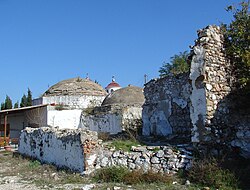 Ottoman baths in nearby Traianoupoli
 One of 6 windmills in Melia
 The castle of Avas
 The square of Alexandroupolis' lighthouse
 Sunset on the coastal street of Alexandroupolis
 View of Samothrace from the city
 Sunset with Samothrace view
 Sunset in Alexandroupolis
 Sunset in Alexandroupolis
 View of Samothrace from a coastline in Makri
 View of snowy Samothrace from a beach in Alexandroupolis
 Coast along Alexandroupolis
 Beach with view to Samothrace
 The small harbour of Makri
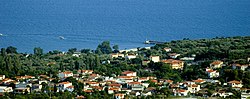 The village of Makri
 Mountainous landscape in Aetochori
 Road with small church near Dikella
 Monument for Thracian Hellenism in the yard of the metropolitan church
 Russian monument in the yard of the metropolitan church for the Russo-Turkish War (1877–1878)
 Pedestrian area in Alexandroupolis
 Via Egnatia in Traianoupoli, near Alexandroupolis
 Centuries-old olive grove in Alexandroupolis
 Eleftherias Square


.jpg)

.jpg)


.jpg)


 Media related to Alexandroupolis at Wikimedia Commons

