Hubbry Logo
BeekeepingBeekeepingMain
Open search
Beekeeping
Community hub
Beekeeping
logo
9 pages, 1 posts
0 subscribers
author image
medicalmad057348in editors31 Oct 2025 at 05:12
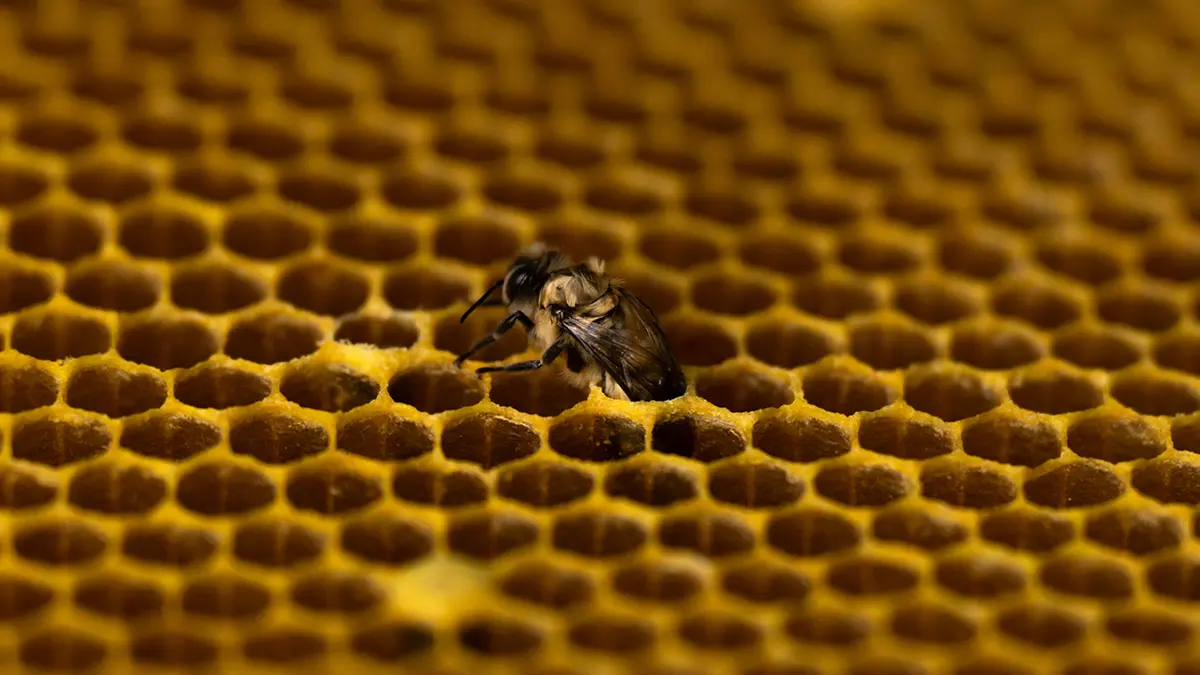
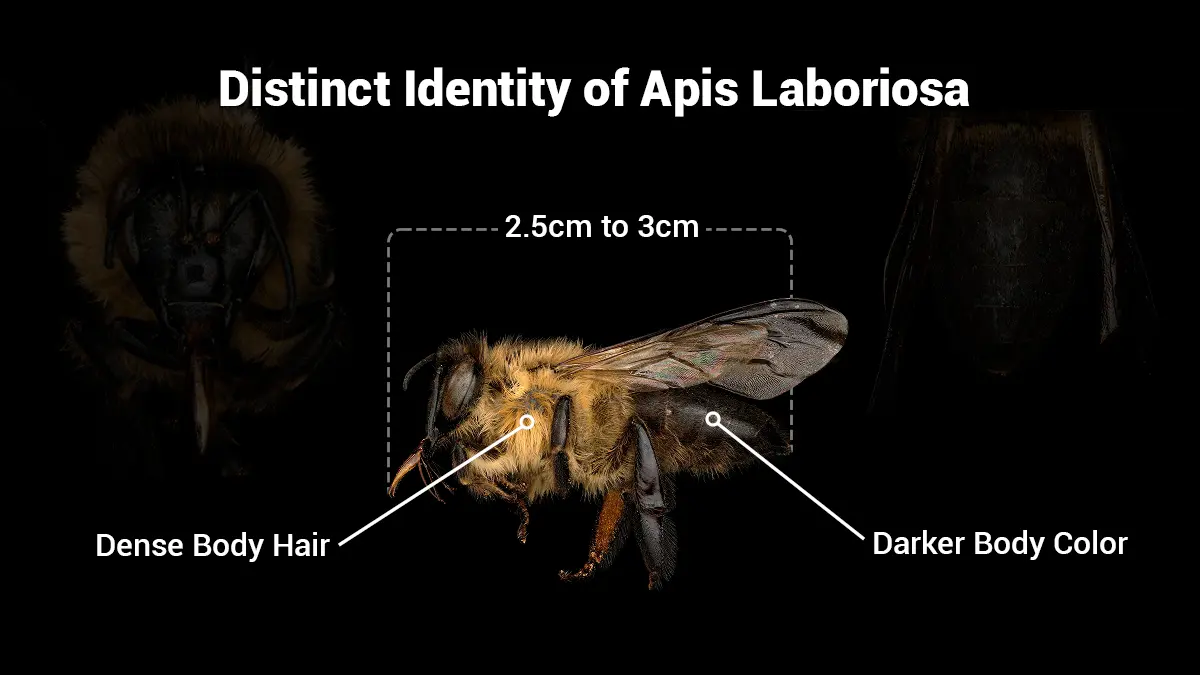
Apis Laboriosa: The Himalayan Pollinators from Nepal Apis laboriosa, known as the world’s largest honeybee, is native to the high Himalayas of Nepal. These remarkable bees thrive at altitudes above 2,500 meters, where they play a vital role in pollinating alpine plants and maintaining the delicate mountain ecosystem. Living on steep cliffs, Apis laboriosa produces the rare and prized “mad honey,” known for its unique properties. Their resilience and ecological importance make them essential pollinators of the Himalayas and a fascinating symbol of Nepal’s natural heritage. Read More : https://medicinalmadhoney.com/blogs/mad-honey/apis-laboriosa-the-himalayan-pollinators-from-nepal
post image 1
Beekeeping
Beekeeping
from Wikipedia
Beekeeper at the College of DuPage, Illinois

Beekeeping (or apiculture, from Latin: apis + culture) is the maintenance of bee colonies, commonly in artificial beehives. Honey bees in the genus Apis are the most commonly kept species but other honey producing bees such as Melipona stingless bees are also kept. Beekeepers (or apiarists) keep bees to collect honey and other products of the hive: beeswax, propolis, bee pollen, and royal jelly. Other sources of beekeeping income include pollination of crops, raising queens, and production of package bees for sale. Bee hives are kept in an apiary or "bee yard".

The earliest evidence of humans collecting honey are from Spanish caves paintings dated 6,000 BCE,[1] however it is not until 3,100 BCE that there is evidence from Egypt of beekeeping being practiced.[2]

In the modern era, beekeeping is often used for crop pollination and the collection of its by products, such as wax and propolis. The largest beekeeping operations are agricultural businesses but many small beekeeping operations are run as a hobby. As beekeeping technology has advanced, beekeeping has become more accessible, and urban beekeeping was described as a growing trend as of 2016.[3] Some studies have found city-kept bees are healthier than those in rural settings because there are fewer pesticides and greater biodiversity in cities.[4]

History

[edit]

Early history

[edit]
Honey seeker depicted on 8,000-year-old cave painting near Valencia, Spain[5]

At least 10,000 years ago, humans began to attempt to maintain colonies of wild bees in artificial hives made from hollow logs, wooden boxes, pottery vessels, and woven straw baskets known as skeps. Depictions of humans collecting honey from wild bees date to 10,000 years ago.[6] Beekeeping in pottery vessels began about 9,000 years ago in North Africa.[7] Traces of beeswax have been found in potsherds throughout the Middle East beginning about 7,000 BCE.[7] In the Borjomi region of Georgia, archaeologists discovered the world's oldest known honey, dating back approximately 5,500 years, highlighting Georgia's ancient beekeeping traditions and the ritual use of honey in burial practices.[8][9] Domestication of bees is shown in Egyptian art from around 4,500 years ago.[10] Simple hives and smoke were used, and honey was stored in jars, some of which were found in the tombs of pharaohs such as Tutankhamun. In the 18th century, European understanding of the colonies and biology of bees allowed the construction of the movable comb hive so honey could be harvested without destroying the entire colony.

Honeybees were kept in Egypt from antiquity.[11] On the walls of the sun temple of Nyuserre Ini from the Fifth Dynasty before 2,422 BCE, workers are depicted blowing smoke into hives as they remove honeycombs.[12] Inscriptions detailing the production of honey are found on the tomb of Pabasa from the Twenty-sixth Dynasty c. 650 BCE, in which cylindrical hives are depicted along with people pouring honey into jars.[13]

An inscription records the introduction of honey bees into the land of Suhum in Mesopotamia, where they were previously unknown:

I am Shamash-resh-ușur, the governor of Suhu and the land of Mari. Bees that collect honey, which none of my ancestors had ever seen or brought into the land of Suhu, I brought down from the mountain of the men of Habha, and made them settle in the orchards of the town 'Gabbari-built-it'. They collect honey and wax, and I know how to melt the honey and wax – and the gardeners know too. Whoever comes in the future, may he ask the old men of the town, (who will say) thus: "They are the buildings of Shamash-resh-ușur, the governor of Suhu, who introduced honey bees into the land of Suhu".

— translated text from Stele, (Dalley, 2002)[14]

The oldest archaeological finds directly relating to beekeeping have been discovered at Rehov, Israel, a Bronze and Iron Age archaeological site in the Jordan Valley.[15] Thirty intact hives made of straw and unbaked clay were discovered in the ruins of the city, dating from about 900 BCE, by archaeologist Amihai Mazar. The hives were found in orderly rows, three high, in a manner that according to Mazar could have accommodated around 100 hives, held more than one million bees and had a potential annual yield of 500 kilograms (1,100 lb) of honey and 70 kilograms (150 lb) of beeswax, and are evidence an advanced honey industry in Tel Rehov, Israel 3,000 years ago.[16][17][18]

The Beekeepers, 1568, by Pieter Bruegel the Elder

In ancient Greece, in Crete and Mycenae, there existed a system of high-status apiculture that is evidenced by the finds of hives, smoking pots, honey extractors and other beekeeping paraphernalia in Knossos. Beekeeping was considered a highly valued industry controlled by beekeeping overseers—owners of gold rings depicting apiculture scenes rather than religious ones as they have been reinterpreted recently, contra Sir Arthur Evans.[19] Aspects of the lives of bees and beekeeping are discussed at length by Aristotle. Beekeeping was also documented by the Roman writers Virgil, Gaius Julius Hyginus, Varro, and Columella.[20]

Beekeeping has been practiced in ancient China since antiquity. In a book written by Fan Li (or Tao Zhu Gong) during the Spring and Autumn period are sections describing beekeeping, stressing the importance of the quality of the wooden box used and its effects on the quality of the honey.[21] The Chinese word for honey mi (Chinese: ; pinyin: ), reconstructed Old Chinese pronunciation *mjit) was borrowed from proto-Tocharian *ḿət(ə) (where *ḿ is palatalized; cf. Tocharian B mit), cognate with English mead.[22]

The ancient Maya domesticated a species of stingless bee, which they used for several purposes, including making balché, a mead-like alcoholic drink.[23] By 300 BCE they had achieved the highest levels of stingless beekeeping practices in the world.[24] The use of stingless bees is referred to as meliponiculture, which is named after bees of the tribe Meliponini such as Melipona quadrifasciata in Brazil. This variation of beekeeping still occurs today.[25] For instance, in Australia, the stingless bee Tetragonula carbonaria is kept for the production of honey.[26]

Scientific study of honey bees

[edit]

European natural philosophers began to scientifically study bee colonies in the 18th century. Eminent among these scientists were Swammerdam, René Antoine Ferchault de Réaumur, Charles Bonnet and François Huber. Swammerdam and Réaumur were among the first to use a microscope and dissection to understand the internal biology of honey bees. Réaumur was among the first to construct a glass-walled observation hive to better observe activities inside hives. He observed queens laying eggs in open cells but did not know how queens were fertilized; the mating of a queen and drone had not yet been observed and many theories held queens were "self-fertile" while others believed a vapor or "miasma" emanating from the drones fertilized queens without physical contact. Huber was the first to prove by observation and experiment that drones physically inseminate queens outside the confines of the hive, usually a great distance away.[27]

Following Réaumur's design, Huber built improved glass-walled observation hives and sectional hives that could be opened like the leaves of a book. This allowed the inspection of individual wax combs and greatly improved direct observation of hive activity. Although he went blind before he was twenty, Huber employed a secretary named François Burnens to make daily observations, conduct experiment and keep accurate notes for more than twenty years. Huber confirmed a hive consists of one queen, who is the mother of every female worker and male drone in the colony. He was also the first to confirm mating with drones takes place outside hives and that queens are inseminated in successive matings with male drones, which occur high in the air at a great distance from the hive. Together, Huber and Burnens dissected bees under the microscope, and were among the first to describe the ovaries and spermatheca (sperm store) of queens, as well as the penis of male drones. Huber is regarded as "the father of modern bee-science" and his work Nouvelles Observations sur Les Abeilles (New Observations on Bees)[28] revealed all of the basic scientific facts of the biology and ecology of honeybees.[27]

Hive designs

[edit]
Beekeeping, Tacuinum sanitatis casanatensis (14th century)

Before the invention of the movable comb hive, the harvesting of honey frequently resulted in the destruction of the whole colony. The wild hive was broken into using smoke to quieten the bees. The honeycombs were pulled out and either immediately eaten whole or crushed, along with the eggs, larvae, and honey they held. A sieve or basket was used to separate the liquid honey from the demolished brood nest. In medieval times in northern Europe, although skeps and other containers were made to house bees, the honey and wax were still extracted after the bee colony was killed.[29] This was usually accomplished by using burning sulfur to suffocate the colony without harming the honey within. It was impossible to replace old, dark-brown brood comb in which larval bees are constricted by layers of shed pupal skins.[30]

The movable frames of modern hives are considered to have been developed from the traditional basket top bar (movable comb) hives of Greece, which allowed the beekeeper to avoid killing the bees.[31] The oldest evidence of their use dates to 1669, although it is probable their use is more than 3,000 years old.[32]

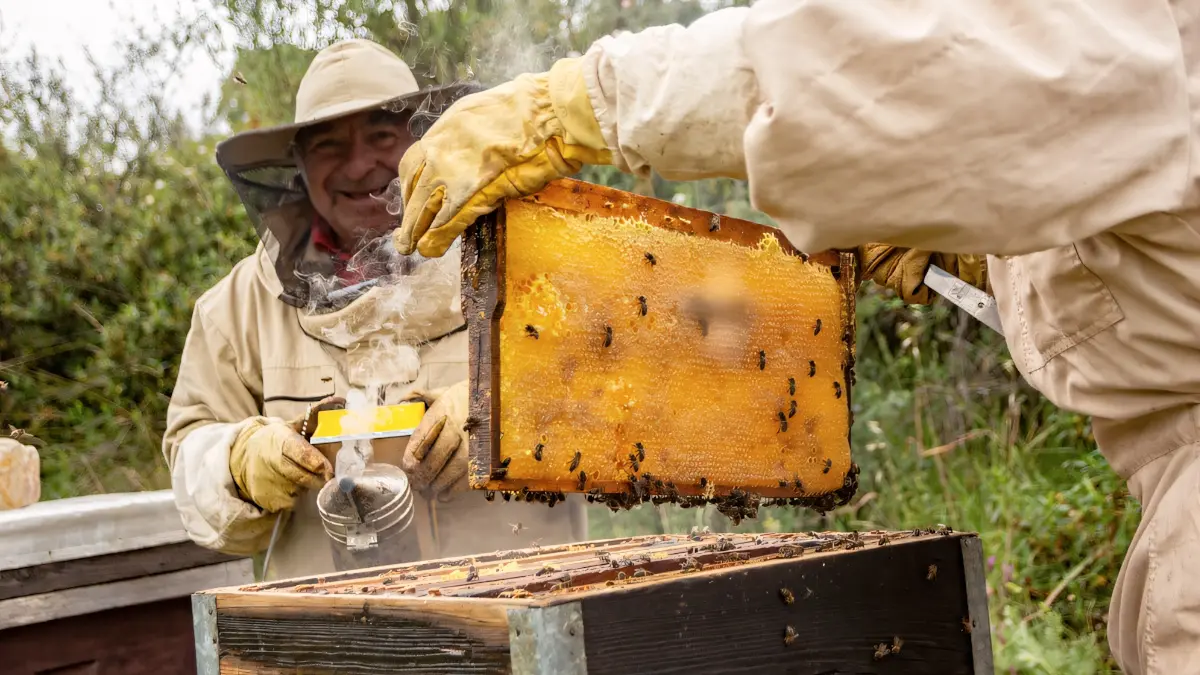
A beekeeper inspecting a hive frame from a Langstroth hive

Intermediate stages in the transition from older methods of beekeeping were recorded in 1768 by Thomas Wildman, who described advances over the destructive, skep-based method so bees no longer had to be killed to harvest their honey.[33] Wildman fixed an array of parallel wooden bars across the top of a straw hive 10 inches (25 cm) in diameter "so that there are in all seven bars of deal to which the bees fix their combs", foreshadowing future uses of movable-comb hives. He also described using such hives in a multi-story configuration, foreshadowing the modern use of supers: he added successive straw hives below and later removed the ones above when free of brood and filled with honey so the bees could be separately preserved at the harvest the following season. Wildman also described the use of hives with "sliding frames" in which the bees would build their comb.[34]

Wildman's book acknowledges the advances in knowledge of bees made by Swammerdam, Maraldi, and de Réaumur—he includes a lengthy translation of Réaumur's account of the natural history of bees. Wildman also describes the initiatives of others in designing hives for the preservation of bees when taking the harvest, citing reports from Brittany in the 1750s due to the Comte de la Bourdonnaye. Another hive design was invented by Rev. John Thorley in 1744; the hive was placed in a bell jar that was screwed onto a wicker basket. The bees were free to move from the basket to the jar, and honey was produced and stored in the jar. The hive was designed to keep the bees from swarming as much as they would have in other hive designs.[35]

In the 19th century, changes in beekeeping practice were completed through the development of the movable comb hive by the American Lorenzo Lorraine Langstroth, who was the first person to make practical use of Huber's earlier discovery of a specific spatial distance between the wax combs, later called the bee space, which bees do not block with wax but keep as a free passage. Having determined this bee space, which is commonly given as between 6 and 9 mm (0.24 and 0.35 in),[36][37] though up to 15 mm (0.59 in) has been found in populations in Ethiopia.[38] Langstroth then designed a series of wooden frames within a rectangular hive box, carefully maintaining the correct space between successive frames. He found the bees would build parallel honeycombs in the box without bonding them to each other or to the hive walls. This enables the beekeeper to slide any frame out of the hive for inspection without harming the bees or the comb; and protecting the eggs, larvae and pupae in the cells. It also meant combs containing honey could be gently removed and the honey extracted without destroying the comb. The emptied honeycombs could then be returned intact to the bees for refilling. Langstroth's book The Hive and Honey-bee (1853), describes his rediscovery of the bee space and the development of his patent movable comb hive. The invention and development of the movable comb hive enabled the growth of large-scale, commercial honey production in both Europe and the U.S.

20th and 21st century hive designs

[edit]

Langstroth's design of movable comb hives was adopted by apiarists and inventors in both North America and Europe, and a wide range of moveable comb hives were developed in England, France, Germany and the United States.[39] Classic designs evolved in each country; Dadant hives and Langstroth hives are still dominant in the U.S.; in France the De-Layens trough hive became popular, in the UK a British National hive became standard by the 1930s, although in Scotland the smaller Smith hive is still popular. In some Scandinavian countries and in Russia, the traditional trough hive persisted until late in the 20th century and is still kept in some areas. The Langstroth and Dadant designs, however, remain ubiquitous in the U.S. and in many parts of Europe, though Sweden, Denmark, Germany, France and Italy all have their own national hive designs. Regional variations of hive were developed according to climate, floral productivity and reproductive characteristics of the subspecies of native honey bees in each bio-region.[39]

Honey-laden honeycomb in a wooden frame

The differences in hive dimensions are insignificant in comparison to the common factors in these hives: they are all square or rectangular; they all use movable wooden frames; and they all consist of a floor, brood-box, honey super, crown-board and roof. Hives have traditionally been constructed from cedar, pine or cypress wood but in recent years, hives made from injection-molded, dense polystyrene have become increasingly common.[40] Hives also use queen excluders between the brood-box and honey supers to keep the queen from laying eggs in cells next to those containing honey intended for consumption. With the 20th-century advent of mite pests, hive floors are often replaced, either temporarily or permanently, with a wire mesh and a removable tray.[40]

Western honey bee on a honeycomb

In 2015, the Flow Hive system was invented in Australia by Cedar Anderson and his father Stuart Anderson,[41] whose design allows honey to be extracted without cumbersome centrifuge equipment.

Pioneers of practical and commercial beekeeping

[edit]

In the 19th century, improvements were made in the design and production of beehives, systems of management and husbandry, stock improvement by selective breeding, honey extraction and marketing. Notable innovators of modern beekeeping include:

Prokopovych's beehive system

Petro Prokopovych used frames with channels in the side of the woodwork; these were packed side-by-side in stacked boxes. Bees traveled between frames and boxes via these channels,[42] which were similar to the cutouts in the sides of modern wooden sections.[43]

Jan Dzierżon' beehive design has influenced modern beehives.[44]

François Huber made significant discoveries about the bee life cycle and communication between bees. Despite being blind, Huber discovered a large amount of information about the queen bee's mating habits and her contact with the rest of the hive. His work was published as New Observations on the Natural History of Bees.[45]

L. L. Langstroth has influenced modern beekeeping practice more than anyone else. His book The Hive and Honey-bee was published in 1853.[46]

Moses Quinby, author of Mysteries of Bee-Keeping Explained, invented the bee smoker in 1873.[47][48]

Amos Root, author of the A B C of Bee Culture, which has been continuously revised and remains in print, pioneered the manufacture of hives and the distribution of bee packages in the United States.[citation needed]

A. J. Cook author of The Bee-Keepers' Guide; or Manual of the Apiary, 1876.[49]

Dr. C.C. Miller was one of the first entrepreneurs to make a living from apiculture. By 1878, he made beekeeping his sole business activity. His book, Fifty Years Among the Bees, remains a classic and his influence on bee management persists into the 21st century.[50]

Honey Extractor

Franz Hruschka was an Austrian/Italian military officer who in 1865 invented a simple machine for extracting honey from the comb by means of centrifugal force. His original idea was to support combs in a metal framework and then spin them within a container to collect honey that was thrown out by centrifugal force. This meant honeycombs could be returned to a hive empty and undamaged, saving the bees a vast amount of work, time and materials. This invention significantly improved the efficiency of honey harvesting and catalyzed the modern honey industry.[51]

Walter T. Kelley was an American pioneer of modern beekeeping in the early-and mid-20th century. He greatly improved upon beekeeping equipment and clothing, and went on to manufacture these items and other equipment. His company sold products worldwide and his book How to Keep Bees & Sell Honey, encouraged a boom in beekeeping following World War II.[52]

Cary W. Hartman (1859–1947), lecturer, well known beekeeping enthusiast and honey promoter was elected President of the California State Beekeepers' Association in 1921.[53][54]

In the UK, practical beekeeping was led in the early 20th century by a few men, pre-eminently Brother Adam and his Buckfast bee, and R.O.B. Manley, author of books including Honey Production in the British Isles and inventor of the Manley frame, which is still universally popular in the UK. Other notable British pioneers include William Herrod-Hempsall and Gale.[55][56]

Ahmed Zaky Abushady (1892–1955) was an Egyptian poet, medical doctor, bacteriologist, and bee scientist, who was active in England and Egypt in the early twentieth century. In 1919, Abushady patented a removable, standardized aluminum honeycomb. In the same year, he founded The Apis Club in Benson, Oxfordshire, which later became the International Bee Research Association (IBRA). In Egypt in the 1930s, Abushady established The Bee Kingdom League and its organ The Bee Kingdom.[57]

Hives and other equipment

[edit]

Horizontal hives

[edit]
Modern top bar hive

A Horizontal top-bar hive is a single-story, frameless beehive in which the comb hangs from removable bars that form a continuous roof over the comb, whereas the frames in most current hives allow space for bees to move between boxes. Hives that have frames or that use honey chambers in summer and use management principles similar to those of regular top-bar hives are sometimes also referred to as top-bar hives. Top-bar hives are rectangular and are typically more than twice as wide as multi-story framed hives commonly found in English-speaking countries. Top-bar hives usually include one box and allow for beekeeping methods that interfere very little with the colony. While conventional advice often recommends inspecting each colony each week during the warmer months,[58] some beekeepers fully inspect top-bar hives only once a year,[59] and only one comb needs to be lifted at a time.[60]

Vertical stackable hives

[edit]

There are three types of vertical stackable hives: hanging or top-access frame, sliding or side-access frame, and top bar.

Hanging-frame hive designs include Langstroth, the British National, Dadant, Layens, and Rose, which differ in size and number of frames. The Langstroth was the first successful top-opened hive with movable frames. Many other hive designs are based on the principle of bee space that was first described by Langstroth, and is a descendant of Jan Dzierzon's Polish hive designs. Langstroth hives are the most-common size in the United States and much of the world; the British National is the most common size in the United Kingdom; Dadant and Modified Dadant hives are widely used in France and Italy, and Layens by some beekeepers, where their large size is an advantage. Square Dadant hives–often called 12-frame Dadant or Brother Adam hives–are used in large parts of Germany and other parts of Europe by commercial beekeepers.

Any hanging-frame hive design can be built as a sliding frame design. The AZ Hive, the original sliding frame design, integrates hives using Langstroth-sized frames into a honey house to streamline the workflow of honey harvest by localization of labor, similar to cellular manufacturing. The honey house can be a portable trailer, allowing the beekeeper to move hives to a site and provide pollination services.

Top-bar stackable hives use top bars instead of full frames. The most common type is the Warre hive, although any hive with hanging frames can be converted into a top-bar stackable hive by using only the top bar rather than the whole frame. This may work less well with larger frames, where crosscomb and attachment can occur more readily.

Protective clothing

[edit]
Beekeepers often wear protective clothing to protect themselves from stings.

Most beekeepers wear some protective clothing. Novice beekeepers usually wear gloves and a hooded suit or hat and veil. Experienced beekeepers sometimes choose not to use gloves because they inhibit delicate manipulations. The face and neck are the most important areas to protect, so most beekeepers wear at least a veil.[61] Defensive bees are attracted to the breath; a sting on the face can lead to much more pain and swelling than a sting elsewhere, while a sting on a bare hand can usually be quickly removed by fingernail scrape to reduce the amount of venom injected.

Traditionally, beekeeping clothing is pale-colored because of the natural color of cotton and the cost of coloring is an expense not warranted for workwear, though some consider this to provide better differentiation from the colony's natural predators such as bears and skunks, which tend to be dark-colored. It is now known bees see in ultraviolet wavelengths and are also attracted to scent. The type of fabric conditioner used has more impact than the color of the fabric.[62][63]

Stings that are retained in clothing fabric continue to pump out an alarm pheromone that attracts aggressive action and further stinging attacks. Attraction can be minimized with regular washing.[citation needed]

Smoker

[edit]
Bee smoker with heat shield and hook

Most beekeepers use a smoker, a device that generates smoke from the incomplete combustion of fuels. Although the exact mechanism is disputed, it is said smoke calms bees. Some claim it initiates a feeding response in anticipation of possible hive abandonment due to fire.[64] It is also thought smoke masks alarm pheromones released by guard bees or bees that are squashed in an inspection. The ensuing confusion creates an opportunity for the beekeeper to open the hive and work without triggering a defensive reaction.

Many types of fuel can be used in a smoker as long as it is natural and not contaminated with harmful substances. Common fuels include hessian, twine, pine needles, corrugated cardboard, and rotten or punky wood. Indian beekeepers, especially in Kerala, often use coconut fibers, which are readily available, safe, and cheap. Some beekeeping supply sources also sell commercial fuels like pulped paper, compressed cotton and aerosol cans of smoke. Other beekeepers use sumac as fuel because it ejects much smoke and lacks an odor.

Some beekeepers use "liquid smoke" as a safer, more convenient alternative. It is a water-based solution that is sprayed onto the bees from a plastic spray bottle. A spray of clean water can also be used to encourage bees to move on.[65] Torpor may also be induced by the introduction of chilled air into the hive, while chilled carbon dioxide may have harmful, long-term effects.[66]

Few anecdotal stories of using the smoke from burning fungi in England or Europe for centuries have been published. Several more recent studies describe anaesthesia of honeybees use of smoke from burning fungi.[67][68] The fungi reported to have been used to smoke bees are the puffballs Lycoperdon gigantium, L. wahlbergii and the conks, Fomes fomentarius and F. igiarius. When fungi are burned, the characteristic smell is due to the pyrolysis of the keratin cell wall of fungi. Besides being a major fungi constituent, keratin is found in animal tissues, such as hair or feathers. Anaesthesia experiments done using smoke from pyrolysis of L. wahlbergii, human hair and chicken feathers showed no difference in long-term mortality of anesthetized honeybees and non-treated bees in the same hive. Hydrogen sulphide was identified as the major combustion product that is responsible for putting the bees to sleep. Note – hydrogen sulphide is toxic to humans at high concentrations.[69]

Hive tool

[edit]
American hive tool

Most beekeepers use a hive tool when working on their hives. The two main types are the American hive tool; and the Australian hive tool often called a 'frame lifter'. They are used to scrape off burr-comb from around the hive, especially on top of the frames. They are also used to separate the frames before lifting out of the hive.

Safety and husbandry

[edit]

Stings

[edit]

Some beekeepers believe pain and irritation from stings decreases if a beekeeper receives more stings, and they consider it important for safety of the beekeeper to be stung a few times a season. Beekeepers have high levels of antibodies, mainly Immunoglobulin G, caused by a reaction to the major antigen of bee venom, phospholipase A2 (PLA).[70] Antibodies correlate with the frequency of bee stings.

The entry of venom into the body from bee stings may be hindered and reduced by protective clothing that allows the wearer to remove stings and venom sacs with a simple tug on the clothing. Although the stinger is barbed, a worker bee's stinger is less likely to become lodged into clothing than human skin.

Symptoms of being stung include redness, swelling and itching around the site of the sting. In mild cases, pain and swelling subside in two hours. In moderate cases, the red welt at the sting site will become slightly larger for one or two days before beginning to heal. A severe reaction, which is rare among beekeepers, results in anaphylactic shock.[71]

If a beekeeper is stung by a bee, the sting should be removed without squeezing the attached venom glands. A quick scrape with a fingernail is effective and intuitive, and ensures the venom injected does not spread so the side effects of the sting will go away sooner. Washing the affected area with soap and water can also stop the spread of venom. Ice or a cold compress can be applied to the sting area.[71]

Internal temperature of a hive

[edit]
Tunnel entrance with baffle
Hive with a second skin of polystyrene

Bees maintain the internal temperature of their hive at about 35 °C (95 °F).[72] Their ability to do this is known as social homeostasis and was first described by Gates in 1914.[73] During hot weather, bees cool the hive by circulating cool air from the entrance through the hive and out again;[74] and if necessary by placing water, which they fetch, throughout the hive to create evaporative cooling.[75] In cold weather, packing and insulation of the bee hive is believed to be beneficial.[76] The extra insulation is believed to reduce the amount of honey the bees consume and makes it easier for them to maintain the hive's temperature. The desire for insulation encouraged the use of double-walled hives with an outer wall of timber or polystyrene; and hives constructed from a ceramic.[77]

Location of hives

[edit]

There has been considerable debate about the best location for hives. Virgil thought they should be located near clear springs, ponds or shallow brooks. Wildman thought they should face to the south or west. All writers agree hives should be sheltered from strong winds. In hot climates, hives are often placed under the shade of trees in summer.[78] Researchers in the U.S. found domestic honey bees placed in national parks compete with native bee species for resources. A further review of the literature concluded large concentrations of beehives on continents where they are not native, such as North and South America, could compete against the native bees; this, however, was not as strongly observed in areas where domestic bees are native such as Europe and Africa, where the different bee species have adapted to have a narrower overlapping of forage preferences.[79]

Natural beekeeping

[edit]
A workshop for beekeeping in Maga, Cameroon. Bees are a form of livestock that can add a lot of value to farmland and generate relatively easy revenue for rural communities.

The natural beekeeping movement believes bee hives are weakened by modern beekeeping and agricultural practices, such as crop spraying, hive movement, frequent hive inspections, artificial insemination of queens, routine medication, and sugar water feeding.[80] Practitioners of "natural beekeeping" tend to use variations of the top-bar hive, which is a simple design that retains the concept of having a movable comb without the use of frames or a foundation. The horizontal top-bar hive, as promoted by many writers, can be seen as a modernization of hollow log hives, with the addition of wooden bars of specific width from which bees hang their combs. The widespread adoption of Natural Beekeeping methods in recent years can be attributed to the 2007 publications of Natural Beekeeping[81] by Ross Conrad, and The Barefoot Beekeeper[82] by Philip Chandler, which challenges many aspects of modern beekeeping and offers the horizontal top-bar hive as a viable alternative to the ubiquitous Langstroth-style movable-frame hive.

A vertical top-bar hive is the Warré hive, based on a design by the French priest Abbé Émile Warré (1867–1951) and popularized by David Heaf in his English translation of Warré's book L'Apiculture pour Tous as Beekeeping For All.[83]

Urban and backyard beekeeping

[edit]
Honey bee in Toronto

Related to natural beekeeping, urban beekeeping is an attempt to revert to a less-industrialized way of obtaining honey by using small-scale colonies that pollinate urban gardens. Some have found city bees are healthier than rural bees because there are fewer pesticides and greater biodiversity in urban gardens.[84] Urban bees may fail to find forage, however, and homeowners can use their land to help feed local bee populations by planting flowers that provide nectar and pollen. An environment of year-round, uninterrupted bloom creates an ideal environment for colony reproduction.[85]

Using managed honeybee colonies to fill the ecological niche of pollinators in urban environments is also thought to be crucial to preventing the formation of feral colonies by more destructive species like the Africanized honeybee (AHB).[86]

Indoor beekeeping

[edit]

Modern beekeepers have experimented with raising bees indoors in a controlled environment or in indoor observation hives. This may be done for reasons of space and monitoring, or in the cooler months, when large commercial beekeepers may move colonies to "wintering" warehouses with fixed temperature, light, and humidity. This helps bees remain healthy but relatively dormant. These relatively dormant "wintered" bees survive on stored honey, and new bees are not born.[87]

Experiments in raising bees indoors for longer durations have looked into more precise and varying environment controls. In 2015, MIT's "Synthetic Apiary" project simulated springtime inside a closed environment for several hives throughout the winter. They provided food sources and simulated long days, and saw activity and reproduction levels comparable to the levels seen outdoors in warm weather. They concluded such an indoor apiary could be sustained year-round if needed.[88][89]

Behavior of honey bees

[edit]

Colony reproduction

[edit]
A swarm about to land
New wax combs between basement joists

Honey bee colonies are dependent on their queen, who is the only egg-layer. Although queens have a three-to-four-year adult lifespan, diminished longevity of queens—less than a year—is commonly and increasingly observed.[90] The queen can choose whether to fertilize an egg as she lays it; fertilized eggs develop into a female worker bees and unfertilized eggs become male drones. The queen's choice of egg type depends on the size of the open brood cell she encounters on the comb. In a small worker cell, she lays a fertilized egg; she lays unfertilized drone eggs in larger drone cells.[91]

When the queen is fertile and laying eggs, she produces a variety of pheromones that control the behavior of the bees in the hive; these are commonly called queen substance. Each pheromone has a different function. As the queen ages, she begins to run out of stored sperm and her pheromones begin to fail.[92]

As the queen's pheromones fail, the bees replace her by creating a new queen from one of her worker eggs. They may do this because she has been physically injured, because she has run out of sperm and cannot lay fertilized eggs, and has become a drone-laying queen, or because her pheromones have dwindled to the point at which they cannot control all of the bees in the hive. At this juncture, the bees produce one or more queen cells by modifying existing worker cells that contain a normal female egg. They then either supersede the queen without swarming or divide the hive into two colonies through swarm-cell production, which leads to swarming.[93]

A swarm attached to a branch

Supersedure is a valued behavioral trait because hive that supersedes its old queen does not lose any stock; rather it creates a new queen and the old one either naturally dies or is killed when the new queen emerges. In these hives, bees produce only one or two queen cells, most often in the center of the face of a broodcomb.[94] Swarm-cell production involves the creation of twelve or more queen cells. These are large, peanut-shaped protrusions requiring space, for which reason they are often located around the edges—commonly at the sides and the bottom—of the broodcomb.[94]

Once either process has begun, the old queen leaves the hive when the first queen cells hatch, and is accompanied by a large number of bees—predominantly young bees called wax-secretors—which form the basis of the new hive. Scouts are sent from the swarm to find suitable hollow trees or rock crevices; when one is found, the entire swarm moves in. Within hours, the new colony's bees build new wax brood combs using honey stores with which the young bees have filled themselves before leaving the old hive. Only young bees can secrete wax from special abdominal segments, which is why swarms tend to contain more young bees. Often a number of virgin queens accompany the first swarm, known as the "prime swarm", and the old queen is replaced as soon as a daughter queen mates and begins laying. Otherwise, she is quickly superseded in the new hive.[94]

Different sub-species of Apis mellifera exhibit differing swarming characteristics. In North America, northern black races are thought to swarm less and supersede more whereas the southern yellow-and-gray varieties are said to swarm more frequently. Swarming behavior is complicated because of the prevalence of cross-breeding and hybridization of the sub-species.[94] Italian bees are very prolific and inclined to swarm; Northern European black bees have a strong tendency to supersede their old queen without swarming. These differences are the result of differing evolutionary pressures in the regions in which each sub-species evolved.[94]

Factors that trigger swarming

[edit]

According to George S. Demuth, the main factors that increase the swarming tendency of bees are:[95]

  • The genetics of bees; the strength of the swarming instinct
  • Congestion of the brood nest
  • Insufficient empty combs for ripening nectar and storing honey
  • Inadequate ventilation
  • Having an old queen
  • Warming weather conditions.

Demuth attributed some of his comments to Snelgrove.[96]

Some beekeepers carefully monitor their colonies in spring for the appearance of queen cells, which are a dramatic signal the colony is determined to swarm.[94] After leaving the old hive, the swarm looks for shelter. A beekeeper may capture it and introduce it into a new hive. Otherwise, the swarm reverts to a feral state and finds shelter in a hollow tree or other suitable habitat.[94] A small after-swarm has less chance of survival and may threaten the original hive's survival if the number of remaining bees is unsustainable. When a hive swarms despite the beekeeper's preventative efforts, the beekeeper may give the reduced hive two frames of open brood with eggs. This helps replenish the hive more quickly and gives a second opportunity to raise a queen if there is a mating failure.[94]

Artificial swarming

[edit]

When a colony accidentally loses its queen, it is said to be queenless.[97] The workers realize the queen is absent after around an hour as her pheromones in the hive fade. Instinctively, the workers select cells containing eggs aged less than three days and dramatically enlarge the cells to form "emergency queen cells". These appear similar to large, one-inch (2.5 cm)-long, peanut-like structures that hang from the center or side of the brood combs. The developing larva in a queen cell is fed differently than an ordinary worker bee; in addition to honey and pollen, she receives a great deal of royal jelly, a special food secreted from the hypopharyngeal gland of young nurse bees.[98] Royal jelly dramatically alters the growth and development of the larva so after metamorphosis and pupation, it emerges from the cell as a queen bee. The queen is the only bee in a colony that has fully developed ovaries; she secretes a pheromone that suppresses the normal development of ovaries in all of her workers.[99]

Beekeepers use the ability of the bees to produce new queens to increase their colonies in a procedure called splitting a colony.[100] To do this, they remove several brood combs from a healthy hive, leaving the old queen behind. These combs must contain eggs or larvae less than three days old and be covered by young nurse bees, which care for the brood and keep it warm. These brood combs and nurse bees are then placed into a small "nucleus hive" with other combs containing honey and pollen. As soon as the nurse bees find themselves in this new hive, and realize they have no queen and begin constructing emergency queen cells using the eggs and larvae in the combs.[94]

Pests and diseases

[edit]

Diseases

[edit]

The common agents of disease that affect adult honey bees include fungi, bacteria, protozoa, viruses, parasites and poisons. The gross symptoms displayed by affected adult bees are very similar, whatever the cause, making it difficult to ascertain the causes without microscopic identification of microorganisms or chemical analysis of poisons.[101] Since 2006, colony losses from colony collapse disorder (CCD) have been increasing across the world, although the causes of the syndrome are unknown.[102][103] In the U.S., commercial beekeepers have been increasing the number of hives to deal with higher rates of attrition.[104]

Parasites

[edit]

Nosema apis is a microsporidian that causes nosemosis, also called nosema, the most-common and widespread disease of the adult honey bee.[105]

Galleria mellonella and Achroia grisella wax moth larvae hatch, tunnel through and destroy comb that contains bee larvae and their honey stores. The tunnels they create are lined with silk, which entangles and starves emerging bees. Destruction of honeycombs also results in leakage and wasting of honey. A healthy hive can manage wax moths but weak colonies, unoccupied hives and stored frames can be decimated.[106]

Small hive beetle (Aethina tumida) is native to Africa but has now spread to most continents. It is a serious pest among honey bees unadapted to it.[107]

Varroa destructor, the Varroa mite, is an established pest of two species of honey bee through many parts of the world and is blamed by many researchers as a leading cause of CCD.[108]

Tropilaelaps mites, of which there are four species, are native to Apis dorsata, Apis laboriosa, and Apis breviligula, but spread to Apis mellifera after they were introduced to Asia.[109]

Acarapis woodi, the tracheal mite, infests the trachea of honey bees.[110]

Predators

[edit]

Most predators prefer not to eat honeybees due to their unpleasant sting. Common honeybee predators include large animals such as skunks and bears, which seek the hive's honey and brood, as well as adult bees.[111] Some birds will also eat bees, (for example, bee-eaters, as do some robber flies, such as Mallophora ruficauda, which is a pest of apiculture in South America due to its habit of eating workers while they are foraging in meadows.[112]

Decreasing lifespan

[edit]

A 2022 study by researchers at University of Maryland, College Park observed lifespan of caged worker bees is half as long as that observed 50 years ago, and hypothesized decreased worker-bee lifespans should correlate to decreased honey production.[113]

Recent developments

[edit]
A beekeeper who finds another's practices inadequate may insult them by calling them a mere "bee-haver".[114][115]

Honey Fraud

[edit]

In 2023, the European Commission released a report on honey fraud in 17 European countries that determined that "(46%) [of samples] were suspicious of being non-compliant" with EU standards for honey purity.[116] This was a significant increase from a 2015 study, and followed significant improvements in detection of sugar additives. Shortly after, the US Food and Drug Administration released a report that found that for 2021-2023, three to ten percent of imported honey violated purity criteria.[117]

International beekeeping organization Apimondia had faced public backlash for stringent testing criteria in 2019 and 2023, and eventually removed honey judging entirely in 2024, citing that "adequate testing was impossible" for the purposes of the awards.[118][119] In a statement released in 2020, Apimondia called for market regulations that would track the origins of honey, and developments in laboratory testing for honey fraud.[118]

These developments highlight the ongoing challenges faced by the beekeeping industry in maintaining product integrity and consumer trust in an increasingly global market.[120]

World apiculture

[edit]

According to Food and Agriculture Organization data,[121] the world's beehive stock rose from around 50 million in 1961 to around 83 million in 2014, which represents an annual average growth of 1.3%. Average annual growth has accelerated to 1.9% since 2009.

World's stock of beehives from 1961 to 2014
World honey production and consumption in 2005
Country Production (1000 metric tons) Consumption (1000 metric tons) Number of beekeepers Number of bee hives
Europe and Russia
Ukraine Ukraine (*2019) *69.94 52
Russia Russia (*2019) 63.53 54
Spain Spain 37.00 40
Germany Germany (*2008) 21.23 89 90,000* 1,000,000*
Hungary Hungary 19.71 4
Romania Romania 19.20 10
Greece Greece 16.27 16
France France 15.45 30
Bulgaria Bulgaria 11.22 2
Serbia Serbia 3 to 5 6.3 30,000 430,000
Denmark Denmark (*1996) 2.5 5 *4,000 *150,000
North America
United States United States (*2006, **2002, ***2019) ***71.18 158.75* 12,029** (210,000 bee keepers) ***2,812,000
Canada Canada 45 (2006); 28 (2007)[122] 80.35(2019) 29 13,000 500,000
Latin America
Argentina Argentina (*2019) 93.42 (Average 84)[123] 3 *2984290
Mexico Mexico (*2019) *61.99 31 *2157870
Brazil Brazil 33.75 2
Uruguay Uruguay 11.87 1
Oceania
Australia Australia 18.46 16 12,000 520,000[124]
New Zealand New Zealand 9.69 8 2602 313,399
Asia
China China (*2019) *444.1 238 7,200,000[123]
Turkey Turkey (*2019) *109.33 66 4,500,000[123][125]
Iran Iran (*2019) *75.46 3,500,000[123]
India India 52.23 45 9,800,000[123]
South Korea South Korea 23.82 27
Vietnam Vietnam 13.59 0
Turkmenistan Turkmenistan 10.46 10
Africa
Ethiopia Ethiopia 41.23 40 4,400,000
Tanzania Tanzania 28.68 28
Angola Angola 23.77 23
Kenya Kenya 22.00 21
Egypt Egypt (*1997) 16* 200,000* 2,000,000*
Central African Republic Central African Republic 14.23 14
Morocco Morocco 4.5 27,000 400,000
South Africa South Africa (*2008) ≈2.5*[126] ≈1.5*[126] ≈1,790*[126] ≈92,000*[126]
Source: Food and Agriculture Organization of the United Nations[127]
2019 data[128][129]
Sources:
  • Denmark: beekeeping.com[130] (1996)
  • Arab countries: beekeeping.com[131] (1997)
  • US: University of Arkansas National Agricultural Law Center,[132] Agricultural Marketing Resource Center[133]
  • Serbia[134]

Gallery: Harvesting honey

[edit]

See also

[edit]

References

[edit]
[edit]
Revisions and contributorsEdit on WikipediaRead on Wikipedia
from Grokipedia
Beekeeping, also known as apiculture, is the practice of maintaining colonies of honey bees, primarily of the genus Apis, in managed hives to harvest products such as honey, beeswax, pollen, propolis, and royal jelly, while also leveraging their pollination services for crop production. Humans have engaged in beekeeping for millennia, with evidence of honey collection from wild colonies dating back approximately 9,000 years, as depicted in ancient rock art in Spain, and organized management emerging in regions like ancient Egypt and the Near East by providing artificial cavities for bee habitation. The development of the movable-frame hive in 1851 by Lorenzo Langstroth revolutionized the practice, enabling non-destructive inspection and sustainable harvesting without killing the bees. Globally, beekeeping supports over 100 million managed hives, producing around 1.9 million tonnes of honey annually as of 2023, with Asia accounting for the largest share of production. Honey bees pollinate approximately one-third of human food crops, contributing an economic value from pollination services estimated at 10 to 20 times the direct value of honey and other bee products. This dual role underscores beekeeping's significance in agriculture and food security, as bees facilitate reproduction in diverse plants essential for biodiversity and ecosystems. Modern beekeeping faces substantial challenges, including the parasitic Varroa destructor mite, which vectors debilitating viruses and compromises bee immunity, emerging as the primary driver of colony losses rather than pesticides alone. Beekeepers employ , including selective breeding for mite-resistant bees and targeted treatments, to mitigate these threats amid ongoing issues like and disease proliferation. Despite high annual colony loss rates, such as 55.6% in the U.S. from 2024 to 2025, the practice persists through adaptive techniques and global expansion of hive numbers.

History

Ancient origins and early practices

The earliest evidence of human interaction with bees consists of honey hunting from wild colonies, depicted in prehistoric . A painting in Cueva de la Araña near Bicorp, Valencia, , dated to approximately 6000 BCE, illustrates figures using a rope ladder to access a in a cliff, carrying baskets to collect while evading bees. Similar motifs appear in African rock art sites, such as those in the region, portraying honey collection as a perilous activity integral to societies. These representations indicate opportunistic harvesting rather than managed apiculture, with residues of on from sites in and suggesting processing of honeycomb as early as 7000 BCE. Systematic beekeeping emerged in the ancient Near East and Egypt during the Bronze Age, involving the housing of bee colonies in artificial structures. In ancient Egypt, practices date to the Old Kingdom around 2400 BCE, as evidenced by tomb reliefs and models showing hives constructed from bundled reeds or clay pipes, approximately 1.2 meters long and 30-40 cm in diameter. Beekeepers transported hives along the Nile River to exploit seasonal floral resources, a technique inferred from textual records and artistic depictions. Honey served as a primary sweetener and offering, with wax used for mummification and sealing, while smoke was applied to pacify bees during hive manipulation, as described in later papyri but likely rooted in earlier traditions. In , evidence remains sparse, with cuneiform texts from the third millennium BCE referencing but few details on hive management; hives likely resembled elongated clay cylinders similar to those in contemporary Near Eastern traditions. The oldest excavated , discovered at Tel Rehov in and dated to 900-600 BCE, consisted of over 30 stacked cylindrical clay hives arranged in rows, indicating organized production for surplus and services in an agricultural context. These early methods relied on horizontal hive designs allowing comb removal without destruction, contrasting with later vertical systems, and prioritized wild or semi-domesticated Apis mellifera strains adapted to local environments.

Scientific advancements and hive innovations

In the 17th century, Dutch microscopist advanced the understanding of anatomy through dissections, identifying the queen as the sole reproductive female and describing her ovaries and , thereby establishing the matriarchal structure of the colony. His work, detailed in the posthumously published Bybel van de Natuur (1737), utilized early to refute prior misconceptions about bee reproduction and provided the first precise counts of brood and adult bees in hives, laying foundational empirical knowledge for later apiculture. Building on such anatomical insights, 18th-century naturalists like and explored bee behavior, influencing experimental approaches to hive management. Swiss naturalist François Huber, despite blindness, pioneered non-destructive observation techniques around 1780 by designing the leaf hive—a wooden frame with removable sliding panels exposing combs—and an early glass-walled observation hive, enabling detailed study of live colonies without destruction. These innovations, executed via his assistant François Burnens, facilitated Huber's documentation of queen mating flights, drone roles, and swarming mechanics in Nouvelles observations sur les abeilles (1792), confirming the queen's single lifetime mating and the colony's annual cycle. Huber's hives represented a shift from opaque skeps to accessible designs, allowing beekeepers to monitor development and intervene in swarming, though limited by fixed combs that still required breakage for honey extraction. Such advancements spurred early experiments, as Huber identified genetic variations in bee strains for traits like and , informing rudimentary hive placement strategies based on observed foraging radii of up to 5 kilometers. These pre-commercial innovations bridged empirical and practical apiculture, emphasizing causal links between hive design, bee , and sustainable yields without reliance on destructive harvesting.

Commercialization in the 19th and 20th centuries

The commercialization of beekeeping accelerated in the through innovations that enabled efficient honey extraction without destroying colonies, shifting from traditional skep-based methods that required killing bees to harvest . Rev. Lorenzo Lorraine Langstroth patented the movable-frame hive on October 5, 1852 (U.S. Patent No. 9300), incorporating "bee space"—a precise gap of about 1/4 inch that prevents bees from propolizing frames, allowing beekeepers to remove and replace combs freely. This design facilitated inspection for disease, , and large-scale production, markedly increasing yields; prior hives often yielded minimal surplus after colony needs. In the United States and , these advancements spurred industry growth, with U.S. beekeepers adopting frame hives widely by the late 1800s, enabling extracted shipment in wooden barrels and later 60-pound metal cans for broader markets. Complementary inventions, such as Johann Mehring's wax foundation in 1857 for comb bases and Franz von Hruschka's centrifugal extractor in 1865, further boosted efficiency by standardizing comb production and separating from wax rapidly. These tools transformed beekeeping into a viable commercial enterprise, particularly in states like and , where production boomed by the late 19th century amid expanding and demand for as a sugar alternative. The 20th century saw further industrialization, with migratory beekeeping emerging around 1900 to provide pollination services, as specialization intensified following bee diseases like American foulbrood that favored dedicated operations over sideline farming. World War I stimulated U.S. demand for domestic honey, reducing imports and expanding apiaries, while global managed hive stocks grew approximately 45% from the mid-20th century onward, driven by economic globalization and crop pollination needs rather than solely honey output. By the century's end, pollination fees contributed significantly to revenues—rising from about 11% in 1988—though honey remained primary, underscoring beekeeping's dual role in food production and agriculture support.

Post-2000 developments amid pest pressures

The ectoparasitic mite Varroa destructor, which jumped from Apis cerana to Apis mellifera in the mid-20th century, intensified as a dominant threat to beekeeping operations worldwide by the early 2000s, vectoring debilitating viruses like deformed wing virus and suppressing bee immunity. This mite's phoretic behavior on adult bees and reproductive exploitation of pupae led to colony weakening, with unmanaged infestations capable of doubling mite populations every three weeks during brood-rearing seasons. Concurrently, Colony Collapse Disorder (CCD) emerged prominently in the United States starting in late 2006, marked by abrupt worker bee absences leaving queens, brood, and stores behind, distinct from typical varroa-induced die-offs. CCD's multifactorial etiology, substantiated by analyses of over 60 potential contributors, implicates varroa-vectored pathogens as primary drivers, compounded by nutritional deficits, pesticides, and migratory stress, rather than any single agent like neonicotinoids alone. Annual managed honey bee colony losses in the US escalated post-CCD, averaging 30-40% from 2006-2010, with peaks exceeding 50% in seasons like 2023-2024 (55.1% loss rate, equating to millions of colonies). Despite these pressures, global hive numbers grew from approximately 70 million in 2000 to over 100 million by 2021, attributable to intensified beekeeper interventions rather than natural resilience. In response, beekeepers adopted (IPM) frameworks emphasizing non-chemical tactics to curb proliferation and mitigate resistance to synthetic miticides like fluvalinate and coumaphos, which proved ineffective by the mid-2000s due to rapid mite adaptation. Key IPM advancements included biotechnical methods such as drone brood removal—sacrificing drone combs preferentially infested by to reduce mite loads by 50-90% when timed correctly—and artificial swarm techniques to interrupt brood cycles, limiting mite reproduction. Breeding programs yielded varroa-resistant stocks, notably Varroa Sensitive Hygiene (VSH) bees, which detect and remove mite-infested pupae at rates 2-10 times higher than unselected lines, and hygienic strains excelling in uncapping diseased brood; USDA releases of such stock began in the , enabling some operations to forgo treatments. Organic-acaricides like and vaporization gained traction for their efficacy against phoretic mites (up to 95% knockdown) with minimal residue risks, often rotated in IPM protocols to sustain colony health amid ongoing pressures from secondary pests like Aethina tumida () and Nosema ceranae. These strategies, validated through field trials, underscore a causal shift from reliance on hard chemicals to holistic, bee-centric controls, though persistent high losses highlight varroa's evolutionary edge over fragmented beekeeping practices.

Honey Bee Biology Relevant to Beekeeping

Colony organization and lifecycle

A honey bee (Apis mellifera) colony functions as a eusocial superorganism, comprising three castes of adult bees: one queen, thousands of workers, and hundreds of drones during peak seasons. The queen serves as the primary reproductive individual, laying fertilized eggs that develop into female workers or queens and unfertilized eggs that become drones; a healthy queen can deposit 1,500 to 2,000 eggs daily in spring and summer. Workers, the sterile females, execute all colony labor, including brood rearing, foraging for nectar and pollen, comb construction from wax glands, ventilation via wing fanning, and defense against intruders; their tasks shift temporally through age-based polyethism, with younger workers focusing on hive-internal duties and older ones on external foraging. Drones, the males, contribute solely to reproduction by mating with queens from other colonies during nuptial flights, possessing no stingers or work-related adaptations; they comprise 5-15% of the summer population but are evicted or die off in autumn as colonies conserve resources. Caste determination occurs during larval development, driven by differential nutrition rather than alone: all female-destined larvae receive initially, but worker larvae are switched to a mixture of , , and glandular secretions after three days, yielding smaller, sterile adults, while queen larvae are fed exclusively , promoting larger ovaries and reproductive capacity. Drone larvae receive similar worker jelly but from unfertilized eggs, resulting in haploid males with specialized reproductive anatomy. Individual bees undergo complete : eggs hatch in 3 days into larvae fed by nurse workers, which grow rapidly over 5-6 days (longer for drones and queens) before cells are capped with wax for the pupal stage, lasting 7-14 days depending on , after which adults chew free. Worker lifespan varies seasonally from 6 weeks in summer to 4-6 months in winter, queens live 2-5 years, and drones perish post-mating or seasonally. Colonies exhibit a perennial lifecycle synchronized with environmental cues, clustering tightly in winter (populations reduced to 10,000-20,000 workers) to generate metabolic heat above 92°F (33°C) through thoracic while consuming stores. Spring stimulation from early flows and longer days triggers brood expansion, potentially growing to 60,000+ bees by summer, with peak and storage; reproductive swarming halves the when the old queen departs with half the workers, leaving new to emerge and lead the remainder. Autumn preparations involve drone expulsion, reduced brood rearing, and amassing 60-100 pounds of for overwintering, rendering the resilient to temperate climates but vulnerable to stressors like forage scarcity or pathogens. This cyclical dynamics informs beekeeping practices, such as monitoring queen pheromones for cohesion and intervening in swarm risks to sustain productivity.

Reproduction, swarming, and queen management

Honey bee reproduction occurs through the 's egg-laying, governed by a haplodiploid where fertilized eggs develop into diploid females (workers or ) and unfertilized eggs into haploid males (drones). A mated stores from multiple drones encountered during nuptial flights and selectively releases it to fertilize eggs, enabling her to lay up to 2,000 eggs per day during peak season. Eggs are deposited singly in wax cells; upon hatching, larvae are fed by nurse bees, with diet determining : queen-destined larvae receive exclusive royal jelly in enlarged cells, promoting rapid development into reproductively capable adults. Swarming represents the primary mechanism of colony reproduction in honey bees, involving the division of a single into two or more units to propagate the . Typically triggered by factors such as overcrowding, resource abundance, and seasonal cues, early signs include backfilling of brood areas with nectar or honey by workers, followed by initiation of queen cell construction using existing larvae. The existing queen reduces her weight, her wings become more functional, and she departs with approximately half the worker in a swarm cluster, often settling temporarily on a nearby structure while scout bees evaluate potential new nest sites through waggle dances. In the parent hive, one or more virgin emerge from sealed cells after about 16 days, with conflicts resolved by fighting or signals until a single queen mates and assumes laying duties; this natural fission can reduce honey yields for beekeepers but enhances across populations. Beekeepers manage to optimize productivity, prevent uncontrolled swarming, and introduce desirable traits through selective rearing. Swarm prevention techniques include regular inspections every 7-10 days during spring to identify and excise queen cells, thereby repressing the swarming impulse without disrupting brood cycles. Additional methods encompass checkerboarding, which alternates empty frames with brood and honey frames to alleviate congestion and expand the brood nest; and the Demaree method, involving the removal of brood frames to a separate box above a queen excluder, isolating the queen from emerging swarm cells to interrupt the reproductive cycle. Artificial splitting of strong —transferring frames of brood, bees, and optionally the queen to a new hive—mimics natural division while retaining control over both units and mitigating absconding risks. For swarm control, beekeepers capture departing swarms using bait hives or collection boxes often scented with attractants like lemongrass oil to lure and relocate bees into nucleus colonies. Queen rearing methods, such as young larvae (less than 3 days old) onto artificial cups in a cell-builder primed with nurse bees and production, allow for standardized production of multiple ; alternatively, graft-free approaches like the Hopkins method present selected larvae frames to queenless portions for natural cell initiation. These practices, rooted in empirical observations of dynamics, enable requeening failing hives or expanding apiaries, with success rates improved by using hygienic stock resistant to pests like Varroa destructor.

Foraging behavior and environmental interactions

Honey bee foraging primarily involves worker bees collecting for honey production, for protein, water for colony regulation, and resins for . is undertaken by older workers, typically those aged 12-21 days, who transition from in-hive tasks to external collection as their hypopharyngeal glands . These bees exhibit flower constancy, preferentially visiting one plant species per foraging trip to optimize efficiency, though this preference can shift based on resource availability. Upon returning to the hive, successful foragers perform the waggle dance on the comb to communicate food source locations to nestmates. This dance encodes direction relative to the sun's position, distance via waggling duration (approximately 1 second per 1 km), and resource quality through vigor and repetition frequency. Individual variation in dance precision influences recruitment success, with experienced dancers providing more accurate signals that enhance colony foraging efficiency. Foraging ranges typically span 2-6 km from the hive, with a mean distance of 2.3 km and 95% of activity within a 6 km radius under normal conditions, though bees can travel up to 13.5 km when nearer resources are scarce. A small subset of highly active foragers—about 19% of the workforce—accounts for 50% of total collection trips, underscoring the role of behavioral specialization in colony productivity. Environmental factors significantly modulate foraging dynamics. Habitat fragmentation and loss reduce floral diversity, compelling bees to farther and collect lower-quality resources, which correlates with diminished colony health. residues on flowers impair navigation, learning, and motor performance, leading to reduced return rates; for instance, neonicotinoids disrupt accuracy and prolong foraging onset. Agricultural intensification exacerbates these effects by favoring monocultures over diverse blooms, while shifts desynchronize bee activity with phenological events like flowering peaks. In beekeeping, these interactions necessitate apiary siting in forage-rich areas and monitoring for stressors to sustain yields, as poor nutrition from limited elevates vulnerability to pests and diseases.

Equipment and Tools

Hive designs: Horizontal and vertical systems

Vertical hive systems, most notably the Langstroth hive patented on October 5, 1852, by American clergyman Lorenzo Lorraine Langstroth, utilize stackable rectangular boxes with vertically suspended, removable frames spaced to maintain a precise "bee space" of approximately 9.5 mm (3/8 inch), preventing bees from filling gaps with wax or propolis. This design enables modular expansion by adding "supers" above the brood chamber for surplus honey storage, facilitating non-destructive inspections, disease management, and selective harvesting without killing the colony. Widely adopted since the mid-19th century, Langstroth-style hives dominate commercial operations due to their standardization, which supports interchangeable equipment across apiaries, and their capacity for high honey yields—often exceeding 50-100 kg per hive annually under optimal conditions—through efficient frame extraction via centrifugal force. However, the vertical stacking demands physical effort to lift full boxes weighing up to 30-40 kg, posing ergonomic challenges, particularly in colder climates where vertical clustering aids heat retention but increases manipulation needs during inspections. Horizontal hive systems, such as top-bar hives popularized in the (with the Kenyan top-bar variant developed in the by Swiss naturalist François Huber influences and later adaptations), employ a single, elongated rectangular box where bees construct downward from removable horizontal top bars, approximating the natural cavity of tree hollows without fixed frames. These designs prioritize minimal intervention, allowing bees to regulate comb spacing organically while providing access via individual bar removal, which limits disturbance compared to full-frame disassembly in vertical hives. Advantages include reduced physical strain—no stacking or heavy lifting required—and lower construction costs, often using locally sourced wood, making them suitable for small-scale or backyard beekeepers in warmer regions where horizontal comb building aligns with natural bee preferences. Drawbacks encompass constrained expansion (limited to the box's length, typically supporting fewer frames), challenges in precise queen location or disease treatment due to irregular comb attachment, and generally lower production—averaging 10-30 kg per hive—as extraction often involves cutting combs, yielding less marketable surplus than frame-based . Empirical comparisons from beekeeping trials indicate vertical systems excel in productivity and scalability for commercial yields, with Langstroth hives enabling data-driven management like mite monitoring via frame sampling, whereas horizontal systems foster resilience through but require adapted techniques for equivalent outputs. Choice between systems hinges on goals: vertical for maximization of extractable via mechanized processes, horizontal for low-input emphasizing bee autonomy over human-centric efficiency.

Protective gear and smokers

Protective gear in beekeeping consists of specialized clothing designed to prevent stings from honey bees, which deliver venom via barbed stingers that lodge in the skin, releasing alarm pheromones that can provoke mass attacks. Full-body suits, typically made from thick cotton or polyester fabrics with integrated veils of fine mesh, offer the highest level of protection by enveloping the wearer completely when zipped securely, complemented by leather or nitrile gloves and closed-toe boots to cover extremities. Jackets provide coverage for the torso and arms while allowing greater mobility for experienced beekeepers, though they leave legs vulnerable unless paired with trousers tucked into boots. Veil materials, such as #8 hardware cloth or mosquito netting, must feature mesh openings smaller than 2 mm to block bee proboscises while permitting visibility and ventilation. The effectiveness of these garments relies on their construction to withstand bee attempts to sting through fabric, with multi-layered or heavy-denier materials resisting penetration better than lightweight alternatives; however, no suit guarantees absolute immunity, as determined bees may target seams, zippers, or exposed skin. Gloves vary from ventilated for dexterity in calm conditions to thick for aggressive colonies, prioritizing puncture resistance over flexibility. Historical precedents include 16th-century European beekeepers using wicker hoods and smocks, evolving into modern suits by the amid commercialization, though ancient practitioners often relied solely on or bare-handed approaches in less defensive wild colonies. Bee smokers, devices that generate cool, white smoke from smoldering fuels like pine needles, burlap, or wood shavings, serve to subdue defensiveness during inspections or extractions. The mechanism involves smoke masking the volatile pheromone isopentyl acetate, which bees release from their mandibular glands to signal threats and recruit guards, thereby disrupting chemical communication and reducing attack responses. Additionally, smoke simulates a forest fire, triggering bees' to gorge on stored for potential evacuation, which engorges their abdomens and impairs flight and stinging capability for up to 20-30 minutes. Traditional smokers feature a firebox with a hinged lid, for airflow, and a to direct into hive entrances or frames, with modern variants using or electric ignition for consistency. Ancient beekeepers employed open fires or clay pots for similar effects as early as 2400 BCE in , predating structured hives, while the -style smoker emerged in the alongside movable-frame apiaries to enable non-destructive management. Proper use entails puffing sparingly—excess can overstimulate or harm bees via respiratory irritation—aiming for thin veils that dissipate quickly without overheating brood.

Hive tools and monitoring devices

The hive tool serves as the primary manual implement for beekeepers during hive inspections and maintenance, consisting of a durable flat , often 23-25 long, with a tapered end for insertion into seams and a hooked or J-shaped opposite end for leverage. This design enables the tool to break seals of —a resinous substance bees use to reinforce hive structures—and to separate frames or hive bodies without causing excessive damage to wooden components. Beekeepers employ it to scrape away accumulated cappings, residues, and burr comb from frames and hive interiors, minimizing stress to the during manipulations. Variants include basic flat bars for straightforward prying and multi-function models incorporating frame lifters, serrated edges for uncapping, or nail pullers for hive assembly repairs, though the standard J-hook remains ubiquitous due to its versatility and cost-effectiveness, typically under $10 per unit. Monitoring devices augment manual inspections by providing quantitative data on hive conditions, with traditional tools like manual thermometers and hygrometers inserted into hives to gauge internal and , critical for brood rearing which requires 32-35°C stability. Modern electronic systems, developed since the early , integrate sensors for continuous tracking of weight, , , and sometimes bee activity via sound or vibration. Hive scales, placed beneath colonies, record weight fluctuations to detect honey flows (gains of 1-5 kg daily during peak nectar), swarming events (sudden 20-30% losses), or risks (steady declines below 10-15 kg in winter). Internal monitors, such as those positioned atop brood frames, log rising heat from thermoregulating bees to infer queen presence and reproductive health, with WiFi-enabled units like SolutionBee HM-6 transmitting hourly data to apps for remote alerts on anomalies like temperatures dropping below 30°C, which signal poor insulation or . These devices, often solar-powered and accurate to 0.1 kg for scales or 0.5°C for thermometers, enable large-scale operators to manage hundreds of hives efficiently, though initial costs range from $100-300 per unit and require to account for environmental factors like rain adding false weight. Battery life and signal reliability in rural areas remain practical limitations, per field reports from university extension programs.

Beekeeping Techniques

Apiary site selection and setup

Apiary site selection emphasizes as the primary criterion, enabling beekeepers to conduct inspections and maintenance throughout the year regardless of weather conditions. Sites should be reachable by vehicle or on foot without excessive physical demands, avoiding steep or flooded areas that could hinder operations during rain or winter. Dry ground with good drainage prevents hive dampness and associated diseases like chalkbrood, while natural windbreaks such as hills, buildings, or evergreen plantings on the north side mitigate cold winds that stress colonies. Forage availability dictates long-term viability, with sites chosen near diverse floral resources providing and across seasons; bees typically within a 2-mile radius but can extend to 5 miles under scarcity, though closer sources reduce energy expenditure and improve yields. Early-blooming plants are prioritized to support spring buildup, and open or pastures without monoculture grasses or weed sprays serve as ideal , outperforming urban or heavily agricultural zones prone to exposure. Water sources must be proximate to minimize foraging distance, as impairs brood rearing; natural streams or provided shallow pans with floats prevent . Sites distant from high-pesticide application areas, such as commercial orchards or row crops, reduce losses from sublethal exposures documented in field studies. Regulatory compliance and neighbor relations influence selection, with apiaries positioned away from public paths, residences, or to curb stinging incidents; local ordinances often mandate setbacks, such as 50 feet from property lines or animal enclosures. For multiple-apiary operations, sites are spaced sufficiently—ideally miles apart—to prevent bee drift between colonies, which can spread diseases like . Setup involves elevating hives on stands 18-24 inches above ground using cinder blocks or purpose-built platforms to deter , , and moisture while facilitating inspections. Hives are oriented with entrances facing southeast to capture morning , promoting early foraging activity without direct afternoon heat. Colonies are spaced 6-10 feet apart in rows, allowing airflow, ventilation, and safe maneuvering during manipulations; in residential areas, a 6-foot barrier or directs flight paths upward over human activity zones. Initial placement includes verifying level bases to prevent comb misalignment, and providing supplemental if natural sources are inadequate.

Seasonal husbandry and colony inspection

Seasonal husbandry in beekeeping synchronizes human interventions with the natural annual cycle of Apis mellifera colonies, which typically experience population buildup in spring, peak in summer, resource consolidation in fall, and clustered survival in winter. This management aims to maximize colony health and productivity while mitigating risks like starvation, swarming, and pest infestations, with empirical evidence showing that colonies require approximately 120 pounds of annually—60 pounds during spring and summer combined, and another 60 pounds in fall and winter—to sustain brood rearing and overwintering. Regular colony inspections, conducted every 7 to 10 days during the active season (spring through fall), form the core of these practices, allowing beekeepers to assess brood patterns, queen activity, stores, and threats using tools like smokers and hive tools to minimize disturbance. In spring, typically to May in temperate regions, inspections focus on evaluating winter survival rates, which can exceed 80% in well-managed apiaries with adequate stores and . Beekeepers check for the presence of a laying queen through uniform brood patterns—capped worker brood in a compact oval shape—and emerging nurse bees; if stores are low, supplemental feeding with sugar syrup (1:1 ratio) and patties stimulates population growth to 5-10 frames of bees by early summer. Swarm prevention is prioritized by adding supers or splitting strong colonies, as unchecked congestion leads to reproductive swarming in up to 50% of unmanaged . Summer management, from to , emphasizes ventilation to combat heat stress—colonies maintain internal temperatures at 95°F (35°C) for brood—and monitoring nectar flows, with inspections verifying space availability to prevent honey-bound conditions that halt laying. Water sources must be provided, as risks rise during flows exceeding 10 pounds of nectar per day per colony; mite counts via alcohol washes (aiming below 1% ) guide early interventions, since thresholds above 3% correlate with 20-30% winter losses. Fall inspections, September to November, prepare for dormancy by confirming 60-80 pounds of capped stores per colony—insufficient levels necessitate emergency feeding with heavy (2:1 ratio)—and combining weak to bolster numbers above 8 frames of bees, which improves . treatment peaks here, with integrated methods reducing mite loads by 90% and averting viral transmission that causes colony collapse in untreated apiaries. Winter husbandry limits inspections to emergencies only, as cold exposure (below 50°F or 10°C) disrupts clustering and increases mortality; are insulated, entrances reduced to deter , and tilted slightly forward for drainage, with survival rates reaching 90% in monitored setups versus 50-70% in neglected ones. Throughout seasons, inspections follow a systematic protocol: puff smoke at the entrance and inner cover to mask pheromones, gently pry frames starting from edges to avoid crushing bees, and record findings on brood health (no chalkbrood mummies or deformed wings), stores, and pests before closing within 15-20 minutes to preserve hive .

Harvesting honey and bee products

Honey harvesting in beekeeping involves removing surplus from the hive after bees have capped the cells, typically occurring in late summer following peak nectar flows. Capped ensures low moisture content, reducing risk, with ideal levels below 18% for long-term stability. Beekeepers select frames from honey supers, avoiding brood areas to prevent stressing the . To clear bees from frames, methods include using bee escapes under supers, which allow one-way passage over 24-48 hours, or fume boards with benign extract to drive bees downward without killing them. Frames are then transported to a area, uncapped using heated knives or serrated tools to slice off cappings, and placed in a centrifugal extractor that spins out via force while retaining comb integrity for return to the hive. Extracted is strained to remove debris, allowed to settle for impurities to drop, and bottled, yielding an average of 47 pounds per U.S. colony in 2022 according to USDA data, though regional variations range from 40-80 pounds depending on and . Beyond honey, beekeepers harvest from cappings and old comb by melting in solar or steam wax extractors, purifying through straining and cooling, with global production averaging 400,000 pounds annually in leading regions like . , a resinous collected by bees from buds, is scraped from hive interiors or frames and processed by alcohol extraction for tinctures, valued for its properties in empirical studies. Royal jelly, secreted by nurse bees to feed larvae and queens, is harvested commercially by grafting young larvae into artificial queen cups, feeding them for 2-3 days, then extracting the jelly with specialized tools; yields are low, around 500 mg per queen cell, requiring precise at 34-35°C to maintain viability. Pollen is collected via traps at hive entrances, where incoming loads are sifted, dried, and stored, providing a protein source with typical seasonal hauls of 1-5 pounds per hive in managed apiaries. These products demand hygienic processing to avoid contamination, with beekeepers often integrating harvests to maximize hive utilization without compromising colony health.

Safety protocols and sting management

Safety protocols in beekeeping emphasize the use of (PPE) to minimize sting risks, including full-body suits made of smooth, light-colored fabric that zip securely to prevent bee entry, paired with veiled hats, elbow-length gloves, and closed-toe boots. When properly sealed, such gear provides near-complete protection against stings, though ventilation and fit must be considered to avoid heat stress during inspections. Beekeepers employ smokers fueled by materials like pine needles or burlap to produce cool, white smoke, which masks alarm pheromones such as isopentyl acetate released by guard bees, thereby reducing defensive stinging responses during hive manipulations. Smoke is applied sparingly—puffed gently at the hive entrance and —to avoid overstimulating the or causing excessive dispersal, with effectiveness stemming from bees' instinctual preparation rather than direct calming. Additional protocols include approaching calmly without sudden movements or swatting, conducting inspections in cooler morning or evening hours when bees are less active, and selecting sites away from high-traffic areas to limit unprovoked attacks. In the event of a sting, immediate involves scraping out the barbed with a flat edge like a to minimize injection, followed by washing the site with soap and water, applying ice wrapped in cloth for 10-20 minutes to reduce swelling, and using oral antihistamines or topical cream for pain and itching relief. Severe allergic reactions, affecting approximately 3% of adults with large local swelling or systemic symptoms, require monitoring for signs like difficulty breathing or , with epinephrine auto-injectors prescribed for those with prior severe episodes. Fatalities from honey bee stings remain rare, averaging 72 deaths annually in the United States from 2011-2021 across , wasp, and bee stings, primarily due to in untreated allergic individuals rather than toxic envenomation from multiple stings. Beekeepers should maintain on-site first-aid kits with epinephrine, antihistamines, and ensure training in emergency response, as repeated low-level exposures may induce tolerance in some but do not eliminate risks for sensitized individuals. protocols also mandate post-incident reporting and avoidance of working alone to facilitate rapid medical intervention if needed.

Pests, Diseases, and Threats

Bacterial and viral diseases

Bacterial diseases of honey bees primarily target the brood stage, leading to larval mortality and potential colony weakening if unmanaged. (AFB), caused by the spore-forming Gram-positive bacterium larvae, infects larvae after ingestion of contaminated food, resulting in symptoms such as sunken, perforated brood caps, brown or yellowish larval remains that form a tough scale, and a characteristic foul resembling rotten meat or glue. The disease spreads via resilient endospores persisting in hive debris, honey, or equipment for decades, with transmission occurring horizontally through nurse bees feeding contaminated or vertically via infected queens. AFB's high infectivity often necessitates hive destruction by burning in many jurisdictions to prevent spread, as antibiotics like oxytetracycline provide only temporary suppression and risk fostering resistance without eradicating spores. Emerging alternatives include therapies targeting P. larvae, which have shown promise in lab trials but require field validation for efficacy against spore germination. European foulbrood (EFB), induced by the non-spore-forming bacterium Melissococcus plutonius, similarly afflicts young larvae through contaminated , manifesting as twisted, yellowish-brown larvae in uncapped cells, patchy brood patterns, and a yeasty , though less persistent than AFB due to the absence of durable spores. Unlike AFB, EFB often correlates with nutritional stress or cool weather limiting larval development, allowing partial recovery via management rather than outright destruction. Control involves antibiotics like oxytetracycline for acute cases, alongside requeening, comb replacement, and enhanced feeding to bolster colony hygiene and immunity, with prevention emphasizing sanitation of tools and avoidance of open feeding. Viral diseases in honey bees, numbering over identified pathogens mainly from the Dicistroviridae and Iflaviridae families, typically remain subclinical at low titers but escalate to overt under stressors like Varroa destructor mite infestation, which vectors viruses during feeding on pupae. Deformed wing virus (DWV), the most prevalent, replicates rapidly in Varroa-infested colonies, causing malformed wings, abdominal shrinkage, and reduced lifespan in adults, with variant strains (e.g., DWV-A) linked to higher and colony losses exceeding 50% in untreated apiaries. Transmission occurs via mite vectors, fecal-oral routes, or drone mating, amplifying loads from covert to overt levels that correlate directly with mite density. Other notable viruses include acute bee paralysis virus (ABPV), inducing rapid paralysis and black shiny abdomens within days of emergence; Israeli acute paralysis virus (IAPV), associated with shivering, foraging failure, and sudden colony depopulation; and sacbrood virus (SBV), producing fluid-filled larval sacs that rupture to yield C-shaped remains, though rarely colony-lethal alone. Chronic bee paralysis virus (CBPV) manifests in hairless, shiny bees trembling at hive entrances, driven by co-infections rather than solitary action. Management lacks direct antivirals, relying on Varroa control to suppress replication, as empirical data indicate mite-mediated transmission as the primary causal driver of viral epidemics over environmental factors alone. Co-infections, such as DWV with ABPV or black queen cell virus (BQCV), compound mortality, underscoring the need for integrated monitoring via PCR diagnostics in apiary health protocols.

Parasitic infestations, especially Varroa destructor

Varroa destructor, an ectoparasitic mite, represents the predominant parasitic threat to honey bee (Apis mellifera) colonies worldwide, capable of causing colony collapse within one to three years if unmanaged. Originally adapted to the Eastern honey bee (Apis cerana) in Asia, the mite successfully host-shifted to A. mellifera in the 1950s in Southeast Asia, enabling rapid reproduction due to the longer capped brood period of the new host—up to 16 days for drones versus 10-11 days in A. cerana. This adaptation facilitated exponential population growth, with each foundress mite producing 1.5 to 3 viable female offspring per reproductive cycle under field conditions, primarily in drone brood where development times allow multiple generations. The mite's life cycle alternates between a phoretic phase, during which adult females attach to worker or drone bees and feed on their hemolymph, and a reproductive phase inside capped brood cells, where the foundress invades pre-capped larvae, lays unfertilized eggs (first a male, followed by females), and offspring mature, mate within the cell, before emerging with the host bee. Phorisis lasts days to months, with mites preferring drones for reproduction but infesting workers for dispersal, leading to widespread colony penetration. Direct physiological damage from V. destructor feeding includes depletion, resulting in reduced bee weight, deformed wings, impaired learning, and shortened adult lifespan—often halved in heavily infested individuals. Indirect effects are more lethal, as mites vector immunosuppressive viruses like (DWV), which replicates within the mite and amplifies in bees upon transmission, causing up to 100% mortality in untreated colonies during overt outbreaks. High infestation thresholds—exceeding 1-3 mites per 100 bees—correlate with suppressed bee immunity, facilitating secondary bacterial or viral infections, and colony-level declines, with empirical models predicting exponential mite population growth outpacing bee brood cycles in temperate climates. Global spread occurred via contaminated bee trade: detected in by the 1960s, in the 1980s, and now present on all continents except , where measures have delayed invasion as of 2025. Recent surveys indicate infestation rates over 66% in sampled A. mellifera colonies across diverse agro-ecologies, underscoring persistent despite monitoring efforts. Other parasitic mites, though less ubiquitous than V. destructor, compound risks in certain regions. Tracheal mites (Acarapis woodi) infest the bee's internally, obstructing tracheae and causing weakened flight and shortened lifespan, with infections spreading via direct contact and peaking in fall; however, their impact has diminished in many areas due to for resistant bee strains and targeted treatments. Tropilaelaps species (T. clareae and T. mercedesae), confined largely to but emerging threats elsewhere, reproduce faster than —up to 6-10 offspring per cycle—and feed aggressively on both adults and brood, potentially collapsing quicker than V. destructor infestations, as observed in experimental comparisons where Tropilaelaps-infested hives failed within months. Small hive beetles (Aethina tumida), while not mites, act as semi-parasitic invaders by breeding in hives and tunneling combs, exacerbating damage in weakened colonies but controllable via sanitation unlike obligate parasites. These infestations interact synergistically with Varroa, amplifying overall parasite loads, though V. destructor remains the primary driver of managed colony losses based on longitudinal field data.

Predators, pesticides, and abiotic stressors

Honey bee colonies face predation from multiple vertebrate and invertebrate species that target adult bees, brood, or hive resources. Bears (Ursus spp.) are significant threats to apiaries, raiding hives for honey and brood, with documented attacks causing total colony destruction in unprotected sites; electric fencing is commonly recommended for mitigation. Skunks (Mephitis mephitis) prey on clustered bees at hive entrances at night, potentially decimating weakened colonies, while birds such as bee-eaters (Meropidae) and shrikes consume foraging workers. Invertebrate predators include wasps and hornets (Vespidae), with species like the Asian giant hornet (Vespa mandarinia) capable of dismantling colonies by decapitating bees and consuming brood, leading to rapid hive failure if defenses fail. Ants (Formicidae) and yellowjackets (Vespula spp.) exploit hive entrances to steal honey or prey on weakened bees, though strong colonies can repel them via guarding behaviors. Pesticide exposure, particularly from neonicotinoids, organophosphates, and fungicides, induces sublethal effects such as impaired , reduced larval nutrition, and disrupted colony , with field-realistic doses linked to higher mortality in exposed workers. Acute poisoning events can kill thousands of foragers during crop applications, contributing to localized losses, but peer-reviewed analyses indicate pesticides are not the primary driver of overwintering (CCD) or annual losses exceeding 30% in the U.S. Instead, empirical data emphasize mites and associated viruses as dominant factors, with mite-vectored pathogens like amplifying mortality far beyond pesticide synergies; a 2025 USDA study attributed recent catastrophic losses to miticide-resistant Varroa populations transmitting high viral loads, independent of pesticide residues. Colony-level simulations confirm that even repeated pesticide exposures rarely cause outright failure without pre-existing Varroa infestation, underscoring parasites' causal primacy over agrochemicals in multifactorial decline. Abiotic stressors, including extremes and deficits, impose physiological burdens on colonies by altering brood development, efficiency, and resource availability. High s above 35°C (95°F) can induce stress, elevating mortality and reducing jelly production in nurses, while low winter s below -10°C (14°F) challenge overwintering clusters, necessitating insulated for survival rates above 80%. conditions diminish floral and yields, with studies showing up to 50% reduction in arid periods, leading to nutritional deficits that weaken immunity and exacerbate susceptibility. variability, such as erratic rainfall and prolonged heatwaves, further disrupts phenological synchrony between bloom cycles and colony needs, with modeling indicating 20-30% higher loss risks in regions experiencing +2°C warming without . These factors interact cumulatively, but data from long-term surveys prioritize parasitic loads over abiotic alone in predicting thresholds.

Management Strategies and Controversies

Integrated pest management vs. chemical reliance

(IPM) in beekeeping emphasizes monitoring pest populations, such as Varroa destructor mites, and employing a hierarchy of non-chemical tactics—including cultural practices like drone brood removal, mechanical methods like screened bottom boards for mite trapping, and biological controls like encouraging hygienic bee behaviors—before resorting to targeted chemical applications. This approach aims to maintain mite levels below economic thresholds, typically determined through regular alcohol washes or sticky board counts revealing infestation rates under 1-3% during brood-rearing periods. Empirical studies demonstrate that IPM reduces overall colony stress by minimizing broad-spectrum chemical exposure, with one long-term trial showing treated apiaries achieving 17-month survival rates up to 20% higher than untreated controls through combined tactics. In contrast, heavy reliance on chemical miticides, such as synthetic pyrethroids (e.g., fluvalinate) or organophosphates, provides rapid knockdown of up to 95% of phoretic mites but fosters resistance when overused without rotation. Resistance has emerged globally since the , with Varroa populations in regions like the U.S. and showing diminished susceptibility after repeated annual applications, rendering once-effective treatments obsolete within 3-5 years. Chemical residues accumulate in wax and , potentially sublethally impairing bee immunity and , as evidenced by detections of multiple miticide contaminants in over 90% of commercial sampled in a 2017 USDA . Comparative field trials underscore IPM's superiority for : a 2024 Penn State study found colonies using multifaceted IPM, including mechanical and soft chemical rotations, exhibited 52% overwinter survival versus 30-40% in single-chemical reliant operations, attributing gains to lowered resistance pressure and reduced viral transmission via healthier brood. However, IPM demands vigilant monitoring and labor, which some commercial operators find impractical, leading to fallback on chemicals despite elevated risks of treatment failure, as seen in 2025 reports of widespread amitraz resistance in U.S. apiaries. Soft chemicals like oxalic or , integrated sparingly, offer bridges but still risk resistance if not paired with non-chemical thresholds. Overall, evidence favors IPM for long-term viability, as unmitigated chemical dependence accelerates -driven collapses, with unmanaged infestations correlating to 50-100% annual losses.

Natural beekeeping approaches: Claims and empirical shortcomings

Natural beekeeping, often encompassing treatment-free or Darwinian methods, advocates for minimal human intervention to foster bee self-regulation and genetic adaptation to threats like the mite, claiming superior long-term colony health and sustainability without synthetic chemicals. Proponents, including biologist Thomas Seeley, argue that practices such as using horizontal hives like top-bar designs, maintaining small sizes with widely spaced colonies (at least 1-2 km apart), and allowing natural swarming promote evolutionary selection for resistant s, mimicking wild conditions where colonies reportedly survive without aid. These approaches assert that chemical treatments disrupt bee immunity, leading to dependency, and that untreated bees develop tolerance through mechanisms like grooming and hygienic behavior. However, empirical studies reveal significant shortcomings in colony survival and productivity. A 2023 longitudinal experiment published in Scientific Reports compared chemical-free, organic, and conventional management across 288 colonies; chemical-free groups exhibited markedly reduced overwinter survival rates (around 30% lower than treated groups) and lower honey yields, with mite infestations escalating to collapse thresholds in most cases. Similarly, field trials documented 70% annual mortality in treatment-free operations versus 14% in mite-managed ones, attributing failures to unchecked Varroa proliferation and associated viral diseases like deformed wing virus, which overwhelm natural defenses in managed settings. Critiques highlight that treatment-free success relies on rare, pre-adapted stock or extensive , as Seeley himself recommends destroying colonies exceeding thresholds to prevent "mite bombs" that spread parasites to neighbors, undermining claims of hands-off viability. Wild swarm rates hover at 20-25% annually, insufficient for apiary-scale reproduction without supplementation, and horizontal fail to contain loads effectively compared to framed systems allowing inspections and interventions. Moreover, starting with commercial queens—common for hobbyists—yields near-total losses in the first year due to genetic mismatches with adaptations, contradicting scalability assertions. While some isolated successes exist, aggregated data from surveys and trials indicate treatment-free methods sustain healthy populations only under stringent selection, often at the cost of high attrition and limited output, challenging their empirical robustness against varroa-driven declines.

Debunking bee decline narratives: Parasites over pesticides

Despite widespread media narratives attributing honey bee colony declines primarily to pesticides, empirical data indicate that global managed populations have expanded significantly, with the (FAO) reporting an increase from approximately 69.6 million colonies in 1990 to 102.1 million in 2023, a 47% rise. This upward trend contradicts claims of an existential "bee apocalypse," as total hive numbers and production have grown by 85% and 181%, respectively, over recent decades, driven by commercial beekeeping expansions in and other regions. Such narratives often originate from advocacy groups emphasizing insecticides, yet overlook that beekeepers routinely mitigate exposure through hive relocation and timing, while unmanaged stressors persist. The ectoparasite , introduced to in the 1960s and by the 1980s, represents the dominant causal factor in colony losses, functioning as a vector for debilitating viruses like (DWV). Varroa mites feed on bee , suppressing immunity and amplifying viral replication, with untreated infestations leading to colony collapse within 1-2 years; studies confirm mites as a predominant driver of global declines, as European honey bees (Apis mellifera) evolved without natural resistance to this Asian native. Recent U.S. outbreaks in 2025, affecting up to 50% of commercial colonies, were linked by USDA researchers to miticide-resistant Varroa strains carrying high viral loads, rather than pesticides, with screenings of collapsed hives revealing resistance to amitraz and other treatments. While pesticides can synergize with Varroa by impairing bee detoxification, field evidence prioritizes mite control as the decisive intervention; beekeepers achieving low levels (<3% infestation) via integrated management sustain colonies despite incidental exposures, whereas pesticide bans in regions like the EU have not reversed loss rates without concurrent mite suppression. Mainstream environmental reporting, often aligned with anti-agricultural chemical agendas, amplifies pesticide culpability based on lab studies extrapolating sublethal effects, yet overlooks that wild bee declines (not managed hives) correlate more with habitat loss and parasitism than insecticides, per meta-analyses. Causal realism demands focusing on Varroa's direct physiological toll—phoresy on pupae, nutrient theft, and viral transmission—over correlative pesticide data, as evidenced by pre-pesticide eras where Varroa alone devastated apiaries post-invasion.
FactorEstimated Contribution to U.S. Colony Losses (Annual Average)Key Evidence
Varroa destructor & associated viruses40-50%USDA 2025 analysis of resistant mites in collapsed colonies; viral titers >10^9 in infested hives.
Pesticides (neonics, etc.)<10%Synergistic but secondary; no correlation with global hive growth post-restrictions.
Other (nutrition, pathogens)20-30%Multifactorial, but mite-vectored viruses amplify all.
This table summarizes beekeeper surveys and research, underscoring that prioritizing mite management yields >90% winter survival rates, debunking pesticide-centric alarmism.

Recent Innovations and Challenges

Breeding programs for mite resistance

Breeding programs for mite resistance in honey bees primarily target genetic traits that disrupt reproduction and survival, such as Varroa sensitive hygiene (VSH), where worker bees detect and remove mite-infested pupae, achieving up to 91% removal of pupae containing reproducing mites. These efforts emphasize from colonies exhibiting low mite fertility rates, originally termed suppression of mite reproduction (SMR), with selected lines showing 97% infertile mites compared to 20% in controls and reproductive mites reduced to 0.5 per 100 brood cells versus 5.6 in unselected stocks. The United States Department of Agriculture's (USDA ARS) initiated VSH breeding in the late 1990s at the Honey Bee Breeding, Genetics, and Physiology Research Laboratory in , deriving the Pol-line stock by 2014 through rigorous selection for hygienic removal of infested brood. Field trials across , , , and demonstrated that untreated Pol-line colonies achieved 62.5% overwinter survival, compared to 3% for standard commercial bees, while both lines treated twice for mites showed 72% and 56% survival, respectively, indicating inherent resistance reduces chemical dependency without sacrificing productivity. This resistance stems from VSH-mediated interruption of mite reproduction cycles, maintaining naturally low infestation levels empirically verified in longitudinal studies. Commercial adoption is advancing through organizations like Project Apis m., which funds VSH-integrated breeding since the 2010s, employing protocols such as the Bee Evaluation, Selection, and Testing (BEST) system to select queens and drones from untreated, low-mite colonies based on brood infestation assays of 100-200 cells. As of 2025, participating operations report 96% of tested colonies (53 out of 55) with low brood mite reproduction, supported by USDA semen-sharing for instrumental insemination to preserve traits, though open mating in drone-congested areas dilutes , yielding variable field performance like 75% untreated survival in some queen lines. Despite progress, challenges persist, including slow industry-wide uptake due to evaluation difficulties in low- seasons and the need for continuous selection to counter , as no stock achieves complete immunity; empirical data underscore VSH's efficacy in reducing loads by 70-90% in pure lines but highlight that hybrid vigor from diverse drones can enhance buildup while risking trait loss. Ongoing areawide projects aim to scale resistant stocks for and honey production, prioritizing quantifiable resistance over unverified natural remedies.

Technological interventions and monitoring

Precision beekeeping employs sensor networks, (IoT) devices, and analytics to enable real-time monitoring of hive conditions, facilitating targeted interventions that minimize colony stress and losses. These technologies track parameters such as hive weight, internal , , bee activity via acoustics, and environmental factors, allowing beekeepers to detect anomalies like swarming, queen failure, or onset before visible symptoms appear. A 2023 review identified over 50 commercial and research systems integrating these tools, with algorithms processing to predict hive health trends and recommend actions like supplemental feeding or ventilation adjustments. IoT-based hive monitors, such as those from BeeHero and 3Bee, deploy wireless sensors to measure weight changes indicative of production or patterns, alongside sound analysis for brood development and intruder detection. For instance, acoustic sensors capture bee vibrations to quantify activity levels, with algorithms distinguishing normal hive from distress signals associated with pests or , enabling remote alerts via mobile apps. These systems have demonstrated up to 23% improvements in hive health metrics in field trials by prompting timely interventions, such as automated hive entrance adjustments for . Varroa mite monitoring has advanced through non-invasive technologies like vibrational spectrometry, which analyzes hive acoustics to detect mite-induced signals without disturbing colonies. A 2023 study validated this method's ability to quantify presence with 85-90% accuracy in long-term recordings, outperforming traditional sticky boards or alcohol washes that require manual sampling and bee mortality. Complementary optical and AI-driven imaging systems scan brood frames for mite counts, integrating with broader IoT platforms to trigger precision treatments like targeted drone brood removal. Adoption remains limited by costs—ranging from $200-500 per hive for basic setups—but scales effectively in commercial apiaries managing thousands of colonies. Data integration via cloud platforms allows predictive modeling; for example, Nectar's system correlates data with weather APIs to forecast risks like chilling or dearth, guiding interventions such as insulated hive modifications or migratory adjustments. Empirical evaluations show these tools reduce winter losses by 15-20% in monitored apiaries compared to conventional methods, though efficacy depends on accurate and responsiveness to alerts. Challenges include battery life in remote areas and data privacy in shared networks, yet ongoing innovations like solar-powered units and address these for broader viability.

2024-2025 colony loss crisis and responses

In the United States, managed colony losses reached record levels during the 2024-2025 period, with the national US Beekeeping Survey estimating 55.6% of colonies lost between April 1, 2024, and April 1, 2025. Commercial operations reported even higher averages, with 62% of colonies lost between June 2024 and March 2025, and some beekeepers experiencing 70-100% die-offs. These losses, exceeding 1 million colonies overall, began intensifying in January 2025 as beekeepers prepared hives for almond pollination, disrupting commercial services valued at billions in agricultural output. Symptoms included rapid depopulation resembling , though forensic analyses distinguished it from prior episodes by emphasizing acute viral overloads. Empirical investigations by the USDA Agricultural Research Service identified Varroa destructor mites as the primary driver, with resistance to amitraz—a widely used miticide—enabling unchecked mite proliferation and transmission of debilitating viruses such as deformed wing virus. Mite samples from collapsed colonies showed genetic markers of resistance, correlating with viral titers high enough to overwhelm bee immunity, independent of secondary factors like nutrition or weather in most cases. Beekeepers' triage surveys corroborated this, ranking Varroa infestations as the leading cited cause, far ahead of pesticides or abiotic stressors, underscoring failures in mite monitoring and over-reliance on chemical controls that fostered resistance. While some reports invoked multifactor narratives including pesticides, USDA virological and parasitological data prioritized mite-vectored pathogens as causally dominant, consistent with longitudinal studies linking unmanaged Varroa to annual loss thresholds above 40%. Responses emphasized shifting from chemical monotherapy to integrated strategies, including enhanced Varroa monitoring via in-hive sensors and threshold-based interventions to preserve miticide efficacy. Breeding programs accelerated selection for hygienic and grooming behaviors in bees that naturally suppress mite reproduction, with field trials demonstrating 50-70% Varroa reductions in resistant stocks without treatments. In September 2025, the EPA approved Norroa, the first RNA interference (RNAi)-based miticide targeting Varroa-specific genes, offering a resistance-evading alternative deployable in hives without broad-spectrum toxicity. Industry coalitions like Project Apis m and the Honey Bee Health Coalition funded rapid-response diagnostics and distributed mite-resistant queen bees, while federal initiatives expanded research into viral attenuation via . These measures, informed by post-loss autopsies, aim to stabilize populations ahead of 2026 pollination demands, though experts warn sustained adoption of non-chemical IPM is essential to avert recurrent crises from evolving mite resistance.

Global and Economic Dimensions

Worldwide production and regional variations

Global managed (Apis mellifera) colonies totaled approximately 102 million worldwide in 2023, reflecting an 85% increase from 1961 levels, with accounting for the majority of this growth due to expanded commercial operations and agricultural demand. Annual production reached 1.9 million metric tons in 2023, up from 1.87 million tons in 2018, though yields per vary widely by region owing to differences in hive management, , and availability. ![World beehive stock trends from 1961-2014 (FAO data)][center] dominates global output, producing over 50% of , led by (472,200 tons in 2023) and , where vast numbers of small-scale, traditional hives support production amid diverse floral sources but face challenges from inconsistent yields and adulteration risks. , particularly the (286,000 tons in 2023), emphasizes intensive, migratory beekeeping with movable-frame hives, achieving higher per-colony productivity (around 20-30 kg/hive) through and supplemental feeding, though reliant on imports to meet demand. The contribute about 15-20% of production, with and favoring export-oriented commercial apiaries integrated with and pollination, yielding 25-40 kg/hive under temperate-to-tropical conditions, while North American operations (e.g., U.S. with ~2.7 million colonies) balance honey harvest with almond pollination contracts. accounts for roughly 12% (223,000 tons in 2023), predominantly through low-tech, fixed-comb hives in rural subsistence systems across and , where yields often fall below 10 kg/hive due to limited and pest pressures, yet wild and semi-managed colonies enhance . and other regions lag, with maintaining biosecure, high-quality production (around 30,000 tons annually) via regulated imports and disease-free status.
Top Honey-Producing Countries (2023, metric tons)
: 472,200
: 286,000
: 118,000
: ~100,000 (est.)
: ~80,000 (est.)
Regional disparities stem from hive types—modern Langstroth frames in and versus traditional log or clay hives in and parts of —and economic incentives, with commercial scalability in contrasting subsistence practices elsewhere, influencing both output volume and quality consistency.

Pollination services and commercial viability

Honey bees provide essential for numerous , contributing significantly to agricultural output. , pollination services add over $34 billion annually to values, supporting diverse food production including fruits, nuts, and . Globally, animal pollination influences 35% of crop production volume, with an estimated economic value of €153 billion in 2005, equivalent to 9.5% of total food production value at that time. Commercial beekeepers derive substantial revenue from renting hives for , often surpassing income from sales. In 2024, U.S. producers spent $400.8 million on pollination services across 1.7 million acres, exceeding the $361.5 million from honey production and marking pollination as the dominant revenue stream for many operations. This shift intensified with expanding acreage of pollinator-dependent crops; by 2016, pollination accounted for 41% of beekeeper revenue, up from 11% in 1988. orchards in exemplify this, requiring over 2.5 million hives annually and generating $325.8 million in fees during the 2024 season, with per-hive rates averaging $209 and ranging up to $225. Despite these earnings, commercial viability faces pressures from colony health issues, transportation logistics, and market fluctuations. The U.S. beekeeping industry revenue is projected at $640.2 million in 2025, declining at a 3.2% compound annual growth rate over the prior five years due to high overwintering losses and rising input costs. Pollination fees declined 3.3% in 2024 amid supply constraints, though half or more of many beekeepers' income stems from such services. Large-scale operators with 300+ hives can achieve profitability through diversified pollination contracts and honey yields of 20-60 pounds per hive annually, but risks like hive theft—peaking in 2023 with losses valued at $200-225 per stolen unit—and disease outbreaks erode margins. Empirical assessments indicate that while pollination contracts provide stable upfront payments, net profitability hinges on minimizing losses, with some studies valuing contract enhancements like pesticide protections at 4% of fees.

Hobbyist vs. professional beekeeping dynamics

Hobbyist beekeepers typically manage fewer than 25 , engaging in the practice primarily for personal enjoyment, education, or supplemental income rather than as a primary . In the United States, where an estimated 115,000 to 125,000 beekeepers operate, the vast majority fall into this category, contributing to local and small-scale without relying on commercial infrastructure. These individuals often conduct detailed, frequent hive inspections driven by curiosity, using basic equipment and focusing on sustainable, low-intervention methods suited to backyard or settings. In contrast, professional or commercial beekeepers oversee hundreds to thousands of hives, treating beekeeping as a full-time centered on production, queen rearing, and migratory services for large-scale . Operations exceeding 300 hives qualify as commercial in many contexts, involving mechanized extraction facilities, bulk transportation of hives across states or countries, and contracts with farmers for crop , which can generate significant revenue but demand rigorous efficiency to offset costs like treatments and winter losses. Commercial beekeepers prioritize rapid assessments over exhaustive frame-by-frame checks, employing standardized protocols to manage scale, such as palletizing hives for handling and using honey houses for processing. The dynamics between these groups reveal complementary yet divergent incentives: hobbyists bolster overall bee populations through decentralized, resilient apiaries less prone to widespread transmission from transport, while professionals drive economic output, accounting for the bulk of national supply and value estimated at billions annually in the U.S. However, tensions arise from differing philosophies—hobbyists may critique commercial reliance on chemical miticides and long-distance trucking as stressors exacerbating vulnerabilities, whereas professionals argue that hobbyist inexperience contributes to unintended spread via unmonitored swarms. Associations like state apiary boards often bridge this gap, with hobbyists learning scalable techniques from pros and the latter benefiting from advocacy against regulatory overreach. Globally, similar patterns hold, as in the UK where approximately 25,000 beekeepers are predominantly hobbyists with 3-5 hives on average, supporting commercial operations that handle export-oriented production but face parallel challenges like varroa mite pressures amplified by scale. Hobbyist growth has helped reverse colony declines in regions like North America, with U.S. operations rising 160% since 2007 amid hobbyist influx, underscoring their role in buffering professional losses from events like the 2024-2025 high mortality winters affecting commercial fleets disproportionately.

References

Add your contribution
Related Hubs
User Avatar
No comments yet.