


Community hub
Recent from talks
Contribute something
Nothing was collected or created yet.
Chongjin
View on Wikipedia
Chongjin (Korean pronunciation: [tsʰʌŋ.dʑin]; Korean: 청진시; MR: Ch'ŏngjin-si) is the capital of North Korea's North Hamgyong Province. It is the country's third-largest city by population and an important port city on the northeastern coast. Originally a small fishing village, it industrialized significantly under Japanese rule and later under the North Korean government.
Key Information


.jpg)


The city is a hub of trade and industry, despite having suffered heavily during the famine of the 1990s. Sometimes called the "City of Iron",[2] Chongjin is one of North Korea's major industrial centers for steel and fiber. Chongjin also functions as a regional center of transport, culture, and education, and hosts foreign consulates from both China and Russia, a rarity in North Korea.
History
[edit]

Prehistory
[edit]According to archaeological findings near the lower areas of the Tumen river, evidence of human living traces back to the Paleolithic period.[3]
Ancient and medieval history
[edit]According to the Records of the Grand Historian, the region was where the tribe kingdoms of Buyeo, Mohe, Okjeo, Yilou, Yemaek and Sushen existed. The region later was the territory of Goguryeo. After the fall of Goguryeo in 668, the region was ruled by the Tang dynasty. During the reign of Balhae, the region was under the subdivision Donggyeongyongwonbu. The region was under the rule of the Jin dynasty and Yuan dynasty after the fall of Balhae by the Khitans.[3]
Modern history
[edit]
Chongjin was a small fishing village prior to the Japanese annexation of Korea; its date of establishment is unknown. The Chinese characters for its name mean 'clear river crossing'.[2] During the Russo-Japanese War of 1904–1905, Japanese forces landed at Chongjin and established a supply base due to its proximity to the front lines in Manchuria. The Japanese remained after the end of the war, and in 1908, declared the city an open trading port both for the transport of Korean resources and as a stopping point for resources from China.[4] The city was known during this period as “Seishin”,[5] after the Japanese pronunciation of the Chinese characters for its name. The Imperial Japanese Army’s 19th Division was headquartered in Ranam from 1918, where the Japanese built a new planned city based on a rectangular street grid.[2] In 1930, Nippon Steel built a large steel mill, the Seishin Iron and Steel Works, in the town. Ranam was annexed to Chongjin in 1940, which was elevated to city status. The Soviet Red Army overran the city after brief resistance on 13 August 1945, only two days before the end of World War II. Under the rule of North Korea, Chongjin remained an important military and industrial centre. It was directly administered by the central government from 1960–1967 and from 1977–1988.[citation needed]
In April 1969, a Lockheed EC-121M Super Constellation of the US Navy (135749) was shot down by two North Korean MiG-17 fighters SE of Chongjin over the Sea of Japan. All 31 occupants were killed, making it the deadliest plane crash in North Korean territory. The plane was on a military flight out of Atsugi NAS.[6]
During the North Korean famine of the 1990s, Chongjin was one of the worst affected locations in the country; death rates may have been as high as 20%.[2] Conditions there remain poor in terms of food availability.[2] This problem has caused several instances of civil unrest in Chongjin, a rarity in North Korea. On 4 March 2008, a crowd of women merchants protested in response to tightened market controls.[2] Rising grain prices and government attempts to prohibit "peddling in the market" have been cited as causes for the protests.[2] As a result of the protest, the Chongjin local government "posted a proclamation allowing peddling in the market."[7] On 24 August 2008, a clash occurred between foot patrol agents and female merchants, which escalated into a "massive protest rally". It was reported that the Chongjin local government-issued verbal instructions relaxing the enforcement activity until the time of the next grain ration.[7]
On May 21, 2025, a newly developed Korean People's Navy destroyer suffered a major accident in a side launch maneuver during an event in the Port of Chongjin. Kim Jong-un declared that criminal acts resulted in the incident.[8] A chief engineer and 2 shipyard officials were arrested in connection with the incident.[9] According to analysts from the Center for Strategic and International Studies, the Chongjin port only had experience in producing smaller vessels such as cargo ships and fishing boats, which likely made it ill-suited for launching a warship.[10]
Administrative divisions
[edit]From 1948 to 1960, 1967 to 1977, and 1987 to present, Ch'ŏngjin was governed as a part of North Hamgyong Province. From 1960 until 1967, and again from 1977 to 1987, Chongjin was administered as a directly governed city.[11]
Ch'ŏngjin is divided into seven wards (구역, kuyŏk, Korean pronunciation: [kujʌk]).
- Ch'ŏngam-guyŏk (청암구역, [tɕʰʌŋam ɡujʌk])
- P'ohang-guyŏk (포항구역, [pʰohaŋ ɡujʌk])
- Puyun-guyŏk (부윤구역, [pujun ɡujʌk])
- Ranam-guyŏk (라남구역, [ɾanam ɡujʌk])
- Sinam-guyŏk (신암구역, [ɕʰinam ɡujʌk])
- Songp'yŏng-guyŏk (송평구역, [sʰoŋpʰjʌŋ ɡujʌk])
- Sunam-guyŏk (수남구역, [sʰunam ɡujʌk])
Geography
[edit]Chongjin is located in the northeast of North Korea, in North Hamgyong Province, near the East Korea Bay (Kyŏngsŏng Bay)[12] in the Sea of Japan. The Susong River (수성천) runs through the city; contained in the city are the Sodu Stream (서두수) and Mount Komal (고말산).
Climate
[edit]Chongjin has a humid continental climate (Köppen climate classification: Dwa, bordering on Dwb) with cold, dry winters and warm, rainy summers.
| Climate data for Chongjin (1991–2020 normals, extremes 1957–present) | |||||||||||||
|---|---|---|---|---|---|---|---|---|---|---|---|---|---|
| Month | Jan | Feb | Mar | Apr | May | Jun | Jul | Aug | Sep | Oct | Nov | Dec | Year |
| Record high °C (°F) | 9.3 (48.7) |
12.2 (54.0) |
22.3 (72.1) |
31.8 (89.2) |
34.5 (94.1) |
33.4 (92.1) |
36.1 (97.0) |
33.8 (92.8) |
34.0 (93.2) |
27.2 (81.0) |
20.5 (68.9) |
14.3 (57.7) |
36.1 (97.0) |
| Mean daily maximum °C (°F) | −0.4 (31.3) |
1.5 (34.7) |
6.4 (43.5) |
12.7 (54.9) |
17.0 (62.6) |
20.4 (68.7) |
24.0 (75.2) |
25.6 (78.1) |
22.6 (72.7) |
16.8 (62.2) |
8.5 (47.3) |
1.9 (35.4) |
13.1 (55.6) |
| Daily mean °C (°F) | −4.7 (23.5) |
−3.0 (26.6) |
1.9 (35.4) |
7.7 (45.9) |
12.1 (53.8) |
16.3 (61.3) |
20.6 (69.1) |
22.1 (71.8) |
18.0 (64.4) |
11.7 (53.1) |
3.8 (38.8) |
−2.5 (27.5) |
8.7 (47.7) |
| Mean daily minimum °C (°F) | −8.8 (16.2) |
−7.2 (19.0) |
−2.2 (28.0) |
3.4 (38.1) |
8.4 (47.1) |
13.4 (56.1) |
18.0 (64.4) |
19.1 (66.4) |
13.6 (56.5) |
6.6 (43.9) |
−0.5 (31.1) |
−6.5 (20.3) |
4.8 (40.6) |
| Record low °C (°F) | −22.2 (−8.0) |
−19.0 (−2.2) |
−16.1 (3.0) |
−6.0 (21.2) |
0.0 (32.0) |
5.0 (41.0) |
8.6 (47.5) |
9.4 (48.9) |
2.4 (36.3) |
−6.0 (21.2) |
−15.0 (5.0) |
−20.0 (−4.0) |
−22.2 (−8.0) |
| Average precipitation mm (inches) | 12.2 (0.48) |
7.4 (0.29) |
15.1 (0.59) |
29.6 (1.17) |
64.7 (2.55) |
73.8 (2.91) |
126.7 (4.99) |
126.1 (4.96) |
79.8 (3.14) |
34.0 (1.34) |
29.2 (1.15) |
15.3 (0.60) |
613.9 (24.17) |
| Average precipitation days (≥ 0.1 mm) | 4.0 | 2.6 | 3.1 | 4.2 | 8.4 | 9.8 | 11.6 | 10.5 | 6.3 | 3.5 | 4.0 | 4.4 | 72.4 |
| Average snowy days | 8.0 | 4.9 | 3.9 | 0.9 | 0.1 | 0.0 | 0.0 | 0.0 | 0.0 | 0.1 | 3.3 | 7.5 | 28.7 |
| Average relative humidity (%) | 61.6 | 61.9 | 62.8 | 65.7 | 75.4 | 83.7 | 87.2 | 84.2 | 75.8 | 67.2 | 63.0 | 59.9 | 70.7 |
| Source 1: Korea Meteorological Administration[13] | |||||||||||||
| Source 2: Pogoda.ru.net (extremes)[14] | |||||||||||||
Economy
[edit]Chongjin is one of the DPRK's important steel and fiber industry centers. It has a shipyard, a locomotive plant, and a rubber factory. Near the port area are the Chongjin Steel Co., Chemical Textile Co., May 10 Coal Mine Machinery Factory, and Kimchaek Iron & Steel (which was called Nippon Steel during the Japanese occupation);[2] however industrial activities in the city have been severely handicapped due to a lack of resources. Despite this, however, Chongjin is estimated to have a 24 percent share of the DPRK's foreign trade and is home to a resident Chinese consul who serves Chinese merchants and businesspersons operating in the northeast of the country.[15] Chongjin also contains Sunam Market, an example of market economics in North Korea.[16]
Because of the heavy concentration of industries in the area, Chongjin is also the DPRK's air pollution black spot.[citation needed] With the collapse of the Soviet Union and the subsequent shortage of oil to generate electricity, many factories have been shuttered. One of the first senior U.N. officials permitted to visit the area, Tun Myat, observed in 1997 when the North Korea economic crisis reached its peak, "Chongjin was like a forest of scrap metal, with huge plants that seem to go on for miles and miles that have been turned into rust buckets. I've been all over the world, and I've never seen anything quite like this."[17]
Chongjin Bus Factory, established in 1981, supplies a large number of buses and trolleybuses to Chongjin.[18] It also builds the trams used within Chongjin, including one articulated tram.[19] In recent years, the factory has built more trolleybuses that visually resemble the Chollima-321 of the Trolleybuses in Pyongyang.[20]
The city is powered by the Chongjin Thermal Power Plant. The coal used by the power plant is allegedly mined in Kwan-li-so No.22,[21] although since then the prison has apparently been closed.[22] The plant has an estimated generation capacity of 150 MW.[23]
Other industries
[edit]- Chosun Clothing Factory – makes Vinalon cloth into uniforms
- North Hamgyong Provincial Broadcasting Company
- Majon Deer Company – makes medicine from deer antlers[24]
- Second Metal Construction Company
- Onpho Hot Springs
- Soenggiryong mines – kaolin mine
- North Hamgyong Provincial E-Business Institute[25]
The area has little arable land, so the famine in the 1990s hit the residents of Chongjin particularly hard. During the late 1990s, the city's residents experienced some of the highest death rates from famine, which might have been as high as 20 percent of the population. By 1995, the local frog population was wiped out due to overhunting.[2]
Prisons
[edit]- In Chongjin political prison camp (Kwan-li-so No. 25), a large prison complex in Susong-dong (northern part of Chongjin), more than 3,000 political prisoners are allegedly forced to manufacture bicycles and other consumer goods.[26]
- Chongori reeducation camp (Kyo-hwa-so No. 12) is located halfway between Chongjin and Hoeryong.[2]
- The Nongpo Detention Center, which was built during the Japanese occupation, is still in use but under new management.[2]
Shipping
[edit]Chongjin's port has established itself as a critical component of busy international shipping trade with neighbouring parts of Northeast and Southeast Asia. Of DPRK's eight international shipping ports, Chongjin is thought to be the second most economically important (after Nampho port on the west coast)[27] and serves as a base of trade to Russia and Japan. Chongjin also boasts a seamen's club which serves to cater for foreign crews as well as a meeting base for North Koreans and foreigners engaged in the shipping trade.[15]
The People's Republic of China and Russia have set up their consulates in Chongjin. It is unique for a North Korean city to have a foreign consulate. Chongjin is the administrative centre of the North Hamgyong Province.
Transport
[edit]Air
[edit]Orang Airport located in Orang County 40 kilometres from Chongjin is equipped with a 2,500 m (8,200 ft) runway on military and civilian dual purpose air station (CHO). North Korea planned to upgrade an old airport near Hamhung as late as 2003, so that it would have a 4,000 m (13,000 ft) runway, and would act as the nation's second international airport. However, it is still not completed.
Rail
[edit]The Wonson-Rason Railway and Chongjin-Rason Railway (Pyongra Line) electric railways operated by the Korean State Railway connect Rason and capital Pyongyang.
Urban transit
[edit]Chongjin is the only city in North Korea other than Pyongyang and Wonsan[28] to operate a tram system. These trams are all locally manufactured. It consists of one line built in two phases, phase 1,6 km (3.7 mi), and phase 2,7 km (4.3 mi).[29] It has a turning loop in Pongchon and Namchongjin, with the depot located in Sabong.
A trolleybus system also operates with 3 lines: Chongam - Yokchon, Hae'an - Sabong and Namchongijn - Ranam.[30]
Education
[edit]Universities and colleges
[edit]There are several state-run higher educational facilities located here, such as:
- Chongjin University of Technology
- Chongjin Mine University
- Chongjin University of Education No. 1 (Oh Jungheup University)
- University of Education No. 2
- Hambuk University It used to be called Hambuk Agricultural University formerly until 1993.
- Chongjin University of Medicine
- Chongjin College of Light Industry
- Chongjin College of Metal Engineering
- Chongjin College of Automation Engineering
The Kim Jong-suk Teachers' College, which was named after Kim Jong Il's mother, Kim Jong-suk, is in Chongjin.[2]
Schools
[edit]Schools for gifted and talented students include:
- Chongjin No.1 Senior Middle School: One of science high schools for gifted students in North Korea.
- Chongjin School of Foreign Languages
- Chongjin School of Arts
Culture
[edit]There is an aquatic product research center. Famous scenic sites include hot springs and Mt. Chilbo. Chongjin's most famous product is processed squid. The city is home to the football team, the Ch'ŏngjin Chandongcha.
The local newspaper is the Hambuk Daily.[2]
Chongjin is featured in the book Nothing to Envy: Ordinary Lives in North Korea by Barbara Demick.[2]
Other cultural locations
[edit]- North Hamgyong Province Theater (함경북도 극장)
- Chonmasan Hotel for foreign visitors to stay at, built to convey the power of the government over the individual; in 1997, a French aid worker from Action contre la Faim was allowed to stay there but was not let out of the hotel to observe the famine conditions.[2]
- Pohanng Square has a 25-foot bronze statue and the Revolutionary History Museum
- Inmin Daehakseup Dang (Grand People's Study House)
- Chongjin Children's Palace (청진학생소년궁전): Artistic talented students do extracurricular activities here after school.
Sister cities
[edit]
Notable people from Chongjin
[edit]- Jang Song-thaek, North Korean politician and uncle of Kim Jong Un, current leader of North Korea
- Kim Swoo-geun, South Korean architect
- Kim Yik-yung, South Korean ceramic artist
- Pak Chang-sik, North Korean politician
- Ri Sol-ju, the First Lady of North Korea and the wife of North Korean Supreme Leader Kim Jong Un.
- Ri Ul-sol, North Korean Marshal and politician
- Shin Sang-ok, South Korean film producer and director
Historic gallery
[edit]-
 North Hamgyong Provincial Office during the Japanese colonial era
 -
 Port of Chongjin during the Japanese colonial era
 -
 Ranam Shinto Shrine during the Japanese colonial era


See also
[edit]
References
[edit]- ^ "City has great potential for growth". The Pyongyang Times. Retrieved 10 September 2021.
- ^ a b c d e f g h i j k l m n o Demick, Barbara (2010). Nothing to Envy: Real Lives in North Korea (UK ed.). London: Granta Publications. ISBN 978-1-84708-141-4.
- ^ a b "청진시".
- ^ "Woolverton Inn - Ceremony - North Korea's Geography & Major cities - A Map viewing major cities and the capital of North Korea. Highlighting important geographical locations and points of interest. One in particular being the 38th parallel". www.communitywalk.com. Archived from the original on 3 March 2016. Retrieved 22 June 2012.
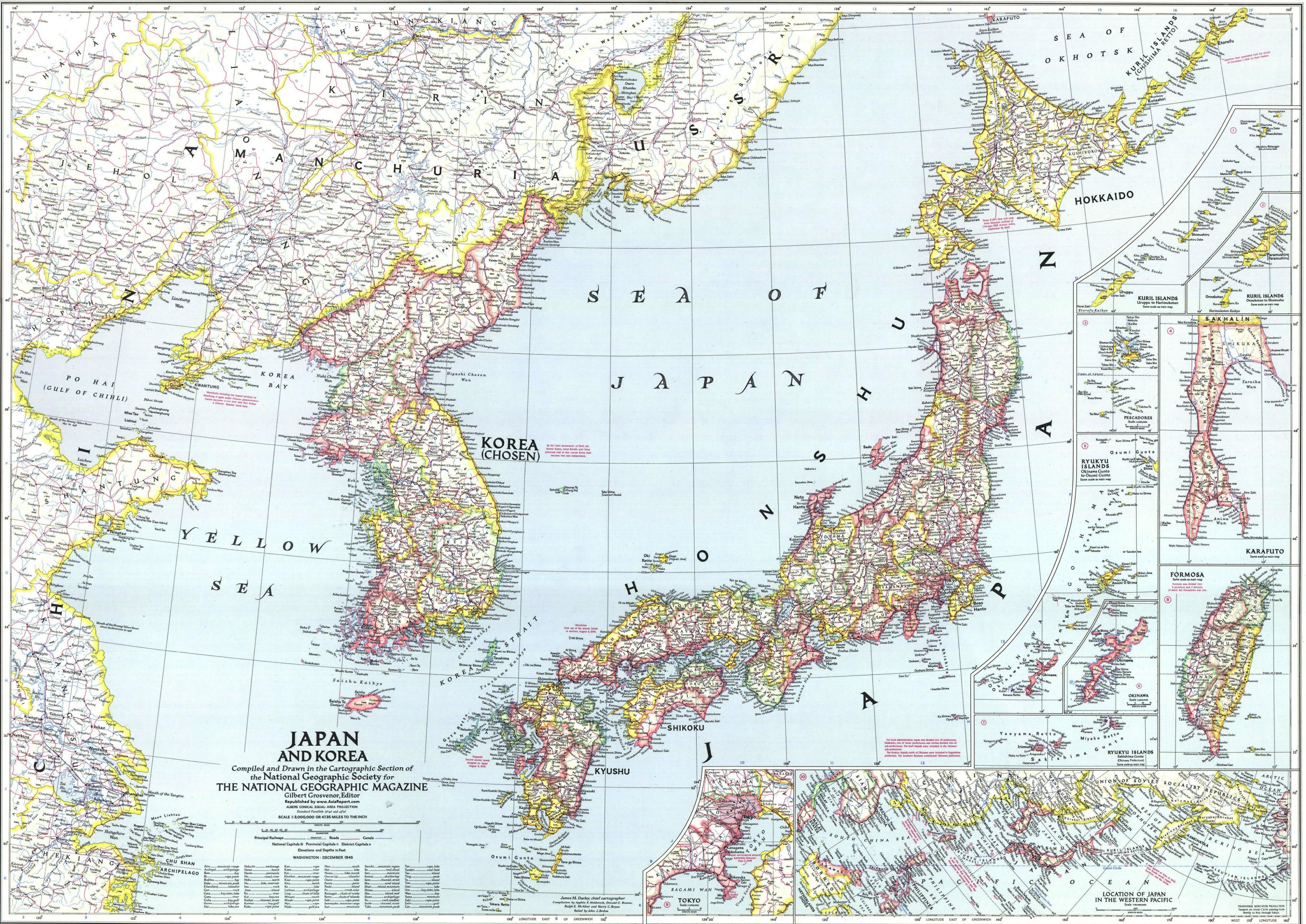
- ^ Grosvenor, Gilbert, ed. (December 1945). Japan and Korea (JPG) (Map). 1:3,000,000. Cartography by Cartographic Section, National Geographic Society. Washington: National Geographic.
- ^ "ASN Aircraft accident Lockheed EC-121M Super Constellation 135749 Chongjin". aviation-safety.net. Retrieved 31 August 2023.
- ^ a b Good Friends, “North Korea Today,” No. 113 (Mar. 14, 2008)
- ^ North Korean leader Kim Jong Un condemns warship accident as 'criminal'. Jack Kim and John Smith. Reuters. May 22, 2025.
- ^ North Korea Makes Arrests Over Failed Ship Launch That Angered Kim Jong-un. The New York Times. Choe Sang-Hun. May 25, 2025.
- ^ Failed Launch and Damage of the Second Guided Missile Destroyer. Joseph S. Bermudez Jr., Victor Cha and Jennifer Jun. May 22, 2025.
- ^ 행정구역 개편 일지. The Chosun Ilbo (in Korean). 5 April 2006. Archived from the original on 2 November 2006. Retrieved 2 November 2006.
- ^ "Chongjin". Encyclopaeida Britannica. Retrieved 8 December 2012.
- ^ "30 years report of Meteorological Observations in North Korea (1991 ~ 2020)" (PDF) (in Korean). Korea Meteorological Administration. pp. 201, 267, and 343. Archived (PDF) from the original on 29 January 2022. Retrieved 20 March 2022.
- ^ Климат Чхонджин (in Russian). Weather and Climate (Погода и климат). Archived from the original on 29 October 2021. Retrieved 28 October 2021.
- ^ a b Smith, Hazel (2009).North Korean Shipping: A Potential for WMD Proliferation?, Asia Pacific Issues. No. 87. Retrieved 28 December 2010.
- ^ Kim, Jieun (9 June 2017). "North Korea Party Officials Monopolize Local Market Stands". Radio Free Asia.
The source referred to thriving Sunam Market in North Hamgyong's capital Chongjin—North Korea's third-largest city—where profits from running a stand can generate profits "as high as those earned by foreign currency-generating organizations."
- ^ Demick, Barbara. "Deprivation Spurs Change in N. Korea". The Seoul Times. Retrieved 21 May 2020.
- ^ 북한지역정보넷. www.cybernk.net. Retrieved 2 February 2021.
- ^ "Chongjin, Tramway — Roster". transphoto.org. Retrieved 2 February 2021.
- ^ "Rodong Sinmun". Archived from the original on 16 April 2020.
- ^ "Introduction to Korean History and Culture 2017 – Lecture 11 – North Korea" (PDF). p. 9. Retrieved 17 September 2021.
- ^ "Camp 22 Disbanded on Defection Fear". DailyNK. 28 September 2012. Retrieved 17 September 2021.
- ^ "Pyongyang's Perpetual Power Problems". 38 North. 25 November 2014. Retrieved 17 September 2021.
- ^ Demick, Barbara (2010). Nothing to Envy: Real Lives in North Korea. ISBN 9781847081414.
- ^ "North Hamgyong Provincial E-Business Institute Newly Built". Korean Central News Agency. 10 November 2022. Retrieved 11 November 2022.
- ^ "KINU White paper on human rights in North Korea 2009" (PDF). p. 125.
- ^ "North Korea Infrastructure (Ports)". Asia Trade Hub. Archived from the original on 29 March 2016.
- ^ "Wonsan". transphoto.org.
- ^ "Photo: Chongjin — Maps". transphoto.org. Retrieved 5 October 2020.
- ^ "Chongjin". transphoto.org. Retrieved 5 October 2020.
- ^ "Chongjin(D.P.R.K.)". Changchun Municipal People's Government. Archived from the original on 25 September 2018. Retrieved 22 October 2017.
- ^ "Chongjin(D.P.R.K.)". People's Government of Jilin. 12 April 2011. Archived from the original on 23 October 2017. Retrieved 22 October 2017.
Further reading
[edit]- Dormels, Rainer. North Korea's Cities: Industrial facilities, internal structures and typification. Jimoondang, 2014. ISBN 978-89-6297-167-5
External links
[edit] Media related to Chongjin at Wikimedia Commons
 Chongjin travel guide from Wikivoyage
- City profile of Chongjin


Chongjin
View on GrokipediaHistory
Origins and Pre-Modern Period
The region of modern Chongjin formed part of the expansive territory controlled by the Goguryeo kingdom from its founding in 37 BCE until its conquest in 668 CE, encompassing northeastern Korean lands amid conflicts with Chinese dynasties and neighboring states.[7] Following Goguryeo's collapse, the area transitioned under Balhae, a multi-ethnic kingdom established in 698 CE by Dae Joyeong, a Goguryeo general of Malgal descent, which integrated former Goguryeo territories in northern Korea and adjacent Manchuria until its destruction by Khitan forces in 926 CE.[8] Subsequent control shifted to the Goryeo dynasty (918–1392), which consolidated the peninsula after repelling Khitan and Jurchen incursions, before passing to the Joseon dynasty (1392–1910), during which the northeastern frontier saw limited Han Chinese influence but persistent local tribal interactions.[7] Within Joseon administration, the Chongjin site emerged as an unremarkable fishing village subordinate to Puryŏng County in Hamgyong Province, reliant on coastal resources for subsistence without documented founding date or significant infrastructure.[9] Historical accounts describe it as a modest coastal hamlet focused on seasonal fishing and rudimentary trade, emblematic of peripheral settlements in Joseon's hierarchical yangban-dominated system, where northern provinces like Hamgyong prioritized military garrisons over urban growth due to strategic border vulnerabilities. No major archaeological excavations attribute prominent pre-Joseon relics directly to the village itself, underscoring its obscurity relative to inland fortress sites in the broader North Hamgyong area.[10] The toponym "Chongjin," rendered in Hanja as 清津, translates to "clear ford" or "pure stream," alluding to local waterways facilitating minor maritime access.[11]Japanese Colonial Era
Prior to formal Japanese annexation in 1910, Chongjin functioned primarily as a small fishing village, but the port was opened to international trade in 1908 to support Japanese naval operations and commerce, leveraging its ice-free harbor near the borders with Russia and China.[12] Under colonial rule, the city, renamed Seishin, underwent rapid modernization as part of Japan's broader infrastructural push in Korea, including the extension of the east coast railway line to facilitate resource extraction and military logistics.[13] This development positioned Seishin as a key node in Japan's imperial supply chain, with construction emphasizing ports, roads, and rail to export minerals and import materials for wartime production.[14] Industrialization accelerated in the 1930s, driven by Japan's escalating demands for steel and cement amid expansion into Manchuria and preparation for war. In 1930, Nippon Steel established the Seishin Iron and Steel Works, capitalizing on local iron ore deposits and proximity to coal fields, while cement facilities in the area produced approximately 20% of Japan's total output by World War II, supported by integrated electronics and heavy industry complexes.[15] Seishin was designated one of five "model cities" in colonial Korea, featuring fortified defenses with around 4,000 troops and coastal artillery to protect strategic assets.[15] Administrative structures included the North Hamgyong Provincial Office, and cultural impositions such as the Ranam Shinto Shrine symbolized Japanese efforts to inculcate imperial loyalty among the populace. By 1940, the nearby Ranam district, known for its industrial output, was annexed to Seishin, elevating the city's status and concentrating production for the empire's military needs, though much of the labor relied on conscripted Korean workers under harsh conditions typical of colonial extraction policies.[16] These developments laid the foundation for Chongjin's postwar industrial base but primarily served Japanese strategic interests, with limited benefits accruing to the local Korean population beyond coerced employment.[17]Division and Korean War Impact
Following the Japanese surrender on August 15, 1945, Soviet forces conducted amphibious landings at Chongjin as part of Operation August Storm against Japanese-held territories in northern Korea, capturing the port and surrounding areas from Imperial Japanese Army units.[18] By August 16, 1945, Soviet troops had secured the city, with Japanese losses exceeding 3,000 primarily as prisoners, marking the transition from Japanese colonial control to Soviet military occupation in the region north of the 38th parallel.[19] This occupation, which extended until 1948, involved Soviet administrators overseeing the dismantling of Japanese industrial assets for repatriation to the USSR while establishing provisional people's committees to install communist-leaning local governance structures, including in Chongjin, where pre-existing heavy industries like steel production were repurposed for the emerging northern Korean economy.[18] The city's strategic northeastern position facilitated Soviet supply lines and political influence, contributing to the formal division of Korea and the proclamation of the Democratic People's Republic of Korea on September 9, 1948, under Kim Il-sung's leadership. During the Korean War, initiated by North Korean forces crossing the 38th parallel on June 25, 1950, Chongjin served as a critical rear-area hub for industrial output, port logistics, and troop reinforcements near the Chinese border, prompting intensive targeting by United Nations Command air and naval forces to degrade North Korea's war-sustaining capacity.[20] In October 1950, the battleship USS Missouri conducted shore bombardment of Chongjin to neutralize enemy communications infrastructure, part of broader efforts amid the UN advance toward the Yalu River.[21] Subsequent strategic bombing campaigns devastated the city's ironworks, port facilities, and rail links; for instance, on April 13, 1952, U.S. carrier-based aircraft executed close air support and interdiction strikes on Chongjin targets, while B-29 Superfortress raids, including one involving 63 bombers dropping over 50 tons of ordnance on industrial zones, repeatedly hammered production centers.[22] These operations contributed to Chongjin's inclusion among North Korea's major cities suffering near-total urban destruction, with much of its pre-war industrial infrastructure—built during the Japanese era—reduced to rubble, exacerbating civilian hardships through firebombing and supply disruptions in a conflict that overall saw 635,000 tons of bombs dropped on the North, including 32,500 tons of napalm.[23] The war's impact on Chongjin included massive civilian displacement and economic paralysis, as the city's role in steel and munitions production made it a priority for interdiction, leaving lasting unexploded ordnance hazards that persisted for decades, with North Korean demining efforts ongoing into the 2010s and claiming lives among workers.[24] Armistice negotiations concluded on July 27, 1953, without altering Chongjin's position in North Korean territory, but the devastation underscored the city's vulnerability as an isolated northeastern stronghold, setting the stage for protracted reconstruction under centralized state planning.[20]Post-War Industrialization
Following the Korean War armistice in July 1953, Chongjin underwent intensive reconstruction as part of North Korea's Three-Year Plan (1954–1956), which aimed to restore war-damaged infrastructure to pre-war levels with substantial Soviet and Chinese aid. The city's industrial base, particularly its steel facilities originally developed under Japanese rule, had suffered heavy bombing; North Korean official claims, echoed in declassified analyses, indicated that up to 78% of the nation's industrial capacity was destroyed nationwide, with Chongjin among the hardest-hit northern ports. Priority was given to the metallurgical sector, leveraging proximity to the Musan iron ore mine; the Chongjin steel plant was targeted for restoration by 1956, with plans to produce 180,000 tons of pig iron annually from 400,000 tons of local ore, marking an early focus on self-reliant heavy industry despite reliance on imported coking coal.[25] The First Five-Year Plan (1957–1961) accelerated Chongjin's role as a cornerstone of North Korea's heavy industry push, emphasizing steel, machinery, and chemicals to support military and economic goals under Kim Il Sung's direction. The Kim Chaek Iron and Steel Works—renamed post-war and rebuilt from its Japanese-era foundations—was expanded with technical assistance from Eastern Bloc countries, including equipment and expertise from Czechoslovakia, Poland, and Romania, enabling initial ramp-up in pig iron and rolled steel output. By the late 1950s, the facility contributed to national steel production surges, with 1958 expansions at the Chongjin mill facilitating output in the tens of thousands of tons, though actual yields often fell short of propagandistic targets due to material shortages and technical limitations, as noted in contemporary economic assessments skeptical of regime-reported figures.[26][27] Through the 1960s and 1970s, Chongjin's industrialization deepened with further investments in integrated steelmaking, port upgrades for ore and coal handling, and ancillary industries like shipbuilding and chemicals, positioning it as the regime's primary northeastern industrial node. Theoretical capacity at Kim Chaek reached ambitions of 6.2 million tons by the 1970s, though operational constraints—such as energy inefficiencies and dependence on foreign inputs—limited realization, with independent analyses highlighting overstatement in state media versus verifiable satellite and defector-derived data. This era solidified Chongjin's economic centrality, employing tens of thousands in state-run complexes, but sowed seeds of later stagnation amid rigid central planning and isolation from global markets.[4]Economic Crises and Famine
The economic downturn in Chongjin accelerated after the dissolution of the Soviet Union in 1991, which ended subsidized imports of oil, fertilizers, and machinery critical to the city's heavy industries. Chongjin's Kim Chaek Iron and Steel Works and other factories, reliant on central planning and external inputs, faced acute shortages, leading to widespread shutdowns by the mid-1990s as coal supplies dwindled and electricity became intermittent. Workers, stripped of rations through the failing Public Distribution System (PDS), abandoned posts to forage in rural areas, exacerbating industrial collapse in this northeastern hub distant from agricultural centers.[28][29] Compounding these structural failures, severe floods in 1995 and droughts in 1996-1997 devastated national grain production, but Chongjin's urban population, lacking access to private farming, suffered disproportionately as PDS deliveries ceased entirely by 1994-1995. The ensuing famine, termed the Arduous March by the regime, peaked from 1995 to 1998, with residents resorting to foraging wild plants, tree bark, and rice roots—substitutes that caused digestive blockages and further fatalities. In North Hamgyong Province, encompassing Chongjin, refugee surveys estimated that 12% of the population, or approximately 245,000 people, perished from starvation and related diseases between 1995 and 1997 alone, with industrial workers and families in cities like Chongjin facing higher vulnerability due to prior malnutrition from factory ration cuts.[30][31][32] Death patterns in Chongjin followed a grim sequence: children and the elderly succumbed first to kwashiorkor and edema, followed by adult men requiring higher caloric intake for labor; survivors reported bloated corpses and listless victims collapsing in streets. Testimonies from defectors describe mining communities near Chongjin losing up to half their workforce, with families concealing deaths to avoid scrutiny. The regime initially denied the crisis, banning terms like "famine" and mobilizing military resources over civilian aid, though it later accepted limited international food assistance in 1995-1996, which reached urban areas unevenly. Economic output in Chongjin's sectors plummeted, with GDP contraction nationwide exceeding 30% by 1998, but local recovery stalled into the early 2000s amid persistent fuel shortages.[32][33][28]Post-2000 Developments
In the aftermath of the 1990s famine, Chongjin's economy began a tentative recovery in the early 2000s, facilitated by the proliferation of informal jangmadang markets that filled gaps left by the collapsing state distribution system. The Sunam Market, the largest in North Korea at 23,557 square meters, emerged as a key hub for trading Chinese imports, leveraging the city's proximity to the border approximately 50 miles away, which provided access to consumer goods and mitigated some shortages.[34][9] This marketization, originating in peripheral regions like North Hamgyong Province, represented a de facto shift toward private enterprise, with annual revenues estimated in the hundreds of thousands of USD and contributing to stabilized food availability despite ongoing state controls.[35] Industrial output persisted at major facilities, including the Kim Chaek Iron and Steel Complex, North Korea's largest steel producer, though hampered by chronic resource shortages and outdated infrastructure.[2] The Chongjin Railway Factory maintained railcar manufacturing and repairs, supporting national transport needs and accounting for a portion of the city's trade-oriented economy, with the port handling 24.2% of the country's imports and exports by volume.[36] A 2012 agreement aimed to modernize port piers for up to 7 million tons of annual cargo capacity through co-management arrangements, though implementation details remain limited amid international sanctions.[37] Under Kim Jong-un's leadership, Chongjin saw increased attention for military-industrial projects. In November 2018, Kim inspected shipyards and ordered mass production of high-speed torpedo boats equipped for coastal defense.[38] Shipbuilding activities intensified, with satellite imagery revealing new construction at the port and shipyard in 2025 to expand facilities beyond traditional fishing roles.[39] A notable setback occurred in May 2025 during the sideways launch of a 5,000-ton destroyer, which capsized and grounded at a pier; state media reported subsequent salvage and repair efforts, highlighting ongoing naval ambitions despite technical challenges.[40][41] New residential and infrastructure builds have appeared since the mid-2010s, signaling modest urban renewal, though the city remains marked by decay in non-market sectors and dependence on cross-border trade with China.[42] Overall GDP contributions from Chongjin's industries reflect partial adaptation to market dynamics, but systemic inefficiencies and isolation continue to constrain growth.[2]Geography
Location and Physical Features
Chongjin serves as the capital of North Hamgyong Province in the northeastern Democratic People's Republic of Korea (DPRK). The city is positioned at coordinates 41.79556°N 129.77583°E, placing it approximately 250 kilometers northeast of the DPRK's capital, Pyongyang, and near the border with Russia to the north and China to the west across the Tumen River estuary.[43][44] As a coastal port city, Chongjin fronts the Sea of Japan, featuring a natural harbor that facilitates maritime trade and industrial operations. The port infrastructure divides into specialized areas: one for exporting coal and iron ore, and another for handling general cargo and bulk imports.[45] The urban core sits at near sea level, with an elevation of roughly 5 meters, while the broader municipal area encompasses varied terrain rising to an average of 380 meters inland due to the province's rugged topography.[46][47] The surrounding landscape reflects North Korea's predominantly mountainous character, with over 80% of the country's terrain consisting of steep hills and peaks that constrain urban expansion and influence local climate patterns. Chongjin's site combines flat coastal plains suitable for port development with adjacent uplands that support mining activities but limit arable land.[48]Climate and Environmental Conditions
Chongjin experiences a humid continental climate classified as Dwb under the Köppen system, featuring cold, dry winters influenced by Siberian air masses and warm, humid summers moderated by its coastal position on the Sea of Japan.[49][50] Average annual temperatures hover around 9.5°C, with January lows reaching -9.98°C and highs averaging -3°C, while August, the warmest month, sees averages of 24.9°C.[51] Winters bring frequent snow and wind, with snowfall accumulating up to 20-30 cm in heavier events, though total annual precipitation measures approximately 950-1,000 mm, concentrated in the summer monsoon season from June to September.[52][49] Precipitation peaks in August at about 100 mm, often delivered via typhoons or heavy rains that can cause localized flooding, exacerbated by the region's steep terrain and inadequate infrastructure.[49] The city's eastern seaboard location exposes it to occasional sea fog and higher humidity levels year-round, averaging 70-80% in summer, while spring and autumn transitions are relatively mild but prone to variable winds.[53] Environmental conditions in Chongjin are severely degraded by decades of heavy industrialization, with state-run steel mills, chemical plants, and fertilizer factories emitting pollutants into the air and discharging untreated wastewater into local streams and the Sea of Japan.[54] Air quality frequently deteriorates to unhealthy levels due to sulfur dioxide and particulate matter from coal-fired operations, contributing to respiratory issues among residents, though systematic monitoring data remains scarce.[55] Water contamination from industrial effluents has led to persistent pollution in rivers feeding into the port area, compounding broader North Korean issues like soil erosion from deforestation and upstream mining activities.[56] These factors, unmitigated by effective regulatory enforcement, heighten vulnerability to environmental hazards, including seasonal floods that mobilize contaminants.[57]| Month | Avg. High (°C) | Avg. Low (°C) | Precipitation (mm) |
|---|---|---|---|
| Jan | -3 | -10 | 10 |
| Apr | 10 | 2 | 40 |
| Jul | 23 | 19 | 200 |
| Oct | 15 | 8 | 50 |
| Annual | 13 | 5 | 950 |
Demographics
Population Trends
The urban agglomeration population of Chongjin was estimated at 158,000 in 1950, reflecting its status as a modest port city prior to the Korean War.[58] Post-war reconstruction and state-directed industrialization in the 1950s and 1960s drove rapid expansion, as the city became a hub for metallurgical and chemical production, attracting migrant labor from rural areas and contributing to North Korea's emphasis on heavy industry. By the late 1980s, estimates placed the population above 500,000, supported by urban policies that prioritized worker relocation to key industrial zones.[58] The 1990s Arduous March famine severely disrupted demographics, with Chongjin's dense urban population—lacking access to subsistence farming—becoming wholly dependent on the collapsed public distribution system, resulting in elevated mortality from starvation and related diseases.[28] Northeast regions like North Hamgyong Province, including Chongjin, reported some of the highest excess death rates, compounded by flooding and policy decisions that limited aid flows to peripheral areas. Aggregate national population estimates suggest a temporary stagnation or net decline during 1994–1998, with famine-related deaths equating to 1–10% of North Korea's total populace, though precise figures for Chongjin remain unavailable due to data opacity.[59] North Korea's 2008 census recorded Chongjin's population at 614,892, indicating recovery through modest natural increase and possible internal migration, despite ongoing economic isolation.[60] United Nations projections, drawing from urbanization models, estimate the metro area at 657,000 in 2024, with annual growth of about 0.6–0.7% in recent decades—slower than earlier periods and reflective of broader fertility declines, emigration pressures, and limited urban expansion under centralized planning.[58] These figures, while the most systematic available, rely on extrapolations from sparse official data and satellite observations, underscoring challenges in verifying trends amid restricted access to independent demographic surveys.| Year | Estimated Population (Urban Agglomeration) | Annual Growth Rate |
|---|---|---|
| 1950 | 158,000 | - |
| 2008 | 614,892 | ~1.0% (avg. 1950–2008) |
| 2024 | 657,000 | 0.61% |
| 2025 | 661,766 | 0.71% |