


Community hub
Recent from talks
Contribute something
Nothing was collected or created yet.
Rapeseed oil
View on Wikipedia
Rapeseed oil is one of the oldest known vegetable oils. There are both edible and industrial forms produced from rapeseed, the seed of several cultivars of the plant family Brassicaceae (mustards). The term "rapeseed" applies to oilseeds from the species Brassica napus and Brassica rapa, while the term canola refers to specific rapeseed varieties bred to produce oil for use in human and animal foods.[1] In manufacturing, the edible varieties of canola are required to contain less than 2% erucic acid in Canada, the United States, European Union, and many other countries.[1][2][3]
Canola is produced as low erucic acid rapeseed (LEAR) oil and is generally recognized as safe (GRAS) by the United States Food and Drug Administration (FDA).[2][4]
In commerce, non-food varieties are typically called colza oil.[5] In 2022, Canada, Germany, China, and India were the leading producers of rapeseed oil, accounting together for 41% of the world total.
History
[edit]The name for rapeseed comes from the Latin word rapum meaning turnip. Turnip, rutabaga (swede), cabbage, Brussels sprouts, and mustard are related to rapeseed. Rapeseed belongs to the genus Brassica. Brassica oilseed varieties are some of the oldest plants cultivated, with documentation of its use tracing back to India from 4,000 years ago, and use in China and Japan 2,000 years ago.[6]: 55 Its use in Northern Europe for oil lamps is documented to have started in the 13th century.[6] Rapeseed oil extracts were first put on the market in 1956–1957 as food products, but these had several unacceptable properties. That form of rapeseed oil had a distinctive taste and a greenish colour due to the presence of chlorophyll, and still contained a higher concentration of erucic acid.[7]

.jpg)
Canola was bred from rapeseed cultivars of B. napus and B. rapa at the University of Manitoba in the early 1970s.[8][9] Its nutritional profile was then different from present-day oil, as well as containing much less[more?] erucic acid.[10] This work was performed at the National Research Council of Canada laboratories in Saskatoon using gas liquid chromatography.[11] Canola was originally a trademark name of the Rapeseed Association of Canada; the name is a portmanteau of "can" from Canada and "ola" from "oil".[12][13] Canola is now a generic term for edible varieties of rapeseed oil in North America and Australasia;[14] the change in name also serves to distinguish it from natural rapeseed oil, which has much higher erucic acid content.[15]
A genetically engineered rapeseed that is tolerant to the herbicide Roundup (glyphosate) was first introduced to Canada in 1995 (Roundup Ready). A genetically modified variety developed in 1998 is considered to be the most disease- and drought-resistant canola variety to date. In 2009, 90% of the Canadian crop was herbicide-tolerant.[16] In 2005, 87% of the canola grown in the US was genetically modified.[17] In 2011, out of the 31 million hectares of canola grown worldwide, 8.2 million (26%) were genetically modified.[18]
A 2010 study conducted in North Dakota found glyphosate- or glufosinate-resistance transgenes in 80% of wild natural rapeseed plants, and a few plants that were resistant to both herbicides. This may reduce the effectiveness of the herbicide tolerance trait for weed control over time, as the weed species could also become tolerant to the herbicide. However, one of the researchers agrees that "feral populations could have become established after trucks carrying cultivated GM seeds spilled some of their load during transportation". She also notes that the GM canola results they found may have been biased as they only sampled along roadsides.[19]
Genetically modified canola attracts a price penalty compared to non-GM canola; in Western Australia, it is estimated to be 7.2% on average.[20]
Production
[edit] Canada Canada |
3.7 |
 Germany Germany |
3.7 |
 China China |
3.6 |
 India India |
3.4 |
 France France |
1.8 |
 Poland Poland |
1.4 |
| World | 26.7 |
| Source: FAOSTAT of the United Nations[21] | |
In 2022, world production of rapeseed oil was 27 million tonnes, led by Canada, Germany, China, and India as the largest producers, accounting for 41% of the total when combined (table).
Production process
[edit]Canola oil is made at a processing facility by slightly heating and then crushing the seed.[22] Almost all commercial canola oil is then extracted using hexane solvent,[23] which is recovered at the end of processing. Finally, the canola oil is refined using water precipitation and organic acid to remove gums and free fatty acids, filtering to remove color, and deodorizing using steam distillation.[22] Sometimes the oil is also bleached for a lighter color.[24] The average density of canola oil is 0.92 g/ml (7.7 lb/US gal; 9.2 lb/imp gal).[25]
Cold-pressed and expeller-pressed canola oil are also produced on a more limited basis. About 44% of a seed is oil, with the remainder as a canola meal used for animal feed.[22] About 23 kg (51 lb) of canola seed makes 10 L (2.64 US gal) of canola oil. Canola oil is a key ingredient in many foods. Its reputation as a healthful oil has created high demand in markets around the world,[26] and overall it is the third-most widely consumed vegetable oil, after soybean oil and palm oil.[27]
The oil has many non-food uses and, like soybean oil, is often used interchangeably with non-renewable petroleum-based oils in products,[26] including industrial lubricants, biodiesel, candles, lipsticks, and newspaper inks.[citation needed]
Canola vegetable oils certified as organic are required to be from non-GMO rapeseed.[28]
Nutrition and health
[edit]| Nutritional value per 100 g | |||||||||||||||||||||||||||||||||||||||||||||||||||||
|---|---|---|---|---|---|---|---|---|---|---|---|---|---|---|---|---|---|---|---|---|---|---|---|---|---|---|---|---|---|---|---|---|---|---|---|---|---|---|---|---|---|---|---|---|---|---|---|---|---|---|---|---|---|
| Energy | 3,700 kJ (880 kcal) | ||||||||||||||||||||||||||||||||||||||||||||||||||||
0 g | |||||||||||||||||||||||||||||||||||||||||||||||||||||
| Starch | 0 g | ||||||||||||||||||||||||||||||||||||||||||||||||||||
| Sugars | 0 g | ||||||||||||||||||||||||||||||||||||||||||||||||||||
| Dietary fiber | 0 g | ||||||||||||||||||||||||||||||||||||||||||||||||||||
100 g | |||||||||||||||||||||||||||||||||||||||||||||||||||||
| Saturated | 7.4 g | ||||||||||||||||||||||||||||||||||||||||||||||||||||
| Trans | 0.4 g | ||||||||||||||||||||||||||||||||||||||||||||||||||||
| Monounsaturated | 63.3 g | ||||||||||||||||||||||||||||||||||||||||||||||||||||
| Polyunsaturated | 28.1 g 9.1 g 18.6 g | ||||||||||||||||||||||||||||||||||||||||||||||||||||
0 g | |||||||||||||||||||||||||||||||||||||||||||||||||||||
| |||||||||||||||||||||||||||||||||||||||||||||||||||||
| Other constituents | Quantity | ||||||||||||||||||||||||||||||||||||||||||||||||||||
| Water | 0 g | ||||||||||||||||||||||||||||||||||||||||||||||||||||
| †Percentages estimated using US recommendations for adults,[29] except for potassium, which is estimated based on expert recommendation from the National Academies.[30] | |||||||||||||||||||||||||||||||||||||||||||||||||||||
Nutritional content
[edit]Canola oil is 100% fat, composed of 63% monounsaturated fat, 28% polyunsaturated fat, and 7% saturated fat (table). The ratio of linoleic acid (an omega-6 fatty acid) to alpha-linolenic acid (an omega-3 fatty acid) is 2:1 (table). A 100 g (3.5 oz) reference amount of canola oil provides 880 calories of food energy and is a rich source of vitamin E (117% of the Daily Value, DV) and vitamin K (59% DV) (table).
Health research
[edit]Reviews indicate that consumption of canola oil can reduce blood levels of cholesterol and low-density lipoprotein (LDL) – two risk factors for cardiovascular diseases – and may help reduce body weight.[31][32][33][34]
In 2006, canola oil was given a qualified health claim by the United States Food and Drug Administration for lowering the risk of coronary heart disease, resulting from its significant content of unsaturated fats; the allowed claim for food labels states:[35]
"Limited and not conclusive scientific evidence suggests that eating about 1 1⁄2 tablespoons (19 grams) of canola oil daily may reduce the risk of coronary heart disease due to the unsaturated fat content in canola oil. To achieve this possible benefit, canola oil is to replace a similar amount of saturated fat and not increase the total number of calories you eat in a day. One serving of this product contains [x] grams of canola oil."
Erucic acid
[edit]| Compound | Family | % of total |
|---|---|---|
| Oleic acid | ω-9 | 61%[36] |
| Linoleic acid | ω-6 | 21%[36] |
| Alpha-linolenic acid | ω-3 | 11%[36] 9%[37][38] |
| Saturated fatty acids | 7%[36] | |
| Palmitic acid | 4%[37] | |
| Stearic acid | 2%[37] | |
| Trans fat | 0.4%[39] | |
| Erucic acid | 0.01%[40] <0.1%[41][42] |
Although wild rapeseed oil contains significant amounts of erucic acid,[43] the cultivars used to produce commercial, food-grade canola oil were bred to contain less than 2% erucic acid,[2] an amount deemed not significant as a health risk. The low-erucic trait was due to two mutations changing the activity of LEA1 and KCS17.[44][45]
The erucic acid content in canola oil has been reduced over the years. In western Canada, a reduction occurred from the average content of 0.5% between 1987 and 1996[46] to a current content of 0.01% from 2008 to 2015.[40] Other reports also show a content lower than 0.1% in Australia[41] and Brazil.[42]
To date, no health effects have been associated with dietary consumption of erucic acid by humans; but tests of erucic acid metabolism in other species imply that higher levels may be detrimental.[47][48] Canola oil produced using genetically modified plants has also not been shown to explicitly produce adverse effects.[49]
Canola oil is generally recognized as safe.[2]
Glucosinolates
[edit]Another chemical change in canola is the reduction of glucosinolates.[44] As the oil is extracted, most of the glucosinolates are concentrated into the seed meal, an otherwise rich source of protein. Livestock have varying levels of tolerance to glucosinolates intake, with some being poisoned relatively easily.[50][51] A small amount of glucosinolates also enters the oil, imparting a pungent odor.[52]
Further reduction of glucosinolate levels remains important for the use of rapeseed meal in animal feed.[53][54]
It is not completely clear which genetic changes from plant breeding resulted in the current reduction in this group of chemicals.[44]
Comparison of fats and smoke points among vegetable oils
| ||||||||||||||||||||||||||||||||||||||||||||||||||||||||||||||||||||||||||||||||||||||||||||||||||||||||||||||||||||||||||||||||||||||||||||||||||||||||||||||||||||||||||||||||||||||||||||||||||||||||||||||||||||||||||||||||||
|---|---|---|---|---|---|---|---|---|---|---|---|---|---|---|---|---|---|---|---|---|---|---|---|---|---|---|---|---|---|---|---|---|---|---|---|---|---|---|---|---|---|---|---|---|---|---|---|---|---|---|---|---|---|---|---|---|---|---|---|---|---|---|---|---|---|---|---|---|---|---|---|---|---|---|---|---|---|---|---|---|---|---|---|---|---|---|---|---|---|---|---|---|---|---|---|---|---|---|---|---|---|---|---|---|---|---|---|---|---|---|---|---|---|---|---|---|---|---|---|---|---|---|---|---|---|---|---|---|---|---|---|---|---|---|---|---|---|---|---|---|---|---|---|---|---|---|---|---|---|---|---|---|---|---|---|---|---|---|---|---|---|---|---|---|---|---|---|---|---|---|---|---|---|---|---|---|---|---|---|---|---|---|---|---|---|---|---|---|---|---|---|---|---|---|---|---|---|---|---|---|---|---|---|---|---|---|---|---|---|---|---|---|---|---|---|---|---|---|---|---|---|---|---|---|---|---|
Comparison to other vegetable oils[edit]
| ||||||||||||||||||||||||||||||||||||||||||||||||||||||||||||||||||||||||||||||||||||||||||||||||||||||||||||||||||||||||||||||||||||||||||||||||||||||||||||||||||||||||||||||||||||||||||||||||||||||||||||||||||||||||||||||||||
Uses
[edit]B. napus is the source for canola as a high quality vegetable oil for human food products, and as a high-protein pomace to feed fish and farm animals.[1] Canola oil is favored for its culinary qualities, and is used widely as a salad oil, for shortening, margarine, in deep frying, baking, sandwich spreads, and non-dairy creamers.[1]
Apart from its use for human consumption, rapeseed oil is extensively used as a lubricant for machinery, in cosmetics, printing inks, fabrics, plastic products, and pesticides.[1] It was widely used in European domestic lighting before the advent of coal (city) gas or kerosene. It was the preferred oil for train pot lamps, and was used for lighting railway coaches in the United Kingdom before gas lighting, and later electric lighting, were adopted. Burned in a Carcel lamp, it was part of the definition of the French standard measure for illumination, the carcel, for most of the nineteenth century. In lighthouses, such as in early Canada, rapeseed oil was used before the introduction of mineral oil. Rapeseed oil was used with the Argand burner because it was cheaper than whale oil.[84] Rapeseed oil was burned to a limited extent in the Confederacy during the American Civil War.[85]
Biodiesel
[edit]Rapeseed oil is used as diesel fuel, either as biodiesel, straight in heated fuel systems, or blended with petroleum distillates for powering motor vehicles.[1] Biodiesel may be used in pure form in newer engines without engine damage and is frequently combined with fossil-fuel diesel in ratios varying from 2% to 20% biodiesel.
Rapeseed oil is the preferred oil stock for biodiesel production in Europe, Canada, and the United States, partly because rapeseed produces more oil per unit of land area compared to other oil sources, such as soybeans, but primarily because canola oil has a carbon footprint substantially lower than conventional diesel fuel.[86]
Other edible rapeseed oils
[edit]Some less-processed versions of rapeseed oil are used for flavor in some countries. Chinese rapeseed oil was originally extracted from the field mustard. In the 19th century, rapeseed (B. rapa) was introduced by European traders, and local farmers crossed the new plant with field mustard to produce semi-winter rapeseed.[87] Their erucic acid content was reduced to modern "canola" levels by breeding with Canadian low-erucic acid cultivar "ORO".[45][88] Chinese rapeseed oil has a distinctive taste and a greenish colour due to the different processing method: seeds are roasted and expeller-pressed to obtain the oil. A centrifuge is used to remove solids, followed by a heating step. The resultant oil is heat-stable and fundamental to Sichuan cuisine.
In India, mustard oil is used in cooking.[89] In the United Kingdom and Ireland, some chefs use a "cabbagey"-tasting rapeseed oil processed by cold-pressing.[90] This cold process means that the oil has a low smoke point, and is therefore unsuitable for frying in Sichuan cuisine, for example.[91]
Spanish rapeseed poisoning outbreak
[edit]In 1981, there was an oil poisoning outbreak, later known as toxic oil syndrome that was attributed to people consuming what they thought was olive oil but turned out to be rapeseed oil that had been denatured with 2% aniline (phenylamine). The substance was intended for industrial use but had been illegally refined in an attempt to remove the aniline.[92] It was then fraudulently sold as olive oil, mainly in street markets, mostly in the Madrid area.[93][94]
Gallery
[edit]-
 Close-up of canola blooms
 -
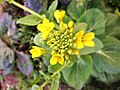 Canola flower


See also
[edit]
- Botanol, a flooring material derived from canola oil
- List of canola diseases
- Triangle of U
Notes
[edit]References
[edit]- ^ a b c d e f "The Biology of Brassica napus L. (Canola/Rapeseed)". Plant and Biotechnology Risk Assessment Unit Plant Health Science Division, Canadian Food Inspection Agency, Government of Canada. 22 December 2017. Retrieved 18 September 2025.
- ^ a b c d "21 CFR 184.1555 "Rapeseed oil"". US Food and Drug Administration. 1 April 2010. Retrieved 19 April 2020. (ecfr.gov version)
- ^ Corrigendum to Commission Regulation (EC) No 2019/1870 of 7 November 2019 amending and correcting Regulation (EC) No 1881/2006 as regards maximum levels of erucic acid and hydrocyanic acid in certain foodstuffs
- ^ "Rapeseed oil, Low erucic acid". US Food and Drug Administration. 13 February 2025. Retrieved 18 September 2025.
- ^ Velíšek J (2013). The Chemistry of Food. Wiley. p. 102. ISBN 978-1-118-38383-4.
- ^ a b Snowdon R, Lühs W, Friedt W (2007). "Oilseed Rape". Oilseeds. Genome Mapping and Molecular Breeding in Plants. Vol. 2. pp. 55–114. doi:10.1007/978-3-540-34388-2_2. ISBN 978-3-540-34387-5.
- ^ Fan L, Eskin NM (2015). "The use of antioxidants in the preservation of edible oils". Handbook of Antioxidants for Food Preservation. pp. 373–388. doi:10.1016/B978-1-78242-089-7.00015-4. ISBN 978-1-78242-089-7.
- ^ "Richard Keith Downey: Genetics". science.ca. 2007. Retrieved 29 December 2008.
- ^ Pederson Am, Storgaard A (15 December 2015). "Baldur Rosmund Stefansson". The Canadian Encyclopedia. Retrieved 4 September 2019.
- ^ Barthet V. "Canola". The Canadian Encyclopedia. Archived from the original on 27 February 2014. Retrieved 29 December 2008.
- ^ Lawrence K (1992). From Rapeseed to Canola: The Billion Dollar Success Story. Saskatoon, Saskatchewan: National Research Council Plant Biotechnology Institute. p. 41.
- ^ Wrigley CW, Corke H, Seetharaman K, et al. (17 December 2015). Encyclopedia of Food Grains. Academic Press. p. 238. ISBN 978-1-78539-762-2.
- ^ Canola Council of Canada (2016). "What is Canola?". Retrieved 16 December 2013.
- ^ "Has canola become a generic trademark?". genericides.org. 21 April 2021. Archived from the original on 20 October 2021. Retrieved 13 May 2021.
- ^ Kazaz S, Miray R, Lepiniec L, et al. (January 2022). "Plant monounsaturated fatty acids: Diversity, biosynthesis, functions and uses" (PDF). Progress in Lipid Research. 85 101138. doi:10.1016/j.plipres.2021.101138. PMID 34774919.
- ^ Beckie HJ, Harker KN, Légère A, et al. (Autumn 2011). "GM Canola: The Canadian Experience". Farm Policy Journal. 8 (1): 43–49. S2CID 13980244.
- ^ Johnson, Stanley R. et al Quantification of the Impacts on US Agriculture of Biotechnology-Derived Crops Planted in 2006 National Center for Food and Agricultural Policy, Washington DC, February 2008. Retrieved 12 August 2010.
- ^ "Biotech Canola – Annual Update 2011" (PDF). International Service for the Acquisition of Agri-Biotech Applications. Archived from the original (PDF) on 30 May 2013. Retrieved 26 May 2013.
- ^ Gilbert N (6 August 2010). "GM crop escapes into the American wild". Nature. doi:10.1038/news.2010.393.
- ^ Paull J (2019). "Genetically Modified (GM) Canola: Price Penalties and Contaminations". Biomedical Journal of Scientific & Technical Research. 17 (2): 1–4. doi:10.26717/BJSTR.2019.17.002965.
- ^ "Production of rapeseed oil (canola) in 2022, Crops/Regions/World list/Production Quantity/Year (pick lists)". UN Food and Agriculture Organization, Corporate Statistical Database (FAOSTAT). 2025. Retrieved 10 July 2025.
- ^ a b c "Steps in Oil and Meal Processing". Canola Council of Canada. 2016. Retrieved 30 April 2016.
- ^ Crosby G (2017). "Ask the Expert: Concerns about canola oil". The Nutrition Source. Harvard T.H. Chan School of Public Health. Retrieved 23 April 2017.
- ^ "How It's Made - Canola Oil". YouTube. 11 March 2012.
- ^ "Section 3.1: Leaking Tank Experiments with Orimulsion and Canola Oil" (PDF). NOAA Technical Memorandum NOS OR&R 6. National Ocean Service. December 2001.
- ^ a b "What is canola oil?". Canola Council of Canada. 2016. Retrieved 30 April 2016.
- ^ Ash M (15 March 2016). "Soybeans & Oil Crops". Economic Research Service, US Department of Agriculture. Archived from the original on 23 April 2016. Retrieved 30 April 2016.
- ^ "Canola Oil Myths and Truths". UC Berkeley School of Public Health. 17 February 2015. Retrieved 23 April 2017.
- ^ United States Food and Drug Administration (2024). "Daily Value on the Nutrition and Supplement Facts Labels". FDA. Archived from the original on 27 March 2024. Retrieved 28 March 2024.
- ^ "TABLE 4-7 Comparison of Potassium Adequate Intakes Established in This Report to Potassium Adequate Intakes Established in the 2005 DRI Report". p. 120. In: Stallings VA, Harrison M, Oria M, eds. (2019). "Potassium: Dietary Reference Intakes for Adequacy". Dietary Reference Intakes for Sodium and Potassium. pp. 101–124. doi:10.17226/25353. ISBN 978-0-309-48834-1. PMID 30844154. NCBI NBK545428.
- ^ Rosqvist F, Niinistö S (2024). "Fats and oils - a scoping review for Nordic Nutrition Recommendations 2023". Food and Nutrition Research. 68. doi:10.29219/fnr.v68.10487. PMC 10870979. PMID 38370114.
- ^ Voon PT, Ng CM, Ng YT, et al. (September 2024). "Health Effects of Various Edible Vegetable Oil: An Umbrella Review". Advances in Nutrition. 15 (9) 100276. doi:10.1016/j.advnut.2024.100276. PMC 11374968. PMID 39053603.
- ^ Ghobadi S, Hassanzadeh-Rostami Z, Mohammadian F, et al. (2019). "Effects of Canola Oil Consumption on Lipid Profile: A Systematic Review and Meta-Analysis of Randomized Controlled Clinical Trials". Journal of the American College of Nutrition. 38 (2): 185–196. doi:10.1080/07315724.2018.1475270. PMID 30381009. S2CID 53177789.
- ^ Raeisi-Dehkordi H, Amiri M, Humphries KH, et al. (2019). "The Effect of Canola Oil on Body Weight and Composition: A Systematic Review and Meta-Analysis of Randomized Controlled Clinical Trials". Advances in Nutrition. 10 (3): 419–432. doi:10.1093/advances/nmy108. PMC 6520036. PMID 30809634.
- ^ Schneeman, B.O. (6 October 2006). "Qualified Health Claims, Letter of Enforcement Discretion U.S. Food and Drug Administration: Unsaturated Fatty Acids from Canola Oil and Reduced Risk of Coronary Heart Disease". US Food and Drug Administration. Archived from the original on 2 October 2013. Retrieved 3 September 2008.
- ^ a b c d "Comparison of Dietary Fats Chart" (PDF). Canola Council of Canada. Archived from the original (PDF) on 23 September 2006. Retrieved 3 September 2008.
- ^ a b c USDA National Nutrient Database for Standard Reference, Release 21 (2008)
- ^ DeFilippis AP, Sperling LS (2006). "Understanding omega-3's" (PDF). American Heart Journal. 151 (3): 564–570. doi:10.1016/j.ahj.2005.03.051. PMID 16504616. Archived from the original (PDF) on 22 October 2007.
- ^ USDA National Nutrient Database for Standard Reference, Release 22 (2009)
- ^ a b J Barthet VJ (2015). "Quality of western Canadian Canola 2015" (PDF) (Press release). Canadian Grain Research Laboratory: Canadian Grain Commission. ISSN 1700-2222. Retrieved 21 December 2016.
- ^ a b DE S, DW M, TM K (2016). "Quality of Australian canola 2015–16" (PDF) (Press release). Australia: NSW Department of Primary Industries – Australian Oilseeds Federation. ISSN 1322-9397. Archived from the original (PDF) on 8 May 2023. Retrieved 21 December 2016.
- ^ a b Heidy Aguilera Fuentes P, Jose Ogliaria P, Carlos Deschamps F, et al. (2011). "Centro de Ciências Agrárias" [Agricultural Science Center]. Avaliação da Qualidade de Óleos de Soja, Canola, Milho e Girassol Durante o Armazenamento (PDF) (Thesis) (in Portuguese). Florianópolis, Brazil: Universidade Federal de Santa Catarina. OCLC 817268651. Retrieved 21 December 2016.
- ^ Sahasrabudhe MR (1977). "Crismer values and erucic acid contents of rapeseed oils". Journal of the American Oil Chemists' Society. 54 (8): 323–324. doi:10.1007/BF02672436. S2CID 84400266.
- ^ a b c Hu J, Chen B, Zhao J, et al. (May 2022). "Genomic selection and genetic architecture of agronomic traits during modern rapeseed breeding". Nature Genetics. 54 (5): 694–704. doi:10.1038/s41588-022-01055-6. PMID 35484301. S2CID 248430415.
We found that FAE1 (BnaA08g11130D) and KCS17 (BnaA08g11140D) were the genes associated with fatty acid elongation for erucic acid (C22:1) (–log 10(P) = 10.997) ...
- ^ a b Wu G, Wu Y, Xiao L, et al. (February 2008). "Zero erucic acid trait of rapeseed (Brassica napus L.) results from a deletion of four base pairs in the fatty acid elongase 1 gene". Theoretical and Applied Genetics. 116 (4): 491–499. doi:10.1007/s00122-007-0685-z. PMID 18075728.
Since then almost all of the LEA rapeseed cultivars have been developed in China and other countries by traditional crossing method with the LEA gene source from the ORO (Harvey and Downey 1963).
{{cite journal}}: CS1 maint: overridden setting (link) - ^ DeClercq D, Daun J, Tipples K (1997). "Quality of Western Canadian Canola 1997" (PDF) (Press release). Canadian Grain Research Laboratory: Canadian Grain Commission. ISSN 0836-1657. Retrieved 21 December 2016.
- ^ Food Standards Australia New Zealand (June 2003) Erucic acid in food: A Toxicological Review and Risk Assessment Archived 23 November 2018 at the Wayback Machine Technical report series No. 21; Page 4 paragraph 1; ISBN 0-642-34526-0, ISSN 1448-3017
- ^ Wallace HA, Tetyana K (2023). "Food Safety and Foodborne Toxicants". Hayes' Principles and Methods of Toxicology. Vol. 1. pp. 701–754. doi:10.1201/9781003390008-14. ISBN 978-1-003-39000-8.
- ^ Reddy CS, Hayes AW (2007). "Foodborne Toxicants". In Hayes AW (ed.). Principles and methods of toxicology (5th ed.). London, UK: Informa Healthcare. p. 640. ISBN 978-0-8493-3778-9.
- ^ "Glucosinolates as undesirable substances in animal feed - Scientific Opinion of the Panel on Contaminants in the Food Chain". EFSA Journal. 6 (1): 590. January 2008. doi:10.2903/j.efsa.2008.590.
- ^ O'Brien 2008, p. 37.
- ^ Zhou Q, Tang H, Jia X, et al. (2018). "Distribution of glucosinolate and pungent odors in rapeseed oils from raw and microwaved seeds". International Journal of Food Properties. 21 (1): 2296–2308. doi:10.1080/10942912.2018.1514632.
- ^ Shahidi F, Naczk M (1990). "Removal of Glucosinolates and Other Antinutrients from Canola and Rapeseed by Methanol/Ammonia Processing". Canola and Rapeseed. pp. 291–306. doi:10.1007/978-1-4615-3912-4_17. ISBN 978-1-4613-6744-4.
- ^ Jhingan S, Harloff HJ, Abbadi A, et al. (9 February 2023). "Reduced glucosinolate content in oilseed rape (Brassica napus L.) by random mutagenesis of BnMYB28 and BnCYP79F1 genes". Scientific Reports. 13 (1): 2344. Bibcode:2023NatSR..13.2344J. doi:10.1038/s41598-023-28661-6. PMC 9911628. PMID 36759657.
- ^ a b c "FoodData Central". United States Department of Agriculture. 1 April 2019. All values in this table are from this database unless otherwise cited or when italicized as the simple arithmetic sum of other component columns.
- ^ "USDA Specifications for Vegetable Oil Margarine Effective August 28, 1996" (PDF).
- ^ "Avocado oil, fat composition, 100 g". FoodData Central, United States Department of Agriculture. 1 April 2019. Retrieved 23 February 2025.
- ^ Wong M, Requejo-Jackman C, Woolf A (April 2010). "What is unrefined, extra virgin cold-pressed avocado oil?". Aocs.org. The American Oil Chemists' Society. Retrieved 26 December 2019.
- ^ "Brazil nut oil, fat composition, 100 g". US National Nutrient Database, Release 28, United States Department of Agriculture. May 2016. Retrieved 6 September 2017.
- ^ a b c d Katragadda HR, Fullana A, Sidhu S, et al. (May 2010). "Emissions of volatile aldehydes from heated cooking oils". Food Chemistry. 120 (1): 59–65. doi:10.1016/j.foodchem.2009.09.070.
- ^ "Canola oil, fat composition, 100 g". US National Nutrient Database, Release 28, United States Department of Agriculture. May 2016. Retrieved 6 September 2017.
- ^ a b c d e f Wolke RL (16 May 2007). "Where There's Smoke, There's a Fryer". The Washington Post. Retrieved 5 March 2011.
- ^ "Coconut oil, fat composition, 100 g". US National Nutrient Database, Release 28, United States Department of Agriculture. May 2016. Retrieved 6 September 2017.
- ^ "Corn oil, industrial and retail, all purpose salad or cooking, fat composition, 100 g". US National Nutrient Database, Release 28, United States Department of Agriculture. May 2016. Retrieved 6 September 2017.
- ^ "Cottonseed oil, salad or cooking, fat composition, 100 g". US National Nutrient Database, Release 28, United States Department of Agriculture. May 2016. Retrieved 6 September 2017.
- ^ "Cottonseed oil, industrial, fully hydrogenated, fat composition, 100 g". US National Nutrient Database, Release 28, United States Department of Agriculture. May 2016. Retrieved 6 September 2017.
- ^ "Linseed/Flaxseed oil, cold pressed, fat composition, 100 g". US National Nutrient Database, Release 28, United States Department of Agriculture. May 2016. Retrieved 6 September 2017.
- ^ "Grape seed oil, fat composition, 100 g". FoodData Central, United States Department of Agriculture. 1 April 2019. Retrieved 23 February 2025.
- ^ Callaway J, Schwab U, Harvima I, et al. (April 2005). "Efficacy of dietary hempseed oil in patients with atopic dermatitis". Journal of Dermatological Treatment. 16 (2): 87–94. doi:10.1080/09546630510035832. PMID 16019622.
- ^ Melina V. "Smoke points of oils" (PDF). veghealth.com. The Vegetarian Health Institute.
- ^ "Safflower oil, salad or cooking, high oleic, primary commerce, fat composition, 100 g". US National Nutrient Database, Release 28, United States Department of Agriculture. May 2016. Retrieved 6 September 2017.
- ^ "Olive oil, salad or cooking, fat composition, 100 g". US National Nutrient Database, Release 28, United States Department of Agriculture. May 2016. Retrieved 6 September 2017.
- ^ "Palm oil, fat composition, 100 g". US National Nutrient Database, Release 28, United States Department of Agriculture. May 2016. Retrieved 6 September 2017.
- ^ "Palm oil, industrial, fully hydrogenated, filling fat, fat composition, 100 g". US National Nutrient Database, Release 28, United States Department of Agriculture. May 2016. Retrieved 6 September 2017.
- ^ "Oil, peanut". FoodData Central. usda.gov.
- ^ Orthoefer FT (2020). "Rice Bran Oil". Bailey's Industrial Oil and Fat Products. pp. 1–25. doi:10.1002/047167849X.bio015.pub2. ISBN 978-0-471-38460-1.
- ^ "Rice bran oil". RITO Partnership. Retrieved 22 January 2021.
- ^ "Oil, sesame, salad or cooking". FoodData Central. fdc.nal.usda.gov. 1 April 2019.
- ^ "Soybean oil, salad or cooking, fat composition, 100 g". US National Nutrient Database, Release 28, United States Department of Agriculture. May 2016. Retrieved 6 September 2017.
- ^ "Soybean oil, salad or cooking, (partially hydrogenated), fat composition, 100 g". US National Nutrient Database, Release 28, United States Department of Agriculture. May 2016. Retrieved 6 September 2017.
- ^ "FoodData Central". fdc.nal.usda.gov.
- ^ "Walnut oil, fat composition, 100 g". US National Nutrient Database, United States Department of Agriculture.
- ^ "Smoke Point of Oils". Baseline of Health. Jonbarron.org.
- ^ "USQUE AD MARE - Early Lights - Canadian Coast Guard". Ccg-gcc.gc.ca. 31 March 2008. Retrieved 14 March 2010.
- ^ Mallett JW. "How the South got chemicals during the war". Southern Historical Society Papers. 31: 101.
- ^ Norman D (29 February 2024). "Canola sector anticipates major biofuel boom". The Western Producer. Retrieved 18 September 2025.
- ^ "Southwest China's Foundational Rapeseed Oil". New Cookery Recipes. Archived from the original on 17 January 2024. Retrieved 6 April 2021.
- ^ Hu S, Yu C, Zhao H, et al. (March 2007). "Genetic diversity of Brassica napus L. Germplasm from China and Europe assessed by some agronomically important characters". Euphytica. 154 (1–2): 9–16. Bibcode:2007Euphy.154....9H. doi:10.1007/s10681-006-9263-8.
Using these canola varieties as parents, Chinese breeders have successively developed a series of new varieties adapted to local condition.
{{cite journal}}: CS1 maint: overridden setting (link) - ^ Sen I (1 November 2011). "American Chefs Discover Mustard Oil". The New York Times.
- ^ Thring O (12 June 2012). "The rise of rapeseed oil". The Guardian.
- ^ "Which oil should I use for frying?". AkerCare. Aker Solutions. Archived from the original on 2 December 2016. Retrieved 6 April 2021.
- ^ Gelpí E, de la Paz MP, Terracini B, et al. (May 2002). "The Spanish toxic oil syndrome 20 years after its onset: a multidisciplinary review of scientific knowledge". Environmental Health Perspectives. 110 (5). US National Library of Medicine National Institutes of Health: 457–464. doi:10.1289/ehp.110-1240833. PMC 1240833. PMID 12003748.
- ^ "Factbox: Fake olive oil scandal that caused Spain's worst food poisoning epidemic in 1981". Reuters. 19 October 2021.
- ^ Westfall, Sammy (19 October 2021). "Victims of a 1981 mass cooking-oil poisoning occupy Madrid museum". Washington Post.
Further reading
[edit]- O'Brien RD (2008). Fats and Oils. doi:10.1201/9781420061673. ISBN 978-0-429-14806-4.
| Species | |
|---|---|
| Cultivars | |

Rapeseed oil
View on GrokipediaBotanical and Varietal Background
The Rapeseed Plant
, the primary species from which rapeseed oil is derived, is classified in the Brassicaceae family, known for its cruciferous plants.[7] This allotetraploid species arose from natural hybridization between Brassica oleracea and Brassica rapa, with its center of origin debated but often linked to the Mediterranean region and temperate Europe.[8] It is cultivated as an annual crop, typically reaching heights of 0.9 to 1.5 meters, featuring bright yellow flowers with four petals and producing silique pods that contain small, round seeds.[9] The seeds of B. napus are notably rich in oil, comprising approximately 40-45% of their weight, which forms the basis for rapeseed oil extraction.[10] The plant develops a deep taproot system alongside a fibrous network near the surface, aiding in nutrient uptake and soil penetration.[9] As a cool-season crop, B. napus thrives in temperatures between 15-25°C, with a minimum soil temperature of 7°C (45°F) required for germination and tolerance to light frosts enhancing its suitability for temperate climates.[11] Its deep roots contribute to agronomic benefits in crop rotations, such as improved soil structure, reduced erosion, and enhanced nutrient cycling, while breaking pest cycles associated with cereals.[12][13]High-Erucic vs. Low-Erucic Varieties
Traditional high-erucic acid rapeseed varieties, primarily from Brassica napus, feature erucic acid (C22:1 Δ13 cis) comprising 40-50% of total fatty acids, alongside elevated levels of glucosinolates in the seed meal. This composition results in oils with high viscosity and oxidative stability, rendering them suitable for non-food industrial applications such as lubricants, hydraulic fluids, and biofuels, where the long-chain monounsaturated fatty acid provides lubricity superior to shorter-chain alternatives.[14][15][16] Low-erucic acid rapeseed (LEAR) varieties, in contrast, exhibit erucic acid below 2%—often under 1%—of total fatty acids, achieved through compositional shifts favoring oleic acid (C18:1, up to 60-65%), linoleic acid (C18:2), and alpha-linolenic acid (C18:3), with reduced saturates like palmitic acid. These varieties also maintain glucosinolate levels under 30 μmol/g defatted seed meal, minimizing off-flavors and anti-nutritional compounds derived from hydrolysis products like isothiocyanates. Genetically, the differences stem from allelic variations in fatty acid elongase and desaturase enzymes, which limit the elongation of oleic acid to erucic acid in LEAR lines, altering the endoplasmic reticulum-based lipid biosynthesis pathway.[17][18][19] The term "canola" specifically denotes LEAR-derived oil meeting North American regulatory standards (<2% erucic acid, <30 μmol/g glucosinolates), originally trademarked by the Rapeseed Association of Canada in the 1970s as a contraction of "Canadian oil, low acid." In Europe and elsewhere, equivalent low-erucic oils are classified simply as rapeseed oil, without the proprietary branding, though both share the modified profile distinguishing them from high-erucic industrial types.[20][19][3]Historical Development
Ancient and Early Uses
Rapeseed, derived from plants of the Brassica genus, was cultivated in India as early as 4000 BCE, primarily for the extraction of oil used in lamps and as fodder for livestock.[21] Archaeological and historical records indicate that its spread to China and Japan occurred around 2000 years ago, with applications centered on non-edible purposes such as illumination and animal nutrition rather than human consumption, owing to the oil's pungent flavor attributed to glucosinolates.[21] [22] Limited edible uses in Asia involved processed forms, but the plant's primary value lay in its oil's stability for burning and its meal's utility as feed.[23] In Europe, rapeseed cultivation expanded by the 13th century, where the oil served mainly as fuel for lamps, supplanting other vegetable oils in northern regions due to its availability and combustion properties.[23] [24] Industrial applications emerged prominently during the 19th century with the rise of steam power, as the oil's viscosity made it ideal for lubricating engines in ships and locomotives, a role that persisted into the early 20th century amid wartime shortages of alternatives.[24] [25] Human dietary avoidance stemmed from the oil's unpalatable bitterness and reports of adverse effects in livestock, though systematic toxicity studies were absent until later.[26] By the mid-20th century, research identified erucic acid, comprising up to 50% of traditional rapeseed oil's fatty acids, as the culprit in inducing myocardial lipidosis—fat accumulation in heart tissue—in rats fed high-erucic diets, with histological evidence of early lipid droplets progressing to fibrosis.[27] [15] This finding, corroborated across species like pigs, underscored the oil's unsuitability for routine human or broad animal consumption, reinforcing its historical niche in non-food sectors despite occasional regional culinary trials in diluted forms.[28][27]Breeding for Low-Toxicity Varieties
In the early 1970s, researchers at the University of Manitoba, led by plant breeder Baldur Stefansson, identified natural mutants in rapeseed (Brassica napus) with significantly reduced erucic acid content in their seed oil, which typically comprised over 40% erucic acid in traditional high-erucic varieties and had been linked to cardiac concerns in animal studies.[29][30] Through conventional cross-breeding techniques, Stefansson's team selected and propagated these low-erucic traits, achieving oil profiles with less than 2% erucic acid by the mid-1970s, without reliance on genetic modification or chemical mutagens.[31] This breeding focused on fatty acid composition to mitigate potential toxicity, enabling rapeseed oil's potential shift from industrial and animal feed uses to human consumption.[32] Concurrently, efforts targeted glucosinolates, sulfur-containing compounds in rapeseed meal that impart bitterness, reduce palatability, and pose risks to thyroid function in livestock and potentially humans due to their goitrogenic effects.[29] Keith Downey at Agriculture Canada isolated lines with low glucosinolate levels through selective breeding, complementing Stefansson's work on erucic acid reduction.[33] By 1974, these parallel programs yielded the first "double-low" or "00" varieties—low in both erucic acid (<2%) and glucosinolates (<30 micromoles per gram of meal, later refined to stricter thresholds)—exemplified by the registered cultivar 'Tower', which combined the traits via intercrossing.[34] These double-low varieties facilitated the first commercial harvest of low-erucic rapeseed in Canada in 1974, providing empirical data that supported regulatory assessments deeming the oil safe for edible use when processed appropriately, with no observed adverse effects in subsequent feeding trials.[32] The breeding success relied on phenotypic selection and field trials, demonstrating that antinutrient reductions could be stably inherited without compromising yield or agronomic performance in initial lines.[31]Commercialization as Canola Oil
The term "canola" originated as a trademark registered in 1978 by the Western Canadian Oilseed Crushers Association to designate low-erucic-acid rapeseed varieties compliant with defined oil quality standards, distinguishing them from traditional high-erucic rapeseed oil.[8] The name derives from "Can" for Canada and "ola" signifying "oil, low acid," reflecting the Canadian development of these varieties for edible use.[35] In 1985, the U.S. Food and Drug Administration granted generally recognized as safe (GRAS) status to low-erucic-acid rapeseed oil, enabling its widespread incorporation into American food products and providing Canadian producers access to a market 18 times larger than domestic demand.[36] This regulatory milestone spurred commercialization, with canola oil rapidly gaining traction in North American processed foods and culinary applications, where it began competing with and partially displacing soybean oil due to its neutral flavor and high smoke point.[37] Subsequent marketing efforts promoted canola oil's health benefits, including low saturated fat content, leading to expanded global distribution under the canola branding, particularly in export-oriented markets. By the 1990s, adoption accelerated as infrastructure for crushing and refining scaled up in Canada and the U.S. In recent years, demand has grown in the European Union and Asia, with 2024/25 projections highlighting biofuel mandates as a key driver elevating rapeseed oil prices amid strong biodiesel feedstock needs.[38]Global Production and Cultivation
Major Producers and Recent Statistics
Canada leads global rapeseed seed production, with an output of 19.24 million metric tons in the 2024/2025 marketing year, representing 22% of the world total. The European Union follows closely, producing 16.86 million metric tons or 20% of global supply. Other significant producers include China at approximately 13.7 million metric tons and India at 9.8 million metric tons.[5][39]| Country/Region | Production (million metric tons, seeds, 2024/25) |
|---|---|
| Canada | 19.24 |
| European Union | 16.86 |
| China | 13.7 |
| India | 9.8 |
Agricultural Practices
Rapeseed cultivation primarily involves winter varieties sown in late summer or early autumn, typically from August to September in temperate regions of the Northern Hemisphere, allowing the crop to establish before overwintering and achieving higher yields compared to spring varieties.[46] Spring varieties are sown in early spring, such as March to April, and suit shorter seasons but generally yield 20-30% less than winter types due to a compressed growth cycle.[47] Optimal soil preparation includes well-drained, fertile loams with pH 6.0-7.5, and seeding rates of 4-6 kg/ha for winter rapeseed to ensure even establishment.[9] Nitrogen fertilization is critical, with total applications often ranging from 150-220 kg N/ha split across autumn, winter, and spring to support biomass accumulation and pod development, though uptake averages around 140 kg N/ha for yields of 3.5 t/ha in conventional systems.[48] Phosphorus and potassium requirements are typically 60-90 kg/ha and 40-60 kg/ha, respectively, applied at sowing to enhance root growth and stress tolerance.[49] Average seed yields for winter rapeseed reach 2.5-4 t/ha in major producing regions like Europe, with hybrids often exceeding 4 t/ha under favorable conditions, reflecting efficiency gains from improved genetics and inputs.[48] Pest and disease management relies heavily on crop rotation, with intervals of 3-4 years between rapeseed crops and non-host cereals to suppress soil-borne pathogens like clubroot (Plasmodiophora brassicae) and blackleg (Leptosphaeria spp.), reducing disease incidence by limiting spore buildup.[50] Herbicide applications are standard for broadleaf and grass weed control, integrated with cultural practices to minimize resistance risks, though overuse can contribute to environmental concerns such as herbicide runoff into waterways.[51] Rapeseed exhibits sensitivity to drought and heat stress, particularly during flowering and grain fill, where water deficits can reduce yields by 20-50% through pod abortion and smaller seeds; for instance, the 2022 European heatwave and drought led to yield shortfalls below five-year averages in affected areas.[52] Harvesting is predominantly mechanized using combine harvesters at 8-12% moisture to minimize shattering losses, with straight combining preferred over windrowing in modern systems for efficiency, though pod shatter resistance varies by variety.[53] These practices balance high productivity against trade-offs like nitrogen leaching from excess fertilization and soil compaction from heavy machinery, underscoring the need for site-specific management to sustain long-term soil health.[54]Prevalence of Genetic Modification
Genetically modified rapeseed varieties, primarily herbicide-tolerant types such as those resistant to glyphosate (e.g., Roundup Ready, introduced by Monsanto in 1995) or glufosinate, have seen widespread adoption in certain regions for improved weed management.[55] In Canada, the dominant global producer of low-erucic acid canola, over 97% of cultivated canola acreage consists of GM varieties as of 2024, encompassing approximately 8.4 million hectares planted in 2023.[56] [57] This high penetration rate reflects rapid farmer uptake following commercialization in the mid-1990s, driven by traits enabling post-emergence herbicide application for broader-spectrum weed control.[58] Globally, GM rapeseed cultivation remains concentrated in Canada, the United States, and Australia, with total areas estimated at around 10 million hectares as of recent years, stable amid broader GM crop expansion to 209.8 million hectares across all crops in 2024.[59] In contrast, the European Union exhibits negligible adoption, with cultivation effectively prohibited under long-standing restrictions and national opt-outs, resulting in zero commercial GM rapeseed planting despite imports of GM-derived products.[60] Adoption in Asia varies, with limited GM rapeseed deployment in major producers like China and India due to regulatory hurdles, though herbicide-tolerant traits are approved for import in some cases.[61] Agronomic rationales for these GM traits include claimed yield increases of 10-20% through enhanced weed suppression via glyphosate application, alongside reduced tillage needs that lower fuel use and soil erosion.[62] [63] However, coexistence with non-GM crops necessitates measures like buffer zones—typically 10-50 meters wide—to mitigate cross-pollination risks from wind or insect-mediated pollen flow, which can introduce GM traits into adjacent non-GM fields at rates exceeding 1% without isolation.[64] Such gene flow has prompted voluntary identity-preserved non-GM labeling schemes in export markets, including premiums for certified non-GM canola seed production.[65]Extraction and Processing
Seed Harvesting and Preparation
Rapeseed seeds are harvested primarily using combine harvesters adapted for oilseeds, with operations timed to achieve seed moisture contents of approximately 8-12% to balance maturity and minimize pod shattering losses during mechanical collection.[66] Direct combining predominates in regions like Canada and Europe, where swathing is less common unless weather delays maturity; header heights are adjusted low to capture dropped seeds, and reel speeds optimized to prevent seed damage from threshing.[66] Post-harvest, seeds are dried to 7-8% moisture content to enable safe long-term storage and prevent microbial growth or spoilage, as levels above 9% increase risks of heating and mold under ambient conditions.[67] Drying occurs via aerated bins or continuous dryers, with air temperatures limited to 40-50°C to avoid protein denaturation or oil quality degradation; over-drying below 6% is avoided due to handling brittleness and potential rejection at processing facilities.[67][68] Cleaning follows drying, employing screens, aspirators, and magnetic separators to remove debris, stones, and metallic impurities, achieving purity levels exceeding 99% to protect downstream equipment and maximize extractable oil yield.[69] Dehulling is optional but applied in some facilities to separate fibrous hulls (comprising 15-20% of seed weight), yielding a higher-protein meal for animal feed while concentrating oil in the kernel fraction; this step uses impact dehullers or rollers, followed by aspiration for hull-kernel separation.[70] Maintaining seed integrity during these mechanical processes is essential, as cracks or bruises expose oils to air, accelerating oxidation precursors like free fatty acids prior to extraction.[71] Prepared seeds are stored in ventilated silos at temperatures below 10°C and monitored for moisture equilibrium, with global handling tied to crushing infrastructure; in Canada, the primary producer, facilities processed over 10.5 million metric tons in 2023, supported by capacities approaching 13 million tons annually.[72][73][74] Aeration maintains uniformity, and regular sampling detects early deterioration from pests or respiration, ensuring feedstock viability for pressing or solvent extraction.[72]Oil Extraction Techniques
Rapeseed oil is primarily extracted from seeds using mechanical pressing or solvent extraction methods, with the choice depending on desired yield, oil quality, and production scale. Mechanical pressing involves physically squeezing oil from flaked or conditioned seeds via screw presses, yielding 30-40% oil by seed weight for cold-pressing variants, which limit temperatures below 50°C to retain natural antioxidants and flavors.[71][75] This lower-yield approach suits premium, unrefined oils but leaves more residual oil in the press cake compared to industrial alternatives.[76] Expeller pressing, a subtype of mechanical extraction, employs continuous screw presses that generate frictional heat up to 60-100°C, increasing efficiency to recover 60-80% of available oil for bulk production while producing a defatted meal suitable for animal feed.[77] Solvent extraction dominates large-scale operations, often following pre-pressing to remove 60-75% of oil mechanically, then using hexane to dissolve and recover over 95% of remaining oil from the cake, achieving total yields exceeding 95% of seed oil content.[78][79] Hexane, a non-polar solvent, is evaporated and recycled with over 99% recovery efficiency, leaving regulated residues below 1 mg/kg (1 ppm) in refined oils per European Union standards, though the process is energy-intensive due to distillation requirements.[80][81] Emerging techniques include supercritical CO2 extraction, which uses pressurized carbon dioxide above its critical point to selectively extract oil without chemical residues, optimized at pressures of 20-40 MPa and temperatures of 40-60°C for rapeseed yields comparable to solvents but at higher capital costs limiting it to niche, high-value applications.[82] Enzymatic-assisted aqueous extraction employs proteases or cellulases to disrupt cell walls with minimal water (as low as 1 mL per 100 g seeds), yielding oil fractions while reducing solvent needs, though scalability remains constrained by enzyme costs and processing times.[83] These solvent-free methods appeal for "natural" labeling but hold minor market share due to economic disadvantages over established hexane-based systems.[76]Refining Processes and Byproducts
The refining of crude rapeseed oil for edible purposes typically follows a sequence of chemical and physical processes to remove impurities, including phospholipids, free fatty acids, pigments, and volatile compounds, ensuring compliance with food safety standards. Degumming is the initial step, where water or acid is added to hydrate and precipitate phospholipids (gums), which are then separated via centrifugation; this reduces gum content to below 10 ppm.[84] Neutralization follows, involving alkali treatment to saponify free fatty acids into soapstock, lowering their levels to less than 0.05% in the final oil.[85] Bleaching employs adsorbents like activated clay to eliminate pigments, trace metals, and residual soaps, followed by deodorization under vacuum and steam stripping at 240–270°C to remove odors, flavors, and volatile oxidants, yielding a neutral, stable oil with peroxide values under 1 meq/kg.[86] Byproducts from these refining stages include lecithin-rich gums from degumming, valued as emulsifiers in food and industrial applications, and soapstock from neutralization, which contains fatty acids recoverable for soaps or biodiesel.[87] The primary co-product from upstream oil extraction is rapeseed meal, comprising 35–40% protein after solvent or mechanical pressing removes 35–45% of the seed's oil content; this meal serves mainly as animal feed, with global production estimated at approximately 48 million metric tons in the 2024/2025 season.[88] Cold-pressed rapeseed oil, extracted mechanically at temperatures below 40–50°C without solvents or full refining, retains natural flavors, colors, and higher levels of impurities like free fatty acids (up to 2–4%) and phospholipids, making it suitable for dressings but less stable for high-heat uses compared to refined variants.[89] In contrast, high-erucic acid rapeseed oil intended for industrial applications, such as lubricants or biofuels, often bypasses extensive edible refining to preserve functional properties, focusing instead on basic filtration and minimal processing.[75]Chemical Composition
Fatty Acid Profile
Rapeseed oil derived from low-erucic acid varieties, such as those classified as canola, contains approximately 60% monounsaturated fatty acids, predominantly oleic acid (18:1 n-9).[90] Polyunsaturated fatty acids account for 25-35% of the total, with linoleic acid (18:2 n-6) comprising about 19-21% and α-linolenic acid (18:3 n-3) ranging from 9-11%.[90] Saturated fatty acids are minimal at less than 7%, primarily consisting of palmitic acid (16:0) at 4-5% and stearic acid (18:0) at 1-2%.[90] Erucic acid (22:1 n-9), a long-chain monounsaturated fatty acid characteristic of traditional rapeseed, is restricted to under 2% in edible varieties through selective breeding and regulatory standards.[4] Compositions can vary slightly by cultivar, growing conditions, and processing methods, but low-erucic profiles maintain these ranges to ensure suitability for human consumption.[91] The following table summarizes a typical fatty acid composition for refined low-erucic rapeseed oil:| Fatty Acid | Notation | Percentage of Total Fatty Acids |
|---|---|---|
| Palmitic acid | 16:0 | 4-5% [90] |
| Stearic acid | 18:0 | 1-2% [90] |
| Oleic acid | 18:1 n-9 | 56-64% [90] |
| Linoleic acid | 18:2 n-6 | 19-21% [90] |
| α-Linolenic acid | 18:3 n-3 | 9-11% [90] |
| Erucic acid | 22:1 n-9 | <2% [4] |