Hubbry Logo
search
logo
2144575

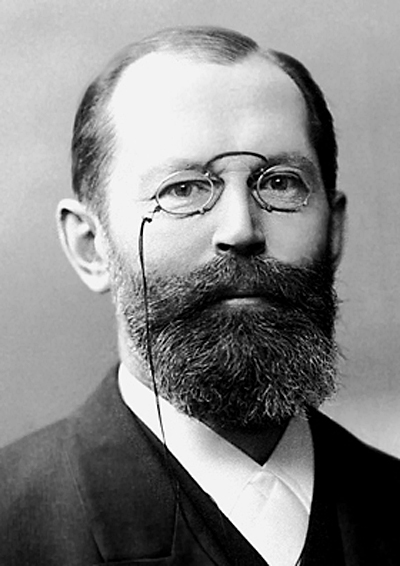
Emil Fischer

logo
Community Hub0 Subscribers
Read side by side
from Wikipedia

Hermann Emil Louis Fischer FRS FRSE FCS (German pronunciation: [ˈeːmiːl ˈfɪʃɐ] ; 9 October 1852 – 15 July 1919) was a German chemist and 1902 recipient of the Nobel Prize in Chemistry. He discovered the Fischer esterification. He also developed the Fischer projection, a symbolic way of drawing asymmetric carbon atoms. He also hypothesized lock and key mechanism of enzyme action. He never used his first given name, and was known throughout his life simply as Emil Fischer.[2][3][4][5]

Key Information

Early years and career

[edit]

Fischer was born in Euskirchen, near Cologne, the son of Laurenz Fischer, a businessman, and his wife Julie Poensgen. After graduating he wished to study natural sciences, but his father compelled him to work in the family business until determining that his son was unsuitable. Fischer then attended the University of Bonn in 1871, but switched to the University of Straßburg (now Strasbourg, France) in 1872.[6] He earned his doctorate in 1874 under Adolf von Baeyer[6] with his study of phthaleins.

Fischer remained with Baeyer in Straßburg as an independent research student. In the fall of 1874, he was appointed assistant of the organic laboratory. There in 1875, he discovered and named hydrazines, including unsymmetrical dimethylhydrazine, which became important much later during the Space Race, and phenylhydrazine.[2] The latter compound reacts with carboxylic compounds (aldehydes and ketones) producing crystalline solids. The phenylhydrazones of sugars allowed him to develop his work on the synthesis of sugars and purines, which earned him the Nobel Prize in Chemistry in 1902. Using the phenylhydrazone of pyruvic acid, he developed the synthesis of indole.

In 1875, von Baeyer was asked to succeed Justus von Liebig at the University of Munich and Fischer went there with him to become an assistant in organic chemistry. In 1878 Fischer qualified as a "Privatdozent" at Munich, where he was appointed associate professor of analytical chemistry in 1879.[7]

In 1882, he was appointed professor of chemistry at the University of Erlangen and in 1885 at the University of Würzburg. In 1892 he succeeded von Hofmann as professor of chemistry at the University of Berlin.[8]

Research

[edit]

He investigated the derivatives of phenylhydriazines, establishing their relation to the diazo compounds, and he noted the readiness with which they entered into combination with other substances, giving origin to a wealth of hitherto unknown compounds. Of such condensation products undoubtedly the most important are the hydrazones, which result from the interaction with aldehydes and ketones. His observations, published in 1886, that such hydrazones, by treatment with hydrochloric acid or zinc chloride, yielded derivatives of indole, the parent substance of indigo, were a confirmation of the views advanced by von Baeyer on the subject of indigo and the many substances related to it.[8]

He next turned to the fuchsine (then called "rosaniline") magenta dyes, and in collaboration with his cousin Otto Fischer, he published papers in 1878 and 1879 which established that these dyes were derivatives of triphenylmethane. Emil Fischer's next research was concerned with compounds related to uric acid. Here the ground had been broken by von Baeyer, but Fischer greatly advanced the field of knowledge of the purines. In 1881 and 1882 he published papers which established the formulae of uric acid, xanthine, caffeine (achieving the first synthesis), theobromine and some other compounds of this group. After purine itself was isolated, a variety of derivatives were prepared, some of which were patented in view of possible therapeutical applications.[8]

Fischer is particularly noted for his work on sugars. Among his early discoveries related to hydrazine was that phenylhydrazine reacted with sugars to form substances which he named osazones, and which, being highly crystalline and readily formed, served to identify such carbohydrates more definitely than had been previously possible.[8] Later, among other work, he is noted for the organic synthesis of D-(+)-glucose.[9] He showed how to deduce the formulae of the 16 stereoisomeric glucoses, and prepared several stereoisomerides, helping to confirm the Le Bel–Van 't Hoff rule of the asymmetric carbon atom.[8]

In the field of enzymology, Fischer is known for his proposal of "the lock and key" model as a mechanism of substrate binding.[10]

Fischer was also instrumental in the discovery of barbiturates, a class of sedative drugs used for insomnia, epilepsy, anxiety, and anesthesia. Along with the physician Josef von Mering, he helped to launch the first barbiturate sedative, barbital, in 1904.[11] He next carried out pioneering work on proteins. By the introduction of new methods, he succeeded in breaking down the complex albumins into amino acids and other nitrogenous compounds, the constitutions of most of which were known, and by bringing about the recombination of these units, he prepared synthetic peptides which approximated to the natural products. His research group synthesised the first free dipeptide (Glycine-Glycine) in 1901.[12] By 1906 about 65 peptides of different chain length and amino acid composition had been made by his research group. His researches made from 1899 to 1906 were published in 1907 with the title Untersuchungen über Aminosauren, Polypeptides und Proteine.[13] Three years later the total number of peptides exceeded 100, with the longest being an 18 amino acid peptide containing 15 glycine and three leucine units. The 18 amino acid peptide gave the standard responses to tests for proteins used by physiological chemists - a positive Biuret test, precipitation by inorganic salts and cleavage by proteolytic enzymes[14]

Personal life

[edit]

Fischer married Agnes Gerlach in 1888. She died seven years later, leaving him a widower with three sons. The younger two died during their military service in World War I, but the oldest, Hermann, became an organic chemist.[6] Fischer died in Berlin on 15 July 1919 at the age of 66.[5] He was Protestant[15]

Honours, awards, and legacy

[edit]
Monument to Emil Fischer in Berlin

In 1897 he put forward the idea to create the International Atomic Weights Commission. Fischer was elected a Foreign Member of the Royal Society (ForMemRS) in 1899.[1] He was awarded the 1902 Nobel Prize in chemistry "in recognition of the extraordinary services he has rendered by his work on sugar and purine syntheses."[16] He was elected an International Member of the United States National Academy of Sciences in 1904, an International Honorary Member of the American Academy of Arts and Sciences in 1908, and an International Member of the American Philosophical Society in 1909.[17][18][19]

Many names of chemical reactions and concepts are named after him:

The Fischer–Tropsch process is named after Franz Emil Fischer, who headed the Max Planck Institute for Coal Research in Mülheim an der Ruhr, and is unrelated to Fischer.[20]

References

[edit]
[edit]
Revisions and contributorsEdit on WikipediaRead on Wikipedia
from Grokipedia
Hermann Emil Fischer (1852–1919) was a pioneering German organic chemist renowned for his foundational work in elucidating the structures of sugars, purines, and proteins, earning him the Nobel Prize in Chemistry in 1902.[1] Born on October 9, 1852, in Euskirchen near Cologne, Prussia (now Germany), Fischer overcame his father's preference for a business career to pursue chemistry, studying at the University of Bonn in 1871 before transferring to the University of Strasbourg, where he earned his Ph.D. in 1874 under Adolf von Baeyer.[2] Fischer's early breakthrough came in 1875 with the synthesis of phenylhydrazine, a reagent that revolutionized the analysis of carbohydrates by enabling the isolation and identification of sugar structures.[2] Building on this, he systematically synthesized various sugars, including glucose in 1890, and established their stereochemical configurations, laying the groundwork for modern carbohydrate chemistry.[1] His research extended to purines, where in 1898 he achieved the total synthesis of these compounds, demonstrating their role in forming substances like caffeine found in coffee, tea, and cacao.[1] In the realm of biochemistry, Fischer's investigations from 1899 to 1908 advanced the understanding of proteins by proposing the peptide bond as the linkage between amino acids and synthesizing simple peptides to support this theory.[2] Throughout his career, he held professorships at institutions including the University of Munich (1879), Erlangen (1881), Würzburg (1888), and finally the University of Berlin (1892), where he directed a major research laboratory that trained numerous chemists.[2] Fischer died by suicide on July 15, 1919, in Berlin, amid personal and professional challenges following World War I.[3]

Early life and education

Childhood and family

Hermann Emil Fischer was born on October 9, 1852, in Euskirchen, a town in the Prussian Rhine Province (now part of Germany), into a prosperous merchant family.[2] His father, Laurenz Fischer, operated a successful lumber business that provided financial stability and social standing for the household.[2][4] As the youngest of eight children and the only surviving son, Emil faced strong familial pressure to follow in his father's footsteps and join the family enterprise, reflecting the era's expectations for male heirs in mercantile families.[5] Despite the family's affluence, Emil showed little aptitude or enthusiasm for commerce from an early age, often displaying a preference for intellectual pursuits over business matters. His father, recognizing this mismatch after a brief trial period in the lumber trade, eventually relented and permitted him to explore scientific interests, though not without initial reluctance.[2] This tension highlighted a generational divide, as Laurenz prioritized practical trade skills while Emil gravitated toward the natural sciences. During his formative years, Emil's curiosity in chemistry was sparked by popular science literature, particularly a book by the German analytical chemist Karl Remigius Fresenius, which introduced him to chemical principles and experimentation.[2]

Academic training and influences

After completing his secondary education with distinction in Bonn in 1869, Fischer began a commercial apprenticeship in his brother-in-law's lumber business, but abandoned it after one year due to a lack of interest and his growing fascination with science.[2][6] In 1871, he enrolled at the University of Bonn to study chemistry, where he attended lectures by prominent figures such as August Kekulé on organic chemistry, as well as courses in physics and mineralogy.[2][7] However, seeking deeper engagement in experimental organic chemistry, Fischer transferred to the University of Strasbourg in 1872 alongside his cousin Otto Fischer.[2][8] At Strasbourg, Fischer came under the mentorship of Adolf von Baeyer, the newly appointed professor of chemistry whose rigorous approach to organic synthesis profoundly shaped Fischer's scientific development.[2][6] In 1874, he earned his doctorate under Baeyer's supervision with a thesis investigating the structures and properties of phthalein dyes, specifically focusing on fluorescein and orcin-phthalein.[2][6][8] This work introduced Fischer to advanced techniques in dye chemistry and structural elucidation, laying a foundational understanding of aromatic compounds that would influence his future research.[6] Following his doctorate, Fischer remained at Strasbourg as an assistant instructor, continuing collaborative experiments with Baeyer on reduction reactions. While investigating the reduction of nitrobenzene to hydrazobenzene, Fischer serendipitously discovered phenylhydrazine in 1874, a compound that demonstrated a novel class of hydrazine derivatives and became instrumental in his later structural analyses.[2][6][9] In 1875, when Baeyer relocated to the University of Munich to succeed Justus von Liebig, Fischer accompanied him as an assistant, immersing himself further in organic synthesis.[2][8] Baeyer's guidance during this period not only honed Fischer's experimental precision but also instilled a systematic methodology for exploring reaction mechanisms in organic chemistry.[6][8]

Professional career

Early appointments and advancements

Following his doctoral studies, Emil Fischer joined Adolf von Baeyer as an assistant in organic chemistry at the University of Munich in 1875, a position he held until 1881. During this period, he qualified as a Privatdozent (lecturer) in 1878 and was appointed associate professor of analytical chemistry in 1879. In Munich, Fischer began key collaborations, notably with his cousin Otto Fischer, focusing on the structural theory of dyes.[10] In 1882, Fischer advanced to the position of full professor of chemistry at the University of Erlangen, where he served as director of the chemistry institute. This role marked his transition to independent leadership, building on his earlier mentorship under Baeyer. By 1885, he was appointed full professor of chemistry at the University of Würzburg, again as director of the institute, a post he retained until 1892. These appointments at Erlangen and Würzburg solidified his rising prominence in German academia, attracting increasing numbers of researchers to his laboratories.[11][2] In 1892, Fischer moved to the University of Berlin as full professor of chemistry and director of the chemistry institute, succeeding August Wilhelm von Hofmann; he held this position until his retirement in 1919. Under his leadership, the Berlin institute became a major hub for chemical research, with Fischer's group expanding significantly to train over 300 doctoral students and postdoctoral associates from around the world. This period bridged his foundational career steps to his later influential directorship, fostering a legacy of rigorous training in organic chemistry.[10]

Leadership at Berlin

In 1892, Emil Fischer succeeded August Wilhelm von Hofmann as professor of chemistry at the University of Berlin, where he remained until his death.[7] Under his direction, the university's Institute of Chemistry, newly constructed in 1900 on Hessische Strasse, was significantly expanded to accommodate growing research demands, becoming a hub for advanced organic chemistry studies.[12] Fischer played a pivotal role in founding the Kaiser Wilhelm Society in 1911 alongside figures like Adolf von Harnack and Walther Nernst, establishing precursors to specialized institutes, including the Kaiser Wilhelm Institute for Chemistry opened in 1912.[3] This initiative marked a major advancement in institutional support for chemical research in Germany, emphasizing interdisciplinary collaboration and state-backed funding for scientific infrastructure.[7] Fischer's leadership extended to mentoring a generation of prominent chemists, including Otto Diels, who earned his PhD under Fischer in 1899 and later co-developed the Diels-Alder reaction, and Heinrich Wieland, who collaborated closely with Fischer in the early 1900s before winning the 1927 Nobel Prize in Chemistry.[13][14] These students benefited from Fischer's rigorous training in synthetic methods and structural analysis, contributing to the institute's reputation as a training ground for future Nobel laureates. Prior to World War I, Fischer advocated for reforms in chemical education, pushing for enhanced practical laboratory instruction and the integration of industrial applications into university curricula to bridge academia and industry.[15] He also fostered international collaborations through the German Chemical Society, which he led, promoting exchanges with foreign societies to advance global standards in chemical research.[16] During the war years from 1914 to 1918, Fischer adeptly managed the Berlin institute's large-scale operations amid severe resource shortages, reallocating efforts toward synthetic alternatives for dyes, pharmaceuticals, and foodstuffs to support the German war economy.[10] He chaired key commissions on chemical production and food research, coordinating with industrial leaders like Carl Duisberg to optimize limited supplies while maintaining research output. Fischer's influence on German chemical policy was profound; as a trusted advisor to the government, he leveraged connections to secure funding for wartime scientific initiatives and postwar reconstruction of chemical infrastructure.[15] His efforts helped shape national policies prioritizing chemistry's role in economic recovery and institutional growth, solidifying Germany's position in global chemical sciences.[15]

Scientific research

Organic synthesis and reactions

Emil Fischer discovered phenylhydrazine in 1875 while investigating hydrazine derivatives, preparing it through the reduction of a phenyl diazonium salt with sulfite salts.[10] This compound and its derivatives, such as osazones formed by reaction with carbonyl groups in aldehydes and ketones, became essential reagents for identifying and characterizing carbonyl-containing molecules, including in organic analysis.[17] Fischer demonstrated the utility of phenylhydrazine in forming stable hydrazones and bis-hydrazones (osazones), which provided crystalline derivatives for structural elucidation without requiring prior knowledge of stereochemistry.[10] Building on phenylhydrazine, Fischer developed the indole synthesis in 1883, a method to construct the indole ring system by condensing phenylhydrazines with ketones or aldehydes under acidic conditions, followed by cyclization and dehydration. This reaction, typically catalyzed by acids like zinc chloride or polyphosphoric acid, involves enehydrazine tautomerization and electrophilic aromatic substitution to yield 2,3-disubstituted indoles, enabling the synthesis of numerous natural product scaffolds containing the indole motif.[18] The method's versatility allowed for the preparation of indoles from simple arylhydrazines and carbonyls, marking a cornerstone in heterocyclic chemistry. In 1895, Fischer, collaborating with Arthur Speier, established the acid-catalyzed esterification of carboxylic acids with alcohols, a process now known as Fischer esterification, which proceeds via protonation of the carbonyl oxygen to form a resonance-stabilized acylium ion-like intermediate, followed by nucleophilic attack by the alcohol and subsequent elimination of water.[19] This equilibrium-driven reaction, often using sulfuric acid or hydrochloric acid as catalysts, yields esters under reflux conditions and is widely applicable to aliphatic and aromatic acids, though sensitive to steric hindrance at the carbonyl or alcohol sites.[20] The mechanism highlights the role of proton transfer in enhancing electrophilicity, with the reverse hydrolysis possible under aqueous conditions. Fischer's extensive investigations into purines spanned from 1882 to 1907, during which he proposed structural formulas for key compounds like uric acid, caffeine, xanthine, theobromine, and adenine, confirming their bicyclic imidazole-pyrimidine frameworks through degradative and synthetic studies.[10] He achieved the synthesis of caffeine from uric acid in 1895 via methylation and reduction steps, and later synthesized adenine and other purines using cyanogen derivatives and imidazole intermediates, elucidating biosynthetic relationships among these nitrogenous bases. These syntheses not only verified the proposed structures but also enabled the preparation of analogs, establishing purines as a unified chemical family central to physiological processes. In 1903, Fischer, in collaboration with Josef von Mering, synthesized barbital (5,5-diethylbarbituric acid), the first barbiturate noted for its sedative and hypnotic properties, by condensing diethylmalonic acid with urea under acidic conditions.[21] This malonic ester-derived approach allowed for systematic variation of substituents at the 5-position of the barbituric acid ring, facilitating the development of a class of drugs used for anesthesia and sleep induction, with barbital patented and introduced as Veronal shortly thereafter.[22] The method's simplicity and the resulting compounds' pharmacological efficacy underscored Fischer's impact on pharmaceutical synthesis.

Carbohydrates and stereochemistry

Fischer's investigations into the structure of glucose began in the late 1880s, leveraging phenylhydrazine to form osazones that revealed key stereochemical insights. Between 1887 and 1890, he demonstrated that glucose possesses an open-chain aldehyde structure by observing that glucose and its epimer mannose yield identical osazones upon reaction with phenylhydrazine, indicating the loss of asymmetry at the C2 position while preserving the configuration from C3 onward. This osazone formation confirmed the aldehyde group at C1 and the straight-chain nature of the molecule, building on earlier degradative evidence from oxidation to saccharic acid.[23][10] In 1890, Fischer achieved a landmark synthesis of glucose starting from glycerol, proceeding through intermediates such as glyceraldehyde and utilizing cyanohydrin additions followed by reductions. This total synthesis not only produced D-glucose but also confirmed its absolute configuration by matching the optical rotation and chemical properties of the natural compound, thereby validating the proposed stereochemical arrangement at all four chiral centers. The route involved chain elongation and selective epimerization, establishing a chemical basis for glucose's structure independent of natural sources.[2][10] To systematically represent the stereochemistry of these sugars, Fischer introduced the Fischer projection in 1891, a two-dimensional convention that depicts the carbon chain vertically with the most oxidized carbon at the top. In this notation, horizontal bonds project forward from the plane (wedges), while vertical bonds extend backward (dashes), allowing clear visualization of chiral centers without three-dimensional models. This method proved essential for mapping the relationships among sugar isomers and remains a standard in carbohydrate chemistry.[23] Applying these tools, Fischer elucidated the configurations of all 16 possible aldohexoses in 1891, deriving their structures from known sugars like glucose and galactose through degradations and syntheses. He established epimeric relationships, such as between glucose and mannose at C2, and between glucose and gulose at C3–C5, using Ruff degradation to shorten chains and correlate optical activities. This comprehensive framework resolved the stereochemical puzzle of hexoses, predicting eight D- and eight L-isomers and synthesizing or characterizing most of them.[23][2] Fischer extended Heinrich Kiliani's 1886 cyanohydrin method into the Kiliani-Fischer synthesis, which lengthens aldose chains by one carbon. The process adds hydrogen cyanide to form epimeric cyanohydrins, followed by hydrolysis to lactones and selective reduction with sodium amalgam to yield the aldoses, allowing separation of the C2 epimers. This technique enabled Fischer to ascend from trioses to higher sugars, systematically building and confirming configurations up to nonoses, and became foundational for synthetic carbohydrate chemistry.[23][10]

Proteins, enzymes, and biochemistry

In the late 1890s, Emil Fischer turned his attention to proteins, recognizing them as polypeptides composed of amino acids linked by peptide bonds, a hypothesis he confirmed through systematic hydrolysis experiments that broke down proteins like casein into their constituent amino acids.[2] By 1899, he had developed esterification methods to separate and identify these amino acids from protein hydrolysates, discovering novel cyclic variants such as proline and hydroxyproline, which provided key insights into protein composition.[2] These efforts marked an early bridge between organic chemistry and biological function, emphasizing how chemical degradation could reveal the structural basis of proteins. Fischer's peptide synthesis work, spanning 1901 to 1918, represented a pinnacle of his biochemical research, enabling the artificial construction of protein fragments to test their resemblance to natural molecules. In 1901, he first synthesized the dipeptide glycyl-glycine by hydrolyzing glycine diketopiperazine, followed by the development of stepwise coupling methods using acid chlorides to form amide bonds between protected amino acids.[24] This approach allowed the creation of dipeptides like alanyl-glycine and tripeptides such as leucyl-glycyl-glycine, with protections via α-bromoacyl intermediates to prevent side reactions.[25] By 1907, he had assembled longer chains, including an octadecapeptide from glycine and leucine units, demonstrating that synthetic polypeptides could mimic the solubility and enzymatic susceptibility of natural proteins, thus supporting his polypeptide theory of protein structure.[2] These syntheses, conducted without modern protecting groups, highlighted the challenges of racemization and yields but established foundational strategies for biomolecular assembly. A cornerstone of Fischer's enzyme research was his 1894 lock-and-key hypothesis, which posited that enzymes exert specificity through complementary geometric shapes between the enzyme's active site and substrate, akin to a key fitting a lock.[26] Originally formulated in studies of yeast enzymes hydrolyzing glucosides, the model stated: "To use a picture, I would like to say that enzyme and glucoside have to fit to each other like a lock and key in order to be able to exert a chemical effect on each other."[26] Fischer extended this to proteins by examining enzymatic hydrolysis, showing that proteases like trypsin selectively cleaved synthetic peptides at specific bonds, underscoring the role of molecular asymmetry in biological catalysis.[27] Fischer's experiments on protein denaturation and hydrolysis further illuminated biochemical processes, revealing how environmental factors disrupt protein integrity. Using heat, acids, and alkalis on proteins such as silk fibroin and gelatin, he observed coagulation and loss of solubility as early signs of structural disorganization, linking these changes to the exposure of hydrophobic residues.[28] Enzymatic hydrolysis studies, particularly with pancreatic extracts on synthetic polypeptides from 1901 to 1909, demonstrated sequential bond cleavage that mirrored natural protein digestion, providing evidence for the polypeptide nature of proteins and influencing early metabolic models.[29] His foundational work on purine metabolism, including the synthesis of uric acid and its derivatives in the 1880s, connected nitrogenous biochemistry to protein catabolism, as purines were later recognized as breakdown products from amino acid-derived nucleic acids.[30] Overall, Fischer's integrations of synthesis, enzymatic specificity, and hydrolysis propelled biochemistry as a discipline, inspiring subsequent advances in understanding protein function and metabolism.[31]

Personal life

Marriage and children

In 1888, Emil Fischer married Agnes Gerlach, the daughter of Joseph von Gerlach, a prominent anatomist and professor at the University of Erlangen.[2] The couple settled in Würzburg, where Fischer had recently been appointed as a professor of chemistry, and began their family shortly thereafter.[2] Fischer and Agnes had three sons: Hermann Otto Laurenz (born 1888), who later became a distinguished biochemist and professor at the University of California, Berkeley; and two younger sons, both of whom pursued medical studies. In 1892, the family relocated with Fischer to Berlin when he assumed the professorship of chemistry at the University of Berlin, establishing their home in the German capital.[2] Tragedy struck in 1895 when Agnes died at the age of 34, leaving Fischer a widower responsible for raising their three young sons alone. He managed their upbringing amid his demanding academic career, with the boys receiving education in Berlin. The family losses, including Agnes's early death, weighed heavily on Fischer in his later years. With the outbreak of World War I in 1914, all three sons were drafted into military service; Hermann served in a chemical warfare unit and survived the conflict, though deeply affected by it. The younger sons, however, did not: one was killed in combat, and the other, unable to endure the rigors of compulsory military training, died by suicide at age 25.[2]

Interests outside science

Fischer maintained a deep passion for music throughout his life, often engaging with it as a personal respite from his scientific endeavors. As a young man, he frequently played piano sonatas by composers such as Haydn, Beethoven, and Mozart alongside his cousin Ernst, and his sister Emma's proficient performances of classical pieces further drew him to the instrument.[32] Later, while in Munich, he attended Odeon concerts and the royal opera, immersing himself in works by Mozart, Beethoven, and Wagner, including full cycles of Der Ring des Nibelungen and Parsifal at Bayreuth; however, living near a music professor led him to forgo regular piano practice in favor of attentive listening.[32] His appreciation extended to the visual arts, where he cultivated an interest through visits to Munich's renowned collections. Early exposures included the Pinakothek's paintings, which left a profound impression on him, though he found the Glyptothek's sculptures less compelling.[32] Fischer also frequented the Glaspalast's art exhibitions, engaging with contemporary debates, such as the controversy surrounding Max Liebermann's Christus im Tempel, and maintained connections with artistic circles, including the family of architect Gottfried Semper.[32] Fischer was an avid reader, with literature shaping his intellectual worldview from youth. Influenced by his mother's extensive reading habits, which contributed to her myopia, he devoured works like David Friedrich Strauss's Das Leben Jesu—which challenged his religious beliefs—and Goethe's Die Leiden des jungen Werthers, a staple among his peers.[32] His engagement with books spanned literature and science, including Lothar Meyer's Die modernen Theorien der Chemie and detailed references to Landolt's physical tables, reflecting a broad curiosity beyond professional necessities.[32] In philanthropy, Fischer demonstrated a commitment to advancing scientific talent, notably through his pivotal role in founding the Kaiser Wilhelm Society in 1911, which established independent research institutes for chemistry and physics free from teaching obligations.[7] He personally supported emerging researchers, providing financial aid to individuals like P. Hunsalz for their work, and endorsed broader initiatives such as travel scholarships from the Prussian Ministry of Culture.[32] Politically, Fischer embodied a liberal patriotism rooted in his family's values and the era's transformative events. His father, a Rhineland progressive who later aligned with national liberals opposing ultramontanism, and his mother, an evangelical supporter of Bismarck and Prussian leadership, instilled a sense of national unity.[32] Fischer viewed the Franco-Prussian War and Germany's 1871 unification as a "most beautiful reward," fostering a patriotic outlook evident in his observations of colleagues' wartime service, such as Oscar Piloty's volunteer efforts.[32] While he critiqued excessive nationalism in scientific contexts, his involvement reflected a balanced commitment to German progress without overt militarism.[32] Fischer managed ongoing health challenges that influenced his daily interactions, including chronic stomach ailments from his youth and lab-related bronchial issues that temporarily impaired his sense of smell.[32] His father's progressive hearing loss served as a familial example of age-related auditory decline, though Fischer himself navigated social and professional engagements adeptly despite such vulnerabilities.[32]

Death and legacy

Final years and suicide

Following World War I, Emil Fischer's health deteriorated significantly due to chronic exposure to toxic chemicals like phenylhydrazine during his laboratory work, resulting in severe digestive issues and a diagnosis of inoperable intestinal cancer in 1919.[33][7] This condition caused persistent pain and weakness, exacerbating his earlier frailties and leading to extended periods away from his research.[33] Fischer was deeply affected by personal tragedies, including the deaths of two of his three sons during the war—one killed in action and the other by suicide shortly after—which compounded his emotional distress.[2] Postwar economic turmoil in Germany, including funding cuts for scientific institutions and the burdens of reparations, added financial pressures that strained his laboratory operations and personal resources.[4] On July 15, 1919, at the age of 66, Fischer took his own life by ingesting potassium cyanide in his home in Berlin, leaving a personal letter to his doctor detailing his chronic illness and desire to avoid prolonged suffering.[33][7] In the note, he also expressed profound despair over the uncertain future of Germany amid the postwar chaos. His funeral was attended by prominent members of the scientific community in Berlin, reflecting his esteemed status, and he was buried in the Wannsee Cemetery.[34][35]

Awards and honors

Fischer's groundbreaking work in organic chemistry earned him widespread recognition from scientific institutions during his lifetime. In 1890, he received the Davy Medal from the Royal Society for his discoveries in organic chemistry, particularly his researches on carbohydrates.[10] Nine years later, in 1899, he was elected a Foreign Member of the Royal Society, honoring his international stature in the field.[36] The pinnacle of his contemporary accolades came in 1902 with the Nobel Prize in Chemistry, awarded "in recognition of the extraordinary services he has rendered by his work on sugar and purine syntheses."[1] In 1904, Fischer was bestowed the Prussian Order of Merit (Pour le Mérite) for Sciences and Arts, a prestigious German honor reflecting his national contributions.[2] That same year, he was elected an International Member of the United States National Academy of Sciences, further affirming his global influence.[37] Additional German distinctions followed, including the Maximilian Order for Science and Art in 1898, recognizing his advancements in chemical synthesis and biochemistry.[2] Fischer also held honorary doctorates from universities such as Cambridge, Manchester, and Brussels, underscoring the academic esteem in which he was held.[10]

Enduring influence

Fischer's prolific output, exceeding 300 scientific publications, continues to shape the foundational content of organic chemistry and biochemistry textbooks worldwide, providing the structural and synthetic frameworks for understanding purines, sugars, and peptides.[17] Several key concepts and methods bear his name, underscoring his enduring methodological contributions: the Fischer projection for representing stereochemistry in two dimensions, the Fischer esterification for converting carboxylic acids to esters, the Fischer peptide synthesis for linking amino acids, and Fischer's lock-and-key model for enzyme-substrate interactions, which remains a cornerstone of modern enzyme kinetics despite refinements. His pioneering work in stereochemistry laid the groundwork for comprehending chirality in biological systems, influencing the design of chiral drugs where enantiomeric purity determines efficacy and safety, as seen in pharmaceuticals targeting specific molecular interactions.[38][39] In contemporary glycobiology, Fischer's elucidation of carbohydrate structures underpins the development of carbohydrate-based vaccines, such as those targeting bacterial polysaccharides, by enabling precise synthesis of glycan antigens for immune recognition.[40][41] His lock-and-key enzyme model has evolved into the induced fit theory, yet it is still taught as the basis for understanding substrate specificity in enzymatic reactions.[42] Recent recognitions highlight his ongoing relevance, including the 2024 Emil Fischer Medal awarded by the German Chemical Society to Frank Glorius for advances in organic synthesis, presented at the ORCHEM conference, and the 2025 Emil Fischer Award by the European Carbohydrate Organisation to Carmen Galan and Sabine Flitsch for contributions to carbohydrate chemistry.[43][44] His foundational ideas persist in citations, such as in Benjamin List's 2021 Nobel lecture on asymmetric organocatalysis, where Fischer is named among key scientific influences.[45] Fischer's academic progeny, numbering over 300 PhD students and postdocs, amplified his legacy, with at least two direct Nobel laureates—Otto Diels and Otto Warburg—among his descendants in the broader academic genealogy, contributing to sustained advancements in chemistry.[46][47]

References

User Avatar
No comments yet.