Hubbry Logo
Engineering geologyEngineering geologyMain
Open search
Engineering geology
Community hub
Engineering geology
logo
8 pages, 0 posts
0 subscribers
Be the first to start a discussion here.
Engineering geology
Engineering geology
from Wikipedia
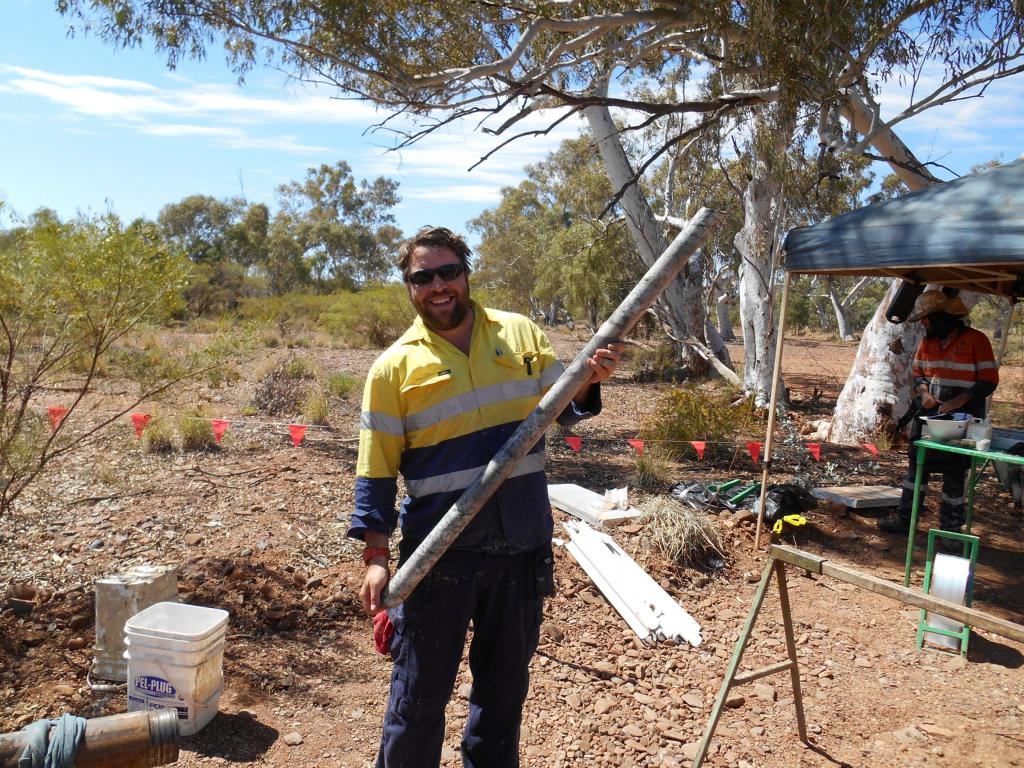
James Lawrence rock logging
An engineering geologist logging rock core in the field, Western Australia.

Engineering geology is the application of geology to engineering study for the purpose of assuring that the geological factors regarding the location, design, construction, operation and maintenance of engineering works are recognized and accounted for.[1] Engineering geologists provide geological and geotechnical recommendations, analysis, and design associated with human development and various types of structures.[2] The realm of the engineering geologist is essentially in the area of earth-structure interactions, or investigation of how the earth or earth processes impact human made structures and human activities.

Engineering geology studies may be performed during the planning, environmental impact analysis, civil or structural engineering design, value engineering and construction phases of public and private works projects, and during post-construction and forensic phases of projects. Works completed by engineering geologists include; geologic hazards assessment, geotechnical, material properties, landslide and slope stability, erosion, flooding, dewatering, and seismic investigations, etc.[3] Engineering geology studies are performed by a geologist or engineering geologist that is educated, trained and has obtained experience related to the recognition and interpretation of natural processes, the understanding of how these processes impact human made structures (and vice versa), and knowledge of methods by which to mitigate hazards resulting from adverse natural or human made conditions. The principal objective of the engineering geologist is the protection of life and property against damage caused by various geological conditions.[4]

The practice of engineering geology is also very closely related to the practice of geological engineering and geotechnical engineering. If there is a difference in the content of the disciplines, it mainly lies in the training or experience of the practitioner.

History

[edit]

Although the study of geology has been around for centuries, at least in its modern form, the science and practice of engineering geology only commenced as a recognized discipline until the late 19th and early 20th centuries. The first book titled Engineering Geology was published in 1880 by William Penning. In the early 20th century Charles Peter Berkey, an American trained geologist who was considered the first American engineering geologist, worked on several water-supply projects for New York City, then later worked on the Hoover Dam and a multitude of other engineering projects. The first American engineering geology textbook was written in 1914 by Ries and Watson. In 1921 Reginald W. Brock, the first Dean of Applied Science at the University of British Columbia, started the first undergraduate and graduate degree programs in Geological Engineering, noting that students with an engineering foundation made first-class practising geologists. In 1925, Karl Terzaghi, an Austrian trained engineer and geologist, published the first text in Soil Mechanics (in German). Terzaghi is known as the parent of soil mechanics, but also had a great interest in geology; Terzaghi considered soil mechanics to be a sub-discipline of engineering geology. In 1929, Terzaghi, along with Redlich and Kampe, published their own Engineering Geology text (also in German).

The need for geologist on engineering works gained worldwide attention in 1928 with the failure of the St. Francis Dam in California and the death of 426 people. More engineering failures that occurred the following years also prompted the requirement for engineering geologists to work on large engineering projects.

In 1951, one of the earliest definitions of the "Engineering geologist" or "Professional Engineering Geologist" was provided by the Executive Committee of the Division on Engineering Geology of the Geological Society of America.

The practice

[edit]

One of the most important roles of an engineering geologist is the interpretation of landforms and earth processes to identify potential geologic and related human-made hazards that may have a great impact on civil structures and human development. The background in geology provides the engineering geologist with an understanding of how the earth works, which is crucial minimizing earth related hazards. Most engineering geologists also have graduate degrees where they have gained specialized education and training in soil mechanics, rock mechanics, geotechnics, groundwater, hydrology, and civil design. These two aspects of the engineering geologists' education provide them with a unique ability to understand and mitigate for hazards associated with earth-structure interactions.

Scope of studies

[edit]

Engineering geology investigation and studies may be performed:

Geohazards and adverse geological conditions

[edit]

Typical geologic hazards or other adverse conditions evaluated and mitigated by an engineering geologist include:

An engineering geologist or geophysicist may be called upon to evaluate the excavatability (i.e. rippability) of earth (rock) materials to assess the need for pre-blasting during earthwork construction, as well as associated impacts due to vibration during blasting on projects.

Soil and rock mechanics

[edit]

Soil mechanics is a discipline that applies principles of engineering mechanics, e.g. kinematics, dynamics, fluid mechanics, and mechanics of material, to predict the mechanical behaviour of soils. Rock mechanics is the theoretical and applied science of the mechanical behaviour of rock and rock masses; it is that branch of mechanics concerned with the response of rock and rock masses to the force-fields of their physical environment. The fundamental processes are all related to the behaviour of porous media. Together, soil and rock mechanics are the basis for solving many engineering geology problems.

Methods and reporting

[edit]

The methods used by engineering geologists in their studies include

The fieldwork is typically culminated in analysis of the data and the preparation of an engineering geologic report, geotechnical report or design brief, fault hazard or seismic hazard report, geophysical report, ground water resource report or hydrogeologic report. The engineering geology report can also be prepared in conjunction with a geotechnical report, but commonly provides the same geotechnical analysis and design recommendations that would be presented in a geotechnical report. An engineering geology report describes the objectives, methodology, references cited, tests performed, findings and recommendations for development and detailed design of engineering works. Engineering geologists also provide geologic data on topographic maps, aerial photographs, geological maps, Geographic Information System (GIS) maps, or other map bases.

See also

[edit]

References

[edit]

Further reading

[edit]
Revisions and contributorsEdit on WikipediaRead on Wikipedia
from Grokipedia
Engineering geology is the science devoted to the investigation, study, and solution of engineering and environmental problems that arise from the interaction between geological processes and human activities, including the and of geological hazards to ensure the and of . It applies geological , techniques, and principles to analyze natural rock, , , and their interactions with constructed materials and processes, providing site-specific assessments for projects. As a multidisciplinary field bridging geology and engineering, engineering geology encompasses subsurface exploration, geologic mapping, and evaluation of bedrock and surficial deposits to inform design, construction, and maintenance of structures. Key aspects include hazard assessment for risks such as landslides, earthquakes, subsidence, and slope instability; structural analysis of joints, faults, and weathering; and management of groundwater and drainage to address seepage and hydraulic conditions. It also involves characterizing the mineralogical, physico-geomechanical, chemical, and hydraulic properties of earth materials, predicting changes in these properties over time, and determining parameters for stability analysis of engineering works and earth masses. The field originated in British practices over 200 years ago and saw significant development in the United States beginning in the late , with early contributions from figures like William O. Crosby in 1875 and Charles P. Berkey in 1895. Professional standards evolved through organizations such as the Association of Engineering Geologists (AEG), founded in 1957, which defines the discipline and promotes ethical practices, including clear reporting and adherence to codes like the Uniform Building Code. Internationally, the International Association for Engineering Geology and the Environment (IAEG), established in 1964, advances global guidelines for applying geological knowledge to and environmental challenges. Applications of engineering geology are critical in infrastructure projects, including dams, bridges, tunnels, highways, and water resource systems, where it ensures foundation stability, seepage control, and erosion protection through methods like geophysical surveys, permeability testing, and core sampling. For instance, in dam construction, it evaluates site geology, fault zones, and aquifer properties to prevent failures from seepage or seismic activity, retaining samples for long-term safety analysis. Beyond traditional civil works, it supports , environmental remediation of contaminated soils, siting, and urban development by mitigating environmental impacts and promoting sustainable practices. Through these efforts, engineering geology safeguards public safety, reduces construction risks, and minimizes economic losses from geological hazards.

Fundamentals

Definition and Scope

Engineering geology is defined as the science devoted to the investigation, study, and solution of and environmental problems of concern to humanity, drawing on foundational knowledge from the earth sciences. This discipline applies principles of to assess the behavior of —such as soils, rocks, and —under the stresses imposed by human-engineered structures and activities. By integrating geological with engineering needs, it ensures the stability, safety, and of projects ranging from development to environmental management. The scope of engineering geology spans the entire lifecycle of civil engineering and environmental projects, from initial site selection and planning through , , operation, and long-term . Key activities include evaluating site suitability for , , tunnels, and urban developments; designing stable earthworks and retaining structures; and assessing potential geohazards such as landslides, earthquakes, and to mitigate risks. This broad application extends to resource evaluation for construction materials and environmental impact assessments, emphasizing proactive integration of geological insights to prevent failures and promote resilient infrastructure. While closely related, engineering geology differs from in its primary focus: engineering geology provides the broader geological context, including , , and , whereas concentrates on the mechanical properties, testing, and numerical modeling of and rock for structural design. The term "engineering geology" originated in the early 19th century, with its first documented use in 1838. Professional oversight is provided by organizations such as the International Association for Engineering Geology and the Environment (IAEG), founded in 1964 to advance the field through , , and international .

Key Principles

Engineering geology relies on foundational geological principles to assess and mitigate risks in construction and projects. provides the framework for understanding the layering and sequence of rock and formations, which is essential for identifying potential weak zones and predicting subsurface conditions that influence foundation stability. For instance, sedimentary layering often creates planes of weakness that can affect excavation and tunneling operations. interprets landforms and surface processes, such as and deposition, to evaluate and terrain suitability for development, helping engineers anticipate hazards like landslides in hilly regions. examines and its interaction with earth materials, as fluctuating water levels can alter pressures and lead to instability in foundations or dams. Stress-strain relationships in earth materials describe how rocks and soils respond to applied forces, with deformation occurring under compressive, tensile, or shear stresses that must be considered to ensure structural integrity. Weathering processes, including physical disintegration from freeze-thaw cycles and chemical alteration from oxidation, progressively degrade material durability, reducing and increasing permeability over time, which impacts long-term project viability. These principles underscore the need to evaluate material behavior under varying environmental loads to prevent failures in engineered systems. Geological time scales contextualize the evolution of site conditions over millions of years, revealing how ancient depositional environments shape current subsurface profiles. governs large-scale crustal movements, influencing regional seismicity, faulting, and volcanic activity that can alter site conditions through uplift, , or fracturing, thereby affecting load distribution and hazard potential. For example, proximity to tectonic plate boundaries often correlates with higher risks of ground shaking during . The integration of these geological principles with engineering practices emphasizes how discontinuities, such as joints and faults, reduce load-bearing capacity by creating preferential paths for and water infiltration, necessitating site-specific designs like grouting or to enhance stability. This holistic approach ensures that engineering solutions align with the inherent variability of , bridging geological insights with practical load management.

History

Early Developments

The roots of engineering geology emerged in the early 19th century amid Europe's , when geological knowledge became essential for large-scale infrastructure projects. William Smith, a British land surveyor often called the "Father of English Geology," published the first national geological map of in 1815, titled A Delineation of the Strata of England and Wales with Part of . This detailed map, scaled at 5 miles to the inch and measuring 6 by 9 feet, illustrated rock strata, fossils, and practical features like collieries, mines, canals, and reclaimed land, enabling engineers to select stable routes and predict subsurface conditions for canal and railway construction. Smith's stratigraphic principles, developed from his fieldwork in canal digging and since the 1790s, allowed for three-dimensional geological modeling to address challenges such as landslides, seepage, and unstable foundations in projects like the and early railways. In the late 19th century, engineering geology began to take shape in the United States, with early contributions from figures such as William O. Crosby around 1875, who laid foundational work through geological mapping and analysis for construction projects while assisting in geology at the of and later teaching at the Massachusetts Institute of Technology. Charles P. Berkey advanced the field around 1895 in New York, applying geological expertise to engineering challenges and establishing early standards for geologists in . A pivotal early textbook that formalized these applications was Engineering Geology by William Henry Penning, published in 1880. Drawing from a series of articles in The Engineer magazine (1879), Penning's 164-page work was among the first in English to systematically integrate geological principles with practices. It covered topics such as methods, rock and , tunnelling, embankment stability, systems, and building , emphasizing the need for three-dimensional geological interpretations to ensure project safety and economy. Penning, a with the Geological Survey of , highlighted geology's role in mitigating construction risks, and the book remained influential, cited into the 1930s as a foundational text for the emerging discipline. In the early , engineering geology advanced rapidly in the United States, driven by ambitious and initiatives and tragic geohazards. The collapse of the near on March 12, 1928—due to shearing along weak layers in the foundation—unleashed a that killed over 432 people, marking the deadliest failure in 20th-century America. This disaster exposed flaws in ignoring geological hazards, prompting immediate reforms: established professional engineer registration laws, created a state safety agency, and mandated geological investigations for water projects, effectively birthing formalized engineering geology practices nationwide. Charles Peter Berkey, a prominent American geologist, assumed leadership in this field post-1928, consulting on major federal dam projects to enhance safety. Appointed to President Coolidge's Board in 1928, Berkey's assessments confirmed the stability of foundations and outlet tunnels, influencing the dam's successful completion in 1936; he similarly advised on the Grand Coulee, Shasta, and Bonneville Dams, integrating geological mapping to address fractures and foundation risks. Berkey organized the landmark 1929 symposium "Application of Geology to Engineering Practice" under the American Institute of Mining and Metallurgical Engineers, fostering collaboration between geologists and engineers. Complementing this, Karl Terzaghi's 1925 publication Erdbaumechanik introduced as a rigorous , linking geological properties to through concepts like and consolidation, which became essential for foundation analysis in the 1930s. The 1920s and 1930s also marked the initial formation of professional structures dedicated to geology, building on these events. In the , Berkey's advocacy led to dedicated committees within geological societies, such as the 1929 , which evolved into the Engineering Geology Division of the Geological Society of America by the late 1930s, promoting applied research and standards. In Europe, similar efforts within bodies like the emphasized engineering applications, reflecting a growing recognition of geohazards as drivers for interdisciplinary professionalization.

Modern Evolution

The post-World War II era marked a pivotal phase in the professionalization of engineering geology, driven by the urgent demands of reconstruction and economic expansion in war-ravaged regions. The need for stable foundations in dams, highways, and urban developments accelerated the field's growth, transforming it from an adjunct to into a distinct . Key institutional milestones included the establishment of the Engineering Geology Division of the Geological Society of America in 1947, which became the society's first specialty division and fostered dedicated research and education; the founding of the Association of Engineering Geologists (AEG) in 1957, which defined the discipline and promoted ethical practices; and internationally, the International Association for Engineering Geology and the Environment (IAEG) in 1964, which provided a global platform for standardizing practices and knowledge exchange among professionals. From the 1970s to the 2000s, technological integrations and disaster responses further advanced the field. The Apollo program's innovations in satellite imaging spurred the adoption of techniques for terrain mapping and hazard identification, enabling non-invasive assessments of geological features critical for engineering projects. Major seismic events, such as the (magnitude 6.9), highlighted vulnerabilities in urban geology, prompting regulatory reforms like California's Seismic Hazards Mapping Act of 1990, which mandated zoning for earthquake-induced and landslides to guide and . These developments emphasized , integrating geological data with models to enhance seismic resilience in infrastructure planning. In the 2010–2025 period, digital tools have revolutionized predictive capabilities in engineering geology. (BIM) emerged as a standard for integrating subsurface geological data into 3D project models, facilitating collaborative analysis of soil-structure interactions and reducing construction risks. Similarly, (AI) and algorithms have been increasingly applied for predictive geohazard modeling, such as forecasting and from large datasets, with notable advancements in since the mid-2010s. The 2011 Tohoku (triggered by a magnitude 9.0 ) underscored the need for multi-hazard resilience, leading to updated global standards for that incorporate paleogeological records and dynamic modeling to mitigate tsunami inundation effects. Engineering geology's global footprint expanded significantly through involvement in megaprojects in developing nations, exemplified by the on China's River (construction 1994–2009). Geologists addressed complex challenges, including foundations, landslide-prone slopes, and seismic risks, through extensive site investigations and stabilization measures that ensured the dam's 185-meter height and 22.5-gigawatt capacity while minimizing environmental disruptions. This project highlighted the field's role in sustainable large-scale development, influencing similar initiatives in and by prioritizing geological foresight in . Overall, these evolutions reflect a trend toward , balancing demands with ecological preservation.

Geological Investigations

Site Characterization Methods

Site characterization in engineering geology involves a systematic of geological conditions at a proposed site to assess its suitability for and development. This process integrates multiple investigative methods to gather data on subsurface materials, , groundwater conditions, and potential geological features that could impact engineering projects. Effective site characterization reduces uncertainties in by providing a comprehensive geological model, which is essential for predicting site behavior under load. Desk studies form the initial phase of site characterization, relying on existing records to build a preliminary understanding of the site's without fieldwork. These studies typically include reviewing historical maps, geological surveys, aerial photographs, and previous engineering reports to identify surface features, past , and potential subsurface anomalies. For instance, the use of aerial from sources like the U.S. Geological Survey allows engineers to detect landforms indicative of unstable slopes or buried channels, informing the planning of subsequent investigations. Desk studies can identify many known geological hazards early, optimizing resource allocation for field work. Geophysical surveys provide non-invasive ways to profile subsurface conditions, extending desk study insights into preliminary subsurface mapping. Common techniques include seismic refraction, which measures velocities to delineate and rock layers based on their elastic properties, and (GPR), which uses electromagnetic waves to detect buried utilities, voids, or stratigraphic changes up to depths of 10-30 meters in favorable conditions. The (ASCE) highlights seismic refraction's utility in estimating the depth to , as demonstrated in projects where it has accurately mapped thicknesses within 10-20% error margins. GPR, meanwhile, excels in urban settings for its high resolution, with applications in detecting features that could affect foundation stability. Borehole drilling and trenching enable direct sampling and profiling of the subsurface, transitioning from indirect methods to targeted verification. Boreholes, typically advanced using rotary or percussion , allow recovery of core samples to depths exceeding 100 meters, revealing detailed and material properties. Trenching complements this by exposing shallow subsurface features across a lateral extent, useful for confirming near-surface variability. The notes that borehole data is crucial for constructing 3D geological models, with standards like BS 5930 providing site-specific guidance on investigation spacing and coverage, typically 10-30 meters for multi-story buildings depending on ground variability. These methods help delineate aquifers and fault zones, ensuring accurate hydrological assessments. In-situ testing during site characterization provides immediate data on and behavior under natural conditions, minimizing disturbance effects compared to lab samples. The (SPT), involving driving a sampler into the ground and counting blows required for 300 mm penetration, yields the N-value as a measure of density and strength, widely correlated to . As outlined in the ASTM D1586 standard, SPT results guide foundation design, with N-values below 10 indicating loose soils prone to settlement in load-bearing applications. Brief reference to is made in rotary core drilling tests, where rock quality designation (RQD) assesses fracture intensity for stability predictions. Geological and geotechnical mapping techniques synthesize field observations to create detailed site representations, identifying critical features like faults, aquifers, and shear zones. Geological mapping involves plotting rock types, structures, and patterns on topographic bases, while geotechnical mapping overlays engineering parameters such as and soil variability. The Engineering Geology Mapping Group of the Geological Society advocates for scale-appropriate mapping (e.g., 1:10,000 for regional overviews), which has proven effective in delineating fault traces that influence seismic design in projects like alignments. These maps serve as the foundation for integrating data from other methods into a cohesive site model. Risk-based site selection criteria guide the application of characterization methods, prioritizing sites with minimal geological constraints while incorporating for urban expansion. This approach evaluates factors like erodibility, seismic potential, and contamination risks using weighted scoring systems derived from characterization data. The (FHWA) recommends based on site class ratings (e.g., Site Class A for stable rock to F for problematic soils), helping to reduce risks in seismically active regions by avoiding high-risk areas. Such criteria promote sustainable by balancing engineering feasibility with environmental considerations.

Field and Laboratory Techniques

Field techniques in engineering geology encompass methods for direct subsurface exploration and surface mapping to gather empirical data on geological materials and structures. Core sampling for rock involves rotary drilling to extract intact cylindrical samples, typically using diamond core barrels per ASTM D2113 standards, providing insights into material composition, strength, and potential hazards like fractures. For soils, undisturbed sampling uses thin-walled tubes, while disturbed samples can be obtained via split-barrel samplers in SPT per ASTM D1586. Recovery rates average 60-80% depending on barrel type, with samples preserved in labeled core boxes for transport and analysis to ensure data integrity. Geophysical logging complements this by deploying wireline tools in boreholes to measure properties such as electrical resistivity, acoustic velocity, and gamma radiation, enabling correlation of strata and identification of subsurface anomalies without destructive sampling. For instance, nuclear radiation logs, including gamma-gamma and neutron variants, assess density, porosity, and clay content in 2-inch boreholes, investigating up to 12 inches from the wall after calibration in controlled pits. Borehole cameras, such as television or acoustic systems like the Borehole Image Processing System (BIPS), offer visual inspection of borehole walls, capturing fractures and discontinuities with rotational imaging for precise strike and dip measurements accurate to 1-5 degrees. Drone-based LiDAR has emerged as a non-invasive surface technique for high-resolution terrain modeling, utilizing light detection and ranging to generate 3D point clouds that reveal geomorphic features and structural boundaries in challenging terrains. These systems achieve resolutions of 20-50 cm, facilitating the mapping of fault geomorphology and landslide-prone areas by penetrating vegetation and capturing elevation data for volumetric change analysis. Laboratory methods build on field-collected samples to quantify mechanical and hydraulic properties essential for engineering design. Triaxial shear testing simulates in-situ stress conditions by applying confining pressures to cylindrical soil or rock specimens, measuring parameters like cohesion and angle under drained or undrained conditions to predict stability in foundations and slopes. Performed per ASTM D4767 standards for cohesive soils (with separate standards like ASTM D7181 for granular materials), this test provides data that informs applications without delving into detailed derivations. Permeability tests, such as constant-head or falling-head methods on core samples, evaluate fluid flow rates through porous media using principles, with results expressed as (typically 10^{-6} to cm/s for soils), crucial for assessing impacts on excavations. Petrographic analysis employs on thin sections to identify composition, texture, , and alterations, revealing potential durability issues like alkali-silica reactivity in aggregates for construction materials. Data integration in engineering geology relies on Geographic Information Systems (GIS) to spatially analyze and overlay field and laboratory datasets, enabling the creation of thematic maps for zoning and resource evaluation. adheres to ASTM standards, such as D1586 for sampling and D4767 for triaxial testing, ensuring reproducibility and accuracy in geotechnical reporting. These protocols minimize errors in parameter estimation, supporting reliable predictive models. As of 2025, via satellites has integrated into routine monitoring, using platforms like Landsat and Sentinel to detect surface deformations and geological changes over large areas through multispectral imagery and (InSAR). This approach provides temporal resolutions of days to weeks, enhancing early detection of geohazards like in projects.

Soil and Rock Mechanics

Soil Mechanics Basics

Soil mechanics forms a cornerstone of engineering geology by providing the principles to predict how soils respond to loads and environmental changes in construction projects. Soils, as unconsolidated aggregates of mineral particles, organic matter, and water or air voids, exhibit behaviors influenced by their composition and state. The (USCS), developed by the U.S. Army Corps of Engineers and standardized by ASTM, categorizes soils based on and plasticity to assess their engineering suitability. Grain size distribution is determined through for coarse-grained soils (gravels and sands) and analysis for fines, dividing soils into coarse-grained (more than 50% retained on No. 200 sieve), fine-grained (more than 50% passing No. 200 sieve), or highly organic types. For fine-grained soils like silts and clays, quantify plasticity: the liquid limit (water content at which soil transitions from plastic to liquid behavior) and plastic limit (minimum water content for plastic state), with plasticity index as their difference, aiding in distinguishing clays (high plasticity) from silts (low plasticity). Basic soil behaviors under load include consolidation and , critical for foundation stability. Consolidation refers to the gradual volume reduction of saturated cohesive soils under sustained loading as is expelled, leading to settlement over time; this process is time-dependent and governed by soil permeability and . Terzaghi's one-dimensional consolidation models this as a , where excess dissipates, allowing to increase and cause particle rearrangement. , the soil's resistance to sliding along a plane, is described by the Mohr-Coulomb criterion, expressed as τ=c+σtanϕ\tau = c + \sigma' \tan \phi, where τ\tau is , cc is cohesion (interparticle bonding in clays), σ\sigma' is , and ϕ\phi is the friction angle (reflecting particle interlocking in sands). This criterion assumes failure occurs when shear stress exceeds this linear envelope, with ϕ\phi typically 25–35° for sands and cc up to 50 kPa for overconsolidated clays. Terzaghi's principle underpins both, stating that total stress σ\sigma equals σ\sigma' plus uu, or σ=σu\sigma' = \sigma - u; only σ\sigma' governs soil skeleton deformation and strength. In foundation design, ultimate —the maximum load per unit area before shear failure—incorporates these principles via Terzaghi's equation for shallow strip footings on cohesionless or cohesive : qult=cNc+γDNq+0.5γBNγq_{ult} = c N_c + \gamma D N_q + 0.5 \gamma B N_\gamma, where cc and ϕ\phi determine bearing factors NcN_c, NqN_q, and NγN_\gamma (tabulated values increasing with ϕ\phi), γ\gamma is unit weight, DD is foundation depth, and BB is width. Water content profoundly influences stability, as excessive moisture reduces by increasing pore pressure and lubrication, while optimal content enhances compaction. Compaction, achieved by mechanical means to densify and minimize voids, is optimized via the Proctor test, relating dry density to ; peak density occurs at the optimum moisture content (typically 8–20% for most ), improving and reducing settlement risk in embankments and subgrades. In mixed terrains, these principles complement for overall site stability.

Rock Mechanics Fundamentals

Rock mechanics fundamentals address the behavior of intact rock and rock masses under engineering loads, distinguishing between the strength of unfractured and the influence of geological discontinuities on overall stability. Intact rock exhibits high but limited tensile capacity, while rock masses are heterogeneous due to joints, faults, and planes that reduce effective strength and control failure modes. These principles are essential for predicting deformation, failure, and support requirements in geotechnical projects. Rock classification systems quantify these properties to guide design, particularly for underground excavations. The Rock Mass Rating (RMR) system, developed by Bieniawski, evaluates rock masses based on uniaxial of intact rock, rock quality designation (RQD), spacing and condition of discontinuities, inflow, and orientation relative to engineering structures, yielding ratings from 0 to 100 for support recommendations in . Similarly, the Q-system by Barton et al. assesses rock mass quality through ratios of relative block size, inter-block , stress reduction factor, and joint water reduction, where Q values (0.001 to 1000) directly inform tunnel support categories like rock bolts and . Uniaxial (UCS), a key intact rock property, is determined via standardized laboratory tests on cylindrical specimens, typically ranging from 50 MPa for weak rocks to over 250 MPa for strong ones, serving as a baseline for and criteria. Discontinuities profoundly affect rock mass behavior, with jointing dictating by enabling kinematic releases such as planar sliding or failures when joint orientations align adversely with slope geometry. For instance, persistent joints dipping parallel to the slope face can reduce stability by localizing shear along planes, amplifying deformation under gravitational loading. Rock further degrades these properties, classified by the International Society for Rock Mechanics (ISRM) into grades: I (fresh, no visible sign of rock material ); II (slightly , discoloration indicates on a limited scale, e.g., less than an A6 sheet of paper); III (moderately , less than 50% of the rock material is decomposed or disintegrated to ); IV (highly , more than 50% of the rock material is decomposed or disintegrated to ); and V (completely , all rock material is decomposed or disintegrated to , with original structure preserved). Higher grades lower UCS and increase joint aperture, promoting instability in slopes and excavations. The Hoek-Brown failure criterion empirically models rock mass strength, relating major principal stress σ1\sigma_1 at failure to minor principal stress σ3\sigma_3, intact UCS σci\sigma_{ci}, material constant mbm_b, and rock mass constants ss and aa: σ1=σ3+σci(mbσ3σci+s)0.5\sigma_1 = \sigma_3 + \sigma_{ci} \left( m_b \frac{\sigma_3}{\sigma_{ci}} + s \right)^{0.5} This non-linear envelope accounts for weakening by discontinuities, with parameters derived from geological observations and triaxial tests, widely applied to estimate convergence and capacity. For , the basic (FoS) against planar failure simplifies to the ratio of resisting to driving forces along a potential slide plane: FoS=cA+(Wcosα)tanϕWsinα\text{FoS} = \frac{c A + (W \cos \alpha) \tan \phi}{W \sin \alpha} where cc is cohesion, AA is the failure plane area, WW is wedge weight, α\alpha is the plane dip angle, and ϕ\phi is friction angle; FoS > 1.3 typically indicates stability under static conditions. In engineering applications, these fundamentals inform tunneling and quarrying, where high stresses in deep excavations can induce rock bursts—sudden, violent ejections of rock fragments due to strain energy release along joints. In tunneling, bursts occur when confining pressures exceed rock tensile strength, necessitating pre-stressing or destressing techniques for safety. Quarrying faces similar risks during blasting in brittle, jointed rocks, where burst potential rises with depth and excavation rate, requiring monitoring of microseismic activity to mitigate damage.

Geohazards

Types of Geohazards

Engineering geology addresses geohazards as geological processes or events that can adversely affect engineering projects, , and human settlements by causing ground instability, structural damage, or environmental disruption. These hazards arise from natural tectonic, erosional, or processes, as well as human activities like , and require identification through site-specific criteria such as slope angle, soil composition, and historical occurrence patterns. Landslides represent one of the most common geohazards, involving the downslope movement of rock, , or under , often triggered by rainfall, earthquakes, or human excavation. Identification relies on slope steepness exceeding 5-15 degrees, presence of weak shear planes, and saturation levels above 20-30% in soils. The Varnes classification system, developed in 1978 and updated in 1996, categorizes landslides into five primary types based on material (rock, , ) and movement style: falls (free-falling fragments), topples (forward rotation), slides (planar or rotational shear), spreads (lateral extension), and flows (fluid-like motion). For instance, rotational slides occur on concave slopes with cohesive clays, while flows involve saturated mixtures traveling at speeds up to 10-40 km/h. Earthquakes pose severe geohazards through ground shaking, fault rupture, and secondary effects like , where saturated sands lose strength and behave like liquids. Magnitude is measured using the , which quantifies the logarithm of amplitude recorded at 100 km, originally calibrated for local events up to magnitude 8, or the (Mw), which estimates total energy release via (rigidity times fault area times slip), providing more accurate assessments for global events exceeding Mw 8. Identification criteria include proximity to active faults (within 10-50 km) and over 0.1g, with historical indicating zones of elevated risk. The 2023 Turkey-Syria earthquakes, with Mw 7.8 and 7.5, exemplified impacts, collapsing over 37,000 buildings and disrupting roads and pipelines across a 500 km fault zone, resulting in over 50,000 fatalities. Subsidence involves gradual or sudden downward vertical movement of the ground surface, often exceeding 1-10 cm/year, threatening foundations and utilities. subsidence occurs in soluble rock terrains like , where dissolution by acidic forms cavities leading to sinkholes up to 100 m wide, identifiable by irregular , high permeability (over 10^-4 cm/s), and epikarst features. Mining-induced subsidence results from collapse of underground voids after extraction of or minerals, with surface expressions like troughs or pits forming 5-20 years post-mining, detectable via historical mine maps and showing voids larger than 1 m. Other notable geohazards include , where geological factors like unconsolidated sediments and wave action remove material at rates of 0.1-1 m/year, as seen in coastal Pacific islands such as Vanuatu's Torres Islands, where sea-level rise has led to accelerated and inundation of communities and . Geological flooding arises from events like landslide-dammed rivers or rapid on impermeable , causing peak discharges over 1,000 m³/s in confined valleys. Volcanic risks encompass lava flows, pyroclastic surges, and lahars (volcanic mudflows) traveling up to 100 km/h, identifiable near active vents with silica content above 60% in . Expansive soils, such as clays, swell up to 20-30% with moisture absorption, exerting pressures exceeding 500 kPa on structures, while thaw in regions destabilizes ground by increasing active layer thickness to 1-2 m, leading to differential settlement of 10-50 cm in thaw-sensitive silts. Basic probability assessment for geohazards employs historical data to compute recurrence intervals, defined as the average time between events (e.g., 100-1,000 years for Mw 7 earthquakes on a fault), derived from paleoseismic records or dated deposits, yielding annual probabilities like 0.1-1% for high-risk sites. overviews emphasize early identification to inform design adjustments.

Assessment and Mitigation

Assessment in engineering geology involves systematic evaluation of geohazard risks to inform safe development. Hazard mapping delineates areas prone to geological threats such as landslides and earthquakes by integrating geological, geomorphological, and hydrological data, often using GIS-based approaches to produce susceptibility zones for planning purposes. Probabilistic seismic hazard analysis (PSHA) quantifies the likelihood and intensity of ground shaking at a site over a specified period, incorporating models, ground motion prediction equations, and uncertainty propagation to generate hazard curves for design parameters like . modeling, such as Bishop's simplified method introduced in 1955, evaluates the against failure by dividing the into slices and balancing forces while assuming negligible interslice shear, providing a practical tool for assessing slopes in civil projects. Mitigation strategies in engineering geology aim to reduce geohazard impacts through structural, geotechnical, and regulatory measures. Retaining walls, constructed from or gabions, stabilize slopes by counteracting lateral earth pressures and preventing failures in cut slopes or embankments. Grouting techniques, such as high-volume permeation or void-filling with cement-fly ash slurries, mitigate by stabilizing underground voids in or mine-affected terrains, enhancing ground . Early warning systems monitor precursors like ground deformation or rainfall thresholds using sensors and to alert communities and enable evacuations for events like landslides or floods. Zoning laws, strengthened post-2000s disasters under frameworks like the U.S. Disaster Mitigation Act of 2000, restrict development in high-risk zones by mandating geological reviews and setbacks from fault lines or unstable slopes. Case studies illustrate effective assessment and mitigation integration. In the rebuilding, engineering geologists applied PSHA and site-specific mapping to redesign infrastructure with enhanced seismic resilience, incorporating deep foundations and zoning to avoid fault traces, reducing vulnerability in . For the 2024 Central European floods, particularly in , geological assessments informed the upgrade of defenses with retention basins and reinforced levees tailored to local alluvial soils and features, minimizing inundation in vulnerable valleys. Risk management frameworks adapt standards like to geological contexts by establishing processes for hazard identification, risk analysis, and treatment planning specific to geotechnical uncertainties. This involves iterative evaluation of site data against objectives, prioritizing controls for high-impact risks such as seismic-induced in projects.

Engineering Applications

Civil and Infrastructure Projects

Engineering geology is integral to the planning, design, and of civil and projects, where it informs site-specific ground conditions to enhance structural integrity and minimize environmental impacts across transportation networks, urban buildings, and water management systems. In transportation , such as roads and railways, geologists evaluate subsurface stability to guide alignment and construction techniques, ensuring long-term durability against natural variability in and rock properties. For buildings and hydraulic structures like dams, detailed foundation assessments prevent settlement or failure by characterizing load-bearing strata. Similarly, in bridges and pipelines, geological input addresses seismic vulnerabilities through tailored , while recent urban developments in demonstrate the application of advanced modeling for underground rail systems. Overall, this discipline facilitates by incorporating geological insights early in project phases to balance cost, safety, and . In road and rail projects, engineering geology emphasizes tunnel lining design and embankment stability to counteract geological heterogeneities that could lead to deformation or collapse. Tunnel linings must accommodate variable rock strengths and pressures, often requiring segments tailored to site-specific strata, as seen in projects traversing faulted or fractured zones. Embankment stability assessments involve analyzing slope angles, soil , and drainage to prevent or sliding, particularly in expansive clays or loose fills common along linear corridors. A seminal example is the (Eurotunnel), constructed between 1988 and 1994, where engineering geologists navigated challenges including six major landslides near the Castle Hill portal, unstable folded chalk with high permeability, and the deep Fosse Dangeard buried valley, which necessitated closed-face tunneling machines, sprayed linings in the crossover cavern, and real-time geotechnical monitoring to maintain stability. These interventions, informed by extensive data and marker horizons like Glauconitic , underscored the role of predictive geological mapping in overcoming transmarine complexities. For buildings and dams, engineering geology drives foundation analysis to ensure load distribution across potentially variable substrates, with skyscrapers demanding deep excavations into competent rock for minimal settlement. In high-rise construction, geotechnical investigations employ in situ tests like plate loading and laboratory analyses of rock deformability to design socketed shafts or pile rafts that transfer loads via end-bearing and sidewall friction, addressing challenges such as overlying weak soils or corrosive groundwater. The Burj Khalifa in Dubai exemplifies this, where foundations comprised 194 bored piles (1.5 m diameter, up to 43 m long) embedded in calcareous sandstone and gypsiferous strata, with a high groundwater table at 2 m depth; anti-corrosion measures like cathodic protection and predicted settlements of 80 mm (actual 46 mm) were achieved through Osterberg load testing and geological characterization of the layered sands and weak calcarenite. Lessons from the Vaiont Dam landslide in 1963 further highlight the critical need for comprehensive slope stability evaluations in reservoir projects, where inadequate subsurface exploration—limited to three boreholes with poor core recovery—failed to detect a bowl-shaped failure surface in clay-limestone layers, exacerbated by rainfall-induced perched groundwater and reservoir pore pressures, resulting in a 270 million m³ slide that overtopped the intact dam and caused over 2,000 fatalities; subsequent analyses emphasize verifying geological assumptions and implementing drainage to mitigate progressive failures. In bridge and , supports seismic by incorporating site-specific amplification and potential into design upgrades, enhancing resilience in seismically active regions. strategies, such as column jackets or base isolators, are calibrated to local , where soft can amplify ground motions by factors of 2-3, requiring mapping to prioritize interventions. For , fault-crossing designs account for differential settlement in compressible strata, using flexible joints informed by tectonic and profiles. A contemporary illustration is the Line 10 in , a 19.5 km urban rail advancing in 2025, where 3D suitability assessments using the Cloud-Weighted (3D-CWC) model evaluated 22 km² across depths to -50 m, revealing 71% suitability in deeper layers but risks from active faults, , and soft alluvial in shallow zones (-10 m); this input guided ground improvement techniques like deep mixing to stabilize tunnels and viaducts. geologists briefly reference geohazards, such as landslides or seismic triggers, as inherent risks to inform these retrofits without delving into general theory. The integration of engineering geology with project design through optimizes budgets by systematically reviewing geological data to eliminate unnecessary contingencies while reducing risks, such as by refining excavation depths based on verified strata properties. This approach, applied in civil projects, leverages interdisciplinary models to forecast stability, potentially cutting costs by 10-20% through targeted mitigations like optimized drainage in embankments or selective foundation deepening, as demonstrated in workflows that incorporate 3D geological simulations for .

Mining and Energy Developments

Engineering geology plays a pivotal role in mining operations by addressing subsurface challenges that ensure safe and efficient resource extraction. In , is essential to prevent catastrophic failures, where geological discontinuities, rock mass strength, and hydrological conditions are evaluated using methods like limit equilibrium and numerical modeling to stable pit walls. For instance, large-scale open-pit slopes in hard, jointed rock require detailed geotechnical investigations to assess factors such as and seepage, which can reduce and trigger slides. In underground mining, groundwater control is critical to maintain structural integrity and operational safety, involving techniques like wellpoints, horizontal drains, and grouting to manage inflow from aquifers and fractures. Engineering geologists assess hydrogeological models to predict water pressures that could destabilize tunnels or shafts, often integrating principles for stability evaluation. A notable example is the 2019 Brumadinho tailings dam collapse in , where static of saturated , exacerbated by poor drainage and geological creep along weak layers, released over 10 million cubic meters of waste, highlighting the need for rigorous geotechnical monitoring in mine waste storage. In the oil and gas sector, engineering geology informs reservoir characterization for hydraulic fracturing, where fracture propagation is influenced by , in-situ stresses, and natural discontinuities to optimize stimulation and recovery. For renewables, geothermal relies on geological assessments of heat flow, permeability, and fault zones to identify viable reservoirs, often using geophysical surveys to map subsurface structures. In the during the 2020s, foundation design for offshore wind farms, such as those using monopiles, incorporates seabed geology including glacial tills and sands to ensure stability against cyclic loading and scour. Tailings management in mining demands engineering geological input for dam design to avert failures, emphasizing zoned construction with impermeable cores, drainage systems, and stability analyses against seepage and liquefaction. Double drainage configurations help control saturation levels in tailings, reducing the risk of flow failures as demonstrated in post-incident reviews of global cases. For energy facilities like nuclear plants, seismic site characterization evaluates fault proximity, soil amplification, and liquefaction potential using criteria that require sites to be free of active faults and underlain by competent geology to withstand design-basis earthquakes. Emerging trends in 2025 focus on critical mineral mining for battery technologies, where environmental geological assessments integrate hydrogeological modeling and geohazard mapping to mitigate impacts from and , aligning with global demands projected to surge for electric vehicles. These assessments prioritize precompetitive geoscience to evaluate contamination risks and land stability in new deposits.

Advanced Topics

Modeling and Simulation

Modeling and simulation in engineering geology involve computational techniques to predict subsurface behavior, integrating geological data with numerical methods to assess stability, deformation, and hazard risks in geotechnical projects. These tools enable engineers to simulate complex interactions between soil, rock, and structures under various loading conditions, reducing reliance on physical prototypes and enhancing decision-making for infrastructure design. Field techniques provide essential input data, such as borehole logs and geophysical surveys, to calibrate these models for accurate representations of site-specific conditions. Finite element analysis (FEA) is a widely adopted continuum-based technique for modeling stress distributions and deformations in geological materials, discretizing the subsurface into finite elements to solve partial differential equations governing mechanical behavior. Seminal work by Potts and Zdravković outlines the theoretical foundations of FEA in , emphasizing total stress analysis, pore pressure calculations, and advanced constitutive models for soils and rocks. FEA excels in simulating elastic-plastic responses, with applications in evaluating foundation settlements and by incorporating material nonlinearity and boundary conditions. The discrete element method (DEM) complements FEA by modeling discontinuous media, such as fractured rock masses, where particles or blocks interact through contacts to simulate fracturing, fragmentation, and granular flow. A comprehensive review by Lisjak and Grasselli highlights DEM's evolution for fracturing processes, including bonded-particle models that replicate crack propagation and coalescence in rock engineering scenarios. DEM is particularly effective for dynamic events like blasting or seismic loading, capturing post-peak behavior that continuum methods often overlook. Specialized software facilitates these simulations; PLAXIS, developed by , is a finite element package tailored for geotechnical analysis, supporting 2D and 3D modeling of deformation, stability, and groundwater flow with user-friendly interfaces for inputting soil parameters and generating output visualizations. Its advanced features include dynamic analysis and staged construction simulations, widely used in professional practice for validating designs against observed field data. For 3D geological visualization, GIS-integrated models like Geo from Seequent enable rapid of subsurface data into implicit geological frameworks, combining , seismic, and topographic inputs for interactive . These tools support multi-scale modeling, from site-specific investigations to regional hazard mapping. In applications, FEA-based predictive modeling assesses tunnel deformations by simulating excavation-induced stresses and ground-structure interactions, often using hardening soil models to forecast convergence and heave with errors below 10% compared to monitored data. For instance, PLAXIS simulations of deep excavations predict maximum settlements on the order of 50-100 mm, informing support system designs in urban tunneling projects. AI-enhanced hazard forecasting leverages machine learning on 2020s datasets, such as seismic and satellite imagery, to predict events like landslides or fissures with improved accuracy over traditional methods; support vector machines and neural networks achieve AUC scores exceeding 0.85 in susceptibility mapping. These models process large-scale geophysical datasets, like those from the XEEK lithology prediction challenge, to identify patterns in rock properties and failure precursors. Recent advances as of 2025 include digital twins, virtual replicas of geological systems that integrate real-time with simulations for ongoing project monitoring, enabling in geotechnical operations like surveillance. In tunnel projects, digital twins facilitate during construction, reducing downtime by up to 20% through coupled FEA-DEM simulations updated via IoT feeds. Integration with (BIM) extends simulations across project lifecycles, merging geological models with structural designs for holistic risk assessment; GIS-BIM frameworks, for example, optimize tunnel alignments by visualizing subsurface uncertainties in 4D environments. This synergy supports by simulating long-term performance under varying loads, as demonstrated in parametric tunnel design workflows.

Sustainability and Climate Impacts

Engineering geology plays a pivotal role in promoting sustainable practices by integrating eco-friendly site remediation techniques that minimize environmental disturbance during cleanup operations. For instance, green remediation strategies emphasize the use of natural processes, such as and in situ bioremediation, to treat contaminated soils while reducing energy consumption and waste generation compared to traditional methods. Resource-efficient foundation designs in engineering geology prioritize geotechnical assessments to optimize material use, such as employing lightweight aggregates or recycled materials to lower the of structures while ensuring stability. These approaches align with broader goals by conserving resources and enhancing long-term site resilience. The in engineering geology extends to the reuse of geohazard waste, transforming materials from landslides or events into viable aggregates. Debris from natural disasters can be processed and incorporated into road bases or embankments, reducing landfill dependency and promoting material recovery rates that exceed 50% in suitable cases. Post-disaster reconstruction efforts further leverage this by rubble to rebuild , thereby cutting emissions associated with virgin material extraction. Climate change exacerbates geohazards in engineering geology, notably increasing landslide risks through intensified extreme weather patterns like heavy rainfall and rapid snowmelt, which elevate pore water pressures in slopes. Projections indicate that a 2°C global warming scenario could significantly increase the frequency of such events, with some estimates showing up to 140% growth in related risks in vulnerable regions by mid-century. Sea-level rise compounds coastal engineering challenges by accelerating erosion and inundation, with 2024 Pacific typhoons such as Typhoon Yagi demonstrating how storm surges amplified by rising oceans led to widespread coastal failures and infrastructure damage across Southeast Asia. These amplified geohazards, including landslides, necessitate integrated geological evaluations for risk forecasting. Adaptation strategies in engineering geology draw from IPCC guidelines to foster resilient , advocating for site-specific designs that incorporate climate projections into geotechnical planning to withstand increased loading from floods or . Geological site selection represents a key tool, where engineering geologists evaluate subsurface formations for injectivity, integrity, and storage capacity to securely sequester CO2, with assessments focusing on depleted reservoirs to minimize leakage risks below 0.01% per year. In 2025, the EU Green Deal has imposed stricter requirements for geological assessments in projects, mandating comprehensive geohazard and subsurface evaluations for wind farms and geothermal installations to ensure environmental compatibility and . These updates align geotechnical practices with the bloc's 42.5% target by 2030, emphasizing sustainable site selection to avoid ecological disruptions.

Professional Practice

Reporting and Standards

In engineering geology, reporting serves as a critical mechanism for documenting subsurface conditions, investigation findings, and professional assessments to inform project design and decision-making. Factual reports focus on presenting obtained from field and investigations, such as logs, soil samples, and test results, without incorporating interpretations or recommendations. Interpretive reports, in contrast, build upon factual data by providing analyses, geological models, and engineering recommendations to address site-specific challenges. Geotechnical Data Reports (GDRs) exemplify factual reporting, compiling subsurface exploration data including detailed bore logs and cross-sections to visualize and material properties for subsequent design phases. Adherence to established standards ensures the reliability, consistency, and comparability of these reports across projects and jurisdictions. Eurocode 7 (EN 1997), a European standard, outlines general rules for geotechnical design, including requirements for ground investigation, characterization, and verification to mitigate risks in works. ASTM D2487 specifies the practice for classifying soils for engineering purposes using the , based on particle size distribution, liquid limits, and plasticity indices, to standardize soil descriptions in reports. The International Association for Engineering Geology and the Environment (IAEG) facilitates international harmonization by developing guidelines and recommendations through its commissions, promoting uniform practices in engineering geological modeling, mapping, and reporting worldwide. Effective communication of geological findings extends beyond reports to engage stakeholders and manage project risks. Risk registers are essential tools in this process, systematically documenting identified geohazards, their likelihood, potential impacts, and mitigation strategies to support ongoing project oversight. Stakeholder briefings, often conducted through structured presentations or workshops, convey key insights from reports to project teams, regulators, and communities, fostering informed and addressing concerns proactively. However, inaccuracies in reporting—such as incomplete presentation or erroneous interpretations—can expose practitioners to legal liabilities, including claims of if they contribute to failures, environmental damage, or safety incidents. By 2025, digital advancements have transformed reporting practices, with cloud-based platforms enabling real-time collaborative sharing of geological data among multidisciplinary teams. Solutions like OpenGround provide secure, centralized repositories for borehole logs, geophysical surveys, and interpretive models, streamlining workflows from to final while enhancing accessibility and .

Education and

Engineering geologists typically begin their education with a bachelor's degree in , , or a related engineering discipline such as , often supplemented by minors or electives in the complementary field to build foundational knowledge in both sciences and engineering principles. Curricula at this level emphasize core subjects including , rock and , , and , alongside practical components like fieldwork to develop skills in site investigation and . Many programs integrate , physics, and mine design to prepare students for real-world applications in hazard assessment and stability. Advanced education often involves a in engineering geology, which provides specialization in areas like geotechnical analysis, environmental impacts, and advanced modeling, typically spanning one to two years and including or capstone projects. These programs build on undergraduate foundations by deepening expertise in , subsurface investigations, and fieldwork-intensive modules that simulate professional consulting scenarios. Professional certification is essential for practicing engineering geologists, with licensure as a Professional Engineer (PE) required in many jurisdictions for those handling engineering designs, involving passing the Fundamentals of Engineering (FE) exam, gaining supervised experience, and completing the Principles and Practice of Engineering (PE) exam. In the United States, additional credentials like Certified Engineering Geologist (CEG) or Professional Geologist (PG) are mandated in states such as , requiring a relevant degree, ASBOG examinations, and professional experience to ensure competence in geological hazard evaluation. Internationally, the Chartered Geologist (CGeol) status, awarded by the , demands fellowship membership, demonstration of competencies in geological processes and professional practice, and at least five years of postgraduate experience. The International Association for Engineering Geology and the Environment (IAEG) supports ongoing professional development through networking, technical commissions, and initiatives to maintain expertise amid evolving field standards. Training programs for engineering geologists include specialized short courses in geographic information systems (GIS) for and modeling for , often offered by universities and professional organizations to enhance technical proficiency. Apprenticeships and early-career programs in consulting firms provide hands-on experience, combining with academic study, such as degree apprenticeships in geosciences that integrate workplace projects in site assessment and . These opportunities, available at firms like and WSP, typically last two to four years and focus on practical skills in fieldwork and team-based problem-solving. Recent employment data from the American Geosciences Institute indicates job losses in and related sectors between December 2024 and January 2025, underscoring the importance of adaptable skills in sustainable and AI-driven practices. As of 2025, trends in engineering geology education emphasize online certifications addressing and (AI) applications, reflecting the field's shift toward climate-resilient practices and data-driven analysis. For instance, new graduate certificates in and engineering geology, announced by institutions like the University of Illinois for launch in spring 2026, focus on sustainable subsurface management and are delivered fully online to accommodate working professionals. Programs in AI for , such as those from the University of Texas, teach predictive modeling for hazards using , while broader online offerings in cover sustainable resource use and ecological impacts. These certifications, often 12-18 credits, enable rapid upskilling in emerging areas like AI-enhanced hazard simulation and design.

References

Add your contribution
Related Hubs
User Avatar
No comments yet.