


Community hub
Environmental disaster
View on Wikipedia
An environmental disaster or ecological disaster is defined as a catastrophic event regarding the natural environment that is due to human activity.[2] This point distinguishes environmental disasters from other disturbances such as natural disasters and intentional acts of war such as nuclear bombings.
Environmental disasters show how the impact of humans' alteration of the land has led to widespread and/or long-lasting consequences.[3] These disasters have included deaths of wildlife, humans and plants, or severe disruption of human life or health, possibly requiring migration.[4] Some environmental disasters are the trigger source of more expansive environmental conflicts, where effected groups try to socially confront the actors responsible for the disaster.
Environmental disasters
[edit]Environmental disasters have historically affected agriculture, wildlife biodiversity, the economy, and human health. The most common causes include pollution that seeps into groundwater or a body of water, emissions into the atmosphere, and depletion of natural resources, industrial activity, and agricultural practices.[5]
The following is a list of major environmental disasters:
- Seveso disaster, 1976 – Release of dioxin in Italy by a small chemical manufacturing plant.[6] The resulting contamination led to thousands of human hospitalizations, and the deaths of more than 25% of local fauna. To prevent the chemical from entering the food chain, the town culled over 80,000 animals.[7]
- Love Canal disaster, 1978 – Neighborhood in Niagara Falls, New York that was contaminated by 21,000 tons of toxic chemicals, including at least twelve that are known carcinogens (halogenated organics, chlorobenzenes, and dioxins among them), from a former chemical waste dump site.[8] President Carter declared a state of emergency in 1978, and it eventually led to the destruction of homes and relocation of more than 800 families. The effects of the disaster led to the 1980 Comprehensive Environmental Response, Compensation, and Liability Act, better known as Superfund. The Love Canal Disaster is also credited as the start of the environmental activism movement in the United States.
- Amoco Cadiz oil spill, 1978 – The vessel broke in two, releasing its entire cargo of 1.6 million barrels (250,000 m3) of oil off the coast of Brittany, France. The amount of oil released totaled five times more than the Exxon Valdez spill in 1989.[9]
- Ok Tedi environmental disaster, 1984 – As of 2006[update], mine operators have discharged about two billion tons of tailings, overburden and mine-induced erosion into the Ok Tedi river system. About 1,588 square kilometres (613 sq mi) of forest has died or is under stress.
- Bhopal disaster, 1984 – Release of methyl isocyanate gas and other chemicals. Some estimate 8,000 people died within two weeks. A government affidavit in 2006 stated the leak caused 558,125 injuries including 38,478 temporary partial and approximately 3,900 severely and permanently disabling injuries.
- Chernobyl disaster, 1986 – The official Soviet count of 31 deaths has been disputed. An UNSCEAR report places the total confirmed deaths from radiation at 64 as of 2008.[10] The eventual death toll could reach 4,000. Some 50 emergency workers died of acute radiation syndrome, nine children died of thyroid cancer and an estimated total of 3940 died from radiation-induced cancer and leukemia.
- Hanford Nuclear, 1986 – The U.S. government declassified 19,000 pages of documents indicating that between 1946 and 1986, the Hanford Site near Richland, Washington, released thousands of US gallons of radioactive liquids. Radioactive waste was both released into the air and flowed into the Columbia River (which flows to the ocean).
- Exxon Valdez oil spill, 1989 – An Exxon supertanker spilled 260–750 thousand barrels (41,000–119,000 m3) of crude oil.
- Kuwait oil fires, 1991 – Iraqi forces set 600-700 oil wells ablaze in retaliation to Desert Storm, which lasted seven months.
- Hickory Woods, 1998 – Neighborhood in Buffalo, New York that was developed on land contaminated by leftover coke from steel production factories.[11] The contamination was known to be an issue and repeatedly investigated, but continuously deemed safe for residents. Toxic materials found included elevated levels of arsenic, chromium, lead, mercury, polycyclic aromatic hydrocarbons, naphthalene, dibenzofuran, and carbazole.
- Prestige oil spill, 2002 – Over 20 million US gallons (76,000 m3) of two different grades of heavy fuel oil were spilled off the coast of Galicia, Spain.
- Prudhoe Bay oil spill, 2006 – Up to 267,000 US gallons (1,010 m3; 6,400 bbl) of oil were spilled from a BP pipeline in Alaska.
- Kingston Fossil Plant coal fly ash slurry spill, 2008 – 1.1 billion US gallons (4,200,000 m3) of slurry spilled from a coal plant, covering 300 acres, flowing down several rivers, destroying homes and contaminating water. The volume spilled was over 7 times as much as the volume of oil spilled in the Deepwater Horizon disaster.
- Deepwater Horizon oil spill, 2010 – An explosion killed 11 men working on the platform and injured 34 others. The gushing wellhead was capped, after it had released about 4.9 million barrels (780,000 m3) of crude oil.
- Fukushima Daiichi nuclear disaster, 2011 – An energy accident initiated primarily by the tsunami following the Tōhoku earthquake on March 11, 2011. Immediately after the earthquake, the active reactors automatically shut down their sustained fission reactions. The insufficient cooling led to three nuclear meltdowns, hydrogen-air explosions, and the release of radioactive material. It was deemed a level 7 event classification of the International Nuclear Event Scale.
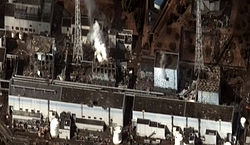
As of 2013, the Fukushima nuclear disaster site remains highly radioactive, with some 160,000 evacuees still living in temporary housing, and some land will be unfarmable for centuries. The difficult cleanup job will take 40 or more years, and cost tens of billions of dollars.[12][13] - Oder environmental disaster, 2022 – A contamination of river Oder from unknown origin that has led to a mass mortality event of the local sea life.
- Ohio train derailment, 2023 – A Norfolk Southern freight train carrying hazardous materials derailed in East Palestine, Ohio. The rail cars burned for several days, releasing chemicals into the air. Norfolk has been accused of mismanagement.
- Red Sea crisis, 2024 – An 18 miles (29 km) long oil-spill during the United States–Houthi conflict in the Red Sea.
- Sino-Metals Leach Zambia dam disaster, 2025 – Catastrophic failure of a tailings dam constructed for copper extraction by Sino-Metals Leach Zambia, dumping approximately 50 million liters of acidic and highly toxic waste into the Kafue River basin. The pollution killed riverine ecosystems at least 62 miles (100 km) downstream and impacted the water and irrigation supply of 60% of Zambia's population.[14]

Climate change and disaster risks
[edit]A 2013 report examined the relationship between disasters and poverty world-wide. It concludes that, without concerted action, there could be upwards of 325 million people living in the 49 countries most exposed to the full range of natural hazards and climate extremes in 2040.[15]
Social vulnerability and environmental disaster
[edit]According to author Daniel Murphy, different groups can adapt to environmental disasters differently due to social factors such as age, race, class, gender, and nationality.[16] Murphy argues that while developed countries with access to resources that can help mitigate environmental disasters often contribute the most to factors that can increase the risk of said disasters, developing countries experience the impacts of environmental disasters more intensely than their wealthier counterparts.[17] It is often the case that the populations that do not contribute to climate change are not only in geographic locations that experience more environmental disasters, but also have fewer resources to mitigate the impact of the disasters.[16] For example, when Hurricane Katrina hit Louisiana in 2005, many scientists argued that climate change had increased the severity of the hurricane.[18] Although the majority of the U.S. emissions that can contribute to climate change come from industry and transport, the people who were hit hardest by Katrina were not the heads of large companies within the country.[19] Rather, the poor Black communities within Louisiana were the most devastated by the hurricane.[20]
Mitigation efforts
[edit]There have been many attempts throughout recent years to mitigate the impact of environmental disasters.[21] Environmental disaster is caused by human activity, so many believe that such disasters can be prevented or have their consequences reduced by human activity as well. Efforts to attempt mitigation are evident in cities such as Miami, Florida, in which houses along the coast are built a few feet off of the ground in order to decrease the damage caused by rising tides due to rising sea-levels.[22] Although mitigation efforts such as those found in Miami might be effective in the short-term, many environmental groups are concerned with whether or not mitigation provides long-term solutions to the consequences of environmental disaster.[22]
See also
[edit]
References
[edit]- ^ "Exxon Valdez | Oil Spills | Damage Assessment, Remediation, and Restoration Program". darrp.noaa.gov. Retrieved 2023-12-09.
- ^ Jared M. Diamond, Collapse: How Societies Choose to Fail or Succeed, 2005
- ^ "Burning oil night and day". Archived from the original on 2007-02-08.
- ^ End-of-the-World Scenario:ecological Disaster
- ^ "Environmental Disaster Videos on Gaiagonewild.com". Archived from the original on 2007-12-03.
- ^ Eskenazi, Brenda; Warner, Marcella; Brambilla, Paolo; Signorini, Stefano; Ames, Jennifer; Mocarelli, Paolo (December 2018). "The Seveso accident: A look at 40 years of health research and beyond". Environment International. 121 (Pt 1): 71–84. Bibcode:2018EnInt.121...71E. doi:10.1016/j.envint.2018.08.051. PMC 6221983. PMID 30179766.
- ^ Assennato, G.; Cervino, D.; Emmett, E. A.; Longo, G.; Merlo, F. (January 1989). "Follow-up of subjects who developed chloracne following TCDD exposure at seveso". American Journal of Industrial Medicine. 16 (2): 119–125. doi:10.1002/ajim.4700160203. PMID 2773943.
- ^ Phillips, Alicia Saunté; Hung, Yung-Tse; Bosela, Paul A. (August 2007). "Love Canal Tragedy". Journal of Performance of Constructed Facilities. 21 (4): 313–319. doi:10.1061/(ASCE)0887-3828(2007)21:4(313).
- ^ Bonnieux, F.; Rainelli, P. (1993). "Learning from the Amoco Cadiz oil spill: damage valuation and court's ruling". Industrial & Environmental Crisis Quarterly. 7 (3): 169–188. Bibcode:1993OrgEn...7..169B. doi:10.1177/108602669300700302. JSTOR 26162550.
- ^ "The Chornobyl Accident". United Nations : Scientific Committee on the Effects of Atomic Radiation. Retrieved 2024-09-22.
- ^ Babinski, Jill M (2006). Residential brownfield redevelopment: A case study of Hickory Woods (Thesis). ProQuest 304940823.[page needed]
- ^ Richard Schiffman (12 March 2013). "Two years on, America hasn't learned lessons of Fukushima nuclear disaster". The Guardian.
- ^ Martin Fackler (June 1, 2011). "Report Finds Japan Underestimated Tsunami Danger". New York Times.
- ^ "A river 'died' overnight in Zambia after an acidic waste spill at a Chinese-owned mine". AP News. 2025-03-15. Retrieved 2025-03-16.
- ^ Andrew Shepherd; Tom Mitchell; Kirsty Lewis; Amanda Lenhardt; Lindsey Jones; Lucy Scott; Robert Muir-Wood (2013). "The geography of poverty, disasters and climate extremes in 2030". Archived from the original on 2013-10-24. Retrieved 29 October 2013.
- ^ a b Murphy, Daniel; Wyborn (January 2015). "Key concepts and methods in social vulnerability and adaptive capacity". Research Gate. Retrieved 2021-02-08.
- ^ "Inequality is decreasing between countries—but climate change is slowing progress". Environment. 2019-04-22. Archived from the original on April 1, 2021. Retrieved 2021-03-31.
- ^ reaTWeather. "10 Years Later: Was Warming to Blame for Katrina?". www.climatecentral.org. Retrieved 2021-03-31.
- ^ US EPA, OAR (2015-12-29). "Sources of Greenhouse Gas Emissions". US EPA. Retrieved 2021-03-31.
- ^ Allen, Troy D. (2007). "Katrina: Race, Class, and Poverty: Reflections and Analysis". Journal of Black Studies. 37 (4): 466–468. doi:10.1177/0021934706296184. JSTOR 40034317.
- ^ Murti, R. (2018, June 01). Environment and disasters. Retrieved February 24, 2021, from https://www.iucn.org/theme/ecosystem-management/our-work/environment-and-disasters
- ^ a b Ariza, M. A. (2020, September 29). As Miami keeps Building, rising SEAS DEEPEN its social divide. Retrieved February 24, 2021, from https://e360.yale.edu/features/as-miami-keeps-building-rising-seas-deepen-its-social-divide
- ^ Republic of Nauru. 1999. Climate Change – Response. First National Communication – 1999. Under the United Nations Framework Convention on Climate Change, United Nations
Further reading
[edit]- Davis, Lee (1998). Environmental Disasters. New York: Facts on File, Inc. ISBN 0-8160-3265-3.
| Overview |
| ||||||||||||||||||||||||||||||||||||||||||||
|---|---|---|---|---|---|---|---|---|---|---|---|---|---|---|---|---|---|---|---|---|---|---|---|---|---|---|---|---|---|---|---|---|---|---|---|---|---|---|---|---|---|---|---|---|---|
| Disasters |
| ||||||||||||||||||||||||||||||||||||||||||||
| Preparation | |||||||||||||||||||||||||||||||||||||||||||||
| Countermeasures | |||||||||||||||||||||||||||||||||||||||||||||
| Media | |||||||||||||||||||||||||||||||||||||||||||||
| Organizations | |||||||||||||||||||||||||||||||||||||||||||||


Environmental disaster
View on GrokipediaDefinition and Classification
Core Definition
An environmental disaster is a catastrophic event characterized by significant and often irreversible harm to ecosystems, biodiversity, soil, water, or air quality, typically arising from human-induced factors such as industrial accidents, chemical releases, or infrastructural failures that disrupt natural processes on a large scale. These incidents result in widespread contamination or degradation, leading to cascading effects like species extinction, habitat loss, and diminished environmental services such as pollination or water purification.[11] Empirical assessments prioritize measurable outcomes, including pollutant concentrations exceeding safe thresholds (e.g., parts per million for heavy metals in soil) and recovery timelines spanning decades, as seen in cases where bioaccumulation in food chains persists post-event.[2] While some definitions confine the term to anthropogenic causes to distinguish it from geophysical phenomena, causal analysis reveals that environmental disasters often involve interactions between human vulnerabilities and natural amplifiers, such as a volcanic eruption mobilizing stored pollutants into ecosystems. This perspective aligns with first-principles evaluation of root mechanisms: human alterations to landscapes or technologies create preconditions for amplified ecological fallout, verifiable through pre- and post-event satellite imagery or biomass inventories showing reductions of 50-90% in affected areas.[12] Attribution challenges arise from biased institutional reporting, where academic sources may underemphasize cyclical natural variability in favor of anthropogenic narratives, necessitating cross-verification with raw data from monitoring agencies.[13] Classification criteria emphasize scale and persistence over immediacy of human death tolls, focusing on ecological thresholds like the collapse of keystone species populations or irreversible shifts in trophic dynamics, which empirical models quantify via metrics such as ecosystem service valuation losses in billions of dollars annually.[9]Distinction from Natural Disasters
Environmental disasters are characterized by significant ecological degradation primarily attributable to human activities, technologies, or negligence, distinguishing them from natural disasters, which stem from geophysical, hydrological, or meteorological processes occurring independently of direct human intervention.[14][15] Natural disasters, such as earthquakes measuring above 7.0 on the Richter scale or hurricanes exceeding Category 3 intensity, originate from planetary dynamics like tectonic shifts or atmospheric convection, with their frequency and patterns documented through geological records spanning millennia.[16][17] In contrast, environmental disasters involve anthropogenic drivers, such as the release of 11 million gallons of crude oil in the 1989 Exxon Valdez incident, which caused persistent harm to marine habitats through direct chemical toxicity rather than incidental natural force.[15] This causal divergence implies differing predictability and mitigability: natural disasters follow probabilistic models based on empirical data from seismic monitoring or satellite meteorology, with global annual occurrences averaging around 400 significant events as tracked by organizations like the U.S. Geological Survey.[16] Environmental disasters, however, often result from failures in human systems, including regulatory oversights or operational errors, as seen in the 1984 Bhopal gas leak releasing 42 tons of methyl isocyanate, affecting over 500,000 people and contaminating soil and water for decades due to inadequate safety protocols.[14] While natural events can indirectly exacerbate environmental damage—such as a wildfire amplified by prior logging—the primary distinction lies in accountability, with environmental cases enabling post-hoc legal and engineering reforms grounded in root-cause analysis of human factors.[17] Blurring occurs in hybrid scenarios where human modifications heighten natural hazard vulnerability, such as wetland drainage increasing flood inundation by 20-50% in altered coastal zones, yet classifications prioritize dominant etiology: environmental if human action initiates or substantially amplifies the chain of ecological collapse.[11] Empirical assessments, including those from the United Nations Office for Disaster Risk Reduction, emphasize that disasters broadly require interaction between hazards and exposure, but environmental subtypes uniquely feature modifiable anthropogenic vulnerabilities over immutable natural forcings.[17] This framework aids resource allocation, directing prevention toward engineering redundancies in industrial sites rather than futile attempts to avert tectonic events.[18]Criteria for Classification
Classification of environmental disasters typically relies on assessments of ecological harm exceeding natural variability or regulatory thresholds, often emphasizing anthropogenic causation and long-term ecosystem disruption. Key criteria include the magnitude of contamination or habitat alteration, measured against baseline environmental quality standards, such as pollutant concentrations surpassing permissible exposure limits established by agencies like the U.S. Environmental Protection Agency or equivalent bodies.[19] Events are evaluated for widespread effects on biodiversity, including significant species mortality or population declines, and soil, water, or air quality degradation that impairs ecosystem services like pollination or water purification.[11] Duration and persistence form another core criterion, distinguishing transient incidents from disasters with extended or irreversible impacts; for instance, classifications consider short-term localized effects as minor, while prolonged widespread contamination requiring substantial remediation qualifies as serious.[20] Severity scales, such as those proposed in universal frameworks, incorporate factors like event intensity (e.g., volume of spill or radiation release), spatial extent, and proximity to sensitive habitats, rating impacts from negligible to catastrophic based on empirical metrics rather than solely human casualties.[21] Databases like EM-DAT further classify technological environmental events (e.g., oil spills, chemical releases) as disasters if they trigger ecological thresholds akin to those for natural hazards, such as affecting large areas or necessitating international response, though environmental-specific entries prioritize documented pollution subgroups over purely geophysical metrics.[22] Causal attribution is integral, requiring evidence of human drivers like industrial failure or policy lapses over purely natural processes, with hybrid cases (e.g., exacerbated floods from deforestation) assessed via vulnerability interactions.[23] Reversibility and remediation feasibility are weighed, favoring classifications for events demanding multi-decade interventions, as seen in frameworks grouping hazards into pollution, degradation, or global change categories where recovery timelines exceed human scales.[11] These criteria, drawn from international bodies, avoid over-reliance on economic proxies, focusing instead on verifiable biophysical indicators to mitigate subjective biases in reporting.[24]Historical Context
Pre-Industrial Examples
Pre-industrial environmental disasters primarily arose from agricultural practices and resource extraction that exceeded local ecological carrying capacities, leading to soil degradation, water mismanagement, and vegetation loss without modern mitigation technologies. These events, documented through archaeological and paleoenvironmental records, often contributed to societal declines by undermining food production and water availability, though they interacted with climatic variability. Examples include irrigation-induced salinization in ancient Mesopotamia and deforestation in the Maya lowlands, where human actions amplified vulnerabilities.[25][26] In southern Mesopotamia, intensive irrigation agriculture from the third millennium BCE onward caused widespread soil salinization due to poor drainage, high evaporation rates, and the capillary rise of salts from underlying aquifers. Without adequate leaching or drainage systems, salt accumulation rendered fields unproductive; by circa 2100 BCE, barley yields had declined by up to 30-50% in affected areas, as evidenced by cuneiform records and soil core analyses showing elevated salinity levels. This degradation coincided with the collapse of the Akkadian Empire around 2150 BCE and the later abandonment of Sumerian city-states, shifting cultivation northward to less saline Babylonian regions. The process exemplifies how unchecked irrigation in arid zones can irreversibly alter soil chemistry, reducing agricultural productivity over centuries.[27][28][25] Among the Classic Maya of the southern lowlands (circa 250-900 CE), extensive slash-and-burn clearing for maize agriculture deforested vast areas, leading to soil erosion, nutrient depletion, and altered local hydrology. Pollen records and lake sediment analyses indicate that forest cover diminished by 70-90% in core regions by the 8th century CE, accelerating runoff and reducing soil carbon storage, which intensified drought impacts during multi-decadal dry periods. This environmental stress, combined with population pressures estimated at 5-10 million, contributed to the abandonment of major centers like Tikal and Calakmul between 800-900 CE, as water reservoirs silted and crop failures mounted. While some studies emphasize drought as primary, the deforestation feedback loop—evidenced by accelerated erosion rates—amplified vulnerability, marking a key pre-industrial case of land-use intensification driving ecological tipping points.[26][29][30] In the ancient Mediterranean, particularly under Greek and Roman expansion from the 8th century BCE to the 3rd century CE, deforestation for shipbuilding, fuel, and farmland conversion eroded hillsides and silted harbors, diminishing arable land and fisheries. Timber demands stripped oak and pine forests across regions like Attica and North Africa, with sediment cores revealing erosion rates 10-20 times background levels; this contributed to reduced agricultural yields and the silting of ports such as those near Rome by the 1st century CE. Such degradation persisted, influencing long-term landscape aridification, though debates persist on the scale versus natural variability. These cases underscore that pre-industrial societies could inflict lasting harm through resource overexploitation, often without intent but via causal chains of population growth and technological limits.[31][32][33]Industrial Revolution to Mid-20th Century
The Industrial Revolution, commencing in Britain around 1760, marked the onset of large-scale environmental degradation through widespread coal combustion for steam engines and factories, generating dense smoke laden with soot, sulfur dioxide, and particulates that blanketed urban centers. In Manchester, a hub of textile manufacturing by the early 19th century, coal-fired boilers emitted vast quantities of black smoke, reducing visibility to mere yards and coating buildings in grime, while contributing to respiratory ailments among residents; contemporaries described the city as shrouded in a perpetual "smoke nuisance," with annual coal consumption exceeding 1 million tons by mid-century. Similar conditions prevailed in London, where coal use surged from 2.5 million tons in 1800 to over 13 million tons by 1890, fostering chronic smog that exacerbated tuberculosis and bronchitis rates, though acute episodes remained less documented prior to meteorological inversions amplifying pollutants.[34] Waterways bore the brunt of untreated industrial effluents, including dyes, chemicals, and heavy metals discharged directly into rivers, rendering them biologically dead in stretches. The Cuyahoga River in Cleveland, Ohio, ignited multiple times from accumulated oil slicks and flammable wastes starting as early as 1868, with a notable fire in 1936 highlighting the river's transformation into a conduit for steel and petroleum byproducts, killing fish populations and contaminating downstream Lake Erie. In Britain, the River Thames accumulated industrial sewage and factory runoff, culminating in the "Great Stink" of 1858, when hot weather volatilized effluents from over 200 tons of daily waste, forcing Parliament to suspend sessions and prompting initial sewer reforms, though industrial sources like tanneries and gasworks were primary contributors beyond domestic sewage.[35] By the early 20th century, concentrated industrial clusters amplified risks during stagnant weather, as seen in the Meuse Valley fog of December 1–5, 1930, in Belgium's Liège province, where emissions from zinc smelters, steelworks, and glass factories—rich in fluorine, sulfur dioxide, and particulates—trapped in a topographic inversion killed 63 people and sickened over 3,000, with autopsies revealing pulmonary edema and bronchitis linked to pollutant concentrations exceeding safe thresholds. This event underscored the lethality of unmitigated emissions in valleys prone to fog retention, with livestock deaths and vegetation damage extending ecological harm.[36] The 1948 Donora smog in Pennsylvania exemplified mid-century perils, as October 27–31 inversions confined sulfur dioxide, metal dusts, and fluorides from U.S. Steel's zinc plant and nearby mills over the Monongahela Valley town of 14,000, resulting in 20–21 deaths, 600 hospitalizations, and respiratory distress for half the population, including vulnerable asthmatics and the elderly. Post-event investigations confirmed emissions totals surpassing 1 million tons annually from local industries, with fluoride levels in air and blood correlating to animal fatalities and crop wilting, galvanizing early U.S. air quality scrutiny despite industry resistance. These incidents revealed causal pathways from fossil fuel dependency and lax emission controls to acute atmospheric crises, distinct from natural fogs by their anthropogenic chemical signatures.[37][38]Late 20th to 21st Century Developments
The late 20th century marked a transition in environmental disasters toward those arising from advanced industrial technologies, particularly in chemical processing and nuclear power, where failures in safety systems amplified ecological harm. The Bhopal disaster on December 2-3, 1984, at a Union Carbide pesticide plant in India released approximately 27 tons of methyl isocyanate gas, exposing over 500,000 people and contaminating soil and groundwater with persistent toxins, leading to long-term agricultural infertility and elevated cancer rates in affected areas.[39] [40] This incident highlighted vulnerabilities in developing industrial infrastructure, with immediate deaths estimated at 3,000 to 10,000 and total fatalities reaching 15,000 to 20,000.[39] [41] Nuclear accidents exemplified the scale of radiological contamination possible from energy production errors. The Chernobyl reactor explosion on April 26, 1986, in Ukraine released radioactive isotopes across 125,000 square kilometers in Belarus, Russia, and Ukraine, causing deforestation in the "Red Forest" due to acute radiation doses killing pine trees and disrupting fauna populations, including genetic mutations in birds and mammals.[42] [4] Similarly, the Fukushima Daiichi meltdowns on March 11, 2011, following a tsunami, discharged radionuclides into the Pacific Ocean, contaminating marine sediments and fisheries, with cesium-137 levels exceeding safety thresholds in some coastal areas for years.[43] [44] These events prompted international scrutiny of reactor designs, though ecological recovery varied, with some wildlife populations rebounding in exclusion zones absent human activity.[45] Oil spills from maritime transport and extraction underscored persistent risks in fossil fuel dependency. The Exxon Valdez tanker ran aground on March 24, 1989, in Alaska's Prince William Sound, spilling 11 million gallons of crude oil that coated 1,300 miles of coastline, killing an estimated 250,000 seabirds, 2,800 sea otters, and disrupting salmon fisheries through toxic polycyclic aromatic hydrocarbons persisting in sediments.[46] [47] The Deepwater Horizon rig explosion on April 20, 2010, in the Gulf of Mexico released 4 million barrels of oil over 87 days, forming subsurface plumes that caused mass mortality of fish, dolphins, and sea turtles, while oiling 1,100 miles of wetlands and reducing biodiversity in benthic communities.[48] [49] Cleanup efforts using dispersants like Corexit exacerbated oxygen depletion in affected waters, prolonging sublethal effects on marine ecosystems.[7] From 1980 to 2020, documented anthropogenic incidents like these increased alongside global industrialization, but improved monitoring and regulatory responses, such as the U.S. Oil Pollution Act of 1990 following Exxon Valdez, mitigated some recurrence risks without eliminating them.[46] Ongoing cases, including chronic oil pollution in Nigeria's Niger Delta since the 1980s from pipeline vandalism and spills totaling over 1.5 million tons, demonstrate how resource extraction in unstable regions sustains ecological degradation, with mangrove forests and fisheries suffering acidified soils and biodiversity loss.[50] Empirical data indicate that while acute disaster frequency rose with economic activity, per capita environmental impacts declined in regulated jurisdictions due to technological safeguards, challenging narratives of unmitigated escalation.[51]Causal Mechanisms
Anthropogenic Drivers
Anthropogenic drivers of environmental disasters primarily arise from industrial operations, resource extraction, and land management practices that prioritize short-term gains over long-term ecological stability. These activities often involve technological systems prone to failure due to design deficiencies, human error, or insufficient maintenance. For instance, chemical manufacturing incidents exemplify how operational lapses can trigger catastrophic releases; the 1984 Bhopal disaster occurred when water inadvertently entered a storage tank containing methyl isocyanate at a Union Carbide facility in India, leading to a runaway reaction that released approximately 45 tons of toxic gas, immediately killing over 2,000 people and causing enduring soil and water contamination. Contributing factors included leaky valves, inadequate safety systems, and poor training, highlighting systemic neglect in high-risk industrial settings.[52][39] In the energy sector, fossil fuel extraction and transport have precipitated numerous oil spills, with human activities accounting for over 90% of global oil slicks detected via satellite. Such events typically stem from structural failures in tankers, pipelines, or offshore platforms, exacerbated by inadequate oversight or cost-cutting measures; the 1989 Exxon Valdez spill in Alaska's Prince William Sound released 11 million gallons of crude oil due to captain error and vessel grounding, devastating marine ecosystems and fisheries for decades. Similarly, nuclear power generation accidents underscore human and organizational shortcomings: the 1986 Chernobyl meltdown in Ukraine resulted from a flawed reactor design (RBMK type with positive void coefficient) combined with operator violations during a safety test, releasing radioactive isotopes equivalent to 500 Hiroshima bombs and contaminating vast regions across Europe.[53][54][42] Land use changes, particularly deforestation and overexploitation, amplify disaster vulnerability by eroding natural buffers against erosion, flooding, and biodiversity collapse. Land/sea use alteration ranks as the dominant direct driver of recent global biodiversity loss, surpassing other factors like pollution or exploitation in impact, often culminating in ecosystem tipping points such as fishery collapses or soil desertification. In tropical regions, rapid clearing for agriculture or logging has intensified landslides and floods; for example, deforestation in Indonesia's watersheds has worsened flooding from severe rains by compacting soil and reducing water absorption capacity, with events displacing thousands annually. Direct resource exploitation, including mining and overharvesting, further drives disasters: phosphate mining on Nauru since the early 20th century stripped 80% of the island's vegetation and topsoil, rendering much of it uninhabitable and dependent on imports by the 1990s. These drivers reflect broader patterns of human expansion—global population surpassing 8 billion by 2022—intensifying pressure on finite resources without commensurate safeguards.[55][56][57]Natural and Cyclical Contributors
Natural geophysical events, such as volcanic eruptions, represent significant natural contributors to environmental disasters by injecting aerosols and gases into the atmosphere, which can disrupt global climate patterns and ecosystems. For example, the 1815 eruption of Mount Tambora in Indonesia, classified as a Volcanic Explosivity Index (VEI) 7 event, expelled an estimated 150 cubic kilometers of ash and pumice, leading to a volcanic winter that cooled global temperatures by 0.4–0.7°C and caused widespread crop failures, deforestation from ashfall, and biodiversity loss in affected regions.[58] Similarly, the 1980 eruption of Mount St. Helens in the United States released approximately 10 million tons of carbon dioxide in just nine hours, alongside sulfate aerosols that contributed to short-term regional cooling and acid rain impacting aquatic and terrestrial habitats.[59] These events demonstrate how natural volcanic activity can trigger acute environmental perturbations, including soil contamination, waterway sedimentation, and atmospheric veiling that persists for years, independent of anthropogenic influences.[60] Cyclical oceanic-atmospheric phenomena, particularly the El Niño-Southern Oscillation (ENSO), drive periodic environmental disasters through altered precipitation and temperature regimes that exacerbate droughts, floods, and wildfires. ENSO's warm phase, El Niño, has historically intensified flood risks in regions like the La Plata Basin by up to 160% and droughts in the Amazon by similar margins, as reconstructed from streamflow data spanning centuries, leading to habitat degradation, soil erosion, and mass die-offs in sensitive ecosystems.[61] For instance, the 1997–1998 El Niño event triggered severe wildfires in Indonesia, burning over 45,000 square kilometers of forest and releasing billions of tons of carbon, while causing coral bleaching across the Pacific due to elevated sea surface temperatures.[62] These cycles, operating on 2–7 year timescales and evidenced in paleoclimate records like sediment cores, underscore natural variability's role in generating extreme environmental stress without requiring human forcing.[63] Solar activity cycles, including the approximately 11-year sunspot cycle, contribute to environmental variability by modulating incoming solar radiation and cosmic ray flux, which influence cloud formation, precipitation patterns, and drought frequency. Reconstructions from tree rings and historical records indicate that low solar activity phases correlate with increased incidences of floods and droughts in regions like China over the past millennium, as cooler upper atmospheres alter jet stream behavior and storm tracks.[64] For example, the Maunder Minimum (1645–1715), a period of diminished sunspots, coincided with cooler European temperatures and agricultural disruptions, amplifying natural disaster risks through prolonged cold snaps and reduced ecosystem productivity.[65] While the radiative forcing from solar cycles is modest—estimated at 0.18°C variation from minimum to maximum—their influence on tropospheric dynamics highlights a persistent natural driver of climatic extremes, often overshadowed in attributions favoring anthropogenic greenhouse gases.[66][67]Challenges in Causal Attribution
Determining the precise causes of environmental disasters is complicated by the intricate interplay of multiple factors within nonlinear ecological and climatic systems, where anthropogenic influences often overlap with natural variability, making isolation of dominant drivers difficult. For instance, extreme weather events such as floods or droughts can result from combined effects of greenhouse gas emissions, land-use changes, and oscillatory patterns like El Niño-Southern Oscillation (ENSO), yet observational data frequently lacks the resolution to disentangle these contributions definitively.[68] Attribution efforts rely on probabilistic methods, estimating how human-induced warming alters event likelihood, but these yield confidence intervals rather than causal certainties, with results varying by event type—stronger for heatwaves but weaker for precipitation extremes due to model deficiencies in simulating convective processes.[69][70] A core limitation arises from non-stationarity in environmental baselines, where historical changes in infrastructure, population density, or vegetation cover—independent of climate—amplify disaster impacts, confounding efforts to attribute severity solely to anthropogenic forcing. River flood attribution exemplifies this, as hydrological alterations from dams or urbanization coincide with the period of observed warming, rendering pre-industrial baselines unreliable for comparison.[71] Climate models used in event attribution often exhibit biases, such as underestimating natural variability from solar cycles or Atlantic Multidecadal Oscillation (AMO), which can mimic or mask anthropogenic signals over decadal scales; for example, mid-20th-century warming episodes aligned more closely with AMO phases than CO2 trends.[72][73] Data scarcity further hinders rigorous attribution, particularly for rare events, where short instrumental records (often <150 years) fail to capture full cycles of natural variability, leading to over-reliance on simulations that may embed parametric uncertainties. Peer-reviewed critiques highlight that many attribution studies prioritize anthropogenic explanations, potentially influenced by funding priorities in climate research institutions, which systematically undervalue natural forcings despite evidence from paleoclimate proxies showing comparable extremes in pre-industrial eras, such as medieval warm period droughts.[74][73] This selective emphasis risks overstating human causality, as probabilistic claims like "event made 2-10 times more likely" do not equate to direct causation and can mislead policy without accounting for unmodeled feedbacks.[75]Notable Examples
Industrial and Technological Incidents
Industrial and technological incidents encompass accidents involving chemical plants, nuclear facilities, and oil extraction operations that release contaminants into ecosystems, often causing widespread and persistent ecological damage. These events highlight vulnerabilities in industrial processes, where failures in safety systems or human error lead to acute pollution of air, soil, water, and biota. Key examples include chemical leaks, nuclear meltdowns, and massive oil spills, each resulting in measurable losses to biodiversity and long-term habitat degradation. The Bhopal disaster on December 3, 1984, at a Union Carbide pesticide plant in India involved the release of over 40 tons of methyl isocyanate gas, contaminating soil and groundwater with toxic residues that persist in the vicinity. This incident led to immediate vegetation die-off and long-term soil infertility, with studies detecting elevated levels of carcinogenic compounds exceeding U.S. Environmental Protection Agency standards decades later.[3][76] The Chernobyl nuclear accident on April 26, 1986, in Ukraine released at least 5% of the reactor core's radioactive material into the atmosphere, contaminating approximately 150,000 square kilometers across Europe with radionuclides like cesium-137 and strontium-90. Forests in the exclusion zone experienced severe radiation-induced necrosis, with pine trees dying en masse, and aquatic systems showed bioaccumulation in fish, disrupting food chains and reducing biodiversity in affected rivers and lakes.[42][4] The Exxon Valdez oil tanker spill on March 24, 1989, in Alaska's Prince William Sound discharged 11 million gallons of crude oil, coating 1,300 miles of shoreline and killing an estimated 250,000 seabirds, 2,800 sea otters, 300 harbor seals, and up to 22 killer whales through smothering, hypothermia, and toxicity. Subtidal communities suffered persistent impacts, with lingering hydrocarbons inhibiting recovery of herring and other species even years post-spill.[46][7] The Deepwater Horizon explosion on April 20, 2010, in the Gulf of Mexico released 4.9 million barrels of oil over 87 days, forming deepwater plumes that depleted oxygen and contaminated sediments, leading to mass mortality of fish eggs, larvae, and deep-sea corals. Marine mammals and sea turtles faced elevated strandings and health issues, with over 1,000 dolphins documented dead or distressed in the following years due to lung disease and immunosuppression from oil exposure.[49][77] The Fukushima Daiichi nuclear disaster on March 11, 2011, triggered by a tsunami, released radionuclides including cesium-137 into the Pacific Ocean and surrounding land, contaminating marine sediments and causing detectable bioaccumulation in fish populations near the plant. Terrestrial ecosystems in the exclusion zone exhibited reduced bird and insect diversity, with radiation hotspots altering forest dynamics and inhibiting plant regrowth.[44][43]Resource Extraction and Pollution Events
Resource extraction activities, particularly oil drilling and mining, have precipitated severe pollution events through spills, tailings discharges, and land stripping. The Exxon Valdez oil tanker grounded on Bligh Reef in Prince William Sound, Alaska, on March 24, 1989, releasing approximately 11 million gallons of crude oil into the marine environment.[78] This spill contaminated over 1,300 miles of coastline, causing acute mortality in marine mammals, birds, and fish, with long-term effects including reduced populations of species like sea otters and orcas persisting decades later.[79] A more extensive incident occurred during the Deepwater Horizon explosion on April 20, 2010, in the Gulf of Mexico, where the semi-submersible drilling rig failed, leading to an uncontrolled release of oil estimated at 3.19 to 4.9 million barrels over 87 days.[80] [48] The discharge formed surface slicks covering up to 68,000 square miles and subsurface plumes, devastating fisheries, wetlands, and biodiversity, with dispersants exacerbating toxicity to deep-sea organisms.[48] In mining, acute pollution from tailings failures includes the Baia Mare event in Romania on January 30, 2000, when a gold extraction facility's dam breach released about 100,000 cubic meters of cyanide-laden wastewater into the Sasar River, propagating to the Tisza and Danube Rivers.[81] This cyanide spill, containing up to 100 tonnes of the chemical plus heavy metals, resulted in mass fish kills exceeding 1,000 tons and rendered drinking water unsafe for over 2.5 million people across multiple countries.[82] [83] Chronic riverine pollution exemplifies the Ok Tedi copper-gold mine in Papua New Guinea, operational since 1984, which has discharged over 2 billion tonnes of tailings directly into the Ok Tedi and Fly Rivers without containment.[84] Annual tailings output of approximately 66 million tonnes has elevated copper concentrations to toxic levels (up to 200 parts per billion), smothering aquatic habitats with sediment, collapsing fisheries yields by over 90% in affected reaches, and causing skin lesions and respiratory issues in riparian communities reliant on river resources.[85] [86] Phosphate extraction on Nauru, commencing in the early 1900s under colonial administration and continuing post-independence, has mined over 80% of the island's 21 square kilometers, exposing jagged coral pinnacles and rendering the central plateau infertile and uninhabitable.[87] This surface mining stripped vegetation and topsoil, exporting around 80 million metric tons of phosphate while leaving no viable agriculture on mined lands and contributing to groundwater contamination and biodiversity loss across the micronation.[88]Conflict and Warfare-Related Disasters
During the Vietnam War, U.S. forces conducted Operation Ranch Hand from 1962 to 1971, spraying approximately 76 million liters of herbicides, including Agent Orange contaminated with dioxin (TCDD), across about 1.9 million hectares of forest and mangroves to deny cover and food supplies to enemy forces.[89] This defoliation destroyed up to 50% of mangroves and caused long-term soil and sediment contamination, with dioxin levels remaining elevated in hotspots like former U.S. bases, leading to bioaccumulation in wildlife and aquatic ecosystems decades later.[90] Ecological recovery has been slow, with persistent impacts on biodiversity, including reduced forest regeneration and altered microbial communities.[91] In the 1991 Gulf War, Iraqi forces retreating from Kuwait ignited approximately 737 oil wells and released crude oil from tankers, creating fires that burned until November 1991 and spilled over 10 million barrels into the Persian Gulf and desert soils.[92] The resulting smoke plumes released an estimated 600 million tons of sulfur dioxide, carbon dioxide, and particulates, depositing acid rain and tarry residues across thousands of square kilometers, while oil lakes covered 49 square kilometers and contaminated groundwater aquifers.[93] Marine ecosystems suffered acute damage, with mass bird die-offs (e.g., 22-50% mortality in cormorant and grebe populations) and smothering of coastal habitats; terrestrial effects included soil infertility and reduced vegetation regrowth in affected areas.[93][94] Depleted uranium (DU) munitions, used extensively by coalition forces in the 1991 Gulf War and 2003 Iraq invasion, dispersed an estimated 300-400 tons of DU particles into Iraqi soils through armor-piercing rounds.[95] DU's chemical toxicity and low-level radioactivity have led to measurable soil and water contamination, particularly near impact sites and former battlefields, with uranium concentrations exceeding background levels by factors of 10-100 in some samples.[96] While direct causal links to widespread ecological collapse remain debated due to confounding war damage, studies document bioaccumulation in plants and animals, potential groundwater leaching, and inhibited microbial activity in contaminated zones.[97] Independent assessments emphasize the need for long-term monitoring, as DU oxidizes slowly and persists in the environment.[98] The June 6, 2023, destruction of the Kakhovka Dam on the Dnipro River during the Russia-Ukraine conflict released approximately 18-20 cubic kilometers of water, flooding over 600 square kilometers downstream while desiccating the 2,150-square-kilometer reservoir upstream.[99] This triggered massive sediment release (estimated 27-60 million tons), nutrient overloads, and mobilization of pollutants like heavy metals and pesticides from agricultural and industrial sites, causing widespread eutrophication, fish kills (millions affected), and contamination of the Black Sea estuary.[100] Biodiversity hotspots, including wetlands and sturgeon breeding grounds, faced irreversible losses, with over 20% of regional fish stocks decimated and long-term shifts in riparian ecosystems due to erosion and salinization.[101] UNEP assessments highlight challenges in attributing precise causality amid ongoing hostilities but confirm acute and chronic hydrological disruptions.[99]Impacts and Consequences
Ecological and Biodiversity Effects
Environmental disasters disrupt ecosystems by causing direct habitat destruction, acute toxicity, and chronic contamination, often leading to reduced species abundance and altered community structures. Oil spills exemplify these effects, as hydrocarbons smother intertidal zones, kill planktonic organisms, and foul feathers or fur, resulting in immediate mass die-offs; for example, the 1989 Exxon Valdez spill caused persistent declines in seabird populations, sea otters, and killer whales over decades.[102] Similarly, the 2010 Deepwater Horizon incident led to failed oyster recruitment for multiple years, damage to coastal wetlands, and shifts in reef fish communities with decreased species richness.[7][103] Nuclear accidents introduce radionuclides that bioaccumulate in food webs, elevating mutation rates and causing physiological stress in wildlife. At Chernobyl following the 1986 explosion, field studies documented reduced microbial diversity in soils and genetic damage in birds and insects, though some mammal populations, such as wolves, showed no significant abundance declines possibly due to expansive ranges and absent human hunting pressure.[104][105] Fukushima's 2011 releases similarly contaminated forests and aquatic systems, with ongoing monitoring revealing indirect effects like altered trophic interactions, yet ecosystem services such as pollination persisted in moderately affected areas.[106] Resource extraction disasters, including mining tailings breaches, fragment habitats and release heavy metals that persist in sediments, inhibiting plant regrowth and invertebrate communities. In biodiversity hotspots, such activities have driven local extinctions by degrading soil structure and introducing toxins that biomagnify through herbivores to predators, as seen in cases of acid mine drainage reducing macroinvertebrate diversity by up to 80% in affected streams.[107][108] These disruptions cascade to biodiversity loss via mechanisms like bioaccumulation, where persistent pollutants concentrate in top predators, impairing reproduction and survival; empirical data from spills and leaks show elevated toxin levels correlating with eggshell thinning in birds and endocrine disruption in fish.[109] Despite such damage, empirical observations indicate partial ecosystem recovery in many instances, driven by resilient pioneer species and natural attenuation processes, though full biodiversity restoration remains elusive in hotspots of lingering contamination.[7][110]Human Health and Societal Costs
Environmental disasters impose significant burdens on human health through both immediate and protracted exposures to toxins, radiation, or disrupted living conditions. Acute effects often include direct fatalities and injuries; for instance, the 1984 Bhopal gas leak exposed over 570,000 people to methyl isocyanate, resulting in approximately 3,800 immediate deaths and thousands more from respiratory failure and organ damage in the ensuing weeks.[111] Chronic physical health consequences persist for decades, manifesting as elevated rates of cancer, reproductive disorders, and neurological impairments; Bhopal survivors have reported intergenerational birth defects and higher disability risks among those in utero at the time, linked to epigenetic changes from gas exposure.[112] Similarly, the 1986 Chernobyl nuclear accident caused a marked increase in thyroid cancer, particularly among children exposed to radioactive iodine-131, with incidence rates rising up to 10-fold in contaminated regions and projected to continue for decades, though broad elevations in other solid cancers or leukemia remain unsubstantiated beyond liquidators.[113][114] Oil spills exemplify respiratory and dermatological harms from hydrocarbon volatiles. Cleanup workers from the 2010 Deepwater Horizon incident in the Gulf of Mexico experienced acute symptoms like cough, eye irritation, and headaches, alongside long-term risks including nonfatal myocardial infarction from dispersant and oil fume inhalation.[115] Persistent hematological alterations and elevated cancer markers have been documented in these workers years later, underscoring the bioavailability of polycyclic aromatic hydrocarbons through skin and inhalation pathways.[116] Mental health sequelae often rival or exceed physical tolls in scope and duration. Exposure to disaster stressors correlates with post-traumatic stress disorder (PTSD), anxiety, and depression in 25-50% of affected populations, amplified by uncertainty over contamination and relocation.[117] In Chernobyl's aftermath, evacuees exhibited chronic psychological distress, including elevated suicide ideation and alcohol dependence, driven more by socioeconomic upheaval than radiation fears alone.[118] Deepwater Horizon communities reported heightened mental health service utilization, with income loss and stigma compounding grief and substance abuse.[119] Societal costs extend to community fragmentation and forced migration, eroding social networks essential for resilience. Disasters like Chernobyl displaced over 350,000 residents, severing kinship ties and fostering isolation that exacerbates mental health declines via disrupted support systems.[120] In Bhopal, persistent groundwater toxicity has confined generations to substandard living, perpetuating cycles of poverty and health inequities without adequate remediation, as corporate liability evasion prolonged suffering.[121] These events highlight how environmental insults cascade into cultural erosion and intergenerational trauma, with vulnerable groups—such as low-income or indigenous populations—bearing disproportionate loads due to limited adaptive capacity.[122]Economic Ramifications
Environmental disasters generate direct costs from remediation and cleanup, alongside indirect losses in sectoral output, employment, and asset values. These encompass expenses for containing pollutants, restoring ecosystems, and compensating affected parties, as well as revenue shortfalls in fisheries, tourism, and agriculture due to contamination. BP's remediation efforts following the 2010 Deepwater Horizon oil spill in the Gulf of Mexico totaled $71 billion over a decade, including $16 billion for regional restoration projects. Commercial fishing losses from the spill reached $4.9 billion, with recreational fishing impacts at $3.5 billion, reflecting disruptions to marine-dependent economies. Natural resource damages were valued at $17.2 billion based on household willingness-to-pay surveys.[123][80][119][124] Nuclear incidents amplify long-term economic burdens through exclusion zones, health monitoring, and energy sector transitions. The 1986 Chernobyl accident imposed estimated damages of $235 billion to $700 billion across Belarus, Russia, and Ukraine, encompassing agricultural and forestry losses from radioactive contamination, power production shortfalls, and socio-economic disruptions in contaminated regions. In Ukraine, the event directly curtailed electrical output and industrial activity in affected areas. The 2011 Fukushima Daiichi meltdown accrued costs of $200 billion to $300 billion, incorporating evacuee compensation, site decontamination, plant decommissioning, and replacement power generation via fossil fuel imports. Fukushima Prefecture's per capita income fell by up to 14.4% in the two years post-disaster, linked to manufacturing job reductions and agricultural employment shifts.[125][126][127][128] Broader macroeconomic ramifications include labor market alterations, migration, and fiscal strains from aid and insurance payouts. Severe disasters elevate county-level out-migration by 1.5 percentage points and depress housing prices or rents by 2.5% to 5%, eroding local tax bases and investment. Post-Fukushima, Japan's nuclear phase-out increased fossil fuel imports, boosting oil-consuming sectors' costs and dependency. Globally, direct disaster costs average $202 billion annually, with indirect losses often comparable or exceeding them through supply chain interruptions and reduced productivity. In the U.S., 403 weather and climate disasters from 1980 to 2024 tallied $2.915 trillion in damages, though anthropogenic events like spills concentrate impacts on specific industries rather than diffuse weather-related losses.[129][130][131][132]| Disaster | Year | Estimated Total Cost (USD) | Primary Components |
|---|---|---|---|
| Deepwater Horizon | 2010 | $71 billion (remediation) | Cleanup, fisheries losses, restoration |
| Chernobyl | 1986 | $235–700 billion | Agriculture/forestry damage, exclusion zone |
| Fukushima Daiichi | 2011 | $200–300 billion | Decontamination, power substitution, income loss |