Hubbry Logo
EnvisatEnvisatMain
Open search
Envisat
Community hub
Envisat
logo
8 pages, 0 posts
0 subscribers
Be the first to start a discussion here.
Envisat
Envisat
from Wikipedia

Envisat
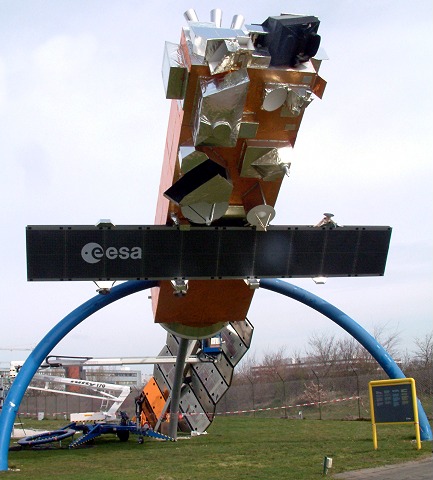
Model of Envisat
Mission typeEarth observation
OperatorESA
COSPAR ID2002-009A Edit this at Wikidata
SATCAT no.27386
Websiteenvisat.esa.int
Mission durationPlanned: 5 years
Final: 10 years, 1 month, 6 days
Spacecraft properties
ManufacturerAstrium
Launch mass8,211 kg (18,102 lb)
Dimensions26 × 10 × 5 m (85 × 33 × 16 ft)
Power6,500 watts
Start of mission
Launch date1 March 2002, 01:07:59 (2002-03-01UTC01:07:59Z) UTC
RocketAriane 5G V-145
Launch siteKourou ELA-3
ContractorArianespace
End of mission
DisposalNone
Declared9 May 2012 (2012-05-10)
Last contact8 April 2012 (2012-04-09)
(spacecraft failure)
Decay date~150 years
Orbital parameters
Reference systemGeocentric
RegimePolar low Earth
Semi-major axis7,144.9 km (4,439.6 mi)
Eccentricity0.00042
Perigee altitude772 km (480 mi)
Apogee altitude774 km (481 mi)
Inclination98.40 degrees
Period100.16 minutes
Repeat interval35 days
Epoch15 December 2013, 03:07:00 UTC[1]
Instruments

Envisat ("Environmental Satellite") is a large Earth-observing satellite which has been inactive since 2012. It was launched on 1 March 2002 aboard an Ariane 5 from the Guyana Space Centre in Kourou, French Guiana, into a Sun synchronous polar orbit at an altitude of 790 ± 10 km.

Operated by the European Space Agency (ESA), it was the world's largest civilian Earth observation satellite.[2] Its objective was to support the continuity of European Remote-Sensing Satellite missions, providing additional observations to improve environmental studies. To accomplish the global and regional objectives of the mission, numerous scientific disciplines used the data acquired from the sensors on the satellite to study atmospheric chemistry, ozone depletion, biological oceanography, ocean temperature and colour, wind waves, hydrology (humidity, floods), agriculture and arboriculture, natural hazards, digital elevation modelling (using interferometry), monitoring of maritime traffic, atmospheric dispersion modelling (pollution), cartography and snow and ice.

Envisat malfunctioned before it could be deorbited,[3] and after losing contact with the satellite on 8 April 2012, ESA formally announced the end of Envisat's mission on 9 May 2012.[4] The defunct satellite is considered space debris and orbits the Earth in about 101 minutes, with a repeat cycle of 35 days. An analysis that determined the 50 "statistically most concerning" debris objects in low Earth orbit ranked Envisat in 21st place.[3]

Envisat was able to operate five years beyond its planned mission lifetime, delivering over a petabyte of data.[4] At the time of its failure, Envisat had cost a total of 2.5 billion euro to develop, launch, and operate.[5] The mission has been replaced by the Sentinel series of satellites. The first of these, Sentinel 1, has taken over the radar duties of Envisat since its launch in 2014.

Mission

[edit]

Envisat was launched as an Earth observation satellite. Its objective was to support the continuity of European Remote-Sensing Satellite missions, providing additional observations to improve environmental studies.

To accomplish the global and regional objectives of the mission, numerous scientific disciplines used the data acquired from the sensors on the satellite to study atmospheric chemistry, ozone depletion, biological oceanography, ocean temperature and colour, wind waves, hydrology (humidity, floods), agriculture and arboriculture, natural hazards, digital elevation modelling (using interferometry), monitoring of maritime traffic, atmospheric dispersion modelling (pollution), cartography and snow and ice.

Specifications

[edit]
Dimensions

26 m (85 ft) × 10 m (33 ft) × 5 m (16 ft) in orbit with the solar array deployed.[6]

Mass

8,211 kg (18,102 lb), including 319 kg (703 lb) of fuel and a 2,118 kg (4,669 lb) instrument payload.[7]

Power

Solar array with a total load of 3560 W.

Instruments

[edit]
Instruments carried by Envisat.

Envisat carries an array of nine Earth-observation instruments that gathered information about the Earth (land, water, ice, and atmosphere) using a variety of measurement principles. A tenth instrument, DORIS, provided guidance and control. Several of the instruments were advanced versions of instruments that were flown on the earlier ERS-1 and ERS 2 missions and other satellites.

MWR

[edit]

MWR (Microwave Radiometer) was designed for measuring water vapour in the atmosphere.

AATSR

[edit]

AATSR (Advanced Along Track Scanning Radiometer) can measure the sea surface temperature in the visible and infrared spectra. It is the successor of ATSR1 and ATSR2, payloads of ERS 1 and ERS 2. AATSR can measure Earth's surface temperature to a precision of 0.3 K (0.54 °F), for climate research. Among the secondary objectives of AATSR is the observation of environmental parameters such as water content, biomass, and vegetal health and growth.

MIPAS

[edit]

MIPAS (Michelson Interferometer for Passive Atmospheric Sounding) is a Fourier transforming infrared spectrometer which provides pressure and temperature profiles, and profiles of trace gases nitrogen dioxide (NO
2
), nitrous oxide (N
2
O
), methane (CH
4
), nitric acid (HNO
3
), ozone (O
3
), and water (H
2
O
) in the stratosphere. The instrument functions with high spectral resolution in an extended spectral band, which allows coverage across the Earth in all seasons and at equal quality night and day. MIPAS has a vertical resolution of 3 to 5 km (2 to 3 mi) depending on altitude (the larger at the level of the upper stratosphere).

MERIS

[edit]

MERIS (MEdium Resolution Imaging Spectrometer) measures the reflectance of the Earth (surface and atmosphere) in the solar spectral range (390 to 1040 nm) and transmits 15 spectral bands back to the ground segment. MERIS was built at the Cannes Mandelieu Space Center.

SCIAMACHY

[edit]

SCIAMACHY (SCanning Imaging Absorption spectroMeter for Atmospheric CHartographY) compares light coming from the sun to light reflected by the Earth, which provides information on the atmosphere through which the Earth-reflected light has passed.

SCIAMACHY is an image spectrometer with the principal objective of mapping the concentration of trace gases and aerosols in the troposphere and stratosphere. Rays of sunlight that are reflected transmitted, backscattered and reflected by the atmosphere are captured at a high spectral resolution (0.2 to 0.5 nm) for wavelengths between 240 and 1700 nm, and in certain spectra between 2,000 and 2,400 nm. Its high spectral resolution over a wide range of wavelengths can detect many trace gases even in tiny concentrations. The wavelengths captured also allow effective detection of aerosols and clouds. SCIAMACHY uses 3 different targeting modes: to the nadir (against the sun), to the limbus (through the atmospheric corona), and during solar or lunar eclipses. SCIAMACHY was built by Netherlands and Germany at TNO/TPD, SRON and Airbus Defence and Space Netherlands.[8]

RA-2

[edit]

RA-2 (Radar Altimeter 2) is a dual-frequency Nadir pointing Radar operating in the Ku band and S bands, it is used to define ocean topography, map/monitor sea ice and measure land heights.

Mean sea level measurements from Envisat are continuously graphed at the Centre National d'Etudes Spatiales web site, on the Aviso page.

ASAR

[edit]

ASAR (Advanced Synthetic Aperture Radar) operates in the C band in a wide variety of modes. It can detect changes in surface heights with sub-millimeter precision. It served as a data link for ERS 1 and ERS 2, providing numerous functions such as observations of different polarities of light or combining different polarities, angles of incidence and spatial resolutions.

Mode Id Polarisation Incidence Resolution Swath
Alternating polarisation AP HH/VV, HH/HV, VV/VH 15–45° 30–150 m 58–110 km
Image IM HH, VV 15–45° 30–150 m 58–110 km
Wave WV HH, VV 400 m 5 km × 5 km
Suivi global (ScanSAR) GM HH, VV 1000 m 405 km
Wide Swath (ScanSAR) WS HH, VV 150 m 405 km

These different types of raw data can be given several levels of treatment (suffixed to the ID of the acquisition mode: IMP, APS, and so on):

  • RAW (raw data, or "Level 0"), which contains all the information necessary to create images.
  • S (complex data, "Single Look Complex"), images in complex numeric form, the real and imaginary parts of the output of the compression algorithm
  • P (precision image), amplified image with constant pixel width (12.5 m for IMP)
  • M (medium precision image), amplified radiometry image with a resolution greater than P
  • G (geocoded image), amplified image to which simple geographical transforms have been applied to show relief.

Data capture in WV mode is unusual in that they constitute a series of 5 km × 5 km spaced at 100 km.

DORIS

[edit]

DORIS (Doppler Orbitography and Radiopositioning Integrated by Satellite) determines the satellite's orbit to within 10 cm (4 in).

GOMOS

[edit]

GOMOS (Global Ozone Monitoring by Occultation of Stars) looks at stars as they descend through the Earth's atmosphere and change colour, allowing measurement of gases such as ozone (O
3
), including their vertical distribution.

GOMOS uses the principle of occultation. Its sensors detect light from a star traversing the Earth's atmosphere and measures the depletion of that light by trace gases nitrogen dioxide (NO
2
), nitrogen trioxide, (NO
3
), OClO), ozone (O
3
) and aerosols present between about 20 to 80 km (12 to 50 mi) altitude. It has a resolution of 3 km (1.9 mi).

End of mission

[edit]

Loss of contact

[edit]

ESA announced on 12 April 2012 that they lost contact with Envisat on Sunday, 8 April 2012, after 10 years of service, exceeding the initially planned life span by 5 years. The spacecraft was still in a stable orbit, but attempts to contact it were unsuccessful.[9][10] Ground-based radar and the French Pleiades Earth probe were used to image the silent Envisat and look for damage.[11] ESA formally announced the end of Envisat's mission on 9 May 2012.[4]

Envisat was launched in 2002 and it operated five years beyond its planned mission lifetime, delivering over a petabyte of data.[4] ESA was planning to operate the spacecraft until 2014.[5]

Space safety

[edit]
Space debris populations seen from outside geosynchronous orbit (GEO). Note the two primary debris fields, the ring of objects in GEO, and the cloud of objects in low Earth orbit (LEO).

The defunct Envisat satellite is considered space debris and orbits the Earth in about 101 minutes, with a repeat cycle of 35 days. It poses a hazard because of the risk of collisions. Given its orbit and its area-to-mass ratio, it will take about 150 years for the satellite to be gradually pulled into the Earth's atmosphere.[12] Envisat is currently orbiting in an environment where two catalogued space debris objects can be expected to pass within about 200 m (660 ft) of it every year, which would likely trigger the need for a manoeuvre to avoid a possible collision.[13] A collision between a satellite the size of Envisat and an object as small as 10 kg could produce a very large cloud of debris, initiating a self-sustaining chain-reaction of collisions and fragmentation with production of new debris, a phenomenon known as the Kessler Syndrome.[13] An analysis that determined the 50 "statistically most concerning" debris objects in low Earth orbit ranked Envisat in 21st place.[3]

Envisat was a candidate for a mission to remove it from orbit, called e.Deorbit. The spacecraft sent to bring down Envisat would itself need to have a mass of approximately 1.6 tonnes.[14]

See also

[edit]

References

[edit]
[edit]
Revisions and contributorsEdit on WikipediaRead on Wikipedia
from Grokipedia
Envisat was an advanced polar-orbiting developed and operated by the (ESA), launched on 1 March 2002 from , , aboard an rocket, designed to provide continuous measurements of Earth's atmosphere, oceans, land, and to support and . As the successor to ESA's earlier ERS satellites, Envisat was the largest civilian ever built, with a mass of 8,140 kg—including a 2,050 kg —and orbited in a sun-synchronous path at approximately 800 km altitude, achieving a 35-day repeat cycle and completing over 50,000 orbits during its mission. The satellite carried ten sophisticated instruments, categorized into radar altimeters (RA-2), synthetic aperture radars (ASAR), spectrometers and imagers (MIPAS, GOMOS, SCIAMACHY, MERIS), radiometers (AATSR, MWR), and precision orbit determiners (DORIS, LRR), enabling multispectral observations across visible, infrared, and microwave spectra to track phenomena such as sea-level rise, , , and polar dynamics. Originally planned for a five-year lifespan, Envisat operated for a decade until a sudden loss of contact on 8 April 2012, after which ESA declared the mission's end on 9 May 2012 due to a likely power system failure. During its service, it generated over 1,000 terabytes of data, contributing to approximately 2,500 scientific publications and aiding applications in disaster management, the Global Monitoring for Environment and Security (GMES) program, and long-term studies of climate change indicators like Arctic sea ice shrinkage and atmospheric pollution. Its archived datasets continue to support ongoing Earth science research, bridging to subsequent ESA missions like Sentinel.

Mission Overview

Objectives and Background

Envisat, the Environmental Satellite, was developed as part of the European Space Agency's (ESA) efforts, with initial work on its Polar Platform beginning in 1990 and the full mission configuration approved following the ESA Ministerial Council in , which split the original POEM-1 concept into Envisat and the meteorological program. The spacecraft was constructed by a European industrial consortium led by (now part of ), involving companies from 14 countries including , , , , , , , , the , , , , , and the . The total development and launch cost amounted to approximately €2.3 billion, encompassing €2 billion for the program and an additional €300 million for five years of operations. Phase C/D contracts for the platform and payload were signed in July 1995, building on heritage from earlier missions like SPOT 4. The primary mission objectives centered on providing continuity and enhancement to the data from ESA's European Remote-Sensing Satellites (ERS-1 and ERS-2), launched in 1991 and 1995 respectively, by delivering advanced observations of Earth's atmosphere, oceans, land surfaces, and ice cover. Envisat aimed to support environmental and climate studies, including monitoring , , vegetation dynamics, and the impacts of natural disasters such as floods and volcanic eruptions. These goals were pursued through synergistic measurements from its suite of instruments, enabling both global-scale environmental tracking and precise regional assessments for and . As a non-commercial research mission within ESA's broader framework, Envisat was designed to generate long-term datasets essential for understanding processes, with an emphasis on interdisciplinary applications across , , and . It contributed to initiatives like the Global Monitoring for Environment and Security (GMES) program by providing foundational data for modeling, analysis, and policy-relevant insights into phenomena such as global warming and shifts. Over its operational life, the mission amassed more than a petabyte of data, fostering advancements in without direct commercial ties.

Launch and Orbital Parameters

Envisat was launched on March 1, 2002, at 01:07:59 UTC from the in , , aboard an rocket designated as flight V-505. The satellite had an initial launch mass of 8,211 kg, including payloads and propellants, making it one of the heaviest satellites deployed at the time. The successfully placed Envisat into its initial transfer orbit, marking the culmination of a multi-year development effort by the (ESA) to advance global . The operated in a sun-synchronous, near-polar designed to provide consistent lighting conditions for observations. Key parameters included an altitude ranging from 782 to 800 km, an inclination of 98.55°, and an of 100.6 minutes, enabling a 35-day repeat cycle over the 's surface. The featured a mean local of 10:00 a.m. at the descending node, ensuring optimal solar illumination for instrument operations. Over its mission lifetime, Envisat completed more than 50,000 , covering a cumulative distance exceeding 2.5 billion kilometers. Following launch, Envisat underwent a commissioning phase that extended until December , during which initial insertion maneuvers were performed using the spacecraft's onboard bipropellant to fine-tune its and achieve the nominal operational . These adjustments included corrections for inclination, eccentricity, and altitude deviations from the reference , stabilizing the at its target parameters within weeks of deployment. By the end of this phase, routine operations commenced, with the thereafter used periodically for maintenance to counteract atmospheric drag and gravitational perturbations.

Spacecraft Design

Specifications

Envisat was designed as a large polar-orbiting , measuring 26 meters in including its deployed solar array, 10 meters in width, and 5 meters in height in its operational configuration. In launch configuration, it had a of 10.5 meters and an envelope diameter of 4.57 meters. The spacecraft's total mass at launch was 8,140 kg, including 319 kg of propellant, with a dry mass of 7,821 kg. The , comprising instruments and interfacing hardware, accounted for 2,050 kg of this mass. The power system generated up to 6.5 kW at end-of-life through a single-sided solar array measuring 14 meters by 5 meters, composed of solar cells deployed as a single wing with 14 rigid panels. This array provided an average of 6 kW in , supplemented by eight 40 Ah nickel-cadmium (NiCd) batteries for periods, delivering up to 3 kW. The payload instruments required an average of 1.9 kW during both and phases, with a peak demand of 4.1 kW. Communication was handled via X-band channels for high-rate payload data transmission, supporting up to two simultaneous links at 100 Mbps each (full RF channel) or 50 Mbps (half channel), and Ka-band for additional data relay at similar rates. Telemetry, tracking, and command (TT&C) used S-band at 2 kbps uplink and 4 kbps downlink rates. Onboard data handling included two solid-state recorders, each with 70 Gbits capacity at beginning-of-life (60 Gbits at end-of-life), and a backup with 30 Gbits, enabling storage of up to 170 Gbits total for mission data before downlink.
Specification CategoryDetails
Dimensions (In-Orbit)26 m (length with solar array) × 10 m (width) × 5 m (height)
Dimensions (Launch)10.5 m (length) × 4.57 m (diameter)
Mass (Total at Launch)8,140 kg (including 319 kg hydrazine)
Mass (Dry)7,821 kg
Payload Mass2,050 kg
Power Generation6.5 kW (end-of-life, solar array: 14 m × 5 m, silicon cells)
Eclipse Power3 kW (eight 40 Ah NiCd batteries)
Payload Power1.9 kW average; 4.1 kW peak
Data Transmission (X-band/Ka-band)Up to 100 Mbps per channel (two channels each)
TT&C (S-band)2 kbps (uplink); 4 kbps (downlink)
Onboard StorageTwo SSRs (70 Gbits each BOL); one tape recorder (30 Gbits)

Subsystems

Envisat's propulsion subsystem utilized a monopropellant hydrazine system with 319 kg of propellant stored in four tanks, enabling orbit acquisition, maintenance maneuvers, and fine attitude adjustments through 16 thrusters arranged in two redundant chains of eight each. The attitude and orbit control subsystem (AOCS) provided three-axis stabilization, employing five reaction wheels for primary pointing control with a capacity of 40 Nm/s, supplemented by the hydrazine thrusters for wheel desaturation and large maneuvers. Attitude determination relied on three star trackers for high-precision measurements with random errors below 0.0085 degrees and stability under 0.015 degrees over 170 seconds, alongside four two-axis gyroscopes to minimize misalignment effects. This configuration achieved overall pointing accuracy better than 0.04 degrees, supporting precise instrument operations. The thermal control subsystem employed a primarily passive , featuring (MLI) blankets and dedicated radiators on the anti-sun face to manage without subsystem interference. Active elements included - and software-controlled heaters for critical components such as batteries, lines, and electronics, while instruments incorporated heat pipes and independent thermal units for localized regulation. Structurally, Envisat drew heritage from platform but featured a with a service module (SM) built around a carbon fiber reinforced plastic (CFRP) cone for primary load-bearing, interfaced with aluminum elements, and a payload module (PLM) using CFRP tubes and sandwich panels to accommodate the instrument suite. This aluminum-CFRP hybrid structure was qualified for a nominal five-year mission but demonstrated robustness for extended operations. The onboard computing architecture centered on a fault-tolerant central unit in the service module, which served as the main processor for the AOCS, executing dedicated control algorithms and monitoring functions with redundant hardware to enhance reliability. The module computer (PMC) managed instrument interfaces and subsystem coordination via a robust onboard data handling (OBDH) bus, supporting autonomous operations through 24-hour time-tagged command timelines and macro-commands. In response to anomalies, the system could autonomously transition to a , reorienting to a sun-pointing attitude using thrusters and PROM-based software to limit rates to 0.4–0.65 degrees per second, ensuring recovery and preservation of onboard resources.

Instruments

Microwave Radiometer (MWR)

The on Envisat is a passive nadir-viewing instrument designed to measure integrated atmospheric and , primarily to provide wet corrections for the by estimating the delay in radar signals caused by atmospheric humidity. It operates at dual frequencies of 23.8 GHz (near the absorption line) and 36.5 GHz, enabling differential measurements that isolate contributions from surface emissions and effects. These observations support not only altimetry corrections but also broader applications in monitoring surface emissivity, , and characterization. The instrument employs a Dicke-type two-channel total power radiometer design with an offset antenna, featuring separate beams: the 23.8 GHz channel pointed slightly forward and the 36.5 GHz channel backward relative to the to align footprints. Key specifications include a of 25 kg, average power consumption of 23 W, and radiometric sensitivity better than 0.5 K (specifically 0.4 K at 23.8 GHz and 0.6 K at 36.5 GHz). The footprint is approximately 20 km in diameter, with an absolute radiometric accuracy of ≤3 K for measurements, translating to retrieval accuracy of 1-2 kg/ and cloud liquid water content accuracy of 0.02-0.05 kg/ under typical conditions. Calibration is performed using an internal two-point system with hot and cold reference loads, supplemented by noise diodes to maintain stability throughout the mission, ensuring reliable data averaged over 1-second intervals. Operationally, the MWR functions continuously across the full , viewing at all times and generating Level 1b products at a data rate of 16.7 kbit/s for integration with other Envisat sensors. This evolved design, adapted from the ERS-1 and ERS-2 missions, enhances the precision of global and measurements by mitigating atmospheric path delays.

Advanced Along-Track Scanning Radiometer (AATSR)

The Advanced Along-Track Scanning Radiometer (AATSR) was designed to provide high-accuracy measurements of (SST) and land surface temperature (LST), enabling precise monitoring of global variability and supporting operational . By extending the data record from earlier ATSR instruments, AATSR contributed to a long-term essential for , with SST accuracy targets of less than 0.3 over 0.5° × 0.5° areas. The instrument also measured top temperatures and , facilitating studies of atmospheric aerosols and their radiative effects. Additionally, its thermal infrared channels supported fire detection by identifying hotspots through anomalous heat signatures, particularly in vegetation-covered regions. AATSR operated across seven spectral channels spanning visible to thermal infrared wavelengths from 0.55 µm to 12 µm, though core measurements emphasized four primary bands in the visible (around 0.55–0.87 µm) to thermal infrared (up to 11.3 µm) for and retrievals. It achieved a of 1 km at and a swath width of 500 km, with the instrument weighing 101 kg and consuming 100 W of power. The radiometric accuracy for SST was better than 0.5 , with thermal uncertainty below 0.1 , ensuring reliable data for applications. In operation, AATSR employed a mechanism that captured dual views: a view and a forward view at a 55° along-track angle, enabling bidirectional measurements for improved atmospheric correction in and studies. This dual-view capability minimized errors from atmospheric interference, enhancing the precision of surface temperature retrievals. Onboard used a blackbody source for channels and visible calibration targets, while the instrument was cross-calibrated with the Medium Resolution Imaging Spectrometer (MERIS) to refine atmospheric corrections in synergistic data products.

Michelson Interferometer for Passive Atmospheric Sounding (MIPAS)

The for Passive (MIPAS) was a spectrometer designed to measure high-resolution emission spectra from Earth's atmospheric limb in the mid-infrared region, enabling the retrieval of vertical concentration profiles for key trace gases. Operating from 4.15 to 14.6 µm (corresponding to 685–2410 cm⁻¹), MIPAS targeted species such as (O₃), (HNO₃), (CH₄), (N₂O), and (H₂O), among others, to investigate stratospheric chemistry, dynamics, and transport processes. It also detected signatures of polar stratospheric clouds (PSCs), which play a critical role in mechanisms, particularly during studies of the ozone hole. MIPAS employed a limb-viewing , scanning vertically from the tangent height of approximately 5 km up to 150 km altitude, with a providing 3–4 km vertical resolution and 25–30 km horizontal resolution. The instrument's was 0.025 cm⁻¹ (unapodized), achieved through a maximum difference of 20 cm in its dual-sided configuration. With a total of kg and power consumption of 210 W, MIPAS was one of Envisat's more substantial payloads, featuring cooled detectors maintained at 65–75 K to minimize thermal noise. Following a detector saturation anomaly in 2004, operations shifted from full-resolution mode (0.025 cm⁻¹, 20 cm maximum difference) to optimized resolution modes (~0.062 cm⁻¹, ~8 cm maximum difference) with reduced , extending data collection until 2012. Raw interferograms collected during each 75-second limb scan were processed on the ground through Fourier transformation to yield calibrated radiance spectra at Level 1B, followed by inversion algorithms (such as optimal estimation or Gauss-Newton methods) to retrieve vertical profiles of over 20 trace , including and , at Level 2. These profiles, with typical altitude coverage from 6 to 50 km for most , supported global monitoring of atmospheric composition changes and validation of chemical models.

Medium Resolution Imaging Spectrometer (MERIS)

The Medium Resolution Imaging Spectrometer (MERIS) served as a passive aboard Envisat, primarily dedicated to imaging Earth's surface in the visible and near-infrared to assess , land vegetation, and related environmental parameters. It measured key indicators such as ocean concentration for productivity, suspended sediments in coastal and inland waters, and changes for vegetation monitoring, while also contributing to atmospheric studies through analysis. These capabilities enabled global observations of biogeochemical cycles, in lakes and rivers, and aerosol optical properties, supporting and research. MERIS featured 15 programmable bands spanning 0.39 to 1.04 µm, with configurable bandwidths ranging from 2.5 nm to 30 nm to optimize for specific applications like ocean detection or vegetation indices. At full resolution, it provided a of 300 m , with a reduced resolution mode at 1.2 km for broader coverage; the instrument's 68.5° yielded a 1150 km swath width, allowing near-global coverage every three days under suitable illumination. Weighing 200 kg and consuming an average of 175 W, MERIS achieved high radiometric with a exceeding 600 across its bands, typically reaching 1,700 in ocean channels for accurate retrieval. In operation, MERIS employed pushbroom scanning, utilizing five identical tilted camera modules equipped with (CCD) detectors to capture simultaneous spectral measurements across the swath, with the satellite's motion providing along-track sampling. Each camera covered a 14° sub-field of view with slight overlaps to minimize gaps, and onboard processing included spectral band selection, radiometric , and data compression for transmission. were processed into Level 1b products, consisting of top-of-atmosphere (TOA) radiances with geolocation and pixel classification; these fed into Level 2 geophysical products, such as chlorophyll-a concentration and optical thickness, derived via neural network-based algorithms that inverted models for atmospheric correction and parameter retrieval. This processing chain emphasized efficiency for near-real-time applications in and monitoring.

Scanning Imaging Absorption Spectrometer for Atmospheric Cartography (SCIAMACHY)

The Scanning Imaging Absorption Spectrometer for Atmospheric Cartography (SCIAMACHY) is a passive spectrometer aboard Envisat, designed to measure global distributions of atmospheric trace gases and aerosols across the ultraviolet, visible, and near-infrared . Its primary purpose is to monitor key trace gases including nitrogen dioxide (NO₂), sulfur dioxide (SO₂), and carbon monoxide (CO) in both the and , providing data essential for understanding , sources, and interactions. Additionally, SCIAMACHY detects aerosols to assess their and impacts on air quality, while its sensitivity to solar-induced enables observations of stress and at a global scale. SCIAMACHY features eight spectral channels spanning 0.24 to 2.38 µm, with each channel equipped with a 1024-pixel detector array for high-resolution imaging; the first five channels use detectors for UV-visible coverage, while the latter three employ for near-infrared. It operates in multiple viewing modes—nadir for surface and lower atmospheric observations, limb for horizontal profiling along the atmospheric edge, and for vertical density profiles using the sun or —allowing comprehensive mapping of atmospheric constituents. The instrument's instantaneous yields ground pixels of approximately 30 km along-track by 60 km across-track in nadir mode, with a total mass of 209 kg and average power consumption of 140 . A dedicated polarization measurement device with seven channels monitors instrumental polarization sensitivity, ensuring accurate corrections for effects in retrieved spectra. In operation, SCIAMACHY employs a scanning mirror system, including an scan mirror for across-track coverage and an scan mirror for vertical adjustments, achieving a swath width of 960 km for near-global daily coverage when combined with Envisat's . Data acquisition occurs continuously over the full orbit, with spectra recorded at rates up to 1.867 Mbit/s during and processed onboard for averaging to reduce volume. column densities are primarily retrieved using the differential optical absorption spectroscopy () technique, which isolates narrow absorption features from scattering, achieving accuracies of 1-5% for total columns of major like NO₂ and SO₂. This multi-mode approach complements vertical profiling from other instruments like MIPAS by providing broader horizontal mapping of tropospheric composition.

Radar Altimeter 2 (RA-2)

The Radar Altimeter 2 (RA-2) served as a key instrument on Envisat for high-precision radar altimetry, primarily determining sea surface height to monitor ocean topography, significant wave height for wave dynamics, and near-surface wind speed for meteorological applications. Building on the legacy of the European Remote Sensing (ERS) satellites' altimeters, RA-2 enhanced measurement resolution and coverage to support studies of ocean circulation patterns, marine geoid modeling, and global sea level changes. Its data contributed to understanding mesoscale ocean features and long-term climate variability through repeated nadir observations along Envisat's sun-synchronous orbit. RA-2 operated at dual frequencies of 13.575 GHz in the Ku-band and 3.2 GHz in the S-band, enabling ionospheric correction by comparing propagation delays between the bands to account for electron content effects on signal timing. The instrument delivered a sea surface height accuracy of approximately 2 cm root-mean-square (RMS) over 1-second measurement averages, with precision better than 0.5 m or 10% and accuracy around 2 m/s. Its effective footprint was roughly 2 km in diameter for Ku-band measurements, providing along-track resolution of 1.6–2 km while the S-band offered complementary lower-resolution data for correction purposes. With a of 110 kg and average power consumption of 161 W, RA-2 was designed for continuous operation throughout Envisat's mission lifetime. As a pulse-limited altimeter, RA-2 transmitted short pulses toward and analyzed the returned echo waveforms using onboard retracking to derive range, backscattering coefficients, and environmental parameters. It employed a model-free tracker with adaptive bandwidth selection (320 MHz, 80 MHz, or 20 MHz in Ku-band) to maintain lock on varying surfaces, including transitions from to . Wet tropospheric path delays were corrected using brightness temperature data from the (MWR), while precise orbital ephemerides from the DORIS receiver ensured sub-centimeter altitude knowledge. Over polar sheets, RA-2 utilized specialized ice-tracking modes and open-loop acquisition to measure surface elevations and elevation changes, aiding assessments of mass and contributing to cryospheric research.

Advanced Synthetic Aperture Radar (ASAR)

The Advanced (ASAR) is a multi-polarization C-band designed for all-weather, day-and-night imaging of Earth's land, ice, and ocean surfaces. Operating at a frequency of 5.3 GHz, ASAR provides high-resolution backscatter measurements to detect surface features and changes, enabling applications such as monitoring surface deformation through interferometric techniques, identifying oil spills on water bodies, mapping extents, and tracking dynamics. These capabilities support critical areas like disaster management—such as rapid response to earthquakes and volcanic activity—and monitoring, including assessment and classification. Key specifications of ASAR include a mass of approximately 830 kg and peak power consumption of 1,395 , with resolutions ranging from 30 m in Image mode to 1 km in Global mode, and a maximum swath width of 405 km. The instrument supports alternating polarization configurations, primarily HH/VV, along with single (HH or VV) and cross (HV or VH) options depending on the mode, allowing for enhanced discrimination of surface properties like roughness and constants. These parameters ensure versatile coverage, from high-detail narrow swaths for precise deformation mapping to broad-area scans for global-scale and surveillance. ASAR operates in five primary beam modes—Image, Wide Swath, Alternating Polarization, Wave, and Global Monitoring—each optimized for specific observational needs, with mode switching possible up to 10 times per . For instance, Wide Swath mode offers 150 m resolution over 405 km for efficient and monitoring, while Alternating Polarization mode enables dual-polarization data collection over up to 100 km swaths to improve agricultural feature classification. focusing relies on Doppler processing to compensate for the platform's motion and achieve resolution, producing geolocated and calibrated products from raw Level 0 data through to geophysical Level 2 interpretations.

Doppler Orbitography and Radiopositioning Integrated by Satellite (DORIS)

The Doppler Orbitography and Radiopositioning Integrated by Satellite (DORIS) instrument aboard Envisat serves as a Doppler for precise , enabling accurate geolocation of observations from the satellite's other payloads. By measuring the Doppler shift in radio signals from a of ground beacons, DORIS supports the establishment of a high-precision terrestrial reference frame and enhances the performance of altimetry missions through reliable positioning data. This capability ensures that Envisat's measurements, such as those for and surface topography, maintain the required accuracy for scientific applications. DORIS features a dual-frequency UHF receiver operating at 2.03625 GHz for primary Doppler measurements and 401.25 MHz for ionospheric propagation delay corrections, complemented by an onboard ultra-stable oscillator and an omni-directional antenna. The instrument, including its Instrument Control Unit, has a mass of 91 kg and a power consumption of . It delivers real-time position accuracy of 1 m across three axes and velocity accuracy better than 2.5 mm/s, while post-processed resituated achieve 5 cm radial position accuracy and 0.4 mm/s velocity accuracy, resulting in an overall orbit error of approximately 1 cm. In operation, DORIS continuously tracks signals from about 50 ground beacons worldwide, which cover roughly 75% of Envisat's orbit and provide measurements at intervals of 7-10 seconds. These Doppler data enable onboard real-time orbit computation using the software, while ground-processed products support higher precision. For ultimate accuracy in precise , DORIS observations are integrated with data from Envisat's GPS receiver and laser ranging via the onboard array. This combined approach is critical for geolocating altimeter measurements from the 2 instrument to within centimeters.

Global Ozone Monitoring by Occultation of Stars (GOMOS)

The Global Ozone Monitoring by Occultation of Stars (GOMOS) instrument on Envisat was developed to derive high-precision vertical profiles of key atmospheric constituents, including (O₃), (NO₂), aerosols, and other trace gases such as NO₃ and (H₂O), from the upper to the . By employing the stellar technique, GOMOS observes the attenuation of ultraviolet-visible and near-infrared starlight as it traverses the Earth's limb during nighttime, enabling accurate monitoring of ozone trends and depletions without dependence on solar illumination. This self-calibrating method uses the ratio of in-atmosphere and reference (unattenuated) star spectra to correct for instrumental effects, providing global coverage with minimal bias from or calibration drifts. Additionally, GOMOS measures stellar scintillation to infer atmospheric and density fluctuations. GOMOS features two spectrometers: a UV-visible unit covering 250–675 nm with a spectral resolution of 1.2 nm, and a near-infrared unit spanning 756–952 nm at 0.2 nm resolution, allowing detection of absorption signatures from multiple species across a broad altitude range up to 100 km. The instrument achieves a vertical resolution of approximately 1.5 km through tangent layer sampling during occultation events. Complementary fast photometers—one in the blue channel (473–527 nm) and one in the red (646–698 nm)—operate at 1 kHz sampling rates to capture high-frequency scintillation signals for turbulence profiling and cloud detection. With a total mass of 163 kg and power consumption of 146 W, GOMOS was optimized for efficient integration into Envisat's payload while maintaining high data fidelity. During operations, GOMOS targeted around 150 stars per orbit, selected from a catalog of bright, stable sources suitable for occultation, yielding thousands of profiles daily for global sampling. Raw spectral data undergo processing via inversion algorithms: spectral fitting with the Levenberg-Marquardt method to retrieve transmission spectra, followed by vertical inversion using onion-peeling techniques with Tikhonov regularization to obtain density profiles for ozone, NO₂, aerosols, and related parameters. This approach is largely unaffected by clouds, as the stellar light path penetrates the atmosphere independently of surface reflectivity or scattering, though low-altitude profiles below dense cloud layers may require filtering. GOMOS thus provided a unique nighttime complement to daytime limb and nadir ozone observations from instruments like SCIAMACHY.

Operations

Nominal Mission Phase

Following its launch on March 1, 2002, Envisat underwent a commissioning phase beginning in March 2002 to verify the functionality of its 10 instruments and onboard systems. During this period, initial checkout and calibration activities ensured readiness for full operations, transitioning to routine by late 2002. The nominal mission phase, originally planned from 2002 to , continued operations seamlessly into the extended phase, with all instruments operating actively to collect environmental data across Earth's atmosphere, oceans, and land surfaces. The generated approximately 100 terabytes of data annually, transmitted via X-band and Ka-band links during its 14+ orbits per day in a . Ground segment operations were coordinated from the (ESOC) in , , for flight control, and the Kiruna station in for primary during daily polar passes. Initial campaigns, involving cross-comparisons with ground-based and airborne measurements, were conducted shortly after commissioning to confirm instrument performance and data quality. One notable challenge during this phase occurred with the for Passive Atmospheric Sounding (MIPAS), where detector issues with moving retroreflectors prompted a shutdown on March 26, 2004, followed by a resumption in a reduced mode to maintain operations. This adjustment allowed continued atmospheric observations without interrupting the overall mission timeline.

Extended Mission Phase

The Envisat mission, originally designed for a five-year nominal phase ending in 2007, received approval from ESA Member States in December 2005 for an extension until the end of 2010, with operations emphasizing fuel conservation through minimized maneuvers and selective instrument usage. In June 2009, a further extension was unanimously approved, pushing operations to 2013, though the satellite continued functioning until contact was lost in April 2012. To manage dwindling resources, the was lowered to an average altitude of 783 km in October 2010, establishing a 30-day repeat cycle while reducing propellant needs for maintenance. Following the orbit lowering, a mini-commissioning phase was conducted in and December 2010 to verify instrument performance in the new . Operational adjustments during this phase included adaptations to key instruments for efficiency. The Michelson Interferometer for Passive Atmospheric Sounding (MIPAS) had been operating in optimized resolution mode since January 2005, a reduced-resolution configuration compared to its initial full-resolution setup, to lower data rates and power demands while preserving essential atmospheric measurements. Similarly, the Advanced (ASAR) alternated between modes such as alternating polarization and wide swath to balance coverage with onboard storage and transmission limits. These changes contributed to a total data volume exceeding one petabyte over the mission lifetime, with daily science data generation around 280 GB by 2011. Processing involved international collaborations, supporting over 2,700 scientific projects and operational users worldwide. In the later years of the extended phase, operations increasingly prioritized long-term climate variables, such as and atmospheric composition trends, despite emerging battery degradation that heightened risks to power stability. This focus ensured continuity in essential environmental datasets amid subsystem wear.

End of Mission

Loss of Contact and

Contact with Envisat was unexpectedly lost on April 8, 2012, during a scheduled pass over the ground station in , with no data received thereafter. Efforts to re-establish communication, including commands to enter and reset the power subsystem, proved unsuccessful over the following weeks. On May 9, 2012, the (ESA) formally declared the end of the mission after exhaustive recovery attempts failed to restore contact. An anomaly review board convened by ESA investigated the failure, focusing on internal subsystem malfunctions given the satellite's 10-year operational history beyond its nominal five-year design life. The analysis identified two primary suspected causes: loss of the power regulator blocking and telecommand functions, or a triggering . External factors, such as a collision with , were ruled out based on orbital tracking data and the absence of any impact signatures. In response, ESA's operations team coordinated with international ground stations to monitor passes and issue recovery commands, but no was possible due to the persistent communication blackout. The incident highlighted the challenges of extended operations straining aging components, though the exact trigger remained unconfirmed without further .

Space Debris Implications

Following the loss of contact in April 2012, Envisat has remained in an uncontrolled at an approximate mean altitude of 762 km (as of 2025), gradually decaying due to atmospheric drag without any active propulsion for deorbiting. Ground-based observations have confirmed that the is tumbling in an uncontrolled attitude, with rotational periods that have increased from initial estimates of 2-3 minutes to over 3.5 minutes as of recent observations, complicating potential future removal efforts. Current predictions indicate that Envisat's natural reentry into Earth's atmosphere will not occur for approximately 150 years, around the year 2170, due to its high initial altitude and the low drag in this orbital regime. Envisat poses a significant collision in , where as of 2025, it ranks as the 2nd highest- derelict object among the top 50 concerning objects globally, primarily due to its large size (over 8 meters in and exceeding 8 tons) and in a densely populated . Envisat poses a significant collision , with recent studies highlighting elevated probabilities due to the densification of ; removing it could reduce overall LEO collision by up to 50% when combined with other top objects. As part of ESA's Space Situational Awareness (SSA) program, Envisat is continuously monitored using ground-based sensors and international catalogs to assess close approaches and issue warnings, enabling avoidance maneuvers for active missions in the vicinity. The Envisat incident underscores critical lessons in , highlighting the vulnerabilities of pre-2007 satellite designs that lacked sufficient fuel reserves or passivation measures for end-of-life disposal. This has directly influenced subsequent ESA missions, such as the Copernicus Sentinel series, which incorporate enhanced controlled deorbiting capabilities and battery passivation to prevent post-mission explosions, ensuring compliance with international guidelines like the UN's 2007 Space Debris Guidelines. These adaptations aim to limit long-term debris proliferation by targeting reentry within 25 years for future satellites. In line with ESA's Zero Debris Charter, studies emphasize the priority for active removal of high-risk objects like Envisat to mitigate long-term collision cascading.

Scientific Contributions and Legacy

Key Discoveries

Envisat's atmospheric instruments, particularly SCIAMACHY, MIPAS, and GOMOS, provided critical data for analyzing dynamics and distributions. SCIAMACHY observations from 2002 to 2009 revealed significant chemical loss in the during winter-spring seasons, with depletion rates reaching up to 2.5 parts per million by volume in severe years, contributing to record-low levels over the Euro-Atlantic sector in 2011. These measurements highlighted the role of polar stratospheric clouds and chlorine activation in amplifying trends, distinct from the more consistent Antarctic hole. Additionally, SCIAMACHY mapped tropospheric (NO2) concentrations globally, identifying urban pollution hotspots such as the in and the , where column densities exceeded 4 × 10^15 molecules per square centimeter, linking anthropogenic emissions to air quality degradation. MIPAS and GOMOS data quantified (SO2) emissions from volcanic eruptions, including the 2010 event in , where MIPAS detected peak stratospheric SO2 loadings of approximately 0.5 Dobson units in the upper and lower , aiding assessments of dispersion and radiative impacts. In ocean and land monitoring, Envisat's instruments delivered insights into biogeochemical cycles and cryospheric changes. The Medium Resolution Imaging Spectrometer (MERIS) tracked global chlorophyll-a concentrations, revealing enhanced blooms along coastal zones disrupted by El Niño events, such as reduced productivity off during the 2002-2003 episode due to weakened nutrient . The Radar Altimeter-2 (RA-2) measured sea surface heights with centimeter precision, contributing to estimates of global mean at approximately 3.1 mm per year from 1993 to 2008, a rate driven by thermal expansion and ice melt. Complementing this, Advanced (ASAR) and RA-2 data analyzed elevation changes from 2002 to 2010, indicating an average mass loss of about 200 gigatons per year, primarily from southeastern outlet glaciers and surface melt, accelerating contributions to . Beyond these domains, the Advanced Along-Track Scanning Radiometer (AATSR) enabled global fire detection and monitoring of biomass burning, identifying burn scars and active fires in regions like boreal forests and savannas, which informed estimates of carbon emissions from events such as the 2003 European wildfires. Overall, Envisat's dataset has supported over 7,000 peer-reviewed publications, fostering advancements in through interdisciplinary analyses of coupled atmospheric, oceanic, and terrestrial processes.

Data Archival and Ongoing Use

Following the loss of contact with Envisat in April 2012, the European Space Agency (ESA) has ensured the long-term preservation of the mission's extensive dataset, which totals over 1 petabyte of raw and processed observations acquired between 2002 and 2012. All Envisat data have been made freely and openly available through ESA's Earth Online portal since the mission's end, in line with ESA's Earth Observation Data Policy that promotes unrestricted access for scientific and public use upon registration. The archived collections include Level 1 (raw, time-ordered instrument data), Level 2 (geophysical products derived from Level 1), and Level 3 (spatially and temporally gridded products) datasets across all 10 instruments. These have been further refined into Climate Data Records (CDRs) under ESA's Climate Change Initiative (CCI), providing stable, long-term time series for essential climate variables such as sea surface height from the Radar Altimeter 2 (RA-2) instrument and atmospheric ozone profiles from instruments like the Michelson Interferometer for Passive Atmospheric Sounding (MIPAS), Global Ozone Monitoring by Occultation of Stars (GOMOS), and Scanning Imaging Absorption Spectrometer for Atmospheric Cartography (SCIAMACHY). In recent years (2023–2025), Envisat datasets continue to drive impactful research and applications, bridging historical observations with contemporary needs. For instance, SCIAMACHY data on and have been integrated into the ESA CCI's LOng-LIved greenhouse gas PrOducts Performances (LOLIPOP) project, launched in November 2023, to evaluate multi-mission satellite records for improved monitoring of long-lived es and their feedbacks. RA-2 altimetry data contributed to reconstructions in the Intergovernmental Panel on Climate Change's ( (AR6), supporting assessments of global mean rates of 3.7 mm/year from 2006–2018. Additionally, a 2025 study utilized Envisat RA-2 measurements alongside other altimetry missions to reconstruct hourly coastal total s along China's coastline, revealing heightened flood risks from and , with extreme events projected to increase by up to 50% by 2100 under high-emission scenarios. Envisat data are frequently combined with Sentinel mission observations to extend for , such as in CCI products that merge RA-2 records with altimetry to track decadal changes in ocean dynamics with uncertainties below 0.5 mm/year. Looking ahead, Envisat's archived data remain vital for advancing global sustainability efforts, particularly in support of Sustainable Development Goal (SDG) 13 on , by enabling evidence-based policies on emissions reduction, , and resilience through long-term . Ongoing reprocessing campaigns, such as the 2022 updates to the Instrument Processing Facility (IPF) for MIPAS (version 8.22) and the Advanced Along-Track Scanning Radiometer (AATSR fourth reprocessing), incorporate refined algorithms for better cloud detection, inhomogeneity handling, and calibration, reducing retrieval errors by up to 10–20% for key variables. These enhancements improve data quality for emerging applications, including AI-driven analyses like models for predicting trends or vulnerabilities from fused heritage and modern datasets.

References

Add your contribution
Related Hubs
User Avatar
No comments yet.