Hubbry Logo
Duct (flow)Duct (flow)Main
Open search
Duct (flow)
Community hub
Duct (flow)
logo
8 pages, 0 posts
0 subscribers
Be the first to start a discussion here.
Duct (flow)
Duct (flow)
from Wikipedia
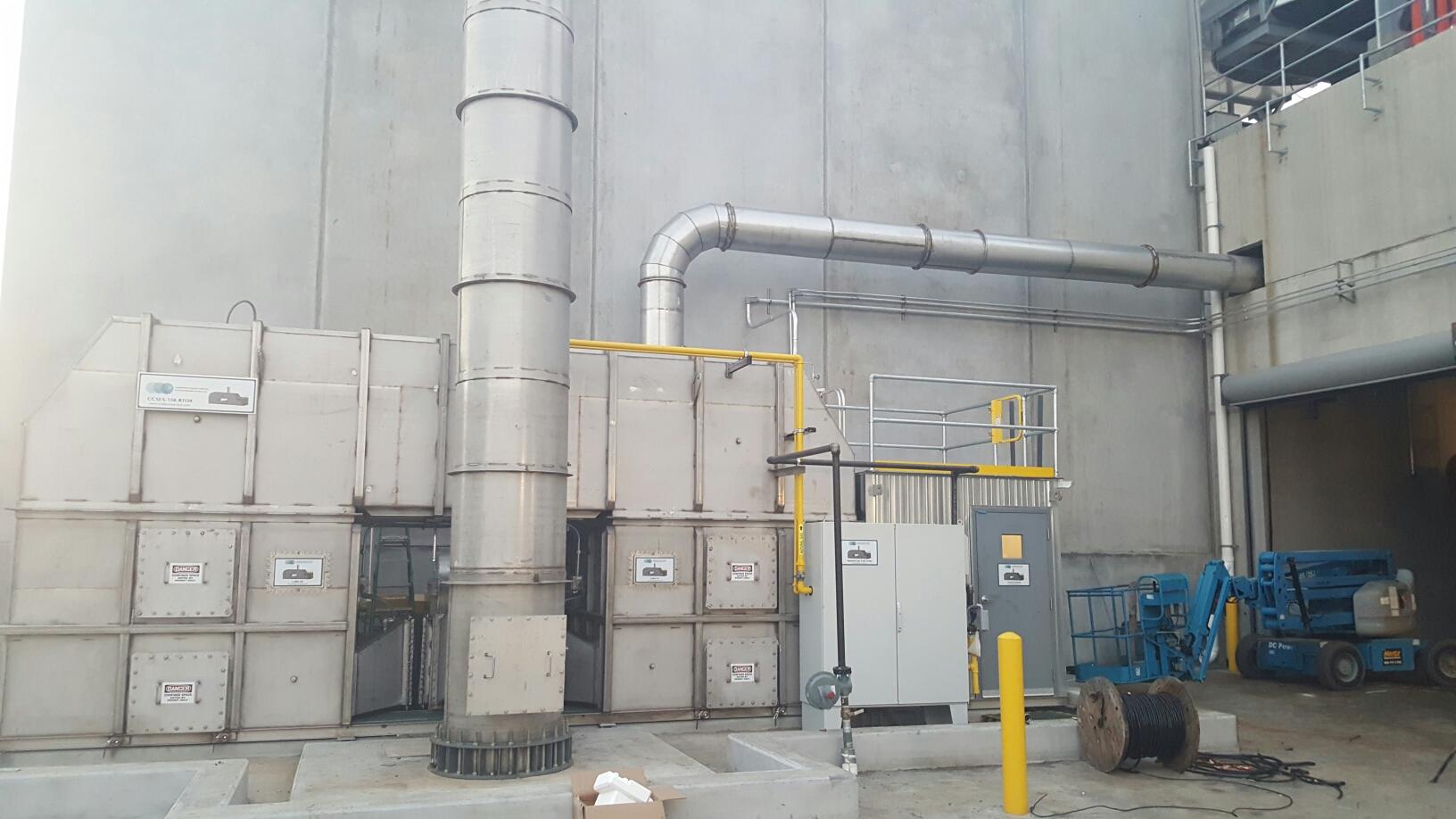
Ducts for air pollution control in a 17000 standard cubic feet per minute regenerative thermal oxidizer (RTO).
A round galvanized steel duct connecting to a typical diffuser
Fire-resistance rated mechanical shaft with HVAC sheet metal ducting and copper piping, as well as "HOW" (Head-Of-Wall) joint between top of concrete block wall and underside of concrete slab, firestopped with ceramic fibre-based firestop caulking on top of rockwool.

Ducts are conduits or passages used in heating, ventilation, and air conditioning (HVAC) to deliver and remove air. The needed airflows include, for example, supply air, return air, and exhaust air.[1] Ducts commonly also deliver ventilation air as part of the supply air. As such, air ducts are one method of ensuring acceptable indoor air quality as well as thermal comfort.

A duct system is also called ductwork. Planning (laying out), sizing, optimizing, detailing, and finding the pressure losses through a duct system is called duct design.[2]

Materials

[edit]

Ducts can be made out of the following materials: They are

Galvanized steel

[edit]

Galvanized mild steel is the standard and most common material used in fabricating ductwork because the zinc coating of this metal prevents rusting and avoids cost of painting.[3] For insulation purposes, metal ducts are typically lined with faced fiberglass blankets (duct liner) or wrapped externally with fiberglass blankets (duct wrap). When necessary, a double walled duct is used. This will usually have an inner perforated liner, then a 1–2 in (2.5–5.1 cm) layer of fiberglass insulation contained inside an outer solid pipe.

Rectangular ductwork commonly is fabricated to suit by specialized metal shops. For ease of handling, it most often comes in 4 ft (120 cm) sections (or joints). Round duct is made using a continuous spiral forming machine which can make round duct in nearly any diameter when using the right forming die and to any length to suit, but the most common stock sizes range evenly from 4 to 24 in (10 to 61 cm) with 6–12 in (15–30 cm) being most commonly used. Stock pipe is usually sold in 10 ft (300 cm) joints. There are also 5 ft (150 cm) joints of the non-spiral type pipe available, which is commonly used in residential applications.

Aluminium

[edit]

Aluminium ductwork is lightweight and quick to install. Also, custom or special shapes of ducts can be easily fabricated in the shop or on site.

The ductwork construction starts with the tracing of the duct outline onto the aluminium preinsulated panel. The parts are then typically cut at 45°, bent if required to obtain the different fittings (i.e. elbows, tapers) and finally assembled with glue. Aluminium tape is applied to all seams where the external surface of the aluminium foil has been cut. A variety of flanges are available to suit various installation requirements. All internal joints are sealed with sealant.

Aluminum is also used to make round spiral duct, but it is much less common than galvanized steel.

Polyurethane and phenolic insulation panels (pre-insulated air ducts)

[edit]

Traditionally, air ductwork is made of sheet metal which was installed first and then lagged with insulation. Today, a sheet metal fabrication shop would commonly fabricate the galvanized steel duct and insulate with duct wrap prior to installation. However, ductwork manufactured from rigid insulation panels does not need any further insulation and can be installed in a single step. Both polyurethane and phenolic foam panels are manufactured with factory applied aluminium facings on both sides. The thickness of the aluminium foil can vary from 25 micrometres for indoor use to 200 micrometers for external use or for higher mechanical characteristics. There are various types of rigid polyurethane foam panels available, including water formulated panel for which the foaming process is obtained through the use of water and CO2 instead of CFC, HCFC, HFC and HC gasses. Most manufacturers of rigid polyurethane or phenolic foam panels use pentane as foaming agent instead of the aforementioned gasses.

A rigid phenolic insulation ductwork system is listed as a class 1[clarification needed] air duct to UL 181 Standard for Safety.

Fiberglass duct board (preinsulated non-metallic ductwork)

[edit]

Fiberglass duct board panels provide built-in thermal insulation and the interior surface absorbs [sound], helping to provide quiet operation of the HVAC system.

The duct board is formed by sliding a specially designed knife along the board using a straightedge as a guide. The knife automatically trims out a groove with 45° sides which does not quite penetrate the entire depth of the duct board, thus providing a thin section acting as a hinge. The duct board can then be folded along the groove to produce 90° folds, making the rectangular duct shape in the fabricator's desired size. The duct is then closed with outward-clinching staples and special aluminum or similar metal-backed tape.

Flexible ducting

[edit]

Flexible ducts (also known as flex) are typically made of flexible plastic over a metal wire coil to shape a tube. They have a variety of configurations. In the United States, the insulation is usually glass wool, but other markets such as Australia, use both polyester fiber and glass wool for thermal insulation. A protective layer surrounds the insulation, and is usually composed of polyethylene or metalized PET. It is commonly sold as boxes containing 25 ft (7.6 m) of duct compressed into a 5 ft (1.5 m) length. It is available in diameters ranging from as small as 4 in (10 cm) to as big as 18 in (46 cm), but the most commonly used are even sizes ranging from 6 to 12 in (15 to 30 cm).

Flexible duct is very convenient for attaching supply air outlets to the rigid ductwork. It is commonly attached with long zip ties or metal band claps. However, the pressure loss is higher than for most other types of ducts. As such, designers and installers attempt to keep their installed lengths (runs) short, e.g. less than 15 feet (4.6 m) or so, and try to minimize turns. Kinks in flexible ducting must be avoided. Some flexible duct markets prefer to avoid using flexible duct on the return air portions of HVAC systems, however flexible duct can tolerate moderate negative pressures. The UL181 test requires a negative pressure of 200 Pa.

To use flexible ducting in a system, make sure to pull the duct tight so you get the full internal diameter. This reduces resistance and improves airflow, as well as ventilation efficiency. Minimize bends and kinks as much as possible, since they can affect how well the airstream flows through the ductwork.

There are a few types of flexible ducting – Polyurethane (PU), Aluminium & Aluminium insulated, Acoustic and Rectangular flexible ducting, as well as semi- and combi-flex.

Fabric ducting

[edit]

This is actually an air distribution device and is not intended as a conduit for conditioned air. The term fabric duct is therefore somewhat misleading; fabric air dispersion system would be the more definitive name. However, as it often replaces hard ductwork, it is easy to perceive it simply as a duct. Usually made of polyester material, fabric ducts can provide a more even distribution and blending of the conditioned air in a given space than a conventional duct system. They may also be manufactured with vents or orifices.

Fabric ducts are available in various colors, with options for silk screening or other forms of decoration, or in porous (air-permeable) and non-porous fabric. The determination which fabric is appropriate (i.e. air-permeable or not) can be made by considering if the application would require an insulated metal duct. If so, an air-permeable fabric is recommended because it will not commonly create condensation on its surface and can therefore be used where air is supplied below the dew point. Material that eliminates moisture may be healthier for the occupants. It can also be treated with an anti-microbial agent to inhibit bacterial growth. Porous material also tends to require less maintenance as it repels dust and other airborne contaminants.

Fabric made of more than 50% recycled material is also available, allowing it to be certified as green product. The material can also be fire retardant, which means that the fabric can still burn, but will extinguish when the heat source is removed.

Fabric ducts are not rated for use in ceilings or concealed attic spaces. However, products for use in raised floor applications are available. Fabric ducting usually weighs less than other conventional ducting and will therefore put less stress on the building's structure. The lower weight allows for easier installation.

Fabric ducts require a minimum of certain range of airflow and static pressure in order for it to work.

PVC low-profile ducting

[edit]

PVC low-profile ducting has been developed as a cost-effective alternative to steel low-profile ducting. Low-profile ducting has been used extensively in apartment and hotel ventilation since 2005. The growth of low-profile ducting has grown significantly due to the reduction of available space in ceiling cavities in an effort to reduce cost. Since the Grenfell Tower fire in 2017 there has been a rise in the discovery of non-compliant building materials; many PVC low-profile ducting manufacturers have struggled to gain or maintain compliance, and some building projects have had to resort back to using the more expensive steel option.

Waterproofing

[edit]

The finish for external ductwork exposed to the weather can be sheet steel coated with aluminium or an aluminium/zinc alloy, a multilayer laminate, a fibre reinforced polymer or other waterproof coating.

Duct system components

[edit]

Besides the ducts themselves, complete ducting systems contain many other components.

Vibration isolators

[edit]
An air handling unit with vibration isolator (3)

A duct system often begins at an air handler. The blowers in the air handler can create substantial vibration, and the large area of the duct system would transmit this noise and vibration to the inhabitants of the building. To avoid this, vibration isolators (flexible sections) are normally inserted into the duct immediately before and after the air handler. The rubberized canvas-like material of these sections allows the air handler to vibrate without transmitting much vibration to the attached ducts. The same flexible section can reduce the noise that can occur when the blower engages and positive air pressure is introduced to the ductwork.

Take-offs

[edit]

Downstream of the air handler, the supply air trunk duct will commonly fork, providing air to many individual air outlets such as diffusers, grilles, and registers. When the system is designed with a main duct branching into many subsidiary branch ducts, fittings called take-offs allow a small portion of the flow in the main duct to be diverted into each branch duct. Take-offs may be fitted into round or rectangular openings cut into the wall of the main duct. The take-off commonly has many small metal tabs that are then bent to attach the take-off to the main duct. Round versions are called spin-in fittings. Other take-off designs use a snap-in attachment method, sometimes coupled with an adhesive foam gasket for improved sealing. The outlet of the take-off then connects to the rectangular, oval, or round branch duct.

Stack boots and heads

[edit]

Ducts, especially in homes, must often allow air to travel vertically within relatively thin walls. These vertical ducts are called stacks and are formed with either very wide and relatively thin rectangular sections or oval sections. At the bottom of the stack, a stack boot provides a transition from an ordinary large round or rectangular duct to the thin wall-mounted duct. At the top, a stack head can provide a transition back to ordinary ducting while a register head allows the transition to a wall-mounted air register.

Volume control dampers

[edit]
An opposed-blade, motor-operated zone damper, shown in the "open" position.

Ducting systems must often provide a method of adjusting the volume of air flow to various parts of the system. Volume control dampers (VCDs; not to be confused with smoke/fire dampers) provide this function. Besides the regulation provided at the registers or diffusers that spread air into individual rooms, dampers can be fitted within the ducts themselves. These dampers may be manual or automatic. Zone dampers provide automatic control in simple systems while variable air volume (VAV) allows control in sophisticated systems.

Smoke and fire dampers

[edit]

Smoke dampers and fire dampers are found in ductwork where the duct passes through a firewall or firecurtain.

Smoke dampers are driven by a motor, referred to as an actuator. A probe connected to the motor is installed in the run of the duct and detects smoke, either in the air which has been extracted from or is being supplied to a room, or elsewhere within the run of the duct. Once smoke is detected, the actuator will automatically close the smoke damper until it is manually re-opened.

Fire dampers can be found in the same places as smoke dampers, depending on the application of the area after the firewall. Unlike smoke dampers, they are not triggered by any electrical system (which is an advantage in case of an electrical failure where the smoke dampers would fail to close). Vertically mounted fire dampers are gravity operated, while horizontal fire dampers are spring powered. A fire damper's most important feature is a mechanical fusible link which is a piece of metal that will melt or break at a specified temperature. This allows the damper to close (either from gravity or spring power), effectively sealing the duct, containing the fire, and blocking the necessary air to burn.

Turning vanes

[edit]
Turning vanes inside of large fire-resistance rated Durasteel pressurisation ductwork
Turning vane close-up.

Turning vanes are installed inside of ductwork at changes of direction (e.g. at 90° turns) in order to minimize turbulence and resistance to the air flow. The vanes guide the air so it can follow the change of direction more easily.

Plenums

[edit]

Plenums are the central distribution and collection units for an HVAC system. The return plenum carries the air from several large return grilles (vents) or bell mouths to a central air handler. The supply plenum directs air from the central unit to the rooms which the system is designed to heat or cool. They must be carefully planned in ventilation design.[why?]

Terminal units

[edit]

While single-zone constant air volume systems typically do not have these, multi-zone systems often have terminal units in the branch ducts. Usually there is one terminal unit per thermal zone. Some types of terminal units are VAV boxes (single or dual duct), fan-powered mixing boxes (in parallel or series arrangement), and induction terminal units. Terminal units may also include a heating or cooling coil.

Air terminals

[edit]

Air terminals are the supply air outlets and return or exhaust air inlets. For supply, diffusers are most common, but grilles, and for very small HVAC systems (such as in residences) registers are also used widely. Return or exhaust grilles are used primarily for appearance reasons, but some also incorporate an air filter and are known as filter returns.[4]

Duct cleaning

[edit]

The position of the U.S. Environmental Protection Agency (EPA) is that "If no one in your household suffers from allergies or unexplained symptoms or illnesses and if, after a visual inspection of the inside of the ducts, you see no indication that your air ducts are contaminated with large deposits of dust or mold (no musty odor or visible mold growth), having your air ducts cleaned is probably unnecessary."[5][needs update][dubiousdiscuss] However, a study published in Environmental Monitoring and Assessment provides evidence that challenges this position. The study, conducted across eight identical homes, found that HVAC duct cleaning reduced particle counts at the 1.0-micron size and lowered bioaerosol concentrations two days post-cleaning compared to pre-cleaning levels, with the Air Sweep method showing the most significant reduction. This indicates that duct cleaning can effectively decrease certain airborne pollutants, even if contamination isn't visibly obvious or immediately symptomatic. Notably, the study also observed that cleaning processes temporarily increase airborne particles and bioaerosols during the procedure due to disturbance, suggesting that benefits may not be immediate but emerge over time.[6]

A thorough duct cleaning done by a professional duct cleaner will remove dust, cobwebs, debris, pet hair, rodent hair and droppings, paper clips, calcium deposits, children's toys, and whatever else might collect inside. Ideally, the interior surface will be shiny and bright after cleaning. Insulated fiber glass duct liner and duct board can be cleaned with special non-metallic bristles. Fabric ducting can be washed or vacuumed using typical household appliances.

Signs and indicators

[edit]

Cleaning of the duct system may be necessary if:

  • Sweeping and dusting the furniture needs to be done more than usual.
  • After cleaning, there is still left over visible dust floating around the house.
  • After or during sleep, occupants experience headaches, nasal congestion, or other sinus problems.
  • Rooms in the house have little or no air flow coming from the vents.[7][8]
  • Occupants are constantly getting sick or are experiencing more allergies than usual.
  • There is a musty or stale odor when turning on the furnace or air conditioner.
  • Occupants are experiencing signs of sickness, e.g. fatigue, headache, sneezing, stuffy or running nose, irritability, nausea, dry or burning sensation in eyes, nose and throat.

Commercial inspection

[edit]

In commercial settings, regular inspection of ductwork is recommended by several standards. One standard recommends inspecting supply ducts every 1–2 years, return ducts every 1–2 years, and air handling units annually.[9] Another recommends visual inspection of internally lined ducts annually[10] Duct cleaning should be based on the results of those inspections.

Inspections are typically visual, looking for water damage or biological growth.[9][10][11] When visual inspection needs to be validated numerically, a vacuum test (VT) or deposit thickness test (DTT) can be performed. A duct with less than 0.75 mg/100m2 is considered to be clean, per the NADCA standard.[11] A Hong Kong standard lists surface deposit limits of 1g/m2 for supply and return ducts and 6g/m2 for exhaust ducts, or a maximum deposit thickness of 60 μm in supply and return ducts, and 180 μm for exhaust ducts.[12] In the UK, CIBSE standard TM26 recommends duct cleaning if measured bacterial content is more than 29 colony forming units (CFU) per 10 cm2; contamination is classified as "low" below 10 CFU/cm2, "medium" at up to 20 CFU/cm2, and "high" when measured above 20 CFU/cm2.[13]

Grants and tax credits

[edit]

As of 2025, there are no widely available federal or state grants or tax credits in the U.S. specifically for home duct cleaning or routine maintenance, though related activities might qualify under broader programs. The Weatherization Assistance Program aids low-income households with energy efficiency upgrades like duct sealing,[14] but not cleaning, while the Energy Efficient Home Improvement Credit offers up to $1,200 annually for sealing leaky ducts if it meets energy-saving standards—routine cleaning,[15] however, doesn't qualify.[16] General HVAC maintenance lacks direct incentives; however, installing efficient equipment, such as heat pumps, could yield a separate $2,000 credit.[17][18]

In Canada, financial support for home duct cleaning and maintenance varies by region and eligibility. In Montreal, La Commission des normes, de l'équité, de la santé et de la sécurité du travail (CNESST) offers reimbursements up to $3,897 in 2024 for workers with permanent disabilities from work-related incidents, covering tasks like duct cleaning if they can't perform them due to physical limitations, requiring two quotes for approval.[19] For seniors over 70, Revenu Québec’s Tax Credit for Home Support provides relief on labor costs for services including duct cleaning (without disassembly), aimed at reducing maintenance expenses, claimed via Appendix J or advance payments.[19] Meanwhile, Repentigny’s green initiative reimburses duct cleaning and reusable filter costs to promote eco-friendly living.[19]

Duct sealing

[edit]

Air pressure combined with air duct leakage can lead to a loss of energy in a HVAC system. Sealing leaks in air ducts reduces air leakage, optimizes energy efficiency, and controls the entry of pollutants into the building. Before sealing ducts it is imperative to ensure the total external static pressure of the duct work, and if equipment will fall within the equipment manufacturer's specifications. If not, higher energy usage and reduced equipment performance may result.

Commonly available duct tape should not be used on air ducts (metal, fiberglass, or otherwise) that are intended for long-term use. The adhesive on so called duct tape dries and releases with time. A more common type of duct sealant is a water-based paste that is brushed or sometimes sprayed on the seams when the duct is built. Building codes and UL standards call for special fire-resistant tapes, often with foil backings and long lasting adhesives.

Automated technology exists that can seal a duct system in its entirety from the inside out using a patented process and specialized sealant. This method for duct sealing is often used in commercial construction and multi-unit residential construction. The cost associated with automated duct sealing often makes it impractical for the average homeowner to implement in their own house.

Signs of leaks

[edit]

Signs of leaky or poorly performing air ducts include:

  • Utility bills in winter and summer months above average relative to rate fluctuation
  • Spaces or rooms that are difficult to heat or cool
  • Duct location in an attic, attached garage, leaky floor cavity, crawl space or unheated basement.[20]

See also

[edit]

References

[edit]

Further reading

[edit]
Revisions and contributorsEdit on WikipediaRead on Wikipedia
from Grokipedia
Duct flow, also referred to as internal viscous flow, is the motion of a through a confined conduit such as a pipe, tube, or duct, where the flow is bounded on all sides by solid walls that influence its development and characteristics. This type of flow is a core subject in , driven by differences and opposed by viscous shear stresses at the walls, resulting in profiles that vary across the cross-section and progressive drops along the conduit length. The regime of duct flow—whether laminar (smooth and orderly) or turbulent (irregular with eddies)—is determined by the dimensionless , defined as the ratio of inertial forces to viscous forces, typically using the for non-circular ducts. For below approximately 2300, prevails with a parabolic velocity profile in circular ducts and negligible mixing, while above 4000, turbulent flow dominates, featuring a more uniform core velocity and enhanced momentum transfer near the walls. Flow development begins in an entrance , where boundary layers grow from the walls until they merge, leading to a fully developed state over a proportional to the and duct diameter. Duct flow analysis is essential for due to losses that cause irrecoverable pressure drops, quantified by models like the Darcy-Weisbach equation for head loss. Key applications include (HVAC) systems for efficient air distribution in buildings, pipelines for transporting liquids and gases such as and , and components like lines and cooling channels. In these contexts, optimizing duct geometry, material, and flow conditions minimizes and ensures system reliability.

Fundamentals

Definition and Purpose

A duct in fluid flow systems serves as a conduit engineered to convey fluids, including gases such as air and liquids, in a controlled and efficient manner. While ducts are often associated with low-pressure conditions in air handling and distribution, distinguishing them in engineering practice from pipes—which are more commonly used for liquids or high-pressure gases—they overlap in fluid mechanics as confined pathways for internal flows, prioritizing minimization of friction and turbulence for smooth flow over longer paths within confined spaces. The primary purposes of ducts encompass the transportation of air in (HVAC) systems to regulate temperature and , as well as in exhaust and ventilation setups to remove contaminants and maintain balance. In industrial applications, ducts are vital for channeling fumes, particles, and gases, thereby supporting safe operations and environmental compliance. Historically, duct-like systems trace their origins to ancient channels in Roman hypocaust heating arrangements, evolving significantly during the ; by the 19th century, they were integral to coal mine ventilation, where furnaces drove airflow through dedicated channels and chimneys to extract hazardous gases. Key applications of ducts include residential and commercial HVAC for climate control and comfort, industrial processes for material and gas handling, automotive systems for engine intake and exhaust to optimize performance, and environments for distributing cabin air to ensure passenger safety and system efficiency. A fundamental aspect of duct design involves recognizing flow regimes: , with its smooth and layered motion, is relevant in low-velocity scenarios for reduced energy loss, whereas turbulent flow, featuring irregular mixing, applies to higher-speed conditions and impacts overall system resistance and .

Fluid Dynamics Principles

Fluid flow in ducts adheres to core principles of , emphasizing and viscous effects that dictate pressure distribution, velocity profiles, and overall system efficiency. For incompressible fluids under steady, inviscid conditions, governs the relationship along a streamline, positing that total remains constant. This manifests as an inverse relation between fluid velocity and , crucial for understanding in converging duct sections or deceleration in diffusers. The governing equation is P+12ρv2+ρgh=\constantP + \frac{1}{2} \rho v^2 + \rho g h = \constant where PP denotes , ρ\rho is fluid density, vv is , gg is , and hh is elevation; in horizontal ducts, the potential energy term ρgh\rho g h often simplifies, highlighting pressure-velocity trade-offs. Viscous introduces energy dissipation, primarily modeled by the Darcy-Weisbach for major pressure losses along duct walls. This empirical relation quantifies head loss due to shear as ΔP=fLDρv22\Delta P = f \frac{L}{D} \frac{\rho v^2}{2} with ΔP\Delta P as pressure drop, ff as the dimensionless friction factor, LL as duct length, and DD as hydraulic diameter (for non-circular sections, D=4A/PD = 4A/P where AA is cross-sectional area and PP is wetted perimeter). The friction factor ff varies with flow regime and surface roughness, determined via the Reynolds number Re=ρvD/μRe = \rho v D / \mu where μ\mu is dynamic viscosity; in laminar flow, f=64/Ref = 64 / Re, while turbulent regimes employ correlations like the Colebrook-White equation for transitional and rough conditions. These losses scale with velocity squared, underscoring the need for optimized velocities in duct design to balance energy input against dissipation. Flow regime profoundly influences and efficiency, delineated by the threshold for -to-turbulent transition. In circular pipes and equivalent ducts, prevails below a critical Re2300Re \approx 2300, characterized by smooth, parabolic profiles and predictable, lower drops proportional to . Transition occurs between 2300 and 4000, yielding unstable flow; above 4000, fully turbulent conditions dominate with chaotic eddies, elevating factors by up to 4-5 times and increasing drops, though enhancing mixing for applications like . This regime shift impacts duct performance, as turbulent flows demand higher fan power but resist separation in complex geometries. Entry and exit regions introduce abrupt kinetic energy conversions, incurring minor losses beyond straight-path friction. At inlets, sudden contractions from reservoirs cause formation and recirculation, while outlets to larger spaces dissipate velocity head entirely; these are captured by ΔP=Kρv2/2\Delta P = K \rho v^2 / 2, where KK is the empirical loss . Standard values include K=0.5K = 0.5 for flush sharp-edged entrances and K=1.0K = 1.0 for re-entrant or projecting exits, with rounded edges reducing KK to near 0.05 by minimizing separation. Such losses, though localized, can comprise 10-20% of total system drop in short ducts, necessitating careful terminal design. Non-circular ducts exhibit distinctive secondary flows, perpendicular to the primary axial direction, arising from anisotropic via imbalances. In square or rectangular cross-sections, these clockwise or counterclockwise circulations—typically 1-3% of bulk velocity—originate near corners, driving fluid from walls to centers and distorting axial profiles, thereby augmenting overall shear and but complicating friction predictions. Numerical models, incorporating eddy-viscosity closures, replicate these patterns observed in experiments like those of Hinze (1973), confirming their turbulence-driven nature independent of . Turbulence in ducts also produces acoustic through aeroacoustic mechanisms, where unsteady fluctuations from eddies and vortex-wall interactions generate broadband propagating as duct modes. This flow-generated , dominant in HVAC at velocities above 5 m/s, stems from quadrupole sources in the bulk flow and dipole contributions at walls, with intensity scaling as the eighth power of per Lighthill's ; mitigation often requires acoustic liners to absorb these emissions.

Types and Configurations

Rigid Ducts

Rigid ducts are non-flexible conduits designed for fixed installations in flow systems, particularly HVAC, where they maintain structural integrity under varying pressures and velocities. These ducts feature fixed shapes formed from , commonly including round, rectangular, and flat oval configurations, to efficiently transport air or other gases in straight runs or structured layouts. Their construction relies on fabrication techniques, such as Pittsburgh lock seams for longitudinal joints in rectangular ducts, which provide airtight seals and structural strength without additional fasteners in low-pressure applications. Transverse joints, like T-1 drive slips or flanged connections, connect duct sections, with reinforcement via angle rings or tie rods spaced according to pressure class to prevent collapse or . Standard sizes adhere to SMACNA guidelines, with round ducts available up to 96 inches in , rectangular ducts spanning widths from 6 to 120 inches, and flat oval shapes adapting rectangular standards for space-efficient ovals with major dimensions up to approximately 70 inches. Rigid ducts offer high durability due to their robust composition, often galvanized , enabling long-term performance in demanding environments. Their smooth interiors, with absolute roughness around 0.0003–0.0004 feet, minimize losses and drops, promoting efficient compared to rougher alternatives. This also suits high-pressure systems, handling up to 10 inches water gauge, and provides excellent resistance to low-frequency noise breakout when properly sealed. In applications, rigid ducts serve as primary trunks in commercial HVAC s for supply and return air distribution, as well as industrial exhaust setups conveying clean or mildly substances at velocities up to 5000 feet per minute. Examples include galvanized rectangular ducts forming main building trunks in office complexes or round spiral ducts in manufacturing facilities for ventilation. They integrate with components like turning vanes in bends to maintain flow efficiency, as detailed in component standards. However, limitations include higher installation costs from labor-intensive assembly and their inflexibility, which complicates in confined spaces.

Flexible and Fabric Ducts

Flexible ducts, also known as flex ducts, are non-metallic conduits designed for adaptability in HVAC systems, consisting of an inner liner typically made of or aluminum foil supported by a helical wireframe for structural integrity, often encased in insulation and a outer jacket. These ducts can be extended up to a 4:1 from their compressed shipping , allowing for compact storage and on-site deployment, with typical diameters ranging from 4 to 20 inches to suit requirements. Their flexible nature facilitates routing around obstacles, making them suitable for constrained spaces where rigid alternatives would require excessive fittings. One key advantage of flexible ducts is their ease of installation, particularly in retrofit projects, as they minimize the need for custom elbows or joints, thereby speeding up assembly in existing structures. When properly sealed at connections using mastic or foil tape, they exhibit reduced air leakage compared to unsealed systems, enhancing overall energy efficiency in residential HVAC branch lines and temporary construction setups. Additionally, the material composition and corrugated design provide acoustic benefits by attenuating noise transmission from the HVAC unit to occupied spaces, resulting in quieter operation. However, flexible ducts incur higher pressure losses due to their corrugations and internal , often adding up to 0.1 inches water gauge per 100 feet beyond smooth duct equivalents, which necessitates careful sizing to avoid excessive fan energy use. To mitigate sagging, which can further impede airflow, installation requires support with hangers or straps at intervals of no more than 4.5 feet horizontally or 7.5 feet vertically, ensuring the duct remains fully extended without compression. Fabric ducts, commonly referred to as duct socks, are lightweight tubes used for air dispersion in HVAC systems, constructed from permeable or impermeable materials such as to enable controlled without traditional outlets. Permeable variants allow even air distribution through the fabric surface, ideal for applications like warehouses where uniform ventilation prevents hot spots and promotes energy-efficient cooling or heating. Impermeable options transport air to specific points before release, offering versatility in system design. In large venues such as sports arenas, fabric ducts provide uniform over expansive areas, reducing drafts and maintaining comfort for occupants during events. Their lightweight construction simplifies installation in temporary setups, such as construction sites or event spaces, where quick deployment and removal are essential, and they can be suspended from ceilings using clips or tension systems. Like flexible ducts, fabric types benefit from low leakage when joints are sealed, though they require periodic tensioning with hangers to prevent sag under their own weight or pressure.

Specialized Configurations

Low-profile ducts, often flattened into rectangular or oval cross-sections, are engineered to navigate constrained spaces such as ceiling plenums while maintaining efficient airflow comparable to round ducts. These configurations reduce the overall height required for installation, making them ideal for applications where vertical clearance is limited, and they exhibit lower leakage rates than traditional rectangular designs due to smoother transitions from round to flat profiles. In residential settings, materials like PVC flat channel ducts provide durability and ease of installation in soffits, while fiberglass variants offer corrosion resistance and thermal stability for similar tight integrations. Pre-insulated panels represent a specialized assembly approach where rigid foam-core boards, typically (PU), (PIR), or phenolic, are fabricated with integrated insulation and faced with aluminum foil or similar barriers before on-site construction into duct shapes. These panels enable lightweight, leak-resistant ducts with minimal thermal bridging, achieving R-values of up to 8 per inch of thickness for superior energy efficiency in HVAC systems. Phenolic foam cores, in particular, provide high resistance and low emission, making them suitable for commercial and industrial environments where standards are stringent. Assembly involves cutting and joining panels with adhesives or mechanical fasteners, reducing labor time compared to field-insulated metal ducts. Conical or tapered ducts are employed to gradually expand airflow paths, facilitating velocity reduction in diffusers and optimizing pressure recovery at fan outlets to align with overall performance curves. This geometry minimizes turbulence and energy losses by promoting uniform velocity profiles, particularly in high-velocity exhaust or supply applications where abrupt expansions could cause noise or inefficiency. Such configurations are common in industrial HVAC setups, where they transition air from compact fan discharges to larger distribution networks without excessive static pressure drops. Modular duct systems utilize snap-together or flanged boards that allow for rapid, tool-free assembly, minimizing generation and risks during installation. These systems, often comprising pre-cut panels with edges, are particularly valued in environments for their smooth interiors and non-porous surfaces, which prevent particle accumulation and support stringent air quality standards. construction ensures resistance and acoustic damping, enabling scalable designs for pharmaceutical or facilities where downtime must be avoided. The evolution of spiral round ducts in 20th-century HVAC systems marked a significant advancement in fabrication and , originating with the of the Spiro Tubeformer in 1956 by Erling Jensen and Leif Andresen in . This innovation enabled seamless, lock-seam production from galvanized coils, reducing joints and leaks while providing a visually appealing alternative to rectangular ducts prevalent earlier in the century. By the late 20th century, spiral ducts had become standard for their hydraulic and ease of handling in commercial installations, influencing modern specialized configurations.

Materials

Metallic Materials

Metallic materials dominate the of rigid ducts in (HVAC) systems due to their strength, durability, and ability to withstand mechanical stresses and environmental exposures. Among these, galvanized , aluminum, and are the most prevalent, each selected based on factors like resistance, weight, and application-specific demands. Galvanized steel, produced by hot-dip coating with , adheres to the ASTM A653 standard for sheet steel and is widely used in duct fabrication. The G90 designation specifies a zinc coating of 0.9 oz/ft² (approximately 275 g/m² total for both sides), providing robust resistance through a barrier layer and sacrificial protection. For duct applications, thicknesses typically range from 24 to 30 gauge (0.0239 to 0.0157 inches), balancing rigidity with ease of forming while remaining cost-effective for large-scale rigid constructions. Aluminum offers a lighter alternative to , with a of approximately 2.7 g/cm³ compared to steel's 7.8 g/cm³, reducing structural loads in installations where weight is a concern. Common alloys like 3003-H14, a manganese-alloyed wrought aluminum, provide excellent formability and moderate strength, making it suitable for bending into complex duct shapes. This material excels in corrosive environments, such as coastal HVAC systems exposed to saltwater air, where its natural oxide layer enhances resistance to oxidation. Stainless steel, particularly grades 304 and 316, is employed in demanding settings requiring superior resistance, such as chemical processing plants handling acidic gases. Grade 304 offers good general resistance to oxidation and mild chemicals due to its 18% and 8% composition, while 316 incorporates (2-3%) for enhanced protection against chlorides and acids, though at a higher cost that is offset by extended longevity. Key properties of these metals influence their duct performance: galvanized steel exhibits a thermal conductivity of about 50 W/m·K, facilitating but often necessitating insulation pairings to control . Aluminum's higher thermal conductivity, around 200 W/m·K, supports efficient energy transfer in uninsulated sections. Mechanical strength is exemplified by galvanized steel's yield strength of approximately 250 MPa, ensuring structural integrity under pressure. All three materials—steel, aluminum, and —are highly recyclable, with recovery rates exceeding 90% in , promoting in duct lifecycle management. A distinctive feature of galvanized steel is its sacrificial anode mechanism, where the coating corrodes preferentially to protect the underlying from , even at coating edges or scratches. However, in humid climates, accelerated zinc depletion may require periodic recoating to maintain protection.

Non-Metallic Materials

Non-metallic materials, primarily plastics and fiber-reinforced composites, are widely used in duct systems for applications requiring resistance and cost-effectiveness, particularly in non-structural roles such as low-pressure air conveyance and chemical exhaust handling. These materials offer immunity to many corrosive agents that degrade metals, enabling their use in environments with acids, alkalis, and fumes, while their lower reduces installation weight and costs compared to metallic alternatives. However, they are typically limited to scenarios where mechanical strength demands are modest, such as negative pressure systems up to 20 inches of . Polyvinyl chloride (PVC) ducts are available in both rigid and flexible grades, with rigid variants often derived from Schedule 40 piping adapted for low-pressure air distribution. exhibits strong chemical resistance to acids, including up to 95% concentration and , making it suitable for handling corrosive vapors in ventilation systems. Its limit is approximately 140°F (60°C), beyond which structural integrity and chemical resistance diminish, restricting its use to ambient or mildly heated airflows. Fiberglass-reinforced plastic (FRP) ducts provide enhanced corrosion resistance for industrial applications involving aggressive fumes, such as (HCl) exhaust in chemical processing plants. These ducts are constructed using hand-layup methods, where and fibers are layered manually for custom shapes, or filament-winding techniques that wrap fibers around a for cylindrical sections, achieving high hoop strength and uniformity. The selection, often vinyl ester for HCl resistance, ensures durability against chemical attack while maintaining efficiency. Polyolefin materials, including (HDPE) and (PP), are favored for underground or buried duct installations due to their flexibility and resistance to soil corrosion. These ducts feature smooth interiors that minimize losses, with an absolute roughness (ε) of approximately 0.0015 mm, promoting efficient fluid flow in subsurface applications like geothermal or utility air lines. Common properties of these non-metallic s include low thermal conductivity around 0.2 W/m·K, which provides inherent insulation and reduces energy loss in ducted systems, and lightweight construction with densities below 1.5 g/cm³, facilitating easier handling and lower costs. However, their base ratings are generally lower than metals, necessitating additives like halogen-free flame retardants to achieve compliance with standards such as V-0 for safe use in building ventilation. A key advancement in non-metallic duct assembly is electrofusion joining, which creates leak-proof seams by melting embedded heating elements in fittings under electrical current, particularly useful for ducts in hazardous material handling to prevent emissions of toxic substances. This method ensures joints as strong as the pipe itself, enhancing reliability in corrosive or underground environments.

Insulated and Composite Materials

Insulated and composite materials for ducts integrate with built-in and acoustic insulation, enabling more efficient HVAC systems by minimizing loss and transmission without requiring separate insulation layers. These materials emerged prominently in the amid the global , which spurred innovations to reduce heating and cooling demands in buildings. Fiberglass duct board consists of rigid, pre-formed boards made from fibrous glass, often with a foil facing to serve as a vapor barrier and enhance durability. These boards typically provide an R-value of 4.3 per inch of thickness, allowing effective thermal resistance in standard 1- to 1.5-inch panels. Molded fittings from the same material facilitate seamless branches and transitions, making them suitable for low-velocity residential air distribution systems where quiet operation and are priorities. Polyurethane and phenolic panels offer pre-insulated solutions with a closed-cell core sandwiched between aluminum or foil facings, achieving a low conductivity of approximately 0.02 W/m·K for superior retention. Factory-sealed edges on these panels minimize air leakage at joints, improving system efficiency compared to field-applied insulation. Phenolic variants, in particular, provide additional fire resistance while maintaining lightweight construction for easier handling in commercial installations. Composite materials, such as reinforced with resins, combine high strength-to-weight ratios with inherent acoustic properties, making them ideal for demanding duct applications. These composites can achieve sound absorption coefficients up to 0.8 at 500 Hz, effectively dampening mid-frequency noise from . The resin matrix enhances rigidity while preserving the fibrous core's insulation benefits, resulting in ducts that are both structurally robust and thermally efficient. Key advantages of these materials include prevention of through integrated vapor barriers, which maintain duct surface temperatures above the in humid environments. According to Standard 90.1, such insulation is required for supply ducts carrying air at or below 55°F (13°C) in unconditioned spaces to avoid moisture buildup and ensure energy compliance, potentially yielding significant savings in HVAC operating costs. Despite these benefits, insulated and composite materials carry drawbacks, including higher upfront costs due to specialized processes. Additionally, damage to fiberglass-based boards can lead to shedding, potentially introducing particulates into the airstream if not properly maintained.

Design and Sizing

Sizing Methods

Duct sizing methods determine the dimensions of ductwork to accommodate specified airflow rates while balancing pressure losses, energy efficiency, noise levels, and installation constraints. These approaches rely on established engineering principles to ensure uniform air distribution and system performance. Common methods include the equal friction, static pressure regain, and velocity reduction techniques, each suited to different system types and operational needs. The equal friction method sizes ducts to maintain a constant pressure drop, typically 0.08 to 0.1 inches of gauge per 100 feet (in.wg/100ft), along all branches from the fan. This approach uses friction charts or software to select duct sizes based on the required air flow rate in cubic feet per minute (CFM) and desired , often ranging from 800 to 1500 feet per minute (fpm) for air systems. It simplifies design for constant air volume (CAV) systems by promoting balanced pressure distribution, though it requires volume dampers for final adjustments. The method is widely adopted for its straightforward calculations and effectiveness in smaller commercial installations. In contrast, the static pressure regain method focuses on converting velocity pressure into at branch points to achieve uniform throughout the . Duct sizes are selected to reduce progressively after each takeoff, ensuring even delivery to terminals without excessive fan power. This technique is particularly ideal for () systems, where load variations occur, as it minimizes energy use and noise by balancing drops and regains. Designers start with the total and work downstream, often resulting in larger ducts near the fan and tapered reductions. The reduction method begins with higher near the fan, typically up to 2000 fpm in main ducts, and decreases them downstream to optimize energy efficiency and reduce and . This progressive sizing accounts for the diminishing as branches are served, using limits to guide selections via CFM calculations and charts. It is useful in systems where constraints limit duct enlargement, allowing initial followed by deceleration for quieter delivery. Key factors influencing duct sizing across these methods include the total airflow rate (CFM), determined by space loads and ventilation needs; maximum allowable velocities to control and (e.g., 2000 fpm for mains in general applications); and physical constraints such as ceiling height or building layout. Software tools like DuctSizer automate these processes by integrating CFM inputs with data for rapid sizing iterations. For specialized environments, such as laboratories, lower velocities (e.g., 500-1000 fpm) are prioritized to minimize airborne contamination risks. Standards from the American Society of Heating, Refrigerating and Air-Conditioning Engineers () provide foundational guidelines, including velocity tables for various applications—such as 800-1200 fpm for low-velocity commercial mains and reduced rates for sensitive areas like labs. The Handbook recommends these ranges to balance performance and comfort, while the Sheet Metal and Air Conditioning Contractors' National Association (SMACNA) emphasizes equal for simpler systems and static regain for high-performance designs. These protocols ensure compliance with energy codes and promote sustainable distribution.

Pressure and Flow Calculations

Pressure and flow calculations in duct systems are essential for determining the energy requirements and performance of airflow distribution. The primary method for computing friction losses in straight ducts is the Darcy-Weisbach equation, which quantifies the pressure drop due to wall friction as ΔPf=fLDρv22\Delta P_f = f \frac{L}{D} \frac{\rho v^2}{2}, where ff is the friction factor, LL is the duct length, DD is the hydraulic diameter, ρ\rho is the fluid density, and vv is the average velocity. The friction factor ff is determined from the Moody diagram, which plots ff against the Reynolds number (Re=ρvDμ\mathrm{Re} = \frac{\rho v D}{\mu}, with μ\mu as dynamic viscosity) and relative roughness ϵ/D\epsilon / D (where ϵ\epsilon is the absolute roughness). For HVAC applications involving air in galvanized steel ducts, ϵ0.0005\epsilon \approx 0.0005 ft, and typical Re\mathrm{Re} values exceed 10^5, placing the flow in the turbulent regime where ff ranges from 0.015 to 0.025. In practice, the equal friction method simplifies sizing by selecting a constant friction rate (e.g., 0.08 to 0.1 in. wg per 100 ft) across branches, derived from the Darcy-Weisbach equation via friction charts that relate velocity, duct size, and loss for standard air at 0.075 lb/ft³ and 68°F. For example, in a 12-inch round galvanized duct carrying air at 1000 fpm (corresponding to approximately 785 cfm), the friction loss is about 0.09 in. wg per 100 ft, as interpolated from ASHRAE friction charts. These charts assume fully developed turbulent flow and are applicable to velocities between 500 and 4000 fpm in metallic ducts. Fitting losses, or minor losses, account for additional drops at transitions, bends, and junctions, calculated using either the equivalent length method or the loss coefficient (K-factor) approach. The equivalent length method converts each fitting's loss to an equivalent straight duct length Le=KDfL_e = K \frac{D}{f}, added to the total run length before applying the rate; for a standard 90° mitered in smooth ducts, LeL_e is typically 15 to 30 duct diameters, depending on the (e.g., 15D for a 1.5D radius bend). Alternatively, the K-factor method computes total minor losses as ΔPm=Kρv22\Delta P_m = \sum K \frac{\rho v^2}{2}, where KK is empirically determined for each fitting type (e.g., K0.9K \approx 0.9 for a sharp 90° , decreasing to 0.2 for a well-rounded one) and is the upstream value. Values for KK or LeL_e are sourced from databases like the Duct Fitting Database, which provides tested coefficients for over 200 configurations. The flow rate QQ in a duct is governed by the for , Q=AvQ = A v, where AA is the cross-sectional area and vv is the mean ; this holds for most HVAC systems where air speeds yield Mach numbers below 0.3, ensuring variations are less than 5% and effects are negligible. At higher speeds (e.g., in industrial exhausts), must be considered if Mach > 0.3, adjusting for changes via isentropic relations, though typical duct velocities (under 4000 fpm) keep flows subsonic and nearly incompressible. For non-circular ducts, such as rectangular ones, the Dh=4APD_h = \frac{4A}{P} (with PP as wetted perimeter) replaces DD in all equations, enabling the use of circular duct correlations; digital tools iterate on DhD_h for precise friction and calculations. Fan selection relies on total pressure requirements, defined as the sum of static pressure (perpendicular to flow), velocity pressure (ρv22\frac{\rho v^2}{2}), and total dynamic pressure (static + velocity); the fan must provide a total pressure rise equal to the system's cumulative losses. The system curve, plotting total pressure loss versus flow rate (from friction, fittings, and components), is overlaid with the fan curve (manufacturer-supplied total pressure vs. flow) to find the operating point at their intersection, ensuring efficient selection for the design flow.

System Components

Structural Components

Take-offs and connectors are essential fittings used in HVAC duct systems to facilitate branch connections from main ducts, allowing air to be directed to secondary lines with minimal disruption to the primary flow. Spin-in fittings, often conical in shape, are inserted directly into the duct wall and secured by spinning or crimping, providing a compact and airtight joint suitable for low-pressure systems. These conical designs promote smoother airflow entry compared to sharp-edged alternatives, thereby reducing turbulence at junctions and associated pressure losses. Stack boots, also known as wall or ceiling boots, serve as transitional fittings that convert round duct sections to rectangular outlets, enabling efficient penetration through walls or ceilings for connection to registers or grilles. These components are typically fabricated from galvanized steel and sized to match the dimensions of the grille openings, ensuring proper alignment and airflow distribution without excessive restriction. By providing a graduated change in cross-section, stack boots help maintain consistent velocity and prevent air leakage at penetration points. Turning vanes are airfoil-shaped inserts installed within duct elbows to guide around bends, minimizing separation and recirculation that occur in sharp turns. They are particularly effective in rectangular elbows with a minimum of 1.5 times the duct width, where they streamline the flow path and reduce secondary losses. Studies on duct configurations have shown that a single airfoil turning vane can decrease pressure loss by 50-70% in 90-degree elbows across a range of Reynolds numbers from 5,000 to 200,000. Plenums function as enlarged chambers in HVAC systems, acting as buffers for air mixing and uniform distribution before entry into branch ducts. Supply plenums, located downstream of air-handling units, receive conditioned air under and divide it into multiple outlets, while return plenums collect exhaust air from spaces under negative pressure for recirculation or exhaust. These components are sized to maintain low air velocities, typically below 500 feet per minute (fpm), to limit generation and , with cross-sectional areas calculated using the Q = A × V, where Q is airflow rate in cubic feet per minute (cfm), A is plenum area in square feet, and V is in fpm. Vibration isolators, often implemented as flexible connectors at the interface between fans and ductwork, absorb mechanical oscillations to prevent their transmission through the system. Canvas or fabric types, reinforced with metal frames, offer compliance for low-frequency vibrations, while spring isolators provide stiffer support for higher loads and frequencies. These connectors effectively attenuate noise propagation from rotating equipment, ensuring quieter operation in building environments.

Control and Safety Components

Control and safety components in duct systems are essential active devices that regulate volumes, maintain system balance, and protect against hazards such as spread or unintended air reversal. These components integrate with HVAC controls to ensure efficient operation, occupant comfort, and compliance with building codes. They typically include dampers for modulation and isolation, terminal units for zone-level adjustments, and air dispersion devices at the system endpoints. Volume control dampers (VCDs) are pivotal for modulating in duct branches, allowing precise adjustment of supply or exhaust volumes without significant disruption. They are available in opposed-blade configurations, where adjacent blades rotate in opposite directions to provide linear flow characteristics and better control at low rates, and parallel-blade (single-blade) designs, which offer quicker response for on-off applications but less precision below 70% open. Opposed-blade VCDs are preferred in s for their ability to maintain stable pressure across a wide range of positions. across VCDs increases nonlinearly as the damper closes, influenced by blade and , requiring careful selection to minimize losses. Smoke and fire dampers serve as critical safety barriers, automatically closing to prevent the spread of , , or combustion products through ductwork penetrating fire-rated walls, floors, or ceilings. Fire dampers activate via a fusible link that melts at 165°F (74°C), allowing spring-loaded blades to seal the duct, while combination fire-smoke dampers additionally provide tight closure for control under motor actuation. These devices must comply with UL 555 standards for fire resistance, ensuring up to three-hour ratings, and UL 555S for leakage limits at elevated temperatures and pressures. Installation in dynamic systems requires consideration of airflow-induced closure to maintain integrity during operation. Terminal units, such as (VAV) boxes, enable zone-specific control by modulating primary from the central system and adding reheat as needed for heating demands. VAV units feature a damper that adjusts based on sensors, reducing during part-load conditions to save , while constant types maintain fixed delivery for applications like laboratories. Reheat coils, often electric or hot water, activate in VAV boxes to temper supply air when minimum limits are reached, complying with Standard 90.1 restrictions on reheat to prevent simultaneous heating and cooling. Parallel fan-powered VAV variants incorporate a small fan to induce plenum return air, enhancing efficiency in perimeter zones. Air terminals, including diffusers, grilles, and registers, handle the final dispersion of conditioned air into occupied spaces, ensuring uniform distribution and low for comfort. Diffusers typically mount in ceilings and use adjustable vanes to direct in radial or directional patterns, while grilles and registers incorporate dampers for manual volume adjustment and are suited for or installations. Throw patterns are designed to provide coverage, with distances to 50-100 fpm typically 1.5 to 3 times the in standard applications (e.g., 12-30 ft for 8-10 ft ceilings), adjusted for temperature differentials up to 20°F to promote effective mixing without drafts. Selection considers noise criteria (NC levels around 30) and Coanda effect for ceiling-mounted units. Backdraft dampers provide passive protection in exhaust ducts by permitting unidirectional flow while preventing reverse migration of air, odors, or contaminants when fans are off. These gravity- or spring-loaded devices, often with low-leakage blades, install inline or at terminations to maintain isolation in or exhaust paths. In industrial settings, they enhance energy efficiency by avoiding conditioned air loss. Many control and safety components integrate with systems (BAS) via the protocol, enabling remote monitoring, sequencing, and fault detection for optimized performance. , developed by as ANSI/ASHRAE Standard 135, standardizes communication across HVAC devices, allowing VAV boxes and dampers to report status and adjust dynamically based on occupancy or demand signals. This interoperability reduces operational costs and supports compliance with energy standards.

Installation Practices

Assembly Techniques

Assembly techniques for HVAC ducts involve precise methods to connect sections, ensure structural integrity, and facilitate efficient installation during initial . Common joining methods for rectangular metal ducts include slip-fit connections using drive cleats, which provide a secure mechanical interlock for sections up to 20 inches in length and are suitable for seal classes A, B, and C under low to medium applications. systems, such as Transverse Duct Flanges (TDF) and Transverse Duct Connectors (TDC), utilize pre-formed corners and cleats fastened with bolts or rivets at maximum 6-inch intervals, offering robust connections for higher classes up to 10 inches water gauge. For specialized metal applications, techniques like spot or continuous welds along seams and joints achieve airtight bonds capable of withstanding 1.5 times the system . Sealant application, as mandated by SMACNA standards, involves applying liquid, mastic, or tape sealants to all joints and seams after mechanical fastening, ensuring surfaces are clean and the sealant adheres to ranges from -30°F to 175°F for airtight performance across classes. Support and hanging systems are essential for maintaining duct alignment and load distribution in horizontal and vertical runs. Trapeze hangers, consisting of channels with threaded rods, are typically spaced every 8 to 10 feet for horizontal rectangular ducts under low (up to 0.5 inches gauge), with closer intervals of 8 feet required for larger ducts exceeding 36 inches in width. Hangers must be positioned within 2 feet of elbows or branches to prevent sagging, and load capacities can reach 1,500 pounds for standard configurations. In earthquake-prone regions, seismic bracing per International Building Code (IBC) requirements, as outlined in ASCE 7-16, mandates lateral and longitudinal restraints for suspended ducts with cross-sectional areas of 6 square feet or more, using flexible cables or rigid struts to accommodate seismic forces without compromising system integrity. Fabrication processes for duct sections can occur in shop environments for precision or in the field for adjustments, with shop methods preferred to minimize on-site errors. Bending rectangular ducts employs presses or roll formers to create elbows and fittings with mitered joints per specified radii, while round ducts are produced using spiral machines that form seamless tubes from galvanized coils at production rates of 20 to 40 meters per minute. Field fabrication allows for custom fits but requires adherence to gage thicknesses, such as 24 gauge minimum for widths up to inches, to maintain structural standards. Specialized tools enhance the accuracy and safety of assembly. Pittsburgh lockformers, roll-forming machines that create interlocking seams in a single pass, are widely used for longitudinal and transverse joints on up to 20 gauge thick, enabling rapid production of rectangular duct sections. Plasma cutters provide precise cuts for custom fittings, ensuring clean edges that facilitate tight joints without burrs. Safety protocols, aligned with OSHA standards, mandate fall protection systems such as harnesses and guardrails for overhead installations where workers are exposed to falls of 6 feet or more, along with proper and personal protective equipment to mitigate risks during lifting and positioning. Best practices emphasize alignment and to optimize performance. Duct sections must be aligned to within tolerances that limit total leakage to less than 5% of , achieved through level supports and pre-assembly mockups for complex layouts involving multiple branches or transitions. These mockups allow verification of fit and connection integrity before full-scale installation, reducing field adjustments and ensuring compliance with SMACNA tables for classes. For metal ducts, brief integration of structural components like dampers occurs during assembly, as detailed in component guidelines.

Sealing and Insulation Methods

Sealing methods for HVAC ducts primarily focus on preventing air leakage at joints and seams through the application of specialized materials. Mastic sealants, typically composed of butyl or blends, are brushed or caulked onto transverse joints, longitudinal seams, and other connections to create an airtight barrier. These sealants are applied at a wet film thickness of 10 to 20 mils to ensure durability and effectiveness under varying pressures. Alternatively, foil-backed tapes, such as butyl foil tapes, provide a flexible option for sealing, particularly in areas where mastic application is challenging, and are rated for use in high-velocity systems up to UL 181 standards. Following application, sealed ducts are tested using a duct blaster apparatus to verify leakage rates, with SMACNA Class A standards requiring total system leakage below 4% of design to confirm compliance for high-pressure applications (static pressures of 4 inches water gauge or greater). Insulation methods aim to minimize thermal losses and condensation in ducts located outside conditioned spaces. Wrap-on fiberglass blankets, with R-values ranging from R-6 to R-12 depending on climate zone and location, are commonly secured around duct exteriors using vapor-retardant facings to prevent ingress and maintain thermal performance. These blankets are installed over or flexible ducts, ensuring continuous coverage without gaps. For irregular shapes or hard-to-reach areas, spray insulation is applied directly to conform to contours, providing both thermal resistance and an air seal in compliance with IECC requirements for unconditioned attics or crawlspaces. Field-applied insulation allows customization during installation but requires careful handling to avoid compression, whereas factory-insulated ducts, such as those with integral linings, offer consistent R-values and reduced on-site labor, though they may limit adaptability for complex layouts. Compliance with IECC and California's Title 24 energy codes mandates minimum R-6 insulation for supply and return ducts in unconditioned spaces to limit heat gain or loss. Waterproofing techniques protect outdoor or exposed ducts from and accumulation. External coatings, such as 100% acrylic elastomeric paints or sealants, are applied to duct surfaces to form a flexible, weather-resistant that bridges minor cracks and repels . These coatings are particularly suited for outdoor HVAC ducts in humid or rainy climates, enhancing longevity without compromising . Additionally, drainage pans are installed beneath condensation-prone sections, such as cool supply ducts in humid environments, to collect and direct away, preventing or structural damage. For noise control, acoustic liners consisting of perforated metal sheets backed by fiberglass insulation are integrated into duct interiors, particularly in supply sections near fans or diffusers. The perforations allow sound waves to enter the absorptive fiberglass layer, reducing transmitted noise to levels below NC-35 in occupied spaces, as recommended by ASHRAE guidelines for offices and residences. This method combines sound attenuation with minimal airflow restriction, often applied in straight duct runs of at least 5 feet. Effective sealing and insulation yield significant operational benefits, including energy savings of up to 30% in fan power consumption by reducing leakage and thermal losses, as demonstrated in DOE field studies on residential and commercial systems. These practices also ensure regulatory compliance with IECC and Title 24 for ducts in unconditioned spaces, promoting overall system efficiency and indoor comfort.

Maintenance and Inspection

This section primarily addresses maintenance and inspection for HVAC duct systems, a common application of duct flow. For other contexts like pipelines or aerospace components, specialized techniques such as pipeline pigging for cleaning or ultrasonic testing for leaks apply.

Cleaning Procedures

Cleaning procedures for HVAC ducts involve the systematic removal of accumulated contaminants such as , , mold, and biological matter to ensure optimal air quality and system efficiency. These methods adhere to industry standards that emphasize source removal, where contaminants are dislodged and captured without redistribution into the indoor environment. Professional cleaning typically requires certified technicians using specialized equipment to access, agitate, and extract pollutants from duct interiors, registers, and connected components. Key techniques include mechanical agitation using rotary brushes or contact vacuums to loosen non-adhered substances, followed by high-velocity whipping or nozzles to dislodge stubborn particles. For example, spinning brushes rotate at speeds sufficient to effectively scrub duct walls, while systems deliver bursts to propel debris toward extraction points. Vacuum-based extraction then captures the loosened material under negative pressure, with systems designed to achieve capture velocities of 2,000 to 4,500 feet per minute depending on contaminant type. These methods ensure thorough without damaging duct materials, as outlined in performance standards for HVAC restoration. Access to duct interiors is gained through existing openings such as supply diffusers, return grills, end caps, or service panels, with temporary access holes cut if necessary and properly sealed afterward to maintain system integrity. Standards require that access points allow safe entry for tools without compromising structural or compliance, though specific clearance for equipment insertion typically accommodates standard tool diameters. In residential settings, cleaning is prompted by indicators like visible mold growth, excessive dust or debris accumulation around vents, or (IAQ) complaints such as exacerbations. The National Air Duct Cleaners Association (NADCA) recommends professional cleaning every 3 to 5 years for residential systems under normal conditions, though the U.S. Environmental Protection Agency (EPA) advises an as-needed basis rather than routine scheduling, especially in homes with pets, smokers, or recent renovations. In commercial applications, the process prioritizes source removal of contaminants like droppings or debris, often involving comprehensive agitation and vacuuming of the entire HVAC system. Post-cleaning verification uses borescopes or video cameras to confirm visibly clean surfaces, with quantitative tests limiting residual to no more than 0.75 mg per 100 cm² on non-porous areas. Biocides or treatments, which must be EPA-registered, are applied only after mechanical cleaning and confirmation of mold presence, as routine use is not recommended due to potential health risks and lack of proven benefits. Essential tools include truck-mounted vacuum systems with high airflow ratings, such as 12,000 cubic feet per minute (CFM) or more, equipped with filters capturing 99.97% of particles at 0.3 microns to prevent re-entrainment. Video cameras facilitate pre- and post-clean assessments, allowing technicians to navigate ducts and results. The rise of duct cleaning gained prominence after the , when conservation efforts promoted tighter building envelopes and greater air recirculation, leading to increased contaminant buildup in HVAC systems and heightened awareness of IAQ issues.

Leak Detection and Sealing

Leak detection in duct systems begins with diagnostic testing to quantify and locate air escapes, which can compromise system efficiency and indoor comfort. One primary method involves using a duct blaster or blower door to pressurize the ductwork to a standard test pressure of 25 Pascals (Pa), measuring the airflow rate in cubic feet per minute (CFM) required to maintain that pressure, known as CFM25. This test isolates the duct system by sealing registers and returns, allowing technicians to assess total leakage or leakage to the outside, with acceptable limits often tied to system size and standards to ensure minimal loss relative to fan capacity. Thermal imaging cameras provide a non-invasive visual approach, detecting temperature differentials or "hot spots" along duct surfaces where conditioned air escapes, particularly useful in attics or crawlspaces where insulation gaps exacerbate leaks. Common indicators of duct leaks include uneven temperatures across rooms, where some areas remain underheated or overcooled due to reduced delivery, often stemming from leaks that divert up to 20-30% of conditioned air in typical residential systems. Elevated energy bills result from the HVAC system compensating for lost air by running longer, while audible or hissing noises signal high-velocity escapes at joints or perforations. For precise visualization, tests introduce theatrical fog or smoke into the pressurized ducts, revealing leak paths as escaping vapor plumes at seams, holes, or disconnected sections, enabling targeted repairs without invasive disassembly. Repair strategies prioritize sealing identified leaks to restore system integrity, starting with aerosol-based methods for inaccessible areas. Technologies like Aeroseal inject a non-toxic, under positive into the duct system, where particles adhere to leak edges and build up to seal holes up to 5/8 inch in , achieving comprehensive internal coverage without major disassembly. For larger gaps or visible breaches, manual application of mastic sealants—thick, durable compounds—or foil-backed tapes provides robust external patching, applied after surface cleaning to ensure and prevent future separation. Post-repair verification repeats leakage testing to confirm reductions, often achieving 50-90% less airflow loss depending on initial conditions and seal quality. Industry standards guide acceptable leakage levels, with the Sheet Metal and Air Conditioning Contractors' National Association (SMACNA) defining classes A, B, and C based on duct pressure ratings, where Class A represents the tightest sealing for high-pressure systems (over 3 inches water gauge) requiring sealant on all joints and seams to minimize escapes. These classes ensure compliance with energy codes like , promoting systems that limit leakage to 4-6% of fan flow for low-pressure applications. Early U.S. Department of Energy (DOE) duct sealing initiatives in the and demonstrated practical impacts, with field programs in residential settings yielding 10-25% overall energy savings through reduced HVAC runtime and improved efficiency. Preventive sealing during installation, as outlined in related practices, complements these repairs by addressing leaks proactively, while access for detection may involve preliminary cleaning of obstructions.

References

Add your contribution
Related Hubs
User Avatar
No comments yet.