


Community hub
Recent from talks
Contribute something
Nothing was collected or created yet.
Front yard
View on Wikipedia
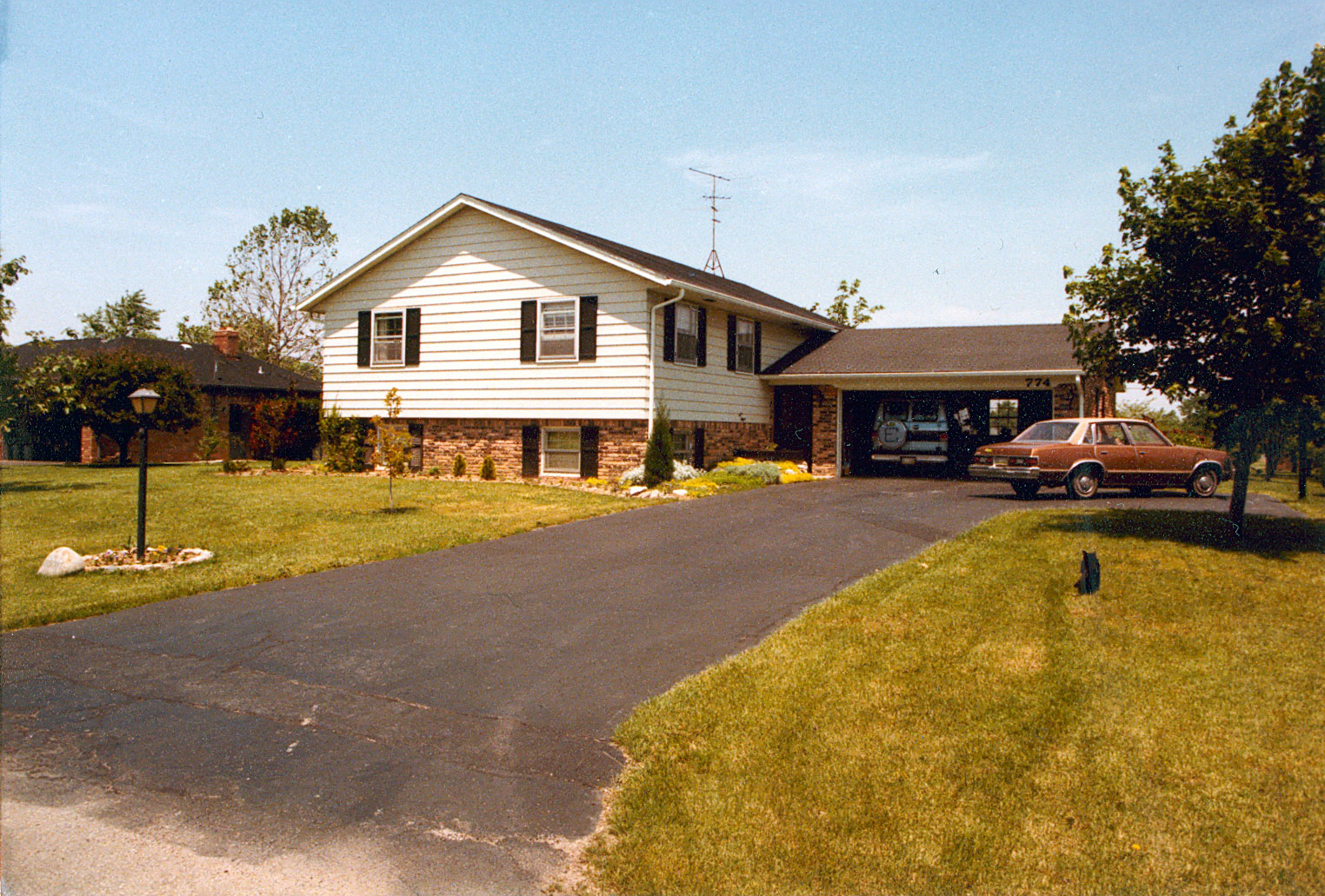
On a residential area, a front yard (United States, Canada, Australia) or front garden (United Kingdom, Europe) is the portion of land between the street and the front of the house.[1] If it is covered in grass, it may be referred to as a front lawn. The area behind the house, usually more private, is the back yard or back garden. Yard and garden share an etymology and have overlapping meanings.
_(2).jpg)
In North America, front yards, which normally include considerable driveway and parking space, tend to be mostly lawn even when large,[citation needed] but in Europe they are often treated as a flower garden and may be heavily planted.[citation needed] In North American suburbia, there may be no physical barriers marking the front and sides of the plot, which would be very unusual in Europe,[citation needed] where there are generally walls, fences or hedges on three sides of the garden.[citation needed]
Features
[edit]
While the front yard's counterpart, the backyard, is often dominated by utilitarian features like vegetable gardens, tool sheds, and clothes lines, the front yard is often a combination decorative feature and recreation area.[2] It is more commonly landscaped for display and is the usual place for display elements such as garden gnomes,[3] plastic flamingos,[4][5] and yard shrines such as "bathtub Madonnas".[6] An article on London suburbs describes a "model" front garden in Kenton: "The grass ... is neatly mown. There is a flowering cherry and a privet hedge, behind which lurks a plaster gnome."[7]
Depending on climate, local planning regulations or size, a front yard may feature a lawn or grassed area, a driveway or footpath or both and gardens or a vegetable patch or potted plants.
History and styles
[edit]Australia
[edit]
The history of the Australian front yard is said to have begun with a regulation enacted in New South Wales in 1829 mandating that new houses be built at least 14 ft (4.3 m) from the street to ensure adequate space in front of each house for a garden.[8]
By the early 1900s, the front yard had become an accepted, "buffer between the private home and the public street". Australians adopted the American ideal of front yards without fences to create "park-like" streets and suburb-wide efforts were undertaken to remove fences and thereby encourage good neighbourly relationships and discourage anti-social behaviour and crime.[9] Daceyville in Sydney was the first suburb where fencing was systematically removed and soon public housing organisations in other states followed the trend. Some even encouraged front yard beautification by running competitions with cash prizes.[9]
During the construction of Australia's planned capital, Canberra, (in the late 1920s) the Federal Capital Commission provided government subsidies to encourage new residents to regularly maintain their front yards.[9]
By the 1950s, there was a clear delineation between front and back yards.[9] There was also, by then, a very clear street-view approach to garden design with the house façade and front yard considered in unison; to "view the whole effect from the street".[10]
Canada
[edit]
The development and history of Canadian front yards generally followed early American trends but diverged in the early 1900s.
In the 1920s and 30s, zoning laws were introduced for growing cities like Ottawa and Vancouver. The regulations stipulated minimum front yard "depth" for new houses and ensured home builders shunned the "tenement house evil" of New York City and London.[11]
In many parts of Canada, lower average temperatures and a more pronounced want for privacy led to the increased popularity of tall trees at the side borders of housing blocks, framing the house and front yard. These provided wind breaks in winter and shade in the summer.[12] Lawn ornaments were less common in pre and post-war Canada than in the United States and a large well-kept tract of "featureless" lawn was popular with many middle-class Canadians.[12]
In the post-war era, suburban Canada gained its own distinctive architectural styles and this extended to front yards and gardens. Rather than the stark white façades of stately American houses, wealthy Canadians of the 60s and 70s showed a preference for wood, in particular "diagonal cedar panelling". To match that trend, front yards of such houses were often paved to match the entrances of modern city buildings; "no elite home of the 1970s was complete without a front yard of interlocking brick".[13]
As in other cultures, Canadian front yards became areas of socialisation between the public street and the private home; a space for street parties, family barbecues and neighbourly conversation.[12]
Europe
[edit]

The earliest form of front garden was the open courtyard popular with Spanish and Italian nobility. As housing evolved, so too did gardens and façades. Enclosed courtyards were surpassed in popularity by the large manicured gardens of French, German and Dutch palaces and stately homes. These traditions were carried by the Europeans to the Americas where courtyards remained popular among Spanish settlers in Florida while productive cottage gardens became commonplace among Dutch settlers and English pilgrims in Massachusetts.[14]
As suburbs developed around major European cities, the attitude to privacy, and by extension to front gardens, was decidedly different from that of the British. As one Dutch commentator highlighted (in the 1950s):[15]
The Dutch language has no word that expresses the English concept of 'privacy': the right to be alone. It is not without reason that the English language has such a word and ours has not. It is a difference rooted in national character, and it can also be recognised in other places. We have low fences around almost every garden and yard, for example, but the English like high walls and hedges around their gardens, lest passers-by can look inside.
In older cities and townships (with houses built several centuries earlier) front gardens are far less common, with front doors providing residents with access direct to the street. In these cases, planter boxes and micro-gardens have become popular as a way of "greening" façades that would otherwise be without plants; elements that make a, "significant contribution to the quality of the environment".[16]
United Kingdom
[edit]
In British English, the space in question is referred to as a front garden.
Urban housing in the United Kingdom originally had no separation between the house front and the street. The introduction of the byelaw terraced house, a type of dwelling built to comply with the Public Health Act 1875, raised the standards of accommodation. The provision of a front garden in new houses became common practice during the second half of the 19th century as part of the Domestic Revival style within Victorian architecture: "to provide for the majority of new, even fairly modest, houses, a small front garden or paved forecourt, and a garden or yard at the back".[17][18] Front gardens were "commonplace" for new residences by the 1870s.[19] The front garden was "largely ornamental" and initially more important than the back, which was sometimes eliminated to allow more space for service areas.[20] A fairly standard layout was adopted with a stone or brick wall to emulate the "grandeur of approach and walled privacy of large houses" and a straight path from the gate to the front door.[17] Often, the cottage garden style of thick planting of mixed types of flowers was adopted. This supposedly originated in the gardens of rural cottages, where front gardens had long been common. In the houses of the working class, the small rear garden was often more functional, as a space for drying clothes, having children play and the like, and any efforts at ornamental gardening took place in the front garden.
Early in the 20th century, housing developments influenced by the garden city movement, initiated by Ebenezer Howard in 1898, featured detached houses with undivided "communal grass areas" in front of them.[21] In essence, the houses shared a front garden.
However, outside these developments the dominant form of new housing in the United Kingdom until after World War II, especially in London, was the semi-detached, which superseded the previous dominant terraced house and where a garden was part of the ideal.[22] The front garden, smaller than the back, was separated from the street by a lower wall than in the Victorian house; some developers planted hedges and provided instructions on their care.[23] Gardening was a widely shared hobby and source of pride; developers sometimes prepared the front garden (almost never the back) as an inducement to buy, and sometimes held contests for the best front garden.[24] However, since the houses were not always provided with garages, as motor vehicles became more common, the front garden was increasingly often used as a car parking area or enclosed by a garage.[21]
During the Great Depression, local authorities encouraged families to grow produce in their own front gardens, thereby increasing community food supplies. Gardening was introduced in some schools, and towns introduced competitions and awards for attractive and productive front gardens.[25] (See Dig for victory.)
In the post-war era of the 1950s and 60s, many of those front garden areas used for parking were paved over and became mini-driveways. This trend also became more common as professional gardeners became less common, thus increasing the need for home owners to maintain what was often a very small section of lawn or planted garden.[26]
United States
[edit].jpg)
As residential areas were subdivided and developed during the late 19th and early 20th centuries, the "suburban ideal" demanded large front yards, "dominated" by the facades of the houses they bounded.[2]
The size of new front yards gradually decreased during the second half of the 20th century as houses were built closer and closer to the front of housing blocks.[2]
In the 1870s, lawn ornaments became a popular front yard feature, with wrought iron sculpture, bird baths and gazebos being particularly popular. Throughout the 1880s and 90s, wicker lawn furniture became popular before being replaced in the early 1900s by nursery rhyme character and animal ornaments.[27] In the post-war period, kitsch ornaments including plastic flamingoes and garden gnomes became popular.
During the 1930s a new American Style took hold, inspired by the architectural designs of Frank Lloyd Wright, Bernard Maybeck and Greene and Greene; "informality, naturalness, interlocking indoor-outdoor design, greatly reduced flower-beds, privacy for outdoor recreation and leisure...".[28]
Local ordinances determine what owners and residents can and cannot do in their front yards. In recent times, sustainability enthusiasts and practitioners have attempted to use their front yards to grow organic produce, in violation of existing codes. In Orlando, Florida, for example, city codes set standards for front yard ground covering and prescribe lawns only. Residents there have received citations for breaching the code by growing vegetable gardens and are currently fighting to have the ordinances amended.[29] The illegality of growing vegetables in the front yard first received public attention due to the Oak Park incident[30] in 2011. The "Urban Farming Guidebook — Planning for the Business of Growing Food in BC's Towns & Cities" [31] provides an explanation to this recurring phenomenon "The Garden City model embraced food production and its systems as key elements of community design. However, the race to the single use zoned suburbs did not include food production as part of the design of suburbs....urban farming was excluded from our lists of permitted uses and such farming became non-conforming or simply illegal uses which, if they were lucky, avoided bylaw attention".
Since the early 2000s, once-common front yard "accoutrements" (like basketball rings on garages) are becoming less common; many are now prohibited by local government ordinances.[2]
See also
[edit]

References
[edit]- ^ The Language of Real Estate by John W. Reilly (Dearborn Real Estate, 2000) [5th edition] p. 436
- ^ a b c d The Spaces Between Buildings by Larry Ford (JHU Press, 2000)
- ^ Folklore 115:1, April 2004, front-page photograph of a front garden display of garden gnomes in Llanberis, North Wales
- ^ The Flamingo in the Garden: American Yard Art and the Vernacular Landscape by Colleen J. Sheehy (Garland Publishing, 1998)
- ^ South Florida Folklife by Tina Bucuvalas, Peggy A. Bulger, and Stetson Kennedy (University Press of Mississippi, 1994) p. 225: "Bringing home a plastic flamingo for the front yard is as much a part of a South Florida vacation ..."
- ^ "Yard Shrines and Sidewalk Altars of New York's Italian-Americans" by Joseph Sciorra, Perspectives in Vernacular Architecture 3 (1989) 185–98: such shrines are also placed on the stoop and sidewalk on feast days.
- ^ "Non-Plan Revisited: Or the Real Way Cities Grow: The Tenth Reyner Banham Memorial Lecture" by Paul Barker, Journal of Design History 12:2 (1999) p. 99.
- ^ The Front Garden: The Story of the Cottage Garden in Australia by Victor Crittenden (Mulini Press, 1979)
- ^ a b c d A History of European Housing in Australia by Patrick Troy (Cambridge University Press, 2000)
- ^ Australia's quarter acre: the story of the ordinary suburban garden by Peter Timms (Miegunyah Press, 2006)
- ^ Canadian City: Essays in Urban and Social History by Gilbert Stelter, Alan Françis Joseph Artibise (McGill-Queen's University Press, 1984)
- ^ a b c A History of Domestic Space: Privacy and the Canadian Home by Peter Ward (UBC Press, 1999)
- ^ The Canadian Home: From Cave to Electronic Cocoon by Marc Denhez (Dundurn, 1994)
- ^ The Front Garden: New Approaches to Landscape Design by Mary Riley Smith (Houghton Mifflin Harcourt, 2001)
- ^ Informalization: Manners and Emotions Since 1890 by Cas Wouters (SAGE, 2007)
- ^ Home zones: a planning and design handbook by Mike Biddulph (The Policy Press, 2001)
- ^ a b The Edwardian House: The Middle-class Home in Britain, 1880–1914 by Helen Long (Manchester University Press, 1993)
- ^ The English Terraced House by Stefan Muthesius (Yale University Press, 1982), pp. 247–78.
- ^ City Trees: A Historical Geography from the Renaissance Through the Nineteenth Century by Henry W. Lawrence (University of Virginia Press, 2008)
- ^ Muthesius, pp. 77, 144.
- ^ a b Britain's New Towns: Garden Cities to Sustainable Communities by Anthony Alexander (Routledge, 2009)
- ^ Semi-Detached London: Suburban Development, Life and Transport, 1900–39 by Alan A. Jackson (George Allen & Unwin, 1973) pp. 149–50.
- ^ Jackson, pp. 128, 150.
- ^ Jackson, p. 211.
- ^ Working Class Cultures in Britain, 1890–1960: Gender, Class and Ethnicity by Joanna Bourke (Routledge, 2002)
- ^ This is Britain by Coralyn Bradshaw (Taylor & Francis, 1962)
- ^ The guide to United States popular culture by Ray B. Browne & Pat Browne (BGSU Popular Press, 2001) [with Fred E. H. Schroeder]
- ^ Front yard America: the evolution and meanings of a vernacular domestic landscape by Fred E.H. Schroeder (BGSU Popular Press, 1993)
- ^ The Battlefront in the Front Yard by Steven Kurtz (New York Times, 19 December 2012)
- ^ Bass, Julie (10 June 2011). "oak park hates veggies". oakparkhatesveggies. wordpress. Retrieved 5 July 2015.
- ^ Buchan, Rob. Urban Farming Guidebook (PDF). Vol. 1. p. 1. Retrieved 5 July 2015.
Further reading
[edit]
- The Average Yard by Harold A. Caparn (1937)
- The New American Front Yard: Kiss Your Grass Goodbye by Sarah Carolyn Sutton (Tendril Press, 2013)
- Front Yard Machines: Interpreting Cultural Landscapes by Markus Lahtinen (Lightning Source, 2008)
- Rediscovering and Recovering the Front Yard: A Study of Garden Yard Meaning and Owner Attitudes by Gillian Jurkow (University of Manitoba, 2000)


| Shared rooms | |
|---|---|
| Private rooms | |
| Spaces | |
| Technical, utility and storage |
|
| Great house areas | |
| Other | |
| Architectural elements | |
| Related | |
| Authority control databases: National |
|---|

Front yard
View on GrokipediaDefinition and Purpose
Core Characteristics
The front yard refers to the open area directly in front of a residential building, extending from the street edge to the structure's facade, distinguishing it from side or rear yards by its public orientation and visibility. This space typically encompasses a lawn of turf grass, pathways for pedestrian access, driveways for vehicles, and foundation plantings of shrubs or perennials adjacent to the house walls. Traditional designs prioritize uniformity and tidiness, with low-growing vegetation that maintains clear sightlines and an unobstructed approach to the entrance.[9][10] Structurally, front yards exhibit lower plant diversity than private back yards, as social norms enforce manicured appearances to conform with neighborhood expectations and public scrutiny. Empirical studies confirm that homeowners invest more effort in lawn maintenance here due to visibility, resulting in predominantly grassy expanses over 70% of the area in many U.S. suburbs, supplemented by ornamental elements for aesthetic framing. Hardscape features, such as concrete sidewalks and pavers, define circulation patterns, ensuring functional access while buffering the home from street traffic.[11][12] Core design tenets include unity with the home's architecture, achieved through proportional plant masses and material echoes between yard and building; balance via symmetrical layouts that direct focus to the entry; and accessibility prioritizing safe, intuitive paths. These characteristics reflect causal influences like zoning regulations mandating setbacks and cultural preferences for orderly facades, fostering curb appeal that correlates with perceived property values.[13][14]Functional and Symbolic Roles
Front yards primarily serve to facilitate safe and efficient pedestrian access from the street to the home's entrance, typically via sidewalks or pathways that guide visitors while minimizing hazards like uneven terrain or vehicle proximity.[10] They also function as a visual buffer, screening the residence from street-level disturbances such as noise, dust, and traffic, thereby enhancing indoor livability through strategic planting of shrubs or low walls.[15] In utilitarian adaptations, particularly in denser urban settings, front yards may incorporate elements like compact seating areas, edible gardens, or play spaces for children, transforming underused turf into productive zones without compromising primary access roles.[16] Symbolically, front yards act as a public-facing extension of the household, conveying the owner's socioeconomic status and aesthetic preferences through manicured lawns, ornamental plantings, or decorative features that signal investment in property upkeep and community harmony.[5] In American suburban contexts, they embody ideals of domestic order and separation from chaotic urban environments, with uniform green lawns representing control over nature and alignment with post-World War II cultural norms of middle-class conformity and prosperity.[17] This semi-public interface fosters subtle social signaling, where visible maintenance discourages neighborhood decline and promotes collective vigilance, though it can also enforce homogeneity by discouraging divergent landscaping that deviates from local expectations.[18] Historically, the open, unfenced front yard design emerged in late-19th-century U.S. suburbs as a marker of accessibility and wholesomeness, contrasting with enclosed European precedents and reinforcing the mythos of the self-sufficient American homestead.[19]Historical Development
European Origins and Early Influences
![Old Catton Cottages][float-right] In medieval rural Europe, particularly England, modest cottages commonly included small front plots cultivated as mixed gardens for herbs, vegetables, fruits, and flowers, providing sustenance and basic ornamentation while doubling as communal or livestock areas. These utilitarian spaces, evident in surviving examples from the 14th-15th centuries, prioritized functionality over aesthetics, with plants like rosemary, lavender, and roses integrated for both culinary and medicinal uses.[20][21] The transition to more defined front gardens occurred during the late 17th and 18th centuries amid the English landscape movement, where estates featured expansive lawns and naturalistic plantings approaching the house, influencing suburban residential design. Architects and landowners, inspired by figures like William Kent and Lancelot "Capability" Brown from the 1720s onward, adapted these principles to smaller scales, promoting setback houses with verdant forecourts symbolizing prosperity and separation from the street. In Georgian-era terraces (circa 1714-1837), front areas enclosed by low walls or railings emerged as status markers, often planted with boxwood parterres or gravel paths echoing formal French and Italian influences reinterpreted through British informality.[22][23] By the Victorian period (1837-1901), front gardens proliferated in burgeoning suburbs with semi-detached and terraced housing for the emerging middle class, featuring ornate cast-iron gates, hedges, and bedding plants like annuals and perennials for colorful displays. This era's designs, documented in periodicals such as The Garden (founded 1871), emphasized curb appeal and privacy, with railings requisitioned during World War II highlighting their prevalence by 1939. Continental Europe, including France and the Netherlands, paralleled this with walled avant-cours in bourgeois villas, drawing from Renaissance precedents where houses were set back amid axial approaches, though urban density often limited such features to rural or elite contexts until 19th-century industrialization spurred suburban expansion.[24][25][26]Spread to Colonies and Modern Suburbs
In the American colonies established by English settlers during the 17th century, front yard practices drew from European precedents, particularly the English tradition of turfed enclosures around dwellings. Records from as early as 1683 describe colonial dwelling-house yards as turfed or seeded with grass, including "grass plots" integrated into yard layouts for both utility and modest ornamentation.[27] These spaces, however, remained compact and multifunctional, with houses often positioned close to the street and front areas serving practical roles such as kitchen gardens bounded by hedges or fences, reflecting resource constraints and agrarian priorities over expansive lawns.[28] English garden influences, emphasizing naturalistic plantings and open greensward, began permeating colonial designs, as seen in ornamental layouts at sites like Williamsburg, Virginia, where European-style shrubbery and turf adapted to local conditions using indigenous labor and imported elements.[29][30] The transition to larger, more formalized front yards accelerated in the 19th century amid suburban expansion, enabled by technological and infrastructural advances. The 1830s invention of the cylinder lawnmower by Edwin Budding facilitated grass maintenance, while horticultural writings, such as those of Andrew Jackson Downing in the 1840s and 1850s, advocated open front lawns as aesthetic and social showcases, shifting yards from enclosed utility to visible, democratic expanses.[5] By the 1860s, rail and streetcar improvements spurred suburban growth, with landscape architect Frederick Law Olmsted's 1868 Riverside, Illinois, community exemplifying the model: homes setback 30 feet from curved streets, promoting uniform front lawns as communal green buffers.[31] These designs democratized English park-like ideals, making manicured turf a marker of middle-class aspiration; by the 1890s, front lawns had become standard in burgeoning suburbs, reinforced by seed catalogs and periodicals that standardized grass cultivation across regions.[32][33] In the 20th century, post-World War II suburbanization via developments like Levittown, New York—where over 17,000 homes were built starting in 1947—solidified the open front yard as a hallmark of American domesticity, with lots averaging 6,000 to 10,000 square feet featuring setback lawns to evoke prosperity and uniformity.[34] This pattern extended to other former colonies, such as in Australia and Canada, where British imperial legacies merged with local adaptations, yielding similar expansive, grass-dominated frontages in mid-century subdivisions. Empirical surveys indicate that by 1950, over 80% of new U.S. suburban homes incorporated visible front lawns, driven by real estate marketing that tied them to ideals of health, order, and neighborly conformity rather than agricultural utility.[35][36]Impact of Zoning and Automobile Culture
Zoning ordinances in the United States, validated by the Supreme Court's 1926 ruling in Village of Euclid v. Ambler Realty Co., empowered municipalities to impose building setbacks in residential districts, mandating minimum distances between structures and street frontages to promote orderly development, light, and air circulation.[37] These regulations typically required front yard depths of 20 to 30 feet or more, transforming abutting lot lines common in pre-automobile urban forms into expansive open spaces that defined the modern front yard.[38] Such setbacks, while ostensibly for public health and aesthetics under the City Beautiful movement's influence, often served exclusionary purposes by enforcing minimum lot sizes and low-density configurations that deterred multi-family housing and commercial intrusions.[39] The rise of automobile ownership, accelerating after World War I with over 23 million registered vehicles by 1929, intersected with zoning to reshape front yards for vehicular accommodation.[40] Early zoning codes began incorporating off-street parking requirements, compelling larger setbacks to fit driveways and garages, which shifted house orientations from pedestrian street-facing porches to car-accessible fronts.[41] This adaptation prioritized vehicle storage over usable living space, as garages supplanted rear alleys or carriage houses, embedding car dependency into suburban morphology.[42] Post-World War II suburban expansion, fueled by federal highway investments under the 1956 Interstate Highway Act and lending practices favoring single-family detached homes, standardized front yards as manicured lawns buffering garages from roadways.[43] Minimum setback mandates, combined with automobile-centric planning, resulted in inefficient land use, with front yards often comprising unproductive grass expanses maintained for visual conformity rather than functionality, contributing to higher infrastructure costs and reduced walkability.[44] By the 1960s, this model dominated American residential landscapes, where over 80% of new housing occurred in suburbs designed around car access, perpetuating a cycle of sprawl and isolation from street-level interaction.[40]Design Features and Landscaping
Traditional Components
Traditional front yards, particularly in early American and European-influenced designs, typically feature an enclosed space adjacent to the house facade, serving as an extension for both utilitarian and ornamental purposes.[27] Key elements include fences or hedges for boundaries, central paths for access, lawns for open space, and plantings such as shrubs and flower beds to enhance aesthetics.[45][9] Lawns form the central component, often consisting of grass plots swept clean or mowed, symbolizing order and providing a verdant backdrop; in 19th-century contexts, contiguous lawns under shade tree canopies were common in ornamental front yards.[45][27] Paths, typically gravel or brick, lead from the street or gate to the entrance, facilitating pedestrian movement while maintaining symmetry in designs like those complementing Colonial homes.[27][9] Boundary features emphasize enclosure and definition, with wooden picket fences—often white-painted—or low clipped hedges such as boxwood providing separation from the street and framing the yard.[27][9] In late Victorian eras (1860-1900), cast iron fences and evergreen hedges served similar roles, protecting plantings while adding ornamental detail.[46] Plantings include foundation shrubs like boxwood or oleander around the house base to soften architecture, interspersed with flower beds of annuals and perennials for color and variety.[9][46] Trees such as cedars or magnolias provide shade and height, while vines on porches or arbors add vertical interest and privacy; these elements collectively created dramatic effects in street-facing yards to display wealth and taste.[45][46]Common Styles and Materials
Common front yard styles emphasize curb appeal, functionality, and adaptation to local climates, with traditional designs featuring manicured lawns bordered by shrubs and flower beds to create a welcoming entryway.[47] These often incorporate symmetrical plantings around the house foundation, using evergreen shrubs like boxwood or rhododendrons for year-round structure, paired with seasonal perennials such as daylilies or hostas for color.[48] In contrast, modern styles prioritize minimalism with clean geometric lines, incorporating hardscape elements like sleek pavers or gravel over extensive turf to reduce maintenance.[49] Xeriscaping has gained prevalence in arid regions, replacing traditional turf with drought-tolerant natives, succulents, and mulch to conserve water, as evidenced by Colorado State University Extension recommendations for front yards using river rock and low-water perennials like yarrow or salvia.[50] Rustic or cottage styles employ informal groupings of textural plants, such as ornamental grasses and wildflowers, accented by natural wood fences or stone paths, evoking a less formalized aesthetic suitable for older homes.[51] Materials for front yards divide into softscape and hardscape categories. Softscape typically includes turfgrasses like fescue or zoysia for lawns, selected for climate resilience—cool-season varieties in northern areas and warm-season in southern—alongside mulch from wood chips or bark to suppress weeds and retain soil moisture.[10] Hardscape elements favor durable options such as concrete pavers for walkways, though brick or flagstone provides a more aesthetic alternative despite higher initial costs.[10] Gravel and permeable pavers are increasingly used in modern designs for drainage and sustainability, reducing runoff in urban settings.[49] Stone retaining walls or edging, often from local quarries, add structure while preventing erosion on sloped front yards.[52]Regional Variations
North America
In North America, front yards evolved from enclosed, functional spaces in early colonial settlements to ornamental lawns by the 19th century. Early yards, often geometric and contiguous to buildings, served practical purposes like food preparation and livestock, with surfaces varying from turfed grass in the North to paved areas in the South.[27] Influenced by European aesthetics, figures like Thomas Jefferson adopted manicured lawns at estates such as Monticello in 1806, while Andrew Jackson Downing's 1840s writings promoted lawns as national landscape ideals.[6] By the 1870s, productive front gardens shifted to rear yards as suburbs expanded, with maintained grasses replacing them, aided by inventions like the lawn mower in 1830 and sprinkler in 1871.[6] Post-World War II suburbanization standardized front yard designs, emphasizing expansive turf covering at least 75% of the area, foundation shrubs, corner shade trees, and unobstructed views to the street for curb appeal.[5] Driveways and parking spaces became integral, reflecting automobile culture, with sculpted evergreens and seasonal flower beds adding accents.[5] In the United States, these features symbolized conformity and status, supported by the lawn care industry's growth, including rotary mower sales surging from 139,000 units in 1946 to 4.2 million by 1959.[6] Canadian front yards mirror this but prioritize hardy perennials and natives for harsh winters, incorporating elements like pavers and rock gardens for low maintenance and year-round interest.[53] Zoning laws mandate front setbacks, typically 15 to 30 feet from the property line in suburban residential zones, ensuring open yard space for aesthetics, light, and safety.[54] For instance, many California counties require 20 feet from the road right-of-way edge.[55] These regulations, combined with homeowners associations, enforce manicured appearances, often favoring monoculture lawns over native plantings despite the latter's lower water needs—established native landscapes requiring far less irrigation than turf.[56] Recent debates highlight sustainability, with advocates promoting natives to reduce resource use, though traditional lawns persist due to entrenched norms and enforcement.[57]Europe
In Europe, front yards—commonly referred to as front gardens—typically feature compact spaces enclosed by hedges, walls, or fences, prioritizing privacy and ornamental planting over expansive open lawns. This design reflects historical urban densities and cultural preferences for screening residential entrances from public view, contrasting with the open, turf-dominated American model that emerged later. Since the 19th century, front gardens have been integral to terrace and semi-detached housing across England, serving as transitional zones between street and home with flower borders, low shrubs, and gravel paths rather than monoculture grass.[24] Historical precedents trace to medieval and Renaissance periods, where gardens evolved from utilitarian enclosures to stylized features influenced by formal French designs, including symmetrical parterres introduced around 1595 by Claude Mollet for royal estates. These elements filtered into domestic scales during the Baroque era (1603–1714) in Britain, incorporating Dutch and French influences with clipped hedges and geometric layouts, though everyday front gardens remained modest until suburban expansion in the 19th and 20th centuries. English landscape traditions from the late 16th century emphasized naturalistic yet controlled plantings, fostering biodiversity through mixed perennials and evergreens suited to temperate climates.[58][59][60] Regional practices vary: in the United Kingdom, front gardens often include permeable paving for vehicle access alongside pollinator-friendly borders, with the Royal Horticultural Society advocating minimal hard surfacing to retain soil moisture and plant health amid urbanization. French styles retain formal symmetry with lavender hedges and stone accents, echoing Le Nôtre's 17th-century principles of imposed order, while German gardens blend orderly cottage motifs with native wildflowers like cornflowers for low-maintenance appeal. Post-World War II suburbanization amplified these spaces, but contemporary trends address parking demands by integrating raised beds and vertical planting to preserve green cover.[61][62][63]Australia and Other Regions
In Australia, front yards typically serve as the public-facing interface of suburban homes, often designed to enhance street aesthetics while adhering to local council regulations that mandate at least 50% planting coverage and limit hard paving to no more than 60% of the area to promote permeability and greenery.[64][65] These requirements, enforced through landscape guidelines, emphasize deep soil zones for tree planting and sustainable features like native, drought-tolerant species suited to arid climates, particularly in regions like Western Australia.[66][67] British colonial influences persist in cottage-style gardens featuring flowering shrubs and borders, but modern designs increasingly incorporate low-maintenance Australian natives such as kangaroo paw and grevillea to reduce water use, with lawns restricted to 20-30% of outdoor areas.[68][69][70] Suburban front yards in Australia often include welcoming pathways, container gardens, and functional elements like patios, reflecting a blend of aesthetic appeal and practicality amid zoning rules that prohibit excessive hardscaping to mitigate urban heat and runoff.[67] Early 20th-century garden suburbs, such as Haberfield in Sydney, prioritized native integration for environmental connection, a principle echoed in contemporary trends favoring xeriscaping over traditional turf amid water scarcity concerns.[71] Local variations exist, with Western Australian guidelines promoting architectural plants for structure and color contrasts using species like banksia, while eastern states retain more hybrid European-Australian hybrids.[72] In New Zealand, front yard practices mirror Australian suburban models with paths leading to the entrance, central lawns acting as space fillers, and borders of shrubs and flowers enclosed by low fences, prioritizing simplicity and low upkeep through drought-tolerant natives.[73][74] Motivations for maintenance include personal enjoyment and enhancing visual functionality, though urban densities in some areas limit expansive designs compared to Australia's broader suburbs.[75] Other regions, such as parts of South Africa with temperate climates, occasionally adopt similar hardy, indigenous plantings in front yards for biodiversity, but Asian urban contexts often feature minimal or absent front yards in favor of compact courtyards or vertical greenery due to high population densities and cultural emphases on internal privacy.[76]Cultural and Social Dimensions
Aesthetic and Status Symbolism
Front yards, particularly through manicured lawns and landscaping, have long served as aesthetic displays projecting order, prosperity, and social conformity. Originating in European estates where expansive grass areas signified wealth by forgoing productive agriculture for ornamental leisure spaces—a practice prominent from the 17th century onward—these features emphasized the owner's capacity to maintain unused land via labor and resources.[77] In this context, the uniform green turf provided a visual symbol of elite status, evoking pastoral ideals of tranquility and dominion over nature.[78] In post-World War II American suburbia, front yards evolved into potent emblems of the middle-class dream, intertwining aesthetic appeal with socioeconomic signaling. Developments like Levittown standardized open, grass-dominated yards, where pristine maintenance conveyed upward mobility and adherence to communal norms amid rapid suburban expansion from 1945 to 1960, when over 13 million homes were built.[34] The plush, weed-free lawn, often accented by symmetrical flower beds or shrubs, not only enhanced visual curb appeal but also demonstrated investment in time, equipment, and chemicals—elements underscoring financial stability and leisure availability.[8] Sociologically, this aesthetic choice reflects conspicuous consumption, as theorized by Thorstein Veblen, where visible yard upkeep competes for status within neighborhoods, fostering uniformity over biodiversity.[79] Empirical observations link well-kept front yards to perceptions of homeowner reliability and property value premiums, with real estate data indicating that superior landscaping can boost appraisals by 5-10% in suburban markets.[31] However, this symbolism persists amid critiques of resource intensity, as the idealized verdant facade prioritizes signaling over ecological function.[35]Community Standards vs. Individual Expression
Homeowners associations (HOAs) frequently impose restrictive covenants on front yard landscaping to preserve neighborhood aesthetics and property values, often prioritizing uniformity over personal creativity. Empirical hedonic pricing studies indicate that well-maintained landscaping, including trees and shrubs, can elevate perceived home values by up to 30% according to real estate agents surveyed in 2021, while expenditures on such features yield higher selling prices compared to unlandscaped properties.[80][81] These standards aim to mitigate perceived negative externalities, such as unkempt yards signaling decline, which a 2008 field survey of 760 homes linked to reduced sale prices through diminished curb appeal.[82] Conflicts arise when residents pursue individual expression, such as installing vegetable gardens or native plantings that deviate from manicured lawn norms, prompting fines or litigation. In Miami Shores, Florida, a 2013 ordinance banned edible plants in front yards, leading to citations against homeowners like Hermine Ricketts and Tom Carroll for growing tomatoes and beans; the Institute for Justice challenged this as an overreach on private property rights, though the Florida Supreme Court upheld the restriction in 2015, affirming local authority absent state constitutional violation.[83] Subsequent amendments in 2018 permitted broader front-yard uses, including vegetables, illustrating evolving responses to such disputes.[84] Similarly, in California, vague HOA landscaping clauses have been deemed unenforceable by courts, as in a North Carolina appellate ruling extended analogously, where imprecise terms failed to provide fair notice.[85] Proponents of strict standards argue they foster collective economic benefits, with data showing maintained exteriors accelerate sales and boost values by 15-20%, countering claims of arbitrary conformity.[86] Critics, including property rights advocates, contend that enforcement often exceeds empirical justification, suppressing sustainable alternatives like drought-resistant natives amid water scarcity, and Florida's 2020 Friendly Landscaping Statute now shields such plantings from covenant disputes unless proven to harm uniformity.[87] This tension underscores causal trade-offs: while aesthetics demonstrably influence market perceptions, rigid rules risk litigation costs and resident alienation, as evidenced by recurring HOA fines for non-compliant yards reaching $500 monthly in documented cases.[88] Balancing acts, such as consistent rule application, are recommended to reconcile communal cohesion with autonomy.[89]Legal and Regulatory Framework
Zoning Laws and Setbacks
Zoning laws establish minimum distances, known as setbacks, between buildings and property boundaries, including the front yard setback which mandates the space between a structure's facade and the street-facing property line.[90] These requirements aim to promote uniformity in streetscapes, ensure visibility for traffic safety, provide light and air circulation, and accommodate potential future road expansions.[91] Front setbacks specifically foster aesthetic consistency by aligning new construction with prevailing building lines in established neighborhoods.[92] In the United States, typical residential front yard setbacks range from 20 to 35 feet, though values vary by locality and zoning district.[93] For instance, Norfolk, Virginia, requires a 25-foot front setback for principal structures in many zones, while Bellevue, Washington, mandates 20 feet in R-5 residential districts.[94][95] Some ordinances allow averaging: if 40% or more of adjacent lots on one side of a street maintain lesser depths, the required setback may be reduced to match that average, preventing isolated protrusions that disrupt visual harmony.[92] Greenfield Township, Pennsylvania, enforces a uniform 35-foot front setback across applicable properties.[96] Enforcement occurs through local building permits and inspections, with nonconforming structures potentially requiring variances for hardship, such as uniquely shaped lots where strict adherence would preclude reasonable use.[97][98] Violations can compel owners to relocate or modify encroachments, as courts uphold these rules to preserve neighborhood character and public safety.[99] Historically, setback lines emerged in the 19th century for fire prevention and street aesthetics but proliferated with mid-20th-century zoning to enforce suburban uniformity, sometimes critiqued for mandating underutilized space that inflates development costs without proportional safety gains.[100][38]Homeowners Associations and Enforcement
Homeowners associations (HOAs) in the United States commonly regulate front yard aesthetics through covenants, conditions, and restrictions (CC&Rs) embedded in property deeds, which purchasers agree to upon buying into governed communities. These rules typically mandate maintained turfgrass lawns, trimmed hedges, and approved plant species to preserve curb appeal and uniformity, often prohibiting vegetable gardens, native wildflower meadows, or xeriscaping without prior board approval. As of 2024, approximately 369,000 HOAs oversee 77.1 million residents across 33.6% of U.S. housing stock, with landscaping violations ranking among the most frequent infractions cited by boards.[101][102][103] Enforcement begins with notices for non-compliance, such as overgrown grass exceeding specified heights (e.g., 6-12 inches) or dead patches, escalating to daily fines ranging from $50 to $1,000 per violation if unremedied. In Arizona, for instance, fines for weeds, missing plants, or neglected turf must remain "reasonable" under state statute to avoid judicial invalidation. Persistent breaches can lead to liens on properties or, in rare extremes, foreclosure proceedings, as HOAs derive authority from contractual CC&Rs rather than public zoning. Such measures aim to protect collective property values, with studies indicating HOA landscaping guidelines can curb residential water demand by up to 24% through mandated low-water designs in arid regions.[104][105][106][107] Legal challenges to front yard restrictions often hinge on whether rules are vaguely worded or exceed state limits, such as prohibitions on discriminatory enforcement or overrides for water conservation in drought-prone areas. Courts generally uphold specific, pre-existing CC&Rs as binding contracts, but ambiguous provisions—like undefined "neat and orderly" standards—may fail scrutiny, as seen in cases where vague landscaping mandates were deemed unenforceable. Homeowners can contest via internal hearings or litigation, though success rates remain low absent proof of arbitrary application, underscoring the voluntary yet enduring nature of HOA governance upon home acquisition.[108][106][109]Controversies and Property Rights Debates
Monoculture Lawns vs. Native Plant Alternatives
Monoculture lawns, consisting primarily of non-native turfgrass species such as Kentucky bluegrass (Poa pratensis) or fescues, dominate many front yards in suburban and urban settings, covering approximately 3% of U.S. land area and requiring intensive maintenance including irrigation, fertilization, and mowing. These lawns contribute to low biodiversity by forming dense, uniform stands that suppress native flora and provide minimal habitat for pollinators and wildlife, as turfgrass monocultures exclude diverse plant species and associated fauna.[110] In contrast, native plant alternatives incorporate regionally adapted species like milkweed (Asclepias spp.), coneflowers (Echinacea spp.), or bunchgrasses, which foster polycultures that enhance ecological resilience through deeper root systems, reduced erosion, and support for local insects and birds.[111] Ecologically, native landscaping outperforms turfgrass in resource efficiency and habitat provision. Residential lawn irrigation accounts for nearly one-third of U.S. household water use, totaling about 9 billion gallons daily nationwide, often exceeding local precipitation needs in arid regions.[112] Native plants, evolved to local climates, require up to 50-75% less water once established, minimizing irrigation demands and associated energy costs for pumping and distribution.[113] Peer-reviewed studies confirm that native polycultures sustain higher faunal abundance and diversity than non-native turf, with urban yards featuring natives attracting 2-3 times more pollinators and supporting greater arthropod populations compared to mowed lawns.[114][115] Turfgrass, while offering benefits like stormwater infiltration and urban cooling via evapotranspiration rates of 0.6-3.6 mm per day depending on climate, often relies on chemical inputs that lead to nutrient runoff and diminished soil microbial activity.[116] The shift toward native alternatives in front yards has sparked controversies centered on aesthetics, property values, and regulatory enforcement. Homeowners associations (HOAs) frequently mandate turfgrass maintenance, viewing native gardens as "unkempt" or weed-like due to their unstructured growth and seasonal variability, leading to fines or forced removals despite ecological gains.[117] In Maryland, a 2022-2023 legal battle saw homeowners Jeff and Janet Crouch successfully challenge their HOA's prohibition on a native front yard planting, arguing it violated state right-to-farm protections and highlighting how such restrictions prioritize visual conformity over biodiversity.[118] Similarly, Illinois enacted House Bill 2863 in August 2024, prohibiting HOAs from banning native or low-water plants, responding to complaints that enforcement ignored data on reduced maintenance costs—natives can cut yard upkeep by 60-80%—and environmental benefits like enhanced carbon sequestration in diverse root zones.[119] Critics of monoculture mandates contend they reflect unsubstantiated assumptions about property devaluation, as studies show native designs can maintain or increase appeal when thoughtfully arranged, though initial establishment may appear less manicured.[120]| Aspect | Monoculture Turfgrass Lawns | Native Plant Alternatives |
|---|---|---|
| Water Use (U.S. Residential) | ~9 billion gallons/day total irrigation | 50-75% reduction post-establishment |
| Biodiversity Support | Low; minimal pollinator/forage value | 2-3x higher faunal diversity |
| Maintenance Inputs | High (mowing, fertilizers, pesticides) | Low (minimal irrigation/chemicals) |
| Ecological Drawbacks | Runoff pollution, soil compaction | Potential invasives if non-local natives used |
Regulatory Overreach and Empirical Critiques
In cases of regulatory overreach, homeowners associations (HOAs) and municipal codes have enforced strict aesthetic standards favoring monoculture turf grass in front yards, often fining residents for adopting native or low-maintenance plantings that deviate from uniformity. For instance, in Montgomery County, Maryland, a couple faced HOA demands in 2022 to replace their wildlife-supporting native plants with turf grass, prompting a lawsuit that ultimately led to legislative changes permitting such alternatives under state law by 2023.[123][124] Similarly, a New York village issued fines in July 2025 to a homeowner for substituting lawn with native plants, citing code violations for perceived ugliness despite no evidence of nuisance or harm to neighbors.[125] These actions reflect broader HOA covenants prioritizing visual conformity, even as Texas House Bill 449 (2021) grants rights to xeriscaping, yet enforcement persists through legal pressure.[117] Empirical data underscores the flaws in such mandates, revealing turf lawns' high resource demands and ecological costs. Residential landscape irrigation, dominated by lawns, constitutes up to 30-50% of urban water use in arid regions, straining supplies without proportional benefits.[126] Maintenance practices like frequent mowing correlate negatively with plant diversity, as reduced intensity fosters greater species richness and soil biodiversity, per a 2025 study on urban lawns.[127][128] Pesticides and fertilizers for grass monocultures pollute waterways and diminish pollinator habitats, contrasting with native plantings that enhance biodiversity and require 50-75% less water.[129][130] Critics argue these regulations overstep by imposing subjective aesthetics over verifiable environmental gains, infringing on property rights where no externalities like invasives or hazards exist. Municipal codes limiting grass or weeds to 8-12 inches—intended for fire or pest prevention—have been wielded against native gardens mimicking natural growth, ignoring first-hand evidence from low-mow trials showing negligible risks but superior sustainability.[131][132] Such enforcement, often from unelected HOA boards or code officers, lacks empirical justification for overriding owners' land-use decisions, especially amid water scarcity data from regions like California, where lawn mandates exacerbate shortages.[133] This pattern highlights a disconnect between policy and causal evidence, favoring tradition over measurable outcomes like reduced chemical runoff and enhanced local ecosystems.Contemporary Trends and Challenges
Sustainability Efforts and Water Usage Data
In the United States, residential landscape irrigation—primarily for maintaining turfgrass in front and back yards—comprises nearly one-third of total residential water use, amounting to about 9 billion gallons daily.[112] This consumption is driven largely by non-native cool-season grasses like Kentucky bluegrass and tall fescue, which demand consistent supplemental watering outside their native temperate ranges, exacerbating strain on municipal supplies in drier climates such as the Southwest.[134] In regions like California and Nevada, where front yard lawns often constitute a visible portion of irrigated area, summer peaks can push outdoor use to over 50 percent of household water budgets.[135] Sustainability efforts emphasize replacing monoculture turf with xeriscaping principles, including drought-resistant native or adapted plants, mulch layering, and drip irrigation systems to minimize evaporation and runoff.[136] These approaches, promoted through programs like California's Cash for Grass rebates, incentivize front yard conversions by offering payments per square foot of turf removed, yielding average water savings of 19 gallons per square foot annually in pilot conversions.[137] Native plant installations, once established, require up to four times less irrigation than turfgrass due to deeper root systems adapted to local precipitation patterns and soil conditions.[138] Empirical studies confirm xeriscape retrofits achieve 50-75 percent reductions in landscape water demand, with some sites reporting up to 76 percent savings in irrigation volume.[139][140]| Landscaping Type | Estimated Annual Water Use Reduction vs. Turf | Source |
|---|---|---|
| Xeriscape (full conversion) | 50-75% | [139] |
| Native plants | Up to 75% (4x less than turf) | [138] |
| Turf removal with mulch/drip | 16-54% | [140] |
Post-2020 Shifts Toward Functionality
The COVID-19 pandemic, beginning in early 2020, catalyzed a marked increase in home gardening for food production, with many utilizing front yards for vegetable and herb cultivation amid supply chain disruptions and lockdowns that heightened interest in self-sufficiency. According to the National Gardening Association's 2021 survey, 18.3 million U.S. households—representing 7% of the population—began gardening for the first time in 2020, while 42% of existing gardeners reported expanding activities due to the crisis, often prioritizing edibles over ornamentals. This shift reflected practical motivations, including reduced access to commercial produce and a desire for local food sources, leading to reported shortages of seeds and gardening supplies in spring 2020.[142][143][144] In front yards specifically, this manifested as adoption of edible landscaping, where traditional turf was partially replaced by functional plantings like tomatoes, strawberries, and herbs in containers or beds, blending utility with curb appeal to navigate space limitations and neighborhood norms. Industry reports noted an 8% rise in households engaging in food gardening by 2021, with front-yard applications promoted for their low-maintenance productivity, such as permaculture designs incorporating fruit trees and perennials for ongoing yields. These changes were driven by empirical benefits, including cost savings on groceries and improved access to fresh produce, rather than purely aesthetic considerations.[145][146] Beyond the initial pandemic response, post-2020 trends have sustained emphasis on functionality through drought-tolerant and pollinator-supporting plantings that provide ecosystem services like water conservation and biodiversity enhancement, reducing reliance on high-maintenance lawns. By 2024-2025, edible front-yard designs gained traction in response to persistent inflation in food prices and climate concerns, with extensions services advocating integration of edibles into ornamental spaces for resilient, multi-purpose landscapes. However, adoption remains uneven, constrained by local regulations and preferences for conventional aesthetics, underscoring a gradual rather than wholesale transition.[147][148]References
- https://www.twdb.[texas](/page/Texas).gov/publications/reports/contracted_reports/doc/92483328a.pdf