Hubbry Logo
Real estate developmentReal estate developmentMain
Open search
Real estate development
Community hub
Real estate development
logo
8 pages, 0 posts
0 subscribers
Be the first to start a discussion here.
Contribute something
Real estate development
from Wikipedia
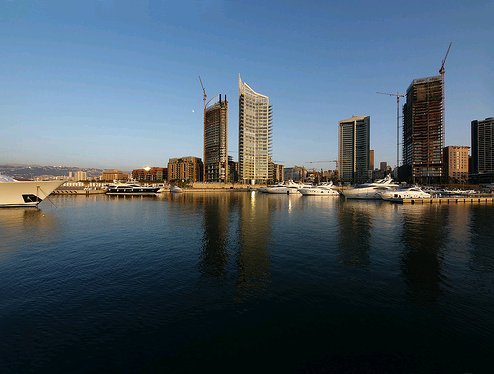
The Solidere development of the Beirut seafront and harbor
In the Netherlands, virtually all housing is developed and built through property developers, including development in upmarket segments.
Advertisement for mobile homes on the Florida Keys, June 1973

Real estate development, or property development, is a business process, encompassing activities that range from the renovation and re-lease of existing buildings to the purchase of raw land and the sale of developed land or parcels to others. Real estate developers are the people and companies who coordinate all of these activities, converting ideas from paper to real property.[1] Real estate development is different from construction or housebuilding, although many developers also manage the construction process or engage in housebuilding.

Developers buy land, finance real estate deals, build or have builders build projects, develop projects in joint ventures, and create, imagine, control, and orchestrate the process of development from beginning to end.[2] Developers usually take the greatest risk in the creation or renovation of real estate and receive the greatest rewards. Typically, developers purchase a tract of land, determine the marketing of the property, develop the building program and design, obtain the necessary public approval and financing, build the structures, and rent out, manage, and ultimately sell it.[1]

Sometimes property developers will only undertake part of the process. For example, some developers source a property and get the plans and permits approved before selling the property with the plans and permits to a builder at a premium price. Alternatively, a developer who is also a builder may purchase a property with the plans and permits in place so that they do not have the risk of failing to obtain planning approval and can start construction on the development immediately. The financial risks of real estate development and real estate investing differ due to leverage effects.[3]

Supply and demand curves with economic equilibrium of price and quantity apply to real estate development

Developers work with many different counterparts along each step of this process, including architects, city planners, engineers, surveyors, inspectors, contractors, lawyers, leasing agents, etc. In the Town and Country Planning context in the United Kingdom, 'development' is defined in the Town and Country Planning Act 1990 s55.

Organizing for development

[edit]

A development team can be put together in one of several ways. At one extreme, a large company might include many services, from architecture to engineering. At the other end of the spectrum, a development company might consist of one principal and a few staff who hire or contract with other companies and professionals for each service as needed.

Assembling a team of professionals to address the environmental, economic, private, physical and political issues inherent in a complex development project is critical. A developer's success depends on the ability to coordinate and lead the completion of a series of interrelated activities efficiently and at the appropriate time.[4]

Development process requires skills of many professionals: architects, landscape architects, civil engineers and site planners to address project design; market consultants to determine demand and a project's economics; attorneys to handle agreements and government approvals; environmental consultants and soils engineers to analyze a site's physical limitations and environmental impacts; surveyors and title companies to provide legal descriptions of a property; and lenders to provide financing. The general contractor of the project hires subcontractors to put the architectural plans into action.

Land development

[edit]

Purchasing unused land for a potential development is sometimes called speculative development.

Subdivision of land is the principal mechanism by which communities are developed. Technically, subdivision describes the legal and physical steps a developer must take to convert raw land into developed land. Subdivision is a vital part of a community's growth, determining its appearance, the mix of its land uses, and its infrastructure, including roads, drainage systems, water, sewerage, and public utilities.

Land development can pose the most risk, but can also be the most profitable technique as it is dependent on the public sector for approvals and infrastructure and because it involves a long investment period with no positive cash flow.

After subdivision is complete, the developer usually markets the land to a home builder or other end user, for such uses as a warehouse or shopping center. In any case, use of spatial intelligence tools mitigate the risk of these developers by modeling the population trends and demographic make-up of the sort of customers a home builder or retailer would like to have surrounding their new development.[5]

See also

[edit]

References

[edit]
[edit]
Revisions and contributorsEdit on WikipediaRead on Wikipedia
from Grokipedia

Real estate development encompasses the sequential process of identifying opportunities, acquiring or properties, securing financing, obtaining regulatory approvals, designing and constructing improvements, and ultimately leasing or selling the developed assets to end-users, with the objective of creating economic value through enhanced and market fulfillment. This activity spans residential, commercial, industrial, and mixed-use projects, transforming raw or underutilized into functional built environments that support human habitation, commerce, and .
The development process typically unfolds in distinct phases, including pre-development (feasibility analysis, , and entitlement), construction ( and building), and post-construction (, , and ), each fraught with uncertainties related to market fluctuations, cost overruns, and regulatory hurdles. Historically, surges in development have aligned with economic expansions, such as the post-World War II suburban boom that facilitated widespread homeownership and urban decentralization in the United States. Economically, real estate development exerts substantial influence, contributing trillions to via activity, job creation, and multiplier effects on ancillary industries; for instance, the U.S. commercial sector alone supported $2.3 in GDP and 15.1 million jobs in 2022. Residential development similarly bolsters GDP through new builds, sales, and renovations, while fostering local economic vitality by increasing bases and stimulating demand for . However, its cyclical nature ties performance to broader macroeconomic factors like rates, levels, and demographic shifts, amplifying both growth potential and vulnerability to downturns. Notable characteristics include inherent high-risk profiles due to and illiquidity, with developers often leveraging amid exposures to volatility and loan delinquencies, as evidenced by rising commercial distress since 2022. Controversies frequently arise from environmental impacts, opposition to density increases, and policy-induced supply constraints that exacerbate housing shortages despite development's role in equilibrating . vulnerabilities further complicate site selection and costs, compelling developers to integrate resilience measures amid empirical evidence of heightened risks in flood- and wildfire-prone areas.

Definition and Fundamentals

Core Definition and Activities

Real estate development encompasses the coordinated process of transforming raw land or underutilized properties into functional structures such as residential homes, commercial offices, industrial facilities, or mixed-use complexes, primarily to capitalize on market and generate returns for investors. This activity involves assessing economic viability, navigating regulatory frameworks, and executing , with developers acting as orchestrators who assemble multidisciplinary teams including architects, engineers, financiers, and contractors. Unlike mere property speculation, development requires active intervention to enhance utility and value, driven by factors like , , and shifts in consumer preferences for space usage. The core activities of real estate development begin with opportunity identification through , where developers evaluate demographic trends, employment data, and comparable property performance to pinpoint locations with high potential for appreciation or rental income. This is followed by site acquisition, often involving negotiations for purchase or option agreements, and preliminary on title, environmental conditions, and restrictions. Feasibility analysis then quantifies projected costs against revenues, incorporating for construction expenses, financing terms, and absorption rates based on historical data from similar projects. Subsequent phases focus on and execution: securing entitlements through hearings and permit approvals, designing structures compliant with building codes and standards, and procuring or equity financing from banks, private investors, or incentives. oversees on-site operations to adhere to timelines and budgets, mitigating risks like material price fluctuations or labor shortages, which have intensified post-2020 supply chain disruptions. Final activities include property stabilization via pre-leasing or sales , asset management during initial occupancy, and eventual disposition through sale or long-term hold, with success measured by metrics such as exceeding 15-20% for viable projects in competitive markets. These steps form an iterative cycle, as developers refine approaches based on empirical outcomes from prior ventures to adapt to evolving economic conditions.

Economic Significance

Real estate development drives economic expansion by producing essential , , and commercial spaces that underpin societal functions and business operations. Globally, the activities central to development contribute roughly 13% to GDP, with related spending supporting over 100 million jobs as of 2024 estimates. In the United States, the broader real estate sector—including development—accounted for 18% of GDP, or $4.9 trillion, in 2023, reflecting its role in value creation through new builds, renovations, and transactions. Direct contributions from development are evident in outputs and multiplier effects, where initial expenditures propagate through supply chains, labor , and . U.S. spending reached $2.2 trillion in 2024, comprising 4.5% of GDP and generating downstream economic activity via industry-specific multipliers—for example, commercial real estate development alone added $2.5 trillion to GDP while supporting 15 million jobs and $881 billion in personal earnings that year. These multipliers, derived from input-output models, quantify how direct inputs like materials and wages amplify total output, often by factors exceeding 2:1 in related sectors. Beyond direct and indirect impacts, development bolsters fiscal revenues through property, sales, and income taxes, while enabling wealth accumulation in —the world's largest asset class, valued at $379.7 trillion globally in 2022. Regional variations highlight its outsized influence; in U.S. states like and , contributions exceeded 23% of state GDP in 2023, driven by inflows and project pipelines. This activity correlates with broader growth metrics, as new developments facilitate employment in ancillary industries and stimulate demand for .

Historical Evolution

Pre-Modern and Early Industrial Developments

In ancient , formalized property ownership emerged around 3000 BCE, with clay tablets recording land transactions, inheritance, and sales, establishing early precedents for real estate conveyance. The , enacted circa 1754–1750 BCE, further codified regulations on land transfers, mortgages, and disputes, reflecting a legal that facilitated private control over immovable assets. Classical civilizations advanced these practices into urban rental markets. In , private developers constructed insulae—multi-story apartment blocks designed for dense habitation and income generation—catering to the plebeian population unable to afford homes. By the late Republic and early , figures like (c. 115–53 BCE) exemplified speculative investment by acquiring distressed properties, renovating them, and renting units, amassing wealth through scale and leverage in Rome's expanding sector. These structures, often reaching four to five stories and shops below residences, underscored causal links between , limited land, and vertical development for profit. Medieval transitioned from feudal manorial systems, where lords held ultimate title and tenants owed labor or rents, to nascent urban markets in chartered towns. From 1300 to 1500 CE, English records show rising freehold transactions in boroughs, with investors buying, subdividing, and leasing urban plots for and , driven by revival post-Black Death labor shortages. This commercialization, evidenced in court rolls and fines, marked a shift toward market-oriented development, though constrained by regulations and seigneurial rights. Evidence of speculative activity, including price bubbles in properties circa 1300, highlights early risks in supply-constrained town centers. The early , commencing in Britain around 1760, catalyzed transformative activity through mechanized production and rural-to-urban migration. Factory concentrations in coalfield regions spurred private builders to erect terraced housing and back-to-back cottages for proletarian workers, often on subdivided fields near mills. Manchester's surged from under 10,000 in 1700 to approximately 75,000 by 1801 and over 300,000 by 1851, overwhelming and yielding dense, low-quality developments that prioritized quantity over . In the United States, parallel dynamics unfolded from the 1820s, as and iron industries drew labor to river-powered sites, prompting speculators to develop mill villages with boardinghouses and frame dwellings. This era's developments, responsive to wage labor's spatial demands, laid groundwork for modern by revealing externalities like and fire hazards, though primarily profit-driven without comprehensive public oversight.

20th Century Expansion and Milestones

The early saw significant advancements in urban real estate development, driven by technological innovations such as the steel-framed , which enabled vertical expansion in densely populated cities. The introduction of comprehensive laws, beginning with New York City's 1916 ordinance, regulated , building heights, and setbacks, fundamentally shaping urban form and preventing unchecked density. These changes facilitated the growth of commercial districts and multi-family housing amid rapid industrialization and immigration. The halted much development in the 1930s, but federal interventions revived the sector. The established the (FHA), introducing federally guaranteed long-term mortgages with low down payments, which increased homeownership accessibility and stimulated residential construction. This laid groundwork for later expansion by standardizing financing and reducing risk for lenders. Post-World War II marked explosive suburban expansion, fueled by returning veterans, pent-up demand, and government policies. The of 1944 provided low-interest loans, while mass-production techniques pioneered by developers like enabled rapid construction of affordable single-family homes. , begun in 1947, exemplified this with over 17,000 identical Cape Cod-style houses sold at $7,990 each, housing 84,000 people by 1951 through assembly-line methods. The funded 41,000 miles of interstate highways, enhancing suburban accessibility and spurring tract developments outward from cities. By the 1950s, suburbs accounted for the majority of new housing, with homeownership rising from 44% in 1940 to 62% by 1960. Urban renewal programs represented a parallel effort to redevelop declining inner cities. The authorized federal funds for and redevelopment, displacing over 300,000 families by 1966 through "blight" removal and infrastructure projects. Amended in 1954 to include "," these initiatives rebuilt downtowns with high-rises and highways but often exacerbated segregation and community disruption. Commercial real estate expanded with suburbanization, particularly through shopping centers. The first fully enclosed mall, in , opened in 1956, integrating retail, parking, and climate control to serve auto-dependent consumers. By the 1970s, over 30,000 malls dotted the U.S., reflecting retail and . Late-century milestones included the 1960 creation of Real Estate Investment Trusts (REITs), enabling institutional investment in income-producing properties and fueling office and industrial booms.

Post-2008 Crisis and Modern Recovery

The , triggered by the collapse of the U.S. subprime mortgage market, severely disrupted real estate development. Housing starts, a key indicator of development activity, plummeted by nearly 80 percent from their 2005 peak of approximately 2.1 million units annually to a low of around 554,000 units in 2011, marking the lowest level since records began in 1959. Developers faced acute challenges including a freeze that limited financing, as banks tightened lending standards amid widespread foreclosures and a 30 percent average drop in home prices nationwide. Unsold inventory surged, leading to project abandonments and bankruptcies among developers, with residential investment contracting from 6 percent of GDP in 2005 to under 2 percent by 2009. Recovery began tentatively in the early 2010s, supported by interventions such as and historically low interest rates, which gradually restored access to capital. The Dodd-Frank Act of 2010 imposed stricter regulations on and financial institutions, reducing systemic risks but also increasing compliance costs for developers reliant on debt financing. Housing starts rebounded to about 900,000 units by 2016, driven initially by multifamily construction as institutional investors acquired distressed single-family properties for rental conversions, capitalizing on elevated rates that peaked at over 2.8 million in 2010. Publicly traded real estate investment trusts (REITs) outperformed broader markets, with returns nearing 82 percent from crisis lows by the time loan delinquencies crested, signaling renewed investor confidence in development pipelines. By the late 2010s and into the 2020s, real estate development exhibited structural shifts amid persistent supply constraints from post-crisis underbuilding, which left a cumulative housing shortage estimated at several million units. Annual housing starts stabilized around 1.4 million units pre-COVID but faced renewed pressures from rising material costs and interest rates climbing to over 7 percent by 2023, causing a dip to 1.307 million units in August 2025. Developers increasingly focused on build-to-rent models and mixed-use projects in high-demand urban and suburban areas, with single-family detached homes comprising about 75 percent of new authorizations in 2024 despite regulatory hurdles like zoning restrictions. The COVID-19 pandemic temporarily accelerated suburban and logistics development due to remote work trends and e-commerce growth, though inflationary pressures and labor shortages constrained overall pace, maintaining elevated prices and underscoring unresolved affordability issues from the crisis era.

The Development Process

Site Selection and Acquisition

Site selection in real estate development entails identifying parcels that align with project objectives, including anticipated uses, market demand, and long-term value creation. Developers prioritize locations offering strong demographic profiles, such as and income levels sufficient to support projected sales or rental rates, while assessing absorption rates and competitive supply through . Physical attributes like parcel size, shape, , and conditions determine constructability and potential, with poor soils or steep slopes increasing foundation costs by up to 20-30% in some cases. Infrastructure availability, including utilities, roadways, and public transit access, is evaluated for cost efficiency and tenant appeal, as sites lacking these may require extensions costing millions. Regulatory and environmental factors critically influence selection, with zoning compatibility and entitlement prospects dictating feasible development intensity. Sites in zones permitting higher densities, such as multi-family or mixed-use, command premiums, but potential opposition from stakeholders or lengthy approval processes—often 12-24 months—can deter investment. Environmental risks, including flood zones, wetlands, or historical contamination, are screened early via preliminary assessments, as remediation can escalate costs dramatically; for instance, undetected hazardous materials may lead to liabilities under the Comprehensive Environmental Response, Compensation, and Liability Act (CERCLA) of 1980. Tools like geographic information systems (GIS) and traffic studies quantify visibility, accessibility, and surrounding land uses, ensuring the site supports the target customer profile without undue competition. Acquisition follows preliminary site evaluation with formal negotiations and to mitigate risks. Developers initiate contact to gather ownership details and submit a (LOI) outlining price and terms, progressing to a (PSA) that includes a 60-120 day period for verification. During this phase, title searches reveal liens, easements, or boundary disputes; surveys confirm acreage and encroachments; and Phase I Environmental Site Assessments (ESAs), adhering to ASTM E1527-21 standards, identify recognized environmental conditions (RECs) without sampling, qualifying buyers for CERCLA's innocent landowner defense. Market validation involves third-party consultants estimating achievable rents or sales, while geotechnical reports assess soil , and legal reviews probe entitlement pathways and community impacts. Financial due diligence includes appraisals valuing the site as if vacant and improved, often using comparable sales adjusted for entitlements, alongside cost projections for site preparation with 10-15% contingencies. Total due diligence expenses for projects under $100 million typically range from $50,000, covering soils tests ($20,000), surveys, market studies ($7,500), and preliminary designs ($10,000). If issues arise—such as defects or higher-than-expected remediation—developers renegotiate, extend contingencies, or abandon, preserving capital; common pitfalls include overlooked easements inflating costs or variances failing post-acquisition. Closing transfers via , with financing secured based on verified feasibility, marking transition to planning.

Feasibility Analysis and Planning

Feasibility analysis in real estate development evaluates the potential viability of a by systematically assessing market , financial projections, site conditions, and regulatory constraints to determine if proceeds justify risks and costs. This phase typically precedes detailed and occurs after site acquisition or optioning, serving as a decision gate to abandon unviable ideas early and avoid sunk costs. Developers rely on quantitative models, such as analyses, to test assumptions under various scenarios, including base, optimistic, and pessimistic cases, ensuring alignment with investor return thresholds like a minimum (IRR) of 15-20% for many urban projects. Market feasibility begins with , incorporating demographic trends, , and competitive supply evaluation to estimate absorption rates and rental or sales pricing. For instance, and levels drive residential demand, while vacancy rates and comparables inform commercial viability; tools like econometric models quantify capture rates, or the project's expected . Supply analysis reviews existing and pipeline inventory to avoid oversaturation, as evidenced by historical data showing projects failing when supply exceeds by over 10-15% in localized markets. Financial feasibility employs statements projecting revenues from effective gross income—potential gross income minus vacancy and credit losses—against costs including hard construction (typically 60-70% of total), soft costs, financing, and reserves. Key metrics include (NPV), calculated as the sum of discounted cash inflows minus outflows at a required (often 8-12% for equity), and IRR, the discount rate yielding zero NPV, with sensitivity testing for variables like fluctuations. Technical and site feasibility examines physical attributes, such as geotechnical reports, , and access, alongside environmental impacts like flood zones or contamination under standards from the U.S. Environmental Protection Agency. Legal and regulatory review verifies compliance, preliminary entitlements, and permitting timelines, which can extend 6-24 months and carry denial risks up to 30% in restrictive jurisdictions due to community opposition or policy shifts. integrates probabilistic modeling for uncertainties, such as entitlement delays inflating holding costs by 5-10% annually or market downturns eroding NPV by 20-50%; strategies include contingency reserves (10-15% of budget) and phased entitlements to lock in approvals early. Planning integrates these analyses into a conceptual master plan, outlining land use allocation, density, and phasing to optimize yield while addressing sustainability metrics like energy efficiency under local codes. Stakeholder engagement, including preliminary consultations with planners and utilities, refines assumptions and builds support, reducing later revision costs estimated at 2-5% of project value. Empirical evidence from post-2008 developments shows rigorous feasibility correlating with 25% higher success rates, as flawed analyses contributed to 40% of foreclosures by ignoring correlated risks like correlated economic and regulatory shocks. Overall, this phase demands interdisciplinary input from economists, engineers, and attorneys to ground decisions in verifiable data rather than optimism, with go/no-go thresholds tied to achieving positive NPV and IRR exceeding by a of 3-5%.

Design, Permitting, and Entitlements

The design phase commences once feasibility studies confirm viability, engaging architects, civil engineers, structural engineers, and landscape architects to produce plans that optimize site use, incorporate sustainable features, and comply with building codes. This iterative process typically unfolds in stages: establishes overall form, massing, and functionality; schematic design refines spatial layouts and preliminary systems; design development details materials, (MEP) integrations; and construction documents provide precise specifications for contractors. Developers often conduct peer reviews of designs to mitigate errors and ensure efficiency, as unchecked assumptions in early stages can escalate expenses by 10-20% during construction. Entitlements secure the legal rights to develop, involving applications for zoning amendments, variances from setback or height restrictions, conditional use permits for non-conforming activities, and approvals to align with municipal comprehensive plans. In the United States, this phase requires submissions to planning departments, often triggering public hearings where community input can lead to modifications or denials, and environmental reviews under frameworks like the (NEPA) for federal involvement or state equivalents such as California's CEQA. The process demands coordination with legal experts to navigate vested rights doctrines, which protect approvals from subsequent regulatory changes, but failure to secure them exposes projects to abandonment risks amid shifting political priorities. Permitting follows successful entitlements, focusing on technical compliance through building permit applications that verify designs against safety, accessibility, and energy codes like the International Building Code (IBC). Local building departments review structural integrity, , and utility connections, with approvals contingent on plan revisions and sometimes phased inspections. Average processing times range from 4-12 weeks for straightforward residential projects to several months for complex commercial ones, though variances exist by jurisdiction—e.g., 80 days for new residential in . These stages collectively span 1-3 years in many U.S. markets, incurring soft costs like fees (5-10% of ) and holding expenses that can total millions for delayed entitlements. Regulatory hurdles, including neighborhood opposition and discretionary reviews, amplify uncertainties, prompting developers to allocate contingency funds and pursue pre-application consultations to expedite outcomes. Empirical analyses indicate that streamlined processes in pro-development jurisdictions reduce timelines by up to 50% compared to high-regulation areas, underscoring causal links between approval efficiency and housing supply responsiveness.

Construction and Operations

The construction phase in real estate development entails executing the physical assembly of structures on the acquired site, adhering to finalized designs, permits, and contractual specifications. Developers typically select general contractors via competitive bidding processes or negotiated agreements to oversee subcontractor coordination, material , and labor deployment. Site preparation precedes foundational work, followed by structural framing, envelope installation, and interior systems integration, including components. This phase demands rigorous to control variances in scope, schedule, and , with construction activities often spanning 12 to 24 months for mid-sized projects depending on and . Cost overruns pose significant risks, as construction expenditures commonly account for 50% to 75% of the total development , influenced by factors such as labor rates, volatility, and unforeseen site conditions like instability requiring remediation. Effective mitigation involves independent cost estimating prior to bidding, incorporation of to optimize designs without compromising functionality, and contingency reserves typically set at 5% to 10% of hard costs. Schedule adherence is enforced through analysis, with delays from weather, disruptions, or regulatory inspections capable of escalating holding costs by 1% to 2% per month of overrun. Safety protocols, mandated by standards such as those from the (OSHA), require ongoing hazard assessments and worker training to minimize incidents, which averaged 2.8 cases per 100 full-time workers in the U.S. sector in 2023. Quality assurance during construction integrates third-party inspections at milestones—such as foundation pours, framing completion, and system testing—to verify compliance with building codes and engineering tolerances, often culminating in substantial completion certification. Punch-list resolutions address minor deficiencies before final handover, enabling issuance of a certificate of occupancy by local authorities, which legally permits use or habitation. Digital tools like (BIM) have increasingly facilitated clash detection and , reducing field errors by up to 20% in documented projects. Post-construction operations initiate asset stabilization, encompassing lease-up for income-producing properties, tenant improvements, and preliminary to transition from development to revenue generation. For commercial developments, this involves vacant space to achieve stabilized thresholds, typically 90% to 95% within 12 to 18 months of completion, through brokerage networks and structures like rent abatements. Residential operations focus on unit turnovers, amenity activation, and resident services to support absorption rates aligned with market . Ongoing protocols, budgeted at 1% to 2% of property value annually, ensure and compliance with warranties, while metrics such as net operating are tracked to inform timing. This phase bridges development completion with exit strategies, mitigating vacancy risks that can erode returns by 5% to 10% annually if prolonged.

Marketing, Sales, and Asset Disposition

Marketing in real estate development focuses on generating demand for properties through targeted promotion, often beginning in the pre-construction phase to facilitate off-plan sales and secure financing via buyer commitments. Developers utilize on-site signage to signal active projects and attract local interest, while digital channels dominate outreach, with 92% of U.S. realtors leveraging Facebook for lead generation as of 2025. Video content significantly enhances engagement, boosting inquiries by 403% for listings featuring videos, and 61% of agents incorporate drone footage for aerial property views. Social media adoption stands at 75% among realtors, per the National Association of Realtors' 2025 survey, enabling cost-effective targeting of demographics via platforms like Instagram and LinkedIn. Sales processes emphasize lead qualification, property showings, and to convert interest into contracts, typically structured in stages: listing preparation, via CRM tools, virtual or in-person tours, offer evaluation, and closing with legal transfer. For new developments, pre-sales allow developers to mitigate by preselling 20-50% of units before completion, depending on market conditions, often incentivized through discounts or customizable features. Best practices include integrating systems to track interactions, shortening sales cycles by up to 30% through automated follow-ups and data-driven . In commercial developments, sales involve tenant representation brokers who negotiate leases, aiming for rates exceeding 90% prior to stabilization to maximize asset value. Asset refers to the strategic sale or of completed developments, enabling developers to realize returns and recycle capital into new projects, typically executed after achieving stabilized or sales thresholds. In commercial , this process encompasses five phases: asset evaluation for market positioning, financial to determine pricing, marketing via confidential listings or auctions, buyer , and transaction closing, often yielding internal rates of return of 15-20% for well-timed dispositions. Developers frequently employ 1031 exchanges to defer capital gains taxes by reinvesting proceeds into like-kind properties, a tactic that preserved an estimated $100 billion in tax liabilities across U.S. transactions in 2023. For underperforming assets, partial rules under IRS guidelines allow write-offs of component costs, such as replacements, without full recapture, optimizing tax efficiency during portfolio adjustments. Institutional buyers, including REITs, dominate acquisitions, prioritizing properties with proven cash flows, as evidenced by $500 billion in U.S. commercial dispositions in 2024 amid rising interest rates.

Types of Real Estate Development

Residential Development

Residential development involves the , , and sale or rental of properties designed for human habitation, including single-family homes, townhouses, condominiums, and multi-family apartment buildings. This segment of real estate development addresses core demands influenced by , household formation rates, and migration patterns, often prioritizing livability features such as proximity to centers, schools, and infrastructure. In major markets, residential projects typically yield returns through direct sales to owner-occupants or income from leasing units, with profitability tied to costs, construction efficiency, and prevailing market prices. Common types include single-family detached dwellings, which emphasize private yards and customization, and multi-family structures like mid-rise apartments that maximize density on urban lots. Subdivisions represent another form, where raw is partitioned into individual lots for , facilitating scalable suburban growth. Empirical from U.S. markets show single-family starts comprising about 75% of total housing initiations in recent years, though multi-family has surged in response to urban needs and renter demographics. The development process for residential projects mirrors broader stages but incorporates specifics like density allowances under local and integration of communal amenities such as parks or clubhouses to enhance appeal. Pre-development feasibility assesses market absorption rates—projected units sold or leased per period—while entitlements navigate height, setback, and unit mix restrictions. phases prioritize cost controls in framing, , and finishes, with average U.S. single-family builds costing $150–$300 per as of 2024, varying by and materials. Regulatory constraints, particularly , profoundly limit residential supply and inflate costs, as evidenced by studies linking stringent land-use rules to 30–50% premiums on housing prices in constrained U.S. metros. Upzoning reforms, which permit higher , empirically boost development probability by 20–40% and enable denser builds, countering shortages without proportional strain. Such barriers, often amplified by local opposition to density, exacerbate affordability crises, with empirical models attributing up to one-third of urban price escalations to regulatory stringency rather than pure demand pressures. Recent trends reflect supply bottlenecks amid elevated interest rates and labor shortages, with U.S. starts dipping 8.5% year-over-year to 1,307,000 annualized units in August 2025, signaling subdued momentum despite persistent deficits of millions of units relative to demographic needs. Developers increasingly pivot to build-to-rent models and accessory dwelling units to skirt traditional barriers, though overregulation in high-demand areas sustains elevated vacancy costs and delayed completions.

Commercial and Office Development

Commercial and office development refers to the planning, financing, and construction of properties designed for business operations, including office towers for professional services, corporate campuses, retail complexes, and mixed commercial spaces that integrate leasing for multiple tenants. These projects differ from residential development by prioritizing flexible floor plates, high-traffic accessibility, and infrastructure for high-density occupancy, such as advanced HVAC systems and parking ratios often exceeding one space per 300 square feet in suburban settings. Developers typically secure pre-leasing commitments from anchor tenants to mitigate risk, as office buildings can take 2-5 years from groundbreaking to occupancy and cost 300300-600 per square foot in major markets. In the United States, office development peaked in the late with the rise of knowledge-based economies, but post-2008 recovery emphasized sustainable features like certification amid tightening energy codes. By 2024, urban office stock exceeded 12 billion square feet nationwide, concentrated in where proximity to talent pools drives demand. However, the accelerated shifts to remote and hybrid work, contracting net absorption by over 160 million square feet since early 2019 and pushing national vacancy rates to 18.6% as of September 2025. New construction deliveries have halved year-over-year, totaling just 13.4 million square feet through mid-2025, reflecting developer caution amid elevated interest rates and softening rents outside premium Class A assets. Adaptations include retrofitting for wellness features, such as touchless entry and enhanced air filtration, and pursuing ; for example, New York City's pipeline of office-to-residential conversions reached 15.2 million gross square feet by Q1 2025, preserving structures while addressing housing shortages. Stabilization signals emerged in 2025, with modest demand growth projected for amenity-focused properties in sunbelt markets, though overall availability hovered at 22.8% in Q3 due to sublet space overhang. These trends underscore causal links between labor market dynamics and space utilization, where persistent reduces square footage needs per employee from 250 to under 200 feet in hybrid models.

Industrial and Logistics Development

Industrial and logistics development encompasses the construction of facilities dedicated to manufacturing, warehousing, distribution, and related operations, serving as critical infrastructure for supply chains and goods movement. These properties typically feature high-bay ceilings exceeding 30 feet, extensive loading docks, and robust floor loads to accommodate heavy machinery and pallet racking, with designs optimized for operational efficiency rather than aesthetic appeal. Bulk distribution centers, often exceeding 200,000 square feet, dominate the sector, alongside specialized subtypes such as light industrial flex spaces for last-mile delivery, cold storage for perishables, and manufacturing plants. Development focuses on speculative builds in high-demand corridors, where proximity to interstate highways, rail lines, and ports minimizes transportation costs, which can comprise 45% to 70% of total logistics expenses. Market dynamics have been propelled by expansion, which accounted for sustained post-2010s, though growth moderated after peaking during the . In the United States, net absorption doubled quarter-over-quarter in Q3 2025 amid economic recovery, with the national vacancy rate stabilizing at 7.6%—projected to peak mid-2026 before declining to 7.0% by year-end 2025 as supply absorption outpaces new completions. Globally, starts fell over 30% in 2024 due to rent compression and financing constraints, signaling a shift toward build-to-suit projects tailored to occupiers' needs for and features like solar integration and energy-efficient HVAC systems. The development pipeline reached 246.8 million square feet under in Q3 2025, the first increase in 12 quarters, concentrated in locations to support nearshoring and resilient supply chains. Economically, these facilities drive regional growth by generating in , operations, and ancillary services; for instance, major hubs in the U.S. produce approximately $50 million in annual state and local per cluster while attracting through improved trade efficiency. costs, representing up to 25% of delivered goods value in developing economies versus 8% in advanced ones, underscore the sector's role in enhancing competitiveness, though overreliance on just-in-time inventory has exposed vulnerabilities to disruptions like those in 2021-2022 port congestions. Industrial parks foster spillover effects, including upgrades and supplier clustering, but face challenges from regulatory delays in permitting and environmental reviews that can extend timelines by 12-24 months in urban-adjacent zones.

Mixed-Use and Specialized Projects

Mixed-use developments integrate residential, commercial, , retail, and sometimes cultural or institutional components within a single site or building, aiming to create self-contained urban nodes that reduce commuting needs and promote economic interdependence among uses. These projects often feature ground-level retail with upper-floor residences or s, contrasting with single-use that segregates functions. Prominent examples include Hudson Yards in , a 28-acre initiative completed in phases from 2019 onward, encompassing 10 million square feet of , 5,000 residential units, retail outlets, and public amenities like the Vessel sculpture, marking the largest private project in U.S. history with costs exceeding $25 billion. Another is , redeveloped from 1970s landfill into a 92-acre mixed-use area with over 14,000 residential units, towers, and waterfront parks, generating annual economic output of approximately $1.5 billion as of recent assessments. Economically, mixed-use configurations can yield diversified revenue from varied tenant streams, with empirical analyses of firm returns indicating synergies where integrated land uses outperform siloed developments by 1-2% in annual returns due to efficient resource sharing and reduced vacancy risks. However, causal evidence on values reveals mixed outcomes: proximity to commercial elements in mixed-use settings correlates with 5-10% lower residential assessments in some U.S. suburbs, attributable to increased , , and perceived externalities outweighing agglomeration benefits. Higher urban densities in these projects support by amplifying through labor pooling, though feasibility hinges on robust local demand, with financial viability requiring investor returns of at least 8-12% to offset elevated coordination costs. Challenges include reconciling disparate tenant requirements—such as residential quietude versus commercial vibrancy—leading to higher operational expenses, with property managers reporting 15-20% greater in maintenance and leasing compared to single-use assets. Regulatory hurdles, including variances for integrated , further complicate timelines, often extending permitting by 6-18 months. Specialized projects target niche markets beyond standard residential or commercial formats, encompassing (hotels and resorts), healthcare facilities (senior living and offices), and technology infrastructure (). Data centers, for instance, have seen vacancy rates drop to 3% nationally as of 2023, driven by and AI demands, with new facilities requiring 100-500 megawatts of power and costing $10-15 million per megawatt to develop. Senior housing developments respond to demographic shifts, with U.S. occupancy rebounding to 85% post-2022 lows, though starts fell 40% from 2019 peaks due to labor shortages and financing constraints; conversions of underutilized hotels into units have accelerated, yielding occupancy gains of 10-15% within 12 months. projects, often vertically integrated with conventions or , face cyclical risks but benefit from location-specific yields, as in models where distressed properties achieve stabilized net operating incomes 20% above pre-conversion levels through specialized amenities. These sectors demand tailored expertise, with data centers prioritizing redundant power systems and cooling , while senior facilities emphasize compliance with health codes, contributing to portfolio diversification amid traditional asset volatility.

Financing and Investment

Capital Sourcing and Structures

Real estate development projects demand significant capital for land acquisition, site preparation, , and ancillary costs, often exceeding $100 million for mid-scale urban developments as of 2024. Capital is typically assembled in a "capital stack" prioritizing lower-cost at the base, followed by layers and equity at the top, reflecting the risk-return profile where senior claimants receive priority in repayment and asset claims. This structure mitigates developer risk by leveraging borrowed funds while aligning incentives among equity providers who bear residual upside and downside. Debt financing dominates the stack, with senior mortgages from commercial banks or conduit lenders comprising the majority—often 60-70% of total funding—secured by first liens on the property and capped by loan-to-value ratios of 65-75% to buffer against value declines. Lenders favor debt-to-equity ratios around 2.0 for real estate investors, enabling high leverage but exposing projects to interest rate volatility, as evidenced by tightened underwriting after Federal Reserve hikes in 2022-2023 that increased borrowing costs by over 500 basis points. Mezzanine debt, subordinate to senior loans yet senior to equity, bridges gaps with higher interest rates (typically 12-18%) and equity kickers like warrants, filling 10-20% of the stack for developers unable to secure full senior funding. Preferred equity acts as a hybrid, offering fixed returns akin to debt but without recourse, positioned above mezzanine to attract institutional capital seeking yields above bonds but below common equity risks. Equity sourcing emphasizes sponsor contributions for skin-in-the-game, supplemented by external investors via syndications or joint ventures to scale projects beyond internal funds. In syndications, a sponsor (general partner) raises passive capital from accredited investors through limited partnerships or LLCs, pooling funds for specific deals while retaining operational control and promoting returns via preferred distributions and profit splits (e.g., 70/30 after hurdles). Joint ventures pair developers with institutional partners like pension funds, sharing equity 50/50 or variably, expertise, and risks to access larger deals, as seen in REIT-sponsored developments where JVs preserve flexibility amid 2023-2025 market stress. Real estate investment trusts (REITs) finance development through , public equity issuances, or fund vehicles, though regulatory limits on speculative projects constrain their role compared to private structures. Post-2023 banking constraints, developers have shifted toward private credit providers for 4% more debt sourcing, bypassing traditional banks for faster execution despite higher costs. These structures are shaped by tax considerations, such as pass-through entities minimizing , and regulatory oversight under SEC rules for syndications exceeding $10 million in offerings. Over-reliance on amplifies cyclical vulnerabilities, as high leverage ratios contributed to defaults during the 2008-2009 downturn when values fell 30-50%, underscoring the causal link between loose and asset bubbles.

Risk Assessment and Mitigation

Real estate development involves multiple interconnected risks that can lead to financial losses, project delays, or outright failure. Primary categories include market volatility, overruns, regulatory hurdles, financing dependencies, and environmental factors. Developers assess these through processes such as feasibility studies, , and scenario analyses that incorporate historical data and . For instance, empirical analyses indicate that 98% of global projects experience either overruns or delays, with nine out of ten facing overruns averaging 28% above , underscoring the prevalence of execution risks. Market Risk. Fluctuations in demand, interest rates, and economic conditions pose significant threats, as rising rates increase borrowing costs and suppress buyer affordability. Data from 2022-2023 shows that rate hikes to combat led to a 20-30% surge in construction costs for projects, stalling or canceling developments due to eroded feasibility. Mitigation strategies include hedging via swaps, diversifying project pipelines across and geographies, and conducting sensitivity analyses in models to simulate rate scenarios up to 200 basis points above baseline. Developers also secure pre-leasing or forward sales commitments to lock in revenue streams before groundbreaking. Construction and Operational Risk. Cost overruns and delays frequently stem from material price volatility, labor shortages, and unforeseen site conditions, with primary causes including scope changes and timeline extensions—evidenced by an importance index of 0.71 for delays in residential projects. Each month of regulatory-induced delay can erode 1-3% of project value, as seen in multimillion-dollar developments where permitting bottlenecks compound holding costs. Mitigation entails fixed-price contracts with performance bonds, comprehensive for builder's risk and professional liability, and phased with contingency reserves typically set at 10-15% of total budget. Advanced tools like (BIM) and real-time further reduce variances by enabling early detection of discrepancies. Regulatory and Legal Risk. Zoning changes, permitting denials, or evolving compliance standards introduce uncertainty, often amplifying costs through redesigns or litigation. Case studies reveal that inflates land values and deters supply, contributing to affordability crises while exposing developers to entitlement risks that can extend timelines by years. To mitigate, developers perform thorough legal reviews, engage local stakeholders early for variance approvals, and utilize to protect against defects in ownership chains. Contingency planning includes escrowing funds for potential appeals and structuring joint ventures with experienced local partners to navigate bureaucratic variances. Environmental and Climate Risk. Exposure to , , or climate-induced events like flooding affects site viability and premiums. McKinsey analysis highlights that unaddressed physical risks could impair up to 10% of global value by 2050, prompting developers to integrate resilience into designs. Mitigation involves environmental impact assessments per EPA guidelines, flood zone modeling, and certifications like to qualify for lower rates. Insurance products such as parametric policies for catastrophe events and diversification into lower-risk inland sites provide additional buffers. Overall, effective risk management relies on integrated frameworks combining quantitative metrics—like Monte Carlo simulations for probabilistic outcomes—with qualitative judgments from multidisciplinary teams. Industry reports emphasize that proactive mitigation, such as through public-private partnerships that streamline approvals, can reduce near-term barriers and enhance project resilience.

Zoning and Land Use Regulations

Zoning refers to the division of land into districts with prescribed regulations governing allowable uses, building heights, densities, and setbacks to promote orderly development and protect public health, safety, and welfare. Land use regulations encompass broader controls, including comprehensive plans that guide zoning implementation, subdivision rules, and environmental overlays. These frameworks emerged in the early 20th century amid rapid urbanization, with New York City enacting the first comprehensive zoning code in 1916 to separate industrial nuisances from residential areas and curb overcrowding. The U.S. Supreme Court upheld zoning's constitutionality in Village of Euclid v. Ambler Realty Co. (1926), ruling that Euclid, Ohio's ordinance—restricting industrial uses in residential zones—constituted a valid exercise of police power rather than an unconstitutional taking, as it preserved community character without being arbitrary. Common zoning districts include residential (e.g., single-family or multi-family, limiting density via minimum lot sizes), commercial (permitting retail and offices with traffic considerations), industrial (for manufacturing, often isolating heavy uses), agricultural (preserving farmland with low-density rules), and mixed-use (allowing integrated residential-commercial development in urban cores). Developers must verify site-specific zoning before proceeding; non-conforming proposals require rezoning applications, variances for hardships, or conditional use permits, processes involving public hearings, planning commissions, and potential litigation that can extend timelines by months or years. Strict enforcement adds costs through mandated setbacks, parking minima, and design standards, often comprising 20-30% of project expenses in high-regulation areas. Empirical analyses indicate that stringent reduces supply by constraining density and lot subdivision, elevating prices beyond costs; for instance, a comparison of U.S. metro areas shows prices in low-regulation markets align closely with building inputs, while high-regulation ones exhibit 2-3x markups attributable to supply limits. Doubling minimum lot sizes in residential zones correlates with 14% higher sales prices and 6% higher rents, alongside increased segregation by income. Such restrictions, while ostensibly preserving property values, empirically exacerbate affordability crises by inflating land costs and deterring multi-family projects, as evidenced in studies of 200+ U.S. markets where easing single-family-only boosted supply without proportional price drops. In commercial development, delays and use prohibitions similarly hinder and office builds, contributing to vacancy mismatches amid demand shifts.

Environmental Compliance and Standards

Environmental compliance in real estate development requires adherence to federal statutes such as the (NEPA) of 1969, which mandates environmental impact assessments for projects involving federal actions or funding, evaluating potential effects on air, water, noise, and ecosystems before approval. Developers must prepare an Environmental Assessment (EA) or, for significant impacts, a full (EIS), involving public comment periods that can extend timelines by months or years. These processes aim to identify and mitigate adverse effects, such as habitat disruption or , though empirical studies indicate they often impose substantial compliance costs without proportional environmental gains in many cases. Under the Clean Water Act (CWA) of 1972, particularly Section 404, developers need permits from the U.S. Army Corps of Engineers for discharging dredged or fill material into waters of the , including , which frequently affects site preparation for residential or commercial projects. sites disturbing one acre or more must obtain National Pollutant Discharge Elimination System (NPDES) stormwater permits to control erosion, sedimentation, and runoff pollutants, requiring best management practices like silt fences and sediment basins. Non-compliance can result in fines exceeding $50,000 per day, project halts, or remediation orders, as seen in enforcement actions against developers for wetland fills without . The Endangered Species Act (ESA) of 1973 prohibits harm to listed threatened or endangered species and their critical habitats, compelling developers to conduct biological surveys and consult with the U.S. Fish and Wildlife Service (USFWS) or for projects on or near such areas. If take (harm or harassment) is likely, incidental take permits under Section 10 necessitate habitat conservation plans and mitigation, such as land set-asides or relocation efforts, which have delayed or altered thousands of developments, including urban expansions where species like the or inhabit sites. State-level equivalents, like California's Endangered Species Act, impose additional consultations and fees. Building standards incorporate environmental criteria through codes like the International Green Construction Code (IgCC), adopted variably by municipalities, enforcing energy efficiency, , and material sustainability in new constructions. Compliance often involves third-party certifications, such as from the U.S. Green Building Council, though these are voluntary yet incentivized via tax credits or density bonuses in jurisdictions like , where over 5,000 projects have pursued since 2000. Local ordinances further mandate stormwater management plans and tree preservation, reflecting site-specific ecological sensitivities.

Effects of Regulatory Barriers and Overreach

Regulatory barriers, such as stringent laws, lengthy permitting processes, and environmental mandates, impose substantial delays and costs on real estate development projects. , permitting delays for residential average 6.5 months, adding over $26,000 to the final price of a single-family through increased , labor, and financing expenses. For larger developments, each month of delay due to regulatory hurdles can erode 1-3% of the project's total value, amplifying financial risks for developers and investors. Multifamily projects face even higher burdens, with government regulations at all levels accounting for an average of 40.6% of development costs in analyzed markets. These barriers constrain the supply of developable and units, driving up market prices through basic economic mechanisms of restricted supply amid persistent . Empirical analyses of U.S. metropolitan areas demonstrate that land-use regulations explain a significant portion of inter-city variation in prices, with more restrictive regimes correlating to lower rates and higher per-unit costs. For instance, studies across 250 major U.S. cities find that regulatory stringency directly reduces supply while indirectly altering composition toward higher-end units, exacerbating affordability challenges for lower-income households. In single-family , during lot development and building phases adds approximately $203,976 per unit, representing a direct transfer from consumers to compliance overhead rather than productive investment. Overreach in regulation—extending beyond verifiable externalities like or congestion—amplifies these effects by prioritizing non-economic objectives, such as preservationist policies or caps, which shows rarely justify the resulting supply shortages. Economists' reviews indicate that while some rules internalize genuine costs, the preponderance in high-regulation jurisdictions like and New York imposes net welfare losses by stifling construction without proportional benefits. This dynamic contributes to broader economic distortions, including reduced labor mobility, as high costs lock workers into suboptimal locations, and diminished construction employment, with supply constraints estimated to moderate potential output growth. In commercial , similar and permitting rigors delay office and industrial builds, elevating vacancy-adjusted rents and hindering business expansion in regulated urban cores.

Economic and Societal Impacts

Contributions to Growth and Employment

Real estate development drives by directing capital toward the expansion of productive assets, including , commercial spaces, and , which facilitate activity, population accommodation, and urban functionality. In the United States, — the core execution phase of development— accounted for 4.5% of GDP in 2024, reflecting its role in aggregating labor, materials, and investment into tangible value. This sector's output reached $890.9 billion in the second quarter of 2025, up from prior quarters, underscoring its responsiveness to demand signals like and needs. Globally, contributes approximately 13% to GDP, with heightened impacts in emerging markets where development addresses deficits and boosts overall capital stock efficiency. Employment effects are pronounced, encompassing direct onsite labor as well as indirect and induced jobs across supply chains. The U.S. industry employed 8.2 million workers in 2024, spanning skilled trades, , , and administrative roles tied to execution. Commercial real estate development amplifies this through multiplier effects, where each dollar invested in new projects generates additional economic activity in , , and ; the NAIOP Research Foundation estimates that such development supported contributions equivalent to $2.5 trillion in U.S. GDP, implying millions of sustained positions via these linkages. Earlier analyses pegged new commercial development alone at supporting 9.2 million jobs, highlighting the sector's leverage in job creation during expansionary phases. These dynamics exhibit causal realism in that development responds to underlying scarcities—such as shortages or commercial demands—thereby enhancing labor mobility and without inherent waste when market-driven. revenues from developed properties further fund goods, creating feedback loops for growth, though empirical studies emphasize that overregulation can dampen these benefits by inflating costs and delaying projects. In state-level data, real estate's total economic footprint reaches 23-24% of GDP in high-activity areas like and , driven by development-fueled migration and investment.

Urban Development and Property Value Effects

Urban development projects, such as infill construction, transit-oriented developments, and infrastructure improvements, often result in measurable increases in surrounding property values by enhancing neighborhood amenities, accessibility, and perceived . Empirical analyses using hedonic pricing models demonstrate that proximity to new urban developments capitalizes benefits into land prices, with single-family homes near (TODs) in the experiencing price premiums of 5-15% depending on distance and project scale. Similarly, urban parks and green spaces contribute a value uplift of 0.5-14.1% for properties within 850-1,600 meters, reflecting the "proximate principle" where buyers pay more for environmental and recreational amenities. These effects stem from causal mechanisms like reduced commute times, increased economic activity, and revitalization signals that attract higher-income residents, thereby shifting local demand curves outward. Infill development, which targets underutilized urban lots, further exemplifies positive spillovers, with small-scale projects (1-4 units) linked to modest property value increases in established neighborhoods due to densification without overwhelming strain. A study of market-rate construction in found that new high-density units correlated with moderated acceleration in nearby single-family home prices over the , countering fears of by adding supply and amenities in constrained markets. However, effects vary by ; while most peer-reviewed research indicates no systematic depression of values from new —even , which showed a 0.09% uplift in —negative impacts can arise in high-income areas if developments introduce perceived mismatches in or maintenance quality. Regulatory barriers exacerbate value disparities by limiting development, as evidenced by urban growth boundaries that elevate regional house prices through supply restriction rather than organic appreciation. In contrast, easing such constraints via upzoning has been associated with stabilized or increased values without broad negative externalities, underscoring that development's net effect on wealth is positive when aligned with market signals. These findings, drawn from econometric studies controlling for confounders like and location, affirm that urban development enhances asset values through direct improvements and indirect agglomeration benefits, though localized opposition often overlooks this empirical consensus.

Critiques of Sprawl, Gentrification, and Affordability

Critics of urban sprawl, often advanced by environmental advocates and urban planners, contend that low-density peripheral development consumes farmland, fragments habitats, and exacerbates vehicle dependency, leading to higher greenhouse gas emissions. A 2013 review of peer-reviewed studies identified emergent environmental themes including air and water pollution, reduced biodiversity, and increased energy use for commuting, attributing these to sprawl's inefficient land patterns. Empirical analyses, such as a 2021 panel study of 35 Chinese cities, found positive correlations between sprawl metrics and atmospheric pollutants like PM2.5, with a 1% increase in sprawl associated with 0.14-0.28% rises in pollution levels. However, such critiques frequently overlook regulatory causes; strict zoning in central areas forces outward expansion, and first-principles analysis reveals that sprawl provides larger lots at lower densities, potentially mitigating urban heat islands and overcrowding compared to high-rise alternatives, as denser configurations can amplify per-capita energy demands in some contexts. Gentrification critiques focus on socioeconomic displacement, positing that influxes of higher-income residents into revitalizing neighborhoods drive up rents and evict lower-income households, eroding community fabric. A 2015 by the Urban Displacement Project examined residential displacement linked to and public investment, finding of tenant exits but limited causal proof of accelerated outflows beyond baseline mobility rates. Empirical tests, including a 2014 study analyzing U.S. data, reported at most modest associations between and displacement, with mobility rates in gentrifying areas not exceeding non-gentrifying ones by more than 1-2 percentage points annually. Broader reviews, such as a 2020 systematic assessment of U.S. impacts, noted that while cultural shifts occur, net stability often persists, as incoming investments stabilize declining areas without mass exodus; displacement fears may stem from conflating voluntary moves with forced evictions, with data showing concentrations persist absent supply constraints. Affordability critiques target real estate development for inflating prices through and luxury builds, allegedly pricing out working-class buyers. Yet, rigorous evidence attributes U.S. shortages—estimated at 3.8-7 million units in 2023—to supply restrictions like and permitting delays, which elevate costs 20-50% above construction fundamentals in regulated metros. analysis of rents and locations indicates that easing supply constraints modestly lowers city-wide rents by 1-2% per additional unit built, countering claims that development exacerbates . Peer-reviewed cross-sections link stricter land-use rules to higher price-to-income ratios, with Glaeser's 2003 model demonstrating that regulatory barriers, not alone, distort affordability by inflating values; for instance, Boston's median home prices exceeded $700,000 in 2023 partly due to build-limits preserving exclusionary . Truth-seeking examination reveals that sprawl and often reflect market responses to pent-up under artificial , where increased development correlates with stabilized or reduced real rents over time, as seen in supply-upzoning episodes yielding 5-10% affordability gains.

Challenges and Controversies

Market Volatility and Financial Risks

Real estate development is inherently exposed to market volatility due to the sector's cyclical patterns, which typically progress through phases of recovery, expansion, hypersupply, and , driven by fluctuations in economic conditions, levels, and supply-demand dynamics. These cycles amplify risks for developers, as projects often span several years from acquisition to completion, exposing investments to unforeseen shifts in asset values, rental yields, or sales prices that can render initial financial models obsolete. For instance, overconfidence during expansion phases frequently leads to excessive , resulting in elevated vacancy rates and stagnating rental growth once hypersupply sets in. Financial risks are compounded by developers' heavy reliance on debt financing, with leverage ratios often exceeding 70% of project costs, making debt service coverage sensitive to rising interest rates and declining revenues. The Federal Reserve's rate hikes from near-zero levels in early to peaks above 5% by mid-2023 increased borrowing costs dramatically, with the 10-year yield rising over 200 basis points to 3.8% by June 2023, stalling new starts and amid reduced affordability for end-users. By 2024, investment property loan rates ranged from 6.5% to 8.5%, exacerbating strains and contributing to a 35% share of total U.S. Chapter 11 filings originating from the real estate sector, with 187 such cases recorded that year. Liquidity challenges further heighten vulnerabilities, as developed properties are illiquid assets that cannot be quickly sold without substantial discounts during downturns, while loans often include covenants triggering defaults on missed milestones or value drops. External shocks, such as the pandemic's disruption to commercial demand or geopolitical events inflating costs, have historically precipitated waves of distress; for example, the , , and sector accounted for 13% of large corporate bankruptcies in the 12 months ending May 2025, reflecting persistent post-2022 pressures. Despite some stabilization from rate cuts in late , ongoing macro volatility—including uncertainty and higher-for-longer rates—continues to pose headline risks, with global transaction volumes contracting amid these headwinds.

NIMBYism and Community Opposition

NIMBYism, an acronym for "Not In My Backyard," refers to localized opposition to real estate development projects that residents support in principle but resist in their immediate vicinity, often prioritizing personal interests over broader societal needs such as increased supply. This phenomenon manifests through , public hearings, and legal challenges that invoke concerns like , strain on schools, , and perceived declines in neighborhood or property values. Empirical analyses link NIMBY-driven land-use restrictions to suppressed , which causally contributes to shortages and elevated prices by limiting supply in high-demand areas. The roots of NIMBYism lie in self-interested behavior, where existing homeowners and even renters in expensive markets seek to preserve the exclusivity and value of their investments by blocking new builds that could introduce competition or alter local demographics. Local control over and permitting empowers small groups to projects via referendums or hearings, amplifying these incentives and creating a where individual opposition aggregates to systemic underbuilding. For instance, in , participation in public hearings has disproportionately influenced outcomes against denser or mixed-income developments, restricting supply and exacerbating segregation. Studies confirm that such barriers, rather than mere , explain much of the variance in costs across U.S. metros, with restrictive regimes correlating to 20-50% higher prices after controlling for factors. Community opposition frequently delays or derails projects, imposing significant economic costs; for example, in , activism has tied up capital and prevented starts, compounding the state's shortage of over 3 million units as of 2023 estimates. A 2020 analysis found that cities with at-will elections—reducing veto power—issued up to 20% more permits than those with strong council systems, underscoring how institutional design enables opposition. Beyond residential, ism has blocked $64 billion in developments by 2024 through local protests over utilities and viewsheds, illustrating spillover to commercial . bears the brunt, with 70% of developers reporting opposition in a 2014 survey, often rooted in unfounded fears of or value erosion that evidence shows do not materialize post-construction. Mitigating NIMBYism requires reforms like streamlined approvals or state overrides of local vetoes, as seen in limited successes in states like where faster permitting has boosted supply without evident quality declines. However, entrenched interests persist, with opposition often cloaked in environmental or character-preservation rhetoric that belies underlying economic motivations, per analyses of regulatory preferences. In high-rent cities, even renters exhibit behaviors akin to owners when facing price anxiety, broadening the base of resistance beyond pure homeownership effects. Overall, unchecked NIMBYism distorts markets by favoring incumbents, empirically hindering development's role in addressing affordability and growth.

Balancing Development with Environmental Claims

Environmental regulations impose significant constraints on real estate development, requiring assessments of potential impacts on air, water, wildlife, and climate before projects proceed. , frameworks like the (NEPA) of 1969 mandate detailed Environmental Impact Statements (EIS) for federally involved projects, often resulting in review periods exceeding two years and costs surpassing $1 million per EIS, which developers must fund. These processes aim to identify and mitigate harms, such as habitat disruption or , but empirical evidence indicates they frequently restrict developable land supply, elevating housing costs by reducing available units without commensurate environmental gains. State-level laws exemplify the trade-offs, particularly in high-demand areas. California's (CEQA), enacted in 1970, has enabled over 1,000 lawsuits annually against projects by the 2020s, delaying approvals by an average of 2-5 years and adding 20-30% to development expenses through litigation and mitigation demands. While intended to protect against genuine risks like wetland loss, CEQA has been critiqued for facilitating opposition based on overstated claims, such as minor traffic increases equated to irreversible climate damage, exacerbating affordability crises where median home prices reached $800,000 statewide by 2024. In response, June 2025 legislation (AB 130 and SB 131) exempted qualifying urban infill —projects on previously developed sites—from full CEQA review, prioritizing density to align development with lower per-capita emissions via reduced sprawl and shorter commutes. Effectiveness studies reveal mixed outcomes, with assessments preventing acute disasters like unchecked industrial runoff but often failing to deliver proportional benefits relative to economic burdens. For instance, quasi-experimental analyses of air quality programs like the NOx Budget Trading Program show modest pollution reductions alongside housing price hikes from constrained supply, suggesting regulations act as a "double-edged sword" by imposing costs that disproportionately affect lower-income access to shelter. Developers counterbalance this through voluntary measures, such as integrating permeable surfaces to manage stormwater or energy-efficient designs compliant with standards like those under the Energy Policy Act, which can lower long-term operational impacts while navigating mandatory reviews. However, causal analysis underscores that stringent preservation mandates, when not tied to verifiable thresholds of harm, prioritize speculative risks over empirical needs, as denser infill typically curtails overall land consumption and vehicle miles traveled compared to low-density alternatives blocked under preservation guises. In practice, balancing requires site-specific evaluations where development proceeds if impacts are deemed manageable via feasible mitigations, such as offsets or phased to minimize disruption. Peer-reviewed reviews of competitiveness impacts confirm that while regulations deter marginal polluters, they rarely shift industry location significantly but do elevate barriers in sectors like residential building, where delays costs and deter . Recent reforms reflect growing recognition of these dynamics, with 2025 updates streamlining reviews for projects demonstrating net environmental neutrality, enabling faster delivery of essential for without substantiated ecological trade-offs.

Innovations and Future Outlook

Technological Integration in Development

(BIM) has become a cornerstone of technological integration in real estate development, enabling digital representations of physical and functional characteristics of projects from through operation. In 2024, the global BIM market in construction reached USD 4.38 billion, driven by mandates in regions like the and , where public projects require BIM Level 2 compliance since 2016. Adoption among users generates 45% of project turnover from BIM-integrated workflows, facilitating clash detection that reduces errors by up to 20% and construction rework costs, which average 5-12% of project budgets without such tools. In the , the BIM market valued at USD 10.1 billion in 2024 is projected to expand to USD 29.6 billion by 2035, underscoring its role in collaborative design and lifecycle management. Artificial intelligence (AI) enhances , , and , analyzing vast datasets for predictive modeling. AI algorithms process geospatial data, market trends, and regulatory constraints to identify viable sites 50% faster than traditional methods, as seen in industrial real estate where tools accelerate feasibility studies. For instance, integrates and economic indicators to forecast property values, reducing development risks; a 2025 JLL report highlights AI's potential to transform investor strategies by simulating scenarios that cut design iterations by 30-40%. In practice, platforms like TestFit employ AI for , producing thousands of layout variants in minutes to optimize density and profitability. Drones and (IoT) devices support surveying, monitoring, and operational efficiency across development phases. Drones equipped with capture topographic data with centimeter-level accuracy, shortening site surveys from weeks to days and minimizing in mapping for large-scale projects. IoT sensors embedded in structures provide on structural integrity, occupancy, and energy use post-, enabling that extends asset life by 10-15%; by 2025, IoT integration in smart buildings is expected to manage urban traffic and dynamically. Modular , augmented by and , further accelerates timelines, with the global market growing from USD 104.1 billion in 2024 to USD 140.8 billion by 2029 at a 6.2% CAGR, as off-site reduces on-site labor by 40-60% and waste by up to 90%. These technologies collectively lower costs—e.g., 10-20% savings via digital twins—and improve , though lags in smaller firms due to upfront training investments.

Sustainable Practices and Adaptation

Sustainable practices in real estate development encompass strategies to minimize environmental footprints during and operation, including energy-efficient designs, low-impact materials, and waste reduction techniques. These approaches aim to lower operational costs and comply with evolving regulations, such as the European Union's Energy Performance of Buildings Directive updates effective through 2030. Globally, the green buildings market reached USD 565.33 billion in 2024, driven by demand for reduced energy use and emissions mitigation. Key practices include integrating high-performance insulation, LED , and HVAC systems optimized for , which can reduce building by up to 25% compared to conventional structures, according to data from certified projects. Sustainable materials like mass timber and recycled lower embodied carbon—emissions from production—by 20-50% over traditional and in some applications, though upfront s may increase by 2-5%. Certifications such as provide benchmarks, verifying compliance with criteria for site , , and indoor ; however, empirical studies reveal mixed results, with some LEED-certified buildings using 17% more source than non-certified peers due to factors like occupant behavior and regional variations. Developers often achieve returns on through 14-30% operational reductions and rental premiums of 3-10%, as tenants report more for healthier spaces, though long-term ROI depends on local prices and diligence. Adaptation strategies address physical climate risks, such as flooding and heatwaves, projected to intensify with global temperatures rising 1.5°C by 2030-2050 under moderate scenarios. These include elevating structures in flood-prone areas, using permeable pavements for management, and incorporating resilient like reinforced foundations against hurricanes, which have caused over USD 1 trillion in U.S. property damages since 1980. Risk assessments during site selection, informed by tools mapping sea-level rise up to 0.3 meters by 2050 in coastal zones, enable developers to prioritize inland or elevated sites, reducing premiums by 15-20% for resilient designs. While adaptation adds 1-3% to initial costs, it mitigates devaluation risks, as properties in high-risk areas have seen 7-15% drops in value post-disaster events like in 2005. Overall, the buildings sector accounts for 37% of global , underscoring the causal imperative for these practices to curb lifecycle impacts without relying on unsubstantiated offsets. Global urbanization continues to accelerate, with 57.5% of the world's population residing in urban areas as of 2023, projected to rise at an annual rate of 1.75% through 2025, driven primarily by migration and natural population growth in developing regions such as Asia and sub-Saharan Africa. By 2050, the United Nations estimates 68% of the global population—approximately 6.7 billion people—will live in cities, necessitating extensive real estate development to accommodate expanding urban footprints and infrastructure demands. This trend amplifies housing shortages, where currently 1.6 billion people lack adequate shelter, a figure expected to escalate to 3 billion by 2030 without scaled interventions, requiring the construction of roughly 96,000 affordable units daily worldwide. Supply constraints in real estate development are intensifying globally into 2025 and beyond, particularly in high-demand sectors like residential, , and centers, exacerbated by regulatory hurdles, labor shortages, and elevated costs amid persistent . In emerging markets, rapid urbanization in countries like and will fuel demand for mixed-use developments integrating , commercial spaces, and transit-oriented projects, while developed economies face pressures from aging and demographic shifts, including aging populations reducing net new household formation. Investment volumes, after declining through 2024, show signs of stabilization in 2025, with selective capital favoring resilient assets in and industrial properties over traditional spaces strained by hybrid work models. Sustainability imperatives are reshaping development practices, with projections indicating a pivot toward net-zero buildings and energy-efficient designs mandated by evolving regulations such as the European Union's Green Deal and similar policies in , though links these shifts more to compliance costs than inherent market efficiencies. By 2030, developers anticipate widespread adoption of modular and renewable integrations like solar arrays to mitigate rising energy expenses, potentially reducing operational costs by 20-30% in compliant projects, yet facing challenges from material supply volatility. Technological advancements, including AI-driven and proptech for predictive demand modeling, are forecasted to streamline permitting and reduce timelines by up to 25% in urban projects post-2025, enabling faster scaling in high-growth areas. Looking to 2025 and beyond, global real estate development will grapple with moderated economic growth—Oxford Economics has revised 2025 GDP forecasts downward for advanced economies—potentially capping investment at 3-5% annual increases, while emerging markets could see 7-10% demand surges tied to population booms. Persistent affordability crises may spur public-private partnerships for low-income housing, though historical data suggests regulatory zoning reforms, rather than subsidies, yield higher supply responses; failure to address these could exacerbate inequality, with urban land values appreciating 4-6% annually in megacities like Lagos and Mumbai. Overall, resilient sectors like industrial and multifamily will outperform, buoyed by e-commerce expansion and demographic needs, projecting a compounded global development pipeline growth of 5% through 2030.

References

Add your contribution
Related Hubs
Contribute something
User Avatar
No comments yet.