


Community hub
0 subscribers8 pages, 0 posts
Recent from talks
All channels
Be the first to start a discussion here.
Be the first to start a discussion here.
Be the first to start a discussion here.
Be the first to start a discussion here.
Contribute something
Welcome to the community hub built to collect knowledge and have discussions related to Irene (given name).
Nothing was collected or created yet.
Irene (given name)
View on Wikipediafrom Wikipedia
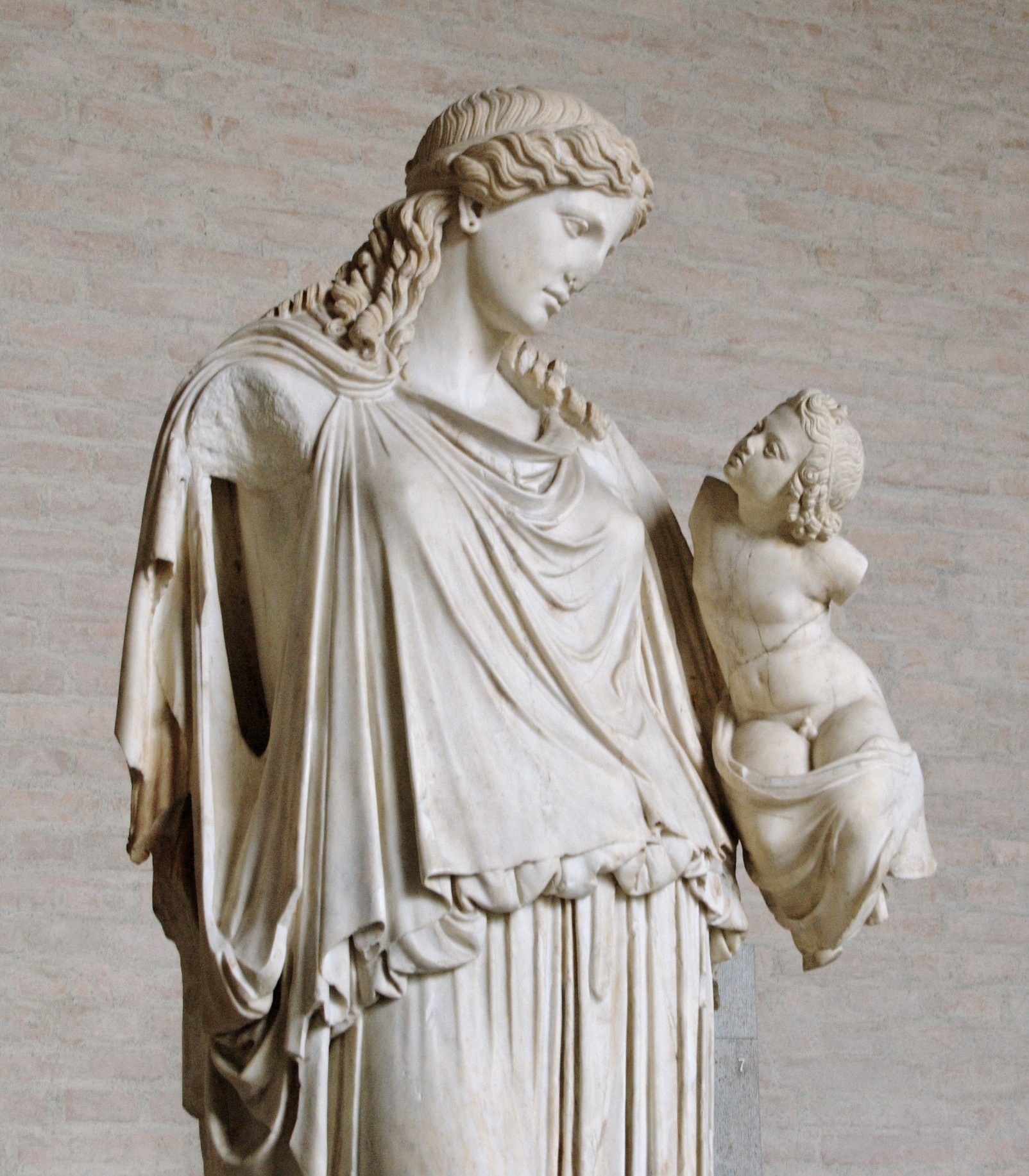
 Eirene was the Greek goddess of peace. | |
| Pronunciation | /aɪˈriːn/ eye-REEN; /aɪˈriːni/ eye-REEN-ee |
|---|---|
| Gender | Female |
| Origin | |
| Word/name | Greek |
| Meaning | Peace |
| Other names | |
| Related names | Arina, Eirene, Iren, Irena, Irina, Rina |
Irene (Ancient Greek: Ειρήνη, romanized: Eirḗnē), sometimes written Irini, is derived from εἰρήνη, the Greek word for "peace".[1] Eirene was the Greek goddess of peace.[2] Irene was also the name of an 8th-century Byzantine empress (Irene of Athens), as well as the name of several saints (see Saint Irene).
Variants
[edit]- Arina (Russian)
- Arisha (Russian)
- Eireen (English, Irish)
- Eirena (English)
- Eirene (English, Greek)
- Eirini (Greek)
- Eraina (English)
- Erayna (English)
- Erea (Galicia)
- Erene (English)
- Ereni (Greek)
- Eriny (Greek, similar to the pronunciation of)
- Ira (Indonesian, Russian, Ukrainian)
- Ireen (English)
- Iren (English) (Indonesian)
- Irén (Hungarian)
- Irena (Albanian, Croatian, Czech, Dutch, English, Indonesian, Latvian, Lithuanian, Macedonian, Polish, Serbian, Slovak, Slovenian)
- Irene (Dutch, (German, English, Italian, Latvian, Spanish, Portuguese)
- Irène (French)
- Irenea (Spanish)
- Irenka (Czech, Polish, Slovak)
- Iria (Galician, Portuguese)
- Iriana (English)
- Iriana, Irene (Indonesian)
- Iriena (English)
- Irin (English)
- Irini (Albanian)
- Irina (Bulgarian, Finnish, Romanian, Russian)
- Irine (English)
- Irina (Russian, Romanian)
- Irinka (Russian)
- Irishka (Russian, Ukrainian)
- Irinushka (Russian)
- Irisha (Russian)
- Irja (Finnish)
- Irka (Czech)
- Iryna (English, Ukrainian)
- Irynka (Ukrainian)
- Irynochka (Ukrainian)
- Reeni (English)
- Reeny (English)
- Rena (English, Indonesian, Greek)
- Rene (English)
- Reney (English)
- Reni (English, Indonesian)
- Renie (English)
- Rina (Indonesian, Russian)
- Yarina (Russian)
- Yaryna (Ukrainian)
- Yeran (Armenian)
- Yeranouhi (Armenian)
People with the given name
[edit]- Irene, baptismal name of Tzitzak (died 750), wife of Byzantine Emperor Constantine V
- Irene of Athens (c. 752 – 803), wife of Byzantine Emperor Leo IV and empress regnant, 797–802
- Irene of Hungary (1088–1134), empress consort of John II Komnenos of the Byzantine Empire
- Irene Angelina (fl. late 1100s)
- Irene Palaiologina (fl. 1310), illegitimate daughter of Andronikos II Palaiologos, wife of John II Doukas of Epirus
- Irene Shpata (14th century), Albanian Princess of Arta and Despotess consort of Epirus
- Irene Dushmani (15th century), Albanian Princess of Zadrima and Pult
- Princess Irene of Greece and Denmark (1904–1974), later Duchess of Aosta, Queen of Croatia
- Princess Irene of Greece and Denmark (1942–2026)
- Princess Irene of the Netherlands (born 1939)
- Princess Irene of Hesse and by Rhine (1866–1953)
- Saint Irene (disambiguation), various saints
- Eirene (artist), ancient Greek artist
- Irene (singer) (born 1991), South Korean singer
- Irene Abel (born 1953), East German gymnast
- Irene Abendroth (1872–1932), Austrian operatic soprano
- Irene Abrigo (born 1988), Italian violinist
- Irene Adams (born 1947), Scottish politician
- Irene Aebi (born 1939), Swiss singer, violinist and cellist
- Irene Aguilar (born 1960), American politician
- Irene Agyepong (born 1960), Ghanaian public health physician
- Irene Ajambo (born 1987), Ugandan weightlifter
- Irene Zoe Alameda, Spanish writer, filmmaker and composer
- Irene Alexander, Australian spiritual director, writer and lecturer
- Irene Osgood Andrews (1879–1963), American writer
- Irene Ang (born 1969), Singaporean actress, comedian, host and entrepreneur
- Irene Angelico, Canadian film director, producer and writer
- Irene Kataq Angutitok (1914–1971), Inuk sculptor
- Irene Arcos (born 1981), Spanish actress
- Irene Aronson, German-American painter
- Irene Astor, Baroness Astor of Hever (1919–2001), English philanthropist
- Irene Avaalaaqiaq Tiktaalaaq (born 1941), Canadian artist
- Irene Awret (1921–2014), German artist and writer
- Irene Azuela (born 1979), Mexican actress and producer
- Irene Bache (1901–1999), British artist
- Irene Baird, English-Canadian novelist
- Irene Baker (botanist) (1918–1989), British-born American botanist
- Irene Baker (1901–1994), American politician
- Irene Baldessari (born 1993), Italian middle-distance runner
- Irene Barberis (born 1953), Australian artist
- Irene Barclay (1894–1989), British surveyor
- Irene Barros (1930–2021), Indian politician
- Irene Bayer-Hecht (1898–1991), American photographer
- Irene Beardsley (born 1935), American mountaineer
- Irene Beasley (1904–1980), American singer
- Irene Blanco Becerra (born 1946), Mexican politician
- Irene Becker, German nurse and serial killer
- Irene Bedard (born 1967), Native American actress
- Irene Beland, American nursing educator and patient-centered care researcher
- Irene Bell Bonong (born 1995), Cameroonian sprinter
- Irene Below, German art historian
- Irene Benneweis (1891–1970), Danish acrobat and circus director
- Irene Bentley (1870–1940), American actress
- Irene Berger (born 1954), American judge
- Irene Bernasconi (1896–1989), Argentine marine biologist
- Irene Bertschek, German economist
- Irene Beyeler (born 1985), Swiss sport shooter
- Irene Beyerlein, American materials scientist
- Irene Bianucci (1903–1988), Italian-American painter
- Irene Bitto (born 1993), Italian cyclist
- Irene Craigmile Bolam (1904–1982), American banker and former aviator
- Irene Borrego (born 2001), Mexican weightlifter
- Irene Bosch, Venezuelan biologist and researcher
- Irene Mott Bose, American social worker
- Irene Bridger (21st century), Canadian singer
- Irene Brietzke (1944–2021), Brazilian actress and theatre director
- Irene Brin (1911–1969), Italian journalist and writer
- Irene Britton Smith (1907–1999), American classical composer
- Irene Broe (1923–1992), Irish sculptor
- Irene Brown (1919–2017), British code breaker
- Irene Bennett Brown, American author
- Irene Browne (1891–1965), British actress
- Irene Mary Browne (1881–1977), British artist
- Irene Bucher, Swiss orienteering competitor
- Irene Bürgi, Swiss curler
- Irene Burillo Escorihuela (born 1997), Spanish tennis player
- Irene Burns, American television producer
- Irene Bustamante Adams, American politician
- Irene H. Butter, German-born American economist and holocaust survivor
- Irene Byers (1906–1992), English novelist, poet and children’s writer
- Irene Caba Alba (1905–1957), Spanish actress
- Irene Cabrera Lorenzo, Spanish former volleyball player
- Irene Cadurisch (born 1991), Swiss biathlete
- Irene Calvert (1909–2000), Northern Irish politician and economist
- Irene Camber (1926–2024), Italian fencer
- Irene Campbell, Scottish Labour politician
- Irene Capek (1924–2006), Australian politician
- Irene Cara (1959–2022), American singer, songwriter, and actress
- Irene Castelli (born 1983), Italian gymnast
- Irene Aragón Castillo (born 1963), Mexican politician
- Irene Castle (1893–1969), half of the ballroom dance team of Vernon and Irene Castle
- Irene Cefaro (1935–2023), Italian stage and film actress
- Irene Champlin (1932–1990), American actress
- Irene Chang, Malaysian politician
- Irene Chanter, British singer
- Irene Charalambidou (born 1964), Cypriot journalist and politician
- Irene Charnley (born 1960), South African businesswoman
- Irene Chen, Australian actress
- Irene Cheng (1904–2007), Hong Kong educationalist
- Irene Chepet Cheptai (born 1992), Kenyan distance runner
- Irene Chou (1924–2011), Chinese artist
- Irene Clarin (born 1955), German television and theatre actress
- Irene Clark Durrell (1852–1914), American educator
- Irene Clark, Navajo weaver
- Irene V. Clark (1927–1984), American artist
- Irene Coates (1925–2019), English playwright, poet, painter, feminist and environmentalist
- Irene Collins (1925–2015), British historian and writer
- Irene Colvin Corbett (1881-1912), American nurse and musician who died on the Titanic
- Irene Condachi (1899–1970), Maltese physician
- Irene Cortes (1921–1996), Associate Justice of the Supreme Court of the Philippines
- Irene Cortes (artist), filmmaker and artist
- Irene Costa (born 1972), Portuguese politician and social worker
- Irene Cozad (1888–1970), American pianist, piano teacher and composer
- Irene Crespin (1896–1980), Australian geologist and micro paleontologist
- Irene Cruz, Spanish photographer and video artist
- Irene Cruz-González, Mexican astronomer
- Irene Cuadrado (born 1979), Spanish painter
- Irene Cuesta (born 1983), Spanish archer and archery coach
- Irene Curtoni (born 1985), Italian alpine skier
- Irene Curzon, 2nd Baroness Ravensdale (1896–1966), British hereditary peeress
- Irene Cybulsky, Canadian lawyer and cardiac surgeon
- Irene Dailey (1920–2008), American actress
- Irene Dalby (born 1971), Norwegian swimmer
- Irene Dalis (1925–2014), American opera singer
- Irene Dallas (1883–1971), British suffragette
- Irene Dalton (1901–1934), American actress
- Irene Dare, American figure skater and film star
- Irene Daw (1941–2010), British sports shooter
- Irene Daye (1918–1971), American jazz musician
- Irene Dean-Williams (1903–1946), aviator
- Irene DeBari (born 1947), American television actress
- Irène Debrunner (born 1952), Swiss swimmer
- Irene DeLaby (1922–2012), American baseball player
- Irène Deliège (1933–2024), Belgian cognitive scientist
- Irene Delroy (1900–1985), American stage actress
- Irene Desmet (1928–2020), English pediatric surgeon
- Irene Devin, Wyoming politician
- Irene Diaz, American singer-songwriter
- Irene Dick (born 1949), Curaçaoan politician
- Irene Caroline Diner Koenigsberger (1896–1985), American chemist
- Irene Dingel (born 1956), German historian and Protestant theologian
- Irene Dische (born 1952), American-Austrian writer
- Irene Dixon (1924–2021), Bletchley Park codebreaker
- Irene Dölling (born 1942), German sociologist
- Irene Dorner (born 1954), American businesswoman
- Irene Doukaina (c. 1066–1138), Empress Consort of the Byzantine Empire
- Irene Doutney (c. 1949–2018), Australian politician
- Irène Drésel (born 1984), French electronic music producer
- Irene Drummond, Australian Army nurse
- Irene Dubois, American drag performer
- Irene Dufaux (born 1960), Swiss sport shooter
- Irene Dunne (1898–1990), American actress
- Irene Eastman (1894-1918), American singer
- Irene Eber (1929–2019), Israeli orientalist
- Irene Edgar (born 1957), Scottish lawn bowler
- Irene Eijs (born 1966), Dutch rower
- Irene Eisinger (1903–1994), German-British opera singer and film actress
- Irene Ekelund (born 1997), Swedish sprinter
- Irene Ellenberger (born 1946), German architect
- Irene Emery (1900–1981), American art historian, scholar, curator, textile anthropologist, sculptor, and modern dancer
- Irene Epple (born 1957), German alpine skier
- Irene Escolar (born 1988), Spanish actress
- Irene Esser (born 1991), Venezuelan actress, model and beauty queen
- Irene Evans, musician and educator
- Irene Eyaru, Ugandan netball player
- Irene Fairbairn (1899–1974), Girl Guide Commissioner
- Irene Falcón (1907–1999), Spanish journalist, feminist, pacifist and communist activist
- Irene Fargo (1962–2022), Italian singer and actress
- Irene Fenwick (1887–1936), American actress
- Irene Ferguson, New Zealand painter
- Irene Fernandez (1946–2014), Malaysian human rights activist
- Irene Ferreira (born 1976), Venezuelan model
- Irene Ferreiro (born 2001), Spanish actress, singer and author
- Irene Ferri (born 1972), Italian actress and television presenter
- Irene Fischer (1907–2009), Austrian-American mathematician and geologist
- Irene Fitzner (born 1955), Argentine sprinter
- Irene Fonseca (born 1956), Portuguese-American mathematician
- Irene Foote, several people
- Irene Forbes (1949–2014), Cuban fencer
- Irene Fornaciari (born 1983), Italian singer-songwriter
- Irene Fountas (born 1948), American educational theorist
- Irène Frain (born 1950), French novelist, journalist and historian
- Irene Franchini (born 1981), Italian archer
- Irene Franklin (1885–1941), American actress
- Irene Hanson Frieze, American psychologist and academic
- Irene Frisch (1931–2021), American writer
- Irene Fuhrmann (born 1980), Austrian footballer
- Irene McCoy Gaines (1892–1964), American social worker and civil rights activist
- Irene Galitzine (1916–2006), Russian-Georgian fashion designer
- Irene O. Galloway, American Army soldier
- Irène Galter (1931–2018), Italian actress
- Irene M. Gamba, Argentine-American mathematician
- Irene Gammel (born 1959), Canadian literary historian, biographer and curator
- Irene García (born 1980), Spanish politician
- Irene Gardner (born 1985), American rugby sevens player
- Irene Gargantini, Italian-Canadian computer scientist
- Irene Gattilusio (died 1440), Byzantine Empress consort
- Irene Gauthier (1920–2010), American massage teacher
- Irene Antoinette Geffen, South African lawyer
- Irene Genna (1931–1986), Greek-born Italian film and television actress
- Irene Georgakoudi (born 1971), Greek physicist
- Irini Georgatou (b. 1990), Greek tennis player
- Irene George (born 1983), Solomon Islands tennis player
- Irene Germini (born 1974), Italian rhythmic gymnast
- Irene Ghobrial, American-Egyptian physician and academic
- Irini Giannatou (1917–2000), birth name of Greek actress and singer Rena Dor
- Irene M. Giblin (1888–1974), American pianist and composer
- Irene Gifford, American politician
- Irène Gijbels, mathematical statistician
- Irene Gilbert (1934–2011), German-American actress
- Irene Gilbert (swimmer) (1903–1988), British swimmer
- Irene Gilbert (fashion designer) (c. 1910 – 1985), Irish fashion designer
- Irene Gleeson (1944–2013), Australian aid worker
- Irene Goergens (born 1951), German militant
- Irene Gonçalves (born 1984), Angolan footballer
- Irene González, several people
- Iréne Grahn (1945–2013), Swedish visual artist and inventor
- Irene Grandi (born 1969), Italian singer and songwriter
- Irene Greenwood (1898–1992), Australian feminist, pacifist activist, broadcaster and writer
- Irene Gregory, American aerospace engineer
- Irene Greif, American computer scientist
- Irene Griegst (born 1945), Moroccan-born Danish goldsmith
- Irene Griffin (activist), African-American activist
- Irene Griffin, American politician
- Irene Welch Grissom (1873–1965), American poet
- Irene Grootboom, South African housing rights activist
- Irene Güdel (1930–2023), Swiss cellist
- Irene Guerrero (born 1996), Spanish footballer
- Irene Guest (1900–1970), American swimmer
- Irene Gurney (c. 1870–1951), Canadian pianist and clubwoman
- Irene Haines, American politician and businesswoman from Connecticut
- Irene Hall (1888–1961), Australian hospital matron
- Irene Handl (1901–1987), British character actress
- Irene Hannon, American author
- Irene Harand (1900–1975), Austrian human rights activist
- Irene Haschke (born 1921), German SS guard during World War II
- Irene Hayes (1896–1975), American actress
- Irene Hays (born 1953/1954), British civil servant and businesswoman
- Irene Headin, Canadian handball player
- Irene Hedlund (born 1947), Danish illustrator and children’s writer
- Irene Heim (born 1954), American linguist
- Irene Hervey (1909–1998), American film, stage and television actress
- Irene Hess (1910–2009), American statistician
- Irene Hickson (1915–1995), American baseball player
- Irene Higginbotham (1918–1988), American musician
- Irene Hirano (1948–2020), American business executive
- Irene Hirst (1930–2000), British gymnast
- Irene Hoffar Reid (1908–1994), Canadian painter
- Irene Whitfield Holmes (1900–1993), American musicologist and ethnomusicologist
- Irene Hostettler (born 1974), Swiss cyclist
- Irene Howard (1903–1981), British costume designer
- Irene Hughes (1920–2012), American psychic
- Irene Hunt (actress) (1892–1988), American actress
- Irene Hunt (1902–2001), American children's writer
- Irene ʻĪʻī Brown Holloway, Hawaiian philanthropist
- Irene Iacopi, Italian archaeologist
- Irene Ibsen Bille (1901–1985), Norwegian novelist and playwright
- Irene Ighodaro (1916–1995), Sierra Leone Creole physician and social worker
- Irene Ivancan (born 1983), German table tennis player
- Irene Jacob (born 1966), French-born Swiss actress
- Irene Jakab (1919–2011), Hungarian-born psychiatrist
- Irene James, Welsh politician
- Irene Jansen (born 1983), Dutch singer
- Irene Jelagat (born 1988), Kenyan middle-distance runner
- Irene Jerotich Kosgei (born 1974), Kenyan long-distance runner
- Irène Joachim (1913–2001), French soprano and vocal teacher
- Irene Johansen (born 1961), Norwegian politician
- Irène Joliot-Curie (1897–1956), French scientist
- Irene Jones, Canadian politician
- Irene de Jong, Dutch classicist
- Irene Joseph (born 1981), Indonesian sprinter
- Irene Junquera (born 1985), Spanish journalist
- Irene Kampen (1922–1998), American writer
- Irene Kantakouzene (died 1457), wife of Serbian despot
- Irini Karra (born 1986), Greek fashion model
- Eirini Kavarnou (born 1980), Greek swimmer
- Irene Kelley, American country and bluegrass singer
- Irene Keng, American actress
- Irene Kepl (born 1982), Austrian violinist and composer
- Irene Kerwin (1925–2023), American baseball player
- Irene Khan (born 1956), Bangladeshi academic
- Irene Kim (born 1987), Korean-American model and television personality
- Irene Kirpal (1886–1977), Czech politician
- Irene Kitchings (1908–1975), American musician and pianist
- Irene Koh (born 1990), comics artist
- Irene de Kok (born 1963), Dutch judoka
- Irene Kopelman, Argentine-Dutch artist
- Irene Koss (1928–1996), German actress and presenter
- Irene Kotowicz (1919–2002), American baseball player
- Irene Koumarianou (1931–2013), Greek actress
- Irene Kowaliska (1905–1991), Italian painter, ceramicist and fabric designer
- Irene Kral (1932–1978), American jazz musician
- Irene Krugman (1925–1982), American sculptor
- Irene Krugman Rudnick (1929–2019), American politician
- Irene Corbally Kuhn (1898–1995), American journalist and author
- Irene Küng, Swiss photographer
- Irene Kuo (1919–1993), Chinese-American chef and bookwriter
- Irene Kuzemko, intersex activist
- Irene Kwambai (born 1978), Kenyan long-distance runner
- Irene Kwok (born 1933), Hong Kong swimmer
- Irene Lalji (died 2021), Surinamese lawyer and television presenter
- Irène Landau, French parasitologist
- Irene Lardschneider (born 1998), Italian biathlete
- Irene Larsen (1936–2016), co-founder of the Magic Castle and the Academy of Magical Arts
- Irene Latham (born 1971), American author
- Irène Laure (1898–1987), French socialist activist and politician
- Irene Heng Lauvsnes (born 1968), Norwegian politician
- Irene Leache (1839–1900), American teacher
- Irene Leigh, British dermatologist
- Irene Lemos, British classical archaeologist
- Irene Lentle (1912–2003), British table tennis player
- Irene Lentz (1901–1962), American fashion and film costume designer, known simply as "Irene"
- Irene Leverton (1927–2017), American pilot
- Irene Lewisohn (1886–1944), American philanthropist
- Irene Li, Boston based chef and restaurateur
- Irène Lidova, (1907–2002), Russian-French dance critic
- Irene Lieblich (1923–2008), Polish-American painter
- Irene Lim, several people
- Irene Lindh (born 1945), Swedish actress and singer
- Irène de Lipkowski (1898–1995), French politician
- Irene Lisboa (1892–1958), Portuguese novelist
- Irene Logan (born 1984), Liberian-Ghanaian singer
- Irene Loizate (born 1995), Spanish cyclist
- Irene D. Long (1950–2020), American aerospace physician
- Irene Longman (1877–1964), Australian politician
- Irene López, Spanish footballer
- Irene Loughlin (born 1967), Canadian artist
- Irene Lozano (born 1971), Spanish writer and journalist
- Irene Lusztig (born 1974), British-American filmmaker
- Irene Luxbacher (born 1970), Canadian artist, author and illustrator
- Irene MacDonald (1931–2002), Canadian diver
- Irene Maguire (1929–2016), American figure skater
- Irène Major (born 1979), British-Cameroonian fashion model and musical artist
- Irene Rima Makaryk, Canadian English-language academic
- Irene Mambilima (1952–2021), 7th Chief Justice of Zambia
- Irene Manjeri, Ugandan pastor
- Irene Mann (1929–1996), German dancer, actress and choreographer
- Irene Manning (1912–2004), American actress and singer
- Irene Manton (1904–1988), British botanist
- Irene Marcos (born 1960), Filipino exile
- Irene Marcuse, American author of mystery novels
- Irene Martínez (1944–2014), Cuban track and field athlete
- Irene Martínez (gymnast) (born 1966), Spanish gymnast
- Irene Mathyssen (born 1951), Canadian politician
- Irene Mawela (born 1940), South African singer and composer
- Irene Mawer, English educator
- Irene McAra-McWilliam, British design researcher and Director of the Glasgow School of Art
- Irene McCormack (1938–1991), Australian Catholic Sister murdered by guerrillas in Peru
- Irene McCulloch (1885–1987), American marine biologist of the 20th century
- Irene McFarland, American aviator
- Irene McGee, American podcaster
- Irene McGugan (born 1952), Scottish politician
- Irene McKinney (1939–2012), American poet
- Irene R. McLeod (1891–c. 1968), British poet, writer and editor
- Irene Mecchi (born 1949), American screenwriter and playwright
- Irene Meichsner, German science journalist and author
- Irène Mélikoff (1917–2009), Russian-French Turkologist
- Irene Miguel-Aliaga, Spanish-British physiologist
- Irene de Miguel (born 1981), Spanish politician
- Irene Miguélez, Spanish footballer
- Irene Mihalic (born 1976), German politician
- Irene Miller, British screenwriter
- Irene Miracle (born 1954), American actress
- Irene Mitchell, Australian actress and theatre director
- Irene Mitterstieler (born 1974), Italian luger
- Irene Mogaka (born 1985), Kenyan long-distance runner
- Irene Moillen, Swiss para-alpine skier
- Irène Molitor (1927–2018), Swiss alpine skier
- Irene Molloy (born 1978), American actress, singer and songwriter
- Irene Molyneux (1923–2019), English lawn bowls player
- Irene Monaco, Italian Paralympic competitor
- Irène Monesi, French writer
- Irene Montalà (born 1976), Spanish actress
- Irene Montero (born 1988), Spanish politician and psychologist
- Irene Montie (1921–2018), American statistician
- Irene Montrucchio (born 1991), Spanish synchronized swimmer
- Irene Moon, American entomologist and musician
- Irene Moorman Blackstone (1872–1944), African-American businesswoman and club member
- Irene Moors (born 1967), Dutch singer and television presenter
- Irene Morales (1865–1890), Chilean soldier
- Irene Moreira (born 1964), Uruguayan lawyer, businesswoman and politician
- Irene Moreno (born 1952), American rower
- Irene Morgan (1917–2007), African-American anti-segregation activist
- Irene Moroz, British applied mathematician
- Irene Morra (1893–1978), American film editor
- Irene Moss (born 1948), Australian solicitor and public servant
- Irene Mossop (1904–1988), British writer
- Irene Mounce, Canadian mycologist
- Irene Mountbatten, Marchioness of Carisbrooke (1890–1956), British noblewoman
- Irene Mullen (1914–1981), Canadian swimmer
- Irene Müller (born 1942), East German pair skater
- Irene Muloni (born 1960), Ugandan politician
- Irene Mulvey, American mathematician
- Irene Mulyagonja, Ugandan lawyer and judge
- Irene Patricia Murphy Keeley (born 1944), American judge
- Irene Mutsila (1949–2017), South African politician
- Irene Koki Mutungi (born 1976), Kenyan aviator
- Irene Muyanga (born 1943), Ugandan sprinter
- Irene Zin Mar Myint (born 1990), Burmese pop singer
- Irene Napier (born 1953), Scottish makeup designer
- Irene Jai Narayan (1932–2011), Fijian politician
- Irene Natividad (born 1948), Filipino-American women’s rights activist
- Irene Neal, American painter
- Irene Nelson (born 1972), Russian singer, songwriter and record producer
- Irene Neverla, Austrian professor
- Irene Ng (politician) (born 1963), Singaporean politician
- Irene Ng (born 1974), former American actor
- Irene Mrembo Njoki, Kenyan politician
- Irene Lange Nordahl (born 1968), Norwegian politician
- Irene Nordli (born 1967), Norwegian artist
- Irene Ntale (born 1989), Ugandan musician
- Irene Núñez (born 1987), Panamanian model and beauty pageant titleholder
- Irene Obera (born 1933), American track and field athlete
- Irene Oguiza (born 2000), Spanish footballer
- Irene Ogus, English table tennis player
- Irene Ogutu (born 1987), Kenyan footballer
- Irene Ojala (born 1960), Norwegian politician
- Irene Oldfather (born 1954), Scottish politician
- Irene Gut Opdyke (1918–2003), Polish Righteous Among the Nations
- Irene Osgood (1875–1922), American poet
- Irene Otieno (born 1986), American football player
- Irene Ovonji-Odida (born 1964), Ugandan lawyer, politician, and women's rights activist
- Irene Pacheco (born 1971), Colombian boxer
- Irene Papas (1929–2022), Greek actress
- Irene Paredes (born 1991), Spanish footballer
- Irene Parenti Duclos (1754–1795), Italian artist
- Irene Parlby (1868–1965), Canadian politician
- Irene E. Parmelee (1847–1934), American painter
- Irene Levine Paull (1908–1981), American writer and labor activist
- Irene Pavloska, American opera singer
- Irene Bowder Peacock (1892–1978), South African tennis player
- Irene C. Peden (1925–2025), American engineer
- Irene Peirano Garrison, American philologist
- Irene Pepinghege (born 1941), German canoeist
- Irene Pepperberg (born 1949), American scientist noted for her studies in animal cognition
- Irene Pérez, Chicana muralist
- Irene Perveen (born 1940), Pakistani film playback singer
- Irene Peslikis (1943–2002), American feminist artist and activist
- Irene de Peyré (1874–1968), Guatemalan educator and feminist
- Irene Pijoan (1953–2004), Swiss-born American painter, sculptor, and educator
- Irene Flunser Pimentel (born 1950), Portuguese historian of the 20th century
- Irene Piotrowski (1941–2020), Lithuanian-Canadian athlete
- Irene Pirie (1914–1998), Canadian swimmer
- Irène Pittelioen (1927–2011), French gymnast
- Irene Pivetti (born 1963), Italian politician
- Irene Pnevmatikos, Australian politician
- Irene Pollin (1924–2020), American sports executive
- Irene Polo (1909–1942), Spanish journalist, publicist and translator
- Irène Popard (1894–1950), French choreographer
- Irène Possemiers (born 1934), Belgian swimmer
- Irene Prador (1911–1996), Austrian actress and writer
- Irene Prescott (born 1994), Tongan swimmer
- Irini Psyhrami, Greek pop singer
- Irene Purcell (1896–1972), American actress
- Irène Pusterla (born 1988), Swiss long jumper
- Irene Rathbone (1892–1980), novelist
- Irene Ravache (born 1944), Brazilian actress
- Irene Victoria Read, Australian charity and community worker
- Irene Reed (1931–2005), American anthropologist, linguist and educator
- Irene Reid (1930–2008), American jazz singer
- Irene Reyes-Noguerol, Spanish writer
- I. Rice Pereira (1902–1971), American abstract artist, poet and philosopher
- Irene Rich (1891–1988), American actress
- Irene Richards, New Zealand painter
- Irene Rigau (born 1951), Spanish politician
- Irene del Río, Spanish footballer
- Irene Roberts (born 1983), American mezzo-soprano
- Irene Robertson (1931–1994), American hurdler
- Irene Robledo (1890–1988), Mexican educator and humanist
- Irene Rocas i Romaguera, Catalan folklorist and lexicographer
- E. Irene Rood (1843-1921), founder of the Chicago Audubon Society
- Irene Rooke (1874–1958), English actress
- Irene Rosenfeld (born 1953), American businesswoman
- Irene Rousseau (born 1941), American artist
- Irene S. Rubin (born 1945), American political scientist
- Irene Ruhnke (1920–1999), baseball player
- Irene Runge (born 1942), American-German-Jewish sociologist and writer
- Irene E. Ryan (1909–1997), American aviator, engineer, geologist, government official and politician
- Irene Ryan (1902–1973), American actress
- Irene Ryder, Hong Kong musical artist
- Irene Sabadini, Italian mathematician
- Irene Sabatini, Zimbabwean writer
- Irene Sabido, Mexican producer and writer
- Irene Saez (born 1961), Venezuelan politician and former Miss Universe
- Irene Salemka (1931–2017), Canadian opera singer
- Irene Saltern (1911–2005), German-born American costume and fashion designer
- Irene Sánchez-Escribano (born 1992), Spanish athletics competitor
- Irene Sandiford-Garner (born 1961), Barbadian politician
- Irene Sänger-Bredt (1911–1983), German engineer, mathematician and physicist
- Irene Sankoff, Canadian librettist and composer
- Irene Santiago, Filipina peace negotiator and women’s advocate
- Irene Sargent (1852–1932), American art historian
- Irene Saunders, American lexicographer
- Irene Savidge (1905–1985), English factory worker and subject of police interrogation scandal
- Irene Scharrer (1888–1971), English classical pianist
- Irene Schloss, Argentine Antarctic researcher
- Irene Schmidt, Dutch para table tennis player
- Irene H. Schöne (born 1942), German environmental economist
- Irene Schoof, Dutch cricketer
- Irene Schori (born 1983), Swiss curler
- Irene Schouten (born 1992), Dutch speed skater
- Irene Schroeder (1909–1931), American murderer
- Irene Schuch (1935–2023), German discus thrower
- Irène Schweizer (1941–2024), Swiss pianist
- Irene Sciriha, Maltese mathematician
- Irene F. Scott (1912–1997), American Tax Court judge
- Irene Scruggs (1901–1981), American singer
- Irene Mayer Selznick (1907–1990), American theatre producer
- Irene Sewankambo, Ugandan electrical engineer
- Irene Sharaff (1910–1993), American costume designer
- Irene Shepard (1922–2014), American politician
- Irene Shin, Virginia politician
- Irene Shubik (1929–2019), British television producer and story editor
- Irene Siegel, American artist
- Irene Siragusa (born 1993), Italian sprinter
- Irene Skliva (born 1978), Miss World 1996
- Iréne Slättengren (born 1952), Swedish equestrian
- Irene Sloan (1942–2008), American journalist
- Irene Smart (1921–2017), American politician
- Irene Solà (born 1990), Spanish writer and an artist
- Irene Spencer (1937–2017), American author
- Irene di Spilimbergo (1538–1559), Italian painter
- Irene Spry (1907–1998), Canadian economist
- Irene Staunton, Zimbabwean publisher and editor
- Irène Stecyk (born 1937), Belgian writer
- Irene Steer (1889–1977), British swimmer
- Irene Stefani (1891–1930), 20th-century Italian Catholic religious sister
- Irene Stegun (1919–2008), American politician
- Irene Stelling (born 1971), Danish footballer
- Irene Monat Stern, Polish-American painter
- Irene Steyn (born 1977), Namibian cyclist
- Irene Stoehr (1941–2023), German journalist
- Irene Stolofsky (1896–1950), American violinist
- Irene Strong (1929–2018), Canadian swimmer
- Irene Strychalski, American comic book writer
- Irene Kharisma Sukandar (born 1992), Indonesian chess player
- Irene Sunters (1928–2005), Scottish actress
- Irene Sutcliffe (1924–2019), English actress
- Irène Sweyd (born 1940), Belgian swimmer
- Irene Barnes Taeuber (1906–1974), American demographer
- Irene Tamborra, Italian particle astrophysicist
- Irene Tarimo (born 1964), Tanzanian scientist, biologist and educator
- Irene Frances Taylor (1890–1933), Australian journalist and activist
- Irene S. Taylor (1902–1989), American journalist and public information specialist
- Irene Taylor (1906–1988), American singer
- Irene Taylor (filmmaker) (born 1970), American director and producer
- Irene Tedrow (1907–1995), American character actress
- Irini Terzoglou (born 1979), Greek shot putter
- Irene Thomas (1920–2001), British radio personality
- Irène Tiendrébéogo (born 1977), Burkinabé-Monegasque athlete
- Irene Tinagli (born 1974), Italian economist and politician
- Irene Tinker (born 1927), American economist
- Irene Tobar (born 1989), Ecuadorian footballer
- Irène Tolleret (born 1967), French politician
- Irene Tomaszewski, Canadian writer, editor and translator
- Irene Naa Torshie Addo (born 1970), Ghanaian politician and lawyer
- Irene Tracey (born 1966), British neuroscientist
- Irène de Trebert (1921–1996), French singer, dancer and actress
- Irene Treppler (1926–2012), American politician
- Irene Triplett (1930–2020), last recipient of an American Civil War pension
- Irene Tripod, British actress
- Irene Trowell-Harris (born 1939), United States Air Force general
- Irene Tsu (born 1945), American actress
- Irene Tu, American comedian, actor and writer
- Irene Tucker, American literary critic and theorist
- Irène Tunc (1935–1972), French actress
- Irene Tupuna, Cook Islander lawn bowler
- Irene Uchida (1917–2013), Canadian scientist and Down Syndrome researcher
- Irene Usabiaga (born 1993), Spanish cyclist
- Irene Uwoya (born 1988), Tanzanian actress and businesswoman
- Irene Vallejo (born 1979), Spanish writer and academic
- Irene van den Broek (born 1980), Dutch cyclist
- Irene van Dyk (born 1972), New Zealand netball player
- Irene van der Reijken, Dutch athlete
- Irene van Renswoude, Dutch historian
- Irene van Zyl (born 1984), Namibian cricketer
- Irene Vanbrugh (1872–1949), English actress
- Irene Vecchi (born 1989), Italian fencer
- Irene Vélez Torres, Minister of Mines and Energy of Colombia (2022–present)
- Irène Vernal (1912–2008), Belgian actress
- Irene Vernon (1922–1998), American actress
- Irene Sue Vernon, American professor
- Irene Viaene (born 1949), Argentine alpine skier
- Irene Vilar, Puerto Rican writer
- Irene Villa (born 1978), Spanish author and journalist
- Irene Visedo (born 1978), Spanish actress
- Irene B. Vogel, American linguist
- Irene von Chavanne (1863–1938), Austrian opera singer
- Irene von Fladung, Austrian opera singer
- Irene von Meyendorff (1916–2001), Russian-born German-British actress
- Irene Vorrink (1918–1996), Dutch politician
- Irene Wagner-Döbler, German microbiologist
- Irene Wan (born 1966), Hong Kong actress and singer
- Irene Wang (born 1986), Hong Kong model and actress
- Irene Ward (1895–1980), British Conservative Party politician
- Irene Ware (1910–1993), American actress
- Irene N. Watts (1931–2023), German-born Canadian writer and educator
- Irene Weir, American artist and art educator
- Irene Wellington (1904–1984), British calligrapher and teacher
- Irene Whittome (born 1942), Canadian multimedia artist
- Irene Williams, American artist
- Irene J. Winter (born 1940), American art historian
- Irene Woodall (1946–2015), American journalist
- Irene Worth (1916–2002), American actress
- Irene Wosikowski (1910–1944), German political activist
- Irene Wrenner, American politician
- Irene Aloha Wright (1879–1972), American historian
- Irene Xavier (born 1951), Malaysian activist
- Irene Yah-Ling Sun, American actor and collector
- Irene Young Mattox (1881–1970), American Christian speaker and educator
- Irene Vera Young (1895–1975), Australian dancer and dance educator
- Irene Zazians (1927–2012), Iranian actress
- Irene Zechner, Austrian luger
- Irena Zemanová (born 1977), Czech figure skater
- Irène Zilahy (1904–1944), Hungarian actress
- Irene Zisblatt (born 1929), Carpathian-American Holocaust survivor
- Irene M. Zoppi (born 1966), Brigadier General, United States Army Reservist
- Irene Zundel, Mexican sculptor, painter and photographer
- Irène Zurkinden (1909–1987), Swiss painter
- Mother Irini (1936–2006), Egyptian abbess
References
[edit]- ^ Gauche, Isebell (3 February 2012). The A to Z of Names (Revised and Expanded Edition): Discover the Promise Your Name Holds!. Struik Christian Media. ISBN 978-1-4153-1626-9.
- ^ Daly, Kathleen N.; Rengel, Marian (2009). Greek and Roman Mythology, A to Z. Infobase Publishing. p. 49. ISBN 978-1-4381-2800-9.
Irene (given name)
View on Grokipediafrom Grokipedia
Irene is a feminine given name of Ancient Greek origin, derived from Εἰρήνη (Eirēnē), meaning "peace," the name of the goddess who personified peace as one of the Horae.[1][2] The name entered Christian usage through early saints and Byzantine traditions, spreading to Western Europe via Latin and French forms by the medieval period.[3][4] It achieved peak popularity in the United States during the early 20th century, ranking among the top 20 names for girls from 1915 to 1925 and remaining in the top 100 until approximately 1945, before declining in favor amid shifting naming trends.[5][6] Common variants include Irena (Polish, Croatian), Irène (French), and Eirini (modern Greek), reflecting its adaptation across European languages.[7] The name's enduring association with tranquility derives directly from its mythological roots, where Eirene symbolized seasonal renewal and societal harmony in classical Greek religion.[2][8]
These variants maintain the core semantic link to peace while accommodating linguistic morphology, with Irina being among the most widespread internationally due to Russian cultural export.[29] Usage frequencies vary; for instance, Irina ranked highly in Soviet-era statistics, reflecting state naming patterns.
In Europe, Irene's adoption as a personal name followed a similar late-19th-century pattern, first documented in England around 1880, coinciding with renewed interest in ancient Greek nomenclature influenced by classical revivalism.[4] Aggregate data across 26 European and other countries from 1880 to 2022 records over 626,000 female bearers, underscoring widespread but regionally varied use, with sustained popularity in Spain where it remains among higher-ranking choices into the present.[23][6] Earlier Byzantine-era prominence, particularly among imperial figures like Empress Irene of Athens (r. 797–802), elevated its cultural cachet but did not translate to broad demographic prevalence until modern times, as evidenced by sparse pre-19th-century records outside Orthodox Christian contexts.[31] Overall, the name's trajectory mirrors a peak in the interwar period followed by postwar diminishment, attributed to generational naming cycles favoring novelty over tradition.[25]
Etymology and Meaning
Linguistic Origin
The given name Irene derives directly from the Ancient Greek proper name Εἰρήνη (Eirḗnē), which functions as the anthropomorphic embodiment of the abstract noun εἰρήνη (eirḗnē), denoting "peace" in the sense of tranquility, absence of war, or social harmony.[3][9] The term eirḗnē appears in classical Greek texts as early as the 5th century BCE, reflecting a conceptual emphasis on civic order and cessation of conflict rather than mere pacifism.[2] Linguistically, eirḗnē is an ancient Greek formation, with its precise Proto-Indo-European antecedents obscure and subject to scholarly debate; etymological analyses suggest possible connections to a root verb εἴρω (eírō), meaning "to join" or "to fasten," evoking peace as a state of binding or unity among parties.[10] Alternative older hypotheses link it to another εἴρω denoting "to speak," associating peace with treaties or spoken agreements, as seen in related terms like ῥήτρα (rhḗtra), "verbal pact." These derivations underscore a causal understanding of peace as an active reconciliation rather than passive inertia, aligning with Greek philosophical usage in works by authors such as Hesiod and Aristophanes, where eirḗnē implies seasonal renewal and communal stability.[2] The name's transmission into Latin as Irene occurred during the Hellenistic and Roman periods, preserving the Greek phonology and semantics, before adapting via Old French Irène into modern European languages; this path maintained the core meaning without significant semantic shift.[3][11] In non-Indo-European contexts, such as Semitic influences via the Septuagint's translation of Hebrew shalom, eirḗnē was rendered equivalently, though without altering its Greek linguistic base.[10]Mythological Associations
The given name Irene originates from the ancient Greek εἰρήνη (eirēnē), signifying "peace," and draws its primary mythological association from Eirene, the goddess embodying peace as one of the Horae in Greek tradition.[2] Eirene, daughter of Zeus and the Titaness Themis, represented the serene stability arising from order and justice, serving alongside her sisters Dike (justice) and Eunomia (good governance) to maintain cosmic harmony.[2] Classical sources, including Hesiod's Theogony (c. 700 BCE), identify her as a divine enforcer of seasonal cycles and societal tranquility, with peace as the fruit of righteous rule.[2] Eirene's iconography frequently links her to prosperity, as peace enables abundance; she is depicted cradling Plutus, the personification of wealth, symbolizing how cessation of conflict fosters economic thriving.[12] This motif appears in a bronze statue by Cephisodotus the Elder, erected circa 370 BCE in the Athens Agora to commemorate the King's Peace treaty ending the Corinthian War, where Eirene holds the infant Plutus, evoking renewal and plenty.[13] Surviving Roman marble copies, such as one in the Munich Glyptothek measuring approximately 2 meters in height, preserve this imagery, underscoring Eirene's role in post-war restoration.[14] In broader mythology, Eirene's attributes extended to springtime, aligning peace with natural rejuvenation, though her cult remained secondary to major deities until Hellenistic emphasis on civic stability.[8] The Romans equated her with Pax, integrating similar iconography into imperial propaganda, but the Greek conception rooted in Hesiodic and Pausanias-referenced traditions directly informs the name's enduring evocation of pacific ideals.[2]Historical Usage
Ancient and Classical Periods
The given name Irene, rendered in ancient Greek as Eirene (Εἰρήνη), originated as a feminine personal name derived directly from the Greek noun eirēnē, signifying "peace." This etymological basis positioned the name as an embodiment of a valued civic and personal virtue in classical Greek society, where abstract concepts like peace were occasionally anthropomorphized into personal nomenclature. Attestations of Eirene appear in epigraphic records from the Archaic through Hellenistic periods, spanning regions such as Attica, the Cyclades, and Asia Minor, though it remained less frequent than compound names or those tied to mythological figures.[9] Historical evidence confirms the name's practical use among women in classical antiquity. A documented bearer was Irene, an artist active circa 200 BCE, who painted a portrait of a young maiden displayed at Ephesus, highlighting the name's association with cultural pursuits in the Hellenistic era. In Ptolemaic Egypt, under Greek influence following Alexander the Great's conquests (circa 332–30 BCE), Irene emerged in personal records, reflecting the name's dissemination through Hellenistic kingdoms and its appeal in multicultural contexts where peace symbolized stability amid expansion.[15][16] The adoption of Eirene as a given name likely stemmed from its aspirational connotation rather than direct emulation of divine figures, aligning with Greek onomastic practices that favored virtues or natural elements for female names. Epigraphic surveys indicate sporadic but consistent occurrences, suggesting familial hopes for harmony, particularly in post-Peloponnesian War (431–404 BCE) contexts where peace treaties invoked the term eirēnē. However, quantitative prevalence was modest compared to ubiquitous names like Artemisia or Theano, underscoring its niche but enduring role in ancient Greek naming conventions.[9]Byzantine and Early Christian Eras
In the early Christian era, prior to the formal establishment of the Byzantine Empire, the name Irene was associated with several martyrs venerated in Christian tradition. Saint Irene of Rome, who perished around 288 AD during the Diocletianic Persecution, was the wife of the martyr Saint Castulus and assisted in sheltering Christians in the imperial palace, converting her household before her execution.[17] Similarly, the Great Martyr Irene, born in the 4th century in Magedon, Persia, to the pagan magus Licinius, rejected idolatry, embraced Christianity, and preached extensively, leading to her torture and beheading circa 320–330 AD after converting thousands, including her family.[18] These figures, drawn from hagiographic accounts preserved in Eastern Orthodox sources, illustrate the name's early adoption among converts in regions spanning the late Roman Empire and Persia, where its connotation of peace aligned with eschatological themes of divine tranquility.[18] The Byzantine period, from the 4th to 15th centuries, saw the name Irene become more widespread, particularly within imperial and ecclesiastical circles, reflecting its Greek linguistic roots and symbolic resonance with Christian orthodoxy. The most prominent bearer was Empress Irene of Athens (c. 752–803 AD), originally from a modest Athenian family, who served as regent for her son Constantine VI from 780 and ruled sole basileus from 797 to 802, restoring icon veneration via the Second Council of Nicaea in 787 after the iconoclastic controversy.[19] Her actions, including blinding and deposing her son to secure power, cemented her historical notoriety, yet her role in ecclesiastical policy and later canonization as a saint in the Greek Orthodox Church elevated the name's prestige among Eastern Christians.[19] [1] Further exemplars include Saint Irene Chrysovalantou (d. c. 893 AD), a 9th-century noblewoman from Cappadocia who became abbess of the Chrysovalantou Monastery near Constantinople, renowned for her miracles, severe ascetic practices, and intercession during imperial crises, such as aiding Emperor Basil I against famine in 893.[20] In the 12th century, Piroska, daughter of King Ladislaus I of Hungary, assumed the name Irene upon her marriage to Emperor John II Komnenos in 1104, bearing eight children and influencing court piety until her death in 1134; her monastic burial at Constantinople's Pantokrator Monastery underscores the name's elite continuity.[9] These instances, corroborated by Byzantine chronicles and synaxaria, indicate the name's favor in Orthodox contexts, where saintly associations and imperial endorsement promoted its use beyond pagan mythological origins, though quantitative records of prevalence remain scarce due to the era's documentary focus on elites.[1]Modern Adoption and Spread
In the United States, Irene ranked among the top 20 female given names from approximately 1910 to 1925, peaking with over 3,269 recorded births in 1910 alone according to Social Security Administration data aggregated from historical records.[21] Its popularity persisted into the mid-20th century, remaining within the top 100 names until around 1945, reflecting broader trends in classical name revivals amid post-Victorian interest in Greek-derived nomenclature.[6] By the late 20th century, usage declined sharply, falling outside the top 1,000 by the 1970s, with an estimated 342,480 women bearing the name as of recent demographic analyses.[22] This trajectory aligns with generational shifts favoring shorter or more contemporary names, though Irene retains a modest presence among older cohorts. The name's spread extended to English-speaking countries like the United Kingdom and Canada through 19th- and early 20th-century immigration waves from Europe, where its classical associations with peace—evident in Eirene's mythological roots—resonated during periods of global conflict, such as post-World War I.[23] In continental Europe, adoption varied: it achieved widespread use in Spain, where it continues to rank highly among female names, and in Italy, where it held the 53rd position in 2023 with a usage rate of 0.378% of female births.[6][24] Broader European data from 1880 to 2022 indicate over 626,000 girls named Irene across 26 countries, with concentrations in Western nations rather than Greece itself, suggesting dissemination via Christian liturgical traditions and Renaissance humanism rather than direct Hellenic continuity.[23] Globally, modern proliferation occurred primarily through colonial and migratory networks, with notable incidence in Latin America and Australia tied to European settler populations, though it never dominated in non-Western contexts.[4] Recent trends show sporadic revivals in urban professional classes valuing vintage names, but overall frequency remains low outside Mediterranean Europe, underscoring its niche status in contemporary naming practices.[25]Variants and Forms
International Variants
The name Irene, derived from the Greek Eirene meaning "peace," has cognates and adapted forms across numerous languages, reflecting its spread through Hellenistic, Christian, and European cultural influences.[1] In Romance languages, common variants include Irène in French, pronounced with a nasal vowel, and Irina in Romanian and Italian contexts, often retaining the original ending.[26] Slavic languages feature prominent adaptations such as Irina in Russian, Bulgarian, and Macedonian, where it gained popularity via Orthodox Christian naming traditions, and Iryna in Ukrainian and Belarusian.[1] Irena appears in Albanian, Croatian, Polish, and Slovenian, sometimes with regional phonetic shifts.[1] In Germanic and Nordic languages, forms like Ireen emerge in Dutch usage, while Finnish variants include Irja, a contracted adaptation.[27] Hungarian employs Irén or Iren, aligning with local vowel harmony rules.[28] Southern European variants encompass Eirini or Ereni in modern Greek, preserving closer ties to the ancient Eirene, and Iria in Portuguese, linked etymologically but sometimes treated as a distinct form.[1] Basque Ireñe and Latvian Irēna represent minority language adaptations with accented orthography to match native phonetics.[26]| Language/Region | Variant Forms |
|---|---|
| French | Irène |
| Russian/Slavic | Irina, Iryna (Ukrainian/Belarusian) |
| Bulgarian/Albanian | Irena, Irina |
| Greek | Eirini, Ereni |
| Hungarian | Irén, Iren |
| Dutch | Ireen |
| Portuguese | Iria |
| Basque | Ireñe |
| Latvian | Irēna |
Diminutives and Nicknames
Common diminutives for the given name Irene include Rena, which originated as a shortened form from the Greek Eirene and is used in both English and Greek contexts to convey affection or familiarity.[7][30] Ina serves as another traditional diminutive, particularly in European naming traditions, emphasizing brevity while retaining the name's essence.[7] In English-speaking regions, informal nicknames such as Renie, Renny, and Ren are frequently adopted for casual or familial use, often reflecting phonetic shortening of the full name.[31] These forms appear in personal naming practices documented in baby name resources as of 2023, though their prevalence varies by individual preference rather than standardized convention.[31] Language-specific variations include Rina in some Slavic and international settings, where it functions as a pet name derived from Irene's phonetic structure, and Ira in Russian-influenced contexts for related forms like Irina, occasionally extended to Irene bearers.[26] Such nicknames highlight cultural adaptations but lack uniform adoption across all Irene users globally.[26]Popularity and Demographics
Historical Trends
In the United States, the given name Irene first appeared in recorded popularity data in 1880, ranking at #102 among female names.[5] Its usage rose steadily through the late 19th and early 20th centuries, reflecting broader adoption of classical Greek-derived names during that era, and peaked at #19 in 1925, when approximately 0.747% of newborn girls received the name.[5] The name maintained strong presence into the mid-20th century, ranking #92 in 1950 with 0.218% usage, but began a consistent decline thereafter, dropping to #187 by the 1960s and #291 in the 1980s amid shifting preferences toward shorter or more modern names.[5] By 2020, it had fallen to #618 (0.027% usage), and in 2024, it ranked #637 (0.026% usage), indicating a shift from mainstream to occasional choice, with an estimated 342,480 living bearers as of recent analyses.[5][22]| Decade | Approximate Rank (US Female Names) | Notes |
|---|---|---|
| 1880s | #102 (1880 entry) | Initial rise begins |
| 1920s | #17–#19 (peak in 1925) | Highest usage at 0.747% |
| 1950s | #92 (1950 high) | Still top 100 |
| 2020s | #618–#637 | Decline to low hundreds |
Geographic Distribution
The given name Irene exhibits a global distribution, with an estimated 2,707,999 bearers worldwide, ranking it as the 197th most common forename.[4] Its prevalence is highest in the United States, where approximately 342,480 individuals bear the name, reflecting historical immigration patterns from Europe and sustained usage among older generations.[22] In Europe, Germany records the largest incidence outside the U.S. at 211,823, followed by France (27,500) and Switzerland (19,886), indicative of its adoption during the 19th and 20th centuries amid Christian naming traditions.[4] In terms of population density, the name shows disproportionate concentration in certain African nations; Kenya has the highest proportion at 0.3341% of its population, trailed by Tanzania and Cyprus.[32] This pattern aligns with missionary influences and colonial-era naming in East Africa, where Irene remains common across generations. Uganda (163,647 bearers) and Nigeria (27,478) further underscore its foothold in sub-Saharan Africa.[4] The Americas feature notable usage beyond the U.S., with Brazil reporting 162,375 incidences, linked to Portuguese linguistic adaptations and Catholic heritage.[4] In the Philippines, 177,014 bearers reflect Spanish colonial legacy, where Irene functions as a standard feminine form.[4] Across these regions, the name is overwhelmingly female (over 99% in most datasets), though rare male usages persist in isolated contexts.[25]| Region | Key Countries with High Incidence | Approximate Bearers | Notes on Density/Trends |
|---|---|---|---|
| North America | United States | 342,480 | Peak historical popularity in early 20th century; declining in recent births.[22] |
| Europe | Germany, France, Switzerland | 211,823 (Germany) | Strong in Western Europe; Nordic countries like Sweden had 53,532 in 1973.[4][33] |
| South America | Brazil | 162,375 | Tied to Iberian variants and religious naming.[4] |
| Africa | Uganda, Philippines (Asia-Pacific influence), Kenya | 163,647 (Uganda) | Highest density in Kenya (0.33%); missionary spread.[4][32] |
| Asia-Pacific | Philippines | 177,014 | Colonial Spanish adoption; near-universal female usage.[4] |
Cultural and Religious Significance
In Mythology and Literature
In Greek mythology, Eirene (Εἰρήνη), meaning "peace," personifies tranquility and prosperity, serving as one of the Horae, the goddesses overseeing the natural order and seasons. She is depicted as the daughter of Zeus and Themis, embodying the peaceful governance of the Golden Age.[2] Eirene's attributes include a cornucopia and scepter, symbolizing abundance derived from societal harmony, often shown nurturing the infant Ploutos (Wealth) to illustrate peace's role in fostering economic stability.[12] Hesiod's Theogony (circa 700 BCE) first enumerates Eirene among the Horae triad—Eunomia (Good Order), Dike (Justice), and Eirene—positioning them as enforcers of divine law and seasonal cycles under Zeus's rule.[34] Later classical texts, such as those by Pausanias, describe her cult in Athens, where she received honors alongside Athena, reflecting peace's integration into civic ideals post-Persian Wars.[2] Roman equivalents identify her with Pax, whose temple in Rome (erected 9 BCE by Augustus) commemorated imperial stability, though Greek sources emphasize her primordial, seasonal essence over political cult.[8] In literature, Eirene appears sparingly as a named deity beyond genealogical lists, invoked in hymns and orations for cessation of conflict; for instance, Aristophanes' Peace (421 BCE) dramatizes her ascent from earth to restore harmony after the Peloponnesian War, blending mythological reverence with contemporary allegory.[2] Her symbolic resonance persists in post-classical works, such as Renaissance allegories equating peace with Irene, but primary attestations remain rooted in archaic and classical Greek cosmology rather than narrative epics.[35]Religious Connotations and Saints
The name Irene, derived from the Greek eirēnē meaning "peace," resonates with Christian theology, where peace (eirēnē in the Septuagint and New Testament) symbolizes reconciliation with God, inner tranquility, and eschatological harmony, appearing over 90 times in the Greek text of the New Testament alone, as in Galatians 5:22 listing peace as a fruit of the Spirit.[36] Early Christians adopted the name amid Roman persecution, associating it with the Pax Christi promised in passages like John 14:27, where Christ offers a peace distinct from worldly versions, thereby elevating its connotation beyond its pagan roots in the goddess Eirene to a marker of spiritual wholeness and evangelistic witness. Prominent among Christian saints named Irene is the Great Martyr Irene of Thessaloniki (also known as Irene of Migdonia), a 4th-century figure traditionally dated to the reign of Licinius (r. 308–324). Born Penelope to pagan parents in Petronia, Macedonia, she converted through divine visions, was baptized, and renamed Irene; she endured torture under her father Licinius and successive rulers, including Dometian, Macarius, and Severus, yet miraculously survived flames, wild beasts, and crushing, converting over 10,000 pagans before her martyrdom by beheading.[18][37] Venerated in Eastern Orthodoxy with a feast day on May 5, she is regarded as the protosaint (protomartyr) bearing the name, serving as patroness for subsequent Irenes and emblematic of peaceful perseverance amid violence.[37] Her hagiography, preserved in Orthodox synaxaria, emphasizes her role in Thessaloniki's Christianization, though some details reflect later embellishments common to martyr legends.[18] Another key figure is Saint Irene Chrysovalantou (9th century), abbess of the Chrysovalantou Monastery in Constantinople, born to Cappadocian nobility and widowed young before entering monastic life. Renowned for ascetic rigor, she reportedly experienced visions of angels bearing myrrh from her grave, leading to posthumous miracles of healing and fertility; her relics, transferred to Athens in 1930, continue to draw pilgrims.[38] Her feast is July 28 in the Orthodox calendar, highlighting themes of intercessory peace in communal devotion.[20] In Western tradition, Saint Irene of Rome (d. ca. 304), a martyr under Diocletian, aided persecuted Christians, including nursing the wounded soldier-saint Sebastian after his arrows; as wife of the martyr Castulus, a chamberlain to Diocletian, she facilitated underground networks before her execution.[39] A distinct Irene, sister of Pope Damasus I (r. 366–384), is noted for nocturnal vigils in Roman catacombs with her mother Laurentia, embodying quiet fidelity amid Arian controversies, though her cult is less formalized.[40] These accounts, drawn from patristic and liturgical sources, underscore Irene's embodiment of peace as active endurance rather than passivity, with veneration varying by rite—stronger in Orthodoxy for Eastern martyrs, more localized in Catholicism.[40][18]Notable Bearers
Historical Figures
Irene of Athens (c. 752 – August 9, 803) served as Byzantine empress consort to Leo IV from 775 until his death in 780, after which she acted as regent for their son, Constantine VI, until 790, and later as co-ruler from 792 before becoming sole empress from 797 to 802, marking her as the first woman to rule the Byzantine Empire independently.[19] Born to a Greek noble family in Athens, she entered the imperial court through an arranged marriage and played a pivotal role in ending the first phase of Iconoclasm by convening the Second Council of Nicaea in 787, which restored the veneration of icons in the Eastern Orthodox Church.[41] Her rule involved suppressing rebellions and managing fiscal policies, though it ended with her deposition and exile to Lesbos by rivals, where she died; she was later canonized as a saint for her defense of orthodoxy.[19] Irene Doukaina (c. 1066 – February 19, 1138), also known as Irene Ducas, was Byzantine empress consort to Alexios I Komnenos from 1081 to 1118, bearing him eight children, including future emperor John II Komnenos and historian Anna Komnene.[42] From a prominent Doukas family, she wielded significant influence during her husband's reign, advising on military and political matters amid the empire's recovery from Seljuk threats and the First Crusade, as detailed in Anna Komnene's Alexiad.[42] After Alexios's death, she retired to a monastery but continued shaping dynastic successions until her own death in Constantinople.[42] Irene of Hungary, born Piroska (c. 1088 – August 13, 1134), became Byzantine empress consort upon marrying John II Komnenos in 1105 or 1108, adopting the name Irene in the Orthodox tradition and mothering seven children, including Manuel I Komnenos. Daughter of King Ladislaus I of Hungary, her marriage strengthened ties between the Komnenian dynasty and Western powers; she supported her husband's campaigns against the Pechenegs and in the Balkans while patronizing religious foundations. Venerated as a saint in the Eastern Orthodox Church, her legacy includes mosaics depicting her with John II in Hagia Sophia, symbolizing imperial piety.Fictional Characters
Irene Adler appears as a key character in Sir Arthur Conan Doyle's short story "A Scandal in Bohemia," first published in The Strand Magazine on July 1, 1891, portrayed as an American-born opera singer and adventuress who outmaneuvers Sherlock Holmes to retain a photograph compromising a royal client, leading Holmes to refer to her as "the woman."[43] Her intelligence and independence have made her one of the most enduring female figures in detective fiction, appearing in only this single canonical story yet referenced admiringly by Holmes in later narratives.[43] Irene Forsyte (née Heron) serves as a pivotal character in John Galsworthy's The Forsyte Saga, beginning with The Man of Property published in 1906, where she is the beautiful but unhappy wife of the possessive Soames Forsyte, whose marital strife highlights themes of property, desire, and social constraint in Edwardian England.[44] Her affair with the architect Philip Bosinney and subsequent remarriage to Young Jolyon Forsyte underscore conflicts over autonomy and emotional fulfillment, drawing from Galsworthy's observations of upper-middle-class dynamics.[44] Princess Irene is the child protagonist of George MacDonald's fantasy novel The Princess and the Goblin, serialized in Good Words for the Young starting in 1871 and published as a book in 1872, in which the eight-year-old princess discovers a magical thread from her invisible great-great-grandmother that guides her through dangers posed by subterranean goblins threatening her kingdom. Her bravery and faith in the unseen aid her alliance with the miner Curdie, forming the basis for themes of providence and moral courage in Victorian children's literature. Irene O'Dare is the titular lead in the 1940 American musical film Irene, adapted from a 1919 Broadway play by James Montgomery, depicted as an Irish-American model and singer from a humble background who ascends New York high society through romance with a wealthy playboy while performing the hit song "Alice Blue Gown."[45] The character's arc emphasizes rags-to-riches optimism amid comedic misunderstandings, reflecting Depression-era escapist entertainment.[45]Contemporary Individuals
Irene Bedard (born July 22, 1967) is an American actress of Alaska Native descent, best known for voicing the titular character in Disney's 1995 animated film Pocahontas and its 1998 direct-to-video sequel.[46] Enrolled in the Native Village of Koyuk, Bedard has appeared in numerous productions portraying Indigenous characters, including roles in films such as Smoke Signals (1998) and television series like The New Adventures of Zorro (1997–1998).[46] Irene Khan is a Bangladeshi-born British lawyer and human rights advocate currently serving as the United Nations Special Rapporteur on the promotion and protection of the right to freedom of opinion and expression, a position she has held since May 2020.[47] Previously, she led Amnesty International as Secretary General from 2001 to 2009, becoming the first woman and first non-European in that role, during which the organization expanded its focus on economic, social, and cultural rights.[48] Khan studied law at the University of Manchester and Harvard Law School, specializing in public international law and human rights.[48] Irene Cara (March 18, 1959 – November 25, 2022) was an American singer, songwriter, and actress who gained prominence for her role as Coco Hernandez in the 1980 musical film Fame, performing its title track that reached number one on the Billboard Hot 100.[49] She achieved further success with the 1983 film Flashdance, providing the vocals for the Oscar-winning single "Flashdance... What a Feeling," which topped charts worldwide and earned her a Grammy for Best Female Pop Vocal Performance.[49] Cara's death at age 63 was attributed to arteriosclerotic and hypertensive cardiovascular disease, stemming from hypertension and high cholesterol.[50]References
- https://en.wiktionary.org/wiki/Irene