Hubbry Logo
LamiaceaeLamiaceaeMain
Open search
Lamiaceae
Community hub
Lamiaceae
logo
8 pages, 0 posts
0 subscribers
Be the first to start a discussion here.
Lamiaceae
Lamiaceae
from Wikipedia

Lamiaceae
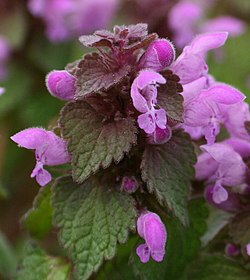
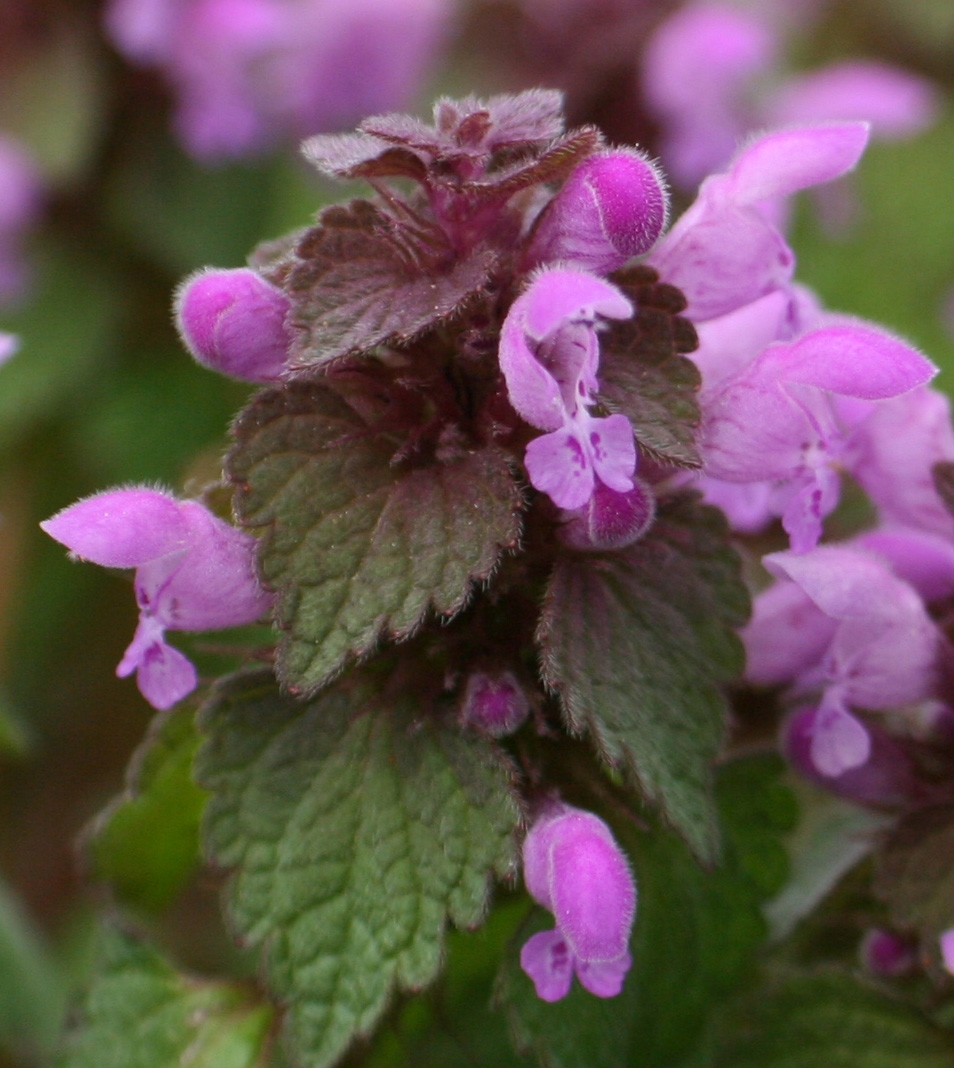
Lamium purpureum L.
Scientific classification Edit this classification
Kingdom: Plantae
Clade: Tracheophytes
Clade: Angiosperms
Clade: Eudicots
Clade: Asterids
Order: Lamiales
Family: Lamiaceae
Martinov[1][2]
Type genus
Lamium
Genera
Synonyms[3]

Labiatae Juss.

The Lamiaceae or Labiatae are a family of flowering plants commonly known as the mint, deadnettle, or sage family. Many of the plants are aromatic in all parts and the family includes widely used culinary herbs like basil, mint, rosemary, sage, savory, marjoram, oregano, hyssop, thyme, lavender, and perilla, as well as traditional medicines such as catnip, skullcap, bee balm, wild dagga, and oriental motherwort.

Some species are shrubs, trees (such as teak), or, rarely, vines. Many members of the family are widely cultivated, not only for their aromatic qualities, but also their ease of cultivation, since they are readily propagated by stem cuttings.[4] Besides those grown for their edible leaves, some are grown for decorative foliage. Others are grown for seed, such as Salvia hispanica (chia), or for their edible tubers, such as Plectranthus edulis, P. esculentus, P. rotundifolius, and Stachys affinis (Chinese artichoke). Many are also grown ornamentally, notably coleus, Plectranthus, and many Salvia species and hybrids.

The family has a cosmopolitan distribution.[5] The enlarged Lamiaceae contain about 236 genera[6] and have been stated to contain 6,900[5] to 7,200[6] species, but the World Checklist lists 7,534.[7] The largest genera are Salvia (900), Scutellaria (360), Stachys (300), Plectranthus (300), Hyptis (280), Teucrium (250), Vitex (250), Thymus (220), and Nepeta (200).[6] Clerodendrum was once a genus of over 400 species,[6] but by 2010, it had been narrowed to about 150.[8]

The family has traditionally been considered closely related to the Verbenaceae;[6] in the 1990s, phylogenetic studies suggested that many genera classified in the Verbenaceae should be classified in the Lamiaceae[9][10] or to other families in the order Lamiales.[1]

The alternative family name Labiatae refers to the flowers typically having petals fused into an upper lip and a lower lip (labia in Latin). Although this is still considered an acceptable alternative name, most botanists now use the name Lamiaceae in referring to this family. The flowers are bilaterally symmetrical with five united petals and five united sepals. They are usually bisexual and verticillastrate (a flower cluster that looks like a whorl of flowers, but actually consists of two crowded clusters). The leaves emerge oppositely, each pair at right angles to the previous one (decussate) or whorled. The stems are frequently square in cross section,[11] but this trait is not found in all members of the family, and is sometimes found in other plant families.

Genera

[edit]

The last revision of the entire family was published in 2004.[6] It described and provided keys to 236 genera. These are marked with an asterisk (*) in the list below. A few genera have been established or resurrected since 2004. These are marked with a plus sign (+). Other genera have been synonymised. These are marked with a minus sign (-). The remaining genera in the list are mostly of historical interest only and are from a source that includes such genera without explanation.[12] Few of these are recognized in modern treatments of the family.

Kew Gardens provides a list of genera that includes additional information.[13] A list at the Angiosperm Phylogeny Website is frequently updated.[14] Plants of the World Online currently accepts 224 genera.[3]

Recent changes

[edit]

The circumscription of several genera has changed since 2004. Tsoongia, Paravitex, and Viticipremna have been sunk into synonymy with Vitex.[15] Huxleya has been sunk into Volkameria.[8] Kalaharia, Volkameria, Ovieda, and Tetraclea have been segregated from a formerly polyphyletic Clerodendrum.[8] Rydingia has been separated from Leucas.[16] The remaining Leucas is paraphyletic over four other genera.[17]

Subfamilies and tribes

[edit]

In 2004, the Lamiaceae were divided into seven subfamilies, plus 10 genera not placed in any of the subfamilies.[6] The unplaced genera are: Tectona, Callicarpa, Hymenopyramis, Petraeovitex, Peronema, Garrettia, Cymaria, Acrymia, Holocheila, and Ombrocharis. The subfamilies are the Symphorematoideae, Viticoideae, Ajugoideae, Prostantheroideae, Nepetoideae, Scutellarioideae, and Lamioideae. The subfamily Viticoideae is probably not monophyletic.[15] The Prostantheroideae and Nepetoideae are divided into tribes. These are shown in the phylogenetic tree below.

Phylogeny

[edit]

Most of the genera of Lamiaceae have never been sampled for DNA for molecular phylogenetic studies.[18] Most of those that have been are included in the following phylogenetic tree. The phylogeny depicted below is based on seven different sources.[6][10][8][15][19][20][21]

Lamiaceae

Callicarpa

Tectona

Viticoideae (pro parte)

Vitex

Symphorematoideae
Ajugoideae
Prostantheroideae
Nepetoideae
[edit]

References

[edit]
[edit]
Revisions and contributorsEdit on WikipediaRead on Wikipedia
from Grokipedia
The Lamiaceae, commonly known as the mint or deadnettle family, is a large and diverse family of flowering in the order , comprising approximately 236 genera and more than 7,000 species distributed worldwide across temperate, subtropical, and tropical regions. This cosmopolitan family is predominantly composed of aromatic herbs and shrubs, though some members are annuals, perennials, small trees, or vines, and is distinguished by key morphological features including erect, four-angled (quadrangular) stems, opposite or whorled simple leaves that are often glandular and aromatic, and zygomorphic (bilaterally symmetrical) flowers arranged in verticillasters or spikes. The flowers typically feature a five-lobed calyx that is often two-lipped, a two-lipped corolla in , blue, purple, or red, four didynamous stamens (two long and two short), and a superior that develops into four one-seeded nutlets as the . Lamiaceae species are ecologically significant, often thriving in open habitats, disturbed areas, and Mediterranean climates, with many exhibiting adaptations like production for defense against herbivores and pathogens. Economically, the family holds immense value due to its numerous culinary, medicinal, ornamental, and industrial applications; prominent examples include mint ( spp.) for teas and flavoring, ( basilicum) and ( vulgare) as essential herbs in global cuisines, rosemary (Salvia rosmarinus) and ( officinalis) for seasoning and traditional remedies, ( spp.) for perfumes and , and () for both food and pharmaceuticals. Many genera, such as (with over 900 species) and Stachys, contribute to hotspots and are widely cultivated, underscoring the family's role in , —owing to bioactive compounds like terpenoids and phenolics—and even through natural repellents.

Description and Morphology

General characteristics

The Lamiaceae family primarily consists of herbaceous plants or shrubs, with some species exhibiting woody growth as trees or lianas, spanning and life cycles. Most members display a herbaceous or shrubby habit, with heights generally ranging from 10 cm in small groundcover species to over 40 m in some tree species. A defining morphological trait is the square cross-section of stems, often featuring four prominent ridges formed by the positioning of collateral vascular bundles in a ring-like arrangement. Leaves in Lamiaceae are typically simple, arranged oppositely in a decussate pattern or occasionally in whorls, and lack stipules. These leaves are frequently covered with glandular trichomes that secrete essential oils, conferring the family's renowned aromatic qualities through volatile compounds such as in Mentha species, in Thymus and Origanum, and in Ocimum basilicum. The presence of these multicellular, often capitate trichomes not only produces the distinctive scents but also aids in defense against herbivores and pathogens. Inflorescences in Lamiaceae are characteristically organized into verticillasters—false whorls formed by condensed cymes at the nodes—which commonly develop into compact , elongated racemes, or branched cymes, enhancing efficiency through clustered flower presentation. While subfamily-specific variations exist in density and morphology, the verticillaster structure remains a core vegetative-reproductive interface across the family.

Flowers and reproductive structures

The flowers of Lamiaceae exhibit , characterized by a bilabiate corolla that typically features an upper hood-like and a protruding lower serving as a landing platform for pollinators. This corolla structure is gamopetalous, arising from five fused petals, and commonly appears in shades of blue, purple, white, or red to attract specific visitors. The androecium consists of four didynamous stamens—two longer anterior and two shorter posterior—adnate to the corolla tube, with the upper stamens often reduced in size or absent in many genera, adapting the flower for precise placement on pollinators. Anthers are typically dithecous and open via longitudinal slits, releasing that is often smooth or finely sculptured. The includes a superior, bicarpellary divided into four locules by false septa, topped by a single style that is often bifid at the apex. Upon maturation, the develops into a schizocarpic known as a carcerulus, which splits into four indehiscent nutlets, each containing a single . Pollination in Lamiaceae is predominantly by , including hymenopterans (such as bees and lepidopterans (such as and moths), facilitated by nectar guides on the corolla, volatile scents, and aromatic compounds that enhance attraction. In some species, such as those in the genus , cleistogamous flowers enable obligatory within unopened buds, promoting reproductive assurance in low- environments. Seed dispersal occurs primarily through gravity, as the small nutlets (typically 0.5–5 mm in length) detach and fall from the persistent calyx, or via zoochory, where adhesive surfaces or elaiosomes on the nutlets attach to animals or attract ants for myrmecochory.

Leaves and stems

The leaves of Lamiaceae species are typically ovate to lanceolate in shape, featuring entire or serrated margins that contribute to their varied appearances across genera. These leaves are frequently covered with peltate or capitate glandular trichomes, which secrete essential oils responsible for the family's characteristic aromas and defensive properties. For instance, in Lavandula pinnata, peltate trichomes consist of a four-celled head with a subcuticular storage space for oil accumulation, while capitate types have simpler structures for similar secretory functions. In Salvia sclarea, both peltate and capitate glands on the foliage produce volatile compounds that enhance aroma and deter pathogens. Stems in Lamiaceae exhibit a distinctive quadrangular cross-section, with collenchyma tissue concentrated at the corners to provide mechanical support against bending and environmental stresses. This collenchymatous reinforcement forms an outer frame around the vascular tissues, enabling upright growth in many species. Internally, stems often feature pith-filled centers in herbaceous genera or hollow interiors in woody ones, facilitating nutrient transport and structural flexibility. For example, in Leucas aspera, the pith contains needle-shaped crystals, and a band of phloem fibers surrounds the secondary vascular elements for added strength. The indumentum of Lamiaceae foliage and stems varies from densely pubescent to glabrous, reflecting adaptations to diverse environments. Non-glandular , often unbranched and warty, provide physical barriers, while glandular types release chemical that deter herbivores by reducing and causing upon contact. In species like those in the , these trichomes accumulate toxic secondary metabolites, lowering the nutritional value of tissues and thus protecting against feeding. Such variations in trichome density and type enhance overall defense without compromising . Photosynthesis in Lamiaceae predominantly follows the C3 pathway, where carbon fixation occurs via the in mesophyll cells, supporting efficient growth in temperate conditions. However, some arid-adapted species exhibit CAM-like traits, such as facultative , involving nocturnal CO2 uptake and diurnal to minimize water loss. In amboinicus, for example, C3 remains the primary mode, but CAM components activate under , allowing survival in xeric habitats. Growth forms in Lamiaceae range from prostrate habits in groundcover species like praecox, which spreads via creeping stems to colonize open areas, to erect shrubs in genera such as , where woody stems support vertical architectures up to several meters. These forms align with the family's square-stemmed structure, promoting resilience in both low-lying and upright orientations.

Taxonomy and Classification

Etymology and history

The name Lamiaceae derives from the genus , the of the , which in turn comes from the Latin lamium meaning "dead-nettle," referring to plants that resemble stinging nettles () in appearance but lack the irritant hairs. The suffix -aceae follows standard for names, indicating resemblance to the . This contrasts with the earlier alternative name Labiatae, based on the Latin labium for "lip," alluding to the bilabiate (two-lipped) corollas characteristic of the 's flowers. Early recognition of plants now classified in Lamiaceae dates to ancient herbal traditions. The Greek philosopher Theophrastus (c. 371–287 BCE) described mint-like herbs in his Historia Plantarum, noting their aromatic properties and uses in seasoning and medicine, such as for digestive ailments. In the 1st century CE, the physician Pedanius Dioscorides cataloged numerous Lamiaceae species, including mints (Mentha) and savory (Satureja), in his De Materia Medica, detailing their medicinal applications for treating indigestion, wounds, and respiratory issues, emphasizing their cooling and astringent qualities. The formal taxonomic history began with Carl Linnaeus's Genera Plantarum (1737), where he grouped many Lamiaceae genera under the class Didynamia and order Gymnospermia, based on characteristics, though without establishing a distinct family name. established the family as Labiatae in his Genera Plantarum (1789), recognizing it as a natural group within the dicotyledons due to shared floral and vegetative traits like square stems and opposite leaves. advanced the classification in Labiatarum Genera et Species (1832–1836), revising the family into 13 tribes based on corolla shape, arrangement, and nutlet morphology, providing the first comprehensive . John Isaac Briquet further refined the system in Les Labiées des Alpes-Maritimes (1895), introducing a subtribal that subdivided Bentham's tribes, incorporating geographic and morphological details from Mediterranean to better reflect evolutionary relationships. In the 20th century, the name shifted from Labiatae to Lamiaceae to align with International Code of (ICN) recommendations for family endings in -aceae, prioritizing the type genus Lamium for consistency, though both remain valid alternatives. This change solidified Lamiaceae as the preferred designation in modern .

Subfamilies and tribes

The classification of Lamiaceae has transitioned from 19th-century systems, such as George Bentham's tribal arrangement in Genera Plantarum (1876) that grouped genera into four primary alliances based on morphological features like insertion and nutlet structure, to the contemporary twelve-subfamily framework established through and morphological synapomorphies. This modern classification recognizes twelve subfamilies—Ajugoideae, Callicarpoideae, Chloanthoideae, Lamioideae, , Peronematoideae, Premnoideae, Prostantheroideae, Scutellarioideae, Symphorematoideae, Tectonoideae, and Viticoideae—encompassing approximately 7,000 species across 236 genera as per recent assessments. The subfamilies are defined by shared molecular markers from and nuclear data, alongside diagnostic morphological traits such as architecture, morphology, and reproductive structures. stands out as the largest subfamily, representing about 60% of the family's species diversity and including economically important genera like mints () and sages (). It is characterized by synapomorphies including frequent (coexistence of female and hermaphroditic individuals) and didynamous stamens (two longer pairs and two shorter pairs). Lamioideae, the second-largest subfamily, features plicate (folded) leaves in vernation for many genera and encompasses tribes like Stachydeae, with species often exhibiting nutlet wings or verrucose surfaces as dispersal aids. Scutellarioideae is distinguished by its unique scutellum (a transformed posterior calyx lobe) that aids in seed protection and release. The remaining subfamilies—Ajugoideae, Callicarpoideae, Chloanthoideae, Peronematoideae, Premnoideae, Prostantheroideae, Symphorematoideae, Tectonoideae, and Viticoideae—are smaller, with the latter two often sharing woody habits and drupaceous fruits derived from Verbenaceae-like ancestors. Across these subfamilies, Lamiaceae is subdivided into around 25 tribes, though some classifications recognize up to 50 when including subtribes; prominent examples include Mentheae (encompassing Mentha and Salvia with their versatile stamens for pollination), Ocimeae (including Ocimum for basil and Origanum for oregano, noted for their essential oil-rich glands), and Lavanduleae (featuring Lavandula for lavender, with stellate hairs and capitula inflorescences). These tribal groupings highlight the family's adaptive radiation, particularly in Mediterranean and temperate regions, driven by traits like aromatic volatiles and specialized floral mechanics.

Phylogeny

Molecular phylogenetic analyses of Lamiaceae, employing nuclear ribosomal (ITS) sequences alongside chloroplast markers such as rbcL and matK, have robustly confirmed the monophyly of the family and resolved its major evolutionary relationships. Recent plastome phylogenomics further refine this backbone, clarifying relationships among subfamilies. These markers provide high resolution for infrageneric and tribal-level phylogenies, revealing a divergence estimated at approximately 50-60 million years ago during the to early transition. Such estimates align with broader diversification patterns, underscoring Lamiaceae's radiation amid post-Cretaceous environmental shifts. Early-diverging clades within Lamiaceae include Scutellarioideae, which forms the to all other subfamilies, followed by Lamioideae as a successive basal lineage. In contrast, emerges as a highly derived , characterized by extensive diversification that accounts for nearly half of the family's approximately 7,000 . This pattern is evident in large-scale chloroplast phylogenies, where clusters with Ajugoideae in a well-supported advanced position relative to the basal grade. Diagnostic synapomorphies across Lamiaceae clades encompass specialized nutlet morphologies, including areolate or tuberculate surfaces that aid dispersal, alongside exine patterns such as reticulate or perforate structures that vary by . biochemistry, particularly the production of monoterpenes and sesquiterpenes in glandular trichomes, serves as a key synapomorphy for , correlating with their aromatic diversification. Interspecific hybridization is prevalent in the tribe Mentheae (Nepetoideae), frequently resulting in polyploid complexes that contribute to taxonomic complexity and adaptive radiation. For instance, genera like Mentha exhibit chromosome numbers ranging from diploid (2n=18) to decaploid (2n=120), driven by allopolyploid events that enhance morphological and ecological variability. Consensus phylogenetic reconstructions, integrating plastid and nuclear data from studies like Li et al. (2016), Xia et al. (2021), and Zhao et al. (2021), illustrate a core backbone where the Nepetoid clade undergoes significant radiation after the Eocene epoch, approximately 34-56 million years ago. This post-Eocene diversification aligns with global cooling and the uplift of mountain ranges, fostering speciation in Mediterranean and temperate habitats through adaptive shifts in essential oil profiles and reproductive strategies.

Genera

The Lamiaceae family encompasses 236 accepted genera, representing a significant portion of its overall diversity, with approximately half of these genera (around 118) belonging to the . This dominates in terms of aromatic species and economic utility, while the remaining genera are distributed across other subfamilies like Lamioideae. Hybridization events have complicated genus boundaries in certain groups, such as the complex, where molecular data reveal incongruent branching patterns likely influenced by ancient and recent interspecific crosses. Among the largest genera, stands out with approximately 1,000 species, exhibiting a across temperate, subtropical, and tropical regions worldwide. , another prominent genus, includes about 300–370 species primarily in temperate zones of the , often adapted to diverse herbaceous habits. In contrast, is smaller, with 20–30 species that are highly prone to hybridization, leading to numerous cultivated variants like and . Several genera hold economic importance due to their culinary, medicinal, and ornamental value. species, such as (oregano), are widely used for flavoring and essential oils. (thyme) provides aromatic herbs and antimicrobial compounds extracted from species like T. vulgaris. (lavender) is prized for its fragrant flowers and oils in perfumery and therapeutics, while Rosmarinus, now classified as , contributes rosemary for culinary and preservative applications. Rare and endemic genera highlight regional hotspots within Lamiaceae. For instance, Hymenocrater, with 11 species, is largely confined to and adjacent areas, featuring specialized floral structures and calyces adapted to arid, mountainous environments. These taxa often exhibit unique profiles, including terpenoids, supporting limited ethnopharmacological uses. Distribution patterns across genera reflect the family's Old World origins, with many taxa centered in and before dispersing globally. Salvia exemplifies this through distinct radiations: lineages dominate in southwestern and the Mediterranean, while New World clades have undergone extensive diversification, particularly in Central and , accounting for over 500 species there. This biogeographic split underscores adaptive evolution in response to continental isolation.

Distribution and Ecology

Geographic range

The Lamiaceae family displays a but is predominantly concentrated in the , where the majority of its approximately 7,000 occur. This hemispheric bias reflects the family's evolutionary , with primary centers of diversity in temperate and subtropical zones. Recent studies project upward and northward range shifts for some endemic in response to , particularly in high-elevation regions like the . The Mediterranean basin stands out as a key diversity hotspot, supporting around 2,000 species across extensions into , , and , driven by favorable climatic and edaphic conditions in the region. In the , the family maintains a substantial presence with approximately 1,000 species in the , particularly concentrated in the and , where the genus exhibits a remarkable encompassing over 500 species. Representation in the Southern Hemisphere remains sparse, limited mainly to introduced taxa or relic populations in areas like Australia and South Africa, contrasting sharply with the northern dominance. Biogeographic patterns underscore Holarctic origins for the family, featuring notable disjunctions such as those in Salvia, where distinct clades occur in eastern Asia and the Americas, indicative of ancient vicariance events. Endemism rates are elevated in the Mediterranean, reaching about 30%, and similarly high in southwestern Asia, highlighting these regions as critical for conservation priorities.

Habitats and adaptations

Species of the Lamiaceae family predominantly occupy well-drained, sunny environments such as Mediterranean maquis shrublands, temperate grasslands, and open scrublands, where they benefit from ample light exposure and reduced waterlogging. These habitats provide the optimal conditions for their growth, with many taxa thriving in regions characterized by seasonal and mild winters. For instance, aromatic shrubs like those in the genera and are integral components of maquis vegetation, contributing to the sclerophyllous and nature of these ecosystems. In xeric environments, Lamiaceae species exhibit notable physiological adaptations to , including the development of thick s, sunken stomata, and resinous exudates that minimize and protect against . In species such as capitatus, the thick and sunken stomata reduce water loss by limiting evaporative surfaces, while glandular trichomes secrete resinous essential oils that further deter herbivory and environmental stress. These adaptations enable persistence in arid scrublands, where thyme-like species maintain metabolic functions under prolonged dry periods. Lamiaceae demonstrate soil versatility, favoring neutral to slightly alkaline substrates, with several taxa classified as calcicoles that thrive on soils rich in . Examples include , which associates with calcicole communities in meadow habitats, and Salvia rosifolia, preferring slightly alkaline conditions with pH values around 7.5–8.0. While direct symbiotic nitrogen fixation is absent in the family, rare associations with nitrogen-fixing rhizosphere occur, particularly in disturbed soils, enhancing nutrient availability for in anthropogenic settings. The family's altitudinal distribution spans from to over 4,500 m in the , where high-elevation species like Eriophyton wallichii endure cold through pubescence—dense woolly hairs that insulate against frost and temperature fluctuations. This pubescence, combined with overlapping leaves, buffers from harsh winds and low temperatures in subalpine shrublands. Additionally, many Lamiaceae, such as mints in the genus , exhibit invasive potential in anthropogenic habitats like roadsides and disturbed fields, rapidly colonizing due to vegetative propagation and tolerance to .

Ecological roles

Lamiaceae species play a crucial role in supporting pollinators through their nectar-rich, bilabiate flowers, which provide accessible rewards at the base of the corolla tube, facilitating efficient pollen transfer via nototribic deposition on the pollinator's back. These structures primarily attract bees, which align with the flower's morphology for dorsal pollen placement, while some genera like Salvia also draw butterflies and hummingbirds through elongated nectar guides and vibrant coloration in ornithophilous adaptations. In Mediterranean ecosystems, aromatic Lamiaceae act as keystone plants in pollinator networks, enhancing community diversity by offering consistent floral resources that sustain bees, butterflies, and other insects amid seasonal variability. The family's essential oils serve as potent chemical defenses against herbivores, deterring grazing and insect feeding through volatile monoterpenes that disrupt pest behavior and reduce plant damage. For instance, oils from genera like and exhibit repellent and toxic effects on and other herbivores, lowering herbivory pressure in natural habitats. These compounds, including 1,8-cineole and , contribute to by protecting foliage and promoting plant survival in herbivore-rich environments. Rhizomatous growth in many Lamiaceae, such as Pycnanthemum tenuifolium and Teucrium canadense, enables rapid colony formation that stabilizes soil in disturbed areas, preventing erosion on slopes and streambanks through dense root networks. This vegetative propagation binds soil particles, enhancing habitat integrity in prairies and woodlands prone to degradation. Allelopathic effects from Lamiaceae volatiles, particularly in Mentha species like , inhibit the growth of neighboring plants by disrupting cellular processes such as assembly via compounds like . These emissions reduce emergence and in competitors, shaping structure; for example, extracts suppress growth when used in succession, demonstrating competitive exclusion in mixed habitats. Many Lamiaceae species serve as indicators due to their sensitivity to , with limited dispersal abilities exacerbating isolation in alpine and forest edges. Numerous taxa, including Salvia submutica and Micromeria browiczii, are listed as Vulnerable or Endangered on the , reflecting declines from fragmentation that signal broader ecosystem health issues.

Evolutionary History

Fossil record

The fossil record of the Lamiaceae is sparse compared to other angiosperm families, with most evidence derived from pollen grains rather than macrofossils, reflecting challenges in preservation of their delicate structures. The earliest definitive fossils consist of hexacolpate grains from the Early Eocene of , dated to approximately 50 million years ago, attributed to the genus or similar forms within the subfamily . These records suggest an Asian origin for this dominant subfamily, characterized by three-nucleate , and align with the broader post-Cretaceous-Paleogene (K-Pg) radiation of around 66 million years ago. Molecular clock estimates suggest the crown Lamiaceae diversified around 60-70 million years ago, post-K-Pg boundary. Macrofossils, including leaf imprints and fruits resembling those of modern Lamioideae, first appear in deposits from and , providing of early morphological diversity in the family around 30 million years ago. Reliable macrofossil records become more abundant in the , with fruit remains from West Siberia dated to about 30 million years ago indicating the presence of extinct lineages adapted to temperate environments. Key sites include Eocene lake deposits in , where and fragmentary remains link to ancestral forms of genera like , supporting intercontinental dispersal during the . Diversification accelerated in the (23–5.3 million years ago), as evidenced by abundant records across , , and , particularly for the subfamily , which expanded in response to and that promoted open habitats. These assemblages highlight the family's increasing dominance in herbaceous and shrubby . Overall, the Lamiaceae's history correlates with post-K-Pg angiosperm radiations, where climatic shifts post-Eocene facilitated their global spread and ecological prominence.

Recent taxonomic revisions

Since the early , molecular phylogenetic studies, particularly those utilizing genomes, have driven significant taxonomic revisions within Lamiaceae, leading to the realignment of approximately 20 genera and the refinement of structures. A landmark update in 2021 proposed a phylogenetically informed recognizing 28 tribes across the family, based on analyses of 204 plastomes representing 195 genera and all subfamilies. This framework resolved several long-standing ambiguities by incorporating high-resolution plastome data, which revealed non-monophyletic groupings in prior classifications and prompted the elevation or description of new tribes, such as the separation of distinct clades within Lamioideae. Notable genera realignments include the incorporation of Perovskia into as Perovskia, justified by nuclear and evidence showing Perovskia nested within Salvia clades, particularly in the lineage. This change, proposed in 2017, maintained a broad circumscription of Salvia to encompass over 1,000 while avoiding nomenclatural disruption for horticulturally important taxa like Russian sage (now ). Similarly, in 2019, extensive nomenclatural transfers merged much of into , affecting 212 names and resolving polyphyletic patterns in based on multi-locus phylogenies. These revisions highlight the role of integrated morphological and molecular data in stabilizing generic boundaries amid historical over-splitting. In subfamily , restructuring has focused on tribal limits, with the split of Elsholtzieae into more resolved generic groups following comprehensive phylogenies of East Asian clades, emphasizing biogeographic diversification. The subtribe Hyptidinae was further resolved in 2021 for South American Hyptis-related lineages within the tribe Ocimeae, based on plastome evidence distinguishing them from mints. At the species level, approximately 500 new have been described between 2015 and 2025, predominantly in and , such as multiple additions from and ; has been instrumental in resolving hybrid complexes, particularly in genera like and , where chloroplast and nuclear markers clarified reticulate evolution and reduced synonymy. Genomic advances have further illuminated evolutionary dynamics, with whole-genome sequencing of representatives revealing origins as a key driver of diversification in this tribe. For instance, phylotranscriptomic analyses in 2019 identified ancient events correlating with elevated in , supported by asymmetrical duplications in mint lineages. Ongoing debates persist, notably around the monophyly of Scutellarioideae; 2024 phylogenomic studies using 234 genomes questioned the integrity of certain subgenera like Apeltanthus, suggesting potential and calling for broader nuclear sampling to refine boundaries. These developments underscore the continued integration of in Lamiaceae , promising further refinements as data accumulate.

Human Uses and Significance

Culinary and medicinal applications

The Lamiaceae family includes numerous species valued as culinary staples due to their aromatic properties, with genera such as (mint), (oregano), and (basil) prominently featured in global cuisines. Mint leaves are commonly used for flavoring teas, beverages, and desserts, while oregano and basil serve as essential herbs in Mediterranean and Asian dishes, enhancing flavors in sauces, salads, and marinades. These herbs contribute to food preservation through their volatile compounds, reflecting their widespread cultivation for both fresh and dried consumption. Medicinally, Lamiaceae species have been employed for centuries, with historical records in Ayurvedic traditions using plants like Ocimum for pain relief and in ancient Greek medicine for treating digestive and respiratory ailments. Modern pharmacological studies highlight antimicrobial properties, particularly from thymol in Thymus (thyme), which inhibits bacterial growth such as Staphylococcus aureus. Anti-inflammatory effects are attributed to rosmarinic acid in Rosmarinus (rosemary), which reduces edema in animal models by modulating inflammatory pathways. Specific examples include (sage), investigated for cognitive enhancement in clinical trials for , where extracts improved memory scores in mild to moderate cases over 16 weeks. Similarly, (lavender) essential oil demonstrates anxiolytic effects, with meta-analyses of randomized trials showing reduced anxiety symptoms via oral or inhaled administration, comparable to low-dose benzodiazepines. Essential oils from Lamiaceae are primarily extracted via , yielding 0.5-3% by weight from plant material, depending on species and conditions. These oils, rich in terpenoids and phenolics, are incorporated into supplements for their and benefits, supporting applications in immune and digestive health formulations. Safety considerations are important, as high doses of certain species can be toxic; for instance, pulegone in (pennyroyal) oil causes and is contraindicated for internal use, with ingestion of as little as 10 mL leading to severe symptoms.

Ornamental and industrial uses

Many species in the Lamiaceae family are valued as ornamental plants in gardens and landscapes due to their vibrant colors, aromatic foliage, and attractive flowers. Genera such as (lavender), (sage), and (catmint) are particularly popular for their ability to add both visual appeal and fragrance to borders, rock gardens, and mixed perennial beds. For instance, species form low-spreading mounds with lavender-blue flowers that bloom from midsummer to autumn, often paired with and for drought-tolerant displays that attract pollinators while providing sensory interest through their scents. Essential oils extracted from Lamiaceae species play a significant role in industrial applications, particularly in perfumery, pharmaceuticals, and . In the fragrance industry, oil derived from Pogostemon cablin is a key ingredient, prized for its earthy, musky aroma and used extensively in perfumes and , with global production exceeding 1,000 tons annually from cultivated sources in tropical regions. These oils also exhibit pharmaceutical potential through their , , and antioxidant properties, as demonstrated in studies on genera like and , where compounds such as contribute to therapeutic formulations. Additionally, essential oils from various Lamiaceae species, including and , show pesticidal efficacy against insects like and , offering natural alternatives to synthetic chemicals through repellent volatiles and contact toxicity. Certain Lamiaceae species hold promise for biofuel production and agricultural enhancement due to their rapid growth and biomass yield. Hybrids within the Mentha genus, such as those developed for high essential oil content, demonstrate elevated biomass accumulation, supporting potential use in bioenergy crops through improved carbon flux in biosynthetic pathways. In agriculture, Lamiaceae plants like mints and basil are employed in companion planting to repel pests; their volatile organic compounds, including menthol and eugenol, deter insects such as aphids from nearby crops, reducing the need for chemical interventions while promoting ecological balance. Lamiaceae species also carry cultural significance as symbols in various traditions. Rosmarinus officinalis (rosemary) is emblematic of remembrance and fidelity, historically used in funerals and ceremonies to honor the deceased, as noted in European herbal lore where sprigs were placed with the departed to signify enduring memory. Similarly, Ocimum species like holy basil (O. tenuiflorum) feature prominently in religious rituals, particularly in Hinduism where the plant is revered as sacred, used in worship to invoke protection and spiritual purity, and in Christian traditions for exorcism and blessing ceremonies. The global essential oil market, valued at over $13 billion in 2025, sees substantial contributions from Lamiaceae-derived products, with genera like Lavandula and Mentha accounting for a notable share through applications in cosmetics, aromatherapy, and beyond.

Conservation and threats

The Lamiaceae family faces multiple anthropogenic threats that contribute to the decline of its species, particularly in biodiversity hotspots. Habitat loss, driven by urbanization and agricultural expansion in the Mediterranean region, has severely impacted endemic species, such as those in Greece where land-use changes fragment populations of Nepeta representatives. Overharvesting for medicinal and culinary uses exacerbates this, as seen with Zataria multiflora in Iran, where collection for essential oils has led to population reductions and habitat degradation. Climate change further compounds these pressures by altering precipitation patterns and temperature regimes, potentially shifting suitable ranges for species like oregano (Origanum spp.), thyme (Thymus spp.), and sage (Salvia spp.), which are already vulnerable due to their restricted distributions. According to assessments by the International Union for Conservation of Nature (IUCN), a notable proportion of evaluated Lamiaceae species are threatened, with underrepresentation on the Red List indicating potential underestimation of overall risk. For instance, approximately 15% of assessed species fall into threatened categories, though this figure is provisional given that families like Lamiaceae remain among the least evaluated despite comprising about 2% of diversity. Specific examples include Micromeria browiczii, an endemic Turkish species classified as Endangered due to habitat destruction from quarrying and , and several taxa in , such as S. anatolica and S. ballsiana, deemed Critically Endangered from limited distributions and ongoing declines. Similarly, ceratophylloides in (Calabria) is Critically Endangered, with populations reduced to around 1,000 individuals from habitat loss and . Conservation efforts for Lamiaceae emphasize protected areas and legal frameworks to mitigate these threats. In the , approximately 17 species from the family, including aromatic taxa like lepicephalum and carnosus, are listed under Annex II of the (92/43/EEC), mandating special areas of conservation to safeguard their habitats. Ex situ preservation through botanic gardens plays a key role, with collections supporting propagation of threatened endemics like spp. Sustainable practices include breeding programs for climate-resilient cultivars of economically important species, such as teak (Tectona grandis), which faces threats of and habitat conversion in its native Southeast Asian ranges. Although not currently listed under , regulations are advocated to prevent further decline in rare genera. Research gaps persist, particularly for understudied endemics in biodiversity hotspots like the , where Lamiaceae contributes significantly to the area's plant diversity but lacks comprehensive threat assessments for many and other genera. Addressing these through expanded IUCN evaluations and monitoring in protected areas, such as those overlapping with Mediterranean distribution hotspots, is essential for effective long-term protection. As of 2025, ongoing efforts include new assessments for Mediterranean endemics following 2024 climate impacts, with increased focus on resilient cultivars for species like and .

References

Add your contribution
Related Hubs
User Avatar
No comments yet.