Hubbry Logo
MoonlightMoonlightMain
Open search
Moonlight
Community hub
Moonlight
logo
8 pages, 0 posts
0 subscribers
Be the first to start a discussion here.
Moonlight
Moonlight
from Wikipedia
Earthlight illuminates the dim side of the Moon, while direct sunlight illuminates the bright side.

Moonlight (or Moonshine) is light from the surface of the Moon, consisting mostly of reflected sunlight, and some earthlight.[1]

History

[edit]

The ancient Greek philosopher Anaxagoras noted that "the sun provides the moon with its brightness".[2] Ancient Chinese polymath Zhang Heng concluded that the light of the moon comes from the Sun. He writes in his treatise, The Spiritual Constitution of the Universe, that the Sun and Moon are "like fire and water", where the Sun "gives out light", and the Moon "reflects it".[3]

Nyctalopia was called "moonblink" and thought to be caused by sleeping in moonlight in the tropics as late as the 19th century,[4] but is actually caused by a deficiency in Vitamin A. Moonlight was historically thought to cause equine recurrent uveitis, which was called "moon blindness".[citation needed] Moonmilk, a soft white limestone precipitate found in caves, was thought to be caused by the rays of the Moon.[5] Selenoplexia was a supposed medical condition caused by the rays of the moon.[6]

Illumination

[edit]
Moonlight illuminates a lake and surroundings.

The color of moonlight appears bluish or silvery to the human eye compared to other, brighter light sources, however this is an illusion, due to the Purkinje effect.[citation needed] The intensity of moonlight varies greatly depending on the lunar phase, with the full moon typically providing about 0.05–0.1 lux illumination.[7] When a full Moon at perigee (a "supermoon") is viewed around upper culmination from the tropics, the illuminance can reach up to 0.32 lux.[7] From Earth, the apparent magnitude of the full Moon is only about 1380,000 that of the Sun.[citation needed] The Moon's Bond albedo averages 0.136,[8] meaning only 13.6% of incident sunlight is reflected from the lunar surface. Moonlight takes approximately 1.26 seconds to reach Earth's surface. Moonlight is scattered by particles in the atmosphere of Earth, which increases the brightness of the night sky, and decreases contrast between dimmer stars and the background. For this reason, many astronomers usually avoid observing the sky around a full moon.[citation needed]

Lunar eclipse

[edit]
Composite image of the April 2014 total lunar eclipse from Charleston, West Virginia, United States.

A lunar eclipse is an astronomical event that occurs when the Moon moves into the Earth's shadow, causing the moonlight to be darkened.[9] Such an alignment occurs during an eclipse season, approximately every six months, during the full moon phase, when the Moon's orbital plane is closest to the plane of the Earth's orbit.

When the Moon is totally eclipsed by the Earth (a "deep eclipse"),[10][11] it takes on a reddish color that is caused by the planet when it completely blocks direct sunlight from reaching the Moon's surface, as the only light that is reflected from the lunar surface is what has been refracted by the Earth's atmosphere. This light appears reddish due to the Rayleigh scattering of blue light, the same reason sunrises and sunsets are more orange than during the day.

Folklore

[edit]

Moonlight sometimes thought to have a harmful influence in folklore. For example, sleeping in the light of a full moon was believed to transform a person into a werewolf. The light of the Moon was thought to worsen the symptoms of lunatics, and to sleep in moonlight could make one blind, or mad.[12]

Art

[edit]

Katie Paterson produced a display at The Guggenheim in 2008, entitled Light bulb to Simulate Moonlight, which consisted of 289 lightbulbs coated to produce a similar spectrum to the light of the full Moon.[13]

[edit]

See also

[edit]

References

[edit]
[edit]
Revisions and contributorsEdit on WikipediaRead on Wikipedia
from Grokipedia
Moonlight is the illumination of Earth's surface by light reflected from the Moon, primarily consisting of sunlight scattered off the lunar regolith, with a small additional component from earthshine on the Moon's shadowed side. The Moon produces no light of its own, instead reflecting approximately 12% of incoming sunlight due to its bond albedo of about 0.11 to 0.12, which varies slightly across its surface features such as the darker basaltic maria (albedo ~0.06–0.10) and brighter anorthositic highlands (albedo ~0.20–0.25). At full moon, when the Moon is opposite the Sun in Earth's sky, it delivers an illuminance of roughly 0.1 to 0.3 lux to the ground—about 300,000 to 1,000,000 times dimmer than direct sunlight—yet bright enough to cast perceptible shadows and reveal surface details under clear skies. The visibility and intensity of moonlight depend on the lunar phases, which result from the changing geometry of the Sun, Moon, and Earth as the Moon orbits Earth every 27.3 days while rotating on its axis. During new moon, the Moon is nearly invisible from Earth as its illuminated side faces away; brightness peaks at full moon and wanes through waxing and waning gibbous and crescent phases, with illuminance dropping to less than 0.01 lux at quarter moon. Moonlight scatters in Earth's atmosphere, contributing to sky glow that can reach several magnitudes per square arcsecond in brightness, significantly affecting astronomical observations by overwhelming faint celestial objects, particularly near the Moon's position. Its spectral composition closely mirrors sunlight but appears bluish-white to the human eye due to the Moon's neutral gray tone and atmospheric scattering, though it lacks the warmth of sunlight. Beyond astronomy, moonlight influences ecological and behavioral patterns in nocturnal organisms, synchronizing activities such as reproduction, foraging, and migration in species ranging from sea turtles to coral reefs, where its predictable cycles provide temporal cues equivalent to a natural "lunar clock." In human contexts, moonlight has historically enabled nighttime navigation, agriculture, and cultural practices, though modern light pollution often diminishes its natural prominence. Ongoing research, including satellite measurements, continues to refine models of moonlight's atmospheric propagation and surface interactions for applications in remote sensing and environmental monitoring.

Fundamentals

Definition and Origin

Moonlight is the electromagnetic radiation that illuminates Earth at night, originating as sunlight reflected from the Moon's surface and primarily encompassing wavelengths in the visible spectrum. This reflected light provides the primary source of natural illumination during nights on Earth, distinct from direct solar radiation due to the Moon's position relative to Earth and the Sun. The origin of moonlight traces back to the Sun's photosphere, the outermost layer of the solar atmosphere from which nearly all visible light is emitted through thermal radiation. The Moon serves as a reflector because it lacks an atmosphere to scatter or absorb incoming solar rays, allowing direct interaction with its surface composed of fine-grained regolith—a powdery layer of fragmented rock and dust formed by meteoroid impacts over billions of years. This regolith scatters sunlight diffusely rather than specularly, contributing to the soft, even glow observed from Earth. The Moon's reflectivity is quantified by its Bond albedo of approximately 0.12, meaning it reflects about 12% of the incident sunlight across all wavelengths, classifying it as a moderately dark celestial body similar in albedo to asphalt. This low reflectivity results from the dark, iron-rich composition of the regolith, which absorbs most incoming radiation. The term "moonlight" itself derives from Middle English "monelicht," a compound of Old English "mōna" (moon) and "lēoht" (light), underscoring its historical association with nocturnal visibility and the Moon's role in timekeeping and mythology.

Production Mechanism

Moonlight is produced primarily through the reflection of sunlight by the lunar surface, where solar radiation illuminates the Moon and a portion is scattered back toward Earth. The Moon's regolith, a layer of fine, fragmented material covering the surface, facilitates this reflection without significant atmospheric interference, as the Moon lacks an atmosphere that would otherwise cause Rayleigh scattering. Instead, the regolith's powdery texture and irregular particles lead predominantly to diffuse reflection, where incident light rays are scattered in multiple directions due to the surface's roughness exceeding the wavelength of visible light. Some specular reflection occurs from smoother rocks or aligned particles within the regolith, but diffuse scattering dominates, resulting in a broad backscattering pattern observable from Earth. The composition of the lunar surface significantly influences the efficiency and tone of this reflection. Highland regions, composed largely of anorthosites rich in calcium and aluminum, exhibit higher reflectivity and contribute to a brighter, whitish-gray appearance. In contrast, the darker mare basins consist of iron- and titanium-rich basalts formed from ancient lava flows, which absorb more light and lower the overall reflectivity, yielding the Moon's characteristic neutral white-gray tone when averaged across the disk. These mineralogical variations ensure that reflected sunlight maintains a relatively neutral spectral balance, without strong coloration from the surface itself. Geometric factors, particularly the alignment of the Earth-Moon-Sun system, further modulate the production of moonlight by affecting the phase angle—the angle between the Sun, Moon, and observer. At small phase angles near full moon, reflection efficiency peaks due to the opposition surge, a phenomenon where brightness increases sharply (by over 40%) as shadows from regolith particles are minimized and coherent backscattering enhances return flux. This surge is more pronounced in highlands than maria due to textural differences. The overall reflectivity is quantified by the Bond albedo, defined as the fraction of incident energy reflected across all angles: A=ErEiA = \frac{E_r}{E_i} where ErE_r is the total reflected energy and EiE_i is the incident energy; for the Moon, A0.11A \approx 0.11. Normal albedos, measuring reflection at near-normal incidence, vary from approximately 0.06–0.10 in dark maria to 0.20–0.25 in brighter highlands across visible wavelengths.

Optical Characteristics

Spectrum and Color

Moonlight's spectral profile closely mirrors that of sunlight, as it is primarily reflected solar radiation, but is subtly altered by the optical properties of the lunar regolith. The regolith, a layer of fine, mature soil particles affected by space weathering, exhibits a reflectance spectrum that increases gradually toward longer wavelengths in the visible range (400–700 nm), resulting in a slightly redder distribution compared to direct sunlight due to enhanced scattering and absorption in shorter wavelengths by nanophase iron and other minerals. This reddening is further influenced by the opposition effect, which causes a surge in brightness near full moon (small phase angles) through mechanisms like shadow hiding and coherent backscattering in the regolith, with a mild wavelength dependence that can emphasize the red tilt under certain viewing geometries. The color temperature of moonlight is approximately 4100 K, lower (warmer) than sunlight's 5800 K, imparting a neutral to slightly yellowish-white character to the light before atmospheric effects. However, to the human eye, moonlight often appears silvery or bluish-white, an illusion arising from its low intensity triggering scotopic vision and the Purkinje shift, where sensitivity to blue wavelengths increases in dim conditions, rather than from the intrinsic spectrum. Absorption features from lunar minerals, such as pyroxene and ilmenite in the regolith, cause only minimal shifts in the overall spectrum, primarily attenuating ultraviolet and blue light without introducing strong bands in the visible range. In contrast, when the Moon is viewed at low elevation angles through Earth's atmosphere, scattering by air molecules and aerosols adds a noticeable reddening effect, similar to that seen in sunsets. These spectral differences highlight the modest reddening, with relatively higher reflectance in the red compared to blue.

Intensity and Measurement

Moonlight intensity is primarily measured in terms of illuminance, expressed in lux (lumens per square meter), or through the astronomical scale of apparent magnitude. The full moon has an apparent magnitude of -12.6, rendering it exceptionally bright relative to other celestial bodies visible at night. Its illuminance on Earth's surface typically ranges from 0.1 to 0.3 lux under clear skies, providing enough light for basic visibility of shapes and contours but far dimmer than daylight. This equates to roughly 1/400,000th the illuminance of direct sunlight, which averages about 100,000 lux. The illuminance of moonlight varies based on several key factors, including the Earth-Moon distance, which averages 384,400 km, the lunar phase angle (the angle between the Sun, Moon, and Earth), and atmospheric extinction, which scatters and absorbs light during propagation through Earth's atmosphere. The phase angle directly influences the fraction of the Moon's illuminated disk visible from Earth, with full moon occurring at 0° and reducing brightness as the angle increases toward 180° at new moon; a basic approximation for the illuminated fraction is (1 + cos θ)/2, though the Moon's regolith properties and opposition surge modify this. Atmospheric extinction further diminishes intensity, particularly when the Moon is low on the horizon, by up to 20-30% compared to zenith positions. Simplified models for moonlight illuminance incorporate the solar illuminance at the Moon (~136,000 lux), the Bond albedo (~0.12), phase fraction, geometric dilution over the Earth-Moon distance, and corrections for opposition surge and scattering. Perceived brightness can also be subtly affected by the Moon's spectrum, as detailed in analyses of its optical characteristics.

Earthly Effects

Illumination on the Surface

Moonlight from a full moon provides sufficient illumination for human observers to discern large objects and navigate over distances of several hundred meters to 1 km or more on clear nights, enabling basic navigation across open landscapes. This visibility is enhanced by the Moon acting as a single, distant light source, which casts distinct shadows on the ground, including umbra (fully shadowed areas) and penumbra (partially shadowed regions), though these shadows appear softer than those under direct sunlight due to the diffuse nature of reflected light. The overall effect creates a visually "cold" ambiance, as moonlight has a color temperature of approximately 4100 K, imparting a bluish tint to illuminated scenes that contrasts with the warmer tones of daylight; this "cold" refers to the perceptual color effect and not to any physical cooling of objects, a common myth addressed in the Biological and Environmental Impacts section. Environmental factors significantly alter moonlight's effectiveness in lighting Earth's surface. Cloud cover can reduce illumination by 50-90% depending on thickness and density, with thick clouds blocking much of the light while thin layers may scatter it unevenly. In urban areas, light pollution from artificial sources brightens the night sky, diminishing the contrast between moonlit objects and their surroundings, which can make shadows less pronounced and reduce overall scene clarity. Human perception of moonlight relies on the eye's adaptation to low-light conditions, where rod cells—highly sensitive to dim illumination—dominate vision, allowing detection of shapes and movement but limiting detail. Under brighter full moonlight, with illuminance levels around 0.1-0.3 lux, cone cells contribute minimally, yet some color perception becomes possible for high-contrast objects, transitioning from purely scotopic (rod-based, grayscale) to mesopic vision.

Biological and Environmental Impacts

Moonlight plays a significant role in synchronizing reproductive behaviors in marine organisms, particularly through circalunar rhythms observed in coral spawning. Many coral species, such as those in the genus Acropora, time their mass spawning events to occur several nights after the full moon, with moonlight intensity and timing serving as key environmental cues that entrain internal biological clocks. This synchronization ensures optimal conditions for fertilization, as evidenced by studies showing that the period of darkness between sunset and moonrise post-full moon triggers gamete release in precise windows of minutes to hours. In terrestrial animals, moonlight influences navigation in nocturnal insects, where varying levels can either facilitate or disrupt orientation. Dung beetles, for instance, rely on the polarization pattern of moonlight for straight-line navigation while rolling dung balls, performing better under full moon conditions but experiencing disruptions during crescent or quarter moons when light is dimmer and polarization signals weaken. Similarly, nocturnal bull ants use polarized moonlight as part of their celestial compass for homing, demonstrating that insufficient moonlight intensity can impair path integration and route accuracy. Regarding mammalian behavior, popular associations between wolf howling and full moons lack scientific support; studies indicate no correlation between lunar phases and howling frequency, with vocalizations primarily serving communication purposes like pack coordination regardless of moonlight. Moonlight affects plant reproduction by enhancing visibility for nocturnal pollinators, though it can indirectly influence processes like dew formation through association with clear night skies. Pale or white flowers in night-blooming species, such as moonflowers, reflect moonlight to attract moths and bats, facilitating pollination that would otherwise be limited in darkness. Contrary to myths originating from poorly conducted old experiments, moonlight itself does not cause cooling or make things colder than darkness; light cannot make things colder, and as weak reflected sunlight, it adds negligible warmth. Any perceived cooling on clear full moon nights results from the lack of clouds trapping daytime heat, leading to radiative cooling under clear skies, which coincidentally allow moonlight visibility but are not caused by the light. This cooling promotes dew condensation on plant surfaces when air temperature reaches the dew point, potentially aiding moisture availability for nocturnal ecosystems. In humans, exposure to full moonlight has been linked to physiological effects on sleep, with studies showing suppression of endogenous melatonin levels and a 30% reduction in deep sleep duration around the full moon phase. These changes correlate with poorer subjective sleep quality and longer time to fall asleep, as brighter lunar illumination delays the circadian rhythm. Environmentally, moonlight improves visibility for observing natural processes like soil erosion at night, allowing better assessment of landscape changes in low-light conditions without artificial interference. While the moon's gravitational pull indirectly drives tides affecting coastal ecosystems, light-specific impacts remain centered on illumination and subtle thermal associations rather than direct cooling.

Astronomical Contexts

Role in Lunar Phases

Moonlight plays a central role in the lunar phases, which cycle over the Moon's synodic period of approximately 29.5 days, marking the time from one new moon to the next. During the new moon phase, the Moon's illuminated hemisphere faces away from Earth, resulting in virtually no moonlight reaching the surface. As the Moon progresses through the waxing crescent and first quarter phases, the visible illuminated portion grows from a thin sliver (less than 50%) to about half the disk, providing gradually increasing but still modest moonlight. The cycle peaks at full moon, when the entire Earth-facing side is illuminated, delivering maximum moonlight, before waning through the third quarter (50% again) and waning crescent (low levels) back to new moon. The progression through waxing and waning phases not only changes the fraction of illuminated surface but also alters the Moon's visibility and path through Earth's atmosphere, subtly affecting moonlight's appearance. In waxing and waning crescent phases, the Moon remains low on the horizon near the Sun's position, causing its light to traverse a longer atmospheric path that scatters shorter wavelengths, imparting a slight reddish tint to the moonlight. Conversely, during full moon, the Moon is at opposition to the Sun, rising at sunset and reaching higher altitudes, which shortens the atmospheric path and preserves a whiter appearance with less color alteration. Gibbous phases bridge these extremes, offering intermediate elevations and consistent visibility throughout much of the night. Gibbous phases, occurring between the quarter and full moons, deliver substantial moonlight with illumination levels ranging from 50% to nearly 100%, particularly in their later stages where 80-95% of the disk is lit, providing near-maximum brightness for extended periods. Historically, these brighter gibbous and full phases enabled safer nocturnal navigation for sailors, who relied on the enhanced visibility for plotting courses and avoiding hazards at sea without modern lighting. For optimal viewing of moonlight's effects, observations during the full moon at opposition are ideal, as this alignment maximizes intensity through the opposition surge—a sharp increase in brightness due to reduced shadowing on the lunar surface—allowing clearest appreciation of its illumination on landscapes and celestial contrasts.

During Eclipses and Transits

During lunar eclipses, moonlight undergoes significant alterations as Earth's shadow interrupts the direct reflection of sunlight from the Moon's surface. These events occur only when the Moon is full and positioned within Earth's shadow, distinguishing them from routine phase variations. Lunar eclipses are classified into three types based on the extent to which the Moon enters Earth's shadow, which consists of the darker umbra and the lighter penumbra. In a penumbral lunar eclipse, the Moon passes solely through the penumbra, resulting in a subtle dimming of moonlight across the entire lunar disk; this effect is often barely noticeable to the naked eye, as the reduction in illumination is minimal and uniform. A partial lunar eclipse occurs when only a portion of the Moon enters the umbra, causing the shadowed part to darken progressively while the unshadowed regions continue to reflect normal moonlight. The boundary between the shadowed and illuminated areas becomes sharply defined, creating a dramatic contrast that reduces overall lunar illumination in the affected zone. In a total lunar eclipse, the entire Moon enters the umbra, blocking all direct sunlight and eliminating standard moonlight during totality; instead, the Moon takes on a reddish hue, known as a "blood moon," due to the refraction and scattering of sunlight through Earth's atmosphere, which preferentially allows longer red wavelengths to reach the lunar surface. This indirect illumination is much fainter than typical moonlight, often appearing as a coppery or brick-red glow. The path of light during totality involves Earth's umbra fully intercepting direct rays to the Moon, but atmospheric bending scatters blue and green light while transmitting red, producing the characteristic color; this phenomenon can vary in intensity based on atmospheric conditions like dust or aerosols. The maximum duration of totality in a lunar eclipse is approximately 107 minutes, as seen in historical events like the one on July 16, 2000. Notable total lunar eclipses in 2025 included one on March 13-14, visible across the Americas, Europe, Africa, and parts of Asia, and another on September 7-8, observable in Europe, Asia, Australia, Africa, and the Americas, both featuring the blood moon effect during their respective totality phases lasting around 80 minutes each. Regarding transits, which involve a smaller body passing across a larger one from Earth's perspective, planetary transits like those of Venus across the Sun have negligible direct impact on moonlight, as they do not involve the Moon. However, rare lunar occultations of Venus—where the Moon passes in front of the planet—can briefly silhouette Venus against the Moon's illuminated disk, creating a temporary dark spot on the otherwise bright lunar surface without substantially altering the overall moonlight intensity. Such events, occurring several times per decade, provide striking visual contrasts but last only minutes.

Cultural and Historical Dimensions

Historical Observations

Early human records of moonlight are evident in ancient Babylonian astronomical tablets dating back to approximately 2000 BCE, which document observations of lunar phases as part of their system used for agricultural and religious purposes. These inscriptions, including the compendium from around 1000 BCE, systematically noted the moon's waxing and waning, linking phases to omens and timekeeping, though continuous detailed records begin around 750 BCE. In the 4th century BCE, proposed a theory in his works on , such as , describing moonlight as reflected , integrating it into his geocentric model where celestial bodies interact with terrestrial elements. This view built on earlier Greek ideas but emphasized the moon's role in transmitting solar influence to , influencing subsequent European and Islamic thought on lunar illumination. A pivotal milestone occurred in 1610 when used his newly invented to observe the moon's surface, revealing mountains, craters, and a rugged that confirmed its solid, reflective nature rather than a perfect ethereal sphere, as detailed in his . These observations challenged Aristotelian cosmology and provided for the moon's ability to reflect variably based on its . Isaac Newton's 1672 publication in the Philosophical Transactions of the Royal Society on his prism experiments advanced the understanding of light's composition, indirectly confirming moonlight's reflective properties by demonstrating that white light decomposes into colors upon refraction—consistent with moonlight behaving as scattered sunlight rather than an independent source. In the 19th century, German astrophysicist Johann Karl Friedrich Zöllner pioneered photometric measurements of moonlight during the 1860s, using his custom photometer to quantify its intensity relative to starlight and sunlight; for instance, he estimated full moonlight at about 0.012 candles per square foot, enabling precise comparisons of celestial brightness. These observations, conducted amid challenges like sky glow from the moon, laid groundwork for modern astronomy's quantitative analysis of reflected light. The Apollo missions from 1969 to 1972 returned over 380 kg of lunar regolith samples, whose laboratory analysis validated the moon's low albedo (reflectivity) at around 0.12 in visible wavelengths, confirming that the regolith's fine, dark particles scatter only a fraction of incident sunlight—directly explaining moonlight's dimness compared to direct solar illumination. Pre-modern Islamic astronomers during the Golden Age (8th–14th centuries) developed methods for timekeeping at night using lunar positions when sunlight was unavailable, as described in medieval texts such as al-Ashraf ‘Umar's Tabṣira (13th century) for determining prayer times by the Moon.

Folklore and Symbolism

Across diverse cultures, moonlight has inspired myths featuring lunar deities who embody its ethereal and transformative qualities. In Greek mythology, Selene is the goddess of the moon, portrayed as the daughter of the Titans Hyperion and Theia, driving a chariot across the night sky while often depicted with a crescent moon diadem on her head. Her legendary romance with the mortal shepherd Endymion, whom she visited in eternal sleep, highlights themes of eternal longing and nocturnal beauty. Similarly, in Chinese folklore, Chang'e is the iconic moon goddess whose legend recounts her ascent to the lunar palace after consuming an elixir of immortality intended for her husband, the archer Hou Yi, leaving her in perpetual isolation amid the moon's cold glow. This tale, first recorded during the Warring States period (481–221 BCE), underscores motifs of sacrifice, exile, and the moon's association with unattainable perfection. Moonlight's influence extends to beliefs about human behavior, particularly in its purported link to madness. The English term "lunacy" originates from the Latin luna, meaning moon, stemming from ancient and medieval convictions that the celestial body's phases could induce periodic insanity by affecting bodily humors and tides. In early modern Europe, this notion was especially applied to women, whose menstrual cycles mirrored the lunar month, portraying them as inherently volatile under moonlight's sway. Such associations persist in cultural memory, blending astronomy with psychological folklore. Symbolically, moonlight evokes varied archetypes worldwide. In Western traditions, it often represents romance and enigma, illuminating scenes of love and introspection in literature, where its soft glow fosters intimacy and hidden desires. In many African societies, the moon serves as a feminine emblem tied to fertility and renewal, its waxing and waning cycles aligning with human reproduction, agricultural planting, and ritual calendars—exemplified by the Ngas people's Mos Tar festival in Nigeria, where lunar phases guide celebrations of life's generative forces. European folklore, meanwhile, casts the full moon as a catalyst for lycanthropy, transforming humans into werewolves driven by primal instincts, a motif rooted in medieval tales but amplified in later interpretations linking lunar fullness to uncontrollable ferocity. A prominent example of moonlight's practical and celebratory role appears in the Harvest Moon, the full moon closest to the autumnal equinox, revered in both Native American and European agrarian communities for extending evening visibility to aid crop gathering. Native American tribes, such as the Algonquian peoples, named this moon to mark seasonal abundance and preparation for winter, integrating it into rituals of gratitude for the earth's bounty. In European settler traditions, it symbolized communal labor and harvest feasts, reflecting the moon's vital support for pre-industrial farming cycles.

Depictions in Art and Literature

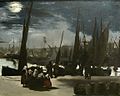
Moonlight has long served as a potent motif in literature, symbolizing romance, transience, and emotional depth. In William Shakespeare's Romeo and Juliet, the famous balcony scene in Act 2, Scene 2 unfolds under the moon's glow, where Romeo swears his love by the "blessed moon," only for Juliet to caution against it as the "inconstant moon," highlighting themes of fleeting passion and instability. This nocturnal setting amplifies the lovers' clandestine intimacy, with the moon casting a silvery light that underscores their vulnerability. Similarly, William Wordsworth evoked melancholy through lunar imagery in poems such as "With How Sad Steps, O Moon, Thou Climb'st the Sky" (1807), where the moon's wan ascent mirrors human sorrow and isolation, personifying it as a distant, sorrowful companion in the night sky. In "A Night-Piece" (1798), Wordsworth describes a veiled moon illuminating a somber landscape, evoking quiet introspection and the sublime melancholy of nature's obscurity. In visual arts, moonlight featured prominently in Romanticism, where artists like Caspar David Friedrich used it to convey spiritual introspection and the sublime power of nature. Friedrich's Two Men Contemplating the Moon (1818) depicts two figures silhouetted against a moonlit forest, the pale light filtering through trees to symbolize human contemplation of the infinite and the divine, a hallmark of Romantic ideals emphasizing emotion over reason. His moonlit landscapes from the early 1800s, such as The Monk by the Sea (1808–1810), employ stark contrasts of light and shadow to evoke solitude and existential awe. Transitioning to Impressionism, Claude Monet captured moonlight's ephemeral effects in works like A Seascape, Shipping by Moonlight (c. 1864), where diffused lunar light on waves and ships demonstrates his focus on transient atmospheric conditions and color vibration, challenging traditional compositions with loose brushwork. Monet's nocturnal scenes, including Seascape, Night Effect (1866), prioritized the moon's subtle interplay with water and sky to convey mood and optical realism. The 2016 film Moonlight, directed by Barry Jenkins, employs moonlight as a central symbol of identity formation and vulnerability for its protagonist, Chiron, a young Black gay man navigating self-discovery in Miami. The blue-tinted lunar light bathes key scenes, representing moments of revelation and emotional exposure amid societal pressures, with cinematographer James Laxton drawing from still photography to highlight Chiron's fragmented sense of self. In photography's history, capturing moonlight posed significant challenges before the advent of higher-sensitivity films like ISO 400 in the 1970s, as early processes such as the daguerreotype (1839) required exposures of minutes to hours due to low light sensitivity equivalent to approximately ISO 0.01 or less, rendering faint moonlight insufficient for practical handheld shots without artificial aids. The gelatin dry-plate process (1871) improved sensitivity but still demanded long exposures for lunar illumination, limiting nighttime landscapes until faster emulsions emerged. In modern media, video games like The Legend of Zelda series utilize moonlight for atmospheric lighting to enhance immersion and mood. In The Legend of Zelda: Breath of the Wild (2017), nighttime Hyrule fields glow under realistic lunar cycles, casting soft shadows that heighten exploration's sense of wonder and peril, with dynamic weather integrating moonlight to affect visibility and enemy behavior. Similarly, The Legend of Zelda: Majora's Mask (2000) features a looming, expressive moon that influences the game's eerie ambiance, its phases dictating time-sensitive events and casting ominous light over Termina to amplify themes of impending doom.

References

Add your contribution
Related Hubs
User Avatar
No comments yet.