Hubbry Logo
search
logo
2077685

Negligee

logo
Community Hub0 Subscribers
Read side by side
from Wikipedia
A négligée on a mannequin.

The negligee or négligée (French: négligé [negliʒe]; lit.'neglected'), also known in French as déshabillé ([dezabije]; lit.'undressed'), is a form of see-through clothing for women consisting of a sheer, usually long, dressing gown.[1] It is a form of nightgown intended to be worn in the bedroom. It was introduced in France in the 18th century, where it mimicked the heavy head-to-toe style of women's day dresses of the time.

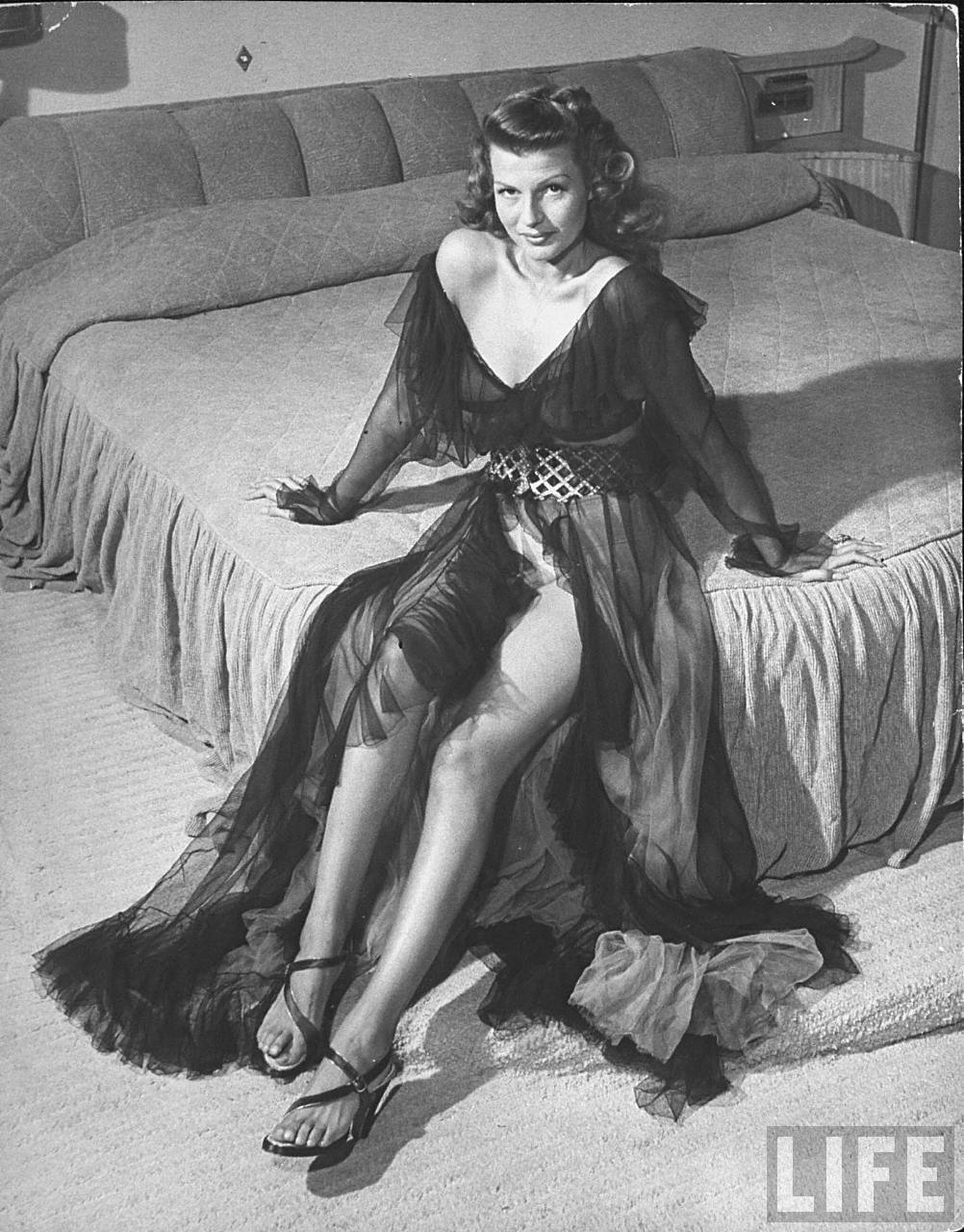
By the 1920s, the negligee began to mimic women's satin single-layer evening dress of the period. The term "negligee" was used on a Royal Doulton run of ceramic figurines in 1927, showing women wearing what appears to be a one-piece knee-length slip made of silk or rayon, trimmed with lace. Although the evening-dress style of nightwear made moves towards the modern negligee style—translucent bodices, lace trimming, bows, exemplified in 1941 by a photo[2][3][4] of Rita Hayworth[5][6] in Life—it was only after World War II that nightwear changed from being primarily utilitarian to being primarily sensual or even erotic; the negligee emerged strongly as a form of lingerie.

Modern negligees are often much looser, made of sheer and diaphanous fabrics, and trimmed with lace or other fine material and bows. Multiple layers of fabric are often used. The modern negligee thus perhaps owes more to women's fine bedjackets or bed-capes, and up-market slips than to the nightgown. It spread to a mass market, benefiting from the introduction of cheap synthetic fabrics such as nylon and its finer successors. From the 1940s to the 1970s, the trend was for negligees to become shorter in length (e.g. the babydoll of the 1970s). Negligees made from the 1940s to the 1970s are now collectible vintage items.

In the UK in 2004, negligees accounted for only four percent of women's nightwear sales, women's pyjamas having dominated since the mid-1980s. However, UK negligee sales are said to have been the fastest increasing sector of the market since 1998.[7]

References

[edit]
[edit]
Revisions and contributorsEdit on WikipediaRead on Wikipedia
from Grokipedia
A negligee (/ˌnɛɡlɪˈʒeɪ/ or /ˌnɛɡlɪˈʒiː/) is a woman's dressing gown, typically long, flowing, and made from sheer or delicate fabrics such as silk or lace, designed for informal home wear, lounging, or as an intimate layer over nightclothes.[1] The term derives from the French négligée, meaning "neglected" or "careless," originally referring to a loose informal robe in the 18th century that evolved over time into a form of seductive nightwear and modern lingerie by the 20th century.[2] Today, negligees are versatile as nightwear or bridal accessories, evoking effortless allure.[1]

Etymology and Definition

Etymology

The term "negligee" derives from the French word négligé, the feminine past participle of négliger, meaning "to neglect" or "to disregard," which implies a garment worn in a relaxed or careless manner.[2] This etymology reflects the original concept of an informal, loosely structured piece of attire, borrowed directly from French usage where it denoted a state of easy disarray.[3] An alternative French term associated with similar garments is déshabillé, meaning "undressed," which underscores the negligee's connection to private, partially attired states often seen in intimate settings.[4] The word entered English in the early 18th century through fashion and literary contexts, with the earliest recorded use dating to 1718 in the writings of John Breval, where it described a negligent or informal style of dress.[3] By the mid-18th century, around the 1750s, "negligee" appeared more frequently in British periodicals and ballads, often referring to a loose gown or robe in a ribald or casual sense, as noted in period dictionaries like Francis Grose's A Classical Dictionary of the Vulgar Tongue (1788), which vulgarized it as "neggledigee."[2] Over time, the meaning evolved from a literal "neglected" dressing gown or informal wrap in the 18th century to a more specialized form of sheer, flowing nightwear by the early 19th century.[2] This shift aligned with changing connotations in lingerie terminology, emphasizing lightness and intimacy.[4]

Definition

A negligee is a sheer, loose-fitting women's dressing gown or nightgown designed for private use in the bedroom or for lounging at home.[1][5] It typically features soft, flowing lines made from lightweight, often semi-transparent fabrics, emphasizing ease and femininity.[5][6] Key characteristics include its length, which is usually floor-length or knee-length, allowing for unrestricted movement, and decorative accents such as lace trims, ribbons, or bows that add a touch of elegance and allure.[7][8] These elements contribute to its semi-transparent quality, creating a delicate and seductive silhouette without being overly structured.[9] Unlike more fitted or structured nightgowns and heavier robes intended for warmth or coverage, a negligee prioritizes informality and sensuality for relaxed, intimate settings.[5] It differs from a babydoll, a shorter variant that typically ends at the hips with a playful, youthful design, and from a chemise, a simpler straight-cut undergarment lacking elaborate trims or flowing drapery.[10][11] Primarily worn for comfort, relaxation, or enhancing intimacy at home, the negligee has evolved from practical attire to a garment celebrated for its aesthetic and sensory appeal.[6] The term originates from the French négligé, denoting a casual or "neglected" style of dress.[1]

History

Origins

The negligee, derived from the French term négligé meaning "neglected" or "careless," emerged in France during the early to mid-18th century as a loose, informal garment worn at home.[2] By the 1730s, it had evolved from earlier dressing gowns or "nightgowns," initially serving as a lightweight alternative to the heavy, structured robes and formal attire typical of the period, often mimicking the relaxed silhouette of informal day dresses while allowing greater ease of movement.[12] Crafted from soft, flowing silks or lightweight cottons, these early negligees were designed for morning routines or private repose, reflecting a shift toward simpler, more comfortable domestic wear among the elite.[12] The garment's design was deeply influenced by Rococo fashion, which emphasized ornate yet airy aesthetics suited to intimate, indoor environments. In private settings such as boudoirs, women wore negligees to appear elegantly "undressed" in the company of spouses or close intimates, combining delicate lace trimmings and floral patterns with an overall sense of relaxed sophistication that contrasted with the stiffness of court dress.[13] Figures like Madame de Pompadour exemplified this trend, donning silk negligees during the toilette—a ritual of personal adornment that highlighted status and taste—further embedding the garment in French aristocratic culture by the 1750s.[12] Early adoption spread to British aristocracy through French imports, where silk negligees became popular by the 1770s, as depicted in fashion plates illustrating loose, pleated robes for home use.[13] These versions retained the lightweight silk construction, often featuring the flowing back pleats that would later influence formal sack dresses, signaling cultural exchange and emulation of continental elegance among English elites.[14] This emergence aligned with broader Enlightenment-era values in Europe, prioritizing personal comfort and domestic intimacy over the rigid protocols of public and courtly life, allowing women a private space for self-expression amid evolving social norms.[12]

19th and 20th Centuries

In the 19th century, the negligee evolved into a loose-fitting gown designed for at-home lounging, typically worn over corsets and chemises to provide comfort during morning routines or informal domestic activities. This style reflected Victorian ideals of modesty and propriety, with garments often crafted from lightweight cotton or muslin in white or pastel shades to maintain a sense of purity.[15] By the 1880s and 1890s, industrialization enabled mass production of such undergarments, leading to their popularization through Victorian mail-order catalogs like those from Sears, Roebuck and Company, which offered affordable, ready-made options to a broader middle-class audience.[16] Entering the early 20th century, particularly the 1900s to 1920s, negligees shifted toward more luxurious materials such as satin and rayon, mimicking the elegance of evening gowns with draped silhouettes and delicate trims.[17] The flapper era of the 1920s further influenced designs, introducing shorter hemlines that aligned with the decade's liberated aesthetic, along with decorative elements like lace insets and beading to evoke a playful sensuality.[18] This period also saw cultural representations, such as the 1927 Royal Doulton porcelain figurines by designer Leslie Harradine, which depicted women in flowing negligees, capturing the Art Deco style and rising popularity of these garments as symbols of modern femininity.[19] During the mid-20th century, from the 1930s to 1970s, negligees adapted to economic and social upheavals, emphasizing sensuality amid post-Depression recovery. A notable example is the 1941 LIFE magazine photograph of Rita Hayworth posed in a black lace negligee, which became an iconic pin-up image symbolizing wartime allure and boosting her status as a top Hollywood sex symbol.[20] World War II fabric rationing, which restricted silk and other natural fibers, spurred innovations in synthetic alternatives like rayon and nylon, enabling shorter, more efficient designs such as the babydoll variant introduced in the 1940s by lingerie designer Sylvia Pedlar for Iris Lingerie as a response to material shortages.[21] These babydolls, characterized by their short lengths and sheer overlays, persisted into the 1950s, blending innocence with eroticism in pastel hues and ruffled details.[22] The 1960s and 1970s sexual revolution transformed negligees into bolder, more provocative styles, with sheer fabrics and transparent layers promoting body positivity and erotic expression in line with broader cultural shifts toward sexual liberation.[23] Designers embraced vibrant colors, minimal construction, and revealing cuts, moving away from structured forms to celebrate fluidity and individual sensuality, as seen in the widespread adoption of see-through chemises and peignoir sets that blurred the lines between sleepwear and intimate apparel.[24]

Contemporary Developments

The negligee experienced a resurgence in the 1980s and 2000s, driven by the broader lingerie boom that transformed intimate apparel into a mainstream fashion category. Victoria's Secret played a pivotal role in this revival by revolutionizing lingerie retail with glamorous, accessible designs that emphasized sensuality and variety, including negligees as part of their sleepwear lines.[25] This globalization effort expanded the brand's reach beyond the U.S., with international stores opening in Canada in 2010 and further growth in airports and malls worldwide during the decade.[26] In the UK, negligee sales rose notably, accounting for 4% of the women's nightwear market by 2004 and marking the fastest-growing segment over the prior five years amid shifting preferences away from traditional pajamas.[27] Entering the 2010s and 2020s, the negligee adapted to trends emphasizing body positivity and inclusivity, with brands extending sizes up to 5X to accommodate diverse body types and promoting empowering representations in marketing.[28] This shift responded to critiques of fast fashion's exclusivity, leading to increased focus on sustainable and ethical production, such as using organic cotton and fair labor practices in lingerie and nightwear lines.[29] The digital era amplified these changes, with online lingerie sales surging post-2010 as e-commerce platforms like Amazon and brand sites offered customizable options, such as adjustable fits and personalized styling, capturing over 42% of the market by the mid-2020s.[30] Social media, particularly Instagram influencers, further boosted visibility, promoting loungewear-style negligees during the 2020 pandemic when comfortable, versatile nightwear demand spiked amid remote lifestyles.[31][32] As of 2025, negligees continue to evolve into hybrid styles that blend sleepwear with athleisure elements, such as soft, stretchy fabrics suitable for lounging or light activity, reflecting the global sleepwear and loungewear market's projected growth to USD 36.46 billion by 2029 at a 10.4% CAGR.[33] The Asian market is expanding rapidly, driven by rising disposable incomes and demand for premium intimates in countries like China and India, while eco-friendly variants incorporating recycled synthetics gain traction amid sustainability priorities.[34][35]

Design and Styles

Traditional Features

The traditional negligee, originating in 18th-century France as a loose morning gown, featured a silhouette characterized by its unstructured, flowing fit that provided ease and comfort in contrast to the rigid corsetry of daytime attire.[36] This design typically included a low V-neckline or square décolletage for modesty, wide kimono-style or bishop sleeves that allowed freedom of movement, and hems falling to midi or floor length, often with a subtle train or Watteau pleats at the back to enhance drape without constriction.[37] Such elements emphasized a relaxed, feminine form, prioritizing coverage while permitting airflow and mobility in private settings.[38] Decorative details further defined the classic negligee, with lace edgings commonly applied to necklines, hems, and cuffs to add delicacy and refinement. Satin ribbons or bows were frequently tied at the waist, bust, or front opening, creating visual accents that evoked luxury without overwhelming the garment's simplicity. Multi-layered construction, incorporating sheer overlays like chiffon or lawn over opaque linings, balanced modesty with a hint of allure, as seen in 19th-century examples where lace cascades down the front.[37] These embellishments, often in white or pastel tones, drew from rococo influences to soften the overall aesthetic.[39] Functionally, the traditional negligee was engineered for practicality in the boudoir, designed to slip easily over basic undergarments such as chemises or petticoats without requiring lacing or tight fittings. Many versions included matching panties, slips, or caps, forming coordinated ensembles that promoted convenience for morning routines or informal at-home wear.[37] This non-constrictive nature made it an essential counterpart to structured outerwear, offering respite from corsets while maintaining propriety.[38] Iconic 18th- and 19th-century negligees exemplified this ethos as unstructured gowns, such as the circa 1840 white cotton dressing gown with full smocked sleeves and pointed waistline, which mirrored fashionable silhouettes in a relaxed form. Late-Victorian examples, like an 1885 American cotton piece with lace and lawn stripes and a Watteau back, highlighted the enduring appeal of these loose robes as private indulgences opposing the era's corseted fashions.[39][38]

Variations and Modern Styles

The babydoll negligee emerged as a notable historical variation in the 1940s, introduced by American lingerie designer Sylvia Pedlar of Iris Lingerie as a response to fabric rationing during World War II.[40] This short, flared style, often skimming the knee, served as a playful alternative to the traditional loose-fitting, long-flowing negligee, emphasizing lightness and freedom in intimate attire.[40] By the 1950s, the babydoll gained widespread popularity, particularly following its cultural spotlight in Tennessee Williams' 1956 play Babydoll, which symbolized sexual and physical emancipation for women.[40] Another key historical variation is the peignoir set, which typically includes a matching robe worn over a nightgown or chemise for lounging or dressing.[41] Originating in the 17th century as a functional garment for grooming, the peignoir evolved into a more elaborate ensemble by the 20th century, often featuring coordinated pieces to enhance glamour in private settings.[42] These sets contrasted with standalone negligees by providing layered versatility, blending rest with aesthetic appeal.[41] Key distinctions among variations lie in silhouette and intent: shorter hemlines, as seen in the babydoll, heighten sensuality through their above-knee length and playful flare, diverging from the traditional negligee's long, flowing lines that evoke modesty and elegance.[40] Peignoir sets further integrate with sleepwear by combining robe and gown elements, creating cohesive ensembles that extend the negligee's role beyond solitary nightwear.[41] In the late 20th and 21st centuries, modern negligees have diversified beyond historical forms, incorporating shorter chemises, teddies, and sets made from synthetic materials like nylon and polyester alongside traditional silk and lace. These contemporary designs often feature bold colors, prints, or minimalist aesthetics, serving as versatile nightwear, bridal lingerie, or even outer layer fashion statements as of 2025.[43]

Materials

Historical Materials

In the 18th and 19th centuries, negligees were typically crafted from fine silk or muslin to achieve a sheer, luxurious appearance that emphasized comfort and informality.[12][44][45] These lightweight fabrics allowed for loose draping over undergarments, reflecting the garment's origins as a morning or dressing gown worn in private settings. Hand-stitched seams were standard to ensure durability while maintaining a clean edge suitable for delicate materials.[46] By the early 20th century, particularly in the 1920s, rayon—also known as viscose—emerged as an affordable alternative to silk, enabling wider access to negligee styles for the middle class.[17] This semi-synthetic fiber mimicked silk's sheen and drape, often woven in satin finishes to provide a glossy, elegant surface that enhanced the garment's boudoir appeal.[47] The introduction of rayon coincided with shifting aesthetics toward more liberated, flowing silhouettes in women's intimate apparel. In the mid-20th century, following World War II, synthetic materials like nylon and acetate became prevalent in negligees due to wartime rationing of natural fibers such as silk.[48][49] Nylon, initially developed for industrial uses but redirected to civilian lingerie post-1945, offered strength and sheerness without the shortages that had plagued earlier decades.[48] By the 1960s, lightweight polyester blends further supported mass production, providing cost-effective durability and ease of care for everyday wear.[50] Construction techniques for 20th-century negligees emphasized fluidity and simplicity, with bias-cut patterns—from the 1930s onward—promoting a natural drape that followed the body's contours.[51] French seaming became a preferred method for finishing edges on sheer synthetics and naturals alike, preventing fraying while preserving a refined interior.[46] Fastenings were minimal, typically featuring hooks and eyes for secure yet unobtrusive closure, aligning with the garment's intimate, non-restrictive design. Lace was commonly used as a trim to add delicate detailing.[9] This shift toward sensual fabrics in the 20th century subtly amplified the negligee's erotic undertones.[52]

Modern Fabrics

Since the late 20th century, dominant synthetic fabrics in negligees have included stretch nylon, modal, and microfiber, valued for their breathability, wrinkle resistance, and lightweight properties that enhance comfort during wear.[53] These materials, often blended with spandex for added elasticity, allow negligees to drape smoothly while maintaining shape, building on earlier nylon innovations from the mid-20th century as a foundational synthetic precursor.[54] Bamboo viscose has also emerged as a popular option in this era, prized for its exceptional softness and natural hypoallergenic qualities that mimic silk without the ethical concerns of animal-derived fibers.[55] From the 2010s onward, sustainable options have gained prominence in negligee production, with organic cotton blends offering breathable, skin-friendly alternatives that reduce environmental impact through pesticide-free cultivation.[56] Recycled polyester, derived from post-consumer plastic waste, provides durability and moisture management while minimizing reliance on virgin petroleum-based resources.[57] Tencel (lyocell), produced from sustainably sourced wood pulp via a closed-loop process that recycles nearly all solvents and water, delivers a silky texture with superior absorbency and biodegradability.[29] The rise of vegan silk alternatives, such as those made from plant-based proteins or lab-engineered fibers, has further expanded eco-conscious choices, avoiding traditional silk's resource-intensive sericulture.[58] Technological advances have integrated moisture-wicking fabrics into modern negligees, enabling efficient sweat evaporation to promote all-night comfort, particularly in hybrid loungewear designs that blend sleep and casual wear.[59] Post-2020 developments include antimicrobial treatments, often applied via silver ions or natural extracts embedded in fibers like bamboo or modal, to inhibit bacterial growth and odor in intimate apparel.[60] These innovations, such as advanced polyester blends, enhance hygiene without compromising softness or aesthetics.[61] Production shifts toward ethical sourcing have become standard by 2025, with certifications like the Global Organic Textile Standard (GOTS) ensuring negligees use verified organic fibers and prohibit harmful chemicals throughout the supply chain.[62] This includes rigorous audits for fair labor and environmental compliance in intimate apparel manufacturing.[29] Additionally, industry-wide adoption of water-efficient processes, such as low-liquor-ratio dyeing that recycles up to 80% of water, has significantly reduced consumption compared to traditional methods, aligning with broader sustainability goals.[63] Lace continues to be used as a trim for decorative and sensual elements.[6]

Cultural Significance

In Fashion and Society

In the 19th century, the negligee emerged as a symbol of private liberation from the restrictive corsets that dominated public fashion, offering women a loose, ornate garment made of floaty fabrics, lace, and ribbons worn without corsetry for comfort in domestic settings.[64] This contrast highlighted evolving attitudes toward femininity, allowing a degree of bodily freedom away from societal constraints on silhouette and posture. By the 20th century, particularly after World War II, the negligee solidified as an icon of domestic sensuality, evolving into a streamlined, satin-inspired piece that mimicked evening gowns while emphasizing intimate allure in the home.[43] Its influence extended to broader lingerie trends, paving the way for underwear-as-outerwear styles in mid-century fashion, where delicate, sheer elements transitioned from private to visible expressions of sensuality.[65] The negligee has long reflected gender roles by providing women with private empowerment through sensual self-expression, often reclaiming intimate apparel from the male gaze to foster personal confidence and autonomy in femininity.[66] In the 2000s, its market growth aligned with rising self-care movements, as lingerie—including negligees—shifted toward items promoting individual wellness and body appreciation, contributing to expanded consumer interest in empowering undergarments beyond traditional romantic contexts.[67] By the 2020s, the negligee's inclusivity has evolved significantly, with brands offering diverse sizing from XS to 4X and featuring models of varied body types, ethnicities, and abilities to challenge Eurocentric beauty ideals and align with body positivity campaigns.[68] This shift emphasizes comfort and representation, making negligees accessible tools for self-acceptance across demographics.[69] Economically, negligees contribute to the global lingerie market, projected to reach $48.59 billion in 2025, as affordable luxury items that blend sensuality with everyday wearability, driving growth in the nightwear and intimate apparel segments.[70]

Representation in Media

In the 1920s and 1930s, negligees appeared in fashion magazine advertisements, such as those in Vogue, where they were depicted as elegant, flowing garments symbolizing feminine luxury and domestic allure.[71] These portrayals emphasized sheer fabrics and soft silhouettes, aligning with the era's shift toward liberated yet intimate women's attire. Similarly, the 1927 Royal Doulton figurine Negligee (HN1228), designed by Leslie Harradine, captured a woman in a delicate negligee as a seated, ethereal figure, becoming a popular collectible that romanticized the garment in decorative art.[19] In film and photography, negligees gained prominence through iconic images that heightened their erotic appeal. A 1941 Life magazine photograph by Bob Landry featured Rita Hayworth kneeling on her bed in a black lace negligee, which became the most reproduced American pin-up image of World War II, adorning over five million posters for U.S. troops and solidifying the negligee's role in pin-up culture as a symbol of unattainable glamour.[72][20] During the 1950s, Hollywood films eroticized the garment further; in Niagara (1953), Marilyn Monroe's character Rose Loomis emerges from bed in a form-fitting white slip negligee paired with a fur-trimmed white robe, accentuating her curves and contrasting with more conservative costumes to embody seductive danger.[73] From the 1980s to the 2020s, television and digital media normalized negligees as sensual yet empowering nightwear. In the HBO series Sex and the City (1998–2004), characters like Charlotte York frequently wore sheer nightgowns and chemises, such as vampish slips that highlighted personal intimacy and confidence in romantic contexts, contributing to broader acceptance of lingerie as everyday allure.[74] In the 2020s, social media platforms like Instagram and TikTok saw influencers modeling negligees in lifestyle content, often tying them to themes of self-care and body positivity rather than objectification. Negligees in media have evolved from symbols of marital intimacy and passive femininity in early 20th-century depictions to vehicles for feminist reclamation in contemporary advertising, where brands promote them as tools for personal empowerment and confidence.[75] This shift reflects broader portrayals influenced by evolving fashion trends toward inclusivity and agency.[76]

References

User Avatar
No comments yet.