Hubbry Logo
Package testingPackage testingMain
Open search
Package testing
Community hub
Package testing
logo
8 pages, 0 posts
0 subscribers
Be the first to start a discussion here.
Contribute something
Package testing
Package testing
from Wikipedia
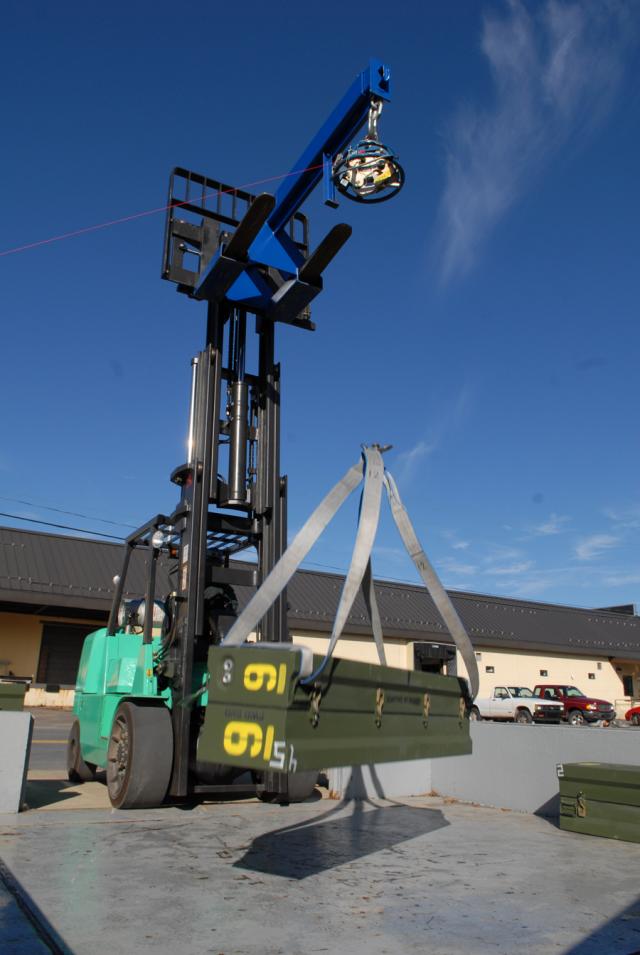
Military shipping container being drop tested
Testing modified atmosphere in a plastic bag of carrots

Package testing or packaging testing involves the measurement of a characteristic or property involved with packaging. This includes packaging materials, packaging components,[1] primary packages, shipping containers, and unit loads, as well as the associated processes.

Testing measures the effects and interactions of the levels of packaging, the package contents, external forces, and end-use.

It can involve controlled laboratory experiments, subjective evaluations by people, or field testing. Documentation is important: formal test method, test report, photographs, video, etc.

Testing can be a qualitative or quantitative procedure. Package testing is often a physical test. With some types of packaging such as food and pharmaceuticals, chemical tests are conducted to determine suitability of food contact materials. Testing programs range from simple tests with little replication to more thorough experimental designs.

Package testing can extend for the full life cycle. Packages can be tested for their ability to be recycled and their ability to degrade as surface litter, in a sealed landfill or under composting conditions.[2]

Purposes

[edit]

Packaging testing might have a variety of purposes, such as:

Packaging tests can be used for:

  • Subjecting packages (and contents) to stresses and dynamics found in the field
  • Reproducing the types of damage to packages and contents found in actual shipments
  • Control uniform production of packages and components[3][4]

Importance

[edit]
Testing the ability of packages to resist insect infestation[5]

For some types of products, package testing is mandated by regulations: food. pharmaceuticals, medical devices, dangerous goods, etc. This may cover both the design qualification, periodic retesting, and control of the packaging processes. Processes may be controlled by a variety of quality management systems such as HACCP, statistical process control, validation protocols, ISO 9000, etc.

For unregulated products, testing can be required by a contract or governing specification. The degree of package testing can often be a business decision. Risk management may involve factors such as

  • costs of packaging
  • costs of package testing
  • value of contents being shipped
  • value of customer's good will
  • product liability exposure
  • other potential costs of inadequate packaging
  • etc.

With distribution packaging, one vital packaging development consideration is to determine if a packaged-product is likely to be damaged in the process of getting to the final customer. A primary purpose of a package is to ensure the safety of a product during transportation and storage. If a product is damaged during this process, then the package has failed to accomplish a primary objective and the customer will either return the product or be unlikely to purchase the product altogether.[6]

Package testing is often a formal part of Project management programs. Packages are usually tested when there is a new packaging design, a revision to a current design, a change in packaging material, and various other reasons. Testing a new packaging design before full scale manufacturing can save time and money.[7]

Laboratory affiliation

[edit]

Many suppliers or vendors offer limited material and package testing as a free service to customers. It is common for packagers to partner with reputable suppliers: Many suppliers have certified quality management systems such as ISO 9000 or allow customers to conduct technical and quality audits. Data from testing is commonly shared. There is sometimes a risk that supplier testing may tend to be self-serving and not completely impartial.

Large companies often have their own packaging staff and a package testing and development laboratory. Corporate engineers know their products, manufacturing capabilities, logistics system, and their customers best. Cost reduction of existing products and cost avoidance for new products have been documented.[8]

Another option is to use a paid consultant, Independent contractor, and third-party independent testing laboratory. They are commonly chosen for specialized expertise, for access to certain test equipment, for surge projects, or where independent testing is otherwise required. Many have certifications and accreditations: ISO 9000, ISO/IEC 17025, and various governing agencies.

Procedures

[edit]

Several standards organizations publish test methods for package testing. Included are:

Governments and regulators publish some packaging test methods. There are also many corporate test standards in use. A review of technical literature and patents provides good options to consider for test procedures.

Researchers are not restricted to the use of published standards but can modify existing test methods or develop procedures specific to their particular needs. If a test is conducted with a deviation from a published test method or if a new method is employed, the test report must fully disclose the procedure.

Materials testing

[edit]
Materials and components are often evaluated on a universal testing machine.

The basis of packaging design and performance is the component materials. The physical properties, and sometimes chemical properties, of the materials need to be communicated to packaging engineers to aid in the design process. Suppliers publish data sheets and other technical communications that include the typical or average relevant physical properties and the test method these are based upon. Sometimes these are adequate. Other times, additional material and component testing is required by the packager or supplier to better define certain characteristics.

When a final package design is complete, the specifications for the component materials needs to be communicated to suppliers. Packaging materials testing is often needed to identify the critical material characteristics and engineering tolerances. These are used to prepare and enforce specifications.

For example, shrink film data might include: tensile strength (MD and CD), elongation, Elastic modulus, surface energy, thickness, Moisture vapor transmission rate, Oxygen transmission rate, heat seal strength, heat sealing conditions, heat shrinking conditions, etc. Average and process capability are often provided. The chemical properties related for use as Food contact materials may be necessary.

Testing with people

[edit]

Some types of package testing do not use scientific instruments but use people for the evaluation.

The regulations for child-resistant packaging require a test protocol that involves children. Samples of the test packages are given to a prescribed population of children. With specified 50-child panels, a high percentage must be unable to open a test package within 5 minutes.[11] Adults are also tested for their ability to open a child-resistant package.

Consumer packages are often evaluated by focus groups. People evaluate the package features in a room monitored by video cameras. The consumer responses are treated qualitatively for feedback into the new packaging process.

Some food packagers use organoleptic evaluations. People use their senses (taste, smell, etc.) to determine if a package component has tainted the food in the package.

A new package may be evaluated in a test market that uses people to try the packages at home. Consumers have the opportunity to buy a product, perhaps with a coupon or discount. Return postcards or Internet sites provide feedback to package developers. Perhaps the most critical feedback is repeated sales items in the new package. Packaging evaluations are an important part of marketing research.

Legibility of text on packaging and labels is always subjective due to the inherent variations of people. Efforts have been made to help better quantify this by people in a laboratory: still using people for the evaluation but also employing a test apparatus to help reduce variability.[12][13]

Some laboratory tests are conducted but still result in an observation by people. Some test procedures call for a judgment by test engineers whether or not pre-established acceptance criteria have been met.

Relevant standards

[edit]
ASTM D7298 Test Method for Measurement of Comparative Legibility by Means of Polarizing Filter Instrumentation.
ASTM E460 Practice for Determining Effect of Packaging on Food and Beverage Products During Storage
ASTM E619 Practice for Evaluating Foreign Odors in Paper Packaging
ASTM E1870 Test Method for Odor and Taste Transfer from Polymeric Packaging Film
ASTM 2609 Test Method for Odor and Flavor Transfer from Rigid Polymeric Packaging
ISO 16820 Sensory Analysis – Methodology – Sequential Analysis
ISO 5495 Sensory Analysis – Methodology – Paired Comparisons
ISO 13302 Sensory Analysis – Methods for assessing modifications to the flavour of foodstuffs due to packaging

Conditioning, testing atmosphere

[edit]
Environmental chamber to simulate temperatures and humidities encountered by packages

The environmental conditions of testing are critical. The measured performance of many packages is affected by the conditioning and testing atmospheres. For example, paper based products are strongly affected by their moisture content: Relative humidity needs to be controlled. Plastic products are often strongly affected by temperature.[14]

Conditions of 23 °C (73.4 °F) and 50% relative humidity are common but other standard testing conditions are also published in material and package test standards. Engineering tolerances for the conditions are also specified. Often the package is conditioned to the specified environment and tested under those conditions. This can be in a conditioned room or in a chamber enclosing the test. With some testing, the package is conditioned to a specified environment, then is removed to ambient conditions and quickly tested. The test report needs to state the actual conditions used.

Engineers have found it important to know the effects of the full range of expected conditions on package performance. This can be through investigating published technical literature, obtaining supplier documentation, or by conducting controlled tests at diverse conditions.

Relevant standards

[edit]
ASTM D4332 - Standard Practice for Conditioning Containers, Packages, or Packaging Components for Testing
ASTM E171 - Standard Specification for Standard Atmospheres for Conditioning and Testing Flexible Barrier Materials
ASTM F2825 - Standard Practice for Climate Stressing of Packaging Systems for Single Parcel Delivery

Degradation of product

[edit]
Heat sealer used to prepare bag of lettuce for shelf life testing

Laboratory tests can help determine the shelf life of a package and its contents under a variety of conditions. This is particularly important for foods, pharmaceuticals, some chemicals, and a variety of products. The testing is usually product specific: the mechanisms of degradation are often different. Exposures to expected and elevated temperatures and humidities are commonly used for shelf life testing. The ability of packaging to control product degradation is frequently a subject of laboratory and field evaluations.

Relevant tests

[edit]
ASTM E2454 Standard Guide for Sensory Evaluation Methods to Determine the Sensory Shelf -life of Consumer Products
DoD 4140.27M Shelf Life Management Manual, 2000
ISO 11987 Ophthalmic Optics, Contact Lenses, Determination of Shelf Life

Barrier properties

[edit]

Many products degrade with exposure to the atmosphere: foods, pharmaceuticals, chemicals, etc. The ability of a package to control the permeation and penetration of gasses is vital for many types of products. Tests are often conducted on the packaging materials but also on the completed packages, sometimes after being subjected to flexing, handling, vibration, or temperature.

Degradation of packages

[edit]

Packages can degrade with exposure to temperature, humidity, time, sterilization (steam, radiation, gas, etc.), sunlight, and other environmental factors. For some types of packaging, it is common to test for possible corrosion of metals, polymer degradation, and weather testing of polymers. Several types of accelerated aging of packaging and materials can be accomplished in a laboratory.

Exposure to elevated temperatures accelerates some degradation mechanisms. An Arrhenius equation is often used to correlate certain chemical reactions at different temperatures, based on the proper choice of Q10 coefficients.

As with any laboratory testing, validating field trials are important.

Relevant tests

[edit]
ASTM D3045 - Standard Practice for Heat Aging of Plastics without Load
ASTM F1640 - Standard Guide for Packaging Materials for Foods to be Irradiated
ASTM F1980 – Standard Guide for Accelerated Aging of Sterile Barrier Systems for Medical Devices
ASTM G151 - Standard Practice for Exposing Non-metallic Materials in Accelerated Test Devices that are Laboratory Light Sources

Vacuum testing

[edit]
Vacuum chamber for testing leaks in packaging component

Vacuum chambers are used to test the ability of a package to withstand low pressures. This can be to:

  1. Determine the ability of packages to withstand low pressures that might be encountered. this could be in an air shipment or high altitude truck shipment.[15]
  2. A laboratory vacuum places controlled stress on a sealed package to test the strength of seals, the tendency for leakage, and the ability to retain sterility.

Relevant tests

[edit]
ASTM D3078- Standard Test Method for Determination of Leaks in Flexible Packaging by Bubble Emission
ASTM D4991- Standard Test Method for Leakage Testing of Empty Rigid Containers by Vacuum Method
ASTM D6653- Standard Test Methods for Determining the Effects of High Altitude on Packaging Systems by Vacuum Method
ASTM D6834- Standard Test Method for Determining Product Leakage from a Package with a Mechanical Pump Dispenser
ASTM E493- Standard Test Methods for Leaks Using the Mass Spectrometer Leak Detector in the Inside-Out Testing Mode
ASTM F2338- Standard Test Method for Nondestructive Detection of Leaks in Packages by Vacuum Decay Method
ASTM F2391- Standard Test Method for Measuring Package and Seal Integrity Using Helium as the Tracer Gas

Shock and impact

[edit]
Instrumented drop test of cushioned package to measure the transmitted shock

Both primary (consumer) packages and shipping containers have a risk of being dropped or being impacted by other items. Package integrity and product protection are important packaging functions. Tests are conducted to measure the resistance of packages and products to controlled laboratory shock and impact.

Testing also determines the effectiveness of package cushioning to isolate fragile products from shock. Instrumentation is used to measure the shock transmitted to a cushioned product. Simple drop tests can be used for evaluations.[16]

Relevant tests

[edit]
ASTM D880- Standard Test Method for Impact Testing for Shipping Containers and Systems
ASTM D1596- Standard Test Method for Dynamic Shock Cushioning Characteristics of Packaging Materials
ASTM D3332- Standard Test Methods for Mechanical-Shock Fragility of Products, Using Shock Machines
ASTM D4003- Standard Test Methods for Programmable Horizontal Impact Test for Shipping Containers and Systems
ASTM D5265- Standard Test Method for Bridge Impact Testing
ASTM D5276- Standard Test Method for Drop Test of Loaded Containers by Free Fall
ASTM D5277- Standard Test Method for Performing Programmed Horizontal Impacts Using an Inclined Impact Tester
ASTM D5487- Standard Test Method for Simulated Drop of Loaded Containers by Shock Machines
ASTM D6344- Standard Test Method for Concentrated Impacts to Transport Packages
ASTM D6537- Standard Practice for Instrumented Package Shock Testing For Determination of Package Performance
MIL-STD-810G

Package insulation

[edit]

Many packages are used for products that are sensitive to temperature. The ability of insulated shipping containers to protect their contents from exposure to temperature fluctuations can be measured in a laboratory. The testing can be of empty containers or of full containers with appropriate jell or ice packs, contents, etc. Ovens, freezers, and environmental chambers are commonly used for this and other types of packaging. Effects of shock and vibration on thermal performance may also be studied.

Digital temperature data loggers are used to measure temperatures experienced in different distribution systems. This data is sometimes used to develop unique laboratory test methods for that distribution system.

Relevant tests

[edit]
ASTM D3103-Standard Test Method for Thermal Insulation Performance of Distribution Packages
ISTA 7E – Testing Standard for Thermal Transport Packaging Used in Parcel Delivery System Shipment

Thermal shock

[edit]

Some packages, particularly glass, can be sensitive to sudden changes in temperature: Thermal shock. One method of testing involves rapid movement from cold to hot water baths, and back.

Relevant tests

[edit]
ASTM C149 -Standard Test Method for Thermal Shock Resistance of Glass Containers
MIL-STD-810G METHOD 503.5

Handles

[edit]

Package handles (and hand holes in packages) assist carrying and handling packages. Objective laboratory procedures are frequently used to help determine performance. Fixtured "hands" of various designs are used to hold a handle (sometimes two handles for a box). Most common are "jerk testing" by modified drop test procedures or use of the constant pull rates of a universal testing machine. Other procedures use a static force by hanging a heavily loaded package for an extended time or even using a centrifuge.

Relevant tests

[edit]
ASTM D6804, Standard Guide for Hand Hole Design in Corrugated Boxes, Appendix
ASTM F852 Specification for Portable Gasoline, Kerosene, and Diesel Containers for Consumer Use, section 7.2
Centrifugal test of beverage carrier handle[17]

Vibration

[edit]
Vibration tester to simulate vibration frequencies at which packaged products are subjected during shipments

Vibration is encountered during shipping (vehicle vibration, rough roads, etc.) and movement on conveyors. Potential vibration damage may include:

  • fractures and fatigue damage
  • loose wires, screw caps, etc.
  • bruises on soft products (fruit, etc.)
  • surface abrasion
  • etc.

The ability of a package to withstand these vibrations and to protect the contents can be measured by several laboratory test procedures. Some allow searching for the particular frequencies of vibration that have potential for damage. Modal testing methodologies are sometimes employed. Others use specified bands of random vibration to better represent complex vibrations measured in field studies of distribution environments.

Relevant tests

[edit]
ASTM D999- Standard Test Methods for Vibration Testing of Shipping Containers
ASTM D3580-Standard Test Methods for Vibration (Vertical Linear Motion) Test of Products
ASTM D4728- Standard Test Method for Random Vibration Testing of Shipping Containers
ASTM D5112- Standard Test Method for Vibration (Horizontal Linear Sinusoidal Motion) Test of Products
ASTM D7387- Standard Test Method for Vibration Testing of Intermediate Bulk Containers (IBCs) Used for Shipping Liquid Hazardous Materials (Dangerous Goods)

Abrasion

[edit]

Abrasion can affect several levels of packaging. Items being shipped may rub against each other or against package surfaces during shipment. Inner packages can abrade against each other, damaging graphics and bar codes. Shipping containers such as corrugated boxes can have tape and labels damaged. Several types of package vibration tests are used to help determine effects of transport vibration.[18] Corrective action can then be taken. Separate material tests are also useful.[19]

Relevant tests

[edit]
ASTM D4060 Standard Test Method for Abrasion Resistance of Organic Coatings by the Taber Abraser
ASTM D5181 Standard Practice for Abrasion Resistance of Printed Matter by the GA-CAT Comprehensive Abrasion Tester
ASTM D5264 Standard Practice for Abrasion Resistance of Printed Materials by the Sutherland Rub Tester
ASTM D5416 Test Method for Evaluating Abrasion Resistance of Stretch Wrap Films by Vibration Testing
ASTM D7027 Standard Test Method for Evaluation of Scratch Resistance of Polymeric Coatings and Plastics Using an Instrumented Scratch Machine

Compression

[edit]
Compression test for steel drum

Compression testing relates to stacking or crushing of packages, particularly shipping containers. It usually measures of the force required to crush a package, stack of packages, or a unit load. Packages can be empty or filled as for shipment. A force-deflection curve used to obtain the peak load or other desired points. Other tests use a constant load and measure the time to failure or to a critical deflection.

Dynamic compression is sometimes tested by shock or impact testing with an additional load to crush the test package. Dynamic compression also takes place in stacked vibration testing.

Relevant Tests

[edit]
ASTM Standard D642 Test Method for Determining Compressive Resistance of Shipping Containers, Components, and Unit Loads.
ASTM Standard D4577 Test Method for Compression Resistance of a Container Under Constant Load
ASTM Standard D7030 Test Method for Short Term Creep Performance of Corrugated Fiberboard Containers Under Constant Load Using a Compression Test Machine
German Standard DIN 55440-1 Packaging Test; compression test; test with a constant conveyance-speed
ISO 12048 Packaging—Complete, filled transport packages—Compression and stacking tests using a compression tester

Large loads

[edit]
Rotational corner drop test of wooden box

Large pallet loads, bulk boxes, wooden boxes, and crates can be evaluated by many of the other test procedures previously listed. In addition, some special test methods are available for these larger loads.

Relevant tests

[edit]
ASTM D5331- Standard Test Method for Evaluation of Mechanical Handling of Unitized Loads Secured with Stretch Wrap Films
ASTM D5414- Standard Test Method for Evaluation of Horizontal Impact Performance of Load Unitizing Stretch Wrap Films
ASTM D5415- Standard Test Method for Evaluating Load Containment Performance of Stretch Wrap Films by Vibration Testing
ASTM D5416- Standard Test Method for Evaluating Abrasion Resistance of Stretch Wrap Films by Vibration Testing
ASTM D6055- Standard Test Methods for Mechanical Handling of Unitized Loads and Large Shipping Cases and Crates
ASTM D6179- Standard Test Methods for Rough Handling of Unitized Loads and Large Shipping Cases and Crates
ISO 10531- Stability testing of unit loads

Bar codes

[edit]

Package bar codes are evaluated for several aspects of legibility by bar code verifiers as part of a continuing quality program. More thorough validation may include evaluations after use (and abuse) testing such as sunlight, abrasion, impact, moisture, etc.

Relevant tests

[edit]
ISO/IEC 15426 Information technology - Automatic identification and data capture techniques - Bar code verifier conformance specification - Part 1: Linear symbols, Part 2: Two-dimensional symbols

Test protocols for shipping containers

[edit]

Shipping containers are often subjected to sequential tests involving a combination of individual test methods. A variety of standard test schedules or protocols are available for evaluating transport packaging. They are used to help determine the ability of complete and filled shipping containers to various types of logistics systems. Some test the general ruggedness of the shipping container while others have been shown to reproduce the types of damage encountered in distribution. Some base the type and severity of testing on formal studies of the distribution environment: instrumentation, data loggers, and observation. Test cycles with these documented elements better simulate parts of certain logistics shipping environments.

ASTM International
ASTM D4169- Standard Practice for Performance Testing of Shipping Containers and Systems
ASTM D7386- Standard Practice for Performance Testing of Packages for Single Parcel Delivery Systems.
ISO
ISO 4180:2009 Packaging – Complete filled transport packages – General rules for the compilation of performance test schedules
International Safe Transit Association
Procedure 1A: Packaged-Products weighing 150 lb (68 kg) or Less
Procedure 1B: Packaged-Products weighing Over 150 lb (68 kg)
Procedure 1C: Extended Testing for Individual Packaged-Products weighing 150 lb (68 kg) or Less
Procedure 1D: Extended Testing for Individual Packaged-Products weighing Over 150 lb (68 kg)
Procedure 1E: Unitized Loads
Procedure 1G: Packaged-Products weighing 150 lb (68 kg) or Less (Random Vibration)
Procedure 1H: Packaged-Products weighing Over 150 lb (68 kg) (Random Vibration)
Procedure 2A: Packaged-Products weighing 150 lb (68 kg) or Less
Procedure 2B: Packaged-Products weighing over 150 lb (68 kg)
Procedure 2C: Furniture Packages
Procedure 3A: Packaged-Products for Parcel Delivery System Shipments 70 kg (150 lb) or Less (standard, small, flat or elongated)
Procedure 3B: Packaged-Products for Less-Than-Truckload (LTL) Shipment
Procedure 3E: Unitized Loads of Same Product
Procedure 3F: Packaged Products for Distribution Center to Retail Outlet Shipment 100 lb (45 kg)
Procedure 3H: Performance Test for Products or Packaged-Products in Mechanically Handled Bulk Transport Containers
Project 3K: Fast Moving Consumer Goods for the European Retail Supply Chain
Project 4AB: Enhanced Simulation Performance Tests (online test planner)
6-FEDEX-A: FedEx Procedures for Testing Packaged Products Weighing Up to 150 lbs
6-FEDEX-B: FedEx Procedures for Testing Packaged Products Weighing Over 150 lbs
6-SAMSCLUB, Packaged-Products for Sam's Club Distribution System Shipment
Procedure 7D: Thermal Controlled Transport Packaging for Parcel Delivery System Shipment
ISTA 7E: Testing Standard for Thermal Transport Packaging Used in Parcel Delivery System

Field trials

[edit]
Laboratory testing can often help identify shipping container constructions that, in general, should perform well in the field. Of course, laboratory tests cannot fully reproduce the full range of field hazards, their magnitudes, nor their frequency. Field experiments are often conducted to help validate the laboratory testing.
The advantage of laboratory testing is that it subjects replicate packages to identical sets of test sequences: a relatively small number of samples often can suffice. Field hazards, by their nature, are highly variable: thus repeated shipments do not receive the same types or magnitudes of drops, vibrations, kicks, impacts, abrasion, etc. Because of this uncontrolled variability, more replicate sample shipments are often necessary.
Larger scale test markets are used to give additional assurance of performance and acceptability for a new or revised packaged-product. Feedback is carefully obtained and evaluated. Feedback on package performance continues when full production and distribution have been achieved.

Product requirements

[edit]

In addition, package testing often relates to the specific product inside the package. Some broad categories of products and special package testing considerations follow:

Food packaging

[edit]

Foods categories such as fresh produce, frozen foods, irradiated foods, fresh fish, canned foods, etc. have regulatory requirements and special packaging needs. Package testing often relates to:

Food safety
Compatibility of the package with the food
Migration of material from the packaging to the food
Shelf life
Barrier properties, porosity, package atmosphere, etc
Special quality assurance needs, good manufacturing practices, HACCP, validation protocols, etc

Pharmaceutical packaging

[edit]

Packaging for drugs and pharmaceuticals is highly regulated. Special testing needs include:

Safety of drugs and pharmaceuticals
Barrier properties
Shelf life
Compatibility of package with the drugs
Sterility
Tamper resistance, child resistance, etc
Special quality assurance needs, good manufacturing practices, validation protocols, etc

Medical packaging

[edit]

Packaging for medical materials, medical devices, health care supplies, etc., have special user requirements and is highly regulated. Barrier properties, durability, visibility, sterility and strength need to be controlled; usually with documented test results for initial designs and for production.

Assurance of sterility and suitability for use are critical. For example, medical devices and products are often sterilized in the package. The sterility must be maintained throughout distribution to allow immediate use by physicians. A series of special packaging tests is used to measure the ability of the package to maintain sterility. Verification and validation protocols are rigidly maintained.

Relevant standards
ASTM F88/F88M - Standard Test Method for Seal Strength of Flexible Barrier Materials
ASTM F1585 – Guide for Integrity Testing of Porous Medical Packages
ASTM D3078 – Standard Test Method for Detection of Leaks in Flexible Packaging (Bubble)
ASTM F1140 – Standard Test Methods for Internal Pressurization Failure Resistance of Unrestrained Packages
ASTM F1608 – Standard Test Method for Microbial Ranking of Packaging Materials
ASTM F1929 – Standard Test Method for Detecting Seal Strength in Porous Medical Packaging by Dye Penetration
ASTM F1980 – Standard Guide for Accelerated Aging of Sterile Barrier Systems for Medical Devices
ASTM F2054 – Standard Test Method for Burst Testing of Flexible Package Seals Using Internal Air Pressurization Within Restraining Plates
ASTM F2095 – Standard Test Methods for Pressure Decay Leak Test for Flexible Packages With and Without Restraining Plates
ASTM F2096 – Standard Test Method for Detecting Gross Leaks in Medical Packaging by Internal Pressurization
ASTM F2097 – Standard Guide for Design and Evaluation of Primary Flexible Packaging for Medical Products
ASTM F2228 – Standard Test Method for Non-Destructive Detection of Leaks in Medical Packaging Which Incorporates Pourous Barrier Material by CO2 Tracer Gas
ASTM F2391 – Standard Test Method for Measuring Package and Seal Integrity using Helium as the Tracer Gas
ASTM F3039 - Standard Test Method for Detecting Leaks in Nonporous Packaging or Flexible Barrier Materials by Dye Penetration
EN 868-1 – Packaging materials and systems for medical devices which are to be sterilized. General requirements and test methods (superseded by ISO 11607-1)
EN 868-5 – Packaging for terminally sterilized medical devices. Part 5: Sealable pouches and reels of porous materials and plastic film construction - Requirements and test methods. (Per ISO 11607-1, Annex B, Table B.1, this method maybe used to demonstrate conformity with provisions of ISO 11607-1)
ISO 11607-1 – Packaging for terminally sterilized medical devices -- Part 1: Requirements for materials, sterile barrier systems and packaging systems
ISO 11607-2 – Packaging for terminally sterilized medical devices -- Part 2: Validation for Forming, Sealing, and Assembly Processes

Dangerous Goods

[edit]

Packaging of hazardous materials, or dangerous goods, are highly regulated. There are some material and construction requirements but also performance testing is required. The testing is based on the packing group (hazard level) of the contents, the quantity of material, and the type of container.[20] Research into improvements is continuing.[21]

Relevant standards
ASTM D4919- Standard Specification for Testing of Hazardous Materials Packaging
ASTM D7387- Standard Test Method for Vibration Testing of Intermediate Bulk Containers (IBCs) Used for Shipping Liquid Hazardous Materials (Dangerous Goods)
ASTM D7760 Standard Guide for Conducting Internal Pressure Tests on United Nations (UN) Packagings
ASTM D7887 Standard Guide for Selection of Substitute, Non-hazardous, Liquid Filling Substances for Packagings Subjected to the United Nations Performance Tests
ASTM D7790: Standard Guide for Preparation of Plastic Packagings Containing Liquids for United Nations (UN) Drop Testing
UN Recommendations on the Transport of Dangerous Goods
ISO 16104 – 2003 Packaging – Transport packaging for dangerous goods – Test methods

See also

[edit]

References

[edit]
[edit]
Revisions and contributorsEdit on WikipediaRead on Wikipedia
from Grokipedia
Package testing is the systematic evaluation of packaging systems to assess their ability to protect products from damage during transportation, storage, and handling by simulating real-world distribution hazards such as drops, vibrations, compression, and environmental conditions. This process ensures product , reduces shipping-related losses, and verifies compliance with industry regulations across sectors like consumer goods, pharmaceuticals, and medical devices. Key aspects of package testing include performance validation under controlled laboratory conditions, where packaging is subjected to sequential tests mimicking the supply chain's rigors. Organizations such as develop standards like ASTM D4169, which outlines a uniform framework for testing shipping containers and systems at levels based on actual distribution data and established practices. Similarly, the International Safe Transit Association (ISTA) provides a series of protocols, including the 1-Series for basic integrity checks and the 3-Series for general of parcel delivery hazards, aiding in and . In regulated industries, package testing is critical for maintaining sterility and ; for instance, ISO 11607 specifies requirements for materials, sterile barrier systems, and packaging for terminally sterilized medical devices, ensuring they withstand processing, storage, and distribution. Common test methods encompass drop testing to evaluate impact resistance, vibration testing to replicate transit motions, and environmental conditioning to assess performance under temperature and humidity extremes. These evaluations not only minimize product damage and warranty claims but also support by enabling lighter, more efficient designs without compromising protection.

Overview

Purposes

Package testing involves the simulated application of stresses to packaging systems to replicate the environmental, physical, and logistical challenges encountered during distribution cycles, such as handling, transportation, and storage. This process evaluates how well the packaging safeguards the product from damage, maintains its integrity, and performs under realistic conditions without leading to failures in the . The primary goals of package testing are to protect product quality by verifying that the packaging prevents contamination, degradation, or physical harm to contents; to prevent damage to the packaging itself, ensuring it remains functional throughout its lifecycle; to confirm compliance with regulatory standards from bodies like and the International Safe Transit Association (ISTA); and to optimize cost-efficiency by identifying design improvements that reduce material use and shipping expenses while minimizing claims and returns. These objectives collectively ensure that products arrive at their destination in acceptable condition, supporting reliable and consumer satisfaction. Historically, package testing evolved from rudimentary manual inspections in the early , driven by the need for in emerging industries like railroads, to more formalized protocols following , particularly for military supplies where reliable protection during global transport became critical. The American Society for Testing and Materials (ASTM), founded in , expanded its standards into packaging by the mid-20th century to address new materials like plastics and complex shipping demands. Post-WWII, the U.S. Department of Defense (DoD) established key military specifications, such as MIL-P-116 in 1952 for preservation methods and protection levels (A, B, C) in 1954, influenced by experiences in the that highlighted failures in commercial packaging. These developments laid the foundation for civilian standards, transitioning from ad-hoc checks to systematic simulations that ensure . Within these goals, package testing specifically validates cushioning materials to absorb shocks and during transit, assuring containment by assessing seals and barriers against leaks or breaches, and confirming through evaluations of how the facilitates safe handling and opening without compromising protection. These concepts underscore the testing's role in balancing robustness with practicality, directly contributing to reduced product returns by preempting real-world failures.

Importance

Package testing plays a pivotal role in mitigating economic losses across global supply chains, particularly in the booming e-commerce sector. Inadequate packaging leads to widespread product damage during transit, contributing significantly to return costs. In the United States, total retail returns reached $743 billion in 2023, with online returns accounting for $247 billion; approximately 15-20% of returns are attributed to product damage or breakage. In 2024, US total returns reached an estimated $890 billion. For instance, major carriers like UPS and FedEx handle approximately 8.5 billion packages annually in the U.S., amplifying logistics expenses, lost sales, and customer dissatisfaction. By validating packaging durability, testing reduces these inefficiencies, enabling businesses to lower return processing costs, which average $25-30 per item, and optimize inventory management. Beyond , package testing is essential for safeguarding and minimizing legal liabilities, especially in high-stakes sectors like , pharmaceuticals, and hazardous materials handling. In and pharmaceutical applications, rigorous testing prevents chemical migration from into products, averting that could lead to widespread risks or regulatory violations. For example, integrity tests such as vacuum decay ensure seals remain intact, blocking microbial ingress and preserving sterility in pharma , while compatibility assessments confirm materials do not leach harmful substances into foodstuffs. In hazardous materials transport, testing simulates extreme conditions to prevent leaks or ruptures, thereby reducing the potential for accidents, environmental spills, and associated liabilities that could cost companies millions in fines and remediation. Environmentally, package testing promotes by evaluating materials for minimal generation and enhanced end-of-life performance. Assessments of recyclability, such as those outlined in standards for paper-based , verify that designs break down efficiently in processes without operational disruptions at mills, thereby diverting from landfills and conserving resources. This includes testing for repulpability and compatibility with existing streams, which supports the adoption of recycled content and reduces the overall of production. Such evaluations encourage the shift to eco-friendly alternatives, like recyclable multilayers, helping industries meet regulatory demands for circular economies while cutting long-term environmental impacts. In industries such as automotive and , package testing bolsters efficiency by preventing transit-related product failures that trigger recalls and disrupt operations. For automotive components, inadequate protection during shipping can exacerbate vulnerabilities, contributing to the 13.8 million vehicles recalled in due to electronic issues, where robust could mitigate damage-induced defects. Similarly, in , poor has been linked to device malfunctions leading to high-profile recalls, such as those involving battery enclosures that failed under transport stress, underscoring testing's role in averting multimillion-dollar liabilities and maintaining production continuity.

Testing Approaches

Laboratory Procedures

Laboratory procedures for package testing involve controlled simulations of distribution hazards in specialized environments to evaluate package under standardized conditions. These tests are typically conducted in accredited facilities equipped with environmental chambers for and control, drop towers for impact simulation, and vibration tables to replicate transportation dynamics. Such setups allow for precise replication of stressors like thermal cycling, mechanical shocks, and vibrational forces that packages encounter during shipping. The 2024 revision of ASTM D4169 (D4169-23e1) introduced updates including revised profiles for truck transport based on recent , enhanced compression testing in Schedule I, and more rigorous handling factors to better reflect modern supply chains. The process begins with pre-test preparation, where packages are conditioned according to relevant standards, such as stabilizing at specified temperatures or assembling test units with representative contents to mimic real-world loading. Execution follows a sequential application of stresses, for instance, subjecting the package to on a table calibrated to ASTM frequencies before progressing to drop tests from predetermined heights using a . Post-test analysis includes visual inspections for damage, integrity checks, and measurements of any product degradation to assess overall protective efficacy. Instrumentation plays a critical role in quantifying responses during testing. Accelerometers are affixed to packages or contents to measure acceleration and vibrational profiles, ensuring data aligns with simulated transport spectra. Force gauges monitor compression and structural loads, providing metrics on deformation under applied pressures. These tools enable accurate for pass/fail criteria defined in standards like ASTM D4169 (2023). A key advantage of laboratory procedures is their , as standardized protocols yield consistent results across tests, facilitating reliable comparisons for package optimization. Additionally, these methods accelerate real-world aging through condensed cycles, such as those in ASTM D4169 (2023), which simulate months of environmental exposure in days to expedite validation. Many labs performing these tests are accredited to ISO/IEC 17025, ensuring competence and traceability in results.

Field and Human-Involved Testing

Field trials in package testing involve subjecting packaged products to actual or closely simulated distribution environments, such as truck , conveyor systems, and warehouse handling, to evaluate performance across the full . These trials replicate real-world hazards, including vibration from roadways, stacking in warehouses, and manual transfers between modes of , ensuring that packaging withstands integrated stressors rather than isolated conditions. For instance, the International Safe Transit Association (ISTA) 6-Series protocols, such as 6-AMAZON.com-SIOC, incorporate testing within specific distribution networks to assess package integrity under operational conditions. Instrumentation plays a key role in field trials, with data loggers embedded in shipments to monitor variables like , , shock, and during transit. These devices provide objective data on environmental exposures, enabling validation of performance in uncontrolled settings; for example, loggers with ±0.5°C accuracy have been used in multi-cycle shipments to identify deviations from controlled baselines. Such protocols are essential for high-value goods like pharmaceuticals, where shipping validation confirms that conditions remain within specified limits over defined routes. Human factors testing complements field trials by evaluating ergonomic aspects of packaging, such as ease of opening, handling by workers or consumers, and across diverse populations including the elderly or those with disabilities. These assessments focus on reducing use errors and physical strain, with studies showing that older adults exert up to 40% of their grip strength when opening jars compared to 27% for younger individuals. Standards like BS ISO 17480:2018 guide ease-of-opening tests involving participants aged 65-80 to measure opening, extraction, and re-closing success rates. Protocols for human-involved testing include participant studies that combine subjective feedback via questionnaires on comfort and effort with objective metrics like torque and grip force measurements using dynamometers. In medical device packaging, the U.S. Food and Drug Administration (FDA) recommends formative evaluations with prototypes and validation testing with at least 15 participants per user group to identify errors in unpacking tasks under simulated real-world conditions. These methods prioritize safety and efficiency, often iterating designs based on observed "close calls" and post-use interviews. Field and human-involved testing face challenges from variability in uncontrolled variables, such as inconsistent road conditions or weather, which can lead to unpredictable exposures not fully captured in data. In international shipping, handling introduces additional unpredictability, including delays, inspections, and rough manual processing that increase damage risks and costs. Logistical hurdles, like high expenses for parcel delivery and limited control over hazards, further complicate field studies, often resulting in minimal replication of extreme events. These real-world tests serve as validation for laboratory procedures, confirming their relevance to practical scenarios.

Material and Environmental Conditioning

Materials Analysis

Materials analysis in package testing evaluates the intrinsic properties of individual packaging components to ensure they meet performance requirements for protection, durability, and functionality. Common packaging materials include plastics, such as and films, which offer flexibility and barrier properties; , valued for its printability and rigidity in boxes and cartons; , prized for its chemical inertness and transparency in bottles; and composites, like laminated paper-plastic structures, which combine strengths of multiple materials for enhanced performance. Key mechanical tests assess tensile strength, which measures resistance to pulling forces; tear resistance, evaluating propagation of cuts or nicks; and burst strength, determining the pressure needed to rupture the material. These properties are critical for predicting how materials withstand handling and stress during distribution. For plastics and thin films, tensile strength testing follows ASTM D882, a standard method that applies uniaxial tension to specimens until failure, yielding metrics like and elongation at break. The EE, representing stiffness, is calculated as the ratio of stress σ\sigma (force per unit area) to strain ϵ\epsilon (deformation per unit length): E=σϵE = \frac{\sigma}{\epsilon} This equation, derived from in the elastic region, helps quantify how films deform under load without permanent damage. Permeability testing focuses on how allow gases or vapors to pass through, which is vital for preserving product integrity. transmission rate (WVTR) is a primary metric, measured via gravimetric methods under ASTM E96, where a sample separates a dry chamber from a humid environment, and over time indicates transmission. The WVTR is computed as: WVTR=ΔmAtΔp\text{WVTR} = \frac{\Delta m}{A \cdot t \cdot \Delta p} where Δm\Delta m is the mass change, AA is the test area, tt is time, and Δp\Delta p is the vapor pressure differential. This approach ensures precise quantification for materials like plastic films used in food packaging. Durability factors are assessed through accelerated aging tests simulating long-term exposure to predict shelf life. UV aging exposes materials to ultraviolet radiation in chambers to mimic sunlight degradation, revealing changes in color, strength, or brittleness in plastics and paperboard. Chemical exposure tests immerse samples in reagents to evaluate resistance to corrosion or leaching, informing stability for glass and composites in harsh environments. These methods, often aligned with ASTM G154 for UV testing, enable extrapolation of real-world performance without waiting years for natural aging.

Atmospheric and Vacuum Conditioning

Atmospheric and vacuum conditioning tests simulate the environmental stressors of , variations, and fluctuations that packages encounter during storage, handling, and transportation, ensuring the and protective function of systems. These procedures expose complete, filled packages to controlled conditions in environmental chambers to replicate real-world distribution hazards, such as tropical climates or high-altitude air shipments, without isolating individual material properties. By evaluating responses like absorption or seal failures, these tests help predict long-term package performance and minimize product damage risks. Atmospheric conditioning primarily involves humidity chambers that maintain specific and relative levels to assess ingress and its effects on package barriers and contents. According to the International Safe Transit Association (ISTA) Procedure 2A, packages are preconditioned at ambient conditions for 6 hours, followed by 72 hours of exposure to profiles like tropical wet conditions at 38°C and 85% RH ±5%, which simulate humid environments and reveal potential vulnerabilities in seals or absorbent materials. This setup allows for the observation of how elevated can compromise by promoting or material softening, thereby testing the overall system's resistance to transmission. Vacuum conditioning replicates the low-pressure conditions of air cargo shipments, where unpressurized holds or high altitudes create pressure differentials that stress package seals. Using vacuum chambers, tests reduce ambient pressure to approximately 0.1 atm (equivalent to altitudes around 45,000 feet or 13.7 kPa), as guided by ASTM D6653, to evaluate seal integrity and detect expansions, bursts, or leaks that could occur during flight. These simulations are critical for air-transported goods, confirming that flexible or rigid packaging withstands the vacuum without allowing ingress of external air or loss of internal atmosphere, thus preserving sterile or controlled environments for sensitive products like pharmaceuticals. Conditioning protocols often incorporate sequential exposures, including alternating cycles of heat and humidity or cold and dry conditions, to mimic dynamic transit scenarios. The ISO 2233 standard outlines methods for selecting and applying such cycles, typically lasting 6 to 72 hours per phase, with temperature ranges from -18°C to 40°C and relative humidity from 0% to 90%, ensuring packages reach equilibrium before subsequent integrity tests. For compressive evaluations, ISO 2234 stacking protocols integrate prior humidity conditioning (e.g., 23°C at 50% RH) to assess how moisture affects load-bearing capacity under static weights simulating palletized storage. Key outcomes from these tests include quantifiable dimensional changes, such as swelling or warping in corrugated or paper-based due to moisture uptake, which can alter fit tolerances or stacking stability by up to 5-10% in extreme humidity. Leaks are precisely measured via leak detection, as per ASTM F2391, where packages are filled with tracer gas and monitored for escape rates as low as 10^{-6} ·cc/s using , providing deterministic evidence of seal defects without destructive sampling. These results inform design improvements, such as enhanced liners or desiccants, to maintain barrier . These evaluations build on baseline assessments of permeability to gauge holistic environmental resilience.

Product Protection Tests

Product Degradation Assessment

Product degradation assessment evaluates the failure of packaging to safeguard enclosed contents from damage during storage, distribution, and use, focusing on outcomes that compromise product quality or functionality. Degradation manifests in three primary forms: physical, chemical, and biological. Physical degradation occurs when mechanical forces cause product breakage or deformation, such as crushing fragile items like vials or electronic components under stacked loads. Chemical degradation involves reactions like oxidation, where exposure to oxygen through packaging defects alters molecular structures, leading to rancidity in oils or reduced potency in pharmaceuticals. Biological degradation results from microbial growth or enzymatic activity, enabling spoilage in perishable foods when barriers permit ingress of or fungi. A key method for assessing long-term degradation is accelerated shelf-life testing (ASLT), which simulates extended storage by elevating environmental stressors like temperature to hasten deterioration processes. ASLT relies on the to model reaction kinetics and extrapolate under normal conditions: k=AeEaRTk = A e^{-\frac{E_a}{RT}} Here, kk represents the , AA the , EaE_a the , RR the universal , and TT the absolute temperature in ; higher temperatures exponentially increase kk, allowing prediction of degradation timelines from short-term data. This approach is particularly useful for chemical degradation, such as lipid oxidation in packaged foods. Specific scenarios target vulnerability points, including leak tests for liquid products to detect breaches that cause spillage, , or . The vacuum bubble emission test, for instance, submerges packages in under vacuum to reveal escaping bubbles indicative of defects, preventing product loss or adulteration in beverages or pharmaceuticals. Compression tests replicate stacking-induced crush by applying vertical loads to assess physical damage, such as deformation of semi-solid contents like gels or breakage of internal structures in consumer goods. Assessment metrics quantify degradation extent, providing benchmarks for efficacy. Common measures include product scores, such as the of viable contents post-test—for biopharmaceuticals, this might track active potency, while chemical evaluations monitor degradation products as a of total composition. Physical is often scored by the proportion of undamaged units after stress, ensuring overall product viability aligns with regulatory thresholds for and .

Barrier and Insulation Evaluation

Barrier testing assesses the packaging's capacity to prevent the permeation of gases and vapors, such as oxygen and , which can compromise product integrity by promoting oxidation or microbial growth. One key metric is the oxygen transmission rate (OTR), which quantifies the amount of oxygen passing through the material under specified conditions. OTR is commonly measured using coulometric sensors, which detect oxygen by electrochemical reduction, providing precise quantification in units like cm³/(m²·day·atm). The OTR is calculated as: OTR=QAtΔp\text{OTR} = \frac{Q}{A \cdot t \cdot \Delta p} where QQ is the quantity of oxygen transmitted, AA is the test area, tt is the time, and Δp\Delta p is the partial pressure difference across the barrier. This method, standardized in ASTM F1307, is essential for evaluating dry packages and flexible films used in food and pharmaceutical applications. Moisture barrier performance is evaluated through water vapor transmission rate (WVTR) testing, which measures the permeation of water vapor to ensure protection against humidity-induced degradation. ASTM F1249 specifies a procedure using modulated infrared sensors to determine WVTR in flexible barrier materials, typically expressed in g/(m²·day). The test involves exposing one side of the specimen to a high-humidity environment while the other side remains dry, with the sensor detecting transmitted vapor for steady-state calculation. This standard is widely applied to plastic films and laminates, where low WVTR values indicate superior moisture resistance. Insulation evaluation focuses on the packaging's thermal barrier properties to maintain product temperature stability during storage and transport. Thermal conductivity (kk) is measured using the guarded method, which applies a known through the sample sandwiched between heated plates, minimizing lateral loss via a guard ring. The conductivity is derived from: k=QLAΔTk = \frac{Q \cdot L}{A \cdot \Delta T} where QQ is the input, LL is the sample thickness, AA is the area, and ΔT\Delta T is the temperature difference across the sample. This absolute method, outlined in ASTM C177, is suitable for low-conductivity materials like foams and insulative liners in packaging. In applications such as modified atmosphere packaging (MAP) for perishable goods like fresh produce and meats, barrier and insulation tests validate the maintenance of controlled gas compositions and temperatures to extend shelf life. For instance, OTR and WVTR assessments ensure the packaging film sustains low-oxygen and optimal humidity levels, preventing spoilage without direct product exposure. These evaluations are critical prior to commercialization, confirming the packaging's protective efficacy under real-world conditions.

Package Durability Tests

Mechanical Stress Tests

Mechanical stress tests evaluate the ability of packaging to withstand physical forces encountered during handling, transportation, and storage, such as , compression, and abrasion, ensuring the integrity of the package and its contents. These tests simulate sustained mechanical loads that can compromise structural stability without involving sudden impacts or environmental factors. Standardized protocols guide the application of these stresses to predict real-world performance and prevent damage. Vibration testing assesses how packages endure oscillatory motions from vehicles or machinery, using both random and sinusoidal profiles to replicate distribution environments. Random vibration, which mimics irregular road or air transport conditions, employs power spectral density (PSD) profiles to analyze and apply a broad range of frequencies and amplitudes realistically. For instance, ASTM D4169 specifies , air, and rail PSD profiles at various assurance levels, with test durations scaled to shipment distance, allowing evaluation of and in components like closures or cushions. Sinusoidal vibration, in contrast, applies controlled single-frequency oscillations to identify specific weak points, often as a preliminary step before . Compression testing measures the resistance of packaging materials to stacking and vertical loads, critical for palletized shipments. The edge crush test (ECT), commonly applied to corrugated board, determines edgewise by applying force to a sample until . The ECT value is calculated as ECT=forcewidth\text{ECT} = \frac{\text{force}}{\text{width}}, where force is the peak load at collapse (in pounds) and width is the sample width (in inches), yielding units of pounds per inch to indicate stacking potential. This metric helps predict compression strength under sustained pressure, with higher values signifying better durability for heavy loads. Abrasion testing quantifies surface from frictional contact during handling or conveyor movement, focusing on the package exterior's resilience. The Taber abrader method rotates wheels against the specimen under controlled load, simulating rubbing or scraping. is assessed by measuring after a specified number of cycles, such as 1,000 revolutions, providing an abrasion index for materials like coatings or labels. ASTM D4060 standardizes this for organic coatings and plastics used in , where minimal (e.g., less than 0.1 grams) indicates effective resistance to scuffing and . These tests are often sequenced in comprehensive distribution simulations to replicate cumulative mechanical stresses in parcel delivery. The ISTA 3A protocol, for packages up to 150 pounds, integrates , compression, and related handling simulations in a fixed order—starting with atmospheric conditioning followed by mechanical sequences—to assess overall integrity after exposure. This approach ensures packages survive the combined rigors of sorting, transit, and unloading without isolated failures. Shock testing, as a related but distinct of sudden forces, complements these by addressing drop scenarios separately.

Thermal and Impact Tests

Thermal shock testing evaluates the resilience of materials and components to abrupt fluctuations, simulating scenarios where packages are exposed to extreme environmental changes during transit, such as moving from refrigerated storage to hot loading docks. This test typically involves rapid transfer of samples between hot and chambers, with differentials ranging from -20°C to 60°C, to induce thermal stresses that may cause cracking, , or other failures. Post-exposure, samples are examined using to detect microcracks or structural weaknesses, ensuring the maintains without compromising product protection. Impact and shock tests assess a package's ability to withstand collision forces encountered during handling, such as drops from conveyors or mishandling in warehouses. In free-fall drop testing, loaded packages are released from specified heights—typically around 1 meter for packages weighing approximately 20 kg—onto a rigid surface to replicate real-world impacts. Deceleration forces, often measured in g-forces using accelerometers, are recorded to quantify the shock transmitted to the contents, with thresholds varying by package type and contents fragility. This method helps identify cushioning needs and design improvements to prevent damage. Standard protocols guide these evaluations, particularly for and high-reliability applications. MIL-STD-3010 outlines uniform test methods for materials, including impact assessments that incorporate energy calculations such as E=mghE = mgh, where EE is the , mm is the package mass, gg is (approximately 9.8 m/s²), and hh is the drop height, to standardize the severity of shocks across tests. These protocols ensure reproducibility and compliance with defense requirements. To mimic combined real-world hazards, thermal and impact tests are often sequenced, with packages undergoing thermal cycling before drop testing to simulate drops after exposure to varying conditions. For instance, conditioning at low temperatures followed by reveals how cold-induced affects shock resistance, providing a more comprehensive assessment without isolated environmental effects.

Specialized Component Tests

Handle and Closure Testing

Handle and closure testing evaluates the structural , , and reliability of interactive package components, such as , seals, and openings, to ensure handling and product containment during use and transport. These tests focus on withstanding applied forces, repeated manipulations, and potential leaks without compromising the package's functionality or . Handle testing primarily assesses the pull strength of attached on bags, boxes, or carriers to verify their ability to support loads without tearing or detaching. A common method involves securing the package and applying a vertical force to the handle until , simulating consumer or handler lifting. Handles must typically withstand forces 3-4 times the intended load to meet expectations. Closure integrity testing examines seals, caps, and lids to prevent leakage or contamination, crucial for maintaining product sterility or freshness. Torque testing measures the rotational force needed to apply or remove threaded closures, such as bottle caps, ensuring they remain secure yet openable without excessive effort. The ASTM D2063 standard specifies procedures for this, typically requiring removal torque values between 40% and 60% of application after 24 hours to balance tamper-evidence and user accessibility. Complementing torque assessments, dye penetration testing detects gross leaks in seals by immersing the package in a dyed solution under or and observing ingress along the closure edges. ASTM F1929 outlines this method for porous and non-porous medical packaging, where any visible dye migration indicates a leak equal to or greater than a channel formed by a 50 μm wire. Usability testing for closures involves cycle assessments to evaluate fatigue from repeated opening and closing, mimicking consumer interactions over the package lifecycle. Protocols simulate 50-100 cycles at specified speeds, monitoring for seal degradation, hinge wear, or torque changes exceeding 20% from initial values. For reclosable , ISO 13127 provides mechanical test methods, including cycle endurance to ensure consistent performance without failure. Ergonomic aspects of handles and closures prioritize user comfort and safety, particularly under loaded conditions, through human trials that quantify grip force, fatigue, and subjective ratings. Participants handle packages at varying weights (e.g., 5-15 kg) for timed durations, with pressure-sensitive sensors measuring interface pressures below 200 kPa to avoid hand strain. Studies show anatomically shaped handles reduce perceived exertion by 20-30% compared to cylindrical designs, based on Borg CR-10 scale ratings from trials involving diverse user groups. These evaluations often reference guidelines from ergonomic standards to optimize grip dimensions (e.g., 40-50 mm diameter) for neutral wrist postures.

Labeling and Large Load Testing

Labeling and large load testing in package testing evaluate the resilience of informational elements like labels and barcodes, as well as the structural integrity of packages under compressive forces from stacking or heavy payloads. These tests ensure that critical identification and handling remains legible throughout the , while packages maintain stability to protect contents during storage and transport. Such assessments are vital for compliance with distribution requirements, preventing misrouting or damage from load-induced failures. Barcode testing focuses on scan reliability after exposure to abrasion, chemicals, or environmental stressors, using standards like ISO/IEC 15416 to grade print quality. This specifies methodologies for measuring attributes such as symbol contrast, modulation, defects, and decodeability, assigning grades from 0-4 (with 4 being excellent) based on averaged scan line evaluations across multiple parameters. For instance, after simulated abrasion via mechanical rubbing or chemical immersion (e.g., solvents common in industrial handling), verifiers assess if the retains a minimum grade of C (2.0) to ensure reliable scanning in automated systems. These tests simulate real-world degradation, confirming that barcodes on withstand friction from conveyor belts or exposure to cleaning agents without compromising . Labeling durability tests examine and permanence under conditions like , (UV) exposure, and mechanical rubbing. is quantified via ASTM D3330, which measures peel strength by applying tensile force to separate the label from the substrate, typically requiring a minimum force of 1-2 N/cm for robust bonding on corrugated or surfaces. and UV resistance are evaluated through conditioning per ASTM D4332, exposing labels to 85% relative humidity at 38°C or accelerated UV cycles, followed by inspection for or fading. Rub tests, per ASTM D5264, use a weighted or cloth to abrade the surface (e.g., 50-100 cycles under a 0.9 kg (2 lb) load using the Sutherland Rub Tester), verifying permanence by checking for legibility loss below 10% opacity reduction. These protocols ensure labels on packages endure warehouse stacking moisture or outdoor transit without peeling or smearing. Large load compression testing assesses package deflection and stability under static loads simulating pallet stacking in bulk shipments. Per ISO 2234, tests apply a compressive force based on expected stacking conditions (e.g., equivalent to multiple packages) for a specified duration on a flat platen, measuring top-to-bottom deflection to ensure no . For , ISO 8611 extends this by evaluating static load capacity, incorporating creep analysis to predict long-term deformation under racking. These static evaluations complement dynamic protocols, such as ASTM D999 for stacked , which simulates truck on layered unit loads by applying random vibrations (0.5-200 Hz) while monitoring inter-package slippage or abrasion from . Overall, passing these tests confirms packages support multi-tier stacking without compromising integrity or contents.

Standards and Protocols

Regulatory Standards

Package testing is governed by a framework of international and industry standards developed by key organizations to ensure the safety, integrity, and performance of packaging during distribution and use. Major bodies include , which develops voluntary consensus standards for materials, products, and systems; the (ISO), which establishes globally recognized standards for packaging requirements and testing methods; the International Safe Transit Association (ISTA), focused on transit simulation testing procedures; and the United Nations Economic Commission for Europe (UNECE), which provides recommendations for the transport of , including packaging performance criteria. Key standards include ASTM D4169, which outlines performance testing of shipping containers and systems through simulated distribution environments, encompassing assurance levels for various hazard elements like shock, , and compression. ISO 11607 specifies requirements for materials, sterile barrier systems, and systems for terminally sterilized medical devices, divided into Part 1 for general requirements and test methods (with Amendment 1 published in 2023), and Part 2 for process validation; Part 3 is under development as of 2025 for requirements on process development for forming, sealing, and assembly. ISTA procedures, such as the 3-series for general and 6-series for member performance verification, provide protocols for evaluating packaged products against real-world transit hazards. For hazardous goods, the UN Recommendations on the Transport of Dangerous Goods, particularly the Manual of Tests and Criteria (Revision 8, 2023), detail test methods for classification, including drop, stack, and leakproofness tests to prevent risks during transport; Revision 8 includes amendments such as new testing provisions for sodium-ion batteries and . Standards have evolved to address emerging priorities, with updates through 2024 incorporating sustainability aspects. For instance, ASTM D4169 was revised in 2023 with errata in 2024 to refine testing schedules for compression and packages, indirectly supporting efficient use. ISO 18604 (2013, reconfirmed 2024) provides guidelines for reusable packaging systems, emphasizing environmental impact reduction through reuse cycles, while broader ISO efforts, such as those under TC 122, continue to integrate metrics like recyclability into testing protocols. UN updates in Revision 8 (2023) incorporate amendments to classification and testing procedures for various . Compliance with these standards typically involves certification processes to verify adherence, often requiring third-party validation by accredited laboratories. For ASTM and ISTA standards, manufacturers submit packages for testing at certified labs, which issue reports confirming performance against specified assurance levels; successful outcomes allow use of certification marks, such as ISTA's Transit-Tested , subject to periodic audits. ISO compliance for standards like 11607 mandates documented validation of packaging processes, with external audits ensuring ongoing conformity. UN packaging certification for hazardous goods requires approval from competent authorities or designated third-party agencies, involving prototype testing and programs to maintain UN packaging codes (e.g., 4G for boxes). These processes ensure traceability and reliability, with non-compliance risking regulatory penalties or transport restrictions.

Shipping Container Protocols

Shipping container protocols encompass standardized testing sequences designed to evaluate the performance of entire shipping units, such as boxes, pallets, and containers, under simulated distribution hazards. The International Safe Transit Association (ISTA) develops key protocols in its series, including the 1-Series for non-simulation integrity performance testing and the 2-Series for partial simulation tests. For instance, ISTA Procedure 1A assesses the integrity of packaged products weighing 150 lb (68 kg) or less through basic challenges like atmospheric preconditioning, fixed-displacement vibration, and shock tests, serving as an initial screening tool to identify potential weaknesses without replicating full environmental conditions. In contrast, ISTA Procedure 2C, tailored for user-defined scenarios such as furniture packages in containers up to 150 lb (68 kg), incorporates advanced elements like mode-shaped random vibration profiles to simulate specific transport dynamics, combining basic integrity checks with partial hazard replication. These protocols emphasize hazard vibration profiles, which model damage-producing forces like impacts and jolts, and random vibration profiles that replicate irregular road or air transport oscillations to ensure container robustness. Test sequences in these protocols follow a fixed order to mimic progressive distribution stresses, starting with preconditioning to stabilize the package at ambient conditions (e.g., controlled and ), followed by mechanical hazards such as drops, rotational edge drops, and compression to simulate handling and stacking, and concluding with climatic exposure in applicable series like 2C to account for and variations during transit. This structured progression ensures comprehensive evaluation of the shipping unit's ability to protect contents across the , with mechanical hazards prioritized after environmental stabilization to reflect real-world sequencing where packages encounter initial conditioning before physical stresses. Field trials complement protocols by conducting real-route testing, where shipping units are dispatched along actual distribution paths from manufacturers to end-users, often incorporating tracking technologies to monitor conditions and correlate lab-simulated data with observed damage rates. These trials validate protocol effectiveness by comparing in-transit performance—such as exposure and impact events—against outcomes, enabling adjustments to test parameters for better alignment with field realities and reducing discrepancies in damage prediction. Pass/fail criteria for shipping container protocols are determined by the shipper or manufacturer prior to testing, typically requiring no visible damage to the package or contents and no loss of product functionality after the sequence, with all required test methods meeting minimum levels without failure. For example, in ISTA 2-Series procedures, tolerance levels for allowable damage—if any—are predefined, ensuring the maintains such that the packaged product arrives undamaged and operational. This approach prioritizes practical outcomes over arbitrary thresholds, focusing on verifiable protection against transit hazards.

Industry-Specific Requirements

Food and Pharmaceutical Packaging

In food packaging, migration testing evaluates the transfer of plastic additives and other substances from packaging materials into foodstuffs to ensure safety and compliance with regulatory limits. Under Regulation (EU) No 10/2011, specific migration limits (SMLs) are established for authorized substances, such as 0.05 mg/kg for certain additives, with testing conducted using food simulants like 3% acetic acid or 50% under conditions simulating worst-case use, such as 10 days at 40°C. Overall migration is limited to 10 mg/dm², verified through analytical methods like gas chromatography-mass spectrometry to detect potential contaminants. Headspace analysis assesses gas barrier performance in by measuring oxygen or levels within sealed packages, helping to prevent spoilage in perishable items like fresh produce or meats. The ASTM F2714 standard outlines a fluorescent decay method for non-destructive oxygen headspace determination, where low oxygen concentrations (e.g., below 1%) indicate effective barriers against . This technique supports modified atmosphere packaging by confirming gas retention over time, with applications in for extended . Pharmaceutical packaging testing emphasizes product stability and integrity due to the sensitivity of drug formulations to environmental factors. Stability testing follows ICH Q1A(R2) guidelines, requiring accelerated studies at 40°C ± 2°C and 75% ± 5% relative for a minimum of 6 months to predict under stress conditions like and humidity fluctuations. These tests monitor degradation of active ingredients via techniques such as , ensuring packaging maintains efficacy for oral solids or injectables. Microbial challenge tests verify sterility maintenance in pharmaceutical through inoculation methods that simulate risks. The USP <71> Sterility Tests standard employs direct , where samples are introduced into growth media like fluid thioglycollate (incubated at 30–35°C for 14 days) to detect viable microorganisms, confirming no growth for sterile products such as ampoules or vials. This qualitative , performed under aseptic conditions, ensures barriers prevent microbial ingress during storage and transport. Tamper-evidence testing in pharmaceutical packs focuses on detecting seal breaches to protect against unauthorized access. Under 21 CFR 211.132, tamper-evident features must provide visible evidence of entry, such as broken seals on individual compartments, with testing involving or penetration to confirm integrity. The ASTM F3169 method uses vacuum deflection to identify leaks in seals, ensuring that any breach is detectable and prevents product adulteration in unit-dose formats. Barrier evaluation methods, such as those assessing permeation rates, complement these tests by verifying overall protection against external contaminants.

Medical and Dangerous Goods Packaging

Medical and dangerous goods packaging undergoes stringent testing to ensure containment of hazardous materials and maintenance of sterility for medical devices, preventing leaks, contamination, or breaches during transport and storage. For applications, sterilization validation is critical, particularly using (EO) gas, as outlined in ISO 11135, which specifies requirements for process development, validation, and routine control to achieve a of 10^{-6} for heat- and moisture-sensitive devices. This standard mandates biological and physical indicators to confirm effective penetration and aeration, ensuring no residual EO exceeds safe limits post-sterilization. Additionally, sterile barrier systems, such as pouches and reels, must demonstrate adequate seal integrity through peel strength testing, with a minimum of 1.5 N per 15 mm required for steam-sterilized under EN 868-5, verified via to simulate opening forces without compromising the barrier. For , including biohazards and chemicals, the U.S. (DOT) regulations in 49 CFR Part 178 prescribe performance-oriented tests for non-bulk packagings, such as drop tests under §178.603 to assess impact resistance from heights based on packing group (e.g., 1.2 m for Packing Group II solids) and capability requirements for liquid-containing inner packagings in packagings, such as withstanding at least 100 kPa or 1.5 times the at 55°C (whichever is greater) as specified in DOT regulations (e.g., 49 CFR 173.24a), with the formal hydrostatic pressure test under §178.605 applying to single and outer packagings. These tests confirm the packaging withstands internal pressures without rupture, using water or air to simulate real-world stresses. Leakproofness is evaluated per §178.604 via pressurized air application, often through submersion in water at a minimum of 20 kPa for Packing Group III materials, where passage requires no observable bubbles or air escape, ensuring containment of biohazards like infectious substances under §173.199 for Category B. Traceability in medical supply chains incorporates RFID to enable real-time tracking and , adhering to standards for data carriers that support (UDI) and serialization. These tests assess tag readability, durability under environmental stresses (e.g., temperature cycles and vibrations per ISO/IEC 18000 series), and across the chain, achieving up to 100% in simulated scenarios to prevent counterfeiting and facilitate recalls. In pharmaceutical contexts, such testing complements efforts to monitor product degradation, though the primary emphasis here remains on hazard containment.

References

Add your contribution
Related Hubs
Contribute something
User Avatar
No comments yet.