


Community hub
Recent from talks
Contribute something
Nothing was collected or created yet.
Plaek Phibunsongkhram
View on Wikipedia
Plaek Phibunsongkhram[b] (14 July 1897 – 11 June 1964) was a Thai military officer and politician who served as the third prime minister of Thailand from 1938 to 1944 and again from 1948 to 1957. He rose to power as a leading member of the Khana Ratsadon, becoming prime minister in 1938 and later consolidating his influence as a military dictator. His regime allied with the Empire of Japan during World War II, and his administration was marked by authoritarian policies and the promotion of Thai nationalism. He was closely involved in both domestic reforms and foreign policy during the war and played a central role in shaping modern Thai state ideology.
Key Information


.svg)


.svg)
.svg)
.svg)
Phibun was a member of the army wing of Khana Ratsadon, the first political party in Thailand, and a leader of the Siamese revolution of 1932, which replaced Thailand's absolute monarchy with a constitutional monarchy. Phibun became the third Prime Minister of Thailand in 1938 while serving as Commander of the Royal Siamese Army. Inspired by the Italian fascism of Benito Mussolini, he established a de facto military dictatorship run along fascist lines, promoted Thai nationalism and Sinophobia, and allied Thailand with Imperial Japan in World War II. Phibun launched a modernization campaign known as the Thai Cultural Revolution that included a series of cultural mandates, which changed the country's name from "Siam" to "Thailand", and promoted the Thai language.
Phibun was ousted as prime minister by the National Assembly in 1944 and replaced by members of the Free Thai Movement, but returned to power after the Siamese coup d'état of 1947, led by the Coup Group. Phibun aligned Thailand with anti-communism in the Cold War, entered the Korean War under the United Nations Command, and abandoned fascism for a façade of democracy. Phibun's second term as prime minister was plagued by political instability and several attempts to launch a coup d'etat against him were made, including the Army General Staff plot in 1948, the Palace Rebellion in 1949, and the Manhattan Rebellion in 1951. Phibun attempted to transform Thailand into an electoral democracy from the mid-1950s onward, but was overthrown in 1957 and went into exile in Japan, where he died in 1964.
At fifteen years and one month, Phibun's term as Prime Minister of Thailand was the longest to date.
Early years
[edit]
Phibun was born Plaek on 14 July 1897 in Mueang Nonthaburi, Nonthaburi Province, in the Kingdom of Siam to durian farmers.[1] His family began using the surname Khittasangkha (Thai: ขีตตะสังคะ) after a 1913 decree on surnames.[2]
He received his given name – meaning "strange" or "weird" in English – because of his unusual appearance as a child where his ears were positioned below his eyes, rather than above his eyes like others.[1]
Plaek's paternal grandfather was a Chinese immigrant from Guangdong of Cantonese descent. However, the family was completely assimilated, being considered Central Thai people, since most of the Chinese in Thailand are from the Teochew dialect group, Plaek did not pass the criteria for being considered Chinese as well,[3] enabling him to successfully conceal and deny his Chinese roots.[4]
He studied in Buddhist temples[1] before joining the Royal Military Academy; upon graduation in 1914, he was commissioned into the Royal Siamese Army as a second lieutenant in the artillery. Following World War I, he was sent to France to study artillery tactics at the École d'application d'artillerie. In 1928, as he rose in rank, he received the noble title Luang from King Prajadhipok, and became known as Luang Phibunsongkhram. He would later drop his Luang title but permanently adopted Phibunsongkhram as his surname.
1932 revolution
[edit]In 1932, Phibun was one of the leaders of the Royal Siamese Army branch of the People's Party (Khana Ratsadon), a political organization that staged a coup d'état which overthrew Siam's absolute monarchy and replaced it with a constitutional monarchy. Phibun, at the time a lieutenant colonel, quickly rose to prominence in the military as a "man-on-horseback".[5] The 1932 coup was followed by the nationalization of several companies and increased state control of the economy.[citation needed]
The following year, Phibun and his military allies successfully crushed the Boworadet Rebellion, a royalist revolt led by Prince Boworadet. The new king, Ananda Mahidol, was still a child studying in Switzerland, and the Parliament appointed Colonel Prince Anuwatjaturong, Lieutenant Commander Prince Aditya Dibabha, and Chao Phraya Yommaraj (Pun Sukhum) as his regents.[citation needed]
Prime Minister of Thailand
[edit]
First premiership
[edit]On 16 December 1938, Phibun replaced Phraya Phahon as Prime Minister of Thailand and as the Commander of the Royal Siamese Army. Phibun became a de facto dictator, and established a military dictatorship, consolidating his position by rewarding several members of his own army clique with influential positions in his government.[citation needed]
After the revolution of 1932, the Thai government of Phraya Phahol was impressed by the success of the March on Rome of Benito Mussolini's Italian fascist movement. Phibun, also an admirer of Italian fascism, sought to replicate fascist-style propaganda tactics, valued in Italy as one of the most powerful propaganda instruments of political power. In Italy, its main purpose was to promote nationalism and militarism, strengthen the unity and harmony of the state, and glorify the policy of ruralisation in Italy and abroad. As a consequence of the fascist leanings of Thai political leaders, Italian propaganda films including newsreels, documentaries, short films, and full-length feature films, such as Istituto Luce Cinecittà, were shown in Thailand during the interwar period. Phibun adopted the fascist salute, modelled on the Roman salute, using it during speeches. The salute was not compulsory in Thailand, and it was opposed by Luang Wichitwathakan and many cabinet members as they believed it inappropriate for Thai culture. Together with Wichitwathakan, the Minister of Propaganda, he built a leadership cult in 1938 and thereafter. Photographs of Phibun were to be found everywhere, and those of the abdicated King Prajadhipok were banned. His quotes appeared in newspapers, were plastered on billboards, and were repeated over the radio.[citation needed]
Thai Cultural Revolution
[edit]
Phibun immediately promoted Thai nationalism (to the point of ultranationalism), and to support this policy, he launched a series of major reforms, known as the Thai Cultural Revolution, to increase the pace of modernisation in Thailand. His goal aimed to uplift the national spirit and moral code of the nation and instil progressive tendencies and a newness into Thai life. A series of cultural mandates were issued by the government, which encouraged all Thais to salute the flag in public places, learn the new national anthem and use the standardised Thai language (not regional dialects or languages). People were encouraged to adopt Western-style attire as opposed to traditional clothing styles, and eat with Western-style utensils, such as forks and spoons, rather than with their hands as was customary in Thai culture at the time. Phibun saw these policies as necessary, in the interest of progressivism, to change Thailand's international image from that of an undeveloped country into a civilized and modern nation.[6]
Phibun's administration encouraged economic nationalism and espoused staunch anti-Teochew sentiment. Sinophobic policies were imposed by the government to reduce the economic power of Siam's Teochew-Hoklo population and encouraged the Central Thai people to purchase as many Thai products as possible. In a speech in 1938, Luang Wichitwathakan, himself of one-quarter Chinese ancestry, followed Rama VI's book Jews of the East in comparing the Teochew in Siam to the Jews in Germany, who at the time were harshly repressed.
On 24 June 1939, Phibun changed the country's official English name from "Siam" to "Thailand"[7][8] at Wichitwathakan's urging.[citation needed] The name "Siam" was an exonym of unknown and probably foreign origin, which conflicted with Phibun's nationalist policies.[citation needed]
In 1941, in the midst of World War II, Phibun decreed 1 January as the official start of the new year instead of the traditional Songkran date on 13 April.[citation needed]
Franco-Thai War
[edit]
Phibun exploited the Fall of France in June 1940 and the Japanese invasion of French Indochina in September 1940 to advance Thai interests in French Indochina following a border dispute with France. Phibun believed Thailand could recover territories ceded to France by King Rama V because the French would avoid armed confrontation or offer serious resistance. Thailand fought against Vichy France over the disputed areas from October 1940 to May 1941. The technologically and numerically superior Thai force invaded French Indochina and attacked military targets in major cities. Despite Thai successes, the French tactical victory at the Battle of Ko Chang prompted intervention from the Japanese, who mediated an armistice where the French were forced to cede the disputed territories to Thailand.
Alliance with Japan
[edit]
Phibun and the Thai public viewed the outcome of the Franco-Thai War as a victory, but it resulted in the rapidly expanding Japanese gaining the right to occupy French Indochina. Although Phibun was ardently pro-Japanese, he now shared a border with them and felt threatened by a potential Japanese invasion. Phibun's administration also realised that Thailand would have to fend for itself if a Japanese invasion came, considering its deteriorating relationships with Western powers in the area.[citation needed]
When the Japanese invaded Thailand on 8 December 1941, (because of the International Date Line this occurred an hour and a half before the attack on Pearl Harbor), Phibun was reluctantly forced to order a general ceasefire after just one day of resistance and allow the Japanese armies to use the country as a base for their invasions of the British colonies of Burma and Malaya.[9][10] Hesitancy, however, gave way to enthusiasm after the Japanese rolled through the Malayan Campaign in a "Bicycle Blitzkrieg" with surprisingly little resistance.[11][12] On 21 December Phibun signed a military alliance with Japan. The following month, on 25 January 1942, Phibun declared war on Britain and the United States. South Africa and New Zealand declared war on Thailand on the same day. Australia followed soon after.[13] Phibun purged all who opposed the Japanese alliance from his government. Pridi Banomyong was appointed acting regent for the absent King Ananda Mahidol, while Direk Jayanama, the prominent foreign minister who had advocated continued resistance against the Japanese, was later sent to Tokyo as an ambassador. The United States considered Thailand to be a puppet state of Japan and refused to declare war on it. When the Allies were victorious, the United States blocked British efforts to impose a punitive peace.[14]
Removal
[edit]In 1944, as the Japanese neared defeat and the underground anti-Japanese Free Thai Movement steadily grew in strength, the National Assembly ousted Phibun as prime minister and his six-year reign as the military commander-in-chief came to an end. Phibun's resignation was partly forced by two grandiose plans: one was to relocate the capital from Bangkok to a remote site in the jungle near Phetchabun in north central Thailand, and another was to build a "Buddhist city" in Saraburi. As early as 1939, his government had been looking to relocate the capital to Lopburi, and then to Saraburi before settling on Phetchabun.[15] Announced at a time of severe economic difficulty, these ideas turned many government officers against him.[16] After his resignation, Phibun went to stay at the army headquarters in Lopburi.[citation needed]
Khuang Aphaiwong replaced Phibun as prime minister, ostensibly to continue relations with the Japanese, but, in reality, to secretly assist the Free Thai Movement. At the war's end, Phibun was put on trial at Allied insistence on charges of having committed war crimes, mainly that of collaborating with the Axis powers. However, he was acquitted amid intense pressure as public opinion was still favourable to him, as he was thought to have done his best to protect Thai interests. Phibun's alliance with Japan had Thailand take advantage of Japanese support to expand Thai territory into Malaya and Burma.[17]
Second premiership
[edit]

 |
In November 1947, Royal Thai Army units under the control of Phibun known as the Coup Group carried out the 1947 Thai coup d'état which forced then-Prime Minister Thawan Thamrongnawasawat to resign. The rebels installed Khuang Aphaiwong again as prime minister as the military coup risked international disapproval. Pridi Phanomyong was persecuted but was aided by British and US intelligence officers, and thus managed to escape the country. On 8 April 1948, Phibun assumed the position of Prime Minister after the military forced Khuang out of office.
Phibun's second premiership was notably different, abandoning the fascist styling and rhetoric that characterised his first premiership, and instead promoted a façade of democracy. The beginning of the Cold War saw Phibun align Thailand with the anti-communist camp.
Phibun supported UN action in the Korean War and dispatched an expeditionary force of 4,000 troops.[7] and received large quantities of US aid following Thailand's entry into the Korean War as part of the United Nations Command's multi-national allied force against the communist forces of North Korea and the People's Republic of China.[citation needed] Phibun's anti-Chinese campaign was resumed, with the government restricting Chinese immigration and undertaking various measures to restrict economic domination of the Thai market by those of Chinese descent. Chinese schools and associations were once again shut down. Despite open pro-Western and anti-Chinese policies, in the late 1950s Phibun arranged to send two of the children of Sang Phathanothai, his closest advisor, to China with the intention of establishing a backdoor channel for dialogue between China and Thailand. Sirin Phathanothai, aged eight, and her brother, aged twelve, were sent to be brought up under the assistants of Premier Zhou Enlai as his wards. Sirin later wrote The Dragon's Pearl, an autobiography telling her experiences growing up in the 1950s and 1960s among the leaders of China.
Phibun was reportedly thrilled by the democracy and freedom of speech he had witnessed during a long trip abroad to the United States and Europe in 1955. Following the example of Hyde Park in London, he set up a "Speakers' Corner" at the Sanam Luang in Bangkok. Phibun began to democratize Thailand by allowing the formation of new political parties, amnestied political opponents, and planned free elections. Phibun founded and became chairman of his own new political party, the Seri Manangkhasila Party, which was dominated by the most influential in the military and the government. The Employment Act of January 1957 legalized trade unions, limited weekly working hours, regulated holidays and overtime, and instituted health and safety regulations. The International Workers' Day became a public holiday.
Power play
[edit].jpg)
Sarit Thanarat

Phao Siyanon
Phibun's second premiership was longer but plagued with political instability, and there were numerous attempts to oppose his rule and remove him from power. Unlike his first premiership, Phibun faced noticeable opposition from people connected to the Free Thai Movement due to his alliance with the Japanese, including from within the military. Additionally, Phibun was indebted to the powerful Coup Group that had returned him to power.
On 1 October 1948, the unsuccessful Army General Staff Plot was launched by members of the army general staff to topple his government, but failed when discovered by the Coup Group. As a result, more than fifty army and reserve officers and several prominent supporters of Pridi Phanomyong were arrested.
On 26 February 1949, the Palace Rebellion was another failed coup attempt against Phibun to restore Pridi Phanomyong by occupying the Grand Palace in Bangkok and declaring a new government led by Direk Jayanama, a close associate of Pridi. The civilian rebels were quickly ousted from the palace, but fighting broke out between military rebels and loyalists which lasted for over a week.
On 29 June 1951, Phibun was attending a ceremony aboard the Manhattan, a US dredge boat, when he was taken hostage by a group of Royal Thai Navy officers, who then quickly confined him aboard the warship Sri Ayutthaya. Negotiations between the government and the coup organizers swiftly broke down, leading to violent street fighting in Bangkok between the navy and the army, which was supported by the Royal Thai Air Force. Phibun was able to escape and swim back to shore when the Sri Ayutthaya was bombed by the air force, and with their hostage gone, the navy were forced to lay down their arms.
"...tell your father [Pridi] that I want [him] to come back [and] help me work for the nation. I alone can no longer contest Sakdina."[18]
On 29 November 1951, the Silent Coup was staged by the Coup Group and it consolidated the military's hold on the country. It reinstated the Constitution of 1932, which effectively eliminated the Senate, established a unicameral legislature composed equally of elected and government-appointed members, and allowed serving military officers to supplement their commands with important ministerial portfolios.
In 1954 Phibun allied Thailand further with the West in the Cold War by helping establish SEATO.[7]
In 1956, it became clearer that Phibun, allied to Phao, was losing to another influential group led by Sarit which consisted of "Sakdina" (royalties and royalists). Both Phibun and Phao intended to bring home Pridi Banomyong to clear his name from the mystery around the death of King Rama VIII. However, the US government disapproved, and they cancelled the plan.[18]
1957 coup and exile
[edit]
.jpg)
In February 1957, public opinion turned against Phibun at the end of his second term when his party was suspected of fraudulent practices during an election, including the intimidation of the opposition, buying votes, and electoral fraud. In addition, critics of Phibun accused him of a lack of respect for the Thai monarchy, as the anti-aristocratic prime minister had always sought to limit the role of the monarchy to a constitutional minimum and had taken on religious functions that traditionally belonged to the monarch. For example, Phibun led the celebrations of the 2500th anniversary of Buddhism in 1956/57 instead of the King Bhumibol Adulyadej, who was openly critical of Phibun. On 16 September 1957, Phibun was eventually overthrown in a coup d'etat by members of the Royal Thai Army under the command of Field Marshal Sarit Thanarat, who had earlier sworn to be Phibun's most loyal subordinate. Sarit was supported by many royalists who wanted to regain a foothold, and there were rumours that the United States was "deeply involved" in the coup.[19]
Phibun was then forced into exile after the coup, first fleeing to Cambodia, but later settled in Japan after Sarit's new regime rejected his requests to allow him to return to Thailand. In 1960, Phibun briefly travelled to India to be a monk in the Buddhist temple in Bodhgaya.[citation needed]
Death
[edit]Phibun died on 11 June 1964 from heart failure in Tokyo, Japan.[20][21]
After his death, Phibun's ashes were transferred to Thailand in an urn and decorated with military honours in Wat Phra Sri Mahathat (also called "The Temple of Democracy") he had founded in Bang Khen.[citation needed]
Honours
[edit]Noble titles
[edit]- 7 May 1928: Luang Phibunsongkhram (หลวงพิบูลสงคราม)
- 15 May 1942: Abolition of nobility
Military rank
[edit]- 1916 – Second lieutenant
- 1920 – Lieutenant
- 1927 – Captain
- 1930 – Major
- 1933 – Lieutenant colonel
- 1934 – Colonel
- 1939 – Major General, Rear Admiral, Air Vice Marshal
- 1941 – Field Marshal, Admiral of the Fleet, Marshal of the Royal Thai Air Force[22]
- 1955 – Volunteer Defense Corps General[23]
Thai decorations
[edit]Plaek Phibunsongkhram received the following royal decorations in the Honours System of Thailand:[24]
- 1941 –
 Knight of The Ancient and Auspicious Order of the Nine Gems
 - 1942 –
 The Ratana Varabhorn Order of Merit
 - 1942 –
 Knight Grand Cross (First Class) of The Most Illustrious Order of Chula Chom Klao
 - 1940 –
 Knight Grand Cordon (Special Class) of The Most Exalted Order of the White Elephant
 - 1937 –
 Knight Grand Cordon (Special Class) of The Most Noble Order of the Crown of Thailand
 - 1944 –
 Bravery Medal
 - 1941 –
 Victory Medal – Franco-Thai War with flames
 - 1943 –
 Victory Medal – Pacific War
 - 1934 –
 Safeguarding the Constitution Medal
 - 1934 –
 Dushdi Mala Medal Pin Service to the Nation (Military)
 - 1943 –
 Dushdi Mala Medal Pin of Arts and Science (Military)
 - 1943 –
 Medal for Service Rendered in the Interior - Pacific War
 - 1954 –
 Border Service Medal
 - 1930 –
 Chakra Mala Medal
 - 1938 –
 King Rama VIII Royal Cypher Medal, 1st
 - 1953 –
 King Rama IX Royal Cypher Medal, 1st
 - 1911 –
 King Rama VI Coronation Medal
 - 1925 –
 King Rama VII Coronation Medal
 - 1932 –
 Commemorative Medal on the Occasion of the 150th Years of Rattanakosin Celebration
_ribbon.svg)

_ribbon.svg)
_ribbon.svg)
_ribbon.svg)
_ribbon.svg)
_ribbon.svg)
_ribbon.svg)
_ribbon.svg)
.svg)
.svg)
_ribbon.svg)
_ribbon.svg)
_ribbon.svg)
_ribbon.svg)
_ribbon.svg)
_ribbon.png)
_ribbon.svg)

Foreign honours
[edit] Nazi Germany:
- 1937 –
 Order of the German Red Cross
 - 1939 –
 1st Class of the Order of the German Eagle[25]
- 1937 –
 Kingdom of Italy:
- 1937 –
 Knight Grand Cross of the Order of Saints Maurice and Lazarus
 - 1938 –
 Grand Officer of the Order of the Crown of Italy
- 1937 –
 Francoist Spain:
- 1955 –
 Grand Cross with White Decoration of the Order of Military Merit[26]
 - 1954 –
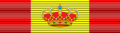 Grand Cross White Decoration of the Cross of Naval Merit
- 1955 –
 Empire of Japan:
- 1942 –
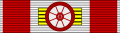 Grand Cordon of the Order of the Rising Sun
- 1942 –
 Philippines:
- 1955 –
 Grand Cross of the Order of Sikatuna[26]
- 1955 –
 UK:
UK:
- 1939 –
 Knight Grand Cross of the Order of St Michael and St George
- 1939 –
 USA:
USA:
- 1955 –
 Chief Commander of the Legion of Merit
- 1955 –
 France:
- 1938 –
 Grand-Croix of the Legion of Honour
- 1938 –
 Belgium:
- 1955 –
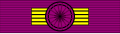 Grand Cordon of the Order of Leopold
- 1955 –
 Netherlands:
- 1955 –
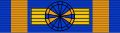 Knight Grand Cross of the Order of the Netherlands Lion
- 1955 –
 Denmark:
- 1955 –
 Grand Commander of the Order of the Dannebrog
- 1955 –
 Italian Republic:
- 1955 –
 Knight Grand Cross of the Order of Merit of the Italian Republic
- 1955 –
 Kingdom of Laos:
- 1955 –
 Grand Cross of the Order of the Million Elephants and the White Parasol
- 1955 –
 Cambodia:
- 1955 –
 Knight Grand Cross of the Royal Order of Cambodia
- 1955 –
 Kingdom of Greece:
- 1956 –
 Grand Cross of the Order of George I
- 1956 –
 Germany:
- 1955 –
 Grand Cross 1st Class of the Order of Merit of the Federal Republic of Germany
- 1955 –
 Union of Burma:
- 1956 –
 Order of the Order of Sirisudharma
- 1956 –


_pasador.svg)


.png)
Academic rank
[edit]Notes
[edit]- ^ At that time, Thais did not have surnames.
- ^ Thai: แปลก พิบูลสงคราม, pronounced [plɛ̀ːk pʰí.būːn.sǒŋ.kʰrāːm]
See also
[edit]References
[edit]- ^ a b c Bunnag, Rome. "เหตุที่ "นายกฯตลอดกาล" ชื่อ "แปลก" ความแปลกที่ได้มาแต่เกิด! ฉันจะต้องไปทำงานใหญ่!!". MGR Online. Retrieved 1 September 2024.
- ^ (in Thai)ผู้นำทางการเมืองไทยกับสงครามโลกครั้งที่ 2: จอมพล ป.พิบูลสงคราม และ ปรีดี พนมยงค์ Archived 27 June 2008 at the Wayback Machine
- ^ Batson, Benjamin Arthur; Shimizu, Hajime (1990). The Tragedy of Wanit: A Japanese Account of Wartime Thai Politics. University of Singapore Press. p. 64. ISBN 9971622467. Retrieved 29 September 2018.
- ^ Ansil Ramsay (2001). "The Chinese in Thailand: Ethnicity, Power and Cultural Opportunity Structures". In Grant H. Cornwell; Eve Walsh Stoddard (eds.). Global Multiculturalism: Comparative Perspectives on Ethnicity, Race, and Nation. Rowman & Littlefield. p. 63.
- ^ "man on horseback". The Free Dictionary. Retrieved 30 June 2011.
n. A man, usually a military leader, whose popular influence and power may afford him the position of dictator, as in a time of political crisis
- ^ Numnonda, Thamsook (September 1978). "Pibulsongkram's Thai Nation-Building Programme during the Japanese Military Presence, 1941–1945". Journal of Southeast Asian Studies. 9 (2): 234–247. doi:10.1017/S0022463400009760. JSTOR 20062726. S2CID 162373204.
- ^ a b c "Luang Phibunsongkhram". Britannica. Retrieved 30 August 2024.
- ^ Komnpelin, Chetiya. "การเปลี่ยนชื่อประเทศจาก "สยาม" เป็น "ไทย"". Parliament Museum. Retrieved 30 August 2024.
- ^ Churchill, Winston S. The Second World War, Vol 3, "The Grand Alliance", p. 548, Cassell & Co. Ltd, 1950
- ^ "Pattaya Mail – Pattaya's First English Language Newspaper". pattayamail.com.
- ^ Ford, Daniel (June 2008). "Colonel Tsuji of Malaya (part 2)". Warbirds Forum. Retrieved 30 June 2011.
Though outnumbered two-to-one, the Japanese never stopped to consolidate their gains, to rest or regroup or resupply; they came down the main roads on bicycles.
- ^ "The Swift Japanese Assault". National Archives of Singapore. 2002. Archived from the original on 10 February 2012. Retrieved 30 June 2011.
Even the long-legged Englishmen could not escape our troops on bicycles.
- ^ "Columns". pattayamail.com.
- ^ I.C.B Dear, ed, The Oxford companion to World War II (1995) p. 1107[ISBN missing]
- ^ Batson, Benjamin A. (1974). "THE FALL OF THE PHIBUN GOVERNMENT, 1944" (PDF). The Siam Society.
- ^ Roeder, Eric (Fall 1999). "The Origin and Significance of the Emerald Buddha". Southeast Asian Studies. 3. Southeast Asian Studies Student Association. Archived from the original on 5 June 2011. Retrieved 30 June 2011.
Judith A. Stowe, Siam becomes Thailand (Honolulu: University of Hawaii Press, 1991), pp. 228–283
- ^ Aldrich, Richard J. The Key to the South: Britain, the United States, and Thailand during the Approach of the Pacific War, 1929–1942. Oxford University Press, 1993. ISBN 0-19-588612-7
- ^ a b "สมศักดิ์ เจียมธีรสกุล: พูนศุข พนมยงค์ ให้สัมภาษณ์กรณีสวรรคต พฤษภาคม 2500". prachatai.com.
- ^ Darling, Frank C. (1962). "American Policy in Thailand". The Western Political Quarterly. 15 (1): 93–110. doi:10.2307/446100. JSTOR 446100.
- ^ "ทำเนียบนายกรัฐมนตรี". Royal Thai Government. thaigov. Retrieved 31 August 2024.
- ^ "จอมพล ป.พิบูลสงคราม : 123 ปี ชาตกาล กับผลงานและเสียงวิจารณ์นายกรัฐมนตรีที่อยู่ในตำแหน่งนานที่สุด". BBC. Retrieved 31 August 2024.
- ^ "Data" (PDF). ratchakitcha.soc.go.th. Archived from the original (PDF) on 11 November 2011. Retrieved 8 September 2020.
- ^ "Data" (PDF). ratchakitcha.soc.go.th. Archived from the original (PDF) on 10 July 2018. Retrieved 15 February 2021.
- ^ Biography of Field Marshal P. Archived 26 August 2002 at the Wayback Machine, Royal Thai Army website. Retrieved on 4 December 2008.
- ^ Royal Thai Government Gazette. แจ้งความสำนักนายกรัฐมนตรี เรื่อง ให้ประดับเครื่องราชอิสสริยาภรณ์ต่างประเทศ Vol. 56, p. 3594 on 11 March 1939
- ^ a b ราชกิจจานุเบกษา, แจ้งความสำนักคณะรัฐมนตรี เรื่อง พระราชทานพระบรมราชานุญาตประดับเครื่องอิสริยาภรณ์ต่างประเทศ, เล่ม ๗๒ ตอนที่ ๖๓ ง หน้า ๒๐๘๕, ๙ สิงหาคม ๒๔๙๘
- ^ "Data" (PDF). ratchakitcha.soc.go.th. Archived from the original (PDF) on 4 August 2018. Retrieved 15 February 2021.
Bibliography
[edit]- Baker, Chris; Phongpaichit, Pasuk (2009). A History of Thailand (2nd ed.). Cambridge University Press. ISBN 9781139194877. Retrieved 29 September 2018.
- Chaloemtiarana, Thak (2007). Thailand. The Politics of Despotic Paternalism. Ithaca: Cornell Southeast Asia Program. ISBN 978-0-87727-742-2.
- Fineman, Daniel (1997). A Special Relationship. The United States and Military Government in Thailand, 1947–1958. Honolulu: University of Hawaiʻi Press. ISBN 0-8248-1818-0.
- Mokarapong, Thawatt (1972). History of Thai Revolution. A study in political behaviour. Bangkok: Chalermnit. ISBN 974-07-5396-5.
- Numnonda, Thamsook (1977). Thailand and the Japanese Presence 1941–1945. Singapore: Institute of Southeast Asian Studies.
- Reynolds, E. Bruce (2004). Phibun Songkhram And Thai Nationalism in the Fascist Era. European Journal of East Asian Studies. Vol. 3. pp. 99–134. doi:10.1163/1570061033004686.
- Stowe, Judith A. (1991). Siam Becomes Thailand. A Story of Intrigue. London: C. Hurst & Co. ISBN 0-8248-1393-6.
- Suwannathat-Pian, Kobkua (1995). Thailand's Durable Premier. Phibun through three decades, 1932–1957. Oxford University Press. ISBN 967-65-3053-0.
- Terwiel, Barend Jan (1980). Field Marshal Plaek Phibun Songkhram. St. Lucia: University of Queensland Press. ISBN 0-7022-1509-0.
- Staniczek, Lukasz (1999). Pibun Songkram 's Role in Thailand's Entry into the Pacific War (Thesis). Arkadelphia: Ouachita Baptist University. Retrieved 2 April 2020.
- Wyatt, David K. (2003). Thailand. A Short History (2nd ed.). Yale University Press. ISBN 0-300-08475-7.
External links
[edit]
- Duncan Stearn:A Slice of Thai History: The Japanese invasion of Thailand, 8 December 1941 Pattaya Mail – Pattaya's First English Language Newspaper (part one) Columns (part two) Columns (part three)
- Kopkuea Suwannathat-Phian (1989). Foreign Policies of Phibunsongkhram Government: 1938–1944 (PDF) (in Thai). Bangkok: Thammasat University Press. ISBN 9745724165. Archived from the original (PDF) on 28 February 2021. Retrieved 25 December 2013.


| International | |
|---|---|
| National | |
| Academics | |
| People | |
| Other | |

Plaek Phibunsongkhram
View on GrokipediaPlaek Phibunsongkhram (14 July 1897 – 11 June 1964) was a Thai field marshal and politician who served as prime minister of Thailand from 1938 to 1944 and again from 1948 to 1957, periods marked by military authoritarianism, aggressive nationalism, and strategic alignments in regional conflicts.[1][2]
A key figure in the People's Party, he helped orchestrate the 1932 revolution that overthrew absolute monarchy and introduced constitutional rule, rising through military ranks to defense minister by 1934 before assuming the premiership.[2][3]
Phibunsongkhram's rule emphasized state-directed modernization and cultural mandates promoting Western attire, hygiene, and etiquette to foster a unified Thai identity, while suppressing political opposition and ethnic minorities through censorship and propaganda.[3][4]
In the lead-up to and during World War II, he pursued expansionist policies, allying with Japan to reclaim territories from French Indochina and British Malaya, which facilitated Japanese military presence but contributed to domestic resistance and his 1944 removal amid Allied advances.[5][3]
Regaining power through a 1948 coup, his second tenure focused on anti-communist measures and U.S. partnerships, including support in the Korean War, but ended in 1957 with another coup, leading to exile in Japan where he died.[2][3]
Early Life
Birth, Family Background, and Initial Education
Plaek Khittasangkha, later known as Plaek Phibunsongkhram, was born on July 14, 1897, in Mueang Nonthaburi, Nonthaburi Province, in the Kingdom of Siam (modern-day Thailand), to a modest family of farmers.[6] [7] His parents engaged in subsistence agriculture, reflecting the rural economic conditions prevalent in central Siam at the time, where small-scale farming supported limited household livelihoods amid a predominantly agrarian society.[6] Phibunsongkhram's initial education occurred at local Buddhist temple schools, a common pathway for boys from ordinary families in early 20th-century Siam, where monastic institutions provided basic literacy, moral instruction, and rudimentary knowledge in subjects like Pali script and arithmetic.[3] This temple-based schooling, typically spanning several years during childhood, equipped him with foundational skills before he pursued formal military training, highlighting the role of religious institutions in bridging rural upbringings to opportunities in state service.[3]Military Training and Exposure to European Ideas
Plaek Phibunsongkhram, originally named Plaek Khittasangkha, entered the Chulachomklao Royal Military Academy in Bangkok around 1909 at the age of 12, following a path common for ambitious youth from modest provincial backgrounds seeking social advancement through military service. He graduated in 1914 as a second lieutenant in the artillery corps, marking the start of his professional military career amid Siam's efforts to modernize its forces in response to European colonial pressures.[7] In the post-World War I period, Phibunsongkhram was selected for advanced training abroad, departing for France in 1924 to study artillery tactics at the École d'Application d'Artillerie in Fontainebleau. This three-year program (1924–1927) immersed him in French military doctrine, which prioritized technical proficiency, disciplined command structures, and the integration of modern weaponry—contrasting sharply with the Siamese army's reliance on outdated conscript levies and royal patronage systems.[8][9] During his time in France, Phibunsongkhram encountered broader European ideas through direct observation of republican governance, secular nationalism, and militarized state-building, which resonated with his growing disillusionment toward Siam's absolute monarchy and feudal inefficiencies. Interactions with fellow Thai expatriates, including future revolutionaries, further exposed him to concepts of constitutionalism and anti-colonial self-strengthening drawn from French revolutionary traditions and contemporary European discourses on national unity. These experiences fostered his conviction that military professionalism, modeled on Western standards, was essential for Thailand's sovereignty and internal reform, influencing his later role in advocating elite-led modernization.[10]Rise to Power
Participation in the 1932 Siamese Revolution
Plaek Phibunsongkhram, then a captain in the Royal Siamese Army, emerged as a pivotal figure in the Khana Ratsadon (People's Party), a clandestine group of military officers and civilians educated abroad who opposed the absolute monarchy's inefficiencies and sought Western-style constitutional governance. Formed in the mid-1920s among Siamese students in Europe, the party coalesced around shared frustrations with royal absolutism, economic stagnation, and limited opportunities for commoners in the bureaucracy. Phibunsongkhram, having completed military training at the École Spéciale Militaire de Saint-Cyr in France from 1919 to 1921 and returned to Siam in 1927, aligned with the military faction led by figures like Major Phra Phrom Phuangket, leveraging his artillery expertise and connections to plot systemic change.[11][12] The coup unfolded on 24 June 1932, when approximately 120 Khana Ratsadon members, including Phibunsongkhram, executed a meticulously planned operation while King Prajadhipok resided at the Klai Kangwon Palace outside Bangkok. Phibunsongkhram commanded elements of the military contingent, directing the seizure of key installations such as the Ananta Samakhom Throne Hall, the War Ministry, and radio stations to broadcast the revolutionaries' manifesto demanding a constitution. Armored cars and infantry units under his influence neutralized potential royalist resistance without bloodshed, as most troops defected or remained neutral due to prior infiltration by the plotters. The action compelled the king to accept a provisional constitution drafted by civilian leader Pridi Banomyong, transitioning Siam to a constitutional monarchy under the provisional government's oversight.[11][13][14] Phibunsongkhram's decisive military coordination ensured the coup's success, distinguishing the army faction's pragmatic enforcement from the civilians' ideological blueprint, though internal tensions soon surfaced over the pace of reforms. His participation, rooted in a belief that military discipline was essential to modernize Siam amid regional colonial threats, positioned him for rapid promotion to major general by July 1932 and eventual dominance within the post-revolution power structure. The event's bloodless nature minimized backlash, but it entrenched factional rivalries that shaped Thailand's volatile politics for decades.[15][4]Ascendancy Within the People's Party and Military
Following the successful Siamese Revolution on June 24, 1932, Plaek Phibunsongkhram emerged as a leading figure in the military branch of the Khana Ratsadon (People's Party), leveraging his command of younger officers to consolidate influence over the armed forces. As one of the coup's key organizers, he focused on professionalizing and expanding the army, drawing on European military models encountered during his training abroad, which positioned him to counterbalance the party's civilian intellectuals led by Pridi Banomyong.[16] Phibunsongkhram's ascendancy accelerated during the Boworadet Rebellion, a royalist counter-coup initiated on October 11, 1933, by Prince Boworadet from Nakhon Ratchasima (Korat), aiming to restore absolute monarchy amid dissatisfaction with the new constitutional order. Commanding government loyalists, Phibunsongkhram directed the suppression of rebel forces, which had initially captured key northeastern garrisons; by October 14, his troops had recaptured Korat, and the rebellion collapsed within days due to poor coordination among royalists and swift military response, resulting in hundreds of casualties and the flight of Prince Boworadet to French Indochina. This victory not only neutralized monarchical restoration threats but also burnished Phibunsongkhram's reputation as the party's indispensable defender, securing army allegiance and enabling purges of suspected royalist sympathizers within the ranks.[17][18][19] In September 1934, Phibunsongkhram was appointed Minister of Defence under Prime Minister Phraya Phahon Phonphayuhasena, granting him authority to overhaul the military structure, including recruitment drives that swelled army numbers from approximately 20,000 to over 40,000 personnel by the late 1930s, alongside the creation of paramilitary youth groups modeled on fascist militias to instill nationalist discipline. These reforms fostered a patronage network loyal to Phibunsongkhram, exacerbating factional divides within the Khana Ratsadon between his authoritarian-leaning military clique and Pridi's socialist-oriented civilians, culminating in Pridi's temporary exile in 1934 after proposed economic policies sparked backlash.[16] By 1938, internal rivalries intensified, particularly with senior officers like Phraya Song Suradet, a fellow 1932 conspirator who opposed Phibunsongkhram's growing dominance. The alleged Song Suradet plot—framed as a conspiracy uncovered in late 1938—involved accusations of treason against 18 figures, including Song Suradet, leading to arrests, trials, and executions or exiles by January 1939; while the rebellion's scale remains debated, with some historians viewing it as exaggerated to justify purges, it provided Phibunsongkhram the pretext to sideline competitors and force Phahon's resignation. On December 16, 1938, he assumed the premiership, marking the culmination of his intra-party and military ascent through strategic alliances, suppression of dissent, and control of security apparatus.[20]First Premiership (1938–1944)
Nationalist Reforms and the Thai Cultural Revolution
Upon assuming the premiership on 11 December 1938, Plaek Phibunsongkhram launched a program of nationalist reforms designed to consolidate Thai identity, promote modernization, and eradicate perceived foreign influences within society. These efforts, often termed the Thai Cultural Revolution, sought to instill discipline, national pride, and cultural uniformity through state-directed edicts, drawing inspiration from contemporary authoritarian models of nation-building while adapting them to Thai contexts. Central to this initiative was the establishment of a national culture commission in 1942 to codify and propagate "Thai-ness," emphasizing self-reliance and rejection of external cultural dominance, particularly from Chinese immigrant communities.[21][22] The cornerstone of these reforms was a series of 12 cultural mandates issued between June 1939 and January 1942, which prescribed specific behaviors and symbols to foster patriotism and civility. The inaugural mandate, decreed on 24 June 1939, renamed the country from Siam to Thailand, explicitly linking the state's identity to the Thai people and discarding the older Pali-derived term associated with broader regional connotations. Subsequent mandates mandated the exclusive use of the Thai language in public and commercial settings, required saluting the national flag, standing during the anthem, and adopting modern attire such as hats for men and skirts for women in place of traditional garments deemed backward. Additional edicts prohibited practices like betel nut chewing, encouraged punctuality and productivity, and urged the abandonment of Chinese surnames in favor of Thai ones to assimilate ethnic minorities.[21][23][22] Enforcement relied on propaganda campaigns, public education, and punitive measures, including fines and social ostracism for violations, with the government leveraging radio broadcasts and school curricula to disseminate these ideals. Ideologue Luang Wichit Wathakan played a key role in articulating the vision, framing the mandates as essential for elevating Thailand to a civilized, robust nation capable of withstanding imperialism. While these policies accelerated urbanization and cultural homogenization—evident in the promotion of national dishes like pad thai to symbolize self-sufficiency—they also intensified Sinophobia, mandating economic restrictions on Chinese businesses and accelerating assimilation pressures on the diaspora, which comprised nearly 10% of the population. The reforms' authoritarian character, prioritizing state-defined modernity over traditional pluralism, laid the groundwork for Phibunsongkhram's cult of personality but sowed seeds of resistance among conservative elites and ethnic groups.[21][24]Franco-Thai War and Territorial Gains
The Franco-Thai War erupted in late 1940 amid escalating border disputes between Thailand and Vichy French Indochina, as Prime Minister Plaek Phibunsongkhram sought to exploit France's military vulnerabilities following its defeat by Germany in June 1940.[25] Phibunsongkhram, driven by irredentist ambitions to recover territories ceded in 19th- and early 20th-century treaties, authorized Thai incursions into western Cambodia and Laos after diplomatic protests over French encroachments yielded no concessions.[26] Initial skirmishes occurred in October 1940, but major Thai offensives commenced on January 5, 1941, with ground forces advancing into Cambodian provinces like Battambang and Laotian regions along the Mekong River.[27] Thai military operations involved coordinated army, navy, and air force actions, though the Royal Thai Navy suffered a setback at the Battle of Ko Chang on January 17, 1941, where French naval forces sank three Thai vessels. Despite this, Thai land forces captured key areas, including parts of Battambang and surrounding districts in Cambodia, prompting Vichy France to seek mediation. Japan, pursuing its own interests in Southeast Asia, intervened diplomatically, leading to an armistice on January 28, 1941, formalized aboard the Japanese cruiser Natori off Saigon on January 31.[27] By this point, Thai troops occupied most of the disputed zones, exerting de facto control.[27] Negotiations in Tokyo culminated in a protocol on March 11, 1941, ratified by a peace convention on May 9, 1941, under Japanese pressure on Vichy France.[27] Thailand secured formal cessions including the Cambodian province of Battambang, territories in Siem Reap province, and districts such as Sisophon; in Laos, provinces associated with Luang Prabang and Bassac (encompassing areas like Champasak and parts of the Mekong left bank).[28] These gains, totaling approximately 65,000 square kilometers, bolstered Phibunsongkhram's domestic prestige as a nationalist leader restoring "lost" lands, though Thailand incurred around 108 killed and 374 wounded in combat.[29] The territories were administered by Thailand until 1946, when Allied demands post-World War II compelled their return to France.[27]Alignment with Japan and Involvement in World War II
Phibunsongkhram, already sympathetic to Japan's anti-colonial rhetoric and military modernization, permitted Japanese forces to land in Thailand on December 8, 1941, shortly after the attack on Pearl Harbor, following brief Thai resistance at key southern ports like Prachuap Khiri Khan.[23][30] He ordered a ceasefire by noon that day to negotiate terms, viewing alignment as a means to safeguard Thai independence against potential Japanese conquest and to reclaim territories lost to British and French colonialism.[19] An initial agreement on December 9 allowed Japanese troops transit rights through Thailand for invasions of British Malaya and Burma, in exchange for Japanese recognition of Thai territorial claims.[19][31] A formal military alliance treaty between Thailand and Japan was signed on December 21, 1941, granting Japan unrestricted access to Thai airfields, ports, and railways while pledging mutual defense against common enemies.[31] Under this pact, Japan ceded four Malay states—Perlis, Kedah, Kelantan, and Terengganu—to Thailand on January 20, 1942, along with the Shan State territories in Burma, fulfilling Phibunsongkhram's irredentist goals and bolstering his domestic nationalist image.[32] Thai forces, numbering around 10,000, subsequently joined Japanese campaigns in Malaya and Shan States, though their contributions remained auxiliary and focused on securing annexed areas rather than frontline combat.[31] On January 25, 1942, Phibunsongkhram's government declared war on the United Kingdom and the United States, formalizing Thailand's Axis alignment under Japanese pressure.[33] However, Thai Ambassador to the United States Seni Pramoj refused to deliver the declaration, citing its invalidity without King Ananda Mahidol's countersignature, and instead organized the Seri Thai (Free Thai) resistance movement in coordination with Allied intelligence.[30][19] This act rendered the U.S. declaration legally ineffective, sparing Thailand from full belligerent status with America, though Britain treated it as binding and conducted air raids on Bangkok.[34] Despite the alliance, Japanese occupation strained relations, with reports of economic exploitation, forced labor on the Thailand-Burma Railway (claiming over 90,000 Thai and Allied POW lives), and cultural impositions clashing against Phibunsongkhram's Thai-centric nationalism.[19] By 1943, growing disillusionment with Japan's fortunes led Phibunsongkhram to covertly support Free Thai operations, transmitting intelligence to the Allies via underground networks, though he publicly maintained the partnership until his 1944 ouster amid domestic backlash against wartime hardships.[23] This pragmatic alignment preserved Thai sovereignty during the conflict but sowed seeds for postwar recriminations, with Phibunsongkhram later defending it as a calculated necessity against superior Japanese power.[32]Authoritarian Measures, Suppression of Dissent, and Sinophobic Policies
Phibunsongkhram consolidated authoritarian control upon becoming prime minister in December 1938, establishing a military dictatorship that centralized power in the executive and military apparatus while diminishing parliamentary influence.[35] His regime issued a series of 12 cultural mandates between 1939 and 1942, known as Ratthaniyom, which enforced nationalistic reforms including mandatory Western-style dress, bans on traditional attire in public, promotion of the Thai language, and suppression of foreign cultural influences to foster a unified "civilized" Thai identity.[21] These edicts extended to media censorship, with controls on press content to align with state propaganda, and the abolition of political parties to eliminate organized opposition.[36] Suppression of dissent intensified through military purges and fabricated threats, exemplified by the 1939 Songsuradet rebellion affair, in which Phibunsongkhram accused rivals within the People's Party, including Colonel Phraya Song Suradet, of plotting a coup; this led to the arrest of approximately 50 individuals and the execution of 18 alleged conspirators by firing squad on December 5, 1939, effectively neutralizing potential challengers from both royalist and revolutionary factions.[37] The regime relied on military loyalty and informal security networks to monitor and eliminate critics, including communists and monarchists, often under pretexts of national security amid wartime alignments.[38] Such measures reflected a causal prioritization of regime stability over democratic pluralism, as Phibunsongkhram viewed internal divisions as existential threats to his nationalist vision. Sinophobic policies formed a core component of the cultural mandates, targeting the ethnic Chinese minority—who comprised about 10-12% of the population and dominated commerce—to enforce assimilation and curb perceived economic dominance. In 1939, the government closed Chinese-language schools and restricted Chinese newspapers, compelling the use of Thai in education and media to erode cultural separatism.[39] Economic restrictions included higher taxes on Chinese-owned businesses, bans on alien employment in certain sectors, and requirements for Chinese residents to adopt Thai surnames and register for naturalization, aiming to integrate them while limiting Communist influences from China.[23] These actions mobilized Thai nationalist support by framing Chinese economic control as a threat to sovereignty, though they exacerbated communal tensions without fully resolving underlying rivalries.[38]State-Led Economic Initiatives and Modernization
Phibunsongkhram's government pursued economic nationalism as a core component of its modernization agenda, emphasizing state-directed efforts to foster self-sufficiency and reduce reliance on foreign, particularly ethnic Chinese, commercial dominance. This approach, termed "economic Thai-ification," involved aggressive social engineering to transfer economic control to ethnic Thais, including requirements for businesses to adopt Thai names, prioritize Thai employees, and promote local products over imports.[40] [41] These measures, initiated amid the lingering effects of the Great Depression, aimed to build a more unified national economy but often prioritized political control over substantive industrial development.[42] Key initiatives included the November 1, 1939, cultural mandate urging citizens to consume only foods derived from Thai-sourced ingredients, part of broader campaigns to encourage "buy Thai" habits and stimulate domestic production. The state promoted alternatives like stir-fried rice noodles (pad thai) through propaganda such as the "Noodle is Your Lunch" slogan, intended to conserve rice supplies during wartime shortages and substitute for imported or Chinese-influenced staples using local bean sprouts, eggs, and tofu.[43] [44] Government-backed Thai enterprises were supported to compete with established Chinese firms, including through tax hikes on non-Thai businesses and restrictions on foreign remittances, which forced some Chinese merchants to sell assets to Thais or face liquidation.[45] [21] Despite these efforts, Thailand's economy remained predominantly agrarian, with rice exports comprising over 90% of foreign exchange earnings in the late 1930s, and industrialization efforts yielded limited results due to capital shortages, technological gaps, and global disruptions. State involvement in manufacturing was minimal, confined largely to small-scale, government-supervised operations in textiles and basic goods, reflecting underdevelopment rather than robust modernization.[46] Infrastructure projects, such as road expansions for military mobility, received priority but did not significantly spur economic diversification before the Pacific War's onset in 1941 strained resources further.[47] Overall, these state-led policies achieved partial cultural-economic assimilation but contributed to economic stagnation, as real GDP growth averaged under 1% annually from 1938 to 1944, hampered by wartime alliances and internal inefficiencies.[48]Circumstances of Overthrow in 1944
As Japan's military fortunes waned in mid-1944, particularly following Prime Minister Hideki Tojo's resignation on July 18 amid defeats in the Pacific and increasing Allied air raids on Thailand, confidence in Phibunsongkhram's pro-Japanese alignment eroded among political elites and the public.[38] Economic strains exacerbated this, with rampant inflation driving the cost-of-living index to 409.07 by March 1944, widespread shortages of rice and consumer goods, and thriving black markets that undermined state control.[20] Public resentment toward Phibunsongkhram's authoritarian cultural mandates, including enforced Western dress codes and suppression of traditional practices, further fueled opposition, particularly in rural and northeastern regions.[20] The immediate catalyst occurred in the National Assembly, where Phibunsongkhram's government faced defeats on two emergency decrees he had issued in May and June: a plan to relocate the capital to Phetchaburi (rejected 48-36 on July 20) and to construct a new Buddhist city at Saraburi (rejected 43-41 on July 22).[20] These votes, led by northeastern representatives and reflecting broader Assembly discontent with Phibunsongkhram's secretive governance, signaled a loss of parliamentary support rather than a traditional coup.[20] The Free Thai Movement (Seri Thai), an underground pro-Allied network orchestrated by Pridi Banomyong, played a pivotal role in mobilizing this dissent, providing intelligence to the Allies and conducting sabotage while pressuring Assembly members to anticipate an Axis defeat.[20] Phibunsongkhram tendered his resignation on July 24, 1944, citing the need for secrecy in wartime projects as justification for the defeats, though analysts attribute the collapse to a confluence of military reversals, economic distress, and orchestrated opposition rather than isolated legislative rebuffs.[20] The palace, through Regent Prince Aditya Dibabha, initially hesitated but accepted the resignation; Pridi consolidated influence by becoming sole regent.[20] Phibunsongkhram retained supreme command of the armed forces temporarily, but this was abolished in August, with Phraya Phahon Phonphayuhasena assuming the role. Khuang Aphaiwong, a civilian aligned with Free Thai elements, was appointed prime minister on August 1 (Julian calendar; July 31 Gregorian), marking a pivot toward accommodation with the Allies while nominally preserving Japanese relations until their surrender.[20]Interregnum Period (1944–1948)
Political Isolation and Pro-Allied Opposition
Following his resignation as prime minister on July 24, 1944, Plaek Phibunsongkhram entered a period of political isolation as the new government under Khuang Aphaiwong aligned more closely with Allied interests to mitigate Thailand's wartime collaboration with Japan.[20] Economic hardships, including inflation that drove the cost-of-living index to 409.07 by March 1944, Allied air raids, and defeats in National Assembly votes on July 20 and 22—rejecting proposals for a new capital at Phetchabun (48-36) and a Buddhist city at Saraburi (43-41)—had eroded his support base, reflecting broader disillusionment with his regime's pro-Japanese policies.[20] Phibunsongkhram retained nominal military roles but was sidelined from decision-making, with Pridi Banomyong, as regent and Free Thai leader, exerting influence to steer Thailand toward reconciliation with the Allies.[49] The pro-Allied Free Thai Movement (Seri Thai), established in 1942 under Pridi's domestic leadership and Seni Pramoj's overseas coordination, intensified opposition to Phibunsongkhram by portraying his government as complicit in Japanese occupation and aggression.[49] Operating clandestinely with support from the U.S. Office of Strategic Services (OSS), the movement conducted intelligence gathering, sabotage, and diplomatic efforts, such as Seni Pramoj's advocacy in Washington to prevent U.S. recognition of Thailand as an enemy state.[49] Post-resignation, Free Thai affiliates in the Khuang government prioritized negotiating Thailand's non-enemy status with the Allies, leveraging evidence of underground resistance to counter demands for Phibunsongkhram's prosecution as a collaborator; by August 1945, following Japan's surrender, these efforts ensured Thailand avoided formal occupation, though territorial concessions and reparations were still imposed.[49] Phibunsongkhram's isolation deepened through 1946–1947 amid investigations into wartime conduct, with pro-Allied civilian and intellectual factions, bolstered by Free Thai networks, advocating democratic reforms and accountability for authoritarian measures under his rule.[20] Although U.S. policymakers, influenced by OSS reports emphasizing Phibunsongkhram's potential anti-communist utility, refrained from pushing for his trial—contrasting British calls for stricter penalties—domestic opposition limited his public role, confining him to private maneuvers while Pridi-aligned governments pursued multilateral treaties and constitutional enhancements.[49] This marginalization persisted until military discontent with perceived instability enabled his eventual resurgence, underscoring the Free Thai's success in temporarily supplanting his militarist faction with pro-Western civilian governance.[20]Legal Persecutions and Strategic Maneuvering for Comeback
Following the Japanese surrender in August 1945, Phibunsongkhram faced legal repercussions for Thailand's wartime alliance with Japan, prompted by Allied demands, particularly from Britain, to prosecute collaborators under the newly enacted War Criminals Act. He was placed under house arrest shortly after the war's end while charges of war crimes, centered on facilitating Japanese military operations and declaring war on the Allies, were prepared.[50] In early 1946, Phibunsongkhram and four associates stood trial, but on March 23, 1946, Thailand's Supreme Court declared the War Criminals Act unconstitutional, leading to their immediate release and nullifying the proceedings. Released from legal jeopardy, Phibunsongkhram adopted a low public profile, retiring to his estate in Phetchabun province to evade ongoing political scrutiny amid unstable civilian governments marked by corruption allegations and factional strife.[51] During this period, he methodically rebuilt military alliances, forging ties with key figures including Army Commander Phin Choonhavan, Police Director Phao Siyanon, and rising officer Sarit Thanarat, who shared his anti-communist stance and resentment toward Pridi Banomyong's influence in postwar cabinets. These relationships positioned him as a stabilizing force against perceived civilian mismanagement, including scandals implicating officials in smuggling and ties to exiled Pridi supporters. Public sentiment shifted in Phibunsongkhram's favor through grassroots efforts, notably youth-led rallies, petitions, and leaflet campaigns in late 1947 that decried government corruption and advocated his return as a defender of national integrity.[51] This mobilization culminated in the November 8, 1947, coup d'état orchestrated by Phin Choonhavan with Phibunsongkhram's tacit endorsement, which ousted Prime Minister Thawan Thamrongnawasawat's administration on grounds of graft and subversive elements.[52] The coup installed a provisional military-backed regime under Khuang Aphaiwong, but internal pressures and Phibunsongkhram's leverage prompted his appointment as prime minister on April 8, 1948, marking his strategic reclamation of power through entrenched military loyalty rather than direct confrontation.Second Premiership (1948–1957)
Coup-Led Return and Consolidation of Military Control
On November 8, 1947, a military coup d'état overthrew the civilian government of Prime Minister Thawal Thamrong Navaswadhi, which had been weakened by economic instability, high inflation, and internal factionalism following World War II.[53] The coup was orchestrated by Lieutenant General Phin Choonhavan, with key support from Field Marshal Plaek Phibunsongkhram, Police General Phao Siyanon, and Colonel Phao's allies, aiming to restore military dominance and counter perceived pro-Allied and leftist influences.[53] [52] Phibunsongkhram, who had been sidelined since his 1944 ouster, was immediately reinstated as Commander-in-Chief of the Royal Thai Army, leveraging his prior military networks to regain influence.[54] Following the coup, Khuang Aphaiwongse was appointed interim prime minister, but military pressure mounted against civilian rule.[36] On April 8, 1948, Phibunsongkhram was elected prime minister by the National Assembly, marking the start of his second premiership and solidifying the junta's grip through the self-styled National Military Council.[36] [54] To consolidate control, Phibunsongkhram formed a ruling triumvirate with Phin Choonhavan as deputy prime minister and defense minister, and Phao Siyanon as deputy prime minister and police director-general, ensuring dominance over both armed forces and internal security apparatus.[55] [56] This structure enabled systematic purges of political opponents, including remnants of the Seri Thai movement and suspected communists, through arrests, exiles, and legal manipulations.[57] Phibunsongkhram rewarded loyal officers with key commands and promotions, embedding his clique within the military hierarchy while suppressing dissent via the maintained state of emergency.[56] The November 29, 1951, coup by junior officers under Phao and Sarit Thanarat further entrenched military authority by abrogating the 1949 constitution and reverting to the 1932 version, ostensibly to streamline governance but effectively curtailing parliamentary checks and enhancing executive-military fusion under Phibunsongkhram's leadership.[36] [55]Anti-Communist Policies and Internal Security Focus
Following his return to power via coup in November 1947, Plaek Phibunsongkhram emphasized anti-communist measures as a core policy amid escalating Cold War dynamics and the 1949 communist victory in China. This shift aligned Thailand firmly with Western powers, facilitating military and economic aid while justifying domestic repression of perceived leftist threats.[9][58] In 1952, the government under Phibunsongkhram enacted a renewed Anti-Communist Act, building on earlier legislation, which empowered authorities to suppress communist organizations, propaganda, and affiliations through arrests, surveillance, and asset seizures. The act targeted not only explicit communist activities but also extended to ethnic Chinese communities suspected of ties to the Chinese Communist Party, involving restrictions on economic activities and forced assimilation efforts.[59][57] Internal security was bolstered by expanding the roles of the military and national police, led by Phao Siyanon, who directed purges from 1952 to 1953 that dismantled suspected communist networks, resulting in numerous detentions and exiles. These operations often conflated political opposition with communism, suppressing leftist intellectuals, labor groups, and pro-democracy advocates under the guise of national security. Phao's police force, equipped with enhanced surveillance capabilities and U.S.-provided training and arms, played a central role in maintaining regime stability against internal dissent.[36][60] Thailand's anti-communist stance secured U.S. support, including entry into the Southeast Asia Treaty Organization (SEATO) in 1954 and substantial military assistance starting around 1951 to counter regional insurgencies and domestic subversion. This aid reinforced Phibunsongkhram's focus on internal security apparatuses, prioritizing loyalty to the regime over broader civil liberties, though it faced criticism for enabling corruption and authoritarian excess within security institutions.[36][15]Economic Stabilization Efforts Amid Corruption Claims
Phibunsongkhram's second administration, commencing in April 1948, addressed postwar economic instability marked by high inflation, supply shortages, and disrupted trade through state-directed controls. The government preserved public ownership of the limited manufacturing sector and imposed rigorous restrictions on imports and exports to conserve foreign exchange reserves and shield nascent industries from external shocks.[61] Fiscal management prioritized budgetary restraint, limiting foreign borrowing primarily to essential infrastructure projects while maintaining tight monetary oversight to mitigate inflationary pressures inherited from wartime disruptions.[62] These interventions supported a broader recovery, with Thailand achieving average annual GDP growth of 5.2 percent across the 1950s, driven partly by agricultural exports like rice amid global demand.[62] Alignment with U.S. foreign policy from 1950 onward facilitated technical assistance and eventual aid inflows, bolstering infrastructure and rural development initiatives.[9] Despite these stabilizing steps, the regime encountered mounting accusations of corruption, particularly implicating allies such as Police General Phao Siyanon in smuggling rackets, extortion, and profiteering from controlled trade channels.[63] Such graft, embedded in military and bureaucratic networks, eroded administrative efficiency, fostered black markets, and alienated urban elites and business interests, exacerbating perceptions of mismanagement.[36] Public discontent over these issues, compounded by uneven economic benefits favoring regime insiders, intensified by mid-decade and factored into the political erosion culminating in the 1957 coup.[36]Alignment with the United States and Cold War Dynamics
Following his return to power via the November 1947 coup and assumption of the premiership in April 1948, Phibunsongkhram pivoted Thailand toward alignment with the United States by emphasizing anti-communist policies, viewing Soviet and Chinese expansion as existential threats to Thai sovereignty and regional stability. This shift was pragmatic, driven by the need to counterbalance internal communist insurgencies and external pressures from Indochina, while securing Western patronage after Thailand's wartime Axis ties had isolated it diplomatically. In July and August 1950, Thailand signed Educational, Economic, and Military Assistance Agreements with the United States, formalizing cooperation and marking the onset of substantial U.S. support contingent on Thailand's commitment to containing communism.[9][64] The agreements facilitated significant U.S. aid flows, with approximately $200 million in military assistance provided from 1950 to 1957 to modernize Thai forces and establish a U.S. Military Advisory Group, alongside $27 million in technical cooperation aid between 1952 and 1955 for infrastructure and training. Phibunsongkhram's government reinforced this alignment by dispatching Thai troops—initially a battalion that expanded to around 4,000 personnel including ground, naval, air, and medical units—to fight under United Nations Command in the Korean War starting in August 1950, positioning Thailand as an early non-Western contributor to U.S.-led efforts against communist aggression. This participation, alongside recognition of South Korea, earned Thailand reparations exemptions from wartime alliances and bolstered its credentials as a Cold War ally.[9][65] By 1954, Thailand's role solidified as a founding member of the Southeast Asia Treaty Organization (SEATO), headquartered partly in Bangkok, which Phibunsongkhram endorsed as a collective defense mechanism against communist encroachment in Southeast Asia, particularly amid the First Indochina War. U.S. policymakers regarded Thailand under Phibunsongkhram as a strategic bulwark, tolerating his authoritarian consolidation—including suppression of domestic leftists—in exchange for reliable basing rights and intelligence cooperation, though internal corruption and factionalism strained the partnership toward the decade's end. This alignment transformed Thailand from a peripheral actor into a key U.S. proxy, receiving priority aid to fortify borders against Viet Minh incursions and potential Chinese influence.[9][66]Monarchical Relations and 1957 Coup D'état
During Phibunsongkhram's second premiership from 1948 to 1957, relations with the Thai monarchy remained tense, rooted in his earlier role in the 1932 revolution that ended absolute monarchy and his wartime policies that sidelined the royal family.[67] King Bhumibol Adulyadej, who ascended the throne in 1946 and returned to Thailand in 1950, grew critical of Phibunsongkhram's authoritarian governance, corruption, and failure to address economic instability, exacerbating the discord between the king and the prime minister.[68] Despite attempts by Phibunsongkhram to align himself with royalist sentiments—such as naming military camps after royal figures to promote loyalty—these efforts failed to mend the underlying rift, as the king's influence favored conservative military elements opposed to Phibunsongkhram's regime.[69] The culmination of these tensions contributed to the bloodless coup d'état on September 16, 1957, led by Field Marshal Sarit Thanarat, the army commander-in-chief and defense minister, who had grown disillusioned with Phibunsongkhram's leadership.[70] On September 13, Sarit issued an ultimatum to Phibunsongkhram, followed by the deployment of tanks into Bangkok streets three days later, forcing the prime minister to flee the country first to the United States and then to Japan in exile.[71] The coup reconciled the military and monarchy, institutions previously at odds under Phibunsongkhram, as King Bhumibol appointed Sarit as prime minister, signaling royal endorsement of the new order and the revival of monarchical influence.[70][72] Sarit's regime emphasized anti-corruption and devotion to the throne, contrasting sharply with Phibunsongkhram's tenure.[67]Exile, Death, and Immediate Aftermath
Life in Japan and Final Years
Following the September 1957 coup led by Sarit Thanarat, Phibunsongkhram fled Thailand, initially seeking refuge in Cambodia before relocating to Japan, where the new regime denied his requests for repatriation.[73] He spent the ensuing years in quiet exile, maintaining a low profile amid Thailand's shifting political landscape under military rule. In June 1960, while transiting through Calcutta, he announced plans to establish permanent residence in Tokyo within six months, reflecting his intent for long-term settlement away from domestic power struggles.[73][74] Phibunsongkhram resided primarily in the Tokyo area, including Sagamihara in Kanagawa Prefecture, during his final period abroad, which spanned approximately seven years.[3][36] No records indicate active political involvement or public engagements from him during this time; his isolation from Thai affairs marked a stark contrast to his prior decades of dominance in military and governmental spheres.[36] On 11 June 1964, Phibunsongkhram died of heart failure at age 66 while in exile in Japan.[75][76] His ashes were subsequently repatriated to Thailand for interment, honoring his foundational role in the nation's modern military and nationalist frameworks despite the circumstances of his ouster.[75][3]Death and Funeral Arrangements
Plaek Phibunsongkhram died of heart failure on 11 June 1964 at the age of 66, while in exile in Sagamihara, Japan.[77][78] His death occurred during a period of continued political isolation from Thailand following the 1957 coup that ended his second premiership. Following his death, Phibunsongkhram's body was cremated in Japan, after which his ashes were placed in an urn and transported back to Thailand.[78] The return of the ashes was accompanied by elaborate military ceremonies and significant public fanfare, reflecting his enduring influence among military circles despite his ouster.[78] They were interred at Wat Phra Sri Mahathat temple in Bangkok's Bang Khen district, a site Phibunsongkhram had commissioned in the 1940s as a memorial to Thai soldiers killed in the Franco-Thai War and World War II campaigns.[78] The arrangements underscored a selective rehabilitation of his legacy under the prevailing military regime, prioritizing nationalistic honors over prior political grievances.Personal Life
Marriages, Family, and Private Interests
Phibunsongkhram married Thanphuying La-iad Bhandhukravi, a teacher at a missionary school, while stationed in Phitsanulok.[78] The couple had six children, three sons and three daughters, with the youngest son, Nitya Pibulsonggram (born June 30, 1941), pursuing a career as a diplomat and serving as Thailand's Minister of Foreign Affairs from 2005 to 2006.[79] [80] La-iad actively supported her husband's policies on family and women's modernization, including efforts to encourage monogamous households and limit family sizes to promote national development.[81] [82] Little is documented about Phibunsongkhram's private interests beyond his public advocacy for Western-influenced cultural reforms, such as adopting European dress and etiquette, which he extended into personal spheres during his premierships.[83] His family life remained relatively private amid his military and political demands, with La-iad handling some ceremonial duties, including international visits alongside him in the 1950s.[84]Honours, Ranks, and Titles
Military Promotions and Decorations
Phibunsongkhram entered the Royal Siamese Military Academy (now Chulachomklao Royal Military Academy) in 1914 and was commissioned as a second lieutenant later that year.[1] His early promotions reflected steady advancement amid service in staff roles and abroad, including as assistant military attaché in France from 1921.[85] By 1921, he held the rank of lieutenant; captain by 1928, when he commanded the 1st Battalion of the 1st Infantry Regiment; major by 1932, coinciding with his involvement in the Promoters' coup; lieutenant colonel in 1933; and colonel in 1934, as he assumed command of the 1st Division and later assistant commander-in-chief of the armed forces.[1][85] Further elevations marked his rise to supreme command: major general in 1939; lieutenant general in 1940; and general in 1941, alongside appointment as commander-in-chief of the Royal Thai Armed Forces.[1] His promotion to field marshal that same year—bypassing intermediate steps—followed territorial gains in the Franco-Thai War (1940–1941), consolidating his authority as the highest-ranking officer in the Thai military across army, navy, and air force branches.[24] This rank, equivalent to the pinnacle of Thai military hierarchy, positioned him as supreme commander until 1944 and again from 1947 to 1948.[1] Post-1948, he retained field marshal status during his second premiership, though operational control shifted amid political maneuvers.[86]| Rank | Approximate Date | Context |
|---|---|---|
| Second Lieutenant | 1914 | Commission upon academy graduation |
| Lieutenant | 1921 | Staff and attaché duties |
| Captain | 1928 | Battalion command |
| Major | 1932 | Pre-coup leadership |
| Lieutenant Colonel | 1933 | Divisional roles |
| Colonel | 1934 | Assistant commander-in-chief |
| Major General | 1939 | Pre-war command |
| Lieutenant General | 1940 | Wartime preparations |
| General | 1941 | Armed forces chief |
| Field Marshal | 1941 | Post-Franco-Thai War elevation |