Hubbry Logo
Pope PontianPope PontianMain
Open search
Pope Pontian
Community hub
Pope Pontian
logo
8 pages, 0 posts
0 subscribers
Be the first to start a discussion here.
Contribute something
Pope Pontian
Pope Pontian
from Wikipedia

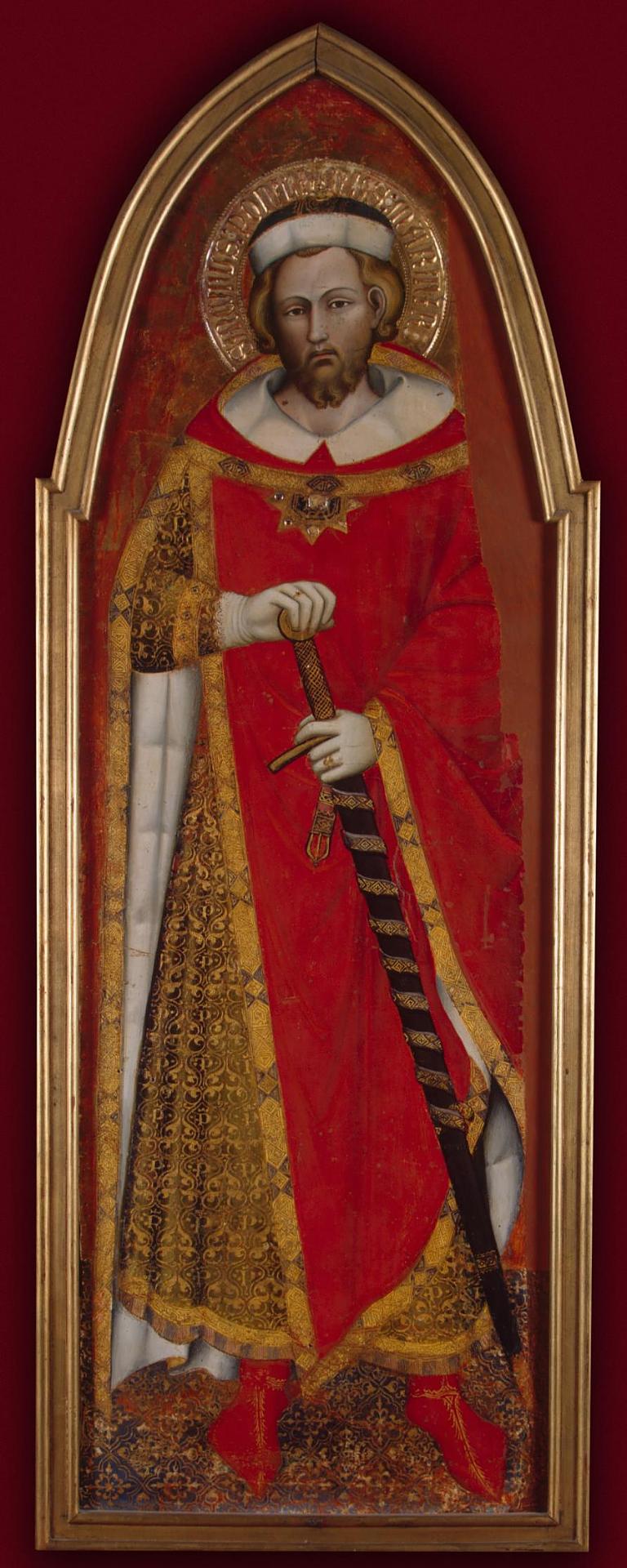
Pope Pontian (Latin: Pontianus; died October 235) was the bishop of Rome from 21 July 230 to 28 September 235.[1] In 235, during the persecution of Christians in the reign of the Emperor Maximinus Thrax, Pontian was arrested and sent to the island of Sardinia.

Key Information

He abdicated to make the election of a new pope possible.[1] Resigning on 28 September 235, he was the first pope to do so. This allowed an orderly transition in the Church of Rome and so ended a schism that had existed in the Church for eighteen years. Some accounts say he was beaten to death only weeks after his arrival on Sardinia.

Pontian is venerated as a saint in both the Catholic and Eastern Orthodox churches.

Life

[edit]

A little more is known of Pontian than his predecessors, apparently from a lost papal chronicle that was available to the compiler of the Liberian Catalogue of the bishops of Rome, written in the fourth century. The Liber Pontificalis states that he was a Roman citizen and that his father's name was Calpurnius. Early Church historian Eusebius wrote that his pontificate lasted six years.[2]

Pontian's pontificate was initially relatively peaceful under the reign of the tolerant Emperor Severus Alexander. He presided over the Roman synod which approved Origen's expulsion and deposition by Pope Demetrius I of Alexandria in 230 or 231.[1][2] According to Eusebius, the next emperor, Maximinus, overturned his predecessor's policy of tolerance towards Christianity.[3] Both Pope Pontian and the Antipope Hippolytus of Rome were arrested and exiled to labor in the mines of Sardinia,[4] generally regarded as a death sentence.[5]

In light of his sentence, Pontian resigned, the first pope to do so, so as to allow an orderly transition in the Church of Rome, on 28 September 235. This date was recorded in the Liberian Catalogue and is notable for being the first full date of a papal reign given by contemporaries. This action ended a schism that had existed in the Church for eighteen years. Pontian was beaten to death with sticks.[2][4] He died in October 235. Like Pontian, Hippolytus did not survive his exile. The two may have reconciled with one another in Rome or in Sardinia before their deaths.[6]

Veneration

[edit]

Pope Fabian had the bodies of both Pontian and Hippolytus brought back to Rome in 236 or 237, and had Pontian buried in the papal crypt in the Catacomb of Callixtus on the Appian Way.[4][7] The slab covering his tomb was discovered in 1909. On it is inscribed in Greek: Ποντιανός Επίσκ (Pontianos Episk; in English Pontianus Bish). The inscription "Μάρτυρ" (martyr) had been added in another hand.[1]

In the Eastern Orthodox Church and the General Roman Calendar of 1969, Pontian and Hippolytus are commemorated jointly on 13 August.[8][9] In those Catholic communities which use a historical calendar such as the General Roman Calendar of 1960, Pontian's feast day is celebrated on 19 November.[10]

San Ponziano, a titular church in Rome, is named in his honour. Churches named for Pontian are also found in Spoleto, Lucca, and Carbonia, Sardinia.[11]

[edit]

See also

[edit]

References

[edit]

Sources

[edit]
[edit]
Revisions and contributorsEdit on WikipediaRead on Wikipedia
from Grokipedia

Pope Pontian, also known as Pontianus (died c. October 235), served as the bishop of Rome from 21 July 230 until his abdication on 28 September 235, marking him as the first pope to resign the office. Elected following the death of Pope Urban I, his pontificate occurred amid ongoing schism with the antipope Hippolytus, whose rigorist faction challenged Roman church authority. In response, Pontian convened a Roman synod, likely in 235, which condemned Hippolytus's positions. The persecution of Christians initiated by Emperor Maximinus Thrax in 235 led to the arrest and exile of both Pontian and Hippolytus to the labor mines of Sardinia, where harsh conditions prompted reconciliation between the rivals. To enable the church's continuity, Pontian formally resigned, facilitating the election of Anterus as his successor, before succumbing to the rigors of exile shortly thereafter. Venerated as a martyr alongside Hippolytus, his feast day is observed on 13 August.

Election and Pontificate

Election in 230

Pontian succeeded Urban I as Bishop of Rome in 230, during a period of relative stability for under Emperor Alexander Severus, whose administration exhibited tolerance toward religious minorities including . The Liberian Catalogue, an early fourth-century Roman chronological list of bishops, records Pontian's election specifically on 21 230, following Urban's death earlier that year, a dating corroborated by subsequent chronologies./Pope_St._Pontian) Eusebius of Caesarea, drawing from Roman church records available in the early fourth century, confirms the succession without detailing the electoral process, noting Pontian as the eighteenth reckoned from the Apostles and placing his episcopate's commencement amid events dated to 230./Pope_St._Pontian) Early papal elections, including Pontian's, typically involved by the Roman and , though no contemporary accounts specify participants or debates for this transition; the absence of recorded schisms or disputes at the time suggests a consensual selection amid the ongoing but unresolved Hippolytan challenge inherited from prior pontiffs. This occurred approximately two months after Urban's reported death on 23 May 230, allowing for the customary interval to convene electors.

Synod Condemning Origen

In 231 or 232, Bishop Demetrius of convened a that condemned , a prominent Alexandrian theologian and scholar, primarily for his irregular as a in Caesarea without Demetrius's consent, which violated jurisdictional norms, and secondarily for aspects of his teaching deemed heterodox by the assembly. This action led to Origen's deposition from priestly functions and expulsion from , reflecting tensions over ecclesiastical authority and interpretive methods like Origen's heavy reliance on in Scripture . Pope Pontian, responding to appeals or reports from the Eastern churches, presided over a in that endorsed the Alexandrian decisions, formally approving Origen's condemnation both as a and as . This Roman gathering, documented by early Church historians such as in his Epistle 33 and Rufinus in his Apology against Jerome, aligned the Western see with the Eastern verdict to maintain doctrinal and disciplinary unity amid Origen's growing influence through works like On First Principles. The 's concurrence underscored 's role in adjudicating trans-regional disputes, though it did not initiate new condemnations but rather ratified the prior ones to curb Origen's standing. The event highlighted early Church concerns with Origen's subordinationist and speculative , such as the pre-existence of souls, which later fueled broader , but Pontian's focused on immediate disciplinary enforcement rather than exhaustive doctrinal review. No records indicate Pontian's personal animosity toward , whose scholarly contributions to and were acknowledged even by critics; the synod's aim was ecclesial order amid rivalries like the ongoing Hippolytus schism.

Relations with the Hippolytus Schism

Pontian's pontificate, commencing on July 21, 230, coincided with the ongoing schism initiated by Hippolytus of Rome, a presbyter and theologian who had opposed the policies of preceding popes Zephyrinus and Callistus I since approximately 217. Hippolytus advocated a rigorist approach to ecclesiastical discipline, particularly refusing readmission to the Church for Christians who had lapsed under persecution or committed grave sins like adultery, in contrast to the more merciful penitential practices favored by the Roman bishops. This doctrinal rift led Hippolytus to establish a parallel community and claim episcopal authority, styling himself as bishop over a schismatic faction that attracted supporters dissatisfied with perceived laxity in Rome. Historical records, including Eusebius's Ecclesiastical History, indicate no direct interventions or synods by Pontian to address the during the initial years of his tenure, suggesting it persisted without resolution amid relative ecclesiastical stability under Emperor until 235. The division, spanning over a decade by Pontian's election, reflected broader tensions in third-century Roman between rigorist and moderate factions on and , with Hippolytus authoring works like the to critique papal leadership. Pontian's relations with the schismatics appear to have been marked by continued separation rather than active confrontation, as primary accounts such as Eusebius focus on Hippolytus's independent activities without noting reconciliatory efforts from the papal side prior to the persecutions. The schism's end is attributed to events following the outbreak of persecution under Emperor in 235, when both Pontian and Hippolytus were arrested and deported to . Tradition, preserved in later Roman martyrological inscriptions like those commissioned by and referenced in the Liber Pontificalis, holds that Hippolytus renounced his schismatic claims and reconciled with Pontian in exile, thereby unifying the Roman Church before Pontian's resignation on September 28, 235. While does not explicitly detail this reconciliation, subsequent hagiographical and epigraphic evidence supports the narrative of Hippolytus's submission, ending the factional split that had endured for about 18 years; modern scholars note some debate over the timing and authenticity, viewing it as consistent with the hardships of imprisonment fostering unity among the persecuted.

Persecution under Maximinus Thrax

Imperial Persecution Context

Gaius Julius Verus Maximinus, known as Maximinus Thrax, ascended to the imperial throne in March 235 AD following the assassination of his predecessor, Severus Alexander, during a military mutiny on the German frontier. A Thracian of humble origins who rose through the ranks of the Roman army, Maximinus represented the first emperor without senatorial background, initiating the Crisis of the Third Century with policies emphasizing military strength over civilian administration. His brief reign (235–238 AD) was characterized by heavy taxation to fund campaigns and a reversal of Alexander's tolerant stance toward various religious groups, including Christians. The persecution of Christians under Maximinus emerged shortly after his accession, targeting primarily ecclesiastical leaders rather than the broader populace, distinguishing it from more systematic empire-wide edicts like those under . According to of Caesarea in his Ecclesiastical History, Maximinus harbored enmity toward the , particularly due to Severus Alexander's perceived favoritism toward Christians—influenced by his mother Julia Mamaea's consultations with Christian figures—and ordered the execution of church rulers as bearers of . This policy manifested in arrests and exiles, beginning in the eastern provinces and extending to by mid-235 AD, where bishops and prominent clergy faced condemnation to forced labor in mines, such as those on . Eusebius notes the persecution's limited scope, focusing on "only the rulers of the churches" to disrupt Christian organization without widespread popular involvement, possibly as a means to consolidate power amid economic strains and frontier wars. Contemporary accounts, including those preserved in later martyrologies, indicate it abated after Maximinus's death in 238 AD during a , but it nonetheless pressured Roman church , contributing to internal schisms and the need for adaptive governance. This context of targeted elite reflected Maximinus's pragmatic , prioritizing elimination of perceived ideological threats over ideological purity.

Arrest and Exile to Sardinia

In 235, following the accession of Emperor Maximinus Thrax, a targeted persecution of Christian leaders ensued, focusing on clergy and prominent figures rather than the broader populace. Pope Pontian, as bishop of Rome, was arrested by Roman authorities amid this crackdown, which aimed to dismantle ecclesiastical hierarchies. His apprehension occurred alongside that of Hippolytus, the rival antipope leading a schismatic faction, marking a rare instance of imperial action against divided Christian leadership. Pontian and Hippolytus were subsequently exiled to the island of , condemned to forced labor in its notorious mines, where conditions of extreme hardship— including , , and exhaustive toil—frequently resulted in death. The Sardinian penal mines, operational under Roman administration for extracting lead and silver, served as death camps for political and religious dissidents, with historical accounts noting their "unhealthy" environment and high mortality rates. This exile effectively removed Pontian from , precipitating the need for papal succession amid ongoing threats.

Resignation, Death, and Martyrdom

Papal Resignation

Pontian formally resigned the papal office on September 28, 235, marking the first recorded instance of a bishop of Rome abdicating the position. This decision, taken while in exile on the island of , aimed to facilitate the immediate election of a successor and prevent a that could hinder the Church's response to ongoing . The ancient Liberian Catalogue, a fourth-century list of popes, documents the event with the Latin phrase "discinctus est", signifying his voluntary divestment of authority. Exiled to forced labor in Sardinian mines alongside antipope Hippolytus, Pontian recognized that his captivity precluded any practical exercise of papal duties, such as convening synods or ordaining clergy in . thus served a pragmatic ecclesial purpose: it cleared the way for Anterus's shortly thereafter, maintaining institutional stability amid Emperor Maximinus Thrax's targeted suppression of Christian leaders. Historical accounts emphasize this as an act of for the Church's greater good, rather than personal convenience, underscoring the era's acute risks to papal continuity.

Death in Exile and Reconciliation

Pontian perished in the Sardinian mines shortly after his resignation on September 28, 235, succumbing to the rigors of forced labor, privation, and inhumane conditions imposed during the under Emperor . Historical accounts, including those from , indicate that Pontian died as a rather than through direct execution, though later venerates him as a due to the lethal hardships of . The exact date of his death is recorded variably, with some sources specifying October 235 and others November 19, 235, but all affirm the cause as exhaustion and mistreatment in the penal colony. Prior to or concurrent with their shared exile, Pontian achieved reconciliation with Hippolytus, the antipope whose schism had divided the Roman Church during much of Pontian's pontificate. Hippolytus, arrested alongside Pontian, renounced his rival claim to the papal office and submitted to the Church's authority, ending the schism and restoring ecclesial unity. This rapprochement, documented in early ecclesiastical histories, occurred amid the pressures of persecution, with both leaders suffering in Sardinia—Hippolytus dying around 236 from similar deprivations. The event marked a pivotal moment of forgiveness and consolidation for the early Church, underscoring the resilience of its leadership under duress.

Recognition as Martyrs

Pontian and Hippolytus received recognition as martyrs in early Christian liturgical calendars due to their deaths from harsh penal labor in Sardinian mines under Maximinus Thrax's . The Depositio Martyrum, a Roman document from circa 354 listing martyrs' burial dates and sites, records their deposition on August 13: Pontian in the and Hippolytus along the Via Tiburtina. This mid-4th-century martyrology evidences their veneration as martyrs by Rome's Christian community within two decades of Pope Damasus I's episcopate, which emphasized martyr commemorations. Church tradition attributes their martyrdom to exhaustion, , or in the mines rather than formal execution, classifying them as confessor-martyrs who perished for the . Their shared fate, following reconciliation in exile, facilitated joint recognition, with bodies retrieved and buried in , affirming their status in subsequent hagiographies and the , which assigns as their common feast day.

Historical Legacy

Significance of First Resignation

Pontian's resignation on September 28, 235, marked the first recorded instance of a pope voluntarily abdicating the papal office, setting a critical for ensuring continuity amid severe external pressures. Exiled to the mines of during the persecution initiated by Emperor in 235, Pontian recognized that his prolonged absence rendered effective governance of the Roman Church impossible, prompting him to step down to facilitate the prompt election of a successor. This act directly enabled the consecration of Anterus as pope shortly thereafter, averting a that could have exacerbated the vulnerabilities of the early under Roman imperial . The also played a pivotal role in resolving the longstanding associated with Hippolytus, the who had opposed Pontian's predecessor Callistus I and continued his dissent. In , Hippolytus reconciled with the Roman Church, renouncing his schismatic claims, which—combined with Pontian's —restored unity to the Roman and without further internal division prolonging the crisis. By prioritizing institutional stability over personal tenure, Pontian's decision underscored a pragmatic ecclesial principle: the papacy's role in safeguarding doctrinal and administrative order outweighed individual incumbency, particularly when incarceration prevented fulfillment of pastoral duties. Historically, this event established a rare but enduring canonical model for papal resignation, invoked in subsequent cases such as those of Celestine V in 1294 and Benedict XVI in 2013, affirming that a pope could legitimately relinquish office (of his own accord) for grave reasons benefiting the Church's mission. Unlike forced depositions or deaths in office common in eras of persecution, Pontian's voluntary step demonstrated foresight in adapting to existential threats, influencing later theological reflections on the separable nature of the papal munus (office) from the person holding it.

Theological and Ecclesial Impact

Pontian's resignation on September 28, 235, marked the first documented instance of a pope voluntarily abdicating the office, enabling the prompt election of Anterus as his successor and ensuring uninterrupted governance of the Roman Church amid the exile imposed by Emperor Maximinus Thrax's persecution. This act prioritized ecclesial continuity over personal tenure, establishing a procedural precedent for papal resignation in cases of incapacity or crisis, distinct from martyrdom or deposition, and influencing later understandings of the papacy's adaptive authority under duress. The reconciliation between Pontian and the Hippolytus in Sardinian exile resolved an 18-year that had fractured Roman ecclesial unity since Hippolytus's opposition to around 217. Hippolytus's and affirmation of papal legitimacy before their deaths underscored the primacy of the successor of Peter in maintaining doctrinal and communal cohesion, demonstrating how shared suffering could heal divisions and reinforce the Church's hierarchical structure against internal dissent. Theologically, Pontian's convening of a Roman synod that ratified the excommunication of Origen of Alexandria in 231 contributed to early efforts in safeguarding orthodoxy against speculative interpretations of Scripture and Trinitarian theology, aligning with broader third-century defenses of apostolic tradition amid rising heresies like modalism and rigorism. This synodal action highlighted the pope's role in coordinating episcopal judgment to preserve core Christological and ecclesiological tenets, though Pontian himself produced no extant writings, limiting direct doctrinal attribution.

Veneration and Commemoration

Pope Pontian is venerated as a saint and martyr in the Catholic Church, with his feast day celebrated on August 13 in the General Roman Calendar, jointly with that of Hippolytus, reflecting their shared exile and martyrdom. This date commemorates their reconciliation and deaths in Sardinian mines under Emperor Maximinus Thrax, emphasizing themes of papal resignation for Church unity and endurance in persecution. His relics, retrieved from Sardinia, were returned to Rome by Pope Fabian around 250 AD and interred in the papal crypt of the Catacomb of Callixtus, where they became objects of early Christian veneration as witnesses to faith amid imperial oppression. Portions of these relics, including bone fragments, continue to be housed and displayed in Roman churches, underscoring Pontian's role as the first pope to formally resign, facilitating ecclesial succession. The modern parish church of San Ponziano in Rome's Monte Sacro Alto district, constructed in the , serves as a dedicated to him, hosting liturgical commemorations and preserving his legacy as a . Artistic depictions, such as Baltasar de Echave's 1612 painting The Martyrdom of Saint Pontianus, illustrate his suffering in exile, contributing to devotional in Catholic tradition that highlights martyrdom without graphic exaggeration. In Eastern Orthodox calendars, Pontian shares the August 13 feast with Hippolytus, affirming cross-traditional recognition of their joint witness, though pre-1962 Western liturgical books observed as his sole commemoration, tied to traditional accounts of his death date.

References

Add your contribution
Related Hubs
Contribute something
User Avatar
No comments yet.