Recent from talks
Contribute something
Nothing was collected or created yet.
Journalist
View on Wikipedia
| Occupation | |
|---|---|
| Names | Journalist |
Occupation type | Journalism, mass media |
Activity sectors | Mass media, public relations, politics, sports, business |
| Description | |
| Competencies | Writing skills, interpersonal skills |
Education required | Typically a bachelor's degree |
Fields of employment | Mass media |
Related jobs | Correspondent, columnist, spokesperson, politician |

A journalist is a person who gathers information in the form of text, audio or pictures, processes it into a newsworthy form and disseminates it to the public. This process is called journalism.
Roles
[edit]Journalists can work in broadcast, print, advertising, or public relations personnel. Depending on the form of journalism, "journalist" may also describe various categories of people by the roles they play in the process. These include reporters, correspondents, citizen journalists, editors, editorial writers, columnists, and photojournalists.
A reporter is a type of journalist who researches, writes and reports on information in order to present using sources. This may entail conducting interviews, information-gathering and/or writing articles. Reporters may split their time between working in a newsroom, from home or outside to witness events or interview people. Reporters may be assigned a specific beat (area of coverage).
Matthew C. Nisbet, who has written on science communication,[1] has defined a "knowledge journalist" as a public intellectual who, like Walter Lippmann, Fareed Zakaria, Naomi Klein, Michael Pollan, and Andrew Revkin, sees their role as researching complicated issues of fact or science which most laymen would not have the time or access to information to research themselves, then communicating an accurate and understandable version to the public as a teacher and policy advisor.
In his best-known books, Public Opinion (1922) and The Phantom Public (1925), Lippmann argued that most people lacked the capacity, time and motivation to follow and analyze news of the many complex policy questions that troubled society. Nor did they often experience most social problems or directly access expert insights. These limitations were made worse by a news media that tended to oversimplify issues and to reinforce stereotypes, partisan viewpoints and prejudices. As a consequence, Lippmann believed that the public needed journalists like himself who could serve as expert analysts, guiding "citizens to a deeper understanding of what was really important".[2]
In 2018, the United States Department of Labor's Occupational Outlook Handbook reported that employment for the category "reporters, correspondents and broadcast news analysts" will decline 9 percent between 2016 and 2026.[3]
Modern overview
[edit]A worldwide sample of 27,500 journalists in 67 countries in 2012–2016 produced the following profile:[4]
- 57 percent male;
- mean age of 38
- mean years of experience, 13
- college degree, 56 percent
- graduate degree, 29 percent
- 61 percent specialized in journalism/communications at college
- 62 percent identified as generalists
- 23 percent specialized as hard-news beat journalists
- 47 percent were members of a professional association
- 80 percent worked full-time
- 50 percent worked in print, 23 percent on television, 17 percent on radio and 16 percent online.
In 2019 the Reuters Institute for the Study of Journalism Digital News Report described the future for journalists in South Africa as "grim" because of low online revenue and plummeting advertising.[5]
In 2020 Reporters Without Borders secretary general Christophe Deloire said journalists in developing countries were suffering political interference because the COVID-19 pandemic had given governments around the world the chance "to take advantage of the fact that politics are on hold, the public is stunned and protests are out of the question, in order to impose measures that would be impossible in normal times".[6]
In 2023 the closure of local newspapers in the US accelerated to an average of 2.5 per week, leaving more than 200 US counties as "news deserts" and meaning that more than half of all U.S. counties had limited access to reliable local news and information, according to researchers at the Medill School of Journalism, Media, Integrated Marketing Communications at Northwestern University.
In January 2024, The Los Angeles Times, Time magazine and National Geographic all conducted layoffs, and Condé Nast journalists went on strike over proposed job cuts.[7] The Los Angeles Times laid off more than 20% of the newsroom.[8] CNN, Sports Illustrated and NBC News shed employees in early 2024.[9] The New York Times reported that Americans were suffering from "news fatigue" due to coverage of major news stories like the Hamas attack, Russian invasion of Ukraine and the presidential election.[9] American consumers turned away from journalists at legacy organizations as social media became a common news source.[9]
Freedom
[edit]Journalists sometimes expose themselves to danger, particularly when reporting in areas of armed conflict or in states that do not respect the freedom of the press. Organizations such as the Committee to Protect Journalists and Reporters Without Borders publish reports on press freedom and advocate for journalistic freedom. As of December 2024, the committee to Protect Journalists reports that 2253 journalists have been killed worldwide since 1992, either by murder (71%), crossfire or combat (17%), or on dangerous assignments (11%). The "Ten deadliest countries" for journalists since 1992 have been Iraq (227 deaths), Philippines (157), Mexico (153), Israel (143), Pakistan (96), Colombia (95), India (89), Russia (84), Somalia (81), Brazil (60), and Algeria (60).[10]
The committee to Protect Journalists also reports that as on 1 December 2010, 145 journalists were jailed worldwide for journalistic activities. Current numbers are even higher. The ten countries with the largest number of currently-imprisoned journalists are Turkey (95),[11] China (34), Iran (34), Eritrea (17), Burma (13), Uzbekistan (6), Vietnam (5), Cuba (4), Ethiopia (4) and Sudan (3).[12]
Apart from physical harm, journalists are harmed psychologically. This applies especially to war reporters, but their editorial offices at home often do not know how to deal appropriately with the reporters they expose to danger. Hence, a systematic and sustainable way of psychological support for traumatized journalists is strongly needed. Few and fragmented support programs exist so far.[13]
On 8 August 2023, Iran's Journalists' Day, Tehran Journalists' Association head Akbar Montajabi noted over 100 journalists arrested amid protests, while HamMihan newspaper exposed repression against 76 media workers since September 2022 following Mahsa Amini's death-triggered mass protests, leading to legal consequences for journalists including Niloufar Hamedi and Elaheh.[14]
Relationship with sources
[edit]The relationship between a professional journalist and a source can be rather complex, and a source can sometimes have an effect on an article written by the journalist. The article 'A Compromised Fourth Estate' uses Herbert Gans' metaphor to capture their relationship. He uses a dance metaphor, "The Tango", to illustrate the co-operative nature of their interactions inasmuch as "It takes two to tango". Herbert suggests that the source often leads, but journalists commonly object to this notion for two reasons:
- It signals source supremacy in news making.
- It offends journalists' professional culture, which emphasizes independence and editorial autonomy.
The dance metaphor goes on to state:
A relationship with sources that is too cozy is potentially compromising of journalists' integrity and risks becoming collusive. Journalists have typically favored a more robust, conflict model, based on a crucial assumption that if the media are to function as watchdogs of powerful economic and political interests, journalists must establish their independence of sources or risk the fourth estate being driven by the fifth estate of public relations.[15]
Safety
[edit]
Journalists can face violence and intimidation for exercising their fundamental right to freedom of expression. The range of threats they are confronted with include murder, kidnapping, hostage-taking, offline and online harassment, intimidation, enforced disappearances, arbitrary detention and torture. Women in journalism also face specific dangers and are especially vulnerable to sexual assault, whether in the form of a targeted sexual violation, often in reprisal for their work. Mob-related sexual violence aimed against journalists covering public events; or the sexual abuse of journalists in detention or captivity. Many of these crimes are not reported as a result of powerful cultural and professional stigmas.[16][17]
Increasingly, journalists (particularly women) are abused and harassed online, via hate speech, cyber-bullying, cyber-stalking, doxing, trolling, public shaming, intimidation and threats.[17]
Most dangerous year
[edit]
According to Reporters Without Borders' 2018 annual report, it was the worst year on record for deadly violence and abuse toward journalists; there was a 15 percent increase in such killings since 2017, with 80 killed, 348 imprisoned and 60 held hostage.[18][19]
Yaser Murtaja was shot by an Israeli army sniper. Rubén Pat was gunned down outside a beach bar in Mexico. Mexico was described by Reporters Without Borders as "one of world's deadliest countries for the media"; 90% of attacks on journalists in the country reportedly go unsolved.[20] Bulgarian Victoria Marinova was beaten, raped and strangled. Saudi Arabian dissident Jamal Khashoggi was killed inside Saudi Arabia's consulate in Istanbul.[21]
Commemoration
[edit]From 2008 to 2019, Freedom Forum's now-defunct Newseum in Washington, D.C. featured a Journalists Memorial which honored several thousand journalists around the world who had died or were killed while reporting the news.[22] After the Newseum closed in December 2019, supporters of freedom of the press persuaded the United States Congress in December 2020 to authorize the construction of a memorial to fallen journalists on public land with private funds.[22] By May 2023, the Fallen Journalists Memorial Foundation had begun the design of the memorial.[23]
Education
[edit]In the US, nearly all journalists have attended university, but only about half majored in journalism.[24][25] Journalists who work in television or for newspapers are more likely to have studied journalism in college than journalists working for the wire services, in radio, or for news magazines.[25]
Gallery
[edit]-
A program director sets the task for TV journalists, 1998.
-
A reporter interviews a man in Helmand Province, Afghanistan, 2009.
-
Journalist interviews a cosplayer, 2012.
-
A reporter interviewing Boris Johnson when he was Mayor of London, 2014
-
Official tastes the water of a new well in front of journalists in Mogadishu, Somalia, 2014.
-
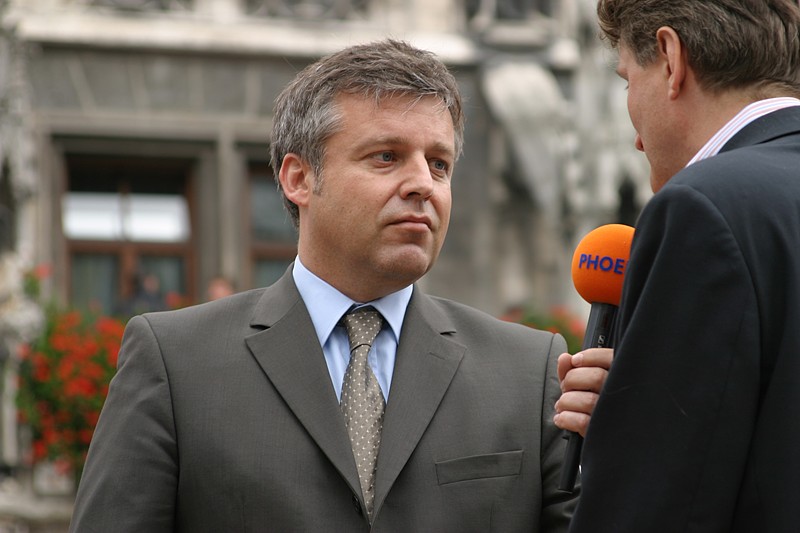
Cameraman and journalist who interviews a person in Austria
See also
[edit]References
[edit]- ^ Nisbet, Matthew C. (March–April 2009). "Communicating Climate Change: Why Frames Matter for Public Engagement". Environment Magazine. Heldref Publications. Taylor & Francis Group. Archived from the original on 3 July 2018. Retrieved 9 March 2019.
- ^ Nisbet, Matthew C. (March 2013). "Nature's Prophet: Bill McKibben as Journalist, Public Intellectual and Activist" (PDF). Discussion Paper Series #D-78. Joan Shorenstein Center on the Press, Politics and Public Policy, School of Communication and the Center for Social Media American University. p. 7. Retrieved 8 March 2013.
- ^ Talton, Jon (31 January 2018). "Occupational outlook: Where the big bucks are – and aren't". The Seattle Times. Retrieved 1 February 2018.
- ^ Thomas Hanitzsch, et al. eds. Worlds of Journalism: Journalistic Cultures around the Globe (2019) pp. 73–74. see excerpt
- ^ "Reuters Institute Digital News Report 2019" (PDF). Reuters Institute for the Study of Journalism. Thomson Reuters.
- ^ Ahmed, Kaamil (6 May 2020). "Covid-19 could trigger 'media extinction event' in developing countries". The Guardian.
- ^ Fu, Angela (24 January 2024). "Tuesday was a bleak day for the media industry". Poynter.
- ^ James, Meg (23 January 2024). "L.A. Times to lay off at least 115 people in the newsroom". L.A. Times.
- ^ a b c Robertson, Katie (24 January 2024). "The News About the News Business Is Getting Grimmer". New York Times.
- ^ "2253 Journalists Killed". Committee to Protect Journalists. Retrieved 29 December 2024.
- ^ "Number of Jailed Journalists Nearly Doubles in Turkey". Los Angeles Times. 5 April 2012. Retrieved 6 April 2012.
- ^ "Iran, China drive prison tally to 14-year high". Committee to Protect Journalists. 8 December 2010. Retrieved 18 November 2011.
- ^ Tabeling, Petra (24 December 2014). "Petra Tabeling: In crisis areas, journalists are at risk in physical and psychological terms". D + C. p. 15. Retrieved 9 March 2019.
- ^ "Scores Of Media Workers Detained In Iran In Latest Protests Honored On Journalists' Day". RFERL ORG. 8 August 2023. Retrieved 16 August 2023.
- ^ Lewis, Justin; Williams, Andrew; Franklin, Bob (6 February 2008). "A Compromised Fourth Estate". Journalism Studies. 9: 1–20. doi:10.1080/14616700701767974. S2CID 142529875.
- ^ "UN PLAN OF ACTION ON THE SAFETY OF JOURNALISTS AND THE ISSUE OF IMPUNITY" (PDF). UNESCO. Retrieved 24 July 2023.
- ^ a b World Trends Report in Freedom of Expression and Media Development Global Report 2017/2018 (PDF). UNESCO. 2018.
- ^ Langford, Eleanor (17 December 2018). "2018 was worst year for violence and abuse against journalists, report says". The Daily Telegraph. London. Archived from the original on 11 January 2022. Retrieved 7 January 2019.
- ^ "WORLDWIDE ROUND-UP of journalists killed, detained, held hostage, or missing in 2018" (PDF). Reporters Without Borders. 1 December 2018. Retrieved 7 January 2019.
- ^ "Miroslava Breach murder: Mexico jails man who ordered journalist's death". BBC News. 23 August 2020. Retrieved 1 December 2020.
- ^ Hjelmgaard, Kim (18 December 2018). "'Unscrupulous politicians' blamed for worst year on record for journalist killings". USA Today. Gannett. Retrieved 7 January 2019.
- ^ a b Roberts, Jessica; Maksl, Adam (2021). Attacks on the American Press: A Documentary and Reference Guide. Santa Barbara: ABC-CLIO. p. 167. ISBN 9781440872570. Retrieved 5 August 2023. This source is an annotated source book intended for use in introductory journalism courses.
- ^ Mullins, Luke (4 May 2023). "A Memorial to Fallen Journalists Is One Step Closer to Happening on the National Mall". Washingtonian. Retrieved 5 August 2023.
- ^ Benton, Joshua (20 October 2021). "It's time to create an alternative path into a journalism career". Nieman Lab. Retrieved 23 July 2023.
- ^ a b Willnat, Lars; Weaver, David H. (2014). The American Journalist in the Digital Age: Key Findings (PDF) (Report). Bloomington, Indiana: School of Journalism, Indiana University. p. 9. Archived from the original (PDF) on 7 May 2014.
Bibliography
[edit]- Deuze, Mark. "What is journalism? Professional identity and ideology of journalists reconsidered." Journalism 6.4 (2005): 442–464 online[dead link].
- Hanitzsch, Thomas, et al. eds. Worlds of Journalism: Journalistic Cultures around the Globe (1979) excerpt of the book also online review
- Hicks, Wynford, et al. Writing for journalists (Routledge, 2016) short textbook; excerpt Archived 11 November 2020 at the Wayback Machine.
- Keeble, Richard. Ethics for journalists (Routledge, 2008).
- Mellado, Claudia, et al. "Investigating the gap between newspaper journalists' role conceptions and role performance in nine European, Asian, and Latin American countries." International Journal of Press/Politics (2020): 1940161220910106 online[dead link].
- Patterson, Thomas E., and Wolfgang Donsbagh. "News decisions: Journalists as partisan actors." Political communication 13.4 (1996): 455–468. online
- Randall, David. The Universal Journalist. (Pluto Press, 2000). ISBN 978-0-7453-1641-3; OCLC 43481682
- Shoemaker, Pamela J., Tim P. Vos, and Stephen D. Reese. "Journalists as gatekeepers." in The handbook of journalism studies 73 (2009) online Archived 10 January 2020 at the Wayback Machine.
- Stone, Melville Elijah. Fifty Years a Journalist. New York: Doubleday, Page and Company (1921). OCLC 1520155
- Wettstein, Martin, et al. "News media as gatekeepers, critics, and initiators of populist communication: How journalists in ten countries deal with the populist challenge." International Journal of Press/Politics 23.4 (2018): 476-495 online[dead link].
External links
[edit]
Media related to Journalists at Wikimedia Commons- Society of Professional Journalists Archived 19 September 2017 at the Wayback Machine
Journalist
View on GrokipediaDefinition and Fundamental Roles
Core Definition and Distinctions
A journalist is a professional who systematically gathers, verifies, and disseminates factual information about current events, primarily to inform the public through established media channels such as newspapers, broadcasts, or digital platforms. This role emphasizes empirical accuracy, sourcing from direct observation, documents, or eyewitnesses, and minimizing personal bias in reporting, as outlined in professional codes like the Society of Professional Journalists' (SPJ) principles, which prioritize truth-seeking, accountability, and independence.[3] The International Federation of Journalists (IFJ) similarly defines journalistic conduct as respecting truth, verifying information before publication, and distinguishing facts from opinions.[10] However, no universal legal or formal qualification exists internationally for the term "journalist," leading to varied applications across jurisdictions and organizations.[1] Key distinctions separate journalists from related roles like commentators, bloggers, or public relations practitioners. Commentators primarily offer analysis, interpretation, or advocacy based on existing facts, often advancing specific viewpoints without the obligation to originate primary reporting or verify new information, whereas journalists focus on establishing and presenting verifiable facts independently of editorial agendas.[11] Bloggers, while sometimes overlapping in content, typically blend personal opinions with selective facts, lacking the structured verification processes, editorial oversight, and commitment to balance that characterize professional journalism; for instance, bloggers may publish unconfirmed rumors or unsubstantiated claims, prioritizing speed or engagement over rigorous sourcing.[12] [13] In contrast, public relations professionals promote organizational narratives rather than impartial public interest, often withholding unfavorable information.[14] These distinctions rely on adherence to ethical standards rather than credentials, though empirical evidence shows frequent deviations in practice, with surveys indicating public perceptions of bias in news reporting due to institutional influences in media outlets.[11] Professional journalism thus demands transparency in methods and corrections for errors, fostering credibility through replicable processes akin to scientific inquiry, distinct from advocacy or entertainment-driven content.[15]Traditional vs. Contemporary Functions
Traditionally, journalists functioned primarily as gatekeepers of information, emphasizing the collection and verification of facts to inform the public about events of significance, guided by principles of objectivity and the public's right to know. This role, rooted in 20th-century professional standards, positioned journalism as a neutral conduit for truth, with reporters acting as watchdogs to scrutinize government and corporate actions without injecting personal bias. For instance, codes like those from the Society of Professional Journalists, established in 1909 and refined over decades, stressed minimizing harm, seeking truth, and accountability, enabling journalism to support democratic processes by providing verified accounts rather than interpretations. In the contemporary era, particularly since the widespread adoption of digital platforms around 2000, journalists' functions have expanded to include real-time dissemination via social media, multimedia storytelling, and audience engagement, often prioritizing speed and virality over exhaustive verification. A 2025 Pew Research Center survey found that while 76% of U.S. adults value journalists' societal role, only 31% trust them to report facts accurately, reflecting a perceived shift toward interpretive or advocacy-oriented content amid declining institutional influence. Digital tools enable instant updates but introduce challenges like unverified citizen inputs and algorithmic amplification, altering the core task from singular fact-reporting to competing in an information-saturated ecosystem where opinion and narrative often blend with news.[16] This evolution marks a departure from traditional neutrality toward greater advocacy integration, as evidenced by debates over "solutions journalism" and explicit partisan framing in outlets post-2010s. Studies indicate that economic pressures from declining ad revenue—U.S. newspaper ad income fell from $49 billion in 2006 to $9 billion in 2020—have incentivized sensationalism and echo-chamber content to retain audiences, eroding the firewall between reporting and commentary. While traditional functions upheld causal realism through empirical sourcing, contemporary practices frequently incorporate subjective lenses, such as framing events through ideological priors, which empirical trust metrics link to public skepticism; for example, Gallup polls since 2016 show U.S. media trust hovering below 40%, correlating with documented partisan imbalances in coverage.[17]| Aspect | Traditional Functions | Contemporary Functions |
|---|---|---|
| Verification | Rigorous fact-checking and multiple sourcing before publication | Rapid posting with post-facto corrections; reliance on social media eyewitnesses |
| Objectivity | Striving for neutral presentation of facts | Integration of analysis, advocacy, and narrative to engage audiences |
| Dissemination | Scheduled print/broadcast cycles for depth | Real-time digital updates for immediacy and interaction |
| Audience Role | Passive recipients of curated news | Active participants via comments, shares, and user-generated content |
| Accountability | Watchdog scrutiny of power via investigative reports | Broader monitoring including corporate and tech giants, but diluted by self-promotion and click-driven metrics |
Historical Development
Origins in Early Communication
The dissemination of news in early human societies relied primarily on oral communication through heralds, messengers, and public announcements, which served as precursors to formalized journalism by enabling the relay of events across communities. In ancient Mesopotamia and Egypt, scribes recorded royal decrees and military victories on clay tablets or papyrus as early as the 3rd millennium BCE, but these were sporadic administrative records rather than systematic news for public consumption.[18] Such oral and inscribed methods were constrained by literacy rates, geographic limits, and reliance on trusted couriers, fostering a causal chain where accurate transmission depended on the messenger's fidelity and speed, often verified through corroboration from multiple travelers.[19] A pivotal advancement occurred in ancient Rome with the establishment of the Acta Diurna ("Daily Acts") in 59 BCE under Julius Caesar's directive, marking the first known regular publication of public news. These daily notices, inscribed on whitewashed boards or metal tablets, were posted in the Roman Forum and other public spaces, detailing senate proceedings, legal trials, births, deaths, military updates, and gladiatorial contests, with copies distributed to provinces via couriers for broader reach.[20] [21] The Acta Diurna functioned as an official state gazette, compiled by appointed scribes from verified records, emphasizing transparency in governance while serving propagandistic aims; its persistence until the 3rd century CE demonstrated the utility of written periodicity in stabilizing information flow amid empire expansion.[22] This system introduced elements of journalistic practice, such as timely aggregation and public accessibility, though content remained government-curated without independent verification. In parallel, ancient China developed early gazettes known as dibao (liaison reports) during the Tang Dynasty (618–907 CE), evolving from Han-era precedents where officials compiled court bulletins on silk or paper for bureaucratic dissemination. These hand-copied reports, posted at government offices and markets, covered imperial edicts, diplomatic news, and natural disasters, aiding administrative coordination across vast territories; by the Song Dynasty (960–1279 CE), they incorporated more diverse updates, including economic intelligence.[23] Unlike Roman equivalents, dibao prioritized internal elite circulation initially, with limited public access, reflecting causal priorities of centralized control over information to maintain dynastic stability rather than broad enlightenment.[24] Both Roman and Chinese systems underscored journalism's origins in state-driven communication, where empirical reporting emerged from necessity for verifiable records, predating commercial incentives and laying groundwork for later professionalization.Industrial Era Professionalization
The advent of steam-powered printing presses, pioneered by Friedrich Koenig and first implemented for The Times of London on November 29, 1814, dramatically increased newspaper production speeds to approximately 1,100 impressions per hour, enabling larger print runs and broader dissemination of news amid rising urbanization and literacy rates during the Industrial Revolution.[25][26] This technological shift, combined with improvements in papermaking and distribution via railroads, reduced costs and facilitated the transition from elite, subscription-based partisan sheets to commercially viable mass-circulation dailies targeted at working-class readers.[27] In the United States, this culminated in the penny press era, exemplified by Benjamin Day's New York Sun, launched on September 3, 1833, as the first successful one-cent daily, sold via street hawking rather than subscriptions and emphasizing human-interest stories, crime, and sensationalism over political advocacy to appeal to a diverse, non-elite audience.[28][29] The model's profitability relied on advertising revenue from industrial goods, marking a causal pivot from party-subsidized journalism to market-driven enterprises where editorial independence from political patrons emerged to maintain advertiser trust, though practices like yellow journalism persisted into the late 19th century.[30] Concurrently, the telegraph's deployment spurred cooperative news gathering, as seen in the Associated Press's formation on May 22, 1846, by five New York papers to pool costs for war dispatches from the Mexican-American War, standardizing factual reporting and reducing duplication across outlets.[31][32] Professionalization gained momentum in the late 19th century through informal associations and clubs that sought to elevate journalistic standards amid competitive proliferation of titles, with explicit efforts including codes of conduct and training predating 20th-century formalization.[33][34] By the early 1900s, dedicated education emerged, such as the University of Missouri's journalism program in 1908 and Columbia University's Graduate School of Journalism in 1912, funded by Joseph Pulitzer to instill skills in reporting, ethics, and objectivity as countermeasures to sensationalism.[35] Organizations like the Society of Professional Journalists, originally Sigma Delta Chi founded in 1909 at DePauw University, further codified norms emphasizing accuracy and autonomy, reflecting a broader institutional response to industrialization's demands for reliable information in an expanding public sphere.[36] This era's developments laid empirical foundations for journalism as a distinct occupation, driven by economic incentives rather than altruism, though source biases in retrospective academic accounts—often from institutions favoring interpretive over strictly factual paradigms—warrant scrutiny against primary technological and market data.[34]Post-WWII Expansion and Cold War Dynamics
Following World War II, journalism experienced significant expansion driven by economic recovery, technological advancements, and rising literacy rates in Western nations. In the United States, the number of daily newspapers peaked at around 1,750 in the late 1940s before a gradual decline, but overall media consumption surged with the advent of television, which penetrated 9% of households in 1950 and reached 87% by 1960, fundamentally altering news delivery from print and radio dominance to visual broadcasting.[37] This shift enabled real-time reporting and broader audiences, with networks like CBS and NBC establishing dedicated news divisions that employed thousands of journalists by the mid-1950s. Globally, decolonization in Asia and Africa spurred the creation of national media outlets; for instance, newly independent India saw its press freedom enshrined in its 1950 constitution, leading to a proliferation of vernacular newspapers from fewer than 1,000 in 1947 to over 20,000 by 1960, though often under state influence.[38] The Cold War intensified these dynamics, framing journalism as a battleground for ideological influence between the United States and the Soviet Union. American media largely aligned with anticommunist narratives, with outlets like Time and The New York Times amplifying fears of Soviet infiltration, contributing to public support for containment policies; by 1950, over 80% of Americans viewed communism as a grave threat, per Gallup polls, partly shaped by such coverage.[39] In the USSR, state-controlled outlets like Pravda disseminated propaganda, reaching millions through radio broadcasts that expanded post-1945 to counter Western airwaves, while the U.S. funded entities like Radio Free Europe, launched in 1950, to beam uncensored news into Eastern Bloc countries, employing hundreds of journalists by the 1960s.[38] This era saw mutual accusations of media manipulation, with U.S. government efforts including the alleged CIA's Operation Mockingbird, initiated in the early 1950s, which reportedly recruited or influenced over 400 American journalists and executives to plant stories favorable to U.S. interests, as detailed in the 1976 Church Committee report on intelligence abuses.[40][41] McCarthyism further strained journalistic independence in the U.S., as Senator Joseph McCarthy's investigations from 1950 to 1954 targeted suspected communists in media, leading to subpoenas for over 500 journalists and blacklisting that forced resignations or self-censorship to avoid loyalty oaths or HUAC scrutiny.[42] Initial press amplification of McCarthy's claims—such as unsubstantiated lists of alleged subversives in government and Hollywood—reflected broader anticommunist fervor, but by 1954, critical reporting from figures like Edward R. Murrow on CBS's See It Now exposed McCarthy's tactics, contributing to his Senate censure on December 2, 1954.[43] These events underscored tensions between journalistic objectivity and national security pressures, with declassified documents later revealing FBI surveillance of reporters, yet also highlighting media's role in eventual accountability. Internationally, Cold War proxy conflicts like Korea (1950–1953) tested correspondents' access, with embedded reporting yielding graphic accounts that boosted TV news credibility but faced censorship, as U.S. military withheld casualty figures until late 1951.[39] Overall, the period professionalized broadcast journalism while embedding propaganda risks, as both superpowers subsidized sympathetic outlets to sway global opinion.Digital Revolution and Fragmentation
The advent of the internet in the mid-1990s marked the onset of the digital revolution in journalism, as news organizations began establishing online presences—such as The New York Times launching its website in 1996—allowing for real-time publishing that dismantled the 24-hour news cycle of broadcast and print eras.[44] This shift empowered audiences with direct access to information, fostering user-generated content and aggregators like Google News, which redirected traffic and advertising revenue away from traditional outlets.[45] By the early 2000s, blogs proliferated, with platforms enabling non-professionals to publish commentary and eyewitness accounts, exemplified by the launch of South Korea's OhMyNews in 2000, which blended citizen submissions with editorial oversight and attracted millions of users.[46] Citizen journalism further expanded during events like the 2004 Indian Ocean tsunami and 2010 Arab Spring uprisings, where individuals used blogs, YouTube, and Twitter to document and disseminate information bypassing institutional gatekeepers.[47] Economically, the transition devastated print media: U.S. newspaper ad revenues, which accounted for over 80% of industry income in 2000, collapsed as digital platforms captured market share, resulting in a 52% drop in overall newspaper publisher revenues by 2021 compared to pre-internet peaks.[48] Employment followed suit, with U.S. newspaper newsroom staff declining by 57% from 2008 to 2022, peaking at around 71,000 journalists before falling to under 31,000.[49] This fragmentation arose from lowered barriers to entry, enabling freelance and independent operators to build audiences via social media and direct subscription models, but it also intensified competition, reduced editorial resources for verification, and shifted power to algorithms that prioritize engagement over depth.[50] The proliferation of digital channels has led to audience fragmentation, where consumers increasingly select ideologically aligned sources, contributing to polarized information ecosystems often described as echo chambers—though empirical studies indicate mixed evidence, with selective exposure reinforcing existing views but not fully isolating users from opposing content.[51] Social media platforms, rising in the mid-2000s (e.g., Twitter in 2006, Facebook's news feed dominance by 2010), amplified this by algorithmically curating feeds based on past interactions, diminishing the shared public square once dominated by a few broadcasters and dailies.[52] Consequently, journalism splintered into niches—partisan outlets, investigative pods, and viral aggregators—challenging traditional notions of objectivity while enabling rapid accountability, as seen in crowdsourced investigations during the 2016 U.S. election cycle.[53] This evolution, while democratizing access, has strained institutional credibility amid rising misinformation, prompting adaptations like hybrid models blending legacy reporting with digital tools.[54]Categories of Journalists
Institutional and Staff Journalists
Institutional and staff journalists are full-time employees of established media organizations, such as newspapers, broadcast networks, and digital outlets, who operate within hierarchical newsroom structures. These professionals typically receive salaries, benefits, and access to institutional resources, including editorial teams, research libraries, and legal support, distinguishing them from freelancers who lack such integrated backing.[55][56] Staff journalists are assigned specific beats—such as politics, business, or local affairs—and follow organizational protocols for sourcing, verification, and publication, which aim to enforce consistency and accountability. This setup enables collaborative reporting, where stories undergo multiple layers of editing to minimize errors and align with the outlet's standards, though it can introduce conformity pressures from editorial leadership. In practice, they conduct interviews, attend press conferences, and produce content for daily deadlines, often prioritizing institutional priorities like audience retention over independent pursuits.[55][57] Recent data indicate a contraction in staff positions amid industry shifts toward digital models and cost-cutting. In the United States, employment for news analysts, reporters, and journalists is projected to decline by 4 percent from 2024 to 2034, with about 4,100 openings annually due to retirements offsetting losses. Globally, the share of journalists on permanent contracts fell from 75 percent in 2015 to 66 percent by 2025, correlating with a rise in freelance work and noted increases in left-leaning ideological alignment within newsrooms, per surveys of media professionals. Newspaper newsroom employment in the U.S. has halved since the early 2000s, dropping below 30,000 positions, exacerbating reliance on fewer staff for broader coverage.[55][58][59] Despite these trends, institutional journalists retain advantages in credibility signaling through affiliation with recognized brands, which facilitates source access and public trust, though empirical analyses reveal persistent biases in topic selection and framing within major outlets. For instance, staff-driven coverage in mainstream media often amplifies certain narratives while underrepresenting others, as documented in content audits showing skewed resource allocation. This model persists in providing structured training and ethical frameworks, such as adherence to codes from bodies like the Society of Professional Journalists, fostering a baseline of professional rigor amid fragmentation.[60][61]Freelance and Independent Operators
Freelance journalists operate without permanent employment by a single news organization, instead pitching stories to multiple outlets on a per-assignment basis, often negotiating rates per word or story.[60] Independent operators extend this model by self-publishing through personal platforms, newsletters, or digital channels like Substack and YouTube, circumventing traditional gatekeepers to reach audiences directly.[62] In the United States, approximately 34% of journalists identified as freelance or self-employed in surveys conducted around 2022-2023, reflecting a shift toward non-staff roles amid declining traditional media employment. Journalists often transition from staff positions by resigning from full-time roles to pursue independent ventures such as podcasts, while maintaining partial affiliations through writing columns or guest appearances.[63] This proportion has likely grown with the digital fragmentation of news, as platforms enable monetization via subscriptions and ads without institutional support.[64] The digital era has accelerated the viability of independent operations by lowering barriers to distribution and verification tools, allowing operators to conduct investigations once reliant on institutional resources. For instance, social media's role in news consumption overtook television in the U.S. by 2025, with 54% of adults accessing news via these channels, fostering direct audience engagement for independents.[65] Successful examples include Glenn Greenwald, who after leaving The Guardian in 2014 built an independent platform exposing surveillance and foreign policy issues, and Bari Weiss, who resigned from The New York Times in 2020 to launch The Free Press, emphasizing viewpoints marginalized by mainstream editorial constraints.[66] These models prioritize autonomy, enabling coverage of topics like institutional biases in legacy media, which independents argue distort public discourse due to homogenized ideological influences.[62] Financial precariousness remains a core challenge, with average annual earnings for U.S. freelance journalists around $60,000, often supplemented by multiple gigs amid inconsistent payments and declining per-word rates.[55] [67] Independents face additional hurdles, including audience-building in a mistrustful environment—exacerbated by perceived biases in established outlets—and limited access to editing, legal protections, or collaborative networks typically afforded to staff.[68] [69] Despite these, the sector's growth underscores a causal response to traditional media's contraction, with freelancers comprising a growing force in specialized reporting where institutional inertia limits agility.[70]Specialized Fields and Niches
Specialized fields in journalism, often termed "beats" or niches, require reporters to cultivate deep subject-matter expertise, specialized methodologies, and sometimes unique risk management skills to deliver authoritative coverage. These areas emerged as journalism professionalized in the 20th century, enabling focused reporting on complex domains that generalists cannot adequately address. For instance, beat reporters build networks of sources within institutions or industries, allowing sustained scrutiny over time.[71][72] Common niches include investigative, war, science, political, business, sports, and health reporting, each with distinct demands: investigative work prioritizes uncovering concealed facts through prolonged research, while war correspondence involves on-site hazard assessment amid combat.[73][74] Investigative journalism entails systematic probing of public interest issues, often revealing wrongdoing or systemic failures that officials seek to obscure, relying on original evidence gathering like document analysis and confidential sources. Pioneered in outlets like The New York Times and The Washington Post, it has exposed scandals such as corporate fraud or governmental malfeasance, though it demands rigorous verification to avoid errors that undermine credibility. Reporters in this niche typically possess legal or forensic research skills, with organizations like the International Consortium of Investigative Journalists coordinating global efforts on topics like tax evasion, as seen in the 2016 Panama Papers revelation involving 11.5 million documents from a Panamanian law firm.[73] War and conflict reporting specializes in frontline documentation of military operations, humanitarian crises, and geopolitical shifts, where correspondents embed with forces or operate independently in volatile zones. This field traces to the Crimean War in the 1850s, when reporters first accompanied armies, but modern practitioners face elevated threats: between 1992 and 2023, the Committee to Protect Journalists recorded over 2,300 media workers killed in coverage-related incidents, predominantly in conflict areas like Syria and Ukraine. Skills include tactical awareness, satellite communication proficiency, and ethical navigation of embedding agreements, which provide access but can limit critical distance from military narratives.[74] Science and technology journalism focuses on translating empirical research, innovations, and policy implications for lay audiences, necessitating comprehension of methodologies like peer-reviewed studies and statistical analysis to discern valid findings from hype or fraud. Journalists here often hold STEM backgrounds; for example, a 2021 survey by the World Conference of Science Journalists found 40% of members had advanced science degrees, enabling critiques of flawed claims, such as early COVID-19 treatment debates where initial hydroxychloroquine endorsements collapsed under randomized trial scrutiny. This niche has grown with digital tech, covering AI ethics and biotech, but faces challenges from advertiser influence in trade publications.[75] Other prominent niches include political reporting, which tracks legislative processes and campaigns through access to officials and data like voting records, as in coverage of the U.S. 2020 election where beat reporters analyzed 60 million+ mail-in ballots for irregularities; business and financial journalism, emphasizing economic indicators and corporate disclosures, with specialists decoding SEC filings to reveal events like the 2008 financial crisis rooted in subprime mortgage defaults totaling $1.2 trillion; and health journalism, which scrutinizes medical evidence and public policy, exemplified by investigative work on opioid overprescription that contributed to 500,000 U.S. overdose deaths from 1999-2021 per CDC data. Sports and entertainment beats, while less technical, demand immersion in subcultures for authentic narratives, such as doping scandals in athletics verified via WADA lab tests. These fields underscore journalism's role in accountability, though source dependencies can introduce biases if not cross-verified.[76][77]Preparation and Qualifications
Academic and Formal Training
Journalism education in universities originated in the United States during the early 20th century, with the first dedicated program established at the University of Missouri in 1908, influenced by Joseph Pulitzer's 1904 call for professional training to elevate journalistic standards.[78] Subsequent programs followed at Columbia University in 1912 and other institutions, transitioning from apprenticeships to structured academic curricula amid growing demands for ethical and skilled reporting during industrialization and urbanization.[79] By the 1920s, journalism schools emphasized liberal arts foundations alongside practical skills, reflecting debates over whether reporters should be generalists versed in history, economics, and sciences rather than narrowly technical trainees.[80] Entry into professional journalism typically requires a bachelor's degree, as noted by the U.S. Bureau of Labor Statistics, which reports that most reporters, correspondents, and news analysts hold such qualifications, often supplemented by internships or campus media experience.[55] Surveys indicate that while approximately 69% of journalists possess at least a bachelor's degree, only a subset majored in journalism or communications; many elite outlets, such as The Economist, employ graduates from diverse fields like history, politics, or sciences, with some holding advanced degrees including PhDs.[81][82] This heterogeneity stems from journalism's roots in liberal education, where subject-matter expertise in areas like economics or international relations can outweigh specialized training.[83] Undergraduate journalism curricula, spanning 39–122 credits across programs like those at City College of New York or the University of Maryland, core on foundational skills including reporting, writing, research, news judgment, and multimedia production.[84][85] Courses typically cover ethical frameworks, media law, audience engagement, and beat-specific reporting, with hands-on components such as capstone projects or community news practicums to simulate professional workflows.[86][87] Graduate programs, requiring 45–48 credits at institutions like Stanford or Harvard Extension, extend to advanced topics like data storytelling, investigative techniques, and digital tools, often mandating prior bachelor's completion and on-campus residencies.[88][89] The necessity of formal journalism degrees remains contested, with proponents arguing they provide ethical grounding, legal knowledge, and supervised practice in a controlled environment, reducing errors in high-stakes reporting.[90] Critics, including industry observers, contend that such programs can be costly and overly theoretical, failing to guarantee employment amid digital disruptions, and note successful journalists often succeed via self-directed learning, alternative degrees, or on-the-job apprenticeships without J-school credentials.[91][92] Empirical outcomes vary: while degrees facilitate access to institutional roles, freelance and independent journalism frequently bypasses them, prioritizing demonstrable skills over credentials, as evidenced by the profession's historical evolution and current labor market flexibility.[93][94]Practical Skills Acquisition
Practical skills in journalism, such as interviewing, fact-checking, multimedia production, and deadline-driven reporting, are predominantly acquired through hands-on experiences rather than theoretical instruction alone. Internships and apprenticeships provide structured entry points, immersing aspiring journalists in real-world newsroom environments where they shadow professionals and contribute to stories under supervision. For instance, the Dow Jones News Fund offers a six-week paid training program for novice reporters, emphasizing skills like interviewing sources and writing concise articles, with participants often securing entry-level positions upon completion.[95] Similarly, the National Journalism Center runs a 12-week paid internship in Washington, D.C., focusing on accurate reporting fundamentals through assignments with conservative-leaning outlets, training over 1,000 participants since its inception in 1977.[96] Workshops and short-term programs supplement formal education by targeting specialized competencies, including digital tools and investigative techniques. The NBCU Academy, launched by NBCUniversal, delivers free online and in-person modules on journalism skills, such as video editing and data visualization, aimed at early-career professionals to bridge gaps in multimedia proficiency amid industry shifts toward digital platforms.[97] Specialized workshops, like those on data journalism or digital storytelling, have proliferated since the mid-2010s, with organizations such as the Knight Center for Journalism in the Americas providing webinars and e-books that have reached thousands of practitioners globally, enhancing adaptability to algorithmic news distribution.[98][99] On-the-job experience remains the primary mechanism for refining practical abilities, as new hires typically enter with baseline exposure from internships or freelancing but develop expertise through iterative feedback in dynamic settings. Local newsrooms, for example, foster versatile skill sets like rapid sourcing and audience engagement, contrasting with national digital outlets that prioritize analytics-driven content, according to analyses of career trajectories post-2010.[100] Freelancers often self-teach via trial-and-error in the digital era, leveraging online resources and personal networks, as evidenced by qualitative studies of media practitioners acquiring technical proficiencies independently.[101] Continuous practice, including mock reporting exercises in programs like those from the Leadership Institute, underscores the necessity of repetition to master ethical decision-making under pressure.[102]Certification and Continuous Learning
Unlike professions such as law or medicine, which mandate licensure for practice, journalism operates without universal certification requirements imposed by government or regulatory bodies, allowing entry based primarily on demonstrated skills, employer hiring standards, and portfolio work.[103] Voluntary credentials, often offered by educational institutions or professional associations, serve to signal competence in specific areas like reporting, editing, or multimedia production, though they do not confer legal authority to practice. For instance, the National Council for the Training of Journalists (NCTJ) in the United Kingdom administers the Certificate in Foundation Journalism, a Level 3 qualification introduced to provide foundational skills in news gathering and ethical reporting, with over 1,000 candidates completing NCTJ awards annually as of 2023.[104] In the United States, certifications tend to target niche roles or educators rather than general practitioners; the Journalism Education Association (JEA) offers the Certified Journalism Educator (CJE) credential, earned by passing an exam on teaching media literacy and production, with approximately 200 advisers certified since its inception in 2015.[105] University-affiliated programs, such as UCLA Extension's Journalism Certificate, emphasize practical training in investigative reporting and digital storytelling, requiring completion of courses like multimedia journalism workshops, but these are non-mandatory and geared toward career enhancement rather than baseline entry.[106] Specialized fields like court reporting feature more formalized options, including the National Court Reporters Association's Registered Professional Reporter (RPR) certification, which tests stenographic skills and accuracy at 180 words per minute, held by over 10,000 professionals as of 2024.[107] Continuous professional development (CPD) has become essential amid technological shifts, such as the rise of AI-assisted verification tools and social media sourcing, prompting journalists to pursue ongoing training to maintain accuracy and adaptability. Organizations like the NCTJ's Journalism Skills Academy deliver CPD courses on topics including data journalism and audience engagement, with flexible formats like online modules completed by thousands of UK journalists yearly.[108] In the U.S., Columbia Journalism School's professional programs offer immersive non-degree courses in investigative techniques, attracting mid-career reporters since their expansion in the 2010s, while platforms like the Knight Center for Journalism in the Americas provide free Massive Open Online Courses (MOOCs) on fact-checking, reaching over 100,000 participants globally by 2023.[109][110] These efforts underscore a self-driven model where empirical skill updates, rather than enforced mandates, address the profession's causal vulnerabilities to misinformation and platform algorithm changes, though participation rates vary, with surveys indicating only 40-50% of U.S. journalists engaging in formal CPD annually due to time and cost barriers.[111]Operational Practices
Sourcing and Verification Protocols
Journalists prioritize obtaining information from primary sources, such as eyewitness accounts, official documents, and direct observations, to minimize reliance on intermediaries that may introduce distortion or bias.[3] Original sourcing enables direct assessment of reliability, reducing propagation of errors from secondary reports.[112] Protocols emphasize pursuing on-the-record attributions whenever possible, as these allow public evaluation of the source's credibility and incentives.[113] Verification requires cross-checking claims against at least two independent, corroborative sources before publication, particularly for contentious or impactful assertions.[114] This involves scrutinizing the source's track record, positional authority, and potential motives, while applying skepticism to information that conflicts with established facts or common sense.[115] Anonymous sources, used sparingly due to accountability risks, demand heightened vetting, including internal corroboration and editorial oversight, to prevent fabrication or agenda-driven leaks.[116] In the digital era, protocols extend to authenticating user-generated content through metadata analysis, reverse image searches, geolocation confirmation, and contextual matching against known events.[117] Journalists must independently confirm details from social media or crowdsourced inputs, avoiding unverified amplification that can spread misinformation.[118] Fact-checking organizations and open-source intelligence tools supplement but do not substitute for primary diligence, as institutional biases in some verifiers necessitate parallel evaluation.[119]- Assess source independence: Ensure no financial or ideological ties compromise objectivity.
- Document the process: Maintain records of verification steps for transparency and potential corrections.
- Balance speed with rigor: Delay publication if needed to resolve discrepancies, as premature release erodes trust.[120]
Reporting Techniques and Tools
Journalists rely on interviewing as a core reporting technique to obtain direct information, perspectives, and quotes from sources, often requiring preparation of targeted questions and follow-ups to elicit details while verifying responses against other evidence.[122] Fact-checking remains essential, involving cross-referencing claims with documents, multiple sources, and public records to ensure accuracy and mitigate misinformation.[123] Investigative reporting methods include analyzing public records via Freedom of Information Act requests, reviewing financial statements and legal documents, and employing undercover techniques when ethically justified, though the latter carry legal risks and demand rigorous source protection.[124][125] Data journalism techniques encompass collecting, cleaning, and analyzing datasets to uncover patterns, followed by visualization through charts, maps, and infographics to communicate complex findings accessibly.[126] Software tools like Microsoft Excel and Google Sheets are widely used by 72% and 58% of data journalists, respectively, for initial data manipulation, while platforms such as Datawrapper facilitate non-coding visualization.[127] Field reporting often involves on-site observation and note-taking, supplemented by audio and video recording devices to capture events and interviews accurately.[128] Digital tools have expanded capabilities, with AI-assisted transcription and research aids like Google's NotebookLM enabling faster processing of interviews and notes, though journalists must independently verify outputs to avoid errors or biases inherent in algorithmic training data.[129] Security-focused tools, including encrypted communication apps and VPNs, are critical for protecting sources and data in sensitive investigations, as outlined in 2024 digital security checklists for reporters.[130] Traditional equipment like notebooks persists alongside laptops for real-time drafting, while multimedia tools such as cameras and editing software support convergent reporting across print, broadcast, and online formats.[131] In 2024, investigative outlets highlighted tools like advanced scraping and analysis platforms from GIJN's annual list, emphasizing their role in efficient, evidence-based scrutiny of power structures.[132]Editing and Dissemination Processes
In journalism, the editing process typically begins after a reporter submits a draft, involving multiple layers of review to ensure accuracy, clarity, and adherence to organizational standards. Copy editors verify facts such as names, dates, locations, and numerical data, while also checking for grammatical errors, logical flow, and stylistic consistency according to style guides like the Associated Press Stylebook.[133] This stage often includes content evaluation for relevance and impact, followed by targeted revisions to eliminate redundancy or enhance readability, with effective editors prioritizing a sequential approach: assessing overall content, refining copy, and confirming clarity.[134] Fact-checking forms a critical component of editing, conducted in-house as an internal quality control measure before publication, where dedicated personnel or the assigning editor cross-verify claims against primary sources, data, and expert input to mitigate errors or misinformation.[135] This occurs post-substantive editing but pre-final production, distinguishing it from proofreading, which focuses on surface-level mechanics rather than substantive truth.[136] In practice, editors may reject or substantially alter stories based on verification failures, though resource constraints in smaller outlets can limit depth, potentially introducing risks of uncaught inaccuracies.[137] Dissemination follows editing approval, traditionally relying on print runs, broadcast schedules, or wired services with geographic and temporal limitations, such as daily newspaper cycles or fixed TV slots that constrained reach to specific audiences and regions.[138] In the digital era, processes have shifted toward instantaneous online publishing via websites, apps, and social platforms, enabling global, real-time distribution but introducing challenges like algorithmic amplification of unverified content and reduced editorial gatekeeping.[139] News organizations now integrate search engine optimization, multimedia embeds, and audience analytics to maximize visibility, with social media serving as a primary vector—where, for instance, platforms like X and Facebook drive a significant portion of traffic to original reports, though this often prioritizes virality over depth.[140] Hybrid models persist, blending traditional outlets' structured release with digital syndication, yet studies indicate declining engagement with legacy formats amid audience fragmentation.[141]Ethical Frameworks
Established Codes and Principles
The Society of Professional Journalists (SPJ) Code of Ethics, revised on September 6, 2014, provides a voluntary framework embraced by thousands of journalists across platforms, emphasizing principles derived from earlier codes dating to 1926.[3] It structures ethical conduct around four core imperatives: Seek Truth and Report It, which mandates testing the accuracy of information, providing relevant context, identifying sources clearly, distinguishing news from opinion or advertising, and bold but responsible use of techniques like hidden recording only when traditional methods fail and public interest outweighs potential harm; Minimize Harm, requiring ethical consideration of the consequences of reporting, respect for privacy and human dignity, sensitivity to vulnerable subjects such as children or victims of trauma, avoidance of gratuitous harm, and weighing potential benefits against intrusion; Act Independently, prioritizing public service over affiliations, refusing gifts or favors that compromise integrity, disclosing unavoidable conflicts, and resisting pressures from advertisers, governments, or sources; and Be Accountable and Transparent, involving self-correction of errors promptly and prominently, explaining ethical decision-making, recognizing diverse perspectives in coverage, and encouraging audience dialogue while clarifying roles.[3] These principles are supported by explanatory position papers addressing evolving practices, such as digital verification, but remain non-enforceable through sanctions.[3] Internationally, the International Federation of Journalists (IFJ) Global Charter of Ethics for Journalists, adopted on June 12, 2019, at the IFJ World Congress in Tunis, complements its 1954 Declaration of Principles and enumerates 16 articles grounded in human rights standards.[10] Central duties include respecting the public's right to true information by verifying facts scrupulously, separating them from commentary, and rectifying published errors transparently and proportionately (Articles 1, 3, and 6); employing fair and honest methods in sourcing while protecting confidential sources unless overridden by grave public interest (Articles 4 and 7); safeguarding privacy and dignity, particularly for vulnerable groups, and rejecting discrimination or incitement to hatred based on origin, sex, sexual orientation, disability, religion, or other traits (Articles 8 and 9); prohibiting plagiarism, distortion, defamation, or undisclosed conflicts of interest (Articles 10 and 13); and maintaining independence from state, corporate, or ideological influences, including refusal of tasks violating professional conscience (Articles 11 and 15).[10] The Charter affirms journalists' rights to access information and investigate without undue interference, positioning ethics as integral to press freedom.[10] Other organizations, such as the Radio Television Digital News Association (RTDNA), adapt similar tenets for broadcast and digital media, stressing truth, fairness, and independence while providing resources for ethical dilemmas rather than rigid rules.[142] These codes collectively prioritize empirical verification and causal accountability in reporting, aiming to foster public trust through consistent application, though their voluntary nature relies on individual and institutional adherence.[3][10]Pursuit of Objectivity and Balance
Journalists aspire to objectivity by adhering to professional codes that mandate verifying facts, contextualizing information, and distinguishing between news and opinion. The Society of Professional Journalists (SPJ) Code of Ethics, revised in 2014, directs members to "seek truth and report it" through rigorous testing of information sources and avoidance of conflicts of interest that could compromise independence.[3] Similarly, it requires balancing the public's right to know against potential harm, while acting independently by rejecting undue influence from advertisers or special interests.[15] These principles aim to minimize subjective intrusion, fostering reporting grounded in verifiable evidence rather than personal ideology. To pursue balance, journalists employ techniques such as soliciting multiple viewpoints, especially on contentious issues, and providing proportional representation of perspectives based on their factual weight rather than equal airtime for all claims. Fact-checking organizations like PolitiFact, founded in 2007 by the Poynter Institute, exemplify this by rating statements across the political spectrum, though critics note inconsistencies in application that may reflect underlying leanings. Empirical methods include cross-referencing primary documents, data analysis, and on-the-record sourcing to construct narratives that withstand scrutiny. Training programs, such as those from the Reuters Institute for the Study of Journalism, emphasize these protocols to counteract cognitive biases like confirmation bias, where reporters favor information aligning with preconceptions. Despite these standards, achieving objectivity faces inherent challenges from journalists' demographic skews and institutional dynamics. Surveys indicate that in the United States, approximately 28% of journalists identify as Democrats compared to 7% as Republicans, with independents comprising the majority but often leaning left on social issues, potentially influencing story selection and framing. Peer-reviewed analyses, such as Groseclose and Milyo's 2005 study, quantify bias by examining media citations of think tanks, finding outlets like The New York Times and CBS News cite liberal sources disproportionately, akin to a think tank rated at -20 on a -100 to +100 ideology scale (where zero is centrist).[143] A 2023 University of Rochester machine-learning study of headlines from 2014 to 2022 revealed growing partisan slant across U.S. publications, with left-leaning outlets amplifying negative economic coverage during Republican administrations.[144] Systemic left-wing bias in mainstream media and academia—evident in underreporting of certain scandals or overemphasis on identity-based narratives—undermines balance, as documented in Groseclose's 2011 book Left Turn, which aggregates data showing media elites' worldview diverges from the general public by 20-30 points on standard political scales.[6] Efforts to counter this include transparency measures, such as disclosing methodologies or funding, and internal diversity initiatives to incorporate conservative viewpoints, though implementation varies. Independent outlets and audience-driven platforms like Substack have emerged as alternatives, prioritizing unfiltered evidence over institutional consensus, yet they too risk echo-chamber effects. Ultimately, true balance demands ongoing self-critique and reliance on empirical falsifiability over narrative conformity.[145]Accountability Mechanisms and Enforcement
Journalism primarily relies on self-regulation for enforcing ethical standards, as the profession lacks mandatory licensing or centralized disciplinary bodies akin to those in law or medicine. Professional associations such as the Society of Professional Journalists (SPJ) promulgate codes emphasizing truth-seeking, minimization of harm, independence, and accountability, but these are voluntary and unenforceable, with no mechanisms for investigating complaints or imposing sanctions on members.[146] Internal newsroom practices, including editorial reviews and ombudsman roles in outlets like The Washington Post, serve as primary enforcement tools, often resulting in corrections, retractions, or terminations for violations like fabrication or plagiarism.[147] High-profile scandals illustrate sporadic but impactful enforcement through reputational consequences. In May 2003, The New York Times exposed reporter Jayson Blair for fabricating details and plagiarizing in at least 36 stories, prompting his resignation, an internal investigation that identified systemic oversight failures, and subsequent policy reforms including enhanced verification protocols.[148] Such cases lead to public apologies and credibility erosion for the outlet, yet they remain exceptional, as most violations evade formal penalties due to the absence of binding oversight.[149] In countries with press councils, such as Germany and Ireland, independent bodies adjudicate public complaints against ethical breaches, issuing non-binding rulings like required corrections or public reprimands that carry reputational weight but no legal compulsion.[150] [151] The UK's Independent Press Standards Organisation (IPSO), established in 2014, handled over 6,000 complaints in 2022, resolving many through mediated resolutions or adjudications, though critics argue its industry funding undermines impartiality.[152] External pressures, including audience fact-checking via platforms like X (formerly Twitter) and independent verifiers such as Poynter Institute, increasingly supplement traditional mechanisms, amplifying demands for transparency but often yielding inconsistent enforcement.[153] The paucity of robust enforcement fosters ethical lapses, as evidenced by persistent fabrication incidents and declining public trust—Gallup polls show U.S. media confidence at 32% in 2023, down from 72% in 1976—partly attributable to unaddressed biases and ideological conformity in newsrooms that prioritize narrative over verification. While legal remedies like defamation suits provide indirect accountability, they address harm rather than ethical breaches and are invoked sparingly due to First Amendment protections in the U.S.[154] Overall, journalism's decentralized model prioritizes press freedom over stringent oversight, rendering enforcement reactive and market-driven rather than systematic.Institutional Relationships
Interactions with Sources and Experts
Journalists establish relationships with sources and experts through repeated interactions, often cultivating confidential informants to access non-public information essential for investigative reporting.[155] These relationships are symbiotic, as sources gain visibility or influence while journalists obtain exclusive insights, but they require clear agreements on attribution and confidentiality to maintain trust.[156] Ethical guidelines emphasize documenting such pacts to prevent misunderstandings and ensure source protection, particularly for whistleblowers facing risks.[157] Verification of information from sources and experts involves cross-checking claims against primary documents, multiple independent corroborators, and original data rather than secondary reports.[158] Journalists consult impartial experts to contextualize complex topics, scrutinizing their credentials and potential conflicts of interest to avoid undue reliance on any single viewpoint.[112] Fact-checking processes include line-by-line review against sourced materials, transcription of interviews where feasible, and use of digital tools to authenticate images or data.[159] [160] Challenges in these interactions arise from source credibility assessments, where journalists must navigate confirmation bias that favors preconceived narratives and symbiotic dependencies potentially compromising independence.[161] Institutional affiliations of experts, such as in academia, can introduce systematic biases influencing their interpretations, necessitating rigorous evaluation beyond surface qualifications.[162] Social media sources exacerbate verification difficulties due to anonymity and rapid dissemination, prompting heightened scrutiny of authorship and motives.[162] Ethical codes, like those from The New York Times, prohibit coercive tactics toward uncooperative sources and demand fairness in representation to uphold journalistic integrity.[163]Ties to Government and Power Structures
Journalists often cultivate relationships with government officials to secure access to information, including through regular press briefings and official releases, which can incentivize alignment with state narratives to maintain privileges. This dynamic has been critiqued as fostering "access journalism," where critical scrutiny risks exclusion from future briefings.[164] The revolving door between journalism and government roles represents a structural tie that can compromise independence, as individuals move from regulatory or policy positions to media commentary or vice versa, leveraging insider knowledge while potentially softening oversight of former employers. In the United States, this phenomenon accelerated post-2008 financial crisis, with examples including former congressional staffers becoming lobbyists at rates exceeding 50% within a year of leaving office by 2022.[165][166] A notable case occurred in February 2019 when CNN hired Sarah Isgur-Flores, a former advisor to Republican campaigns, prompting debates over whether such hires prioritize expertise or partisan influence.[167][168] Embedded journalism during military operations exemplifies government control over reporting, as journalists are attached to units under military oversight, limiting perspectives to those approved by commanders. During the 2003 Iraq invasion, over 600 reporters were embedded with U.S. forces, resulting in coverage that largely echoed official justifications for the war, with studies showing embedded reports 70% more supportive of U.S. policy than independent accounts.[169][170] Government funding further binds certain outlets to power structures, particularly public broadcasters. In the U.S., NPR and PBS stations derived an average of 13% and 18% of revenues from federal sources like the Corporation for Public Broadcasting in fiscal year 2024, creating potential vulnerabilities to policy shifts, as evidenced by Congress's 2025 rescission of $1.1 billion in CPB appropriations, which threatened hundreds of stations.[171][172] While firewalls exist to preserve editorial autonomy, critics argue such subsidies encourage deference to funders, contrasting with fully independent media reliant on private or reader support.[173] In authoritarian regimes, state media journalists operate as direct extensions of government apparatus, disseminating propaganda under threat of reprisal, as seen in Russia's RT network, which by 2022 faced global bans for amplifying Kremlin narratives on the Ukraine invasion. Even in democracies, mainstream outlets' heavy reliance on official sources—up to 80% of stories in some analyses—can propagate unverified government claims, as during the lead-up to the 2003 Iraq War when media echoed intelligence on weapons of mass destruction without sufficient challenge.[174][175] These ties underscore causal risks to journalistic detachment, where proximity to power erodes adversarial scrutiny essential for accountability.[176]Corporate Influences and Advertiser Pressures
Corporate ownership of media outlets has concentrated control over news production, with six conglomerates accounting for over 90% of U.S. media in 2023, enabling top-down directives that prioritize profitability over in-depth reporting. This structure often results in cost-cutting measures, including layoffs and reduced budgets for investigative journalism, as corporate parents like Gannett and Alden Global Capital have shuttered local newsrooms or shifted focus to wire services and opinion content since acquiring hundreds of newspapers between 2018 and 2022.[177] Empirical analyses confirm that corporate acquisitions diminish original local content; a 2022 study of 31 U.S. local newspapers found a statistically significant drop in place-bound reporting—such as coverage of community events and government—post-acquisition, with corporate-owned papers producing 20-30% less local news than independent peers, attributable to centralized editorial mandates favoring national syndication for efficiency.[177] Similarly, a 2023 review of media ownership effects concluded that consolidation correlates with homogenized content and fewer adversarial stories challenging business interests, as owners integrate outlets into profit-driven portfolios that discourage resource-intensive probes into corporate misconduct.[178] These shifts reflect causal pressures from shareholder expectations, where investigative units, like those at Tribune Publishing pre-2018, were dismantled to boost short-term margins amid declining ad revenue. Advertiser dependencies exacerbate these influences, as commercial media derive 60-70% of revenue from sponsorships, creating incentives for favorable coverage or omission of sponsor critiques. Surveys indicate pervasive pressure: a study of U.S. newspaper editors found 89% experienced advertiser attempts to shape or suppress stories, often through threats to withhold future placements, leading to editorial concessions in 25% of cases.[179] In lifestyle and financial journalism, quantitative content analyses reveal positive bias toward high-spending advertisers; for instance, outlets with elevated pharmaceutical ad loads aired 15-20% more promotional health segments and fewer critical drug safety reports between 2010 and 2019.[180][181] Self-censorship emerges as a key mechanism, driven by fear of revenue loss; a Council of Europe survey of European journalists reported 35% avoided stories conflicting with organizational commercial ties, including advertiser sensitivities, prioritizing "safe" content like infotainment over scrutiny of corporate practices.[182] This dynamic is evident in local TV news, where stations reliant on auto dealer ads historically underreported vehicle safety defects, as documented in 1960s analyses by Ralph Nader, a pattern persisting in modern sectors like tech and finance where critical coverage risks boycotts.[183] Such pressures foster a causal realism where journalism aligns with elite economic interests, systematically underrepresenting harms from powerful firms despite public demand for accountability.[184] These influences undermine journalistic autonomy, as corporate boards and ad executives—often with overlapping ties to the subjects of coverage—impose indirect controls via performance metrics tied to audience retention rather than veracity. While some outlets maintain firewalls, empirical evidence from content shifts post-merger indicates that profit imperatives routinely trump truth-seeking, contributing to public perceptions of media capture by commercial entities.[185][186]Press Freedoms and Constraints
Legal Foundations and Protections
The primary legal foundation for protections of journalistic activity in the United States is the First Amendment to the Constitution, ratified on December 15, 1791, which declares that "Congress shall make no law... abridging the freedom of speech, or of the press." This provision has been construed by the Supreme Court to bar government-imposed prior restraints on publication, as established in Near v. Minnesota (1931), which struck down a state law allowing suppression of scandalous newspapers, and reinforced in New York Times Co. v. United States (1971), where the Court refused to enjoin publication of the Pentagon Papers despite national security claims.[187][188] These rulings underscore that journalistic dissemination of information receives robust safeguards absent compelling evidence of grave harm, though subsequent penalties for publication remain permissible under standards like those in New York Times Co. v. Sullivan (1964) for defamation.[188] Complementing constitutional protections, statutory shield laws in the United States aim to safeguard journalists' confidential sources and unpublished materials from compelled disclosure. As of 2021, 40 states and the District of Columbia have enacted such statutes, with an additional 9 states recognizing a reporter's privilege through court rulings, creating near-universal state-level coverage despite varying scopes and exceptions.[189] Federally, no comprehensive shield law exists following the Supreme Court's 5-4 decision in Branzburg v. Hayes (1972), which held that the First Amendment does not exempt reporters from grand jury subpoenas in criminal investigations, though lower courts have since developed a qualified privilege balancing newsgathering interests against governmental needs.[189] Efforts to enact federal legislation, such as the proposed PRESS Act introduced in 2023, seek to prohibit warrantless surveillance of journalists' communications and extend source protections, but remain unpassed as of 2025.[190] Internationally, journalistic protections derive from human rights instruments emphasizing freedom of expression as essential to informing the public. Article 19 of the Universal Declaration of Human Rights, adopted by the United Nations General Assembly on December 10, 1948, affirms that "Everyone has the right to freedom of opinion and expression; this right includes freedom to hold opinions without interference and to seek, receive and impart information and ideas through any media and regardless of frontiers."[191] This principle is codified in Article 19 of the International Covenant on Civil and Political Rights (ICCPR), ratified by 173 states as of 2023, which permits restrictions only when necessary for respect of others' rights or protections of national security, public order, or health.[192] In Europe, Article 10 of the European Convention on Human Rights (1950) explicitly safeguards freedom of expression, including the freedom of the press and the right to receive and impart information, with the European Court of Human Rights applying a proportionality test to limitations, often favoring journalistic roles in democratic oversight.[193] These frameworks influence national constitutions worldwide, though enforcement varies, with many jurisdictions incorporating similar clauses subject to enumerated exceptions for defamation, incitement, or state secrets.[194]Governmental and Legal Encroachments
Governments across the world have increasingly employed legal mechanisms to curtail journalistic activities, often justifying such measures under national security, counter-terrorism, or public order rationales. According to Reporters Without Borders' 2025 World Press Freedom Index, the global indicator for press freedom reached its lowest level in 23 years, with over half the world's population residing in "red zones" characterized by severe governmental restrictions, including censorship laws and journalist prosecutions.[195] [196] In authoritarian states like China and Russia, expansive national security legislation has enabled mass detentions; for instance, Russia's 2022 amendments to anti-"fake news" laws imposed up to 15-year prison terms for reporting on the Ukraine conflict deemed critical of the government, resulting in over 1,000 cases against media outlets and individuals by mid-2024.[197] In democratic nations, encroachments often manifest through selective enforcement of existing laws or new regulations that erode protections. The United States exemplifies this trend, where the federal PRESS Act—a proposed shield law to protect journalists' sources from government subpoenas—failed to pass Congress for the second consecutive year in 2024, leaving reporters vulnerable to compelled disclosure in national security probes.[174] Assaults on U.S. journalists linked to their work surged over 50% from 2023 to September 2024, including instances of denied access and legal harassment by federal agencies, as documented by the Committee to Protect Journalists (CPJ).[198] Similarly, the Pentagon's 2025 revisions to press pool rules restricted independent reporting from conflict zones, compelling outlets to negotiate accreditation under threat of exclusion, a move criticized by ethics watchdogs for prioritizing military control over transparency.[199] Legal harassment extends to auxiliary support, with lawyers defending journalists facing retaliation in at least 36 documented cases across 10 countries since 2015, including disbarment threats and surveillance for challenging state actions.[200] "Fake news" and disinformation laws, proliferating in both hybrid regimes and democracies, have produced chilling effects; Egypt's 2018 press organization law, for example, empowers authorities to suspend outlets for content labeled false, leading to preemptive self-censorship among broadcasters.[201] Even in Europe, proposed anti-SLAPP directives aim to counter strategic lawsuits, yet governments in nations like Hungary have wielded defamation statutes to fine independent media millions, as seen in 2023-2024 rulings against outlets critical of ruling parties.[202] These encroachments compound through surveillance and gag orders, with U.S. national security letters enabling warrantless data demands on journalists without judicial oversight, a practice upheld in over 15,000 cases annually per government disclosures. CPJ's 2024 report highlighted how such tools, alongside arbitrary access denials—such as the Trump administration's 2025 ban on Associated Press credentials—undermine investigative reporting without formal charges.[203] [204] In regions like the Middle East, Saudi Arabia's invocation of counter-terrorism laws post-2018 to prosecute critics exemplifies lethal legal overreach, where investigations into journalist murders, such as Jamal Khashoggi's state-sanctioned killing, yield minimal accountability.[205]Self-Imposed and Market Limitations
Journalists voluntarily adopt ethical codes that impose constraints on their reporting practices, such as the Society of Professional Journalists' (SPJ) Code of Ethics, which mandates seeking truth and reporting it, minimizing harm, acting independently, and maintaining accountability to the public. Similar guidelines appear in outlets like The New York Times' Ethical Journalism Handbook, emphasizing fair treatment of sources and avoidance of deception.[163] These self-imposed standards function without formal enforcement mechanisms, relying instead on professional norms and peer pressure, which limits their efficacy in preventing deviations.[206] A 2016 Council of Europe survey of nearly 1,000 European journalists found that over one-third perceived inadequate protections against external pressures, contributing to inconsistent adherence.[182] Self-censorship represents another self-imposed limitation, often driven by anticipated backlash from audiences, sources, or institutions. A 2000 Pew Research Center survey of U.S. journalists revealed that 34% admitted to self-censoring stories at least sometimes due to concerns over controversy or institutional loyalty, with similar patterns persisting in later studies amid cultural and ideological pressures in newsrooms.[186] For instance, during conflicts, journalists may withhold information to avoid accusations of aiding adversaries, as observed in coverage of wars where self-restraint aligns with perceived national interests over full disclosure.[207] This practice, while intended to preserve access or safety, can distort public information by prioritizing harmony over empirical completeness, particularly when ideological conformity within media organizations discourages dissenting narratives. Market dynamics further constrain journalistic output through economic imperatives that favor audience engagement over depth. Declining advertising revenues—U.S. newspaper ad income dropped from $23 billion in 2013 to under $10 billion by 2020—have led to staff reductions, with employment falling 39% since 2008 peaks, resulting in shallower investigations and reliance on aggregated wire services.[49] Digital platforms exacerbate this via audience metrics, where algorithms reward sensational content; a 2020 study of European newsrooms found that analytics-driven decisions often degrade quality by prioritizing clicks over verification, correlating with increased emotive headlines and opinion-infused reporting.[208] Comparative analyses across 14 countries link higher commercial pressures to elevated sensationalism, as outlets in competitive markets amplify drama to capture fragmented audiences, sidelining complex but less clickable topics.[209] These incentives, rooted in survival amid platform dominance, systematically undervalue rigorous, unpalatable truths in favor of revenue-sustaining narratives.Risks and Vulnerabilities
Occupational Hazards and Statistics
Journalists face significant physical risks, particularly in conflict zones and authoritarian regimes, where targeted killings, crossfire incidents, and assaults occur frequently. The Committee to Protect Journalists (CPJ) documented 124 journalists and media workers killed worldwide in 2024, marking the deadliest year since records began in 1992, with nearly 70% attributed to actions by Israeli forces, primarily affecting Palestinian reporters in Gaza.[210] As of mid-2025, CPJ reported 79 such deaths with confirmed journalistic motive, underscoring ongoing perils in regions like Gaza, Sudan, and Ukraine.[211] Since 1992, CPJ has verified 1,739 journalist killings globally, with impunity rates exceeding 80% in many cases, often due to state involvement or weak judicial systems.[212] Beyond fatalities, assaults and kidnappings pose acute threats, especially during protests or investigations into corruption and organized crime. Reporters Without Borders (RSF) highlights that physical violence, including beatings and arbitrary detentions, remains prevalent, with economic pressures exacerbating vulnerability by limiting safety resources.[195] In high-risk areas, premeditated kidnappings target journalists for leverage or intimidation, as seen in conflict zones where non-state actors or governments exploit media access for propaganda or suppression.[213] Data from UNESCO indicates that 26% of women journalists in crisis settings report severe mental health impacts from such threats, compounded by gender-specific harassment.[214] Psychological and occupational health hazards, including burnout and post-traumatic stress, affect journalists broadly, even outside combat zones. A 2024 Muck Rack survey found that over 50% of journalists considered quitting due to burnout, with 40% having previously left jobs for this reason, driven by relentless deadlines and exposure to trauma.[215] An OSCE analysis revealed that 32.3% of journalists experience diagnosed mental disorders or disturbances, more than double the general population rate, often linked to high-stress environments and secondary trauma from covering violence.[216] Studies estimate that at least 80% of journalists encounter work-related trauma, leading to elevated rates of depression, anxiety, and suicidality compared to other professions.[217] These risks are amplified by irregular hours, social media pressures, and declining industry support, contributing to workforce attrition.[218]| Year | Journalists Killed (CPJ, Motive Confirmed) | Key Regions |
|---|---|---|
| 2024 | 124 | Gaza (majority), Sudan, Ukraine[210] |
| 2023 | ~80 (preliminary) | Varied, including Mexico, Haiti |
| Total 1992-2025 | 1,739 | Middle East, Latin America dominant[212] |
